Killing of Russian General Sends a Message: Russia’s Weakness Exposed? Conversation w/Larry Johnson!
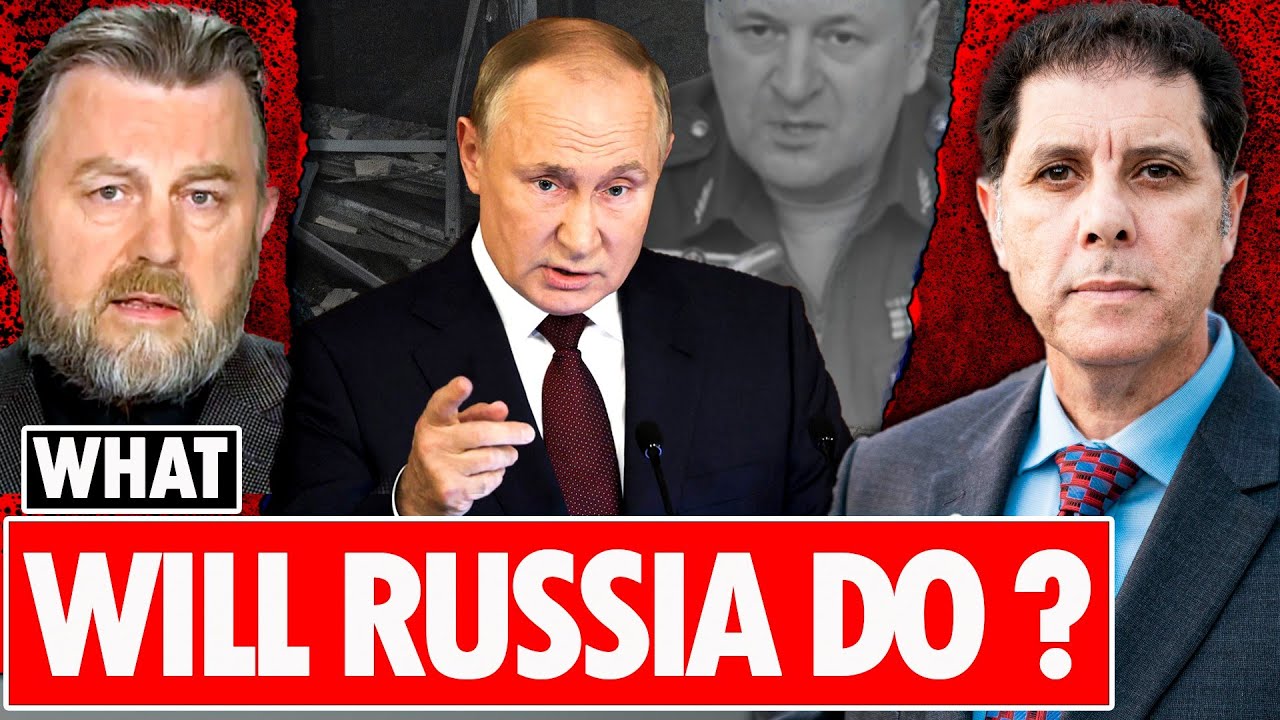
Former intelligence officer Larry Johnson argues the killing of Russian Lt. Gen. Igor Kirilov was a state-sponsored operation by Ukrainian intelligence with British and U.S. help, using an Uzbek operative and remote detonation. Johnson discusses what the assassination reveals about Russian security vulnerabilities and Moscow's likely retaliation, plus broader implications for NATO, Syria, and Africa.
Chapters
All right, hello everybody and welcome to Geopolitical Trends, where truth matters. Sorry for yesterday, things didn't work out with Larry, and here he is today. He was gracious enough. Yeah, no, it's not— no, we understand, the community understands, Larry. We're so grateful and thankful to you for really— I mean, you just finished another interview, uh, just guys, to give you an idea, Larry is back to back and, and because of yesterday what happened, he decided to go ahead and come on the channel today. So, uh, you all know who Larry is, and if you don't, I put the description in the— his bio in the description. Check it out later on. So, Larry, I'm gonna get into it right away because we got a lot to cover. And as a former intelligence officer, you've been in the— we've both been in the intelligence community. We know how things are. I'm going to ask you this question on behalf of the community. In your belief, in your opinion regarding what happened in Russia on Wednesday, I believe, or Tuesday, the assassination of Lieutenant General Igor Kirilov. So in your opinion, Larry, was this an act of a rogue state, a terrorist group, or an intelligence service?
Well, I know a lot of people are calling this terrorism. And I'm going to be a stickler about it. I think we need to reserve the use of the word terrorism for acts of violence against civilians for political purposes. General Kurylov is a military person wearing a uniform, ostensibly could carry a firearm. He would be a legitimate target of war. Ukraine and Russia are at war. The United States and NATO are at war with Russia. So I'm not saying it's a good thing, but I draw a distinction between that as compared to when Israel's bombing civilians in Gaza. That's terrorism. When the Ukrainians launch attack of missiles at civilian targets in Kursk, there's no military presence, that's terrorism. So let's keep them separate. It was a stupid, mindless act, but it was one that was carried out, I believe, with the, at a minimum, with the assistance of the Brits and probably with the assistance of the United States because number one, the recruitment of this guy. So this, he's from Uzbekistan. They didn't just post up a notice on Craigslist and go, hey, is there anybody out there that would like to come kill a Russian general for us? Uh, we'll pay you $100,000 and give you a passport to Europe. You know, those terms, which I, I don't think that the fellow who was picked up and confessing that was, was fabricating that. So, is— last time you checked, does Ukraine have the power to issue European passports? No, not part of the EU. So that means somebody from the EU in Europe that could issue a passport to Europe was involved. Huh, who could that be? MI6. It's the Brits. Uh, number 2, this established that Ukraine, the intelligence service, SBU, had direct contacts with ISIS or an ISIS spin-off. This group in Uzbekistan are basically an ISIS derivative. So this lets you know that these neo-Nazis in Kiev are climbing into bed with these radical Islamists, and they— I'm sure they approached them and said, hey, we've got a— we need, we need somebody that can go get into Moscow and carry out the following kind of attack. And that person is going to be— have— has to be qualified to know how to properly arm an explosive device. How to plant the explosive device, maybe even construct it, build it in country, or figure out a way to, you know, drive it from Uzbekistan all the way. So this was not some dummy. I know they're trying to portray the guy as not that bright. Sorry, he had to, you know, first of all, he had to go get the car and then he had to buy the scooter. And then once he gets the scooter, he's got to have the scooter, I guess it's got to be big enough to get it into a car, get it in and out of the car. Uh, he's got to find someplace where he can cover, plant the explosives so that it's in an obtrusive that's not readily visible. And this, it's not just your typical explosive with the timer you put on it. This thing's going to be remotely detonated. So how's that remote detonation going to work? You, so you have to establish that you actually got a signal that you, you know, you're not in a dead zone where there's no Wi-Fi coverage. So, you know, he had to have some skill in that capacity. Then also he had to buy a camera because he had to set up a surveillance camera that would have the entrance covered because the people who were going to detonate the explosive that this guy planted on the bike were supposedly sitting in Kyiv. They weren't there, so they needed to be able to see it. And, you know, within even those kinds of video transmissions over a distance, you get a bit of a delay. Uh, so I think as soon as they saw the guys starting to come out the door, they hit the detonation button, and they were able to take 2 or 3 more steps before it went off. So this was state-sponsored, but, you know, people say, well, no, this is terrorism. Really? So what do you call dropping a bomb? Let's say that the Ukrainians had flown a drone and crashed it into the residence to kill this general. You know, that is— is that somehow different than flying that drone out on the battlefield killing a group of Ukrainian soldiers or Russian soldiers? Yeah, it's war. So let's, let's stop intermingling. Let's keep terrorism to be something that actually has meaning instead of this broad brush that everything's terrorism. You know, having bad thoughts, that's terrorism. You know, threatening to punch me in the nose, that's terrorism. No, terrorism is the use and acts of violence against civilians for political purposes, period, end of discussion.
Indeed. Well, that is the reason why, Larry, I wanted to talk to you about this one, because given your background with the State Department for the counterterrorism approach, whatever, you will be in a better position to really decipher facts from fiction regarding this. Now, the thing, Larry, that I am very— and I got a lot of questions here to add. Well, the first one is why, why this guy? Why Lieutenant General Igor Kirilov but not some other, let's say, uh, Shoigu, let's say someone else? Why this guy?
Well, he, he'd engendered the wrath not just of the Ukrainian military, the intelligence services, the CIA, and British intelligence, but also Western pharmaceutical companies. Uh, he would been— he was really the lead in telling the Russian military, hey, there, there are these bio laboratories out there. We need to get out there and get on these to find out what they are, tear them apart, uh, gather the documents before they can be used against us. And, uh, and, and I guarantee you, those bio labs, these were containment laboratories. They were— though I know one in particular that was built in 2010 by a company called Black Veatch out of Kansas City, out of Overland Park, Kansas, of all places, near my hometown where I grew up. And this was a bio BSL-3. Well, there are only 4 possible levels. 4 is the highest, but a BSL-3 laboratory is where you prepare biological agents that can be used as an offensive weapon. Which is exactly what they were doing. And who were they doing this with? It wasn't just some, you know, run-of-the-mill scientists. I'm sure they had contacts with pharmaceutical companies, people like Moderna, for example. I don't know if they— Moderna was specifically involved with this effort, but it would be that— it'd be that kind of level.
Yeah, interesting. Now, the optics, Larry, and, and I am sure you will understand the optics of an event like this happening in Moscow. Now, if it was on the border, it's a different story, but in Moscow, you're talking at the heart of Russia. Does this suggest that the FSB missed something? Does this suggest Russia might be weak, as we might think, that no, Russia is strong and so forth? How do you read this up? The optics of—
well, no, it's just there was a security gap in the SVR. The Ukrainian intelligence exploited it. You know, they— when these kinds of incidents happen, everybody are, you know, we're geniuses with 20/20 hindsight. I guarantee you right now that if Russia decided, okay, we're going to pay back the United States for allowing these attack of missiles, and we're going to start assassinating Secretary of Defense Lloyd Austin, uh, Chairman of the Joint Chiefs Charlie Brown. They'd probably be able to pull it off because those guys don't normally get the kind of security— or let's just say that General Cavoli, the commander of EUCOM, they don't necessarily travel with a heavy security detail, but Yeah, you know, in this case they were just, you know, minor thing. You know, they— there should have been a guard posted outside of, uh, Kirilov's residence. There wasn't, because that way you would have seen, hey, somebody parking a scooter, who are you? You don't even see some parking a scooter there that lives inside the building. If they don't live inside the building, get it away, take it away. Um, you know, that would be sort of at the lower level. Other things, did, did Gorilov have a set schedule? Did he always leave the house at the same time every day? You know, if he did that, he was setting himself up. Did he vary his travel route? So there's just, yeah, there were gaps here that were exposed, and if there had been better security measures in place, could have prevented it.
Because you and I know, Larry, usually a movement of general is not disclosed.
Shouldn't be.
So it was— yeah, and it was like, wait a minute.
Well, and clearly, you know, the, the SVR, the Ukrainians, had gathered a lot of intelligence on— yeah, on the general, where he lived, and, you know, put together a pattern of life, you know, how he moved, what he did, what it You know, that's where, when you're in those kinds of positions, you need to be unpredictable.
Interesting. So now, what will we expect from Russia? Now, what will Russia do? What kind of a response do you anticipate Moscow's gonna decide, or the Kremlin, or Putin, for that matter?
They already bombed today the, uh, SV— the SVR headquarters— I mean, SBU headquarters in Kiev. And killed several command center and reportedly killed several high-ranking officers. So, you know, it's tit for tat. The Ukrainians killed one and the Russians have now killed six. Ukraine comes out on body count-wise as a loser. But it does, you know, these kinds of back and forth killings, they don't change anything tactically or strategically on the ground. It's really sort of a meaningless act, but it's somewhat reminiscent of what the Germans did in the final days of World War II, where they were launching the V-1 rockets into London. And most of them were shot down, many of them fell aimlessly and didn't hit any, you know, they're just killing civilians. Again, it was a terror campaign, not a military campaign.
Well, it was the idea of now, because a lot of, a lot of, at least for me, in my community here with the viewers that some of them send comments and so forth, uh, suggesting like, well, when will Putin ever make a decisive decision to sort of put an end to all this? Will he be making the same mistake Stalin did when he trusted at that time, uh, Churchill and Eisenhower, I believe? Uh, I don't know. What do you think, Larry? Is Putin— will be making the same mistake?
No, I don't think so. I mean, he's, you know, Putin obviously has learned some things and has admitted that he was taken advantage of, that he was too trusting of the West. But he's learned that. Not that he said, you know what, I can make that mistake again. Uh, the, the Russians are pursuing a strategy that they've decided on, and they're not going to be driven to it by other people. So, and frankly, I find it's laughable that a lot of these American critics of the people who say, oh, Russia's weak because look, they haven't been able to defeat Ukraine in almost 3 years. Really, Mr. Tough Guys? How'd you do against those Iraqis? Oh, that was like 16 years and what, you beat them? Oh no, you didn't. Hey, how about the Taliban, man? You, you kicked some booty there, didn't you? No, you didn't. We lost. We got driven out. Oh no, we didn't. We, we left of our own accord. Yeah, that, that's what I call smooth leaving. All those people, frantic, panicked Afghanis running after airplanes, grabbing onto the side, holding on, hoping to away and then dropping hundreds of feet to their death. Yeah, that's the image of victory. Way to go, USA, USA! All that bullshit. Excuse me, but I mean, just so— right, these are the people that are claiming, oh, Russia's not doing well, Russia's weak. Look in the mirror, folks. You're in no position to talk. What has Russia accomplished? Russia is fighting not just Ukraine, but NATO. The entire NATO intelligence apparatus is working with and for Ukraine, supplying them weapons, supplying air defense. They used to be able to supply air defense, except Russia's destroyed most of it. Yeah, they once supplied artillery rounds, but the West has run out of artillery rounds. What, what Russia has done has attrited not just Ukraine but the West. So, you know, the United States and, uh, United Kingdom like to strut around like we're the big tough guys, you know. You mess with us, we're going to beat you up. No, you know, all the— yeah, that's what they've been beating up, kids in wheelchairs. They've never fought a real man. Russia is a real man. And the United States and United Kingdom, they're poodles, they're boys. They talk tough, have a lot of money. You know, they're like that quintessential rich kid that has been pampered all of his life and got all the money in the world and thinks he's a tough guy. And then it actually comes up against somebody that knows how to fight, he gets his ass kicked. And that's what I think will happen if, if the NATO countries along with the United States try to press it and try to go to war with Russia. They'll lose. They'll be defeated.
And I would say the same argument, Larry, about China. I don't think so we can fight China.
Well, we gotta, we gotta work on training our swim teams, okay? Uh, or we gotta, we gotta get what I call the the Jesus workers, those people that have taken the Jesus class to learn how to walk on water, because otherwise we don't have enough ships in our Navy to haul enough people over there to take control of China. And we certainly don't have a large enough Air Force to bomb the Chinese into submission. Good God, look at us. We can't even contain the Houthis. Okay. I mean, a year ago, Lloyd Austin, that buffoon, we're launching Operation Prosperity Guardian to open the Red Sea for maritime traffic and to show these Houthis who's boss. Now here we are 12 months later. Who's the boss? Yeah. The sandal-wearing, 14th century dagger-carrying,, desert people. You know, the— these Houthis, these Yemenis, they're some fierce, tough people. And they've withstood— you know, United States has launched their aerial airstrikes, bombings, missile strikes, and they keep coming back. They keep fighting back. So we think we're going to beat China? Give me a break. No, I mean, it's just, you know, the United States is in this self-indulgent fantasy, this delusional world, and we don't wake up from it.
Yeah, why can't we come to grip with the reality? What is the— what's missing in, in DC? In your— you've been inside there, we've been inside the Beltway, Larry. What is missing for them not to see the reality and come to grip with it that the world has changed? And we must change with it.
It's called confirmation bias. You start with a certain set of beliefs, and that's all you see. It really, it shapes your perception. You know, they tell the story, and I don't know if it's apocryphal or true, but about, you know, when a baby elephant is born, they'll chain, they'll take the baby elephant and use a stout chain And so the elephant learns that it can't move, that it's contained with that chain. When something's tied around its leg or its ankle, it's controlled. And as it grows up, you know, they keep the chain, keep the chain. And then one day they tie it— when it's fully grown, they tie it with a rope. But the elephant's been conditioned to believe that it was chained to that. Well, it's sort of— that's sort of the phenomena we got going to Russia. We've been conditioned to believe that Russia's in a dictatorial authoritarian state, a godless communist, uh, group of thugs, monsters who don't have any goods in their stores. They build crappy automobiles. They got lousy uniforms. Their soldiers are a joke. So once you start believing that Yeah. And then you construct it also with the narrative. And just like the, you know, the International Communist, they want global domination. They're gonna, they're gonna take over Europe. And so with that, they can't, you know, you try to talk to these people and get them to see, say, hey, let me, let's take a look. Number one, recognize that with the fall of the communist rule in the Soviet Union and the emergence of Russia, the Russia's return to its cultural heritage, which means it's a thousand-plus-year-old Christian nation, number one. So it's a Christian country, uh, with a deep faith in Jesus Christ, you know. So they're not, they don't, they're not mealy-mouthed about that at all. And yet, in spite of that deep-seated Christian faith They also are able to live and work harmoniously with 141, 181 different cultural ethnic groups, a large number of whom are Muslim, and the Muslims are treated with equity and with fairness. The Russians don't have a problem of having committed genocide against the American Indians, Native American Indian tribes. And housing them on reservations. Not to say that there have not been, you know, a brutal past in Russia's history. Of course there has been. It was. But what it is now is it's a prospering state, fourth largest economy in the world as measured by purchasing power parity with number one is the, I think, the United States. Number two is China. Number three is India. Number 4, Russia. You go to the store in Russia, filled with every imaginable product. It's unlike the Soviet era where the butcher shops were vacant. These are filled. I visited even one store, it's sort of like a cross between Price Club and Whole Foods. In the seafood section of the, you know, the butcher shop, they had these gigantic fish tanks that were filled with a variety of live fish. Not just, you know, not just an occasional lobster crawling around, but different varieties of live, both fresh, fresh water and seawater. So I mean, it's just amazing. So these people have, in the West, have no understanding what Russia is. And then You know, the topper is, who has astronauts stranded in space? Is that Russia? No, that's the United States. Which country has been taking the other country's astronauts to and from the space station for years until recently? Ah, that would be Russia, or was taking the United States, because the United States lost that ability. So what we need is we just need— we need to stop kidding ourselves and failing to recognize that right now the Russian Army strength is about 1.5 million. U.S. Army active duty, 452,000. No, 400. Wow, less than 500. Um, and if— and if And they were able to only meet the recruiting goals by lowering the recruiting goals, cutting them in half. You say they wanted to recruit 70,000 new soldiers a year, they cut it down to 35,000. And they go, woohoo, we made our recruiting goals, look at us, pat us on the back. It's just, you know, the United States has just become absurd. It's just, it's ridiculous. We failed to honestly deal with ourselves.
Just for you guys, just to, uh, uh, what Larry mentioned earlier about the Houthis, I am, uh, uh, researching now just to confirm some information regarding the recent attack by the Houthis on Tel Aviv. They launched a missile into Tel Aviv. So I'm gonna get the detail for you. I'll do live stream for you guys next week, at the beginning of next week, before the holiday. Is here. Let's shift, Larry, to, uh, uh, uh, and we're going to move from Moscow to, uh, Syria and Libya. And this one has to do with the recent, uh, air bridge between Libya and Syria. And this particular aspect has to do with Russia moving its assets from, uh, from Syria into Libya. Now, what is the geopolitical— what is the strategy, you know, what is the strategic vision of Russia? There are those who are saying in the West, and I read some white paper regarding this, they say, well, look, Russians are fleeing. I don't think so.
Yeah.
It's a strategic move. What is it, Larry?
Yeah, well, you— neither you or I have seen any videos comparable to the videos that were coming out of of Afghanistan in Kabul in August of 2021, when that's called fleeing. Fleeing. Where you're leaving everything behind, you're leaving tanks and vehicles and artillery pieces and billions of dollars worth of equipment. You just run off and left it. Didn't have time to pack it up. In contrast to that, Russia has not been abandoning, fleeing from its base at all. In fact, both Turkey and HTS, Hayat Tahrir al-Sham, the terror, the ISIS terrorist group, yeah, have asked the Russians to stay on. And Russia's like, yeah, maybe we will, maybe we won't. But in the meanwhile, they're moving to, uh establish a base as well in Libya at the invitation of the Libyans. So this is, uh, you know, I think that's an important development. You know, one of the comments have been, oh yeah, Russia's in trouble, it's losing its base in Syria, so it's now that, that has— it's not going to be able to, to make it to Africa. It's like, are you kidding me? Just please, you know, this is The flight, the flight time now from Russia to Libya will not be much longer than it would have been to Syria, number one. But it puts the Russians in better position to deal with anything in Africa. I don't think that Russia is actually going to give up all of its presence in Syria. They're, you know, they're biding their time. They're waiting. They're in a wait-and-see mode. The, the West is always judging Russia in Western terms because what the West would have done in this circumstance is if we would have had a client like Bashar al-Assad, yeah, and he wasn't doing what we wanted him to do, we would have taken him out ourselves and replaced him with somebody who was going to be obedient. Get rid of— we got we got to get the right boy in there. Well, that's not how the Russians operate, because the Russians have been counseling Assad, hey, you know, you need to sit down and negotiate with, uh, Recep Erdoğan, the president of Turkey. Uh, you need to start paying your soldiers more. You need to conduct this training, these upgrades. You know, invited you know, you come to the BRICS where you can sit down and talk to, uh, uh, Erdogan as well as, you know, meet some other key leaders. Yeah. And Assad said no to all of that. No, no, I, I'm going to be in charge. I'm not going to negotiate with Erdogan. And, and so, you know, Russia, instead of acting like the United States and killing Assad, taking him out and replacing him with somebody who was going to do their bidding recognized that, hey, okay, sir, you know, you're a sovereign state. If you're gonna— if you're gonna— that's how you want to do it, that's how you want to do it. We're not going to force our will on you. Same thing from Iran. That's the exact same way how Iran behaved. So they walked away from it. And as they walked away, the Syrian army had already been compromised by foreign intelligence— again, Brits and Americans. Supplying the money and, you know, and doing the ambitions with, uh, um, with Turkey, you know, playing into their ambitions. You know, there, there were a lot of different, uh, interests at work here. There wasn't one sole interest or one sole purpose in getting rid of Assad. I described it, uh, in an earlier interview that this is akin— let's say you got 4 people together, you know, got Israel, Turkey, United States, United Kingdom. So therefore you're all going to buy a house. Okay, what you want to buy the house because, hey, I'm going to move in here, bring my family, bring my, you know, mother and father and cousins, you know, big house, we're going to live here. Yeah, uh, me, I buy it and say, no, hey, I want to turn this into a house of prostitution. We can use these bedrooms and bring in women. Uh, the third person says, no, no, no, no, we're going to use it as a house, a bed and breakfast, you know, it's going to be a place that will open it up like a hotel. And the fourth person says, no, I don't want to make money off of it, we'll have it as an Airbnb where people will rent it from us. Now, you all buy the house, but you got different objectives. So what's Turkey's objective? Well, Turkey wants to reestablish the Ottoman Empire, essentially. It wants to have complete control of, uh, territory of, of Syria. It's always viewed Syria as part of it anyway, at least for 400 years. So, uh, you got that. Or, and then out east They want to control the Kurds because those damn Kurds have been a problem for Turks for, you know, years, not just 50 or 60 years. It goes back. But the Kurdish Workers' Party, the PKK, that was headed by Abdullah Öcalan, you know, he was accused of carrying out terrorist attacks in Turkey. And so the Turkeys want to contain and control the Kurds. The Kurds want to have their own country. And who's backing the Kurds? Oh, that'd be the United States. So here now we get a potential conflict where the United States has to decide, are we going to abandon the Kurds or are we going to fight the Turks? And there are a number of members of Congress saying, damn it, you better back the Kurds. Meanwhile, Iran's in meeting with Turkey to talk about, uh, the the, the situation because Iran's got a problem with the, uh, with the Kurds as well. Then you got the Druze down south who are saying now they want to become citizens of Israel, and the Israelis chewing up big chunks of southern Syria, which sounds great on paper except Israel doesn't have a massive oversupply of troops. What are they going to do? And then you got this HTS crowd, this is Sunni Islamic extremists with their current leader al-Joulani pretending that he's a born-again Christian. So I mean, it's a mess, it's chaotic, nobody's in control. Wow.
And we're still— even our presence there, it's almost like, what are we doing there besides stealing the oil?
That's what we're doing, that's right, that's what we're doing there. We're stealing the oil. We're allowing the theft of oil for what belongs to Syria. We're taking it, making sure that Israel gets it.
It's not right. Let me go back to Russia in Libya and my interest in this, Larry, because I've been watching the developments taking place and I'm going to show the map here, guys. This is the map of the Sahel region from all the way to Mauritania on the west, all the way to Eritrea. Now, Russia has been in some talks with Sudan regarding the establishment of a base. Of course, because we all know in Djibouti there is a small— not a small, but a presence of US, Japan, and China. China's presence— I was in Djibouti back when I was still in Washington. I made a stop there for about a week or so. So I went there and just to see with my own eyes. And the, the Chinese presence was very, very, very small. But the Russian conversation with the Sudan, which we were objecting behind closed doors, could now the move of Russia from Syria into Libya aimed at strengthening Russia's presence in the Sahel region, given that countries like Mali, Niger, Burkina Faso have kicked the French out, or all the imperialists are out. And this will pave a way for Russia to cement its presence geostrategically, that is.
Yeah, well, I mean, Russia— look, this, this move to Libya, it really— it has little to do with Syria because the Russians had already started moving in there. So this isn't just a rise in the last couple of weeks. So they've been, they've been, you know, I think planning all along and developing the relationship with that particular Libyan faction that appears to be sort of the dominant one now. Again, there's, there's Libya, another, another example of Western interference destroying the lives of people. For what purpose? You know, we made promises to Muammar Gaddafi, and that, uh, those turned out to be— we betrayed those promises. So this, uh, you Russia is clearly now starting— it is starting to assert itself, but in a way that is not the typical path of the imperialist countries, the European in particular, where they go in and exploit the resources for their own wealth and own consumption. Russia's taking the opposite model of helping these countries develop their own resources so that they can benefit from it. And that they can make money from it. And David, I think you, you froze up and went away. Um, so let me make some other observations while the recording still goes on. With respect to Russia's move into Africa. Russia and China are both moving to supplant the West. But in supplanting the West, you know, candidly, the Europeans and the United States, they didn't have a vested interest in promoting peace between these different regions. In fact, oftentimes, they almost helped promote the conflict because creating conflict gave the United States some leverage. So, you know, they could pit one nation against another. And oftentimes when they were, you know, getting access to uranium or other natural materials, it was on an exploitative basis. So that's what the big change is. I know that you froze up there, David, and went away, so I kept talking.
Well, thank you, Larry, because I couldn't see you.
You have to tune in to find out what I said.
I'm sure I'm gonna listen again to this one here. Now, the other thing, Larry, uh, what will it be in your opinion? And there is no doubt in my mind, for me personally, the way I see it, could also the move of Russia aim at NATO. In other words, saying to NATO, we are here because we all know NATO's been sending its troops to Mauritania to establish some training with Mauritanians. What the heck NATO is doing in Mauritania? Could, could the presence of, uh, Russia in Libya strengthen that argument?
Well, um, I, I would want to know who is actually doing the training. It's one thing to say NATO training, but within NATO, is it Brits? Is it French? Is it German? Is it American? They may be operating under a NATO banner, but you know, who's which country? Because there's not a— there's not an international amalgam of different countries where they've created a training unit that has, you know, 2 from Germany, 2 from France, 2 from Britain, 2 from the United States, 2 from Italy, from Spain, you know, go down the list. So I'd want to know, uh, who's doing the training in order to start assessing, you know, what political shenanigans are at work. But it's— yeah, it's clearly part of this continuing chessboard. This game of chess where, you know, Russia does know how to play chess, the West doesn't. Oh yeah, for sure, for sure.
What do you expect, Larry, when, uh, Donald Trump, uh, uh, uh, swears in, you know, inaugurate the office in January, on January 20th? What do you expect the trajectory vis-à-vis U.S.-Russia relations is going to happen?
Uh, well, let me first say what I would like to see. Uh, is, uh, Trump come in and immediately cut off all aid to Ukraine and then call up Putin and say, hey, this nonsense about moving NATO, uh, to the east towards you is going to stop. We're pulling the funding on that, and we're going to put an end to all these military NATO military exercises that were directed against you, whether it's in the Baltic States or even in places like Poland and Romania. We're gonna stop that, 'cause we're not at war with you. That would be ideal. I don't think Trump's gonna do that. I think Trump is gonna come in and be pretty bombastic and then say, you know, this is what, you're gonna do it our way or the highway. I'm afraid that's the direction he's going. Because he surrounded himself with people of that mindset, which is, you know, right now he's talking about continuing. The latest I saw is he said, gonna continue to fund Ukraine while insisting that the NATO countries increase their spending to 5%. Fund Ukraine to carry out attacks inside Russia, and Russia's gonna step it up. I mean, this, Russia retaliated overnight for the killing of Korylov by hitting the SBU headquarters in Kiev and killed several senior officers, according to reports. And then today, just the Ukrainians not having learned a lesson launched more US-made ATACMS into Russia. So Russia is going to retaliate for that. And one of these days, Russia is going to hit a NATO base. Yeah, as long as, as long as Ukraine keeps this up, uh, the, the possibility grows that, uh, the patience of the Russians will be exhausted and that they will hit some of the NATO bases, take them out of the war.
Wow, well, very insightful, Larry. I can't thank you enough, man, for really carving out time for us here just to get a read into exactly, because you keep reading what's coming out of Western media and it portrayed that it's not the truth, not the reality how it is, but rather I call it manipulation per se, just to move the masses thinking into a different direction.
And it's not just the media. Let's be clear about that. It's also the intelligence community is lying. Uh, we saw that, we saw that the other day when Donald Trump in his interview with Time magazine was talking about the casualties, alleged casualties of the Russians, and he was using the same number that basically the Ukrainians are using. Well, that's what he's getting, that's what he's getting from his intelligence briefers. They're lying to him. They're not telling him the truth. And so when, as long as they're not being told the truth, uh, you get, uh, big lies make for bad policy.
Yeah, for sure. So, well, all right, I can, on behalf of the entire community here, we say thank you very much for really carving out time for us here. Wishing you a happy, happy holidays and Merry Christmas, and I look Look forward to having you next time. And as always, very, very grateful for your time, your wisdom, and your insights.
Thanks so much, David. We'll see you in the new year. Roger.
Uh, hi guys. Hope you all enjoyed listening to Larry. He was kind enough to really— he just finished another interview, uh, uh, from somewhere in Brazil and, and was kind enough yesterday when we talked He told me I wasn't in an interview, but I'd be happy to come in. He felt bad about yesterday. I said, don't worry about it, man, things happen. Look at me, I just froze for— I don't even know why. And by the way, guys, I already got a new laptop, so hopefully that won't happen again. But you know how it is. So I'm very grateful for your patience. So thank you for hanging out here, not giving up on me. If this is your first time here, guys, please hit the like button and also subscribe to this channel. And by the way, I will be releasing a video. I did an analysis for you about what's going on in Germany, a very, very in-depth analysis. I'm going to be sending it to my editor with no soundtrack, so in the background. So I look forward to sending this to you. So as always, remember, geopolitics impact your daily life in more ways than one. Till next time, guys. Bye-bye.
More from David


Beyond the Single Actor: Why the Gulf Isn't Choosing Between the US and China


Iran, Iraq's Militias, and the Houthis Are Coordinating! This Changes Everything




Who Controls the Next Decade's Resources? Latin America and Africa's Geopolitical Crossroads

The Chokepoint Trap: How Washington's Stupidity Triggered a Cascade That Now Controls the World

Trump Spooked as IRGC Unveiled dual-use SLV, Deployed Ghadir Mini-Subs & Hinted at Tactical Nukes!
