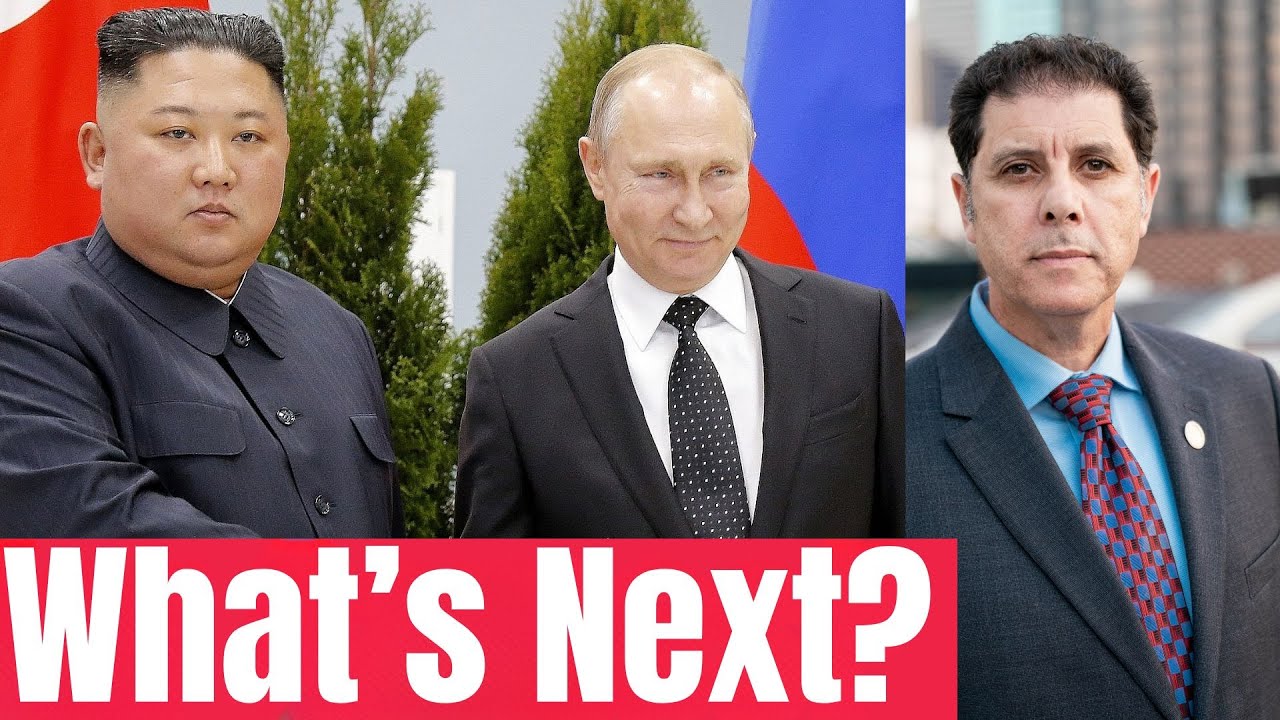
In this Geopolitical Trends video, the presenter examines the reported meeting between North Korean leader Kim Jong‑un and Russian President Vladimir Putin. He argues that while the public narrative focuses on arms negotiations and U.S. concerns, the deeper significance lies in North Korea’s renewed diplomatic outreach to Burkina Faso, a move that could intersect with Russia’s Wagner Group activities in Africa. The video critiques U.S. National Security Council spokesperson John Kirby’s condemnation of the talks as hypocritical, pointing out Washington’s own extensive weapons support to Ukraine, Taiwan, and potential nuclear submarine deployments to allies. The presenter also highlights a recent joint UN statement by the U.S., UK, South Korea, and Japan labeling any Russia‑North Korea cooperation a violation of Security Council resolutions, labeling this stance as out‑of‑touch with a shifting, multipolar world order. Throughout, he calls out what he sees as Washington’s denial of changing global dynamics, frames the meeting as part of broader strategic realignments, and invites viewer comments and engagement.
Chapters
Hello everyone and welcome to Geopolitical Trends. As a geopolitical analyst, I ask a question: What's behind the upcoming meeting between Kim Jong-un of North Korea and the Russian President Vladimir Putin? In this video, I'm going to share with you my brief analysis and assessments about what might be behind this turn of events. It's very interesting dynamics. Now let's dive in into this. It has been reported just within the last 24 hours, uh, that Kim Jong-un will be meeting with the Russian president Vladimir Putin in Russia to discuss a host of issues, including the US recent maneuvers in Asia, of course, which would be part of the conversation, in addition to weapon sales. Of course, the Western media that's reporting this did not say that part of that conversation is going to include these discussions here, except for the negotiations about arms. So, so in light of the developments taking place on the global stage, specifically, I'll give you a few examples: recent US-Japan-South Korea alliance, of course the Ukraine-Russia conflict, in addition to AUKUS, Quad, among others, North Korea in my assessments is convinced more than ever for the need to strengthen its both defensive and offensive capabilities, military capabilities that is. All this comes on the heels of ongoing, and I put this in quote, arms negotiations between both Russia and North Korea. And here is what I found very absurd coming out of Washington, D.C. Recently, John Kirby— he is the National Security Council spokesperson— expressed concern about the rapid progress in this, uh, sort of talks on negotiations over the future arms shipments from North Korea to Russia. And you know what he said? He called on North Korea to— and I put this in quotes— to put an end, end of quote, to these discussions. Who the heck is he to dictate to other countries what to do? And by the way, did anyone or any other country ask the US to put an end to sending weapons to Ukraine? Did anyone or any country ask the US to stop wasting its citizens' tax dollars that the Biden administration is happy and willing to send to the corrupted government in Ukraine? So, so who the heck is John Kirby to be dictating to other countries what to do? That era is gone, and I think Washington is not coming to grip with the reality that the global order is shifting. There is no more unipolar system. They're having a hard time. Actually, it's not— they know. I think they are in denial in Washington. So, so to me, this demonstrates how ill-conceived our foreign policy is, lacking understanding, strategy, depth, vision, you name it. We have none of that. And, and what makes the matter worse Check this out. We are becoming a laughing stock of the world, and here is why. When considering, for example, the United States, the UK— of course, the incompetent countries— the UK, South Korea, and Japan announced just last week at the United Nations in a joint statement that any agreements to increase bilateral sort of either trade or cooperation between Russia and North Korea will be, and I put this in quote, "a violation of the UN Security Council resolution," which is banning sort of arm deals with North Korea, end of quote. That's nonsense, but things have changed. And this is what I said, Washington is not coming to grip with the reality. So things have changed. As we send for us, sort of for us, we can send weapons to Ukraine, we can send weapons to Taiwan, we soon be sending nuclear subs to South Korea, send nuclear subs to Australia, and soon to be in New Zealand, whose prime minister sort of pushing New Zealand over the cliff. So how ridiculous is this? That just doesn't make sense. Nick Hipkins, that's his name. So placing these developments under geopolitical lenses, I can see why the US will be very concerned. But here is the hard truth and the answer. It is not, in my opinion, about just arms negotiations between North Korea and Russia. But rather it's about North Korea's re-establishment of its diplomatic ties with Burkina Faso in Africa. I did a video for you guys about this video here, which will— we all know what it means when considering that the Russian Wagner Group presence in Africa is well known. This is what's at the heart of it. North Korea, known for its missile technology. You can just see the shifting of the geopolitical landscape in Africa. So all these hypes from Washington, uh-uh, that is not really what is this all about. So what do you think? Make sure to leave me some comments in the comment section, because I always like to keep these videos very brief, short, and concise. So leave me some comments. I always like to read your feedback. And please hit that like button and subscribe if you like the content of this video. And of course, uh, guys, I will be happy to elaborate more in a live stream if you, you like me to do so. Just let me know. So as always, remember, geopolitics impacts your daily life in more ways than one. Till next time, bye-bye.