KSA Ditches the Perto-Dollar, so Are 16 more Countries in 2024! Conversation w/Angelo Giuliano!
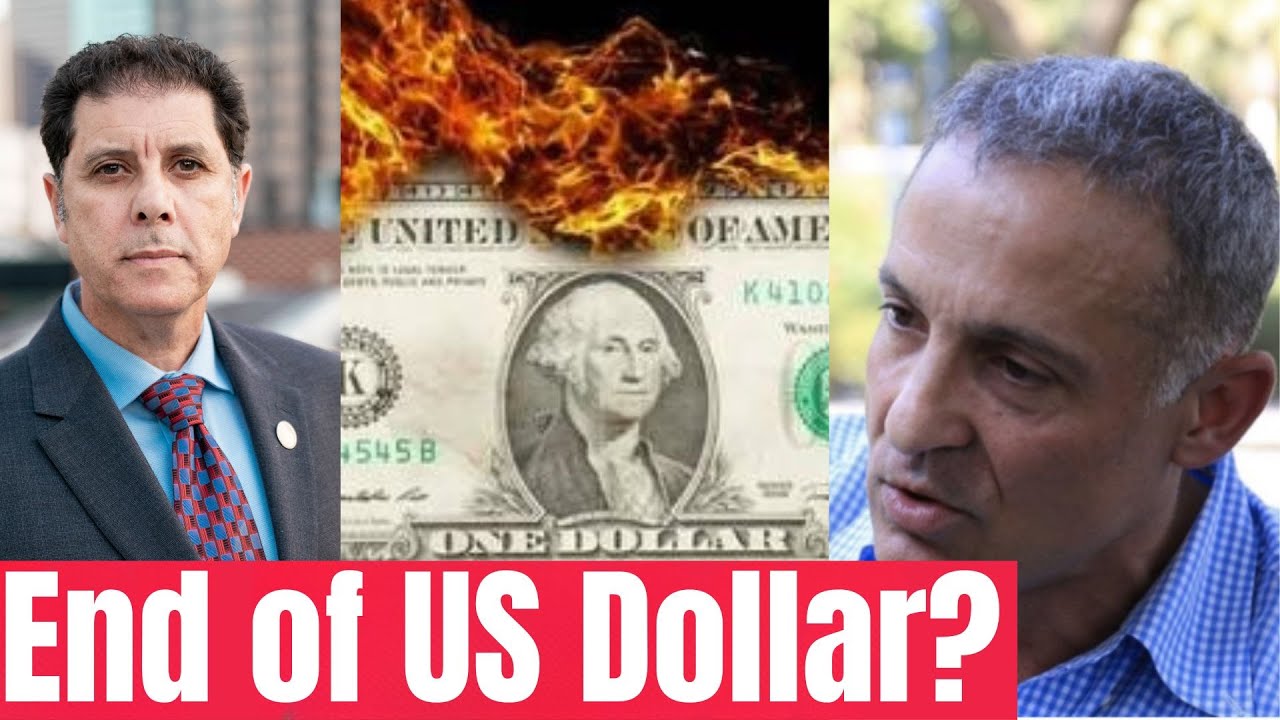
In this extensive Geopolitical Trends livestream, host David Oualaalou interviews Swiss-Italian analyst Angelo Giuliano, who has lived in China for three decades. The dialogue explores the transition from a US‑centric unipolar order to a multipolar world, focusing on the declining dominance of the petrodollar and the rise of alternative financial structures. Giuliano argues that the US dollar hegemony is a fragile Ponzi scheme, while China’s Belt and Road Initiative (BRI) and the expanding BRICS bloc offer pragmatic, asset‑backed alternatives to Western‑led institutions such as the IMF and World Bank. The conversation covers the limited impact of Saudi Arabia’s official stance on the petrodollar, the gradual diversification of reserve holdings, and the strategic use of Chinese trade surpluses to acquire tangible assets rather than US bonds. They discuss the geopolitical implications of BRICS expansion, the challenges of a common BRICS currency, and the internal tensions within the bloc, especially India’s cautious stance. The hosts critique Western narratives about China’s “debt‑trap” diplomacy, arguing that BRI projects are mutually beneficial and that the IMF’s high‑interest loans create real debt crises. The dialogue also touches on NATO’s eastward and now far‑east expansion, Japan’s reinterpretation of its pacifist constitution, and the potential for conflict over Taiwan, highlighting China’s red‑line thresholds. Additional topics include the impact of US‑led sanctions on Chinese banks, the role of EV tariffs, the influence of elite groups like the Bilderberg and the World Economic Forum, and the broader cultural clash between Western ideological exportation and China’s focus on tangible improvements in living standards. Throughout, Giuliano emphasizes a philosophy of “live and let live,” advocating for pragmatic cooperation over ideological alliances, while Oualaalou provides context from his own experience in Saudi Arabia and the United States.
Chapters
All right, hello everybody and welcome to Geopolitical Trends, where truth matters. Very excited to be with you. I know it's so early for us here in the US, but at the same time it is evening for my guest, so it's kind of common sense for me to take the initiative and sort of— because we are so excited to have our guest here. So before I'll bring in the guest, let me just share briefly with you Uh, as far as my interview tomorrow for at 12:15, 100 hours with Larry Johnson, then my other interview on Wednesday with Jayant Bhandari. He's in Beijing, as a matter of fact, or Shanghai, that is one of those locations. And also I am in the works for someone else for Friday. Otherwise I will do the analysis for you, the one I talked to you about last time regarding the Iranian presidency. So there's something you need to know about. Uh, second thing, I want just to let all the channel members, uh, uh, be they in the channel or on Buy Me a Coffee, I've already posted the link to my book. So you guys, that's my token of appreciation for your support for the channel, and I am very, very grateful to you. So, so without further ado, let me bring my guest here. There we go. Hi, Angelo!
Hi David, it's a, it's a great pleasure. I love your channel, you're doing a fantastic job, and I'm glad to be invited. You know, I, you know, any, anything, any input, I'd be glad to share with you. And I would say my, my China experience, and so maybe we can touch on that.
Of course.
So what's the—
yeah, because here's the thing, Angelo, I might be in your location, I might be visiting Nothing definite yet. I'll give you a heads up. Just FYI, guys, you don't know, Angelo and I will communicate, you know, through Twitter, X that is. So it's— I consider Angelo a friend, so, and usually it's not a term I use loosely. I don't. So not everybody is my friend. So I, I want you just to know, and you guys know, I don't sugarcoat things. That's not my personality. So anyway, let's, uh, let's get in into— first of all, For those who do not know you, Angelo, can you please just a brief intro? I put something in the description, but I want them to hear it from you.
So a brief introduction: I'm a Swiss citizen, also an Italian citizen, and I came to China 30 years ago.
And oh my gosh, oh my gosh, Terry!
I left, I left a golden cage in Switzerland. I was working in a bank And I decided— I saw very early on, I was fascinated by China. Remember, there was the opening up of Deng Xiaoping. Oh yes, China was closed, and I wanted to experience this re-emergence of China because people forget, you know, it's not about China emerging. China is only getting back to its original position it has been holding for thousands of years, and I wanted to be part of that. And I want to just add one thing, which is really important. My personal journey was really going from not knowing that I didn't know to a very humble position of knowing that I didn't know. And slowly, once you realize that you don't know, that it's a humbling experience. And actually you start to open up your mind and start to realize, well, maybe a lifetime won't be enough for me to understand because only Chinese can understand about China. And when you look at the whole philosophy of China in this multipolar world, that is, I think that's the major topic. It's what a historical moment we're living in. It's live and let live, meaning that, no, it's not about a Western ideology which is being imposed upon the world. It's about how the Chinese, they say meaning seek for, see, seek for what unite us and set aside the differences. And the multipolar world is actually this whole philosophy: live and let live. Can we work together if we have differences? That's okay, but put them on the side. It is no alliances. Let's work together for a common prosperity, for human, human, I would say, a human project. And when you look at what China is doing really in terms of It's not about the words, it's about really being factual. The West talks about slogans, China is about tangible things. Ideology, you know, you tell a Chinese, uh, you want freedom? It's Chinese, they say, well, you know, money gives you freedom. Uh, you know, tangible things, not about ideology, but how you can improve the livelihood of your people. Putin's Putting food on the table, how I can travel, how I can increase my life expectancy, how I have a decent life. In the West, they actually doing diversion. They sell you ideas, but ideas makes you, you know, when you look at people homeless, life expectancy going down in the West, meaning your children will live a shorter life than yourself. Those are basic human rights. So China is not saying, well, we want to export this system. No, China is saying, you know what, we are working for ourselves. We have project. Do we want— you want to be part of that? Yes, no. It's a simple question, but it's not about alignment. It's not about imposing. It's about how we can build up this new world, which is going to be— the essence is democratic. Because every single country will have a say into this. We can expand to this, but, but actually every time we need to, to, to have a higher perspective, always go back to this unipolar world, multipolar world, because every single aspect that we are going to— we touching these days in geopolitics everywhere. Whenever you touch Ukraine, whenever you even you touch Israel, the Zionist regime killing people in Gaza, You have to touch the shift because that shift, everything that Ukraine, what is happening in Ukraine, what is happening in Gaza is happening, is emboldening some actors because there is a shift behind. It's shifting from unipolar world, US hegemony into multipolar world. Every time a higher perspective.
Indeed.
Indeed.
Uh, to those who might not know, this is why I said I'd rather have, uh, Angelo himself introduce. So this way you guys know— some of you do not know— so his financial, his political background as an analyst, that gives you a perspective. And this is why I always tell you guys, usually the guests I bring, I bring them here for you to learn something from. And just to share this with you guys, and I'm gonna put it in a chat box for you, Angelo and I shared the stage on RT for a program with Peter Laval Anyway, it was very interesting conversation. So I'm gonna put, uh, it was about NATO and so forth. I'm gonna put the link for you guys in the chat box. You can check it out later on. So here it is, it is the on the chat box for you guys. So all right, Angelo, let's get my friend into talking about— we start with the financial aspect since that's your wheelhouse. We want to have a better understanding and a different perspective, and I want to hear yours and for the audience also. This— I've already— by the way, by the way, by the way, yesterday I had— I have my own contacts in Washington on all that stuff. The conversation already stating that, oh, some senior Saudi official said, oh no, no, no, we are not ditching the petrodollar. You know, as one who works in Saudi Arabia on behalf of the US government, I was in the thick of it. That senior official was just given order to say, to soften the blow onto this. Where do you see, in your opinion, with the changes you just mentioned about moving from a multi— from a unipolar into a multipolar, how do you see this change in the financial structure is going to impact the geopolitical trajectory moving forward?
Yes, I think what the representative of Saudi Arabia, what he said is actually true. It's not about ditching the petrodollar. There will still be petrol, oil to be traded in US dollar. So when you look at the multipolar world, a lot of people, they make the mistake to say, well, it's about replacing the US dollar. I do believe for the stability of the whole global world, including China, including Russia, they have no interest to have US economy to collapse. It's not about saying it is going to be about us at the expense of the US. No, it is about how we can do a transition and have more possibilities and actually to bypass this system, which is the US dollar hegemony. It's about a Ponzi scheme. Uh, the US is, is buying more than what it sells, so they have a trade deficit. The way they actually compensate with this trade deficit and they can perpetuate this system is by issuing bonds. Now, why do we have this US dollar hegemony? It was, it was because imposed upon the world after World War II. But because back then the US had, you know, they had 40% of the world economy. The whole world collapsed, Europe was, was completely destroyed, and they imposed upon the world these, all those institutions from the UN. Then you had, they imposed actually the People forget that, but the EU was actually imposed by the CIA in the US just to destroy nation state. That's another topic. And then there was IMF and the World Bank and everything was turning around the US dollar. So that's what they wanted to do, because if you, if you control the money, ultimately you can control everything. So back then at the beginning, it was backed by gold. I think it's important just to go back to historical facts. And at some point you had Nixon, he came on TV and he said, uh, he said, uh, this is not going to be forever, but at the present moment we are going to, uh, stop this peg between the US dollar and the gold. So that meant that actually it was backed by nothing. Before it used to be backed by gold, so basically there was a certain amount of gold that could be, be, be paid in exchange of US dollar. Now nothing. And then later on there was an agreement, uh, there was some kind of backing they found. It was an agreement of what, what is called petrodollar. And you, you yourself, you're an expert on Saudi Arabia. So there was a Quincy Agreement, and then Kissinger actually, he, he managed to have a treaty, an agreement between Saudi Arabia and the US. Uh, excellent. I, I would advise people actually to read your book. It's a, it's a very valuable, uh, information there. So, uh, so basically because they imposed the, the, the oil to be traded in US dollar, uh, most countries had actually to accumulate a certain amount of buffer US dollar to buy, uh, to buy oil. So if those US dollar were not actually in cash, they would actually, they would fund the US dollar, US, US trade deficit. Uh, so now, uh, let's, let's shift like closer to what we're doing now. You had some countries that actually tried to bypass, to stop actually trading into, in the US dollar. And two single examples, there was Libya and there was actually Saddam Hussein. Uh, so Gaddafi and Saddam Hussein, we do know what happened to them. Once you actually started challenging this US dollar hegemony, what do you— you had a very big risk of, of being overthrown and be killed. And that's what happened to those leaders. Now, that's very interesting. Uh, you have even U.S. allies that are actually ditching the U.S. dollar. They're actually selling— I mean, Belgium is a single example. Belgium is a U.S. ally. They're selling U.S. bonds. Now you have China. When you look at the trend, it went from $1 trillion of U.S. bonds. Now it's closer to $700 billion U.S. dollars. So basically, there's a transition, and you have lots of countries that are actually bypassing the dollar, and they're trading in their currencies, uh, and this movement is amplifying. So what is that? The US is very close to actually, uh, lose what the gold used to call the exorbitant privilege of the US dollar. And what, what are the impact? Is that, well, basically it's not going to be free lunch for the US. It's going— there is going to be a huge impact in terms of inflation, uh, because, because you— they won't be able— if you are in a closed economy, let's say you are, you are in a country in Africa, if you print too many, uh, too many, too much of your currency, what happens is that there's a discrepancy between offer and demand and you create hyperinflation. So the risk is the, the standard of living of average Joe in the US is going to collapse, there's going to be inflation. So this transition for the sake of Everybody, including Russia and China, is to have a soft transition. So now, how are we going to do this? There's a transition in, in, in money, and there's a transition in terms of power. We see NATO is actually getting a spanking in, in Ukraine, and this might be the last war of NATO. So the question, the big question mark, uh, is, are we in this two-cities trap where most of those transitions end up in war? And that is the big question mark. And also, I forgot to mention just before, because once the US loses its hegemony, what we have— they won't be able to actually spend $1 trillion per year on defense. It's not so much a defense, it's actually— I would say the transition, you see, they went from being backed, a currency backed by gold, to petrodollar. And actually now it's a currency which is backed by the US defense, meaning by threatening countries and sanctions.
Very, very interesting. Speaking of that one, and we will get back to NATO towards the end of the show here. By the way, guys, just prepare a question or two, uh, for Angelo towards the end, because remember, it's, it's nighttime for Angelo. I don't want to keep him here forever, so Uh, just prepare a question or two and we'll do that. Now, Angelo, you mentioned about the idea of— and as far as the, the, uh, average lifestyle of an Ameri— of, uh, uh, an average Jane here in the US going down. And it is true. I live here, I see, I go out to, you know, shop, whatever. I see the prices and all that. But there is one trend that I'm also noticing. When I go to the bank, there are individuals pulling their cash out. I'm one of them, I won't deny it. You know, it's kind of like, I see your point as to how this transition is moving forward. I ain't gonna be good for Americans, I'll say this. Now, how can we think of in terms of what's going on right here on this end? Then if we look at on this side here with BRICS, for example, could we consider BRICS as being the alternative in your opinion?
Absolutely. Uh, but I would say people, they tend to confuse— they think this is going to be an alliance which is very similar to NATO. So basically it's, uh, it's all for, you know, all together. If they— if one— it's not— it's going to be about national interest first, and then that's the idea, because they won't go into the trap of alliances. Alliances— we, we've seen what happened in alliances, especially when they're completely blind. We saw, I mean, World War I, what was the reason of that was because you had all those alliances and they, they, we just fall into World War I. Here the idea is just to be completely, uh, have a system which is completely different. There's no alliances, there's only very rational pragmatic interest. And, and as I said before, seek for what unite us and set aside the differences. So it's not, not either or. And I would say what is that, it makes it very attractive because there's no, not the liability of alliances, uh, you have countries that are actually very open, the same as the Belt and Road Initiative. Uh, they say, well, you want to join, if you— it's okay if you don't join, you're not my enemy. So it's, uh, when you look at, uh, I think it is very culture too. You see, if you dig deep into the collective West, the whole ideology is really white or black. Uh, when you, when you travel a little bit around the world, it's very different. It's still a world that is very conservative in terms of morality identity, sexuality, marriage, and so on, but also very pragmatic, uh, and, and their priorities is really— I mean, most of those countries, they're trying to get their people first. Well, when you really analyze that, the, the collective West, the, the self-proclaimed democracies, uh, champions of freedom, actually, I would say we have to actually deal with, with our own democracies, because if you look at the the setup, the way it's done. People, they actually oversimplify. They think I cast the ballot and that's— that, that makes it democratic. It is not. In reality, we need to look at the rules of the game. DLEs, they wrote the rules of the game. And you know what, if you and me, David, we play a game and you let me write the rules of the game, I will make sure that I win that game. That's true. And when you get the way it's, it's working in the West. Those are— those globalist elites are all pre-selected in Bilderberg Group, in, in Davos, in the World Economic Forum. And I would advise people, just, you know, this is very simple, it's not a huge homework, uh, you just go to Wikipedia, you check the list of attendees of the Bilderberg Group, you will realize you will find out something extremely interesting. Most of the people that attended the Bilderberg Group, you will— they will end up 2 or 3 years later being elected. I give you just some examples, and actually those are old examples because this group has been there for a long time. Uh, you had Bill Clinton when he was Senator of Arkansas. He was actually 3 years before being elected, he went through the Bilderberg Group. Uh, you have Stoltenberg when he was actually not yet the Prime Minister of, of, I think, Norway, right?
Uh, that's correct.
Yeah, he went to the Build Back group. You have, uh, Thatcher. Thatcher, she was one of the very first actually to go through that. So in reality, we have that problem ourselves. So you see, I would say, uh, people, they, they need— before going to, you know, like, uh, trying to, uh, export a certain model, we need in a to re-empower ourselves. Democratos, democracy, it's democratos, uh, power to the people. Our own problems and how we can re-empower ourselves and have a real democracy. And, and I have a big problem, especially when I'm talking about really pro-Westerners, Atlantis. They are actually claiming democracy and democracy, but in reality, I find many, many systems outside of the collective West that are much, much more legitimate than our own system. So that's what we need to do on our side. Uh, so, and again, I want to point out one thing is that it's not because I'm critical of the collective West that I'm anti-West. It's not. On the contrary, a lot of people, they make the mistake, they say, 'You're telling lots of good things about China.' I'm not. I'm saying what is happening on the ground. I'm talking to people, 95% of the people, they love that system. Now, if I critique the collective West, it's because I love it. And I, I would say that people in the West, it's completely absurd and it's counterproductive to worship our system when our system is not delivering results. And it's very easy to actually point out where our societies are failing. And that project, when you look at the collective West, the way it's going, it's— we're going through, I mean, a single culture revolution, social re-engineering, where when you look at, you know, this LGBT brainwashing, all this deconstruction of what makes us a united society, including religion, love of country, you know, you advocate for having illegal immigration, You know, this is a project of this deconstruction of nation-state, religion, tradition, and so on. And ultimately it's because it's a system of control. And I think you touch on, on what they want to do on, on, on digital central currency and so on. At the end of the day, they say— they are very clear about their project— is you will own nothing and you will be happy. Uh, and again, the, the danger is not China, the danger is our own government. And in order to keep on to power, they are willing to go to World War III because they want to hold on to power. The danger is not— is at home, is at home. If you love your country, go out there and do something about it.
That is true. I know a lot of people criticize. I mean, I hear it, I see the comments sometimes. You don't like America, you don't— which is nonsense. I mean, they have no idea. But anyway, I don't take it personally. Uh, just wanted to share with you all And with you too, Angelo. Usually I don't talk much about it. A couple years ago, I sent an email to the Bilderberg myself, believe it or not. Why? I wanted just to attend as an observer. I'm not a millionaire, I'm not a billionaire, I'm not a politician, I'm not— I'm not just— and I was aware of it, uh, you know, once you spend a lot of years in Washington, you understand the ins and outs, how things are. So I sent an email And to my surprise, they did respond back to me, but they kindly said, we will kindly decline your request to attend. You know why? It's their prerogative. That's whatever it is. I just wanted to share this with you all. So, all right, uh, yeah, the changes— I mean, spot on, uh, uh, Angelo, what you are mentioning about where the changes regarding the global, uh, order, how it's moving. And we can see it no more than, for example, of course, what's going on in Ukraine, of course, what's going on, uh, with more tensions that NATO now is thinking about, aspects from an economic and financial perspective. And I want to get your, uh, take on it. And this one has to do with, in, in this order, the US Germany, Turkey, and the EU, all of them imposing these tariffs on the Chinese EV. What is this all about? Is it protectionism or is it really wanting to slow down China's progress, in your opinion?
I think it's a mix, a mixed reason. But in reality, there is absolutely no competition when it comes to electric vehicles. Yeah, I think we need to really put everything into perspective. BYD, the largest producer of EV cars in China, the percentage of exports compared to the whole production is less than 10%. So if there are sanctions on them, it's not going to affect much. The main— the biggest market in the world right now is China. There's a revolution happening in China. I mean, most— I mean, right now you see like cities, you had only a few electric vehicles 5, 6 years ago. Now it's full of electric vehicles. So you see, the ecological transition is happening in China for other reasons. It's not the reasons of World Economic Forum, is because of the reasons China is more dependent on oil. They, it needs to do a, a transition. But so in reality, it's just a, I would say it's a mix of protectionism. It's, it's a, so a mix of, I mean, just because the US cannot compete. The cost structure, the, the competitiveness, you know, the productivity level is much higher in China. In China, when they have— they had a plan, this is— this was actually part of the Five-Year Plan, was to really become the champion of electric vehicles. Now you can— they cannot catch up, the world cannot catch up. But you see, it's, uh, it's one— I would say one point is that China puts the, the necessary infrastructure to, to have those companies to be successful. So there's a, there's a central policy for that, uh, and in reality it's just because they, they're just more productive, you know, it's about efficiency. And something which is really important, this is high-tech in general, you need to, you need to look at the, the SMED graduates in China, and this is, this indicates very, very important. So SMED is Science, Math, Engineering, Technologies, uh, the ratio is compared to the US is 1 to 5. 1 to 5. Wow, wow, wow, wow, wow, wow. Engineers, people in technology that, that are graduated in China. But additional to that, even in the US, you know what, 50% of the, the grad students and PhDs are all foreigners. And guess where they're from? Many are from China. So the ratio is even more. And guess, even those Chinese studying in the US, they all come back to China because opportunities now are in China. Life, life is good in China too. So you see, because of that, you see, you cannot compete against China. And in China, again, it's not— is it a problem? Well, it's not a problem. China, de facto, is, is a large— has the largest population. So when the West says we need to contain China, well, what do you want? You can't. In reality When you look at BRICS, just look at the population. Well, the population is much larger than G7. So would you deny those countries to actually to be completely decolonized? Because they've never been decolonized in the first place, uh, but, you know, have their own self-determination, go into their own path. And, and again, self-determination, this is a factor in sovereignty. It's, uh, it's the of my beliefs, because the foundation of democracy is sovereignty. If you don't have sovereignty, you don't have democracy. It's just absurd. Why? Because you don't want to be dict— your policy to be dictated either by the EU in Brussels or by NATO or by the US. So we— what the collective West wants to do is what it has done for a long, long time. The, the, the British Empire, all those empires, they, they wanted to contain the Global South and whatever they could from them. Could be brains, it could be natural resources. But guess what, you know, do you have smart people? And they've been playing very strategic. China's been so strategic. They were very smart. They made believe the West, especially the US, that it was going to turn into its US puppet. Remember the game they played? With the USSR. China was antagonizing the USSR so it could get funding from the US, it could get like a transfer of technology. They outsmarted the West.
Smart.
Was all about pretending. They said, remember, why did they recognize China instead of Taiwan in the first place? That was because Kissinger, he needed China on his side to antagonize the USSR. China knew that. They knew that, and they work together. You know, it's about really pretending we are enemies, but in reality, they were all part of the Non-Aligned Movement. Remember the '60s? What we are living now, not very same— it's not very different from the Non-Aligned Movement, but the big difference is that it's much larger than G7, and this growth is going exponential. They're working together And, and it's very funny, you have those leaders in the West, in the EU, they say we are isolating Russia. No, no, no, no, let me correct you. You are 15% of the world economy, of, of the world's population, and you know, you, you are smaller than BRICS. And BRICS, you know how many countries want to join BRICS? Over 50. They all want to join in. And, and David It's a matter of time. I wouldn't be surprised that one of these days we might have Turkey or Hungary, those countries that are only, you know, on the gray line, just playing both sides. You know, Hungary is a good example. They are in the Belt and Road Initiative. They're working also with, with Russia. They don't want to be part of this, this—
so why don't they— why don't— Angelo, why don't they get out of NATO? Why don't they get out of the EU? All together?
That's a good question, David. I will tell you, you know how they say, be, be close to your friends, but be even closer to your enemies?
Enemy.
Oh yeah. Okay, I'm going to tell you, but this is like Chinese philosophy, and it's extremely smart, uh, and it's also, I would say, maybe you can challenge me on that. It's my, my take on the Middle East, but I, I think that some countries, people, they, they tend to simplify that you have US puppets that were working with the Zionist, Zionist genocidal regime. Okay, you know what I think about this? Uh, sometimes by engaging, you actually have more leverage and you can influence. What did he do for so long to have all the Middle East to be against the Zionist regime? It didn't work. They went to war and was— it was actually defeated upon defeats. Now they got together and they say, we maybe we are going to engage. And now you have some kind of leverage. China does the same. If you put sanctions on China, China is not going to do— use the same tools and doing counter-sanctions. Why would you do that? Money is power. Money is power. If you— China, you know, you put sanctions on China, well, China is going to keep on trading with you as much as it can because it knows that money and engagement is power. Once you have, for example, uh, with Australia, uh, 50— 40 to 50% of Australia's, uh, exports are to China. Now China has some leverage on Australia. It doesn't mean— but it doesn't believe in sanctions because it's counterproductive. The more you engage, the more you have possibilities of peace, and it's a win-win ultimately. China is not going around the world to say Oh, join BRICS. Oh, join the Belt and Road Initiative. China says, actually, we have a project, especially, you see, in Eurasia you have lots of landlocked countries— Kazakhstan, Turkmenistan— they are landlocked, they have no access to the sea. Now you have the Belt and Road Initiative. China, what does it offer? It offers links between all those countries. You diminish lead time. You increase trade. Uh, and so what, what better than that? And, and ultimately, what China offers, when you look at, when you compare to the IMF and the World Bank, yeah, the interest rates are half of what the IMF is offering. And China can renegotiate those. Those are long-term, not short-term. And one more point is they are linked to— there's no strings attached. It is not like the IMF said, oh, you want a loan? I am going to put some NGOs and I'm going to control you, you, you, you politicians, and it needs— you, democracy needs to go into the direction we want. And ultimately you are going to have to join NATO, you are going to work against your own interest. And that's what we call the debt trap. Guess what? Belt and Road Initiative, there's not a single example of debt trap. And I will debunk it. It's not a single one because it's not on China's interest. Uh, you know, it's the only countries alongside Russia that has forgiven loans to, to, to Africa. When is the last time the IMF and the World Bank did that? No, you know, it doesn't do that. It's the debt trap. It's going to destroy country, and that's what they're doing.
Actually, I have a— I'm gonna share a screen with you all. Uh, I got this one from, uh, uh, uh, SL Kalaan. Uh, I follow him on, uh, on, uh, Khatan. I'm sorry, Khatan on, uh, on, on X. So, and I just want you guys to see this with your own eyes. So let me, let me add it here to the screen. Here we go. And let me share the numbers here. Here is the, the 10 countries most, uh, in IMF that, uh, uh, the, the top countries with more debt to the IMF. Argentina, $32 billion, uh, 5.3%. Egypt, 11. Ukraine, 9. Pakistan, 7. Ecuador, 6. And you have Colombia, Angola, Kenya, Ghana, and Côte d'Ivoire. Or Ivory Coast. So this is where, uh, Angela was spot on, and, and it makes more sense where the IMF— I've heard that conversation before, Angela, that is China's BRI is a death trap and so forth. I intend to bring in, uh, uh, I have a friend of mine here in Dallas, uh, who wrote a book about China, about, uh, the BRI, uh, Dr. Dashuan Fang. So I intend to bring him on the show.. He's, he's very knowledgeable about this one. And, and yeah, I looked at the numbers and it didn't add up to me. It was nothing but a narrative that was structured in Washington to say it that way. So, and speaking of China, I'll share this with you, Angelo, and with the, the community as well. I was asked to consider teaching in China, so I have not decided yet. We'll see, we'll see how things move forward. So Now, yeah, go ahead.
Uh, by the way, SL Canton is a great contributor. But I actually, just one more point on the— and it is actually touching the, the US dollar. Um, uh, why did the Chinese did the Belt and Road Initiative? I mean, was— there's different reasons. Once is actually, uh, to, to, um, the center of gravity is shifting, shifting. Yes, towards Asia. And basically you, you build road. You know, Chinese, they say if you want to get rich, you start building a road. And they're very true because once you build a road, there's a whole infrastructure, cities are built on, and that's how the world works. You know, when you look at SimCity, that's how you work. You, you do a road and everything around, uh, flourish. And so you connect, you know, the lead time between all those countries actually goes down. So those are, those are some of the reasons. But very important, China is a trade surplus. So trade surplus meaning that it sells more than what it buys. It ends up with roughly $1 trillion per year of trade surplus. So the system, the world system, is— would be to, to have China to invest into US debt, so buying US bonds. So what China is doing is actually stopping the Ponzi scheme. A Ponzi scheme, it's a debt that is not meant to be repaid because the US keeps on borrowing. So China is doing two things: it's investing to tangible assets to the Belt and Road Initiative and buying gold. So you see, the Belt and Road Initiative is very, very smart. It's about how China transfers dollar trade surplus not into the US bonds but into tangible assets. It's very smart because, because again, you know, you have tangible assets. Gold are tangible assets, Belt and Road are tangible assets, and it's a win-win. You invest into that You get some interest out of the loan, but also it's going to contribute to increasing the trade with the countries you're working with. And it's win-win. And again, it's not China that goes to those countries. China says you need to have a viable project, you know, so you need to come with file, you know, this is a project it needs. And what is the payback? Is it viable? Yes or no? And The debt trap, you know, you— there's not a single example. But what the West is using as a debt trap, there's a single example, which is— this is actually like— I will debunk really quickly for people just to understand how it works. China had— Sri Lanka had a loan with the IMF, and the loan was getting, you know, it was getting towards the end. It had to repay the loan. And China actually separately had built a port, and it had lent the money to Sri Lanka. But what happened, that Sri Lanka went to China and said, I have this IMF loan and they're giving me pressure, we need to do something because we're going bankrupt. And China said, well, you know, we, we can find a solution. And Sri Lanka offered to China, we are going to give you as a lease 99 years this port that you constructed in exchange of you repaying IMF loan. So you see, this is a good example that those debt trap IMF, and you just mentioned before, you see those, those, uh, this structure of, I mean, all those loans, especially the rankings, Argentina, this Egypt and so on. What happens that it's dramatic for those countries because how do they repay, uh, IMF? Because, well, IMF is backed by the globalist elites, and those globalist elites are BlackRock and so on. So what do they do? You cannot repay, you will have to sell, you, you have I mean, sell on the pain, your land, uh, your state-owned assets, everything that is profitable that belongs to the people are being sold. So ultimately, you see, I mean, this— most of the land right now in Ukraine is owned by BlackRock, and this is money, this is wealth that belongs to the people. So I wanted just to debunk, just a few seconds, so we'll have an idea of this. This actually, debt trap doesn't exist.. And even Reuters admitted, so when it comes to interest rates, that's what Chinese actually lending at half the rate of what the IMF is lending to. So where is the debt trap?
It's not— wow. Well, it is. I mean, I've, I've read, I've read about it. I'm in the process of writing a book about China. I have to dig into certain all information. Of course, I'm only scratching the surface here because especially when it comes down to covering China, given its history and so forth. You know, a book ain't gonna do everything to cover that you need to cover, but at least for me as a geopolitical analyst, I have to look at that angle because that's what always been my focus in understanding how this goes parallel with the changes on the global stage. So that's the— and this brings me to the point of, uh, just to go back briefly here before I move to NATO. BRICS, I am concerned about this many countries are interested in BRICS because I can see that the, the, the not— I won't use the term dysfunction. It's just the disconnect that exists right now inside BRICS with only those key players, Brazil, Russia, China, India, and South Africa. So for example, you remember, Angelo, when a few months ago BRICS was talking about the common currency among them for the trade, and India opposed that one. Now, did India oppose it because of its own national strategic interests, or did they oppose it because it was pressured by the West? What do you think?
Uh, I think, I think India will come along on the long term. It's, it's all in its interest. Again, it's, uh, it's not about you are in or out. These they, you know, they, they will work out. Um, they will work because ultimately, you see, even though India— you see, when you look at those combinations, you might have actually some enemies that actually might actually join the same, the same entity. I'm giving you an example, uh, like Iran and Saudi Arabia. Uh, you, you think it's, it's, uh, you might think, well, it cannot work. In reality, it's about really looking how you can make it work. And, and because ultimately, ultimately, for most of those countries, I would say the biggest enemies is how they can actually regain their sovereignty and work for their own interest. And that starts from the ultimate enemy, which is the US dollar. Now you can, uh, and, uh, and those, those tensions, when you really realize all the tensions around the world is because very often you have Big Brother which is siding with one actor. When, uh, think about just a single example in, uh, the Palestinian question. If the US was not backing the Zionist regime, the Zionist regime would have actually found a solution. Saudi Arabia and Iran, they were backing Saudi Arabia against Iran. It's always about proxy. Uh, whenever you see, it's, it's very often Big Brother which is behind. It's either proxies or they're actually hijacking you, you, you politicians. And, and, uh, and so they are absolutely the many examples like this. So I think, I think, uh, uh, India somehow, it's a fine line, it's a fine line. Uh, they, as I said just before, sometimes you need to have your enemy close to you, and you, by engagement, you can actually influence you. And India, it's not about going all the way to BRICS at the expense of other alliance. It's, it's much more complex than that. It's looking for its own interest. So in— I don't know if you followed, but India is actually, in terms of regaining sovereignty, has been kicking out thousands and thousands of Western NGOs. But you see, you don't do everything all at once. You need to balance, you, you know, with your own interest. Uh, it's siding, it's siding, you know, it didn't go along with the sanctions against Russia because it needs oil and it's looking at its own interest. So you see, it's all philosophy, or first my own interest. When it comes to China, uh, well, it needs— India still needs to antagonize China because it has land, you know, border issues, uh, and that's a way to leverage, uh, and, and I think it's also internal, internal political conceptions too, you know.
But also, Angelo, it's also a pressure point that we can exert on the Indian side. I mean, remember just a few months ago, Washington went ahead and declared publicly that they're saying Ladakh is part of India, which you and I know it's not, historically speaking, because that area was not demarcated properly once the, the left. So we using, we using that border issue to pressure India. We threatened India, for example, a few years ago if they don't stop buying oil from Iran, and India caved in. And this is my point, and please correct me if I'm wrong, this is where my point about— this is where my point where I see the, the India's role inside BRICS and adding other countries that could be playing the same thing. Then BRICS will lose its credibility. That's where my concern is.
Yeah, absolutely. I think they can be— they can disrupt somehow. But again, it's about BRICS. It's losing credibility. Is it in its own interest? When you look at actually India has been isolated, especially didn't join the Belt and Road Initiative. And one of the biggest gainers would be India, but I think it's playing a fine line because again, if it was going all the way, you would have, you would have actually India being attacked somehow. Uh, keep in mind that they can destabilize countries. They can actually, you know, especially a country like India, it's very complex. There are, I don't know how many nationalities, languages. It's very complex and it's been, it's been, there's been lots of infiltration from NGOs, the The CIA rebranded National Endowment for Democracy. So India is extremely fragile democracy. So it is walking a fine line. And I do think that China and the rest of its partners, they know that. But again, just, you see, when you look at the role that the collective West is doing, including this question, Taiwan's— Taiwan is a very important question, issue, because this might be the next actually a hot point in the region. Uh, you know, Taiwan, the, uh, the US has actually pre-selected the leaders of the DPP. The leaders of the DPP, Tsai Ing-wen, already 20 years ago she was having secret meetings with the— I mean, this is WikiLeaks cables, it's, it's proven. I remember actually reporting to the AIT, the American Institute of Taiwan, which is de facto, uh, US Embassy in Taiwan. So she's been reporting Taiwan, the DPP, to the embassy about internal politics, and they've been guiding her on what to do or not. And if it wasn't— not— if it wasn't for the US, Taiwan would have been reunited peacefully with China. Because there was a point that in 2014, you even had the leader Ma Ying-jeou from the Kuomintang, they actually met with Xi Jinping, and they were extremely close. There was even a bridge, you see. There was a, there was a project of a bridge in Kinmen Island. There's an island which is very close to mainland China, extremely close. It's very far from Taiwan, but extremely close. It's just a few miles. And China was actually building a bridge from the mainland to Kinmen Island. You see the whole symbolic And there was so much that, that could benefit both sides. But, but when you look at, uh, you look at Taiwan and, um, and the possibilities, uh, it could only benefit from your reunification of, of, uh, with China. But who's, who's in behind, behind is the, the, the West, and it's antagonizing because it's always like Big Brother Big Brother got you back. And the support, they hijacked democracies. The media, when you analyze the media in Taiwan, they're all pro-US, and they kicked out all the pro-China or more balanced media. Politicians the same. It's all through to this hijacking of civil society. It's working against Taiwanese interests, including the, you know, this whole brainwashing. They changed the history books in Taiwan. So basically there's a full whole generation since 2004, Chang Shui-bian from the DPP, he rewrote the history books. So basically they are actually, uh, their history books in Taiwan says that your history started in 1949, and they are completely omitting the, the hundreds of years of history, uh, uh, that, that is linked to China. So you see, uh, and that's the problem, it's this divide and control, it's creating chaos. And you see that these two ideologies— China is about engagement and through trade, the US and the collective West is how we can contain and disrupt. If you cannot put control a country and put a puppet, then you disrupt it and actually you destroy it. Libya, Iran, how many countries they've done that? So it's, it's no surprise that you have countries like, like North Korea. They are closed, completely closed, because they know they don't— they're living for the— on their own. And they like— they, they know that if they open up, there's going to be disruption. And they have huge enemies. And, and it makes— and again, it makes legitimate for them to have the nuclear bomb. Yeah.
And that's why North Korea doesn't bluff. This is why we never, as a former former military myself, and we were kind of into the conversations about North Korea and so forth. Like, you know, that's off limit. And off limit, not because— off limit because we do not know the consequences of getting involved, sending a special op or some undercover, whatever. We know what the consequences will be because we also know or knew back then that North Koreans will not be bluffing. That is one of the reasons why we never dare to do any operation in, in North Korea. So you're absolutely correct, Angelo. So this leads me to our last topic here, last theme, that is, before I'll open up for a few questions, which is part of what you were talking about Taiwan. But I want to go at it from a different angle, and that angle is— and I'm going to share a picture here on the screen— this is the recent G7 meeting. I don't care for all this. We care about this picture. The third person from the right, I'm referring to Fumio Kishida of Japan. That's the one I want to refer to here. And what I want to talk about, uh, or get your insights, Angelo, within that framework of where the next conflict is. Once again, as geopolitical analyst, I've been arguing literally for years what I see on the horizon is that once the dust settles on Ukraine, we're gonna see the Far East. And now NATO declaring to— that they're gonna open an office in Tokyo. Tokyo, or Japan, declared its support for Taiwan and even sent in some troops for some establishment of a base near the Taiwan Island. So what the heck is Japan going some 2,000 miles away from Tokyo all the way to My question, Angelo, is how do you see this expansion of NATO in the Far East, and how do you see the reaction of China to this? Because we all know it's aimed at China.
Well, China will try to make sure as much as possible not to have the reaction that, uh, to fall into the trap, because there's a reaction that the collective West, and especially the US, wants China to have. Now we see some trends that are extremely negative. I would say there's probably 3, 3 actors that, that are actually playing completely in the hands of the US. So you have Japan. Japan's constitution was actually pacifist constitution, but what happened recently was that there was a reinterpretation of the constitution. So basically Japan could come at the help of an ally in the region. And they declared that Taiwan is an ally. So basically, Japan de facto actually could go into war. There's also a sign which is very worrying, is that Japan's defense spending is actually— they're planning to double their defense spending. So they are going to pour hundreds of billions of dollars every year into defense spending. So Japan is a very worrying actor. But again, Japan is not a sovereign state. Uh, they even— their own, uh, constitution was not written by them. There are tens of thousands of US Army troops on the ground. The, the, the leading party, LDP, was actually funded by the CIA. There's a New York Times article that says clearly that in the '50s, '60s, this party was controlled and financed by the CIA. Easy. This is New York Times. All my resources are Western resources, just to make sure. That, you know, people don't see I'm biased. So this is for Japan. Now we have another actor, which is the Philippines, and this is even more worrying. There are tensions now there because the Philippines, uh, they're shifting from a very, very balanced approach from Duterte. Now you have Bongbong Marcos, and Bongbong Marcos was actually, you know, his father was ruling Marcos, you know, it was a dictatorship, but he stole billions and billions of dollars from the Philippines. And I do— this is my personal take, I don't have any evidence— but I have the impression that because he's Western educated, he's been living in the US, and most of his wealth has been confiscated. And I have the impression that maybe there's a deal there, that maybe the Marcos family have something, uh, you know, hijacked by the US. There's maybe a deal of them recovering some of their money, their blocked. The same as they have something of those politicians. Zelensky was, you know, Pandora Papers. He was, he was either go to war or there was the Pandora Papers. You, you are going to be, you know, there's going to be Interpol that is going to catch you. And, and so, so blackmailing. Uh, so the Philippines actually is, uh, is challenging. There are confrontation between fishermen and, uh, you know Border Patrol in, yeah, in Chinese Border Patrol. And there are tensions, and they are, they are actually challenging those, those status quo. Because in the region, you see, you have border issues in the region, but between all the countries. It's not between China and Philippines, actually. You have between Japan, all the countries in the region, because it's very complex, the, the Sea of China. Everybody is claiming— you have 3, 4 countries that are claiming the same land and islands. So even in between Indonesia and Australia, even, by the way, even between France and, uh, and the, and the Brit— the, the UK, they have border issues. Even between Canada, you can check, between Canada, the US, there are border issues. This is nothing new, but the problem is that you have an external actor which is pushing, uh, the Philippines to go against China. And if it wasn't for the US, nothing would happen because it's a status quo. You have those bloody issues, you cannot do much. Well, you know, you keep the status quo and it was working. It's been working since, since, since forever. It's okay. Same as, uh, as the tension between, between India and China. You— we have a tension, somehow over time we are going to solve those tensions. Which, by the way, China, China, they found a solution, uh, with their border issues between Russia and China. It's just a matter of time. Just keep it there. The same as, uh, the same as what happened with, with, uh, with Taiwan. The, the status quo for China is not a problem, but once you are starting to push the red lines— and the, and I would say the red lines, what are the red lines? I would, I would actually put three red lines. The first one would be to have nuclear— U.S. nuclear missiles on the island. The second one, if you have U.S. massive U.S. troops in Taiwan. And the third one would be to have Taiwan to declare independence. Now, to declare independence, something almost impossible, because they would have to do a referendum. And in order to do the referendum, they would need to have three-quarters of the Legislative Council powers to, to vote for a referendum. Uh, most people in Taiwan, even the pro-independence, they want to keep the status quo because they're very pragmatic. They know that declaring independence would mean war, and, and they do not want that. But the problem is that here now, when we— I hear the declaration of the, the new president Lai, uh, is very worrying because they are actually pushing the red lines, the same as they've been doing in Donbas, pushing the red lines and putting them bluff. And I do think the Chinese at some point they do not bluff. And again, when you look at the collective West, how many humiliation and spanking they got— sorry for the word, but it's really Afghanistan. Afghanistan, you've been— you've spent $2 trillion and actually you had to leave Afghanistan. Now you have the Houthis, which is humiliating the British and the US Navy. The Houthis, they're wearing sandals. Now you have Hamas, which is, you know, they are in sandals, but you know, they actually standing in front of the IDF, which is supposed to be one of the strongest army in the world. The world has changed. Now do they want to take up— they didn't manage to do anything against Russia. They've been beaten completely. Yeah. Now you want to take China with the capacity that China— I mean, we are talking about industrial capacity, it's Russia times 10. And Russia, by the way, is outperforming when in, in terms of, uh, uh, the military-industrial complex, the capacity to produce weapons and ammunition is larger than all NATO combined.
And I looked at also the stats for the economy. The Russian economy is doing good again despite the sanctions. So I looked at the numbers.
Yeah, I think it's really important actually, those GDP figures. Uh, yeah, I think Ukraine, Ukrainian, the special military operation, it highlighted something really important is that those GDP in the West are completely inflated. We need to do major adjustment. I would say the first adjustment it would be to translate into power purchasing, uh, uh, PPP. Yeah. And then also take away a lot of this inflation, uh, position the economy. I would say, you know, healthcare, education, healthcare. I give you an example. In China is 6% and it's excellent healthcare. In the US is 18%. It's a completely overinflated positions. So in reality, if we had to make those adjustments and really look at tangible goods produced, so level in level of manufacturing industry, well, I would say the Chinese economy is 2 times the size of the US economy. Probably.
That's true. That's true. All right, let's— guys, prepare a question or 2 here for Angelo. Angela, I want to share this with you from one of my viewers here. You know, I think Angela has to be invited again. I will, I will. And usually, by the way, Angelo, the community I have here, it's, uh, it's very intellectually engaging. So, and I'm not saying it to be Mr. Nice, uh, they've been around with me for almost, what, 2 years now, uh, on, on both channels. But they, they're very engaging. You can, uh Uh, once you see the comments later on, and usually I respond to all their comments and, and so forth, so they're very engaging and I'm very grateful, uh, that, uh, they keep in the conversation civil per se. So here's a question from, uh, Taputra, an avid supporter of the channel. Thank you for being here. Question: will China still help Argentina's economy as per their request even though Millet, this, uh, uh, Javier Millet, keep demonizing China.
Yeah, well, again, China, they're very pragmatic. Uh, China follows actions, not the words. Uh, again, if, uh, if there are some red lines that China doesn't want to be challenged, and especially when it comes to Taiwan, of course, I would say Millet, Millet, it's, uh, is a, is a, is a clown actor. This— so why would you follow what he says? Uh, he might not be there all the time. Those Western politicians, they come, come and, and leave. Uh, now China is looking at the big picture, is looking at the next generation, the next 10 decades. Uh, there will be other people running, uh, Argentina. So why antagonize? Let's, let's see what we can do with Argentina. There are some projects, you know, let's do it legally. Do we have to invest into Argentina? If it's— if it benefits China, they will do it. And they're looking— you see, this is the thing, those politicians in the West like Millet, they're looking at electoral cycle. They are actually, when they are working on a job, they're already looking at how can I get the funding for my next election so I hold into power. So there's no vision for the next generation. China doesn't have So they are going to work, they're going to be very pragmatic. And again, Biden, Trump, they've been demonizing China, they insulting. But China, I mean, it's not about ego. If you're a leader of your country, you love your country, you're gonna take hit in the face. If you put your ego, it is no, it's all about national interest.
Interest.
Yeah. The goal was very clear. The goal in France was there is no France, this national interest. And that's what BRICS and this multipolar world is about. And you have those leaders, you know, do you— Putin has been insulted. How many times has been insulted during the whole special military operation? Putin has been hit, you know, they've been insulting him and so on. But you know what, he knows that war is a transition. It's, it's diplomacy through other means, but this transition tomorrow he will have to talk to Macron. Has he been insulting Macron? You know, there's so much to insult those clowns. I can, I can insult them because I'm an average Joe. But if you are a leader of a country, you need to be more pragmatic and say, well, you know what, I need to work with people, those individuals. And, and keep in mind, uh, engagement— the way China works is you engage. Why would you go against Argentina? No, this is Western attitude where, oh, he's bad to me, I'm going to be bad to him. No, you engage, and then because you are smarter, you engage, and then that person is going to be like, oh, it's not— you know, it's— it is like almost like the Bible, Jesus, you know, you, you hand the other cheek, but you let them know that who's the smartest, because China are smart. Where it hurts the most, the wallet. Money's power. China is winning there all the way, all the way. It's not about ideology, and this is tangible stuff. China is outperforming the whole collective West. And guess what? Maybe we can learn. We don't need to copy, but why don't we start learning? Well, why— in the West, it's not like people that say, oh, you know what, it's been 40 years that China has been I mean, it's been growing for double digits for so long. And you know what China is doing? It's not gonna— it cannot beat the West at propaganda. It can't, it can't. You know, they, they control everything. Yeah, you know, impossible for them. What they're doing is that they're facilitating— actually, today or yesterday, the Aussies, people from Australia, they can travel to China without a visa. So now if you have millions of people going to China You are completely going to destroy this propaganda because people will arrive in Shanghai and then we realize, oh my God, yeah, this is amazing, this is— they are— this is the world of tomorrow already. China is already in the, in the next century. Uh, all societies, all infrastructure is very visible are crumbling. China is already shaping the world of tomorrow. The question is that it's not, you know, it doesn't need to be— it's going to be the China of tomorrow, but do we want the world to actually prosper like it is happening in China? And it's— there's so much prosperity, it's really, it's tangible. Once you see that, reminds me, remember the, the trip of Tucker Carlson? He went to Moscow and he was doing grocery shopping. That single video, we shape completely the mentality of people. People they thought that in Russia they were starving. Well, China is going to be mind-blowing. So I would advise— you don't need to trust me, take a flight ticket, go to China.
Yeah, well, I am planning on— I'm planning on— because I want to see with my own eyes. So here's another question. I'll take 2 more questions and that's it. This one here from Juan Horn: What do you think of the relationship between Italy and France? The leaders seem not to get along.
For sure. Again, it's a— it's just postures. It's just, uh, ultimately, you— it's important that, um, whenever we look at Europe, uh, yeah, there's not a single sovereign state in Europe, maybe with the exception maybe of Hungary, which is actually trying to work for its own interest. But ultimately, this project of Europe, uh, you have puppets that are pre-selected and all the decisions are taken in Brussels, and they are all aligned with NATO and the US. So the, the transfer of sovereignty is being gradual, uh, the money's control is centralized. The— ultimately, when you have a president in Europe that is elected, the— he has a very limited range of things that he can change because there are— there's a standard of direction where Europe is going, the EU. So there's limited power in reality, there's a limited scope. And, uh, if you followed actually all the, the structuring of the EU, uh, they have implicated NATO actually is completely aligned with EU. So the fact of what they want is really like, uh, Europe completely controlled by NATO and the US. Uh, just— and we need to go back to the origin of the EU. Uh, the father founder of the EU was Jean Monnet, uh, and, and you, you had plenty of actually Nazi recycled into the EU, and they were also recycled by into NATO. But Jean Monnet was on the payroll of the, the CIA, uh, as ample evidence there. Uh, so what happens that, you know, if they have tensions between, you know, I mean, yeah, maybe they don't like each other, but it's more like personality because ultimately They have the same policies. And look at France right now, you know, if, if it's, uh, Le Pen that goes into power, well, you know what, she even being a credible opposition, you are in opposition because you've been pre-selected. You are a controlled opposition. The real opposition, the real dissent is given zero voice. This is actually, this is how you really, really, uh analyze the, the national politics, especially in the West, in Europe, if you are really dangerous opposition, you are given zero coverage, zero media. So Le Pen, for example, in France, she's actually completely controlled opposition. She is no threat. It's just a different, some, some small differences, but it's all talk. We need to focus on actions. So Italy, France, I just— I think it's about personalities. And maybe, maybe I, I— well, I don't know. I mean, Macron, many people don't like Macron, you know. They don't like Macron, the style, you know. It's just different styles. Yeah.
Well, speaking of Marine Le Pen, uh, I see her as another Giorgia Meloni.
Oh, absolutely, absolutely.
See it. We'll do last question here, Angelo, before I let you go. Uh, question from Cosmo Ray. Angelo, have you heard the US might sanction China banks?
Yeah, those are what we call a secondary, uh, sanctions. So basically, if, uh, if China helps out— actually, uh, uh, helps out Russia to bypass sanctions, they might actually sanction those banks. But as we've seen, how many times those sanctions have worked? They backfire because Chinese, they say, there is a measure and there's a countermeasure. China has probably already anticipated that, and ultimately, you know, there is gonna— it's going to backfire. So it's, it's a, it's a non-event, I would say.
Well, great, great, uh, guys. Uh, I can't thank you, I can't thank you enough, Angelo. So here is what I'm gonna do on behalf of the entire community. I'm gonna be sending you a link to some of my books about that. So because we greatly appreciate your time, we appreciate you sharing your knowledge, and, and I'm very, very grateful, and I look forward to seeing you, bringing you back here again for more discussion. So, so thank you very much, my friend, and I shall be talking with you soon. All right, thanks Angelo.
Thank you.
All right guys, I hope you enjoyed hearing from Angelo here, some insights you won't find anywhere else, as you all know. And, and, and, uh, this is one of the reasons why I kind of, uh, Angelo is a friend, but also this is how I think about the guests. I gotta bring someone that you guys can learn something from. So anyway, uh, I look forward to seeing you tomorrow., for my conversation with Larry Johnson. Uh, once again, just to remind the channel members, uh, on both on the, on the, on the YouTube and on the Buy Me a Coffee, there is a link there for my book, which, uh, for you guys, if you want to buy the book, here, here is the link. This is just a really— I put it at about like $7 or something like that, just, just, just to cover the cost for the, the, the, uh, the platform, what is— because they have to have some platform. So I'm gonna be working on my other books as well and just up them up, upload them for you guys, and you guys can, uh, should you decide to have some fun reading this summer. So anyway, as always, guys, I hope you enjoyed it and I look forward to seeing you next time. As always, remember, geopolitics impacts your daily life in more ways than one. Till next time, guys, bye-bye.
More from David


Beyond the Single Actor: Why the Gulf Isn't Choosing Between the US and China


Iran, Iraq's Militias, and the Houthis Are Coordinating! This Changes Everything




Who Controls the Next Decade's Resources? Latin America and Africa's Geopolitical Crossroads

The Chokepoint Trap: How Washington's Stupidity Triggered a Cascade That Now Controls the World

Trump Spooked as IRGC Unveiled dual-use SLV, Deployed Ghadir Mini-Subs & Hinted at Tactical Nukes!
