Lack of Diplomatic Maturity: Japan's PM, Sanae Takaichi Provokes China? Geopolitical Trends
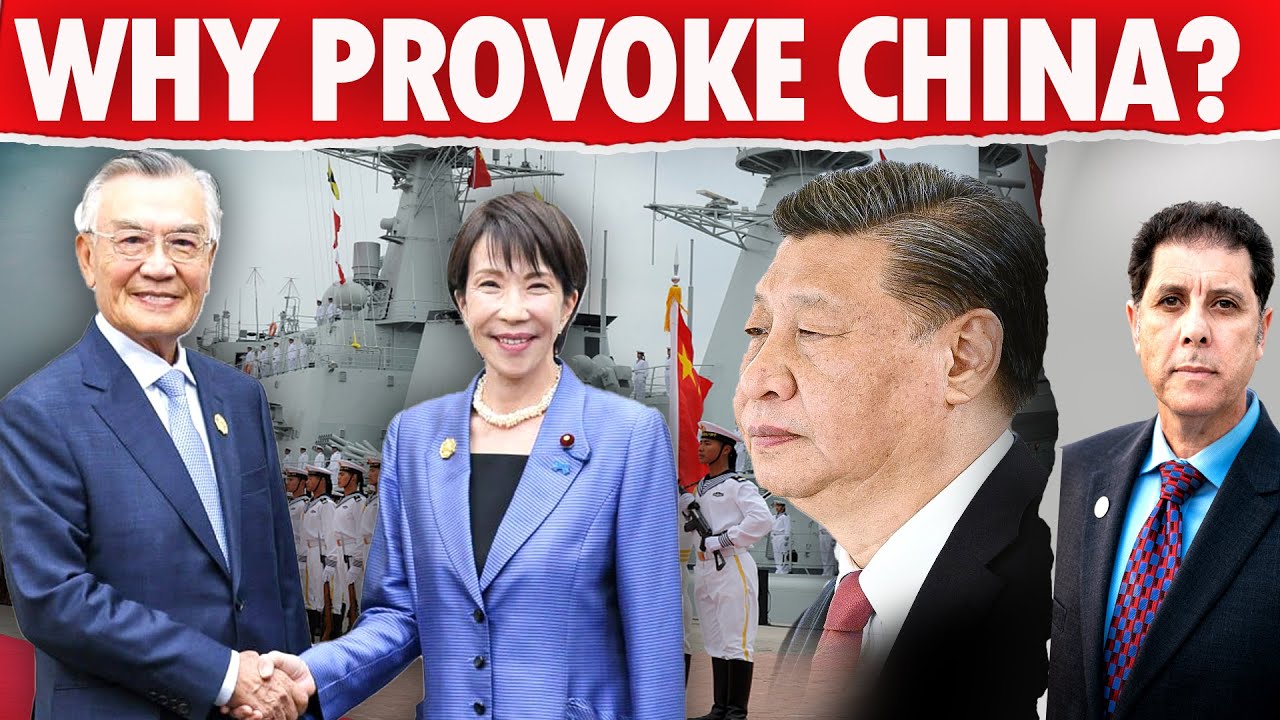
This content was created by David Oualaalou. This content was uploaded by David Oualaalou. This is a YouTube livestream/talk titled "Lack of Diplomatic Maturity: Japan's PM, Sanae Takaichi Provokes China? Geopolitical Trends" (published 2025-11-14) in which host Dr. David Oualaalou leads an on-camera geopolitical analysis. He discusses Japanese Prime Minister Sanae Takaichi's comments about a potential Japanese military response to a Chinese attack on Taiwan, the timing alongside recent U.S. arms sales to Taiwan, Beijing's diplomatic backlash (including a contested tweet by the Chinese consul in Osaka), historical grievances between Japan and China (e.g., the Nanjing Massacre), and broader regional-security implications. The stream includes news clips/recaps (labeled SPEAKER B), audience interactions and Q&A prompts, and references to upcoming episodes and community supporters.
Chapters
Hello everybody and welcome to Geopolitical Trends, where truth matters. I'm your host, Dr. Oualaalou, and it's very exciting to be with you once again. So, got an interesting topic that, uh, I read up on it last night, had to look at to confirm certain, uh, assertions within that particular topic. And this has to do with the statement by the new Japanese Prime Minister. So this is regarding Taiwan. Makes you just wonder what made her all of a sudden start her tenure with a fury against Beijing. So, so this is what I'm going to be providing you my own analysis about. I'll be happy to answer some question for you at the end. Then we'll just, uh, uh, uh, there are some really key aspects Uh, just make sure you stay with me all the way till the end. But before we get into all this, let me say hi to our wonderful community as always. Zan, good to see you. Leang, Willie Holman, Abdul, good to see you. Taiwan Steel, Soccer 088, good to see you. Uh, once again here I have, uh, I have some, uh, housekeeping items to, uh, start with first. But once again, I want to Just make sure to those who just joining us here, this is what I'm going to be addressing today is the, the statements, the remarks by the Japanese Prime Minister Sanae Takeshi regarding Japan's potential. This is the key word, potential military response to a Chinese attack on Taiwan, you know, and of course, a statement like this, it's not going to bode well with the Chinese because now it ignites a significant diplomatic fury in Beijing. If you only know, of course, the history of Japan inside China. So, and I will be addressing the history of the atrocities of Japan in China. So before I'll do this, I want to just some housekeeping items here. Remember to join me on the 20th for my conversation with Professor Yan Lian. I look looking forward to that conversation with her. Very, very insightful lady, uh, for her to share her insights with the community here. So, uh, second thing is I'm working on a topic that just came to my attention this morning, and this has to do with India caving in to the United States. So, so I'm not gonna say much about this till I confirm exactly that India did indeed cave in to the United States, and I, do a video for you and sharing with you the topic for that. So that will be for next week. So I'm gonna do headlines for you here. Uh, this one will be of interest, of course, since we're gonna be talking about, uh, Japan and, and China. What you're looking at, this is a, an F-16, a Taiwanese F-16, uh, uh, fighting, uh, Falcon, uh, fighter jet landing at the, uh, the Houlián Air Base in Taiwan. So what's important about this is that the United States now has agreed to sell Taiwan $330 million worth of equipment and supplies. And this, by the way, it is the first military deal with the island since U.S. President Donald Trump resumed or returned to the White House earlier this year. So basically what the Taiwan governor and his assistants saying basically is that this is the first time the new Trump administration has announced an arms sales to Taiwan after the US State Department approved the deal. So once again, I'm finding it very ironic for the timing of the sale of the weapons and also the statements by the Prime Minister Sanae Takashi. So I find this very ironic, and, and I'll tell you why later on. And if you disagree with me, that's fine. I would like to hear your, uh, opinion on to all this about it. So, so today I'm not going to do geography and history, and the reason for that, because I already did this one in my previous video about Donald Trump meeting with the Japanese Prime Minister. So I'm going to put the link, uh, to that video, uh, regarding the history because it's the same, so I don't need to repeat myself. Just if you are interested in wanting to learn about the history part, go and watch that video, just that segment of it. But what I am going to share with you, however, is that two things I didn't address last time. It has to do with population and the languages. Regarding the population in Japan, Japan is a home to about 125 million point one, uh, one, 125.1 million people. But today Japan suffers from sort of a low birth rate and making it one of the most rapidly aging societies in the world. So you have the ethnic groups in Japan that's called the Yamato to those who know about Japan. The Yamato Japanese ethnic group comprises about 98.5% of the country's population. The other 1.5% include Koreans, about 0.5%, Chinese, 0.4%, and you have the indigenous Ainu. Uh, it's A-I-N-U, to those who are familiar with this, and they are about roughly about 50,000 people. That's it. Then you have the Ryukyuan people of Okinawa, the original people. Okinawa, as you know, used to be a kingdom, never belonged to Japan to begin with. The Ryukyuan people of Okinawa and the neighboring islands, sort of, some of them say maybe, some of them say maybe not, are ethnically part of Yamato. I cannot confirm this because I looked everywhere, couldn't find the confirmation. All I found was some historical records indicate that they are part of the Yamato ethnic group. Other records says otherwise. Regarding the languages, the vast majority of Japan's citizens, about 99%, speak Japanese as their primary language. Now, here is what you need to understand about these aspects. Japanese is in the Japonic language family, and it is generally thought to be unrelated— this is the key— unrelated to the Korean or the Chinese language. However, Japanese have borrowed heavily from the Chinese. Language, and some other languages as well. We're talking about the proximity, given the, uh, and the proximity between Japan and China. So in fact, 49% of Japanese words are loanwords, meaning been loaned, meaning it's being taken from the Chinese language. 49%. Just, just take a step back and think about that. And 9% were borrowed from English. So, and I just want you to be aware of these aspects of it. So, so let me move into the analysis about— and once again, if you want to watch the history and geography, just check out the video that I posted in the chat box and you can look it up later on. So So when we think about the, the really what just happened, less than a month, literally less than a month into her term, and barely 2 weeks after her meeting with the Japanese— with the Chinese, I'm sorry, with the Chinese president. I have a picture right there. This is when they met. So the Chinese president Xi Jinping which they met in South Korea, the Japanese Prime Minister Sanae Takeshi has already found herself in two rounds of heated diplomatic— heated diplomatic spat with China. So the situation has escalated further, of course, when the Chinese diplomats in Tokyo, you responded to this through a tweet, which I will share with you as I move forward. So, but this leads us to ask the fundamental question is, why will Japan all of a sudden be very assertive on this issue of Taiwan? And what's in it for Japan regarding Taiwan? Taiwan is part of China. It's an internal matter. So why will Japan ever stick its neck into all this? So, and this is exactly what Takeshi did on November 7th during an emergency summit meeting of the parliament, during the parliament session. So, and this, the emergency about Taiwan involving the use of military force, and because to Japan is saying it's constitute a survival threatening situation.
How?
So that's why I kind of like the Chinese were taken by surprise out of this statements. But once again, we have to think this happened right after her meeting with Donald Trump. And of course, what I shared with you today for the headline, that the, the sale of weapons to Taiwan. So, so the Japanese prime minister's The ministers throughout the history of Japan, just to let you know, have traditionally avoided mentioning the issue of Taiwan. They know it's a sensitive issue for China, that's one. And second, they know that Taiwan is part of China, so it's an internal matter. It's like, you see, have you ever seen China making any comment publicly on a diplomatic level and so forth about Okinawa? We all know Okinawa used to be a kingdom. Okinawans never wanted to be associated with Japanese, but Chinese never did that. Why? It's because they know that Okinawa issue is an internal matter for Japan. And this was the surprise as to why all of a sudden the Prime Minister is talking about discussing scenarios that could trigger the military response Military response from whom? From Japan. Because what Japanese are saying is, we will come to the defense of Taiwan. Really? So because this is now, it's different than again, traditionally the prime ministers of Japan have avoided this kind of categorization altogether. So because to, to Sanei Takeshi, She's looking at this issue of Taiwan as a contingency. Contingency for whom? Not for just Taiwan, but for Japan in itself. And this is where the concern in Beijing regarding now the rise of the possibility of Japan's military involvement in the Taiwan Strait. And that's what prompt the backlash from Beijing, and rightly so, because you're going to have to understand the core issues here. Because here is what Takeshi suggested, because the core issue, that is, that if China attack Taiwan— first of all, why will China attack Taiwan to begin with? That's one. It's, it's, you know, it's like us attacking Hawaii, even though Hawaiian never wanted to be associated with the, with the, with the US. But those are two different things. To those who say, well, Taiwan can do that. No, no, not if it is part of the country, same part of the same country. Same thing with Hawaii. Hawaii has been absorbed into the part of the States, United States, and that's it. It's like the federal government coming here to Texas. So it's like if we are to go and declare independence. And I'll tell you this for fact, that if we ever declare independence here in state of Texas, the federal government will send the military. So, and this is where the Chinese— the Japanese prime minister, some sort of, uh, uh, stating that Japan could respond with its own self-defense force. Self-defense for whom? Yeah, she cited examples of the Chinese naval blockade on Taiwan and any other military action to prevent the arrival of US forces. And when I heard this coming out of her mouth, it became clear to me that she got the marching orders from Donald Trump upon the visit. That's why I put in the thumbnail for a reason. At your service, or at the service of America. I usually have reasons for the way I choose wordings. There's always a meaning behind it. So, and this is again why China was outraged. Well, China of course will be outraged because Taiwan is a core sort of to China. China views Taiwan as a core sovereignty. Each issue of China to deal with, not other foreign countries to be dealing with. An issue that should not be, and I couldn't agree more, subject to outside interference. Even for us Americans, we have signed 3 communiqués with the Chinese: 1979, 1982, and 1984 or '85, somewhere around that time. So And this is why China's Foreign Ministry said that Takeshi remarks were a "gross," and I put this in quote, "a gross interference in China's internal affairs," end of quote. And rightly so, because in a world of diplomacy, you have to weigh your words. She didn't weigh her words to understand not only the possible consequences of something like this, but also the sensitivity of the issue. Once again, Taiwan is China's issue, not Japan's issue, not the US issue. So, and of course, and I couldn't agree more with the statements of the Foreign Ministry that the Chinese will not tolerate any foreign interference on this matter, and rightly so. Where the concern now is that this escalation The diplomatic clash became now particularly severe when the Chinese consul general in Osaka— I think I have his— yes, right here. This is the Chinese representative in Osaka— responded fiercely when he said, and I quote here in a tweet, the dirty neck that sticks itself in must be Karo. End of quote. I think, and please, to those who are familiar with the Chinese culture, I think this is figurative speech, not a literal speech. Figurative speech. Second thing, if you recall way back, because now you have the Western media taking advantage of this and misinterpreting it in a way that suggests the, the Chinese have no diplomacy and they talking this way, whatever. No, no, no, no, no, they taking it out of context. You all remember when back then President Xi Jinping mentioned about the, uh, if the foreign, uh, it was a figurative speech that they will be smashed against an iron gate. It's a figurative speech. I think it's been misinterpreted here in the West. Is the same argument From my opinion, if I am wrong, I'm wrong. But if you have a different opinion, please share it with the community. So, and this is why in the West they're taking advantage of you, of this, by using it as a threat. And this is why sort of Japan now is lodging a formal protest. So, but again, if the Prime Minister, uh, uh, uh, Takeshi didn't sort of, if she did weigh her words before stating, "Well, we're gonna defend Taiwan militarily." How can you say something like this about sort of the internal affair of another country? And this country is China. And since Taiwan is part of China, that becomes an internal matter. So of course, as you know, uh, uh, Takeshi, uh, is, is known for her hawkish stand on China. There's nothing new. I read up a little bit about her before she was elected, and I was like, hmm, that will be interesting if the Japanese people will go ahead and vote for someone like this only to strain the relationship with China. And of course, that's where— here we are. In addition to, of course, pledging to increase the Japanese defense spending under pressure from the US. So, and all this, there's two main events raising alarms in Beijing, and rightly so. But at the same time, you have to understand where China is coming from. China is coming also from the historical tensions that existed between Japan and China. You all remember World War II grievances, and even before that, the Nanjing massacres, which are, by the way, I'm going to share with you here. So, and all this have added fuel to the fire now. So, and of course, the Chinese went ahead. And I remember when I was in Nanjing, when I was in China, It was the release of the movie, uh, uh, uh, the film that depicted the wartime atrocities of Japan inside China. So, so I am finding myself now asking the fundamental question: is Japan acting on behalf of the US? Sort of, I'm seeing the writing on the wall. Of course, if you ask, uh, someone in Washington, they're gonna say no, oh, there is no clear evidence that explicitly suggests that Japan is acting on behalf of the US. Well, how can you explain the statements by her right after the visit of Donald Trump? And how can you explain the approval of the State Department for the foreign sale of weapons to Taiwan? In such a short time? So, so her remarks and the approval of State Department, because they are— and if we are to go with the approach, which usually what I do for you here, the analysis that I provide, I try to provide you both sides of the arguments and let you reach your own conclusion. Even if we are to go with the, the, the, uh, uh, uh, hypothetical suggestion Maybe Japan is saying this because of its own strategic interests. You know, and if we are to think about, okay, what will be the strategic interests of Japan about Taiwan? You know, and second, what makes Japan assume sort of almost unequivocally that China is going to invade Taiwan or attack Taiwan. And to Japan is saying, well, if China does that, that could threaten Japan's security and shipping lanes. You know, I just don't see the connection there. So this is why to Japan, the argument is, oh, we viewing Taiwan as geopolitically significant to our own defense and regional stability independent of the US directives. I found it very ironic that some will be thinking in these terms from within Japan. First of all, who has— who's creating massive presence inside that part of the world? Is the US. You have bases now like the Subic base that the US is working on reopening in Philippines, South Korea, Japan, Australia. Australia, by the way, is going into that direction. We will be— we are gonna be sending some troops to Australia, by the way. So, and this is where the argument Japan is making, which doesn't— I don't know, it doesn't add up. Then you add another one is the sort of the US-Japan alliance context. Once again, and I'm providing you the arguments from the other side, meaning from Japan side. So when you consider Japan close ally of the US— yeah, I won't call it an ally, I will call it a subservient. It is a big difference. It is a big difference. Uh, if you are to think of, for example, China and Russia, what they are— allies. If you think about the US and South Korea, they're not allies. South Korea is subservient to the US. Japan is no different. Australia is no different. Philippines is no different. So suffice it to say, in the case of the US and Japan, because you have the security treaty and both countries, some sort of both of them, and here is where I found once again, the double standard and the duplicity of the approach to dealing with China or the Taiwan Strait issue, that is, is that both countries, a sort of a explicitly disclose that they have concerns about the potential Chinese aggression in the region. What aggression again are we talking about? And remember, I did put a survey for you in the, uh, for the community regarding the— let me pull it out here because I want to see the, uh, stats on it. When I ask the question, is the Chinese military industry surpassing the American one? So far, 87% of you said yes, 4% said no, and 9% say I don't know. Once again, could this have to do with what we are witnessing with the changes going on right now? And why the US and Japan using special terminology here, Chinese aggression in the region? So I think in this case, if I am to look at— because we already know the US can push that agenda when it wants to, but coming from Japan, I am more convinced that the Japanese statements appears to reflect Japan's its own assessment, because they're saying other countries in the region are expanding economically with China. So, and to them, how the Taiwan conflict could trigger Japan's right to collective self-defense under its constitution. You can see how the justification on part of the, uh, uh, so, and that's why I don't believe that this happened just coincidentally or in a vacuum, or there is no direct influence of the US regarding the statements by the Prime Minister of Japan. So Japan's hawkish stance now on China is broadly aligned with the United States' interest in maintaining so-called the regional stability. Has nothing to do with that. It has to do with trying to prevent China from expanding. Both economically and militarily and geopolitically for that matter. It's because the argument from both Washington and Tokyo is that we wanted to maintain the status quo in the Taiwan Strait. And even to Chinese, they're saying we got no problem with letting Taiwan be as is, as long as it doesn't declare independence. You know, I went to Macau and I saw there's no issues there. Oh, to Hong Kong, there's no issues. As a matter of fact, in Hong Kong at the airport on my way back here, I, I saw some construction and I asked and they said, oh, we are building the third runway here for the airport. So what did the UK do when it was taking control of Hong Kong? Nothing. So, and this is why I am seeing Okay, is Japan acting on behalf of the US for this? In some sense, so, because the other side of the argument, which both Tokyo and Washington need to think about, is that how this is going to be perceived in Beijing, and Beijing is going to view Japan's statements as part of a coordinated the US-led effort to constrain the Chinese power, which of course you all know what it means. And that is why you can understand it through the reaction of Beijing that is intense, and rightly so. Liking this video so far? Don't just be a watcher, go ahead and hit the like share, and subscribe button. And don't forget to tap the bell so you will not miss any of my videos or live streams. This way, you will be supporting a channel that stands for the truth and objective reporting. The choice is yours. Thanks for your support. Let me play a clip for you because I want you to hear exactly what happened.
Tokyo says it'll ask Beijing to provide a clear explanation after one of its diplomats posted a violent threat online. It was made by the Chinese Consul General in Osaka and directed at Japan's—
watch how he used the term violent threat. That's specifically for that reason.
Prime Minister. This post appeared on Shuei-jen's X account Saturday and has since been deleted. It read, "Your dirty intruding neck must be cut off without a moment's hesitation. Are you ready for that?" The post was in response to a comment made by the prime minister. Takahashi-sanae said at a Diet session on Friday, a Taiwan contingency involving the use of military force could be interpreted as an existential crisis.
Once again, what makes us think that the military force is a foregone conclusion? And this is where you start to realize, is this being already pre-planned on part of Japan?
This is for Japan. Japan's top government spokesperson told reporters on Monday he's aware of the post. The purpose of the post is not clear, but I must say that it's extremely inappropriate for the head of a Chinese diplomatic mission to make such a comment.
Well, I will say the same argument. It is inappropriate for the head of a government in Japan to issue such a statement as well. So you're gonna have to— we can't just look at one side and not argue for the other. To me, that's what a balanced objective assessment is all about. What makes the statements by the Prime Minister of Japan okay, but when the representative of China in Osaka said what he said, which was, by the way, figurative speech— it's not literal, it's figurative speech— what makes it wrong? And that is where the difference is, in my opinion. So let's continue here quickly.
Kihara says Tokyo is also aware the consul general has made several inappropriate comments in the past. Kihara says the government repeatedly made strong requests for an appropriate response from Beijing. A Chinese Foreign Ministry spokesperson said the post was aimed at opposing dangerous speech calling for armed intervention in the Taiwan Strait.
And that is exactly how I understood it. It's because when Japan is pushing into this narrative, doesn't matter, because here is one thing I've learned throughout the, my years and working in Washington and traveling around the world as part of work and so forth. Words tends to turn into a policy, especially coming from people in possession of power. So what makes her think that this, that China is gonna take this lightly? They shouldn't, because if China takes this lightly, it's a problem. That is the reason why they reacted forcefully to the statements by the Prime Minister. Some Japanese politicians and media are irresponsibly trying to stir up the matter and to shift the focus intentionally.
Lin said Takaiji's remarks violently interfered in China's internal affairs. On Monday, Takaiji said her comments in the Diet assumed a worst-case scenario. She added her remarks were in line with the government's position.
I have to question that last statement. Not all members inside the government— that's the whole reason why what's-his-name was assassinated, is because they went too close to the US as far as pushing the, the, the narrative and so forth. So, but suffice it to say, if we are to think, I, and as far as, uh, uh, uh, this particular incidents here, so, and that's why the— you heard the statements from Li Jian, he's the spokesperson for the Chinese Foreign Ministry. So that's why he fired off those statements. But there are sort of key logical questions We have to think within this context, you know, because in geopolitics you're going to have to listen carefully to the statements, then you start to think about the possible scenarios. Well, if you are to think, you're going to think about the first question is what signal is Japan leader, in this case the Prime Minister, trying to send to Taiwan independence separatist forces? It's a logical question. So we're going to have to think about another question. For example, is Japan in possession to challenge China's core interests and stop the reunification? Because this is to me what is aimed at. You want to prevent— you, Japan, in this case, want to prevent the the US, of course, but the Japan statement want to prevent the reunification. Reunification will have to happen one way or another, sooner or later. And preferably it will happen in a peaceful manner. As once again, this is why I'm so grateful to our community who sent me to China and sent me to Taiwan, and I was on the ground and I saw with my own eyes. Taiwan needs a lot of developments, by the way. So, and the motherland will certainly allocate resources to bring it up to date, if I may use the term. So I looked at the same thing in Macau. I looked at the same thing in Hong Kong. So, and this is where I'm wondering, is China, is Japan in position to challenge China? Its core interest. And second, or the third rather, what exactly does Japan want to take its relation with China? So where does it, where does this relationship want it to go? And does Japan have any interest in improving it? I don't know. I'm now questioning the judgment of the politicians inside Tokyo. So, and this will also lead us to ask the question about the regional security, because in my opinion, in my assessments, in my own analysis, this incident could have several significant implications for regional security. So you think about the escalation of tensions, always you think about the, the harsh response of China, which is rightful. So if I were advising the president of China, he doesn't need my advice, but if I were advising him, I would say you need to stand firm on this because if you allow this this time, you don't know what the next country is going to say or do. So, and that's exactly what you have to think about. Is Japan now trying to sort of, uh, posturing itself, its military? Because to me also, you look at the optics of it Is this Japan's military posturing? So like I said, Takeshi is known hawkish on China, very, and has pledged once again to increase the Japanese defense spending, which means what? This is representing a more assertive Japanese military stance. Because we're gonna have to think, are we gonna trust Japan again after the atrocities they committed? So if Japan continues building up its capabilities and openly— this is the key word, openly, meaning publicly— discussing intervention scenarios, of course China will have to take the necessary measures to compel it to accelerate its own military strength, capability, and expansion. There's no other way around that. So, and I'm not going to talk about the, the vulnerable possession of Taiwan. It's because you have the separatists there, you have the governor there, whatever, taking the talking points from his masters, and that's going to be a different aspects of it. Suffice it to say, geopolitically speaking, you're going to be looking at a triangle— US, China, Japan— in response to these statements. Because the incident, the statements by the Prime Minister of Japan sort of reinforces now the perception in Beijing that the United States and its so-called allies are coordinating to contain it, which they can't anyway. I've argued in 2006 when the word containment start to circulate, and I remember having a conversation in an office and, and it came up, and I was like, what are you guys talking about, containing China? There is no way. You won't be able to because the conditions in China are different from the ones they were in the Soviet Union era. And second, China is moving forward. Within the next decade plus, you're gonna see China in a different position altogether. And here we are. That's why the containment policy has failed. So, however, what's going on right now, I won't be surprised that it may push China towards more assertive foreign policy or even action to make a point, to demonstrate and prevent from what it's seen as an encirclement strategy, because that is what's at the heart of it. So that's exactly what is, what is going on. And the idea is the other regional security aspects or actors— that is, you're going to have to include the Philippines, you're going to have to include South Korea, and of course the, the, the pathetic state of of, uh, the government, not the state, the government in Australia, in Canberra. And by the way, like I always say, the decisions regarding Australia are not made in Canberra, they are made in Washington. It's no different than Seoul. Certain decisions are made in Washington. So it's because what you're gonna have now, you're gonna have this kind of countries trying to see now, where's— what do we do? We feel under pressure right now. Do we have to strengthen our own military capabilities? Do we have to sort of spend more money on defense? Because their concern, which I can see the arguments, they will be thinking in terms of the instability throughout the Indo-Pacific region. The other aspect has to do now with the diplomatic deterioration that exists between China and Japan, because this, this hostility or this hostile rhetoric that existing now between Japan and China, so, so it's gonna now makes it very hard to maintain some sort of a diplomatic channels needed to manage the crisis. And that in itself will raise the risk. It will raise the risk for even a minor incident that could spiral into a major conflict. So, and if we— this is not enough, you're going to have to— it's not a laughing matter. It's just you're going to have to consider where China is coming from. China hasn't forgotten what the Japanese did. China, China never forget the Japanese dark history of atrocities in China. So Japan historical atrocities in China, particularly during the Second Sino-Japanese War, 1937-1945. 45. And by the way, Japanese were in China before 1937. As a matter of fact, some historical record I looked into found that Japanese were already in '31, 1931, span of 14 years. So the broader Japanese occupation of parts of China remains a deep, really a deeply sensitive issue that sort of continues to influence modern relations between, uh, Tokyo and Beijing. Well, of course, we cannot ignore the historical record, and I'm not going to shy away from sharing this with you because you need to know. I was lucky enough to go to Nanjing physically. I went to the museum and saw with my own eyes. I did the video for the community, not from the museum, because you can't do that, and I will not do it because that's not a place for videos. That's uh, it's, it's, it's a somber, somber place. But I did it when I walked around the city to just share with the community, uh, uh, as far as information. So Japan's military conduct in China, which included at the time severe atrocities, you know, most infamously the Nanjing Massacre of 1937— I think I have a picture here somewhere. Yeah, this is a, this is a picture of a Japanese, uh, soldier overlooking, uh, the, the, the, the bodies, the dead bodies of Chinese. So it's sad, sad picture. So, and of course, where Japanese back in 1937 killed hundreds of thousands of Chinese civilians and soldiers alike. So here's the thing, and I looked at two sources. Of course, I knew this before, but I wanted to make sure. Documented, documented war crimes included biological warfare experiments, forced labor, labor, sexual slavery, including the so-called comfort women system, and widespread destruction of civilian infrastructure. This is what Japanese did. So unresolved historical grievances, because still exist till today. And this historical tensions between Japan and, and, and China, which was of course involving the World War II era, you know, that just, uh, uh, have added now more fuel to these tensions that is going on today. And by the way, that's why China went ahead and released the film depicting the war crimes of the Japanese atrocities in China. So, and in my opinion, it's the right move by the Chinese because they're going to have to leverage these historical grievances. That's all they need to do, in my opinion. They don't need to get into a spat with the Prime Minister of Japan. All they need to do is leverage the historical grievances in response to Takashi Taiwan remark. That's all you need to know for that. That's all what the Japanese needs to know. And when you think about the— if we are to go into the Nanjing Massacre, also known as the Rape of Nanking, so which was usually mass killing, sexual violence, looting perpetrated by the Imperial Japanese Army in Nanjing. And that's, of course, you all know, 1937 to 1938, but it was before that. It was before that. So the Japanese military advanced during that time, moved forward into— and I'm not going to go into too much of this, it's, it's a big, very, very sad and somber The one thing I need to confirm to you is I saw the numbers in the museum when I was inside, and I looked at the record elsewhere and it confirmed the numbers. So, and this one has to do with the, what the International, as a matter of fact, the documented atrocities that the violence included mass execution of prisoners of war and civilians, systematic rape of an estimated 20,000 to 80,000 women and girls. Yeah, there were girls as young as, I think, what, 8? When I saw a picture, the picture that haunted me the most, it was of this elderly lady, probably if I am to guess, was 78 or so. Uh, it still haunts me. That it was sad to see. So mutilation of corpses, looting of homes and businesses, arsons that destroys large portions of the city, and of course of the taking of the Chinese civilians as forced laborers. And what the international witness This is the international individuals who travel to witness and document these atrocities, you know, because among those international witnesses that included the International Safety Zone, which was established by humanitarian activists, documented these atrocities. So, so the small group of foreign nationals, including businessman John Wright Missionary John McGee and others affiliated with the International Committee of the Red Cross created a safety zone that sheltered approximately between 200,000 to 250,000 people, and they documented that one. So, and of course, the massacre in itself, uh, uh, uh, went about, uh, to some estimates 300,000 people. There are those who say between 200,000 to 250,000. Some other estimates suggested 300,000 to 340,000. That's the one I saw with my own eyes, the numbers of that. And that is what, once again, it's sad picture, but I have to share it, show it. This is the Japanese soldier pictured with the corpse of the Chinese civilians, and this was by the, the Guanwei River. I have a picture of the Guanwei River right here. So if we are to go back to the issue of the prime minister, why this matters now, why it matters for the current tensions, well, you have to consider several factors into this that are, you know, they are relevant into understanding. This is why, in my opinion, it'll make perfect sense, and it couldn't be better as far as the timing, for the Chinese to use historical grievances as a, as a rallying national point. Because to win it this way, China can wash its hand clean. From any tit for tat and stay above the fray, showing restraint, showing diplomacy, and showing character. If they get into this tit for tat with the— yes, I know the statements by the Chinese consul in Osaka, which is a figurative speech, but China has also other cards to play. That's in my opinion how I see it, and this is why this is going to be In my opinion, also, this historical grievances is going to make it harder for both countries to build trust or diplomatic rapport. So, so, and when tensions flare up, of course, with the US behind the scenes pushing, both sides can quickly invoke historical wrongs, and that's where it is going to become very, very, uh, sort of problematic in a sense. So I'm going to conclude here with, uh, just do a conclusion and see if there's any question from you. I'll be happy to answer it. So, so now when you look at about these statements by the Prime Minister Takeshi, which was done on November 10th, just came to the surface, uh, so, and, and by the way, she did state it also that there is no intention of her to retract her remarks. However, she softened her stance by saying that she was merely responding to hypothetical worst case scenario. I don't think so. I don't think so. You're not trying to play it safe after crossing the red line. You already burned that bridge. And here is what she said. This is what she said, and I just confirmed it. She's saying now, "Oh, I am going to refrain from such responses in the future." Too late. Too late. So, nobody— everybody knows, of course, Taiwan will remain a sensitive issue. But this is a sensitive issue for China, not a sensitive issue for Japan, for sensitive issue for, for, for the US or European Union. Even Germany, heck, we're sending their soldiers to South China Sea, the naval asset.
What for?
Look where Germany is. Look where South China Sea is. And Germany better look at its own falling economy. So, and this is why the handling of Takeshi, uh, of Taiwan issue may reveal now, in my opinion, lack of diplomatic maturity. You know, you don't, you don't— this is once again when you start having, you know, she's a hawkish on Chinese, and even if you are a hawkish on Chinese, you still, still have to be diplomatic, especially in a position of a prime minister. This, in my opinion, sort of exposes her lack of diplomatic maturity. So, so, because this kind of, uh, and at the same time, the blunt response of the Chinese sort of pushed the, the tensions even forward. So, and this is where they're gonna have to— they meaning Japan and the US— they have to be very careful how far they can push the Chinese. Because China today is not a China of 40 years ago. So, and we never— we need to be reminded of that because this idea of containing China, it's not going to succeed. Simple as that. So, all right, that's all I have for you for today. Let me see if there is any question. Uh, first of all, I want to say thank you to Army with Harmony for buying me few cups of coffee, uh, and of course wishing me a Happy Thanksgiving. Thank you very much, Army with Harmony. I also take this opportunity to say thank you to F you, an avid supporter of the channel both intellectually and financially. So I am very grateful to you, F you, truly appreciate you for your generosity. Each time you come in into the live stream, you drop super stickers. So I want you to know I don't take it for granted, and on behalf of the entire community, we say thank you for your kind support. It means a lot to me. So, uh, to all of you, if you are, uh, wanted to support the channel, as I mentioned last time, I don't have any official sponsor per se. Should you decide to, uh, support the channel, uh, I'm gonna post the link for you in the chat box. I will leave that on the screen, uh, for for you to see. But should you do that, I will be very grateful to you for that support. So, and as I said, I will be working on other stories for you. Uh, I wish you a safe and good weekend. Enjoy it. Just chill out, don't do anything, just do some yard work or whatever. Sometimes it's nice to do nothing. You're not being lazy, you know what I mean? You're not being lazy. It's just sometimes it's nice to chill out, do whatever. Anyway, I wish you a good weekend and I look forward to seeing you next time. As always, remember, geopolitics impacts your daily life in more ways than one. Till next time, bye-bye.
More from David


Beyond the Single Actor: Why the Gulf Isn't Choosing Between the US and China


Iran, Iraq's Militias, and the Houthis Are Coordinating! This Changes Everything




Who Controls the Next Decade's Resources? Latin America and Africa's Geopolitical Crossroads

The Chokepoint Trap: How Washington's Stupidity Triggered a Cascade That Now Controls the World

Trump Spooked as IRGC Unveiled dual-use SLV, Deployed Ghadir Mini-Subs & Hinted at Tactical Nukes!
