Lavrov's Mysterious Message to Iran Unveiled | Geopolitical Trends
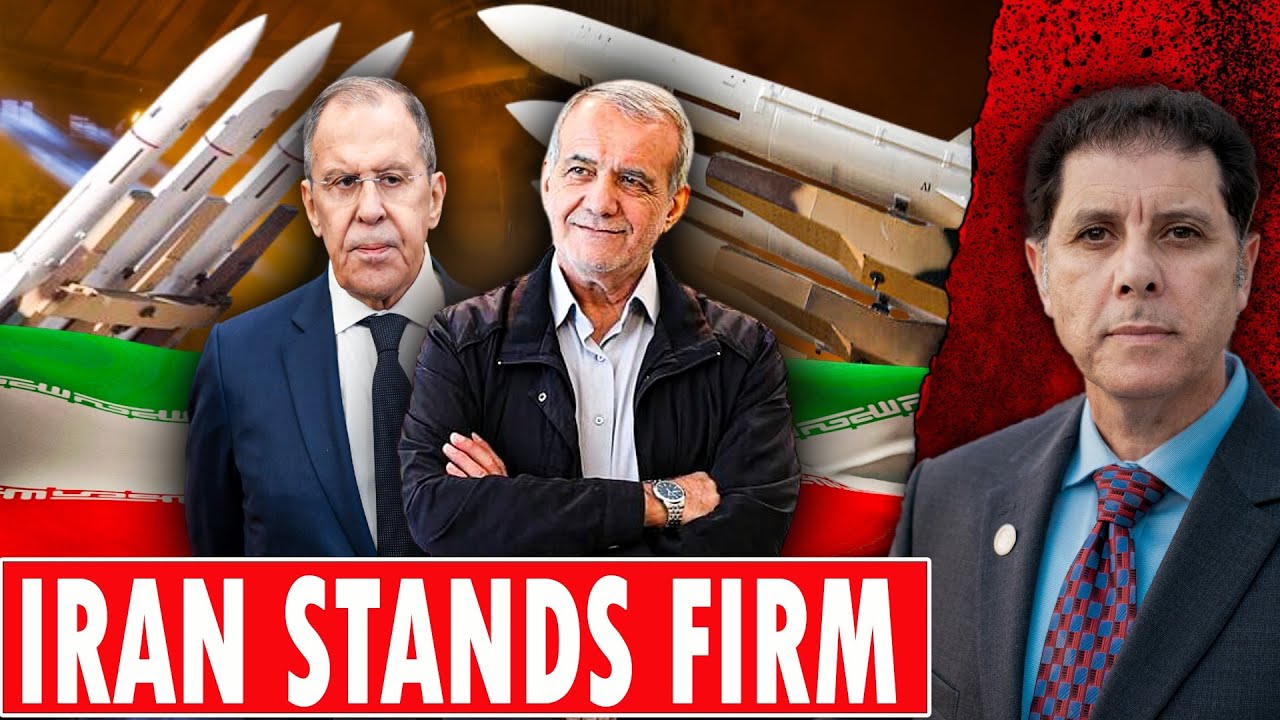
Russian Foreign Minister Sergey Lavrov made a surprise one-day visit to Iran, likely seeking an urgent read on Tehran's stance before a Putin-Trump summit. The trip signals Russia's concern about U.S. sanctions snap-back and a possible Russian naval base in the Strait of Hormuz, while tensions rise over potential U.S.-Israel strikes on Iranian nuclear facilities.
Chapters
All right, hello everybody and welcome to Geopolitical Trends, where truth matters. Excited to be with you as always. I have to put my other reading glasses— I have two here— that I was wearing the wrong one. So anyway, anyway, very, very excited to be with you. My apologies for being late, about 2 or 3 minutes here. I had a phone call, uh, regarding some other aspects of presentations and my content and so forth. So Anyway, uh, I am gonna be providing you today my own analysis about the recent trip of the Russian foreign minister, uh, Mr. Lavrov, to Iran, which happened yesterday. It was a one-day trip. He is currently meeting with the Emir of Qatar, so makes you just wonder what's, what's, what's the deal there. The question that we ought to ask is what is really the message that Mr. Lavrov was carrying in his bag, as we say. So, so this is what I'm going to be talking about today. I quickly want to say hi to everybody. I'm not going to go through the names because I don't have enough time, so, because there's a lot to cover. So I want just to start with some housekeeping. Remember to join me for my conversation with Carl Zaha on, uh, the 28th, which is 2 days from today, uh, at, uh, 1900 hours. So we'll be talking about that. Uh, as to my, uh, interview with Professor Anna Malindog, it has not been set yet. I will let you know when that happens. So now let's do some quick headlines because I need to— I decided from now on, uh, to be doing headlines for you guys to keep you abreast of what's going on around the world. So just to put things in perspective, Well, the first one I'll start with is, uh, I have a picture here for you. Uh, this is in Finland. We're looking at the joint US, Canada, and Finland near Russian border. You know, now you have Northern Finland has seen several military exercises after, especially after Finland, uh, signed a defense pact with the United States last year. So, and I give credit of that picture to Getty Images because that's, uh, you got to give credit where credit is due. So, so a highlight to you, we are pushing and pushing and pushing. Makes you just wonder where this is ever gonna end. So we shall see, because now you're looking at about 900 soldiers from, uh, all three countries. Uh, you're looking at, uh Finland, Canada, and the US. About 900, uh, taking part now in those exercises which began just few days ago, so about a week or so, which is only about 130 kilometers from the border with Russia. That's, to me, is kind of a provocation. The same thing we've doing in Taiwan, you know. Why are we going with the destroyer into the Taiwan Strait claiming this freedom of navigation. No, no, that, that, that's just not right. So, uh, second one I want to share with you has to do with, uh, Britain. And Britain, it was an article published. This is a picture from the, uh, 2009, an old picture that is, but, uh, that's not the point. The point is, uh, what happened, uh, uh, an article coming from, from Britain And here is where you can always sense the narrative, where it's going. So British politician, here is what he said, and I'm going to give you— his name is, uh, let me get you his name, uh, uh, Duncan Smith. To those who are in, in Britain, you know who I'm talking about. What he said is that if Ukraine go— and I quote— if Ukraine goes, Taiwan will follow. Isn't that ironic? Out of all places around the world, he had to focus on Taiwan, which tells me personally— and again, I don't look at this in a vacuum as an analyst, I have to look at it as to what the wording is coming. Usually when a British politician talks, there's always a coordination between the security apparatus, of course, and the United States. So the megaphone diplomacy of the Cold War has resurfaced in the dispute between President Donald Trump and Ukrainian Vladimir Zelensky. British politician and former Conservative Party chairman, uh, Lynn Duncan-Smith, wrote in The Telegraph, in his view, this is what, what's very, very concerning about this guy. In In his view is that the winners of these disputes are the leaders of the authoritarian states, especially Russian, uh, President Vladimir Putin and the Chinese President Xi Jinping. Now, now, the— what he's doing with this article is starting to pave the, the way for the conversation to be set in as far as where the next conflict going to be. That's how I read it. And again, I'll provide you the link later on, guys, and you can check. As a matter of fact, I'm going to do it right now, uh, except that you're going to have to look for, uh, because the article that I got, it was not in English language. So, or I'll send it there. It's a long one, but you'll see it there. Uh, third one has to do with Germany, and, and we can, we can ignore what's going on in Germany now that A reality is settling in. What's happening in Germany? The German Chancellor now, uh, Friedrich Merz, must find huge sums of money to fix the German economy. That is his dilemma, okay? Because here's the thing, you have a pension and defense. This is where he's going to have to find the money for if he is to spare his people their worst economic nightmare. Because that, that means what? That means if this issue is not fixed, Germany is going to become like France. That's what, that's what is going to happen. So basically what he's looking for now, he noted, meaning he noted, Frederick, that is, that a third of government spending, about $105 billion US billion dollars went to pensions last year, calling it a terrifying, terrifying bill to pay. But Germany also needs to start spending big on defense to deter the threat from Russia and meet American demands. Trump will not accept Berlin that pleads poverty. You all see where this is going. So the bottom line now This guy turns out to be worse than Olaf Scholz. So to me, it's like Hangin' G mentioned this one, they should have a referendum. That's to me what democracy is all about, the will of the people. Let people now put it on a referendum for the Germans and say, do you still want to have this guy in power? If they say yes, move on. If they say no, get him out of office. So, so And this, uh, and the last thing I'm going to share with you, it has to do with— this might surprise you guys— with India. Here is what happened. In an unprecedented visit, 12 organizations now call on the European Union to raise the human rights issues for discussion in India because India's abusing the ethnic minorities has reached a point where now the EU is sending a delegation. While you're looking at 12 human rights groups, including Human Rights Watch— uh, Watch, I'm sorry— have urged European Commission President, the liar Ursula von der Leyen, and other commissioners to break the EU's prolonged silence on Indian Prime Minister Modi's repressive crackdown on human rights. Isn't that interesting? You all see what's coming. I think they're gonna now put the thumb on India— do as we wish or else. This is why I never trusted India being part of BRICS, because it will always be undermining BRICS for that matter. So anyway, this is what I wanted to share with you as far as a headline. Let's get in into our main topic of this live stream, and this one has to do of course with the visit of Lavrov to, uh, Iran yesterday. Uh, this is a picture with, uh, his counterpart, uh, uh, Baghaji. Uh, I believe that's— yeah, that's what— that's, that's the foreign minister. Uh, and I'm gonna be providing you, uh, uh, uh, a brief, uh, bio about, say, that best Argachi. So anyway, the question now— oh, by the way, I have some questions for you, but I, I didn't put them in, so I'm going to just share them with you right here. Some of the questions we have to ask now: the timing of the visit, of course you're going to have to consider that. Second, is there a message from the United States? Because here is the thing, are we be looking at this trip as a mysterious Because here's the question for you, the question that I would like you to answer, guys. In your opinion, based on what you know, do you believe, uh, uh, Mr. Lavrov's trip to Iran was to deliver a message or to warn Iran? Which one was it? To deliver a message or to warn Iran? So just please answer in the chat box as I move forward into this, and I'm gonna, uh, uh, share some of your responses. So, so, and this is what I'm saying, the revelation of this trip now, because Lavrov making sort of headlines for this one-day trip. That's usually for a diplomat, usually you at least 48 hours, but for one day, that tells me personally the urgency of the matter. And the mysteriousness of it, if I may add. But now things coming up to the surface, and this is what I am going to be, uh, detailing here in this live stream. Third question is, is this has to do with the JCPOA and Syria? Fourth question is, what are the regional security implications when you consider what Israel is planning to do if it goes forward with it? And the last question is, will the US and Israel attack Iran? That's another question for you guys. Please answer yes or no. In your opinion, do you believe the US will support Israel in attacking Iran? Yes or no? So let me see your questions first, then I'll, uh— oh, Farid Amal, thanks for becoming a new member on, on the channel. Greatly appreciate your support for that. So Uh, before I move forward, guys, as always, I will greatly appreciate if you can, uh, uh, subscribe if this is your first time here and new to the channel, because the analysis you are hearing in this channel is unique to this channel here. So, so if you are learning and enjoying these free episodes, I will greatly appreciate if you could hit the subscribe button, uh, so you can share this, uh, channel with other people that you know, friends, whatever, uh, around the world, so they, like you, have an opportunity to hear the truth. And thank you very much, guys, for your support. Now let's— where do we start with all this? Let me first see your answer, what your answer is regarding the questions I asked. Now for the first one, uh, most of you saying, uh, yes, uh, Uh, P, you say yes. Hairless Ape, you say no. Marco W, you say yes. Truth Seeker, you say yes. Flat Earth, you say no. Yeah, that, that gives me an idea as to, you know, I, and I expected it. It's not going to be one direction or another. So, uh, regarding the, the, the Israel, uh, attack on, on Iran, if that will take place, there is no, no clear indication yet because Israel will be— that will be a suicide if Israel does it, because Iran is not Iraq. It's not Iraq, or al-Iraq, as they say in Arabic. Now, in light of this rapid— now, the developments that is taking place and the, if I may use the term, the escalations between the United States and Tehran on Iran on one end, and between Iran and Israel On the other hand, so you're looking now at, uh, uh, many, many, uh, uh, geopolitical analysts around the world from different parts of the world, and now noticing that, uh, uh, for Iran, there is a lot of thinking with the visit of Mr. Lavrov. Well, the first of it will have to be the timing of it, like I mentioned earlier in the question. The timing comes only one week Yeah, one week after Mr. Lavrov met with Marco Rubio, uh, in, in, in, in Riyadh. And I think I have a picture of that, uh, if I can find it. No, I don't, I don't have it. Oh, I do, right there. After the— oh, not this one. Sorry guys, there's so many pictures, I have to go and clear up all this because I only need to keep what we need. Other than that, I get rid of the stuff. But anyway, it comes like just one week after they met in Riyadh. Second thing, the trip also only is coming about, I don't know, within a month or so for the upcoming meeting between the Russian president and Mr. Trump. So this is why it's very, very interesting. And one of the key aspects that it's gonna be, that is expected to take part into the discussions between the two presidents, President Putin and President Trump, this might surprise you guys, is the Iran nuclear file, the JCPOA. And if you know anything about the process, once again, I wrote extensively on this. As a matter of fact, Uh, when I wrote the Iran book, I'm going to share an excerpt with you from the book I wrote back then. In the following pages, I focused the discussion on how, despite having mutual interests, Iran-Russia cooperation aims to achieve separate objectives. While it's no secret that Russia maintains economic and military ties with Iran its objective is long-term. In my opinion, those objectives consist of Russia's ability to establish a naval base in Iran in a similar arrangement to that of the United States in Bahrain. Doing so, Russia positioning itself to challenge the United States economically and militarily more openly than ever. I just see the logic of— to me, the arguments I made back then sort of reflected itself. Interesting enough is that, uh, an avid supporter of the, of the channel, uh, Matt Becky— he's not here today with us— him, uh, asked one of the key questions. Because here is the thing, you think about it, and this is his word, he shared with me that when you think about Russia's western flank. Well, what is on the western flank for Russia? Ukraine and the EU, right? Then in the eastern part, you get Japan, Korea, Arctic, and US. Then if you look at Russia's southern flank, and what you're going to notice is access to warm water. And this is where Iran comes into play. This is why it's important to understand this kind of dynamics. Why is it important? So, and like I mentioned earlier, the trip of Mr. Lavrov came really at a crucial timing for, for that one. And, uh, when, uh, uh, Mr. Lavrov met with his counterparts— and I have the picture for you guys here to see, let me just pull it up for you. Mr. Lavrov, where are you? Right here. When he met with his counterpart, uh, Dr. Saeed Abbas Argashi. Uh, now if you know anything about, uh, Dr. Argashi, he's a seasoned diplomat. You know, this guy's been around. So I hope you guys— and I'm gonna actually, as a matter of fact, I'm gonna share the link with you right now on the chat box so you can read up a little bit on his bio to give you an idea, uh, later on. So Uh, what you need to know is that, uh, uh, uh, um, Argashi holds, uh, some sort of a, a doctorate degree in political science, and he got it from Kent University in England. So his career in diplomacy, he's somebody— it's very extensive. I was aware of the guy from way back. He had previously served as Iran ambassador to Finland and Japan, and within the Ministry of Foreign Affairs, he held various significant roles including spokesperson, legal and international deputy, and political deputy during Iran's 12th government. And in 2013, he joined Iran nuclear negotiation team, uh, playing a critical role in the landmark, uh, uh, Joint Comprehensive Plan of Action, or JCPOA. So, and since 2021, He's been holding the position of the Secretary of Iran Foreign Relations Strategic Council, and he became now the Foreign Minister of Iran. So the equivalency of Lavrov. So why is this important? Well, it is important to understand the background of whom Mr. Lavrov was talking with. So now this one here, uh, interesting enough is that, uh, here is what Mr. or Dr. Argashi stated right after the press conference. And again, when diplomats— just FYI for you guys— when diplomats— when I say diplomats, I'm referring to seasoned diplomat. This is not Tony Blinken or Narco Rubio, whatever. We're talking about seasoned diplomats here. When you usually use certain terminology, certain wording, certain whatever you want to call it, they tend usually to carry weight. Just look again at the speech by Mr. Wang Yi to the Munich Security Conference. Think about the speeches of Mr. Lavrov. They all carry weight. Well, Dr. Argashi, the foreign minister, stated during his press conference with his counter— the Russian counterpart, he's saying, and I quote, Tehran, Tehran will not bow to pressure from the United States. And usually this happened one day after the United States went ahead and imposed new sanctions on Iran oil industry. The, the, the timing of it is very, very interesting, and this is why you need to understand the dynamics as to why this trip holds meaning. And I'm going to divide this into three sections. One pertains to Syria, second one JCPoA, and third one is US-Israel, all of them within the context of the visit. So once again, you're going to have to think in terms of that— what could it be if you are to put a geopolitical analyst hat on And think, uh, say to yourself, why will he go for one day? How urgent that is instead of sending a message through the embassy ambassador and so forth. That's to me gives me an idea that, uh, uh, Russia wants to hit two birds with one. On one hand, given its conversation now with the Americans regarding the access to economic, uh, the, uh, natural, the, uh, rare earth elements in Ukraine, because now Moscow is willing to work with Washington on this end. But on the other hand, Moscow is also thinking about, we need to see where Iran stands on really key issues, if they are in line with Moscow or not. Because remember one thing, and you guys know this by now, in geopolitics it's not about friendship, it is about strategic interest. Just look what Turkey and Russia have achieved, even with Russia— with Turkey, rather, purchasing the S-400 missile system. And yet, if Turkey gets a chance to stab Russia in the back, they will do it. This is— this— look what the Americans have done to the Europeans. Look what we've done to Germany, for example. If we need to stab them in the back, we will do it, and we did. That's why we blow up the Nord Stream 2. And all this to point out to you that for Russia, he's thinking in terms— we need to gauge. And there is no one better than Mr. Lavrov to deal face to face with his counterparts in Iran to have a better assessment. Then he goes back and report to the Russian president and their Security Council and make a decision as to what's going on. Regarding that aspect. So now you think in terms of these sanctions about Iran, the sanctions that the US now has imposed once again, and this one puts the— sort of puts the marks now on what's the meaning of this. Why will Trump do this right now? So it's because it makes you just wonder, is Trump now trying to press too hard to give no room for Russians to decide, uh, whether they want to join in what, what, uh, Donald Trump is thinking, is planning on doing? On the other hand, could the Russians be looking at it as an opportunity if the US stops support for Ukraine and leave the Europeans to their demise? That will give the upper hand, which already Russia has, and do whatever it wants in Ukraine. In either way, Ukraine is holding the end of the stick. That's exactly what the comedian Zelensky is doing. So now, with all the, the, the, the support that's been provided, it's, it's— it won't matter. It won't matter. It won't matter. This is why Zelensky now wants— the comedian wants to come to Washington next week. What is he going to be doing here? Asking for more money? As a matter of fact, he already declared that he's not returning a cent to Americans. Well, wait a minute, it's our money. What are we to show for? Europeans saying they paid 60%, uh, they gave 60% with guaranteed loans. Really? How is Ukraine going to pay for all that? Let's be honest with the people, and this is where you have to think of it in terms of what's in it for Russia for it to go over there. So now let's take this one to— as I said, three sections I'm going to be doing to highlight to you the, the trip of Mr. Lavrov within this context. Let's start with Syria. Well, the interesting thing about Syria now They just finished today. This is Zulani, the interim leader of Syria now. Zulani is— they just finished the conversation about the national dialogue for the formation of the government or whatever they want to call it. So the interesting thing about Zulani is he is planning to meet with the King of Jordan upon Jordan's invitation. Makes you just wonder, because where was this, this guy? Where was he 2 and a half weeks, 3 weeks ago to be exact? He was in Saudi Arabia at the invitation of Saudi Arabia. What Saudi Arabia and Jordan have in common? They are two monarchies. And what is the fear they have? It's from the religious establishments from within if they topple the monarchies. So And it would not be far-fetched that I'm gonna say maybe the king is inviting him to taste the water to see if Zulani has any intention of toppling the monarchies. Because remember, Zulani was against all the Arab or Islamic monarchies. You know, the guy was an extremist. We are the one who fund him for that. So, and this is why you need to understand the dynamics of the trip. Of the Russian, uh, Russian foreign minister to Iran. Why? Because Iran and Russia were the main supporters of Syria. Now Bashar al-Assad is gone, makes you now wonder, except, except that Russia has already worked out a deal with the interim government of this guy, Zulani. Yeah. That's going to leave the wild card for Iran. Well, Iran is out. And this is why the Syria file— because, uh, during a response, during the— in a response rather to question during the, uh, uh, uh, uh, visit, uh, when Mr. Lavrov was asked whether he was carrying a message from the new Syrian leader to Tehran You have to understand those dynamics, guys, otherwise it won't make sense to you as far as the intricacies of how the geopolitical landscape is complex one. And if you don't understand the, the ins and outs of it, it won't give you the full picture. So when the, the Foreign Minister Lavrov was asked, uh, following the activation— this is the keyword— the activation of the Russian channel with Damascus following the fall of Bashar al-Assad. That is what's important because also Iran wants to know what deal Russia has cut with the Syrian interim government because it's of importance to Iran. Iran has always been the avid supporter of Syria, but now you have Giuliani, which is sponsored by the West, you're all gonna be wondering, uh, where— how this is gonna turn out to be. And by the way, the United States dropped the bounty of $10 million on his head because now we're putting him in a suit and tie. We are the one grooming him for— because we— our puppets, you know. Even I will go as far as, uh, uh, uh, uh, Al-Iraq, or Iraq. This is the national security advisor of Iraq meeting with him in Syria. Makes you just wonder, even for Iraq, he had to think in those terms. And this is why the trip regarding the Syria file makes more sense. Let's move on to the JCPOA. Why the JCPOA is important. It was a great article by, uh, Eli Livid, and I'm gonna provide you guys the link, uh, uh, for this one. Interesting where the article is coming from because it coming from none other than the Carnegie Endowments. Now if you know anything about— I'm gonna just share with you the mission of the Carnegie Endowments and I'll let you reach your own conclusion. The Carnegie Endowments for International Peace generates strategic idea and independent analysis supports diplomacy and trains the next generation of scholar-practitioners to help countries and institutions take on the most difficult global problems and advance peace. Yeah, I, I'll let you, I'll let you think about that. In any event, it was the article written— let me have a sip of water here— In an article, as I said, by, uh, by Eli Levitt, he argued that Donald Trump now is eager for a diplomatic breakthrough. Well, of course, yeah, but on the other hand, it might be a diplomatic breakthrough with some other entities but not Iran? It's because he just went ahead and signed on more, more sanctions on Iran. And that tells me right there that the idea of why Trump is pressuring or adding more sanctions— because he wanted to use it in leverage with the Iranians when it comes down to negotiations regarding the JCPOA. That's the only way I see it. So, because what the article said is that, uh, for Mr. Trump, he ought to prioritize seeking one with Iran to deliver on his, uh, and his predecessor's firm commitments to keep Iran from acquiring nuclear weapons. Yeah, yeah, he might succeed, he might not. But on the other hand, what makes us think that Iran is going to accept the terms from the United States? Iran has been on the list of sanctions by the United States since— what year, guys? Since what year we imposed the first sanctions on Iran? Does anybody know? And you should know this one because you're aware of what's going on on a global stage. What year did we start sanctions on Iran? Uh, Karakulak, you got it, 1979. And what happened in 1979, guys? Once again, I don't like to assume, and again, not to insult your intelligence here, guys, it just I want you to be part of the conversation. What happened 1979? Revolution. John Smith, New Zealand, you got it. NZ YT, you got it. You guys got it. The revolution. So that's, that's, that's, uh, leads us to the, uh, starting point. What makes us think that Iran is going to accept So, so, and this is why once again with some authors, when they write articles, they really want to deviate the masses into one particular trajectory to take their thinking into that path. Oh, this is— we have to, uh, put sanctions because Iran is, is going to acquire the bomb and so forth. So, but there is that idea of You know, what if, what if Russia will end up playing a major role into all this? Did the US consider that possibility? No. So the, the, the article stated that— I don't know how accurate this is, and I'm going to share it with you as is. In quote, Iran's nuclear program must be a priority because the country is close to making a bomb and its current strategic vulnerability. In your opinion, once again, guys, do you think Iran is closer to making a bomb? Yes or no? Let me just see. Uh, hey, you say yes. I, I am aware of the level of enrichments of uranium has increased. Q, you say yes. Flat Earth, you say no. Hanging G, you say yes, Iran has a bomb already. I won't be surprised there, it's no different than North Korea. So Truth Seeker, you say yes. Uh, Francisco L, you say yes. Vad Iban, you say yes and no. But it can be, it can be, it can be either or. So, uh, it depends, it depends again how you look at it. But to my knowledge, and as one who wrote about Iran and I, uh, a book about Iran, and I had to detail, uh, to do the research for the GCP UA, the idea of the enrichments of uranium closer to the military grade level, which usually once you reach that level, it's easy to make, the, the, the, the, the nuclear bomb, that is. No, the, the key question it's, it's, it's gonna be is whether Iran's gonna go the same way India and Pakistan did with the nuclear testing, which was under the nose of the CIA. Pakistan, man, when they did their testing The US intelligence community was caught by surprise. The ISI tricked the Americans. And this is why till today— and I'll share this with you, is not classified, guys— till today we are adamant. When I say we, I'm referring to the US government and mainly the intelligence community, adamant about knowing where the nukes are for in, in Pakistan, what the possibility of locations We will never know, of course, but it's just to highlight to you, to highlight to you that, uh, the same argument I've always made about, you know, about Saudi Arabia's, uh, petroleum reserves. You know, the, the, the Central Intelligence Agency has been after this for a long, long time. They never get to it. So, and, and, and that I found very, very interesting. So now Here is the thing. When you think about the, the idea of how Iran sort of— Iran plays a role, a major strategic role in the geopolitical landscape of West Asia. There is no other way of looking at it. And so in my opinion, this GCP UA file, Russia will have something to gain from it, the same way they did when they behind the scenes supported Iran into accepting JCPOA. Let me just tell you something that a lot of people in the West have no idea. Who do you think worked behind the scenes to convince Iran to agree to the Joint Comprehensive Plan of Action? It wasn't the United States, it wasn't the Europeans, It was the Russians behind the scenes and China to a degree, uh, when it, when it came time to vote, they voted with the Russians. So the UN, it was the Russians. Why is this? It's because the Russians and the Chinese knew what they could gain out of this later on. It was a strategic thinking for the next 20, 25 years. This is why you're seeing the relationship between Iran and China on one end and the relationship between Iran and Saudi— and, and, uh, Russia on the other. And I will go— that's why I argued back then that I will go as far as, as I mentioned earlier in that excerpt, uh, as far as even Russia having a naval base in Iran, which makes perfect strategic sense. That, that, that's the only way I see it. Now, there is another aspect to all this, and it has to do with the, uh, uh, the support of Iran of other entities inside the region— the likes of Hamas, the likes of Hezbollah, and the likes of the Houthis. So, so, and this is why, uh, when the article was written It's almost advocating for acting quickly, you know, sanctions Iran, put more pressures. And the Russians looked at it differently. It's because Russia knows it has leverage, at least when it comes down to Iran. Because mark my word on this, mark my word on this, if the strategic interests of Russia are threatened by Iran, you'll see a 360-degree turn from the Russians, and rightly so, because it's their interests at stake. That is why it's, it's, it's, uh, important. And all this— why GCPOA file comes into this conversation— it's because you have to understand that the mechanism that allows this, the snapback of U.S. sanctions on Iran will expire soon. So it was another article that I had a chance to read by, by Ramadhan Borsah, a very interesting article, "What Trump's Maximum Pressure Iran Deal Means." You know, what does it mean in the big picture? Yeah, how, how, how the Russians can use this to their advantage. And this could be one of the idea as to why the Russian, uh, Foreign Minister Lavrov made that trip, one-day trip to Iran, to sort out and get an idea of where Iran stands regarding some issues like this one here. As, and as I argued in my, uh, in my book, and I'm going to share another excerpt with you if you allow me. Let me just put the book cover here. I wrote back then, I argued that from Iran's perspective, the nuclear program represents the ultimate opportunity to break, to break rather into the international market, assuming it does not cheat. Otherwise, the sanctions will be reinstated, reinstated. I am also convinced that Iran will be careful how far it pushes the West when, for instance, it comes to the temptation of conducting undeclared experiments of its nuclear program. One has reason to question whether the Iranian people are on board with the government regarding its approach to the nuclear program. The two are on opposite sides when it comes to Iran's nuclear program. That's, that's the argument that I made back then, and I can see now why Russia will, will sort of consider this aspect of the conversation regarding the JCPOA. This is Donald Trump signing the reimposition of sanctions on Iran. So it's hard to tell at this point how this is going to move forward. The third element has to do with U.S. and Israel. So, well, of course, as I mentioned, Iran's Foreign Minister, Dr. Abbas Angashi, Abbas— yeah, Abbas Angashi, right there. What the Iranian Foreign Minister stated during a previous interview to Al Jazeera, that any attack by Israel or the United States on Iran nuclear facilities would plunge the region into an all-out war. And he is right, at least in my understanding, knowing how wired Iran is in the region. So, and this is the interview that he did, uh, at that time, because he warned that launching a military attack on Iranian nuclear facilities would be one of the biggest historical mistakes the US could make. And, and, and again, I see the logic in his arguments. First of all, you have to understand the military structure of Iran is different than the one of, uh, Iraq. That's why we want— Israel went ahead and attacked, uh, Iraq back then. Second thing, you know, Israel will not be able to do this on its own, doesn't have the capabilities. No matter what you hear, because Israel doesn't have fuel tankers. That means the US will have to provide fuel, uh, uh, uh, air fuel tankers, which means if US does that, that means it's party to the, uh, conflict, which means if missiles are launched to shoot down whatever's flying there, that's— it's going to be tit for tat. You all know what it means. And I don't think so we Americans have an appetite now for any war. Let alone fighting a war. Have we even won any war since World War II? We have not. You think the Korean War, Vietnam, Gulf War I, Gulf War II, Afghanistan, now Ukraine, and soon to be the Far East. You know, we don't win wars because we don't have a fighting force. Simple as that. We can't, we can't win. We can't fight. We can't fight, and it's a reality. It's a reality. And this is how you have to consider all these dynamics that comes within that context of the upcoming, the Russian-American talks. You know, Donald Trump is going to be thinking in terms of transactions. Russians would be thinking in terms of geopolitical interests. Two opposite ends of the spectrum, because Donald Trump is not a politician. He's not— well, you all know, I don't need to beat the dead horse here. So, and this is where the idea of the, uh, the, the whole conversation— if I am to just think about what's most likely a conversation centered on, it's centered on to those aspects. As to, as to Ukraine, uh, I don't see that, you know. As to Russia and, uh, uh, uh, Turkey and all others, not much. It will be about Syria back then. That only will be when the Americans meet with the Russians, the Donald Trump and Putin. You can expect those conversations to come in into discussions Ukraine issue, GCPUA, uh, Russia's relations with China, because Donald Trump is trying, to no success, to divide Russia from China. So, and, and those, those, uh, yeah, it's not gonna work with the Russians or with the Chinese because the, the global dynamics have changed. Simple as that. So And what's interesting is that, uh, uh, the Russian side decided to provide— now here is what I found very interesting— they're going to be providing a report, yeah, to the Iranians about the talks that took place between, uh, uh, uh, Lavrov and Narco Rubio. I found that very, very interesting. Why will they even do that? What for? So it's because Iran needs to know what are Washington's expectations from Russia vis-à-vis the latter's relations with Iran. You guys see where this is going? It's a really, really— if in the simple terminology, think of it like a chessboard. Those moves will have to be calculated. And if you are not good at, uh, uh, chess, don't play. Like I always say, I don't play chess, by the way. So I play checkers. Checkers, I'm good at that. My dad taught me about that stuff way back, and he used to beat me so bad playing checkers. That's what I meant. So, so, and, and this is where you're gonna have to think now What is the next stage? What should we expect moving forward? So it's because, uh, the, uh, I, I will be thinking in terms of probably again some sort of a, uh, if I may use the term framework, that's the only— it's going to have to be some sort of a framework, uh, between the Iranians and the Russians regarding the issues of Syria, for example, uh, the Houthis, the Turkey. The— you're gonna have to think in these terms. And of course Israel and the US. So, so, and this is where I see— and I'm gonna repeat this again, guys, I'm gonna repeat this one here— is that Russia will not cooperate with, uh, seriously with Iran if Russia's interests are threatened. That's just the way I see it. So, and all this comes within that context of the possibility that, uh, Russia wanted to convey to Iran regarding the upcoming talks between the Russian president and the American president vis-à-vis Ukraine, even though Iran has sort of no interest in that except that if they want to send armament to Russia, and they did send some, by the way, except that the argument has always been whether the United States will allow— not allow, but will accept, not allow, I'll take this word back— accept the continuation of the Russians' authority over Ukraine's geography in certain parts. Like I said, There is no way Russia is going to return back the Eastern Front. It's not happening. Ukraine will have to come to grip with that reality, whether they like it or not. The, the Russians are not going to care because now Russians can also play the card with the, uh, the Americans. And if you know anything about Putin, Putin's been around long enough as a former colonel at the KGB back then And by the way, guys, do you know the story how he got out of the building when the Berlin Wall fell? I know what, what did he say, uh, to everybody was waiting outside. That's how he end up leaving. Was very, very shrewd and tricky. I'll let you find that out, guys. So, uh, uh, now there are those who say, and analysts inside Iran thinking in terms of, uh, optimism regarding the visit of Mr. Lavrov, especially when it comes less than 2 months after the two countries— two countries meaning Iran and Russia— have signed a long-term comprehensive strategic partnership agreement. You know, but not all Iranians are on board, and also Russians are thinking in terms— will not give up their own interests if tensions escalate between the two. And again, this one is tied also to the history. If you know the history of Russia and Iran, former Soviet Union and Iran, and what took place back then. So I think I disclosed something in my book regarding these aspects. So now, where I see the Russia role into all this, that Russia can suggest to Iran, we can play a major role in reducing tensions between you, Iran, and the United States. Yeah, they could, but they won't. They won't. They won't in case those tensions goes up again. So, and that is why I mentioned earlier at the beginning the timing of it. The timing, because the timing is the upcoming talks between Tehran and Washington have reached the dead end. This is why Iran said we are not gonna bow to the pressures from the US, and we shouldn't be expecting anything different because, as I said, we put sanctions on them since 1979. They're still standing. Yeah, simple as that. And as a matter of fact, now it became clear that sanctions do not work. Yeah, they don't work. And this is one of the fear we have regarding, for example, the blocks like BRICS, if they end up ditching the dollar completely. And as a matter of fact, I just find out this morning that about 16 countries, including allies, are really moving into that direction of really reducing completely the dependency on the US dollar. So now the one thing that I need you to think about, and this is again within that framework of what-if scenario, what will be the relationship between Russia and the United States if Iran grant permission for Russia to establish a naval base near the Strait of Hormuz, for example, or some other location. Yeah, I should have, uh, show— hold on a second, I'm gonna do a quick, uh, uh, uh, map of, of Russia. I forgot to do this. I should have, I should have this, this— I should have done this earlier. My apologies, guys, because you have to see, uh, yeah, you have to see the map to make sense out of it. And if I have the larger ones here, but I don't. Okay, let me see. Not here. Not this one here. No, I don't. Anyway, anyway, we're gonna move on. Sorry guys, I thought I was— so that is where I see that if that will happen, then now it's gonna change the calculations for the United States. Because it will require it to readjust its strategies. And of course, we're not going to forget the vassal states in the Gulf, like Qatar, United Arab Emirates, Kuwait, uh, uh, Bahrain, Saudi Arabia, Jordan. All of them, they're going to do what the US dictates. Even Iraq at this point, because if Iraq, if Iraq did not push forward with really, uh, pushing the Americans out That means they are accepting the, the terms of the Americans. It's no different than what Germany did and still doing. I mean, tell me if there's any politician in Germany who will have the gut to tell the Americans, uh, ambassador, American ambassador there, hey, you need to tell your government they need to prepare to evac from our territory. No, this is different, guys. This is different what took place in in the Sahel region with Niger, Mali, and Burkina Faso that end up kicking the French out, and for Niger kicking the Americans out. As a matter of fact, I just find out now that those three countries have left, they left now the ECOWAS, the Economic Cooperation African Council, whatever they call that, they left it now. They are not part of it anymore because they had the guts to do it. You know, to Arab countries, Arab countries would just be talking, no more, no less. I mean, if you— and then even for now, it's going to be in Syria. Yeah, you hear— I heard that Giuliani criticized Trump for thinking about Gaza and so forth. He's also lashed out at Israel's consideration for taking the southern part of Syria. I don't know how much that will hold because Zulani, in my opinion, and please correct me if I'm wrong, he's a dead man walking, no more, no less. So that's the way I see it. So, and I'm going to conclude here, guys, with an excerpt again from my Iran book that I wrote and see if there are any questions from you there. So I wrote back then, those dynamics compelled Iran to reconsider its options. Iran chose to establish economic and military ties with Russia. Yet, many security analysts still question the meaning of that relationship or rapprochement. In my opinion, that confusion is explained after one acquires a better understanding of the historical background that shaped Russia's and Iran's relations over the years to make it what it is today. As of this writing, the rapprochement between Iran and Russia serves both countries' interests and further their own objective despite opposite trajectories. It also serves IFRAR interests I'm sorry, it also serves a far greater strategic aim, and that is challenging the US in view of its declining leadership in the Middle East. Yet relations between Iran and Russia appears at times as though both countries have forged a strategic partnership. At other times, they seem to be far at odds. This puzzling relationship traces its roots back to 1829, when Russia and Iran signed the Treaty of Turkmenchay, in which Iran lost to Russia the territory of modern-day Azerbaijan. I believe that one could view Iran-Russia relations within this historical context, one that left deep psychological scars and a sense of betrayal among Iranians, especially their perception of Russia. That negative perception was even reinforced when Russia recognized and supported Iran's Tudeh Party, which is translated as Party of the Masses in Iran, which was a communist party formed in 1941. Suleiman Mohsen Iskandari was the leader of that party. Less widely known is that the Tudeh Party played a pivotal role during the era of Mohammad Mosaddegh when the latter decided to nationalize the Anglo-Iranian Oil Company, a move that on August 19, 1953, led to his ouster in a coup orchestrated by both the Central Intelligence Agency and the British MI6. That's what I wrote back then. So just to give you an idea as to where things are and for us to understand these dynamics. So very, very interesting. Now let me go back and say thank you to all the— those who, uh, uh, get me super sticker here. Rafael, as always, man, I can't thank you enough for your support and your contribution to the conversation through your questions and statements. I'm, I'm, I'm, I'm very grateful and I want you to know this. You're right, Sisi and Erdoğan— Sisi of Egypt, Erdoğan of Turkey, of course— they are getting ready to fight Israel. The move at the border is not a show. They are ready to make Israel stop. Russia is behind it. Uh, I wish, uh, I, I just don't see that, Rafael. I will have to respectfully disagree with you on this. Uh, what the Russian— what, I'm sorry, what the Egyptians and the Turks are doing, it's just posturing, no more, no less. I've seen it before. My unit, that one, right, uh, not this one, I don't know what it is, 1st Cav, we used to rotate in Egypt and Kuwait. You know, and it was always about just posturing. Now, if they would have done this, they would have done it before. And who's to say? Maybe, maybe not. I'm not sure. But so far— and again, I respect your opinion, and I'm thankful that you really shared some thought-provoking ideas here. And yeah, because Egypt is strong militarily, at least in comparison to the region. So And if they do, that will be something else. You're talking about a fundamental change. So, so thank you so much for your super sticker. Um, Al-Mashar, much appreciate your super sticker. It means a lot to me, and I'm very, very grateful for your support. Thank you so much. Uh, E82, you wrote, keep up the great job, also pleased to watch your show always. Nigeria government refused to release, uh, Biafran leader Mazi Nnamdi Kanu. I heard, I heard about that. It's, it's a long story. I can do a video on it, guys, at some point. But so much appreciate you for your support. Nigeria also, it's one of those countries, very corrupted, very, very, and yet it has potentials because Nigeria has a lot of oil. But it's so corrupted, sad to say. Uh, Army with Harmony, an avid supporter of the channel, and I am so grateful to you for also getting, uh, gifting membership to others. So Jason Nareza Jorani asserts, in the near future Iran will have a revolution and become a superpower on the world stage. Uh, okay, I can concur with the first part of the statement but not the latter part. There are, and I've talked to some people, Iranian people that are not residing in Iran but in some other parts of the world, that the mood there, it's really confrontational. You know, you could just see why sometimes we, even for us, we push the envelope with supporting some groups like Mujahideen-e-Khalaf, which is banned in Iran, but is the one that we funded, we've been funding for a long time. Uh, so the revolution part, I can see that it's just going to take time. And this is where the religious establishment is taking much control of the, uh, security apparatus within the country. Uh, but as far as Iran becoming a superpower, I, I don't see that. I will see them as a regional power, and they do carry a lot of weight in a region., superpower. Not yet, at least. So once again, appreciate you sharing, uh, your thoughts, uh, with the community here. So to all of you, I'm grateful for your, uh, uh, support here. Should you decide to support the channel, uh, here is, by the way, uh, uh, if you want to support my Asia trip. I did see, uh, someone, earlier. Yo, oh, Karim, Karim, I want to say thank you very much for buying me 5 cups of coffee in support of the channel. So I'm very, very grateful to you, and I want you to know that. So anyway, guys, remember to join me and Elizabeth tomorrow on the other channel, Geopolitics in Conflict. I know the name has not been changed because we're changing it to Geopolitics and Money. And we are already gonna be inviting some very, very interesting guests. You know me, I sometimes go look for individuals who can contribute to the conversation. I am not a follower. I don't follow trends of people, what people do. I did reach out to some, including Professor Sachs and Professor Wolff and all that. I reached out to them, they never responded. I kind of cut it off. That's it, simple as that. So life goes on. In any event, remember to join me tomorrow, and I, uh, look forward to seeing you. As always, remember, geopolitics impacts your daily life in more ways than one. Till next time, guys, bye-bye.
More from David


Beyond the Single Actor: Why the Gulf Isn't Choosing Between the US and China


Iran, Iraq's Militias, and the Houthis Are Coordinating! This Changes Everything




Who Controls the Next Decade's Resources? Latin America and Africa's Geopolitical Crossroads

The Chokepoint Trap: How Washington's Stupidity Triggered a Cascade That Now Controls the World

Trump Spooked as IRGC Unveiled dual-use SLV, Deployed Ghadir Mini-Subs & Hinted at Tactical Nukes!
