Macron Begging to Go back to Burkina Faso! Geopolitical Trends
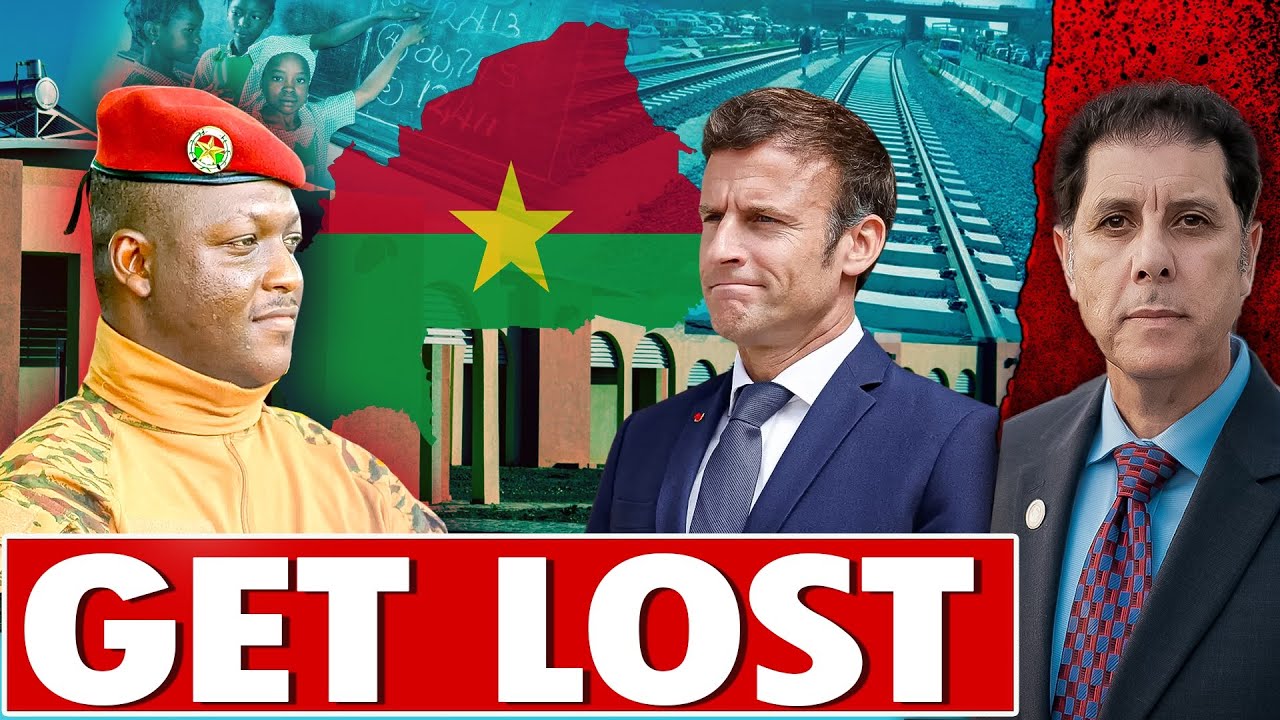
Macron is courting Burkina Faso's military leader Ibrahim Traoré as France scrambles to maintain influence in the Sahel. Niger produces roughly 17-18% of the world's uranium, making the region a flashpoint for competition between France, Russia, China, Iran, and Turkey.
Chapters
Hello everybody and welcome to Geopolitical Trends, where truth matters. Excited to be with you as always, and I mean it when I say it. So I got an interesting topic for you today. I know a lot, a lot, a lot of media outlets not even covering this stuff. It's what's going on in Africa. There's a lot of stuff going on. From even, even failed regime changes in some countries, like in the DRC, the Democratic Republic of Congo, in which some Americans have been involved. You got now tensions in, in, in Eritrea. You got problems now in Somalia. You got the terrorist groups, Shabaab, reemerging. All of a sudden you're having all this, all this, while Mr. Macron has been reaching out to Ibrahim Traoré wanting to go back to Burkina Faso. Makes you just wonder what is the French calculation in all this. So, so this is what I'm going to be talking to you about today, providing you my own analysis about the developments that's taking place, and of course provide you that geopolitical assessment as to what you need to understand moving forward. So before I— this, I always like to say hi to our wonderful community. Timeline Dunkley, good to see you. Laval, good to see you. Muhammad Mazhardine, good to see you. YT, uh, Jerome Lazarus, haven't seen you, Jerome, for a while. Good to see you. Athene Wu, Leanne, as always. Taiwan Steel, Alex Tarokin, good to see you as always. And Juan Horn, the same for you, Juan. I haven't seen you for a while. So Good to see you. All right guys, let's go because there's a lot to cover here. And, uh, as, as I said, the first thing that comes to mind, okay, what makes Emmanuel Macron keep reaching out to Ibrahim Traoré, trying to call him on so many occasions? And I have a link that disclosed where this happened because The media is not going to be talking about it. So, and what happened with that? And I'm going to share the picture once again. So, oh no, this is the thumbnail that we created, which makes sense to me, sort of get lost, Macron, you don't need to be here. So, uh, here is what happened with, uh, with this exchange between, uh, uh, here is what Macron, uh, saying, and I quote, we must strengthen our friendship with Captain Ibrahim Traoré, president of Burkina Faso, and convince him to authorize the installation of our military bases in his country. End of quote. So here is what Mr. Ibrahim— not a bit— Captain or President Ibrahim Traoré responded to by saying, and I quote, 'But you are already friends with the United States, Great Britain, Brazil, Canada. Do you have any military bases in these countries?' End of quote. Spot on. It's kind of put him into the, uh, uh, uh, really in the spot as to why you really want to be in Africa. And this is what— where you need to understand the bigger picture. Because this is not about just having access to natural resources, you know. You also have to understand the geopolitical trajectory as to what's taking place at this moment as we speak, per se. So, so there are three— oh, by the way, let me put the link for you in the, uh, chat box. You can guys look it up later on yourself, uh, if you want to. And, uh, and I'm gonna put it in the description later on. So Now, there are 3 key points that I am going to focus this analysis on to put it in, in, in, in perspective for you. Now, when I say Burkina Faso, I'm referring also to West Africa, you know, the Sahel region. And I believe I kept that map for some other reason. I always decided to keep this map. So when you think about this, because it's going to be coming up into the conversation more frequently. So when you think about why all of a sudden, uh, France is reaching out to Burkina Faso, uh, you know, it, it just the idea of they wanted to go back there so bad, so bad, makes you just wonder. Once again, it's not about just about one country, Burkina Faso in this case. We're talking about the whole, uh, the Sahel region. And there is a reason for all that. And this is what I'm going to base my 3 key points on. One is the access to uranium, because when you think about which country is well known in that part of the world for its production of uranium, does anybody know? Can you type it in the chat box please if you happen to know? There is a country in that region, right here in the Sahel region, well known in having massive production. As a matter of fact, I reached some stats, uh, the production is up to 17 to 18% of the production around the world. So let me see in the chat box which one you guys— uh, no, a good try, a good try. Taiwan still, it's not Congo, but good try. Uh, uh, Garen Snow, you said Chad. No, good try. One more. Mohamed Mzardine, Burkina Faso. No, it's Niger. It's Niger. Mali has some, Burkina Faso have very little, but Niger— this is why you need to understand why France was over there. So now, access to uranium leads us to talk about one key question, and, and I also, once again, I need to have your input into this conversation. Should the Sahel region, in your opinion, acquire nuclear weapons? Yes or no? I repeat the question. Should the Sahel region acquire nuclear weapon? Yes or no? Let me see your answer before I'll do, uh, my own detail and analysis. Jerome, you say yes. Uh, uh, Muhammad Mazhardine, you say yes. Francis Tango, you say no. Okay, uh, uh, you say yes. All Praise, you say yes. YT, absolutely. Abdul F, you say yes. And, and there are, there are reasons, and I'm going to be providing you again my own assessment, and you'll reach your own conclusion when you consider this acquisition of, or access to uranium Like you, like I said, Niger, one of the top. Mali has some. Burkina Faso has some. But because those countries have formed what they called the United, uh, uh, States of Sahel, remember, they form a coalition now. Want to make more sense for them to create some sort of a deterrence instead of be, instead, instead of, uh, uh, be dealing with sort of attacks from groups that are funded by the West. So, and this is where the uranium in Africa— the uranium production is an important part of the African economy, especially with Niger, Namibia, and South Africa creating a total of about 18% of the world annual production. Of course, South Africa gave up on that, but also the corruption that exists in South Africa. Let's, let's make no bones about it, we know how the corruption is in, in, in, in Africa. This is why I was laughing when the minister in Moroccan government, uh, came to, uh, publicly stated that we need to fight against corruption. Come on, man, look at— look in the mirror when you have the Prime Minister of Morocco, corrupt individual, and yet Morocco My point is Africa is notorious for corruption. Till they clean that up, nothing is going to change. So now when you think about whether the Sahel region should acquire nuclear, uh, weapons, it's not an easy question. It's a very complex and a very, very significant, uh, uh, uh, sort of, uh, uh, argument either for or against. Because there is one thing that comes to mind. First of all is the African Nuclear Weapon Free Zone Treaty, known as the Treaty of Pelindaba. So I'm going to provide you the link for it. You can— you guys can read up on it later on, and I'm going to just briefly, uh, address what that is. Excuse me. Now, what is it? You know, basically this treaty prohibits the development, stockpiling, or acquisition of the nuclear material. So the treaty, also known as the African Nuclear Weapon, uh, uh, Free Zone Treaty, is a landmark argument, uh, or agreement rather, rather, that established, uh, sort of the continent, uh, of Africa as a nuclear weapon-free zone. Because here is what this, uh, agreement did. It prohibits the research, the development, the manufacturing, the stockpiling, the acquisition, the testing, the possessing— the possession, rather— the control, or the stationing of nuclear weapons on the continent. Which means what, guys? They leave them exposed. This is why you're seeing so many, uh, sort of the major powers, especially the United States and Western countries, some NATO countries are funding, uh, separatists inside Africa. This is why you're seeing the problems you are seeing, so-called terrorism and so forth. But can you imagine if those— any of those countries will acquire nuclear deterrence? Do you think France will be sending groups over there? Do you think Germany, Belgium, Holland, the US, you name it, Canada? No, they won't. Excuse me. And this is where the issue— and that one in itself leads us to the arguments for and against. So I'm gonna share with you my perspective, how I see it from both ends, and you reach your own conclusion. So now we'll start with the, uh, the, the, uh, the statement or the argument for, again, I'm sorry, against acquiring nuclear weapons in Africa. Some have said, some security analysts have argued that, and I see the point in this, that Africa is known for instability and there are also security concerns. And especially when you consider the Sahel region, which is characterized by political instability. That's due also to corruption, but is due also to foreign meddling of foreign countries inside those. You think about Nigeria, for example, uh, uh, you know, the current president, as corrupted as he can get, it's because he got a deal with the French. So this is one of their reasons. You think about the presence of terrorist groups. What terrorist groups? Who's funding those terrorist groups? Who Who's training those terrorist groups? So, so, and this is why this is the argument against acquiring nuclear weapons there. This is why those security analysts are arguing that if you introduce some sort of a nuclear weapon in such a volatile region, that just going to make matters worse, is going to sort of exacerbate the existing tensions that they already— I don't know if I am 100% convinced about that. But again, we just share the arguments here and we go from there. Second aspect to this, it has to do with economic burden, because developing, which is true, developing and maintaining a nuclear weapon program is incredibly expensive. And that one requires major financial investments. In infrastructure, technology, brainpower, and expertise. And this is why you say to yourself, given where Africa is, will you want to invest so much money into building nuclear power plants and so forth? Or would you want to create, for example, academic or education opportunities for youngsters in Africa, infrastructure, employment, and so forth? This is why, because you have— Africa has one thing to its advantage. It has a young population, very, very young and massive, which is considered, uh, uh, some will argue— somebody was ringing the bell at the house, so, uh, some will argue, well, India has the same, but India, I mean, come on. I don't know if you heard about what Russia just announced this morning, that they are not going to bring Indian workers to Russia anymore because you don't want to do that. You do not want because of how the mindset in India is. So, so same, just because you have population doesn't mean, uh, it is going to be to your benefit. But in case of Africa, it's a young population that it has the resources. India does not have the resources And the third element is that security risks. So when you think about, for example, a country like Niger, uh, which is in the Sahel region— let me put, put up again that map to show you where Niger is. Don't confuse that with Nigeria. This is Nigeria here. Niger is over on the other side, right here somewhere. I can't see it. It's so small here that they didn't, uh, Naomi, it's Niger right there. So when you think about Niger, for example, in the Sahel, which possesses, as I mentioned, large, uh, uh, quantities of uranium reserves, which is crucial for global energy needs. And when you consider the growing instability in that, in, in, in Africa, That's what makes it sort of, uh, legitimate reason and concern, and I can understand that one. So now we go to the arguments for acquiring nuclear, uh, weapons. So, and, and those just an arguments, you know, hypothetical. We are playing both sides here. The first one that comes to mind, you know, and I studied the international security, one of the key thing you learn in the graduate program regarding this is the elements of deterrence. This is why if Iran would have moved forward instead of negotiating back and forth, we— they won't have these issues that they had recently. And yet they're still considering negotiations with the Amer— negotiating with the Americans. You got to be out of your mind to trust the American government. So deterrence will be one of the arguments for acquiring nuclear weapon. So in Africa, that is so. So some have argued that acquiring nuclear, uh, weapons could act as a deterrent against external aggression. Once again, which country we can think of that the US cannot mess around with? Right here. Are we gonna— have we ever threatened North Korea? No, because we know and because they have nuclear weapons. So, so the other key element, in my opinion, has to do with energy independence. Just because you create a nuclear deterrence doesn't mean it's all for war. We're talking about also energy independence, and that in itself will trickle down into the developments of Africa. When you think again, let's go back to the Sahel region. Let me put up the map once again. Sahel region. You think about countries like Mali, for example. Mali now is in the process of exploring a peaceful use of nuclear energy. So yeah, why is this? It's because the also the support of Russia. And this is why you need to understand the big picture, which I am going to get into it as we move forward into this. Liking this video so far? Don't just be a watcher. Go ahead and hit the like, share, and subscribe button, and don't forget to tap the bell so you will not miss any of my videos or live streams. This way you will be supporting a channel that stands for the truth and objective reporting. The choice is yours. Thanks for your support. Yes, please make sure to subscribe to the channel. I would greatly, greatly appreciate it. Now, of course, the arguments that is coming from the West suggesting, oh, it will be bad for Africa to have a nuclear deterrence. Yes, it is not for the West. So double standard right there. So to me, it becomes the idea of Their arguments— I'm sorry, let me continue with their arguments— is that the security risks that exist in Africa makes it very, very problematic, especially when it comes down— when you start considering instability in the region, the economic pressure that's going to put on the system. So, and of course, this could lead to international isolation. But who cares what the West are thinking? And who cares whether it's isolated or not? We have always ignored Africa. Let's just be honest about it. I'll speak for my country here. Since when we had any, any foreign policy that addresses the issues in Africa? We only get concerned now about Africa because of the presence of other players. That's the only reason. Otherwise, we never cared. And this is why, to tie it back to our key topic, why the French president Emmanuel Macron is keep reaching out to Ibrahim Traore, wanting to go back so bad, so bad. So, and of course, we are already, we are already deploying certain tactics. I'm give you a quick example. The Kenyan president right there, this guy here William Ruto, as corrupted as he, he can get. And did you guys know that he didn't start that way? He was fighter. He fought with the common man. It's when he get to power, and you know what he just did? Because now he's being criticized. He authorized the use of deadly force against the demonstrators. Yeah, this is the guy who stood back then in support of the, the, uh, the demonstrators. But that's why I'm saying it is— the corruption runs, runs very deep. So now I mentioned Russia earlier, so I'm going to be addressing my second point. Remember, there are 3 key points, okay? First one was about access to uranium. Second one has to do with 4 countries: Russia, China, Iran, and Turkey. So I'm going to address each one separately, briefly here, then move to my third point. So let's start with Russia. Why Russia is important to Africa, especially when it comes down to the Sahel region? Because the Sahel region has— I'm looking at the map here— yeah, Sahel region has drifted into Russian orbits. So, and the reason for that is drifting to it not by coercion, by choice. This is where the difference between us, the American system, the way we go into countries, and others. So, so the choice of Russia as a preferred external, uh, sort of player or partner to the Sahel, sort of, it's no-brainer because you look at a a natural rich region and also strategically located and one that could influence the trajectory of the global order. Believe it or not, Africa will play a role into that. So the three Western nation— African nations, which by the way groups into what's called in French, L'Alliance des États du Sahel, which means the Association of the, the Sahel States. So Alliance of Sahel States, that's what it is. And this one was formed in 2023. So the announcements of this one sort of took place in the presence of not the Americans, but rather the Russian delegation, which was led at that time by the, the Deputy Defense Minister, uh, Yunus-Bekir Yakorov. So, and also because it was Russia the first country to recognize the Alliance of the Sahel States. But the Russians gave them also one more thing, a promise of security cooperation. That is why you are seeing what we are seeing. So from the beginning of it, this alliance was poised to be what more than just a security or a military alliance or agreements with the Russians. Because this is why in 2024 the alliance of the Sahel States upgraded their security alliance to a confederation. Major developments. You can— we are aware of it. That's why we creating tensions in that part of the world. Second country is China. So it was an article, by the way, which I'm gonna share it with you right away. Article to highlight to you the misleading information. So this is why I wanted to share it with you and highlight to you why that is important to understand. Now, this author by the name of Cameron Brown considered— listen to this carefully, guys— the risk China's nuclear strategy poses for enabling nuclear proliferation in rapidly growing African nations. Misleading. This is, this is the pure example of manipulation, academic manipulation, if I may use the term. And here is what's at the heart of it, because China Here is the thing: China has surpassed the United States as the largest trading partner with several countries worldwide, and China's ongoing investments abroad suggest this trend may also continue in Africa. This is why you've been hearing about the debt trap. You heard that argument, you know, oh, it's only the IMF only the World Bank that gives them nice loans and all that stuff. No, Africans— as a matter of fact, some countries in the Sahel turn down the IMF loans and opt for the Chinese money. You know, China is not giving this just willy-nilly, don't get me wrong here, but at least China's not putting the conditions the same way the IMF or the World Bank do. This is where the difference. And here is where this misleading article that I, I don't believe— I mean, I appreciate the author's effort in writing it, but the content is kind of manipulating here. So, and for me, my responsibility towards you guys is to prevent any, any academic or intellectual manipulation. We won't allow that in our community. Because here is the thing. Over the last decade, China has formed numerous partnerships in Africa in developing what? Civil nuclear technology, nuclear technology across Africa. So this is why the concern about this is why France wanted to go back because we want to— they wanted to have access to that uranium and uranium to do for what? Because if you think about the nuclear power plants in France, where that uranium comes from? Comes from, uh, uh, Africa. Even for us, the United States, how do you think we are operating our nuclear power plants? Do you know where that nuclear power, uh, uranium comes from? Does anybody know? Let me see in the chat box, guys, if you can type in where do you believe, or do you think our uranium that we import for us to use in our nuclear power plants in the United States? Where does it come from? Uh, Niger? No, no, it's not an African country. Believe it or not, it's not an African country. This might shock you. YT, you got it. It's Russia. It comes from Russia. As a matter of fact, now the Russia has— I just saw this yesterday. About $2.3, uh, uh, $2.3 billion in surplus, and most of it has to do with uranium that they ship. Maybe Russia should cut off the shipment of uranium. So, and this is again the big picture as to why China is important, but also why Western media trying to push the narrative against the reality. Because here is the reality, is, is that the current energy use per capita in the African continent, of course, still remain the lowest because they don't have the infrastructure, which is account only— and this according to this article— for about 6% of the global energy consumption. Well, yeah, because they don't have the massive infrastructure that France or Germany or Holland or whatever other countries or US have. No. And this is where the concern for the West, but the advantage for Africa. And the advantage is you have a population in Africa that is predicted to grow to about 2.5 billion people by 2050. This is why I'm saying Africa is going to play and it is already playing just on a lower end, major impacts on the trajectory of the geopolitical landscape. So, and that's why you're seeing why we are now shifting our attention to Africa. When I say we, I'm referring to the collective West. Third country that comes to mind. Is Iran. This might shock you or surprise you. Iran has been shifting its policy towards Africa for the last few years, and I've been following this especially after I wrote my Iran book. You know, I, I briefly, briefly mentioned that because it wasn't more contact at that time. So you ask yourself, why Africa? Well, there are primarily three reasons for why Iran suddenly shifts its priorities towards, or focus rather towards Africa. One has to do with ideology, believe it or not. And this one, because Iran is seeking to kind of break its diplomatic isolation. And that is why Iran, especially with just with, with what just took place against Israel, Uh, which by the way, uh, Israel shut down now completely one port, uh, I think Hiliyat port is completely shut down. That's it, because of the Houthi Ansarullah, that is. So it's been shut down. So, so here's the thing. In 2022, an Iranian foreign minister visited Mali at that time. So, and what happened in Mali at that time? Because it was during the coup in 2020. You know, which was first in a series of takeovers in the Sahel. Excuse me. Yeah, they did this because the, the, those leaders that were there previously were working on behalf of the West, not on behalf of their people. And in 2023, in a meeting with the, uh, uh, security officials from Mali, the Iranian defense minister was, quote, is saying— and I quote because I kept the quote here for you— it says, quote, the Islamic Republic of Iran will spare no effort to strengthen Mali's defense power against the threat posed by terrorist groups, end of quote. The second reason is political. Why is this? Because African partnerships sort of plays a major role that will serve Iran's, politically speaking, when it comes down to its nuclear program. And why is this, you may ask? It's a simple reason, because when you consider African countries at the United Nations represents about 28% of the vote in the UN, which is a forum that has raised concern now for the United States. Because remember, when everyone else condemned what Israel was doing in Gaza, which country refused to do that? Is the United States. But the US was hoping that Africa will vote with the US, and it's like, hell no. So one interesting aspect is that African countries most of them, not all, but most of them. Here is one, one, one, one support, one surprising evidence is that most of them support Iran's right to develop a nuclear, civilian nuclear industry. So, and this explains why when you consider countries like South Africa, which are, by the way, I still fall back to South Africa used to have a nuclear program, civilian ones, but because of the corruption that exists in South Africa, it's unfortunate. So, and this is why when you consider that, uh, even when with the Israeli attacks on Iran and all that stuff, there were about 10 countries. Yeah, if— yeah, about 10 to my knowledge, 10 or 11, give or take. That they all condemned the Israel, uh, airstrikes on Iran. So the third reason is economic, and this is major. Why? Because in 2024, a report surfaced suggesting that Iran secured a secret deal for 300 tons of refined uranium from Niger. And that one raised an alarm in Washington. But don't jump to conclusions quick, because I am going to share quick story with you that happened especially after the invasion of Iraq. What did we say? We said that Iraq was developing nuclear stuff and they have the yellow cake and all that stuff. And what did they end up doing? The Congress decide to send At that time, it was a former Ambassador Wilson sent him to Africa to investigate. He did, okay, came back and provided his report to Congress that it was no evidence whatsoever that Iraq was, uh, purchasing yellow cake in Africa. So How do you think the government retaliated? At that time it was Bush, but who did that was none other than Dick Cheney, used to be the vice president. I was in the thick of it because I was in Washington at that time. So what did they end up doing? It was the chief of staff for the vice president at that time, Dick Cheney, Scooter Libby. His name is Scooter Libby. He's the one who leaked the identity of Wilson's wife. Wilson's wife used to be a CIA agent. Usually it's a crime in our laws if you knowingly disclosed the identity of a CIA agent or official or whatever. And why he did that? To retaliate against Wilson for disclosing the truth. This is why we end up going to Iraq on a false pretext. The same argument we've been making about Iran. Oh, Iran is only one month of developing nuclear weapons and all this stuff. And that falls back to my original argument. You know, Iran is considering these negotiations with Washington. We have no honesty whatsoever in negotiating in good faith. This is why they need to reconsider their approach. So suffice it to say that Iran's interest in accessing commercial markets in Africa, including uranium from Niger, gold from Burkina Faso and Mali, and cobalt from Uganda. So And all this can be attributed to that third reason, which is economic. So, and that is why one of the reasons for Iran to do this is to, of course, to circumvent the, uh, heavy sanctions imposed by the US. But nonetheless, Africans need to think about moving forward. The fourth country is Turkey. Now, we all know how Turkey plays both sides. We all know how Turkey is, but, but Turkey also, while it is not a major player on the, on the world stage, even though Turkey assume that it is a major power, it is not. So as a matter of fact, there is now some really political tensions inside Turkey for what Mr. President Erdoğan is doing to the certain candidates who are challenging him. It's almost like I feel Erdogan wants to be a president for life till the last day he die. And this is exactly the same arguments in Africa. There are certain leaders like the one I posted for you guys on— where did I post it? In the community. Let me just take a look at it here because I remember. Yeah, the guy from Cameroon, the 92-year-old president. Who wants to run now for the 8th time. That just shows you how pathetic and, and crazy these people get hold on into power. There's that saying, absolute power corrupts. So Turkey is no different. However, suffice it to say that Turkey is also eyeing in Africa, especially through its economic engagements, arm sales and foreign aid. But all this can be compared to what China is doing, or Russia, or Iran for that matter. So, and that's why it just— you need to keep in mind that Turkey is also playing a role into this, but it's insignificant. You won't hear much about it. So now I'll go back to one original question once again. Is Africa making a fatal mistake by refusing to pursue nuclear weapons? So, because we're already seeing what's going on with, with Iran, but also we already saw what happened with North Korea, what happened with Pakistan, you know, there the US to threaten them. Now, I don't know about Pakistan whether it has the gut to go forward with whatever, because they did say, well, because Israel threatened, uh, Pakistan. Well, for a reason, for a reason, because Israel does not want to have any Muslim country that has possession of a nuclear weapon. Pakistan is a Muslim country. So this is where the difference is. But again, it leads us to that key question: is Africa making a fatal mistake? And that is why when I think about what some African leaders like, like William Ruto, this guy right here, and I read about him way back and he wasn't like this, but he, he, he— we summoned him to the White House and gave him the marching orders. And this is why he's been criticized recently for allowing, uh, uh, the, uh, security forces to shoot protesters with live ammo. Live ammo, that's what it is. So, and, and because the people didn't want him anymore, I guess so. And, and, and that is one of the reasons why we have to think about, uh, the idea of where Africa is going to move forward. I want to share this quickly with you guys. This is a uranium reserves around the world, but only a few countries. You look at Russia, for, for example, here, large amount. Uh, Australia, massive amount. Kazakhstan, massive amount. Uh, Niger, look where it is. South Africa, look where it is. Namibia. So those are just some, some countries I wanted to highlight to you. So the idea that in this case Burkina Faso's President Ibrahim Traoré is wanting to develop his own country. He doesn't need the West for that, and he doesn't want the West. And we seem to have a hard time accepting this reality that he wants to create free education for his people. He wants to create a banking system that works for the people. By the way, don't want to use the French currency, and he wants to create a good Infrastructure, healthcare, agriculture, and even, uh, uh, for gold, wanted to build factories to process gold domestically. So do you blame him for that? So, and this is why you're seeing the tensions around some neighboring countries like failed regime state in which Americans were involved, and now they're gonna be, uh, sentenced to death in the, uh, DRC Democratic Republic of Congo. So, because the logical question is, what are we doing there? Why are we still fomenting this regime change stuff? Why don't we just live and let live? Why? I, I just don't get it. I don't get it. But again, this is where you see when you hear about, uh, this country all of a sudden having tensions in Eritrea or, or in, in DRC or Even in Burkina Faso, certain regions being attacked by, uh, terrorists. Or in Somalia, you got now, uh, groups that are emerging. All this is by design. It's because we never wanted to see Africa progresses. And that is one reason why I wanted to address this for you guys, because I know everybody is focusing on— and again, I don't care, they can focus on whatever they want. For me, I want to share with you something to learn from, and this is why it's very, very important. So, and that is all I have to share with you. I want to share one comment with you from one of our viewers in the community by the name Justin McClain. He wrote, and I quote, I am new to the channel, a Canadian expat permanently moved to Java but currently working in China. Really loving your work. A video about the Indian company making weapons for Zionist army— excuse me— will be very valuable and interesting. Thanks for your hard work and insights. So that was, that was so kind. Yeah, I will take a look, uh, into certain— I just have to go with the, uh, certain priorities in topics that I feel the community— and this one is important, and I will be happy to address that one. So anyway, guys, I hope you enjoyed this one. Uh, once again, I want to just to share the site. Some of you has been having some, uh, issues with, uh, uh, supporting the channel through certain mediums like PayPal, whatever. Uh, to make it easier for you guys, if you want to support the channel, this is the link you go to. This is the link. I'm gonna put it in the chat box for you guys. And you can, uh, for those who wants to support the channel, I would greatly appreciate it if you could do that through Buy Me a Coffee link here. So, uh, same, same thing applies to, uh, the support for, uh, my upcoming Asia trip. You can also, uh, do this one here through, uh, the Buy Me a Coffee. I'm going to put the link for you guys, and I'm very grateful to those who've already donated in support of the upcoming Asia trip. Uh, the last one, uh, yeah, someone— they don't want to disclose the name, they just put someone bought me a few cups of tea in support of the Asia trip. I'm very, very, very grateful to you for that. So, all right guys, I hope you enjoy. Remember to join me tomorrow on the other channel, Geopolitics and Money. We'll be talking about really some interesting developments regarding economics and finance per se. That's, that's usually what we address on, on that channel. So, uh, oh, I see, I see. I want to share this one here quickly. Uh, Santang, once again, I want to say thank you so much for your generous donation in support of my Asia trip. I'm very, very grateful to you for that. So I just want you, uh, I want you to know that one. So thank you so much for that. Stuff. Uh, you, uh, Fight Back, you are most welcome. You are most welcome. You know, your, your kind word, guys, kind words goes a long way also. So I'm very, very grateful. Anyway, hope to see you tomorrow, and, and just remember to join me tomorrow at 12 o'clock. I'll be with Elizabeth on the other channel. As always, remember, geopolitics impact your daily life in more ways than one. Till next time, guys. Bye-bye.
More from David


Beyond the Single Actor: Why the Gulf Isn't Choosing Between the US and China


Iran, Iraq's Militias, and the Houthis Are Coordinating! This Changes Everything




Who Controls the Next Decade's Resources? Latin America and Africa's Geopolitical Crossroads

The Chokepoint Trap: How Washington's Stupidity Triggered a Cascade That Now Controls the World

Trump Spooked as IRGC Unveiled dual-use SLV, Deployed Ghadir Mini-Subs & Hinted at Tactical Nukes!
