Maldives’ Presidential Election: A Win for China & a Defeat for India!
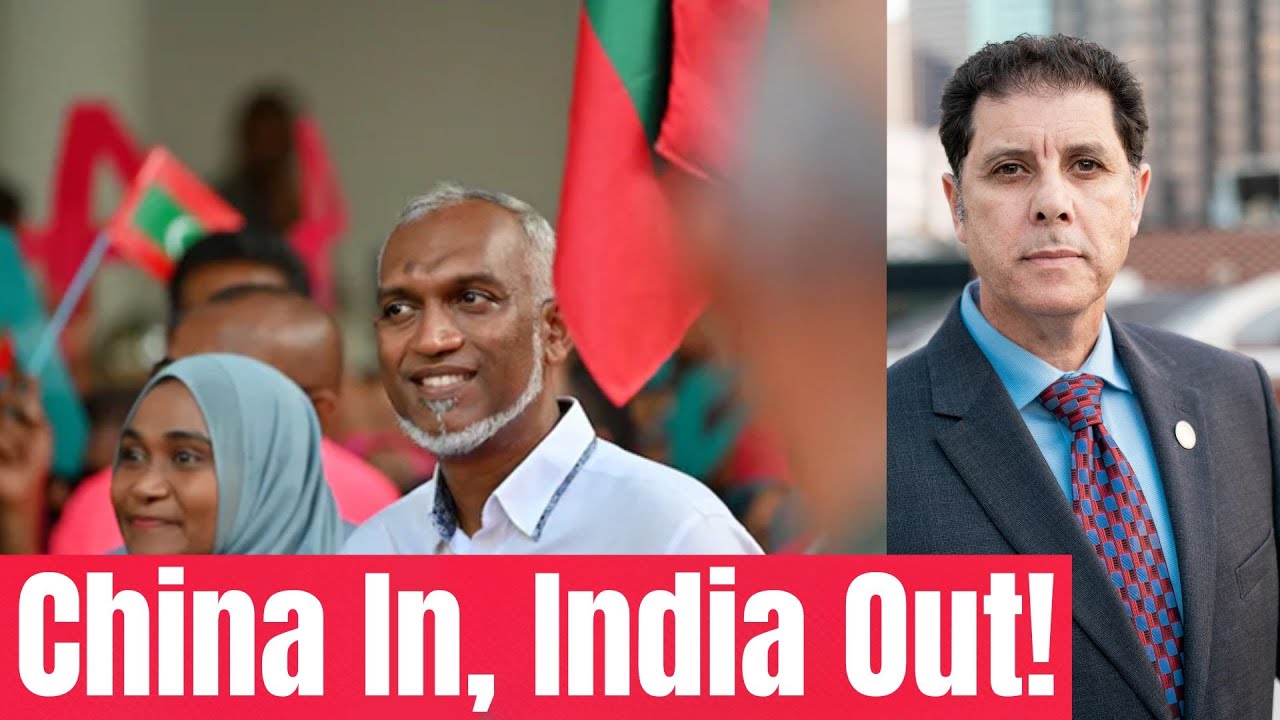
In this live‑stream, host David Oualaalou examines the recent Maldives presidential election that installed Mohamed Muizzu (spelled variously) as president and argues that the vote functions as a de‑facto referendum on the strategic rivalry between India and China. He outlines the Maldives’ geographic significance, its historical ties to India, Sri Lanka, and colonial powers, and traces the nation’s political evolution from early Buddhist settlements through Portuguese, Dutch, and British influence to modern democratic turbulence. Oualaalou highlights Muizzu’s pledge to ask foreign militaries—specifically India’s—to leave the islands, interpreting this as a shift toward Chinese economic partnership via the Belt‑and‑Road Initiative (BRI). He contrasts this with India’s security concerns, referencing the 2022 Sri Lanka protests, the Quad, and a rumored US‑India naval hub. The host also presents competing scholarly narratives that downplay the election as a China‑India referendum, citing authors Memra Abdul Ghaffur and Sankap Grujar, and critiques the media’s reductionist framing. Throughout, he engages the live audience, solicits opinions on the referendum question, addresses side topics such as India’s opposition to Iran joining BRICS, and promises future analysis of related geopolitical issues. The stream concludes with a call for civil discourse and a preview of upcoming deep‑dive content on the Arab‑Israeli conflict.
Chapters
Hello everybody and welcome to Geopolitical Trends. So excited to be with you on this Sunday. It's a sunny day here, by the way, where I am, so I don't know, uh, how the weather is in your part of the world. So anyway, so excited to be with you. Yes, it's surprising because I usually don't do live streams on Sunday, but I figured now this is a topic also I need to address even though I released a video on it, I need to elaborate even more. What are we going to be talking about today? We're going to be talking about the Maldives in the wake of the presidential elections that saw the election of Mohamed Meuzo. I hope I'm pronouncing it correctly here. So if anybody from the Maldives watching this video, please, uh, uh, just correct me if I'm mispronouncing the name. So So, but that's what I'm going to be talking about today. And the reason I want to talk about this, because I do believe that the election of Mohamed Maoozo, it's going to now change the trajectory of foreign policy for Maldives, but also impacts the regional security landscape. Now, how, you may ask? Well, this one has to do with between the two major players in that part of the world, India and China. No, this is why some have considered the elections as a referendum, other on China and, and India, others saying the opposite. And I will explain all this while providing, uh, uh, some, uh, uh, quote from some authors who argued that no, no, no, this elections is not a referendum. Uh, I, I respect their opinions, but I see it differently. So So before I do this, like I always do, I like to extend my sincere thanks to the channel supporters or members. And by the way, I noticed some of you have subscribed to the channel. I greatly appreciate it. And I'd like also to give a shout out to a new channel member by the name of Robert Lawson. Thank you so much, Robert, for becoming a channel member, and I truly appreciate your support, and all of you for that matter. So Just to let you know, we are about 90 members/supporters for the channel. Once we reach 100, I'm gonna do the exclusive Q&A just for the members and supporters. So, so if you are interested just to get us to 100, please do so and, and, and, uh, either become a member or a supporter. So I will also create Patreon account for you who wants to support the channel. This way you don't— you have choices. Whatever way you want to support the channel is fine with me, and I greatly appreciate it. So, so let's talk about the topics today, which the 3 key questions that I'm going to start with. First of all, right off the bat, how significant is the geopolitical implications following the elections of, uh, the new president in Maldives? In other words, Will there be major geopolitical implications to this? Second, what will India do? And if you noticed, I didn't ask what will India or China do, because China is not going to do anything. What will India do? And why am I mentioning India? Because if you look at the history, you have to go back to Sri Lanka, then you understand India's reaction to the Maldives and what it might be. That's why I'm saying, what will India do? And the third element, or the third question, will be what kind of foreign policy should we expect from the new administration of Mohamed Maoozoo once he takes over on November 17th? I believe that's when the election— the, uh, the official, uh, uh, reinstatement or the official day where Mohamed Moosu will become the president. So, uh, hi David K, he's saying hello to you as well, saying hello Dr. O, hello to you as well. Coach Oualaalou, hello to you as well. And, and this individual has been with me for really, really way back, you know, all of you, most of you that I recognize the names here. So good to see you guys. Uh, so let's get into this. So the Maldivian presidential elections, which now we know the outcome already. Mohamed Maoozo has been elected as the next president of Maldives. So this, of course, we put into the, uh, forefront the question of the relationship between, uh, uh, uh, uh, not between, rather, but with India on one hand and with China on another hand. So, and this is why I said how significant the geopolitical implication is going to be, because we can't ignore that it's going to be, oh, Maldives is a tiny— which is a tiny, I'm going to get into the geography of it and a little bit of history. Yeah, but it's— you don't underestimate or minimize just because the size of the country, you know, it's the geographical location. When you look at the map where it is vis-à-vis China, vis-à-vis India, I'm sorry, and vis-à-vis, uh, Sri Lanka, but also vis-à-vis— if you look all the way to Papua New Guinea. Why I'm saying PNG is because the recent military agreement between PNG and the United States. This is why it's important to understand this. So, but before we delve deeper, let's go into the geography, and I'm going to share some pictures with you. This is the, by the way, the picture of the new president. That's his wife, I believe. This Muhammad Mauzu, uh, this is the— during the celebration speech where he got to his supporters and so forth. So, all right, let's get into the geography of Maldives. Well, Maldives is a very, very low-lying island country in the Indian Ocean. No, it is about 717 kilometers from Sri Lanka and about 430 kilometers from India. Now once again, you see now why I ask the question, what will India do? So the proximity, because you have to look at the history, what happened between India and Sri Lanka to understand what will India do vis-à-vis Maldives. So there are about 1,192 islands which are dispersed over an area of 90,000 square kilometers. In southwest of Sri Lanka. You know, every island is individual and separate from other islands. So that's usually how it's known. So the lands of the Maldives, basically, I did see some pictures, uh, they, they are very, very, very beautiful. Let me show some pictures here. Very, very beautiful with sandy beaches and clear water seas that fade away into the deep ocean blue. I, I know some people who travel to the Maldives. I've never been there. So, uh, they are also, uh, coral islands, and in many islands the sands are soft, very, very soft and fine, that is. So then comes the archipelago part of it. Well, Maldives is an archipelago of islands. Archipelago means basically chain of atolls. So the Maldives archipelago is made of, of about 26 natural atolls. Stretch over 90,000 square kilometers in the sea. It's interesting. Let me see if I get another picture for you here. Uh, no, I don't, I don't have the sea one, but, uh, yeah, that's, that's, that's what's interesting about it. So, and of course, with the— within those islands, there are tiny coral islands, reefs, and marine lives. So Maldives is very, very, very beautiful, and I will provide you guys the link and all this later on. So let's talk about a little bit about history, because again, it's a historical context that's going to help us understand. So what the Maldives Islands, as I mentioned, has a lot of, a lot of, a lot of, over 1,000 islands in the area in the Indian Ocean. So, uh, it is the population there is about 400,000 people today based on the latest research that I looked at. So, but interesting enough is that the history of the state of the Maldives began with the ancient tribes. That goes way back. So, and in the course of its development, of course, the country Maldives, that is, has completely moved away— this is what's interesting— moved away from the original Buddhism towards Islam. That's very interesting because majority are Muslims in the Maldives. So, which has changed both the culture and the mentality of the inhabitants— its inhabitants, that is. So the history of the Maldives is a story about one proud and rebellious people. Naturally, so many events in the country has led to the formation of a number of national and public holidays of the Maldives. So, but one, one key that we need to understand is the original, or the origin rather, of the settlements. I'm going to take you back about 2,000 years ago. The Maldives archipelago was inhabited by people from today's India and Sri Lanka. Yeah, that is the record of it. So they were what it was called Sinhalese, which is an Indian, and Malay tribes who practiced Buddhism at that time. So the ancient and modern culture of the Maldives was also influenced by Dravidians. So those are the people of the southern India who created the Harappa civilization. So, so the first islanders did not leave any major archipelago traces, but historians believe that the houses were made of wood, palm leaves, and other natural, uh, material which quickly deteriorated due to high humidity and, and large amounts of salts in the air. So this is why the, the, the tropical climate made serious demand on the islanders housing in, in the, uh, in, in the Maldives. So what's interesting also is that, uh, and this is based on the research that some scientists have conducted. So what the scientists agreed upon or established, one specific thing, uh, which is from the analysis of, uh, Maldivian ancient traditions and customs, was the genealogical tree of one of the early settlers in the Maldives. And it is believed that this was the descendant— the, uh, the Maldivian ancient traditions, the people there were descendant of the Tamil. And if you all know, you know what the Tamil Tigers were and all about. So the territory of the ancient state of Tamilakam included the states of former India, but also settlements were discovered as a result of excavations in both Maldives and Sri Lanka. That is what was interesting. And by the way, Tamilakan reached its peak in the Sangam period, 300 BC, and I'll provide you the link of all this. No. Now, the other aspects of all this that we need to talk about has to do with colonialism. You know, we, we cannot— you cannot forget to address the colonialism when it comes down to this part of the world. And this is why I have this picture here. And this is a representative of the Brits. So the history of Maldives would not have been completely without mentioning the European settlers on the islands. So let's go back to 1558. The belligerent at that time, Portuguese, came to Malé and built their fort in the captured capital. Their power, however, did not last long, and in 1573 The inhabitants of the Maldives destroyed the Portuguese colonizers and expelled their descendants. Same time later, the Dutch wanted to establish a government in the archipelago, but they also failed to break the, to break the free spirit of the indigenous and independent Maldivians. Fast forward to 1887, the protectorate over the Maldives was established by none other than the Brits, which we all know what they did in that part of the world, in addition to what they did to, uh, the Aborigines, you know, in Australia and so forth. So, and in the next century, in 1959, a new separatist state appeared on several atolls The United Republic of Suvaðīb. This is in honor of the archipelago of the same name. Its formation was the beginning of a new chapter of the islanders' struggle for independence. So then what comes after this was the battle with rulers. And what's important about this, guys, is understanding the Maldivians did not suffer from the power of the Portuguese and the Netherlands. Rebellion, or rather, against English rule began in the Maldives in 1964. So the airport was destroyed by the Brits, of course, and the residence of the British administrator was seized. In 1965, Great Britain regained independence for the island, and at the same time, the Suva, archipelago was reunited with the rest of the Maldives. And in 1968, a referendum was held in the country, according to the result of which the state of Maldives became a republic. Fast forward to 1978, Maamun Abdul Gayoom took office as president. He led the Republic of Maldives for 6-year term without interruption, which gradually increased the political situation in the country. In 2004, the capital city of Malé was the scene of mass unrest that forced the president to promise greater freedoms and democratic reforms. A year later, Gayoom permitted political parties And by 2008, the first popular election were scheduled with several candidates for the Maldives leader. This sequence, of course, of events in the life of the country has led to an original model of developments for the Maldives. This is why Maldives, when it comes down to tourism, it's a big destination. So tourists can be very interested in the cultural sites of the Maldives. What about today, you may ask? Well, let's start with the end of 2008. What happened? Elections were indeed held in the Maldives. Muhammad Naheed— or Nasheed, I'm sorry— was the first elected national. He held office until 2012, when protests involving the police led to the resignation of the president. And the reason for the riot here, because I found two different accounts about the really the reasons for the riots. So the reason for the riots was the arrest of the head of the country's criminal court and the beginning of, uh, the beginning of at that time, uh, uh, of the banning of the spa centers at the state level. That's what led to that. So, so Muhammad Nasheed was eventually arrested along with the Maldivian Minister of Defense after the coup d'état, that is. And yes, there are the records that is using the term coup d'état, not a revolution, coup d'état. So there was a slight lull. However, in 2018, which was only what, 6 years ago, uh, in February, President Abdullah Yamin, which was the way he's been arrested, declared a state of emergency in the Maldives for 14 days. That's what happened at that time. The former political leader Gayoom was detained. And interestingly, Yamin is the only— here is the key— is the only brother of the Mamoon Abdullah. So, so today the population of the Maldives is descendant from Southeast Asia and the Middle East, not from India or Sri Lanka as some record mentioned. So the official language is Indo-Aryan or, uh, or, or the Dhivehi, but many people speak Arabic and English. Writing is based on the Arabic Persian alphabet. When I say Arabic, I'm referring to the MS, Modern Standard Arabic, which the alphabet will use. And, uh, same for Persians except for certain punctuations on the letters, like letter ha in English— in Arabic, I'm sorry, you put one dot, one dot at the top, but in Persian you put three. Same thing in Afghanistan in, in Dari. Most people live in Malé, the capital, that is, although some islands are still uninhabited. So this is part of where the issue— where part of the history of the Maldives. This is why, and I'm gonna get it right now into the brief analysis I'm gonna share with you. This is why I asked the question, you know. Actually, I'm gonna ask you the question. Why, why may ask because I want you to be part of that. In your opinion, based what I share with you and based on what you know and based on the video that I published for you, do you believe the referendum was on India and China? So in other words, was the election a referendum or not a referendum on both India and China? Let me know in the box what do you think, please, because I like to, uh, learn about your opinion, and, and, and because I like you to be part of the conversation. So, and this is part of where we need to understand on both sides China's influence and India's concerns. So this is why you saw, uh, uh, the, the, the thumbnail that I post for you on the description, on the, on the post uh, let me see if I can see it here. Anyway, you remember the one on the, uh, when it says India out? It makes you just wonder, uh, why the first statements of the new elected president was that he asked India to leave the Maldives, meaning the military presence. And again, this is where you tie it to the history of Sri Lanka, and I'll get into Sri Lanka later on. So So to go back to the beginning here, was it China influence or India's concern? So, because remember, during President Abdulla Yameen's rule from 2013 to 2017, the Maldives aligned with China. Why is this? Can anybody tell me why? Let me just see in the chat box if you can type in why did Maldives aligned with China in 2013. And if you only know what happened during that time vis-à-vis China— can anybody tell me? If you can, please type it on the chat box here. Uh, yeah, it takes a while to show up here, but, uh, Yeah, there's some major reason why at that time, 2013, 2017, Maldives made it clear that's gonna align with China. There is a reason for that, and that's what I'm trying to find out if anybody can, can share that with us, you know. Yeah, Athene Wu, you hit, you hit the nail on the head, man. You're absolutely correct. The Belt and Road Initiative Why am I saying all this? So now you can see the big picture as to why India is concerned, you know. And by the way, apparently I just find out yesterday that India is objecting to Iran's admission to the BRICS, which is to me, wow. But at the same time, I ask the question, why would India be opposed to Iran becoming part of the BRICS? Unless India is ordered by some outside elements to block or interfere with, uh, India's, uh, uh, with Iran's admission. But it's not India's choice alone anyway. So I do find it very, very interesting, but that's beside the point. So now you understand, and you're absolutely correct, Athinu, it was the BRI that paved the way for Sri Lanka, for, I'm sorry, not Sri Lanka, for Maldives. And this is why the new president wanted to ensure, and I think, and this is my own analysis, I think he's thinking in a long term, economically speaking. Thinking I better consider the welfare of my people economically if I am to align with China instead of aligning with India. Because logical questions— and this has nothing to do with the religion, for Muhammad being a Muslim and India's Buddhism— has nothing to do with that. It has to do with the reality. Economic realities. You know, Muhammad Ma'uzu is asking himself, oh, what, what will China offer me? What will India offer me economically speaking for the whole country? And he's seeing that he will gain more with China economically than he will do with India. And this is why I'm saying, for, for China, of course, makes more sense the Belt and Road, given the string of pearls, as known in some literature. And this has to do with the chain of islands, because there is one thing that China is concerned the most about in case of a conflict. It's not just the Malacca Strait. If you look at the map where Maldives is— here's the map here. Oh, not this one. I want to share this one here with you guys to see. If when you look at this, what do you see right here at the bottom below in the south of Maldives? That's the Indian Ocean, and you have also access to the Arabian Sea. And why is this important? One, you're looking at a quarter of the world transactions that goes on water goes through the Indian Ocean. So to China, it makes more strategic sense to ensure that no US military presence or any other form are in Maldives. This is why when you look at the, the map of the region, that's what makes sense from China's perspective. To Maldives, it makes more sense economically. So, and this is why the infrastructure projects and so forth, uh, uh, uh, in Maldives were processed through China. On the other hand, India's concern— India wants to maintain its influence in its backyard. You know, this is where that question was about, uh, Sri Lanka, okay, of when the Indians sent its own force into— in 20, uh, if I am to recall, when the turmoil happens in 2022. So, and I have an article for you about this one, I'm going to post it for you. So, so India of course also invested in some of Maldives infrastructure, but also wanted to deepen its security cooperation with Maldives. But again, to India it was about countering China, it wasn't about India itself. And this is what led me to think in terms of Okay, could India be instructed by the United States to move forward into this direction? Because I don't see India doing this on its own, knowing that Maldives is so small. Maldives doesn't constitute a threat to India. What for? And I compared the Maldives situation with that of the PNG, Papua New Guinea, when they went ahead and established the military There is a second element to this regarding the agreement between India and the United States regarding the naval base that's going to be in India. Well, guess what? It was never a disclosure as to where the location of that naval, uh, hub is going to be. At least I didn't find it. If anybody knows where, would you please just share with us, uh, the name of that location on the on the chat box, because I didn't find it. All I know, and I have my own contacts in DC, I can reach out and all I know is that there has been an agreement between Washington and New Delhi regarding the naval hub that's going to be in India, but they never disclosed location. So what if, and again, this is just big what if, and I'm going to show the map again. What if that hub, the naval hub, US, is right there at the bottom, let's say, uh, way southern part of, of India, on, on the east side of Colombo, which is close proximity to Maldives? And if you have that proximity there, that means you have access to the Indian Ocean to control it certain ways. So Could it be that's India's concern? Because why will India be concerned? And of course India's argument is, well, we are concerned about military concerns, strategic concerns and all. No, no, no, no, no, no, no. It's nothing but to me it's nonsense. That's why I don't buy that argument. Because when you look at India part of the Quad, you look at the Western nations, the watchful eyes, if I may use the term. So at least the three— UK, US, and Australia, you know, they are— that's why they were very, very keeping an eye on the elections in Maldives to see what the outcome is going to be. So, and all aim at one thing, you know, how we going to see whether the outcome is going to be in favor or against China. So, so to me was like, why are you so obsessed about China to this level? This is like what I just heard yesterday, uh, uh, the defense— I think the Secretary of Defense or the National Security Advisor. Yeah, now he's blaming China for what's going on in, in Israel. You know, this is really stupidity at the highest order. But it also shows you how fragmented our foreign policy— we have none. When you start just shifting the blame, that's an indication of you have no strategy, you have no foreign policy whatsoever. So, and this is again to go back to our topic, it brings me back to my first question as far as the geopolitical implications. So because now When Mohamed Muizzu takes over on November 17th, it is my belief that his advisor is going to have to advise him on the— what kind of course of foreign policy, uh, Maldives is going to embark on. They made it clear they don't want India anymore there. It needs to be out. I even saw signs that says India out. Then on the other hand, how they going to approach it with China? So, so it's, it's not an easy situation. They're going to have to work out. And that's why I don't rule out the possibility that could Muhammadu Buhari cave in to pressure from some outside element. We saw the same thing with Philippines when Marcos Jr. took over. Everybody was hoping, everybody said Philippines now is going to go on the right, or will be on the right side of history. Vis-à-vis its relationship with both China and the US. With China for economic aspects, with the US for security. All of a sudden, it's becoming clear that is not the case. So, but Marcos Jr., or Bongbong, is a weak leader to begin with, you know. For him, the argument is, well, I gotta think about the security of the country. No, no, no, no, no, you have to think about the asset of your family's that are in the United States. Let's just say it straightforward and let's not sugarcoat it. And this is what Filipino people are coming to realize. I don't need to say it, it's, it's, it's, it's well known out there anyway. So, so to India, the concerns will be about, uh, like I said, they are mentioning about regional stability. Well, what stability are we talking about when there are instability inside India. You look at with Manipur, what's taking place there. You know, you look at in certain areas in Kashmir, you know, Afghanistan, you know, there's what we call the instability. There's our domestic instability. So how can you preach about stability, regional stability, when you couldn't even manage the one inside your house? And that's why I don't buy that argument. So, and again, to understand Maldives position vis-à-vis both China and India, mainly towards India, why they asking you out? Because you're gonna have to go back to, to, to 2022 with Sri Lanka. Well, what happened in Sri Lanka? Uh, let me share one picture with you guys because I have one. This is an image from Sri Lanka Air. Is that, I think, the presidential palace or parliament or something. I couldn't remember what it was. So what happened? So during the ongoing anti-government protest, you all know what happened in Sri Lanka, right? In Sri Lanka, which protesters shouted slogans targeting former president of Sri Lanka, the corruption for his family. And it's not a secret. It's not, you know, we all know. We have corruption here in our system, you know, to those who think we are this really true democracy. What democracy? It's nothing but an illusion. And I've been saying it, I wrote about it, and I will challenge the government, our government, on it, because that's not right. You either embark or embrace democracy the way it ought to be, or not at all. Don't fake it because that's what it is. So the corruption in Sri Lanka at that time when the protesters took over, it was about the president, but it was also about India because there were slogan chanting against India. And I did find out, I translated that one from the local language. I do know some people from Sri Lanka, by the way. So And I wanted to make sure, and the slogan reads like this: Don't sell the country to India and the US, end of quote. This is the slogan. Another one, it says, India, Sri Lanka is not another state, end of quote. Another slogan says, and I quote, India, don't exploit Sri Lanka's situation. So, and all this— and of course, by the way, all this gives you an idea, uh, that the anti-Indian sentiments in Sri Lanka was reflected in the elections in the Maldives. Because remember, Maldives is close to both India and Sri Lanka. And this is why there are those who say Well, uh, the referendum in, uh, in, in, in Maldives, it was not about China and India, which I respect the opinion of the author. I have one here that I found, and I'm gonna mention his name and quote something, and I agree with him to a degree. Uh, his name, the author is, uh, Memra Abdul Ghaffur. So, and he argued, he argued, and I see the logic of his arguments because it makes sense. He said that this reductionist, and I quote, his viewpoint is evident in the uniformity of international headlines such as 'Pro-China Mauzu wins the Maldives presidential vote,' end of quote, or some variant therefore. Yet such reports is problematic. It glosses over the foreign policy constraints facing Maldives, which can ill afford to alienate either India or China. Furthermore, it diminishes the agency of Maldivians by glossing over the complexities of the country's political dynamics, which are driven more by local political maneuvering than by the influence of Beijing on New Delhi. Finally, the overemphasis on the India-China angle has resulted in limited coverage of the country's pressing domestic issues, including the future trajectory of its young democracy. End of quote. And I'll share this with you, and that's why I asked you the question You know, was the elections in Maldives a referendum on India and China? Now this author saying is not, you know, and he provide the arguments, you know, and it's argument worth reading and listening to, and I understand it. That doesn't mean he's wrong. No, no, no, no. It means he's providing a, a counterarguments to the narrative. And there is nothing wrong with that. As a matter of fact, I personally will encourage things like this because that's how we learn. That's how we learn about all this. So what— because to me, I look at it, but again, my personal opinion, the, the, the, the, the election of, uh, Muhammad Ma'uzo, when he comes right after announcing that he did win the elections and stated that one of my— and I paraphrase here in quote— one of my order of business going to be to ask foreign militaries to leave the country. Well, whose foreign militaries are there? India. So to me, I look at it like, well, to me it's a referendum because that's what people want. You know, this is not Mao's word for himself. This is a reflection of the people that voted him in the office, and this is what they want. What they want is they want India out and the cooperation with China economically. Will China embrace on having military presence there? I don't know. I don't see that. Won't be a smart move of China to do strategically at this time, but I don't rule that out. This is no different than the arrangements China made with Cambodia, for example. Yeah, I don't see that, but it's no different than what the US did with India or US with PNG. So one thing is sure is that for, uh, for the new president of, of, uh, the Maldives He's thinking about the economic welfare of his country. This is how I see it. So, and it's common sense. It makes perfect sense because he has to think in those terms. So, so I did find other articles that address, for example, one of them from, uh, uh, let me open it here and I'll post it for you later on, guys. One of them from the Hindustan Times, you know, and, and it was a good article. I read it. It's common sense. Just because it's from Hindu's time doesn't mean it's bad or wrong. No, we can't think like that, you know. There are still decent people out there no matter what, you know. And this is why a lot of people, some, uh, who kind of send some nasty feedback about how I do not like India— well, it's nonsense, you know. I really care for the welfare of India. My reason for doing this is to open up the, uh, uh, leaders, maybe they watch one of these videos and think maybe a different perspective could help. Because India is— has a lot of population and it has a human capital that can be worked to move the country forward. You know, why does India still have so many, so many slums, an infrastructure that is broken? Uh, and it's not like there are this poor, poor poor country. It's not. That's the whole reason for why I'm mentioning what I'm mentioning. So the argument, the statement, or the article rather, from Hindustan Times argued that the title says, and I quote here, how the Maldives election will shape Indian Ocean geopolitics. So, and I read, I read a part of it, and, uh, for example, and I quote here, as the India-China rivalry is played out across the Indian Ocean region Domestic politics is becoming a key focal point of geopolitics. The reason— the reason, I'm sorry— the recent elections in the Maldives were watched across the region, not only for domestic politics but also for their likely wider regional impact. What will the foreign policy of the new government be, meaning in Maldives? What will the new government— will the new Government maintain a pro-India orientation, or will China make a comeback? End of quote. So those are legitimate questions, and it's worth reading. Doesn't matter where the article is coming from, if it makes sense, we need to give it credit, and we need to, uh, uh, uh, take heed of the content of it. Now, now, one of the thing I will disagree with the author. Let me just again, let me put it back here because I need to mention his name or her name, uh, then, uh, because I like to give credit where credit is due. The— yeah, it's authored by, uh, uh, Sankap, Sankap Grujar. He's an assistant professor of Department of Geopolitics and International Relations in Manipal, not Manipur, Manipal Academic of Higher Education. So where I disagree to a degree with him is, is the word he used at the beginning, given the rivalry between India and China. Well, which rivalry are we talking about here? Is there a rivalry to begin with, or can India rival China, which you and I there is no measurements by which we can sort of assess or measure what this rivalry is all about. Economically speaking, China is up here, India is down here. I will understand the rivalry if they were about even to a degree. You know, that doesn't mean India is not competing. It is. It's just we use the term, the author, according to the author, using the term rivalry Usually we can't use the term too loosely because it doesn't correspond with the facts on the ground. And the facts are the economy of China outperforms India many, many, many, many, many times. So the military might of China outperforms that of India. Let's just state it straightforward. That doesn't mean India does not have military capabilities. That does not mean India is not moving forward. That's not what I'm saying. All I'm saying is, uh, and when you read an article, this is why it's important to understand, uh, the how the narrative is structured. So if we are to throw the word rivalry there, it has to be something by which we can measure this rivalry, and I don't see that there, man. So this is why I wanted to highlight this one for you guys to put this in perspective, to understand the big picture. Like I always say, understanding the big picture is very, very important. Uh, this is an image from the locals in the Maldives. You know, it's very important to understand because without it, you won't understand the dynamics that's going to be shaping this region, you know. And again, I do not know where the US is going to build this naval hub in India. So for now, I don't know. Uh, I don't know how Singapore or Indonesia is gonna react to this. I don't know how Thailand is gonna react to this. So it's, it's hard at this point to, uh, gauge with, with accuracy or high probability that it's going to be this action or that action and so forth. What is at least clear to me as a geopolitical analyst is that Maldives made it clear as to which direction it's going to go vis-à-vis China. Now remember, I didn't see— I didn't say which direction Maldives foreign policy as a whole it's gonna go vis-à-vis China. All I said was what direction Maldives is going to take vis-à-vis China. Now, the reference is to the economic aspects. This is where I see that difference. And again, it's like when I read that article from that professor, it's well thought out, well articulated. You know, I'm not arguing against that, you know. Uh, it's just that idea of the rivalry between China and India. There is no rivalry there because it can be in a rivalry. You look at even now, believe it or not, there is now major issue in the US between the high-tech companies and the White House, especially Tim Cook for Apple. Why? Because the iPhone 15 sales were plummeted, you know, and what is the result of it? It's because the US policy towards China. Why is that? It's because the rivalry. That's when the rivalry is exemplified through measurements of the industry. In this case, we can say the same thing about India and China as far as rivalry. Because even Apple itself left some of its operations, or took some of its operations out of India and wanted to take them back to China. Yeah, and this is again, uh, uh, uh, in, in, in, in certain setting in foreign affairs and global affairs, those are the norm terms, that are used to connotate or reflect some sort of a sentiments as to where things are. But sometimes we have to be very careful as to how we word certain things because we will end up sending the wrong message when in reality there is no rivalry between India and China because India is not at the level to even have a rivalry with China. The other issue that I am now digging into, which I will let you guys know about, India sort of claiming that it will not allow Iran to be part of BRICS. Or I'm sorry, I'll take this back, India is opposed to Iran becoming part of BRICS. Uh, I don't know. I don't know about India's rationale for something like that, even though India does get some oil from Iran. India also is operating Chabahar Port in, in, in Iran. So I don't quite understand the rationale unless India has been pressured by some key Western You all remember when France wanted to get into BRICS, whatever, and I said, I did a video for you guys, and what, what did I argue? I argue that how can BRICS trust France to be part of its entity? There is no way because France will act like eyes and ears for the West. Well, the same argument now is made about India within BRICS. So, and again, I'm not saying, uh, BRICS needs to kick, uh, India. Uh, no, no, that's not how it works, first of all. And second, there is a protocol to how they need to go about this one, because if India is a founding members, then they— I'm sure they have a mechanism. I didn't find it yet exactly what is the procedure or if you want to ask a member to leave. Now, I do know that India left the, uh, uh, uh, the Shanghai Cooperation Organization on its own, but was it asked? I don't know. So this, it could be the same arguments that can be made, made that. So, but still, to me, it's mind-boggling that all of a sudden India will claim such thing, not allowing Iran into BRICS, even though knowing that India is going to benefit. Because if Iran is part of the BRICS, Iran, what is known for? Massive access to energy, producer, an OPEC member, you know. And if they are to sell their, their oil and energy, whatever, to India, it's, it's going to be in, uh, their own currency. So I don't see the logic, yeah, the arguments. And again, I, I could be, I could be, I don't know, I don't know. So that is, that is my arguments. And again, I could be wrong, but this is how I see it. I'm digging into this issue because I need to find out. Same thing, just to let you know, guys, I am working on a historical— I'm gonna do a video for you, a live stream only about the history of the Arab-Israeli conflict, uh, beyond what I just did last time. This is going to be different and all that stuff. So, and I'm going to go all the way back to the Roman time. Yeah, that's how far back. Except already found out something that makes me put a question mark about the, the, uh, the authenticity of those particular statements. And, and we'll, we'll do that later on. So, all right. Uh, oh, I'm seeing, you know, uh, you know, I can't read all the statements here, but all I saw was somebody put in, uh, Jack, you put— is somebody being rude here or what? You know, please guys, please keep it civil. I would really appreciate it. You know, we are all grown-ups here. Come on guys, we, we beyond that. So, and again, we bring in issues that, uh, you know, I'm spending my time doing the research and all that to bring you knowledge, but not to get into this nonsense stuff. So, so please be respectful of that. You might disagree, and you are entitled to your opinion, and your opinion matters and ought to be respected. But again, please, please be respectful. And I, I don't know what the conversation is all about here because I'm focusing on sharing my analysis with you. I can't do to read and, and speak at the same time. It's, uh, so, so please, I will, I will appreciate you if you can, uh, just not, uh— okay, uh, I think it's coming, becoming clear to me now. So I'm gonna have to remove this individual here. So Yeah, yeah, because it's, it's— I will not tolerate that, you know, you know. And if the person wants to unsubscribe, please do so, you know, because I have no, I have no tolerance for that. A respect is earned. So, you know, you don't show respect, why should we respect you? So I would really appreciate it, guys. Thank you so much. Yeah, I had to remove without, without putting the person's screen name on the, you know, not embarrassing. So, so let me— I'm gonna look, I'm, I'm looking through right now just to see because I'm gonna have to remove, uh, if there's any, uh— now you are entitled to express your opinion I am not against it. You know, you can criticize me personally. I am not against it, uh, as long as it's, you know, done in a civil way, civil manner. Because, and again, to me, it's, it's, it's a slap in the face for us all, for the whole community. And, and that's not what I'm doing this for. All right, so it was, it was, it was that particular individual. So anyway, it's done, it's the past, let's move on. Uh, so I'm gonna just wrap this up for you guys quickly here, and I'll take a question or two from you. So, so just to, for you to understand moving forward, because comes November 17th when Muhammad Ma'uzu takes over officially You're gonna have to watch for the first indications of the, the nature of the foreign policy he's going to embark on, his administration. I did the same with Philippines when Marcos took, uh, over. I'll say I'm gonna give it about 2-3 months. That's usually time frame when I get— because you don't expect change to happen within a month, that's not enough time. So you give it a time frame of 3 months, and, and, and when the visit You all remember when Marcos Jr. went to China, and to me, I was still saying that's a good sign, but I'm still holding my judgment. Let's see what comes after that. And right 2 weeks after that, he signed the agreement with the US to allow an access to more bases, and it became clear to me, oh, we can't jump to this. So I will do the same with the Mohammed Mawuzu once he takes over, and I will report back to you in a few months, uh, if I notice something. So, all right, let me see if there is a question here. I'll take a question for you before I'll sign out, or take a question from you rather. Uh, oh, Aten Oualaalou, you wrote, David, you're right, Marcos is thinking of his family assets in the US like many elites in other countries. You are right. And that's, you know, when we say corruption, we don't point fingers at just certain— we have it right here in our, our, you know, that's why I don't shy away from saying, you know, our democracy is an illusion. You know, Aristotle 2,000 years ago argued about how messy democracy can be, you know, and he didn't speak on the top of his head. The guy was a philosopher, understand the human nature, you know, that, that just, uh, so it wasn't— and we are seeing it right here, right now. And that's to me, uh, uh, Michael J, thank you very much. All right, let me see if there is, uh— and I'm scrolling down, guys, just to see if there is question. So I see one here from Jack, Jack Robert. Question: Is this happening in Maldives because Maldives is Muslim and don't trust the BJP party? India losing influence in the Muslim majority areas. Oh, that's a great question, given what's taking place with the minorities, Muslims, be it in Manipur or any other place. We also— the treatments by certain groups— let's not, please guys, let's not generalize that it's entire Indian society doing this. No, there are Indian people of Hindu background, they have nothing to do with that. Where the issue that I see personally, and looking from outside in, is with the Prime Minister himself, because that's where the buck stops when you are in a position of leadership. And if he couldn't come forward to say stop this ethnic tensions against this minority, stop this nonsense, because his silence, Modi's silence is fueling, it's almost like agreeing to what's taking place. And to me, when Hinduism, certain elements, because like in any other country, they have domestic politics, And domestic agendas are also pushed by both sides of the aisle, as we may say, the far right and the far left. Well, India has the same. The hardliners within the BJP are pushing that narrative. Yeah, that could be, but to me, I see it differently, Jack. And again, my opinion, I'm seeing it from an economic perspective that Muhammad Mauzu happens to be Muslim is that seeing the progress of the Maldives is through economic rather than military buildup and so forth. And again, the assessments based on the historical track that was going on, they realized, because the previous, uh, president who is now in jail for corruption, because the previous president was pro-India. So what did the Maldives gain from it? Nothing. This is why I believe, first of all, uh, the elections was a referendum on, on India and China. And second, that Mauzo, Muhammad Mauzo, the newly elected president, is looking at the economic aspects of it. So, uh, how the West is going to react moving forward, we don't know yet. So same thing that we were saying about New Zealand, which by the way Yesterday, uh, an investigation is going to be opened up now regarding the, uh, the previous Prime Minister Jacinda Ardern, the tyrant. I call her the tyrant for her policies regarding the pandemic. And, uh, and I hope they do the investigation. And if she found guilty, you give, uh, you don't judge. If she found guilty, she needs to be in jail. Same with our people here that have lied regarding the pandemic, they need to be in jail after giving them a fair trial. That's, that's the way I see it. So, so let me see one more question here, and I hope I answered that one, Jack. It's, it's fascinating developments in, in the Maldives, and, and I am sure, uh, It's, it's, it's gonna be moving forward, and they depend a lot on, on tourism. It's because it's pretty, from the people that I'll talk to. I talk to them and, uh, they're saying that Maldives is— it's worth visiting. I'll take one last question here from Hong Kong. Good to see you. Question, Dr. O. Back to the Palestine-Israeli war. If the OPEC+ group that sides with Palestine stops selling oil to those who back Israel, wow, are we looking at a 1973? That would be bad news because— but remember, this one will disrupt. Yeah, it could be, but it could also trigger a reaction from, uh, those Western countries. What kind of reactions? We don't know at this point. There was a rumor, and this is just a rumor, I couldn't confirm it, that Qatar said that they're gonna stop delivering liquefied natural gas if the West does not pressure Israel. Later on they said, well, that was just nothing but fake news. Uh, I don't know. I don't see Qatar coming forward and saying this. Willy-nilly. You know, those kind of statements, they have to be very measured, and you have to be ready for the consequences of that, because if you back down, that means you have no credibility. This is why the idea of sort of cutting off the oil, yeah, it can work, but Uh, those Arab countries— let me, let me, let me say something straightforward here as one who is very familiar with the Arab culture and so forth. Arabs, some of them, not all, they tend to talk too much. Sometimes when you talk too much and you don't act, then you're perceived as weak. So, you know, how long the Arabs have been talking about the Arab-Israeli conflict? For forever. You know, they couldn't. You know, you look at so many countries in the Arab— you tell me you couldn't exert pressure out of all the natural wealth you have and all that? But again, I can't speak for all of them, uh, because even Arab countries themselves use the Arab-Israeli conflict as justification to divert attention from domestic failures. Be it in economics, education, social settings, and so forth. You know, the Muslim countries, Egypt as an example, or any other country, they'll turn the attention of the population towards the Arab-Israelis. We stand with Palestine on that to divert the attention because they don't want the population to see the failure. We do the same here in the US. The failure of how the middle class now is falling down The government is finding alternatives to divert the attention towards other conflicts overseas. Doesn't take genius to figure this out. So, so will the OPEC members do it? I, I don't see that happening. You have to coordinate among so many, and I don't see them doing that. Uh, what you see, for example, is like Saudi Arabia, for example, it's gonna Now it put, uh, on hold its, uh, talks with Israel about normalization. And like I mentioned last time, 4 Arab countries or Muslim countries— Bahrain, United Arab Emirates, Morocco, and Sudan— uh, they already normalized relations with Israel, and now they are under the microscope from other Arab countries because that means, uh, they agree to what Israel is doing to Palestine. I, you know, that's their decision. But I am sure there are reasons for why those countries agreed to normalize. They got something in return, that I know for a fact. So, so this is how I see, uh, that's how I see it, guys. So anyway, uh, as I said, just to close this out, I'm gonna be working on the history, uh, uh, program for you about the Arab-Israeli conflict. As a matter of fact, I might include the whole Middle East. I wrote extensively about the Middle East, so I'm very, very familiar. And we can do just a live stream on a history of the Middle East, including the Arab-Israeli conflict. All right, guys, I wish you a good Sunday afternoon, evening, whatever part of the world you're in. And I hope you find this very informative. As always, Remember, geopolitics impacts your daily life in more ways than one. Thank you very much. Bye-bye.
More from David


Beyond the Single Actor: Why the Gulf Isn't Choosing Between the US and China


Iran, Iraq's Militias, and the Houthis Are Coordinating! This Changes Everything




Who Controls the Next Decade's Resources? Latin America and Africa's Geopolitical Crossroads

The Chokepoint Trap: How Washington's Stupidity Triggered a Cascade That Now Controls the World

Trump Spooked as IRGC Unveiled dual-use SLV, Deployed Ghadir Mini-Subs & Hinted at Tactical Nukes!
