Malysia’s largest Port Expansion: A Game Changer or a Corruption Scheme?
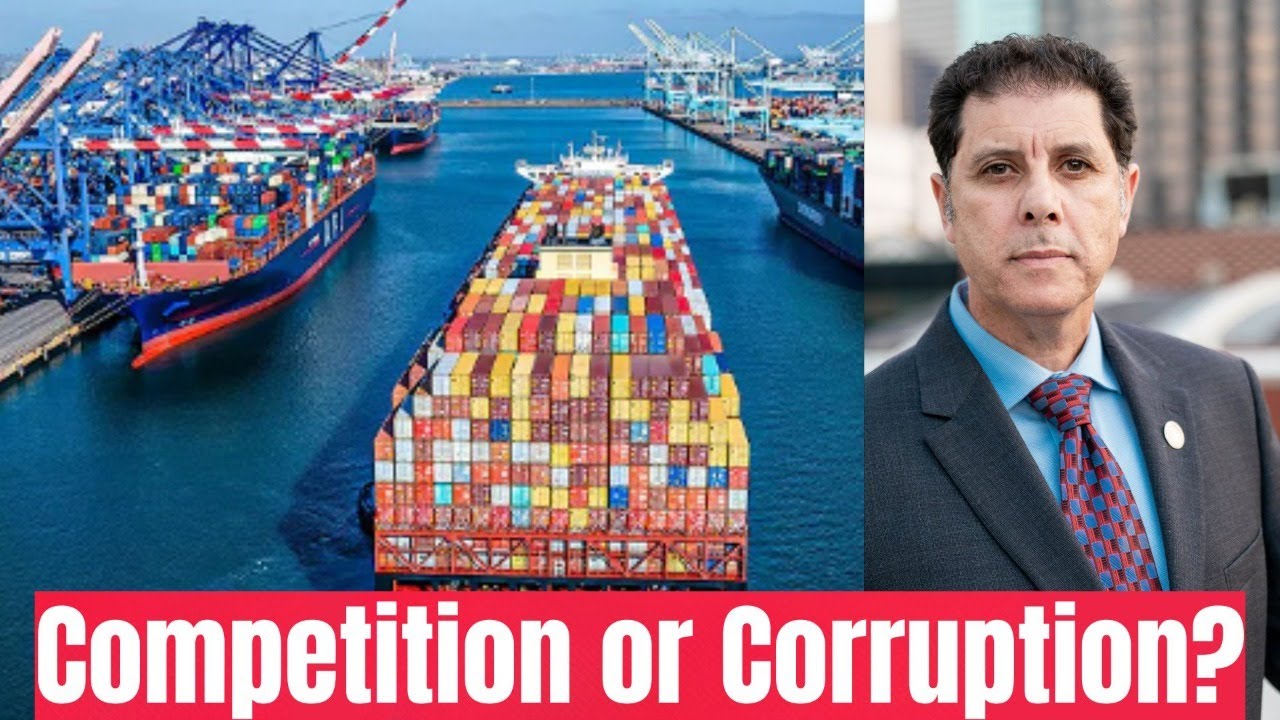
This content was created by David Oualaalou. This content was uploaded by David Oualaalou. This is a YouTube video titled "Malysia’s largest Port Expansion: A Game Changer or a Corruption Scheme?" (metadata timestamp: 2024-04-11). The provided excerpt contains no transcript text. Based on the title and content type, it appears to be an investigative/report-style video examining a major port expansion in Malaysia and exploring its economic/strategic implications and possible corruption allegations. No speakers or conversational turn-taking are present in the excerpt.
Chapters
All right, pardon me. Hello everybody and welcome to Geopolitical Trends, where truth matters. Very excited to be with you, uh, it's because yesterday, by the way guys, when we did the live yesterday, I mentioned about Malaysia's port export and I read up last night a little bit on it to understand even more What is the significance of this? And I decided, you know what, I'm gonna do a little bit of research here, continue it in the morning, and do a live stream for you. So this is what we're gonna be talking about today. We're gonna be talking about Malaysia's largest port, uh, uh, plan. This is just a plan for now, uh, for the massive expansion and what it means. So this is what I'm gonna be talking about. Uh, let me first say hi to everybody like we always do. I know someone put a comment, you said, I'm gonna skip Dr. O's first 15 minutes before he gets into the topic. Oh well, whatever. I still like to say hi to everybody. Willie, good to see you, and I did say hi to you when you logged in earlier. Marcian Dorcier, good to see you as always. Hamad Sidi, Francis Tango, CLO question: what will Singapore do? We will get to that. Francis Tango, oh, you're most welcome. You wrote a comment, let me share the comments with everybody here so you see it. Uh, forgot, thank you for your work yesterday. You're most welcome. And I know, guys, I know where your heart is. I, I do know. John Smith, New Zealand, good to see you as always. Coach Ohoye, good to see you. OGM, good to see you from South Africa. Wow, happy to have you here, man. Army with Harmony, good to see you. Phil, as always, from Ottawa. Ramples 01, hello Dr. O and Chad. Hello to you as well. SS— oh, from— look, guys, from Nepal, SSGBR, good to see you from Nepal. Wow. Marcus Wilson, good to see you. Wong KC, good to see you as always. From Malaysia. You know, see you from Netherlands, good to see you. Nob, Nob, she, I think, hola, hola to you. And why, hey, so all right guys, let's get in into this one here. And as I mentioned, today's topic, I will be talking about, uh, what this expansion will mean as far as the port. No matter how you look at it, there is a geopolitical impact to it of course, in addition to the economics. But you put the, the two together and you're going to find out one thing that connects the two. Can you guys guess what it is? Let me see first. I'll see your answer, then I'll, I'll move on on this. But let's ask the questions that pertain to this particular topic. And the questions are this one right here. I put them for you guys. How significant is this announcement? Remember, it's just an announcement. But don't forget the history of Malaysia when it comes down to corruption. You know, I ain't gonna shy away from disclosing this. We will talk. Uh, second question is, what are the economic and geopolitical impacts? Because there will be some, one way or another. So, and third one is, assuming this works, how will it shape Asia supply chain moving forward? Because there is an impact to it one way or another. And let me see what your answer is. Straits of Malacca, that's one of them. You're absolutely correct. But there is one thing I just mentioned earlier right here in the questions. It has to do with the supply chain. And why is this? It's because you all know the sanctions that the US imposing on China, the tariffs and so forth, the TTP, the trade, and, and, and all that. All this comes to impact the supply chain given what's going on now, the way posing the, the sanctions or the, uh, preventing Western countries from shipping ships, uh, equipments and so forth. So including the ASML in Netherlands. So, and yet I found it ironic that the, the Premier of Netherlands went to China about 2, 3 weeks ago. I didn't want to do a live stream on it because to me, Mike Rhode, he's the prime minister, it's another useless. So I, I didn't feel it would be a waste of time talking about someone of no value. That's how I look at it. Even though I did think about, you are imposing sanctions by not selling the equipments to China, and yet you going to China. That just didn't make sense to me. It's the same argument that, uh, what's her name, uh, Treasury Secretary Janet Yellen, when she went to Africa last time, he was like bashing China, and yet she went to China to ask for money. It just doesn't make sense. So, but anyway, supply chain is the key that is going to be to this one here, and this is what we're going to be talking about today. I'm going to get into it right away. I don't have headlines for you today. So because there is a lot of dynamics to cover into this one here. So well, the article which I came across from the Nikkei Asia, that's where I got the article from. I read it, I read the content of it, it was spot on. It was accepted that once again and again, those are short articles, literally a 5-minute read. Uh, it won't be enough space to cover geopolitical impact. And this is where I come in as far as providing you an analysis that will at least help you see the big picture. And that's what we're gonna get in into all this. So, so we're gonna be looking at— let me show you some pictures. I have some pictures for you guys, uh, just to show you, uh, where this is going to be. To those who are in Malaysia, you will know what I'm referring to here. This is the Port Kalaan. Or, or Klang. That's how they pronounce it, I believe. Uh, and now what's going on with this? Uh, the announcements came that, uh, the massive plan as far as expansion. And the, the— here is the thing, and some of you already put this in the comments, uh, when I posted for the community. What will this do to Singapore? And why Singapore? Does anybody know why? Let me just see in the chat box, because I'm gonna be asking you a lot of questions today on this live stream here, because there's a lot of stuff to do. Why this will have an impact on Singapore? So let me, let me just read some of your comments, because I like to see, uh, and I read up on your comments. So, and again you have to also keep in mind, which I will be talking tomorrow with my guest Dr. Ken Hammond, as far as the historical links between China and Malaysia. There are those who will say, well, there are also historical links between Malaysia— I'm sorry, between China and Singapore. So we'll, we'll, we'll talk to Dr. Hammond tomorrow because I intend to ask him this particular question. So now let's go back to our original question. Why will this impact, uh, uh, in your opinion, if it will impact Singapore, why? Hamed Sidi, you put Singapore port will lose business to Malaysia. Spot on, you hit the nail on the head. Because as of now, it is Singapore Ports that is sort of the, the top in the neighborhood. If Malaysia expand this, it will rival— as a matter of fact, I will say it will overtake or chase Singapore, as it was put in the article. And I put the word chase, or the verb chase, in quotes because that was the word here. And by the way, and I'm not gonna get into the details of the volume of trade and all this, I'm gonna get into what matters here as far as, uh, what you need to understand. There is a company by the name Westports Holdings Bhd. That is the one now that is considering the external strategic investors. What are they looking at? The article that I saw in the— on the— in the Nikkei Asia mentioned it was about $8.3 billion. I went ahead and checked to confirm the information, and I found different numbers. The numbers that I found was $11.3 billion. So, and again, why am I highlighting it? I am not saying that the article in the Nikkei Asia was in— it's, it's in sort of, uh, unreliable. No, that's not what I'm saying. It just highlights to you $3.2 billion difference. It's not a small change, okay? But at the same time, you have to put this within the context of what happened in Malaysia as far as corruption. You ask any Malaysian right now and they'll tell you about the government. And I do have some links I'm going to share with you uh, uh, as to— and again, we're not, we're not passing judgments here. I just put things in perspective and let you reach your own conclusion, you know. Now, the key, as I mentioned earlier, supply chain. That's gonna be a major one. Why? Because you look at the proximities. Look at again, look at this map here. What are you looking at? You're looking at a Malacca Strait. Why is this important? Because you have to think about the role when it comes down to supply chain, when it comes down to Malacca Strait. Then you come and ask yourself another question, and the other question is on the other side, the Thailand Canal. Hypothetically, if these two move forward and develop to what it is, what it's gonna do to this supply chain. You see my point? And of course, who's going to be benefiting from this? Most Asian countries will, but we're looking at one particular country that will certainly benefit from this. So even now in Philippines, they are saying that what the economy is doing— that's what the government's saying— it's moving forward along with what other Asian nations are doing. It's nonsense, it's hypes. That is not true. The economy of Philippines is not near where other Asians— excuse me, Asian nations like Indonesia, like Malaysia, like China are going forward. So, and this is why you need to understand the importance of why certain things are worded a certain way. I'm gonna share a picture with you about the Port of Klang, and I give a credit for the photo to Norman Goh because that's his picture, and I like to give credit where credit is due. So, and here is that, uh, this is Port Klang. Now, what one thing you need to know about Port Klang, it is the second busiest port in Southeast Asia, and this is why and only after to Singapore. This is why now the expansion of this port, which by the way ain't gonna happen next year— we're talking about some research that I did last night— we're talking about next probably 25, 30 years. It's gonna take time for it to reach a full capacity. But again, the global economy will be in a different position altogether by then. I wonder even what will become of ASEAN at that time, given how Singapore and Philippines are the odd players in it. So, and this is why the capacity of this port, assuming it moves forward— I have my doubts, and this is my personal opinion, knowing what I know about the history of Malaysia when it comes down to corruption. You know, I was aware of what Razak did, and when his indictment. But I was even aware that goes way back few decades and how some even Western financial institutions were involved, like JP Morgan. So, and this is what I'm, I'm, I'm— we're going to be dealing with all this or addressing all this one. So suffice it to say for now that this port, Kelang, which is Malaysia's largest port but also it is a major route when it comes down to the Malacca Strait. So just think about from a logical, from a logistical perspective, if it doubled its capacity, which will be like, again, it's not going to happen overnight, it is going to take years from now, it will certainly change the dynamics when it comes down to logistics in that part of the world. But I will also will have geopolitical implications to it. Why? Because it will be less reliance on the Malacca Strait, which Malacca Strait can be used from a geopolitical aspect as a choking point in case of a conflict. But at the same time, you have to consider the other developments that taking place, like the Thailand Canal, so many moves forward, like the Cambodia Canal, so many moves forward, and also the rail links between Malaysia and Indonesia, or Laos and Malaysia, or Indonesia for that matter. And this is what you need to understand. But when you put the Port Kelang, uh, on the global stage, it's considered one of the top 10, I think, 10, 11, uh, ports in the world, uh, and, and second to Singapore, because Singapore still hold number one in that part of the world. But there is a much bigger picture to all this. Very, very much bigger picture. And the big picture has to do with the ports in the Middle East or West Asia, which I will get into this now. And this is why I'm saying the expansion of this port, economically speaking, is going to take time. We looking at years from now. You look at like the BRI— when was the BRI launched? Can anybody type in, in the chat box, the year the Belt and Road Initiative was launched? Let me just see what you guys have in the chat box. All right, 2009. No, pass, pass, beyond that, Orwellian. Move forward, future. Hamad City, you got it, 2013. And look where it is today, and it still has a lot of work to do. That's why— that's my point. Just because we hear the announcements, don't jump to conclusions. That's why I put in the title, is this a major change or a game changer, or is it a corruption scheme? Why? It's because this company, Westports Holdings, looking at about $8.3 billion That's from one account that I saw. On another account, I saw $11.3 billion. And, and I— and again, we're not judging here, but you cannot cherry-pick the information by not disclosing the massive corruption that exists inside the system in Malaysia. We have corruption here as well, in my own country. Different setting for it, but still at the end is corruption, no matter how you look at it. But, and you all know, guys, how I sort of— needs to be dealt with. That's my, my argument to this. So, and the idea of thinking about, uh, looking at it from the position of what this will mean, assuming it moves forward, what will it mean to Malaysia What will it mean to the Malaysian economy? And what will it mean for the average Joe, average Jane inside Malaysia? Because if it doesn't translate to the welfare and the well-being of the citizens, what's the point? Because who's going to end up benefiting from it? The elites. This is why the massive corruption inside Malaysia never ceased to stop. It still exists, and I just read few things recently about it. So, but on the other hand, you're gonna have to put this within the context of how Malaysia may be considering positioning itself as one of the top Asia manufacturing and commodities hubs. Usually when you have a port of that capacity, you could play a role into the dynamics of the economic dynamics that is in the region and maybe around the world for that matter. So, and again, when you look at about, uh, from petrochemical products to palm oil to automobile parts or even automobiles and so forth, uh, or electronics for that matter, The ports will have an impact on the, on, on, on, on the economy, but to what degree the country will benefit from it? And that's the question we ought to ask. So then of course you have to think of the, of the strategic location, uh, of the port. Let me put this, uh, what is it, right there, the picture again. You have to think in terms of the, uh, strategic location along the Malacca Strait. You know, and why is this? Is because the proximity, the proximity to the regions, for example, other shipping routes that exist. And there is another advantage, is, is that it could accommodate large vessels. You all remember what happened in the Suez Canal, right? What happened a few years ago? In the Suez Canal regarding the large vessels? Does anybody remember? Can you type in that in chat box? Let me see what you got there. Yeah, in the Malacca— and, uh, and, uh, yeah, yeah, why— hey, you got it! The ship got stuck, which tells you right there that Okay, now you're gonna have to— you, if you own a company, shipping company on a large-scale global one, you're gonna have to think now twice about, okay, do I have to go through the Suez Canal if the route there doesn't accommodate the large vessels? This one in the Malacca Strait, it does. And this is where you have to think in terms of the impact of the expansion of this port, Kelang, in Malaysia. So, and once again, I'm gonna have to hold my breath on that given the massive corruption that exists in Malaysia. But we have to think in terms of what if. So that, that's just how I look at it. So, so here's the thing. If we are to look at this, uh, expansion as a competition— a competition against whom? We know it is a competition against the, uh, against the the port in Singapore. Uh, it's called the Tuas Port, I believe, if I'm not mistaken. So now, the Tuas Port was officially opened in 2022. That's when it was. But here's the thing, the port is not completed yet because it's set to be completed in 2040. It's, it's a lot of work. This is not a, not overnight thing. So And with this capacity, that will move over 65 million TEU annually. This is the, the massive volume trade that's going to be dealing with that. And this is what the— what's his name? Uh, I, I thought I had his picture. Let me show you his picture if I could pull it up here, uh, because you need to see who this guy is. To those in Malaysia uh, you will know what I'm referring to because you're there, so you, you should have an idea. Okay, let me remove this picture here and put the new one. Is this guy right here? Yeah, uh, this one is Reuben Emir, uh, uh, Ganalin Gam, and he is the executive chairman and the managing director of the Water Ports Holdings. The one that is gonna launch or request foreign investments for $8.3 billion. And by the way, the photo, I give credit to Norman Goth once again. And again, when we put this in perspective within the history of Malaysia, I am putting a big question mark. As an analyst, I have to think in terms of the, uh, uh, of the record for a government's performance. That I would say the same thing about Indonesia, I would say the same thing about Philippines, and of course South Korea, and of course Australia, Japan, uh, and, and so forth. You got the idea. And this is where, uh, you're gonna have to think in terms how far this is gonna go and will it work. Some say yes, some say no. And again, for me personally, looking from outside in, and I don't know, I might end up making a stop in Malaysia when I travel to Asia. No decision is made yet, nothing is concrete. I am just thinking, I'm just thinking in terms of sometimes it's nice to be on the ground and, and find out, see with my own eyes, because I don't count on others to tell me I'll, I'll make my own judgment on this. And again, one thing I keep going back to is the corruption in Malaysia. Why is this? Because it was, it was, and it's still a big problem in Malaysia. And here is— and I'm going to share an article with you later on, I'll put it for you, uh, in the, uh, in the description— what I found is that, uh, according to the Transparency Okay, in the international ranking, Malaysia ranks 57th. Yeah, 57th out of 180 countries for perception of its prevalence. All the schmally words, whatever. All it means is it transparent regarding its transactional inside the government. That all it means. That's all it means right there. Because here's the thing, bribery still perceived as a standard operating procedure for doing business in Malaysia. Some other Arab countries do, some other Muslim countries do. For us here, we have it just in a different setting. So now here is what's important for you guys to know. 71% of Malaysians believe that officials are highly corrupt. 71%. Politicians in Malaysia have failed to get a handle on dishonesty and corruption because that's just how the system is in that part of the world. And, and we are not, we're not pointing fingers. Once again, other countries do the same, and many have accused— many Malaysians have accused, uh, many politicians rather have been accused on rotation through different governments, which means what? You just kick the can down the road. So I'll give you a quick example based on a, on a survey that was conducted, and I'll put the link for you. In the last 12 months, which means past year, 39% of Malaysians think corruption has increased, with many citing incidents of bribery and voting buying and sextortions. Which is sad to know, is because if you are to embark on, uh, on, uh, on sort of, uh, uh, major a project like this, you're gonna have to think in terms of the importance of it. And I'll put the link for you guys in the description later on for the whole article. So now there is another thing you also need to know. Besides, besides just Malaysia, we're gonna have to think about two other things. And two other things has to do with two other ports. Now I'm going to test your knowledge on this. I know it's a long shot, but I'm going to give it a— I ask you, can you think of two other ports just for the last decade? Two other ports that been sort of really reflecting the geopolitical tensions that exist on the global stage, but also reflecting the possibility of the economic trajectory And I want to know your input before I share mine. Just, just put the name if you know which ones, what those two main airports are. Let me just see here. Uh, Djibouti? No, good try. Mad Becky, Dubai. Yes, but on another aspect, and I'm gonna get into the Dubai, uh, Pashir Gwandan. Oh, you got it, Army One. That's one. Gwadar, what is the other one? And as a matter of fact, the other ports came up as a reaction to Gwadar. Hong Kong, Shanghai, of course that is, uh, uh, yeah. What is the other port? No, Suez Canal has been there. Suez Canal has been there. Uh, Hambatach, no, it's been there. Çabahar, Portapi, you got it. That's what I'm saying, guys. By now you, you developed that kind of at least understanding to know what to look for. So the two main ones that we're gonna have to keep in mind is the Gwadar Port and the Shabahar. And I'm gonna get into the, uh, brief, brief history of each one of them. So let's start with the Shabahar. And I have a picture for you guys. This is what I do, the research on stuff to share with you. First of all, I'll show you the map. What are we looking at here? This is Shabahar right there on the border of the Gulf of Aman. It's very, very important, its location. So Shabahar It is what a lot of people do not know. Shabahar goes way back to 1970 when it was declared as a municipality, Shabahar City, right? And a large port project was started by orders of— can anybody guess under whose order he used to rule at that time? Just think about in that part of the world and who was in charge in the 1970s before the revolution of 1979. Once again, just to— I'd like, I'd like to have your input, guys. Don't— oh, you got it, Hamad Sivi, you got it. The Shah, for sure. So it was the order of the Mohammad Reza Pahlavi, the Shah at that time of Iran. He's the one who ordered the port project, okay? And the Shah Pahlavi at that time planned to construct about $600 million— guess what— naval base at the Chabahar, mostly employing American companies as contractors. This is why we put him in power to begin with. He wasn't about to serve the welfare of the Iranians. He was about to serve the welfare of the Americans. Now, in January 2016, what happened between Iran, India, and Afghanistan? They signed the trilateral economic agreement on developing the Chabahar Port in the southeastern Iran. And this project, which by the way I was aware of it back then, and I said this is gonna go nowhere because India got involved. But at the same time, the geopolitical landscape at that time was not conducive. Why? Because at that time Iran and Saudi Arabia was still having tensions regarding the Shia Muslims, but the proxy wars in certain pockets in West Asia. They were— the story will be different if this would have happened while Saudi Arabia and Iran had sort of exchanged diplomatic ties, but it wasn't at that time. So when I saw India went in into Iran talking to them, because India didn't go in because of the economic India went in because to react to the Gwadar Port between Pakistan and China. So it was more driven by geopolitics than by economics. And this is what I'm saying, guys, you need to see that big picture between the two. Okay, so what happened after this? Of course, they were saying at that time that this project will hold immense economic and geopolitical value for both Iran and India. The importance about Chabahar, as you may know, is that it has deep waters. It's the same one that is in Dubai, which I'm gonna get into soon, you know. And this one, the one in Chabahar, it connects sort of the oceanic trade routes, another venue that is very, very important. But it's important— wasn't just to India, it was important mainly to Iran. And for one reason, and one reason only, is to mitigate the sanctions imposed by the United States. But for Iran, it meant that even the Chabahar Port, even it's not fully developed, it will at least sustain it, uh, as far as connecting the trade, uh, uh, routes with the rest of the world, with neighboring countries including India, for example. On the other hand, for India, Chabahar is a key point for International North-South Transport Corridor. But you ask yourself, does India have the funding to sustain something like that? And that's why back then when I, when I found out about it, I say, I said to myself, wow, that's very impressive, that's very ambitious, but that is divorced from reality. That was what I said then. It's because the hype that was coming out of India at the time was that, oh, This is going to connect India to Central Asia and Europe. How? We all saw what happened in the last G20. What was the, uh, what was the final communiqué that came out of G20 Summit? Can you guys tell me the exact theme of the final communiqué that all of them agree on? Well, it was about one key thing. If you guys remember, can you please type in, in a chat box, what was the final communiqué of G20 that took place in India? So it's one specific keywords, one or two keywords. If you all remember, it was about one specific thing which is very ambitious ambitions ambitious, rather, in my opinion. It's, it's wishful thinking. I don't see it happening. Uh, I was nothing. Uh, no, Hamad City, you got it, you got it. India's Eurozone, per se. Another word to build a connection between India and Europe. How? It's a massive project. To rival the BRI. The BRI has been in the works for the last, uh, 10+ years, so ain't gonna happen. Is the same arguments can be made about, uh, Shabahar at that time. So, and this is where, uh, the idea of the, oh, it's geostrategic. Yes, it is, as far as the location of it. But let's think about the reality of it as to why this Chabahar port project was initiated to begin with. Because this trade, uh, cooperation between India, even though it was considered a strategic alternative, if not even a rival, if I may go as far as saying this, to the BRI, because that's all it was. And especially with when Pakistan and China decided to go ahead, when China decided to invest in, in, in developing Gwadar Port, that is. And all this, the Chabahar one, also reaction to the China-Pakistan Economic Corridor, straightforward. That is what was all about. And I don't think so it's gonna manifest or materialize to what its, uh, uh, ultimatum objective will be. Yes, you know, the port will have a, uh, or has already a capacity of 8.5 tons of discharge and loading capacity, but to what degree it's going to have a dent? No, you won't. And let me show you a picture of the port right there. Chabahar. This is nothing in comparison to some other ones. Let me remove this one here. So, and that's how I see it. So when you think about the aspects of it, so now let us move to Gwadar Port. When you think about Gwadar Port, of course what comes to mind right away, one thing beside the cooperation between China and Pakistan, that Gwadar Port sort of has the potential to be a deep water seaport. Why? Because it was discovered back then in 1954. And I'm providing you here a snapshot, historical snapshot, for, uh, the beginning of this, those ports, just for you to have a perspective. And why it was back in 1954? Because Gwadar wasn't under Pakistan. Can anybody guess under which country Gwadar was under? It was under another country, not Pakistan for sure. Let me see what your historical knowledge says about this. Which country Gwadar was under? Go back to 1954. India? No. Iran? No. Good try, good try. It might surprise you guys, it might surprise you. No, not the US, of course. Britain? No, it's not a Western country anyway. Portugal? No, no, no, no. Oh, whoa, whoa, whoa, you got it, you got it! 1KC, you got it! Oh man! That's what it was under. But you have to go back to 1954. It was under Omani sovereignty. And what happened? The Gwadar Enclave was bought. It was bought by the Pakistani government. It is the same setup that we did with the Soviet Union when we bought Alaska. Same argument. And what happened after that? When Pakistani bought it from the Omani government back then in 1958, and for the rest of its history from that point forward, uh, Gwadar was a small, medium-sized sort of, uh, enclave, or, or, or small settlement, if you might use the term, uh, with an economy that is based on fishing, basically. That's all it was. So what happened? The Karachi-Gwadar Road, which was a coastal highway, it's on the coast, you know, was built for defense purposes. Because all you remember what war that happened around that time, and this again is going to trigger, trigger your, your, your memory on some major war. That started back then. It starts with the K. Very, very important word that you need to know about. And, and, uh, and I read up on it way back, I remember. So let me see here what you guys type in. No, not a Kashmir. Close, close, close, close. Starts with a K also. No, not a Korean one. No, no, no, no, no, no. It's around that area, around the Southeast Asian area. All right, let's move on. Cargill. If you don't know much about Cargill, you might want to do a little bit of reading on it. The Kargil War. So, and this is where Gwadar Port was inaugurated later on. And by the way, it was inaugurated officially in 2007 by none other than Pervez Musharraf, which took about 4 years of construction and $248 million. Now, why am I saying this number? Because I want you to put this in perspective as far as the expansion of the Kelang Port in Malaysia for 8.3 or $11 billion. So of course we're not going to compare the Gwadar Port to the, uh, the, the Kelang Port in Malaysia. The size, it's, it's massive for the Kelang Port. So, and, uh, but, but nonetheless, we ought to put that in perspective. So, and of course, as you know the rest of the history of it, the development of Gwadar Port was a key element in the Greater China-Pakistan Economic Corridor, known as, uh, CPAC. So, and this also reflection of that economic ties, uh, between China and Pakistan. And this is why you still seeing now, uh, that once a while you see some Chinese workers, uh, being targeted, killed. That is in, in the, in the near Gwadar area, Balochistan area, and so forth, because where the location of the port, you know, the Balochis are, uh, sort of not happy with the existence of such thing over there. And this is where that problem of where— this is not an— not Gwadar, of course. This is another picture that I, uh, just got for you. I wanted to share it with you. So, and that's what's important to understand about this one. Now, talking about this on one end, then you have to think about West Asia. And West Asia, there is one major port in West Asia that, that is on a global stage, on global level rather, and that one is the port in Dubai, because we can't ignore this. And the question we have to ask— I remember I, uh, I, I did a presentation, a private one at that time, uh, about, uh, Gwadar Port way back a few years ago when it started. And, uh, one of the questions from the attendees was, you know, are we going to see tensions on this, uh, because of this development? Well, I see not necessarily a conflict, a military one, but what you're going to see a major economic tensions that's going to lead into that, which means that the Western, uh, Western Asian nations will want to undermine the development of Gwadar Port, like United Arab Emirates, like, uh, uh, uh, sort of Saudi Arabia, whatever. They want to undermine that because if Gwadar Port develops to its full potentials that will overtake the one in Dubai. And that was back then. And I was aware of certain, uh, uh, uh, what ventures that took place behind the scenes to undermine the Gwadar Port. I was still in Washington at that time, so I had access to certain things then. And this is why I'm saying you have to understand the big picture of all this. It's not about just logistics, it's not about moving goods from point A to point B, but also about the geopolitical implications of it. So, so let's talk briefly here about the main ports in, uh, and I have a link for you, of course I will, uh, uh, put it for you, uh, in the description, but I'll share it right now as far as the World Atlas, because to them I give the credit, to Shutterstock for this picture. That is from World Atlas. So I just want to share with you a picture of, uh, Gwadar Port— I'm sorry, of Dubai. All right, here we go. Let me have a sip of water. Excuse me. All right, what are we looking at? Let me make this big, full size. Yeah, the picture is not very, very clear, guys. So there are about literally about 10, there 10 ports, but only 5 sort of are the major ones. And the first one is Jabal Ali. To those who speak Arabic, uh, uh, in, in English it will be pronounced Jabal Ali. So Jabal Ali, Jabal Ali today is like the, the crown jewels of the Middle Eastern ports because that's the main one. It is the one you are looking at. Let me make sure. No, no, this one is the Port of Dubai. I'll have the picture for you for that one. So as I said, that's the first one, Jabal Ali. Second one, Jeddah Port. It's called Jeddah Islamic Port, which is the largest port in Saudi Arabia and second, uh, on the list here. Third one is Khor Fakkan, or Khor Fakkan. Third one is Salalah. And the fifth is Port Said in Egypt. And as I mentioned, there are about 10 of them, but the other 5 are, are nothing in comparison, so they don't hold, uh, much influence as far as trade volume or impact. So guys, hold on, I have to sign a document at the door because they won't deliver this paper for me. I got it. What's up, man? Yes. All right, my apologies, guys. I had to go sign for this. This is my passport, so Uh, they will not, they will not leave it, uh, by the door unless someone signs it for it, and nobody can sign by me, of course. So anyway, let's move on here. Uh, what was the— what, what? No, I forgot what I was saying. Oh man. Oh yeah, yeah, the list of those ports. As I said, the 5 one that I shared with you, those are the main ones. That's about it. The, the other 5 are, are not relevant in my, my opinion. Uh, the like of, uh, uh, the Haifa Port, the Mina Sulman, Jeddah, all of them, it's not. But the point in all this is to highlight the importance of this particular port. This is Jabal Ali and the massive volume of it. Now why is this important? It is important for you to understand that if the expansion of this port in Malaysia, assuming it moves forward with no corruption, you know, it's going to overshadow the one in Dubai. Why? Why is this? It's because the global economy, the hub of the world economy, is not in Europe anymore, is not in the West anymore, it's not in, in, in Western Asia, it's in Asia. Where it's going to be. So it makes perfect sense logistically to have the ports closer by for proximity. Then you look at something like what's happening right now in the Red Sea with what the groups are doing, the H group there shutting traffic down. This is the other aspects of it, the geopolitical implications. And I will go as far as even saying I gotta move this one a little bit here. I will go as far as saying, what will happen now if a war breaks out between Israel and Iran? What Iran's gonna do? The first thing he's gonna do, shut down the Strait of Hormuz. Well, you got two— Strait of Hormuz and Red Sea shut down because the two are controlled by one by Iran, the other one by, uh, uh, uh, sort of, uh, a group affiliated with Iran in, in Yemen. They can shut down this too. And what it's going to do to the global economy? Because you think about, one-fourth of the global oil supply comes through the Strait of Hormuz. This is what I'm saying, the importance, assuming the port in Malaysia will develop with no corruption, whatever. But again, I put a big question mark on that. I am not certain. And this is where I see the developments of something like this, that it could lead, uh, uh, uh, to more economic prosperity for Asia. That's going to be— because here's the thing, if you think about the— this port that I just shared with you, Jabal Ali, you have to understand one thing: the role that is playing when it comes down to the US military. And again, when it makes perfect sense to have a port that has nothing to do with military presence, especially let alone the US. Because here is the thing, a lot of people do not know that Jabal Ali has become the port most frequent— frequently visited by the US Navy. Yeah, frequently, that's the key word there. Why? Because the depth of water, but also its ability to harbor, uh, uh, sort of, and, and the size of, uh, a US aircraft carrier, the Nimitz. And you know, when the Nimitz moves around, he moves with an entire several ships. It's the battle group, as we call it, the strike groups. And Jabal Ali can accommodate this. And due to the frequency of this port's visit, here is the key, the kicker: semi-permanent shore leave facility, referred to by the US Navy service personnel as the sandbox, have been erected adjacent to the carrier. This is why it's important to understand this port in Malaysia will make perfect sense when it comes down to the global economy. Because Jabal Ali, you can trust it, you can count on it, because anytime there is a military confrontation, the US Navy is there and they can use, uh, choke points in, in, in between. But the two other main ones, the Hormuz Strait and the Red Sea, once you block that, you're impacting global economy. But I'm holding my breath on this. Maybe, maybe it will work. In Malaysia. I hope it does, and, and, uh, because that's where I see things moving forward. And this is why I am in favor— not in favor, I shouldn't use that, I'll take this back, not in favor— but pragmatically, I see the, the, uh, the possibility of either or, or both Indonesia and Malaysia playing a role in BRICS as of today. At least the infrastructure is there, the, uh, the economy is there, and the, the role that this country wants to play on the global stage economically will accommodate that of BRICS. That's the way I see it. And again, please share your opinions if you think otherwise, and I always like your feedback. So All right guys, I'm gonna open it for questions. That's all I have to share with you. I'll put the links for you and all that. Then, uh, remember to join me tomorrow for my conversation with, uh, with, uh, Dr. Hammond. Uh, we will be talking about Asia general, in general term, and so forth. So, uh, it will be at 12:30. I'm gonna be having also another guest next week. Usually it's not confirmed yet, I'm working on it. Uh, to those who have sent me an email to reach out to, uh, what was the name, uh, she's in Canada, she's a professor of, uh, political economy, uh, it's Dr. Desai, Ragida Desai. I sent an email, I haven't heard back from her, so, uh, I just want you to know I do follow up through, but I move on because, you know, I'm busy also, and that's just how it works. Uh, once, uh, this way, I want to— first of all, I want to say thank you to, or give a shout out to some channel members, if you allow me, guys, because it's important to do so. Uh, let me just get to the, uh, uh, where the names are, and I'll just— the recent ones here, guys, because I want to give shout out to the recent one, Jonathan Ascension. And, and if it's the Jonathan Ascension that I know, uh, it's a, it's a, it's a buddy of mine, is a wonderful human being. Very, very thank you, Jonathan, truly appreciate you. So a second person I want to give shout out to is Wah Teng. Oh, hope I pronounced it correctly. Thank you so much for your, uh, uh, supporting the channel. Uh, third person is Olu Sor, thank you very, very much for becoming a supporter of the channel. And Leonard McIntyre, thank you once again for becoming a channel member. Jeremiah Morrison, Yuri Gaming, Miss April, and Emerson Bangora, thank you all for becoming a channel member. Uh, a quick shout out to Buy Me Coffee members because or supporters, that is. There are some of you who bought me coffee this morning, and I'd like to give quick shout out if you allow me. Again, ah, it keeps kicking me out. I have to log in. Okay, we'll do it quickly here, guys. Just be patient with me here quickly. And, uh, I like to give a shout out Okay, where is— okay, here is the code. You have to have a code to get in, and I'm gonna just give quick shout out here. Oh, somebody just bought me coffee as I'm speaking, and that one is Drag88. That's Osiris, the one I told you always buys me coffee every day around the same time. So thank you. So much, Osiris, truly appreciate you. Uh, uh, Nukini23 bought me coffee this morning, thank you so much. Uh, TC Quan, as always, buys me both coffees on both platforms. Uh, Muna Y, thank you so much. Uh, and, and others. So I'm, I'm very, very grateful to you all for your continued support. It means a lot to me, and thank you so much. All right guys, let me answer question, a few questions from you, and we just go from there. All right, and by the way, don't forget, I will reach out to Carl next week for our bi, uh, biweekly con, uh, conversation. So, all right, let's see here. San, you put Dr. O, Port of Klang is in West Malaysia, and there are only some palm and rubber, not many mining. Major commodities is on the east, Malaysia, Borneo. So, well, thanks for sharing this. I didn't know that. It wasn't question, by the way, it was just statement to share. Thanks for sharing this. I didn't know. And this is also confirmed for me why I put the question mark about corruption. And I'm like, I'm, I'm, uh, I'm I'm holding my judgment or my conclusion as to whether this is going to move forward or not, because again, I know the history of Malaysia when it comes down, uh, to the corruption. So, and again, it's not about just Malaysia, we have it right here as well. So, uh, uh, Q7E, you put a question: in your opinion, between Malaysia and Indonesia, which one is less influenced by the West, that would be the country more beneficial to BRICS. Uh, which one is less influential? I would say Malaysia. Yeah, Indonesia, but Malaysia's problem, it's more than just the West. Malaysia's problem is internal corruption. Yeah, that's, that's the way I see it. It will play a major role in, uh, Indonesia because of Prabowo. If you know about Subiano Prabowo history also, his links back then to the CIA, and, and there, there, there's some history there. We're not judging again, but we can't ignore that either. So that's just, uh, how I see it. So, uh, uh, Farhad Razavi question: Any luck for an interview with Professor Morendi? No, it's because I don't have ways of reaching out to him directly. So wherever I look, I don't get direct email that goes to him. So if anybody knows how to get a hold of Professor Morendi, I would love to have a conversation with him. I'm very familiar with his work. He teaches political science as well. I'm aware of his background. Do you guys know that Professor Morandi is an American? Yeah, a lot of people do not know. So now he was born in, uh, Virginia. So, so yeah, if you know, I'm— I'll keep trying, but I would love to have him here and have a conversation with him because he's, uh, he's worth having conversation with. Very intellectual and he knows what he's talking about. So it's not somebody who just thinking out of the whim of his, of, of, of of, of his mind. So, all right guys, I hope you find this very informative, and I look forward to seeing you, uh, tomorrow during my conversation with Dr. Hammond, uh, the only one, by the way. So, uh, once again, uh, should you decide to support the channel, here are the links for it if you feel comfortable, and I am very grateful to you for your continued support. As always, remember, geopolitics impact your daily life in more ways than one. Till next time, guys. Bye-bye.
More from David


Beyond the Single Actor: Why the Gulf Isn't Choosing Between the US and China


Iran, Iraq's Militias, and the Houthis Are Coordinating! This Changes Everything




Who Controls the Next Decade's Resources? Latin America and Africa's Geopolitical Crossroads

The Chokepoint Trap: How Washington's Stupidity Triggered a Cascade That Now Controls the World

Trump Spooked as IRGC Unveiled dual-use SLV, Deployed Ghadir Mini-Subs & Hinted at Tactical Nukes!
