Marcos Jr's US Visit: Landing a Trade Deal or Taking Marching Orders? Geopolitical Trends
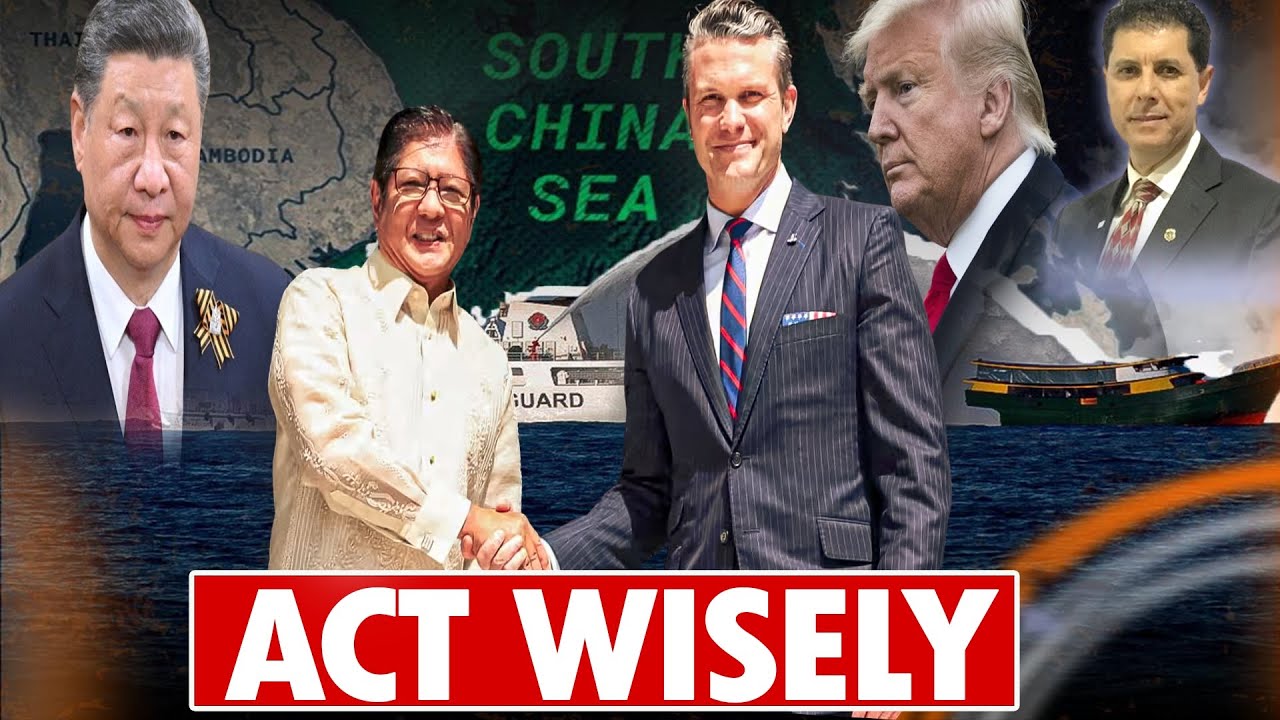
Philippine President Ferdinand Marcos Jr. visited the White House, Pentagon, and State Department. Trump claimed a trade deal with a 1% tariff reduction, but Manila hasn't confirmed it. U.S.-Philippines trade is $14 billion yearly versus over $50 billion with China, raising questions about whether the trip secured genuine economic gains or U.S. strategic directives.
Chapters
Hello everybody and welcome to Geopolitical Trends, where truth matters. Excited to be with you as always. Today's topic, I'm going to be addressing the recent visit of Marcos Jr., President of the Philippines, to the US. I know some of you might wonder why I didn't do it yesterday because he was here the day before. Uh, I was aware of his flight on Sunday, uh, but it was a reason I didn't want to do it because I was waiting to see what really is going to result from his two other meetings, one at the Pentagon and one at the State Department. So that's why I decided to— so I'm gonna be doing, uh, uh, this, uh, livestream about the Philippines. I will also do geography and history. A lot of people have no idea where the Philippines is. When I say people, I'm talking about some of us here in the US. So anyway, first let me say hi to our wonderful community. Let me put my reading glasses here so I can see the small print. I can't read that anymore. Uh, AFG Don Carleon, good to see you. And salaam to you from San Francisco. I bet San Francisco is different from what it used to be. It's been ages since I've been in San Francisco back then, but I won't go to California anyway. Miss Fangirl, good to see you. Kanyak, good to see you. Willie Holman, as always. Taiwan Steel, Liang, Abdul Fahl, Truth Seeker, Muhammad Mazhar Dean, Santang, good to see you and hi to you as well. Uh, who else is here? Let me see. Athene Wu, as always. Multi Tom, good to see you. Multi Tom, did you use a different screen name last time? I'm just curious. So, uh, uh, good to see you, Uncle Sam. Good to see you. All right guys, let's get into this. But before I'll do— I'll get into this, some housekeeping items. Uh, tomorrow I have a panel, is gonna be here on this channel here, so make sure to join me tomorrow. Let me share a picture. I'm gonna have, uh, uh, Warwick Pao, and Einar Tangen, my two good friends. We're going to be doing live stream panel conversation. Of course, Warwick is going to be joining us from Brisbane in Australia, and Einar will be joining us from Beijing live. So don't miss this tomorrow, guys, because I already prepared some really, really good questions for them, and it's for all of us. To have a conversation. So I look forward, uh, to this conversation tomorrow. Uh, as a matter of fact, let me guys put the link for you so this way you have it, because I didn't, I didn't, uh, uh, I didn't share it yet. I shared it on the, uh, on the community. So, uh, yeah, I didn't share it yet. So, uh, the other one is, uh, uh, on Friday I'm gonna be having Dr. Hammond, Ken Hammond, he will be here. So I look forward to that conversation. As you may know, Dr. Hammond is a Chinese historian, so his background is academic background that is, is on the Chinese history and a specific time frame. So, and I am going to be asking him some key questions. I shared the link with you, for, uh, that conversation on Friday. So, and of course, I'm still, uh, gonna be coordinating with Dr. Yan Liang. She's gonna be joining us here in due time. She's out of the country right now, and once she's back, I— but we already communicated, and she will be joining us here. So, and of course, you don't want to miss the conversation on weekend with Carl Zah. We haven't decided on Friday or Saturday, most likely will be Friday. And, uh, I will, I will, once I post that one for you guys, you will know. And on Sunday, I'm gonna have, uh, Dr. Stewart joining me here for the community conversation to answer some of your key questions. So, uh, and that's basically it, what's going on with housekeeping items. So there is one, one more item here before I forget. There is major developments. I am, I am keeping an eye open on it and I am searching, uh, for confirmation or waiting for confirmations. This one has to do with Iran, uh, especially now that they upgraded their military hardware. Are we looking at, uh, some, uh, strike on Israel? Yeah, I, I can't say this right now because I do not know, uh, for fact, but that's a story I am working on it for you guys. For next week. So, all right, let's get into our conversation today about the Philippines, uh, Marcos, who visited the US, uh, just 2 days ago. And, uh, one of the key question that I was, I was wondering about, you know, do you— I mean, this, by the way, this picture looks very, uh, I don't know, is it a sad picture? Is it— I mean, the way Marcos Jr. is sitting Uh, sort of that just says a lot. Pictures sometimes can tell you a lot. And we're not judging here, I'm just sharing with you my own observations. But the key question we are to ask is, is he gonna be seeking a trade deal or is he just taking marching orders? So that is to me what's— if you only, of course, you know what's going on inside the Philippines the political turmoil as to what his government is doing to the vice president, Sara Duterte, because as you know, they are trying to impeach her. And I think it's just a political hit, no more, no less. That's my observation. So, and we'll get into this as we move forward. So now it was, of course, the hype about the visit. And why is this? Is because they wanted to, uh, strike his ego by inviting him to the White House. Of course, because this is how it works for our system. You come in, you as a head of state or whomever you are, you come in, you meet with the president for a photo op, no more, no less. Then you go to the Pentagon and you go to the State Department, or vice versa, you go to the State Department, than the Pentagon. So this is usually how the norms has been, and that's usually for a reason. And that's exactly what the, uh, the administration planned on this one here. So, so the bilateral talks, of course, uh, Marcos Jr. himself will say, oh, it's going to focus only on the economic front, front, you know. I don't think so. It's because Marcos is in no position to dictate the terms. So of course he has to say this for the domestic consumption, that he is coming to America to fight for the Philippines and regarding the US tariffs, which by the way will enter into effect on August 1st. So, and this is why his meeting with the president, with, with another bonehead, uh, Donald Trump. You know, uh, what I found it very intriguing is that how the media here worded this kind of visit and the meeting. Here is what I'm going to share, one sentence with you guys. Just listen carefully. It says, and I quote, Marcos will be the first South Asian leader to meet Trump during the US leader's second term, end of quote. What did you notice in that sentence? The repeated word of leader to emphasize, oh, we're talking about high-end here. Second, in the article, B intentionally— and I bet, I bet $100 on it, even though I don't do betting— B used that, the term, exactly to mislead the masses by saying Marcos will be the first South Asian leader. South Asian leader. So in other words, they wanted to emphasize that, look, a whole Southeast Asia can, can do the same as Marcos did, when in reality Marcos end up holding the end of the stick. It's because even with the conversation they had and Trump saying Oh, we have reached a deal. Oh, we're gonna get into this, the detail of it, after I'll do some geography for you and I'll do some history as well. So let's start with geography because it's very important at least to know where Philip— I know some of you guys, especially from that part of the world where you are at, you know where Philippines is and so forth, but not everybody. I don't like to assume Everybody knows where everything is. So, so Philippines, when you look at it geographically, so it is positioned on the sort of the western edge of the Pacific Ocean along the Ring of Fire, as they called it. The Philippines is the second largest archipelago in the world with over 7,641 individual island according to the record here, geographical record here, and the World Atlas, that is, which by the way, I give credit of that map to World Atlas. It is geographically positioned both in the north— northern and eastern hemispheres of the Earth. The Philippines is surrounded by South China Sea to the north and west, by the Philippine Sea to the east, by the Celebes Sea to the south and by the Sulu Sea to the southwest. The Philippines shares its maritime borders with Indonesia, China, Japan, Palau, Malaysia, Vietnam, and Taiwan. Well, of course, when you say Taiwan, you say China. I just didn't quite understand. Of course, I had to share it with you as is. So this way I won't be just, uh, uh, sharing whatever. That's how they disclosed it, but to me, make— didn't make any sense. Taiwan is part of China, so why are you saying— maybe they're referring to it as island of Taiwan, which most likely, if I am to guess, that's where the direction is. So, so now when you look at, as I said, when you look at the map, I have an older map, but But suffice it, we used that one there. So, and this is why it's important to understand this geography and where the, the, the, the, what the US trying to foment the tensions regarding the South China Sea. As far as the history of, uh, of, uh, Philippines, I digged into the archives, guys. I believe it or not You know, you know where to look for once you do the research for your academic, and that's usually what a PhD is all about. It's just research, no more, no less. The research and writing. There are no exams in PhD, so you know where to look for. So what I did is I looked into the archive and pulled out, and I'm gonna share the link with you guys, uh, uh, an article that was really back then. When I say back then, I am referring to 1945. When it was published. So, and I found it very interesting, and that's what I'm going to be sharing with you, some of the information from it. And I'll share it— the— I'll share the link later on. So, so when you think about the history of Philippines, when I say history, I'm referring to the recorded history. So, uh, and when you say the Philippines, you don't see the Philippines, you see the Philippine Islands. It's because when you think about this, it started with the arrival of Which ones, guys? Which— and I'm gonna give you a hint here— which European imperialist back then that arrived to the Philippines? Let me see if you guys can guess on it. And once again, I only ask the questions because I like you to be part of the conversation. Uh, hey Tom! M, I, I will not appreciate that kind of language here, man. So I'm gonna let it go this time here. So if you don't want to contribute to the conversation, please just sign off. Straightforward. So don't force me to move you out of the chat. Room here. So I will not appreciate it because that's disrespect for the community. And thank you. Yeah, guys, if, uh, I understand you might disagree with stuff, whatever, but we not allow or tolerate any nonsense whatsoever. I don't care who you are. So And, and thank you, Multitask Tom, appreciate it. So, and you were right, it was Spain, it was Spain, uh, Sank Tank, Spain. James Lara, you, you mentioned the British, they were later on, they were later on, but the Dutch not necessarily there but in Indonesia. So Jack, he says Spain. You guys got it. And this is where the recorded history that mentioned the coming of the Spaniard— and that, not that the country has not had a history before. This is what a lot of people do not know. The Philippine Islands had a history, had a culture, had literature before that, before the arrival of Spaniard. So, but the Spaniard, in their at that time religious zeal destroyed the earlier records as completely as possible. Why? They want to erase any previous sort of history that existed there. Therefore, much of what is known about the pre-Spanish days, and there is still much to be uncovered, you know. And that one comes from the record of other countries which were in touch with the islands at that time. This is what I need you guys to understand, because the history tends to, you know, overlook. Look what we did after World War II, you know. Who won World War II? The United States. No, we did not. We did not. Most of— when I was teaching at the university, and I mentioned it to my students, even at the grad level, graduate programs for the master's degree, and that kind of guys You are aware that it wasn't the United States that won World War II, and yet the history books here, all they disclose, it was the US that won World War II. No, it wasn't. It was the Soviet Union. Because if the Soviet Union didn't get in, we would have not have engaged as well. So back to our Philippines here. Centuries before the influence of the West was felt in the Philippines, it was one important aspects of it. It was that The culture of other entities or countries have influenced that. I'm talking about China, I'm talking about Southeastern Asia, I'm talking about India. Yeah, the culture of those have reached that country, meaning the Philippine Islands at that time, through the early settlers. And when you go back to the 8th, from the 8th all the way to the 9th centuries, the Philippine lands were part of a great Hindu Malayan Empire, and that one was ruled from Java and Sumatra in the neighboring islands all the way to the southwest. So this is what I need you to— and the recorded history that started at the time is by the time the Spaniard came to the island. So what happened? The Filipino— by then, the Filipino people, the settlers, had already developed a way of life and some sort of a distinct culture that were suitable for them. Of course, the Spaniard won't have it. So that is what the Spaniard did, what it did. To the islands at that time. So, so when you start to realize there were some tensions at that time, because by the end— and I'm just briefing here, guys, because it's a long history, excuse me— I'm moving all the way to the end of the 16th century. See, most of the country except the southern islands had been conquered, you know, access to water, of course. The subject peoples were converted to Catholic faith, and for the next 300 years— yeah, for the next 300 years— they came under the direct rule of the Spanish governors and the all-prevailing influence of the Spanish priests. So, and, and that leads us to ask one question, and I'm gonna ask you guys, to those who are familiar with the history of the Philippines, and this is just FYI, you know, in your opinion, was the Spanish rule good or bad for the Filipino Islands or the first settlers or the Filipino people in general? Was the Spanish rule good or bad? It's almost the same question we ask about Britain, uh, British or UK in India. Was, uh, uh, uh, UK colonization of India good for India or bad for India? The same thing about Philippines. Let me see what you guys, uh, answer here, just to see. Uh, Maskin, you say bad, same as Cuba. Alan Roy, you say good. Uncle Sam, you say good. Nav, you say bad, very bad. Army with Harmony, you say bad. Boycott, you say no good in my opinion. Uh, Taiwan Steel, you say better. Uh, I'm sorry, both better than Kanto. Okay, uh, Gina, worse. James Lara, mix. Truth Seeker, bad. Yeah, it is give and take. I, I can't, I can't judge on this one here because I have to dig even further to see what the Spaniards have done. Suffice it to say that the Philippines was governed by the Spaniard, by law made not in Philippines, it was made in Spain. Same what Britain was doing, and all the theft, of course, what Britain did in that part of the world and Africa. The same what the Portuguese and the Dutch, and, and you got the idea, and the Americans later on, uh, during the, the 19th and, uh, 1920th century. So, so, and why the laws were made in Spain? For the sole good of the mother country. Which mother country are we talking about? Spain, the colony, that is. And this is why the Filipino people at that time held only minor offices. In other words, they weren't given the opportunities to move up the ladder, which is tactic used most by, uh, uh, uh, imperialist countries. So when they do that, so the Filipino people were not given the benefit of the public education. This is one thing you want to do. It's exactly what we're saying right now in Gaza, you know. I, I don't see any difference. You're preventing people from education by destroying, uh, uh, schools and all that. You're preventing them from access to healthcare by destroying hospitals. You're preventing them from nutrition by exerting influence on the, on, on food and so forth and water. Yeah, it's no different. Yeah, and this is why those Filipino back then, uh, they were not given the benefit of education and their rights. So, so, so basically when you look at it, they were completely ignored, you know. And such laws, by the way, did exist for their protection, as the Spaniard said. So, and this is where, uh, and again, it's a long one and I am not gonna go into all this here. I'm gonna share the link with you because I need to move on into the analysis now. Now, suffice it, one particular time of history, uh, whether— I don't know whether you know or not Does anybody know the time frame of the Philippine-American War? Yes, we did engage the Philippines. It's like the American-Mexican War. There was the Philippine-American War. Do you guys know the time frame from one year to a year? And again, we just sharing knowledge here, guys, no more, no less. Let me see if anybody can type in if you happen to know. Uh, let me see. Uh, James Lara, you said 19s up. Uh, 19s was included into that, but not all the way up, not all the way up. Uh, 16, Alistair, okay, you want too far out. Actually, DLK17, you got that one right. It was because the time frame of it was 1899 all the way to 1902. So, but you have to think about this, this war, the Philippine-American War, began in 1899 at the turn of the century, after which the U.S. took the Philippines from Spain, with the Filipino nationalists seeking independence. So, and of course, and again, I'm not gonna get into the details of it. It has two phases. The war had two phases to it and, and so forth. This is what's important, at least for you to understand a brief, brief snapshot of the history of the Philippines. Liking this video so far? Don't just be a watcher. Go ahead and hit the like, share, and subscribe button, and don't forget to tap the bell so you will not miss any of my videos or live streams. This way you will be supporting a channel that stands for the truth and objective reporting. The choice is yours. Thanks for your support. All right, let's get into our analysis. Here is what Mr. Trump is saying, that the United States— and I quote here— the United States has struck a trade deal with the Philippines following a White House meeting with the island nation's President Ferdinand Marcos Jr. Trump announced the deal, uh, he announced it on, on his platform, uh, on yesterday, and he said it involves the Philippines dropping— listen carefully— dropping all tariffs on imported U.S. products. You know, what I found very sort of alarming to begin with, first of all, are we going to trust what Trump is saying? That's one. Second, even if you go with the argument that a trade deal has been struck, what are we looking at? Basically dropping it from 20% to 19%. To me, I'd rather not make a deal because this is an insult. And that just shows you right, right there how we are looking at other countries. And by the way, it doesn't apply just to the Philippines. It applies to South Korea, it applies to Japan, Australia, you name it, the European Union, the countries in Europe, even our neighbor to the north. We don't care. So, but in the case of the Philippines It's an insult, even though Trump's saying, well, wait a minute, we have reached an agreement with Indonesia and Vietnam. I mean, once again, any, any major announcement or statements coming from Trump, to me, I always take step back and say, hold on, I can't digest that, and I will not. Till I check on it in my own way, because you can't trust what Trump is saying. So, and because for him, uh, a part of this deal is the idea that, uh, hold on, let me show you here, guys. Yeah, a part of this deal is that the tariff rate on the goods that's coming out of, uh, or coming from the Philippines into the US will only be about 19%. Yeah, what difference does it make? Slightly lower than 20%, slightly. That's an insult, really an insult. And this is why I am not trusting what Trump is saying, because here is again what he said in his post. Trump described the meeting as, and I quote, a beautiful visit, and called Marcos a very good and a tough negotiator, end of quote. You all know this is nothing but hypes. This is nothing but a bravado. This is nothing but to strike the ego of a corrupted Marcos Jr., because he is as corrupted as he gets. And knowing also what's going on into his country, which I will get into that in a second. But here is the shocking thing. Even Trump state this stuff, the Filipino government in Manila has not confirmed the deal, so, or issued any statements for that matter of the results of the talks. That tells me the story right there. And I intend tomorrow to go into more depth with my, uh, with my guests uh, uh, Anna Tang and, uh, Warwick Powell. They live in the region, they know exactly what's going on. So I intend to dig deeper into this, but suffice it to say that for what the Filipino government in Manila, not the crew that went with Marcos Jr., because they had some delegation, one with him and so forth, so, and they're saying they, they couldn't confirm all this. They couldn't confirm it. And even if you go with this argument, let me put this in perspective for you. The Philippines— and I checked the, the stats on this— as of 2024, exported about $14 billion worth of commodities to the US in 2024. Okay, even though I don't buy this argument when it says that the United States is the Philippines' largest trading partner and is the leading destination for Philippines exports, which accounts for about, give or take, 16-18% of all Philippine exports. So if you are to say this, what about considering the trade between Philippines and China, which is far more than what, uh, because when you consider about the sort of last year, the bilateral good trades, uh, between, uh, the Philippines and the US. Even though they're saying it reached this level, it still doesn't make any sense whatsoever. So for the tariffs, Donald Trump to drop it by 1%, what is that? What is that going to do? So because here's the thing, in the same year, 2024, when you consider China's exports to the Philippines? No, because China's exports to the Philippines were over $30 billion. Just think about it. And Philippines' exports to China were about almost, almost $20 billion. So you look at the trade level here, you're looking at about 50, 50, 50+ billion dollars between the two nations, China and Philippines, not Philippines and the US, in 2024. And this is why it doesn't make any sense, at least for me. And again, I am an outsider. I can't be saying what, what are Filipino citizens, because that's their country. All I'm saying is I'm just providing the facts. The facts that, uh, uh, uh, Marcos Jr., Bongbong— that's what, interesting name— Marcos Jr., instead of working with China, resolve the disputes, resolve the tensions, and work on economic prosperity, on infrastructure, on economic ventures, and so forth, instead going to the US You know we're gonna screw Philippines. That's how we always done it to other countries. And that's why I don't quite understand the logic of his arguments for, oh, I want to keep a trade with the Americans. And right after the visit, he went to the Pentagon. So, and here is what, uh, sort of, uh, when you think about uh, uh, Hicks, uh, Peter Hicks, the Secretary of Defense, another guy who's not even qualified for the position. So Marcos' visit also had some sort of dimension to it regarding the defense. Why? Because we are extending our footprints on the Filipino soil, so because The reason he went to the defense, uh, to the Pentagon, is to discuss defense and security, because we want to shove it down his throat in accepting whatever term we dictate to him. He will have no other option because we hold his family assets right here. This is not a secret, it's, it's common knowledge. And this is why Pete Hegseth the, the Secretary of Defense, sort of all he had to focus on is to reaffirm the commitment between the Philippines and, and the U.S. regarding the Mutual Defense Treaty. Well, you all know what it means. We will push Philippines over the cliff if it comes to that. So And I even found it with the— what Peter Hegseth stated, and I quote here, our storied alliance has never been stronger or more essential than it is today. So you take this into consideration, this statement, and you take also into consideration the pressure the Pentagon has been putting on Australia and Japan because they want them to know what it's— what, what's their position is going to be if there is a conflict with China. So they already have foregone conclusion that the US is going to fight the Chinese. First of all, we cannot— we can't afford a war with China. And second, we will not defeat the Chinese. Simple as that. But the point is the fact that the Pentagon is already pushing into this. And this, by the way, I just found that this morning. I was reading a white paper, an international security analysis, that is. You got about 2 countries, 3, mainly 3 countries, but 2 are now reconsidering their nuclear deterrence. Actually, 3 countries: Iran, South Korea, and Japan. Believe it or not, they are considering the nuclear deterrence. In other words, will they acquire the bomb or not? And this is why you have to put this within the context of what is going on, especially when you see how the, uh, the itinerary of the visit was set for him. You meet with the president first for a photo op, then we send you to the Pentagon. They're going to hammer more points or giving you marching orders. Then we send you to the State Department so we— you can dress all this in a political language. That's exactly how it worked. So, and this is why when you look at, uh, what he said, continued in his statement, when he said, and I quote here, and this pact, meaning the U.S.-Philippine Mutual Defense Treaty, this pact extends to armed attacks on our armed forces aircraft or public vessels, including our coast guards, anywhere in the Pacific, including the South China Sea. End of quote. You can just see the shoving down, uh, Marcos' throat. Here is the language that you're gonna adopt and agree to and talk to your, uh, uh, uh, fellow citizens about. And we don't expect you to waver from this. So what a sad reality. So then after this, Marcos went to State Department to meet with Marco Rubio. Narco. Uh, that's why I put this picture here, guys, this way, because you need to see. So And I even put a title for it, 'Are you ready for war?' Meaning that the Chinese are thinking about the insanity of the Philippines. That's what I meant by that. So, so after this, the, uh, Marcos Jr. went over to— I do not know who this lady here, uh, does anybody know? If you happen to know, that's not the vice president. I know that for sure because Sara looks different. Uh, but I'm, I'm, I'm curious just to, uh, to know who this lady is. But in any event, uh, he went over to the State Department. Now why is this State Department? As I said, now you hammered the nail down, now you have to give it the political coverage. So, and this is where in his visit to the State Department, Marco was talking to Marcos about how the United States and the Philippines are strengthening their ironclad alliance to advance our shared safety, security, and prosperity in the Indo-Pacific, or Asia-Pacific. The way I say Asia, I don't say Indo— Indo-Pacific, Asia-Pacific. Let me repeat the statements, and this is, uh, uh, what, uh, uh, uh, Robio said, we discussed how the United States and the Philippines are strengthening our iron, uh, our ironclad alliance to advance our shared safety, security, and prosperity in the Indo-Pacific. End of quote. So, and you all know what it means. It's because China's tensions are the big elephants in the room. You cannot ignore this. So, because the whole idea of the visit, while he had some, of course, conversation over tariffs, which even if this turns out to be true that Donald Trump or Philippines agreed to 1%, that's an insult. That is an insult. So, and even the Philippines Ambassador to Washington, José Manuel Romualdez, you know, another bonehead, if I may use the term, sort of the idea that he is asserting that this visit is nothing but reaffirmation of the 7-decade-old mutual defense treaty and discussion of how we can continue to cooperate with the United States, our major ally, end of quote. And it shows you right there where the priorities are. So, and to me it's a big concern because like I mentioned earlier, and I'm going to tackle about what they are— they, the government of Marcos Jr., in addition to some members of the Senate what they are doing to the Vice President, Sara Duterte. I'm not defending her, you know, I don't defend anybody. They can speak for themselves. What I am saying is, uh, and I ask the question, do the Filipino people know the truth and the whole truth, or is it, uh, the Marcos government sort of filtering the information So the masses in Philippines do not know exactly what's going on. You and I know. I've been following the Philippines from way back, and I was aware of, of, of all the changes that took place in that country and so forth. What, what picked my interest is especially after, uh, uh, right after the election of Marcos, which by the way, if it weren't for the, the Tertes, Marcos would have not made it. So And you think about the idea of what are they doing to her politically. What? Because they wanted her not to be able to run for office. Because if she runs for office and becomes president, I'm not saying she's gonna cut off the ties with the US. She will not. She won't. Except that she's gonna give the priority to the Filipino people, the Filipino infrastructure, the Philippine economy. When you find out how much a pound of rice costs in the Philippines while corruption runs very deep— I'm gonna share something with you guys. Usually I don't disclose much of certain things. I had somebody reached out to me wanting me to bring in a, a member of the of the lawyer who deals with the Marcos team, bring him on the, on the channel here. And I reached out to some of my other contacts to find out, and when I found out how much corruption this particular individual is involved in, I was just shaking my head. I was like, no, I am sorry, I will not bring that person to my channel here. It's because he will not provide the accurate description of what's going on in Philippines, so the Filipino people will end up not knowing the whole truth. This is exactly what's going on right now as an example for the Arab world not knowing the full story of really what's going on in Gaza. And this is why China took stand on this. My argument is that It is my belief that, uh, uh, if Sara makes it to become a president of the Philippines, she's gonna work for developing the Philippines infrastructure, economy, strengthen the, the sort of where the economy of the Philippines is. And the Marcos team does not want that. They do not want to see Sara Duterte sort of. That's why even member of the Senate which are corrupt— it is, I know some names, you know, I watch from a distance, but I am very familiar with some names, you know. Corruption runs rapid, rampant in that country. Same for us here, don't get me wrong. We are as corrupted as any, if not more. Our system is corrupted to its core. My big concern Is what Marcos is doing for the Filipino people. That's all it is. That's the bottom line to it. And that is exactly why I wanted to share this particular, uh, uh, topic with you. And this is why when the ambassador, Philippine ambassador to Washington, say what he said, uh, regarding our major ally, with the Philippines facing intense pressure from China in the contested South China Sea Uh, it just— I don't know, it's nothing but hypes. And the reason I'm saying nothing but hypes, because China was able to work out these differences regarding the islands. I'm not saying that there are no tensions there. All I'm saying is China was able to work out his differences with Vietnam, for example, with Indonesia, behind the scenes, not in public openly. What the Philippines is doing is doing it backward. But the Philippines is not doing it because we are pushing it into that. This is where the difference— if Marcos would have reached out to the Chinese and said, you know what, let's sit down and figure out a way how we can resolve this issue— the same arguments I've always, and I will continue to make regarding India, the stupidity of Modi. His judgment is so clouded, he can see the, the reality for what it is. Why not reach out to China and figure out a solution to the, uh, Pradish, uh, border issue and be done with it once for all and work on your economy? And this is why I remember when I asked you guys— and thank you for taking part of the survey— when I asked you the question about, uh, given the current state of affairs in India, Should India be partitioned? 65% of you said yes, 23% said no, and 13% said I don't know. It just begs the question, so could Philippines be thinking in the same terms, in, in terms of working on improving the economic conditions of the Filipino people? Improving the infrastructure for Philippines. You know, the US is not gonna— we are not going to do it for the Philippines. I mark my word on it. We only wanted to increase the military presence. And of course, like, you guys remember when I had a conversation with Professor Anna Malindog and we talked about the conversation regarding the establishment of an ammo factory on the Filipino soil. You start producing weapons or ammo on the Philippine soils, that's basically turning Philippines into a target. And that's why I don't shy away from saying— I know some might think I'm, uh, oh, that's too much, Dr. O. You know, we will turn Philippines into another Ukraine if we get the opportunity. So, and I'm like, just, this is why again the manipulation of the media, how the word Marcos met with the— uh, Marcos will be the first Southeast Asian leader to meet with Trump, and, and so forth. Yeah, it's just manipulation. That's exactly how it is. And, uh, the idea of— and I will be talking more about this with my upcoming guests, uh, uh, uh, Anna Tengen and Warwick Powell tomorrow. And I will address also this one with Dr. Ken Hammond from a historical perspective, and I will address it also with Carl Zah, uh, to, to— because I want you guys to get different perspectives. You know, this is the beauty of knowledge. You don't depend on one account. You listen to different arguments, you listen to different perspectives, and you reach your own conclusion for that. So Anyway, that's, that's the way I see it, and I'm hoping, uh, whatever. Oh, Alan, thank you very much. Thank you, Alan. Alan Roy, appreciate your kind word, man. So, uh, yeah, Rafael. Oh, I'm sorry, where is Rafael? I saw Rafael right here. Yeah, Rafael, I agree with you. Modi thinks India will be the next superpower. It's misleading the Indian people. And here is the thing, guys, Indian citizens, Indian people deserve to have, you know, better life like everybody else. You know, nothing against the Indian people. My criticism is of the leadership inside India because they are manipulating the masses using some, some tactics that it's not gonna help. It's the same that Marcos Jr. is doing to the Filipino people. And that is why, once again, and I close with this, guys, the meeting was set up that way for a reason. You meet with the president for a photo op, like exactly the one I shared with you right here. You are welcome in the White House, but always the way, whatever it is. So then after that, you meet with the Secretary of Defense. He'll give you what you need to, uh, sort of, uh, uh, accept whether you like it or not. Then you meet with the Secretary of State to give you the political coverage of whatever it is. So anyway, guys, hope you did enjoy listening to this brief analysis. And I want— by the way, I promised you yesterday to share with you an update regarding my upcoming Asia trip. Here is where we are. We are about 41% of the target number here. Uh, I want to say thank you to Kiki Rosales, uh, much appreciate your generous donation in support of the Asia trip. Of course, I thank Paul American Citizen, Mr. Saleh, uh, uh, uh, I0807, Santang, uh, Stephen Davis. So, uh, I'm, I'm very, very grateful to you guys. So But I want you to know where we are because I gave you my word that I will post this. And, uh, so I am hoping we can reach this, uh, literally by about, uh, first week, second week of August. Because if I am to go, I have to go towards the third week of August or so. So, and I gave you my word, I will go no matter what. So because I, I follow through with what I say. So, so here's the link for those who wants to, uh, I'm going to put it in the chat box for you guys and you can, you can donate there if you want to. So I also want to share with you the link to my speaking engagements, uh, so because I, as you know, I, uh, I'm going to be embarking on on some speaking engagements here. So, so just take a look at the site, and, uh, who's to say, maybe among you someone who might want to have, uh, maybe a CEO of a company, you might want to have an understanding of really what's going on from a geopolitical perspective before you make that decision regarding your investment. So anyway, guys, uh, I hope you enjoyed this, and I look forward to seeing you tomorrow at 20:00 for my conversation with Anna Tengen and Warik Bao. You guys take care and thank you for your, uh, civil conversation here. So sometimes issues can happen, but, uh, oh, before I forget, I can't forget this. Noel, sorry, man, I can't forget this. Thank you so much, Noel. Really, really appreciate your continued support. I'm very, very grateful. And, and it means a lot to me, more than you can imagine. So, and, uh, as I said, it was— I think it was another one here that I don't want to miss any. My apologies sometimes if I miss something here. No, that was just, uh, uh, Noel. So as always, remember, geopolitics impact your daily life in more ways than one. Till next time, guys. Bye-bye.
More from David


Beyond the Single Actor: Why the Gulf Isn't Choosing Between the US and China


Iran, Iraq's Militias, and the Houthis Are Coordinating! This Changes Everything




Who Controls the Next Decade's Resources? Latin America and Africa's Geopolitical Crossroads

The Chokepoint Trap: How Washington's Stupidity Triggered a Cascade That Now Controls the World

Trump Spooked as IRGC Unveiled dual-use SLV, Deployed Ghadir Mini-Subs & Hinted at Tactical Nukes!
