Missiles Over Tel Aviv: The Moment Iran's Master Plan Activated
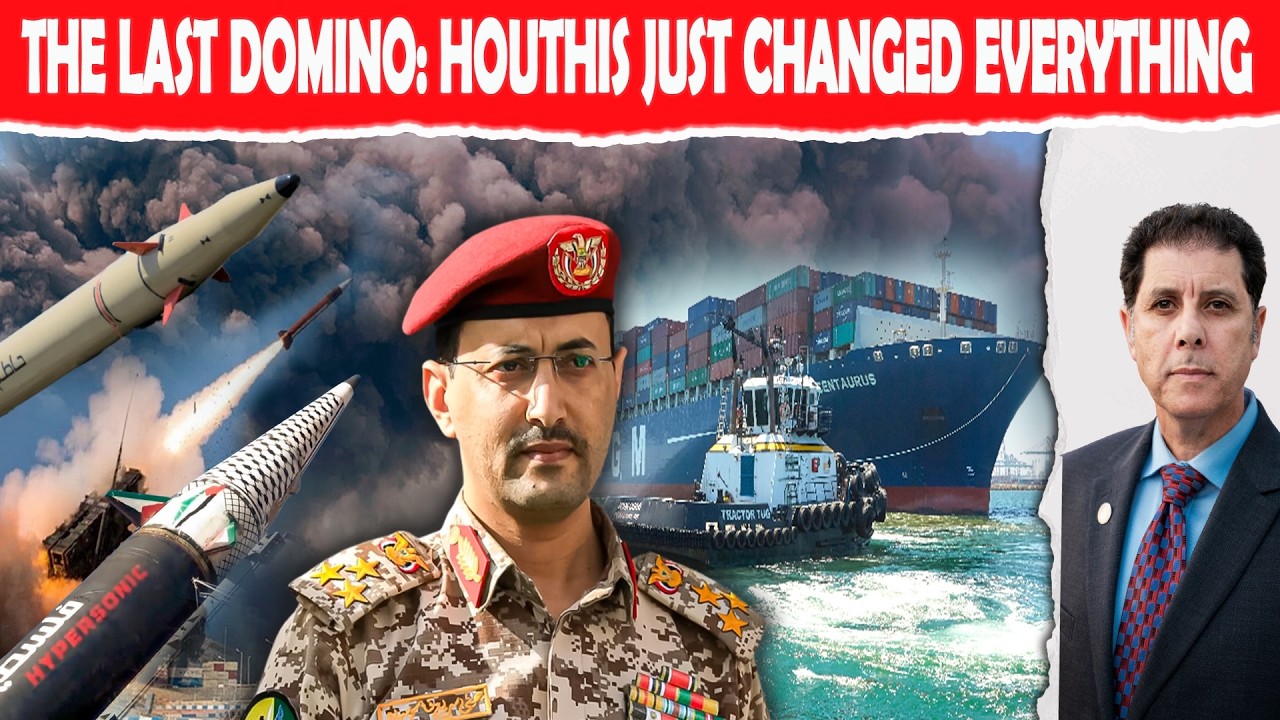
This content was created by David Oualaalou. This content was uploaded by David Oualaalou. This is a YouTube livestream titled "Missiles Over Tel Aviv: The Moment Iran's Master Plan Activated" (posted March 30, 2026). The video is a geopolitical commentary/live analysis in which the host (labeled SPEAKER A) translates and discusses clips from regional actors — including a statement attributed to Yemeni military spokesperson Yahya Saree, reports about Houthi/Ansarullah strikes, Iranian/IRGC warnings, and Hezbollah activity — and a news-report clip (SPEAKER B) about Israeli media restrictions. The presenter argues that Ansarullah/Houthi entry into the conflict creates a fourth front against Israel, explains likely impacts on maritime choke points (Bab el‑Mandeb, Strait of Hormuz, Suez), regional escalation dynamics, economic and military consequences, and solicits viewer responses in the chat.
Chapters
Hello everybody and welcome to Geopolitical Trends, where truth matters. Houthis enter, or Ansarullah enter, the war. What we're going to be seeing soon is that the gas price is going to even go higher. The supply chain, the economy, they all— everything is within now Houthis' decision away from collapse. Why? Because Babel Mandeb will be shut down as we move forward. And that's exactly what we're going to be looking for into this coming— this week as we speak now. We're going to see what's going to be happening around now in the Red Sea. That's basically— it's gonna impact every one of us, doesn't matter what part of the world you are in. As a matter of fact, Iran has been spending the last 40 years for this moment. Because what we have now, we have 4 fronts: Iraq, Hezbollah, Yemen, and Iran. Which is exactly what I said 3 and a half months ago. Should this war erupt between Iran and Israel, Israel will not be able to maintain 3 or 4 fronts. And here we are. And this is exactly what I'm going to be doing for you in this live stream. I'm going to be providing you two clips. I'll do the translation and I'm going to be— I will be providing you my own analysis about where I see this is going now the Houthis officially have entered the war. So we're going to start with the first clip and this one from the spokesperson of the Yemeni military, that's Yahya Saree, and I'll do a translation. It's short, it's not it's not that long, then we'll go from there. All right, let's take a listen, please. What he's saying, in light of the brutal aggression currently being perpetrated by the American and Israeli enemies, an aggression targeting the Islamic Republic of Iran, the axis of jihad and resistance, and our entire Islamic nation, and aimed at establishing what he termed Greater Israel under the guise of reshaping the Middle East. What is— and within the framework of our nation's legitimate right to confront the Zionist scheme and its implementers, America and Israel, and in affirmation of the critical importance of cooperation among the peoples and states of the region in taking a firm stand to counter American-Israeli aggression Zionist scheme and to strive to conflict, uh, uh, to inflict, I'm sorry, uh, a major defeat upon them. And based upon the principle stands in our Islamic Yemeni people in solidarity with our Islamic nations and against any American-Israeli aggression directed at any Muslim country. And amidst the continued aggression by the American and Israeli enemies against the Islamic Republic of Iran, Palestine, Gaza, Iraq, and Lebanon, An aggression executed in furtherance of the Zionist scheme that threatens the entire nation. The Yemeni Armed Forces, out of a deep commitment to regional security and stability and to bringing an end to this aggression, hereby affirm the following: First, the necessity for the American and the Israeli enemies to immediately respond to international diplomatic efforts aimed at halting the aggression against Iran and the countries of the Axis, an aggression deemed unjust, oppressive, and unjustified, which undermines global and regional stability and security and harms the global economy. Second, the necessity to immediately cease aggression against Muslim countries, specifically Palestine, Lebanon, Iraq, and Iran, and to lift the unjust blockade imposed upon Yemen. Third, the necessity to implement the Gaza agreement and to fulfill the obligations stipulated therein regarding humanitarian requirements and the legitimate rights of the Palestinian people. And fourth, we affirm that our hands remain on the trigger, poised for direct military intervention in any of the following instances. We will not permit accession to any other alliances with the United States and Israel directed against the Islamic Republic of Iran. And the axis of jihad and resistance. Furthermore, we will not allow the Red Sea to be utilized by the United States and Israel as a staging ground for hostile operations against the Islamic Republic of Iran or any— or against any other Muslim nations. We affirm that any continued escalation against the Islamic Republic and the Axis of Jihad and Resistance will be met with a response to commensurate with the requirements of the military theater of operations. Fifthly, the Yemeni Armed Forces issued a warning against any unjust measures aimed at tightening the blockade imposed upon the Yemeni people. In conclusion, we emphasize that our military operations are directed against the Israeli and American adversaries specifically to thwart the, the Zionist agenda and are not aimed at any Muslim people. May God be— and God is our witness. Allah is sufficient for us, and he is the best disposer of affairs, the best master, and the best helper. Long live Yemen, free, proud, and independent. Victory belongs to Yemen and to all The Free People of the Nations, Sana'a, on 8 Shawwal 1447. This is the Arabic calendar, by the way, which corresponds to March 27th, 2026. And this was issued by the Yemeni Armed Forces. Very interesting dynamics as far as the wording of what— and that was, remember, prior to launching the first missile on the 28th, which I will show you a clip of that. But the statements in itself indicated that there is no return point of return now, and the Yemenis are moving forward. Of course, the government in Sana'a, which is a puppet, was, was sort of placed by the Saudis and the Americans saying, oh, the Yemen is not getting involved against Israel or whatever. And the truth is not, it's not. They are. Yemen is fully, uh, uh, sort of engaged right now into all this. Now let's do the second, uh, clip, and I will do the analysis. Then I'll share with you some clips towards the end like I always do. So please make sure to stay with me till the end of this live stream. So here is the, uh, and this follows up the, uh, exactly the statements, uh, that was issued by Yahya Saree. And it highlights to you the idea that, uh, Iran sort of gets involved now and, and already firing, uh, missiles at Israel. So let's take a listen here, please. And it's very short anyway. Following the strike launched against Israel by Iran's proxy in Yemen, marking the group's— this is reference to Ansarullah Houthi— first military action since the outbreak of the war late last month, the likelihood of the region spiraling into widespread regional conflict has become increasingly evident amidst fear of long-term repercussions for both regional and global nations. The Israeli military confirmed the interception of a missile fired from Yemen towards southern Israel, resulting in no casualties. This launch occurred just hours after the group announced its readiness to take military action should escalation persist against Tehran and its proxies in the region. The Iranian-backed group did not specify the exact form of any intervention on its part will take. However, it emphasized that its finger remains on the trigger for direct military intervention should any other alliances join forces with the US and Israel should escalation against Iran continue, or should the Red Sea be utilized to conduct military operations against Iran? The entry of the Yemeni group into the conflict has heightened the probability of a broader regional confrontation, particularly given their capability to strike targets far beyond Yemen's borders and to disrupt maritime navigation lanes around the Arabian Peninsula and the Red Sea, according to strategic analysts. This strategy is one of the groups, uh, is one of the groups has consistently pursued since 2020. Amidst this ongoing military escalation, Iran's IRGC issued a warning to American industrial firms and heavy industries allied with Israel within the region demanding the evacuation of these facilities and their surrounding areas as they have now become legitimate targets for Iran in retaliation for strikes targeting vital Iranian industrial, uh, installations. Experts suggest that the situation is trending towards an unprecedented escalation, as Tehran appears poised to strike strategic military centers within Israel with the aim of elevating the conflict to a more dangerous level. A shift underscored by the, underscored by the IRGC declaration that Iran is no longer bound to respond merely in kind, but is instead prepared to strike any target it deems strategic. I'm going to stop right there because it's the end of the clip. What's interesting about this, uh, this, uh, this clip here is that the idea that you, you all know that it was an eye for an eye, as it is known in, in, in most of the Muslim countries. Iran was sort of moving into that direction. If, uh, and that's what they, they told the, uh, sort of threatened the Israelis. If the Israelis attack the electric grid in Iran, Iran will respond by doing the same. And there was some sort of an eye for an eye. You target this, we'll target that. As a matter of fact, now the US— yeah, this is what I don't quite get it, why the US now wants to target the universities in Iran, or Israel for that matter, doing that the same. So what Iran said, if you target our universities, we'll target yours. And as a matter of fact, I'm going to show you a clip following Iran's strike on a nuclear facility, uh, where there is some chemical, uh, work, uh, or factories and what have you. Iran responded by the same, and I'm gonna share the clip with you. This now highlights the strategic move as to why, which I will get into in a second, why Ansarullah have entered the war at this stage. This is not random, by the way. It's well thought out, it's calculated. Iran has put this in place for the last 40 years. It's what I'm saying. This is nothing. Iran is— no, no, no, no, no, no, no. They planned on this accordingly, and that's what we are seeing, the response of this. So what I'm going to show you, the clip here, is first of, uh, this is a plant in Haifa that was blown up, uh, by the Iranians. And I want you to take a look here, and I'll show you the clip in a second. Let me just upload it. Quickly here. All right, let's take a— I don't know if there is a sound on it or not, but well, we'll see. Here is the, here's the clip here, and let's take a look— take a listen, I'm sorry. What's so holding that? If you noticed, the clip was from within Israel, and that's once again, this clip pertains to what took place, uh, when Iran blew up the Haifa power plant with a ballistic missile. And this is again why this has moved now to different aspects of it. I'm going to share another clip with you, and this one is from Hezbollah. To those who said, oh, Hezbollah is dead and sort of it's whatever, whatever— no, no, no, no, no, no. Wait until you see what Hezbollah has done. Done two major things. First of all, Uh, with the— hold on, bear with me here, guys, please. Let me just get it for you, and you'll see two, uh, and I'm gonna keep it in Arabic for you to see because I want you to see, uh, this one here. Once again, I want you to see— hold on, let me upload. The screen here. So I'm going to show you, first of all, I'm going to show you the date of this particular clip, and I'm going to highlight it here. March 30th, which is today. Unfortunately, you won't be able to see it on the screen, it's too, too small. It's right there where I screen down there. It's, it's in, in, in Arabic. And what I show you is the confirmation of the same clip that I just showed you. From a different source. The one you saw earlier was from within Israel. This one is reported by Al Jazeera, and you can see also the Hebrew language here because it was reported there. Okay, that was the, the, the first one I wanted to share with you. Second one is this particular clip right here. All right, let me upload it. And about Hezbollah, why is this important? It's because it's a major, major development which I didn't see it coming, I'll, I'll admit it. And this one has to do with the idea that Hezbollah now takes the town of Heriat, Shemona in Israel. This is Israeli— I'm sorry, Hezbollah fighter standing there. This is the first time in its history that Israel loses an enclave in its territory. Because why? The IDF has retreated after losing its main base. And what does it say? What does it tell us? It tells us that Hezbollah is not sort of— has been destroyed and so forth. It's still active, as we see here. All right, now let us go into the idea of— and there is also something going on with these two events— is that now you have a declining support inside Israel to the government. And of course you have youth anxiety inside Israel. That's why people are leaving. Israelis are leaving in droves. I don't think so they're gonna go back. Israel will never be the same again. And I'm gonna ask you the question is, what does this mean for the survival of Israel? Because what we are witnessing right now is that Iran war is beginning to sort of wear down Israel. That is the reality. The problem for the U.S. is being sucked in into this, and with now the Houthis are launching, start launching and moving forward. The government in Sana'a that is a puppet to Saudis and Americans, it doesn't matter. But the Houthis have the capabilities now to move forward into sort of supporting Iran. And you're going to be seeing soon certain types of missiles that's going to be launched from— it's going to be launched from Yemen in conjunction and coordination with Hezbollah and Iran at the same time. So basically the whole region now, but mainly for, for Israel, is going to be attacked from three fronts. Then we're going to have to add the other front, which is in Iraq. This is what's important to understand about these dynamics. So now we ask the question, what does it mean? So now that Houthis have entered the war, Well, first of all, you're going to look at— I'm going to do it in 3 or 4 key points just to provide you some insights. Now, the fourth front has opened, and the forefront is the Houthis, because the, the Iraq front was already open, which, by the way, today a missile has attacked the American base in Baghdad, and one plane was destroyed. And that's in that location, that's where also the diplomatic corps of the US in that base. So it's being attacked as we speak by, by Iraqi militia affiliated with Iran. That's the one front. The second front in the Hezbollah. Third front, of course, is Iran. That's the main one. And now you have the fourth, which is the Houthi. And this is where Iran, Iran now reportedly signal the Houthis to hold until the moment of maximum impact. This is why you are seeing what you're seeing, why the Houthis have entered the war now, but not 3 weeks ago. It's not they didn't want to, it's not they were scared. No, no, no, no. Because what happened on Saturday with the strike of the Houthis, which was on the 28th, 28th, 29th for us the next day, suggests that the moment has arrived with the now so-called axis of resistance now operating on forefront. Iran, Hezbollah, Iraq, and Yemen. And this is not an impulsive act. This is what I want you to get. This is a coordinated strategic escalation timed after a month of war. Second, as I mentioned earlier, Bab el-Mandeb— I did an article on Substack and I will put the link for you later on, and I addressed this particular point. The shutdown of Bab el-Mandeb is a foregone conclusion. Why? Because it's the second maritime choke, uh, choke point. Let me put the, uh, Bab-el-Mandeb. I'm sorry, this is the, uh, this is the Strait of Hormuz. Uh, Bab-el-Mandeb is— I'm trying to get to it, to the map here, if I can get to it right. No, it won't show up here. I thought I had the, uh Strait of Hormuz. No, I don't. Sorry. The only way I can get this for you is through— yeah, right here, through this map. This is Bab-el-Mandeb right there. It says right there Bab-el-Mandeb. And that is the idea of— it's a foregone conclusion. Bab-el-Mandeb now, it's going to be shut down. Another choke point. And this, arguably, in my opinion, the most consequential elements of Ansarullah's entry into the war. Iran has already effectively closed the Strait of Hormuz. And when I say closed the Strait of Hormuz, not to everybody. They were allowing some ships to go. They have nothing to do with Iran. They are not fighting against Iran. But anything affiliated with the US and Israel, or any supporters of Qatar, Bahrain, Oman— not Oman, Oman— Saudi Arabia and Kuwait, no, they're not going to be passing by. And that's now Bab-el-Mandeb. As I said, in addition to Strait of Hormuz, now you have the Ansarullah now vowing and signaling they were— they could move against Bab-el-Mandeb Strait, uh, give or take. Because remember, there are about 10% of the world's seaborne oil passes through there. And if they, meaning Ansarullah, decided to move to shut it down, you're talking about shutting down the Bab-el-Mandeb shutting down the Red Sea and ultimately the Suez Canal. Then we have two major choke, uh, choke points closed along the Strait of Hormuz. And this will be— those are major international shipping waterways for international trade, as you know. Uh, about just, uh, some stats for you to be aware of: about 12% of the world trade typically passes through Bab-el-Mandeb And about 10% of global maritime trade, including 40% of container ship traffic, passes through the Suez Canal each year. So do the math and you see what this is going to do to the energy markets. And third element I will talk about is the Israeli economic vulnerability. Now it's becoming clear, you know, Ansarullah is launching missiles. Iran is targeting refineries and so forth, and there is no energy flowing in into Israel because where is it going to come from? There's no other way. Now, United Arab Emirates might do something. How are they going to do it? Turkey might allow some, I don't know, maybe, maybe they will, maybe they won't. But suffice it to say that for Israel's economic vulnerabilities, a potential naval blockade on Israeli-linked ships passing through Bab-el-Mandeb Strait would hurt Israeli economy more than what is already— it's devastating. No, because you're talking about 30%, to my knowledge, of Israel's import passes through the waterways in the Red Sea. I mean, just think about this one, how it is— it's going. What I'm going to do now, I'm going to share a clip with you. It's in English and Let me share the screen, and I want you just take a listen. And what I want you to listen on this, it has to do with why you are not hearing, uh, why you are not hearing certain, uh, coverage or certain areas that it's, uh, taking place as we speak. And this is what I try to do, uh, constantly by bringing you, uh, up-to-date information to keep you in the loop of this. Let's take a listen, please.
Iranian missiles are hitting Israel. So why are we seeing so little of it? Leading news agencies, including Reuters, say Israel's military has banned live broadcasts of the skyline during missile alerts. Images of interceptions, widely shown at the very beginning of the war, are now restricted. Journalists are also barred from filming impact sites near sensitive locations. These restrictions are enforced by Israel's military censor, a system that appears to have tightened since the war on Iran began. National Security Minister Itamar Ben-Gvir has warned media organizations against violations, promising zero tolerance. And that warning carries significant weight because Israel faces scrutiny for killing almost 300 journalists in Gaza since October 2023. Reported strikes on media facilities during the current conflict raise further questions about the risks Israel poses to journalists reporting the war. Major news networks have acknowledged limits on what they can would. We just saw one go up there. We're not showing you that because we're not going to show, uh, the Israeli government does not, uh, allow us or want us to show where that may have come up, that interceptor. Now, wartime censorship in Israel is not new. During the 12-day war with Iran in June 2025, journalists had to submit footage of missile strikes for approval, although some said they could still report when civilian areas were hit.
According to these rules, we are only allowed to film and report if civilian targets were hit, residential buildings, for example.
But in 2026, some members of the public say even that distinction is becoming muddied. Israeli academic Ori Goldberg highlighted one recent barrage initially described as hitting open areas with no damage. Minutes later, images showed a strike in the middle of the city of Givatayim near Tel Aviv. "We decide what's real here in the asylum," he wrote. And one senior news manager told +972 Magazine that journalists sometimes only discovered later that a target had been struck, after being unable to report it at the time. So if professional journalists are left trying to fill in the gaps, what does that mean for how the wider Israeli public understands the war? A recent Israel Democracy Institute poll found overwhelming support for the strikes among Jewish Israelis. So if support is already so high, why tighten control over what people see? Israel says the restrictions are designed to prevent sensitive information reaching Iran and Hezbollah, but they also limit what can be independently reported about the war and who controls what we know about it.
Okay, I just want you to be aware, and this is again why I do what I do and, and spend literally countless hours, uh, uh, going through information from different parts of the world so I can do this live stream for you, uh, to bring you accurate information, uh, with credible sources and let you reach your own conclusions. If the truth matters to you, hit like, subscribe, and tap that bell. No spin, no agenda, just the stories they don't want you to know. So don't watch from the sideline. Be part of the movement. Your support keeps the truth alive. Thank you very much. And indeed, I am very grateful to your support and to our community for that. Let's continue with my brief analysis. The point number 4 that I need to share with you is that what's going on now with Ansarullah entering the fight is that a warning to Gulf states, especially Saudi Arabia. And once again, I wrote a book about the Saudis and I disclosed in it why the fear of the Saudis from the Ansarullah or Houthis, because they are in And I'm not going to get into the detail of geography and so forth. When you look at this part of Saudi Arabia, southwestern part, southwestern right there in an area of Abha and Jizan. Now all of this is mainly Shiite. And where are the Houthis? Houthis are in the north of Yemen in Sa'dah. And that was always the fear of the Saudis. This area is also rich in oil, and you can just see why the, uh, the, the concern for the warning to the Gulf States. Like I said before, and I don't shy away from, uh, saying this once again, it's the Gulf States that put themselves into this position by allowing US bases on their territories. And those missiles that are hitting Iran are being launched from those locations. And that is exactly what's going on. So You don't blame Iran for attacking those locations because that's what it is. So to the Yemenis, they are thinking in terms to specifically for Saudi Arabia. Here is what most analysts concur or agree upon is that the attacks may have been less about Israel than about Riyadh or Saudi Arabia because Saudis play both sides. Which, I mean, you can try— can you trust the Saudi government? I won't, you know, just using religion to justify whatever. And that's a separate conversation for some other day. And here is the thing, this is why I shared the clip with you earlier about Yahya Saree when he stated those 4 points, because he laid out the specific conditions that would trigger full entry into the war. Houthis have not entered the war completely yet, and among them are any country actively participating in the US-Israel war against Iran. And this, I believe, is in, in my opinion, it's an indirect message to the Gulf, and particularly Saudi Arabia, warning them against joining the war against Iran and letting the US forces use more of their bases. And that's exactly what I argued before. And the other thing is, the other point is the complications that now the Houthis have created for the US military power projection. The Houthis' involvement will complicate, uh, some sort of the, uh, the developments of the USS Gerald Ford aircraft carrier, which by the way left the area. Let me get, uh, I'm hearing some noises outside there. Sorry, guys, sending it for the, uh, the Red Sea for, for the, uh, to be fixed. Well, because it has been attacked. That is where, where the issue is. And, and point number 6 that I want to address here, it has to do with Iran's broader strategic design. This is again While the Houthis' strike against Israel should not be dismissed, from Iran's perspective, it is a part of a broader economic campaign against the United States. The central issue lies— and of course Israel for that matter— but the central issue lies in their demonstrated ability to threaten critical energy transit routes at both maritime checkpoints. Or choke points rather. That is what's important to understand because what you're looking at right now with each passing day, okay, of the conflict, I mean, remember the late Ali Khamenei warned the American that it will become a regional war. So he was spot on because it was a foregone conclusion, but sort of he was, his son, Mostafa Khamenei doesn't think in those terms. He will move forward with, which what he's doing, that's what Iran is doing right now. Because Iran now, that's it, gloves off. There is no holding back. Just for those who might be thinking, well, Iran might, might negotiate, Iran might cave in, might— no, no, no, no, no, no, no. That ain't gonna happen. Iran made the decision now, we'll fight till the end. And they have the strategy, they have the resources, to my knowledge, to sustain this war for about 2 years. Remember, we've been in Afghanistan for 18 to 20 years, and what have we accomplished? Nothing. And that is again where I see this scenario now is going to materialize and continue to grow. It's not a question of if, but rather a question of when. Simple as that. So the bottom line that I need you to understand about this, and I'm going to answer some other key, key points in this brief analysis is that the Ansarullah's entry into the conflict signals that Iran's grand strategy is to turn a bilateral confrontation into a multi-front war of attrition. Remember, Hezbollah took over now location in, in southern part of, of Israel, and that in itself will signal not only from that operational aspects of it, but also from the economic, global economy and mainly global energy. Because what Iran and Ansarullah entering the war now is they're going to strangle the global energy and trade flows at multiple choke points simultaneously. And this is again where that immediate military threat to Israel is going to become a foregone conclusion. We'll be looking— what you're going to be looking at, and I'm going to be doing updates for you, we're going to be seeing now certain types of missiles being launched from Yemen into Israel, something we didn't see before in 2023. Even though, uh, Yemen or Ansarullah do have in their possession certain long-range missiles provided by Iran. And this is again where you're going to have to think in terms, uh, the immediate military, military threat to Israel. You know, some say, some analysts saying, oh, it's modest. I disagree. I disagree with that assessment. It's not modest. But what you're going to also be looking is that the economic and logistical threat to global shipping, US force deployment since now we are sending Marines to their death and, and for a land invasion, which we all know how it's going to end for that. Then also you add the Gulf stability, which is, uh, sort of, uh, it's now severe and growing concern within so many of those rulers in the Gulf. So basically what the world is watching now is watching whether Babil Mendeb join the Strait of Hormuz. I am here to say it will in due time. There is a reason for why the Houthis didn't do it yesterday. They're not gonna do it tomorrow, but there is a point where they're gonna do it, and that's when you're gonna control, because the outcome will send shockwaves throughout the global energy market. That is the idea. And this leads me to one question which I'm going to ask you, and I will greatly appreciate your input into this. Just yes or no. In the chat box. Can Israel, in your opinion, afford to defend multiple fronts? And let me repeat the question once again. In your opinion, can Israel afford to defend multiple fronts? Just yes or no in the chat box. I will greatly appreciate it. My answer is no. And no, and, and not alone, by the way, because you have to have the US support. Israel's survival without America, it won't exist. Um, it is the truth, does it? And this is again where you will think some countries like Japan, like South Korea, like Philippines, uh, even Australia, they start to have to think, should the war breaks out in that part of the world, the US ain't gonna be fighting for them. As a matter of fact, As a matter of fact, I've been reading some, uh, in— I won't call them internal because I don't have access to government, but, uh, limited circulated documents in Washington. So the bottom line to it, let's just not get into the sources and all that. The bottom line to it is that Ben Netanyahu is now so concerned that he is finding himself Am I gonna be by myself? Will the US drop me? Because there is some regression from Donald Trump. Despite what, despite what you hear, Donald Trump is coming to the realization that he's been played. But I also wanted to start to reduce the footprint of the US support. And this is where you start to see now, for example, for Israel, its air defense system is being stretched to its limits. Yeah, because in the first 3 days of this war, Iran launched more than 200 ballistic missiles at Israel. And let me just put this in context for you. You remember the 12-Day War in 2025? Iran launched around 500 total, and each requiring that Israel counter it with an interceptor rocket. Probably more than Israel has the capacity to counter on its own. That's what I'm saying. Without the US help, it would likely have lost control of its airspace by now. Because Israel has the 3 defense systems, the, the Iron Dome for short-range rockets, David's Sling for medium range, and Arrow 2 and 3 for ballistic missiles. But none of them seems to be working. Because when Iran blew up, uh, uh, blew up the, uh, the Haifa location there, that means the— and that was a missile, that was a ballistic missile— that means Israel defense system, it's, uh, that's it. Iran found out now it can, it can just launch whatever it wants. And the casualty and the damage toll is mounting. Of course we are not going to be hearing much, you know. To my knowledge, there are about up to almost 5,000 people have been wounded in Israel since the start of the war on February 28th. But again, you check and, and double check to ensure the information. And we're talking about— I'm not even including yet the attacks on Beimuna and Arad, which was about to my knowledge, about 200 people. And that's what prompted the evacuation, uh, raising serious questions about Israel's defense strategy. So, and this is now where you're going to start to see, uh, the other front. Lebanon has become now a second active ground front. And this is why Israeli troops entered Khiam and clashed with Hezbollah near Tyre as Israel pushed to create security zone, but they couldn't. Hezbollah has attacked Israeli tanks and fired out of warplanes over Beirut. And this is where you are seeing now the, the, the massive, uh, uh, demoralized mindset inside Israel that is going on. It's because years of cumulative war have now eroded reserves inside Israel. So I won't be surprised that you might see American troops now fighting on behalf of Israel, which will be very problematic, very problematic. I'm talking from a constitutional perspective here. So are you Americans or are you Jewish? You know, you can't fight for two countries, you fight for one. Yeah, you might have a dual citizen, But that's fine. But at the same time, you're going to have to make a decision on that. Suffice it to say that more than 2 years now, almost constant war has taken now a heavy toll on Israel economy. This is why economy and the military. This is why you have the head of the military, Izmir, Izmir, I believe he's saying that the military, the Israeli military is in the verge of collapse because when you get demoralized, No matter how much weapons you have, whatever, you demoralized, you can't do anything. So the, the cost, you look at just for example, the cost of the munition has weighted heavily on the Israeli budget. And this is why you have to think in terms of the Iran strategy. Iran is taking the punishment too. I'm not denying it because we just had a, a bomber flew in, uh, two nights ago, nighttime, and dropped massive ordnance in inside Iran. I don't know whether Iran has some capabilities to counter that or not. I don't know, I don't know. But so far we were able to do that. So, and that's again, but even with that, Iran is thinking long term because Iran is pacing itself for a long war. And so far it has the upper hand, because what Iran wanted to do is they wanted to ensure that it has enough. Of course, the Western media is going to tell you, uh, by Iran dropping the amount of missiles and rocket launching, this was a result of the US effect— US and Israeli effective suppression of Iranian launchers. That is not true. That is not true. The reason Iran dropped the number of missiles is thinking in the long term. They don't want to run out of all their stockpile. So that's not because of the US suppression. Otherwise, how come the ballistic missile yesterday blew up the location in Haifa, which I will show you the clip in a second here? So, and another point which takes me back to what I said at the beginning. Iran— I'm sorry, Israel and the US underestimated Iran. You have now Israeli defense analysts themselves describing Iran's missile as the Middle East's largest and most varied, meaning they have different types. And just remember that picture, I always— I decide to keep it for you here to always refer to it, that the types of missiles Iran has, because this, this variety of missiles have been developed over decades. And that's what give— what— that's what gives Tehran— it gives Tehran strategic reach despite the lack of modern equivalency to the US Air Force and so forth. And also the usage of Iran's cluster munition in its attack on Israel, that just added more casualties inside the— in, in, inside Israel. The reason some have questioned, uh, why the late Ali Khamenei decided to cap the Iranian missiles ranges to 2,200, but at the same time That limit has been removed following the 12-day war. A lot of people do not know it was removed. No more. That means now Iran is going to extend the range, meaning that Iran now has the theoretically unrestricted reach with its longer-range missile systems. I wouldn't be surprised North Korea might end up helping Iran for ICBMs. I won't be surprised at that. Just a matter of time. So, and this is where the US is in critical, uh, uh, position right now. The— because the blunt reality that I see is that Israel cannot sustain this war alone. It's a foregone conclusion. So what does it mean? It means that the US will have now to allocate funding, to allocate resources, manpower and our troops. Because all started from striking Ali Khamenei, the late Ali Khamenei, thinking, oh, we're going to just do a quick regime change. So now moving into a large-scale operation across at least 26 of Iran's 31 provinces, but also entire region of the Gulf. So the bottom line, and I'm going to conclude with this and, uh, share a clip with you, the bottom line regarding this, uh, point that I was talking about, the entrance of the war, is that now Israel is fighting at least 4 simultaneous fronts. So Iran directly, Hezbollah in Lebanon, Houthis or Ansarullah missiles coming from Yemen, and you have the Iran -backed militia inside Iraq. At the same time, Israel also dealing with managing severe economic strain and inceptor depletion at home. It cannot hold on for, for, for much longer. But also because the, the reason why Israel is still standing as of now is because the US deep military integration into it. And the longer, by the way, the longer the war runs, the more Israeli capacity degrades and the more Iran strategy of a multi-front attrition pays dividends, strategically speaking, which is precisely what Iran designed it this way. This wasn't planned on or planned about last month, or this was in the making for the last 3 and a half decades. So here is my overall conclusion. What began as a confrontation— because that's what we had at the beginning, uh, with the, uh, with the, uh, Iran, uh, at— and, and Israel— what began with Iran launching this kind of missiles and so forth, it's now rapidly evolved into some— something far larger. And if I may use the term, more consequential for every, every person on the planet, including you. All of us.
All of us.
Because Ansarullah's entry into the war is not a side story. Let me just make that clear. Yeah, it is truly the activation of a strategy decades in the making As I said, design— what was the purpose of it? Is to overwhelm, exhaust, and isolate both Israel and the United States across multiple fronts simultaneously. I mean, come on, guys, let's be realistic. If you are a Bahraini, if you are a Kuwaiti, if you are a Saudi or Emirati or Omani or what have you, won't you be asking yourself why the leadership is supporting Israel or allowing American bases on our territory? That's the common simple question an average person is asking as we speak. And that is why I'm saying this is not a distant war. No, no, no, no, no, no, no. It's— we are dealing with it as we speak. And mark my word on it, when Babil-Mendeb and the Strait of Hormuz are both shut down, the price of everything you buy, every gallon of gas you pump, and every product that crosses an ocean is directly at risk. Because one thing we fail to understand, and you know what, is that Iran has patience. Just go and read the history of the Persian Gulf. That's all I need to say to you for that. 40 years, which 40 years falls into when we impose sanctions following the, uh, the, uh, the Islamic Revolution, uh, stated by, uh, or initiated by, uh, uh, Ayatollah Khomeini back then. Almost 40 years, but also the same time, 40 years of Iran building missiles, developing groups as we call them in the West, proxies. And of course, working on a strategy for chokepoint strategies. All this is not accidental. It is not. It is not. Because what I see coming is the next 30 days. We already went through the first 30 days. Now we see— we're gonna be seeing the next 30 days, and this war ain't over. Unless the US can sit down and agree to an armistice, which I don't see that happening at this time. Once we start seeing body bags coming, that would be a different conversation. So the next 30 days will likely determine the trajectory of these conflicts moving forward, not for the next month or second month or third month. We're talking about years from now, years to come. So my advice to you is watch the Red Sea, watch Israeli defenses, watch whether the Gulf states hold their neutrality, because these are what I call the pressure points that will tell you exactly where this conflict is headed before you start reading on headlines, which by the way are manipulative anyway. And that's why I truly appreciate you being here, because you are being informed. And I thank you for your support. Let me share the clip with you that I promised, uh, uh, earlier. And I want you to see with your own eyes here, and I'll conclude, uh, with these clips here. So the image that I'm going to show you, it's an aerial drone footage. And I'll let you decide what are you looking at here. All right, let me make this bigger if I could. Yes, and here we go. I'm not gonna play the sound. Do you know what you're looking at? Yeah, you'll be surprised. You'll be surprised. All right, I'm gonna stop it right there because that's almost the end. What you were looking at, that's Tel Aviv. It's a footage from an aerial drone in Tel Aviv. Uh, what I'm going to be working on for the next, uh, story is the one about the, uh, the shutdown of the planes, the US planes. But it's not about that specifically, it's about the military losses against Iran. That is what I'm going to be covering for you soon. So I'll be, I'll be doing that one. So I thank you very much for sticking out with me here till the end. So truly, truly appreciate you. Let me say a quick thank you to, uh, uh, some avid supporters here. Uh, let me start first with, uh, JV. Thank you very much for becoming a YouTube member and make sure to join me on April 3rd for the live, uh, Q&A for the members. I'm going to be doing that. So, uh, Empire We Are, thank you so much for your super sticker and your generosity. Truly appreciate you for that. Don't be fooled by Israeli and American nuke propaganda. The Israeli program, uh, is the American program. Why did, why did I build Israeli aircraft to carry, deploy American nuclear weapons? B-61 series, we gave the idea of everything we had. That is true, you know, and unfortunately I, I can't talk about certain highly sensitive stuff because I'll be breaking the law, and you know, I, I will not do that. But, but you're absolutely correct. I couldn't agree more with you. Thank you so much for your, uh, uh, super sticker and, and generosity. So Uh, Naz M, appreciate you again, you too, for your Super Sticker and your generosity. Thanks for all your hard work. You are most welcome, truly, to all of you, to all the community. I read the comments, and, and, and when you write, thank you very much for your hard work, Dr. O, it means a lot to me as well. I want you to know that a kind word can go a long way, and believe it or not, It's your support, your kind words is truly what keeps me going. And I mean it when I say, you know by now, I don't sugarcoat things. Like, so thank you very much, Naz. Truly appreciate you. And the last person I'm gonna give a shout out to, it's Red Pill Science. Appreciate you and thank you so much for your super sticker. Uh, peace, brother, love. What do you do? You're most welcome. I take this opportunity To also give a shout out to, uh, Noel, uh, for last time he put a super sticker. I didn't get a chance to read it, I overlooked it, so I wanted to just say thank you to Noel for the super sticker. Truly appreciate you. Another one is Martel: Any word on the new Ayatollah? What is it about? To my knowledge, he is in Moscow, so, but usually it's in serious conditions. I think he survived the bombing or whatever, that missile. And, uh, that's the so far what I know. As to his conditions, whether he can talk or not, I, I do not know. I do not know. I'll, uh, I'll, I'll check. I'll check and get back on this aspect here. Thank you so much for your, uh, super sticker, Martel. Truly appreciate you. And, uh, oh, you have two super stickers here, Martel. Let me show here. Oh, why did Israel invade Lebanon now? Are they crazy? Because they know— do you know the reason they invaded? They wanted to invade. They didn't invade it, did they? They just attack from the air because the Lebanese military is weak. Remember, in Lebanon you have two. You have Hezbollah, which has its own military, which is far stronger than the central government in Beirut. Beirut is useless. The government is useless there. And as a matter of fact, Beirut government in Beirut, it's get the funding from Saudi Arabia. That's why they following, uh, and, and that is why, uh, Israel is doing what is doing in Beirut. But it won't be able to send ground troops in southern Lebanon. And that's why Hezbollah now is reacting to all this. So that is the reason why. So, uh, oh, Zami— oh, there's another super sticker here. Zami— oh, thank you so much, man. Truly appreciate you. No to war profiteers. I, I couldn't agree more because that is what is why the war is going to drag on, because there are those who wants to make money. Uh, the sad reality is the sad reality. War makes money. Peace doesn't make money. That's, that's the sad part. But at the same time, for us as humans, you know, when we will say, how about if we all live in peace? Live and let live, you know. Yeah, you can go and build your capabilities, whatever, but you don't have the right to dictate to other countries what capabilities they have or they should have or not have. Because that was the whole argument, okay? What gives us the right to dictate to Iran not to have nuclear weapon? If we have them, why shouldn't they? And if they have the capabilities and capacities to do it, then no. But at the same time, it proved that if you have the nukes, nobody's gonna mess around with you. Once again, I give always the example of North Korea. Are we messing around with North Korea? I don't know, we can't. So, so thank you so much, you got another Super Sticker here, you got two. Truly appreciate you, uh, Zamid, truly appreciate your generosity here. And I have Jesus Aguilar, an avid supporter. I remember Jesus from way back, good to see you here, and thank you for your Super Sticker. Will the Gulf States invest in pipeline for gas and oil to send west? In order to bypass the Strait of Hormuz if this war ever ends. Uh, even if they invest, no, no, it won't, it won't work because logistically speaking, the cost of it. And what guarantees do they have that this missile will not land on, on those pipelines? As a matter of fact, what I'm concerned now about is the idea that Israel might go and bomb or launch a missile on some energy facility inside Qatar or United Arab Emirates and blame it on, on Iran. That is, uh, you know, it's nothing new. We've seen it back in 1968 with USS Liberty when the, the, the, the, the aircraft carrier was attacked and, and blamed— it was Israel that did it. So, and that is, again, I won't be surprised, but Yes, they could consider doing the pipelines, but the Middle East will never— or West Asia is not going to be the same anymore. And by the way, Israel and US dominance in the region will cease to exist. I'm here to tell you. So, uh, oh, Marvin, I gotta say thank you to Marvin also. Marvin, thank you, Vargas, thank you very much for your super sticker, Marvin. Marvin, uh, Volt Negev Desert, uh, war complex collapse, 3,500 IDF trapped. Uh, you, you got a, you got a major point there. And the major point I want to make comment on is that when Iran sent that ballistic missile to Arad, which is only 20 kilometers from the, the Dimuna nuclear facility, That was subtle message from Iran. We are capable of blowing this up if we want to. And that should make us think twice about the, the, the, uh, think twice in terms of why the IAEA, the International Atomic Energy Agency, has no teeth. It's like the UN, United Nations. They have no teeth whatsoever. And this is one of the things I'm going to be talking about during that, uh, a members-only live Q&A because I will tackle all these aspects of the Middle East. And, and so to the members who planning on attending that live Q&A, please prepare your questions ahead of time and just bring them over, or you can email them to me or put them in a comment for me, whatever. And that's what I'm going to be addressing because I want you to have a clear understanding of all this. So once again, I want to say thank you to all those who got me here the Super Sticker. Your generosity means a lot, and, and I'm, I'm very grateful and appreciative of, of it all. So, and to all of you, uh, here is the link should you decide to, uh, support the channel by buying me coffee. If you want to do this, I will be very, very grateful, uh, to you for that. And I'll be working on the next story, for you as we move forward. Now here is that one right there. This is the one. And for those who want to support my upcoming Asia trip, here is the link for it here. And thank you for your support. I, I think once again I want to give a shout out to Sir, uh, Sir Al 88. Thanks for buying me couple tea. Cups of Teas in support of my upcoming trip to Asia. And I want to say thank you to Mr. Morshed for becoming a new member on the channel. So, all right guys, I hope you enjoyed this and I look forward to seeing you next time. As always, remember, geopolitics impact your daily life in more ways than one. Till next time, bye-bye.
More from David


Beyond the Single Actor: Why the Gulf Isn't Choosing Between the US and China


Iran, Iraq's Militias, and the Houthis Are Coordinating! This Changes Everything




Who Controls the Next Decade's Resources? Latin America and Africa's Geopolitical Crossroads

The Chokepoint Trap: How Washington's Stupidity Triggered a Cascade That Now Controls the World

Trump Spooked as IRGC Unveiled dual-use SLV, Deployed Ghadir Mini-Subs & Hinted at Tactical Nukes!
