Modi to China: Begging Bowl in one Hand & a Knife in the Other! Geopolitical Trends
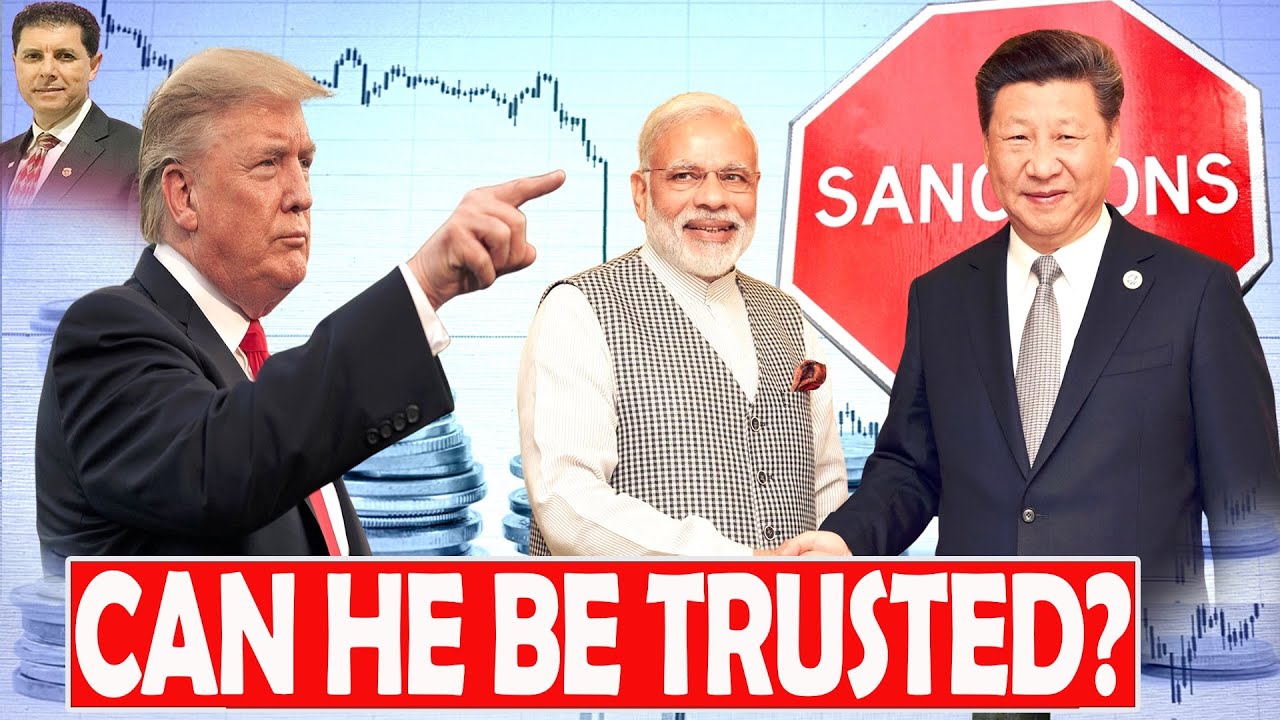
This content was created by David Oualaalou. This content was uploaded by David Oualaalou. This is a YouTube video titled "Modi to China: Begging Bowl in one Hand & a Knife in the Other! Geopolitical Trends," created on 2025-08-08. Based on the title and metadata, it appears to be a geopolitical commentary or analysis focused on Indian Prime Minister Narendra Modi's posture toward China and broader India–China relations/trends. No transcript or speaker information is provided in the excerpt, so participants and exact context (e.g., host, interview, or solo commentary) are not specified.
Chapters
Hello everybody and welcome to Geopolitical Trends, where truth matters. Excited to be with you on this, uh, what day is today? I think August 8th. Yes, it is. So very, very excited to be with you. Have an interesting topic, uh, that pertains to, uh, India and China, uh, of course about the upcoming visit of, uh, uh, Modi Prime Minister PM Modi to China, and I'm going to be providing you my own analysis what it all means, even though the key question that many are asking is, can Prime Minister Modi be trusted? So we'll get into that in a minute here, but first let me say hi to our wonderful community. Liang, good to see you. Willie Holman, uh, Truth Seeker Good to see you. I, I truly like that, uh, description of our community— inquisitive. Couldn't agree more, couldn't agree more. Thank you so much for sharing that. So, uh, uh, Abdul, good to see you. Uh, Taiwan— Taiwan Steel, I'm sorry. Uh, Wong KC from Malaysia, as always. Uh, who else? John Dutchman, good to see you here. John Smith from New Zealand, hello to you as well. Priest of Hiroshima, uh, speaking of Hiroshima, I will be talking to one of my guests in about a week and a half or so. I will be addressing that part, uh, of, of, uh, the celebration, uh, of the commemoration rather, of what happened, uh, uh, Trump in Jeffrey Epstein files from the UK. That's an interesting screen name. Hey, don't forget MBS also, he was in the picture as well. So SD, good to see you as always. Okay, let me get in into what I'm gonna be covering. I have a lot to cover, uh, but before I'll do this, I have some housekeeping items to keep you informed of my upcoming interviews, and I have lined up some really interesting guests. So I'm gonna start first with His Excellency, uh, Lakhnad Sharma. He's the Minister of the Energy and Natural Resources, uh, for the Royal Government of Bhutan. He will be here on Monday at 10 AM my time. So I look forward to that conversation with His Excellency, and, uh, you guys gonna learn a lot about Bhutan. So we look forward to that. Uh, also, uh, I already, uh, got a word from the office of Melissa Kemp. She will be here in about a week and a half or so. So they confirmed the date, and it was just a matter of finalizing, uh, just the timing, and I will make an announcement for you. So we look forward to having also an interesting conversation with Melissa regarding the nuclear disarmament. And of course, I am— I, I just reached out to, uh, Dr. Posto yesterday, the day before. We're going to line up some, some, uh, time for us to, uh, uh, discuss further topics regarding the missile next week. I will keep you posted on that. And of course, you can't forget my upcoming conversation also with Carlza. It will be here soon because I have to do this interview before I leave, uh, uh, before I leave, uh, the country for Asia. So I will keep you, uh, posted on, on this one. And the last one is, uh, oh, I don't have it here, I don't have the picture, is Einar Tengen and Dr. Oualaalou will be here also. So look forward to that conversation. So, but let's get into our conversation regarding, the upcoming visit of Modi, so, Prime Minister to China. Now, first of all, of course, there's two questions that's going to come to mind, and, and I ask the first one for myself: can Modi be trusted? So, and we're not going to answer this right now, we will answer it as we move forward. And second question is, how will China approach now this, uh, uh, uh, prime minister's visit. Because there is one thing you need to understand: Modi is not going just to China to meet President Xi Jinping. He's attending the SCO, the Shanghai Cooperation Organization. So, and here is one thing that I need to make clear: the media inside India are saying or confirming that the Prime Minister Modi is already gonna meet with President Xi Jinping. There is no confirmation on the Chinese part that one-on-one meeting is gonna take place. So I don't understand why the already sort of the Indian media already saying, oh, it's fait accompli, Modi is gonna meet with President Xi Jinping. No, They're going to meet during the meeting of the SCO, but not one-on-one. And this is exactly what Modi is hoping for, and for specific reasons that I am going, uh, to get into this. No, I always get this description of— and I think I did this one time, uh, when, uh, uh, Tony Blinken— you know what, you remember him, the incompetent Tony Blinken— when he went to China. And I do remember mentioning bagging with a ball in one hand and a knife on the other. This is exactly how I portray Modi's visit to China. I know he's going to attend the SCO, but at the same time, just few months ago, you were saying— you, Modi, in this case— oh, China is bad, China wants to dominate this, China is the bad actor. All of a sudden, China is the best. I am going to meet with President Xi Jinping. I would like to mend my tensions with China. No, no, no, no, no, no, no, it doesn't work that way. You can't be flip-flopping just because you end up holding the end of the stick, politically speaking, when it came up to India's incompetent foreign policy. Because where India is today is a reflection of its double standards regarding how it approaches countries And like I always say, you can't be standing on both sides of the fence. You have to decide here or there. So, so like I mentioned earlier, China will be hosting the Shanghai Cooperation Organization Summit. And by the way, this was announced back in March, uh, when I remember Foreign Minister Mr. Wang Yi made the announcement that China is going to take the presidency over the presidency for the upcoming summit. So And this is where Mr. Modi hopes for one-on-one. Why? It's the optics, because to him it's going to give him more boost of support domestically. Of course he wanted to stick it to the Americans. The Americans going to be saying, well, should we be concerned about India and the rapprochement between India and China? I say no, don't worry about that. It will be no rapprochement. This is where I respectfully disagree with Professor Sachs who mentioned few days ago that, you know, the US is gonna be now concerned given that India's economy is gonna become better and sort of is gonna change the balance of power. I respectfully, I disagree. I don't see India reaching that level to begin with. So the challenge or the change rather to the balance of power, it's not going to happen through India. It's going to be happening through China, and it's already been happening through China. India is in no possession to play any, any influential role on the global stage regarding the geopolitical matters. You know, that's the way I see it. But again, I respect what Professor Sachs, uh, stated. And of course, that's where disagreements is nothing bad in, in sort of in the intellectual setting. You have to disagree with people if you feel, uh, that, uh, sort of your views differ from theirs, but you respect those differences. Like I said earlier, the two key questions: can Modi be trusted, uh, and how should China approach this? Well, that will be very interesting. It's because the idea that how it is portrayed inside India is that all of a sudden We seeing a thaw between the China and India sort of gathering steam or gathering pace, that is, you know. Well, it's because we already know India's relations with the US are souring sort of because of this trade issue. That means India will have no other options. And this is why I feel comfortable saying the whole reason, the whole reason for why Modi wanted to have the one-on-one meeting with President Xi Jinping, that's a way of asking for assistance in a more subtle way. Of course, the pride of India will not come forward and reach out to China, say, hey, can we work out our differences and let's work together? What China offered that to India, but India turned it down. You all remember with the 5G network when China wanted to sort of upgrade, uh, certain networks in India and India said no. It's because of the spying and all that, which you all know it was a lie. The reason India turned it down, because the US pressured New Delhi to do so. And that is why I'm saying now, for India, if you got a problem with America, then deal with it. Why all of a sudden China becomes the the sort of, oh, China is the, the country we need to reach out to. But in any event, the, the timing of Modi, uh, is, is during the, uh, summit of, uh, of the SCO, which, by the way, it behooves us to have a brief historical snapshot of the SCO, and I'm gonna share it with you. So I'm gonna just share some history with you regarding the Shanghai Cooperation Organization. I have some, uh, images here for that. Yeah, right here, Shanghai Cooperation. This is their logo. I believe this is with some countries there. So, but it behooves us to understand a little history of it. Well, what is SCO? SCO is a Euro-Asian political and economic and security alliance which was established back— does anybody know what year SEO was established? Let me just see in the chat box. Like I always say, I like you to be part of the conversation. So if you can type in the year when the SEO was established, if you happen to know. Oh, Cam35, I agree with your statement. Be aware, China, be aware. I agree. Uh, Hong Wong, 2010. No, that's too No, it was way before that, way before that. Good try, good try. One more try, guys, one more. See if we can— Muhammad Mazharuddin, you are off by one year. It was 2000, uh, it was 2001. That's when the SCO was established. And of course, how it all came about, it evolved from what it was known to those who understand the history, or know rather, or they are aware of the history of Shanghai. It evolved from the what was known as the Shanghai Five. So, because remember, it was only five at the beginning. So, and this mechanism was formed back in 1996, and the five there were, were China— there was no India in that— China, Russia, Kazakhstan, Kyrgyzstan, and Tajikistan. And the reason for why it was established is to address the security issues And of course, in 2001, Uzbekistan joined the alliance, uh, uh, and the organization sort of— because it start to expand. And there is one important thing about the SCO Charter that I need you to be aware of, is that in 2003 it outlined its objectives, its goals. Which is defined in promoting regional peace, stability, and prosperity through cooperation in various fields. So, so when you look at this history back in 1996, that was the Shanghai Five, as it was known back then. Of course, following the collapse of the Soviet Union in 200 2001, the SCO sort of reformed itself or reorganized. Uzbekistan joined in, as I mentioned. 2002, that's when the charter was signed officially, and that's— it entered into effect on September 19th of the same year, of, uh, 2003, if I recall that one. To fast forward I'm not going to go through the— fast forward to 2017. What happened in 2017? You got the two arch enemies, Pakistan and India, were granted full membership in the SCO. I will say personally, if I were in charge or on an advisory capacity, I would say you do not want to do that for both countries. You don't want to do it. But in any event, they're already there. So increasing now the organization's so-called global reach. And of course, just FYI, since we're talking about India, India became a full member in Shanghai Cooperation Organization on June 9th, 2017. And that was during the Astana summit, remember, in Russia. And this marked— not Russia, the Astana And this marks the end of the process that began in 2005, because in 2005 India was granted the observer status. That's where they end. Fast forward to 2023, Iran became a member, sort of further expanding the SCO geographical footprint. See, to me, in my opinion, and again Just to those who are watching this, uh, live stream from India, I have nothing against India, but if it were up to me, I would rather admit Iran than admit India, because now India is coming with its baggage. And I'm going to be sharing few issues that it's already India's creating in the SCO. So, and Iran, because of its geo, uh, geographical, uh, footprint and its potentials for the economic and the political cooperation. And of course, in 2024, it was Belarus that joined as a member, solidifying now the SCO presence in Eastern Europe. So, and like I mentioned, for SCO, their main objectives, there are almost 4, limited to security cooperation, economic integration, political dialogue, and cultural exchange. So I just need you, uh, to understand at least briefly the history of the SCO to put things in perspective, because it's very, very important to understand. And as we do this, we put it within the context of the possibility of a meeting, a one-on-one between Modi and President Xi Jinping, which You know, some analysts saying you might not want to do that, Mr. President Xi Jinping. So, but again, Chinese know better. So now here is one, one fact that we all agree on. There is some sort of an improvement, but I won't call it 100%. I had a chance to read an assessment by none other than Lin Minwang. He's the deputy director of the Center for Southeast Asian Studies in one of my favorite universities. You know which one is that? Fudan University in Shanghai, which I am hoping to visit one day. As a matter of fact, I am going to reach out to him personally and see if we can talk. So, so I had a chance to read his assessment. Now, I agree with some, but I disagree with others. So regarding his assessments that China-India relations are in state of continuous improvement, but that continuous momentum is a very arsenale pace for a reason, and rightly so, because China should not assume that India is going to be honest, is going to be straightforward, and it will not backstab China in the back. Because, Mike, my word on this, the moment we're gonna give to India a carrot, they're gonna turn around. This is what I, what I see how it's moving forward. So, and of course, when you think about the SCO summit, India wanted to sort of take advantage of this setting. Of course, the West is not going to talk much about SCO. If you notice If you notice, the Western media does not address, for example, BRICS summits or something like this. Why? Because these economic blocs, it's really exposing that fundamental change that exists on the global stage, economically speaking. When you consider ASEAN, when you consider BRICS, and even to a degree the SCO. But on the other hand, you still have a problem when you have elements or countries that they are not carrying the weight as it's supposed to, the likes of India. And I don't shy away from saying it. So, and once again, this is where I differ with, uh, uh, Mr. Lin Mingwang, is that as he puts it, the visit, uh, by Modi, some sort of signifies— and I quote here— signifies a pivotal step towards reconciliation, end of quote. I still, I, I kind of do not agree with this because here is the thing, the fundamental issues between India and China have not been resolved, and that one has to do with the borders because India is not willing to. And the reason is not willing to, it's not because they care for the border. No, no, no, no, no, no. It's they do not want China to expand its infrastructure into those regions. I'm gonna share a map with you if I could. Uh, map. Let me see if I could do it. I thought I had the map on. Bear with me, guys, please. No, I can't do it. So the map is not here. But anyway, anyway, when you look at the map of the borders between India and China And, and what comes in mind right away? What are the 3 countries around that neighborhood? One particular country I'm interested in is because I see the potential of it, as the Bhutan, the Kingdom of Bhutan. So of course Bangladesh, one Nepal, but at the same time, when you consider the geography of why India is not wanting to resolve the issue of the borders with China. And this is why I'm saying, I will, I will personally, for me, I will not consider it, this is a major step or an important step towards reconciliation. You can't reconcile with the Indian, with the Indian government till you resolve the issues and have signed or, or the dots on the, on the paper, because I'm not gonna take the Indian government at its word. So, uh, do I agree with Mr. Lin Wang, uh, Min Wang, as far as the evolving attitude in both nations? Yes, of course I do, because we're saying it. But again, why is that? Is because India wants something. Like I always say, and I did mention this to you yesterday, does India have anything of value to give China? None, zero. So China is in a, is in a much better position. But of course, this evolving attitudes is a reflection, of course, of what's going on on the global stage. And I couldn't agree more with Mr. Lin Ming-wan regarding this particular role, this particular point. However, the critical role in this international setting It's not played by India, it is played by China and China alone. It's because that stability of this global order, it's not going to be in the hands of India. India cannot afford it. India does not have the resources to do so. China does. And that's again where I see the difference between what's coming out of, uh, New Delhi as far as information. And by the way, This, uh, the, the, the statement— this one here was by Rajiv Ranjan. He's an associate professor of Chinese studies at the University of New Delhi. When he put, and I quote here, the visit signifies pivotal step towards reconciliation, reflecting the evolving attitude of both nations. I disagree. I disagree. Of course they have to push the image of Mr. Modi on on the global stage that here we are, a power meeting with another superpower. No, no, no, you are no match to China. Let's be honest about this, you know. I do agree, however, with Mr. Ranjan regarding the evolving changing attitudes on the global stage. There, there is no, no, no problem with that. So I also disagree with him on this, Mr. Minin Rajiv Ranjan, the associate professor when he stated that the trip will also underscore the significance of China-India ties of blocks such as the SCO. End of quote. No, no, no, no, no, no, no, no, no. I once again, you know, I, when I disagree, I have to explain why I disagree. And the reason why I disagree with Professor Ranjan this particular point is because India does not carry any weight either in BRICS or the SCO, except for the fact that it is there as a dead body. Simple as that. Yes, India has massive amount of people, that's a consumer base, but a consumer base that cannot afford to buy items. So what, what, what use is that? And this is why when you put it and underscore the China-India ties of blocks, no, it does not. It's because when you think about the global order and who will be in a much better and a stronger position to influence its trajectory in the right way, I will vote with China more so than I will do with India. And once again, Nothing against India, I just had to put that in. So now I go back to another point that some have argued, well, this trip of Modi has nothing to do with Donald Trump, uh, uh, uh, announcements regarding the tariffs. Yeah, to— that is correct because Modi is attending the SCO. What can Modi ask China for? Modi can ask China, and I'm going to be talking about this particular— if it ever came up in the— if this meeting even happen, uh, uh, uh, uh, take place between President Xi Jinping and the Prime Minister. Of course, Donald Trump has announced that he would raise tariffs on India to 50% later this month. For ignoring his warning. We shall see. I am still not saying that, uh, India is going to hold firm. I'm a student of history. I learned from history. And if I learned something from before, it was the same setting where India is today was in 2018 regarding the import of Iranian oil when we pressured India it caved in. What makes this case different? And that's what I'm saying, I'm holding my judgment, uh, because I say wait and see. We shall see how it's gonna move. As a matter of fact, I'm gonna ask you, and I would like to have your input: do you believe, in your opinion, India will hold firm against what Mr. Trump said by imposing 50% tariffs on India? Yes or no? Once again, in your opinion, do you believe that India will hold firm of not bowing to Donald Trump pressure of the 50% tariffs later this month? Yes or no? Uh, let me see. Truth Seeker, you say no. Alistar, you say yes. Only until after elections. Uh, uh, be, uh, yeah, Kaladar, you say no. Uh, John Smith, hope, hoping so. Another one, Rampal, so one, you say yes. No, I doubt it. Libra 1882, you say I doubt. Muhammad Mazar, you say no. A world majority, you say India will bow to Trump. Atomic, you say no. Sangtan, you say no. Uh, question more. Yes, India stands. Yeah, that's fair, fair, fair, uh, answer. Liang, you say no? Okay, we shall see. I, I, I'm— I can— for now, I can't, I can't say yes or no because I have to wait, because I, I've seen these scenarios before and how they evolve over time. Remember, there will be one things going on off cameras And that one will be behind closed-door talks between New Delhi and Washington. Mike, my word on it. Uh, the other thing that the Indians are saying in their media, of course, that, uh, uh, uh, the, the trip has been planned and so forth. Uh, yes, that's possibility of this. I'm not denying this. However, we didn't see the same events that took place a year ago if the plan has been made before. So there will be some changes to it. So it won't matter, it won't matter. What matters right now is that for India, this is an opportunity. It's an opportunity, politically speaking, some sort of to try to— what's the word I'm looking for— to create a balance of sort. And when I say balance, I'm referring to, uh, political aspects of it, a diplomatic balance. That's what they're trying to, to do. And how they wanted to achieve that is by showing, look, we are improving our relations with China, we are improving our relations with Russia. Of course, we taking advantage of Russian oil, But again, every country can do whatever they want. So, and we are participating in, in major blocs like SCO, even though we have nothing to contribute to it. So, and we are using this as a leverage to help resolve the conflicts with the US and the West. If you notice, it didn't say anything about resolving the conflicts with China. That's what I'm saying. I am certain the Chinese are reading between the lines, are smart enough to know. Could it be the meeting just will take between the Prime Minister, Mr. Wang Yi, and the PM? The possibility is there, but it's just the protocol might not suggest a good idea. So, and, and, and I don't know, I— this is something I am not willing to just guess on it. It's because it has a major— it's the optics of it. It's very major when you are seeing the optics of a picture between this one, by the way, that was an old one, but when you see in the recent one of Modi and Xi, President Xi together, it's, it's gonna be the optics of it. And that's what India is after. And this is why I disagree with what Professor Ranjan is stating, because, uh, yeah, of course we do see the problems of unilateralism. We do see the problems of the US acting as a hegemon, hegemon in a wrong way. I, I, I, I am the first one to criticize my own country for embarking on these failed policies. But for India to say, we want to resolve our conflicts with the US and the West, well, you want to use China for that? I don't think so. I don't think so. And this is why when you have voices inside India saying, oh, we are trying to recalibrate the relations, bilateral relations and mechanisms with China, No, no, no, no, no, no, no, you're not. You want to take advantage of that politically speaking because you know you are cornered politically speaking when all countries some sort of realize you playing double standards here, you playing both sides, and that's not going to bode well for you in dealing with countries when it matters. And that's exactly where India is finding itself. Liking this video so far? Don't just be a watcher. Go ahead and hit the like, share, and subscribe button, and don't forget to tap the bell so you will not miss any of my videos or live streams. This way, you will be supporting a channel that stands for the truth and objective reporting. The choice is yours. Thanks for your support. Indeed, I appreciate your support, and I would greatly appreciate if you can subscribe if you have not done so already. Now, when we think about the idea of this improved relations between China and India, yes, there were some following the clashes of— you all remember, on June 2020, you know, the Galwan Valley. You all remember those Uh, let's see if I have— no, I don't have a picture for you. Sorry. Uh, we all remember this, of course. Uh, what did China do? China went ahead and reopened access to Tibet for Indian pilgrims. So if China wanted to play hardball, they would have closed the, the doors on that. They didn't. On the other hand, also India went ahead and eased visa restrictions for Chinese travelers, except that I do not know how many Chinese will travel to India. Maybe just to that, to that, to that area in around the Tibet and so maybe, I don't know. So I might end up visiting that part of the world at some point and I will see with my own eyes. Uh, there are also One thing that I know for a fact is that both Beijing and New Delhi are sort of currently working on resuming direct flights, yeah, between the two nations. I wish it works out, but again, I find myself convinced I will not trust the Indian government. Simple as that. Now, here is another aspect that I look at it as an analyst. I'm going to be saying to myself, Okay, if we are to think about Modi's travel to China to attend the SCO, but when you look at the media in India pushing the narrative towards the one-on-one meeting with President Xi Jinping instead of focusing on the SCO, that will leave me with one specific aspect, is that I could be convinced that India outreach to China is driven by weakness, is driven by strategic weakness. That is why, because India is finding itself standing alone. You know, Russia, of course, Russia sells weapons to India. That's, that's relations have always been there. They buy oil from, from Russia, they sell it on the international market, 5, 3 or 4 or 5 times the price, more power to them. So, but when you think about the political standing on the world where India is, India is in a weaker position. That's the way I see it. So to those who say, well, it might not be completely, I agree, might not be completely, But again, if I am to bring to you the idea of that India conducted naval drills with Philippines, then it begs the question, you are conducting, uh, uh, uh, naval drills with another vassal state, another weak state, because we all know how the Philippines is. And they're the thumb of the US. So, but what India wanted to do, it wanted to score political points on this. And here is where I see the danger. Yeah, I will use the term the danger that if China opens up to India, it will create a problem. And why I'm saying this, it's because even as India is stating, oh, we want to improve relations with China, we want to do this and that, the joint naval exercise with the Philippines in the South China Sea was a clear— yes, a clear challenge from both India and Philippines regarding China's maritime claims in the South China Sea. Of course, nobody's denying there are issues in the South China Sea, but at the same time, when I compare Philippines to Vietnam, Vietnam was able to resolve its issues quietly behind the scenes with China. Philippines did not because we pushed it to the front. Now India is coming in and say, see, We are even conducting, uh, uh, uh, uh, maneuvers with the Philippines in the South China Sea in a subtle way of challenging China. And this is why I find it very, very— I'm not saying that they shouldn't. Of course India is, is, uh, they can do whatever they want. So, but also he needs to be aware of Beijing statements. And what Beijing stated is that there is no— because what China is doing is warning that no third party is in any position to interfere. That was a message to both the United States and India. And if you think India has some sort of pragmatic foreign policy, which it doesn't, but hypothetically if they do, Why would you want to conduct naval drills in the South China Sea with the Philippines at this time, knowing the tensions that exist? That tells me they lack— whomever is in charge of their policies— lack any strategic depth in understanding the consequences, the geopolitical ramifications of any decisions like that. So, and that is again where you have the problems moving forward. So, and this is why when you— when India and the Philippines also referred to Manila's long-running maritime dispute with Beijing when President Ferdinand Marcos visited New Delhi this past week. Well, if I am to say, if If India referred to the long-running maritime issue, I would say, what makes this different than the long-running Kashmir issue that India is doing? So you can't— to me, to those professors or whomever inside India spewing sometimes nonsense, I respect their academic knowledge but also have to challenge their assertions on on stuff that don't make sense. If you are to be just cherry-picking, then you are not stating the truth. State the fact. You know, that's to me what we do in academia. You state the fact, you state both sides of the argument, and let the audience decide. So if you are to say, well, because India is referring to Philippines' long-running maritime dispute Someone else will say also, uh, country A is referring to India's long-running atrocities in Kashmir. Simple as that. Yeah, because to me, I see no difference for the intervention of India into Kashmir. So yeah, to me, I like to present the facts, then, then we'll see. You don't have to agree with what I'm stating. So, but here is one thing that I know for a fact: India has been roadblocks in SCO, the Shanghai Cooperation Organization, and also in BRICS. This is why— where I'm coming from regarding the lack of trust I will install or put on India. It's because, again, I've been watching history unfold regarding India's dealing in those organizations. When I was in Washington, uh, we used to deal with New Delhi on a much deeper level, and, and you kind of understand from the intelligence aspects of it and the military aspect, and, and we always end up shaking our heads. You just cannot You just cannot trust what the Indians are saying. So that's just, that's just the way I see it. And this is why they've been put in this block. That's why I'm surprised for the SCO to allow India in, and even Pakistan for this matter, because Pakistan is, is also corrupted. Pakistan has its own problems. Why would you even want to invite a country with so much baggage? But again, it's their decision, not mine. So I'm an, I'm an outsider observer looking in, so I base my own analysis on what I see. So, and what am I referring to these roadblocks? When it was at the beginning of the year last year, you all remember when China wanted a, you know, united Global South, and instead what did India do? It gravitated towards the United States. Why? Because the ill-conceived thinking inside New Delhi— they were thinking that Trump was their mate. It quickly turned on them. You know, you can't trust the American government. You know, sort of what, what, what's his name, the, the, uh, Kissinger. Yeah, yeah, even though the atrocities he committed. So when he said, you know, trust in America, it's fatal, and he's right. So, and this is where you— when I see these blocks that India created, it leaves me with just simple conclusion: no one trusts turncoat India, for that matter. And this is why when you have the media inside India, and I push back against because I do not like deception, I do not like misleading. So when they saying Prime Minister Modi is going to meet with, with President Xi Jinping, is going to meet with Russian President Putin, and India also cannot allow China and Russia to de-dollarize the way they want to. That's right there. So why would you want to enter into some sort of bilateral trade with India? Why would you even want to open the conversation with India? All this happening while at the same time India's National Security Advisor, his name is Ajit Doval— I have a picture of him right here. He is currently in Russia. So, and why, why is he in Russia? Because he wanted to discuss India's purchases of Russian oil. And of course, this following Donald Trump's pressure on India to stop buying. So basically, they wanted to get some sort of an agreement with Russia. But there is another thing that, uh, India wants from Russia, and you know what that is? Even though I did find, uh, uh, I don't remember the place, they already said it's fait accompli. It's a lie. India did not purchase the S-400 missile systems from Russia. That is what the reason why the national security is going over there. In addition to talking about oil, they wanted to have the S-400 missile system, air defense systems. And you all know why that is. And that leads me to what I said earlier. I'm going to talk to you about two points regarding India's trip to China, but this one pertains to the military dimension. Why? Because recall when the Chinese weapons took down 5 or 6 fighter jets. I even saved the picture of the, uh, oh, I hope I did. Oh no. Yes, I did. This is Chinese J-10C. You all remember, right? And at the time, the Pakistan Air Vice Marshal, uh, uh, Aurangzeb Ahmed claimed that among the 5 down aircraft were 3 Rafales, 1 MiG-29, and 1 Su-30. And why is this, do you think? For a simple reason: because they were providing electronic signature of the aircraft. And this because of what the Chinese— what the Pakistanis used as far as the weapons provided by the Chinese. This is, uh, of course what happened. And what has been India's response to that? Of course, after the Chinese news outlet the Global Times wrote that Pakistan has brought down Indian fighter jets, Indian embassy inside China in Beijing went ahead and described this information as disinformation, in quote. How pathetic. Why will China lie about something like this? Why will they disclose something like this that will ruin their reputation for credibility? So, and of course, when India was asked at the time, New Delhi has not formally confirmed or denied the reports. That just shows you right there. And because the idea of— when, when you asked, when the director, the India's Director General of Air Operations, uh, uh, Bharti, uh, was asked about it, he avoided to answer the question. And my reason for bringing this up, why am I bringing this up? Because the hope for Modi to meet one-on-one with President Xi. It is a hope, it's not a fait accompli. Oh, this is the bong bong when he went over. It is a wish, it is a wish, it's not a fait accompli. Indian media saying, oh, he's gonna meet with Mr., with President Xi. No, he's not. It's not confirmed. And this is why you think about Why? The reason why I put this on the title, because you're going to have to ask yourself, can you trust India? So, and here is one thing that also was reported recently by none other than the Pakistan Army Chief Field Marshal Asim Munir. I thought I had a picture of him. You all remember I did have a picture of him last time, but Anyway, Asim Munir, let me see. No, I don't have picture. No worries. Asim Munir argued that there is a dangerous new flashpoint is unfolding in Southeast Asia because as Pakistan now sort of signal a strategic shift against India. This is one of the reasons also why Modi— the, the, the flowery speeches coming out of New Delhi to paint this glorious picture of we are improving our relations with China and all that stuff— don't buy it, don't buy it. And for what General Asim Munir, who is now, by the way, is a key power center in Islamabad appears to be eyeing— here is what he has in mind— he appears to be eyeing India's eastern flank. Why? Because he wanted to leverage on a recent political change in Bangladesh. You all remember what I told you, the three main countries: Bhutan, Bangladesh, and Nepal. And that's why we're going to have the conversation with with His Excellency, uh, uh, uh, Loknath Sharma on Monday. So Pakistan is already thinking strategically, and this is where I see the reason why India never wanted to resolve with China the border issue, because if it does, China will go ahead and build the necessary infrastructure for all to benefit. They don't want that. India doesn't want that. India wanted to see and maintain its influence on Bhutan, its influence on, on Nepal, its influence on Bangladesh. Even, even though its influence on the last two, Nepal and Bangladesh, is slipping away, they still have, however, influence over Bhutan. But Bhutan can play a different role into all this. Bhutan can become the so-called Switzerland of Asia, if I may use the term. And borrow it from a good friend of mine because it has the potential to do so. But it also— Bhutan has to play its geopolitical cards the right way. India doesn't want to see any improvement. Pakistan, on the other hand, is seeing all this evolving. Demonstrations were last— uh, uh, not demonstrations, but, but, uh, marches last week were in Dhaka commemorating the ouster of the corrupted Sheikh Hasina, who sought refuge in India. And this is why General Asim Munir of Pakistan, he's arguing, 'We will start from the east,' end of quote. It's a strategic move. It is strategic move. But also consider the relationship that exists between Pakistan and China militarily. Because here is what Pakistan is thinking: this suggests a possible front via the India-Bangladeshi corridor in case of a conflict. And of course, with Dhaka now in, in Bangladesh, the new regime is kind of taking a different look at Pakistan more favorable. So I can see just where this is going from a military aspect. The second one has to do with the social aspects of it, and this social aspect is from within India. And what am I referring to here? I am referring to the minority issues, uh, in India. Let's start first with the Muslim minority, which account for approximately 14% of the population. And what are they facing inside India? They facing major challenges that includes up to discrimination, violence, and hate speech. And particularly since the rise of the Hindu nationalist, uh, uh, uh, BJP party in 2014. You know, it's a reality that the world needs to know about. No, so even though the Indian government in New Delhi is saying— that's what they're saying— oh, we are committed to human rights, we are committed to constitutional protections of all minorities, organizations like Human Rights Watch report a major disparity between what the Indian government is saying and what the action is taking. Including their supporters who've been— I've seen one video where they were beating up a Muslim individual and a female. So, and this is where it leads you to question, uh, because when you think about the issues inside India domestic, this is why I don't get it when those reports coming out of India saying the India is ascending to global power and it can influence the direction of global order? No, they couldn't even resolve their tensions internally. You all remember when I talked about the Khalistan movement back then? You all remember that, right? And Khalistan is the name of the proposed state envisioned by some Sikh. And this is why I asked you guys the question, should India be partisan? 65% of you said yes. Because it will be better that way. The whole region will prosper. And by the way, this movement incorporated the Indian state of Punjab as well as other Punjabi-speaking areas of northern India to establish a Sikh nation. That's the reality that the New Delhi government is not willing to accept. Because when you think about the ethno-religious, uh, movements that gain traction, this one particular one— and I read about it, as a matter of fact, I was gonna interview one of its leaders in Canada— when he gained attraction back in the 1970s and early '80s in India, and of course later on it died, but you all know How and why? Till he was there when India took out the individuals on a picture in Canada, and you all remember what happened after that. And this is again where I see the challenges that— and I'm going to wrap this up for you— the idea that's already saying, oh, Modi is going to be already meeting with President Xi. No, it's not. That is not confirmed. It confirmed only in India and those media, whatever they spewing nonsense stuff. It's because India is in no position, you know. As a matter of fact, the way I look at it, this is nothing but a subtle way of asking China for help. But how can you do that when only yesterday you were badmouthing China? All of a sudden China is the best. I put a comment on my, uh, on my account on, on Twitter, you know. I said, hell no, you can't, you can't do that, you can't do that. So should India— should the— I'm sorry, should President Xi Jinping meet with Modi one-on-one? That's a decision he and his advisers will have to make. The only thing that I caution against, I caution against this: India now is holding the end of the stick. The moment we're going to give it a carrot, and we will at some point, take my word on it, because that's how we always treated India. We'll give it a carrot, it'll turn on China. And India has no intentions of improving relations with China. Especially when it comes down to the border issue. But on the other hand, just look at the economic output. And I'm going to share one quick, uh, a slide, a picture with you here for China. Just look at China's developments in the new era. And I found with this one here from the Ministry of, uh, of, uh, uh, of Foreign Affairs. Look at 2012, look at 2024. And I let you, I let you just decide for yourself. Compare that to where India is. And that is why I'm saying, so China needs to be very, very methodical and cautious about what does it promise and what enters into conversations, because the Indian, uh, entities will turn President Xi Jinping's words into something else. You don't want that because like I always say, in international relations, optics matters. If the words get flipped or changed, it's not good. So why create the, the, the opportunity to begin with, you know? Yes, Mr. Modi is welcome to attend the SCO like every other leader, but for Modi to have, uh, uh, the meeting with one-on-one with President Xi Jinping. Like I always look at it, always, even for you, look at yourself, that it's a privilege for someone to hang out with you, someone to talk to you, you know. That's how you value yourself. You don't wait for others to give you validation. Same argument I will make. It's privilege for India to meet with President Xi Jinping. And I'm going to leave it at that. Okay, Farhad Haron, or Farhad Haron, I'm sorry. Let me first of all say thank you for your super sticker. You're right, India business people like Adani and Ambani are pro-US and Trump. They are putting pressure on Modi to have good ties with the US. I, I couldn't agree more. I couldn't agree more. I I, like I mentioned, when I was in Washington, I was aware of the dynamics that's taking place on a much deeper level. Things don't make it to the media, uh, at least from the intelligence aspect. So, and we know about those, those, uh, figures like Adani and the corruption that was involved and so forth. So, so you're absolutely correct, Fad, and I couldn't agree more with your assertion. And thank you so much for your super sticker. Noel, as always, your generosity is greatly, greatly appreciated, and I can't thank you enough. Every time I do live stream, there is always a Super Sticker from you, so I'm very grateful to you. And to my wonderful community, I want to say, uh, thank you for your kind support for my upcoming Asia trip. Uh, I want to say thank you first to, uh, one individual by the name S Cheng, thank you for buying me so many cups of tea in support of my upcoming trip to Asia. I also want to say thank you to an individual who sort of put, uh, a comment on, uh, Twitter stating thank you for supporting, uh, Dr. O's trip to Asia. So, so, so grateful for your support. And for you, uh, if you got— here's the link to— I know someone was asking me yesterday about, uh, the link for where to donate in support of, uh, my upcoming trip to Asia. I'm gonna put the link in the chat box for you right there. So, and FYI, I will be leaving by the end of the month, so I am hoping at least we reach 50% Uh, by, let's say, today is the, the 8th, let's say by the 15th, I am hoping, uh, we can reach that. And if there is any wealthy donors, we will be very grateful. Like the, the, the person who said that this channel is funded by, uh, by, uh, China. Well, if this channel was funded by China, what would I be doing this? I just asked China. 'Hey, you need to fund my trip to China.' That just doesn't make sense. But what you do, you forgive, you forgive. That's all you can do. We have, like, uh, uh, was stated, we have an inquisitive community. We're smart enough to know when we see this kind of language. But I'm very, very grateful for your support. Uh, to those who wants to support the channel, this is not my, my, uh my trip to Asia. I'm also going to put the link for you in my, uh, in the chat box. You can do that and support the channel if you want. And the last one, for those who are not aware of my speaking engagement, uh, I do some speaking events. So if you are interested or know someone who might be interested in having a speaker that talks about the truth, huh, that's all about is the truth about the geopolitical risks and, and, and what lies ahead. I will be happy to, uh, do a presentation for this individual. So, and to all of you, thank you for your support, and I, I wish you a good weekend, safe one, and I look forward to seeing you on Monday, uh, for my conversation with His Excellency, uh, Laknat Sharma. It shall be an interesting conversation. As always, remember, geopolitics impact your daily life in more ways than one. Till next time, bye-bye.
More from David


Beyond the Single Actor: Why the Gulf Isn't Choosing Between the US and China


Iran, Iraq's Militias, and the Houthis Are Coordinating! This Changes Everything




Who Controls the Next Decade's Resources? Latin America and Africa's Geopolitical Crossroads

The Chokepoint Trap: How Washington's Stupidity Triggered a Cascade That Now Controls the World

Trump Spooked as IRGC Unveiled dual-use SLV, Deployed Ghadir Mini-Subs & Hinted at Tactical Nukes!
