Modi’s Gov Deprives Millions of Voters of their Rights! W/Jayant Bhandari
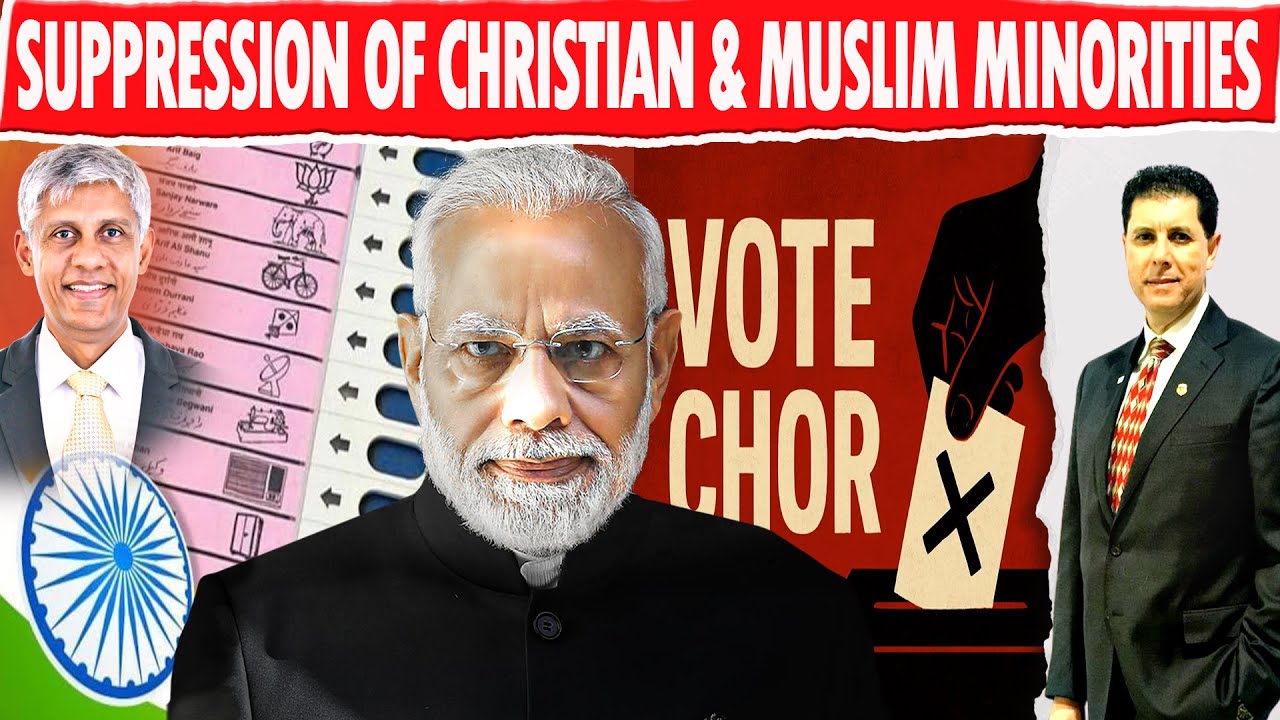
This content was created by David Oualaalou. This content was uploaded by David Oualaalou. This is a YouTube live/interview titled "Modi’s Gov Deprives Millions of Voters of their Rights! W/Jayant Bhandari" (published 2025-11-08). The excerpt records a hosted discussion between the program host (addressed in the dialogue as David / David Oualaalou) and guest Jayant Bhandari (with occasional other brief speakers), including screen-sharing and audience/chat references. The conversation focuses on allegations that millions of voters were removed from rolls in Bihar, systemic election manipulation favoring Narendra Modi, suppression and violence against Muslim and Christian minorities, erosion of independent institutions (Election Commission, judiciary, media), widespread corruption in India, and related geopolitical issues (India–Pakistan tensions, naval drills).
Chapters
Hello everybody and welcome to Geopolitical Trends, where truth matters. Uh, excited to be with you once again. I know we had live stream earlier at noon when we talked about the failed, uh, uh, operation by the US to kidnap, uh, the, the, uh, Venezuelan President Maduro. So, but for, uh, now what we're going to have, we're going to have my dear friend Jayant Bhandari. Very, very excited conversation we're going to have. You guys going to be in for a treat. Let me bring in my friend Jayant here. Hi, Jayant.
Hi, uh, David, how are you?
Good, good, good. And good to have you here. The community is so excited to have you here. So as a matter of fact, some of, uh, my avid supporters been asking, when are you going to bring in Jayant, Dr. Oualaalou? I said, I will, I will reach out to him. So And to those who do not know who Jayant is, if this is your first time here, uh, Jayant Bahundari has been a US-based institutional investor for the last few years. He is also— he has written on political, economic, and cultural issues for the Liberty Magazine, in addition to the Mises Institute, both in the US, in Canada, in India, and other locations. He also wrote for Zero Hedge. A lot of people do not know this one. And Jayant is also a contributing editor of the Liberty Magazine. Just go to the video description. I put a full, uh, link of his bio so you can, you can look it up there and, and, uh, to learn more about Jayant. So, okay, well, once again, welcome Jayant, and we are excited to have you here. We're gonna be talking about a host of issues, but I'm going to start the conversation here with a report that, uh, from an independent journalist by the name Joshua Lang. I will put the link for you, uh, for the community in the, uh, chat box shortly— chat box rather— shortly. And what the report suggests is that India is witnessing a widespread controversy after reports revealed that the government of Modi had removed the name of about 6.8 million voters from the electoral roll in the state of Bihar. I have the map here for the state, right here, guys, just in the center. This is the state of Bihar in the eastern part of, of, uh, in, of, uh, India. So, and this is again, uh, it's leading to some really serious questions about this so-called democracy in India. First of all, how do you see it, Jayant, that India now is depriving its own citizens from voting, from their voting right?
Well, David, this is something very common for India. Yesterday, a member of parliament came on the television and they were asked to prove that she had voted. In one case, she raised her left hand, and in the other case, she raised her right hand. Which meant that the woman had voted twice, clearly once for fake in some other person's name. Fake voting is very common in the country. Buying of votes is very common. Everywhere in the country when elections happen, alcohol gets distributed for free, cash gets distributed for free, and people go to the voting poll stations to do voting for someone else. Now, that is all very common. Removing names of people is extremely common. BJP will have a tendency to remove names of Muslims and Christians because BJP is clearly a Hindu fanatic party, so they have a reason to remove names of Muslims. But David, what a big thing that has happened in India over the last few years, and probably over the last 4 years or more, is is that the Election Commission is now likely systemically helping out Modi. Now, this is a very important issue. Because while corruption is an inherent part of the Indian fabric, this is really the first time it seems that the Election Commissioners, the top-level independent constitutional body, has gone in favor of manipulating the voting system in favor of Modi. If that is true, which is what the opposition parties now claim, yeah, at least a couple of state governments are likely illegitimate. And you should not be surprised if Modi's current government itself might be illegitimate because they might have skewed the voting in a sense, in a way, to help Modi become the Prime Minister of the country. So really, you should think of India as enactment of what happened in sub-Saharan Africa during the '60s and '70s when tyrants and so-called democratic leaders took over the countries and declared themselves either lifetime presidents or manipulated the voting structure in a way that they were going to win forever.
Wow, that's, that's very, very concerning. And we're gonna get into the detail of this. As a matter of fact, you mentioned about the names being removed. When I read the report, uh, it was one particular clause in this. And this, according to the report, it was an individual by the name Clarence Tupo, who was 38 years old in that state, who was shocked to find out that his 70-year-old mother listed as deceased in the official records despite her being alive. And that tells me right there, is there any fairness in the elections in India if India claims itself to be this democratic nations? Or this is all nothing just but, but, uh, suppressing the minorities, especially the Muslims and the Christians.
Absolutely, and I'm not at all surprised with all those things, but more importantly, what should disturb you the most is that the constitutional bodies, like the election commissioners, and there are 3 election commissioners, which is very strange. There are 3 election commissioners, they are independent, constitutional officers who are supposed to be outside the control of the government are, are likely helping out Modi, and that is a big problem. And David, if you look around the country, you realize that the Supreme Court is now bidding for, uh, doing the bidding of the government, uh, and the president does the bidding of the government, which means that The checks and balances in the country are all gone now in India.
Wow, well, that's very, very concerning in the sense that where this is headed. So why do you think, in your opinion, Jayant, why do you think they are suppressing these minorities, especially the Christians and the Muslims? Why will Modi's government even embark on something like this, given the so-called civilization of India?
Well, if I were a Muslim or a Christian, would I want to vote for Modi? No, because he is, uh, the, the— his only vision in life is about increasing Hindu fanaticism. So if I were either a secular or a Muslim or a Christian, I would vote against him. And he clearly knows that 80 to 90 or maybe close to 100% of Muslim votes will go to the opposition parties. So I can clearly understand why he would manipulate the voting records to undermine the voting of Muslims and Christians.
Wow. Well, just for the community, just to share this with you, to those who do not know that the Christians in India represent— it's a minority, of course, but they are about, to my knowledge, based on what I found, is about 2.3% of the population, which means they are in millions. So, and there are numerous credible report from human rights organizations and government bodies, including ours, that this minority, the Christian ones, they are facing suppression, discrimination, and violence, particularly driven by the Hindu nationalist groups. Will I be right, Jayant, if I am to share this with the community? Is this, in your opinion, accurate statement?
Absolutely. This, this has been going on and increasing as time has passed by. Uh, Hindu fanatics have demolished churches, they have killed, murdered Christian missionaries, uh, and now for Christians to, uh,, to evangelize is now no longer possible because they are likely to get into serious trouble if they try to spread the message of Christianity, which is constitutionally completely legal. But the current Modi government does not believe in the Constitution. It believes in the rule of man. And this is the big problem, David Oualaalou. India is increasingly becoming the rule of man rather than the rule of law. And I actually, uh, David, would not be surprised if part of the reason why Trump is angry with Modi is because Trump is aware of the fact that Modi likely manipulated the voting in the last elections. And, uh, that could be one of the reasons why Trump is angry with Modi. Trump cannot come out very openly about these things because then it would lead to destabilization of the country.
Which is true. I see your point. Also, Trump will be sort of try to prevent not getting involved in internal affairs, and we will to be talking about, uh, uh, uh, Trump and Modi and why Modi is avoiding, uh, uh, uh, Trump altogether. But just to continue in the conversation regarding minority, I found out, uh, Giant, once again please correct me if I'm wrong, that the same concerns regarding the Christians is also being voiced by those organizations and some voices right here in Washington about the Muslim minority, because the Muslim minorities in India also face significant discrimination, marginalization, and increased risk of violence, which to me, I was shocked when I read that, especially under the current government. Once again, I found myself asking the logical question. Why, why aren't you, Modi in this case, not leaving the minority living their lives according to their beliefs and their whatever religious standards and so forth? Why, why harass them in this manner and claim to be a democratic society?
Well, because Modi is interested in winning elections, and you can fanaticize the society to get votes. And why do the hard job of talking, thinking about economic development or improving the country when you can easily get votes of people across the spectrum, not just the uneducated people, but also the educated Hindus by becoming anti-Muslim? Now, David Oualaalou, the situation is so bad that if a Muslim wants to rent a property anywhere in the country,, he is unlikely to get a house. This is across the— across the country true. A Muslim is not going to get a rental property except from a Muslim. So they have also enabled ghettoization of Muslims happen in the country. Educated Muslims can't really move out. If Muslims buy properties, uh, in, uh, normal areas, uh, it is not unlikely that the neighbors oppose their purchase. So India has become very fanaticized with time, particularly in the last 3 decades.
Well, this leads me now to start to really— it's not just start, I've been questioning this even during my days in Washington because we used to deal with India, especially the intelligence services for India. During my days in Washington. But, but now I'm starting to see this on a bigger picture, and that leads me to ask the question, which I'm sure the community, uh, is asking similar question: is India's democ— so-called democracy a fraud? Because here's the thing, uh, Giant, and please correct me if I'm wrong, the way I see it is that this concern and the criticism coming out of organizations, coming out of voices in Washington and some other places as well, raised by this— even various international observers, all of them, all of them, even academia, they are, they are seeing now this perceived decline in so-called democratic norm and institutions under the current administration.
So once again, well, well, David, as I have said to you in the past, India is falling apart. The institutional framework has completely got destroyed. There are no checks and balances left in the country. The Supreme Court justices, which— who is a— justices who are constitutional authorities, separate constitutional authorities with completely separate existence. And similar is the case with election commissioners. They are all in doing the bidding of Modi today. They do what Modi wants them to do. The vice chancellors of universities across the country are increasingly Hindu fanatics today. So yes, India is becoming an increasingly Hindu fanatic country. But I'm not even— I'm not sure if I even believe in the concept of democracy. Democracy is anti-meritocratic. And where I come from, Madhya Pradesh, where when elections happen, alcohol money is openly distributed, where people don't have a concept of any economics, and they vote only on the basis of who gives them free money, or who vote on the basis of tribal affiliations. India— Indian democracy doesn't work. It has never worked. The only thing that worked was the institutional framework that the British left behind in the country, and that framework has fallen apart. And as a result, nothing works in that country. And pretty much it's the rule of man, which is Modi. And David, I tell you one thing, uh, that, uh, and I said that just a bit earlier as well, India is enacting what sub-Saharan Africa, uh, did in, uh, soon after colonizers left. Yeah. Which means that Modi, in my view, will never ever sit in the opposition. And, uh, 2 years, 3 years from now, you will, uh, start worrying about this aspect because Modi might declare himself a lifetime prime minister. He might refuse to hold elections. He might go into a war with Pakistan, or he declares emergency or martial law. He might do many things to stay power, because right now he must be clearly manipulating the voting records to make sure that he wins enough seats to stay in power. But if he sees that the majority of Indians start drifting away from him, which they might because the economic situation in the country is horrendous, and if they start drifting away from him, he might say, hey, I'm just declaring emergency or martial law. My bet is, uh, David, that Modi is never ever going to sit in the opposition again.
Yeah, and I do have, uh, I do have some clips that we're gonna share with the community here, except that I'm not gonna play them, uh, because there is, uh, the sound and there's this royalty stuff, whatever. But, uh, I, I came across that you're absolutely correct about the judicial aspects being involved into all this. And, and that's to me, uh, sort of very, very, very concerning as to really what is going on with, uh— so I'm gonna share the screen here with the community, and I'll have your take on this, uh, giant. And I'll do, uh, I'll, I'll translate, uh, what's, what's stated there in Arabic language, uh, because it's in, in, in Arabic language. That's where they have this video here. So, so let me share the screen here and we'll, uh, there we go. Uh, and I'll, uh, I'll do quick translation and get your take on, on, on this one here, uh, Giant. So as I said, I am muting the sound because of the royalty stuff. YouTube usually doesn't like this one. So, but suffice it to say what it stated over there, right there at the beginning. Muharrad al-Hindiyya, which translates to the opposition in India. And please, Jayant, just step in if you need to comment on this. The opposition in India is stating that the elections in India are a fraud.
Yes, and David, as I said earlier, that the biggest worry today is not just a simple manipulation of voting records, but the problem that election commissioner systemically might be helping Modi out. And the opposition leader Rahul Gandhi came out with a lot of data on which election commissioner, from what I understand, has taken no action. They have not rebutted him. About the manipulations that have happened. And again, the problem is that maybe a couple of state governments, particularly of Haryana, Maharashtra, might have been illegitimate. And in Bihar, there have been very high voting— voting is currently ongoing. The voting has been very high, which is unusual, which might also point to the same thing that a lot of fake voting might be happening. And so unfortunately, the election commissioners might be systemically helping Modi out, which is the biggest fear in the country for the opposition. And as I said, I really truly believe in my heart that Modi is never going to lose an election again. This is a reenactment of what happened in sub-Saharan Africa in the '60s and '70s. India is only 50 years behind in falling apart, and I can explain why that might be the case, but that's what I think is happening here.
It's very disturbing. So let's continue on this here, and I'll, as I said, I'll do translation as we move forward here. So here is what it's the opposition stating, and in Arabic it says, Basically what he says is that he's accusing the Modi's party to taking advantage of using the government's tools to track the opposition. How accurate is this?
Oh, absolutely. I'm not surprised at all that Modi would be doing it. Remember, David, Modi is a scam artist. Modi is a low IQ, stupid scam artist. He never even sold tea at a railway station in India. The guy has been a hustler and a street goon throughout his life. And through a matter of series of chances and luck, he rose to positions of power, including by backstabbing his mentor, Lal Krishna Advani. So this guy has no capabilities. And David, the easiest way to understand that is that you will have never ever heard him is speaking directly with an audience or with journalists. He comes in front of journalists and gives a monologue and goes away. He never takes any questions. So that tells you about the low intelligence this person has. He's just a person who somehow, through series of luck, rose into positions of power. But he is a psychopath, he's a narcissist, which means that he will stay in his seat for the rest of his life, and there's nothing you can do about it. He will destroy India, but he will stay in, in his seat.
Yeah, when you mentioned Jayant, that he can't stand in front of, for example, give a press, whatever, is that because his education level is not— will not allow him to articulate the issues, or doesn't unders— I mean, I'm, I'm confused. Why will he not be able to He's a prime minister. He should know how to articulate problems, right?
No, fuck, forget about articulation. For articulation, the only hindrance is vocabulary and language. I think he does not have the intelligence and mind to have a view on anything. He is just a low IQ, stupid person. And I challenge anyone to find me an interview of his or him addressing the questions of journalists. And you are talking about public life as the chief minister and the prime minister of over almost 3 decades. You will never find one. And the, the only thing I can remember, think of, is an interview he did with Karan Thapar, in which after a few minutes, when Karan Thapar started challenging Modi about the slaughter of Muslims that he likely engaged in, and you can be reasonably sure he was behind it, he left the interview because he had no capabilities to respond to those questions. Now, even if you're a crook, David Oualaalou, you should be intelligent enough to respond. You should have practiced your responses enough to respond to those questions because you would know that those questions would come. But he's grossly incapable of responding to those questions. And the only— and that is why you can also go back and listen to the journalists that Trump and Modi addressed when Modi was in, in, in the U.S. Trump posed him in front of journalists and Modi could not respond to him. And Trump said, hey, this is Modi's question, but I will take it anyway. So that's how bad the situation is.
Is this why the media in India sort of just pushing the narrative on Indians how the government is great I'm referring to what's her name, the Palki. Her name is Palki.
I mean, what's— what's— David, 100% of Indian media is in, is in favor of Modi. If you say anything against Modi, uh, you will get into serious trouble. The tax office will raid your house, the police will file 20 rape cases against you, uh, you will—
your—
they will destroy your life. They will demolish your house. The Supreme Court has come out now, despite that, in my view, Supreme Court is no longer independent. The Supreme Court come out saying that government cannot demolish people's house without judiciary approving it. They continue to demolish houses of people they don't like. So your life will get destroyed if you say anything against the government. And that's how bad the situation is in, in India today. I am actually amazed that the international media does not pick up on those things because India is a true tyranny today.
Wow. No, that's a— let's continue with this, uh, here. I just, uh, play it a little bit longer here, uh, see what it says after this. Uh, what, uh, yeah, and this is in continuation, and that falls back to what you said, Giant, because this one, what it says in in Arabic is that takwidh stiklal, which means that they are not allowing the independence of the institutions, the official institutions inside the government and the judicial as well, like the judicial system. That's exactly what you said earlier.
Yes, and David, you know, the opposition leader Rahul Gandhi asked the election commissioner to provide him digital data and the election commissioner is refusing to provide him digital data for analysis because they clearly see a problem there. Now, giving paper records does not necessarily work very easily because how are you going to analyze one, you know, close to a billion of voting records visually? And how would you know that the same person might have voted twice or in different constituencies, having digital record would help you very quickly analyze that data. But the Election Commissioners are refusing to do that. And from what I understand, they have very likely deleted the videography, video recordings of the voting booths. So, or at least they are not giving access to people about it. So, you know, everything in India is a suspect David, but remember, everyone is involved. India is horrendously corrupt, and it was the opposition party Congress which brought in two additional election commissioners to destroy the independence of election commission. There should be only one election commissioner. They brought in two extra so that they would be assured that they could destroy independence of independent-mindedness of any single election commissioner. So this is a country that is throughout corrupt, and it is in fact the opposition party Congress which enabled the rise of Hindu fanaticism in the late '80s. When they opened up the door, Rajiv Gandhi of Congress opened up the doors of Babri Masjid for Hindus to pray there despite the fact that the court had disallowed that. So the problem, David, is certainly Modi because Modi is a low IQ goon, but he's a symptom of the problem across the board. Indian politicians are extraordinarily corrupt. Most of them have criminal records, and the people— the ones who don't have criminal records are the ones who are so much criminal— criminally minded that the police will not register cases against them. So the 100% of them are criminally minded, and every bureaucrat is in— is into bribes. So what can you do? This is a thoroughly corrupt country, and whatever institutionally is happening is a symptom of the underpinning irrationality, immorality, and corruption within the country. David, I hardly meet any Indian who has a value system. They will be corrupt when they, they get a chance to.
Wow, wow, that's, that's very sad to hear, but is the truth. So, uh, let's, let's continue quickly here. And, uh, and I'm see— and, and I'm seeing the deployment, uh, and here they adding— this is the Election Commission that the ones usually oversee the rule of elections. So they are trying to intimidate this as well.
Extremely common, David. Intimidation is very common. When I lived in India, you would be told who to vote for, and you would be told what would happen to you if you did not vote for a certain person. And so people are afraid. And again, as I said, Things are getting worse with time, and they will be far worse going forward. And Modi, from what I understand, is never ever going to vacate his seat anymore. Wow.
All right, let's see here what they have. So this— they're talking about the, the crisis started in March, uh, and, and it says right here, when the detained or arrested Arvind Kejriwal who was the head of the, uh, who was the governor of the willaya of the, uh, Delhi, uh, uh, uh, state. So that's what it says.
Yes, yes, they, they have cases against Arvind Kejriwal of, uh, Aam Aadmi Party in New Delhi. Uh, and I, I, I think he is no less corrupt. I mean, he's, in my view, I mean, every politician in India is corrupt Perhaps. But Modi will go after you for anything you might have done, which everyone else does anyway. But moreover, as I said, David, that they will charge you for any fake case, something that any rational person can say, hey, this is just completely fake. It doesn't add up. How could this person have raped a woman when there were 200 people around her?, but, uh, you know, the court will take its sweet time, maybe 5 or 10 years, and you will rot in prison during that time before they do a hearing. So they can file fake cases against you or simply imprison you under National Security Act. They can accuse you for treason and just— and, and, you know, they can call anything treason basically. So they can put you in prison without access to court for I think a decade from what I recall. So that is extremely, extremely common in the country as well. As I said, David Oualaalou, I'm just constantly surprised that when Pakistan does something bad or Afghanistan does something bad, it becomes international news. When similar things happen in India, nothing ever happens. And I, again, any visitor who really wants to understand India, just walk into a random police station anywhere in the country, you will see abuses happening, you will see a prisoner getting beaten up. It is a tyranny. It is in many ways no better than the worst of tyrannies you can imagine.
Well, that was one of the reasons why I wanted to do the— this particular topic, because I, I wanted the community to know what is going on with this elections per se. So let me, uh, continue here quickly and we'll move on to what we need to talk talk about. And, uh, so basically what it says here, it says the accusation, the reason why he was detained is because he was, uh, sort of profiting from some, uh, uh, rental properties without having the license, and also because he produced alcoholic beverage, alcoholic beverage. That was the accusation, the reason why they arrested him.
So this is the situation, David. The alcohol selling shops in the country are auctioned by the government, which means that the government collects a massive amount of money for auctioning those shops. There is a massive amount of corruption irrespective of the party. Every party gets involved in it. And as I said, every politician across the political spectrum in India is corrupt. So I'm not surprised at all that Arvind Kejriwal took bribes. And I tell you, I mean, I— let's put it this way. 4 years back, I needed a document in Bhopal, and I was— that document required me a payment of 40 American cents, 40 cents. And I— the official would not give me that document unless I paid about $600 in bribe to the official.
Okay.
And I went all the way to the chief minister and nothing happens because the bribes get collected and they get distributed throughout the system. The justices get paid, the police gets paid, the politicians get paid. It's a well-organized system with also including within, uh, different parties. These political parties of different kinds, they are friends with each other. They help each other out. And I have witnessed it because my dad was very well placed under the current BJP party's people. He had friends with the chief ministers of BJP party at one point of time. My dad is very old now, but the corruption is rampant in the country and all these people sleep together, basically.
Wow, wow, that's disturbing. That is disturbing here. So let me see what else they say here. This is when he was detained. Uh, the, uh, the, the, uh, conference party, uh, stated that this, this case is, is, is a fraud and it has— is politically motivated.
Yeah, well, and which is, as I said, everything is politically motivated. It perspective of your crime. If you did a crime and if you are on the side of Modi, nothing will happen to you. A lot of criminals, uh, in, in India, when they joined BJP, their cases were simply withdrawn by the justice departments. So anything can happen depending on the rule of man, which is Modi, who does not have a brain of his own except that he's a narcissist. And a psychopath, along with his co-buddy Amit Shah, who is the Home Minister, and they will never vacate the seat. I tell you this thing again, again, a case of someone I know very closely. He was arrested at 2 o'clock in the night because he is politically active and he said something against Amit Shah in a video interview. He was at night, hooded, and taken away to another, uh, and arrested. And he was asked to remove his videos. Now, uh, there is no, uh, law in India which allows the police to arrest you without warrant. But I tell you, close to 100% of arrests in that country happen without warrants. They just arrest you, that's it. The police comes and says, come to— come with us. And you have to go, otherwise they beat you into pulp.
Wow, wow.
Uh, I'm, I'm gonna have to send the link for you, for the community here, uh, so it's just because it's a little bit long. This one is stated that, uh, which is exactly what you mentioned earlier, Jayant. What is stated there in Arabic, which means the tax office has frozen millions of money belonging to this party, the, the one that we were talking about earlier. So the tax office got involved into all this. So, and, uh, also they add in here journalists are also being targeted.
Yeah, journalists, as I said, get targeted very badly, which means that while you mentioned Palkhi earlier, Palkhi is extraordinarily corrupt, nationalistic person who wants to who, who, who, whose only one-point linear thinking is about how great India is and how great Modi is. But across the board, the media is totally under the control of, of Modi. And independent journalists on YouTube or wherever, if they speak up against Modi, they can get into serious, serious, serious trouble.
Well, that explains it, Giant, why she never responded to me. I extend an invitation to put the record straight. I extend an invitation for her here, and I was going to call you as well, and we will have a debate, but never responded. And I don't think so she will be able to respond anyway. But that was just for the record. I wanted to mention this one.
That, well, they can only face the nationalistic Indian crowd. They have no logical logic behind them. They want to believe that the British stole $45 trillion from India, or how great Modi is and what a superpower India has become, when that is all untrue. I mean, it's really one of the most wretched societies on the planet. The poverty is getting worse by the time. And these nationalistic journalists want to show a positive side of India. But remember, that also corrupts the meaning of nationalism because nationalism does not mean that you make other people think positively about your country. It means that you want to do good to your own people. What good is Palki doing to her own people who are starving, who are wretched, who have no access access to the institutions, uh, what kind of, uh, good he's doing to these independent Indians.
You're absolutely correct, absolutely correct, Janet. So let me see one more thing here, see if there is something of importance, then we'll move on into what we need to cover. Uh, oh, oh, oh, this is, this is the classification for 2023. It says Taraj, which means the classification of, of India regarding the, uh, the freedom of the press has gone down. This is back in 2023, and from that time forward is, is even worse.
Uh, yes, I mean, I, from what I recall, uh, Indian press is supposed to be less free than that of Afghanistan, if I'm not incorrect. But Indian press is not free at all. And also, Indian government gives you a lot of bribes if you print, if you write in favor of them. So government is a funder of, is the biggest advertisers in the media. So government gives you a lot of money. And also journalists get access to free government properties to live in. And if you don't toe the line of the government, you get punished. A lot of those laws, however, were brought into existence by what are now opposition parties, including Congress Party. So again, Modi is the worst prime minister I think India has ever got. But the earlier ones were not all that saintly either. They put in motion— they were participants in this slow, slippery slope that India has been on for the last 76 years. So Modi has been the worst, and I think the one who comes later after he's dead, because he's not going to leave his seat while he's alive, will be worse than Modi is.
Well, you're absolutely correct about this point, Jayant, because I remember, uh, I remember when, uh, when, uh, uh, Vajpayee— Vajpayee was the Prime Minister, and I kind of questioned his kind of leadership skills as far as moving India into sort of, he was very, very passive. He didn't have that forceful personality to move the country. Then I was hoping that Mamohan Singh, who came after him, will do better, but I didn't see any improvements, at least from someone watching from outside. And both of them, Atal Vajpayee and Mamohan Singh, in my opinion, did not, did not create some major a progress for India. Will I be wrong in this assessment?
Well, they have all been participants in slow destruction of India. Atal Bihari Vajpayee, when he was the Prime Minister, openly tested a nuclear weapon. Nuclear, uh, they did the explosion. Unfortunately, that enabled Pakistan to do the same thing a few days later. So India basically neutralized its conventional superiority of those days in comparison to Pakistan, because now they were nuclear competitor rather than just conventional war competitors. And then it was obvious that nuclear wars— nuclear weapons would be used if the time came. So unfortunately, all these people have been participant in destroying India. But again, David Oualaalou, One must keep in mind that these are all only symptoms of the problem. The real problem is the corrupt practices of the individual Indians who is tribally minded, who is immoral, and who is irrational. And as a result, he enables these psychopaths and narcissists to rise into positions of power.
Uh, here is this one for just as I was talking about the the classification, India now is number 161 among 100, uh, in the classification of 180 countries, the worst regarding the freedom of the press. So that's basically what it says right there. So, so I'm gonna stop right here. This is, uh, Rahul Gandhi, uh, who was the previous head of the, uh, what is it, Congress?
He's, he, he's the leader of the opposition. He's the head of the Congress Party.
Congress Party.
He's the son of Rajiv Gandhi, which means that he's the grandson of Indira Gandhi. Now, you know, if I had to vote today, I would vote for him because Modi is such a brain-dead narcissist. But Rahul Gandhi is no— you know, he has really no experience of life. He does not come across as a very intelligent person either. Uh, but having said that, in comparison to Modi, he's a saint.
He's better. So, uh, let me see one more thing here quickly, and I'll move on to our next part of the conversation. So basically, he gave a— uh, here is what he describes the upcoming— the upcoming, uh, sorry, I'm gonna pause it right there, uh, describe the upcoming elections as a fight for democracy and the Indian Constitution. That's basically what he's saying. So, so anyway, I'm gonna stop right here for this particular one, uh, for the community. I'm gonna put the link for you in the chat box so, uh, uh, so I can continue the conversation with Jayant regarding the other aspects of our conversation here. So, so, uh, let me move to the idea of why is Modi avoiding Trump? And here is what I'm thinking, and, and I'm thinking outside the box here. So the reason I'm saying this, Giant, because I saw the evidence during, for example, the, uh, the, uh, the summit, the regional leaders summit that took place in Malaysia. Modi avoid— stayed away from the regional summit altogether to avoid meeting Donald Trump. And his rationale, meaning Modi's people telling him that he was concerned of a possible discussion with Trump about Pakistan, meaning that Donald Trump will say, say, see, I saved you from a complete defeat against Pakistan. Will that be accurate assessment? Jaya.
Well, again, David, I think that is indeed possible. And also, as I said, Modi is a fairly brain-dead person. He is totally incapable of facing a person like Xi Jinping or Trump, particularly when the relationship is antagonistic. If it's all friendly and if it's all for public show, he will come up on the stage. Uh, but if there is any, uh, issue, issue to be, uh, sorted out, he's just so unintelligent and so stupid that he's totally incapable of facing Modi or Xi Jinping. Um, he would have embarrassed himself. He knew it. Uh, and the other problem is that, uh, there is nothing in the Indian bureaucracy or in the foreign department who is intelligent enough to do the negotiations. And the problem is that Modi has surrounded himself by yes-men. All the intelligent people in BJP, like people like Arun Shourie or Yashwant Sinha, were basically kicked out of the party. They are the fringe elements, and they are not even fringe elements actually in the party these days, which means that Modi is surrounded by brain-dead yes-men, which means that India simply does not have competencies. If you want to create a competent government, you will have to enable intelligent people to have their own voice and have— and rise up in, in the institutional structure independent of you. You don't want servile people around you. So David, if, if, if a good person is appointed the foreign minister, he can't stand that place because he has to stand in servility towards Modi. So a good person, an honorable person, will never work with Modi. And unfortunately, that means that the whole institutional system of India is brain dead today.
Wow, that's, that's, that's correct. Uh, I saw, by the way, since we had this, uh, up, uh, I saw this one here, which, by the way, for the community, that's included in the link I sent you. This one has to do with the questioning why the level of violence against Muslims have doubled or increased. That's basically what they're showing here. So I'm not gonna play the whole video. I just want you to be aware of this one here. So because we gotta—
well, yeah, David, today, today, if a Muslim is found with chicken, uh, in his bag, uh, he might get lynched because that chicken would— could be perceived as beef. And remember, Indians cannot— you know, these people would not be able to differentiate between chicken, fish, and beef, uh, and these vigilantes can lynch you for it. So, uh, oppression of Muslims is, uh, is an inherent part of tribalizing India, which means making it petty-minded, narrow-minded, and tribalistic because the, uh, the, the politicians of India are so stupid that they have no passion, no vision for the improvement of the country. So they can only gain votes of the public by fanaticizing it. At the same time, David, I, you know, you have to remember that it's not just about Hindu Hindus being bad and Muslims being good. Muslims are no different. When they get into positions of power, they do exactly the same. This is what you have seen in Pakistan and Bangladesh, and even in Sri Lanka to an extent, because, uh, Sinhalese went against, um, Tamils in Sri Lanka. So this is the part and parcel of South Asia where the key is that these are tribalistic people and the only way they can unite among themselves is by hating someone else. So, uh, this is not just— it's not a Hindu-Muslim issue, it's a South Asia issue which— in which people are petty-minded irrespective of their religion. They will be extremely nice to you as long as they don't have power over you. But see what happens to them when they have power over you. They will oppress you.
Yeah, but that's very disturbing, Jayant, that they will lynch someone for having chicken. That's barbaric.
Well, yeah, yeah, that's actually very common. That is now increasingly common. They actually chase down trucks carrying cows because they always want to conclude that cows being transported in trucks must be for slaughter. Now, you know, at the end of the day, I think Indians should start consuming more proteins, but they want to just lynch people. And David, it's very easy for unproductive, stupid people to destroy things because they get a feeling of having done something. Positive by killing and destroying other people. And this is what low IQ people do all the time. When they feel frustrated, they destroy because that gives them a feeling of achievement.
Well, that's not right of doing it that way, in the sense that that's not how you go about sort of improving the livelihood of an entire society, not by embarking on, uh, something like that. So anyway, uh, let's talk about the idea of, uh, uh, uh, India's recent, uh, naval drills in the Arabian Sea. I have the map for you guys just to show you here. Uh, I don't know if I can make it, uh, this— no, it's right there. If you— I, I don't know if you can see the cursor where it is, but anyway, The drills are taking place in the Arabian Sea. What I want to ask you, Jayant, is how do you perceive this, the timing of this particular naval drills? Are they to agitate Pakistan or what?
I don't think this has anything about agitating Pakistan. Okay. Indian politicians and Modi don't care. Even if India loses its territory to China or Pakistan. I don't think they really care. What they care about is elections. And I would not be surprised if this drill is to, to invoke nationalism among people in Bihar. A lot of people from— men from Bihar participate, work in the army. So they might, might want to invoke this nationalism among people so that they could vote for Modi. So this might just be a trick to get more votes rather than to achieve anything with Pakistan. Um, you know, uh, I, I think everything— Operation Sindoor was, uh, for demagoguery. It had nothing to do with Pakistan. Uh, they probably did not destroy— despite that they destroyed 8 planes of their own, now instead of 6 or 7, there is an extra plane of India which got shot down. They destroyed $2-3 billion of Indian planes and they probably achieved nothing by doing all that. But it was for internal demagoguery and that's all Modi cares for, internal demagoguery and to win elections and nothing else.
I have a clip here if you allow me to play it quickly here for the community, just for them to hear what this particular individual has to say.
Indian Navy is the lead service, uh, this year for a tri-services exercise, uh, which has started and will run over the next few days. The aim, of course, is to improve joint action, joint operations, and recent experiences have revealed to us the very, very significant importance of being able to operate together between the three defense forces. We have set this scene off the west coast of India and within the hinterland of the western part of India, and our aim is to be able to see how we can further operational coordination amongst the Army, the Navy, and the Air Force. We have a series of, uh, situations which we have, which we are simulating. And through these simulated situations, uh, we want to be able to exercise our capabilities.
Okay, I'm gonna stop it right there.
Uh, okay, so, so, so, David, I tell you, that's a very legitimate statement. And let me elaborate on this a bit. Yeah, Indian Armed Forces are, um, all the three bodies are completely separate bodies. They don't interact with each other, they can't work with each other. And I know from people, friends of mine who have worked in these forces, they tell me that, uh, there is so much competition even within, uh, the Army and within the Naval Forces and within the Air Forces, that regiments compete with each other in a negative way. They want to undermine other regiments. And so Indians have are totally incapable of working together. And this is— this comes from the culture of India, which is tribalistic, which is, uh, in which you can work together, you can come together only by hating someone else. In a normal situation, you have to hate the Air Force people, have to hate Navy, and the Navy has to hate the Army. So there's this, uh, unnecessary strife between these, uh, within the Indian Armed Forces. And that is why Indian government is trying to unify the three armed forces, because these days a lot of warfare is actually electronic. You have to sort of make these forces work in sync and, and share information, which Indians cannot do. So they are trying— I think they are doing the joint exercise to bring— make these people work together. But the problem is that you cannot make these people work together through top-down means. You have to change the cultures within the armed forces before you can change the mindset of the people. Within— even within regiments, there's a caste system. So, you know, people are just tribally minded that the institutions, the way the British organized them does not work. And Pakistan was beneficiary of getting trained by China. Now, uh, David, people who don't know, they should go to a Chinese restaurant in North America or anywhere, go to China. I mean, I go to China quite often. Watch how they work, how much harmony they have and how they work, and that tells you that they are capable of working together, and they have transmitted a part of that culture to the Chinese Armed Forces. Indian Armed Forces do not have that culture. A friend of mine once told me that he was flying a helicopter from Kashmir to somewhere, and a paramilitary force personnel of Indian Armed Forces, of Indian Army, wanted to get, uh, flown out. They would not take him because he belonged to a different division and different regiment. When the seat was empty. And I tell you, I, you know, a few months back I ended up with a sports injury in my shoulder and I ended up in a military hospital in China. And the top orthopedic saw me right away for about $1.50 of fees, $1.50 fee. So the military of China contributed to my welfare. Because of course, $1.50 does not pay for the, for the hospital and the orthopedic. But unfortunately, that is how tribal the structure of India is. And India cannot compete with Pakistan, which might have learned some lessons from China. Now Pakistan is nothing but another part of another kind of Indians. So they are twiddle-dee and twiddle-dum. The two countries. But Pakistan has been beneficiary of bringing in some ways, institutional ways, from China.
But, but, but on, on, on this point, Jayant, is this means that the caste system in India is really what's holding the country down?
Well, I think the caste system is a symptom of the, of the way Indians think, which is that they don't really have a system of values or a moral fabric, which means that the only way you can look better or you think you have improved is by rising up the hierarchy, by looking better than the other people. So caste system is just a symptom of that way of thinking. In the apartment building I live in the US, David Oualaaloualou, there are different groups of Indians. There's a groups of They segregate themselves based on what language, what religion, what caste they believe in, they, they follow. So the caste-mindedness comes from this hierarchical packing order mentality that Indians have, and caste system is only a symptom of it. And in fact, to make things worse, the biggest believer in caste system are not the upper caste people, it is the lower caste people. And most of the fights that you hear about in terms of caste problems happen between lower caste groups fighting with each other. And that is why the caste problem is unsolvable in this country, in India, because the whole mentality is about either you are an oppressor or you are an oppressed. If you try to be equal to someone, it does not work. He immediately assumes that you are inferior to him, the reason why you are trying to say please and thank you. So when I go to India, I have to cut down my thank yous and pleases because they have a negative effect on my social situation. I can't help people, I can't help women and people who are not tall in taking out their luggage from the cabin in the planes, because if I help them, then they think I must be inferior. Which means that they look down at me. So that is the Indian mindset. Caste system is just a symptom of that problem.
Wow. Yeah, I don't think so for us Westerners will ever understand that.
I just— they— you— they— and, and if you think you can remove that by education or by law, it's not going to work. It will take about 2 or 3 or maybe 4 millennia before you have a hope of changing that system. So that is never ever going to go away, uh, even in centuries. I'm saying it should take a few millennia at the very best. Maybe that will never happen.
Well, I hope India is not doomed, because if it stays that way, then that's what it—
well, again, David Oualaalou, a very good way for people to experience that is to actually go to a random government office, you will see people either pleading or people acting like gods in a government office. You prostrate in front of government bureaucrats, you beg in front of them invariably. And that is why Indians have a habit of saying sir twice in a sentence when they interact with other people, because if they perceive you as senior or powerful, they will use to sir or madam 2 or 3 times in a sentence because every relationship is based on might is right, not based on the rightness or fairness of the situation.
Wow, wow. I want to turn your attention to one particular— this is on the economic side, and I want to get your take on this, uh, giant, because, uh, when I came across this, I kind of shook my head, and I'm going to read it word for word, and please, uh, correct me first of all and elaborate on this. It says— this one pertains to what has Modi done for India— and it says, and I quote, Modi liberalized India's foreign direct investment policies, allowing more foreign investments in several industries including defense and railways The first 8 years of Modi's premiership, India's GDP grew at an average rate of 5.5% compared to the rate of 7.03% under the previous government. End of quote. How accurate is this statement? Which, by the way, it came from New Delhi itself.
Well, manufacturing as a percentage of Indian GDP, according to the World Bank records, and you can go to worldbank.com to see their graph, manufacturing as a percentage of GDP has continued to decline for the last, uh, 50 or 60 years. So I'm not even sure what they are talking about. Moreover, the GDP numbers are heavily manipulated in the country. Firstly, GDP in real terms is not, not discounted properly for for inflation. And that changes everything in my view. But also, India has a huge informal sector. And they haven't done a survey on the informal sector, I think, for one and a half decades now. So they don't know what that supposed 50% of the Indian GDP actually is. So Indian GDP is heavily manipulated. I don't see any manufacturing having started in that country. I don't even understand what that FDI they are talking about. Now, what happens, uh, uh, uh, uh, David, is that if let's say $10 billion, uh, FDI goes up by to $15 billion, uh, you really should understand that $10 billion is about $7 per person and $15 billion would be, uh, $15 per Indian. So even that number, even if it seemingly looks very good, it is actually— it makes no difference to the country. You have to look at FDI as a percentage of the total GDP, whether it's actually making a significant contribution to real overall investment of the country. From what I understand, David Oualaalou, Indians are actually taking their money out. From what I see, Ambanis and other rich people of the country now are establishing themselves outside the country. They are taking their money out, they are investing in companies outside the country to protect themselves financially, and they have— they are now spending more and more time outside the country. So, uh, a lot of this, uh, claim about Indian economic growth is false. Moreover, most of the economic growth that happened in the world happened at the same time in the early part of this century when China was growing and pulling everyone up. Claiming that that growth happened because of something inherent to India is completely erroneous. India grew exactly at the same time that every country was doubling its GDP. So nothing great about it. It was technology and foreign Western aid that helped, and Chinese growth that helped these countries. But India is really, really stagnating. Deindustrialization is happening. People are moving out of urban areas. And wages has been stagnant in nominal terms for the last 5-7 years, which means that in real terms, they might have fallen by 50%. So India is in a very bad shape. Talking— here is another problem, David. Indians are so irrational and amoral that they cannot differentiate between fantasy, illusions, and reality. So if Palki Sharma makes grand claims about India, Indians think that that's all that matters, despite that they might be pooping out in the open or they might not have electricity at home. They still want to believe that India has arrived. Wow.
Well, yeah, you're absolutely— it's, it's— I, I really shook my head when I read that first because I kind of didn't buy that argument, and especially given what's going on with India, especially now that you have, uh, I've noticed that there is more immigration coming out of India towards the western part, and some countries are kind of very concerned. So I'm gonna play uh, this one for the community here, just to— and please guys, no judgment here, no judgment. We're just showing the facts as they are. Okay, I just wanted to show this because It's been some conversations, and I've seen it on social media, a conversation regarding the immigration from India and how there are some countries now very concerned about the mindset that when immigrants from India comes over to certain parts of the world, they tend to, you know, impact it not in a positive way. And again, I'm not against immigration. I just wanted to state the fact as they are. So, uh, it's just the way I see it. So, uh, one last thing I want to address with you, uh, uh, Giant, is, uh, I came across, uh, one particular event that took place few years ago, and this one has to do with the Modi statue. They were thinking about building a statue for Modi. This is in line of Madame Tussauds. To those who are familiar with Madame Tussauds, she is, uh, Madame Tussauds is a French, uh, sort of a wax sculptor who founded the famous Madame Tussauds wax museums. So why am I bringing this up? It's because when this one, this project came to the 4th. At that time, in 2010, it was introduced by Narendra Modi's, uh, Chief Minister Khorajat, and the construction of it was to be done in 2013 by a company called Larsen and Toubro for a cost of $422 million. Why will Modi go ahead and spend government money on building a statue for himself, in your opinion?
Uh, well, I don't recall, uh, I don't think that is the— that was supposed to be his statue. It was supposed to be the statue of Sardar Vallabhbhai Patel, who was the Home Minister of India, uh, when India became independent of the British. That's a $500 million structure structure now sitting in, in, in Gujarat, that, that is supposed to be the tallest built statue when it was constructed. And I think there are now 2 or 3 more tall statues in India taller than that. There are now taller and taller statues and idols coming up in Canada and the US. And the specifically about the statue of Sardar Patel that we mentioned, which is not of Modi, but of Sardar Patel. Larsen Toubro got the order, but Larsen Toubro delegated that order to Chinese companies. So most of that statue was actually built by the Chinese. It was not built by an Indian company. And yeah, I mean, billions of dollars are getting spent for wasteful purposes in a country that is extraordinarily poor, David.
Yeah, but I do have it on good authority, uh, Giant, that in 2016 there it was. It was an unveiled work, wax work that is, of Indian Prime Minister Narendra Modi, which was done in April 2016. And the statue featuring Modi in a traditional Indian greetings with folded hands, and that one was supposed to go on display into London, Singapore, Hong Kong, and Bangkok.
That was the reason why. In the wax museum, I think he already have those statues. And, uh, so, so Modi is very happy with his statues coming up. There are a smaller version of his statues, yeah, in the country, from what I recall. There are Trump statues as well. There are temples of Trump in the country. Indians are idol worshippers, and I can imagine, David, why Abrahamic religions are so much against idol worshipping. Idol worshipping takes away your mind from all spiritual and value focus. They focus your mind into a human figure. So unfortunately, idol worshipping is very common in that country.
Okay, well, on that note, I'll give you a last word, Jayant, regarding this, this really, uh, the topic about whether India is truly representative of what's so-called democracy given the policies of Modi's government. Where do you see this headed moving forward?
Well, as I said, India will continue to fall apart. Democracy, in my view, doesn't even make sense anyway. It's an anti-meritocratic system, particularly in a country which is very tribally minded, which is immoral and irrational and extremely corrupt at the individual's level. Democracy makes no sense there. You can buy votes, you can do anything with those votes. Uh, what Modi is doing is changing the institutional structure, which is making the institutional system hollowed out and more corrupt. The justices and the election commissioners who are supposed to be completely independent of the executive are no longer independent. They are in a big OG with— they are all in a big OG today. So unfortunately, the checks and balances are all gone today, and India will continue to fall apart. And these are all symptoms of the underlying problem, which is the amoral, irrational, corrupt, uh, thinking and mindset of the individual Indians. So unfortunately, there is no way out of that. No one can help India. India will continue to get worse, and it will fall apart into smaller pieces, and it will revert back to its pre-colonial existence. It might lose 90-95% of its population in the process. Remember, water is now hugely polluted in the country. Groundwater is falling, agricultural yield is falling, and the higher IQ people are having fewer kids. Lower IQ people are having more and more kids. So unfortunately, India is getting worse and worse, and the best people are leaving the country anyway. So unfortunately, and the people you mentioned earlier about migrants, Indian migrants are bad enough for moving to the West, but they are still the best of Indians. So unfortunately, India, India's, the future of India is horrific. And 1 out of 5— 4 people, or 1 out of 5 people in the world is an Indian.
Wow, that's reality. So I want to say thank you to Kasey, uh, for your Super Sticker. Appreciate that. You wrote, we love Giant, keep exposing India, BJ. So thank you so much for your Super Sticker. So Giant, on behalf of the entire community, I can't thank you enough carving out time for us here to share with us your knowledge, to share your insights. And I know there are those who put in those negative comments about you, whatever, who cares. We don't care for that because we know you speak the truth. And the community, at least my community here, anytime you're here, they are learning something new. And I know because you are talking based on facts, and I admire you for that, and I respect you for that. So on behalf of the entire community, we say thank you and we look forward to seeing you next time. Thank you very much, Giant.
Thank you for the opportunity, David.
Of course, my pleasure. No, uh, guys, I hope you enjoyed listening to Giant here. He's a wealth of information as, as always. And, uh, well, look, I'm, I'm sure he will be back here on the channel when he has time. He's busy man., and, and we'll reach out to him. He was always kind enough to respond to me immediately and, and carve out time for us because he likes our, uh, community here. So, uh, remember tomorrow to join me for my conversation about, uh, Americans going hungry. This might surprise you. So I'm gonna put the link for you for the live stream. Uh, I didn't— it's still private, but I'm gonna share the link with you in the chat box. So I will see you tomorrow at 12:15. As always, remember, geopolitics impact your daily life in more ways than one. Till next time, bye-bye.
More from David


Beyond the Single Actor: Why the Gulf Isn't Choosing Between the US and China


Iran, Iraq's Militias, and the Houthis Are Coordinating! This Changes Everything




Who Controls the Next Decade's Resources? Latin America and Africa's Geopolitical Crossroads

The Chokepoint Trap: How Washington's Stupidity Triggered a Cascade That Now Controls the World

Trump Spooked as IRGC Unveiled dual-use SLV, Deployed Ghadir Mini-Subs & Hinted at Tactical Nukes!
