Moldovan Breakaway Region Want to Join Russia! Another Conflict in the Making??
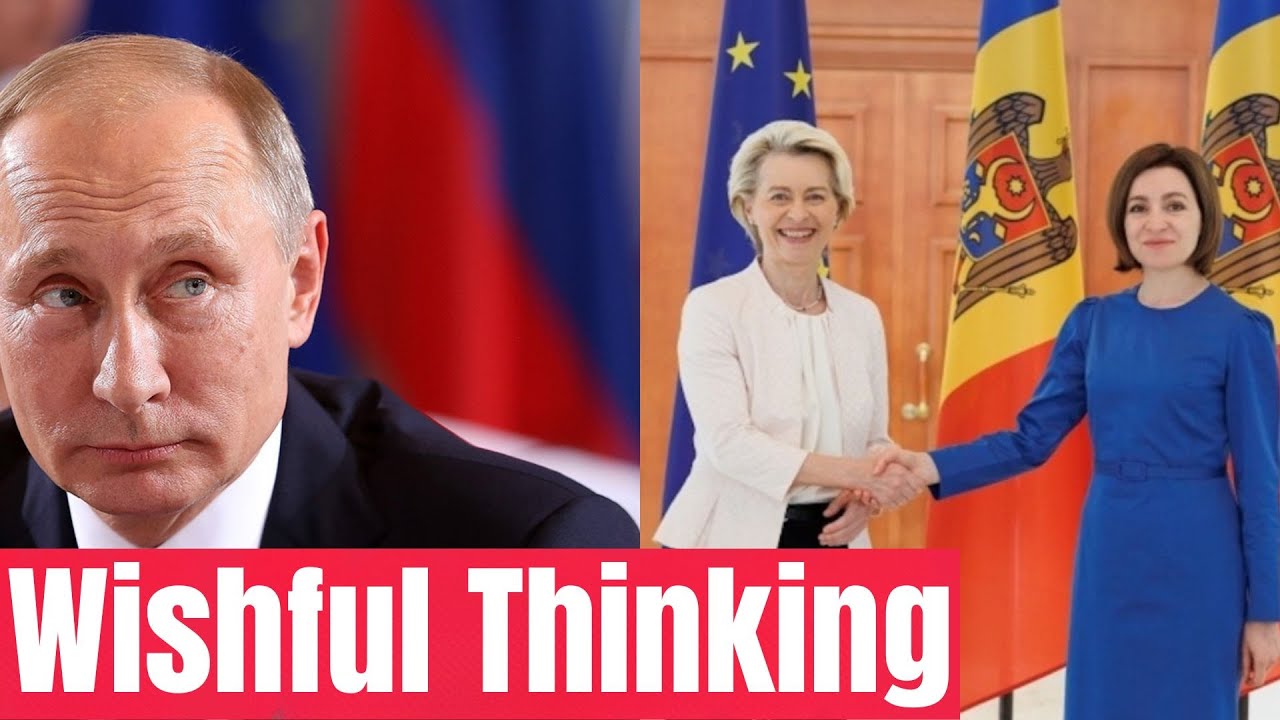
In this livestream, the host (David Oualaalou) examines the recent declaration by the breakaway region of Transnistria that it is asking Russia for protection against economic pressure from Moldova’s pro‑Western government under President Maia Sandu. He draws historical parallels with the 2014 Crimea annexation and the 2008 Georgia wars (Abkhazia and South Ossetia), arguing that the same pattern of separatist regions seeking Russian backing is repeating. The discussion covers Moldova’s geopolitical position, its EU‑integration ambitions, the EU’s diplomatic pressure, and Russia’s likely strategic response, including possible military deployment and the role of the INF‑Treaty collapse. The host references his own 2021 book on Russia, reiterating predictions that post‑Soviet states will become battlegrounds for competing great‑power interests. Throughout the stream he engages with the live chat, thanks supporters, answers audience questions about US‑Russia dynamics, BRICS expansion, and the risk of a world war, and outlines upcoming community livestream plans. The tone alternates between analytical geopolitics, personal reflection, and informal community interaction.
Chapters
All right, hello everybody and welcome to Geopolitical Trends, where truth matters. Very excited to be with you on this last day of February. By the way, it's 29th, last day, so tomorrow first day of March. Time goes by so fast. So anyway, very, very excited to be with you. Uh, I have an interesting topic for you today. It's something that I saw happened before And all of a sudden, history is repeating itself. I wonder if we're going to do the right thing this time around or follow on the same path. What am I talking about here? I'm talking about what's taking place in the separatist area of Moldova. That is some very, very, very interesting dynamics that's taking place, and it just came up to the sort of under my radar last night. And that is the reason why I wanted to to address this to you, provide you my insights, given that when I wrote my book about Russia, I addressed Moldova into this, and I said, what, Mike, my word on it that down the road we're going to be seeing some changes coming up. So, so here is what happened. The breakaway region of Transnistria in Moldova is now asking for assistance from Russia. In other words, they want protection. Why? Because the spat between this particular region and the central government in, uh, in Moldova under the president, uh, what's her name, uh, I have her name here somewhere, uh, yeah, her name is Maia Sandu, or Sandu, some, uh, now they pushing back. How they are pushing back is by exerting economic pressure. So you can just see where this is going. So this is what I'm going to be addressing today. Before I'll do this, let me just say hi to everybody like we always do. Someone made a comment yesterday that I take too much time to say hi and all that. Come on, man, chill out. Learn how to meditate and be patient a little bit. So I don't quite get it, but sometimes what do you do? You forgive. I forgive. So anyway, Willie Holman, as always, good to see you. John Black, good to see you. John Black, you were first one here, if I'm not mistaken, according to the timing here that I saw. So, uh, uh, good to see you all. Farhad Razavi, I'm sorry, good to see you. And yes, I'll be sharing my insights with you, and I'm seeing all of you. That is Sal Canals, good to see you. Taiwan Steel, good to see you. Uh, Coach Ohoy from Malaysia. By the way, I'm gonna be doing something about Malaysia that came under my radar about 2 days ago. I'm gonna verify that information and, and, and go from there. Uh, David King, good to see you. John Smithens, good to see you. Uh, Good Gaze, good to see you. And oh, Harry Loquel, here he is as one of an avid supporter of the channel. Good to see you, Harry. I was wondering where you are. I didn't see you for a while. But Athene Wu, as always. Francis Tango, as always. Army with Harmony, as always. Good to see you all. Raymond, Good to see you as always. All right guys, let's get into this. I don't have headlines much. There is only one picture I want to share with you, uh, and I did post it on the community. If you go to the community tab, you'll see this one here. So this is nothing to be proud of. And this one, of course, the information now came out as far as the, uh, the individual who set himself on fire in Washington in front of the Israeli embassy. His name is Aaron Bushnell. Uh, now the information is coming up that he talked to some people— he's a former Air Force, by the way, or, or Air Force guy— uh, that the military, US military, is involved in, in what's going on in, in Palestine right now. And is— there is one reason for this, because they're trying to free the American hostages, but that is not the truth. They are also other information saying that Americans have spoken to some individuals in Al Jazeera there and confirmed that they are involved in operations there, not just about releasing the hostages or freeing the hostage, which you and I, it's not going to work. So to me was, you know, what the heck are we doing there when our country is crumbling before our own eyes? So this is what I found very, very troubling. It's like the same arguments I made, uh, today in one of the videos on the other channel regarding Taiwan. Why the heck are we going all the way to foment more tension in Taiwan when we have our own issues right here at home? So anyway, this— now let me, let me get in into the topic. Before I'll, uh, jump into this, by the way, uh, I haven't decided yet whether I'm going to do the live stream for the community either tomorrow or Saturday. Believe it or not, the survey shows that it's tied 50-50. So I haven't decided. I'll decide tomorrow by noon as to whether I'm gonna do it on tomorrow at 1900 hours or on Saturday at 12:15. I haven't decided yet, so, but I'm just giving a chance to everybody to see what the input, uh, will be from you guys. All right, let's ask the key question here about this topic. And the key— there are some key questions we ought to ask, and I already put them out for you to, uh, uh, share them with you here on the screen. So now, and just pay close attention to this: is there another conflict on the horizon, another conflict front about to open? If it is the case, what will Russia do? Okay, and what will the West do? For that matter? Because those are legitimate questions. And why am I saying this? And why we need to ask these questions is because— it's because the idea of, uh, what's the word I'm looking for— the historical event that took place in 2014 in Ukraine. It was the same scenario regarding Crimea. Crimean people, when they voted, wanted to be associated with Russia. What did we end up doing? You all know the history for that. And this is again where I am seeing the, the historical trend that's going into this. Whether it's going to go that route or not, I am not certain yet. It's hard to tell. But based at least on the analysis that I did before, it is clear indication. Let me take care of something here. Sorry guys, it was somebody at the door. Anyway, uh, what did I say is the idea of where this is going, uh, moving forward. So the separatists now in Moldova, you know, the, the Transnistria— that is the, the term that is used— now issued a formal, formal declaration now asking for protection from Russia, which means what? Basically that an entity like this does not recognize the central, uh, government in the country, in Moldova. It's a separatist. And why is this? Is because the Moldovan government, the central government, uh, uh, sort of, it's putting pressure now on the region's economy. You're not gonna send troops, you're not gonna send whatever, you pre— you, you, you, you're exerting tensions on the region economically speaking. This same scenario that took place in Ukraine back then, the same scenario that took place in Georgia. If you know the history of what took place in Georgia between the two locations, Abkhazia and South Ossetia, that's the same repetitive sort of historical events that took place back then. So, and here is what happened, which was just happened on Wednesday, by the way. So there was a conference of senior officials in the region separatist authorities that they have expressed the social and economic pressure on Transnistria region, which is sort of now in direct contradiction as to, uh, what the European sort of principles and rules are in protection of human rights. Because if you find out anything, is that the European Union has also been behind the scenes fomenting this quietly. And here is a picture for you to see. This is, of course, the— you all know who she is. This is the president on the left, the president of, uh, Moldova, uh, Maya Sandu. And this is Ursula, of course, the head of the European Parliament. So this is where that problem sort of, uh, manifesting itself in a way that I have seen it before in Georgia, I've seen it in Crimea, and now we're seeing it here. So, and this is why I ask the question, is this almost like another Ukraine conflict in the making? Because whatever the case might be, this time around, believe it or not, Russia ain't gonna allow the West to do anything. This is how I see it moving. So, and I'm gonna delve deeper a little bit more after I talk to you about geography and history. So let's do a little bit of geography about the whole country, for that matter, Moldova. And I'm gonna share a link with you, and I'll give a credit to, uh, World Atlas That's where I get the maps here from. All right, here's the screen right there. All right, Moldova, you don't hear much about it, but it's, it's, it's, it's in, in— sometimes it comes up as to what's taking place in certain, uh, regions. So, so Moldova as you may know, is a landlocked— very, very sort of the equivalency of Ukraine, if I may, uh, from inside Kiev and all that area. So landlocked Eastern European country, that is. It is positioned in the northern and eastern hemisphere of the Earth. Moldova is situated in the east of the Carpathian Mountains between the Prut and Dniester rivers. Moldova is bordered by two main nations: by Ukraine in the north, east, and the south, and by— yeah, you see it right here— Romania. Because that's when I was in Romania, I get this one boogers. And Romania in the west, believe it or not. So this is a very, very interesting— like you see on the map here, on the, on the west, that's Romania, and in the north right here is Ukraine. But what's interesting also about Moldova, not just its geography but also its history. Well, here is the thing about its history. Most of what is known today as Moldova, you know, it was the independent principality of— excuse me— the principality of Moldavia. Now just pay attention to the pronunciation. Today's term is Moldova, historically is known as Moldavia. So that is the difference, and this was back in the 14th century. In the 16th century, it came under the Ottoman, uh, Turkish rule. Russia acquired the Moldavian territory in 1791, and, uh, and of course more territories in 1812. But it was around the same time, 1812, when Turkey gave up the province of Bessarabia, the area between the Prat and Dniester rivers, okay. It gave up this territory to Russia, back then the Russian Empire, so, and under the Treaty of Bucharest, because it was a treaty signed between the Ottoman Empire at the time and the Russian Empire back then under the Treaty of Bucharest. Turkey held the rest of Moldavia, but it was passed on to Romania in 1918. However, during that time, Russia did not recognize the cession, uh, uh, of, of this territory. They didn't recognize it as sort of an independent Fast forward to 1924, the USSR established Moldavia as an autonomous Soviet Socialist Republic. And as a result of the, the, the Soviet-German Non-Aggression Pact in 1939, Romania was forced to cede all the Bessarabian to the Soviet Union 1940. The Soviets merged the, the Moldavia ASSR with the Romanian-speaking districts of Bessarabia. The reason why is to form Moldavian Soviet Socialist Republic. And during World War II, Romania joined Germany in the attack on the Soviet Union and reconquered Bessarabia. But Soviet Union— Soviet troops retook the territory in 1944 and reestablished the Moldavia SSR. So for many years, Romania and the USSR disputed each other's territorial claim over Bessarabia following the aborted coup against the Soviet president Mikhail Gorbachev. In that time, Moldavia proclaimed its independence in September 1991 and changed its name to the Romanian spelling of Moldovia. That's how the term came to be, and I need you to understand the importance of it. So, uh, This is, this is the map here, as you— all right, let me exit this one here. Now there's one thing I found very, very interesting about the history of this part of the world. There's one particular one that I'm not gonna get into the area and the governments and so forth. It has to do with two things: language and ethnicity. So on the language, or languages, that is, just check out these percentages. Moldovian, 58%, which is the official language, virtually the same as the Romanian language. Then you have the Romanian language of 16.4%. This is within Moldova, the speaking languages. Russian language, 16%. Ukrainian language, 3.8%. Khagazo, 3.1%. Or the Turkish language, that is. Then Bulgarian, 1.1%, and others, 0.3%. That's what I found very, very interesting. The same arguments can be made about ethnicities or the ethnicity race. You have Moldovians, about 75%. You have Ukrainian, 8%. Russian, 5.9%. Gagauz, or the Turkish, that is, 4.4%. Romanian 2.2%, Bulgarian 1.9%, and others are about 1%. That's— I find very, very, very interesting how, uh, the language part, uh, is— and, and the ethnicities, that is, form what the country is today. So let's get into our topic here. Now, to understand where this is headed, let me share a picture with you, so for you to see. Because we need to show this image here. This is the flag of the, uh, that's not the whole Moldavia thing. This is the flag of the Trans— Trans— I can't, I can't even speak. Uh, the Transnistria. Transnistria. That's, that's the flag for that. Uh, and, and the reason for this picture you're looking at is the idea that the, the residents of this location here, of their region rather, fly the flags right there of the region, not the Moldova, of the region, and the Russian flag. It was almost similar arguments that was made back in Ukraine when, when the Crimea, as I mentioned, uh, wanted to secede from the rest of Ukraine. And we all know what happened after that. Now the question is, what's going to be happening? Which is, to me, gonna— something in the works behind the scenes. So, and this is why, uh, to me it's like the argument now that what the government is saying, the central government, that is, oh, this is nothing but propaganda. This is what they're saying. However, the European Union is kind of, it's kind of pushing behind the scenes by wanting to pave the way for including Moldova into the EU. Same scenario they did for some other Eastern European country. So far, uh, Moldova is a guest observer or something like into that status, is not an official one, but at the same time If we are to say that this region of Trans— uh, uh, the, the, this region of, uh, Transnistria wanted to be independent, so if the EU will respect the, the will for the wishful desire of this ethnic group to be independent, it's their country, it's their region. They wanted to be affiliated with Russia rather than the pro-Western Moldovian government. And this, I feel, is the same approach the European Union, European Union did with Hungary. Why? It's because Hungary has threatened Hungarians to sink their economy if they don't toe the line regarding the allocation of funding for Ukraine. You all remember what Orbán did at that time by saying, no, we don't want to support more funding for Ukraine. And the European Parliament came right away and said, we, we will sink your economy. So if this European Union is meant to, uh, sort of, uh, uh, sink countries economically, then is— then what is the purpose of it? And this is why now you have the separatist region asking for Russia to take measures to protect Transnistria from increasing pressure from the central government of Moldova. And the— this is the— let me share one picture here. This is the president of Moldova, not this separatist region. Uh, and, uh, her name, as I said, is Maya Sandu. And here is what she said, and I put this in quotes, which you and I know, especially when you find out the source of this. The source is from Western, uh, entity Reuters. And I give credit to the picture to Reuters, by the way. So what she said is that Russia is trying to carry out the overthrow of the country's regime and replace it with an illegitimate illegitimate authority. The same arguments we heard about Ukraine back then when Crimea wanted to secede from Ukraine and join Russia. That's, to me, where that part of that argument is. And this is when, again, you have the European Parliament is pushing the narrative for no, no, no, we need to support Moldova and bring it over, uh, to the, uh, the, uh, European Union. So at the same time, the Russians, because this now made it to the Kremlin, they are addressing this one internally till they decide on a policy what to do. So the first response from within the Kremlin was that the Russian Foreign Ministry, rather said that, and I quote, protecting the interest of the people of Transnistria, our compatriots, is one of our priorities, end of quote. And this is according to the Russian news agency. And it tells you right there, Russia wanted to put this on the table. What you are dealing with now, those are Russian sort of, uh, uh, uh, uh, ethnic, uh, people that wanted to be affiliated with Russia, not the Moldova government. So, and of course, this is what I said right away. The, the Moldovan government, uh, right away they announced the separatist announcement as propaganda. No, no, I won't buy that argument. Is because there was the same thing happened in two locations, one in Crimea, the other one in Georgia. Mainly in Abkhazia and South Ossetia. Exact setting where the separatists there didn't want to be affiliated with the local governments. They wanted to be associated with Russia and the central government with pressure from the West and support by the West went ahead and pressed on in suppressing, uh, uh, the, the will of those people. So, and again, we just providing facts here. I'm not saying who's right and who's wrong. If this region wanted to be independent and they want to be associated with— that's like for us here in the US. What would happen if for us in Texas we don't want to be— we want to be separate, we want to be independent? Yeah, what if we made that decision? You know, you put it to vote for the people here in state of Texas, and if we vote for it, then the federal government should respect and honor that. Not send troops and all that, because people here in Texas will fight. Yeah, simple as that. The same argument. So, and this is why the Moldovan prime— Deputy Prime Minister, his name is Oleg Sirbian, or Sir Brian, wrote that the government— and I put this in quotes because that's his word— rejects this propaganda and reminds that the Transnistria region benefits from policies of peace, security, and economic integration with the European Union that benefits all citizens. End of quote. Well, I can just see— I am not there and I'm not judging, but I can just see the wording of this, how it is sort of, uh, uh, uh, what's the word, geared towards pushing the narrative of security, narrative of prosperity, Narrative of economic opportunities that the— well, where is the EU? What it's doing to Hungary, for example, when Hungarian governments refused the Ukrainian immigrants because they didn't want immigrants? And what did the EU do? Shove that down the throat of the Hungarian government. So, but here is one thing I need you to understand, historically speaking, here Because since 1991, this region, Transnistria, has not been— and I repeat, has not been— under the control of Moldovan authority, meaning central government. If— well, what happened in 1991? Can anybody tell me? Yeah, can you type that in chat box, guys? What happened in 1991 pertaining to all this? Because it's very important to understand this dynamics here. I know there's a delay here, excuse me, till it shows up here. Let me see, uh, Francis Tango, Iraq, uh, yeah, that's one, but I'm talking about the region just in that area. Ah, you got it, John Smithens, you got it, you You got it. The collapse of, uh, oh, I'm sorry, uh, where is— I moved it somewhere. Right there, uh, John Smithens, you're right, the collapse of the Soviet Union. And that's exactly from that point forward, this region wanted to not be under the control of the central government in Moldova. So, and it was ruled all this time by the separatists, which are, as I mentioned earlier, inclined and wanted to be united with Russia. And again, the same scenario that took place in Crimea is the same scenario that takes place in Georgia with Abkhazia and South Ossetia. So, and of course, this region— because mind you, this region, most of the Western world didn't recognize it because this territory borders— if you go back to Uh, let me just, uh, take you back to that map just to show the, uh, the— I'm sorry, the border with this one here, because it's important to understand this one here. Here we go. So the importance of it From that time moving forward is that the border with this area, which is Ukraine right there at the top, since that time. So what happened back then is that the, the territory that is bordering the Ukraine, you know, sort of was never recognized by the international community, mainly the West, you know, for its own independence, because they never wanted to be associated with the central government. No. And at the same time, the presence of Russian forces to protect those Russian-speaking or, or ethnicities, because Russia had about 1,500 soldiers according to my own research that I found, and I will provide you the link, uh, to all this. Of course, Russia sent them unilaterally, didn't have to wait for the— why should they wait? Because the world didn't want to recognize it. Russia recognized that particular territory, and they went ahead and sent their troops to maintain or keep peace, uh, because the— this region depends heavily on, uh, on Russia, uh, sort of, uh, energy. And by the way, Russia provides this region free gas. They don't charge them for it. This is what's, what's important about all this one. Now, this is where you have the president of, uh, Moldova. I'm gonna share the picture back here. The president of Moldova now, which by the way, you need to know a little background about her. Uh, she's been like in many posts within the government as an education minister Uh, she came to power in December 2020, you know, and she was also the founder, uh, or she is the founder and a former leader of the Party of Action and Solidarity. Interesting word for that. So as I said, she served as a former prime minister, uh, from, I think, uh, from June, uh, 8th, 9th, 2019 to about November. Only a few months. You know, and when the government collapsed after a vote of no confidence, Sandu was the Minister of Education at that time, from 2012 to about '15 and so forth. So, uh, my point in all this is that the idea that, uh, the European Union saw an opportunity— and the same thing happened with Ukraine— they pushing towards this one as far as ensuring that no, we are not going to allow this. Well, wait a minute, who are you to decide? If this region wanted to be independent from the rest of Moldova, then let them be. Same for us, like I give the example, what if we wanted to be independent from the rest of the United States? Shouldn't we have that right? There is the, uh, what we call is the, uh, here in the United States that the states have their own constitutions separate from that of the, of the national government, the separate powers, you know. What if we realize that the policies coming from the central government are not to our benefit? Won't we have the right to decide, hey, we want to go separate ways? Same arguments can be made about this one here. Now, whether this is going to move forward or not It's hard to tell at this point. The way I see it as geopolitical analyst is that the EU, the West, is going to now try to push even further. But this time, I believe Russia is going to push harder. It's going to push back even harder because they already dealing with Ukraine. They saw what happened with Ukraine, and I don't think so Russia will allow that to happen to begin with. And this brings me back to my point what I discussed in my own book about Russia, because I talked about this one here, and I argued— and I'm going to share with you my own analysis that I wrote on the book, it's in the book anyway, it's on the record there— so, and I argued back then that moving forward is anyone's guess. And the reason being, remember, I wrote this back then during 2019 when I was doing the research and all that, and the changes that start taking place with what we saw, of course, after what took place in Kiev, in Ukraine, and all that. So what I said back then is that, you know, the outcome, nobody can guess about it. One thing is certain is that the emerging post-USSR states represent, you know, the states now represent a competing battleground. Where other major political, political, economic, and strategic interests tend to overlap. And I will go as far as saying even possibility of colliding as well. Colliding with whom? Colliding with those of Russia, because Russia's sphere of influence in that part of the world. So, so, and this is where what I wrote back then is part of my analysis, is that that in turn will compel countries like Georgia, Ukraine, Moldova, and Kazakhstan to decide as to which direction they wanted to go. Well, we saw the outcome in Georgia. We saw the outcome in Ukraine when those regions with the majority Russians wanted to be associated with Russia, but we saw what the outcome turns out to be because those wanted to align themselves with, uh, with Russia. But of course, the West had to foment tensions for that. The same argument that I made back then is exactly what we're seeing today. And I argued also that Russia will go, will go that far, as far as protecting its, its sphere of influence in that region, especially if the West corners Russia, which exactly what we notice started to do in Ukraine, but it didn't work because Russia had to— you all know what happened after, uh, 2022, moving forward to today. So, and what I argued back then, I said I remain optimistic, you know, that Russia will go that far only if the West corners Russia by deploying either missiles in Poland, Georgia, Belarus and Ukraine, for example. Well, we all know the two other countries, mainly the one in Poland and Ukraine, but even the deployment of certain type of missiles is not in Ukraine. The argument was with Poland, but sort of the US kind of, uh, took step back regarding that particular deployment of this type of missiles. And back then I argued that should this happen, which I do not foresee— remember, I wrote this back in the '20s, you know, 2021, actually '20, when I did the— when I finalized the writing. Then it took me a few months to go over, uh, once again to ensure the, uh, the, uh, update the information and so forth before I send it to the publisher. So, so I said, should that happen which I do not foresee at that time of this writing— that was back then— Russia will sort of challenge the status quo in those particular regions. And this is exactly what we see, we saw in Georgia. Uh, Russia didn't wait because what we were telling, uh, Mikheil Saakashvili, the former president of Georgia, oh, just go ahead and fight the Russians, we will support you. Okay, the moment, uh, Saakashvili at that time sent his troops to South Ossetia and Abkhazia, Russia sent its own troops, encircled the whole thing, and took over within a week and a half to two weeks. Why? Because the moment the first shot was fired, Saakashvili at that time reached out to NATO. Hey guys, are you coming to help me out? The answer was, you must be out of your mind. For us to be fighting a nuclear Russia. That was back in Georgia. The same argument was made about Crimea, except we saw the outcome that is different. But Russia didn't want to wait, it went ahead and took over Crimea before it's too late. I see the same scenario in this one here. So, and why is this? Because Russia has various tools at its disposal including military action, to ensure that nothing happens again. And the important aspect to understand of this is that, given this ever-changing, the geopolitical dynamics in the region and around the world for that matter, my understanding is that Washington and Brussels should not be too confident, you know, of their ability to coexist with Russia in Euro-Asia, assuming that Russia will cooperate and together sing Kumbaya. That is wishful thinking. I've argued this way from before, and now only to find out that sort of my prediction turns out to be accurate. I'm not bragging here, it's just a matter of analyzing things objectively and rationally to see where things are headed. And that's exactly what turns out to be. And because back then I argued that the changes coming up to the geopolitical landscape is going to turn things upside down, this is exactly what we are witnessing right now. And of course, what made this even more troubling, especially for the West now, is that after— in the aftermath of both Russia and the US suspending the Intermediate-Range Nuclear Force Treaty, known as the INF Treaty. Why is this important, you may ask? Why is it important? For one particular reason. One reason is that now Russia will develop the new generation of medium-range nuclear missiles. Why medium-range? Location. Doesn't have to deploy the IC— ICBMs, of course, the intercontinental those ones will be medium range. And now it's even more important for Russia than ever, given what took place in Finland, Sweden, and now you have this location of Moldova, and of course Ukraine and Poland. Poland is kind of almost feel like surrendering its sovereignty, uh, to the US. So it is just a matter of time in in my opinion, as I argued back then, that Russia will deploy those missiles near the Baltic region and the borders with Eastern European countries, because that will be the only way to push back against, uh, uh, well, against what's going on with, uh, with the European Union pushing forward and, and pushing to— here is the thing, guys, here is what I want you to understand. NATO ain't gonna be fighting on the ground. They're gonna let the country, whatever the conflict is— the same argument I've made over and over and over regarding Taiwan. Even though you and I know there will be no war between the US and China, that will be the end. We know this, the Chinese know that. Where the challenge is, is that some entities inside Taiwan thinking, oh, the West is going to come to our aid. The same arguments in South Korea, the same arguments in Australia, the same arguments in Philippines, the same arguments in Japan, and maybe now even New Zealand. We ain't gonna go there. We're gonna let the host country, whatever the conflict is, have its own troops in front line. We won't. And even if we go, hypothetically, it won't be US soldiers. We will be maybe behind, but what you're gonna put in front is the member alliance countries' soldiers. Bring in soldiers from Greece, bring in soldiers from Hungary, bring in soldiers from whatever. NATO members, but the US won't be there. This is why, just FYI, why the commander of NATO is always a US military individual, will never be European, because no, it, it's— this is a done deal. It's been in the works for decades. The head of the military alliance— I'm not talking about the Secretary General, I'm talking about the military force— is always a 4-star US general. That's just the norm for that. And this is where I see that challenge moving forward into now all of a sudden we seeing this issue of, uh, uh, uh, Moldova coming up to the surface. It's not going to bode well for the central government. Because central government of Moldova, because the European Union saying, well, we will help you, we will provide assistance, we will do this, do that. No, no, European Union, we all saw, we all see now what's going on in Europe economically speaking. So I, I just don't see them how they're going to make that. Even Hungary, Hungary, I was like very surprised as to why the Orbán, Viktor Orbán, that is, sort of back down. What? I don't know. You know, I'm not judging him. All I'm saying is just sharing an opinion, no more, no less. Maybe he's not in position to withdraw from the EU. What do you guys think? Should Hungary, hypothetically, if Orbán was given a choice, should he withdraw his country out of the EU? What do you guys think? Just put the answer on the chat box, please. Yes or no, straightforward for that. It's because Hungary now is being pressured by the European Parliament regarding, no, you need to accept the immigrants, you need to adhere to our funding for Ukraine, you need to do A, B, C, and D. All those suggestions or proposals have nothing to do with the welfare of Hungary. So, and Hungary is only one example among, uh, yeah, most of, uh, okay, I'll, I'll be curious to know why, Sinisa. I'll be curious to know. I respect your opinion, of course, and if you will be kind and just elaborate more, that would be great, just to understand a different perspective. That's the whole reason for why I'm asking. So, but, but yeah, there are those who will say no. So, so, and, and there are those who saying, well, no, maybe it needs to leave the EU even though it is European. Yeah, I see your point, Athene Wu. Well, it is in Europe, yeah, but as far as the policies, that is my point. All I'm talking about here is the policies, because Brussels is imposing certain policies on, on, on, on Hungarian against their will. So to me, it becomes the question of, okay, what do you want to do? And again, we're just discussing here. We're not saying Orbán is right or wrong. No, same arguments can be made for other countries, because you think about certain countries, what are they bringing to the EU, and what does the EU bring into them? And if you are to think strategically here And listen carefully, guys, if you are to think strategically, you're going to have to think about the next decade as to where BRICS is going to be, as to where ASEAN is going to be economically speaking. Will the EU be sort of— can we— will the EU be able to compete with them? You're looking at 40% of the world population in those entities. Yeah, the EU might be having money, whatever, but It's not going to— it's not going to work in the long term, given now that Europe, majority of Europe, is deindustrializing by design. We're the one who set up that in motion. So that's my argument. So I do see both sides to it. In the case of Hungary, since we were talking about Hungary, the others are saying, yeah, you should leave Hungary. Because remember one thing I need to tell you, by the way, guys, most of the energy of Hungary, where was it coming from? Can you guys answer that? Where most of the energy of Hungary is coming from? Uh, Athene Wu, Germany also. From Russia, that is correct. Blank stares. Russia, you got it. John Smith, you got it. Yeah, it's coming from Russia. This is why Hungary was pushing harder at the beginning against the sanctions. But on the other hand, I understand they are part of the, of the club where you either abide by the rules or leave. They choose not to. Could be the same argument was made about BRICS vis-à-vis India. It's part of it. You either leave or not. I'm just presenting the argument on both sides here. I want to go back to Athénaud's point, which is logic. I see the argument. Uh, yes, David, I know your idea, but the reality is hard. Many in Germany also want to leave the EU, but for the moment, no. EU is losing its meaning, sadly. That is true, but it becomes the question of how independent those governments are. To me, if you couldn't make a decision when it matters, what's the point? Because to me, that's where leadership is tested. Here is now the hard facts on the ground is that the economy of Europe, most European countries is going down by design. We, we'll take the example of Germany, like you mentioned, uh, Athenu, we'll take that example. Germany is shutting down factories because they can afford the cost of the energy. So it becomes, is the government in Germany, and again, I am just sharing opinion here. I am not judging the German government. I'm not a German. It's their government, they can do. Same arguments that could be made about some other stuff, like I shared last time about some topics or whatever. And when I say, well, it's the country's decision, and some misunderstood that. No, I'm not judging anybody, I'm just sharing opinions. So the Germans will have to decide, German government in that case. But when you have a government that is incompetent And, and we all know how it is in Germany, we all know how it is in France, we all know how it is in the UK. And now you're gonna have to add Italy to the mix, you're gonna have to add Sweden to the mix, you're gonna have to add Finland, Greece, Romania, you name it, you got the idea, Poland and all that. It's their country, they have to decide whatever they want. All I'm saying here, guys, is the idea of that what's taking place in Moldova now. And by the way, it's not covered much here in the West. That information, I didn't get it here in the West. Is the idea now, will the European Union on behalf of the US push even harder, or will the Russians move faster, deploy their troops, take care of the region the same way did with Crimea. What do you guys think? Because ain't easy. And this is what I said about a very shrewd and strategic leadership. You have to think down the road, far, far ahead. This is one thing the West didn't think through. We're going to agitate this country or that country without thinking about the consequences. I give you the example of the sanctions on Russia, which end up backfiring. We all know the same arguments I can be make— I can make about, for example, antagonizing China. For us, why? And how that may backfire on us, not on China. So this is my, my point in all this. And, and the whole idea of it is, is to understand this is the, the, the, the, the landscape on which geopolitical dynamics tends to evolve based again on what is happening. So this is where the challenge is. And, and I don't claim to have an answer to this. You know, what I did was when I did my, uh, when I wrote my Russia book I argued these particular points down the road. So, and this is what I said, countries like Georgia, like Ukraine, like Moldova, like Kazakhstan will have to really think hard as to where they want to— I'm not saying they should be scared of this or scared of that. All I'm saying is they need to think hard as to where their economic prosperity is going to lie, with where the new geopolitical landscape is going to take them to, where the trajectory of international relations is headed, you know. And those countries being the proximity within Euroasia makes perfect sense for them to think. But apparently in the case of Ukraine, it didn't, because look who end up leading a country— a comedian that is not qualified for, uh, a position of a president. President— being a president, it's no easy task. You know, not, not, not everybody can perform to that task. Look just what we have here in this country. So, or look at the Europeans. No, that, that, that's my point. That is what I wanted to, uh, highlight to you as far as where I, where I see this going. Okay, another front will be created. It won't be smart at this time. Because on both ends, from the West end and from Russia's end— from the West end, if they created this front again, it's going to become clear that we don't care about the, the, the right of individuals to choose which system they want to be part of, whatever. We just after creating more tensions. If Russia went in, it's going to create issues for itself that now instead of dealing with one front, they're going to be dealing with two. So even though I do believe Russia will be in a position to handle this kind of stuff because the nature of weapons they have, and as a matter of fact, it was a statement yesterday by the Russian president that he said, and I paraphrase here, that, uh, sort of, uh, the West pushing on this is bringing us closer to a nuclear disaster. So that's a hint, hint. That if you push us too far, we will have no other alternative but to deploy our tactical nuclear, uh, weapons. And I do know, again, I did the research on Russia book, it is in their doctrine, the, uh, first strike if their, uh, uh, sovereignty or, uh, the security of the homeland is threatened. They don't negotiate on that. They don't question, they don't ask. They're going to deploy the tactical one, not the strategic ones. So, and this is what I'm saying, uh, now this president of, uh, uh, what's her name, uh, Sandu, uh, the president of, uh, of, uh, Moldova, uh, she's pro-Western. Yeah, more power to her, you know. I don't, you know, I'm not judging her here, of course, we don't do that. It's just the idea of Why? Sure, you want to be pro-Western, that's fine. But what would you do if you have a region that doesn't want to be affiliated with them? Won't you give them the right to decide also? The same thing for us. You know, there are those who are saying— this is with the assumption, and here is, here's where the trick is— this is with the assumption that we are not fomenting those tensions. Because that is not what happened in Georgia, that is not what happened in Crimea. So that's my point. And the European Union, it's— we all know what it is, no need to beat that horse on this one here. So all right guys, let me— I'm gonna answer a few questions here, uh, quickly for you, and the, uh Just to remind you, uh, I will be deciding tomorrow when to do the community live, live stream. This is just a free conversation, no geopolitics. Whether I'll do it on Friday or Saturday, I'll decide tomorrow at noon and I'll post it for you. Uh, also, I want to— today I want to give a, a shout out to, uh, some individuals who've been supporting the channel because it's the right thing to do. And I know some sort of, well, you spend too much time saying thank you. No, no, you need to show gratitude. It's very, very important, uh, very, very, very important, because to me that's the right thing to do. And if somebody can be patient for a few minutes, that's, that's problematic. So, all right, let me say, first of all, I'm gonna start with the PayPal to those. Let me share the, uh, link with you guys for those who wanted to support, uh— now this is not for the channel, this is for the Asia trip, uh, if you wanted to support that one, that's the link over there. So I'm gonna just say, uh, give shout out to Nathaniel Jackson, thank you so much for your support. Danny Chu, uh, Jean Deer, Robert Benny, uh, Paul Mogar, uh, Dogemi Chu— I hope I pronounced it correctly— uh, Morris Griffith, and Nathaniel Jackson. Nathaniel Jackson twice, by the way. Uh, I noticed one, uh, was on February 14th, and another one, uh, donation here that you did yesterday was on February 28th. So I'm, I'm very grateful to you. And of course, Mir Akbar. Mir Akbar was the first first one I remember because that was when I just launched the, uh, the PayPal. So I also want to give a shout out to, uh, the Buy Me Coffee individuals. I'll start with the Drag88, which is Osiris, uh, that's the— is the one who buys me coffee, uh, every, every day. So, so let me share the link with you guys for that one. Uh, the first link is for the channel, support the channel. The second one is for the, uh, Asia trip. So, which, by the way, I'm, I'm dealing now with some admin stuff because you can't just show up in those countries. You have to, uh, you know, the visa stuff and requirements and all that stuff. So, Drag88 and Osiris the Great, thank you so much. A coffee every day. So I, I, I can't thank you enough, man. And I want you to know I don't take it for granted. So, uh, also want to thank, uh, Jerry Picha, thank you so much. TC Quan, another one that buys me coffee on both platforms, by the way, on a regular basis. So I'm, I'm very, very grateful to you all, guys, for your continued support. It means a lot. Uh, all right, let me see, uh, a question or two from you guys and, and we'll, uh, we just go from there. All right, I'm gonna go ahead and, uh, uh, Army with Harmony, uh, good question there. Question: What forces control Putin? We all know who controls Biden. Uh, the dynamics, I'm not aware of any, and I don't think so there is any. It's just because the systems are completely different. Remember, Russia has also their military-industrial complex the same way we do, except that the military-industrial complex over there is not the one that deciding the policies versus what we have here. So, uh, so I don't— I'm not aware of any that controls that. What, what is controlling that is the, is the strategic vision of where Russia is. And, and Putin's been around long enough from his days during the KGB and so forth. You learn over decades. The guy, the guy, the president, President Putin is a shrewd and smart and strategic thinker. I'll, I'll give him credit for this. So, so that's the way I see it. All right, let me, uh, timeline Dunkley. You put, do you think Jamaica are going to BRICS? Uh, I don't see this at this point. I don't see any in Central America at this point because remember the setting in Central America, you still have certain locations there and there's so-called the Commonwealth. Uh, so, and whose wealth is that anyway? Uh, so I don't see that happening. Even now we saw what took place with Argentina. You will think a country like Argentina. But Argentina shot itself in the foot, uh, by now going the wrong direction anyway, till this— till there is new elections, whatever. But again, you see what's going on with the IMF and Argentina and so forth. Uh, so for that, I don't see— I don't see Jamaica at this point. Okay, let me see one more question, and the, uh Uh, let me see. YT question: with all the chaos happening around the world, do you see a world war happening within your lifetime? You know, uh, one of those hard ones, because I do see something like that could, could, could erupt in no time due to a miscalculation. That is where my fear is, the miscalculation part. But as far as wanting that to happen, no, because I do see the outcome, uh, of it. And remember, there might be some other forces outside this world that could intervene. Maybe we'll have this conversation during the live stream, But no, I don't see that. I will only see it if we corner— in one case, if we corner Russia or we push Taiwan into independence, because China will react to that. And if China reacts, then we're gonna— because we're gonna become like, uh, uh, you know, are we just talkers or are we doers? We said we're gonna come to defend Taiwan. You know, and here it is now, but we all know what the outcome is going to be. So, so the short answer is no, I hope not. I wish for peace, of course, but again, you never know. My fear is always miscalculation. That's where my fear is, and I am very concerned of that. Oh, Almcine, I want to say thank you for your super sticker. Almcine has been one of an avid supporter as well from my neighbors to the north, Canada. Speaking of Canada, uh, I was aware of there is now an investigation about some corruption in the members of the government. There's some corruption, there's an investigation going on. So, A, thank you so much for your super sticker, truly appreciate it. And A, as always, greatly, greatly appreciate your super sticker, and thank you all for your continued support. It means a lot, guys. And I'm very, very grateful, and I want you to know I do not take it for granted. Uh, uh, yeah, that's all. I don't see any other questions here. Okay guys, I, uh, I shall see you either on Friday or Saturday. Be on a lookout on, uh, on the, uh On the community tab, I will post when the decision is regarding whether Friday or Saturday. Uh, I am preparing some interviews. Uh, I'm still waiting to hear from the individuals. One of them is Ben Norton. You guys been asking for him. I sent him an email. I haven't received the response yet. I'm glad you guys enjoyed my conversation with Carl Zah. I intend to bring him back. Same thing with Dr. Wilmer Leon. I will bring him back in due time. And, uh, so I'm, I'm setting up some things and, and, and I'll let you know. I hope you guys, uh, uh, enjoy or appreciate this one here, uh, and we learned something, all of us here. And I look forward to seeing you next time. Remember, by the way, to join me for the Locals. I'll be there in about 1 hour from now. So as always, remember, geopolitics impact your daily life in more ways than one. Till next time, guys. Bye-bye.
More from David


Beyond the Single Actor: Why the Gulf Isn't Choosing Between the US and China


Iran, Iraq's Militias, and the Houthis Are Coordinating! This Changes Everything




Who Controls the Next Decade's Resources? Latin America and Africa's Geopolitical Crossroads

The Chokepoint Trap: How Washington's Stupidity Triggered a Cascade That Now Controls the World

Trump Spooked as IRGC Unveiled dual-use SLV, Deployed Ghadir Mini-Subs & Hinted at Tactical Nukes!
