New War Front? How Hezbollah Became Israel's Main Adversary! Geopolitical Trends
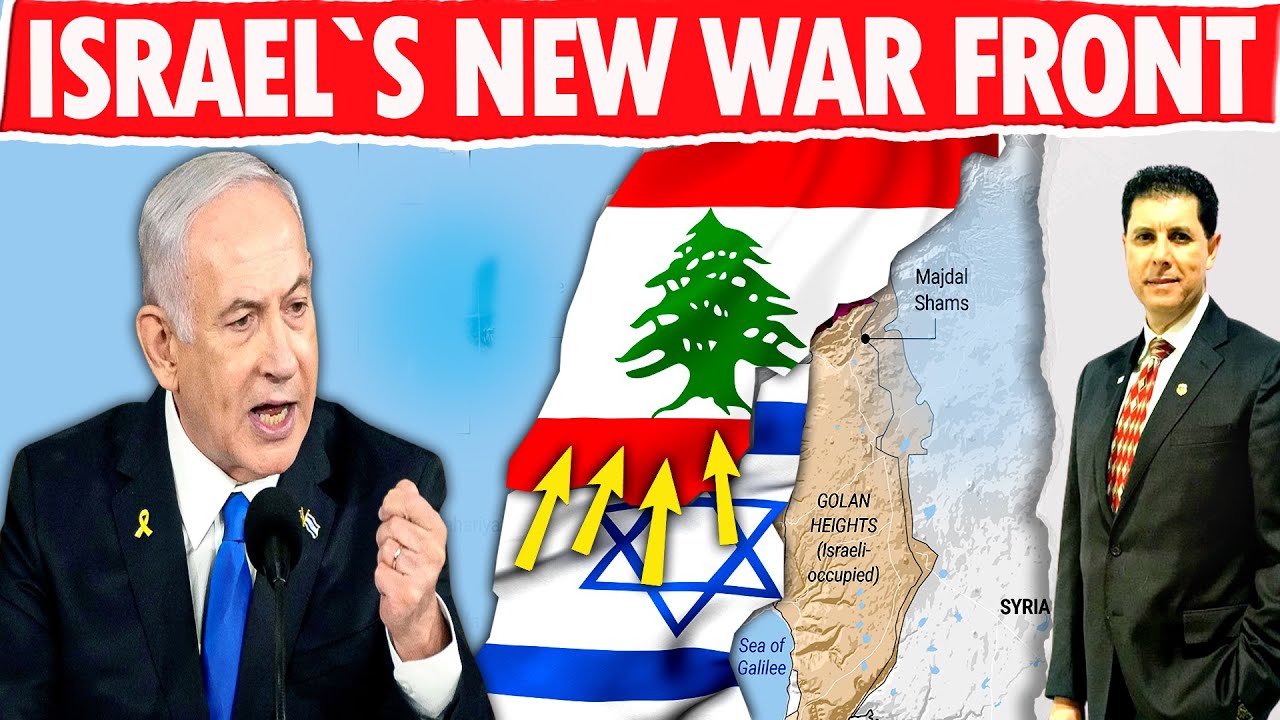
Israel is escalating airstrikes in southern Lebanon to pressure the government into disarming Hezbollah, but the host argues this is unrealistic given Hezbollah's military strength and Lebanon's weak armed forces. He traces Hezbollah's origins to the 1983 Beirut barracks bombings and Iranian backing, and warns escalation could trigger a broader regional crisis.
Chapters
Hello everybody and welcome to Geopolitical Trends, where truth matters. Excited to be with you as always. Uh, I will be talking today about what's going on in southern Lebanon, and the reason for why I wanted to address this for you is to put in perspective. There is, there is an event coming up soon, I believe, especially that involves some other countries in the region that includes Iraq And this has to do with the government trying to disarm certain groups and so forth. All this falls within a much bigger picture, which I'm going to try to provide you today an analysis about. But the case for Lebanon is a very, very complicated one, one that has a history with Israel, and Israel understands fully the consequences of its invasion. Of Israel— so of Lebanon, I'm sorry. And this is why I wanted to address this for you today. So before I'll do this, let me say hi to our wonderful community as always. Uh, let me see who is here. Zayan, good to see you. Willie Homan, Liang Sucker, good to see you. Taiwan Steel, good to see you. Truth Seeker, uh, oh yeah, I see you guys talking about India's drill. Yes, I'm aware of it, and yes, I might reach out to Jayant Bhandari. It's very— Pakistanis are very concerned about the timing of drills in the Arabian Sea because the firing of the naval assets. And so I might end up reaching out to Jayant Bhandari. Well, we'll see as I move forward. So, all right, as I said, uh, just for those who just joined us here, what I'm going to be talking today about— I'll be talking about Israel's incursions into southern Lebanon. And of course, that's happening with the support of the United States. Make no mistake about it. It's, it's, uh, uh, Israel cannot do things on its own without the support of Israel. So, and that begs the question whether Israel wants more wars or not. Well, the answer is obvious, but we're going to be providing— I'm going to be providing you my insights in all this. I'm going to do headlines for you today. There are 3 main things that I would like you to be aware of. The first one has to do with, uh, this is a flag of which country, by the way? And again, just test your knowledge in the geography. And, uh, which country's flag is this one here? If anybody knows, can you please type it in the chat box? And once again, this is just for the sake of us exchanging ideas and talking, no more, no less. Oh, Taiwan still, you got it, you got it, you got it. Taiwan still, indeed. It's Cuba. Why is this important for you? I wanted to share this headline with you, is that, uh, by the end of this, uh, by the end of October, by the way, which was reported on the 1st of November this year, this is for the 33rd. Yeah, 33. 33rd consecutive year, the UN approved on October, by the end of October of this year, by an overwhelming majority, resolution condemning the US blockade against Cuba. This vote comes at a precarious moment as Cuba is enduring a difficult, indeed a very, very difficult period. As you all know, we've been putting a blockade on Cuba forever. So, and, and to me was always that idea of live and let live. Why are we doing this hostilities? What for? I just don't get it. I don't get it. So, and again, I know Washington is not acting on my behalf because I don't— I condemn this kind of stuff. To me, live and let live. But in any event, I want to just to bring up this to your attention. This is now for the 33rd consecutive year the UN approves, uh, this, uh, overwhelming majority, uh, the resolution condemning US blockade. At the same time, it begs the question whether the UN has any power. That's remained to be seen. Uh, second headline has to do with the Chinese vehicles, which is now when you start to realize the stupidity and, and, and how ludicrous for some governments to be saying what they're saying. So take a look at this. Those are Chinese vehicles. But this is coming out of Tel Aviv in Israel, and this is following an Israeli action. These are now saying— the Israeli government is saying now they are concerned, concerns about Chinese car espionage. I mean, how ludicrous that is. So an order was issued by the Israeli Army Chief of Staff to collect about 700 Chinese cars from army officers has sparked widespread controversy on social media platforms over espionage concerns related to modern Chinese cars. This is like so dumb, so stupid. And to them, meaning to the Israelis, this decision reflects escalating security concerns about the advanced technology integrated into these Chinese vehicles. And by the way, this decision was made by none other than Eyal Zamir. He's the chief of staff for the, the Israeli Army, to confiscate the Chinese cars. I mean, it just— I mean, I'm just at a loss of words. All of a sudden, now espionage from vehicles? It's ridiculous. So that just shows you this is not about that. It is about the fear that the Chinese vehicles will be appealing to so many people around the world because of their cost. They are affordable and they are technologically— I saved the copy for you here. This is the vehicle that I saw when I was in Shanghai. I went inside a showroom and I asked the the manager there, said if I could get in inside the car and take pictures. He said, by no means. And, and it just— I was, I was so sort of taken by the technology. I was even given an idea about the mirrors, you know, on the car, the side mirrors, that they automatically adjust as the car moves. And of course, it goes without saying that these vehicles Those are voice activated. All the command inside the vehicles are voice activated. So this is basically what's the problem with why we are seeing now this statement by the Israeli government about the Chinese cars espionage. It's just ridiculous. That's all I can say. And the last one I share with you has to do with the United States descending into chaos, especially at the airports. So what we're looking at, we're looking at a shutdown that is now sort of raising— it's not raising, we see, I see it coming. The US airspace will have to be shut down, as simple as that. It's because of the shutdown of the government, uh, there are now long, long queues at the airport, and there is not enough staff at the, uh, at the towers for the air traffic controllers. So, and all this has to do with the paralysis of the government. That shows you the inefficiency. You know, if you are an American, you are aware of what I am talking about when you start to realize how incompetent the government, our government, is. So this is now the reflection of that. For the third month now that's going, they shut down. And I'm not even talking yet about the families now who are going hungry because they don't have access to certain programs that the government decide to shut down. I'm gonna make a video about this one here to address the domestic issue, especially for my American audience, because it is my responsibility to address these kind of issues and brought them to the fore. That, that's, that's how I see it. But, uh, this concern now with this air traffic and where things are headed, and here is what, uh, because now you're talking about the prolonged federal government shutdown. Has now halted some functions that could cause serious disruptions in the US air transportation. Even the Secretary of Transportation, Sean Duffy, said in an interview that— he said, and I quote, "If we determine it is not safe, we will close all airspace. We will not allow people to travel by air." He also said, "We are not at that level yet. Right now there are considerable delays, end of quote. Well, who the heck are you to decide, first of all, whether people can travel by air or not? And second, it is the lack of responsibility of the government as a whole. This is not about Democrats, Republican— Republicans or Democrats. They're both two faces of same coin anyway. It's— they are both inefficient. So, and that's reflected through the policies that we are saying. So, all right, let's get into our, uh, analysis about what's going on with Israel and Lebanon. And I'm going to do a little bit of geography and history for you, then continue on my analysis and see if there are any questions at the end. I'll be happy to answer them for you. So Israel has significantly now expanded its operations into Lebanon. And why is this? Because it extended from a multi-month conflict with none other than Hezbollah. Of course, because that's what it was, you all know, with the assassination of Hassan Nasrallah, the late, uh, uh, Hezbollah leader. And, uh, Israel still can thinking in terms of, uh, Hezbollah, Lebanese armed group, that sort of, uh, it's not gonna first of all disarm, and second Hezbollah also has conducted some attacks on Israel since the Gaza War began in October 2023. So now you're looking at the conflict between Israel and Hezbollah, or Lebanon at large, is like evolving from a secondary front, because that was secondary. The, the, the first front was the Gaza front. So, but now he's moving from a secondary front that began as Hezbollah support front for Hamas, and now into— because at that time, remember, there were about 1,600 people died in Lebanon, killed over, uh, uh, the, uh, attacks by Israel, and about 200,000 people displaced. So, and this is why sort of Israel is, is, is intensifying its military operations. As a matter of fact, as of yesterday, I have a picture for an attack that was conducted yesterday right there. So it was conducted by Israel in the city of— I think this is near This is near the border with, with Israel. So, and once again, you start to think in terms— now the fear are mounting inside Lebanon because a country that has experienced a war with Israel, you all remember 1996 and 2006, both of them when the Lebanese group Hezbollah was able to drive out Israel. Israel, of course, had a hard time accepting that defeat. It took a while before, before they came forward and admitted that because of Hezbollah, that's how they end up leaving. So, but now we are looking at these tensions in Lebanon, uh, that could slide into a new round of some sort of a confrontation. And history is a— history, history can testify to the tensions that have always existed between Israel and, and Lebanon. So, and this military escalation on part of Israel now, it threatens to open a new southern front on the country's border, meaning on the Israeli northern border and the Lebanese southern border. So, and again, makes you wonder why Israel is moving forward with this. Well, of course, because Israel is accusing Hezbollah of rebuilding its military capabilities. Why? Yeah, the Israeli forces have assassinated Hassan Nasrallah, and the assumption was that Hezbollah is going to become a weak entity. It is not. And I'm going to share with you as far as what they have regarding the arsenal of types of weapons they have at their disposal. So, and this is where you— so you notice now in southern Lebanon the escalation of these tensions. Of course, Israel is sort of doubling its airstrikes and targeting, and that is resulting in the death of many people and injuring hundreds of people also. So on the other hand, you look at what's been sort of accompanied with this escalation is that these intensive airstrikes by Israel on Lebanon, of course violating Lebanese airspace and dropping the sound bombs and so forth. And all this is creating now more concerns in the region, more concerns in the region as to what lies ahead. But even with that is why Israel is doing it right now. So before I move forward, I'm gonna do geography, I'll do history, then I'll continue on my analysis on this one here. So let me share the map here, and I give credit to World Atlas. Uh, where is Lebanon? A lot of people might not even know where Lebanon is. It is a small, uh, uh, West Asia or Middle Eastern, uh, country. This is situated on the eastern coast of the Mediterranean Sea in West Asia, or Western Asia, that is. Of course, Lebanon, also like some other countries in the region, is located in the northern and eastern hemispheres of the Earth. Lebanon borders two main countries. So it is bounded in the north and the eastern part by Syria, as you notice on the map there, and in the southern part is by Israel. In the western part by the Mediterranean Sea. Lebanon also shares its maritime borders with Cyprus. You look at— I think I have a— let me share another map, maybe might be a little better. Yeah, right there. This is— you look at the northern and eastern part, which is Syria. Southern part right here is Israel, and you have the Mediterranean Sea on the western part of the, uh, of, of of the country. Now when it comes down to Lebanon's history, now Lebanon is very old also. It's not as old as the Persians, for example, or the Ottomans, Turkey that is, but it is a rich and a complex history that marks this country. And of course, it has also marked by its origin as the heart of the ancient Phoenicians. You know, if you think about reading about the history of, of the Phoenicians, maritime civilization, it traces its roots back to Lebanon. So, and of course, followed by the rule, uh, under numerous empires. It wasn't just one. We're talking about, uh, even up to modern colonialism mandates that have imposed on them till they gain their independence. And of course, that led to the internal conflicts where they are as of today. But when you look at the history of, of Lebanon, so, and I'm gonna do it in 3 phases. You have the ancient history, you have the medieval, and you have the, the modern history which led to the independence. So when we think about the ancient history, you go to about 3200 to 300 BCE, and this is during the Phoenicians period, or Phoenicians era, that is. And this is where you have the— let me put the map for you so it will make more sense to you when I mention certain things. When you, when you realize that the coastal plain of modern Lebanon was the historic home of the Phoenicians, the Semitic people, and a great maritime trading cultures. When you look at this, you look at the major cities, for example, uh, Ba— Byblos, you look at Sidon and Tyre. I don't know if you can see them on this map here. Tyre is right here at the bottom. Look at the borders of Israel. With Israel rather, and right there on the left on the coast, that's where you see the city of Tyre, for examples. Well, what's interesting about this is that these cities, the, the, the, uh, uh, uh, uh, Babylon, Sidon, and Tyre were dominant centers of trade and cultures, and those were known for their sea faring skills, cedar— that's why Lebanon is known for cedar— and, uh, cedar— cedar, I'm sorry, cedar wood trade. And there was one, one key thing that was well known during this era, and that was the development of the alphabet that became the basics of the Greek, Latin, and many other writing languages. That's where it started. That's why Lebanon has some old history back then. Then you have the successive empires that came after that. And this because of, once again, when you look at the map— let me put it back up here just for you to see the strategic location of, of, of, of, uh, Lebanon. The— so this is why empires were aiming at taking over or control of Lebanon. So due to its strategic locations that the region, for that matter, the entire region, uh, meaning the surrounding of Lebanon, was subsequently ruled by or influenced by some sort of the Assyrians, the Babylonians, the Persians, and of course Alexander the Great, which is the Greek Empire. So, and in 64 BCE, this is before Common Era. So Lebanon, modern-day Lebanon back then, was incorporated into— does anybody know which empire the modern-day Lebanon back then was incorporated into? Remember, 64 BCE. Let me just see in the chat box if you happen to know. If you do, please share it with the community here. Let me check, uh major empire at that time. And the Lebanon, modern-day Lebanon, back then was incorporated. Oh, Igor, you got it, you got it! It was the Roman, the Roman Empire. Indeed, you're absolutely correct, was incorporated. And that's where it became a major center for Christianity in the Roman Empire. This is why modern day, when you go to Lebanon, there are a lot of Lebanese Christians. That traces back to its time back then. Then we move into the medieval and the Ottoman eras. Now this is when you realize the Arab conquest and the Islamic rule began during this time. And of course, in the 7th century, that's CE, the Common Era, that is, that's when Arab Muslim forces conquered the region, not just Lebanon, it was the entire region. From the Byzantine times. So at the same time, Arabic language— so while Arabic language and the culture became the dominant— because remember, when you think about neighboring country of Iraq, Iraq was the center for the Arabic language, just to those who are not familiar with that. So for Lebanon, just for the Arabic language and the culture became dominant the, the mountainous areas, particularly mountain, uh, Mount Lebanon, so served as refuge for diverse religious communities. And that's where you realize, for example, back then they were the Maronites. The Maronites are Christians, no sects, in the communion with Rome. Then you have the Druze. Which is a distinct offshoot of the Shia Islam. This is why a lot of people do not know, especially in the West, they don't understand. In Lebanon, you got Lebanon and Syria, both of them, you have a mix of ethnicities. There are many sects. You have the Druze, the Maronite, the Alawis, the Shiites, the Christians, the Salafis, you know, it's mixed. But it traces back its root to this era. Then you have the Crusade era that came after this one, the Crusade, and also was known for another empire which was the Mamluks, al-Mamluks, even at that time. So the region was a path for the Crusaders in the 11th through the 13th century. That's where my ancestors were from, Sevilla, Spain. And you know, during the conquest, that's where they end up fleeing into North Africa, especially in northern Moroccan mountains at that time. So the 11th and 13th centuries, and this is where you have the Christian states sort of established along the coast of modern-day Lebanon. So, and after the fall of the Crusade states, the Mamluks of Egypt took control until the 16th century. So from 13th century all the way to the 16th, they were under the rule of the Mamluks. So then came the Ottoman era, or the Ottoman rule, and that extended from 1516 all the way to 1918. And you know why 1918? So So Lebanon became, or came under the rule of the Ottoman Empire for about 4 centuries, 400 years, you know. And this is where, for example, governance was often indirect through local emir, so which allowed some sort of a degree of autonomy in the Mount Lebanon region. But When the 19th century came in, 19th century saw some, a period of relative stability alongside internal conflicts. For example, the 1860 civil war between the Maronites and the Druze. Yeah, the Maronites and the Druze butted heads, goes way back, 1860. That's when it goes up, which led to the creation of the Mount Lebanon, uh, uh, uh, uh, and, and their international pressure. That's what this leads us to, modern history of Lebanon. And of course, you have to think about colonialism. And one first thing that comes to my, to mind is the French colonialism of certain parts of Lebanon and certain parts of Syria. And this was done in a deal with the Brits because the Brits had to carve out— you all remember the Sykes-Picot secret agreement? This is part of it. So the French mandate, which was from 1920 all the way to 1943. So, so this followed the collapse, of course. Why it's in 1920? Because in 1919 World War, the end and the collapse of the Ottoman Empire. So that following the collapse of the Ottoman Empire after World War I, the League of Nations granted France a mandate over Syria and Lebanon. This is what you need to understand, this history, for it to make sense to you. So France proclaimed the establishment of the Greater Lebanon with its current borders as of September 1st, 1920. That's how the French— which means what? Meaning the French wanted to incorporate various Muslim and Druze areas into the state of Lebanon that has previously been mostly Christians. This is where you see the, the, the religious It— this is why the Israelis tapped into the Druze in certain areas in Syria. And they said, we're gonna protect the Druze. Now this has nothing to do with religious persecution. Israeli government wants to use that justification because there is a historical record for something like that. Then comes to the independence and the civil war. Of course, does anybody know what year Lebanon gained its independence? See in the chat box. And once again, I just want you to be part of the conversation here. Does anybody know the year when Lebanon gained its own independence? If you happen to, just guess about it. Let me see. I don't want to answer till I hear somebody from you first. All right, let me see here. And it's slow, it's very slow, doesn't show here. Okay, I gotta move on. 1943, uh, Taiwan still 61— no, 43, 43. Now Lebanon gained full independence in 1943, with the last foreign troops withdraw in 1946. You know what happened after 1945, right? So the new state established a power-sharing system known as the, the, uh, uh, confessionalism, which basically— this one, uh, uh, divided political power based on religious community. This is why in that part of the world, uh, the, the religion plays a major role in influencing political decisions. It's for that reason. And this system was relatively stable for about decades, during which Beirut earned the nickname of— and I knew this since I was a kid because you read about it in history— was known as the Paris of the Middle East. And it was back then. I mean, Beirut now is— it's gone. The whole region is gone anyway. So, and it was also known as Switzerland of the Middle East. You know why? Because of its prosperity and the financial role. So then what came after this? Came the Lebanese Civil War, 1975 all the way to 1990. And of course, within this, we all remember the bombing of the barracks, which I will talk about in a minute here. So this, this came about because of deep social, economic and sectarian divides. And this, of course, was exacerbated by the regional tensions and the presence of the certain groups inside the region. This is why I'm going to do a video for you, my own analysis about what I see coming in the region. There is now things broiling domestically in certain countries, and I can just see, uh, an, another Arab Spring on the horizon. So suffice it to say that all these tensions led to a devastating 15-year civil war, and the war involved various internal factions as well as military interventions by both Syria and Israel. Then you have the post-civil war era and the challenges, of course, of today. It was a meeting in Saudi Arabia, it's called the Taif, city of Taif agreement, which was in 19— I was aware of that one because I was following this stuff. 1989, that's when it took place. And basically during that agreement, that's when officially the conflicts inside Lebanon ended. So because there is also another reason you need to know is that the Saudis were financing the Sunnis inside Lebanon, even those inside the government. Saad al-Hariri, you know, was financed by the Saudis. So this is where again you have to understand the dynamic. It's very complicated. It's like a web of conflicts and tensions and so forth. And if you don't understand the key players or key elements of it, it won't make sense to you. And this is where Lebanon faced some sort of challenges that included the reconstruction, for example, political instability. That's why you still seeing what you're seeing and foreign interference. Of course, when they say interference, they only referring to Syria, but also they forget that Israel was also interfering. The US was interfering, the Turks were interfering, interfering. So all this behind the scenes, but the main event was about 2005, and this has to do with the assassination of the former Prime Minister, uh, Rafiq Hariri. So I'm sorry I didn't put a picture of him. So, so after that, the country has faced some sort of significant economic and political crisis from that time moving forward, including the 2020 Beirut explosion and an ongoing liquidity crisis in the financial aspects of it. This is why it's important to understand. And again, I just touched on the surface regarding this because it's a very, very complicated and a very lengthy one. So I want just to provide you at least a basic understanding of the history of Lebanon to put it in perspective before I move into the analysis. Liking this video so far? Don't just be a watcher. Go ahead and hit the like, share, and subscribe button. And don't forget to tap the bell so you will not miss any of my videos or live streams. This way, you will be supporting a channel that stands for the truth and objective reporting. The choice is yours. Thanks for your support. Indeed, appreciate your support. Now let's talk about the threat of this confrontation. Where are we going? Where are we leading? And who's who? And so who's supporting whom and so forth? So, and one thing you need to understand is that despite the ceasefire or the truce brokered by the United States and France, which stipulates the withdrawal of the Israeli forces from Lebanon, Lebanese territory, And of course, the retreat of the Hezbollah beyond the Litany River. So just for you to see where the— it will not show up on this. Let me see if you can see it on this one. Yeah, right there. This is the Litany River right there, southern Lebanon. Very, very crucial point. So, so despite, uh, despite this agreement, okay, despite this agreement No. So, uh, Israel still maintain and retain 5 strategic hill sites inside southern Lebanon. So makes you wonder, why did Israel didn't withdraw if there is this, uh, truce? And so, and this is where you have the Lebanese president Joseph Aoun announced his readiness to enter into negotiations with Israel, which in my opinion will be a mistake. But again, that's his country, he can decide for himself, on the condition that the attacks cease. Well, good luck with that. If Israel was able to target Doha inside Qatar, how do you think the case for Lebanon is going to be? But the interesting aspects in all this is that Did you notice that Israel is not attacking Yemen anymore? Do you wonder why? But in the case of Lebanon, it's different story. In both Lebanon and Syria, they have no say whatsoever. We might think they are sovereign states, but they're not. Look at what's-his-name, Zulani. He was right here in Washington. Why do you think he came to Washington for? To get the marching orders. That's basically why he was here. He is no— he's in no position to negotiate with the US. And this is where you are realizing what the Lebanese president is saying versus what the conditions on the ground are on the opposite end. So what the Lebanese president Joseph Aoun is saying is that, well, we want the attacks to cease We want to recover the occupied territories. We want the return of prisoners, and we want to achieve a complete withdrawal of the Israeli forces from southern Lebanon. Yeah, good luck with that. And here is the thing: when the Israeli— when the Lebanese president, uh, Joseph Aoun, announced this, it was no response from Israel. Almost like Israelis giving him the middle finger, you know. Good luck with that. So, and this is where you have the hard line coming out of Benjamin Netanyahu's government in, in, inside Tel Aviv. It's still maintained. So, you know, they're, they're not going to care. We all know Benjamin Netanyahu is wanted by the ICC, so, for the war crimes that's been committed Gaza. It's nothing new, uh, and all that. No, but at the same time, he is sort of, uh, renewing— meaning Bibi Netanyahu is renewing his threats against, uh, Hezbollah, vowing to sort of— and I put this in quote because that's exactly what he said— to eliminate any threat to Israel's security. Well, Let's start, you want a ceasefire, but at the same time you want to target whatever. That just doesn't make any sense. So between the military escalation and the diplomatic efforts, you know, sort of if I am to look at it from outside in, I would say the assessments differ because there is nothing substantive here. So, or you're saying one thing and you're doing the opposite. In the case of Israel. And this is not gonna pave the way for the next stage. It's the same dynamics we are seeing right now regarding the ceasefire in Gaza. You all know there was ceasefire, right? But Israel is not honoring that. So this is again the same apply. My big concern for this is it could escalate, especially when it comes down to Lebanon. It could escalate beyond. We're already in turmoil to begin with, so why add more fuel to the fire? And within this context, Israel is looking at it from a gain per se. So the way Israel is looking at it, okay, Israel's threats against Lebanon are increasing significantly, and not only increasing But they are also accelerating, they're going fast. Of course, all this happening while the debate regarding developing some sort of a committee of monitoring ceasefire of hostilities continue. It's what we call the mechanisms, which it will be none. Because you look at, for example, now in Gaza, Israel is refusing the role, any role for Turkey or any other country that is not viewing Israel in a positive light. Well, how do you expect this to work? So, so the same arguments I can make about what's going on inside Lebanon. So because Israel is not allowing the process to move forward, the formation or allow the committee to do its work in monitoring the ceasefire. And that's gonna be a problem in itself. And this basically wanted to have the negotiations with the Lebanese under pressure. In other words, we're gonna— we in this case, and I'm just talking figuratively here, the Israelis saying, we would love to negotiate with you, but we're gonna pressure you first before we negotiate. Who is in a right mind would want to negotiate under this kind of conditions? That, that's just not going to happen. So, so Israel, as of now, is, is, is seeking to raise the stakes of confrontation inside Lebanon for one reason and reason only, is to achieve the political gain from Lebanon because it became clear to the rest of the world, not just the Israelis, that Bibi Netanyahu lost the war against Gaza, or against Hamas, that is. So any political victory, it's no different than what Trump is doing right now. So when Trump goes into Venezuela and bombing these boats, we don't even know if the boats had drugs in them or not. You know, to me it's kind of like, what makes you, uh, justify an operation without evidence? That's a violation of the law. So it's no different than what the Israelis are doing, the same thing. So basically they wanted to force a sort of a pressure on the Lebanese government to negotiate, but it's under the, the conditions, uh, proposed by Israel. So, and this is why, uh, the objective of Israel, if I am to think, uh, outside the box, is to sort of, uh, begin some sort of procedure. And this procedure aimed at what? Aimed at disarming, disarming Hezbollah, which I do not see it will happen No matter how much pressure the central government inside Beirut, because it has no power. So even what the Israelis want, the Israelis want the Lebanese Army to use force to disarm Hezbollah. Well, first of all, for those who do not know, the Lebanese Army is weak in comparison to Hezbollah. Let me just put this out for you. So what the Israelis are asking is, is unrealistic. Second, that's an internal matter. So Hezbollah understand if they disarm, it's over. It's the exact thing now the prime minister of Iraq is doing to the Malaysians. And he wanted to disarm them, but guess who is pressuring him? It's the United States. And the Iraqi, Mr. Sistani's argument is that, by the way, militia, if you disarm, it is part of the withdrawal of the U.S. forces from the Iraqi territory. See how they placing it this way? Because if you disarm the groups, you're gonna weaken them. If you weaken them, you will be able to take control. So on the other hand, it tells you right there, in this case of Iraq, Sudan has no, no, no balls per se to tell the Americans, pack your stuff, you have 2 months to pack everything and leave. It's the same thing Niger did to the United States forces. We had forces there. I was aware when I used to go to Djibouti, We had presence in the Sahel region and in Niger specifically, and Niger told the Americans, listen, you have to the end of the month to pack everything and move out. We still can maintain diplomatic relations if you want to, but we don't want your presence here. Sudan of Iraq is not capable of saying that. This is again the difference, uh, and, and why I'm bringing this up is what Israel and the US both pushing into this directions to disarm certain groups. Remember, they couldn't say this, uh, to Yemen. And even the US is not attacking Houthis anymore. Israel is not attacking Houthis anymore. They found out. They found out. And this is again where you have to understand, uh, why what is going on here as to, uh, uh, uh, what Israel aims versus the reality. I mentioned the Hezbollah earlier. This is Na'im Qassem, the guy who replaced Hassan Nasrallah. So I mentioned Hezbollah, but before I'll talk about Hezbollah, I need to bring to you a historical snapshot about the barracks You all remember the history of the barracks. What year did the barracks were bombed inside Beirut? Does anybody know? Let me see in the chat box if you happen to know. Some of you weren't even born at that time. Too many bots. Okay, uh, Rample so on. I do see your— okay, what are we talking about here? Uh, let me see, let me see if you get me in. Oh, I see, I see one, I see. Let me just, uh, I got it, I got one. Let me take care of this quickly here, guys. Okay, I think I saw that one. I got it out. Yeah, just send me— just put, put on the chat box here the name and I will remove. Uh, okay. Alex Talokin, did I make a mistake? Okay, all right. Let's continue our conversation here. So, uh, let me see who put the 19— oh, you got it, Matt Backey, you got it, it's 1983. So the bombing of the barracks, first of all, a lot of people do not even know the history of it as to why it happens. So of course it happened on October 23rd, 1983, and that's when a suicide truck bomb attacked a US Marine barracks in Beirut. And that one killed about 241, to be exact, service members and injured about 128 according to the records. So, so the attack which was targeting the US and the French military members of a multinational peacekeeping forces, you know, because remember the French also lost 58 troops in a separate but at the same time simultaneous bombing. In other words, The bombing took two places, in two, on two places or two targets. One is the barracks where the US were sitting, and the other one is where the French were at. And of course, that was related to Hezbollah at that time, acting under the direction of the Iranian government. Of course, it's not a secret, Hezbollah is funded by Iran. Iran invested into this back in late '70s. So this is how it happened, and a lot of people do not understand. To Iran, it was a strategic move at that time. This is why, why they think in terms of a long term. But even with this bombing of the 1983, the multinational force, which by the way was made up of the US, the French, and the Italians— so the Italians weren't targeted So, but the French and the Americans were. So, and this is where you start to— because it was perceived at that time the military presence pushed the United States into direct confrontation with groups that are affiliated with Hezbollah. As a matter of fact, to my knowledge, it wasn't Hezbollah that conducted the, the, the op It was group affiliated with Hezbollah. So, and that's, that's, that's, of course, it falls under the Hezbollah, but, but there are a lot of moving parts. So I'm going to share a link with you, uh, in this, in the chat box if you want to read up more on this one here. You can, uh, do it, uh, later on. So, so that is the, uh And this is why you need to understand all this moving dynamics. So now you're looking at this systematic pressure that is going on right now by Israel on Lebanon. So of course, through the US, because we have a mediator that is pushing this agenda, and I'm gonna get into that as I move forward here. So it's this strategy of escalation or escalating aggression if I may use the term. So because it's aimed at one specific objective, and that one is to prevent, to prevent some sort of the resistance from ever recovering. Because you all remember what happened with the Hezbollah targeting of Hassan Nasrallah, and of course the beepers that blow up and so forth. So All this aimed at one thing, is to weaken Hezbollah. Now, some say, well, Hezbollah is weak. Others saying, no, it's not. It is not. So, and this is why Israel is exerting this kind of gradual and systematic military pressure. Of course, it's getting the green light from the United States. So for, and because the US will will always, always, always, always support Israel no matter what. So of course the US is saying, well, we want to have negotiated settlements and so forth, so because we wanted to have the resistance disarm. Well, good luck with that. So I, I just don't see it happening. So because As of the time we're doing this, Hezbollah is working on rebuilding its capabilities and enhancing also its readiness for any potential confrontation. So what makes us think that all of a sudden, just because Beirut or the President Joseph Aoun saying, okay, you're going to have to disarm, and Hezbollah say, sure, we're going to do it. Hezbollah is saying, you know, we are not seeking war, but we stand ready. It's no different than what Iran is saying. Iran is saying we don't want any confrontations, but we're ready. The same thing China is saying. We don't want any confrontation, but we are ready. So, and this is again, of course, Hezbollah made it clear that All its arsenal, its weapon is for defensive framework. It's true or not? Of course they have to be prepared. You look at the same arguments I can make about the Houthis. If we didn't provoke them, they would have not responded. But we assumed that Houthis or Ansarullah are not going to respond. We were mistaken. Israel found out. When you start having missiles sort of landing inside Israel. So, and this again paved the way for what is the options left now for Lebanon, for Beirut. So, and this is where you have the US envoy. Let me see his name. Yeah, it's Tom Barack. This is the US envoy. He's the envoy for both, for Syria and Lebanon. So he is talking while at the same time there are strikes by Israel inside southern Lebanon. Why? Because Barack is also saying, oh, because Hezbollah still possess thousands of rockets and missiles that are threatening Israel. Well, okay, which side are you on? Do you want peace? Then you, you have to, to have all the parties involved. You know, this is what Tom Barak said, and I quote, they are trying, but they are dinosaurs. So this is what he's referring to the, uh, the Hezbollah. So because they want him to disarm, and I just don't see how this is going to happen. There is no way. So, so in my opinion, the central government inside Lebanon is unlikely to succeed in fully disarming Hezbollah in the near term, or even medium term, or even long term. For that matter. And why is this? Not only the capabilities of its military is weak, meaning the central government, but also the mix, the complex mix of political, military, and regional challenges that exist on the table right now. So, so, and, and this is why I, I don't see how the Lebanese government is going to assert its dominance over, over Hezbollah. It's not going to work because all Hezbollah needs to do is pull out its representatives in the parliament and the government will collapse. Simple as that. So, so there are about 3 or 4 factors I'm going to share with you quickly here that I need you to put in perspective as to the key factors influencing what's going on right now. One is Hezbollah's refusal So Hezbollah has explicitly stated that it will not surrender its weapons. Why? Because it's viewing its arsenal as essential for national defense. It didn't say for the defense of Hezbollah, for national defense against Israel and for its own political influence. It has even hinted at the possibility of a civil conflict if the government attempted a forceful disarmament. Second thing you have to think about is the political division. Remember what I shared with you in history, the sectarian, the ethnic and religious groups. It's now evident right here in the political division. Lebanese sectarian power sharing system and the influence of the pro-Hezbollah political allies creates a complex domestic landscape. So this is why I'm— I, I just don't see, uh, the central government in Lebanon succeeding or Israel succeeding. Then you have a weak Lebanese Armed Forces. It's known as the LAF, Lebanese Armed Forces. Has limited capacity vis-à-vis, for example, Hezbollah. Uh, he has— he has limited capacity, has limited personnel, and it has limited equipment. So, and heavily, heavily relies on international support. When you depend on international support, what do you think is going to happen? So the army, the Lebanese army, is currently focused on clearing weapons caches in southern Lebanon. Well, how successful is going to be? So yeah, of course there are some successes, but overall the media is going to have you believe that the army is succeeding in doing this when in reality it is not. Then you have the fourth key element, and this one has to do with the regional dynamics. And that's why I said earlier, are we looking at a second Arab Spring coming on the horizon? Maybe, maybe not. The regional dynamics you're looking at, especially if this one has to do with Iran still supporting Hezbollah, you know, both financially and militarily. And it's nothing new, no secret, it's well known. Uh, all countries around the world understand this reality, you know, because this is the key part. This is the key part for the regional influence. So, and that is why disarming Hezbollah is a priority for the United States and Israel. So, and that's why Israel is conducting airstrikes. Is the ongoing airstrikes is to degrade sort of the Hezbollah's capabilities. However, it's not succeeding. Because Hezbollah has massive amount of weapons at its disposal. So, uh, I remember, I think I get, uh, let me see if I can get it for you here, uh, the massive amount of, uh, weapons that Hezbollah has. And I saw some numbers That were very— I'm not surprised at it because that just has always been there. Let's see if I— I don't think so. I put that note for you guys. No, I don't. Nonetheless, suffice it to say that, uh, for, uh, uh, for, for, uh, for Hezbollah, the presence of the rockets, the certain types of missiles are plenty. There are plenty. It's no different than what the Houthis have at their disposal. So, uh, and this is again Where is it gonna be? What is Israel's objective of all this? So, well, one of the key objectives for Israel is to ensure, to ensure and enable the return of approximately 80,000 Israeli evacuated citizens. They want them to return to northern Israel because as we speak, Massive amount of people from Israel, Israelis, are seeking immigration elsewhere. They know what's coming. They're not taking chances. And as a matter of fact, there are massive— even immigration records indicate that Israelis are seeking another countries where they can emigrate to. And this is again, to me, the objective of Israel beside having the population, its own population, move back to northern Israel because it is now deserted area, northern. If you look at the map right here, if you look at the northern part of Israel with the Lebanese, it's empty, it's deserted. That's just where, where, where, where, where things are. So what's one of the objectives? The second objective is to degrade Hezbollah capability to the point where it cannot maintain a viable military arsenal, particularly the long-range rockets and missiles that threaten Israel's southern population centers. So we said the same thing about the Houthis. Oh, Israel is going to disarm Houthis, or the US is going to scare the Houthis. Turns out to be the reverse. This is why you are not seeing the attacks from the Houthis— from Israel, I'm sorry, on the Houthis in Yemen. So, all right, I'm gonna stop right here. It's all I have to share with you. And, uh, let me see if there is any question from you. Uh, I hope I didn't remove somebody by mistake, and if I did, my apologies. So, and yes, guys, if you noticed, uh, some, you know, I can monitor this one. I asked someone to do as monitor, but it didn't work out, so life goes on. So, uh, but if you notice this, let me know and I'll, uh, I'll take care of it. So, all right, let me see. I, I can't see any question here, but if you do have, retype it and put Q so I know it's a question, and I'll just go from there if there are any. Uh, let me see, and I'll do the analysis for you for the next video, guys, as to what lies ahead for the region. Uh, and I'm not really seeing signs into that. Uh, it's just— I'm gonna also do, uh, uh— oh, Igor, I'm glad you, you brought this up. I'm glad you brought this up because I'm gonna do a video for the community, especially for my American audience, about the reality of how some Americans are now going hungry because there's nothing to eat. They don't have access to the programs. There are people living here, what we call food stamps and so forth. So it's heartbreaking, but it's the reality. We are called the richest nation on Earth. Uh, oh, I, I have one question here. I'm going to answer it quickly here. Uh, uh, why does the world hate China hate China? Well, first of all, it's not the whole world. Let me just clarify this. There are only specific countries, and mainly within the Western world, you know, they, they hate China. It's not a hate, it's disliking. Hate is a negative— I always associate hate with negative emotions. It's, it's— I never liked that word anyway, but dislike will be the appropriate word. But the reason for all this, in my opinion, And again, because I was in China and I saw with my own eyes, it's the progress and developments China has achieved. And the Western world does not want their people to be aware of that progress China has achieved. So that's why they are, they meaning the entire collective West, sort of collectively putting this energy towards the negative statements about China. It's because they don't want the population to be aware of how the Chinese government operates and works on its behalf, on behalf of its own people. You think, for example, and then I luckily I kept this picture, uh, and, and just, just to make a point, you look at an infrastructure like this, you know, I mean, just tell— and this one, by the way, I read up on it and found out how much it cut the travel time from 2 hours to something literally like 10 minutes or so, something like this. That's how much he cut the travel time. So when you are a citizen doing business, whatever, from the other side, now you have a bridge that you can just cross over. And it makes you just not only happy, content, but also satisfied with the progress and the performance of your government. So the collective West does not want people to be aware of those kind of developments. You know, I look at again speed trains, I look at the nice cars that they are affordable. You look at, I didn't see homeless people in the streets in China. I didn't see hungry people that they are have nothing to eat whatsoever. Everybody was able to, when they go in into the grocery store, or supermarkets, and I want to vote, everybody, they don't worry about counting the money, whether they have money or not. That gives me an idea they are able to afford whatever they are going to buy. And, and the— what I noticed is that people live within their means. They're not bragging about, you know, even the people with money, you will never know. So this is the reason why, uh, uh, there is this massive dislike towards China is because the success and the progress it achieved such a short period. So I hope I answered your question here, and, uh, and I'm gonna sign off with this one here. So I, um, thank you very much for being here, guys. Uh, I really appreciate you. I appreciate you keeping an eye on the chat box here for any bots whatsoever. So I appreciate you doing that. So I look forward to seeing you next time. As always, remember, geopolitics impact your daily life in more ways than one. Till next time, bye-bye.
More from David


Beyond the Single Actor: Why the Gulf Isn't Choosing Between the US and China


Iran, Iraq's Militias, and the Houthis Are Coordinating! This Changes Everything




Who Controls the Next Decade's Resources? Latin America and Africa's Geopolitical Crossroads

The Chokepoint Trap: How Washington's Stupidity Triggered a Cascade That Now Controls the World

Trump Spooked as IRGC Unveiled dual-use SLV, Deployed Ghadir Mini-Subs & Hinted at Tactical Nukes!
