No Trade Deal w/China| Trump is Lying! Geopolitical Trends
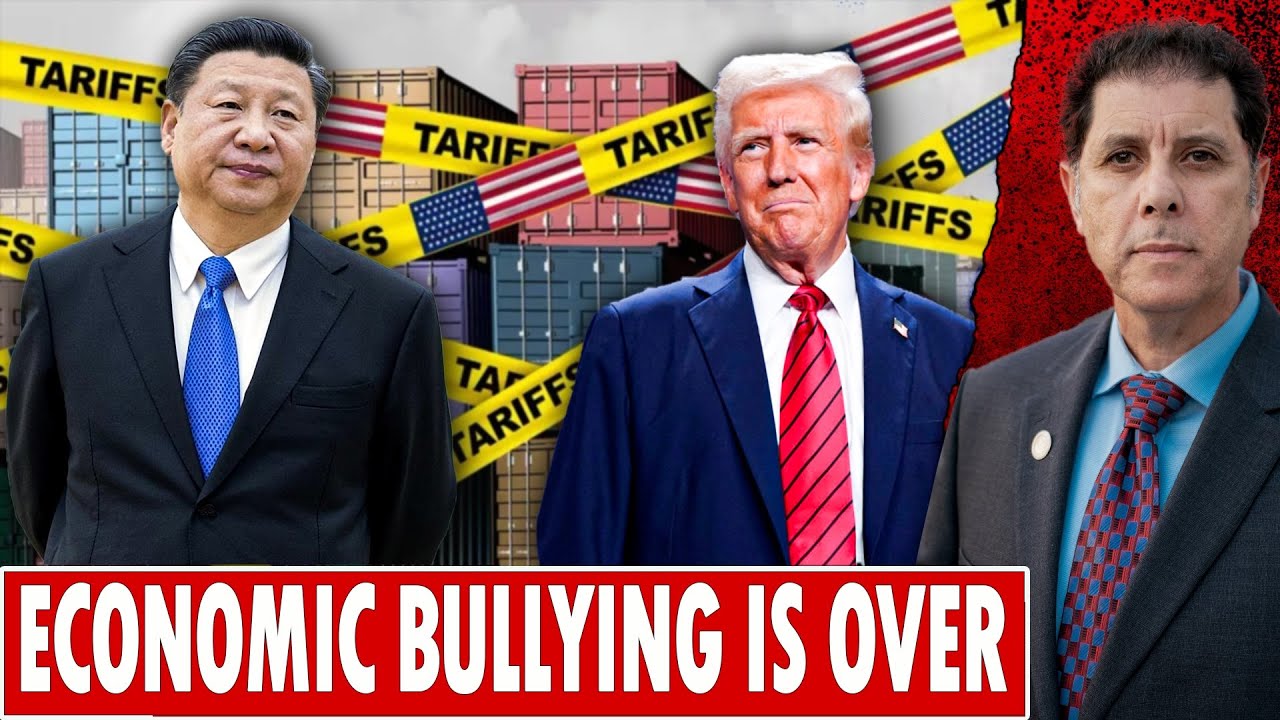
In this live‑stream episode of Geopolitical Trends, the host (Speaker A) provides a rapid‑fire briefing on the ongoing US‑China trade conflict, debunking President Donald Trump’s claim that a trade deal has been reached. He argues that the recent 90‑day tariff pause is merely a temporary reduction, not a full agreement, and that the burden of tariffs ultimately falls on American consumers. Using historical analogies to Japan’s pre‑World‑War II oil embargo, he warns that aggressive trade policies could escalate into broader conflict. He discusses China’s strategic alternatives—its deepening trade with ASEAN and the RCEP bloc—highlighting how these partnerships diminish US leverage. The host also touches on the China‑Pakistan Economic Corridor, India’s opposition, and the potential geopolitical fallout of heightened Indo‑Pak tensions. The episode shifts to corporate strategy, detailing Amazon’s “Project Silver Compass,” which seeks low‑tariff, tax‑friendly, politically stable locations for future operations; the shortlisted countries are Canada, Ireland, Singapore, and the United Arab Emirates. The host critiques US fiscal policy, notes the Q1 2025 GDP contraction (‑0.3 % annualized) and rising import costs, and blames Trump’s multi‑front tariff strategy for the slowdown. He introduces China’s new trade representative Li Chengkang, outlining his credentials and suggesting China may negotiate on its own terms. Throughout, the host engages the live chat, soliciting opinions on whether President Xi should answer Trump’s call, who will bear tariff costs, and which country best fits Amazon’s criteria. The session ends with a promise to release a deeper analysis after reviewing a confidential report, and a call for community support. Key take‑aways: 1. Trump’s alleged trade deal is a falsehood; only a limited tariff pause exists. 2. Tariff costs are passed to US consumers, contributing to a GDP contraction. 3. China’s alternative trade networks (ASEAN, RCEP) reduce US bargaining power. 4. Geopolitical flashpoints (India‑Pakistan, CPEC) could affect Chinese investments. 5. Major corporations (Amazon, Apple) are repositioning globally to mitigate tariff risk. 6. New Chinese trade negotiator Li Chengkang signals a strategic shift in Beijing’s approach. 7. Historical parallels (1930s Japan oil embargo) illustrate risks of trade‑driven escalation.
Chapters
All right, hello everybody and welcome to Geopolitical Trends, where truth matters. Excited to be with you as always. I am waiting on my guest, my friend Einar Tengen. He didn't log in yet, so probably he's, he's doing it right now. So in any event, uh, I'm gonna be sharing with you what I'm gonna be doing either tomorrow or Thursday. I am working on the President Trump's trip to Saudi Arabia. So I am continuing to read the analysis that coming out before I'll do this. So if I finish it tomorrow morning early, then I'll do the livestream. Otherwise, I'm gonna do it on Thursday. So I want just to share that with you quickly. So let me see who's here before I know— I know it gets here. So Truth Seeker, good to see you as always. Taiwan Still, Good to see you. Willie Holman. Phil, good to see you. I know, uh, we get used to do a live stream at noon, but, uh, because it's morning in Beijing right now. Lian, good to see you. Uh, Willie Holman. Amanda, good to see you. Carla Mick, right, watching about chat while I, uh, door clash. Well, good to see you. Good to have you here. So, uh, as I said, uh, oh, sweet Jane Yap. Good morning to you. It's still my evening. It's 9 PM, uh, so here in, in Texas. So in any event, uh, this is what I'm gonna be— as I said, I'm gonna try to finish the reading of the analysis tomorrow regarding the trip of Donald Trump, who is still in, in Saudi Arabia, in Riyadh. Then if I finish it, I'll do the live stream for you tomorrow. So So I'm wait— as I said, I'm waiting for my guest Einar Tengen to get here, but just to give you guys an idea about who Einar is to those who do not know, uh, his background and so forth. So Einar is, is a senior fellow at Tahi Institute, and he's been there since about what, '21, '22, somewhere around that. He is also the founder of Asia Narratives in addition to also being a senior fellow for Center for International Business Ethics. So, and that is what I'm gonna be talking. So I'm still waiting. Uh, as a matter of fact, I did send him a private message just to make sure he's not having any technical difficulties logging in. Sometimes it's challenging, but, uh, it's In any event, so he'll be here. And, uh, and as I said, he is one of the individuals who truly have a grasp in understanding, uh, given that not only he lived in China for so long and understand the dynamics of how, uh, Chinese government operates and thinks, he also has the other side, uh, of understanding the Western mindset, given that he was born in Washington, DC. And, and in addition to being a lawyer and so forth. So he's, he's well-versed. So, and I thought of what would it be a better person to talk to about the, uh, I mean, regarding the trade that's going on, the disputes between the US and China. I mean, the impact from international relations to the effect on stock market. So, um, and this is why it's, it's a lot of Americans have no idea, they don't understand what's going on. And as a matter of fact, you start to see now the impact of these tariffs that Donald Trump imposed. And that's why almost everybody agreed. If you ask any analyst, they will tell you he had, he, Donald Trump, had to cave in because he realized, and I did say this, guys, on the record, and I said, Mike, my word, China's not gonna back down from this. And the reason being because China is in a better position than it used to be 10 years ago, or whatever time, when Donald Trump imposed his tariffs back then on the Chinese. So, and this is why it will be very, very important to understand these dynamics as to where this is going, you know. And again, the logical question that we ought to ask, uh, and I'm just checking my, uh, See if there is a message from, uh, Einar. Uh, ask the logical question, and, and we can assume that it shouldn't be whatever. Is that, could Trump trade war spark a real hot war? And again, it's, it's, it's question that we can overlook. And the reason I'm saying this, guys, because I am using history as my guide and If I am to remind you, what do I— what will I remind you of? I am going to remind you of the imperialist Japan invasion of China. So, and of course, it's the growing alliance, its growing alliance at that time with Nazi Germany. So, and of course, that's when it started to begin imposing the escalating sort of restrictions on the exports, of raw material needed by Japan for its military. So, I mean, again, history does provide us lessons. And of course, you all know how it ended up at that time, is that the situation back then culminated in a comprehensive freeze on Japanese assets in the United States. And of course, let alone one major commodity or aspect. Does anybody know what it was? It was a major commodity that Japan sort of had to— they couldn't do without. And when that ban was imposed on that particular commodity, it just shut down Japan completely. Let me see in the— oh, Amanda, fuel. You got it, it's oil. You got it, Amanda. It's fuel. That's what it was, the oil exports, because it was abandoned. And that's when Washington at that time hoped that this will prompt Japan, which heavily was dependent on, on energy from outside because it doesn't have any, sort of to reduce its military ambitions, because that's what it was. And you all know what end up after that. And that's how part of what led to the attack on Pearl Harbor. And that's why you cannot dismiss, you cannot dismiss the possibility that the erratic policies of Trump— look, just what he did with even our neighbor to the north, with Canada. You know, if you ask me a few years ago, will I ever expect this? I'll tell you no. There is no way. And yet look what— so those kind of policies now, it's almost like we say the chicken's coming home to roost. And he's realizing that his policies not only failed, you know, the American people, because American people within about 2 or 3 months, give or take, especially in July, August, that's when usually we start seeing the, uh, the goods coming from overseas regarding the holidays and so forth. And they're gonna start to realize the prices for all this as to what's going on with that. And that's in itself, it's going to be a major, major issue. And that's, in my personal opinion, that's what prompt, in my opinion, uh, Trump to back down. Because he lost face. I mean, actually, if I am to really think about it from the big picture, is that the Chinese did him a favor, did Donald Trump a favor by saving face. Because Chinese could not even, didn't have to agree to that. Because one of the argument Chinese are making that if they wanted direct negotiations between Donald Trump and, which by the way, Mr. Trump now is saying, he's gonna call, he's gonna reach out to President Xi Jinping. So, and that in itself is a change in the dynamics because you all remember a few weeks ago Donald Trump was to say, well, I'm gonna wait for the Chinese to call. I don't think so. I don't think so. And this is again where that idea of Understanding that these policies have really, really backfired big time. And just to let you know, this is not a trade sort of solution. No, no, it's not, because Trump lied once again. He lied about the Houthis, that they're saying the Houthis, we're begging. For a ceasefire. They weren't begging. The same argument I will make about what Donald Trump said over the weekend. And you know what he said over the weekend? Is that successfully negotiated a trade deal with the Chinese. No, there is no trade deal. You know, because he was saying that the details gonna emerge on Monday or Tuesday, which was yesterday. Here. And of course, what detail came out? There was no trade deal. You know, once again, he lied. What it was, it was 90 days pause in the tariffs between the two countries. So that's not a trade deal. So, so what, what we are witnessing is that the reduction in tariffs, but not the elimination of tariffs. You know, that's to me where Trump is dishonest, you know, because the bottom line to it is he caved in. You know, it's shameful that a sitting president will lie to our faces. And that's in itself is a slap in the face. That's like almost an insult. To all of us. And that is why, you know, for you guys to understand, it is not a trade deal because Trump is already going around and saying that he declares victory now over China. No, no, there is no way. And I think that's part of where these problems with Donald Trump is that You know, I don't know. I'm not a psychologist, but I am starting to sense and feel that he might be inherently a liar. I mean, again, I got nothing against the guy, but against Trump, that is. But again, you can't be governing, you can't be leading, you can't be sort of managing the affairs of a country with this kind of approach. So, so because now Trump is saying he plans to speak with President Xi Jinping soon, maybe by the end of the week after he returns from, uh, uh, uh, the Gulf, from the West Asia visit, because he's in Saudi Arabia, he's going to go to, I believe, Qatar, then United Arab Emirates. So, and that's why I'm gonna, I'm gonna— you guys need to know the some details about that trip. And I'm— if I finish the reading the analysis tomorrow morning, I will do the live stream for you. If not, I'll do it the following day. It's just because you need to know what's going on. So, uh, let me check one more time, see if Einar is— yeah. So, and it's not a problem, guys, if he doesn't show up, you know, we can always reschedule this for other time. I still can share a few information with you regarding this aspect, because I got, I have my own assessments, my own as to what's going on. And as a matter of fact, I did have one question, uh, for Einar, and I will ask him, uh, not this time, maybe the next time, regarding the China, regarding, I'm sorry, Pakistan-India tensions. We just, uh, reach a conclusion of sort, peaceful one that is. Uh, but again, you need to understand that the possession of the Chinese from this aspect. And if I am to think outside the box, I already expressed my opinion about this, that it has to do with one, two particular main issues. One of them has to do with the upcoming elections inside India, which Modi wants to rally the Hinduism and so forth. And the second one has to do with undermining BRICS. But there is a third element, and the third element has to do with China and Pakistan. And this one specifically has to do with the China-Pakistan Economic Corridor. So because those tensions between Pakistan and India, of course, will have an impact on the CPEC, this, the China-Pakistan Economic Corridor, and the primary concern will be the sort of the heightened geopolitical and the potential security threat that will result from a dispute like that. I'm glad it, it's kind of stopped, but can you imagine if this would have escalated what it's going to do to the infrastructure on the, on the corridor and the operations of what China has been investing, you know? And there is one reason for all this is because India, as you may know, India is opposing the China-Pakistan Economic Corridor projects. Doesn't want to see that moving forward. So, and that is why, because the arguments India is making, which I don't buy that argument, the argument is making that it considers occupied territory, which will further intensify and potentially lead into sabotage or disruption of projects. And this is exactly what we are sort of witnessing regarding this kind of tensions that exist. Uh, that was one of the things I was thinking about addressing, and I will address it with Einar Tengen. Maybe not this time around, but, uh, you know, I'm gonna reach out to him later on and we'll find out what going on. So the other thing is, just to go back to my other topic, because that was exactly what we're gonna be talking about, is whether the— it's whether the Trump trade war could spark a real war. And again, to me, I'm approaching it from lessons of history, especially what took place with when Japan sort of invaded China and what led after that one and so forth. So now, I guess, what time is it now? Yeah, well, we're just gonna go ahead and I'll finish this here. I'm gonna keep it short, but we'll reschedule it with Einar some other time. But I'm gonna share some information with you that you're gonna need to know to put this in perspective, especially for my American viewers, uh, and, and, and because a majority, majority do not know, uh, what's coming as far as the impact of these tariffs. And here is the thing, actually, I'm going to share a quick, uh, a clip with you guys and take a listen, and I'm gonna say something about, uh, this one here. Hold on a second. Let me get to the link for where that is. All right, let me play a clip for you, and I'll make my own comments on it, and I'll ask you one specific question. You might have an answer to it. I have a gut feeling that you will know. Okay. Let's take a listen here, guys. Reached an agreement on a 90-day pause and substantially moved down the tariff levels. Both sides on the reciprocal tariffs will move their tariffs down Okay, basically what he's talking about is moving the tariffs down and so forth. But here is the question for you guys: is who do you think is going to be paying for that? Yeah, this tariffs, that stuff we're talking about, who's going to be paying for it? In a simple language, Is it the exporter or is it the importer? Yeah, Timeline Dunkley, American consumers. Amanda, American consumer. Arsenal, US taxpayers. Uh, Piano Man, US citizens. Uh, DW, importers. You're absolutely correct. And this is one thing, by the way, American consumers do not grasp the reality of it. Average citizen here, like I always say, majority of us— and I am not, I am not badmouthing or downgrading my fellow citizens, whatever, I am speaking the truth— majority of us are not informed about what's going on. So they have no idea that when Donald Trump will be dishonest and lies and say, well, we're gonna force the Chinese to pay for this, or country X, whatever, because the tariffs are on many, many countries around the world. Okay, no, it's us. We're gonna end up paying for this. And that is the hard truth that most Americans do not grasp yet. And I hope, I hope they will wake up to this reality. To Trump, he's already finding out. That's why he caved in. And this disagreement of the 90 days pause in, in, in the tariffs. But that's not a solution. That is not a solution. And the reason it's not a solution, because to China it has other options. And I give you a quick example, guys. China trade with ASEAN, for example. Just think about that, because China is ASEAN's largest trading partner. And by the way, the trade between the two, meaning China and ASEAN countries— I don't know whether you want to include Philippines into that because Philippines is the weak link in ASEAN. It's the same arguments I've always made about India being the weak link in BRICS. The thing is that the trade between ASEAN and China has grown significantly, you know, more than double since 2010. Because here's the stats that I found. In 2019, to be exact, in 2019, it was about, uh, it was about $507, almost $508 billion. That's what it was. Guess what the stats saying as of The first quarter, this quarter, we just ended the first quarter of 2025. ASEAN remained China's largest trading partner with the total trade of 1.7 trillion yuan. The same arguments I can make about, uh, uh, uh, China trade with RCEP, you know, because here's the thing, it was great article, by the way, I had a chance to read. Actually, I'm gonna, I'm gonna share it with you guys. This way you can read it later on if you like, if you feel like it. And I will always post this for you in the description. And the argument is that the China trade with the RCEP, it's more than just economic, it's geopolitical win. And I couldn't agree more with the author, his name is Robert Ward. It's because it's a win-win situation for China in either way. And this is why they are taking the stand they are taking against the United States, is not against, but rather vis-à-vis the tariffs by saying, no, the ball is in your court, not ours, because we have other options. You have RCEP, you have ASEAN, breaks to a degree, you know. As a matter of fact, I just find out, uh, uh, yesterday or the day before, that BYD— and please, if anybody knows about this— BYD opened up, uh, uh, uh, uh, an assembly plant in Vietnam recently. And this is why when you think about the— and I couldn't agree more with the author for the article that usually when you have other options like the creation of another trade bloc like ASEAN, like RCEP, like BRICS. But just when you think about this too, the RCEP and China, you know, just between the two, they'll have some sort of a significant economic impact. You know, I am glad that India is not part of the RCEP. You know, and also within this aspect, because like I always say, you cannot differentiate, uh, or you cannot separate— rather, I'm sorry, not differentiate, separate geopolitics from economics, or geopolitics from finance, or geopolitics from energy. It's very, very important. And this is where, where you, you see the, you see the, the, the, the geopolitical impact of something like this, not only on a region which is Southeast Asia and the whole Asia for that matter, but the rest of the world given what's going on with the EU, with what's going on with G7, what's going on with G20. So, and this is why this economic impact, and we're talking about RCEP and China, you know, that have not only a positive economic impact but also have are also sort of what will it mean for the geopolitical of the region. So, and because to me, the way I see it, China, if the US doesn't want to lift the tariffs first before they enter into negotiations, direct one, China will not move forward and will keep things as they are. Why? Because they have other alternatives. And this is why China is going to sort of reap the rewards of a much greater economic integration in the region between the two, meaning China and RCEP and China and ASEAN. And it becomes just one question, and I couldn't agree more with the author on this one, is what will be the role of Japan into all this? That's something we need to sort of think about because it's worth asking that question. So another thing that, uh, loom large regarding now, uh, what's going on with the American economy, because we need to understand this one here, and I'm gonna share some stuff here. And apparently Einar is not available, something came up. Usually he is on time and everything. So we'll find out some other time, but I mean, I will reschedule it. So it's not a big deal, guys. Now what's going on with the US now? Already there is a conversation inside here that now fingers are being pointed as to who to blame for what's going on. Why? Because the first quarter of the United States GDP numbers have came up. And you know what? Donald Trump sort of pinned now the Q1, or quarter one, that is contraction in the economy. Guess who he's blaming for that? He's blaming his predecessor Biden, which is a weak form of not taking responsibility. This is where you have the weak minds, weak leadership. It's not about talking loud and barking, it's about having strategy and level-headed. And Trump doesn't possess that, doesn't think in these terms. So why? Because now you are noticing that there is a there is a shrinkage, rather shrinkage in the GDP. And you know what? Analysts are arguing, even those who have been supporting Trump, they can't go against what's true. They are now saying that this shrinkage in GDP for this quarter 1 contraction is exclusively Trump's fault for initiating the multi-front tariffs or trade war, that is. So, and that's exactly because GDP fell at an annual rate of 0.3%, or if you think in terms of Wall Street, the way thinks about it, 30 basis points from the fourth quarter of 2024 to the first quarter of 2025. One down. And of course, you know, it's, it's, you know, we don't need to be a top-notch economist to understand the reality and the basics of it. And the basics of it is that this decline is undeniably caused by the quarter tidal wave of what Donald Trump embarked on regarding the pre-tariff goods imports, which, which is, by the way, skyrocketed to 50.9% in Q1, or quarter one. And this, again, to me, it's fascinating to see all these developments, all these moving parts. And that's why we need to understand all this What does it mean? Is this why now Trump wanted to reach out to President Xi? And here is a question for you guys: should President Xi answer the phone, yes or no, in your opinion? I understand about protocol. Let's say we don't deal with protocol. Let's just, let's just indulge me for a moment here. In your opinion, Should President Xi Jinping answer the call from Donald Trump? Yes or no? Amanda, you say no. Vera, you say no. Uh, uh, hon, you say thinking that bullying, bullying me works. I see what you mean. Piano Man, no. Joey, no. Oh, uh, history No, make him sweat. Jerome Lazarus, no, no, you guys got a point there because it's common sense. It's common sense. I believe your answer because you are putting yourself in the position of China. And if you are in that position of leading a country, you're gonna have to think about the welfare of the country because that is a major responsibility. This is something Trump doesn't grasp. Doesn't understand, you know, the faith of a nation. You don't play around with that kind of stuff. You don't mess around with that. You know, people are living here in this country now from paycheck to paycheck. The American dream per se is gone. And this is why he's wanting to reach out to President Xi this coming weekend. I'm going to keep an eye open on that. Because he wanted to follow up. Here is what they're saying, because I read the statements from the White House. You know what they're saying is that he wanted to follow up on the US-China tariff agreement. There is no agreement, it's a pause. I won't call that agreement. And you know what they're saying also, and I'm gonna read it word for word. Quote, total reset in bilateral relations achieved. This is what Donald Trump said on a weekend. No, man, stop lying, stop being dishonest, act like an honest man. But also, this is a reflection of what has become of our system. Corrupted to its core, to the core. This is why I'm gonna do the livestream for you regarding his trip, to highlight to you who went with him on that trip. I have a list of the individuals, and that will give you an idea of what's going on. So to go back to your original answer when I asked you who's going to be paying, and you were absolutely correct about that one. You know, these tariffs will— it's the exporters that's going to actually be paying for that. And this is why it behooves us to understand what could happen after 90 days. Are we going back to, to what it was before, or will Trump cave in completely, 100%? Because he already lost credibility now. That's why you can't bite on what you cannot— you can't chew what you can't bite on. So, so he took a bite more than what he could chew on. That's what it is. You don't bully. No, you don't, because it's not gonna— it's not gonna cut it. Things have changed. And he's gonna have to think now, and he's gonna be dealing with the Chinese government because they have a strategy. They've always had a strategy, especially after what took place in 1995, 1995, 1996, 1997, the Asian financial crisis, specifically in 1997. Don't think that this is happening in a vacuum. No, no, no, no, no. There is a well-thought-out strategy behind it. So, so, and by the way, when they saying that they're gonna reduce the tariffs, the, the, the US, it's reducing it by, uh, uh, uh, the ex— American export will receive a minimum of 10%, uh, uh, uh, reduction in duties down from respective 125%. And for the Chinese goods shipped to the US will be subject to at least 30% in tariffs. So, and by the way, here is one reality also that most Americans do not grasp, and the administration is not disclosing by design. And you know what it is? Is that the tariffs will be at a 50% not 30% as they say. It's because the 20% tariff that was imposed during Trump's first term still applicable today. I have a source for that. So that is what they are not disclosing to the American people. So, and this is why, uh, China went ahead And, uh, had China now has a new trade representative. His name is Li Chengkang. I have a picture of him here, right here, guys. Savvy dude, savvy. Why is this? And, and, and he's the one— Li is going to be replacing now, uh, Wang Xiaowen, is the 59-year-old who used to be. Now they already they already, uh, he already took office and, and he's moving forward with this. The thing is that, uh, Wang Chun took part in the negotiations in 2020 trade deal between the US and China. So however, when you think about Li, the, the new guy, the new trade representative, The new one, who is by the way 58 years of age, has decades of experience for this one and dealing with international negotiations. So because he served as China's ambassador to the Geneva-based World Trade Organization, that gives you an idea right there why China appointed him. Because of his contacts inside Switzerland. So, and he's— he was an ambassador from '21 till he was nominated for this position. I, I checked out even his academic credentials, because sometimes, usually academic credentials, guys, gives you an idea about an individual, because you have to— and again, I'm not saying degrees are what define— you still can talk to somebody doesn't have a PhD and make more sense. And you can talk to somebody with a PhD and who, he, who doesn't make any sense whatsoever. There are individuals like that. All I'm saying is academic credential tends to really reflect to a degree an understanding of whatever issues that an individual is dealing with. So in case for Li Chengkang, he holds a bachelor degree in law from Peking University. And a master's degree in the economics of law from the University of Hamburg in Germany. So, of course, many analysts are baffled as to China's decision so fast, as to why he's been appointed. And again, for me as an analyst, and given my understanding of his background, It makes more sense to me that the Chinese are thinking for some specific breakthrough in this possible negotiations with the Americans. So, because they want to end the trade war, but they're gonna end the trade war on their terms. So since Donald Trump imposed this sort of tariffs and what's so-called Liberation Day. It's nonsense. Anyway, so the possibility is that Li— let me put his picture again so you know I'm referring to here— Li Shangkun also could have that possibility in him, given his experience in breaking the impasse in the negotiations should they take place directly with the United States. So, and another thing is, remember, he was based in Geneva, which means what? He had links, he had contacts. And usually in this domain, relations, human relations means a lot. So, so this is why, in my opinion, that's the way I look at it. Why they have put him into that position. So now I'm gonna share something with you here since we're going full steam now with the live stream here, even though I'll tell you this, don't laugh at me, but usually I'm in bed at this time. I go to bed at 9 o'clock, so I don't stay up late. But anyway, for the community, I'll do whatever is need to be done because, you know, I, I like my community, I love the community, and, and I wanted to expand this community to around the world if we could. Why? Because I'm after one thing. Spreading the truth. There is one life to be lived, and I have to give it all, 110% effort. That's all it is. Now let me talk to you about something going on right now in the US. It has been going on for a few days, and this one has to do with— you all know about Amazon, right? Yeah, and you all know about Alibaba, uh, not Alibaba, I'm sorry, Temu. The, you know, the sales of Temu are now nudging Amazon. Yeah, so, but anyway, let's go back to Amazon, and here is what was going on for Amazon. They had a meeting recently and they launched what is called a Project Silver Compass. Now you might ask yourself, what is this one here? Basically what this project is, is to identify new nations that can host the business. So And this responsibility falls under this guy here. His name is Vincent Chow. This is his name. This guy has been tasked with finding locations around the world for where Amazon can start to consider— you, you know what it means, guys, moving forward, because with all these tariffs and all that Amazon's gonna have to think ahead of time, ahead of, of the curve by moving operations out. There are places here— GM, one of them, has shut down one of the facilities, to my knowledge. Boeing is running into problems, especially after what China did. Amazon has already embarked on this, and here is what they're looking for. The countries that they're looking for, they will have to have certain criteria. This is what Vincent Chow is aiming at. One of the, uh, the criteria— they're actually 3 or 4 to my knowledge— one of them to have either zero or low tariffs. And there are countries around the world that they have that. This might shock you. As a matter of fact, uh, one of them or two of them in Asia, believe it or not. Second thing, that those countries, whatever that choice is going to be on, they will have to have some tax, a sort of a policy that is favorable to businesses. Because you all know about our tax system, especially for my American viewers, you know, is the middle class that is hammered with taxes. The millionaires, billionaires don't pay anything. And those who do not have any to pay from, and I understand that and I sympathize with them and they shouldn't be paying taxes. So what's left is the middle class. We are the one that are taxed to the max between 27 to 28% to almost 33 or 34%. You know, this is what, uh, what's his name, he was Sir James from, uh, from England who gave a speech way back, way back in the '50s, and he warned about hollowing out the middle class in the Western world. That's exactly what we are going through. So Amazon is thinking of it. And by the way, Jeff Bezos doesn't pay taxes, so his arguments is that he create jobs for man. But also you have to understand the lobbyist he hired to fund members of Congress, elections, and reelections. That's why the incentives are— it's the system is corrupted, you know. I don't need to beat the dead horse on this. Favorable tax policy. The third element has to do with some sort of, uh, if this country will have to be somehow neutral. Well, good luck with that. Tell me, is there a country in the world that is neutral right now? It might be neutral in not getting involved, but if you and I talk about neutrality the way you and I know— understand it, there is no such thing. Even the Vatican, you will think that the enclave, the Vatican that is deal just with the religion, you will be mistaken. If you only know the political back dealings they are involved with, if you only know how much they did for the fall of the Soviet Union, if you only know what John Paul II, when he was a pope, what he did on behalf of Reagan against communism. So, but in any event, Amazon is looking for some neutral country with political system And here is the key one that I— in my opinion, the key one is that they wanted to have a country that has technology sort of infrastructure in addition to stable governance. Well, there is, in my opinion, one country that fits that category. Does anybody know which one? Can you type in, in the chat box which country, just for the last category? And the last category is that there will be— this country that Amazon is looking for will have to have the technological infrastructure, and it has to have stable governance. Tell me which country comes to your mind. Oh, oh, JD say China. That is correct. Osman, you say Singapore. I see you, Puan, there, and I'm gonna highlight. Amanda, Philippines. No, no, no, no, no, no, no, Philippines can't. The Philippines is too corrupted. So Liang, you say China. That is correct. Kevin, China. That is correct. Caribbean child. I'm sorry, uh, this one is Joey. Joey, you say China. Caribbean child, you say China. That is correct, you guys. That's, again, that is not what Amazon is saying, but that's my opinion, and I share that opinion with you because that's the only country, in my opinion, that has the technological infrastructure and has the ability of the stability of the governance, you know. I was there in China. It's not I interacted with the government. I was just— I have nothing to do with the government anyway, and I won't be able to anyway. That's not my plan. But I can see the stability of the system through how everybody's behaving. That's to me what— now here is the surprising thing. Here is the surprise in that What Vincent Cho— let me put him back up here— what Vincent Cho narrowed the list, it ended up being only 4 countries. This might surprise you, no, China is not included. As a matter of fact, China is because Apple is pushing more for China. This is why, by the way, Apple, there is a possibility that they could sort of— what's the word I'm looking for? I'm drawing a blank here. Not outperform Google, but overtake Google soon. Here are the 4 countries that Amazon and Vincent Sho decided on. First one is our neighbor to the north, Canada. Second one is Ireland. Third one is Singapore. And the fourth one is United Arab Emirates, a country that Donald Trump is going to go to after tomorrow, I think. So surprising, huh? Four countries: Canada, Ireland, Singapore, and United Arab Emirates. But each one of them has its own sort of category as to why. You take Canada, for example. Why will Amazon think of Canada? And by the way, this is not gonna be just one country. 'Cause remember, Amazon is huge. Those operations are in the billions of dollars. You can't put all your eggs in one basket. But for Canada, it's because of its cultural proximity to the United States. United States. When you think about Canada, you know, it's almost similar to the United States. I mean, they have their own culture, they have their own thinking, and Canadians are nice, wonderful people. Don't get me wrong, you know, I lived in Canada at some point in my life way back. Canada, that's the one. Second one is Ireland. Why is Ireland? Does anybody know? Why Ireland? To those who understand corporates, you, you might know, you might know why Ireland. One word. Let me see what you guys come up with for Ireland. Amanda, EU. No, no, no, no, no. Multitask. Multitask. You got it. Is tax benefit. Joey, you got it. Taxes. You guys got it. Yeah, I, I knew you would know it. Taxes. Major corporations do have their, their, their offices in Ireland. Why? It's because Ireland, it can sort of, uh, uh, uh, uh, uh, absorb— that's the word that came to my mind— absorb those like big humongous multinational corporations. Corporations. Why? Because the tax incentives. Next one, Singapore. Why Singapore? If you— if I am to say Singapore, what comes to your mind right away? Right away, type it in the chat box. Type it in chat box. Don't think too much, just what comes to your mind right away. Singapore. If I mention Singapore, what comes to your mind right away? Kevin, do it. Tax. Okay, that's one. Port. Barry, US vessel. Actually, not, not the way, the way we can compare it to, let's say, Philippines or South Korea or Japan. Yes, it has some agreements with the US, but not to that level like we see with Japan and Australia and South Korea. Uh, Grizzly, neutral. No, no. TikTok, QED 70, 2 degree. Tax exemption, 2 degree. Financial hub, Idris Williams, you got it. Finance and commerce. Why? Because Singapore, the first thing you think about is the investment and commerce. Straightforward. This is why wealthy investors do consider Singapore for its investment, for their investments, and so forth. So is the big corporations will have to think in these terms also. Amazon is thinking in these terms. And the final one is United Arab Emirates. I don't know if you guys will know exactly why United Arab Emirates. It has something that no other country does. Does anybody know? If you can guess, just guess. And again, we're just here to learn from each other. Jason, does they have money? That's correct, because they are oil and other stuff. Uh, because you can hide, hide money? Not necessarily. Uh, yeah. Oh, Idris Williams, zero taxes. That is correct. There is no corporate taxes. No corporate taxes. That is the difference. That is why Amazon nailed down those four countries: Canada, Ireland, Singapore, and United Arab Emirates. And why am I sharing all this with you guys? Is to highlight to you that there is no going back. Amazon is thinking far ahead, and so other organizations here in the US, that they know we are not going back. That era is gone. The world has moved on. And as a matter of fact, I feel comfortable using the term, a globalized world, and I borrow this term from my dear friend, uh, Warwick Powell. They used to— and I remember that the world can move on. It will be a globalized world without the United States. That is the harsh reality that, of course, Washington will not admit and will do— the government will do whatever in its power to maintain that dominance and hegemony. That is why you are seeing what's going on with the monetary systems. You know, the trillions of dollars that have gone missing. When I say missing, they— you, you can't find them on the balance sheets for the government. Where are they? This is why you have the BIS, the Bank of International Settlements, doing whatever it's doing. And this is why you have corporations, the likes of Amazon, already thinking Plan B. Apple, by the way, it's already cut some deals with the Chinese. Even though we heard that they're gonna be opening a place, a factory in India, don't count on it. Even if it opens, that's just gonna be a window dressing. The bulk of the key stuff, what is gonna be produced, not in India, but rather in China. Why? It falls back to that point of China has the technology, technological infrastructure. That is the key, and that's why it's very, very important to understand those dynamics as to where this is going. So very fascinating. I am surprised that Amazon didn't go to China, but of course I'm not surprised because if you think about it, why would they go there when you have Temu? And I forget the name of the other entity. They do, they do internet sales as well, like Temu. Of course, China— I mean, Amazon would stand no chance. So that is the reason why. That is the reason why. Oh, oh, milky thumb. Thank you, Shane. I always forget this because I don't use it much. Thank you, Joey. Of course Alibaba is involved, and I was referring to Shane, by the way. And again, I will be talking either tomorrow or the following day about NVIDIA. I know one of you— yeah, NVIDIA right here, Dave, you put that one there. NVIDIA is freaking out. This is why the head of NVIDIA went to Saudi Arabia with Donald Trump. Yeah, I saw the list, guys. Unbelievable. Unbelievable. So it's all about transactions. But here is the thing, I think it's a fraud, you know. Wait till I share the information with you, because I'm good. That's why I need to finish reading my— the analysis that I have my hands on before I'll share the information, because I don't want to talk on top of my head here, even though, you know, I wrote a book about Saudi Arabia and I understand how the government operates and so forth. But this is from a different level altogether. So, uh, all right, let me say thank you to our super stickers here. Rafael, as always, uh, and again, Rafael, I will not stop saying I can't thank you enough. I want you to know I don't take it for granted. And by the way, guys, I just— I feel like saying this, you know, uh, I don't know, I just feel like saying it. I will pay all this forward because that's what you do in life. You don't just take, you give also. I have my ways and I don't talk about that kind of stuff. I pay it forward. Thank you very much, Rafael. You wrote, uh, uh, Putin is holding every day back Uh, oh, Putin is holding everybody back. Putin is too timid. If he will not fight, being someone who is willing to— everybody is waiting on him to act. Yeah, because this one has to do with what's going on, and I did post this for you guys regarding whether, as a matter of fact, uh, uh, whether he should meet with, uh, with Zelensky. And I did put the, the survey. Thank you, by the way, for taking part of the survey. I truly appreciate you. Uh, 72%— when I asked you the question, guys, should Putin meet with Zelensky? Uh, 24% of you said yes, 72% said no, and 5% say I don't know. So, and again, I, and I read the comments also, uh, You know, you know, it's kind of, uh, to me, for me is that if, uh, Zelensky wants to meet the, uh, uh, to talk with Putin, that means he did not grasp or understand the Russian demands already. That's, uh, you know, and second, uh, you know, I, I know one of you guys wrote, uh, actually Mohammed Mohammed wrote, Zelensky is not legitimate president and he has no authority because he is a US-UK puppet. Spot on, is the truth. So, so, and that's why I'm saying, uh, maybe Putin shouldn't be meeting with the— because the optics of it. And if he does, he will legitimize, uh, uh, Zelensky. So, so thank you again, Rafael, truly appreciate you. Noel, thank you so much for your, uh, super sticker. Noel is another avid supporter, has always been supporting the channel, so I'm very, very grateful to you, Noel. Thank you so much. And the last person is AFU. Wow, thank you for your generosity. Thank you, Professor. You're most welcome, and I truly, truly appreciate your kind support and your kind generosity. So You've been supporting the channel on so many, on many occasions, so, and I am aware of all this, so, and I can't thank you enough. So, all right guys, truly appreciate you. Thank you for being here. Uh, I'm gonna— I'm already past my bedtime, but it's all right. So why not once in a while you do something different for the community? So, and I will reach out to Einar and we'll reschedule this one here because You need to hear what he has to say. Excuse me. Once again, guys, I'm going to finish— try finish the, uh, reading of the analysis tomorrow morning. If I finish it early, then I'll do the live stream for you at noon. If not, I'll do it the following day because I want you to have, uh, uh, uh, rich information This is not about, uh, expediency and so forth. You know me, I don't do that kind of stuff, you know. Uh, if I don't have something of substance to share with you, then I won't do it. So in any event, thank you for being here. Truly, truly enjoyed it, even though it's late, but it's okay. Uh, and I look forward to seeing you next time. As always, remember, geopolitics impacts your daily life in more ways than one. Till next time, guys. Bye-bye.
More from David


Beyond the Single Actor: Why the Gulf Isn't Choosing Between the US and China


Iran, Iraq's Militias, and the Houthis Are Coordinating! This Changes Everything




Who Controls the Next Decade's Resources? Latin America and Africa's Geopolitical Crossroads

The Chokepoint Trap: How Washington's Stupidity Triggered a Cascade That Now Controls the World

Trump Spooked as IRGC Unveiled dual-use SLV, Deployed Ghadir Mini-Subs & Hinted at Tactical Nukes!
