North Korea Will Fight alongside Iran! Geopolitical Trends!!
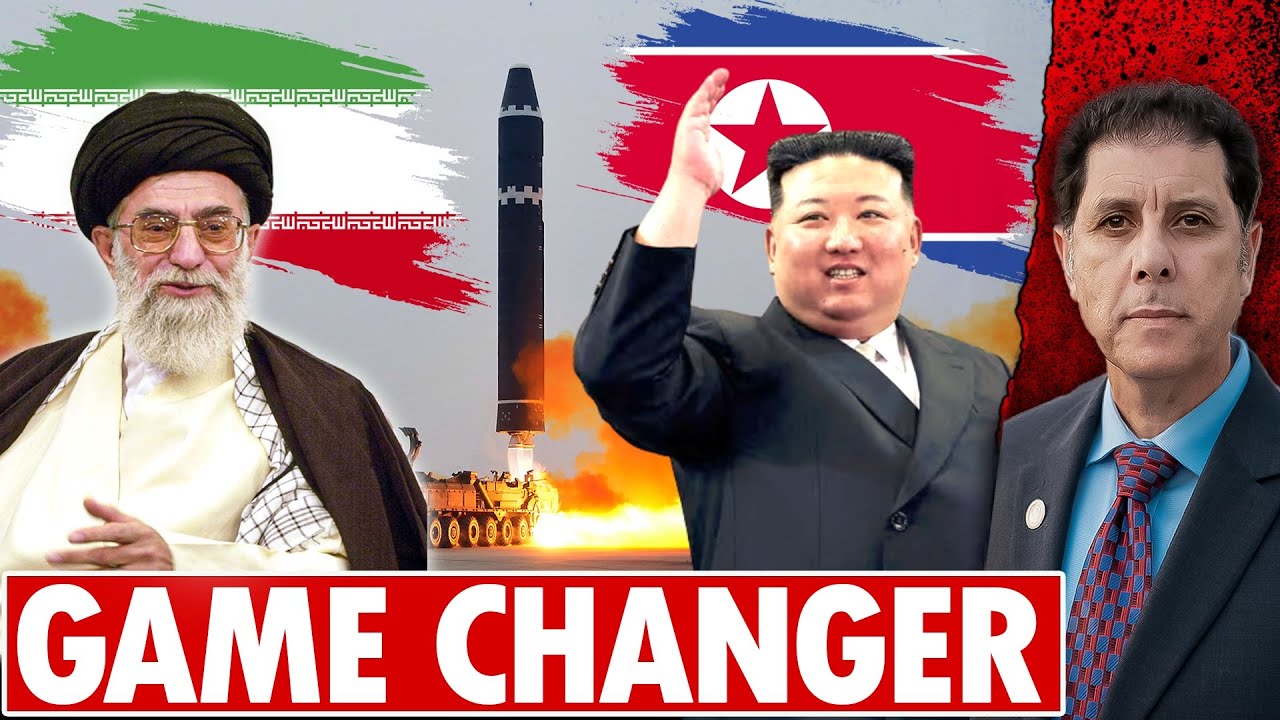
In this live‑stream, the host (Speaker A) provides a detailed, opinion‑driven analysis of North Korea’s recent public statement pledging military support to Iran. He situates the announcement within a broader, emerging alliance that could include Russia and China, arguing that this coalition would reshape the strategic balance in the Middle East, the Far East, and Africa. The discussion references a photographed meeting in Tehran between the North Korean ambassador Hang Sung‑So and Iran’s Islamic Coalition Party secretary‑general Muhammad Ali Amani, quoting their statements on self‑defence and condemnation of U.S. actions. The host links the alliance to deterrence theory, nuclear proliferation (citing North Korea’s NPT withdrawal and nuclear capabilities), and the proxy dynamics of the Houthis, Hezbollah, and Iran’s missile programmes. He critiques U.S. and Israeli policies, cites UN Charter articles, and presents a narrative that the alliance is a “game‑changer” that will force the United States and Israel to reconsider direct attacks on Iran. Throughout, he engages with a live chat, solicits audience opinions, promotes upcoming interviews (e.g., with Professor Anna Malandag), fundraising for an Asia trip, and sales of his books. The tone is conversational yet analytical, with a largely alarmist and critical sentiment toward Western policies and a supportive stance toward the emerging anti‑Western bloc.
Chapters
Hello everybody and welcome to Geopolitical Trends, where truth matters. I have an interesting topic for you for this analysis that I'm going to be doing for you this time around. Of course, I did post a note to the community, uh, I didn't want to disclose anything because I was working on confirming the information before I'll come on the air. So, North Korea, you know, am I surprised? No, I'm not. It's because we talked about this a few weeks ago when I mentioned to you, be on a lookout for the possibility of that alliance of Iran, North Korea, Russia, and China. So, and I'm going to be providing you my insights about all this and put it in perspective, uh, for the bigger picture, because there are a lot of moving parts that you need to be aware of. So, and that's not just limited to the West Asia or Middle East, but also extended all the way to two locations, one in Far East and one in Africa. And I'm gonna do videos for you on each one separately. So, but first, let's say hi to our wonderful community. Noel, good to see you, and much appreciate your continued support, Noel. I just want you to know how grateful I am. So thank you so much, uh, for that. So, uh, Rampos One, good to see you. UT, the super as always. Rafael, salut, bon weekend à toi aussi. So basically saying hi and good weekend to y'all. So Leanne, good to see you. Camila, uh, good to see you. Willie Holman, as always. Farid Amal, good to see you. Muhammad Mazaruddin, as always. Uh, AF Gondos, good to see you. Salam to you as well. So, all right guys, I'm gonna have to go in here because I got a lot to cover and I don't want you to miss any. Uh, just one thing, uh, as a housekeeping item, remember to join me tomorrow for my conversation with Professor Anna Malandag. There is something major going on in the Philippines. So to my Filipino viewers, make sure to tune in tomorrow at about 10 PM, uh, Manila time. So I'll be, uh, I'm gonna put the link for you guys in the chat box, and I will see you about this tomorrow. So, uh, as I said, uh, North Korea, you know, how we gonna be looking at this now moving forward? It's not a small matter, mark my word on this. It's because First of all, North Korea does not bluff and will not bluff. But when you think about the statements, and I'm going to be providing you a picture of the meeting that took place inside Tehran, that was one of the things I was working on also to make sure. And believe it or not, guys, I had to wake up at 3 o'clock in the morning, couldn't sleep. And the reason I couldn't sleep, and I'll share it with you, it's our community, it just— I was thinking about the possible scenarios. What could happen. And I really couldn't sleep at all. It took me about an hour and a half before I fall back asleep. And I try to play that in my head ahead of time, just thinking. It's because for North Korea to announce they're gonna enter the fight if and when the United States and Israel violate the ceasefire. So makes you just wonder, first of all, why North Korea will issue a statement like that. Is it because they know that both the US and Israel will not honor their commitments? Is this also, do you know, because of what the US has a tendency of doing, is going back on its word? And third, is this statement because of what the US is preparing in the East? And that is one of the things I will be talking about tomorrow with Professor Anna Malendog. And I am going to do something also special for our community on Monday. So I'm not going to disclose— there are sometimes certain things I just don't want to disclose till time comes in. So suffice it to say for now is that the announcement by North Korea is a game changer. So because when North Korea stating that it stands ready to support Iran, that's not a nice setting, a subtle way of saying we're gonna fight alongside with Iran against the US and, and Israel. And as a matter of fact, North Korea has already issued some very fiery statements about Israel. So I'm not going to get into that here. Suffice it to, uh, focus on what this means, what this means from a geopolitical perspective and from a security aspect. You know, mind you that what North Korea described, that the attacks by both the US and Israel on Iran, you know, as a proof of the worldliness of the international standards. Is very interesting that coming from North Korea to be issuing this up. And here is one thing I'm going to share a link with you pertaining to the international law, uh, to this particular aspect. You guys don't have to read it if you don't want to, but this is for later on if you want to educate yourself about this, but I'm going to share a paragraph with you from these particular statements or report. Here is what says in Article 1 about the prohibition of the use of force under international law, especially Article 2 Section 4 of the UN Charter. It says, and I quote, Article 2 Section 4 of the UN Charter enshrines the obligation of all members to refrain from the threat or use of force against the territorial integrity or political independence of any state. The International Court of Justice considers the prohibition on the use of force under Article 2, Section 4 of the UN Charter to constitute both an obligation under customary international law and what it has characterized as a cornerstone of the UN, of the United Nations, shatters, end of quote. And, and just to highlight to you the importance that it was clear and evident, at least I speak for my country, I'm not going to talk about Israel because that's a different perspective. I'll talk about my own country for how he violated the law, international law that is. And this is where I found it very, very interesting that North Korea is stating this aspect first instead of stating force, use of force. Because remember, remember what North Korea is saying. We, and I quote, "We stand strongly by Iran." So the word "stand strongly," it's a subtle way in reference to force. It's because what North Korea is going to bring to the table, it's a major firepower. That the— I don't think so. And I'm gonna say it straightforward, I don't think so Israel will survive even with this support of the US, because North Koreans not gonna bluff. And we saw what happened with the Houthis, which I'm gonna talk about too in, in a second here. So, so here is what took place and why I didn't want to disclose information yesterday, because it was a meeting taking place in Tehran at the North Korean Embassy inside Tehran. So, and the meeting— and I have a picture here, there it is. This, uh, was taken as of July 10th, which was yesterday. So, and what you see on the Iranian side is Muhammad Ali Amani, he's the Secretary General of Iran Islamic Coalition Party, and the North Korean Ambassador Hang Sung So, but here is what Hong Song said, which praising Iran's recent operation against Israeli aggression, end of quote. So what I found also interesting about the statements of the ambassador, North Korean ambassador, is that, uh, uh, North Korea sort of expressed its unwavering support for Iran legitimate right to self-defense. Once again, guys, the wording is measured. This is what I always, always, always wanted to get you to understand. You know, it can go both ways. Like what we do, we play with words, you know, that's to manipulate the message. But on the other hand, something like this that is legit and true and factual, the wording is precise and Pacific. So North Korea praised Iran's recent operations against Israel. It's straightforward as to the violation of the international law, but also the support of Iran for self-defense. So now here is the thing about all this. The response from the Iranian side was that they commended North Korea's stance while emphasizing the unity of the regional resistance front, which is, by the way, as a geopolitical analyst, the way I look at it and why Iran will, will be wording it this way is because this regional resistance front will be considered as a key to ensuring security in West Asia. Yeah, you're looking at two tracks here. You're looking at the geopolitical aspect and you're looking at the security aspects of it. So, and this is where, to me, the, the, the entrance of North Korea into the fray, into the fight per se, is gonna now put the question mark on the United States and Israel. And what do I mean by this? The US and Israel now, they're gonna have to think twice about attacking Iran. That's one. Second, all the recent statements coming out of Netanyahu in Washington when he was there, what, 3 days ago, all of them hinted at the direction of, I wanted to reach a peace with Hamas, I wanted to reach peace with the Houthis, and I want to reach a peace or agreement with Iran. So all this didn't happen in a vacuum. It's also, once again, my conviction, my understanding is that both the United States and Israel understand what North Korea is going to bring to the table as far as firepower. So this is why I'm saying it's a game changer. There is no other way of looking at it. There is one aspect I need you to think about this from behind the scenes. Could this be coordinated with both Russia and China? What do you think? Because remember, North Korea is client of both Russia and China, but is also a good, uh, uh, uh, partner or friend or whatever term you want to use with Iran. So the timing of the statements of the North Korean, is it because of the behind the scenes coordination with Russia and China? Yes or no? Let me just see your answer in the chat box. No. Uh, heck, you say yep. Uh, Ferme, you say definitely yes. Uh, Francisco, Francis Tango, you say I don't think North Korea wants to cooperate with war. Uh, why is that, Francis? It's because if they are not willing to get into a fight, they would have not stated this. So that, that's just my opinion, and I respect your, your insights, uh, uh, for this. Damascus, you say yes. Ramples of One, what is the question? The question was, was Russia and China behind the scenes coordinating with North Korea to move forward with this public statements? In other words, for North Korea to get in into this, it was coordinated with Russia and China. So Javier Carter, or Cater, you say yes indeed. Tatu, Vendi, you say yes. Uh, oh, I missed this one. I wanted to share it with the community here. So, uh, the Nobel nitpicker, North Korea is the real MVP in all this. You know, you know what, you got a point there. It's because that's why I said it last time. I said, Mike, my word, North Korea will be part of this alliance should this move forward. It's because it's now or never. And this is why I am thinking personally now both the US and Israel will have to think now twice And because again, the firepower North Korea is going to bring to the table is within reach also, in addition to what Iran has regarding the US installations in West Asia or Middle East, that is. As for, for Israel, it is— to me, I look at it, it will be destroyed. And that is why you see, you know, reverse in policy. There is one thing you have to know about geopolitics is that it's not constant. You know, sometimes the changes in events will force you to change your position. It doesn't mean you are flip-flopping. No, no, no, no, no. It's just you have to accommodate or go with what the recent trend is regarding the reality on the ground. And the reality on the ground that I see looking over the horizon is that if this will move that direction. As far as the US and Israel attacking Iran again, North Korea is gonna intervene militarily with Iran. You know, I am sure Russia and China will do something behind the scenes, but if they are to go through North Korea, it will be okay. Because remember, there's one thing that has not been disclosed openly, is that it was Russia that provided the targets to to the Houthis. Because remember, the Russians have their own so-called satellite systems where they can pick up the targets. Remember that Houthis are not doing this out of thin air. And that's my arguments here. So you have to keep that in— you have to keep that in mind. So, and this, when you have now the, the thinking, this is what North Korea is now expressing, which I am a little bit surprised as to the public statements, when it's, when it's stating, stating that resistance is the only path to secure the rights of the people of Iran, Korea, Palestine, and other regional nations, end of quote. So, and what I found also interesting, the statement by Amani, the Iranian representative in this meeting, when he said that uh, uh, this alliance which comprises of Iran, North Korea, Russia, and China could shape— could shape a new world order, you know, which exactly what I argued before. Because you're looking now at the transformation of the global order moving from a unipolar to a multipolar. We are having a hard time in Washington accepting this reality. But it won't matter whether we accept it or not. The world is moving on, and that shift is taking— has already taken place. This is why you're seeing the ill-conceived policies of the United States. Those are not strategies. This is just reactionary policies. So, and this is why now the way you have to look at this with the presence of North Korea or the entrance of North Korea into this particular, uh, fray, if I may use the term, is the idea of— what you'll be looking at is the idea of the level of deterrence. This is one of the keys, because Iran doesn't have that one yet. North Korea does, whether it's just missiles or even the bomb. That is why, remember what the statements of the, uh, Russian president— I think it was the president or, uh, uh, Sergey Lavrov, I couldn't remember. And please, if you do remember, share with the community. When he stated, one of them stated that there are countries willing to provide a nuclear weapon to Iran. Is this one of them? So because now you're looking at a changing in the, the balance of power, you're looking at changes in the deterrence power that is arising from this cooperation. And why? It's because with the statement of North Korea, it will guarantee the ceasefire, because Iran— I'm sorry, Israel and the United States will have to think twice. The US, we already are retreating. We don't want to get involved. We saw what happened with, with the Houthis. We saw what Iran's message when they attack Al Udeid base in Qatar, you know, you know. And this is why I am saying, I'm saying you have to put this within the bigger picture. And that bigger picture is that the entrance of North Korea is gonna tilt the balance of power now and makes it even playing field. Israel and US will have to think twice. And that's why the representative of Iran stated, and I quote, Today, Iran is the defensive barrier of Eastern civilizations against Western expansionism, and if this barrier collapses, the storm will head eastward, end of quote. And that's what he warned. It was very clear message that it's now or never, otherwise it's going to become a serious problem. Liking this video so far? Don't just be a watcher. Go ahead and hit the like, share, and subscribe button. And don't forget to tap the bell so you will not miss any of my videos or live streams. This way, you will be supporting a channel that stands for the truth and objective reporting. The choice is yours. Thanks for your support. And yes, I do appreciate your support, so please hit that like button and subscribe and share the video with others. So now let's go back to— again, I, I have to, because I, I read the statements, that's why I spent time looking for the information, because I want to get you something that is worth your time, you know. Ambassador Han, who is the ambassador of North Korea, you know, he also referenced to something very interesting. Wasn't about the military cooperation, because remember, Iran's missile technology is from North Korea, FYI. Uh, the Russians have helped to a degree, uh, but mainly— pardon me— mainly is North Korea. But he didn't refer to that. He didn't reference to this one. He referred to the historical cooperation between Tehran and Pyongyang under sanctions and pressure, because both of— both countries are sanctioned by the US. And this is where I found his statements important. Here is what he said, and I quote: We have stood— we have stood by the Iranian people since the start of the Zionist aggression against Iran. The West cannot be trusted and is always seeking to undermine the sovereignty of independent Eastern countries. End of quote. Remember, he didn't say independent of global country or world or whatever. He specifically talked about Eastern countries because Europe is already under the thumb of US. You know, we already know that. And moving forward, he want to hit an issue again, another statement, even though they did it before, is that he condemned the US attack on Iran peaceful nuclear facilities which were, by the way, under IAEA supervision. And that, as I shared at the beginning, is proof of the worthlessness of the international standards. So that, that, that's to me, it's, it's as clear as it gets. So now you put this in perspective and you add the, uh, uh, where is the picture? I thought I had a picture here. Oh, sorry, I'm gonna upload it here. Quickly. Thanks for your patience, guys. There we go. And, and you already saw this because I put it into the community, but you have to bring this into the conversation. And this one has to do with the statements by the US that's trying to put a spin into this, you know. Of course, what has been— what has been— what has not been disclosed as of yesterday or the day before after Sunday, because that's when Sunday, that's when the Houthis launched the, uh, missile into, uh, Israel. So is that Yemen Houthis fire at Israel airport once again aimed search for Red Sea ship crew because Israel wanted to do this one. So, so 4 sailors from the Eternity Sea, uh, were, were, were dead and 10 of them were found live. 11 of them still missing and 6 believed to be in Houthi's hand. In other words, they are, they're hostage with the Houthis. So now here's the thing, that's why the Houthis try to fire or strike once again Ben Gurion Airport after— here is the key— after the sinking of the two vessels in the Red Sea this week because it started on Sunday and it followed by Monday. Two ships, remember, the, uh, it was the Greek ship that had Liberian flag, and the second one was the— was it Majestic Seas? That's the one. So, and all this is because the Houthi is now ramping up the military pressure, as you know. And this is why I'm saying try to see this development and add North Korea's factor to, to that. And because that's what Sari said, we moved to— as by the way, by the way, by the way, which the, the, uh, excuse me, which media didn't disclose Do you guys know that the Houthis had moved to rescue a number of the ship's crew and provide them with medical care and transport them to a safe location? Of course they're gonna hold them, but they're gonna have to take care of that, and they did. They're not gonna lie about this, you know. I, as again, I, I've, I've been around long enough, especially during my trips to Yemen and all that. And I know for a fact how the group operates and thinks. They don't— they don't— they're not gonna lie. They're not gonna just issue these statements. So, and this is why the US Embassy in Sana'a— Sana'a, the capital of Yemen— countered this argument. And where did they counter that? Did they counter it on a really public press, uh, the, the White House press, uh, uh, room? No. Deeper statements on X accusing, accusing Houthis of kidnapping, uh, the, the crew members and killing the shipmates, so sinking their ship and hampering rescue efforts. What a lie! That's what the Trump administration is doing. And those usually, it's a clear indication of the failure of how much we don't have a strategy in place, how much we don't know what to do, how much we we're just reacting to events as they happen, as they happen. So, because the attack, the attack on the Eternity Sea, the ship that is, you know, came one day after the Houthis struck and sank the Magic Seas ship, which is the picture and the clip that I shared with you yesterday, the day before. So And that's to highlight to you the idea. Of course, the, the, some of the crews were rescued. So, and that's when Israel on Sunday launched an attack bombing the ports of Hudaydah. I, I found the exact location here, guys, just to share it with you. Let me see if you can see it clearly. Yeah, those are the locations: the Salif Port, Ras Aissa Port, and Hudaydah Port. Those are the locations, uh, where the, uh, the Israelis targeted the, uh, the ports on Sunday. So, so Ras Issa, uh, Salif, uh, as well as Ras Kantib. Kantib. Those are some— suffice it to say, one another piece of information that a lot of people did not know. Is that the, you know, that the Houthis have been holding members, uh, 25 crew members of the Galaxy for 430 days before they released them on January this year, 2025. So this is what I'm saying. And of course, it goes without saying, they are not disclosing. They in Tel Aviv and in Washington, and of course Western Europeans are, are, are useless anyway. Excuse me. What they are not disclosing is the massive destruction that already happened inside Israel. So I'm going to share a picture with you here. This is inside Israel, inside Tel Aviv, I believe so. And, uh, uh, I, I remember I had the— I don't know where I put the link for, uh, this one. Anyway, I look for it later on. I just saved the picture. This is from— this is the firefighters inspecting the site struck by an Iranian missile that killed several people. So I just wanted to— this way, you know, and you know, I have to show you what is going on. Of course, you reach your own conclusions, decisions. And that is where this importance of North Korea's entrance into this makes perfect sense now, that the deterrence The US now will have to think twice. Israel, Israel of course cannot do anything on its own. That I know for a fact. There is no way Israel will do anything on its own. Because we already retreated from supporting Israel against the Houthis. You know, it's almost like they're left by themselves now. You know, are they gonna handle three fronts? Uh, the Hezbollah front, which is not activated anyway at this time. So you have Hezbollah, Houthis, Iran, and now you add North Korea to the mix. There is no way. There is no way. That's why I feel comfortable stating the word a game changer, because it is on all levels. And North Korea will want to do this because they want it also to prevent the US from moving eastward. And you will know why tomorrow when I have my conversation with Professor Anna Malendog, and on Monday because of specific topic that I am going to be doing for you. I already lined up what I'm going to be covering, and I'm going to be reaching out to some people that I know to confirm certain aspects. Now, with all this in mind, you have to think also in terms of, of, uh, of what North Korea brings to the table with all this. So, so I'm going to share, uh, one excerpt, if you allow me, from my Iran book. And I think there is another one from my Russia book to put a perspective, because I addressed the Iran aspects from— on both books. So, so history shows us, uh, that the political turbulence that followed the collapse of the Soviet Union, as the United States failed to lead the international community on its own— consider, for example, the genocide in Rwanda that took place, in which a paralyzed US failed to intervene. Note the failed state in Somalia, which demonstrated the US inability to engage in guerrilla warfare. Observe North Korea's ability to acquire nuclear weapons, which showed a lack of US political influence over nations that could proliferate nuclear technology. Recon the 9/11 attacks, which brought about a militarized foreign policy. Witness the invasion of Iraq, which demonstrated a lack of credibility in the US. Contemplate the rise of China, which underlines the shift of wealth from the West to the East. Mark the civil war in Syria, which demonstrated a US ill-defined and weak foreign policy. And lastly, behold the conquests of, uh, of the Islamic State, which shows a lack of US understanding that the Islamic State dilemma requires an ideological solution rather than a military approach. To simplify the issue, we shall consider Iran's nuclear dossier under three models of behavior namely the North Korean model, the Libyan model, and the Japanese model. So before going any further, one must briefly shed light on the three models Iran may have pursued in the event negotiations with P5+1 failed. And it was the reason why I wanted to disclose this. Excuse me. And the reason for that, guys— excuse me— the reason for that is that if North Korea moving forward with its entrance into this, that means North Korea is willing now to move forward with the nuclear aspects of it, should Iran decide to move that direction. Well, we already know Iran already made the first step. With, uh, uh, uh, what's the word, stopping any cooperation with IAEA. It's the same step that North Korea did. That's how they kicked out the, uh, the, the IAEA, because you can't trust the IAEA. As a matter of fact, I am starting to be convinced that maybe the IAEA, the one that provides the names and locations of scientists. So I just can't trust them. I know this for a fact. So, and this is why, if we go back into history, you go back to March, and I was really aware of this one, March of 1993. This is when North Korea exercised its right to withdraw from NPT. Do you know that you have a right to, uh, to, uh, exit the, the IAEA if you don't want to? So, and that's why, why North Korea at that time embarked on a policy of defiance and went ahead and sort of declared its intention to enrich plutonium at a military-grade level. Like I always say, guys, think about it today. Can we threaten North Korea, or any country for that matter? No, but especially us. It's us who that, that do this kind of stuff. Other countries won't go about like this. And this is why, uh, just to, to support my own claim for regarding this one, this is why North Korea declared both its intention to produce nuclear bomb and its capability of the Windsor, so leaving no room for doubts. And that's what I'm starting to lean towards, the entrance of North Korea in into the Iran front will not only be on the military front but also will be on the technological aspect as far as nuclear weapon production. That's the only way I see it. So, so, because when— and again, I use history as my guide and I go back to this era because I, I was aware of it and I did the research on it when I wrote the books and so forth. And when I think back about it I was always asking the question, why would North Korea do that? Because, meaning declaring openly its intention to produce nuclear weapon and its capability of doing so. So what wasn't clear to me at that time is that whether Western intelligence agency can account accurately for how many nuclear bombs that North Korea possesses. And that's something still under argument. Western intelligence— sorry guys, I, I'm— I forgot this one. Uh, North Korea, uh, Western intelligence couldn't— we have no idea, you know. Of course, you know, later on we kind of get an idea of how many nuclear warheads they have. So, and this is why the— this ignorance on part of the Western intelligence is attributed to two main factors. First, which is as clear as daylight. The Western intelligence cannot infiltrate North Korea to get firsthand knowledge of what North Korea has. And second, North Korea's leadership, tight control over population prevent any foreign contact. And this is not a surprise. Even when you go on a trip, the trips are sort of the directed by the government and so on. It's their country, uh, who am I to judge them? They didn't harm me here. Why will I dislike them? Why will I— no, I won't. I got nothing against them. And I, you know, it's just, just the way it is. So, and this is why makes more sense to me, for me personally, to start to think in terms of finally, is Iran reaching that point of saying, you know what, we we've had it. We try to compromise, we try to negotiate, we try to reason with the West, but each time we've been played out. Well, you blame yourself in this case. And that is why in the case or the model of North Korea, when they withdrew from the NPT, rendering any means, any means of control unavailable, because IAEA controlling the process. All he needs to do is issue a report that says, oh no, Iran is, is, uh, is enriching uranium at a high level. That's all it takes. Rafael Grossi, the head of the IAEA, is as corrupted as it gets. The whole entity is corrupted. So, and that is why— here is the key, and I had a chance to read it— when you read the articles within the treaty So that's the one that may have contributed to the North Korea justification for withdrawal, you know, because you look at Article, uh, I think Article 10, if I'm not mistaken, uh, which one of the NPTs provide, and I put this in quote, a right to withdraw from the treaty if the withdrawing party decides that extraordinary events related to the subject matter of this treaty have jeopardized the sup— the supreme interest of its country. So, and of course, there is one more thing also, is that it also requires that withdrawing state party gives 3 months notice. And that is why I am leaning more and more towards realizing that the entrance of North Korea, it's to reshape the trajectory of Iran's nuclear path. And then again, who know? I'm not inside, inside, I'm not part of that. So maybe they reach that consensus and decide to go forward with this, because you can't, you can't trust the West. Yeah, that's, that's, it's— I'm not telling you something you guys do not know. That, that, that's just the norm. So, and, uh, and when you think about, uh, the idea of, uh— and, and again, for North Korea, uh, they have experience with Americans. That is why they can't trust it. That's exactly what I wrote in my Russia book, and I, and I, and I'm going to share the excerpt with you here. Recall my reference to America's unilateral decisions to withdraw from the Iran nuclear agreement. I am convinced that North Korea's leader Kim Jong-un has factored in, prior to his two meetings with Trump in Singapore and Vietnam respectively, that he, Kim, does not and will not trust Trump no matter what the latter says or promises. Trump's decision to withdraw from the Iran agreement testifies to Kim's thinking. US withdrawal from agreements and treaties, bilateral or otherwise, shows Trump's inconsistencies. Countries around the world, including North Korea, are convinced that trusting the United States is a liability moving forward. They must be asking, how can we trust the United States, which says one thing then does another? Sparrow. Because that's, that's logical reasoning, that's logical thinking, you know. And that is why I am seeing now Uh, uh, like I always say, consider yourself lucky to be alive to witness the history in the making, because you are taking part of this history. Just think about it that way. And all this, I'm already ahead of this because I argue this way back, that what if Iran end up going there? So that means we're gonna have to learn to live with a nuclear Iran. So, because that's the only other alternative for American ill-conceived foreign policy establishment. That's all it has at its disposal is to learn— excuse me— is to learn to live with an armed nuclear Iran as it does with Pakistan, India, and North Korea. You know, under no circumstances, guys, under no circumstances Am I simplifying this? Do we use the term dangerous alternative? Uh, you know, it's gonna alter the history, it's gonna alter the geopolitical and the security landscapes in the region and beyond, you know. So under no circumstances I'm simplifying this. No, it's just I'm being pragmatic here in questioning what else does the US can do against Iran. Which by the way— excuse me— which by the way survived harsh sanctions for over 30-plus years. So despite all these restrictions imposed upon it, it was able to influence the outcome, meaning Iran. So, and regardless, yeah, regardless how much we keep saying, oh, Iran is a pariah, it continue to be, and all that, Iran continues to march forward. And all that is the idea of strengthening its military defenses, influencing the region, because it's the major player in the region. Are you going to think about Saudi Arabia as a regional player? They're pathetic. Are you going to think of— who else you going to think about? Turkey? What, Turkey? Just an ally of, uh, a member of NATO, but it's just being used because of geographical location. What does Turkey have to contribute to NATO besides the geographical location? Heck, we couldn't even— Erdoğan is almost begging for F-35s, and we're saying, 'No, we're going to think about it.' This is what I'm saying. So for Iran, it continued to march forward, expanding that influence in a region that is known also for its shifting loyalties. And allegiances. That is one thing about West Asia and Middle East that you need to understand. And this leads me to, I think, my last point here, and I'll see if there's any, uh, Super Sticker question I will answer for you guys. And I'm going to share screen with you, but first I need to show you a picture here. And this is not a classified, by the way, and this is from the Defense Intelligence Agency, DIA. So I familiar with them. We used to do some work with them as well and all that stuff. So what am I showing you here, guys, uh, about the Houthis? Because I have to go back to the Houthis factor here, because the Houthis is the wild card. Uh, North Korea's entrance into this fray now, it only makes it even bigger. But the Houthis are the wild card. Why is this? Because when you go back and look at the dates here, guys, 2017. This is when the Houthis start to grow their UAV, the unmanned aerial vehicles, of course with the support of Iran. But look at the radius, and all this ties also to the missiles. Look how far— look what the Shahed, uh, uh, uh, uh, 136 can reach, 2,500 kilometers. Look where Israel is. Right there on the Samad, which is about 1,800 kilometers. So makes you just wonder, everything is within reach. And that's my point. And I'm gonna share a screen with you guys, uh, that, uh, and again, it's not classified. I'm able to share this one with you. All right, share screen. There we go. DIA. Where is DIA? Right there. So, and I'm just briefly gonna go, go through the slides here just to show you a few things, you know, why the Houthis— and this one was released on February 24th. So, and again, I'm, I'm— all I want to share with you guys is some pictures to highlight few key ideas that you need to understand. And all this has been on development since 2014. And what happened in 2014? You all know Saudi Arabia, with the help of America and Germany and France and Britain and all that, were attacked. The Houthis were attacked. 6 other Arab countries have contributed to that fight in, in, in Yemen against the Houthis. Yeah, 6 Arab countries. I had the list. I think I did share it with you guys. What a shame on the Arab countries, and yet they call themselves Muslims. So anyway, that's a conversation for another day. But suffice it to say that when you look at this one here, guys, you look at the developments of the range of the Houthis, how far they can go. It's no secret that Iran is providing the, the training, the funding, and and so forth. But at the same time is the capabilities that's now gonna really— this is why I'm saying the entrance of North Korea into the scene, it's not a good sign for Israel. We're talking about massive destruction of the Jewish state, and I can go with that. That means the— that means, uh, and again, where my big concern is, and I'm gonna share this with you because I like to have your input, if you can just leave it in the comments, whatever. Will Israel, uh, sort of, uh, uh, uh, uh, move into using its nuclear weapon if it sees its massive destruction? Yes or no in the chat box. Let me see. Will Israel end up deploying its nuclear weapon if it became clear that is going to be defeated. All right, I'm gonna, I'm gonna check this later on because there is a delay here, so I have to keep going here. So, so this is the idea. When you look at the, the, the, uh, the exhibits of this military hardware, you know, those are not small, small items here. We're looking at some advanced stuff here. So And this is why I'm going to stop this one here, guys. Uh, this is why you have to think in terms— what are all these means? How this is now going to shape that trajectory of what's going on with, with the, the entrance now of, of North Korea? So that's the way. Uh, oh, Priest of Hiroshima, you say yes. Uh, Bamboo, you say yes. Humayun, you say yes. Abdullah Farouk, you say no. The West, uh, was the, uh, Francis Tango was the question. The question is, if, if it became clear that Israel will be destroyed, will it, will it deploy the nuclear weapon against Iran? So Cambridge Business, you say no. Uh, uh, Gio, he say anything is possible. Uh, Sergeant D is US nuke to Japan. Yeah, yeah, it's, it's, it's give and take. It's, it's gonna be— because remember, uh, if there is— to me, the way I look at it, if you reach this point, there will be a massive destruction and Israel might not have a chance to even, uh, have the opportunity to deploy its nuclear. And that's the way I read it. And again, I am not trying to just simplify all this, but if North Korea used its military hardware, we looking at a massive— in addition to what the Houthis have, you know, remember the Houthis also possess and what Iran has. And as I said earlier, the, the Hezbollah front is not being activated yet. So all this hints at different, different dynamics, and that is something I wanted to get ahead of it by sharing this brief analysis with you to give you an idea as to what lies ahead moving forward. So now that North Korea officially and publicly disclosed their support for Iran. And again, I do find it interesting for the timing that both China and, and, and Russia might have worked behind the scenes with North Korea. So that's the only way I see it. So, all right guys, let me say thank you to some of you once again. Noel, I truly appreciate you, man, for your continued support for the channel. I'm very, very, very grateful to you. Uh, Fred Ball, I did a scenario analysis because that's what we do as analysts. Let's say the Zionists do succeed in the, in the cleansing, what happened next? Meaning, what are the consequences? Shame on my country, Morocco, by the way. Well, Morocco has its own reasons for doing what it's doing. I, I'm sure you guys saw my, uh, post yesterday about some minister or something in the government talking about the, uh, we have to fight for, uh, uh, corruption in Africa, whatever. And I put, well, let's start with the prime minister first. I don't know if you guys know what the prime minister did. I don't understand why the king doesn't step in and say to the guy, wait a minute, why are you doing what you're doing? Because that's a bribe, that's corruption, that's— but again, it's, uh, no, I see your point, Fred. I understand your arguments here. So And then not just Morocco, majority of Arab states are useless. They are, they can't, they just can't because they are under the thumb of, because now this is where these dynamics are changing. And when you have a country like North Korea, which we can't, we, the United States, can't threaten North Korea because we know what they're gonna do. We can, we can just wave our fingers and the Arab state will cave in. That's usually how it is. But with North Korea, we can't do that. We couldn't do it with the Houthis. We couldn't do it with Iran. So, and that is why, so what's, what's gonna be happen next is that now you're gonna be either seeing that ceasefire will hold, and at the same time, Iran will have to rebuild its air defense capabilities. And I will not be surprised that they will move forward with the nuclear deterrence as the only way. I see it. So, Rafael, as always, man, greatly appreciate your kind and generosity, kind support and generosity. So, uh, give a big up to China for starting to take charge, uh, and the lead now. I believe China realizes that Putin is shell-shocked. It was time to take over. Many, many, many thanks for your Super Sticker and the comment. And you highlight a key that I need, uh, to share with the community because I have a link, uh, that is very, very important. I wanted to share with you guys, if I get to it. Uh, hold on a second. And I really saved it for you guys. And that is, by the way, will be one of the key topics I am going to be talking about, uh, on Monday. I'm not going to detail, uh, the, the, the specificity of it But, uh, so let me start it here. Let me share screen. Share screen. Okay, there we go. And, and by the way, I got this one on my Twitter feed. Uh, there are some people follow me there, they send it to me. Uh, this one was from Defense Intelligence. So take a listen here, guys. And I give the credit of soundtrack to the Defense Ministry of China because that's their, their stuff. So anyway, take a look— or take a listen, I'm sorry. What's important about this, guys, is that the, uh, the China's DF-5B can deliver 3 to 4— yeah, 3 to 4 I'm sorry, let me get picture. 3 to 4 megatons of warheads. You know, this is almost over 200 times the power of Hiroshima. And what is scary about this is the range, and the range of it is about 12,000 kilometers. So this This is why on Monday, guys, make sure to be here on, uh, on the live stream if you want to learn about this. Tomorrow when I talk to Professor Anna Malandat, I will be talking only on one aspect of this, but on Monday I'm going to detail this one. And this is why, once again, you have to put it in perspective why North Korea announced its involvement now with Iran. So So once again, thank you, Rafael, for this, and I'm glad you mentioned this one because I almost forgot. So Francis Tango, as always, hi, Dr. O. I think Iran has the wrong president for war. What do you think, Dr. O? And is it true that Israel gets B-2 and the associated items from the US? First of all, thank you very much, Francis. There's a lot of conversation regarding the Masoud, uh, the president of, uh, of, uh, of Iran. Now, not everybody in Iran is a fan of this guy. Why? You have to go back to his ethnicity. He's an Azeri. So if you know the history of the Azeris and the Persians back then, and, and I'm not going to get into that, it's a long one. What makes it worse for him is the statement when he stated that he is willing to— he's considering renegotiating with the US. Of course, it's not his final decision. The final decision is for Ali Khamenei, the Supreme Leader. That's the person that makes the final decisions. But the fact that a president will even entertain such an idea, that is what makes him maybe the wrong president for the wrong time. So what Iran needs now, Iran needs to show strength, and they are showing that. But with the president issuing this kind of statements, because the US now is counting on restarting negotiations with Iran again, if I were advising the Iranian government, I see there will be a strategic mistake for you to even consider entering into negotiations with Americans again. Why would you trust them after what they did in 2018? What makes you think they won't do it again? And once again, I am looking at the big picture. The entrance of North Korea into this, it gives me an indication that what they are moving— is going to be moving forward— is towards that nuclear attack. So, and why not, you know, Pakistan? Look at Pakistan. Can we threaten Pakistan? No. And by the way, Pakistan is working now on an ICBM after we sanctioned aluminum. Why is this important? Because aluminum is very crucial for the ICBM missiles. So that's why it's inter— it's important for you to, uh, be here on Monday, guys, to, uh, uh, take a look at what I'm going to be talking about on, on, on Monday. Army with Harmony, many thanks for your continued support. Will Iran, North Korea strike preemptively? No, in my opinion, they won't. They, they won't. Because remember, uh, and, and despite what we all been sort of surprised at the role of Russia, which had none But don't, don't, don't discount Russians behind the scenes because Russians can provide and they are providing intelligence targets for the Houthis. So I don't see why not they won't do that for Iran. And Iran has more capabilities than the Houthis. But preemptively, I, I don't see that because what North Korea stated is if the, the, the ceasefire is violated, in that case, then it will— gloves off. And yeah, in that scenario, I won't be surprised. And it behooves— and it will be better for Iran to get on it ASAP before it's too late. And as to the B-2 for Israel, no, they didn't get any of that, not to my knowledge, because remember, those B-2s stays on US soil. You know, this is different than, uh, some other type of, uh, planes like what we have in Al Udeid and Turkey and all that stuff. That's— I'm not gonna— so, uh, that's why I'm thinking it's unlikely. That's the way I see it. So, uh, all right guys, I want to share with you updates about the upcoming trip, and I have a picture for— because I updated the fundraising. Here we are, because we were at $1,500 and something, uh, we are almost at 50%. So I'm, I'm grateful to those who've already donated for the— in support of the Asia trip. That's where we are. I am hoping to achieve this literally, literally, uh, before the end of, uh, by the second week of August. So we have about almost a month, uh, about 35 days. So I will greatly appreciate if you could support the Asia trip if you decide to. Here's the link for that, and I'm gonna put it for you in, uh, in the chat box. And to those who've already bought me coffee for in support of the channel, I'm very, very grateful to you for that. So And here is the one for the channel. So I'm going to put it for you in the chat box. I'm going to show it to you first here and share it in the chat box for— and the last one I'm going to share with you, it has to do with the books. Should you be interested in, uh, buying a copy of my book just go to this site here, uh, and you know, guys, I am not— didn't forget about my upcoming book regarding Russia. So I didn't forget— I'm sorry, regarding China. So, so it just, uh, there is a lot of, a lot of moving parts that— here we go. So, and I'm very, very grateful for all your support, guys. So thank you very much, first of all, for keeping this conversation civil. I'm very grateful to you for that. Uh, you need to bring a moderator for the channel. Many in here just turning the chat into trash. Okay, do you know a name? Yeah, because I, you know, I can't do everything by myself. So now if you guys know, uh, if you know the name, just, just say it here and I'll remove Okay, chat box. Where is chat box? Yeah, it is just— there's so many moving parts that I have to focus if I am to get you guys the accurate information. Uh, it's— yes, and I'm gonna be— I'm, I'm gonna look into that. I'm gonna look into a moderator for this one here. So anyway, uh, so So anyway, guys, so I'm gonna sign off here because I have to go work on some other stuff for you for, uh, for next week. But remember to join me tomorrow for my conversation with Professor Anna Malendocq. As always, remember, geopolitics impacts your daily life in more ways than one. Till next time, guys, bye-bye.
More from David


Beyond the Single Actor: Why the Gulf Isn't Choosing Between the US and China


Iran, Iraq's Militias, and the Houthis Are Coordinating! This Changes Everything




Who Controls the Next Decade's Resources? Latin America and Africa's Geopolitical Crossroads

The Chokepoint Trap: How Washington's Stupidity Triggered a Cascade That Now Controls the World

Trump Spooked as IRGC Unveiled dual-use SLV, Deployed Ghadir Mini-Subs & Hinted at Tactical Nukes!
