Not Letting Up: Houthis Fired Zulfiqar Ballistic Missile at Israel! Geopolitical Trends
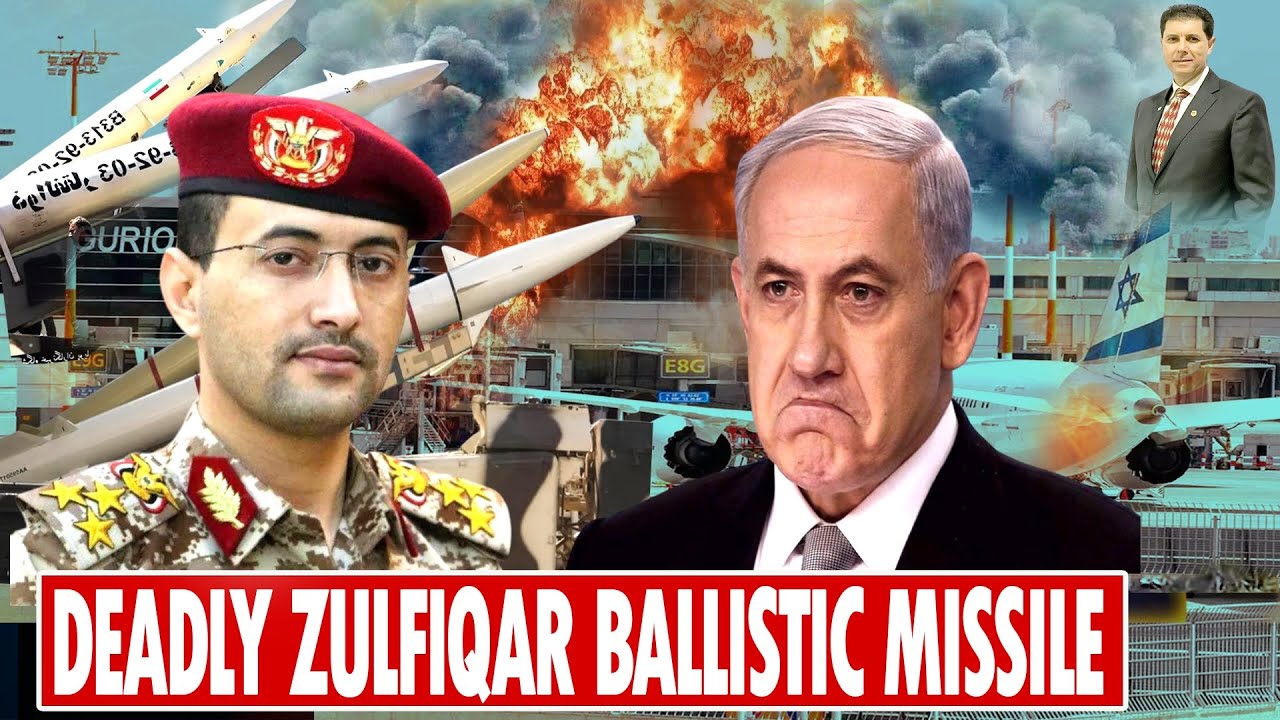
In this livestream‑style commentary, the host (David Oualaalou) examines the recent launch of an Iranian‑origin Zulfiqar short‑range ballistic missile by Yemen’s Houthi/Ansarullah movement against Israel, focusing on the temporary shutdown of Ben Gurion Airport and the broader campaign of over 60 missiles and 15 drones since March 2024. He presents translated statements from Yemeni military spokesperson Yahya Saria, which frame the attacks as retaliation for Israeli actions in Gaza and a call for Arab and Muslim solidarity. The host critiques the limited coverage by mainstream media, highlighting partial reporting by Israeli correspondent Emmanuel Fabian and the under‑reporting of missile impacts. He details the economic fallout from the Houthi attacks on the Red Sea, especially the permanent closure of Israel’s Eilat port, citing Israeli officials such as MP Oded Forer and financial data on port revenues. Throughout, he denounces what he perceives as hypocrisy and inaction among Arab states, contrasts their response with the Houthis’ consistent stance, and situates the events within a wider regional context involving Iran, Hezbollah, Syria, EU sanctions, and upcoming interviews on related topics. The video concludes with acknowledgments to supporters, a preview of future content, and a reminder of the geopolitical relevance to everyday life.
Chapters
Hello everybody and welcome to Geopolitical Trends, where truth matters. Excited to be with you on this Saturday. Uh, what's today, the 19th, I think? 18th? 19th? No, 19th. Well, July is almost over. So anyway, very, very excited to be with you based on your request for me to address the recent firing of the ballistic missiles by Ansarullah, aka also known as Houthis, uh, on Israel. I decided to do the analysis for you. So this is what I'm going to be covering today, is providing you, uh, my own assessments, my analysis about this development, and place it for you within the bigger picture of what is going on in that part of the world. Uh, first of all, I want to say thank you to MRO Lavon The Zulfiqar, thank you so much for your super sticker. Uh, Zulfiqar, which is a Persian term for— in Arabic as well— missile is an Iranian road-mobile single-stage solid-propelled SRBM named after Zulfiqar, the sword of Ali ibn Abi Talib. Yeah, to those who understand the Arab, uh, the, uh, the, uh, the Arabic history of, uh, Ali ibn Talib used to be, uh, back during the days of of the Prophet Muhammad. So thank you so much, MRO. And I will be, uh, uh, sharing some pictures of the ballistic missiles with you as part of this conversation. So, uh, well, let's see who is here. So you guys, all of you here. So, uh, Hong Luan, good to see you. History Discovery, good to see you. Uncle Sam, good to see you. Uh, uh, Say it like it is, good to see you. Marco W, good to see you. Francis Tango, as always. So, and Bakandi Hussein from Tanzania, good to have you here, good to have you here. Speaking of Africa, guys, I will be doing another update about Africa, what's going on with the DRC, the Congo, also what just took place in Somalia regarding another air strikes by the US, which by the way, they were about, to my knowledge, about 50, give or take, 50 strikes on Somalia since the beginning of the year. So, so of course nothing is get covered, but I might do updates for you. All right guys, let's get into our topic. Before I'll do this, I have some housekeeping items for you I want to share with you. Remember to join me on Monday for my conversation with my friend Jayant Bhandari. We will be talking about India. Yeah, there is a lot going on. Looks like, uh, and I feel comfortable saying this, looks like India is holding the end of the stick regarding three main issues. So which what I will address with my guest on Monday. Also, uh, be on a lookout, which I am in the works of scheduling that my interview with Dr. Yan Lian. She's been here on the channel before, so she will be here in due time to address for us really some understandings regarding the financial aspects and the global economic picture. So, so be on the lookout for that soon, and I will let you guys know when that thing is set up. So, all right, let's talk about Ansarullah aka Houthis, and the firing of Zolfaqar ballistic missile into Ben Gurion. Let me show you some pictures here. Uh, this is one that has been fired already, and I have a picture of the images. Now, Zolfaqar are Iranian-based, but there is a long history into this, uh, uh, uh, parts of the conversation which I will get into towards the end. For now, suffice it to focus on exactly why is this important to understand. Well, like I, I put on the title of my, uh, of this video here, I said, uh, not letting up. Another word, Ansarullah or Houthis are not letting up. They don't care what— as long as Israel does not stop its atrocities regarding, uh, the people in Gaza, they're gonna maintain. They meaning the Houthis or Ansarullah, they're going to maintain the launching of ballistic. And by the way, the reason they launched the ballistic missiles was in response to what took place with Israel 4 days ago when they launched a bombing or something in Gaza. So that is the reason why they reacted. And of course, the atrocities that we have seen, uh, it's kind of reaching a point where Enough is enough. I mean, I saw this picture here, guys, and, and I was like, just, just didn't have words for it. I, I just couldn't. It was, it was one of those really, uh, it was really heartbreaking because you think about it. I mean, that could be you, that could be your mom, your dad, your child, your cousin, your whatever. I mean, it's almost to the point of, have we lost, you know, sense of being human. I mean, how much, how much anger, how much hatred you can carry towards someone? And, and I just don't get it. So when you see something like this, it, it really hits home. And if it doesn't, well, then something is wrong. Sorry. Anyway, the idea of the Zolfakar ballistic missiles that, uh, the Houthis launched at Ben Gurion, and that, as I said, was in response to Israel's recent bombardments in Gaza. That was the picture that I showed you right here. And yeah, to me it was like, okay, Where are the voices of reason within not only, uh, the West and so forth, and even within the Arab, uh, and the Muslim world? Yeah, I combine all, you know. And there is one thing that I need you to understand, is that Ansarullah was successful in shutting down Ben Gurion Airport. It didn't— wasn't shut permanently like the Eilat port, which I will talk about later on, which is now officially— it shut down. The Ben Gurion shut down for few hours. Well, that's enough when you shut down the main airports in the country, in, in, in, in, in Israel. So this is exactly why Ansarullah decided to launch this missile towards Ben Gurion Airport in Israel. Of course, the Israelis said that they intercepted the missile. I can verify the accuracy of that statements. But as precaution for this incoming, uh, missiles from, uh, uh, uh, uh, Yemen, Ben Gurion Airport, International Airport, was temporarily halted. Well, it wasn't halted because of precautions, it was halted because probably the damage that it caused. So let's just not confuse the viewers as to what really happened here. So So, and that is why, for example, when you think about, uh, the flights that were coming in, they all diverted these flights. As a matter of fact, some airlines have now stopped flying to Israel. So some aircraft were delayed over the Mediterranean Sea. You look at— I, I looked at some flights, by the way, guys, Jordanian from Jordan A Jordan— a Royal Jordanian flight en route to Amman was also delayed in the air as it planned to transit through Israeli skies. That's why I always say what the Arabs say in Jordan and Saudi Arabia, United Arab Emirates, Bahrain, Kuwait, Qatar, Egypt, you name them, all of them, put them all in one basket, and I call that basket a basket of hypocrisy, incompetency, That's what I will call that. I had a chance to read an article by Emmanuel Fabian, and I'm gonna share with you a picture and tell you who he is. This is a picture of Emmanuel Fabian. He's known as Manny inside Israel. Manny is, uh, he writes for the Times of Israel military. He's the military correspondent. So, okay, and again, want to jump into conclusions, guys. Let's not do that. Except that when I read the article, of course he mentioned about what happened, but he, but he refrained from disclosing what else happened with the firing of the missile because it wasn't just the missile that was launched. There were other types of weapons that were used, and I'm gonna disclose that. Suffice it to say, this, uh, uh, this, uh, correspondent, uh, which is his, the Times of Israel's military correspondent, mentioned that the IDF, the Israeli Defense Force, intercepted the missile launched from Yemen. Once again, how many times we heard this before? And I'm taking you back to the previous incidents in which, in which the Houthis launched missiles and they have penetrated and landed in Tel Aviv, landed in some residential areas. The same thing happened with the Iranian missiles, and of course the media wasn't disclosing the truth. So when he wrote that no injuries, no report of injuries from the attack happened and so forth, uh, and of course naming them, meaning the Houthis, naming them as Iran-backed rebels, that tells me right there, uh, this guy is not being objective. You know, I might disagree with, with him and all that, which is disagreement, is nothing wrong with it. But at least call things for what they are. Houthis or Ansarullah is no more a rebel group. It is a force to be reckoned with. Look what they did to Israel, and that's the only force that is beside Iran what have caused to Israel. Where are the other Arabs, pathetic countries? What have they done? Nothing. So for me to be calling them just rebels That just doesn't make sense. But in any way, we'll, we'll keep our conversation, uh, moving on here. So, so this ballistic missiles which was launched on Wednesday, by the way, evening, which means Thursday morning, uh, our time here, or Thursday morning their time, even Wednesday evening our time here. So, and the, uh, sort of Zulfaqar ballistic missile Here is the— here is what, what has not been disclosed. What I found very interesting is that Zulfaqar ballistic missiles, in addition to drones, were, were used, which was around. And this is statements by none other than Yahya Saria. Yahya Saria, Major General, the spokesperson of the Yemeni military, was about 150 kilometers away from where the projectile sets off sirens. And I'm going to show you clips later on as we move forward. So now you need to understand that since March, uh, March of this year, of course, March 20th, somewhere around that time, that's when, uh, the Israeli Defense Force resumed its offensive against sort of Hamas in Gaza Strip. But that was during the same time also when Ansarullah in Yemen have launched more than 60 ballistic missiles and at least 15 drones that have been launched at Israel. So this is what I'm getting, like, perplexed as to why certain articles disclose only portion of the story but not the whole story for us to form our own or reach our own conclusions. That's what we call cherry picking. So, so of course in his article he argued that several of the missiles have fallen short. Well, of course he's not going to disclose that locations where residential areas have been hit. So, and that's again where I get very, uh, for me to protect our community from this misleading, uh, statements by minimizing the truth, or limiting the truth, if I may use the term. So when he will say— when he says that, oh, the Israeli defense systems have intercepted the missiles, come on, man, how much can you lie? So, so, but let me share with you a clip from Be Yahya Sariya. He's the spokesperson of the, uh, the, uh, of Ansarullah. So, all right, hold on a second, guys. Let me share this one with you, then I'll do a translation briefly because it's a sort of not a long, but he was speaking so fast and I, and I have to make sure you are getting the accurate translation. So So let me share the screen. It's right here, I have it. All right, hold on. So I'll make the screen bigger for you. And as you said, uh, right there, uh, what it stated there in Arabic at the top, this is Bayan. Uh, it stated, it said, not in English. The— this is the statements of the Yemeni Armed Forces that carried out, uh, an operation. So take a listen quickly here, and I'll do the translation for you guys. And he's starting, by the way, he's starting with the verse of the Quran, and I'm just going to move forward. Basically, in support of the injustice against the Palestinians and in response to— in response to the aggressions committed by the enemy, Israel in this case, in Gaza. Basically what he's saying in this, the Yemeni Armed Forces, uh, have carried out a qualitative military operation targeting Lod Airport, which is known as, of course, Ben Gurion Airport in the occupied Java region, or Haifa. Okay, let's continue here. And they conducted it with a hypersonic ballistic missile. It's, uh, the type of missile he mentioned is Palestine 2, a hypersonic, uh, uh, a hypersonic ballistic missile. And he succeeded in reaching its target. That's exactly what he's saying. This is why I get very confused when I read articles stating part of the story but not the whole story. So, and, and, and to me, that's to me misleading. If you don't say the whole story, don't say it at all. You can't just be cherry-picking here. Let's continue on this one here, guys. What he's saying basically is that this particular, uh, uh, operation successfully achieved its goals thanks to thank to God, and caused millions of herds of usurping Zionists to rush to shelters. That's exactly what he's saying. And this last word was an airport— and a halt to airport traffic. So In here, he transitioned to start now making a call to the Arab and Muslim world. And here's what he's saying, and I'm translating here, guys. If I'm off, my, my apologies. He said, and I quote here, we call on all Arabs and Islamic nations to come out in support of our brothers in Gaza. What he's saying here is that, uh, basically when he calls on the Muslim, uh, uh, and Arab and Muslim nations to come out in support of the brothers in Gaza because their pain has intensified, their fear has increased and they are under an unjust siege that will not end, and a sin— and that will not end, and a sinful aggression that will not cease. What he's saying here, guys, is that if you do not want to sort of fight for your religion, fight for your Arabism. And if you don't want to fight for this Arabism, fight for your human side or your humanity. Because the enemy, the aggressor, if he succeed in implementing his project in Gaza, the next one will be on you sooner or later. And that's it, guys. I'm going to stop it right there because he was just, uh, basically, uh, stating Uh, just calling God will help and so forth. My point, my point is, and, and to me, as I always say, I know some might think I am like just being this picky about the Arab leaders. No, they are incompetent, they are hypocrites, and they are pathetic to the point now who's standing up for these people in Gaza. And like I said earlier, guys, when I see this picture, I kind of choke on, you know, it's kind of hard to see something like this. You see an elderly person, you know, once again, that could be your mom, that could be your grandma, that could be your aunt or whomever, you know. It just— where is that the human side of some of these pathetic leaders? They can step forward. Tell me if any of those Arab countries took step forward and said, you know what, enough is enough. None, none across the board, none. Take only the Houthis, Haram Saleh, and take Iran for that. Because when it matters, leadership matters in this kind of situations. It's not about just taking a photo op with so-and-so and so-and-so. And that's usually what the pathetic Arab leaders are. I don't hold back because it's the truth, and I'm not going to be cherry-picking, oh, this country is nice, whatever. I don't give a damn, I don't care. Pardon my language here, but it needs to be said what needs to be said. And this is why there is one last thing I forgot to share with you. In that, uh, clip, he said is that, uh, he stressed the idea that, uh, Ansarullah will continue its operations against Israel targets until the aggression on the Gaza Strip stops and the siege is lifted. That's exactly what he was arguing. And, and here is the— what's important to understand is that this is not new. This is exactly what they have been saying since, since day one. It shows you the consistency. They are not flip-flopping like the Saudis, like the Jordanians, like Egypt, Bahrain, Kuwait, Qatar, you name them, you know. And even countries in Morocco, Algeria— I don't know Algeria, you don't hear much about it, you know. Uh, Libya is a mess anyway. Tunisia, you kind of— is a mess also. But when you think about those so-called Arab countries, where are they? None. So, and this is why it makes more sense, uh, to understand Why this is happening? Why Ansarullah have been launching some sort of repeatedly firing those projectiles and at, at different areas? So the missiles on— remember, remember, after March 18th, they've launched over 60 ballistic missiles, and at least according to my research at least, and I will provide you the link to all this, 15 drones at Israel. So that, that tells the story right there. The other thing is, uh, I don't know if— oh yeah, I need to share this once again. Let me share again because I forgot to tell you, is the same, uh, uh, on the same, uh, video there's other two other videos that I need to share with you. One of them is right here, guys, and just take a listen here. Basically what it says right there, Safarat al-Indar to Dawi fi Mustawtanat al-Khalifah. Basically sirens, uh, going off, uh, uh, near the, uh, uh, sort of, uh, after the launching of a Yemeni, uh, uh, missile. That's, that's, that's what it was. So I wanted just to share this with you here. And of course, it brings to the fourth the question— and no, let me go to talk about the port, not the airport, the port of, uh, uh, Hila. Then I'll go back and talk about Zulfaqar missiles because you need to know few things. So excuse me. Now when you think about the, uh, the, uh, statements by Yahya Sareh also reference to the idea of the drone strikes targeting the military, the Israeli military. This is in a different one because I read the entire report in Arabic language, targeting the Israeli military sites in the Negev, okay, and Eilat Port. And this is once again what I found the author of the article, the earlier article only mentioned partial information regarding what took place. So what I'm gonna do, guys, is I'm gonna play a clip for you. I'll do the translation, then I'll do my own reporting on this one here. Let me share the screen once again, and I do simultaneous translation for you as we move forward. So this way you can, uh, and I'll be stopping it and move forward. So, all right, let's take a listen here. The Channel 12, the Israeli Channel 12, stated that the port of Eilat, that the port of Eilat will officially close permanently starting on Sunday, and all its commercial activities will stop till further notice. And this is because of the continuous targeting of Houthis on the port. Targeting of the Houthis on the ships, on the Red Sea. And this comes against the backdrop of the increase in security tensions regarding the maritime traffic at the port. And that's it right there. So basically, I want you guys to hear it directly from, uh, the individual. So now let me talk about really how this came about. And this is why the Israelis now shutting down, uh, Eilat Port, uh, because here is what they're saying— it's over unpaid debt. Well, yeah, there is logic into that. I'm not denying that is not the case. Because some employees have not been paid. But why is that? Is because of Ansarullah or the Houthis attacks. And this is why sources inside from the administrative office of the port mentioned to the Israeli media that the closure, here's the key, will symbolize a victory for the Houthis and a loss for the Israeli economy. Now think about it this, and I'm gonna repeat this. This is what the sources at the Hila port told the Israeli media, is that the closure, the closure rather of the port will symbolize, and I put this in quote, will symbolize a victory for the Houthis and a loss for the Israeli economy, end of quote. And that just the Houthis were able to do this. Once again, where is the pathetic Arab world? So I just keep going back to that because I, I don't know, it just to me, I, I don't do well with hypocrisy. I can't stand it. I'd rather you tell me to my face than play those kind of games. So here's the thing, the operations at the port now will halt, as that, uh, anchor mentioned on Sunday after failing to pay its debt following steep— this is the key— steep drop in revenues caused by the Houthis' attack in the Red Sea. Not just on the port itself, we're talking about the entire Red Sea. And this is why, if you recall last time I asked you during the, the, uh, the survey whether you want me address this topic or the Chinese using laser on the German plane. You know what that German plane was doing? That was a recon plane. Wasn't a tra— wasn't a commercial. It was a recon German plane in the Red Sea. So why will a recon German plane be hovering on the Red Sea? And by the way, when the Chinese used the laser, guess where that plane went? It went to Djibouti. So I just wanted to put that out there for you. So, so the Israeli business and economics newspaper— there is a newspaper there called the, the Kalkalist. This Kalkalist, and I read up a little bit on them, I don't read a lot of their stuff, but you know, so I can, I can, uh, uh, uh, sort of reach a conclusion because I didn't read enough of their material to form my own opinion, uh, but they reported Yesterday, or, or Thursday, I'm sorry, on Thursday, that the Eilat municipality had frozen the port's bank accounts amounting to approximately 10 million shekels, which is about $3 million. Why? Because unpaid taxes. That is exactly what happened with that particular, uh, uh, uh, port. So, and that in itself lead you to question where this is going, because the port not able to receive now any shipping whatsoever. And that is why it's going to be shut down permanently, or as they say, till further notice. Of course they will reopen it. Who knows? Who knows? Maybe a year from now. We don't— I don't know. I can't speculate on this. But what you need to understand is that this port, which is considered— by the way, I have a picture for you guys. Yeah, right there. This port. What you need to understand is that Eilat Port's income in 2024 you know, plunged to just 42 million shekels, to $12.5 million. That's what happened in 2024, nearly down 80% from 212 million shekels, or $63 million, in 2023. Why is this? Because what the Ansarullah did in the Red Sea by warning any ship that will deal— that does business with Israel. And that after the shipping was diverted to the Mediterranean port of Ashdod and Haifa. But those are nothing in comparison to Eilat. And this is why, once again, we go back to that statement that was disclosed by an Israeli official, Israeli official at the port. Is saying that this closure symbolize once again a victory for the Houthis and a loss for the Israeli economy. So of course we all know Ansarullah— I don't think so, D— and that's to me, and again, as one who spent time in Yemen on a different capacity, but at least understand where the Houthis or Ansarullah stand on certain issues, they don't tend to lie. They will have no reason to lie. That's why, uh, when I hear statements from them, of course I'll verify it. Don't get me wrong, I'll verify. But every time I verified their information, it was accurate. And that is why when they said at the beginning, when Israel begins attacking in Gaza. This is why Ansarullah said we will stop or target any ship destined for Israel in the Red Sea region. And this is part of our standing up for what's taking place in Gaza against the aggression. So, and just to— guys, don't want to shock you, but just to keep you informed. Did you know how many Israel has killed, uh, since the beginning? At least 58,000 Palestinians, and more than 140,000 were wounded, and most of them were children and women. And this is not according to me, this is according to international charity Save the Children. As many as now 21,000 children are estimated to be missing. And once again, I do find it very hard when I see a picture like this. So here is a statement from, uh, Oded Forer. Oded Forer is an Israeli MP from the right wing Israel, B'Tin Tov Party. It's not known, but it is influential inside Israel. Here is what he told Middle East Eye, which is the equivalency of an institute or a think tank. He stated, and I quote, that the port closure was a badge of shame for the government of Israel. End of quote. Let me repeat this. This is what Oded Forer stated: the port closure, meaning Elah port closure, was a badge of shame for the government of Israel. So, and by the way, uh, according to this gentleman Forer, who heads now the Knesset Committee for the Strengthening and Development of the Negev and Galilee, that the government has not— meaning Israeli government— has not been able to remove the threat to the shipping routes to Eilat, so that in practice, basically, the southern trade gateway of the State of Israel is suffocated. End of quote. That's his word. And once again, bring to forth what Ansarullah were able to achieve. Shutting down traffic in Ben Gurion, even though temporarily. Like I always say, guys, context matters. The fact that major global airlines rerouting their flights or stopping the flight together, and as a matter of fact, the Houthis or Ansarullah did mention, we will hold the air traffic in, in Ben Gurion. And they succeeded in doing that. And Ben Gurion is an international airport, one of the major airports in Israel. So, and the fact they were able to do that in Ben Gurion, but also shutting down Iran, and that comes through the use of their missiles, the drones, and what have you. And again, that, that's to me, it just brings to the fore the, the fundamental questions. And that fundamental question is, did Israel bite more than it could chew? And, and I'm starting to see the answer. I think they did. So, and as a matter of fact, inside Israel they were talking, this gentleman, Forer, He was stating for the record that for months he was warning the government about the collapse of the port because the Israeli government wasn't able to defeat Ansarullah or the Houthis. I mean, he said it a few months ago, and now it's becoming very, very clear. And this is why, as every day that passes now, the damage that is being caused to both the economy in Israel and even the security and sovereignty of Israel. This is why I think again Israel dig— Israel dug a deep hole for itself. It will be very hard to get out of it now because what the Houthis or Ansarullah have demonstrated. You know, the— I'm not talking about the pathetic Arab states anyway. So, uh, just to remind you guys, the idea of the port, the equivalency, because you see in cars over there, in 2023 there were about 150,000 cars. That's the image you see right there. And by the way, I give credit to that picture to Mr. Ahmed Sharabli from the AFP, Associated Free Press, or French Press, either or. 150,000 cars as of 2023. So, and this is why those cars are parked in the port of the southern Israel city of Eilat, near the border with Egypt. That's what it was. So they were unloaded and 134 ships docked in that port as of 2023. In 2024, no cars were unloaded and the number of ships docking there dropped to 64 from 134. And this is according to the data coming from the Israeli Ministry of Transportation. They couldn't lie about this one. They couldn't lie about this because it's evident, it's clear. You, uh, you know, I remember when I was in Hong Kong, uh, and I went to this tall building, I went to the top, and I could see the port of Hong Kong. You could see how many cranes, and you could see, uh, the, the, uh, the, uh, the merchandise, whatever was transported there. You could see it because you can't hide something like this. You can't, you can't hide 150,000 vehicles if they are, uh, on the dock here at the port. And that's why in 2024 there were no cars when unloaded. So, and as of May 2025, we're talking only what, uh, with July, June, uh, and April and May, 4 months ago, only 6 6 ships dock at the port during the entire year. And I won't be surprised if maybe one of those docks belongs to either Turkey or Egypt for the gas. Remember, Egypt still doing business with, uh, with Israel. Turkey is still doing business, uh, even United Arab Emirates, you know, they all of them. So And this is why the last year— the last month, I'm sorry, last month in June, the Israeli cabinet approved about 15 million shekels, which should be $4.5 million, as a grant for the port to cover the debt accumulated. But they couldn't. They couldn't. So that is why they are throwing the, the, the, the the port under the bus. Yeah, so, so the financial losses based on what the Houthis have achieved. Now, all this— and I'll finish with this one here, guys— all this has to do with the timing of other events taking place. First of all, the EU is threatening Iran with the reimpose— or reinstatements, I'm sorry, of the sanctions. Yeah, the EU. Are you going to trust the EU? But again, it behooves now Iran to really, really take step back. And enough of this Mr. Nice. I mean, unless they are incompetent, which I am not— I don't think so that term applies to them. But again, what I'm seeing is how much can you negotiate with the West? You know, all of a sudden EU now giving ultimatum to Iran if it doesn't reach, uh, uh, an agreement regarding its nuclear program by the end of this month, they could reinstate the sanctions. Well, what they don't understand, the EU, is that some of the Iranian missiles are within reach to Europe as well. And can you imagine if Iran will go on that side and Russia will go on the other side, given what Iran— what the EU is saying about we're gonna have to, uh, carve out Israel— uh, I'm sorry, we have to carve out, uh, Russia and all, which is stupid anyway to even say something like that. This is what the, uh, uh, second in command for the foreign policy in the EU saying, oh, we need to carve out Russia. That's the stupidity. So talking— the other aspect has to do with what's going on in Syria with, of course, the terrorist Zulani now is caught out of surprise. What he's gonna do? He's gonna have to serve the master. Why do you guys think we put him in charge there? After all, we were funding him back then. It's not a secret. So now you're gonna find out, especially after I explained to you yesterday, that what Israel is saying about protecting the Druze It just hypes. It's not. And I forget to show you a map yesterday. You look at where the Golan Heights— why is this important to the Israelis? And what Syria is going to do about it? Nothing. Nothing. Of course, you consider also what Turkey has in mind, but suffice it to say, you have to factor in what's going on in Syria. Then the third element, you have to factor in what Hezbollah just, uh, uh, mentioned this morning, that it will not disarm because the Lebanese government wanted Hezbollah— because we sent our envoy to Beirut to pressure the Lebanese government, uh, what's his name, uh, uh, Joseph Aoun, the president, uh, uh, Joseph Aoun, to pressure Hezbollah to disarm. It will be a strategic mistake If Hezbollah disarm, why do you think the Houthis are able to stand up right now? Because they never disarm, despite what Ali Abdullah Saleh was doing back then. I was in Yemen when he was alive. I met him on a military base, uh, at the time. I didn't talk to him, but he was standing close to— we kind of locked eye to eye, but I wasn't authorized to talk to the guy. Anyway, at the time it was that argument of, yeah, we need to disarm the Houthis. At the time Houthis knew better. Forget about it. And this is why you have to understand this dynamics as to what's going on with the Ansarullah launching the Zulfiqar missile. And that leads me to talk about Zulfiqar, which is originated back in Iran. Remember, it's the Iranian Zulfiqar missile. Is a short-range ballistic missile, with exactly what, uh, MOV, uh, stated when he put the Super Sticker. It's SRBM, which stands for a short-range ballistic missile, uh, and the reported range of it is about 430 miles, or the equivalency of 700 kilometers, you know. And it's— remember, here is the thing about Zulfiqar missile. It is part of the Fatah family of missiles and is known for one specific thing: solid fuel propulsion and ability to launch from trucks. This is one of the, uh, the important thing. Interesting enough is that some of the versions of that was used against ISIS in Syria. Well, who was in charge of ISIS at that time? None other than this guy right here. So that's what I'm saying, think of the big picture to understand the context of with the, with the Houthis launching, uh, the missiles at Ben Gurion, shutting down Ben Gurion at least temporarily, but also shutting down the Eilat port. And they are not going to stop. That's what they do. Anyway, guys, that's all I have to share with you. And, uh, uh, once again, I want to say thank you to, uh, oh yeah, Noel, must appreciate you as always for your continued support and really your generosity. I'm very, very grateful to you for that. Uh, uh, she knew me. Appreciate you, uh, appreciate your support. You wrote, Doug, it looks like Zelensky all of a sudden is begging Russia for talk. What's your thought, uh, brother? Uh, yeah, yeah, Russia shouldn't. It's, it's over. If I were advising Mr. Putin, I would have said, you know, you need to take care of this once for all, because you can be negotiating with the West because Zelensky is not in possession to make decisions. This is what a lot of people do not understand. He is not in position to make decisions. He can't, you know, and, and Russia cannot be staying on this forever. They have the means to do it, but, but it doesn't make any sense. Wipe out what's need to be wiped out. And I'm not again, I'm not in support of wars, by the way, but at the same time, sometimes you have to respond with force. That's the only way to do it. So thank you so much for your Super Sticker. Truly appreciate you for that. And once again, I want to say once again thank you to MRO Lavon for your Super Sticker. Truly appreciate you. All right guys, I wish you a good weekend. Uh, if you want to— by the way, if you want to support the channel, I will greatly appreciate it. Here is the link for that. And, uh, for those who are aware of my upcoming Asia trip, I will greatly appreciate if you can support the, uh, trip for that. Uh, enjoy your rest of your day, evening, uh, afternoon, whatever part of the world you're in. I look forward to Monday, our conversation with Jayant Bahandari. As always, remember, geopolitics impact your daily life in more ways than one. Till next time, guys. Bye-bye.
More from David


Beyond the Single Actor: Why the Gulf Isn't Choosing Between the US and China


Iran, Iraq's Militias, and the Houthis Are Coordinating! This Changes Everything




Who Controls the Next Decade's Resources? Latin America and Africa's Geopolitical Crossroads

The Chokepoint Trap: How Washington's Stupidity Triggered a Cascade That Now Controls the World

Trump Spooked as IRGC Unveiled dual-use SLV, Deployed Ghadir Mini-Subs & Hinted at Tactical Nukes!
