Nuclear Free World: Daydream or Reality? W/Melissa Parke
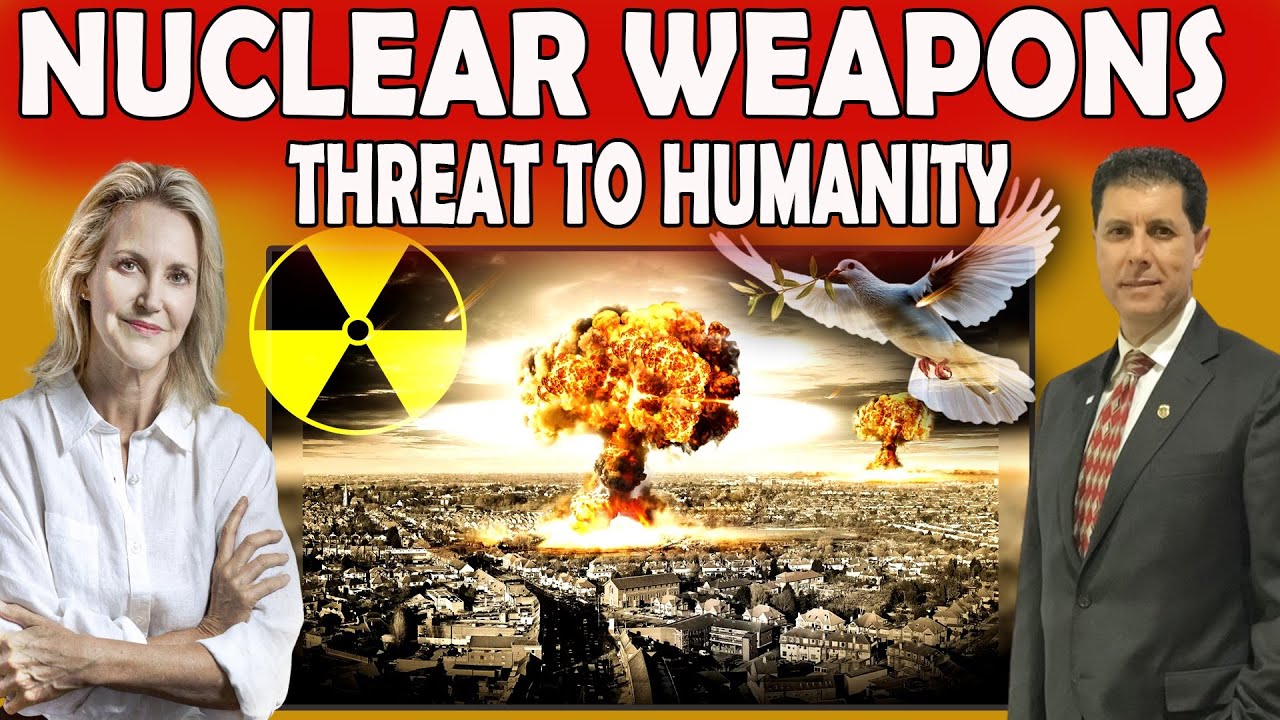
In this Geopolitical Trends interview, host David Oualaalou speaks with Melissa Parke, Executive Director of the International Campaign to Abolish Nuclear Weapons (ICAN) and former Australian MP. Parke outlines ICAN’s mission to achieve total nuclear abolition, recounts its history, Nobel Peace Prize win, and the 2017 Treaty on the Prohibition of Nuclear Weapons (TPNW). She explains the catastrophic humanitarian and climatic consequences of any nuclear use, citing Hiroshima, Nagasaki, the Trinity test, and the global climate‑impact of soot from a limited nuclear war. The conversation moves through regional case studies – the strong anti‑nuclear sentiment in Japan, the overlooked Korean hibakusha, and the rising nuclear anxiety in South Korea. Parke critiques the Non‑Proliferation Treaty’s double‑standard, referencing Israel, Iran, North Korea, and Pakistan, and argues that nuclear deterrence is a false security. She discusses the collapse of key arms‑control regimes (the INF Treaty and the impending expiration of New START), warning that without them the world faces unchecked arsenals and rising spending (US, China, Australia). The interview also covers the AUKUS submarine deal, European nuclear debates, and the need for political leadership. Parke ends with a hopeful call to action, urging civil‑society support for a nuclear‑free future and encouraging viewers to contribute to the cause.
Chapters
All right, hello everybody and welcome to Geopolitical Trends, where truth matters. Excited to be with you as always, uh, but I'm even more excited today because I have an interesting, interesting guest, uh, and I'm going to do the introduction and bring her in soon after. I'll talk to you about, uh, some housekeeping items. Remember to join me tomorrow, uh, for the live stream at I think 12 o'clock, that's set for the other channel, the Geopolitics and Money. And especially we're going to be addressing the recent visit of the foreign minister of China, Mr. Wang Yi, to India. So we got a lot to address on that. And on the 22nd, you all remember this picture, right? So, and I did promise you that I will be talking about one specific country that I've been following for the last year and a half regarding one specific aspect of its dealing with China. So I will be addressing that tomorrow. Make sure to join me tomorrow at 12— not tomorrow, on the 22nd. And on the 23rd, I will be having my conversation with Carl Zah regarding, you know, what's going on between the US and India when it comes down to the trade tensions. So, but for now, let's turn our attention as the world grapples with the threat of a nuclear war. The question that I believe everybody around the world is asking: can we really live in a nuclear-free world? And it's— I think it's, it's a logical question to ask. And this is why for this time I decided to reach out to Melissa Park, and, uh, she was kind enough to allocate time for us here. She's a busy lady, but she was kind enough to allocate time for us to share her insights regarding this. But first, to those who do not know her, who Melissa is, Melissa Park is the ICAN executive director. ICAN stands for International Campaign to Abolish Nuclear Weapons. So she took this role in September 2023. Melissa is also a former Australian Minister for International Development and a former member of the Parliament for the Australian Labor Party for Fermentall from 2007 to 2016. Prior to entering Parliament for the Australian Labor Party, Ms. Park, rather, served as an international lawyer with the United Nations in Kosovo, Gaza, New York, and Lebanon. More recently, she served as a member of the UN Group of Eminent Experts on Yemen. Very, very interesting background. Melissa holds two master's degrees, one master's law degree in public international law from Murdoch University, as well as a law degree from the University of New South Wales, uh, in, in Australia. So make sure to look at the full bio that I put in the description. So now let me bring in my guest. Hi, Melissa.
Hello, David, and hello to your Watchers.
Yeah, well, thank you so much for being here. We are very, very excited to have you here. The community from around the world, when I sent the message that we will be having you here, they got very, very excited, and we are honored to have you here. So I'm gonna start, Melissa, by asking just your, your brief view, if I may use the term, about ICON and its mission. So, uh, what does ICANN do and what has it achieved, or are there any challenges facing it right now?
That is a big question, and you want me to answer it briefly. Well, let me just start by noting that Einstein was once asked what would be the weapons of World War III. He said he didn't know. But that the weapons of World War IV would be sticks and stones. Nuclear weapons are the only devices ever created by humans that have the capacity to destroy all complex life on Earth. And for as long as nuclear weapons exist, they pose an existential threat to humanity for every moment. And so The latest science shows that even a limited nuclear war would not only kill millions of people out, outright through blast, burns, and radiation, but it would also have impacts on global climate through billions of tons of soot being ejected into the stratosphere where it would circle the globe blocking out sunlight. And causing agricultural collapse and the death of more than 2 billion people in a nuclear winter through starvation. A major nuclear war, say between the US and Russia, would really mean the end of human civilization and most other life forms. So it's an issue for the collective security of humanity and the planet and should not be dealt with as the national security prerogative of 9 countries in the world. And so very simply, ICAN's mission is the complete elimination of nuclear weapons, because we know that so long as any nuclear weapons remain anywhere, they are bound to be used, whether by design or by accident or miscalculation or unhinged leader or terrorist group or cyberattack. And I think the risk of use of nuclear weapons, which is very high, is only increased because of the increasing integration of artificial intelligence into military systems.
And we will delve deeper into, for example, some countries that are like my country here that is now sort of— I used to work in Washington, so I was very aware of sort of the strategic plans that we— down the road and one of the key concerns now that the US is about to embark on upgrading its nuclear arsenal. So we will talk about that later on. But, but just to continue on that, Melissa, has any progress been made in this endeavor, in your opinion?
Well, I think ICAN stands as a shining example of what collective global action can achieve. ICAN was started in Melbourne, Australia in 2007 by a small group of people sitting around a kitchen table asking themselves what they could do to rid the world of the world's worst weapons, given the failure of nuclear-armed states to disarm in accordance with their legal obligations under the Non-Proliferation Treaty. So they decided to start a campaign based on the earlier successful campaigns to to ban landmines and cluster munitions, and before that chemical and biological weapons. And the idea being that you ban these inhumane weapons and they become morally and legally unacceptable to use. And so ICAN started in 2007, as I said, and then within 10 years, it had become a global civil society movement made up of hundreds of partner organizations. And was based in— became headquartered in Geneva and won the Nobel Peace Prize in 2017 for its work to highlight the catastrophic humanitarian consequences of nuclear weapons and for helping to get a new UN treaty on the prohibition of nuclear weapons adopted at the United Nations in 2017, which has come into force in 2021. So the thing is that for decades the narrative around nuclear weapons had been controlled primarily by those who have them, and their message has been, "Oh, nuclear weapons provide stability and security through deterrence," and very abstract terms, very deliberately abstract terms. And ICAN and others involved, like the sympathetic member states, of the UN changed the conversation by focusing instead on what will happen if nuclear weapons, or when nuclear weapons are inevitably used. And they showed the real security of— real security impact of weapons by highlighting the incontrovertible evidence from Hiroshima and Nagasaki and from the more than 2,000 nuclear weapons detonations that have been carried out around the world by nuclear-armed states as so-called tests in places like Algeria, my home country of Australia, Kiribati, Kazakhstan, French Polynesia, the Marshall Islands, Nevada, and the list goes on. They, they, though, that evidence showed that nuclear weapons cause indiscriminate catastrophic harm to humans and the environment across long periods of time and and across vast distances. And this change of the conversation showed the difference in, you know, from the story that was being— that is being put about by nuclear armed states and their allies that nuclear weapons are somehow keeping us safe and showing— contrasting that with the reality of the evidence of what nuclear weapons actually do. And of course, that's been the focus of the last couple of weeks when I've just been in Japan and, and Korea talking with Japanese and Korean hibakusha who were the people exposed to those nuclear bombs in August 1945. And prior to that, I was in New Mexico for the 80th anniversary of the Trinity detonation, which also caused huge ongoing harm to communities and the environment in New Mexico. So the reason, you know, what we wanted to do by visiting these places is to show that, you know, these 80th anniversaries, what we're commemorating is not two historic isolated events that bear no relationship to today. But that this actually is— was the start— it was the start of 80 years of ongoing widespread catastrophic harm to people and the environment. And that together with the fact that at the moment the risk of use of nuclear weapons is higher than it has ever been. You know, we're in a situation where really arms control agreements have almost completely disappeared. I know you want to ask about that. Which means that, you know, the only way we can go forward now is complete elimination. And I think the Treaty on the Prohibition of Nuclear Weapons is the way to go. And half the countries of the world have already joined this treaty. More are set to join in the near future. That is, that means that the global majority is saying to the nuclear-armed states and their allies You do not have the right to put the rest of the world in this danger. You must disarm.
I'm glad you explained this one here, and you mentioned the Nakazaki in here, and Nakazaki, and I'm gonna get back to that. By the way, uh, guys, just to let you know, the images that I am sharing with you here on the screens, they all come from ICAN website, so I posted the link for you and it is worth your time if you want to take a look and take a read and read what's going on, on with the organizations, because the historical aspects of the nuclear weapon developments, that's where those images coming from, starting from all the way in 1942. ICAN did a great job, in my opinion, for laying out chronologically the developments of where things are. Uh, Melissa, you mentioned Nakazaki. You were in Japan recently, and you and I communicated offline. Of course, that's how I, uh, knew about that. Uh, did you have any conversation over there with the locals that are now seeing where the geopolitical landscape is? Because I got a word, uh, for me personally, that some entities in South Korea, they are considering developing a nuclear weapon. Why? As an alternative. They have the technical know-how They have the capabilities, but will they move forward with that? Since you attended the commemoration of the Hiroshima and Nagasaki bombing by the US in Japan, did you have any conversation with locals there, or politicians, that is, that might have a different approach to what's going on?
Well, certainly in Japan, and particularly in Hiroshima and Nagasaki, there are very strong feelings against nuclear weapons and the very strong feelings that the Japanese government should be supporting the Treaty on the Prohibition of Nuclear Weapons, which it currently is not doing. In fact, the mayors of Hiroshima and Nagasaki and the governors made very strong, very strong speeches on the days of those ceremonies where they talked about the folly of the theory of nuclear deterrence and the need for the world to look at elimination of nuclear weapons. Now, what's, what's not widely known is that around 10 to 20% of the victims of the bombings of Hiroshima and Nagasaki were Koreans, Koreans who were in Japan because they were— because Japan had colonized Korea and they were essentially forced labor or had migrated due to very hard economic conditions in Korea. And, and so they were impacted extremely hard and suffered even further harm because they, they were— those who survived were required to be involved in cleaning up Hiroshima and Nagasaki, picking up the dead bodies, burning them. Not being allowed to receive medical care because of the discrimination against Koreans. And so, and then they went, a lot of them went back to Korea and, you know, couldn't get medical, couldn't get medical assistance. And in fact, have only just, it's only been the last 10 years that the Japanese Supreme Court has allowed that Korean hibakusha who live in Korea can access medical support and are entitled to receive it. And so, you know, in Korea, the situation is very different from Japan where there's a very clear understanding about the danger of nuclear weapons and the need to eliminate them. In Korea, a lot of people are not aware of the story of the Korean hibakusha. Especially the younger generations, and they, they simply don't know, and they don't know about the catastrophic humanitarian impacts of nuclear weapons. That's something we're trying to change, but, and we hope that that will impact upon the, the, the public sentiment that seems to be going towards wanting nuclear weapons. We think it's because they don't really know the truth about nuclear weapons, and if we can help them see what nuclear weapons actually do, they may change their, their views. And, you know, I understand why they are concerned. I mean, they've got North Korea right there, and as well as other countries in the region with nuclear weapons, and it's a very human kind of fear. But the reality is that more nuclear weapons don't— do not make the world safer, do not make the world— do not make the region safer. Now, North Korea, any use of nuclear weapons by North Korea would be suicidal as well as genocidal. So, I mean, it may make North Korea feel better, but it's, in the end, they're not weapons that can actually be used, you know, if they want to go on afterwards. So the point is that, like with guns, you know, having more of them around is a recipe for annihilation. It's not, it doesn't make you more secure as, you know, as the lessons from the United States show very clearly. And it makes, you know, accidents and miscalculations all the more likely.
But there are those, Melissa, that argue the other direction by stating that, well, why should we allow only the United States, only the Russian Soviet Union or Russia, that is only certain countries to have that kind of sort of deterrence? Because they will be subject, meaning other countries will be subject to. Could it be that North Korea is coming from that angle and saying— because I'll be honest about this here, and I know this for a fact, because again, when I was working in Washington, we were aware of certain aspects. There will be no way we will threaten North Korea because we know what the response is going to be. So to some who argue Well, if we are to get rid of the nuclear weapon, we should get rid of it across the board. You won't allow any country whatsoever to have weapons, but I don't see my country embarking on this. And this leads me to my question about, are there any efforts in your opinion, and based on your conversation with government officials, that there are at least receptive to the idea of nuclear disarmament?
Okay, um, well, for a start, for as long as any country retains nuclear weapons and claims that they are essential to its security, other countries will want them. So possession of nuclear weapons is a direct encouragement to proliferation. And I mean, this has come about— this, uh, the Non-Proliferation Treaty created this sort of system of nuclear haves and have-nots. And it created a lingering sense of injustice among the nuclear— the non-nuclear weapons states, some of whom have said, well, we've all agreed that we will not acquire nuclear weapons in return for the nuclear weapons states agreeing to disarm. And they have not ever done that. And so they're not keeping their side of the bargain, you know, why should we? And I hear that. But I mean, our counter to that is that no one is safe with these weapons of total destruction. No one. They endanger everybody and everything we love. And so we all have a stake in this. And I think, you know, they're going to be used one day. That is a— if the risk of use is anything above zero, then it is a certainty that they will be used. And then that means the end of the planet, because, you know, the bombs that were used on Hiroshima and Nagasaki that killed a quarter of a million people, harmed many more, would today be described as tactical nuclear weapons. The, the biggest nuclear weapons test that was done by the United States was on the Marshall Islands. One of 67 tests, so-called tests, on the Marshall Islands. They were full-on nuclear bombs, and that would— they were the equivalent of one Hiroshima bomb every day for 20 years. So, um, the Treaty on the Prohibition of Nuclear Weapons is the, the pathway under international law for the elimination of nuclear weapons, and we know that at least 140 countries have expressed support for this treaty. In— apart from those half that have already joined the treaty, we've got 140 countries that regularly express support for it in General Assembly resolutions every year. So, we know that the vast majority of the world supports disarmament. Now, people say, "Well, you know, the nuclear armed states." The point about the nuclear armed states is they all point to each other as the reason that they have them, that we're just defending ourselves from that country or that country. Yeah, well, you know, it's a circular argument, a circular reasoning. Basically, they have to talk. And I think with Russia and the United States as the countries that have, um, 90% of the world's nuclear weapons are the ones who need to start this process, and the others will follow when they see the US and Russia making good faith efforts. And we know that it can be done because it's been done before. As you just showed the picture of Presidents Reagan and Gorbachev meeting in the late 1980s, they, they almost agreed to eliminate nuclear weapons altogether. They didn't quite get there, but they did— their talks led to massive reductions from what were there, 70,000 nuclear weapons in the late '80s. Now we have like around 12,000. 12,000 too many. Um, but still, I mean, that just shows you that, you know, humans built nuclear weapons and humans can dismantle them. All that's required is political will and leadership, because we had that leadership back then and we need that again now. Um, it's not a complex problem, it's a very simple one actually. It's, it's It's the lack of political leadership that is the issue. And we've seen some encouraging words from President Trump during his campaign, and then he's repeated them since he's been in office the second term, where he's talked about wanting to see denuclearization, wanting to talk to Russia and China about that. Saying that, you know, nuclear weapons— so much money is being wasted on nuclear weapons that could be spent on other things. I mean, it could be— it's like he was using ICAN's talking points. Yeah. But then, you know, and President Putin has also said that he's willing to enter into these talks. And so, I mean, you know, they haven't— they have yet to act on those words, but still, the very fact that they're talking about it, that they've raised the the issue is a glimmer of hope. And we are encouraging them with 3 Nobel Peace Prize-winning organizations wrote to Presidents Trump and Putin earlier this year, including ICAN, Nihon Hidankyo, last year's Peace Prize winners, and IPPNW, to urge them to meet and talk about nuclear disarmament and agree to eliminate nuclear weapons and to go one better than Reagan and Gorbachev. Appealing to their egos.
Yeah, that certainly, that will be the hope. I just understand that the dynamics, at least in Washington, as one who was inside, how things work, it's very, very, very, very complicated. I mean, I see the effort of your organization at least pushing the narrative towards the end of nuclear weapons. It just, it becomes like you are well articulated about the political will, and that is where it's going to be very, very, very challenging. So I want to go—
sorry, I just want to make the point that the nuclear-armed states and their allies often try to portray the Treaty on the Prohibition of Nuclear Weapons as the soft humanitarian approach that's not based on real security. But the fact is that talking about catastrophic humanitarian environmental consequences is very much security. Talking about the destruction of the economy, of the environment, of infrastructure, the death of millions of people through blasts, burns, and radiation, and billions of people through starvation and nuclear winter. That's very much security. And I think the more important question is, how realistic and sustainable is a security policy that is based on weapons, any use of which will be not only genocidal but also suicidal? And so that's why the TPNW states parties, the countries that have joined this treaty, they have identified deterrence as a major obstacle to disarmament and a threat to all of the non-nuclear weapons states in the world. And it's something that they are targeting directly, and it is time that we that we pulled apart this, uh, this reliance. It's, it's more than a reliance. It's like a, it's like a, an irrational belief, faith in, in deterrence that is not justified on the evidence. It's not justified because it can fail, and it has failed. It's just been sheer dumb luck that has meant humanity has survived the various nuclear accidents and near misses that have happened over the decades that we know about.
Yeah, all right. Liking this video so far? Don't just be a watcher, go ahead and hit the like, share, and subscribe button, and don't forget to tap the bell so you will not miss any of my videos or live streams. This way you will be supporting a channel that stands for the truth and objective reporting. The choice is yours. Thanks for your support. Um, you, you got a point there, Melissa. And I also wanted to go back to one particular thing about NPT before we move on into INF and the START Treaty and so forth. Uh, and I, and I get it. I really, I get your point, Melissa. Uh, the only challenge that I see other analysts maybe are making, or even other countries, is the idea of that NPT, the Non-Proliferation Treaty, is not enforced 100%. To them, the argument is, why would you allow a country to have a nuclear weapon and not be subject to NPT like others? And I am referring to the example of Israel here. So we all know, and I'm very familiar with the program, you know, that starts back in the '60s, late '60s and so forth. So it was always that idea of NPT will not sort of deal with the Israeli nuclear program, but it can deal with other countries. And this is why North Korea pulled out of NPT. Iran probably will pull out of the NPT. Pakistan pulled out of NPT. They all want to head that route, but they all converge on that point of security you mentioned. Do you see any changes to that approach of NPT has more force, has more teeth, if I may use the term, to enforce its rules regarding NPT policies?
Well, for a start, the NPT, I guess, only applies to those countries that have joined it, which is almost all the countries except the ones you've mentioned. The NPT sets up a double standard, and it is, you know, I can understand why some countries feel aggrieved by that. The attacks by Israel and the United States, both nuclear-armed states, on Iran a couple of months ago, Iran, which does not have nuclear weapons, as all the experts have found, you know, highlights the complete inconsistency and hypocrisy of this, of this, of this situation. Um, you know, in fact, you could see based on events that have happened, um, over the years that, you know, nuclear weapons, you know, we've seen with Russia and Ukraine, uh, we've seen is the, the attack, the illegal attack by Israel and the US on Iran, um, and the activities, the genocidal behavior of Israel towards the Palestinians, particularly Gaza, that nuclear weapons, rather than providing, you know, stability and peace and security, are actually, uh, they're weapons used to coerce, intimidate and, and attack. And it allows countries like those ones I've mentioned to be what you might call nuclear bullies. Yeah, they have a sense of unaccountability and impunity to do whatever they want. And I think it'll be a good thing when you— they do not— then no country is able to, to kind of have nuclear weapons there as a, as a, as a, you know, an enabler for its, um, for its misbehaviors.
Yeah, let's, uh, let's turn around our conversation to the INF and the START Treaty, and I'd like to get your take on those, Melissa, especially with the both. Actually, to me, they both as important as it can ever be. The INF, which is the Intermediate-Range Nuclear Forces, And this treaty, by the way, just for the community, this treaty was signed between the United States and USSR back in 1987. I remember that one. And this purpose of it was to eliminate an entire class of nuclear and conventional missiles. And this one had to do with the ranges between 500 to about 5,500 kilometers. That goes between 3, I think 340 to 4,000 miles, per se. So the treaty, the objective of it was aimed sort of to reduce the risks, like you mentioned, Melissa, the importance of this nuclear disarmament. However, now the INF Treaty is dead, of course, because we cited that the Russians violated. To my knowledge, it's not the case. It is not the case. And I disclosed it in my— when I did my research on the Russia book, I had to talk about the nuclear aspects of it. So we kind of did not state the facts as they are. So now with the death of the INF and also the end of next month, Russia made it clear that it's not going to renew the START treaty.
Yeah.
What, what, how do you see it playing out? What are your concerns? What are your organizations concerns that those two, at least, at least one way of minimizing the impact of this nuclear advancements have been now removed from the table.
Yes, of course, INF Treaty, as you mentioned, was dealing with the intermediate-range missiles, which are the, the kind of missiles that would be used in Europe. And the New START agreement is concerned with long-range nuclear forces and provides for caps on each country for deployed and non-deployed weapons, and provides for, you know, a comprehensive sort of series of program of communications and monitoring inspections and so forth. And New START is set to expire, uh, in February 2026. And at this stage, it doesn't, doesn't seem as though— well, there's no indications, clear indications of, uh, that it will be renewed. And it is the last nuclear arms control agreement left between the US and Russia, which, as I mentioned before, have between them 90% of the world's nuclear weapons. And that, that means that if it's not extended, there will be no limit on either country's arsenals for the first time in decades. And, you know, it's because of these regular communications, on-site inspections, and caps on the number of deployed and non-deployed warheads that each would maintain. You know, that was something that was part of providing some, you know, some measure of stability in the— and comfort, I suppose, that each side knew where the other side stood. And the fact that that's not going to be there anymore, I think, means that Both sides will default to mutual distrust. They'll have less information available to make their decisions. They'll be liable to worst-case thinking, and that means, you know, that their arsenals will likely grow. And we know already that, that countries— these countries are already modernizing and expanding their arsenals. ICAN produces a report every year on Nuclear Spending, and that shows the spending on nuclear weapons last year was $100 billion. That spending is going up every year, and that looks like a trend that's going on. And the end of these agreements is really, really very bad news. And I think what it means is that You know, if you can't point to any arms control or risk reduction measures happening, then really countries need— those countries need to look seriously and start talking about disarmament, total nuclear disarmament.
I'm glad you mentioned, Melissa, that your organization disclosed on its website. This is why, just for the community, make sure to take a look at the website for ICAN, guys. So you— there's a lot of information. I'm glad you mentioned, uh, uh, in— on your website, uh, that your organization disclosed the amount of money that is spent on this particular endeavor. Uh, most of— and I speak for my country here, I can't speak for others, uh, most of the American taxpayers have no idea as to how much money has been allocated, part of the defense, uh, budget Department of Defense regarding these aspects of, uh, armament. So we don't—
and just to give you a little, um, little snapshot of, of the issue, um, you know, when I was in New Mexico just last month for the Trinity anniversary, uh, I learned that, you know, some $10.8 billion goes every year from the Department of Energy, spends in New Mexico on nuclear weapons research and development and on nuclear waste management. And almost none of that money goes into the New Mexico community. And so New Mexico is one of the poorest states in the country. That $10.8 billion is about the same size as the New Mexico state government's operating budget. And so you've seen this rampant homelessness, very poor rates of public education. And so all of this money is being spent, but it's not getting to the people. It's, it's being taken by corporations. And, you know, it's the military-industrial complex that is benefiting, and, you know, a few jobs in there. But apart from that, it's, it's the community is being impoverished and prevented from actually having access to programs and resources that would benefit the entire community instead of just Los Alamos, really. Los Alamos, where I think most of the people work, who work in these industries, is one of the richest counties in the United States, but is complete contrast to everywhere else in New Mexico.
Well, you're absolutely correct. I mean, a lot— I used to go to New Mexico myself, and yeah, there is this, this disparities between the certain parts of New Mexico and some others within the United States. But the spending, which you are absolutely correct, Melissa, in, in, in your assertion regarding the massive amount of money that is funneled through this program, uh, to me that leads me to just mention the idea of how much American policy— doesn't matter whatever that is It's not dictated by the White House, rather by the hidden hand, as I called them during my days in DC. And the military-industrial complex do or does play a major role in pushing that sort of those policies towards that end. And this is where, again, I feel very concerned now regarding what just happened against Iran and where things are because there's a conversation. I still have my contacts in Washington and I talk to— there's still that thinking persists. Well, we might have to go again fighting Iran once again. And what for? And, you know, keep pushing this. I don't, I don't know to what end.
It's madness.
It is madness indeed. But again, for us, if you look at it for the last 30 years, we haven't had any foreign policy strategy whatsoever. We were just reacting to events as they happen. And that tells you right there where the story is, except for the military aspects of it. And this is why we have sort of a militarized foreign policy, if I may use the term. So I've been on the ground around the world in certain hotspots back then when I was still in the military and so forth. And, you know, this is not a way of conducting— foreign policy. You can embark on this. So, uh, here is where my concern, Melissa, and my concern is with this. I'm gonna be traveling soon to Asia, and one of the reasons also why I need to go to Asia is because I need to talk to some people that I know, you know. And one of the concerns that I have is China is gonna now increase its nuclear arsenal to about 1,000 nuclear warheads by 2030. And I wanted to— I'm going to find out exactly what perceived or what prompt the Chinese to think in these terms of increasing their arsenal. But also, I can say the same about my country here, that is, by 2030, it intended to upgrade its entire nuclear arsenal. And that leaves us to the questions, you know, Are we realistically going to see a world free of nuclear weapons?
Well, I— we spoke to China before the MPT PrepCom this year, and at the MPT PrepCom, in fact, we spoke to all of the— well, the P5, China, Russia, the US, France, and the UK. We didn't speak to the others, other nuclear armed states. And China is actually— I mean, China's perspective is that it is responding to, you know, what the other country— other countries are doing, including the United States. And if you listen to what the neocons are saying in the United States is that there will be war with China China in 2027. The drumbeats of war, and, and in Australia as well, the war with China is coming, it's coming, it's coming. I mean, how would you expect the Chinese to respond when they hear those things? Um, I mean, it's— I, I don't think it's a great thing for any country to be increasing its nuclear weapons. I think it's terrible. But I mean, it's like, well, when you're being told that there's a war coming then you're going to, like, prepare for it. And even if they get to 2030 and the world hasn't blown up by then, of course, it's always a big caveat. If they get to 2030 and they have 1,000 nuclear weapons, well, they're still way behind Russia and the US, who have over 5,000 each and who are expanding their arsenals. So And the US is spending far more than any other country on its nuclear weapons program. So there's a lot of fingers pointing at China, but then, you know, a failure to sort of look hard at themselves.
Indeed. What about Europe? I need— since you live in Europe, you are in Europe rather, I want to get your take into how the Europeans are really seeing this, this concept of nuclear disarmament, from UK and France to Italy and Germany. How do you see the European leadership? If you had a conversation with them about this particular aspect, what are their thoughts?
Well, I think, you know, the leaders are— a lot of the European leaders have gone into a kind of panic, it seems, about, you know, what's happening in the US and worried that they're not going to be protected by the US. And, and so that's led to, uh, that's led to, um, you know, I think some very extreme statements from senior political leaders in Europe about, you know, wanting to, uh, have nuclear weapons themselves or to expand, you know, have a European nuclear umbrella. And all very rash, all very, um, uh, I think not very logical statements. I mean, they, they go to the NPT meetings and proclaim their, you know, their, their dedication to the Non-Proliferation Treaty, and at the same time, you know, they're talking about proliferating nuclear weapons. So I, I think they need to really get together and determine their own security, a security that does not involve nuclear weapons. That's going to be the best security for Europe because, you know, any nuclear weapon that Europe has will make them more of a target. And also, you know, it's, as I said before, more nuclear weapons means more risk. Of use of nuclear weapons, and the Europeans are right in the middle of it, and they should be the very first people saying, actually, we don't want any nuclear weapons anywhere near us.
That's correct. I want to ask you one question, Melissa, that just came to my mind regarding Australia. And I am thinking, I remember Australia never never considered nuclear aspects. And you— and please correct me if I'm wrong— both Australia and New Zealand. But all of a sudden, of course, with the nuclear submarine deal between the US and Australia, how that came about, this— the political establishment— you've been in parliament in Australia, you've been a, a, a high-ranking official inside the Australian political system. What changed? What changed in Australia?
Well, it was an agreement that the previous conservative government made, um, and that was then, uh, adopted by the current government, current Labor government, um, and that's caused quite a lot of controversy in Australia. A lot of people don't agree that Australia should have done that. A lot of people think it probably won't go ahead anyway, um, because the US itself is questioning whether they can, um, spare any of their nuclear submarines for anyone else. They don't have enough of their own. And so I think the major problem with AUKUS is the fact that it compromises Australia's independence, independence in foreign and defense policy. And, you know, and I've said that to people from, you know, in the government. But I think the best thing that Australia could do to safeguard against criticism from being in the AUKUS agreement is to join the Treaty on the Prohibition of Nuclear Weapons. Because that will reassure the region in particular and Australians that Australia does have independence in foreign policy, defence policy, and that the region is not at risk of getting nuclear weapons, you know, in any way, whether it's like Australia hosting US nuclear weapons or otherwise. And so, because there was a significant concern expressed in the region about AUKUS, this deal between the US, UK, and Australia. So I'm hoping that even, you know, if AUKUS stays, that the Australian government can mitigate the impacts of it by joining the TPNW, and I hope that will happen soon.
Let's hope, because there is one thing for sure that I know is that even with the nuclear submarines, the Australians will not have access to certain aspects of the sub. And I know this for a fact. It's no different than what we have right now in Pine Gap. Uh, there are certain sections inside Pine Gap that is off-limits to Australians, even with the high security clearance. It's, it's off-limits. So to me, it was— I was just perplexed, Melissa, when, when Australia agreed to that deal. And I was like, some— something is not right.
But again, yes, I find it very disturbing, but I hope that I hope that, I mean, the, the, the current direction with the American government may make it easier for Australian governments to be more independent. I'm hoping.
Well, let's hope so. Well, I want to give you the last word, Melissa, before I let you go. Uh, if there is one, one message you want to send, not only my community here, which is from around the world, but basically for the rest of the world, if there is one message you want to send, what would that message be?
Well, I'd say that the dinosaurs did not have the option to avoid the asteroid that made them extinct. But we do have a choice here. Nuclear weapons are not part of the natural world that we have to put up with. They're actually something we can choose to eliminate. By doing so eliminate the existential risk that they pose. Author Yuval Noah Harari talks about the power of human imagination to redirect our ingenuity from self-destruction to self-creation. And I think that's what we're engaged in here. The countries that have signed the Treaty on the Prohibition of Nuclear Weapons and civil society movement that is For the abolition of nuclear weapons, we are creating a new future that, you know, that is engaging in dialogue instead of confrontation, diplomacy instead of militarization, and disarmament instead of proliferation. So we're creating a new future that respects the Earth and each other. And I hope that all of your viewers will be part of that movement and take some action, no matter how small, to help with that. Thank you all.
Well, certainly it's very— and I will circle back with you towards the end of the year to see what progress ICANN has made so far, because from now on, and I'm going to share this with the community later on, that we're going to keep an eye open on your progress regarding this aspect, because this impacts us all.
All.
This is not about one country over another. This is, this is about the human race, you know. This is— that's to me, uh, I, I find your cause a noble one, uh, something that is— I wish I'm a millionaire, Melissa, I will donate, but I am not. So, because I do believe in those kind of causes that will really serve humanity at large. This is not about just one race versus another.
Well, I mean for all of those millionaires and billionaires out there. Yes. I mean, I think one of the best arguments for getting involved and donating to nuclear disarmament is that it will ensure that you can continue and your successors can continue to enjoy wealth. When Warren Buffett has said that the biggest risk to his wealth weapons of mass destruction, particularly nuclear weapons. And so, you know, yeah, please.
Well, let's hope Mr. Buffett is watching this video and he will be generous enough to donate to ICAN in support of that. So why not? It's a good cause. Well, Melissa, on behalf of the entire community, we say thank you so much for carving out time for us. I know how busy you are. With your travels around the world and your agenda for speaking and so forth. And you're a busy lady, so we kind of truly, truly appreciate you carving out this time for us, and we look forward to seeing you next time.
Thank you so much.
My pleasure, Melissa. Oh guys, I hope you enjoyed listening to Melissa Park. She is a wealth of information. We're gonna have her back on the channel. I will reach out to her in a few months. As I said, she's very, very busy. She will be, uh, hopefully she'll carve out some time for us to not only provide us an update about what her organization, but also about the progress in this nuclear disarmament. This is for us, humanity. This is not about just one country versus another. So, and this is the type of guests and programs that I want you to learn from. That's the whole reason for why I decided to do this. So I look forward to seeing you tomorrow on, uh, Geopolitics and Money. And on Friday, I'll be here doing my live stream as always. As always, remember, geopolitics impacts your daily life in more ways than one. Till next time, guys. Bye-bye.
More from David


Beyond the Single Actor: Why the Gulf Isn't Choosing Between the US and China


Iran, Iraq's Militias, and the Houthis Are Coordinating! This Changes Everything




Who Controls the Next Decade's Resources? Latin America and Africa's Geopolitical Crossroads

The Chokepoint Trap: How Washington's Stupidity Triggered a Cascade That Now Controls the World

Trump Spooked as IRGC Unveiled dual-use SLV, Deployed Ghadir Mini-Subs & Hinted at Tactical Nukes!
