Nuclear Pandora's Box: Why the Iran War Is Changing Everything for North Korea, China & Beyond
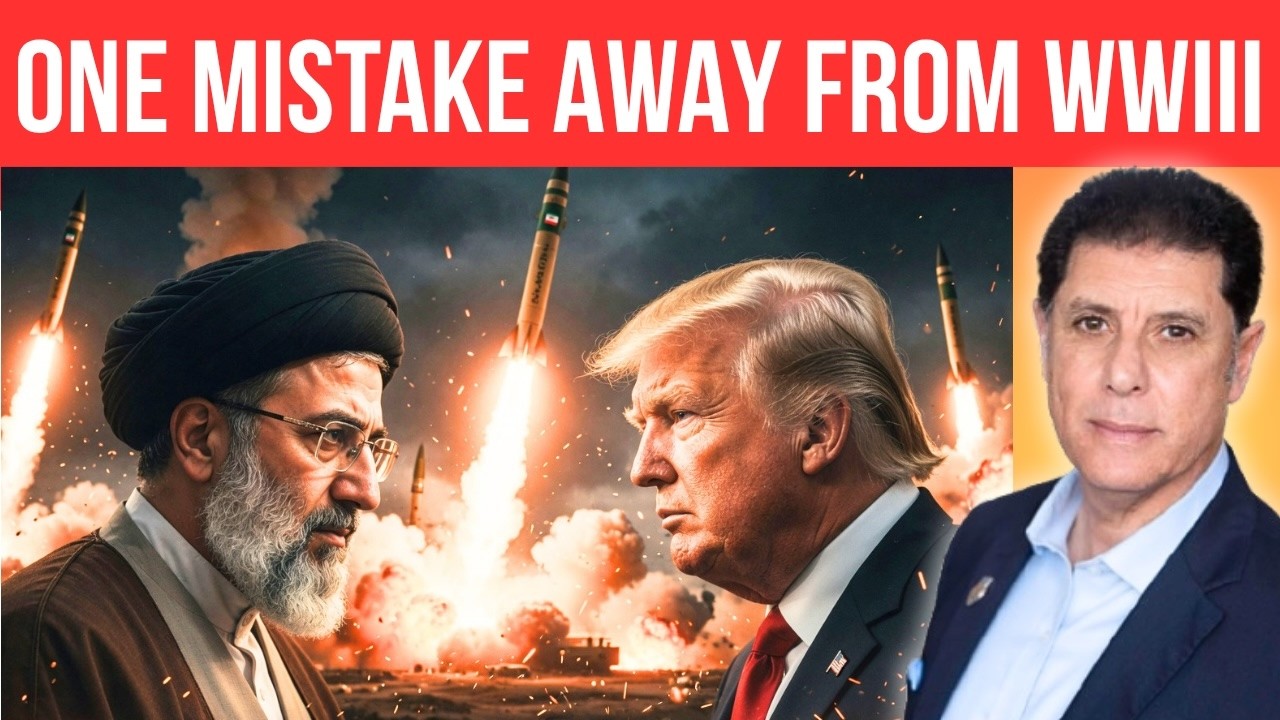
This content was created by David Oualaalou. This content was uploaded by David Oualaalou. This is a YouTube livestream/video titled "Nuclear Pandora's Box: Why the Iran War Is Changing Everything for North Korea, China & Beyond" (published May 12, 2026). The excerpt is a long-form geopolitical analysis (hosted on a channel called Geopolitical Trends) in which the primary presenter (SPEAKER A) reviews a recent US 14-point proposal to Iran, Iran's response, President Trump’s rejection, and the fragile ceasefire and risks of military escalation—with detailed discussion of the Strait of Hormuz, uranium enrichment, Iran’s leadership (Mojtaba Khamenei), Israel’s position (Netanyahu), and related regional and global consequences. The video also includes short audio/video clips and brief interjections from other participants/commenters (SPEAKER B, C, D) and quoted material (e.g., Tucker Carlson). The analyst connects the crisis to wider geopolitical effects on China, Russia, North Korea, European cohesion, global energy markets, and nuclear proliferation, and notes an upcoming Trump–Xi meeting as a potential diplomatic off-ramp. Metadata: YouTube content, created May 12, 2026, thumbnail provided.
Chapters
Hello everybody and welcome to Geopolitical Trends, where truth matters. The ceasefire is on life support, oil is over $100 a barrel, and Iran's new Supreme Leader, Mojtaba Khamenei, just issued war directives. And Trump himself is now threatening to knock out every power plant and bridge in Iran. So we are one, literally one miscalculation, that's what we are at. One drones and one naval exercise and one rejected proposal, all this away from the most catastrophic military escalation the world has ever seen in in decades. And here is the sad part, is that most people, absolutely, especially in the US, absolutely have no idea how close we are to the edge. And that's what prompts me to decide to do this live stream for you here today, because I'm going to be presenting you my own analysis. I'm going to be presenting you with the key points of the 14-point proposal by the US and the rejection of Iran for that proposal, and the rejection of Donald Trump of Iran's response, and put this within the security and geopolitical, uh, uh, context for you. So please make sure to stay with me till the end because I have something to announce to you about, uh, this live streams and analysis and so forth. I want you to be aware of some. Now let's start with what the Iranian Foreign Ministry spokesperson uh, stated, and he accused the United States of presenting unreasonable and one-sided demand in negotiations aimed at ending the US-Israeli war on Iran as the two sides, Iran and the US, uh, maintain fragile ceasefire. So, so what happened is that Iran proposed or submitted a response to the US proposal to end the 2-month war, and it was done via Pakistan as of yesterday, or the day before, uh, yesterday. Yesterday is Monday. On Sunday night, because I had, uh, it took me a day to verify the information of it. And what the Iranian media stated is that later that day, meaning on, uh, that will be, that will be on Sunday, which will be Monday morning for us, uh, Donald Trump branded Iran's term as, and I quote here, totally unacceptable. This is what Donald Trump is saying. So I'm going to put a link for you in the chat box. This you can read later on, uh, should you decide to do that. So here is what I'm, what I'm going to do, break it down for you. So I'm going to be starting with the US demand first. What are they? Here is what it includes. Iran This is the demand from the US. Iran formally declare it is not pursuing nuclear weapon. 2, full dismantling of Fardau, Natanz, and Isfahan. Those are nuclear power plants. 3, a complete prohibition on underground nuclear activity. 4, snap inspection. Those are snap, uh, inspection, another word, unscheduled snap inspections with automatic penalties for violations. Number 5, a 20-year halt on uranium enrichment, not permanent. 6, transfer of all enriched uranium stockpile out of Iran. 7, gradual reopening of the Strait of Hormuz tied to easing of the US blockade. And 8, sanctions relief is only delivered based on compliance milestones. And there are other stuff. I just wanted to focus on, on Kipan. Now with this, you have to keep in mind what is still under discussion, because as of today, both parties haven't come to an agreement. And under it is that the immediate ceasefire between the US and Iran and directly Israel linked to regional operations. This is still under discussions. The reopening of the Strait of Hormuz, which Iran has partially now restricted during crisis. Restoring the shipping traffic is a major priority. Of course, that's what the US saying, because roughly fifth of the global oil trade passes through the strait. Then you have the temporary freeze or, or, uh, moratorium on uranium enrichment. And this one of the biggest sticking point, the one of the biggest sticking point is how Uh, sort of how long Iran will hold enrichment activities. Of course, the US wants it at a 20-year. Iran countered it with 5, and negotiations are now discussing around 15. I got another source that I was informed that they might cap it at 12. Not certain of this, which way it's going to go. Then the other one that is still under discussion is the possible removal of the highly enriched uranium uranium from Iran. And here is another key point, is that the US wants the uranium to come to the US. Iran is saying hell no. And even if we consider third party, it would have to be another country. Russia has proposed to store the Iranian uranium. No, no clear indication on that yet. And the sanction relief and release of frozen Iranian assets in exchange for nuclear and maritime concessions. And the last one that is still under, uh, uh, talks is that the 30-day negotiation windows to move from the temporary ceasefire into more permanent arrangements. Well, this is still under discussions. We don't know. And here is the harsh reality, is that Trump reject Iran's response to his 14-point proposal. And I can see why the Iranians will think about it like, what is Donald Trump is thinking? No, because what the US is requiring is that maybe they might agree to 12-year, uh, halt on, on, on the enrichment. But this will require also— what the US wanted is that Iran will turn over an estimated 440 kilograms of stockpile of uranium enriched at 60%. In return, the US will gradually lift sanctions, release billions of dollars frozen assets, and withdraw its blockade from, uh, the Iranian ports. It's hard to tell because what Iran countered this with— and that's why Trump came out right away and said that's totally unacceptable— Iran countered the Trump 14-point roadmap with a list of demand of its own, and rightly so. And that's what you will expect. And one of them is including delaying the negotiations of the nuclear issue until after the war ends. Now, to me, makes more sense, because if you want to end the war, you're going to have to end the war first on a certain terms, then you tackle the other issues. And second, since when all of a sudden the nuclear issue became now at the top of the list? And you will find out why as I move forward in this analysis as to what Israel is doing behind the scenes. And this is again, uh, and one of the other points was that Iran will maintain to some degree control over the Strait of Hormuz. So, and this is where Iran proposed the separate negotiations and offered to dilute some of its highly enriched uranium and transfer it to a third, uh, party, third country. In other words, Iran is accepting this possibility, but the uranium will not go to the US because once it is in the US, Iran will never get it back. It's like the, uh, money for Iraq's oil. Where is the account? The bank account is in New York. So Iraq is not having direct access to that money is the same argument here. And this is why, uh, the idea why Trump responded, uh, and he said, and I quote, I have just read the response from the Iran so-called representatives. I don't like it. Totally unacceptable. End of quote. Well, still, the core deadlock regarding this is that the two sides are essentially arguing about sequencing, the sequence of events, which one you want to talk about first, second, third, and fourth, and so forth. So, so the US has insisted on resolving differences over Iran's nuclear program before ending the war, which doesn't make any sense whatsoever. Iran has demanded, on the other hand, an end to the fighting in the Strait of Hormuz before negotiating its nuclear program. So it looks like to me, the way I look at it, looking from outside in, is that Trump is trapped, has trapped himself in these negotiations. Because what happened, Trump will be unwilling to concede further because he already— his reputation is damaged, already being considered as one of the worst presidents in, in the US history. And, and will be unwilling to concede further because it wouldn't fit the narrative of the US strength he is trying to project. This is where the issue is, and, and Trump will have a hard time given the— how engulfed his ego is. So the other thing will be the Strait of Hormuz, which is the world energy juggler. We talked about this so many times, but it's worth always to highlight the importance of it.
It is—
and this is where things gets globally alarming. Because as you all know by now, around 20% of global petroleum and about 21% of liquefied natural gas goes through the strait each day— or each year, rather. And that's pre-conflict. There were about around 3,000 vessels used the strait each month, and now we're standing at around 5%.
That's it.
Even you have now the head of Aramco, his name is Amin Nasser. I, I do keep up with Aramco information because, uh, and there is a reason for why, and I'll share it with you. When I wrote my Saudi book, I disclosed about how Aramco engulfed or inflated— I'm sorry, inflated, not engulfed— inflated its, uh, its, uh, assets. Why they did that? Because at that time they wanted money from the Chinese investors. So they went ahead and inflated the, the, the value of the company by saying it is worth almost $2 trillion, or even $3 trillion, to my knowledge. But anyway, at that time, anyway, what's his name, Amir Nasr, the CEO of the Aramco, which by the way, FYI, Aramco is not a private— it is the Saudi monarchy family company. Just FYI for you to know, uh, that's how they operate. So what he warned— he warned that if the reopening of the Strait of Hormuz, if, if the reopening of the Strait of Hormuz will take even longer, for a few more weeks, then this will become the norm all the way until 2027. In other words, it will remain on the status the way it is. And that's why he argued, and I quote here, even if the vital waterway were to reopen today, Aramco warns it would still take months for the market to rebalance. End of quote. And this is where things stand as of now. Well, the talks, the negotiations are unlikely to make any significant progress. And this until Donald Trump meets with the Chinese president, which will be in 3 days. And I will do a live stream for you about all this. This is where it's going to be because he's, he's going to meet with the, uh, President Xi, uh, sort of later this week. So far that's been confirmed, whether he's going to follow through or not. But this is not the whole reason for what— because what Trump now needs, needs some image. Remember, like I always have, I've been telling you this for the last few years, in international relations, context matters. The fact that there is this massive portrait of him standing near President Xi Jinping It gives some sort of, here we are, we're still standing on the world stage and so forth. But this is where things stand, because Trump needs some way out. His reputation here in the US is going down, is in the dump regarding his, uh, uh, uh, rating, his, uh, sort of, uh, how people see his management style, even among MAGA. His rating is going down. So he needs something. So, and this is why what I want you to understand is that both sides, Iran and the United States, have drawn red lines now that appear fundamentally incompatible. Iran won't— Iran will not dismantle its nuclear program or surrender the Strait. Trump will not accept a deal that leaves either in place. And with global energy market rattled, a ceasefire barely holding, and naval forces still trading fire and exchanging fire in the strait, so the stakes for the world, the entire world for that matter, not just the West Asia or Middle East Couldn't be higher. This is what you have to consider moving forward with this. And I have a strong belief based on evidence and the research that we are preparing for something, militarily speaking. And I will, uh, I, I'll explain as I move forward in this live stream. Now the next question that we have to ask is, with Trump's rejection of Iran's response Are we heading towards a renewed military exchange between Iran, US, and Israel? This is a legitimate question to ask, and the answer, in my opinion— what do you think, by the way? Before I, I say anything, I'd like to hear from you. What do you think? Just leave, uh, your answer in the chat box. I will greatly, uh, uh, appreciate it. And, uh, and you are right, expensive trade USA. Yeah, yeah, Trump is fishing for a status. That is correct. So the short answer is yes, the risk of renewed major military exchanges is very real and growing by the day because the ceasefire has already, as I said earlier in the past live streams, is already breaking down. So the fact is, this isn't just in theory. No, because the shoring has already resumed at a lower level. The exchange, uh, let me show some images here for you, uh, the exchange between, uh, uh, between the US and Iran is already taking place at a lower level. So far, Iran continued the drone attacks on the Gulf neighboring That seems to be, uh, is ongoing over which what happened over the weekend, especially with United Arab Emirates.
Why?
Because United Arab Emirates went ahead and conducted an op against Iran's assets. What do you expect, especially with United Arab Emirates? Even though now they're saying what the UAE has intercepted two Iranian drones. Qatar also condemned the drone strike that hit a cargo ship in the waters. Waters where? Near the Gulf— near— I'm sorry, near the Strait of Hormuz, because the ship wanted to sort of challenge Iran on that. Iran ended up firing because they gave the warning. And of course, Kuwait reporting hostile drones entering its space. Well, of course, in Kuwait there are a major American military base there. As a matter of fact, my unit used to do a rotation over there between Kuwait and Egypt. And all this at the same time, you have Hezbollah and Israel continuing exchanging regular fire since Lebanon ceasefire was announced. And both, both Hezbollah and Israel claiming self-defense and accusing each other violations. It's, it's the norm, exactly what's happened between Iran and the US. Same pattern. And all this will give you an idea about how complicated these factors are in an effort to sort of, uh, broker a broader peace, which I don't see happening anytime soon. And this is why even Donald Trump himself— yeah, Donald Trump himself— he said that the ceasefire is on massive life support. That's exactly what he's saying. Well, of course, if you are saying this, that means you don't believe in it to begin with. And as part of this analysis, I want to touch on something that it's— actually, I am certain not everybody's— actually, I didn't know. I found out about it through some private sources. All I shared with you, you have to take into consideration why I said earlier the possibility of renewed, uh, action, militarily speaking, is on the horizon. It's, it's up there because you have new development right now. And then new development is happening at Ben Gurion Airport in Israel. Why is this? Because Ben Gurion Airport is now filled with US refueling tankers. Not one, not two, Even you have this civil aviation in Israel. The, the director of this agency, he said, and I quote, US refuelers at Ben Gurion are crowding our civilian planes, in quote. And I'm going to be providing you a link, uh, for you, and I'm going to do a video about it separately because I have to put it within the context for you later on. But for now, you need to understand why is this important, about why I said the renewed for tensions, it's going to be there, because Israel already pushing the US to do more, not more of negotiations, but more of firing and so forth. And all this comes within a time where the Iran's leadership— when I say leadership, I am referring to Mujtaba Khamenei That's the one I'm referring to here. Oh, let me— I have a picture of him right here. Moushtaba Khamenei, uh, issuing a new and decisive directive for the continuation of operations, uh, and the powerful confrontation with the enemies, meaning the US in this case. And I did the video for you yesterday about all this. At the same time, that's why he met with the Joint Military Command, the head of the Joint Military Command. That's why he, uh, also considered more— uh, it's not considered, he is more hawkish than his father. So, and all this also why Trump is not threatening to resume a full-scale bombing. That's why I'm saying this proposal stuff, and I wanted to do this live for you to clarify this once for all. Because I'm not going to revisit this topic. I'm only going to do it once here because I want you to know why there is this back and forth between the US and Iran. Because Trump, which we know Trump will just blab about whatever and doesn't follow through— why? Because we saw this happened on April 19th. Remember when Trump reiterated threats to resume full-scale bombing if Iran does not accept an agreement to reopen the Strait of Hormuz and roll back its nuclear program. And this is nothing new as far as the rhetoric coming out of Trump's mouth, because on April 19th he said exactly, and I quote here, we are offering a very fair and reasonable deal, and I hope they take it, because if they don't, the United States is going to knock out every single power plant and every single bridge in Iran, end of quote. Well, first of all, Donald Trump, you need to understand that if you start bombing civilian infrastructure, that's a war crime. Yeah, that's the first thing he needs to learn. And second, as I told you, that was said back in April 19th. We are on May 12th, so it's the same rhetoric once again. And here is another key that you need to understand, is that you have Netanyahu, the, the of, of Israel. He wants more, US to do more, because in his opinion the war was not over, or is not over yet, because there was more work to be done. That's his word. And the incompetent Trump is just following blindly. And specifically what Israel is pushing towards— what, when I say Israel, I'm referring to Netanyahu, because you don't collectively put the entire population into this— exactly is what, what Netanyahu is specifically aiming for. He's saying that Iran enriching uranium needs to be physically removed and its enrichment capabilities dismantled. Well, how are you going to do that? You're going to do that only if you end up using tactical nukes. And this is why Bibi Netanyahu and Donald Trump speak almost daily now on the phones, daily. Because here is what Netanyahu said, and I quote, and I have the link for it: we share common goals, and the most important goal is to remove the enriched material from Iran. All the enriched material and dismantle Iran's enrichment capabilities, end of quote. And this where I see, as an analyst, I found myself the wild cards for all this scenario could tip either direction. And there are a few factors that I wanted to highlight to you to put it in perspective. If the truth matters to you, hit like, subscribe, and tap that bell. No spin, no agenda, just the stories they don't want you to know. Don't watch from the sideline, be part of the movement. Your support keeps the truth alive. Thank you. And indeed, uh, please, please, if you want to help this channel, subscribe and encourage others to subscribe because The, the bigger we grow, the more loud voice we're gonna have. In other words, reaching everyone on this planet because truth matters. And I will greatly, greatly appreciate your effort in this endeavor. So, and thank you for that. So now you think about the factors that could prevent or accelerate this full-scale escalation. I am concerned, and I kid you not, when I did the research for you when I do the live stream, and I'll talk about this later on. I, I, I keep going back to this point. What if— so I'm gonna share with you what I sort of, how I look at it personally. If we are to talk about potential breaks from this re-escalation, one of them is going to be the upcoming summit between Trump and Xi, President Xi. Yeah, this might surprise you. There could be some— something in it. And I am yet to write an article about it, so make sure to check out the, uh, uh, Substack. I'm gonna be talking about this later on. So, so the talks are unlikely to make a significant progress unless Donald Trump meets with the Chinese President Xi Jinping later this week, because China, regardless how you might think about it, China shares Washington interest in a stable Strait of Hormuz. But China cannot, uh, uh, seem to be making concessions to undercut its partner with Tehran, and rightly so. Is the same thing because there is— here is the arguments that now in Washington There is an argument going on right now among think tanks and saying that China is undermining the US because it's supporting Iran. Okay, how do you think China feels or think about what we are doing with Ukraine? Isn't that the same? Or what we are doing with Israel? Isn't that the same? So what makes that right and the other one is wrong? And this is again where the— because remember the Chinese— I'm sorry, the foreign minister, Arab Arakshi was in Beijing recently. He visited Beijing and he had a warm welcome reception there because China hosted the Foreign Minister Arakshi and he's positioned as a potential behind-the-scenes mediator. The other potential break that you have to think about it in the world of global— of geopolitics, you can't just look at only the visible element or the visible, uh, moving parts. In this case, another potential brick could be Russia.
Why?
Because Russian President Vladimir Putin suggested and said that Moscow's proposal to take Iran enriched uranium to Russia to help negotiate a settlement remains on the table. So if Iran's uranium stockpile can be moved to a third-party country, it will remove one of the biggest US red lines. Those are the two breaks that I see logic. When I think about the accelerant, what can accelerate this re-escalation, the first one that comes to mind is Iran's strategic calculus. And what do I mean by this? Iran war strategy has widened now the arena of conflict to extend beyond mere military might. It's entering the political and the economic realm as well. And remember, the late, uh, uh, Ali Khamenei did warn that if Iran is attacked, it will become a regional war, and it could even go beyond that. And here we are, because what Iran now aiming to withstand, and it's already withstanding bombardments. Why is it going to withstand that till the conflict become too costly for the US and Israel to sustain? There are already talks right now in the US Congress about where this is going as far as the cost of it. So Iran believes, strategically speaking, that time and economic pain are on its side. That is one of— will be the accelerant for this. The second one will be the Strait of Hormuz, of course. Why? Because it's a choke point, the Strait of Hormuz. And like what the Saudi Aramco publicly warned, the issue may not get resolved this year, and that even if the strait is reopened today, it will take months for the market to rebalance because now you have oil that is exceeding $100 a barrel, you know. And the longer this drags, the more pressure builds on Donald Trump to act. So the bottom line to this that I need you to get before I move into the another consequential question that we need to answer— what I need you to know for this, at least this part that I talked about is that both sides are locked in a now dangerous game of, uh, what do we call it, chicken, maybe, if we want to use that terminology. The ceasefire exists, but it exists in name only rather than in practice, because you have now low-level exchanges are already taking place. And both, you have Donald Trump and you have, uh, Mustafa Khamenei have strong domestic political reasons to project toughness rather than compromise. And that's why I appreciate you voting on that question that I asked, whether you think, uh, Iran will compromise, and almost 73% of you said no, they will not. And I concur with you on that. So you have the upcoming Trump-Xi summit this week, which is, uh, which is going to be arguably the last near-term diplomatic off-ramp for Donald Trump. That's what it's going to be before this situation spiral further. That is where my concern is. And here is the thing: if this summit between President Xi and President Trump doesn't produce anything concrete the probability of a major military resumption climbs sharply. It will be a foregone conclusion. That's what's going to happen. I hope it does not get to that, but I am realistic. I don't act on emotions here. I'm thinking realistically. I don't see— I see the possibility of it, and I hope I am wrong.
I hope I am wrong.
This leads me to ask the key fundamental question: what are the security and geopolitical ramifications of this outcome? Because the ramification of it extends far beyond West Asia, Middle East in this case, because it will be touching on every major theater of global power. I don't care how you think about it, but that's the fact. And I'll start with the first one, and the first one is going to be the nuclear proliferation. That's the Pandora's box problem. And, and not from the fact that Iran is going to acquire nuclear— it's not about that. It's— you have to, you have to, you have to think in terms of how other countries are evaluating this, this military developments, uh, between US and Iran and what message is sending them. And this, in my opinion, this is the most lasting global security consequence Because you have even intelligence reports argue that the strikes that the US conducted on Iran in conjunction with Israel now reinforces, for example, North Korea's nuclear deterrence. And we all know what North Korea has been conducting, the training that's been conducting, and the testing that's been conducting recently. As a matter of fact, I just found out, uh, 2 days ago that, uh, uh, North Korea developed now a specific type of tanks almost similar to K-9s, called K-9 in South Korea, which it's, it's almost like North Korea ain't taking any chances whatsoever because they know there will be no negotiations with the Americans because you can't trust the Americans. That's the way I see this moving forward. So North Korea is the example of that because Pyongyang interpreting the military action against in non-nuclear state, Iran in this case, uh, they are interpreting this as a strategic validation of its own weapon programs, meaning North Korea, that is so essential to the survival of the government there. And this is why the US-Iran conflict has accelerated North Korea's nuclear expansion. And that's why this kind of denuclearization talks between US and North Korea— ah, no, no, no, no, that's just wishful thinking. That's an illusion. If the US is thinking that way, that the North Korean is going to come to the table and say, yeah, we will, we will stop our nuclear program— look what happened to Libya. On good faith, they negotiate. And I was aware of those talks because I was part of those, those kind of negotiations behind the scenes. My office was. And they were saying, we will turn over the nuclear in return for this and this and that. The moment we got our hands on that, we flipped on, on the Libyans. North Korea is not willing to take this chance. And the broader signal from a geopolitical aspect, or even security aspects of it, the broader signal, not to one country, to every country, is chilling. Because what you have, you have now the world watching a non-nuclear state being attacked unjustly by the US and Israel. Because the war took place while nuclear nonproliferation was already under significant strain. Why is this? Because the IAEA, the International Atomic Energy Agency, wasn't fair in its assessment. He manipulated the reports about Iran's nuclear program, even though they came later and said, well, we didn't see any evidence of Iran pursuing nuclear activities. Even the head of the DNI, the director of the US National Intelligence, Tulsi Gabbard, said that it was nothing, even though she flipped. You know, you can't trust those officials here. There is no credibility left whatsoever. The bottom line is that when you have the, the credibility of the IAEA is in, is, is in, is, is in a trash anyway. I don't trust them, never did. But you have also another dimension from the geopolitical aspects of it, or even the security, is that the New START strategic, uh, uh, strategic arm reduction talks, that have expired already in February of this year between Russia and the US. That's another dimension to that. Then you have the public support for possessing nuclear weapon reported rising in several countries. Why is this? Because that's the lesson they have learned from what's going on, and that's the lesson that is everybody's learning as the Cold War faded. Now in in the past. Because what you have, if you look at— if you put the world map in front of you with all, uh, 198, uh, countries that are with the UN, almost— there are about 203, uh, countries and so forth— every mid-tier state watching this conflict between Iran and US is drawing one obvious lesson. Lesson. And you know what that lesson is? Nuclear weapons are the only true guarantor of sovereignty. This is why I was like always wondering what was going on inside Iran for this back and forth between religious fatwa decree and the nuclear stuff. And, and, and look what the outcome is. And again, I'm, I'm being fair here, I'm being objective. Maybe Iran made a mistake, and it's not maybe, I believe he made a mistake, because if Iran had a nuclear weapon, we wouldn't be talking about this topic today. I'll tell you straightforward, from a geopolitical perspective, China is the, is the central variable into this equation. Why is this? Because Beijing's current posture suggests it is watching carefully, it is content for now with the economic opportunities because a weakened Iran presents to the Chinese. It's all about interest. Don't, don't get emotional about that one. Yes, they are allies. Yes, China is supporting Iran with, with military hardware, but when it comes down to national strategic interest, you can't think of your other ally. Whatever you think about yourself first. No. Because what in this case for China is still fully capable of recalibrating if it concludes that US forces are overextended. At the same time, you have the US aggression in Iran played into the China's rhetoric framing. It's part of the international relations game. Why is this important? Because as I argue in my, as I am arguing currently in my Chinese book that I'm writing currently, is that to China, the equivalency of this will be a pillar of stability in contrast to the unpredictable America. Because look what we did, we launched a war. Is China going to other countries and launching wars? Is China going and bombing other countries?
No.
And that's why it's playing to China's global image perfectly. Doesn't cost them anything. Let America sink itself. So, and even you have the Gulf States right now. When you look at the Gulf States, all of them are now seeking closer ties with China after facing attacks from Iran. It's because of their alignment with the United States.
It.
That's common sense. So they're going to have to think of it that way. Then comes the biggest of them all, is the Taiwan angle. It's particularly alarming, at least for the, the US, thinking in terms of— to Taiwanese, uh, those who are against Beijing, which they are realizing, you can't, you can't trust the Americans, you can't count on the Americans. Remember, the opposition leader of the Taiwanese Party, KMT, was in Beijing, received a warm welcome, and met with President Xi Jinping. So, because here is the thing: avoiding a prolonged war will preserve US strategic capacity to support both Ukraine and sort of in its part of— in its war against, uh, the Russians, and at the same time maintaining a deterrence in the Asia-Pacific in the event of a crisis involving Taiwan. But the Chinese, they're looking at it differently. That's why the US is stuck. Donald Trump is stuck, didn't think strategically. And how can you expect somebody like Trump to think strategically? Because here is the calculations. Not only in Beijing and every other countries that are watching. Every, every military, US military asset and ammunition that is consumed in the Middle East or West Asia as we speak is one less available in the Pacific area or the Pacific Rim. That is exactly how you look at it. And that's why it's important to understand where this— even for Russia, Russia's strategic windfall, it is happening as we speak. Because you think about it, to me, I can see Russia as the winner of this conflict behind the scenes without firing a shot. The US-Iran conflict, you know, has delivered now to Moscow a set of near-term strategic gains. And the strategic gains, by the way, are complicating Washington's security calculus across theaters, not just in, in, in the Middle East, uh, or West Asia, not just in Europe, not in Asia Pacific, not in Latin America, everywhere, everywhere, because it creates a strategic space for Russia to regain initiatives in Ukraine, because US military attentions, the intelligence bandwidth You know, the ammo have been partially diverted to the Middle East conflict, and that in itself, like the case in China, is allowing Russia to, to sort of intensify its operations. And if we are to consider also the economic gift, that is staggering. What do I mean by that, especially for the Russians? Why? Because higher global energy prices could accrue Russia between $45 billion and $151 billion in addition to the budget revenues for 2026. And those are revenues, those revenues, by the way, that directly underwrite Moscow's war machine in Ukraine. This is when you think about the bigger picture geopolitically and from a security perspective. Then you have the Western alliance fractures, which is now— there's talks between the US and Europe that we can either fix these relations or we go separate ways, which will be a better outcome in my opinion. But Europeans are so weak anyway. One of the major geopolitical consequences is the gradual emergence now of this rift between the US and its Western allies in regional— in Europe, I'm sorry, because you have divergent economic interests, you have differing security perspectives, and you have regional rivalries are likely to weaken this traditional cohesion of the Western alliance. And frankly, maybe it's about time because Europe needs to stand on its feet. I've been saying this for years, since I was a kid. You know, I have family lives in France. We used to travel back and forth to France and so forth. And, and you've been hearing about, oh, Europe needs to have its own security. They were never there to— they too weak, they too weak. And that's why Europe is caught in a painful bind. Some European leaders now are prioritizing sort of international law and condemning the US-Israeli strikes as a war of choice. And by the way, where were they when Israel launched its attack on, on, on, in Gaza Strip and the atrocity that's been committed? They cherry-picking, you know what I mean? This is one thing about the corrupted politicians, they cherry-picking the information. And nevertheless, that's one group of the European leaders. You have another one that is prioritizing the transatlantic cohesion and openly confronting Washington. And that in itself carries some sort of risks at a moment of geopolitical volatility that exists right now on the global stage. Yeah, the, the EU has no coherent strategy in place, or even to replace its previous Iran, uh, policy, which was built entirely around diplomacy. So where is the Europeans right now? No, they don't have anything. And the last point that I talk about, I mention on this one here, has to do with the, the whole region, West Asia or Middle East, becoming destabilized. Not necessarily. I, I don't buy that argument because what Iran made, made it clear to those countries, as long as you have US presence there, you will be a target. Straightforward. And that's why I said last time, and I remember, uh, uh, when I mentioned to you that Iran strategy to this is what we called in the military horizontal escalations. I, I remember explaining this to you last time. Uh, basically what it means, it's just Iran is not going— it's going horizontal. In other words, expanding the conflict throughout the neighbors and so forth. And that is why the arena of the conflict in itself goes beyond the military, Mike. No, no, no, it goes into the political, the economic as well. And with the aim— one aim is withstanding for Iran, to withstand whatever is going on as far as bombardments and so forth. But it's also going to become so costly for the US and Israel to sustain that. And this is why Iran did what it did when it targeted US embassies and military places, installations in United Arab Emirates, in Saudi Arabia, in Qatar, Kuwait, Bahrain, Arab, Oman, and Jordan. All of them, all of those. Yeah, that's the harsh reality. So here is the bottom line to this one here, is what we began sort of when we talked about What began as a strike on Iran's nuclear program has become now, is becoming now some sort of stress test, if I may use the term. We use it for the financial banking stuff, but this becoming a stress test of the entire post-World War II global order landscape. That is the outcome as of today. Because you have the Strait of Hormuz closure is the economic equivalent of a nuclear detonation in slow motion. Every major power, the key players— Russia, China, EU to a degree, Gulf states— all of them are recalibrating their alliances, their energy security, and their view of American reliability. And that's again the lesson that Pyongyang in North Korea— because you, you have to think about it this way, you have to think about it, these lessons that have been absorbed now from Pyongyang to Manila to Riyadh to, to, uh, Vilnius to what have you and even beyond may prove more consequential than now, than anything that happened on the battlefield. Because the world is not just watching a regional war. No, no, no, no, no, no. They are watching the reordering of the global power dynamics as we speak. And that is the lesson we ought to take out of this, at least this, uh, brief analysis and livestream here. That's what I want you to get out of this. So what I'm gonna do, I'm gonna play two clips for you and do my conclusion and conclude this one here. So, but before I'll do that, uh, I want to share something quickly if you allow me regarding the survey, uh, question that I asked, uh, whether you want me to cut down. I know there've been some comments. I read all the comments and it's worth addressing. So bear with me here please, because I want to take this moment to speak directly to you. The community, because your voice truly matters to me. And I'm not saying it to be Mr. Nice, that is not my personality. So I had the opportunity to read thoroughly every single comment in response to the survey I put out when I asked whether you would like me to shorten the live streams and analysis from 1 hour down to 30 minutes. And here is what you told me. 50% of you said no, keep it as is. 38% of you said yes, change it. And 12% said we don't care, neither way, either way works. So I want to sincerely thank each one of you who took time to vote and share your thoughts in, in, in the comments, because that kind of engagement, in my opinion, means more to me then you know it's what keeps this community alive and moving forward. And after careful— really, after carefully reviewing the results, reading through your comments, all of them, and doing some serious reflection on my own, on my end here, I've come to the decision, given that the majority of you wants things to stay as they are, and honestly given the depth of the topics I cover, or we cover together, not just me. I believe it is in the best interest of this community to keep the live streams at their current length for now. And I want you to keep in mind, please keep this in mind, for every 1 hour that I spend sharing analysis with you, there are about 5 or 6 hours of research happening behind the scenes to ensure that what I bring to you is accurate, is verified, and worthy of your time. So this is your space as much as it is mine, and I will always listen to you. And thank you for trusting me with your feedback. Truly appreciate you for that. Let's play the first clip here. And, and we'll go on. Uh, take a listen here, please.
For the second time in just 2 days, another F-35 declared an emergency near the Strait of Hormuz this morning. Yesterday, the same thing happened in a near identical position, and today the F-35 started squawking 7700 at around 15,000 feet. Aircraft continued into the UAE and subsequently landed at Al Dhafra Air Base, and the cause of the emergency is still unknown. For the second time in just—
you remember when I mentioned yesterday about the technology that Chinese is sharing with, uh, the, uh, the Iranians and why the, the, uh, the M4 Trident, the highly developed recon, end up falling or miss— or, uh, I'm sorry, had the— not falling but had the, uh, uh, an error. It's not functioning properly. Now you have the F-35s. So And I want you to listen to that yourself. Uh, next one, I will play a clip from Tucker Carlson, but there is a reason why I want to play this, because I want to clarify some other things a lot of people do not know. Take a listen, please. Is that—
that's the Secretary of War. What is that? That's the Secretary of War right now.
Watch Tucker Carlson realize why the Zionist lobby led by Norm Coleman of the Republican Jewish Coalition, pressured Trump to install Pete Hegseth as U.S. Secretary of War.
What is going on here? Stuff to make the hair on your arms go up. Did everyone know there was an effort to rebuild the Third Temple and the Foundation Stone except me? This is considered so esoteric and weird and crypto-historical and religious and kind of culty, and what's Chabad? And no one ever mentions it. But here's Pete Hegseth, football player from Princeton, going on about it in a way that suggests he's thought a lot about it. This is 2018.
And it got me thinking about another miracle that I hope all of you don't see too far away, because 1917 was a miracle, 1948 was a miracle, 1967 was a miracle, 2017, the declaration of Jerusalem as the capital, was a miracle. And there's no reason why the miracle of the reestablishment of the temple on the Temple Mount is not possible. I don't know how it would happen. You don't know how it would happen. But I know that it could happen.
What is that? That's the Secretary of War right now overseeing the war with Iran that people fighting it are starting to say actually is about rebuilding this Third Temple. It's the same man.
So I give credit to Tucker Carlson. And by the way, Pete Hegseth's speech was in Jerusalem in 2018, just to let you know. Now, there is a reason why I shared that one. That's Senator Norman Corman. I just, by the way, because I'm— I was aware of him when I was in Washington. This guy, as corrupted as it gets, he was registered, okay, as a lobbyist for Saudi Arabian government. Which was around 2014. That was almost the same year when I left. I was aware of him because I spent years in Saudi, so I was aware of who the key players are. So, and he became the lobbyist for the Saudis while working for a law firm, it's called Hogan Lovells. And Coleman has used his experience from the Senate Foreign Relations Committee to advance Saudi interests, receiving millions of dollars in payments. That shows you the level of corruption that exists in our system. The second thing I want you to know about that clip, and it has to do with Pete, uh, uh, himself. Now here is what a lot of people do not know. Of course, everybody thinks that Pete, Pete did receive some medals in the military, but it has nothing to do with combat. The medals he received has to do with administrative work. Pete Hicks said medals and awards, specifically his two Bronze Stars, were awarded for meritorious service— that's administrative and leadership role, has nothing to do with— rather than for direct combat valor, a distinction often discussed in the context of his military service. I want you to know. That's why anytime when you, you hear about medals, do not assume that it was for— this is why he got the position, and he was never qualified for that position. But now you know, because of this guy behind the scenes pushed for that. So, uh, and that's all the, uh, clips I have. I just want to let you know what I'm gonna be working on next time. Is I'm going to be working for, uh, uh, uh, a development that just happened yesterday. It was an attack on Israel by the Houthis. Makes you just wonder, is the next phase is going to open, especially with the statements by an Iranian commander who said, and I'm paraphrasing here, we have the capability of shutting down Bab el-Mandeb. I'm wondering So I am waiting, uh, for some info like I always do, and I will, uh, uh, I will do a live stream for you. And the same is connected to what is Trump is doing right now with sending more refueling planes to Ben Gurion Airport in Israel. These things are not happening in a vacuum. Remember that one. And within this topics, I am trying to confirm one satellite imagery that shows the mystery of the Iraqi desert. Why is this important? Because the satellite revealed the story of an Israeli secret base on the Iraqi soil. Very disturbing. Here is a picture. This, this ball, golf ball here, that's satellite stuff. Very disturbing. Makes you just now wonder, does Iraq have a sovereignty over its territory? So I will, uh, I will do a live stream for you about this one. So, so here's my conclusion for this live stream, this analysis here. What I need you to understand is that the US and Iran standoff has stopped now being a regional conflict and has become now a global stress test. That is the harsh reality. Stress test of what? Of the American power. Because now everybody is starting to be convinced that Americans just flexing their muscles, but they can't conclude the fight like we did in Afghanistan or Iraq or Somalia or what have you. So, and this stress test pertains to American power, pertains to energy security, pertains to nuclear deterrence, and pertains to the world order itself. So every rejected proposal, every drone strike, and every closed tanker lane pushes the world closer to consequences that no one can fully control, predict, or anticipate. So for now, the harsh reality is that the Strait of Hormuz is not just a waterway, like I always said, and I used that terminology before, is the jagular vein of the global economy. And right now somebody's hand is wrapped around it. That is the harsh reality. So, so here is the question I want to leave you with, and please, if you feel like sharing your comments in the comment section, I will greatly appreciate it. The question is, if diplomacy has failed, the ceasefire is collapsing, and both sides are digging in, is there any deal that prevents this from becoming full-scale war, or have we already passed the point of no return? I will greatly appreciate your feedback on this. And we are right at the top of the hour, but before I go, I want to say once again thank you to Luis Talavera. Much appreciate your statement here. We're ready to receive Dr. O. Excellent analysis of the illegal war against Iran. Finger red number one. We greatly appreciate your efforts, Dr. O. You're most welcome. You know, a kind word can go a lot, can go way, way, way, way far, and I'm very grateful to you for that. I'll take this opportunity to say thank you to Naz. His name is Nazli Malik for his generous donation on PayPal. Naz is on YouTube, by the way, if you guys want to ever check him out. Just put Naz on the chat. I looked at his channel, he talks about what's going on in Malaysia, very, very interesting. So, so, and here is what he wrote, and I quote, I watched you especially to get the most accurate geopolitical news and to get your opinion on the subject matters because you are so knowledgeable and have a lot experience. Thank you, Naz. Much appreciate your kind word, Naz, and look forward to having the community also support your channel and so forth. So, and I also want to say thank you for those who bought me tea in support of my upcoming Asia trip. The first person comes to mind is, uh, Ralston Auto 60, who wrote, I'm always in tune, so appreciate your no-nonsense straightforward informative truth presentation. Thank you so much, Ralston, for your support of my upcoming Asia trip. I'm very, very grateful. And I also want to give shout out to Angie Dragon for buying me cups of teas in support of my upcoming Asia trip. Here is the link should you guys decide to support it, and I'm going to show you where we are in the fundraising. Here we are right now. We We are at 35%, so we, we getting there slowly, but hey, that's how it works. So, uh, if every, every contribution counts, doesn't matter. So I just want you, uh, and to those who wants to support the channel, here is the link. There are so many of you buying me coffee in support of this. And the last one I want to share with you, it has to do with the, uh, my books. If you want to get a copy of my books should you decide to do so. Uh, here's the— this one's here. Well, once again, here is the link just in case. So, so as I said, I am going to be working on the stories for you, and I'll share this with you for the next day or two, whatever, I'll— whenever I confirm the information. That's— remember, I spend about 5 to 6 hours ensuring the accuracy of the information. Thank you so much for your support. Please don't forget to hit like and share this video with others and encourage them to subscribe. I would greatly appreciate it. As always, remember, geopolitics impacts your daily life in more ways than one. Till next time, bye-bye.
More from David


Beyond the Single Actor: Why the Gulf Isn't Choosing Between the US and China


Iran, Iraq's Militias, and the Houthis Are Coordinating! This Changes Everything




Who Controls the Next Decade's Resources? Latin America and Africa's Geopolitical Crossroads

The Chokepoint Trap: How Washington's Stupidity Triggered a Cascade That Now Controls the World

Trump Spooked as IRGC Unveiled dual-use SLV, Deployed Ghadir Mini-Subs & Hinted at Tactical Nukes!
