Nuclear Powers Unleashed: What the End of New START Means for You?
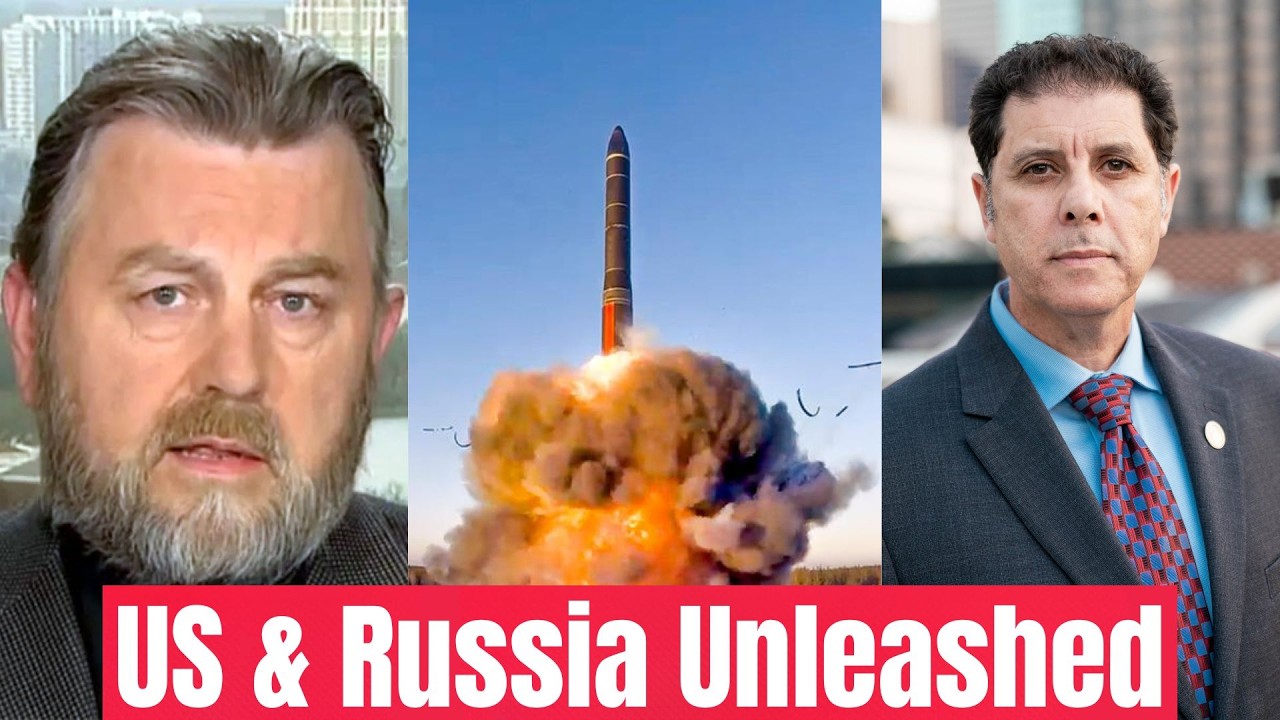
Former CIA analyst Larry Johnson warns that the expiration of New START leaves the U.S. vulnerable to Russian and Chinese advances in hypersonic weapons and air defense. He argues the U.S. has lost experienced arms-control negotiators and is playing checkers against chess players, while predicting a limited-time confrontation with Iran could trigger regional escalation.
Chapters
Hello everybody and welcome to Geopolitical Trends, where truth matters.
Excited to be with you as always.
I'm even more excited because I have a dear friend of mine, Larry Johnson, is here. Hi Larry.
Hey David, thank you for the invite. Always enjoy chatting with you, man.
Of course, of course, it's a treat to have you here. So, and thank you for coming on here.
So to those who do not know who Larry is, which you should know by now, Larry, he's a, is an American blogger. He's also a former analyst at the CIA back then.
He also worked at the State Department.
He is the host of the Counter Current channel, so I'm gonna put the link for you in the chat box. I highly recommend you to go subscribe to that, but also listen to the interviews for the guests he invites.
Very, very insightful. And I'm not saying it to be Mr. Nice, you guys know me, I'm straight shooter.
It's, it's— I learn a lot from Larry.
I do listen to the interviews he conducts there. So check it out.
Larry, we have a lot to cover here, so I'm going to get on it right away. I'm going to start with this New START treaty that ended, now it expired, and sort of marking now the end of almost, what, 5, 6 decades of bilateral nuclear arms control?
Yeah, I'd say 56 years.
Indeed, indeed. And I remember I argued this back when I wrote my Russia book back then, in which in 2019, I recall, I made the case that when the INF Treaty was— when the Russians withdrew after the US did, I asked the question, and at that time I said to myself, okay, what's going to be happening now, now that the INF Treaty is is off, that's it, we're done. The Russians went ahead and reciprocated, and it was still— the question I asked was, will there be also problems for other treaties? And here we are. How do you see it, Larry?
Yeah, unfortunately, we've lost a generation of people that were experienced with arms control and that had been involved with negotiating it. You know, if you go back, one of the real incentives to establish such agreements was based upon we still had people that had fought in World War II and that knew the actual cost of war, uh, the Soviets much more than the United States in particular. So there was a willingness to do that. And, you know, here's, uh, Trump is guilty of just gross incompetence when it comes to this. Instead of, uh, you know, Trump's position as well, he didn't think that the New START was a good deal. And the, the one argued that, uh, we want to get the Russians and Chinese where their combined weapons are the same as ours. Well, you know, that's not going to happen. But if that was your objective, still keep the existing START in place and do the negotiations on the other without just saying, no, it's off the table. Because once it went away, Russia has been trying since September to say, hey, let's continue to abide by it. Once Trump let it die, they said, okay, screw it. We're going to reassess our military needs and we will act accordingly. So whatever control that the United States thought it possibly could have had, is gone. And so this was, this is just a dangerous, stupid move. But, you know, again, Trump walked away from the Intermediate Nuclear Forces Agreement, and as a result, uh, Russia's now got the Arashnik missile and we don't have anything approaching it. Uh, and then, you know, George W. Bush walked away from the Anti-Ballistic Missile Treaty agreement and We're still stuck with the Patriot, which doesn't really work, and the Russians have developed the S— they had the S-300 back then, they developed S-400, S-500, and S-550, which are, you know, the most advanced air defense systems in the world. So we keep shooting ourselves in the foot, and it's not just Trump. I mean, it's, you know, it's been across the board.
Yeah, I want to play this clip quickly here, Larry, just for the audience who know exactly what's been happening here.
The last Russia-U.S. nuclear arms control treaty, known as New START, is due to expire on February 5th. Russian President Vladimir Putin has proposed that the two sides stick to existing warhead limits for one more year to buy time to work out what comes next. On Tuesday, Kremlin spokesperson Dmitry Peskov warned that time was running out.
For the first time, Russia and the US, the two countries with the largest nuclear arsenals, will not have a basic document that limits and controls these arsenals. We believe this is very harmful for global strategic security. Our proposal remains on the table for the remaining days before the treaty expires.
I'm gonna stop it right there. The reason, the reason I want to do it this way, Larry, is because the Russians are saying to the Americans, how about if we sort of give it another year, at least till we figure out what, what, what's need to be done? Why, in your opinion, Larry, the US is not willing to support this extension, even though it's limited for one year? But a lot can be happening in one year. As far as finding solutions or coming up with another agreement.
We have no strategic thinkers anywhere in the decision-making process. They're all focused on the here and the now. They're not thinking ahead. You know, these are not chess players. These guys, they can barely play checkers. Trump and his team, you know, again, they've said, well, what we want to do is get another agreement. Great. Keep the existing agreement in place while you work on the other, but they haven't actually put together a team to work on the other. So it's like they're dealing constantly with fantasy, and it is really alarming because, you know, we're going to fall farther behind in the United States. And one of these days is going to come, we're going to wake up and realize that the arms train has left the station and we're not on it. Russia already has at least 4 variants, maybe 5, of hypersonic missiles. Those are missiles that travel greater than Mach 6, and they can be maneuvered. The United States doesn't have a single one. The Russians have deployed the Burevestnik, a nuclear-powered cruise missile that in theory can, you know, put it up and it can fly and fly and fly and fly. It doesn't have to come back down to be refueled. Uh, they've got the Oreshnik, so, uh, and they've, they've got more advanced submarines than we do. So, uh, you know, the United States has fallen way, way behind, and, and yet we continue to kid ourselves that we have, um, an advantage.
Now, how likely this argument that's coming out of the Trump administration because they wanted— and you alluded to it earlier, Larry, as far as the trilateral accord with Russia and China. So why, in your opinion, for me personally, Larry, there is no way China will accept it. China will reject this participation. But why do you think the US wanted to push for this particular trajectory by incorporating China into this particular agreement?
Because we wanted to have the advantage over each of them individually. So if we agreed to, let's say, the limit is 1,000 warheads, well, Russia has 1,000 warheads, we have 1,000, we're equal. But, you know, Russia and China. China also has 1,000. So from Trump's position, they're viewing correctly, finally, the fact that Russia and China are allies. So yeah, they, you know, they get— they have double, uh, double the punch that we do. But, you know, again, this is, uh, we, we can't even— should not even begin to entertain, you know, use of nuclear weapons.. But unfortunately, there are people that, you know, they've watched too many Hollywood movies, you know, Marvel heroes, and think you can launch one and get away with it and not suffer devastating consequences.
I've been reading some analyses or white paper that is coming out of Washington, and one of the arguments that was mentioned, Larry, was that it was the Russian war on Ukraine that contributed to the shaking of the last safety sort of valve in the nuclear arms control system between Washington and Moscow. And what's your assessment on this? To me, it's nonsense argument anyway, but I'd like to hear your input on it.
Well, we— since the collapse of the Soviet Union, 1991, The United States has taken every step possible to provoke a confrontation with Russia, as opposed to saying, how can we work together? How can we become— how can we have an actual real partnership, both strategic, economic, politically? But in fact, we've done the opposite. We've done everything in our power to try to subvert, weaken, and destroy Russia, but on separate occasions. In fact, I spoke with a senior Russian advisor, Sergei Karaganov. Karaganov was an advisor both to Yeltsin and has been an advisor to Putin for the last, you know, 27 years. And he said that both Yeltsin and Putin made specific repeated requests to join NATO and were turned away. Not only did the United States turn down Russia's request to join NATO, but then we funded a Muslim insurgency, an upheaval, uprising in Chechnya using outsiders from Afghanistan, Sunni extremists. And we basically fed into a 10-year war, 10, 11-year war that Russia fought and ultimately won. We encouraged the government of Georgia to attack Russia in August of 2008. You know, Russia had had peacekeeping troops in the, uh, uh, uh, Ossetia and Abkhazia.
Yeah, yeah, together there.
And so those peacekeeping troops have been there since the collapse of the Soviet Union, and then they attacked Russian soldiers. So when the Russians fought back that was proclaimed as a Russian aggression. So, but throughout this, the United States has been building up Ukraine, building up its military capability, all for the purpose of targeting Russia. So instead of, you know, coming out and say, how can we help Russia? It was, we've been more like, how can we screw Russia out of its resources and take advantage of it?
Yeah, you're absolutely correct about the Abkhazia and South Ossetia.
I remember because I wrote extensively on it at that time.
And you remember him, I'm sure, Larry, what's his name? Mikhail Saakashvili.
Yes, Saakashvili.
He was there, which was, you know, placed in that position by the US.
And what happened, because I got one specific info at the time when the first shot was fired, he reached out to NATO and he reached out to Washington. He's like, hey guys, are you coming to help me? You know what was the answer? We told him, are you out of your mind? Do you want us to fight a nuclear Russia? And he was screwed for that. So that's where he made the argument, oh, next Russia is going to go to Finland and take Finland, uh, uh, uh, in Finland and Sweden.
And I said to myself, this guy is losing it. So he didn't have any.
All right, let's move on into, uh, this part of the world right here, Middle East. Persian Gulf. What is your overall assessment, Larry, on what's going on right now regarding the US, Iran, and I will add Israel to the mix as well?
I think we are going to attack Iran within the next 12 days. And when we do so, we will unleash a regional war, a war that will likely involve Iran having to attack Armenia and Azerbaijan because they will be used as launch pads for attacking Iran, the destruction of U.S. military bases in the region, and the attacks on Israel, which will cause devastating losses to the Israelis. This can be ugly. This is going to be bad. Trump is now under such enormous pressure to hit Iran that it's gone beyond logic and reason. It's now pure emotion. And, you know, when people are not thinking with their heads and thinking with other parts of their body, they get themselves into trouble. And that's where we're at right now. The United States has— we've deployed one carrier strike group now. So we've got one aircraft carrier, three destroyers. That— and if you step back and think about it, that fleet, you know, that group is smaller. It's about 50% the size of the carrier strike group that we had in the Red Sea last March. Where we were, where Trump launched Operation Rough Rider, which was to open freedom of navigation in the Red Sea to take down the Houthis. At that time, at the height of the operation, we had 2 aircraft carriers, 4 destroyers, 1 cruiser. Now off the coast of Iran, we got 1 aircraft carrier, 3 destroyers, So we got far less firepower, and yet when we had the— we had what we had in the Red Sea, we couldn't stop the Houthis. We had to pull out. We declared victory and went home, but we accomplished none of our objectives. And the Houthis, in addition, were instrumental in causing the loss of 3 F-18A Hornets. And 7 Predator drones at the cost of $35 million apiece. And we can discuss why they were using Predators, what that was for. But the point was, the Houthis were not— they don't even have a tenth of Iran's military capability, and we were unable to defeat them.
Indeed.
So We think we're going to go into Iran and walk all over them? This is reminiscent. This reminds me of all those supporters of Abraham Lincoln at the Battle of Bull Run, the first battle. They're all in their carriage, all the supporters from Washington, D.C. are riding out to Manassas to watch this great victory by the U.S. forces, and they got beat. And I think that's what's going to happen here. I think the United States is going to suffer some devastating losses, and it's going to put, you know, Trump's initial reaction will be to try to figure out how to respond militarily by upping it. But at that point, you know, this thing will spread regionally, and it will get China and Russia involved.
Yeah, and that will be our next point on this, but before I'll get into that, I want to ask one specific question, Larry. In your opinion, do you believe, and this is just a hypothetical, I'm thinking also, do you believe in your opinion that Donald Trump backed down after Iran deployed the Khorramshahr-4, the ICBM?
Yeah, no, not yet. I, you know, again, I don't think they're going to back down. But that's why I say we're almost embarking on a suicide mission. Be careful.
So the US will not back down?
No, I don't think so. They should. I mean, you know, if Sainer has prevailed from a military standpoint, you got to have some general at the Pentagon that'll go to the president and say, Mr. President, we don't have the force to sustain this fight, and we're going to put ourselves in a very vulnerable position will lose our bases in Qatar and in Saudi Arabia and Bahrain. Those are the three main ones. Um, and, and that, that plus it will portray the United States as vulnerable, as weak.
Yeah.
So, you know, why do this? So we'll— but, um, I'm afraid, uh, the, the pressure, the political pressure that Trump is under from the Zionist crowd, and it's not just Jewish, it's Christian Zionists as well. It's so strong that I don't think he has an escape valve.
So the deployment of Iran's advanced missiles, does it carry any weight in counterbalancing what the US has been sort of advocating for and so forth?
Oh, yeah, no, well, it does once it's employed. Yeah, there's some things you have to learn by experience, and the West is going to learn by experience that Iran is not a weak country, and that it is not, uh, you know, when it, when it fires back, those missiles are going to have devastating effects. And Iran has tried to avoid this. They've been wanting— they've been trying to avoid the conflict. You know, the real irony out of this, David, is that, uh, if, if the— if and/or when the United States attacks and Iran retaliates. And then, you know, Iran's going to suffer some damage and casualties, but I, but I think Iran ultimately will prevail. Uh, and at that point then, the, the case will be very strong for Iran to develop nuclear weapons. The people, the people already, according to Professor Morandi, uh, are demanding that, uh, Iran do it? And I think they correctly recognize that if they have a nuke, none of this would be happening.
You're absolutely correct because that will be the case similar to North Korea in this case.
Yes, very much so.
We don't mess around with North Korea. You mentioned earlier, Larry, about 12 days or so possibly that the US could attack.
This timeframe falls exactly with the beginning of Ramadan.
In a—
how stupid will it be of the US to launch an attack during the holy month of Ramadan?
Yeah, they haven't thought that through, really. And that's one of the reasons I think Netanyahu is supposed to show up. Initially I thought he was going to arrive Tuesday, but he's going to show up on Wednesday. Because, you know, remember, they— the last time Bibi and Trump were together was 42 days ago. So December 29th. So we had, uh, uh, let's see, you had, uh, 29, 30, 30, or 2 days in December, and then another 31 days in January. That's 33. And here we are at day 9. So yeah, 42 days. So 42 days ago today, yeah, um, Trump and Netanyahu met. In that time, they were coordinating this color revolution attempt that was put together both by the United States and Israel to bring down the regime of the Ayatollah Khomeini. And initially, how it was supposed to work out was to spread the riots across the country, insert actors that would carry out acts of violence to exacerbate the situation, make it worse., and then the U.S. would intervene militarily to finally topple the government of the, of the mullahs. But it failed, and it failed because the Iranian authorities, with the help of the Russians and Chinese, were able to detect and dismantle the Starlink network. They shut down the internet for about 4 or 5 days, and it, it killed the coordination process. And, and then in the— by having identified the Starlink as the network, they were able to reverse engineer and find those individuals that were being— that were operatives for Israel. And I think a large number of them were arrested. I don't know if they were executed or not. So we had that. So now This next go-round, I believe, is to coordinate the next phase, this attack, because it's an attack that the US is saying is bringing more military resources into the area, but those appear to be only air assets that aren't based on the carrier. The carrier is actually going to play a pretty limited role if there is an attack.
You mentioned Russia and China, and I'm thinking within the context of this particular development that's taking place right now, in the Persian Gulf. In your assessment, Larry, is there any possibility that Russia and China might play a much different role than what happened last year in June when Iran was attacked in case there is a military escalation?
Oh, yeah, no, absolutely guaranteed. For example, right now there are Russian and Chinese warships that are headed to the Arabian Sea to participate in the annual joint naval military exercise between Iran, China, and Russia. You know, this will be the 8th year they've done it, and they've always done it around this time. So this, this is not a movement of those naval assets in response to Trump's threats. This is already— but it coincides nicely. But since the end of the 12-day war last year, Iran has been very aggressive and open to receiving assistance from both China and Russia. The Chinese reportedly have deployed both a 3D radar that is capable of detecting stealth aircraft, like the, uh, the F-35 or the B-2, as well as employing an anti-GPS system. That any cruise missile, Tomahawk cruise missile, that tries to overfly Iran will not be able to get a firm fix on GPS coordinates, which it needs in order to strike the target. You've had Russia providing air defense systems along with China, and Russia holding extensive consultations with the Iranian general staff. As well as the Iranian president and the Iranian foreign minister. I think it would not surprise me that if you had both Chinese and Russian military personnel in Iran manning some of the systems that may be unfamiliar to the Iranian soldiers, or they're still in the process of getting trained on them. Yeah, so that, that creates the added problem that if the United States strikes and starts killing Russians and Chinese there will be some serious issues arise out of that. So yeah, they're much more proactive this time than they were last June.
Well, I do know, Larry, that the Chinese sent their spy ships, and that's the ones that is tracking the movements of the USS Abraham Lincoln. So I checked on that information to make sure it's accurate because it was not reported on the media, and it was indeed the Chinese did send this one. One thing on this particular topic that came to mind has to do with the ongoing negotiations right now in Muscat, in Oman, between Iran and the US, which separately, by the way, just for the community, each country is meeting with the others because there is no direct contact yet. They are working through the third party.
What I want to ask you, Larry, about this is the presence of General Cooper in the meetings. Usually, you and I know how things work in Washington. A military high-ranking would not attend the diplomatic negotiations at this time, right? What is the significance of having General Cooper? By the way, he's the head of the Central Command. What is he doing in the negotiations at this stage?
Well, uh, just taking up space right now, I would say, because when you look at this, is not really even a, uh, this is not a formal negotiating, um, system that, that the Russians recognize. I mean, if, if you're going to have a negotiation to bring an end to the war, that's going to be led by Sergey Lavrov or Sergei Ryabkov. It'll be out of the Foreign Ministry with support, supporting cast. I mean, this one's got Whitcoff, and Kushner still. And the, uh, well, and we're talking, we're talking Iran here. I'm sorry, I'm getting, getting the two confused. What, what was interesting is the Iranians were not— they were, they sent a foreign ministry delegation and they're talking to the, uh, the Omanis.
Omanis, yeah.
And then the Omanis go talk to the Americans. And then the Americans talk to the Omanis, and so they're playing telephone tag.
Yeah.
Uh, the, the Iranians did not bring along anybody from the military side because the only thing they're going to discuss, and they made this clear to the United States, is we will talk about allowing inspections of our nuclear facilities, and we'll, uh, we'll be willing to entertain some reasonable proposals with respect to enrichment of uranium. Apart from that, we're not talking about anything else. And when Cooper, uh, even though they were in separate rooms, at one point they did come together to meet just briefly to exchange pleasantries. And when Cooper walked in, the Iranians refused to acknowledge him or shake his hand. Yeah, they won't have any contact with them. So, um, the— those negotiations though alarmed the Zionists in the United States and in Israel. I mean, just, they had a freakout.
Yeah.
Um, I, I, I gauge that in part based upon a, a Substack article written by Stephen Bryan. Stephen's a good guy. I mean, I, I like and respect him. He is a Zionist and he, you know, he's not— doesn't hide that at all.
Yeah.
He was the Undersecretary of Defense under Reagan from '81 to '88. But he wrote a piece 2 days ago just blasting Witkoff and just, you know, decrying these negotiations because he thinks it's providing Iran with legitimacy that it doesn't deserve. And so, but what if, if Stephen Witkoff is reacting that way— I mean, Stephen, uh, Bryan is reacting that way to Stephen Witkoff— then I can only imagine what the hardcore Zionists, the ones who are not— you know, when you read Stephen's stuff, he's usually very measured. Not emotional, very intellectual, not this piece, man, he was off the rails. And so that tells me that Trump is going to face significant pressure, significant blowback.
Yeah, to go for a war with Iran once again to complete whatever.
So how it's going to end? How is it going to end, Larry, in your opinion, if these negotiations will ever take a foothold? And then lead to something productive? How it's going to end?
So, well, we got several options, you know, the scenarios. The best scenario would be that the US will enter into negotiations with Iran. They'll reestablish inspection protocols where both the US, international community has full assurance that Iran is not building a nuclear weapon. Mm-hmm. Uh, it will be, let's call it modified JCPOA. Trump walked from JCPOA, which he actually could have made work and it would have given them the assurances they need, but that wasn't good enough for Israel. And they'll agree to allow some enrichment of uranium. So they'll come up with a protocol that, that should take the heat off. Uh, I don't think that's going to happen. So the more likely the United States is going to hit Iran, and Iran's going to retaliate militarily. It will end up causing significant damage to the U.S. bases in Saudi Arabia, Qatar, and Bahrain, uh, and it's going to do— cause just complete devastation in Tel Aviv. Haifa, both to the oil terminals, to the ports, and then to the key military intelligence installations in Israel. At some point, the United States will be faced with having to try to escalate the war, where it can't escalate it. I mean, it can try to put more bombers in there, and there'll be more targets that'll get shot down. Now, they will, you know, there'll be Iranians killed and there'll be significant damage, but it's not going to deplete their missile force. So ultimately, I could see one outcome where finally the United States, with intermediation by the Chinese and the Russians, agrees to reach a peace settlement with Iran. And you know what, we'll be back where we started, where Iran will get relief from economic sanctions and there will be a protocol, inspection protocol put in place. But at that point, I think Iran, if they've essentially won a victory, a military victory against the United States, they're going to enrich uranium as much as they want.
They want.
So it is. And the reason there's a limit to what the United States can do, we're relying entirely upon air power and sea power. But the, the sea power has real limitations. Those aircraft carriers, the one you're showing right now, man, those are sitting ducks. They can be taken out easily with hypersonic missiles, which Iran has, which is one of the reasons that apparently that carrier strike group is staying 1,000 miles offshore, because if they get any closer, they're very vulnerable to, uh, the, the Iranian missiles. But what's, what's the problem with putting them offshore 1,000 miles? Well, those destroyers are carrying, let's say, 50 Tomahawk missiles apiece, and if they're 1,000 miles offshore, the range of those Tomahawk missiles is only 1,000 miles. Wow. So they're, they're going to blow up the beaches of southern Iran. That's all they're good for. So, I mean, like I said, this doesn't— militarily doesn't make sense. In the United States, if it was asked to mobilize troops to, quote, invade Iran, oh my God, you know, how you secure those logistic lines, I have no idea.
Yeah, yeah, because, because when we compare this to 2003, Larry, remember the size of the U.S. presence there? You know, I will concur with your assessment and argument that the force doesn't meet the needs for what the US wants to achieve against Iran. I just don't see it.
Yeah, we had 165,000 troops back then, and it took us 8 months of buildup to get them there.
Indeed.
And now we're going to attack Iran, which Iran is 4 times the size of Iraq geographically. It's got 91 million people. It has a more sophisticated military between— you got 350,000 regular army and 150,000 IRGC. So right there, Iran, Iran is with only a population of 91 million has as many soldiers in uniform as the United States does, which is 350 million.
Wow, wow, that's a big deal.
What about the role of the countries in the region, the neighbors, per se? Where do you think, where do they stand? How do they see this assessment?
So far, Saudi Arabia, Qatar, Emirates, and Kuwait, I believe, have all sent signals don't use our airspace. Uh, Jordan is the only one apparently is willing to play along with the United States and assist. Uh, but, uh, the, the other countries are trying to, you know, distance themselves. Yeah, they don't want to be directly involved because they recognize, uh, if, if they support, enable a U.S. attack, they're going to be, they're going to be hit. They're not going to be left alone. So this is— we've heard from the government of Iraq that they are fully on board supporting the government of Iran. Wow. And the Shi'ite, the different Shi'ite movements in the region, they've all declared openly not just to support Iran but to attack the West. So, you know, I said this can get out of hand very, very quickly.
And the last thing I want to mention, I want to ask about this particular topic before we go back to the nuclear treaty, the Strait of Hormuz. What do you expect hypothetically should be a war that will erupt? Will Iran move quickly into shutting down the Strait of Hormuz in your opinion?
It'll be a selective shutdown, I believe. So they've got on their shoreline, they've got these anti-ship missiles. And they will be able to identify ships. So if it's a ship carrying oil that's headed for China, hey, goodbye. If it's a ship loaded with oil that's headed to the United States or Europe, stop, and they'll shoot, they'll take it out. So I think they'll do that before they mine the straits. Mining the straits would be sort of a last-ditch effort. Because the problem with it is that they don't discriminate. Yeah, you know, so everybody would be at risk, whereas I think Iran's going to be more tempered. They will only challenge those who they are classified as a combatant or as an enemy, which would be the same way Ansarullah did when they shut down the Red Sea.
Except for certain ships, they were allowed to get through. So that would be very interesting.
Exactly right.
Yeah, Larry, I want to go back to the nuclear treaty here, or the lack of that is, but it's not from that aspect. What I want to mention into this is how do you see the just completed drills between NATO, US, and Poland near Russia's border? How, first of all, how irresponsible of the Polish government to drag itself into this to begin with?
Well, yeah, but let's understand, those exercises are usually set 18 months to 2 years in advance. So like what we've seen recently with that NATO exercise, you know, just backdate it to that, that started probably in August of 2024 to plan it for its operation. But that said, the entire premise of the exercise program is to prepare NATO to fight Russia. They don't declare Russia in it as the enemy, you know, they'll make up imaginary countries, but we all, you know, we all know what we're doing, and it's preparing to fight Russia. And which is one of the reasons Russia wants the, you know, NATO to back the hell out of Ukraine. Do you realize that since 1997, NATO set up a de facto NATO base in western Ukraine called Yavoriv? And they actually— NATO officers would be stationed there and they would run exercises. Ukraine is not, still today, is not a member of NATO. But over the last 31 years, going back to 1995, in the last 31 years, Ukraine has hosted more NATO and US European Command military exercises than 26 of the other NATO countries. Think about that. Wow. I mean, there, there's 6 other countries that have been, you know, on par with Ukraine, but Ukraine, even though it's not a NATO member, has hosted more exercises than, say, Spain and Portugal, France. Uh, it's remarkable. And, and so that's, you know, that's what we're looking at here is this encroachment of NATO constantly to the east. That's what Russia is trying to put a stop to.
There is a recent development that just happened in Russia, and this has to do with the attempt assassination of Alexeyev. I'm sorry, Alexeyev.
He's, I believe, the second in command for the military intelligence or GRU, if I'm not mistaken.
And I believe the FSB, the Russian Federal Security Services, which, by the way, announced yesterday that they have apprehended the assailant who was trying to kill the deputy director.
He's the deputy director of the military intelligence.
Right.
Who's behind this in your opinion, Larry?
Well, the Russians came out today and said it was Ukraine and Poland.
Okay.
So they've, they've identified Ukraine and Poland as having been directly involved with this. Uh, General Alexeev, um, he was apparently on the negotiating team in Oman. I mean, excuse me, in, in, in, uh, um, United Arab Emirates, Abu Dhabi, Dubai. And so he went down with the Ukrainian and American delegations. Uh, so, uh, to target him is really beyond the pale because, you know, you're not supposed to go after the negotiators. And, and he's, he's a, he's a tough guy. He got shot twice in the back and then was able to turn around and basically beat the tar out of the guy that was shooting him. He got shot one more time, but then his assassin, attempted assassin, fled. Yeah, and I think that's actually partly how they were able to locate him so quickly, because the DNA he left on the gun as well. So this is going to bring you some real retaliation on the part of the Russians, because they are already blaming the Poles and blaming Ukraine.
And I still don't understand why Poland is dragging itself into this.
Yeah, Poland is, uh, do you remember the, uh, was it Lily Tomlin on, uh, she had a, uh, she had a character where half of her was like a man and half man, half woman. Yeah, that's Poland. Uh, so you got Poland, uh, one of them are like, you know, not wanting to go to war with Russia, and the other half wants to go to war with Russia. And, and you try to say, okay, let's, let's step back and look at who's got what reason to be mad at Russia. So the Poles historically are mad at Russia over the Katyn Forest massacres, which killed an estimated 15 to 30,000 Polish elite, you know, military, university professors, leading businessmen. Horrific thing. But then you got the Volhyn massacres carried out by Steffen Bandera of Ukraine, and he killed more than 130,000, 150,000. So if you just go by number killed, you'd think that the Poles would be more angry at the the Ukrainians, it would be the Russians, because at least the current Russians are not the Soviets who carried out that massacre. In fact, Putin as president apologized to Poland for the Katyn Forest massacre, whereas the Azov Battalion, the Right Sector, the current many in the military in Ukraine are avid supporters of Bandera. It just, you know, it makes no sense.
Regarding Ukraine, while you mentioned Ukraine, Larry, when is it going to be over? We know it's over for Ukraine. It's like, what's—
I think you could very well see this, uh, uh, starting to wind down by the end of the summer. So because Russia continues to build up its forces and, and it's starting to press, press, press on all points Ukraine doesn't have the manpower to withstand that pressure. They've been doing an amazing job of plugging holes here and there.
Yeah.
But they don't have a secure training facility in Ukraine. So wherever they— if they assemble a group of kids to start training them, they very well can get hit with a missile and be done.
Yeah, that would be the end of it. So, well, Larry, uh, actually I have one question for you from one of, uh, avid supporter of the channel, American Citizen X.
Thanks for, for being here. Uh, a question for you, Larry: is there any location in which the US can practically amass enough forces like what we did in Desert Storm?
No, no, there isn't. Uh, you know, the logical Location would be, uh, Iraq. Put them in, put them in Iraq. Yeah, but otherwise, if you, if you put them into Saudi Arabia, are you going to get them across the Persian Gulf? You got to do an amphibious operation. That'd be on the size that we haven't done since, uh, uh, D-Day. Uh, so it's just, and, and in this, in this age of ISR, intelligence surveillance reconnaissance, Yeah, it's impossible to assemble any force of any size without being detected. And, you know, if they're coming, if they're declared to go to war with Iran, yeah, once you start assembling those forces, you're not going to wait for them to attack you. If you're Iran, I'm going to go ahead and attack immediately.
Yeah, yeah.
So this— we're, we're in a whole new universe.
Well, let's hope it doesn't get out of control.
So Yeah.
So your final word, Larry.
I want to ask one more time about this nuclear treaty that's ended. What's the future? How do you—
I am concerned.
I am concerned as one who, you know, been reading about this over 25 years or so.
I am concerned that now there is nothing that is going to limit. It's unleashed for both countries.
Yeah, they've, uh, you've had people like Sergei Karaganov in Russia, who's a leading political thinker, and he does have influence with Vladimir Putin, and he's openly said that Russia may have to use nukes against Europe. So it's just, you know, it's not seen as unthinkable, far from it.
So let's hope some cool heads, uh, some cool heads will prevail and they come to some sort of, uh, really an agreement regarding this. We can't live without, uh, to me it's concerning. You can't.
I'm with you. I'm used, I'm with you, brother. Yeah.
Okay. Larry, my dear friend, I can't thank you enough for really carving out time for us here for the community, share your knowledge, and I really look forward to having you next time.
Hey, listen, David, thanks so much and I appreciate the invite.
My pleasure, Larry, as always. My pleasure.
Bye-bye.
Bye.
You know, to the community, I hope you all enjoyed Larry here. He's busy, but he was kind enough to allocate time for us here. And it's always nice to hear from him because he knows his stuff. He's been around long enough to know how things work.
I thank you enough for being here, joining us here in this live stream.
And I also appreciate you maintaining the civil discourse in the chat box here. I'm very, very grateful and thankful to you. I'll take this opportunity to say thank you to American Citizens for gifting a membership here in support of the channel. And I also take opportunity to say thank you to Charles DG for buying me so many cups of teas in support of my upcoming Asia trip.
So I will be working on some, uh, analysis for you.
I will do some recording, uh, especially pertaining to the West Asia or Middle East, given the development that's taking place.
There are other parts of the world that I am also focusing on.
I will be doing some recorded videos for you and analysis in addition to the live stream we always do.
As always, remember, geopolitics impact your daily life in more ways than one.
Till next time, thank you.
More from David


Beyond the Single Actor: Why the Gulf Isn't Choosing Between the US and China


Iran, Iraq's Militias, and the Houthis Are Coordinating! This Changes Everything




Who Controls the Next Decade's Resources? Latin America and Africa's Geopolitical Crossroads

The Chokepoint Trap: How Washington's Stupidity Triggered a Cascade That Now Controls the World

Trump Spooked as IRGC Unveiled dual-use SLV, Deployed Ghadir Mini-Subs & Hinted at Tactical Nukes!
