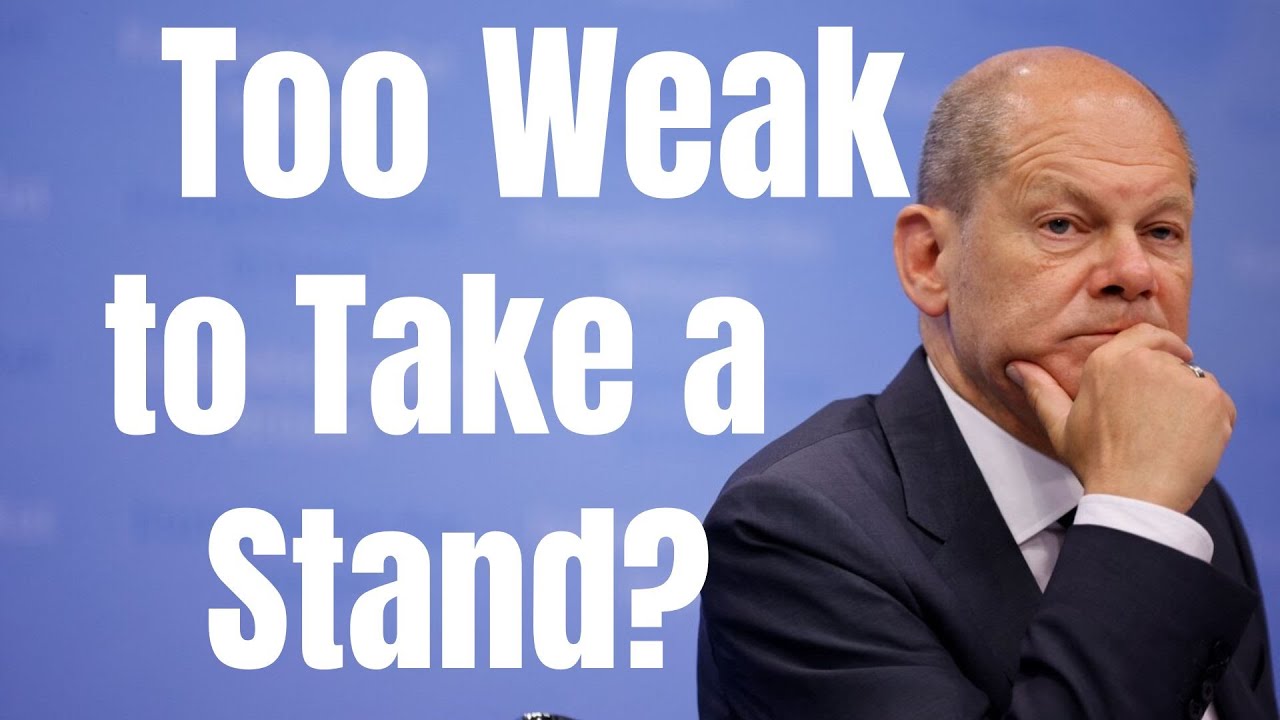
David Oualaalou argues Germany is the Ukraine war's biggest loser, citing a German Chamber of Industry and Commerce report estimating €160 billion in costs by end of 2023. Energy-intensive German industry faces 40% higher costs than 2021, with gas and electricity prices three to five times higher than in the US.
Chapters
Hello everybody and welcome to Geopolitical Trends. My name is David Oualaalou. So good to be with you as always. Well, the truth is coming out about who is the biggest loser in the Ukraine-Russia war. So you will think, as the West saying, it's Russia. It is not. The big loser is Germany. In this video, I am going to provide you insight as to why that is. But before I'll delve deeper into all this, first of all, I want to, as always, thank my channel supporters and subscribers. Thank you so much for your continued support. And for you, if this is your first time landing on this channel, please make sure to subscribe and hit the notification button so you will be notified every time I upload a new video. And thank you all for your support. Let's, let's dive in into this because it's a very interesting topic. The reason why Western media didn't want to pick up on it, because this was based on an internal report inside the German Chamber of Commerce, and I'm going to detail all this for you. So, so here is the, the, the truth, the hard facts, and the reality. By the end of this year, 2023, basically the Ukraine-Russia conflict will cost Germany about a loss that is of €160 billion or $172, $171 billion. So the German Chamber of Industry and Commerce chairman, he's the one who released the report. It wasn't the government, it was the business community that released that, estimating that the war in Ukraine would have caused the German economy as I mentioned earlier, about €160 billion, or roughly 4% of gross domestic product in missed value created, which means in a lost job, in a lost productivity. That's what it means, the bottom line. So, and by the way, this Chamber of Commerce, it's known by its acronym DHIKAI. So, I-K, I'm sorry, D-H-I-K. So in Germany, Chambers of Commerce and Industry is an organization for about 79, yes, 79 chambers, business that is, who represent companies within the German states. And it's known inside Germany as D-H-I-K. It's known in the world some. Its chairman is named, his name is Peter Adrian. So, and he's the one who told the Rhein-Post that the results of this conflict, it's gonna impact German, the GDP of Germany per capita, uh, in, because consider that Germany is the highest economy in Europe. This one now will, will be far less by $2,000 per person in Germany. Meaning a loss. So, so Adrian, the CEO of the, uh, DHIK, who was, by the way, a trained banker at Deutsche Bank, you know, and since 2017 he has been the chairman of the DHIK budget committee, and then since 2001 he became its president. So, so the question to you will be I'm sure you would be asking yourself, why is this important for me to know? Well, a lot, depending again where you're watching this from, what country you are watching this from. If your country is doing business with Germany, you're gonna be impacted. It's because of the cost. So here's the thing, the truth and the hard reality is that German companies have been quite severely hit by a rise in energy prices, which by the way reached some sort of a record high in Europe last year. You don't hear much about this in Western media because Western media, we all know, we don't need to beat the dead horse, Western media is in cahoots with the governments. That's why you don't hear the truth much about it, and that's what I'm hoping to provide you in these videos that I release for you here. So industry Germany accounts for more of a critical portion of the German economy than many other countries. And the sector, so, is often energy intensive, which means what? Means that most of the energy, most of the companies in Germany depends greatly on energy coming from Russia because they used to get it for cheap. And unlimited quantities. So here's a fact for you to consider and think about: German industry will have to spend now around 40%— yeah, you heard me, 40%— more for energy in 2023 than it did in 2021. So before, of course, the crisis that was created by NATO and the US. So the economic projection for German industry for 2023-2024 is likely less favorable to, to Germany's economy as a whole and German people than in any other country in Europe, even here in the U.S. So when you compare what's going on in Germany to the U.S., which has— because for us in U.S. we have sort of natural, natural gas reserves In France, it has a lot of nuclear power. Germany is not. Germany relied relatively on inexpensive Russian pipeline gas for many years. Now the energy prices is going up so high, you know, and this is why now Germany is considering going to— going nuclear, using nuclear power plant. Power plants. This also explains why French president now is planning on going to China. Why? Because he want to cut a deal sooner than later. You can just see it's gonna become— which is natural things to do if you are ahead of a government, you're gonna— or president, whatever— you're gonna have to think about the welfare of your country. So despite what you hear about this unity, European unity and all that, it's nonsense. No, I'm here to tell you it's nonsense. Now you compare the situation to the United States. So the price of gas is about 3 or 5 times more prominent in Germany than it is in the US, and the price of power was 4 times higher in Germany than it was in France. Once again, because the United States has enough natural gas reserves and France uses nuclear power. So, and with the, with escalating now military and civilian deaths in the ongoing conflict, which was triggered by NATO, is already and rapidly closing its gloomy sort of one-year mark. Because yeah, we just, it's been almost a year now, not almost, it was a year since the conflict started that was initiated and triggered by NATO. Let's just call a spade a spade. Yet, and here is what's mind-boggling, guys, instead of seeking peace negotiations, Western countries including Germany— that's how insane— are committed to sending main battle tanks to Ukraine. How insane and incompetent those leaders are. That just mind-boggling. I don't, I don't, I don't get it. So, and by the way, guys, if you like this video so far, please make sure to hit the like button and subscribe if you have not done so. And thank you for your support. So get this, guys, at a recent meeting that just took place in Brussels a few days ago, EU foreign ministers, yeah, all EU foreign ministers were scheduled to debate, you know, ways and methods by which to allow member countries, meaning European Union countries, get this, to purchase weapons for Ukraine jointly. And yet, Germany couldn't take a stand and say no. That's how weak Germany is. And that's how sort of incompetent the leadership in the EU. So we have it here in the United States as well. Even during the recent Munich or München Security Summit or conference, this is once a year meeting that takes place, the argument or the statements that came out from the meeting, it says that it is now, and I'll put the quote for you guys, it says, and I quote, it is now the moment to accelerate up and scale up the manufacturing of standardized items that Ukraine needs severely, end of quote. Once again, how insane these European leaders are, and yet it's the citizen that is paying the price. So I mean, we have the same here in the US, you know, we're no different than them except we're not paying some sort of the high, high energy prices that the Germans are paying. So here's my conclusion for you, because I would like to keep this concise and to the point. So clearly at this moment, so large part of the German industry are extremely dependent on the Chinese market. Yes, yeah, this is what explained now why the French president Emmanuel Macron is heading out to China. He wants to cut the deal before Germany does. And if there is a big confrontation, there is a big trouble for this part of the German society. Yeah, that's why there are German companies that they will be shutting down by the end of this year because they can't afford those kind of prices. So the energy crisis is just the latest, yeah, in a range of threats to the German industry. So for German army, sort of, uh, for export of exporting sort of companies, the next few years it's gonna be very, very challenging. It's gonna present a unique challenge to Germany just to prove that Made in Germany still refers to products rather than crisis. But we don't know, you know, it's the Germans' own making. Olaf Scholz, the chancellor, is so weak that he couldn't extend to the Americans that said no, we are not going along with this policy because we want to ensure that the— our industry stay productive and stay in business. Unfortunately, he is not a qualified chancellor to lead Germany, so, or whole Europe for that matter, is doomed economically. So, so make sure to leave me some comments, some questions if you like it, and I'll be happy to answer because I read your comments. And as always, remember, geopolitics impacts your daily life in more ways than one. Till next time, guys, bye-bye.
More from David


Beyond the Single Actor: Why the Gulf Isn't Choosing Between the US and China


Iran, Iraq's Militias, and the Houthis Are Coordinating! This Changes Everything




Who Controls the Next Decade's Resources? Latin America and Africa's Geopolitical Crossroads

The Chokepoint Trap: How Washington's Stupidity Triggered a Cascade That Now Controls the World

Trump Spooked as IRGC Unveiled dual-use SLV, Deployed Ghadir Mini-Subs & Hinted at Tactical Nukes!
