Olaf Scholz Visits to India as Germany’s Economy Falters!
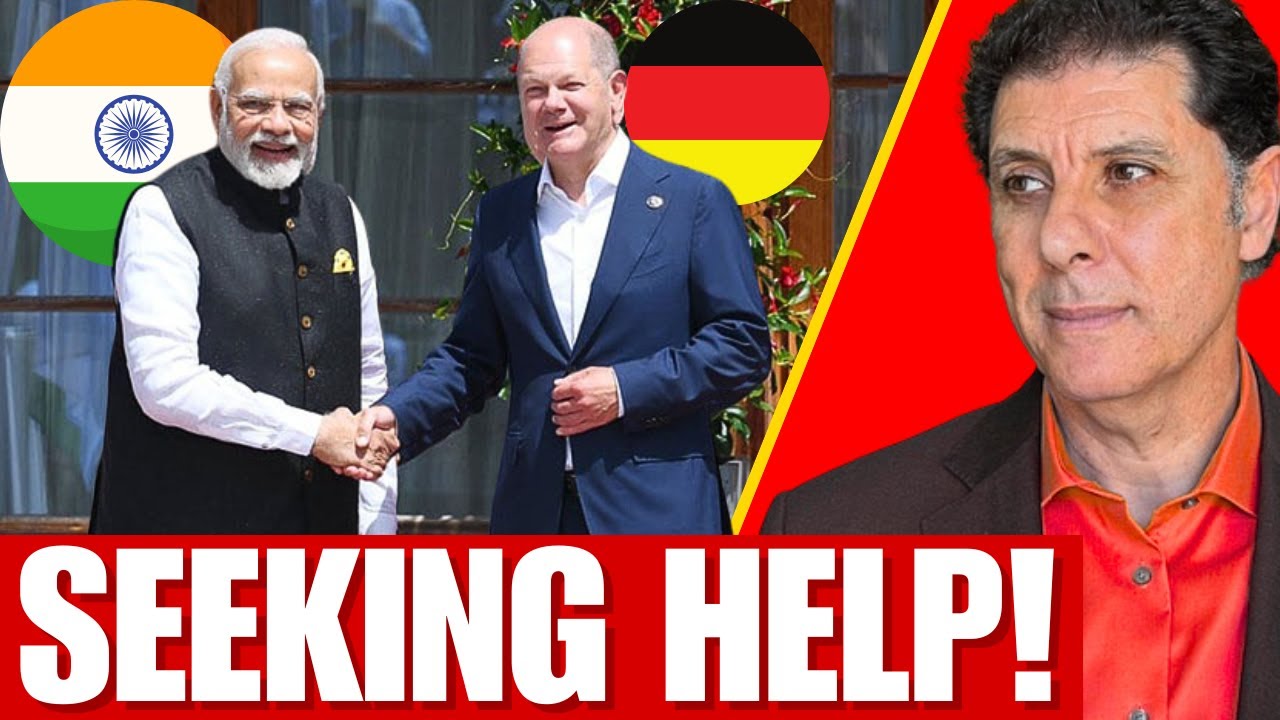
This content was created by David Oualaalou. This content was uploaded by David Oualaalou. This is a YouTube video titled "Olaf Scholz Visits to India as Germany’s Economy Falters!" (uploaded/created 2024-11-01). Based on the title and metadata, it appears to be a news or commentary-style video about German Chancellor Olaf Scholz’s visit to India set against concerns about Germany’s weakening economy. No transcript or speakers are included in the provided excerpt, so specific participants (other than Scholz implied by the title), hosts, or the exact format cannot be confirmed.
Chapters
All right, hello everybody and welcome to Geopolitical Trends, where truth matters. Excited to be with you on this November 1st. Hopefully you guys had a, a good Halloween, for those who celebrate Halloween. I'm not a big fan of Halloween, I don't do Halloween stuff, uh, but again, it's, it's the tradition, I guess. So, and I don't have little kids here that So I, I had my share of that a few years ago. But anyway, I hope you had a good Halloween if you celebrated. So anyway, excited to be with you guys because I'm going to be addressing, uh, for you today, providing you my own analysis. And that's what I do here. It's not about, uh, news. I'm not a news anchor. I'm not a— I don't do that kind of stuff. I provide you my analysis, my insights about the issues for you to see them from a different angle. So, so I'm going to be addressing today is the recent visit of the, uh, German Chancellor Olaf Scholz to India. And with that comes a lot of questions as to, you know, and we're going to be sharing all this, uh, with you before I'll delve deeper into this. But first, let me say hi quickly to everybody here. Willie Homan, as always, and Hank NG. And thank you for your response, Hank, to my, uh, latest comment, so thank you for that. Matt Becky, good to see you. You too, Z Super, as always. Dr. O, why this thumbnail looks kind of weird? I mean, just look, both faces, Moody and Olaf Scholz. Yeah, it was just a placeholder. Uh, my thumbnail guy, uh, Raj, he's gonna send me one, so sometimes I have to just have one moving forward. So, so I will change it later on. Thanks for pointing that out. Truth Seeker, good to see you. Eric Hotel, hello everybody. YT Uh, Amanda, good to see you as always. And Hamed City, Francis Tango, good to see you. All right guys, let's, uh, let me start first with the questions. And I have, uh, some key questions here that we're gonna just highlight here, then we'll go from there. So here's the first question: out of all the countries, why did Olaf Scholz pick or choose India? So There must be something there, right? So second question is, why and why now? So third question is, what does India have to offer Germany? So, and the last question is, the US perspective on this trip. Now, if there is one thing that I need you to understand regarding the global dynamics as far as international relations and so forth, there will always be a position the US will take regarding those movements, those dynamics, their exchanges, and so forth. You know, we all remember about a year and a half ago or so, and I did some videos for you guys about the movements of the European leaders, different ones visiting China one after another. Do you think the US didn't frown upon the Europeans for that? Do you think the US didn't mention that behind closed doors? We will be naive if we think otherwise. That's why I put that question here, is what is the US perspective regarding the German chancellor's visit to India, knowing that we are the ones sinking the German economy into the hole, and the Europeans for that matter. So, so this is what I'm going to be addressing for you from both angles, of course the economic but mainly the geopolitical aspects of it, because that's what I do in this channel here. Uh, I also want to just touch on some housekeeping items here. Be on the lookout tomorrow for my analysis video. So I did the analysis for a brief one, uh, make sure to check it out tomorrow. It's about G7 and BRICS and so forth. There are a lot of— I'm doing two more videos. Those are analysis that I wrote myself, spending time here and, and compacting the ideas for you guys to have a a much bigger, uh, uh, and a much bigger picture and much better understanding of the topic. So I will be releasing the video tomorrow at 07:30 in the morning. Second thing, uh, on Monday I am having Larry Johnson will be here to address the Middle East, of course, Iran, Israel, and Hezbollah. So don't miss that out because, uh, I have some really, really interesting questions I'm gonna ask, uh, uh, Larry to share with us. I am also waiting for confirmation from other guests that I reached out to. It takes time, as you all know, guys. And, uh, and, and once I hear from them, we'll schedule that. And the last thing I want to share with you is I did not forget about my China trip, sort of the video that I'm gonna do for you, as far as either livestream or recorded. So, so don't think that I forgot that. There is a reason why I am not talking much about it now. There is some stuff in the works, in, in, in behind the scenes, and, and you'll see the surprise that I promised you I will. So, all right, let's, uh, let's delve in into our topic here today. And, uh, I thought I had a picture of it, but I guess I didn't. So anyway, uh, uh, German Chancellor Olaf Scholz just concluded his visit to India. Interesting enough is that the visit coincided with the conclusion of the BRICS Summit. Now, the meeting started on the 25th of October. Modi left the BRICS Summit on the 24th, didn't even attend the planetary session, which to me, in my opinion, it was kind of disrespect. But again, I can't speak for Modi, uh, whatever he did, it's his choice. But I am looking at the, the protocol of when, especially in when it comes down to international setting, uh, in a setting like that, you just don't just take off, you know, unless it was really an emergency. Even the, the president of Turkey, Recep Tayyip Erdoğan, there was a major issue, an attack on, on, uh, on, uh, on, uh, a major company in Istanbul, which they consider that as a terrorism, but he didn't take off, so he attended these sessions. So But anyway, that's to me was the look, the way I perceived that one. In any event, the meeting between Olaf Scholz and, uh, or Olaf Scholz's arrival to India was on 25th, uh, and that was the, uh, uh, the time frame for when Olaf Scholz visited, uh, uh, India. So, and of course, and I'm not gonna get into the detail of the discussions, what they discussed, whatever, suffice it to say that it was some sort of, uh, uh, uh, on both countries, India and Germany, trying to bolster their strategic ties. Well, if you think about it, what kind of strategic ties would those two countries have in common? I, I don't know much. I do know that there is some coordination or cooperation between India and Germany regarding the Navy. But that's where, to me, where I see it ends. So, and it becomes the question, what was the motives for Olaf Scholz, out of all the countries, to go to India? Is he looking for something specific from India? The possibility is there, and we're gonna move forward as we move, as we, uh, detail this one here. Here is where that idea of the strategic interest between India and and Germany. I can only see them in one aspect and one aspect only. Both of them, guided by the US, will be for one objective and one objective only, which is the what? To counter China. That's the only way I see it. I don't— I mean, please tell me if there is another way of looking at this. Both countries will take their marching orders from the US And if their strategic interest will converge, it will converge over something like this, even though, even though German automakers are struggling to make profit because of the slow demand in China of the luxury cars like BMW, like Mercedes. And I have the, I have the numbers here, I have the links that I will share with you as we move forward. Now suffice it to say that both countries, India and Germany, signed some sort of agreements. Uh, this is about enhancing their defense, uh, sector, information technology, and clean energy, as they say. One of the aspects that took— that I took an interest in after reading, uh, certain reports has to do with the artificial intelligence. But it makes me wonder What will India offer Germany regarding artificial intelligence, or vice versa? What will Germany offer India regarding artificial intelligence? Because if we are to think about this, there are only two countries that comes to mind to this: the US and China. Yeah, other countries are working on, on, on AI. I'm not denying this, but come on, let's just— like I asked you last time, if we are to think about under whose control the AI is going to be. It's just common sense. But anyway, it was one of the areas that they discussed, uh, regarding this particular aspect. The other thing that drew my attention to this is the visit of Olaf Scholz to the, uh, uh, what do, what do they call the area? Uh, Goa. Goa, the state of Goa. Why is this important? Because I'm going to share a picture with you right here. This is regarding drones, okay? This is Olaf Scholz is shown drones at the, uh, uh, Berlin Institute of Technology and Science in Goa. So now, I mean, why, why not making fun here of anybody? So, uh, India wanted to pitch the idea of the drones for, uh, Germany to buy. But, but common, common sense will tell me, if you are to choose between India, uh, drones or DJI, which one would you pick? As a matter of fact, DJI now stopped— uh, that was way back, and I did a video for you guys about this one. Uh, it was the orders from Beijing to stop selling drone technology to India. Because the DGI were concerned, or the Chinese government for that matter, were concerned about the dual use of the drones into the military realm. For that second concern that China had was that this technology will not stay within India, it will end up elsewhere, because that's what India will do, selling the technology. So it just begged the question, drones from India, uh, And again, I don't know about those drones, the, the, the quality of those drones, but again, the Germans will have to decide it for themselves. Now, one of the key things that we need to understand, how the part of the trip came about— it was an invitation from the Prime Minister Modi. He's the one who invited the, uh, uh, uh the German Chancellor. What was it found very interesting is that Modi knew that he will be at the BRICS Summit and yet extended the invitation from the 24th through the 26th. Why would you do that? And again, just common sense to me, me talking out loud. So suffice it to say that the German Chancellor visited India twice last year. So there must be some sort of an interest into India for some other reason, whatever that reason might be. So, so let's focus on now on two key aspects: geopolitics and economics. And I'm going to start with economics, but mainly this one will have to be— has to do with Germany in itself. Well, recently, as a matter of fact, I'm going to start with playing a clip for you. Then, then I'll make my own, uh, analysis on it and, and move forward into that one. So, okay, let me, let me share the screen with you. Share screen. And here we go. And I'm not gonna play it in its entirety, guys. It's, uh, 3 minutes or so. I'm just gonna play a little bit of it, so take a listen please. Well, headquarters in Wolfsburg. Welcome, Mary. What's the mood there? Well, understandably, the mood is very gloomy here. This morning we were standing at one of the main entrances to the factory and spoke to workers as they were heading to their shift, and we spoke to spoke to one man who's worked at Volkswagen for 35 years, and he said that the mood and the situation has never felt as serious as it feels right now. But we also spoke to a worker who said, look, listen, crises come and go and company boards come and go, but cars will continue to be manufactured here. So gloominess, but also a little bit of optimism. And it felt like there was a lot of hope hinging on these talks which just kicked off here in Wolfsburg between employee representatives and the Volkswagen management, um, on wage contracts for Volkswagen's workers. And what are workers' representatives saying ahead of— All right, so, uh, I just wanted to share that clip with you because I am going to be talking about the shutdown of the 3 Volkswagen plants. And this is where, uh, here is a picture of the, uh Her name is Daniela Company's headqu— this one here is— let me, uh, just explain, uh, to you who this, uh, person is. This is Daniela Company's headquarters in Wolfsburg, Germany. And this one, by the way, she was addressing the, uh, the, uh, the, uh, workers as of October, uh, 28th. And the concern is that the layoffs You're looking at tens of thousands that's going to be added now to the unemployment in Germany. And all this coincided with, of course, the policies Germany is following, or has been following since the Ukraine conflict, which we introduced and sucked in the whole European continent for that matter. So give or take, for example, Hungary. Hungary is pushing back against the euro the European Union, because they know, they know where this is leading to. But the likes of Germany, which in my opinion lack sovereignty, uh, and, and this is the outcome now, the results of them following the policies of the US start now to emerge. This is another picture here, uh, for the gathering that took place in, in that location. And by the way, I give credit here, the picture, to Schmidt. His name is Schmidt, so I just, I need to give credit for that. So, and, and the idea, when we start to think about Volkswagen now, the, the unemployment is going, going very, very bad in Germany. But this is not just in Germany, across Europe. And when you think, take two countries, for example, the UK, and you take the, uh, for example, France. And I remember Hank, uh, and he's, he's watching his live here with us. And I got his permission to share this with you. This is regarding the UK because he resides in the UK, and I trust his information because I collaborated it and checked that information. Not that I didn't trust him, it's just that's my nature. I always like to check 2 or 3 or 4 sources to see if they all converge on the same, uh, outcome, and it turns out to be the case. So here's what Hank shared with us here: 2.8 million long-term unemployed in the UK. So claiming welfare and benefits in Britain as of 2024. So meaning what? As Hank wrote down, time to print more money in Downing Street. Many long-term unemployed people also suffer from mental illnesses, drugs, drinks, self-harm, alcoholic, gambling, homicide, psychiatry. Time to build more mental hospitals. Consultant psychiatry, community psychiatry, and secure accommodation. Time to tax the billionaires and the landlords. Ask Lord Ali for more shopping vouchers. MP ministers and MP minister only. So, and by the way, as I said, end of quote. And thank you, Hank, for that. And by the way, I checked my own sources. What I found that is that unemployment for the UK 4.4%. That is the rate that is expected by the end of this year to be 4.4% compared to 3.9%, uh, for, uh, percent, uh, percentage of during last year. So in August of this year, 2024, unemployment rate was 4.0%. Today it is 4.4%. So, and this Not only— I'm just giving you an example here, we'll apply this to Germany. Germany's unemployment rate ticks up in this month, third quarter. And by the way, their economy is contracting by 0.2% year to year. That's bad when you consider Germany is the heart of the European economy. So here's the thing, unemployment in Germany increased to about 6.1% in October this year from 6% last September, just a month ago. Second thing, the gross domestic product, GDP, in Germany contracted 0.2% in the third quarter of 2024 over the same period last year. And the last point I want to share with you about this is that compared to the previous quarter, GDP in Germany expanded 0.2%, so which means Germany is— Germany's economy is faltering, and yet they are still following that, uh, sort of the policies the US introduced to them. And this brings me also to talk about, not just because I brought two examples for you guys that I need you to understand, the other example has to do with another a major automaker. It's the BMW. BMW's profit sort of, uh, margins outlook were sluggish. Why is this? It was sluggish because the low demand in the Chinese market. And I was there in China. I did see some BMWs there, but not as many as you might expect. Because it was considered— it's considered a luxury. The same arguments I could make about Mercedes, which Mercedes profits dropped this quarter because of the low demand in China. So the Chinese markets remain very important. And this brings me to my earlier question: why out of all the countries Olaf Scholz will pick Germany? Of course he got the invitation, but doesn't make any sense. You have to go to where you're gonna get economic incentives. I don't know, he has to think, uh, of, uh, so, so the shares of the BMW tumbled nearly— get this, guys— 12%. So that is major. That is major when you compare this one to, uh, uh, some other entity, uh, that their percentage were only about 10%. And all this, all this because the German economy, uh, requires now an overhaul. But what's at the heart of the trouble in the German economy? What do you guys think? Tell me one word. Give me one word answer. In your opinion, what is at the heart of the German economy's collapse? In one word, let me see if you guys can, uh, and again, I just want you guys to be part of the conversation here. Oh, oh, plane, you got it. Rample S1, you got it. Amanda, you got it. Oil. Hank, gas. You guys got it. Energy. Energy, it's at the heart of it. And because We never— and I was aware of this from way back when, and I was in, uh, in Washington at the time when the information came up that we were listening to the cell phone of Angela Merkel. So to me, an ally doesn't spy on an ally. You don't eavesdrop on your ally. But again, it's the norm for Washington. What do you expect? Uh, but that's not my point. My point was about— because during that era when Angela Merkel was. Just think about it, guys. Think about the relationship between Germany and Russia at that time, the Russian Federation. So, and how much energy was flowing from Russia into Germany at a discounted price or very cheap? And where was the economy of Germany? It's moving up. We got so concerned about allowing Germany to get too close to Russia economically. And this is where Olaf Scholz, following the policies that end up now having to buy gas and oil, whatever, from, from the US at 3 or 4 times the price. Then the unemployment is going up, then the factories are shutting down. You got the idea. So, and I was talking to— recently I was talking to a German individual. Literally, I met the German individual, uh, his name is David I met him in Shanghai. So, and we were talking, he's like, yeah, we don't get it. We don't get the idiocy of Olaf Scholz. There's a German who's telling me that one. So I didn't have to say it. So, so it was the idea. And this brings me back to my original question. Why will Olaf Scholz go to India? And the only thing I could come up with, and again, it's my own opinion, uh, uh, take it or leave it, sort of don't consider it, whatever. The idea that India will be selling energy to Germany that India is getting from Russia and doubling or tripling the price— I mean, I, I really— I was last night, I was thinking, what could it be that India will offer Germany? And that's the thing that keeps pumping up in my head— energy, because they will get it cheaper. Well, cheaper meaning India getting it cheaper from Russia but selling it to, uh, German 3 or 4 times the price. I could be wrong, but that's what I'm thinking. Because when I think about technology, when I think about infrastructure, when I think about trade, finance, whatever— what does India has to offer Germany? I, I just don't see any concrete evidence suggest, like for example, the Chinese market. And this is not about China, whatever, it's about what's factual, you know. When you think about automakers in Germany, why they need the Chinese market? They don't say they need the Indian markets because a BMW in India will be too expensive for an average Indian citizen, you know. That will be the elites in India, and, and that's part of the structure of society there. We're not criticizing India, how it On— in China's market, it's a different story. The sheer size of the Chinese market is too big to ignore. And this is where the one thing that came to mind was the energy, because if Germany— here is the thing, guys— if Germany now can have its hand on another cheap energy, it will rebound economically. But we're not gonna let that happen. Because Germany is under our thumb. So is other European countries, the likes of UK. Yeah, those are the key one. France, give or take, but France will still have to toe the line with Washington dictates. You know, you think about Eastern European, Poland is another country that now you're getting a pushback inside. My recent trip to Poland a few months ago, you can just sense the mood. And I talked to some people, just a conversation, a lot of people do not feel comfortable when they are in front of a camera, for example. They just don't feel comfortable, you know. I used to feel the same way, way, way back. But again, that was due to the nature of my work. My work was done on the sensitive side, and we would never seek the spotlights. Even when we were offered the idea of taking picture with the President, I was like, I don't give a damn about President. I don't take picture with the president, I don't care. So it was always, you know, it's not like who you rub the shoulders with, whatever. No, it was the same time. But so some people don't feel comfortable. But anyway, the conversation that I had in Poland was that people are pushing back against the government because they seeing their countries going the wrong direction. So Germany is kind of too late for that. It might not be too late if the people decided who they're gonna vote for soon next time. Will be to reverse course. But I just don't see how that's going to happen when we are having over 30,000 troops on their soil. So, so, and this is one of the idea that now Germany is suffering from, in addition to the shortage in the skilled labor force. This brings me back to the idea of, uh, uh Oh, what happened? I don't know. This brings me back to the idea of, uh, when you see, uh, you know, workers now, all of them wondering about— because those people have families, they have, uh, you know, there's a lot of concerns and all that. Germany is also dealing with another issue, and it has to do with the EU policy regarding immigration. So the Germans are starting to feel like, what are we doing here? You know, you can't just allow whomever. This is one thing I experienced in China. Why, when you cross even from Hong Kong into mainland, I had to go through immigration. Did I have an issue with it? No. And it was as smooth as it didn't take much. You scan your passport, they have the information, and that's it. If there was any issue, they would have, you know, asked me questions, whatever. But it wasn't. But to me was the idea of they need to know who's coming in and who's leaving the country. Do you blame them? No, I don't. Was it a hassle? No, it wasn't. It's because if it takes only 10-15 minutes to go through the process of checking, why not? And, and Germany, they can't do that, you know. But also this ties to the aging population inside Germany. Germany is gonna— is dealing with a major issue. As a matter of fact, the next 10, 15 years, they're going to be struggling with their retirement accounts. Same can be said about Canada. Canada, in about 15 years, based on the research that I did, about 12 to 15 years, they're gonna be struggling with their, uh, with their retirement accounts. So what do you do in this case? You need to have a workforce. But if you are bringing just people, those are not skilled laborers, that becomes a problem. And this is why, if you remember, and I'm going to share something with you that took place few years ago, when the Syrian conflict started, what did Germany do? Germany end up allowing about a million and a half children from Syria. Why do you think they did that? Oh, because they care for Syrians? No. They didn't. It's because when you bring in those kids, those kids now, they're just little, you know, 2, 3, or 4 years old, whatever. So it's gonna take them till they start working at the age of 18. And in meantime, they acquire the language, they learn how the social structure is in Germany, so they'll become Germans basically. And by the time they reach 18, they'll start contributing to the economy by paying taxes. That was the reason why Germany did it. It's not they care for the civil war, whatever. If they care that, they would have done it for other countries like Yemen, like Iraq, like Afghanistan, in Africa. No, they don't. You know, Europeans are playing double, double, double face hypocrisy, that is. And this is where you need to— and to put this in perspective, within the trip of Olaf Scholz to India, what will it be for? If it's not for energy, that some deal of sort will be cut between Germany and India for India to— because India is getting oil from Russia at a discounted price. The problem that I always, and I mentioned this before, and no offense to, to India, is that Russia didn't press India on paying in gold rather than rupees. Because what they gonna— what the Russians gonna do with the rupees? And this is one of the challenges I believe is going to limit BRICS from issuing its own currency. I don't see that happening anytime soon, uh, might be in my lifetime, maybe not, but I can see also India objecting to this one here. So, so, uh, shortage of skilled labor is also another issue that, uh, contributing to the stagnation of the German economy. So And even for Mercedes-Benz, you know. So now Mercedes-Benz is set up to cut cost. How do you cut cost? By eliminating jobs. So because it's the, the sort of the tepid— and I use the term that I got from the article here— tepid demands and the fierce competition from China. So And it's like what I saw back when I went to that BYD locations and, and they allow me to record there. And I went inside the car, said, you won't believe how comfortable that car, luxurious. And when I asked how much, they said, yeah, this one here is about $28,000, and this one here is about, uh, uh, I'm sorry, it was about $20,000, and this one about $13,000. So why will I buy a full— a BMW or Mercedes for $35,000 or $40,000? That's how much they cost here. It's about $45,000, and that's not the high-end BMW. So, and this is why the— even for Mercedes, and Mercedes itself now it cuts its full-year profit margin target now twice during the third quarter. It shows— this is an indication, guys, of how the economy of Germany is going down. No matter what you read, no matter what you hear, same thing the UK is saying, oh, we are rebounding. The Britain, they're lying. All Western governments are lying, straightforward. I mean, for us even here in the US, you look about this saying what the inflation is, is enough. That is not what I'm seeing when I go outside. I was just in grocery store yesterday, you know, I, I can tell the prices, you know, I kind of know where things are. And no, there is no easing of inflation. So the governments will have to, to lie about all this one. And, uh, Germany is no different. And this is why, uh, you, you think about the shares of those high-end cars— BMW that sort of, uh, tumbled by about 12%. Volkswagen now sharing 3 factories with with tens of thousands. We're not talking about, uh, 2,000, 3,000. We're talking tens of thousands because Volkswagen is big, very, very big. I even see— I saw— I'm sorry, I saw really Volkswagens in China. Those are electric, by the way. So, and it was surprising to me. That is where I see. And all this, it ties us to, uh, for example, when you think about the contemporary, uh, Ampex technology known as Cattle, or CATL. So what this company is, a Chinese battery manufacturer. As a matter of fact, Hank, once again, he shared this with us, and I'm going to share it with you guys. Uh, uh, CATL China may be sanctioned by the US. Why? CATL is a major producer of batteries in China. If Congress sanctions CATL, how would it affect Tesla? Ford, BMW, Mercedes-Benz, Volkswagen, Audi, Fiat in the US and Europe. Uh, good question, Hank. I couldn't agree more. Without the market in Europe, the planned cattle factory in Hungary may be scrapped because you all know the deal that China decided to build a factory in Hungary and another project in Serbia. Well, if they are imposing sanctions Why would China invest all this money in? It's because we are pressuring Europe. We don't want them to move up economically because what makes a country prosperous? The economy. It's not the war machine, it's not the conflicts, it's not the, the, the fighting in foreign lands, and it's the economy. So, and this is why when you think about, as Hank mentioned here, Without a market, uh, in Europe, the planned cattle factory in Hungary may be scrapped, and another cattle factories in California, Michigan, and Nevada may pull the shutters too. Time for all Chinese companies to exit the US and NATO countries. 100% decoupling and 100% de-risking. Now invest in 160 other countries around the world. End of quote. So, and by the way, to those who might not know about CATL, once again, Contemporary Amperex Technology Corporation is a Chinese battery manufacturer and technology company founded in 2011 that specializes in manufacturing the lithium-ion batteries for electric vehicles and energy storage system, as well as battery management systems. Known as BMS. And thank you very much, Hank, for sharing, uh, all this with us. Now let's talk about geopolitical aspects of it now. Now, and the question that comes to mind quickly, quickly, quickly, given the history of Germany: why Germany has learned the wrong lessons from history? And I had a chance to read an article by Edward Lucas, and I'm gonna uh, put it for you guys. I'll put this for you. And this pertaining to the, of course, Russia and Ukraine, because this what— that's what triggers now the, the downfall of the German economy and Europe for that matter, is the Ukrainian conflict which we introduced. So, so Germany— Germans remain with it, with it, to historical and geopolitical delusions. Spot on. Because you will think that Germany will have learned from history. So makes you wonder why Germany still sending, for example, ammo and weapons to Israel. Why Germany was the one, uh, sending, uh, certain type of submarines to Israel. It was Germany. Now, were Germans ordered by the US? There is possibility that it's a business transaction, but I can also see the influence the US. It's the same argument I could make about the Saudi decision, which by the way, I, I just finished an analysis for you about. I know I did a live for it. The analysis is different. The analysis is much more in-depth in a concise format. So I will release that in due time soon, in few days. So the same argument I could make, you know, despite the Saudi saying, oh, it's the geopolitical considerations No, there was the US pressure from behind the scenes. There is no other way. And geopolitically speaking, in the case of Germany here, you will think that, uh, uh, uh, uh, Germany will have learned its lessons from history. So why make the same mistake again? This is why a whole Europe is struggling, struggling with standing on the right side of history regarding the Gaza issue. They're struggling. It's because— that gives you an idea— they're still under the whip of the US. These transatlantic relations, we are controlling its destiny and direction. Till the Europeans free themselves from the shackles of these transatlantic relations, nothing will change. You just meet the new boss as the old boss. Look at the UK PM, the idiot, uh, uh, stammer, uh, uh, you know, the idiot Olaf Scholz, the idiot Macron, the, the idiot Meloni, uh, you, you name it. You guys got the idea. Even Finland. Finland, you used to think it was used to be neutral, you know. The idiocy of the Finnish politicians now dragging their country into the hole. Should a conflict erupt, they will be first to be wiped out. Because they are on the border right there. And they have lived, lived in peace with the former Soviet Union and with the Russian Federation, no issues whatsoever, till we came in, pushed them into signing, uh, agreement to getting into NATO. And we signed an agreement bilateral, just us and the Finns, about allowing us to put 15 forward base The base is on their territory. I'm hoping to visit Finland one day and go see with my own eyes. I will know what to look for, a FAB, because I used to work in that stuff. So not that I can get in— you can't get in because it's, it's a, it's parameter and you can't. So, and this is where the idea of, uh, sort of, uh, uh, the, the thinking even in Germany that we care for them Oh, we put in Germany on a pedestal. The same thing Indians are thinking. India in, in, uh, this is why India will not cross the US the wrong way. This is why India will have to do what the US says. And the same apply to Saudi Arabia, the same apply to Egypt, same apply to United Arab Emirates, to Qatar. You got the idea. To Italy, to France. You guys got the idea. We still have that dominance over there. Systems. Why? Because we have the key ingredients to influence the trajectory of their political and economic, uh, destinies. And when I didn't even talk about Australia, I didn't even talk about Japan, I didn't even talk about South Korea or Philippines for that matter. So you can just see, you can just see, all this gives you an idea, uh, in perspective to tie it back to this geopolitical aspect as to why Germany isn't nearly as important as the US thinks, but we are using it. That's why we put— we didn't put the 30,000+ troops in France, we put them in Germany. I mean, literally, guys, the optics of it. You got over 30,000 troops, foreign troops, on your soil. Even the Saudi government back then, they, they never wanted to disclose that because they were afraid of the population that might revolt against the monarchy. Because that was what was at the heart of it. But we all know we had a quiet base there. So still till today, and it's not classified, by the way. Uh, as I always tell you, I can't share, uh, sensitive information, but if you know where to look for the information, you'll, you'll find that out. So, and this is why when you think about it, that for us here in the US, both political parties, the Republicans and Democrats, they are thinking in terms of, well, we put Germany at the center of this so-called transatlantic relationship. No, no, no, no, no, we using Germany to serve our interest regarding this transatlantic relationship. And this is why there is this concern now about the outcome of the US elections. You know, if Trump wins, you know, the direction of NATO might not be the same. As a matter of fact, Germany now has always— has pushed, uh, has, uh, uh, uh, declared that it will only provide $4 billion assistance to Ukraine. Wouldn't it make more sense to invest the $4 billion inside Germany so the factories like Volkswagen won't shut down? It tells you where the priority is, because they are told which— what kind of priorities ought to be. So, and this is why I wanted to highlight this to you briefly, guys, here. And I am gonna conclude this and answer some of your questions. What was the purpose of the trip of Olaf Scholz to India? So, and again, the only conclusion that I could reach was to ensure the flow of energy at some sort of discount. I don't know the deals that's going to be worked out, assuming that's what it is. But that's, that's what's at the heart of it, uh, the trade and all that. You think about it logically, guys, and pragmatically. Nothing against India, but what does India has to offer Germany as far as technology and so forth? So, and Germans are very, very good at what they do. So to them, a market in China or in even the US or some other locations will be far better. So Anyway, this is what I had to share with you guys. I know it's short, but I— you know me, uh, if I don't have something of substance, I am— I stop talking. So in any event, uh, I'm gonna answer some of your questions. Uh, once again, just to remind you, be on the lookout for a video, and please hit the like button. I will really, really appreciate it. And share this video with others. Like I always say, I need to cross over 100,000 by the end of next month. So you guys, I count on your help for this one here, uh, like what you did for the Asia trip, which I'm very, very grateful to. So, uh, speaking of, uh, a trip, here is the link to Buy Me a Coffee, uh, here for those who wants to support the channel. Uh, uh, if you can buy me coffee here, that would be very great in support of the channel. Uh, I'll be very, very grateful. Awesome. All right, let me answer some of your questions here, guys, and we just go from there. Oh, Hank, you are most welcome. You're most welcome. I just saw that right there. Uh, Q with 7E: Dr. O, do you think Germany is afraid to lift its head up— excuse me— because they will forever feel guilty about the Holocaust? Uh, not necessarily that. I mean, do you know, but on the other hand, just to be pragmatic and realistic, do we judge the German people for the past? No, no. To me, in my opinion, no, I won't. That's like the same arguments I could make for the Chinese experiencing the atrocities of Japan, you know. Do we blame the current people of Japan for that? Not necessarily. And I saw a lot of Japanese tourists visiting China. You know, I'm sure they are aware of the atrocities their country committed. I am sure also that the Chinese, the older generation, didn't forget. We never forget. Whether they forgive or not, it's their prerogative. But I'm sure they also shared it with the young generation as to what took place back then. So, but do we blame the current population? No. So I don't think so. What I think, Q7E, is that we do not want to let it slip away, that Germany will get closer to Russia economically, because that will be a game changer. Europe will prosper, and if Europe prospers, that comes with other territories, including, for example, the currency. So you remember Europe back then when I, you know, my younger years back then, I used to travel across Europe. I have family lives in scattered in Europe. And, and each time I go to visit whomever, I have to change the currency. When I will go from France to Germany, I have to change the French franc to the German, uh, mark. It was till we proposed the euro currency, lump them all in one. But on the other hand, how can you put, for example, uh, the currency of Greece with that of Germany or France? Or whatever else. So, so I think it has to do more with ensuring our dominance over the political and the economic trajectory of Germany. I hope I answer your question here. So, uh, let me, uh, block, uh, Ajit Desai. Okay, let me find out where that is. Uh, yeah, thank you, Rumples, uh, S, for— let me, let me find out where this Ajit and, uh, okay, I'll just put him timeout. Okay, uh, yeah, if, if anybody, if you guys get anybody here, we, we, uh, we put the person out, out of this conversation because I, I just will not tolerate this kind of nonsense because it's our community. We all take this responsibility, guys, into this, not just me. I, I can't watch everything. I'm just by myself here. So, so thank you, Rampraz, for pointing that out. Uh, okay, what is the— uh, I'm looking at another question from you guys if There is one. Oh, I'm glad that we didn't get— because there's a sort of weather, is, is, was raining very hard, and I was concerned about the connection, but it worked. It worked so far. So, uh, okay, let me see another question. Uh, Lloyd Johnson, thank you so much, man, for your support. Appreciate the kind words. Always great show, Dr. O. Thank you very much. Uh, let me see another question. Uh, Francis Tango, what do you think about the whole Middle East and Ukraine? When will peace come? It won't, sadly. I say it with a— I say it with a heavy heart. It's because we, we take responsibility. I, I criticize my country, they don't like it. The government doesn't like it, but you, you can— responsible citizen will have to put forth the truth on the table, the facts on the table. It's because the love and the care that I have for my country that I speak the way I speak. If I didn't care, I wouldn't even be doing this. I got plenty of things to do. I got my speaking engagements to do that I can just go do 1, 2, 3 speaking events for the year and I'm done. But that is not what life is all about. If you can't contribute to making it better, then what use are you? Your existence becomes nothing but a hollow existence. And I don't know how someone can live with him or herself in that fashion. The same with the corrupted people. How can they live with themselves, looking themselves in the mirror when they know they are corrupting the people they are representing? They are cheating on the people they are representing. They are lying to the people they are representing. How can they live with themselves? And the same arguments that I make, you know, I criticize my country because my country has been doing the wrong thing. And this, just to go back to your question, Francis, it has to do with we never wanted peace in the Middle East. We never want that. We frowned when the Chinese broke a peace accord between Saudi Arabia and Iran. We frowned at that. This is why I think we pressured the Saudis regarding this. We say, if you want us to let that go, we are going to do what we're going to ask you to. Saudis themselves, you know, the survival of the monarchy depends on the US providing them security, uh, providing them an outlet if things go bad. Because there is a plan out there— I am not going to discuss this because it's, it's classified— but there is a plan out there for the monarchy should things go wrong, with the location and everything being taken care of. So just to highlight to you, yeah, it will be no peace in the Middle East. Why? Because if there is peace, there is prosperity. And we don't want that. So the, the Ukraine, uh, conflict, we created it. You know, as I mentioned to you before, guys, the Ukraine conflict didn't start in 2022. The Ukraine conflict started in 2007 when the plan was being start to hash. If you look at the record, read a, a, a, a memo, or, uh, it's this— it's, uh, declassified now. It was a memo that at that time, uh, uh, William Burns, who's now the current CIA director, was the ambassador and wrote it, wrote it at that time as far as how to destabilize the Russian system. So why would you even get involved in destabilizing another country? Let them live, man. If you want to do business with them, do business with them. If you don't, let them be. And in 2007, things start to be hashed till 2014. You all know what happened with the elections. We didn't like the outcome. It's the same arguments that is going on right now in Georgia. And you will think that those idiots there, whomever is doing this, as far as, well, the votes was rigged and all that stuff, you will think they will learn from what happened with the former president, Mikheil Saakashvili. Idiot. He was an idiot. Well, he was educated right here in the US. We the one who put him there. And we said, hey, you go and fight the Russians, we will defend you, you have a whole NATO behind you. When the Russians sent the troops, took over Abkhazia and South Ossetia, he's reaching out to Brussels, he's reaching— he was reaching out to Washington, are you guys coming to help me? It's like, help you with what? What, are you out of your mind? You want us to fight the nuclear Russia? And the Russians took over Abkhazia and South Ossetia, it became part of Russia. And the population there wanted to be associated with Russia, not Georgia. And the same argument here, when you see, for example, uh, and, and I take it back to the Saudis here, uh, and I'm elaborating a little bit more here because the Saudis are, uh, this is part of what the analysis I'm gonna release for you. It was a strategic mistake, you know, a strategic mistake of them to turn down a full membership with BRICS. They're gonna pay the price down the road. But also because we didn't want that to happen, because we know when you take that into consideration, in addition to the BRI, the Belt and Road Initiative, sky is the limit. That means the Middle East will prosper. That means the population will, uh, move out of poverty. Look at just Iraq. How was Iraq before? You know, if you only know the history of Iraq and the role it played in the Arab culture It was sad to see when I was there. And even I argued to the best of my abilities against the invasion. I said, you don't want to do this, you're going to alter history forever. Iraq will never be the same, the Middle East will never be the same. Oh, don't worry about it, Mr. Oualaalou, we're gonna just go in and go out quickly, liberate Baghdad. I see you going, you are staying there for the next 15, 20 years, and the livelihood of the people, that will never be the same. So that is the reason why, uh, I don't see the peace. Even though now you have Iran and Saudi Arabia in agreement, we will find another, uh, uh, uh, uh, uh, flush point that we're going to create somehow. Now you have the Gaza issue. So, so the next one, it's working on pulling Iran into the conflict. And this is something I'm going to address with, uh, Larry on Monday. All right, let me do one last question here before I leave. Oh, Hamad City, thank you so much for your kind support. Hamad City has been supporting the channel behind the scenes, guys. There are some of you, uh, you do not know the names, you do not know sometimes behind the scenes They've been supporting the channel. Hamad Sidi is one of those. Hang is one of them. Francis Tango is one of them. You know, there are some— I'm, I'm just mentioning few names. I can't remember everybody. So thank you so much, Hamad Sidi. Truly, truly, truly appreciate your kind support. So, uh, uh, last question from Timeline Dunkley. Iran shows off Russia fighter jet in Iran and Israel government says that is a threat. Israel government said they're going to bomb Iran to Israel. No, no, no, that's just what they're saying. Uh, remember, when you get into conflict, uh, one other thing that coincided with the development of conflict is called psyops. And psyops, part of it has to do with the dissemination of the information that you can feed the narrative. So for example, And I'm gonna give you just quick example, even though it happened in life. Uh, if, if you are to see a conflict about to emerge and you want that conflict to move in a certain direction by scaring the population, what do you do? You fly a plane and you drop leaflets that says, uh, leave the town, you don't want to be hungry because it will be no food, or revolt against your government because your government is going to starve you. Or something into that effect. So you— that's what they call psyops. You start to play with the emotions of the population. And so, so when Israel said they're gonna bomb Iran, come on, you think Iran is Iraq? That will be a fatal mistake for Israel to think that way. Israel already dug a hole for itself. I ain't coming out of that easily. If you only know what's taking place from southern Lebanon. So, and, and this is why if they're saying, where we're going to go bomb— no, they, they won't be able. And Russia did provide some advanced radar systems. So anytime you have an advanced radar systems, what comes with it? Missiles. So Israel will have to think twice because the Iron Dome proves that it can handle let alone if you're talking about the fast-speed, uh, uh, missiles and so forth. So, so that's the way I see it working. Uh, oh, Fernanda, thank you so much! Truly appreciate your kind support. It means a lot, and I am very, very grateful to all of you guys. No exceptions. No exception. Thank you so much, Fernanda. Okay guys, I'm gonna sign off here. I have some, uh, a few things to work on for the stuff that I shared with you, uh, as far as the upcoming videos and all that, and prepare for next week. It's no rest for me, it's work constantly because it's my commitment to you, you know. If, if, if you realize that I don't care, I won't even answer the questions, the comments you guys put in, okay? I read everything. To me, that's the commitment. So, uh, no, I don't, I don't, I don't opine on other YouTubers, whatever they can do, whatever they want with their channel. For me, that's how it works, and it shows my respect to you, because if you give me your time, uh, I'm hoping to give you something back by a knowledge that will be of use to you. That's why I don't talk about kitty cats playing and that silly video stuff. I don't— it's not my personality. So, uh, John Richard, uh, thank you so much for your Super Sticker. Truly appreciate you. Uh, and I can see the euro there, so you must be in Europe somewhere. So thank you very much, Richard, uh, John. Truly appreciate you for that. Okay guys, uh, One Horn, you are most welcome. You're most— you're almost welcome. Uh, yeah, uh, Muslim Revert, thanks for the thumbs up. Yeah, please give it a like. I will really appreciate you guys. So, uh, wishing you a good weekend, uh, be safe, and I look forward to seeing you on Monday for my conversation with none other than Larry Johnson. Till then, I hope you find this very informative. As always, remember, geopolitics impacts your daily life in more ways than one. Till next time, guys. Bye-bye.
More from David


Beyond the Single Actor: Why the Gulf Isn't Choosing Between the US and China


Iran, Iraq's Militias, and the Houthis Are Coordinating! This Changes Everything




Who Controls the Next Decade's Resources? Latin America and Africa's Geopolitical Crossroads

The Chokepoint Trap: How Washington's Stupidity Triggered a Cascade That Now Controls the World

Trump Spooked as IRGC Unveiled dual-use SLV, Deployed Ghadir Mini-Subs & Hinted at Tactical Nukes!
