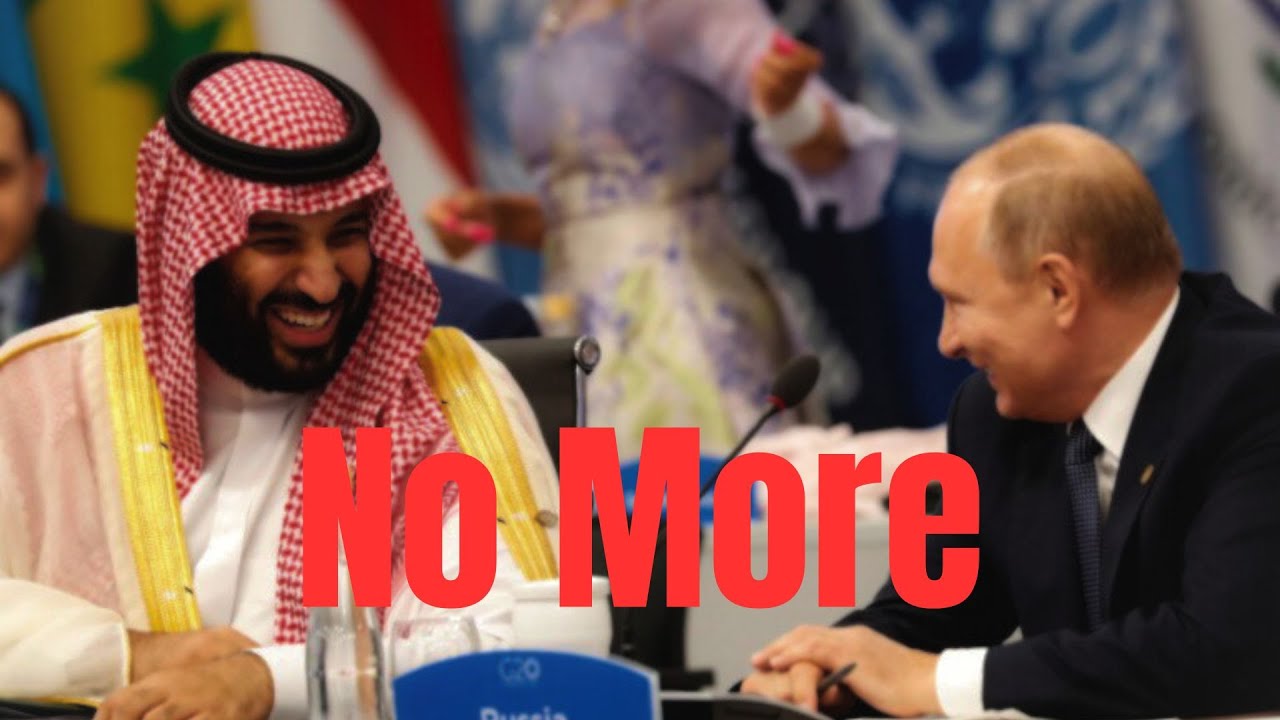
Geopolitical analyst David Oualaalou explains why gas prices are rising: OPEC+ production cuts, Saudi Arabia's shift toward China, and the U.S. lack of modern refineries for foreign oil. The petrodollar's dominance is fading as the world moves from unipolar to multipolar power.
Chapters
Hello everybody and welcome to Geopolitical Trends Show. My name is David Oualaalou. I'm so excited to be here. This is, I think, my second video. I'm gonna just try to keep up with this because I am gonna be launching a lot of videos. I think some of the guidelines for YouTube is you have to have about 15 or 20, whatever that is. In any event, I am not about that. I am here about the content because I want you truly to be aware of what's going on. So, so here is the question for today that I'm going to start with before I'll get into the detail about my background as far as what qualifies me to talk about this. And the question is this: why are you paying higher prices at the gas pump? You know, some of you— we all of us ask that question. Some of us, and I said, well, because I have no choice. Other will say because the government does it. Few of us will think about geopolitics impacting that. And this is why, what I'm going to be talking about briefly here, because I want to keep these videos really concise, to the point, because I don't want to come on the air just to be rambling here because I have to have a video. I don't believe in that. If I have something to say, that is important, that is of use to you, then I'll, you know, that's what I'll do the video. Otherwise, no, I refuse to do that because anyway, so excited to be here. And, uh, as I said last time, new channel just launched about a few days ago. So please make sure to subscribe and hit the likes and the notification buttons so you can at least be aware of when I upload some videos. Your support means a lot to me. I've already noticed some people already subscribe quickly. It means tremendously a lot to me, and I thank you for that because you're so— without your support, it will be, it would be no channel here. So that's the bottom line to it. So, so I thank you for that. So make sure to spread the word about this, uh, this channel. And I'm not new to YouTube, you know, I've been around long enough. So, so you will, you will find me once you dig enough about my last name, and I'm gonna provide you a bio about myself. But let me share just few qualifications before I delve deeper into the issue here. So, so I am geopolitical consultant. I am a veteran award-winning educator and a former international security analyst in Washington, D.C. I am also the author of a few books. There's this, the last book is called, oh, I had it backward or upside down, The Dynamics of Russia's Geopolitics. I have another one here, which is the Fallout of the House of Saud, The Fall of the House of Saud. And I have this one here, The Volatile State: Iran in the Nuclear Age. I am also the author of many, many articles. Some of my publications have been translated into more than 10, 12 languages, including Arabic, Chinese, Farsi, German, Russian, Turkish, Spanish, and, and, and others. So those publications basically address wide range of topics that includes global energy markets, funny enough that it's interesting in these days, international security, global affairs, trade, finance, US foreign policy, international business, and, and more. And we'll have a link for you at the bottom of the description in which I will put a much, you know, detailed bio for you. So my point of why I want to just to provide this brief bio is to highlight to you that I bring to the table not only my academic or credentials, academically speaking, but also me being on the field, you know, because here's the thing, my experiences on how geopolitics, global security, energy issues, and even domestic and international business intersect is founded on my doctoral studies and a focus in international security, but also as a veteran, a military veteran aboard in the field, abroad rather, in the field with the elite military forces in Afghanistan, Uzbekistan, Iraq, Saudi Arabia, Yemen, Bolivia, Ivory Coast, and many other countries, about over what, 30 countries or so. Because here's the thing, in my opinion, this firsthand experience or interactive with the reality on the ground is necessary. Why? To offer the most relevant analysis for you on how current geopolitical system is reacting to current regional and global crisis. I mean, you range it from Ukraine crisis to the trade war between the US and China, to the Taiwan Strait, to the now the upcoming elections in Brazil, which I will talk about in some other video. All this, having that experience of being in the field, allows me to provide that objective assessment. And I am here, one thing I want you to know, you will expect from me is honesty. I'm gonna be truthful in what— if I don't know something, I am going to say Sorry, I don't know. I will find your own answer. But never ever you will expect from me to just say thanks for, uh, to sound intelligent, whatever. I refuse to be that one because I want to start— since this channel is new, I want to start from the get-go because I don't want to start on the wrong foot here. My objective for this channel, and I want you to get this one, guys, my objective for this channel is to create a community. Like I said in my introduction, uh, of, of the channel, we want to create— I want to create a, a community in which we can all exchange ideas. We all have to teach each other. Just because I'm sitting on this end doesn't mean I know it all. I'm still learning from you guys, and that's how it's supposed to be. And I am also, like I mentioned before, open to your suggestions as far as the topics you would like me to cover. Because here's the thing, whatever topics pertain to geopolitics, you know, because I live and breathe geopolitics, they're just part of my, what I deal with on a daily basis. I have to know what's going on around the world because I believe geopolitics impacts all of us no matter what, no matter where you are. So I take this opportunity also to extend my thanks to all of you who joined me last time on a live stream from different parts of the world, from Kuala Lumpur and Johannesburg to Toronto and Churchville in New Zealand. It was so great to see diversity online just attending the live stream, and I intend to be doing those more frequently because to me, again, that's where the exchange of ideas comes in. Because we all strive for a peaceful world. I'm a believer of live and let live. No, the world doesn't belong to one power or whatever. I, I just, you know, the world is changing. Anyway, let me dig into the topic. As I said, in this channel I will be providing you a brief analysis in understanding first of all why things happen, you know, because if there is one thing you need to understand and keep in mind No matter what, when it comes down to international affairs, geopolitics, whatever, context matters. You put things within context. So to talk about why are you paying— well, not just you, but me also and all of us, but just to address this one, why are you paying high prices at the gas pump? You have to put this within the global context. Yes, you can say, oh, the government decided on this, or the oil companies. No, no, no, no. There is other events that takes place behind the scenes. You know, sometimes governments disclose those events, otherwise governments don't, and they have their own justification and reason for. Because there is one thing you need to understand, the government does not, or mainstream media for that matter, does not want you to be well-informed, because if you become well-informed, you know, you become a threat of sorts because you start to ask questions that matter. So here's the bottom line to this. Why are you paying high prices at the gas pump? Well, of course, this comes on the heels of President Biden, you know, expressing his displeasure with OPEC+ decision to cut oil production. Well, usually the US is sending warnings. Wait a minute, it's kind of odd and weird. Who are you to issue warning to other countries? Those other countries are sovereign states. They can decide whatever they want. And OPEC+ is a cartel. So who are we to dictate to them? And by the way, because the argument of the president of the United States or the White House for that matter, is that this cut, this oil cut production is gonna sort of raise the price of fuel and put the world's economies at risk. Yeah, but world economies have already been at risk before this decision was made 3 days ago by OPEC+. So let's not just overlap the stuff because the government will just throw the information out of people. Doesn't matter whether they understand it or not. What the reality is, Average Joe and Average Jane might not understand the basics of what this information is all about. Why? Because it has to be broken down. It has to be broken down to the level of where Average Joe and Average Jane can understand this, what it means to him or her. That's the bottom line to it. So when the White House talks about, oh, the global economy is at risk and all that, no, no, no, no, no. They were at risk before this because the world is changing. That's the reality of it. We are shifting from a unipolar to a multipolar system. And there is something into that effect. And, and we'll get into this. Before I move further, further, uh, some of you have asked, and I remember reading a comment, uh, and I appreciate all your comments, please, because that's where I learned from you as well. And I learn what your concerns, and I learn what you will, your suggestions and so forth. Well, one of my subscribers suggested for me to detail what OPEC is. I don't write this, it's fair. Because none of, again, I want this channel to be for also the average Joe and average Jane, assuming they have time to sit down and watch my videos because I'm going to break it down in a simple way to make sense out of it. As I always call it, geopolitics simplified. I want to simplify it. So OPEC+, what's OPEC in general? OPEC refers to a group of about 23 producing countries. That includes, you know, within this 23, it includes 13 countries. Those 13 countries are Saudi Arabia, the United Arab Emirates, Iran, Iraq, Kuwait, Algeria, Angola, Equatorial Guinea, Gabon, Libya, Nigeria, the Republic of Congo, and Venezuela. Those 13 countries form OPEC. Okay, then there is OPEC+. Remember, OPEC+ is part of OPEC, but the members are different. In OPEC+, you have 10 countries, and that includes Russia, Azerbaijan, Bahrain, Brunei, Kazakhstan, Malaysia, Mexico, Oman, South Sudan, and Sudan. But usually there's one thing I want you to understand. When you talk about OPEC+, yes, you— we are referring to those countries, but truly we're only referring to one, and you guessed it right, Russia. Why? Because Russia is a major oil producer. But Russia decided not to be part of OPEC. It wanted to be part of OPEC+, which means what in a simple term? They can hold sway in influencing the directions in conjunction or cooperation with OPEC members. And even when you think about OPEC with all the 10 countries, the 13 countries rather, who is the most influential in that OPEC? Saudi Arabia. Why? Because they produce massive amount of oil. You know, as a matter of fact, the whole Middle East— this is why Middle East matters in the global geopolitical landscape. Under the ground in the Middle East, there are about 240 billion barrels of oil. Yes, 240 billion. So that's why Middle East is very important. And later on, I'm going to provide you an insight into the link between geopolitics and oil so you can put again things in perspective. So now the Washington— the White House rather is literally angry, angry at OPEC+. And even the President of the United States wanted to sort of, uh, he, because he told reporters, and I will, I will, uh, uh, quote him on this. Let me get the quote here for you so, so I can, uh, quote it accurately. And he said, and I quote, we are looking at alternatives that we may have to counter the expected price increases. You know, now here's one thing I want you to understand. Anytime you hear a politician or president or a head of state or whatever or whomever mentioning the word alternative, you can always think in terms of sanctions because it just happened last week in Europe with Ursula von der Leyen, which is the commissioner of Europe, whatever her title is, when she said regarding the Italian election, sanctions because a different government came in Italy that is not anti-EU, but they don't care for the EU. So Ursula von der Leyen said that, and I quote here, "We have tools," which means what? Basically, we have possibility of imposing sanctions because the EU has always threatened Hungary, for example, with a $7.2 billion disbursement that will not be given to Hungary. So my point, anytime you hear politicians using the term, we have alternative, think about no one. But the advisor to the president, the economic advisor that is, his name is, I think, Brian Deese, if I remember, because I read through the transcripts. And I think his name is Brian Deese. He disclosed that what could it be included in this alternatives? Well, for example, withdraw an additional amount of oil from the Strategic Petroleum Reserves known as SPR. Every country has an SPR. We do have it here in the United States. Just for those who might not know, or if you happen to be an American, from an American audience here watching this video, just for you to understand how SPR works for us here in the United States. Only the president can authorize release of oil from the Strategic Petroleum Reserves. That's the bottom line to it. So it issue an order signed by the president, executive order, and withdraw the oil from that. But here's the problem. Few months ago, The United States, President Biden, or United States government decided to withdraw some oil from the Strategic Petroleum Reserve, SPR. But guess where that oil was used? Not here in the United States. It was sold to China. So if you are an American, you're going to be asking the simple question, why on earth The government withdrawing oil from the SPR and selling it to a foreign government while the Americans, American people are paying high prices at the gas pump. This is why I ask the question, why are you paying high prices at the gas pump? Because it defies logic. It doesn't make sense. Second thing is that oil in the SPR does not belong to the government. It belongs to us, the citizens. Because in the Constitution it says that the government is for the people, by the people. Sad to say, and I will say it because I don't sugarcoat things, sad to say that most Americans do not understand the content of that sentence. The, uh, the government is for the people, by the people. So this SPR withdrawal of what? It's a clear indication that most of us do not understand. Plus, it's the responsibility of the government to take care of its people first. That's like when we give or donate money to foreign countries, like what we're doing today with Ukraine. Billions of dollars are going at the expense of the American citizen. And it could be you or me or all of us if we happen to be American citizens watching this. I have no problem personally with helping others because we are on this earth here, we're just passing through. Like I said, we wanted to create community in this channel. Why? To exchange idea for understanding how we can sort of promote peaceful world. So I have no objection of helping others. But I also have to question the judgment of the government. You can't just be— you, the government, cannot just be throwing money, which is taxpayers' money, by the way. We have the right to know where that money is spent on. Fair question, isn't it? So the other thing has to do with this alternatives is the— to impose restrictions on exports. I find this very, very, uh, uh, confusing. You know, here is the administration that's saying this, yet at the same time, when President Biden became a president, his first course of action, you guys know what it was? He signed an executive order to ban the import of oil using the gas pipeline from Canada. It's called the Tarzan oil or something like that. So you, the President of the United States, cutting oil export, import from Canada through the pipeline, which we can use. And now you're saying we're going to have to put restrictions on export. Once again, this is what I want you to understand. Put things within a context. You know, government can just say whatever, mainstream media can just say whatever. Do we understand it? And that's why I saw the need for a channel like this to at least break down the concepts into simple language that you and I can understand. I do find it also very confusing When the United States saying, well, there are some voices, of course, uh, well, we have enough oil here, we can use and all that. Well, that's just hype. That's what we call political rhetoric. Yes, we do have a lot of oil, except that the oil in the United States versus the one in OPEC members, whatever, it's different in quality. The oil here in the United States is dirty. We call it dirty. The oil in other countries is sweet oil. And the difference between the two is simple. The difference between sweet oil and dirty oil. The sweet oil does not require a lot of refinement. The dirty oil does. So here in the United States, I will argue, why didn't we have, why didn't we build refineries. We send in billions of dollars to other countries. We could build our own refineries. Yes, I know it doesn't mean that tomorrow we will be refining oil here. It takes a while. But I've been hearing this argument for the last decade plus. Can you imagine if we would have started back then by building brand new, up-to-date refineries? We won't be dealing with the energy issue here today. And as a matter of fact, I'm going to share one information with you that sometimes you're not going to hear from— not sometimes, you won't hear from the mainstream media. And the information is this: about 5 years ago, 4 or 5, I don't remember exactly, we asked Saudi Arabia, okay, we, the United States government, ask Saudi Arabia to update refineries in Houston. We do have refineries in Houston, and I live in Texas, so I'm very familiar with where all the refineries are and the strategic petroleum reserve locations and so forth. So, and the Saudis said no. And guess what the Saudis did? They went ahead and built brand new refinery in China, tag price about $10 billion. Why do you think that happens? There are two explanations to it. One is they want to keep the United States dependent on the Saudi oil. And two, Saudi Arabia sees where the next trend is headed, which means Asia is going to become the next economic hub for the world. Why? Because the world is shifting from unipolar system to a multipolar system. When I say shifting, I am referring to the economic outlook, the financial outlook, the social outlook, and of course the geopolitical or political outlook as well. And this is why it was a conversation between the Saudis recently, about 2 months ago, between the Saudis and the Chinese about the consideration of the Saudis accepting payment from China in the yuan instead of petrodollars, because most of the transactions, at least for Saudi Arabia, are only conducted using the US dollar. That was the deal back in the 1970s, and maybe one day I'll do a special video about that one. But again, you need to ask yourself question, and this is why I said it's very important for you to understand the content. You put things within a context and see also the trends of where we're headed. Just imagine this: if Saudi Arabia drops the US dollar and start to accept the Petro Yuan, what do you think is going to happen to the US dollar? And this is exactly what we're seeing right now with this sanctions on Russia, but China and India and Iran and Pakistan and some other— Turkey, some other countries still buying oil from Russia, but using different currency. So which means what? That US sanctions could become useless. And that's personally where I see the world is headed. I will be talking about the financial aspect also, because you need to understand where things are headed financially so you can prepare and have a plan. Because here is the, the reality, and I, again, I don't sugarcoat things. I say them the way they are because I am not here to sound intelligent. I am not here to, uh, just, you know, talk about kitty cats and I am here to provide you insights on issues that matter to you, that will impact you, impact your family, your finances, your health, your well-being. So I can't just sugarcoat it. I have to present the facts to you and let you reach your own conclusions. And here is the fact that if, and this is a big if, if Saudi Arabia, for example, drops the US dollar from the payments, of its oil and start accepting the Chinese yuan. The US dollar value will drop, which means some of us Americans, life will turn very hard so quick because we are a society, our wealth is based on debt. Once again, if you are an American, you know what I'm talking about. Everything is conducted through credit cards, because we have nothing to back. That's why we, we get out of the gold back in the '70s. And that's why Russia and China, for example, start piling on gold, because the next currency is going to be pegged to the gold. Hard, tangible assets— gold, uh, uh, silver, platinum, uh, rare earth mineral, you name it. Ours, you know, is backed by debt. And that's a conversation for another day. But just for now, I want you to keep that in mind. So the economic advisor of the president is saying that, well, we're going to have to work with Congress about all this, which is nothing but hype. Congress doesn't care for the American people. You know, this is why you see the rating of Congress is so low. I mean, that would be a mistake if you trust Congress. I personally won't. So like I said before, you always have to consider trends. So, and what do I mean by this? Within the context of this, you take into consideration the statement by the Russian Deputy Prime Minister Alexander Novak. And the statement, I believe, was on Wednesday, if I'm not mistaken. And he said that Russia may reduce oil production. You notice the word may. We all know Russia's going to cut oil production, but you need to understand why. Cutting oil production not only in support of OPEC+, but also for another agenda. And that agenda is to counter the repercussions of the West's imposition of a cap on the Russian energy prices. The European Union is saying, "Well, because of the Ukraine war and so forth." Let me explain this in a simple term. And I'm going to give you example because I will be giving you guys a lot of examples to make my point. You go to grocery store, okay? We all go grocery store here. And you want to buy something. You go to the shelf, you see that thing says $10, okay? You take that thing, okay? You want to buy it, but you're going to go to the manager of the store and say, hey, I want you to sell this thing to me for only $5. What do you think the manager of the store is going to tell you? He's going to tell you, "Please leave my store and get out." This is exactly what the EU or the West, for that matter, trying to cap the Russian energy prices. You can't do that for a simple reason, for Russia or any other country. Those are sovereign states. And what do I mean by sovereign? That means they are independent in doing whatever they want. Of course, according to international law, according to the norms and so forth. But to go, you, government, whatever, go and dictate to other country what to price their oil, it just doesn't make any sense. And this is what I said, you have to really consider and keep in mind the trends of where things are headed. There's another alternative, another trend that you have to consider. The United States is looking to reach out to Venezuela to ease sanctions on Venezuela. Why? To allow Chevron, which is the largest major oil producer in Venezuela, to pump more oil. I mean, it's laughable, won't you think? Because here is the thing, you, the United States, sanctioning this country, Venezuela, sanctioning it to the max, then you go into Venezuela and say, hey Venezuela, we need your help, can you pump more oil for us? What do you think Venezuela is going to say? Yeah, it's laughable. And I'm not laughing because I'm laughing, I'm laughing because it's concern to me. That's how fragmented our foreign policy has become. It has been for the last 30 years. We didn't have any foreign policy to begin with. We have no strategy. We just react to events. Because what we have in Washington, DC, those policymakers or decision makers, whatever you want to call them, Amateurish. They have no clue in understanding what geopolitics is all about. You can't force your way around the world anymore. So you are sanctioning country to the max and going and asking it for help? It just defies logic. And, you know, makes the United States look on the global stage. Like, you know, are they aware of what they're saying? Even in the EU, once again, another trend in the EU, because you have now industry leaders saying that this OPEC+ decision to cut oil production is going to lead to higher prices in oil. Especially when it comes down to Middle East oil. Why is that, you may ask? Because Middle East oil meets about two-thirds of Asia's energy demand. You take China, you take South Korea, you take Japan, you, you take Indonesia to a degree, even though they have some, but not, not not finished. It's just common sense. So there are concerns now in the West about what this is going to do. And this is why China in this case, and India for that matter, refused to bow to the West's pressure by cutting off the purchase of oil from Russia. China and India said to the West, No, we are not going to do that because it's the interest of our country. Later along, they are buying oil from Russia at a discounted price. As a matter of fact, I just find out 2 days ago or so that China is selling gas to Europe at a higher price because Europe now has no alternative but to purchase oil, gas from some other countries 10 times the amount. This is what you will be seeing in Europe in the next few months as winter comes in. There is a crisis in Europe when it comes down to energy. You don't hear much about it in Western media, and that's by design and for a reason. The ECB, which is the European Central Bank, You know, they just had a meeting recently and they're gonna sort of release their, uh, what do we call it, analysis or whatever they call that, white paper. They're gonna release that one soon and in it they're gonna have to disclose the idea that European countries or Europe as a whole is expected to experience more economic hardships because they don't have— Europe doesn't have an alternative to Russian gas and oil for two things: proximity, Russia was closer, and second, cost. It wasn't costing much. Europe to buy gas from Russia because Russia is a major oil producer. You're looking at 300 billion cubic feet. Europe uses about 30 billion or so. You can see. And this is why the question came about who was behind the sabotage of the Nord Stream 1 and Nord Stream 2, which is fascinating. And by the way, I will be talking to you about that. Yes, I know it happened about a week ago, but issues like that never go away. You know why? Because you need to understand what is the role of sabotaging something, what is its long-term objective. And this is what the majority in the West, or the world for that matter, do not understand the implication. I was a Washington insider. I used to work in Washington, so I kind of understand to understand the dynamics when a government embark on a certain policies, what the reason for it is. So to go back to my talking point about ECB, the European Central Bank, is that it expects that the Eurozone to have some serious problems and mainly in Germany. Why Germany? Because Germany is the heart of the European economy. So the European Central Bank, you know, will publish this, that report. I don't know when, but soon, because last minute, I think they are required by law to disclose that, you know. And basically, I'm here to tell you ahead of time before it comes out what you're going to be expecting from it, assuming you read it or whatever. So what you will expect from it is that in the report The ECB, the European Central Bank, is going to cast more light on how much concern there is in Europe, especially they're going to jack up the interest rate as the slowdown in the eurozone economy is becoming increasingly serious. As a matter of fact, in Germany, certain companies will be shutting down. By the end of the year. Once again, I highlight to you the impact of energy when it comes down to the global system. So here is the thing. The, uh, uh, my thinking is that, that I want you to understand that geopolitics affects energy. And you look at it right now with the Ukraine crisis. You look at it right now with the trade war between the US and China. You look at it also with the tensions in Taiwan between US and China over Taiwan, which is a fascinating topic by itself. But I also have to look at it in terms of the upcoming elections in Brazil. What will it mean? So, because here is the reason why oil prices— keep this in mind, guys— oil prices are always susceptible to political outcomes. In other words, if there is any conflicts in the world, it will impact oil prices. If there is peace in the world, it will impact oil prices. Yes, I agree with you, there is the supply and demand, But it goes beyond that. Supply and demand, the law, supply and demand by itself is not enough. So that's why if you can think about it this way, if there is an interruption to the flow of oil in the Middle East through the Strait of Hormuz, what is going to do to the global economy? What's going— this is why I asked the question last time, will a rise in oil prices and all that lead to a war? And I am a student of history. If I am to tell you that Japan lost the war in World War II because of lack of access to oil, that's how the Allies end up defeating Japan. If Japan would have had access to oil, I believe it would have been different outcome. And I always find it fascinating. The other thing, it has to do with global energy consumption. You look at the two main countries, China and India, when it comes down to oil consumption. And I believe I will be talking to you about BRICS— Brazil, Russia, India, China, and South Africa. And just between these two and over 2.2 or 2.4 billion people, consumers, you can just see the need for energy, access to energy. And this is why India and China refused to bow to the West's pressure to limit their purchase of Russian oil. They said, no, we can't. And that's what you would expect from a country to look after its own interest. Because in international affairs and geopolitics and all that, it's all also about securing your interest. That's just how it is. And this is why, if you noticed, the relationship between China and Russia— I'll take this just as an example, also because I wrote about it in my book, the Russian book, uh, and, and, and I did enough research to see the detail of it. So the reason why I want to bring this to highlight to you, this significant focus in the last few years on 3 sectors. One is energy, two is military, and three is technology. But I focus mainly, I take special interest in China's energy focus when it comes down to Russia. Why? To highlight to you how, for example, Beijing is financing projects in the Arctic, you know, and this stems from the fact that China will benefit from investing in the energy infrastructure, which is pipeline, you know, because in the Arctic, estimated untapped oil and natural gas is about $35 trillion. So you can just see it makes perfect strategic sense. Uh, what I'm gonna be doing in my videos, guys, just for you to know, I will always leave you with a question. And this is just food for thoughts for us to talk about, whatever. So I always think of questions that I feel will trigger your thinking to start to think outside the box. And here's the question for today: Will the price of oil go above $150 a barrel? I repeat, will the price of oil go above $150 a barrel? Let me know what you think and leave me a comment and I will get back to you. As always, remember, geopolitics impacts your daily life in more ways than one. I look forward to seeing you next time. Till next time. Bye-bye.
More from David


Beyond the Single Actor: Why the Gulf Isn't Choosing Between the US and China


Iran, Iraq's Militias, and the Houthis Are Coordinating! This Changes Everything




Who Controls the Next Decade's Resources? Latin America and Africa's Geopolitical Crossroads

The Chokepoint Trap: How Washington's Stupidity Triggered a Cascade That Now Controls the World

Trump Spooked as IRGC Unveiled dual-use SLV, Deployed Ghadir Mini-Subs & Hinted at Tactical Nukes!
