OPEC+ Rejects US Plea for Oil Production Increase!!!
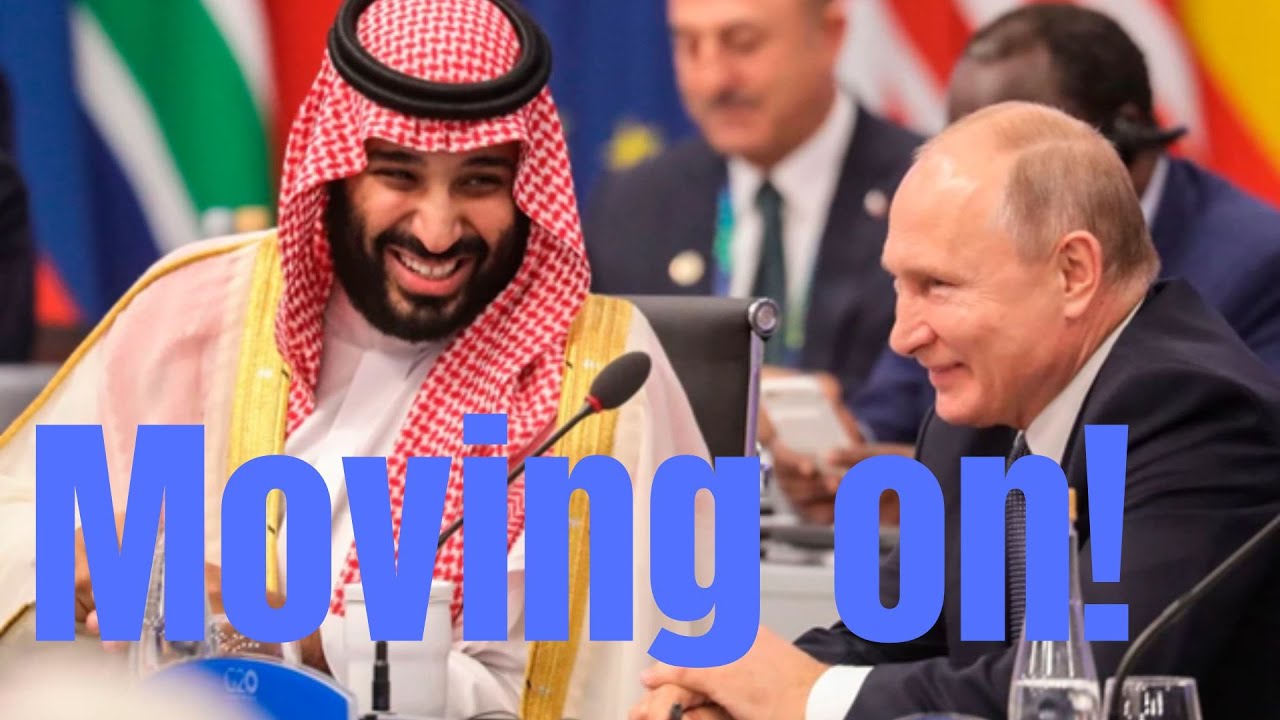
David Oualaalou explains why OPEC+ rejected the U.S. request to increase oil production, keeping output flat after a 2 million barrel-per-day cut in November 2022. Saudi Arabia's willingness to price oil in non-dollar currencies and align with Russia and China signals a shift away from U.S. dominance in global energy markets.
Chapters
Hello everybody and welcome to Geopolitical Trends. My name is David Oualaalou. So good to be with you as always. In a surprise move, OPEC+ agreed to keep oil production unchanged. What a surprise! The US was expecting that OPEC+ was going to increase production. No, no, no, ain't gonna happen. So in this video, I am going to provide you insights into not only how significant this announcement is, but also the implication will have on what you are paying at the gas pump. Yes, because it will translate to what you are paying at the gas pump. So, but before I'll delve into all this, let me first express my sincere thanks and appreciations to the channel's members and supporters. Thank you so much for your continued support. And for you, if this is your first time landing on this channel, make sure to subscribe and hit the notification button so you will be notified every time I upload a new video. And thank you all for your continued support, so I truly appreciate it. Let's dive in into this topic, something I'm very, very familiar with given that I wrote a book about the Saudis, Saudi Arabia, and, and I kind of understand how they think politically speaking. So, so I'm gonna detail this for you as I move along. So what it looks like, the OPEC+, the oil-producing exporting countries plus other countries including Russia, ignores the US request and moved forward with the policy of maintaining the current oil production. It's like, so what do you expect? Just because the US says so, other countries gonna bow? That era is gone. We already shifted from a unipolar to a multipolar. So the question that is upon us now is, what will this announcement mean for the global economy and the energy markets moving forward? That is the, that is the key. So in its recent meeting, which took place on February 1st, OPEC+, the Joint Ministerial Monitoring Committee decided to maintain the current oil production policy, as the group, OPEC+, that is trying to balance now between sort of China's demand for energy, of course, but also the fear about a slowdown in the global economy. You know, there is a third element to all this. Is the US interest rate, and I will address that as I move along. So, so OPEC+ group, which as I said earlier include the members of the Organization of Petroleum Exporting Countries, the OPEC members, there are 13 of them, then plus the producers that include Russia because Russia is a member of the OPEC+. So, so the OPEC+ agreed to reduce because remember last year In about, uh, what was it, about October, November, someone like that, OPEC+ decided to reduce the production, cut oil production by about 2 million barrels a day, or about 23% of global demand. And that started in November. I don't recall this one because I had to read some articles regarding, uh, the, the global energy output. So, so the oil market is also focused on an interest rate decision by the Federal Reserve later this week. So you can just see, the reason being is because investors are hoping that the Federal Reserve will signal an end to its monetary tightening. Well, the Federal Reserve doesn't even care, you know. And by the way, FYI, most of us Americans do not know that Federal Reserve has nothing to do with the government. It's a separate entity, independent altogether. So, so here's what happened. You know, a senior Saudi official celebrated the country's decision to defy the US last year and cut its output of oil. You all remember when President Biden went to Saudi Arabia begging for oil and they said no. So what does it mean? All this, what does it mean? It means that the Saudis are cementing a new approach to world affairs. And in another move, that is, Saudi Arabia is now unafraid. It's not afraid of the US. If we upset— we, the Saudis in this case— if we upset the White House, so what? This is exactly what the move means. So, so Foreign Minister Faisal, his name is Prince Faisal bin Farhan made the comment at the Davos Economic Summit in Switzerland on January 25th. It was a panel discussions, and I usually listen to this kind of discussions just because in this kind of panel discussions, that's where you get the hint of what lies ahead down the road. So the prince made the announcements during the panel discussion. He addressed the diplomatic spat that sort of erupted between the United States and Saudi Arabia last October after the Saudis announced alongside with Russia that they will cut oil production. And that's what exactly they did, cutting it by 2 million barrels a day. At that time, the Biden administration believed it has secured sort of a deal with the Saudis to boost production in a bid to cut inflation, which is, by the way, it was a key domestic priority for the Biden administration. Unfortunately, things didn't work out that way. So US officials and top Democrats were enraged by the Saudis' decision, and the two countries, Saudi Arabia and the United States, which are ostensibly sort of allies, they've been for decades, exchange accusations and insults. You know, Saudi Arabia has always insisted it's made the decision for economic reasons. Well, yeah, but also strategic one. And this is why, again, like I always say when I address this kind of topics, you have to look at the big picture. So you put the decision or the announcement of Saudi Arabia wanting to join BRICS within this context. So, by the way, if you like this video so far, please make sure to subscribe and hit the like button on the screen. And thank you for your support. So Prince Faisal said in Davos, and I quote here because I got the quote, I read the transcript for it, energy security is absolutely key. And here, what we feel in the kingdom is that stability is absolutely the key to that energy security. End of quote. It's an interesting statement, but it's also a subtle one because Saudi Arabia figured out that it has also another large markets in Asia, China and Southeast Asia in India. No. So one of what we believe— the, the, the press continues— one of, uh, we believe the success of, for instance, OPEC+ has been it has been able to deliver relatively stable oil prices, one that is predictable by both consumers and producers. This is why I said at the beginning, what will this announcement will mean for you at the gas pump? Because you're gonna have to understand those geopolitical decisions translates into what we pay at the, at the pump. You know, that, that's just the reality of it. So, so here is now where you have analysts from the West on both sides of the Atlantic, in Europe and the US. So analysts saying that one of the reasons the Biden administration didn't follow through on threats to retaliate against Saudi Arabia over the oil— the cut was that oil prices didn't spike. Yeah, as some had expected. No, no, no, no, no, no, that's not true. That is not the reason why. The truth is that the reason that it was the fear of the United States that if they would have threatened Saudis, Saudis will end up transacting, dropping the US dollar and using other currencies in their petroleum transactions. That will be the end of the US dollar hegemony as we know it. That is the— that's why I disagreed with those analysts who said this, and I found out that from both sides of the Atlantic, those analysts are saying, no, no, no, that's not true. That is not true. The truth is that the US was so concerned that if they push the Saudis too hard, the Saudis will drop the dollar in the oil transactions. And mind you, I did a video for you guys just last week that the Saudis announced now they're gonna be transacting in non-dollar currencies. That's the writing on the wall right there, so. So from an economic, uh, uh, point of view, China figures out that it makes sense to secure access to energy from two main oil producers in the Middle East, Saudi Arabia and Iran, in addition to Russia, to support its undertaking, to support its economic machinery. China, that is. So this is why the expectations that China's economy is gonna rebound in this year moving forward. So, so this undertaking is most likely to go on for many, many years. That's what I, that's what I see, uh, happening moving forward as one who wrote a book about Saudi Arabia and truly understand how they think politically and strategically. So, so here's my conclusion for you. Saudi Arabia's defiance of the Biden administration over oil is one of the ways the kingdom is steering a new and more independent foreign policy. So, and that foreign policy is driven by not the king, King Salman, but rather its de facto leader, the Crown Prince, MBS, or Mohammed bin Salman, that is. The latter is pushing Saudi Arabia closer to Russia and China and perceptions that the US global power is waning. That is the truth of it. So to me, I always say this: the alarm clock is set for a wake-up call to truly place the American-Saudi relations under the microscope of reality. Which is leading me to the conclusion that even long-lasting relationships will eventually come to an end, soon— sooner or later. So is the Saudi-US relations coming to an end? Would you like to address this topic further? How about leaving me your questions in the comment section and I will answer them for you in a live stream setting? So as always, guys, remember, geopolitics impacts your daily life in more ways than one. Till next time, bye-bye.
More from David


Beyond the Single Actor: Why the Gulf Isn't Choosing Between the US and China


Iran, Iraq's Militias, and the Houthis Are Coordinating! This Changes Everything




Who Controls the Next Decade's Resources? Latin America and Africa's Geopolitical Crossroads

The Chokepoint Trap: How Washington's Stupidity Triggered a Cascade That Now Controls the World

Trump Spooked as IRGC Unveiled dual-use SLV, Deployed Ghadir Mini-Subs & Hinted at Tactical Nukes!
