Operation Iron Strike: What the Second Round of Attacks Could Mean?
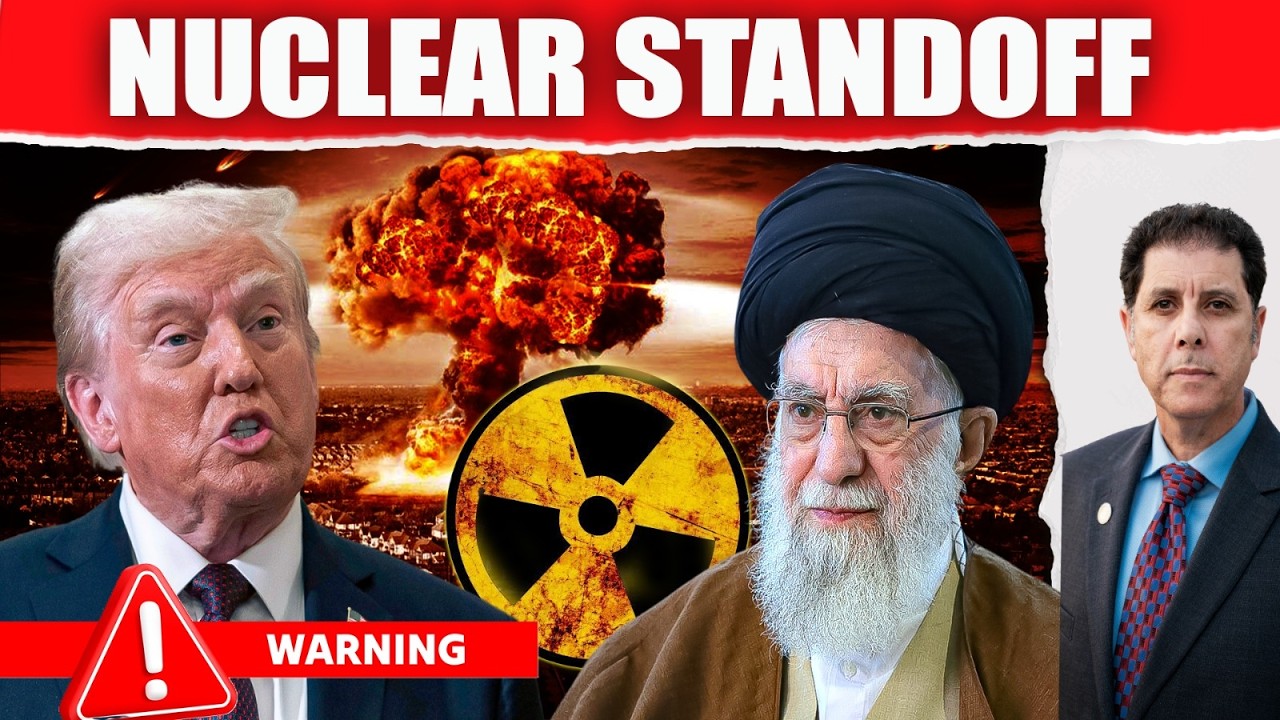
After US airstrikes on Iranian nuclear facilities in June 2025, tensions escalate toward a possible second strike during Ramadan. Iran refuses to abandon enrichment, shifts to offensive military doctrine, and upgrades missiles and radars. Trump threatens fighter jets and regime change; Israel's Operation Iron Strike could act unilaterally; a Chinese spy ship tracks the US carrier. Oil prices already up 3 percent.
Chapters
Hello everybody and welcome to Geopolitical Trends, where truth matters. Excited to be with you as always. Here's the thing, imagine this, you are sitting in Tehran or Damascus or Tel Aviv right now, and if you compare this to the last 6 months, you have watched the, the US sort of at least for the countries in the region that depends on the United States for their security, uh, or even deterrence, conducting these military strikes on Iran. That's— they did back in, in June. So if you are Iranian, you are watched, or you have watched now at least, the US and Israel attacks your nuclear Saeeds, which what happened back in June. You've seen your air defenses being overwhelmed, and now you have to decide, you know, do you capitulate and give up your enrichment program, or do you rebuild and race towards nuclear weapons? If you are an Israeli, you've got a narrow window, maybe a few months, maybe a year or two max, before, at least in the assessments of some Israelis, Iran will become too dangerous to touch. You've asked your superpower ally for full backing. Donald Trump in this case has given some, but not everything. And if you are Trump, you are trying now to manage something that is spinning out of control. Demand from an ally for a deeper escalation, a defiant adversary, nuclear weapons, and a region that is watching now to see if American commitments actually mean anything. This is where we are today, and the stakes couldn't be higher. And that's what I intend to provide you my analysis about in at least this livestream. I will be doing some recorded videos for you moving forward. So you'll be seeing some other more in-depth analysis in a brief setting of recorded Here is what happened. You have Donald Trump stated as of yesterday that Iranian Supreme Leader Ali Khamenei, in quote, "should be very worried." And this following the reports that the negotiations between Washington and Tehran had collapsed. That's exactly what was reported yesterday from Washington. That the United States is closely monitoring now Iran's movements. And that's why Donald Trump stated, and I quote, "I heard that Iran is trying to restart its nuclear program, and we will send fighter jets again if it does so," end of quote. Now this is blabbering from Donald Trump. This is hyperbole. Because Iran's today, or Iran's position or situation today is very different from what it was in June. And that leads me to ask the key question: could Trump military gamble blow up the entire region, West Asia or Middle East? It's worth asking the question. And this, in my opinion, is not only substantive question, but it's also timely. Because you have to consider what took place on June 2025. This time around, the risks are even more, are higher. And this is where the statements from Donald Trump about Ali Khamenei, oh, should Ali Khamenei be worried? Not necessarily. Not necessarily. Because what Ali Khamenei stated also is also drawing a line on the sand. That is exactly what he stated, and that's what I'm gonna do for you in a recorded video that I'm gonna release soon. So Donald Trump stressed that the United States would not have succeeded in achieving peace in the Middle East if not been for the destruction of Iran's nuclear capabilities. I have to push back against Donald Trump's statements because there is no sort of the evidence or the 100% truth that is exactly the case. One thing that I'm big concerned about the statements from Donald Trump is that he's adding that Washington will not allow Tehran to rebuild those capabilities. Yeah, okay, you're arguing on one end here, and on the other hand, you are— you, Donald Trump, in this case— supporting the protesters in Iran, saying that the country is in chaos and renewed— that's what Donald Trump renewed— his warning to the Iranian Supreme Leader Ali Khamenei that he would be very concerned about the stalled negotiations, and I'm gonna get into that in a second. So for now, I wanted to provide you the landscape to understand at least where this is. I've been keeping my eyes on it for the last few days, and that's exactly why right after this, shortly after Donald Trump's statement, uh, uh, Iran Foreign Minister, uh, uh, Abbas Arakchi announced that the nuclear talks with the United States were scheduled to take place in Masjid al-Husna. That's exactly where, which will scheduled for around 10:00 AM on Friday. There is now back and forth regarding the venue for this. And when we consider that the military action to date, could the next strike from the United States on Iran, could the next strike take place during the month of Ramadan. Remember, the month of Ramadan is going to start in about 2 weeks, to my knowledge, about February 17th or 18th. So the US already, when they conducted the airstrikes on Fardau facility back then, even with that, it marked a significant escalation. And that's the first large-scale US strike on Iranian targets in nearly 40 years. That should give you an idea as to, okay, is the US adamant about attacking Iran? And is Iran ready to deal with whatever? Because when you consider the current tensions, the US military has positioned nearly constant surveillance flights and dozens of military planes the dropping of loads of cargo at US bases across the region. This is exactly what is going on right now. And with the arrival of the Lincoln Carrier Strike Group in the Northern Arabian Sea, of course, there are those who will argue for this one. You know, are we talking about Persian Gulf or the Arabian Sea? Those two different things here, just to put it in perspective. The air defense systems that include THAAD and the Patriot missile systems and at least 7 additional F-35 crossing the Atlantic. This is exactly what is going on as we speak. And you add to this the regional complications. When you consider in the past, in June 2025, when the US conducted the strikes in conjunction with Israel. The Gulf countries, you know, United Arab Emirates, Qatar, Bahrain, Kuwait, Oman to a degree, have increasingly come to see Israel's military expansionism as a threat. And this happened exactly one week after Israel's attack on Doha. This is why the Saudis went ahead and signed the mutual defense pact with none other than nuclear-armed Pakistan. That was one of the reasons for why that pact emerged quickly. And now Turkey, by the way, wants to join that pact. And this, in my opinion, suggests the regional partners may be hedging against American commitments they view as unreliable. In my opinion, the risk isn't that the conflict is inevitable. But rather, the strategy that the US is embarking on right now relies heavily on Iran accepting negotiated limits on its nuclear program while facing military pressure. That said, if negotiations fail, the administration's credible military threat could escalate tensions dramatically. And that's exactly what we're seeing right now. Whether that leads to containment or a broader conflict remains uncertain. However, the statements of Ali Khamenei recently, when I said he drew the line in the sand, those are red lines that he stated. And I'm paraphrasing here because I'm going to do a special video for you about that specifically. That is that the wording of it is it will become a regional war. Read between the lines. You think about what's going on right now, and what's going on right now, the collapse of the negotiations, especially when it comes down to one particular aspect, and that aspect is a nuclear program. And this is why it behooves us to ask the question. We shouldn't be naive to think that Iran doesn't have something concrete as far as nuclear thermal capability of sorts. I mean, they've been dealing this with 30 years, for 30 years. North Korea came after and developed the bomb. So what makes us think that Iran doesn't have anything? That's just food for thought. So the collapse of the negotiations represent now the core risk in Trump's strategy. And here is what happened, just to put it in perspective for you, the idea of why, uh, this is very, very important. The fundamental impasse that is going on right now, in this case, Iran has maintained that while it is open to negotiations or even limiting enrichment level to a degree, but is not willing to give it up. Because to them, to Iranians, the request from the US to limit or give up the enrichment is unacceptable to the Iranian. And that is exactly part of why the negotiations already has collapsed. And here is the problem with Donald Trump's approach. Donald Trump gave Iran 6 days to reach a deal along with the threats of military strikes. And of course, the US continuing its economic sanctions against Iran even after Donald Trump promised that he will pose this, uh, uh, uh, economic sanctions during talks. He did not. American president. The question becomes also why these talks broke down. Nuclear negotiations between Iran and the United States, of course, if you remember back in June, they broke down. And that in itself back then, which is now, it's still lingering.— it raised concern that time was running out to prevent Iran from attaining a nuclear weapon. This is what the arguments of Washington. So the immediate trigger was that the 5th round, if you remember, and I did some videos for you, for the community, especially the one about the talks in Rome, in Italy, ended without a breakthrough. And that is where it highlighted or emphasize the significant differences that remain between both parties, Iran and the United States, particularly for one particular aspect. And that aspect is US demands that Iran dismantle its uranium enrichment program. I don't see Iran ever doing that. And why should they? And that is why Tehran refuses to renew negotiations as long as the United States' demand for zero enrichment remains in place. However, there is one reality that I need you to be aware of. Both Tehran and Washington have signaled that they are willing to resume talks. I don't know. What do you think? Should Iran enter into talks with the Americans? Just answer in the chat box. I would greatly appreciate it. What's more concerning, at least from the perspective of the Americans, is that right after that event, the breakdown of the negotiations, Iran barred UN nuclear watchdog from inspecting its nuclear sites. North Korea did the same. Because the argument that Donald Trump is that Iran is trying to rebuild its nuclear sites even deeper underground since the US strikes. Well, one thing is factual is that the US strikes didn't halt Iran's nuclear program. Unlike what Mr. Trump is saying. He said, we ended Iran's nuclear program. No, we didn't. We didn't. Because the deeper problem into all this, the Trump administration's demand extend way, way, way beyond the nuclear program because there is another dimension that they want to include in the talks. And you know what that is? Is the ballistic missile program. Which Iranians say that's off the table. We can talk to you about nuclear program, but missiles off limit. And you know the reason why? I'm going to share with you a picture here that put things in perspective for you, why the US wants to do what it wants to do. Right there. That is the reason why. When you see the capability and the range of these missiles. That is why the US wants to include this, and Iran saying, forget about it. The collapse of those talks, just to let you know, it wasn't accidental. It reflects the incompatible bottom lines for both Iran and Washington— Iran and the US, rather. The harsh truth is that Iran views enrichment capabilities as a sovereign right on one hand and a deterrent on the other, while the United States demands its elimination, which doesn't make sense that Iranians will agree. So without middle ground emerging further, We're looking at military strikes appear more likely than resuming or the resumption of diplomacy. That's the way I see it moving forward. And once again, this takes me back to that earlier timeframe when the strike might end up taking place. And many argue that we're looking at probably the first, second week of the month of Ramadan. The possibility is there. Whether it will materialize or not, nobody can tell at this point. Liking this video so far? Don't just be a watcher. Go ahead and hit the like, share, and subscribe button. And don't forget to tap the bell so you will not miss any of my videos or live streams. This way you will be supporting a channel that stands for the truth and objective reporting. The choice is yours. Thanks for your support. You think about the next question. What is Iranian position on this? Iran's position is fundamentally opposed to what Trump administration is demanding. Off the bat. Because here is what some sources inside Iran have stated. That the stalled talks were not related to the change of venue, stressing that the American side continued to change its position and statements constantly. In other words, we don't stick to one point. Today we say we want to talk about A, tomorrow we say we want to talk about B instead. That's not a good way. You know, that gives an idea that you don't know what you want. And that's exactly what was referenced through an Iranian news agency called Tasnim, to those who are familiar with Iran media outlets. He quoted an informed source saying that diplomacy requires consistency of opinion and seriousness in dealing with matters, not successive changes that are subject to the influence of the currents calling for war on one end and linking to Israel on the other. And that's spot on. And that's correct. So the core elements that I need you just to understand in this livestream here, this sort of analysis about it. Is that there are some core elements. That's why before you see any strike, you need to understand that those core elements have not been fulfilled. So one of them is the, again, enrichment, the core dispute. That's why I did the thumbnail in this manner because now we're talking about a nuclear standoff here. So Iran stated unequivocally that enrichment is its right under international law, and it is, and that it has no intentions of relinquishing it. So kind of, they made it clear over and over. And this right to enrichment is under the NPT, the Non-Proliferation Treaty. And of course, Iran saying that we will retain low-level enrichment capability for civilian purposes. And this isn't sort of negotiable for Tehran. It's sort of just like a bravado of sorts. It's not. This is a red line rooted in the interpretation in the NPT itself. If you read the chart of the NPT, you'll get an idea about it. And that's again, when we go back to what happened last year when Iran refused, it's because of the US flip-flopping. And that's where the hardening position of the United States now is emerging. So since back then, since June 2025, The military strikes, which was what the US said, have damaged completely Iran's nuclear facilities, which is not true, which is not true. That was just whatever the US did. And that's where, because the US was hoping that Iran will capitulate. No, it will not. On the other hand, Iran is also thinking in terms of, uh, of the possible part of the negotiations offloading the uranium. This is what the US is hoping for. And this one potential middle ground, if, if that has been discussed at one point or another. So because when you think about this, you have to think about the Iran strategic calculation. And the Iran strategic calculation is that for Iran, enrichment capacity serves dual purposes, or dual purpose, that is. It's both a symbol of independence, that's on one hand, and second is a source of deterrence in a hostile environment. Could it be again why the US is back down from attacking Iran? Could it be why Israel back down from like what they did back last year? But as far as giving it up completely, especially after what we did last June last year, it showed Iran's vulnerability if they do. And I don't see them going that route. The deadlock right now reflects the incompatible assumptions on both ends. So if the US can move away from demanding total, uh, dismantlement, maybe, maybe a negotiated resolution could work. But if the US insists, there is no, no chance. And as a matter of fact, there is one, uh, one particular, uh, picture I want to share with you. And it's not been confirmed yet. Let me— I forgot to upload the picture. Uh, I have it, I have it here. And I— the only chat— the only, uh, what's the word I'm saying here? Pardon me here. Okay, let me upload this, uh, Chinese vessel. It is a Chinese vessel. Okay, here we go. Sorry, I can't believe I forgot to do this. There we go. Now, it's— it's— I can't confirm it yet. I can't confirm it yet. I'm going to look into it after I finish this livestream here. And this was posted on X with the video and the clips show that the arrival of the Chinese spy ship, Liao Wang class, to the Arabian Sea region. And the aim of it, the aim of why the Chinese sent this is to track the American aircraft carrier. USS Abraham Lincoln near the Iranian coast. Of course, it will be a big change in the equation because if China— pardon me— if China deployed the spy ship near the US aircraft carrier, that's a game changer in my opinion, because we're talking about some advanced systems here. This is not an average spy ship, by the way, and I bet you one thing, that this has the sonar capabilities that the Chinese developed, which, by the way, they can find any submarine anywhere near the facility where they are operating. And with this, it leads us to ask about another key question. What are Israel's calculations militarily and geopolitically? So Israel calculations are fundamentally shaped by, of course, what's going to be happening. Of course, to them, already Iran poses an existential threat. Israel also seeing the narrow window of opportunity that may be closing if the US doesn't embark on strike. The question that I am— not question rather, but what I am thinking outside the box is, will Israel go on its own and just launch something to trigger Iran's reaction? And if Iran's reacted, then the U.S. gets involved. I want to rule that out. I want to rule that out because Israel always put that nuclear threat assessments back into the conversation. Remember, back in 2024, the Israeli intelligence assessed that Iran has achieved the capacity to enrich sufficient fissile material for 9 to 10 atomic bombs within weeks. And that becomes some sort of a threshold state. And this is why from June 25 forward till today, The Israeli intelligence services still assess with increasing concern that Iran has moved already to the nuclear threshold. And that's, by the way, that didn't start today, that was started back then because this, exactly this assessment, whether it was accurate or not, is what drove the June 2025 operation. It's the way I see it, how the Israelis is gonna be playing this. And this paved the way for me to think in terms of what is the threshold for some future strikes? It's because strikes becomes likely on part of Israel if Iran reconstitutes its defenses. If, for example, Iran disperses enrichment equipment, if Iran resorts to the conversion of metallurgical steps which are relevant to weapon pathways, or even pushes the enrichment level to a higher one. That is where Israel will say to itself, you know what? We do have an incentive to strike once again. And the one key that I need you to understand is when Israel will realize that the military balance is not in its favor anymore. You remember how the balance of power? This is why what Israel is doing, what it's doing, doesn't want any— remember, the Saudis just agreed to purchase $9 billion of weapon. And what was the argument we made? Oh, this is for your own security. The idea that Israel always gets the F-35, they were the first one to get it. They want the exact one like we have in the US because there are 3 types, A, B, and C types of F-35s. And we usually will do some basic avionics changes. They didn't like it. They said, we want exactly what you have. And that's exactly where you have to think in terms of what just took place today. As a matter of fact, the Israeli Security Cabinet authorized additional strikes on Iran. Yeah, the news didn't make it. It's coming out. You're gonna be hearing it within a day or two. But it's already— it was declassified through another medium without going into details here. And there is a code name for that, and that's called Operation Iron Strike. And when you think more strategically, what Israel is trying to do, or what it argues, is that Iran's challenge cannot be resolved through containment. Or diplomacy alone. Do you see where— what Israel pushing towards or for? But only through the collapse of the Islamic Republic. So Israel now is watching Iran's internal unrest very, very closely. I will not go with the arguments coming out of Tel Aviv that the regime in Iran is near or breaking point. Point. I won't go that far. Of course, as you know, for Israel, it's kind of very, very concerning. The fundamental calculations for Israel is that this is the best window, now or never, possibly ever, to permanently degrade Iran's nuclear capabilities. Or perhaps even destabilize the entire regime. But my opinion, that gamble depends on Iran either capitulating or the US remaining fully committed to supporting repeated strikes. And this is exactly why Ali Khamenei went ahead and issued that statements, those red lines. That if Iran is attacked, it will become a regional war. That's Ali Khamenei sending a message to different entities in the region. So here's my conclusion because I want to keep this just brief to this point here. So when you think about what's going on within this context, One thing, I don't know if many of you noticed or not, oil prices already jumped by about 3%. And this is not about the US striking or whatever. This is just based on the report of the collapse of the planned talks between Washington and Tehran. We're not talking military yet. Already, oil prices at 3%. Iran, on the other hand, has put all its military on the highest level of readiness. And this is exactly what Abdurrahim Mousavi— he is the, the equivalency of Joint Chief of Staff, of the— he's the commander of the Iranian Armed Forces— said, that Iran's forces are now on the highest level of readiness. Why? To respond to any possible move by the enemies, end quote. He also added the one aspect that I found very interesting, and I find that interesting because he disclosed it, is that Iran changed its military doctrine. And you know what that doctrine is now? It's changed to— it changed from defense to offense. And is currently adopting a policy of asymmetric warfare in its confrontations. This is like almost like what the doctrine for the Russians— when I wrote my book about, uh, about Russia, I had to disclose the, the doctrine, the Russian doctrine regarding the nuclear strikes. So, and basically the doctrine for the Russians that if the motherland feels threatened, they reserve the right to strike or use nuclear deterrence. Iran now has changed now from defensive doctrine to offensive one. That's a big change, just to let you know. On the other hand, since June 2025, Iran went ahead and strengthened its deterrence capabilities. Through two things. One of them is the upgrading of the ballistic missile systems. That's one. And the second one is the upgrade of the radars. And those radars were delivered by the Chinese, to my knowledge. But the missile upgrade, that is why Iran will never give up that, or they don't even want to talk about that. Down during negotiations. When you consider these developments, of course, coming in the wake of the Donald Trump threats to launch another military strike against Iran, you have to think in terms of the popular unrest that is going on, or protest that's going on inside the country. Of course, it died down to a degree, but you still have to think in terms of the elements from outside Iran that is fuming. And this is why you see Donald Trump has now sort of broadened, yeah, he broadened his threat to Iran. He's not limited only to, because what he's saying now is that the United States might target the Iranian regime, Remember, I didn't say just the nuclear locations. The Iranian regime, if Tehran did not abandon its nuclear program, and this, in my opinion, is notable shift from the initial justification that goes with the American military buildup in the region. You have to put it in perspective as to why that is the case. So two things I want you to get out of this, and I'm gonna, as I said, I do this short because I have some other stuff I need to go do. Two things is that if the strikes don't happen now, some might say will be within the first week or second week of Ramadan. The other aspect will be if the negotiations took off in the right directions, which in my opinion, it's not gonna work. And third element is that Ali Khamenei already draw a line on the sand regarding any attack on Iran. And that's exactly what I'm gonna be doing for you in a specific video. I'm gonna release it soon. I take this opportunity to say thank you to those who've been supporting the channel. You all know without your support there will be no channel, simple as that. Uh, and this is, uh, I want to give a shout out to SC Lee who bought me so many cups of teas in support of my upcoming Asia trip. I also take an opportunity to thank Phoenix Farida Nagay, Hangin G, American X, American Citizen X, and Aramzi Abdurrahman. Those are the latest, there are others That's just what I remember, the name of those who bought me tea and supported the channel. If you want to support the channel, here is the link. I will greatly appreciate it. And to those who might want to read up some of my books, especially the Iran book, here is the link for— if you want to buy a copy of the Iran book. It's still relevant even though I wrote it back in 2019 or so. Still relevant because I talked about the possibilities of something like this happening. Hope you all enjoyed this, and I look forward to seeing you next time. As always, remember, geopolitics impacts your daily life in more ways than one. Till next time, bye-bye.
More from David


Beyond the Single Actor: Why the Gulf Isn't Choosing Between the US and China


Iran, Iraq's Militias, and the Houthis Are Coordinating! This Changes Everything




Who Controls the Next Decade's Resources? Latin America and Africa's Geopolitical Crossroads

The Chokepoint Trap: How Washington's Stupidity Triggered a Cascade That Now Controls the World

Trump Spooked as IRGC Unveiled dual-use SLV, Deployed Ghadir Mini-Subs & Hinted at Tactical Nukes!
