Panama Drops CHINA Deal After Trump Threatens US Control Over Canal?
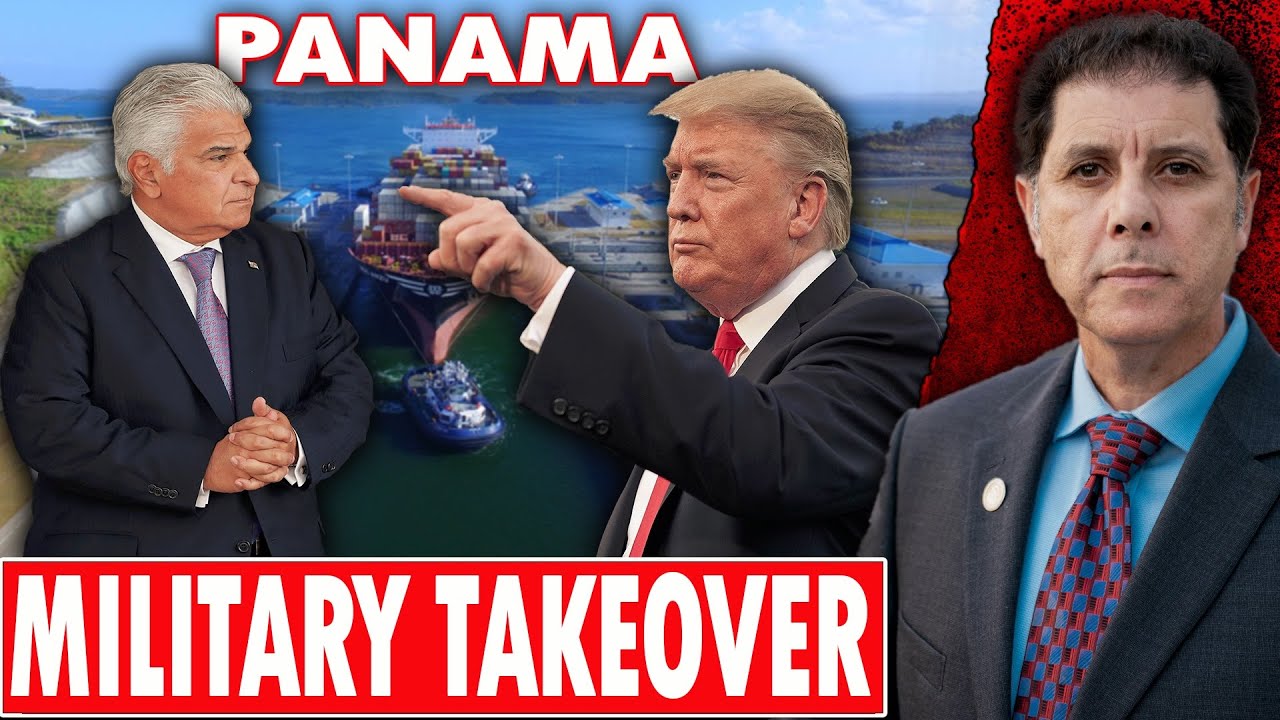
In a live YouTube broadcast on February 7, 2025, the host (Speaker A) delivers a detailed geopolitical analysis of Panama’s recent decision not to renew its 2017 Belt‑and‑Road Initiative (BRI) agreement with China. The narrative weaves together audience polls, historical background on Panama and the Panama Canal, and a critique of U.S. political maneuvers. The host argues that U.S. Secretary of State Marco Rubio’s 2024 visit to Panama, backed by former President Donald Trump’s threat to seize the canal or force U.S. vessels through it without payment, pressured Panama into abandoning the BRI. The broadcast debunks the claim that China “runs” the canal, explaining that the canal is Panamanian‑owned, with only two Hong‑Kong‑based terminal operators, and that China’s real influence lies in a network of new AI‑enabled ports, rail links, and industrial parks across Latin America (e.g., Chancay port in Peru, Nicaragua land‑bridge, Chang’e ports). The host also revisits Panama’s colonial and modern history, the 1903 U.S. treaty, the 1977 Torrijos‑Carter treaty, and the 1999 handover, to illustrate why the U.S. still claims a right to intervene. The program references the Panama Papers, past dictators (Torrijos, Noriega), recent presidents, and the broader Western‑hemisphere implications of U.S. neocon aggression, BRICS expansion, and China’s infrastructure push. Throughout, the host engages the live chat, polls the audience on related questions, and repeatedly stresses that the analysis is unique to the channel.
Chapters
All right, hello everybody and welcome to Geopolitical Trends, where truth matters. Excited to be with you as always. You guys believe it, it's February 7th. Where time goes. So anyway, very, very interesting topic I am going to be, uh, providing you my insights about, given the background of what I happen to know when I used to travel to Latin America. Back in the day. So something's coming from the past that is now sort of shaping the trajectory of what's taking place regarding the Panama Canal. So, but before I'll do all this, let's say hi to our wonderful community. Ramzi Abdurrahman, good to see you. By the way, guys, for those who do not know, Ramzi has been an avid supporter of the channel behind the scenes, quietly. So I can't thank you enough, Ramzi, for your support, man. It means a lot, so I want you to know that. Jane Hope, Rick Hein, good to see you. Willie Holman, as always. Alwan Umer, good to see you. Multi Tom Tom, good to see you. Phil, here you are, good to see you. Francis Tango, good to see you as always. Uh, Army with Harmony, good to see you. And many thanks for gifting the membership to others, so it's so kind of you and generous., uh, to do so. So I, I, I appreciate you doing that. Liang, good to see you, uh, as always. Zhaoyan, good to see you as always. So, all right guys, Taiwan Still, here you are. You are way down there. We got a lot of people. Truth Seeker, as always, good to see you here. So, all right guys, let's get into our topic here. Before I'll do this, I want to say, first of all, I want to say thank you for taking part in the survey questions that I usually put for you, because I want to have your input. Uh, for example, the last one we did, uh, when I asked you a question, should India exit BRICS voluntarily this year, 2025, rather than being ousted? This was also a comment from one of our viewers in the community, and I communicated with him and I said I'm going to put this for the community to know. So 73% of you said yes, meaning they need to exit voluntarily. 20% said no, and 7%, uh, couldn't decide on that, which is fine. You know, that's usually why I give that option. The second topic was about when I asked you whether is Trump's plans for Gaza similar to that of the Balfour Declaration, which you all know. To those who know the history of West Asia, or Middle East, that is. So you know what I'm referring to. Uh, 69% of you said yes, 11% of you said no, and 20% said I don't know. So which is, you know, kind of, uh, also not— I don't assume everybody knows what, uh, everything. So we all learning here. So, all right, so I thank you for that. So, uh, let me start with some headlines because you need to know what's going on. So I have a lot of picture I spent yesterday, by the way, guys, doing the research, and not only about the topic but also, uh, other stuff as well. So including— this might shock you— the Panama Papers. You're all familiar with, with that, those documents that leaked in Panama. So why that is so, I have something for you as we move forward, so you need to know. So, but the first thing I want to highlight here is this headline is this one, this picture, which is very disturbing. You know what it is? This is Rubio, Narco Rubio, Secretary of State, stealing a plane. Yeah, you can't do that because this is— and the plane belongs to Venezuela. Well, if you know the history of how much hatred Narco Rubio has towards Venezuela, it'll make more sense to you why he did that. Well, Venezuela now accuses Washington of stealing one of its planes and calling Rubio a thief. Even here is the thing, guys, this, uh, uh, uh, and I have the link, I'll share it with you later on, uh, Venezuela has denounced the US seizure of a second Venezuelan plane in the Dominican Republic, calling US Secretary of State Marco Rubio a thief. Uh, here is what's important about this that you need to understand. Even in the State Department in Washington yesterday, State Department spokeswoman criticized the US Secretary of State. Yeah, for, for doing it, because here is what she said, and I quote: His hatred of Venezuela now leads him, meaning Marco Rubio, to commit a public crime as he illegally seized an aircraft in collusion. With the Dominican Republic. Yeah, this is not right what he's doing. And for him to say, well, yeah, we can, we can— no, you can't, because that amounts to stealing, basically. And the order was issued, by the way, in Washington, D.C., through the Department of— the court in Washington did that. That is a blatant violation of international law. Straightforward. So I just want you to be aware of this one here, uh, whether it's going to be covered here in Washington as far as media, I don't know, but I just wanted to highlight this to you. So second thing I want to highlight to you is has to do with the DRC. You all know what's going on in, in, in, in, in DRC, the violence that is now expanding. I'm even thinking of doing a video for you to know the ins and outs of. It's a very complicated issue. If you guys would like me to do this, and I'll do it for you tomorrow, please answer in the chat box yes or no. I don't assume till I get your answer. This way I know if, if it is— if many of you want it, I'll go and do the research this afternoon, spend the whole afternoon just researching this for you for tomorrow. Here's the thing, the risk of violence now sweeping the DRC, or the Democratic Republic of Congo, spread into the region higher than ever. And this is what you need to understand, because what's involved in this— certain elements that had to— that have been involved in Rwanda. If you know what took place back in early '90s with the Hutu versus Tutsi, now some in the military in Congo were supporting the Tutsi And the Tutsi committed major atrocities in Rwanda. So, so if you would like me to do this, I'd be happy to address it for you. So, all right, let's get into our topic here, and, uh, we just go from there, and I'll answer some super sticker questions towards the end. So, well, here's the shocking thing. One of the— from off the bat, the shocking thing that I— to me caught my attention is that now Panama withdraw. In other words, it's not going to renew. It's a BRI that signed in 2017. This is why I put, uh, uh, one of these thumbnails is leave BRI or else, because we have threatened, uh, uh, uh, Panama. But here is the thing, we didn't threaten Panama regarding the BRI. I'm still fine trying to find out exactly how this BRI came about. What we have threatened is that we will have our military vessels cross the Panama Canal without paying for it, which means basically what? We will take control of the Panama Canal. And this is where, to me, Panama caved in to Trump following his threat to impose US control over the canal. So, and this is to me where I get the, uh, the, uh, uh, the conclusion that as a result they had to give in something. Marco Rubio has pushed because his first trip was to Panama. Usually the tradition, for those who are familiar with how the American system works, anytime a new Secretary of State is appointed nominated but confirmed by the Senate, usually the first trip goes to the allies, either in Europe, the transatlantic relations, or goes to the Middle East to cement our control of those weak leaders in the Gulf states and so forth. This one was different. Narco Rubio's first trip was to Panama. He harbors a major hatred towards Cuba, towards Venezuela, and now wanted to pressure— and, and another country, third country is Bolivia. And you all know why all these three countries, because they never bow to US pressure and they decided to move forward with ventures, economic one that is with the Chinese. That's what's at the heart of it, because this is what Marco Rubio did in Panama, pressured them to give in something. And what Panama ended up doing is that they stated on the record, we will not renew a 2017 deal to join China BRI, Belt and Road Initiative. It's the same approach Panama did, the same way Italy did when we pressured Italian Prime Minister, the fox, I call her the fox, Giorgia Meloni. That's what she did exactly. So, so here are some questions we need to ask, and I'm gonna— where are they? Right here, guys. Here are the questions. First question is, what sort of threats Trump issued? Because he said something big is going to happen, and you're going to be listening to that. Why did Panama cave in? Okay, how will China react? And the last question is, what are the geopolitical implications regarding the Western Hemisphere mainly? Those are the key questions that we ought to consider, uh, as we move forward. Uh, before I'll delve deeper into all this, guys, I want you, if this is your first time here, uh, because what you are listening to, this analysis that I provide, you are not going to hear it anywhere else. I'm not bragging. I know what I'm talking about. I built over 14 years of experience, you know. I've been on the ground, so I know what I'm talking about here. So the analysis you are hearing, you're not getting anywhere else. So if you are learning and enjoying these free episodes, I will greatly appreciate if you can subscribe, uh, to the channel here so other people around the world will have the same opportunity like you. To hear the truth. I will be very, very grateful to, to you. So, and I'm gonna put the link on the chat box for you guys, for those who— because you won't be able to click on it if I put it under a banner from the, uh, right here. You won't be able to click on it, but I did put it in chat box. And thank you very much for your support. So now, as I said, Let me first— I'm gonna do this one here for you guys. Is, uh, I want to play a clip and, uh, let me share a screen with you first. All right, hold on a second. Wow, so many stuff. But there we go. We'll let this, uh, run quickly here because I can't control the— this part of the commercial.
So Rubio is in Panama, Panama right now, and, uh, we're talking about the Panama Canal. What they've done is terrible. They violated the agreement. They're not allowed to violate the agreement. China's running the Panama Canal. That was not given to China, that was given to Panama foolishly, which is not true.
China is not running Panama Canal, just to let you guys know.
But they violated the agreement, and we're going to take it back, or something very powerful is going to happen.
The meaning of this something powerful That's a threat in the diplomatic language. That is a form of threat. So anyway, I just wanted to share that with you, so for you to see, uh, exactly what's, what, what's going on with this and why the developments has happened. So, and, uh, now where the big problems comes in, but before I do this, I need to do geography for you and I need to do history. If you don't understand the history of Panama, all this will not make sense to you guys. So, so let's jump in into, uh, the history here. I, I'll start with geography like I always do. Let me share, uh, and this is the time that I spend, guys, in ensuring that you have a full picture including geography. There is something called, uh, political geography in the field of international relations. So, all right, Panama. You know, a lot of people do not even know where it's located. So Panama is located on the land bridge that connects North and South America. So that is a very, very, uh, strategic location, bordering both Colombia and Costa Rica, and has both access to Caribbean and the Pacific Ocean coasts. Panama is transcontinental country. It is what it is. And there is what's called the, uh, on the southern edge of the Isthmus of Panama. This is the narrow strip of land connecting the continents of North and South America. It is positioned in the northern and western hemisphere of the Earth. Panama is bordered by Colombia to the southeast and by Costa Rica to the west. It is also bound by the Caribbean Sea to the north and the Pacific Ocean to the, uh, south. That's what it is. So just for you to know at least an idea, geographically speaking, where the country is. So now let me move into the history because here is— this is very important for you to know, guys. And what I'm gonna do is, uh, I, I, as I said, I spent time yesterday, the entire afternoon just looking at information, uh, that will be of use to you. And I didn't— I even gathered some pictures from the records, so because it will make more sense to you what I'm going to be showing you. Uh, this is, by the way, the Panama Canal. That's what this issue is all about, and I'm gonna get to it later on in the history of the canal itself. So now, when you think about the history of, uh, of Panama Okay, with that, sorry, I'm like, where is, where is my picture here? When you think about the history, it's a long one, but I'm gonna quickly go in chronological orders, uh, taking you back to the 1502. Why 1502? Because that's when the Spanish, uh, Conquistador Rodrigo Batista lands in Panama. That's when it started according to the historical record. So 1519, it saw the Panama became a Spanish location, uh, uh, almost the viceroyalty of none other than New Andalusia. Now Andalusia, to those who do not know, that's where, by the way, my ancestors are from. Where is Andalusia? Does anybody know? So let me see in the chat box if you can tell me where is the original Andalusia is.
Located?
To those who know a little bit about history. Oh, oh, Dan Clark, Dan Clark, you got it. Flat Earth Hangout, you got it. Karakulak, you got it. It is in Spain. It is in Spain. Now, for Panama, 1519, Panama became like the New Andalusia. And if you know the history of how developed that area was, some— fast forward to 1829. What happened in 1829? Panama gained independence from Spain. So, and right after that, immediately joined the Confederación, the Confederacy of the Gran Colombia, with Colombia, Venezuela, Ecuador, Peru, and Bolivia. Now, what do they have in common, all those countries? This is why Narco Rubio's first trip to Panama gives you an idea about what he has in mind. Regarding Latin America. Remember, his ancestors are from Cuba, okay? And an avid, avid supporter of the sanctions on Cuba and Venezuela and any other country in Latin America that he could have his hand on. Now he's in possession of power. Mark my word, he's gonna abuse that power. This is where my fear lies moving forward. 1830, the Gran Colombia which is the Confederacy, separated. So, and this is where Panama became— it is what a lot of people do not know— Panama became part of Colombia at some point in its history, 1830. Move to 1846. 1846, Panama signed a treaty with the United States to build a railroad, or railway rather, across Isthmus. 1880, France attempted and failed to build the canal across the Isthmus, uh, location. This is when you're moving into the 20th century, and this is where it gets very important. Panama gained— in 1903, Panama gained independence from Colombia, which means now it is an independent but not the way you and I understand it.
Why?
Because the United States went ahead and bought the right to build Panama Canal. This is where the trick is. This is why you need to understand the importance of history. So the US bought the rights in 1903 to build the Panama Canal. 1914, the canal was completed. Okay, 1914. And in 1939, which you all know what was happening during that era, Panama ceased to be a US protectorate, which means it can move on its own. So what happened in 1968? And I have the pictures here, I even put them in order so this way you know whom I'm referring to here. The picture you are looking, uh, uh, looking at, that's, uh, that's the chief of the National Guard, General Omar Torres— uh, Torrijos, I'm sorry, Torrijos Herrera. He's the one who staged a coup and imposed the dictatorship later on after he, uh, uh, after the coup succeeded. Why is this important? To highlight to you. This is why, like, the likes of certain countries in Latin America known for the coups, that just happens, part of it. We encouraged some, uh, in the late '60s, early '70s. Now, 1981, Torrijos, the guy you saw right here, was ousted. And who replaced him? It was none other than, uh, Here's the guy. Do you guys know who this guy is? You should. If anybody knows, please type in in the chat box, please. Once again, it's because I like to engage you and be part of the conversation. Who is that person on the picture? Oh, oh, DW, you got it. Bombo, Noriega. You guys got it. That's Daniel Noriega. So why is this important for you to know? Because he was the intelligence chief And US, he was the CIA informant. So that's why it's important. Manuel, not, not Daniel, Manuel Noriega. And he became the head of Panama National Guard, renamed it the Panama Defense Force. 1988, Noriega was charged with smuggling drugs because of course we propped him for power. This is with the, uh, when you did— by the way, when you say females and all that, that's just part of the trick. So those are, especially on the US side, those are not your average females, those are spies, just to let you guys know. So what happened at that time, we charged him with smuggling drugs. So Noriega then declared state of emergency after the failed coup. Move to 1989, and I was aware of this because I was alive, so even though I was, I was, uh, sort of still young by the standard, but I kind of remember this. Uh, Noriega claims the election results invalid and declared war following threats from the U.S. invasion. Because who was president in the U.S. during this time, 1989? And really planning a Panama invasion. Who was the president in the US at that time? You should know this one here also. He was known for really planning the Panama invasion at that time. Uh, no, it wasn't Bush. No, no, not Bush. Before him, remember the '80s? It was Reagan. David King, you got it, you got it. It was Reagan. It was Reagan that— because Reagan involvement in Latin America. This is here again, one of the things I need to share this with you while I'm thinking about it. You all remember the Iran-Contra, right? Where we were selling weapons to Iran. Yeah, we were selling weapons to Iran. It was Reagan administration that did that. And the money we were getting, of course, that wasn't coming directly. Where did the money end up? He ended up in Latin America supporting the Sandinistas against the communists at that time. That was the money well, and it was none other than Oliver North, Colonel North, known as Ollie. He's the one who took the fall for the Reagan administration. Then later on, Reagan came and gave an address to the nation saying, you know, I am sorry, I did it. Later on, another word, he admit. So, and that tells you right there, we playing. Whoever thought that we would be selling weapons to Iran? And why Iran at that time? Because what was going on there in the '80s in the Middle East? Does anybody know, guys, why we were selling weapons to Iran in the '80s? Does anybody know? A war. Which one? Which one? In the '80s, just, just remember, in the '80s, Iran-Iraq War. Bro, uh, bro, you got it, you got it. The Iran-Iraq War, we were supplying both sides because we wanted to keep the, uh, conflict going on. All right, '89, as I said, 1991, the parliament in Panama approved constitutional reform. Like the abolition of the standing army. And this is why in— and I was aware of this— 1992, the court in the US found Noriega guilty of drug smuggling, and he was sentenced to 40 years in US prison. So this is the guy was an informant for the CIA. So 1999, uh, you saw the, uh, emergence of this Uh, and oh, I got a picture of for you guys here. This is not Noriega, US Marshal in Miami, Florida when they detained, uh, Noriega at that time. So, so after this one, uh, it was none other than, uh, uh, Gloria Moscoso became the first female president right here. She became the first female president. And what did she end up doing is she created a panel to investigate crimes. What ended up happening, it was a national strike that took place and she was overthrown. And who came after her was a Ricardo Martinelli in 2009, and I have a picture of him, uh, uh, Right here. Ricardo Martinelli was elected in 2009. So now, now, right after this one here, 2012, Panama joined Open Government Partnership. What is that? This is a global initiative between governments and civil society organizations to promote transparency, participation, and good governance. You all know that's like a BS, no more no less. That's all it was. It's just, just a photo op, no more no less. Then right after this guy Martellini came Juan Carlos Varela. I have a picture of him right here. Juan Carlos in 2014 was elected as president, okay? And the interesting aspect about Right after he was elected in 2015, this broke out— the Panama Papers in 2015. Which, by the way, the Panama Papers— and I have, uh, I saved one particular, uh, and I'm gonna share it with you guys, uh, later on. Uh, hold on, let me for the Panama— this one in 2015, an anonymous source leaked 11.5 million documents that disclosed information on nearly 200,000— 215,000 offshore entities. That was known as the Panama Papers, which were— this one, by the way, implicated, yeah, implicated major public figures around the world because they were being involved in sort of having shell corporations. I remember when I went to— I had one time a trip to Grand Cayman, but that was tourism, wasn't work. And, and I had one afternoon off and I went to a bank. I wanted to go to the bank. So they really didn't let me in unless I had an account in that bank. Oh, I said, sir, this is like a private bank, whatever. Well, I knew what it was. That was the offshore where the accounts for those offshore bank accounts for individuals, whomever they may be. So, but I went there physically, but they didn't let me in. So now those individuals were in— you were used— were, were involved in, uh, illegal actions such as fraud and tax evasion. And what I found, of course, the list is so long, I'm going to just share two with you. There is a picture of this guy. Now, this guy was the Premier of Iceland. His name is Sigmundur Davíð Gunnlaugsson. Sorry if I mispronounced his last name. Now, why is this? He stepped aside amid widespread anger over the allegation at the time, which turns out to be true, that his family attempted to hide millions in offshore accounts. The Panama Papers discovered those ones. The other person is this one here, this guy from United Arab Emirates. This is the Sheikh Khalifa Al Thani, or no, I'm sorry, Khalifa bin Zayed Al Nahyan, Khalifa bin Zayed Al Nahyan of United Arab Emirates. So, and they all were involved, and was just, that's just a few examples. King of Jordan was involved, to my knowledge. Uh, there were some really famous people, including ours here in the U.S., but Anyway, I just wanted to highlight this one because this talk is not about the Panama Papers. I'd be happy to do an exclusive video just on that. So fast forward to 2018. So what happened in 2018? After Juan Carlos Herrera, Lorento Cortizo took over. This one was, he was appointed as— I'm sorry, in 2018, this Ricardo was extradited to, uh, to the US, and from the US he was sent to Panama because of accusation of corruption. That was the extradition was all about. And right after him, it was— I think that's it, that was the last one till, uh, Lorento. And I, I thought I— yeah, I have a picture right here, right here. This is Cortizo, the one that was, uh, appointed. Then after that one, Lorento, uh, in 2019, uh, was elected president. But today you have, uh, Uh, uh, uh, Molino, he is the president of, uh, Panama. So anyway, I just wanted to provide you this history because it's very, very important to understand it, and without it, it's not going to make sense to you. So now here's the thing, the current president, uh, Molino, right here, and here is, by the way, he met with Narco Rovio And Marco Rubio pressured him for why he bowed into the US pressure. Well, the important thing is that, uh, uh, uh, uh, Molino said he has resisted now pressure from the US government. And why?
Why?
It's because of the management of the waterway that is vital to global trade. Yeah, but this is not about global trade. And we'll get into that. So, because the President Molino of Panama told the reporters after the meeting with Rubio, and I quote, no real threat of retaking the canal or the use of force. I don't know about that. So the Panamanian leader also said he had addressed the US concerns over Chinese presence And that's when it became clear to me this is a lie. Not him, it's who reported the information. And who reported this information is CNN. And what is CNN does? CNN is the back door of the government, especially when it comes down to the Democrats. Because the keyword that I got into this when it says The Panamanian leader also said he had addressed the US concerns over Chinese presence around the waterway. No, he was never. And that's where the pressure came in by us telling him, well, the only way to remedy this is you do not renew the BRICS, uh, uh, contract that you signed in 2017. Now, could he be scared from what Trump said about something major happening? Yeah, we all know Trump was just bluffing, no more no less, because that bullying is not going to cut it. And also, what gives me a hint into why this is a lie coming from the media is what Rubio said, and I quote here: I think this visit opens the door to build new relations and try to increase as much as possible US investments in Panama. End of quote. Now we know there will be no investments of the US. We don't invest, we rack countries into, into chaos and destruction. That's what we do. So, but this also leads me to highlight to you the important history of the canal itself. Well, like I mentioned earlier, the US over— took over the project in, in 1904, and it was opened— the canal was opened in, uh, 2000— 1914. So I was trying to look at the picture of the canal right there. So in 1914. So, and this is why the US continued to control the canal and surrounding Panama Canal Zone. It was till Torrijos took over. And we turned it over to Panama in 1977. Now here is where it gets tricky. In 1977, and under that treaty, the US returned the canal to Panama control, which means what? That is under the sovereignty of Panama, not the United States. We turned it over. I almost feel like saying, uh, uh, if we are to go with this argument, then the Russians will have the right to say, oh yeah, we want to take back our Alaska. Does that see what I'm getting at? So because we, we, uh, the US returned the canal, uh, uh, to Panama's control, there was only one clause in that treaty that says, and I quote, with the understanding that waterways remained neutral. That is the key. This is where we are finding the door, how to get in, into pressure in Panama by saying— because we are saying a lie, basically. China is not running the canal. What right now, what China is running is one other location up north, and I'm gonna get into that. So however, the US suggests Well, wait a minute, under that treaty we have the right to intervene militarily if the canal operations were disrupted by a conflict or a foreign power. But what you need to understand is that many, many US cargoes run through the canal. So, and especially when you consider Because that's all it is. That's the only way for the US, because China went ahead and already opened up the Chancay, uh, uh, uh, yeah, the Chancay port in Peru. And I remember Hank, Hank NG shared something, uh, uh, with me here that I'm gonna share it with you guys because you need to understand. This is what Hank wrote. That's why I, I highly recommend you guys read his posting. So he wrote, and I quote, Panama Canal. Here is what's going to happen for the US. The Panama Canal is a shortcut for what? For warship and submarines from West Coast to the East Coast. This is the jugular vein of, uh, I'm just going to highlight here, this is the jugular vein for the US Navy. For China, the PLA, the People's Liberation Army Navy, rarely transit the Panama Canal because they don't need to go there from the Pacific to the North Atlantic. It's rarely that the Chinese do it. So as a result, there is no strategic value for China in controlling or managing the canal. Regarding the Belt and Road Initiative, this is what Hank has shared with us here. The initiative for 2025 and BRICS members— Brazil, Bolivia, Cuba— those three— China is proposing a dozen super, super container ports. For example, Chang'e Port in Peru, which opened up in 2024, last year. One of these super AI, yeah, AI container ports in Chang'e in Peru. Now you have also new roads, you have railways, you have industrial parks, you have agribusiness, and you have mines. We link Peru, Bolivia, Ecuador, and Brazil together. Is the same arguments I've always made about what China is building regarding the high-speed or the rail speed, uh, trains between Thailand through Cambodia, Vietnam, all the way to Singapore. So this is what's important to understand. So now, a dozen of other super, super container ports are planned from Mexico to Chile. Roads and rail freight will link the Pacific seaboard with the Atlantic coast. For example, you take freight from the Mercosur, which is the Mercado del Sur, uh, the, the southern market that is members, and Venezuela, because Venezuela also is in Latin America. And why Venezuela important? It's because of oil and gold, you know. Those will be loaded in Ecuador and Changé. So the direct shipping route from Ecuador to Peru saves about 12 days of sailing. In Nicaragua, the Chinese constructions are proposing an AI land bridge from the Pacific Ocean to the Atlantic, because Chinese are good at those mega infrastructure. The containers from Central America and Cuba will be shipped along this Nicaragua land bridge. The Nicaragua land bridge is similar in AI, roads, and 24.7 rail freight to the Ranong-Champhon land bridge in the Kra Isthmus, Thailand, and pending of course the approval from Thailand in April 2025, this year. The cost of all this, or especially the one, the approval from Thailand, is about $27 $1 billion. So the Panama Canal needs a massive upgrade for two reasons. One, for Panamax Triple E containers, and two, there is no water in the Panama Canal during the dry season. And we have to thank Hangin' G for sharing this with us, guys, because this is really what's at the heart of it. Is the change, the economic and geopolitical dynamics that's taking place in Latin America. And why? Because China is investing into all this. This is why we didn't, we didn't, we pressured the Panama Canal to do whatever we want them to do. So, so when Trump's saying, you know, there is something very powerful will happen, you know, what kind of language is that? That's not a language of a leader. That's not a language of a country that's, that, uh, uh, uh, claim to observe international law, that claim to stand for the rule of law. Where is it? So when Donald Trump is, uh, sort of repeating his threat to take back the Panama Canal and citing— this is what he's adding, something that is not there— citing a violation of the agreement because of China's growing influence in the area. So what if other countries want to do business with China? So the question becomes now, and I'm going to ask you guys this question. Do you think, in your opinion, should Panama not renew its contract regarding BRI? Because once you sign a contract, you are obligated. So what do you guys think? Should Panama sign or renew its contract that it signed with the PRA? If you will be kind, just yes or no in the chat box. Cara Colax, you say yes. Famida, you say they should sign. Uh, what is that one? I saw something. Yes. So, okay, some say no, some say yes. Yeah, I, I mean, I, I can see your arguments. It goes both ways. But at the same time, if you sign a contract, you got to honor it, right? So this is what, uh, uh, I, I believe it— this is not right what, what Trump is saying or what, uh, Marco Rubio is doing. So because now when Panama decided to join BRI, because, uh, the BRI is going to promote the funding for infrastructure and development projects, which is very critical to poor country. Panama is not your rich country. So however, the arguments, of course, that is made that no, no, that means that Panama is going to now be, uh, uh, held hostage to the Chinese. I don't see that because we're going to see now how the development of the port, Changi Port in, in Peru, how it's going to evolve into the dynamics of the locals, economically speaking. So this is where I see the difference. But here is the thing: when I dig into this information, when Trump says China is operating the Panama Canal, there is no truth into that. And I'm going to share the link with you later on, guys. So, so, uh, there was a— it was an article by The Guardian. That's where— yeah, you will think The Guardian, you know, I, I do read up some stuff, uh, from time to time. Sometimes they hit the mark, sometimes they are way off, but nonetheless, they do, uh, they did disclose the truth about this one here. So it is what it says, and I quote, Donald Trump has repeatedly complained about the Panama Canal and the fees being charged, calling the vital transport corridor a foolish gift to Panama that should never have been made, and threatening to take it back. But he has also repeatedly accused China of being in control of it. At his inauguration, Trump claimed, without providing evidence, that China is operating the Panama Canal, and we didn't give it to China, we gave it to Panama, and we are taking it back, end of quote. This is what Trump said. So what is the extent of China's linked operation along the Panama Canal? So who actually really controls the canal? So, and this is where you have the idea that the canal Because the United States is the biggest user of the canal and is responsible for about 3/4 of the cargo moving through, through it each year. And China is second, is a distant second, because here's the thing: the presence of China is not in controlling the canal or managing the canal. As a matter of fact, there is a port at either end of of the canal. When you look at the picture— I'm gonna put the picture back up for you guys just for you to see— there is a port at the end of the canal on each side. Okay, this, this, uh, this port at either end of the canal, it is operated by a Hong Kong-based company. That is presumably what Trump was referring to when he said China is based at both ends of the Panama Canal. So, which doesn't make any sense whatsoever, because here's the thing: if you go back to 1996, Panama granted a Hong Kong company, which then back then it was called Hutchison Wampoa, a concession to operate the Balboa Port on the Pacific side. And the crystal ball port on the Atlantic side. The, the contract did not give Hutchison the ownership of the port but allowed it to operate them on behalf of the government of Panama. So this is when you realize what the US government is saying versus what the truth is, and I just want you to be aware of of really where things are. So, so how concerned should we be? Because Trump could, could embark on some crazy policy, but it's all bluff. It's all bluff. You know, the concern I have is with the Marco Rubio. That is where my big concern, because he is a warmonger, and I don't shy away from saying it. I've always referred to that. So, so this is what the, the problem. Now what they think is that the media did not disclose is that during his visits, meaning Marco Rubio, Panamanian went on demonstrations and burned the US flags. As a matter of fact, some of other links that I read, which was about 200 people march in the capital carrying Panamanian flags and shouting Marco Rubio out of Panama! Long live national sovereignty and one territory, one flag, those in quotes. While the meeting was going on, some burned the banner with images of Trump and Rubio after being stopped short of the presidential palace. So, and, uh, just to highlight this to you, I'm gonna play a clip for you guys. And, uh, and it's on YouTube. It's nothing, uh, it's not like YouTube is, is, uh, banning that. All right, let me share screen and you can hear it for yourself.
¡Patriótica al fondo de Manitoba!
¿Quieren echarse Canadá? ¿Quieren invadir México? ¿Quieren tomar el canal? ¿Quieren arrancar Groenlandia a Dinamarca? Quiere decir que Trump lo que está buscando es la Tercera Guerra Mundial. Okay, and I have another clip that I'm gonna share with you because I need you to see, guys, with your own eyes. Because to me, that's what the accuracy of information is— when you see and hear with your own— you see with your own eyes and hear with your own ears what is going on. So this way it makes more sense to you. Take a listen here. Okay, I'm going to stop it there right there, guys. Just to highlight to you the idea now that Marco Rubio is really having a plan already because he does not want to see Latin America improve. And this of course is a reflection— remember, he is two things: a warmonger and a neocon. What is one of the things neocons are known for? You know, fomenting— and our history in Latin America, I wrote about it in my, uh, I think in a Russia book. Yeah, either Russia book or Iran book, one of those. I wrote about what we have done in Latin America because we supported the overthrow of governments and so forth. And the CIA history in Latin America is not good. We all know it. It's not a secret. So we all know that one. So, but what you're seeing now is an extension of that mindset. With Marco Rubio pushing into that direction. Why? Because the concern is that if Latin America improves economically, that is bad news for the United States, because Latin America also has natural resources that we can have access to, we want to have access to. It's no different than what I've, what I've always said about Africa. Africa is rich in natural resources, so why should Africa be worrying about what the West wants and so forth instead of thinking about itself? Latin America is doing the same. I mean, you all remember when Brazil flipped in no time. So, and that's why I kind of like was hoping that Brazil will kind of try to get out of the debt that sank itself into by, uh, taking loans from the IMF, which he never paid. I remember the, the year or even the month when that IMF loan was issued to, to, uh to Argentina in 1987, '87 or '88. That has not been paid yet. So, but when, when, uh, Javier Milei, the idiot, uh, that guy is not a— you know, you all know, and again, there is nothing against him personally, but if you are not qualified for the position, we can't sugarcoat it. You can't just be talking softly. You don't deserve the position because you are not qualified. Simple as that. There's nothing wrong with that. So, uh, and this is why I was always concerned about should China go— goes ahead and invest, or she has to sort of keep a step back till you see how— because the massive influence that the US used to have over those countries still exists to a degree in certain circles. So That, that Jafir Milley himself had to fly. We flew him to Washington to get the marching orders. This is no different what you're seeing, for example, with the, with the Philippines, no different what you see with the Europeans and so forth. So, and this is where my big concern about now what lies ahead regarding this Panama Canal and the lies that have been, uh, been said, because, uh Uh, even, uh, even the, the, the Panamanian president, uh, Molino— let me put a picture of him so you know— even his picture, you know, uh, he just disclosed, you know, he disclosed in an article, and I'm going to put it for you. He said, Panama's president tell US to stop lies and falsehood about Canal. So it says, and I quote, it was an article by Reuters and I'm going to post it for you guys. It says, I quote, Panama President José Raúl Molino said on Thursday the US was spreading lies and falsehood after the State Department claimed US government vessels would be able to pass through the Panama Canal without paying. The comments were likely to exacerbate tensions between the two countries after the US had cited progress on military cooperation and confronting alleged Chinese influence over the canal. So, uh, and end of quote. This is just to highlight to you that even the, uh, the, the Panamanian president is coming forward and disclosing that it was a lie for what the, uh, the US is saying. And by the way, I give credit that picture to, uh, uh, uh, Martin, uh, Bernetti. That's his picture. So the one you saw, you give credit. If I— if you ever do pictures, guys, and you know, you see the name, you give credit to the individual because it's the right thing to do. So anyway, There is a lot to cover on this, but this is why I wanted to do this, just to clear up the confusion, because there is a lot of confusion and a lot of lies that is emanating from Washington regarding that. Oh, is China that is managing the canal? It is not true. China is not managing the Panama Canal. I'm telling you this. There are two companies, one in two locations from the north and south, and of, of the canal own, uh, uh, uh, uh, companies from Hong Kong. Those are the one they managing. That does not mean is China. So of course for us we lump everything in one scope because we want to inflate and create the fear that, oh my gosh, China's taking over and all that. And there is none of that. Even the president, as I said, president himself is saying He's saying the US needs to stop spreading the lies and falsehoods, because that is what we are known for, sad to say, but it is the truth. So, and this is what I want you guys to understand in all this here, uh, and that's all I have. Uh, I'm gonna see if there are any super secret questions, otherwise I'm gonna sign off and go. Do you guys want me do the Congo, by the way? Let me— I'm gonna put it in a survey for the community, and you get a— if you get a chance to vote, then, then I'll go through that way. I'll do it that way. Uh, Army with Harmony, thank you so much for your continued support. Can you please elaborate on the hatred? What I meant by that is because of Venezuela. Venezuela never bowed to the US pressure. We never agree, uh, to wanting Venezuela to sort of, uh, uh, uh, move economically forward. But this didn't start last year. This one start when Hugo Chavez was in power. You remember, he was very defiant to the Americans, the same way, uh, uh, uh, uh, Fidel Castro did in Cuba. And we couldn't break them down, we couldn't get them down on the knee And we didn't like that. And the politicians in America, especially the neocons, have harbored this bad feeling towards those countries in Latin America. That includes Venezuela. That is the reason why he wants to do this idea of stealing the plane. Well, you can't take a property because that plane is a property of Venezuela. Government? Who gives us the right to just confiscate the plane? You can't do that. It's a violation of the law. First of all, you have to know why you're confiscating the plane. And second, it has to be like, uh, like any, any, uh, trial or any investigation has to be a process for that. But you can't just do it willy-nilly because you feel like it. That's against the law. So, so that's what I meant by the harboring the hatred towards Venezuela and also Bolivia and Peru to a degree, uh, because those countries, they don't want to— I, when I was in Bolivia, I remember that at that time the government of Morales, at that time, didn't care about what the Americans are saying because Morales didn't want to align himself with the US. And, and why are we upset about that? You know, if we are saying every country is sovereign, well then they're sovereign to do whatever they want. This is with the assumption they doesn't go and, and, and, uh, and, and create havoc on the international system. But on the other hand, turns out to be we are the one creating havoc on the international system. And now it's gonna even be worse, uh, moving forward because I, I don't see how things gonna evolve in a right direction moving forward. By the time Trump ends his term, we will be in a different position. Mark my word on it. I'm starting to see the writing on the wall for what lies ahead. So it's just with the statements of other governments, the, uh, the, the, uh, the, the, the, the strength of the partnership among other countries that but they don't want to have the US as part of it. This is why I always go— keep— I keep going back to BRICS, you know, especially with India rolling to— I never felt that India had something to add, or have something to add to BRICS. What does India bring to the table? And again, I am not picking on India here. I am presenting the facts. Because Indian people deserve a better life. There, at least for the last 14 years, is still the same that it was before. So what is the role of a government? As simple as that. I'll say the same arguments that I am seeing now, the trends in the Philippines, and I am getting concerned as to where Philippines is headed. So That is where I see the concern about this one. So that, that hatred, that's what it's about. We never want them to move forward and take a stand. So I hope I answered that one, Army with Harmony. Uh, uh, Nats Marinduki, thank you so much for your super sticker. Truly appreciate your support. Uh, Rafael Lagon, as always, greatly appreciate your support. What are we missing? Russia and China are working to cut out completely commerce with the US and the old Europe. They are going to cut us out.
I will—
there is some truth to your statement because the way I see it, and they have the means to do it, only if one aspect is achieved, and that aspect is the financial sector. That's the only way I see it. It's because our strength, our hegemonic dominance, depends greatly on the financial aspect, depends on the dollar. But if the dollar is weak, then that is— what's left? The military? Yeah, we have a mighty military, but is it effective? If it is this effective, how come we We, uh, just look what happened in Iraq, what happened in Afghanistan, what happened in Yemen, Somalia. So where is this mighty military? That's the way I see it. So you're absolutely correct, I see that moving forward in that direction. And this is why I believe what, what the— what Trump is trying to do is trying to create that wedge. This is what I believe. And again, I could be wrong, but, but I've been around long enough to know how these things work. I believe Trump might, might propose a great deal to the Russian president to lure Russia away from China by giving something that maybe the Russians cannot refuse, like for example, just go ahead and take some other parts in Ukraine, or something, or something. But it will be foolish of the Russians if they ever trust the Americans. It's all I can say about this one here. So, uh, I hope I answered that one, Rafael. Uh, Humberto Mori, thank you so much for becoming a channel member and greatly appreciate your support. Uh, to those who are, uh, oh, let me just put this one back up. Uh, to those who wants to support, as you know, I am considering a trip to Asia. Uh, there are 3 locations, 4 locations I have in mind as of now. Uh, and as I promised, I will by the end of the month provide the exact number that the funding that we need to generate for this trip. But if you already— I got, uh, uh, individuals already, uh, uh, uh, supporting this, this proposal here, uh, the funding for the Asia tour. And if you want to support the channel for that, this is where you, you go to Buy Me a Coffee, uh, you just go to this link here, guys. This is where you support the channel. Uh, there are those who've been supporting the trip through PayPal. So, and I already created spreadsheet where I keep track of all the donations that they are going strictly for the Asia trip. So, so I'm very, very grateful for your support. This is for the channel, should you decide to support the channel. Please, while I'm remembering, hit the like button. I would really appreciate it. We are about 3,000 subscribers short of 100, so I would greatly appreciate if you can help me out reach that, that number, so we'll cross to the next phase, I guess, whatever that is. It's not about— I know it's a lot of people say it's about It's not about the quantity, it's about the quality. You know, I've seen channels with a million subscribers, but, uh, they got nothing of substance to, to, uh, I, I, and I don't shy away from it, and I'll tell them to their faces, you know, because to me, just a matter of fact, simple as that. So, so what you are hearing in this channel is unique to this channel, simple as that. And because I devote time in, uh, in researching and getting the information that will be of value to you, because I don't want you just to sit here, listen to me, if there is no value in it for you. What's the point? I don't want to waste your time. I don't want to waste myself. Anyway, guys, I hope you guys, uh, enjoyed the, uh, whatever I shared with you, and I look forward to seeing you next time. As always, remember, geopolitics impacts your daily life in more ways than one. Till next time, guys. Bye-bye.
More from David


Beyond the Single Actor: Why the Gulf Isn't Choosing Between the US and China


Iran, Iraq's Militias, and the Houthis Are Coordinating! This Changes Everything




Who Controls the Next Decade's Resources? Latin America and Africa's Geopolitical Crossroads

The Chokepoint Trap: How Washington's Stupidity Triggered a Cascade That Now Controls the World

Trump Spooked as IRGC Unveiled dual-use SLV, Deployed Ghadir Mini-Subs & Hinted at Tactical Nukes!
