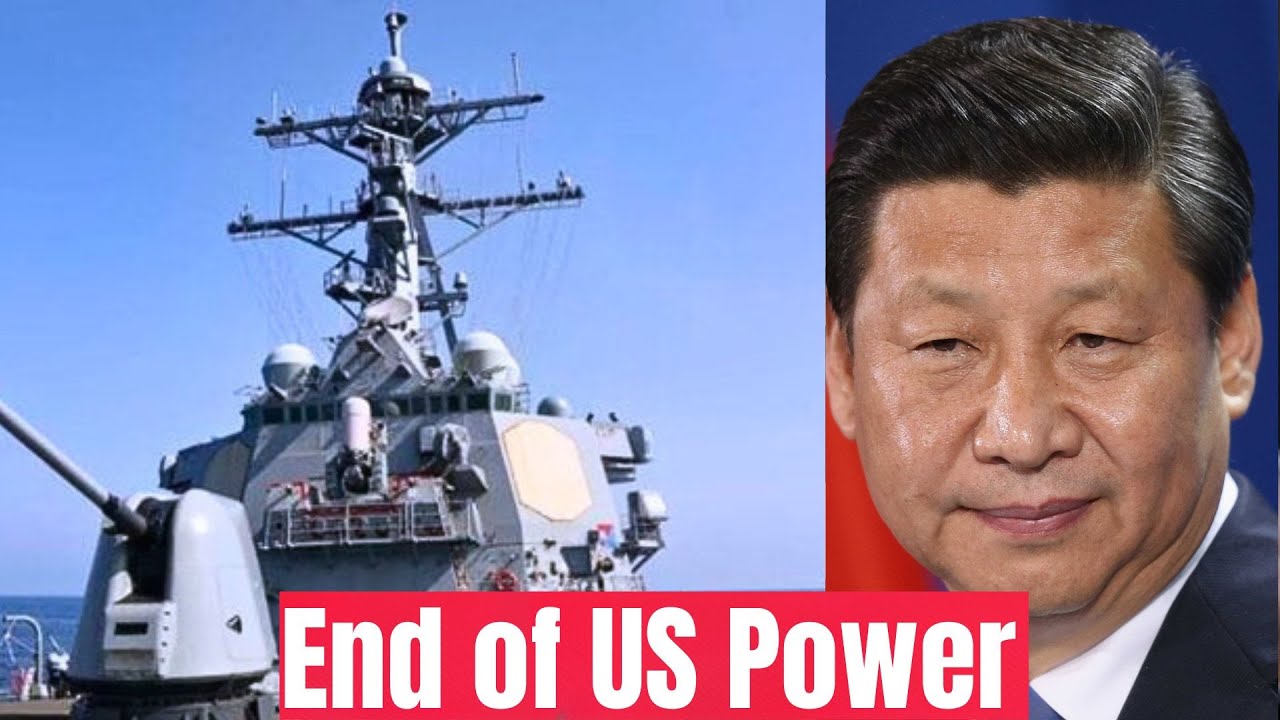
In this video, geopolitical analyst David Oualaalou examines the newly announced joint naval security arrangement among Iran, Saudi Arabia, the United Arab Emirates, and Oman, coordinated with China. He traces the development from recent diplomatic meetings, joint drills, and a Qatar news report, linking it to his earlier predictions in his book on Iran. Oualaalou outlines the economic drivers—China’s need for oil from Iran and Saudi Arabia, and Saudi Arabia’s desire to focus on domestic projects—while highlighting the geopolitical shift that signals a waning U.S. presence in the Gulf, illustrated by the UAE’s abrupt withdrawal from a U.S.-led maritime coalition. He critiques the U.S. Fifth Fleet’s response, argues that the alliance serves both defensive (piracy, drug trafficking) and strategic purposes, and posits that China is positioning itself as a regional peacemaker, even engaging with the Palestinian leadership. The video concludes that U.S. dominance is eroding, China’s influence is expanding, and further discussion will be addressed in a forthcoming live stream.
Chapters
Hello everyone and welcome to Geopolitical Trends. My name is David Oualaalou. So good to be with you as always. Well, whoever thought the day will come when Persian Gulf states will form a joint naval alliance in coordination with China? Well, that day is here. In this video, I'm going to provide you my insights about this fascinating development and how this will shape the political and geo— the geopolitical and economic landscape of the Middle East in more ways than one. But before I'll do this, I'd like to extend, as always, my sincere thanks to the channel's members and supporters. And for you, if this is your first time landing on this channel, watching this video, that is, make sure to subscribe and smash that notification button so you will be notified every time I upload a new video. Or do a live stream. And thank you all for your support. Let's dive in into this because it's a topic I'm familiar with the region. I spend a lot of time there. I wrote books about the two main countries there, Saudi Arabia and Iran. So I, I know quite a deal about what's going on geopolitically in that part of the world. So Persian Gulf states are now to form a joint navy in coordination with China. You know, a lot of people didn't— a lot of analysts, let me say, did not see this coming. Well, it was just a matter of time, and I'll tell you why, and I'm not bragging about it. The reason being because I wrote about it 4 years ago, or 3 years ago, that is. That's why, and I'll share it with you. So you have Iran, Saudi Arabia, the United Arab Emirates, and Oman in coordination with China will form a joint navy to protect security in the Persian Gulf. And this was also announced by none other than Qatar Al-Jadeed News website. So if Qatar announced this, mind you that Qatar has an agreement of 27 years with China to deliver liquefied natural gas. So I would put faith and trust in this announcements, uh, coming out of Qatar. So this past March which is what, 2 months ago, China, Russia, and Iran held joint naval drills in the Gulf of Aden. And I did a video on it, so— and this was in Gulf of Aden near the mouth of the Persian Gulf. And what's interesting about all this is that the top Saudi and Iranian diplomats also met in China for the first time in over 7 years, and they met in April. You all remember China brokered the deal between the arch-enemy Saudi Arabia and Iran. As a matter of fact, Saudi Arabia now— I'm sorry, Iran opened its embassy in Saudi Arabia just a week and a half or almost 2 weeks ago. So this is— by having the Saudis met the Iranians in China, This confirms now the reopening of their embassies and consulates and resuming direct flights between the two countries. And like I said, I'm not surprised at this because I argued this in my book. It's that book right there about Iran, Volatile State: Iran in the Nuclear Age. I argued in it back then, and what I said back then was Most likely, China and Iran may enter into a military treaty of some sort, clearing the way for the former to establish military and naval bases on Iranian soil, similar to the arrangements the United States has with Bahrain, because that's where we have our Fifth Fleet. However, I argued back then in my analysis in the book I argued that, that it does not strike me as a wise policy of China to embark on this at this time, meaning the time of when I wrote the book back in 2018 or '17, that is. Rather, I argued China will wait and should wait until the dust settles. In this latest major shift in regional geopolitics to better assess the situation and execute its next calculated move. And here it is, exactly what I argued. China had to wait, and now China is going to be involved in this naval alliance. So in response to all this, The United States, of course, had to issue a statement because that's, that's what will be expected. And the statement came from none other than the, the US Fifth Fleet, Fifth Fleet spokesperson Commander Tim Hawkins. He said, and I quote, I found this quote here, it defies reason that Iran, the number one cause of regional instability, claims it wants to form a naval security alliance to protect the very waters it threatens. End of quote. Well, Mr. Commander, I think your statement is flawed somehow. Let's just put things in perspective. You know, we all know how— why the conflicts have erupted in the region. It's not because of just Iran, it's also our failed policies in the region. You know, Iran didn't invade Iraq. It was us who invaded Iraq. So let's just call a spade a spade. So the question that I ask before you is, what is the reason for this development? And they got two. You have two. One is economics and the other one is geopolitics, or geopolitical, that is. On the economics front, why China is involved? Well, You have China, Iran, and Saudi Arabia. Each have some sort of an interest in friendly relations among all three. China, for example, purchases oil from both Iran and Saudi Arabia. You know, Iran's oil sales are limited by the United States sanctions, so it needs the Chinese as a buyer. Saudi Arabia, on the other hand, its Crown Prince Mohammed bin Salman wants to focus on a national economic project instead of expending resources on the war in Yemen, where back then the Iran-backed Houthi militias launched drone attacks on both Saudi Arabia and United Arab Emirates. So Once again, to answer that question, how— why is China involved? To secure access to oil. On the geopolitical front, ties between China and Iran and Saudi Arabia— actually, not just those three, you have Iran, Saudi Arabia, the United Arab Emirates, and Oman— are at odds with the United States' interests. And here is the surprising— the United Arab Emirates recently halted participation in an American-led maritime security coalition in the Gulf region without— here's the key word— without notifying the United States. That's, to me as geopolitical analyst, this is a loud and clear message to the US We don't want to be part of your alliance anymore. And that move by the United Arab Emirates followed Iran's seizure of multiple oil tankers in the region. Yeah, and may have driven by some sense that the United States is not adequately protecting the Gulf allies from, uh, the seizures of, uh, tankers like this. So of course, US views the seizures of these tankers as a violation of international law and a threat to regional security. Still, the Biden administration has failed to really impose sanctions on Iran because Iran is selling its oil on the market to China. So, and here is the big shocker of them all. A key security partner in the Middle East announced just 2 days ago that it has pulled out of American-led maritime alliance earlier this spring. But the US Navy has a different interpretation of that. Of course, because the US would not want to admit to that. United Arab Emirates, that's the country, that shocks the US by its decision, said, and I quote, the United— it withdrew from its participation from combined maritime task forces 2 months ago after an evaluation of effective security cooperation with all partners, end of quote. That's to me again, it's a clear, loud and clear message that The United States era of dominance in the Middle East is coming to an end. That's what it is. And China is coming in. So, by the way, guys, if you like the content of my videos so far, hit that like button and subscribe to show your support for this channel. And I truly appreciate your support. So here's the thing. The joint navies formation— this is the Persian Gulf countries Iran, Saudi Arabia, United Arab Emirates, and Oman. Formation may reflect the statements of the Iranian Revolutionary Guard Corps naval commander Ali Reza Tegrissi, who said, and I quote, the security of the Persian Gulf is provided by Iran and the countries of the region, and there is no need for you, the United States, or any other country to be present, end of quote. Once again, a loud and clear message here to the US. You know, it's because it's becoming clear and evident that the US hegemony in the Middle East is going down. It's— the end is near. I'll just say it straightforward. So the Navy may simply be charged with preventing piracy and drug trafficking in the region. But if this is meant to be a defensive navy, that's much more concerning. And that's how I see it as of now. We're not talking about the, the likes of NATO on a naval asset. No, no, no, no, no. We're looking at just an alliance for security reasons at this point. So why this decision all of a sudden coming out to the public forum? Of course we didn't cover it here, or the media that is, didn't cover it in detail. Well, this is intended— most likely this is intended to do two things. Well, one thing, but for two individuals: to snub the US and even the President of the United States. Because why is this? Remember who's involved in this joint naval? Iran and Saudi Arabia. Well, Saudi Arabia and U.S. relationship has deteriorated— I can't even speak— deteriorated over the years. So because why? It's because the United States sort of get closer to Qatar, and the Saudis didn't like that. Yeah, and that's how they're gonna move into this direction. As a matter of fact, guys, just not to shock you or surprise you, MBS, the Crown Prince of Saudi Arabia, threatened the United States with economic sanctions as well. And you know what he meant by this? Just cut off oil altogether. That's what he meant. So here is my conclusion for you, because I like to keep this brief and concise. And if you like me to expand more on a live stream, I'll be happy to do it over this coming weekend. So here's my conclusion: China may have broader interests in the Middle East, and I think it does, where apart from, for example, the Abraham Accords America has kept its head in the sand and is, is in decline in the absence of leadership there. So in this absence, China is stepping in. So Beijing may hope to gain a peacemaker, and it's already started by the time it brokered the deal between archenemy Iran and Saudi Arabia. So by China gaining this peacemaker status. As a matter of fact, while I'm thinking about it, the Palestinian president, he is right now in China asking China to broker peace for the Arab-Israeli conflict. What does it tell you? They are looking east, no more United States. And the reason being because they come to the conclusion that the US is not an honest broker. It's not neutral, and we all know why. China may also be spreading the United States very thin in hopes of distracting it and weakening the US as Beijing thinking differently about what's going on in Asia, especially when it comes down to Taiwan. You'll see it's a geopolitical move. You know, that's what I will expect if you are thinking strategically. So this is exactly what China is doing. So make sure to leave me some questions about this topic. I know I didn't cover a lot on it because I intend to do a live stream. So just leave me your questions and I'll be happy to answer them for you during a live stream this coming weekend. So as always, guys, and by the way, if you like the content, hit that like button please and subscribe. Uh, I hope you'll find it very informative, and I look forward to seeing you next time. As always, remember, geopolitics impacts your daily life in more ways than one. Till next time, guys, bye-bye.