Philippines & US Naval Drills: Sinking Chinese Ship & Retaking Islands Simulation!
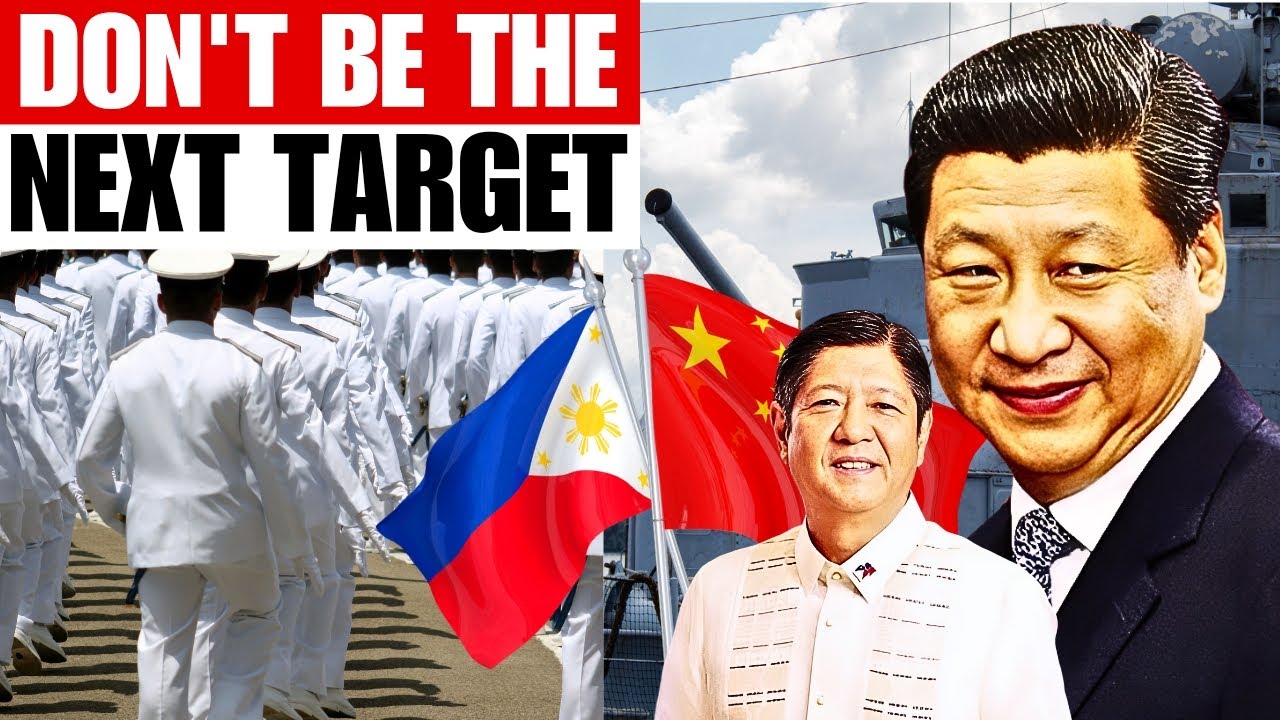
David Oualaalou breaks down joint Philippines-US naval drills that simulate sinking a Chinese ship and retaking islands. The exercises show how the two countries are preparing for potential conflict in contested waters.
Chapters
All right, hello everybody and welcome to Geopolitical Trends, uh, where truth matters. Very excited to be with you on this April 19th, so almost half of the way of the month. So very, very excited to be with you because I got an interesting topic, uh, once again. I wrote something about that part of the world, South China Sea, which I will disclose to you because it was part of my research that I did when I wrote the book about Iran. I had to tackle, uh, China-Iran relations, but I also had to bring in the South China Sea, uh, uh, conversation into the, uh, into my writing. So, or discussions, that is. So very, very excited to, uh, be with you. Hope you all have a, a good day so far, or evening, whatever part of the world you're in. So, uh, so let me just see who is here first, say hi to everybody as always. Chanel, good to see you as well. Francis Tango, Michael Long, Timeline Dankley, good to see you. John Smith in New Zealand, good to see you. Yan Hakor, as always. Fight Back, good to see you, and hello to you as well. Uh, who is Peanut Brain? Good to see you. Coach Hoy Hoy, good to see you. Joel M. Willie Holman, as always. And Winner Jasmine, good to see you all. And by the way, guys, I truly appreciate you, uh, during my last, uh, interviews that I had with my guests. You guys kept the chat very civil. I'm very grateful to you for keeping up that. I know someone said something that was a little bit offline regarding my last guest, John Kuriakou. No, he's not in CIA anymore, you know. He risked it all. So kind of, uh, we just have to be a little bit, uh, uh, very considerate as to what we say sometimes. So, but in any event, I'm grateful to you guys. So, so let's talk about our topic today. Very, very interesting. And by the way, before I forget, remember to join me tomorrow for my conversation, my biweekly, or almost once a month now, with Carl Zah. Tomorrow we will be having our conversation at 7:30 PM my time here, which will be the next day about 9:00 AM in Bali, Indonesia. So I look forward to that conversation with Carl. So as always, all right, today's topic, we're going to be talking about the US and Philippines Navy, naval drills, that is. Now don't confuse these guys with what took place between the four countries: Australia, Japan, US, and Philippines. They did their part. This is separate. This one's gonna be next week. And this is, to me, was like when he came through my radar last night. I had to read up quickly on it to find out from overseas, uh, just because this is something very important and I need, I need you to have a leg up or a heads up on it before you start reading headlines from, uh, mainstream media, whatever, whatever. Because what I am going to provide you with here, guys, is an analysis about where I see it going. So, and just FYI, make sure to prepare a question or two towards the end. So So now here are the key questions we ought to ask, because this one you can't not have these questions. And I'll say straightforward: will there be a proxy war in that part of the world, meaning South China Sea, meaning Asia in this, in, in, in this context? Second question is, what are the possibilities of a miscalculation? I am already witnessing one now with the Philippines going to this. If you only know the location of those naval drills going to be, and I will disclose this to you as I move forward. Third question is, what can be done— I know I misspelled this one— what can be done to preserve peace in that part of the world? And again, because one question that we need to think about is, is ASEAN doing enough to push for peace? I know Philippines is part of ASEAN, but we have to ask that question. And the fourth one is the location. Location, as always, is crucial. Why is this? Is because once you understand the location of where this is going to be taking place, you put things in perspective. This is— we're talking about, uh, the Philippines and the US conducting those beyond— listen carefully— beyond the 12 nautical miles of the province of Palawan, which is— which faces the South China Sea directly. And this also the idea of, okay, if are we going all the way near the, uh the, uh, the idea of the Taiwan Strait. Why, why push all this all the way down? And those are legitimate questions we ought to ask before we get into our analysis here. So, all right, I have, I have few pictures. I'll, I'll share them with you. As a matter of fact, let's start with geography of the South China Sea because we need to see what are we looking at here. So let me share a screen with you. Uh, and this one, it's, uh, One World Map. That's what I give credit to. And let me share it with you because we need to understand this one here. And I'm going to provide you, uh, some historical aspects of really what's going on in that part of the world from way back. And, and this will include, of course, the Philippines, because if you all know— I'm sure you guys do The Philippines has been invaded by many countries, but not China. Makes you just wonder the statements that Marcos is saying. Well, we need to push against the possibility of China taking over. China has no interest in taking over, so let's not confuse. And I think, I think, and again, I might be wrong, I think Bongbong is playing with fire. And his trip to Washington was to get his marching orders. This is why I am now becoming convinced I will not trust what he said as far as, oh, Bongbong government is gonna limit the US military presence. I don't think so. I think he was a decoy. He was a misleading statements on part of Marcos that he was given the order by the US to go ahead and issue the statement publicly. Because domestically in Philippines, Filipinos aren't happy about what's going on because they're seeing where their country is being dragged into. And Mike, my word on this, should there be a proxy war, you're gonna be seeing another Ukraine in Philippines because that's what's gonna happen. And that's why when I read the first time his statement about— oh, I even posted it for you guys in the community tab. And I was like, even for me back then, I was like, well, I'm gonna share this with my, with my, uh, with the community. But on the other hand, I have some reservations about the accuracy of it coming from Bongbong himself. And now it became evident to me, how can you say that when at the same time you are moving with a a naval drills beyond the 12 nautical miles in your water. That just doesn't bode well. Optics, like I always say, guys, in international relations, optics matters. And this is what we're gonna get into, uh, and I do have a picture here to share it with you here, guys. Oh, oh, sorry, before I'll do this, as I mentioned, I'm gonna be talking about The, uh, this a whole region or area, South China Sea. So if we are to look at it, and I'm going to provide you just a brief— this is a brief stuff because I need to get in into the analysis part. South China Sea, you know, part of the Pacific Ocean, partially enclosed by islands, okay, archipelagos and peninsulas from the open ocean. That's the layout as you're looking at at the map there. I know it's not very, very clear, but at least something to work with. No, uh, its trails, uh, its trail begins from the Karimata Strait. And, and to those in the region, you know where Karimata Strait is, which connects the South China Sea to the Java Sea and Malacca Strait, stretching from Malay Peninsula to the islands of Sumatra in Indonesia. It flows all the way to the Taiwan Strait, which separates the land of Taiwan from— well, it separates Taiwan from China, mainland China, that is. The sea is located to the south of China, west of Philippines, north of Bangka Belitung Islands and Borneo, and east of Vietnam and Cambodia. 9 major rivers flew or flow rather into the sea. You know, that includes Mekong, Pearl, Red, and the others. So, and here is the interesting aspects about it, especially when it comes down to the history of it, because we need to understand. Of course, you have to be careful when you read the narrative from the West versus the one from the East. You know, and again, my duty and my responsibility here, guys, is to provide you the information. You reach your own. I can't reach the decision for you, and it won't be fair or right of me to do so. Suffice it to say that in the early parts of the 20th century, the islands within the sea had been sort of occupied, but at the end of World War II, especially 1946. We started to see the involvements of China there, but also it wasn't about just China. Amazing how the Western narrative focuses only on that, when in reality, as one who checks the historical record, found out that Vietnam was involved, France was involved right after 1946. So why are they just focusing, oh, only on China? That to me, it's not fair, it's not right. So, and because both French and Vietnam have occupied the same island but instead settled on a nearby paddle— it's called the Paddle Island, P-A-T-T-L-E Island. So, and what happened during this era or this time? The sea has not grown popular. And there was no rush to claim it. That's what happened. So till you get between 1955 and 1956, and that's where the interest accelerated among the neighboring nations. So of course China was the first, uh, uh, to, to do so. Uh, uh, even, even the, uh, the, uh, uh, uh, Island of Taiwan said the same thing. Well, when you say Taiwan, you say China at the same time. Uh, but it was no rush into all this. This is what I found very, very interesting. So, and that, till he moved into the maritime aspects which arose between the countries there. Yet the key to all this is that when it comes down to the disputes This is what I found very interesting. China was able to work out its differences with other countries, that including Indonesia and Malaysia for that matter, Vietnam too. But all of a sudden, Philippines, whoop, took, uh, did about-face, especially after the trip of Bongbong to China. He was, he was, uh, what was the word I'm looking for? It was not misleading, beyond misleading. It was just manipulating, wanted to manipulate the Chinese. And that's exactly what Bongbong did with that trip, because by the time he came back to Philippines, he flipped. So let me bring that map again here for you guys to see, because, uh, Yeah, right there. Here we go. So that's the one you need to see. So now, of course, as I said, there were some controversial— not controversial, tensions, not even tensions, disputes, if I may use the term. And that was between, you know, China, Brunei, Philippines, Indonesia, Malaysia, Vietnam, and so forth. So why? All of them claimed part of the South China Sea. And it's maritime route. What the route is the key. Why is because the importance of it. Now you have to go back a little bit in history and geography. What am I referring to here? I'm referring to the notable disputes was over the Nine Dash Line area, you know, and of course this one was claimed by China at that time and was later claimed by the, uh, uh, uh I mean, by China, it was, it was there. Then later was Brunei, then Indonesia, then Malaysia, Philippines, and Vietnam. Of course Taiwan. What Taiwan is? China. That's what it means. So, and this is where that dialogue among these nations have been conducted. And I need you to guess which country, which country has played a role into these negotiations. You know, I like you guys to type in, in the chat box which country in the area that have helped this kind of negotiations at that time. It should bring, uh, it should trigger your memory, uh, because this country did, uh, it's in the reason. So I just wanted to Oh, Francis Tango, thank you so much for your coffee, man. I truly, truly appreciate you, Francis. It means a lot to me. Thank you so much. Uh, which country, guys, can you guess? Uh, Japan? No, no, no, no, no, no, no, China. Uh, the negotiations, the one I'm referring to is the one after, between 1956 55 and 56, when the countries— countries that include China, Brunei, Indonesia, Malaysia, Philippines, and Vietnam— enter into dialogues. It was one country that facilitated this kind of dialogues and, and, and played a neutral role, didn't claim any. And I need to know if you guys can Oh, Francis Tango, you got it. It was Singapore. It was Singapore that played the role into all this, just for a historical record, because in some Western narrative ain't mentioned. This is what I'm saying, you have to be careful with what you read, and I am presenting you the information here, and you guys reach your own conclusion. So what happened after that one? When Singapore gets involved, okay, they try to facilitate these, uh, dialogues between those countries. And the, uh, uh, especially when it comes down to the second dispute, because it was a second dispute there, and this dispute was between China, okay, Malaysia, and Vietnam. Again, Western narrative had to add independently Taiwan. Well, again, Taiwan is China. So when I say Taiwan— when I say China, I'm saying China and Taiwan together. That's what I meant. So this is the second dispute, okay? And the second dispute and the contention being on the maritime boundaries along the Vietnamese coast. Then guess what, guys? Another dispute arose, this time between Brunei, China, Philippines, Malaysia, and Vietnam on the maritime border north of Borneo. Yeah, and this is why some islands in the sea, such as the Spratly Islands, which now Philippines— you all know the tensions about that, uh, sort of north of Natuna Island You know, those are part of where that the third disputes that happened. And on the top of all this, the maritime boundaries of the coast of Palawan and Luzon was the center of the disagreements between Brunei, China, Malaysia, Philippines, and Vietnam. It's just to highlight to you guys, uh, and, and by the way, the last disputes arose between Singapore and Malaysia on maritime boundary and islands in the Pedra Branca, located in the eastern Singapore. I don't know if you can see it on that map there or not, guys, on the eastern Singapore. But here is the key: it was resolved amicably between the two countries, meaning, uh, between, uh, uh, Singapore and Malaysia. This is what's important for you guys to understand. And mind you, why this is all about— because you need to understand the natural resources in that part of the world. We're talking about petroleum reserves, we're talking about trade, we're talking about commerce, and we're talking about one other key— it's a strategic military presence. This is what I need you to grasp, the big picture of why this naval drills between, between Philippines and the US beyond the 12 nautical miles on the Philippine coast are sort of a, a telltale sign of what lies ahead in a wrong direction for Philippines. So here is what happened few years ago, guys. Uh, it was a research conducted, and I will provide you the link to all this, in the South China Sea. And the research revealed that about over 7.7 billion barrels of known oil reserves were found. Where? In the territorial waters. So the entire sea has an estimated of about 28 billion barrels of oil cumulatively. In other words, all that area. Add to that natural gas, which is an important resource. I mean, just see what happens to the European— what is happening right now to the Europeans because they don't have access to Russian gas because it's cheap, but the sanctions, and they are paying for it. So then you have the, of course, the trade, you have the fishing, you have the exploitations of natural resources and so forth. This is why you're seeing the tensions between some countries. But here is the kicker to all this. Which, which is a question you need to ask yourself. If those tensions are happening there between the regional countries, why on earth an outsider like the United States getting involved in dispute that deals with local countries? It's logical question to ask. And this is where I am seeing the signs on the horizon as to what lies ahead. That's why I asked the question at the beginning: are we looking at a proxy war coming on the horizon? That's what I'm seeing. And, and I'm seeing Philippines will be the first in line. Other countries will, and we'll get into that. This is where I see the concern moving forward. And I hope, I hope Philippines will have to think twice, like I put in a thumbnail. So, so the idea that, uh, uh, uh, and by the way, which, which will be a surprise to you, by the way, I'm gonna share it as I move forward. So, all right, let me get into the, uh, analysis here, guys, because we didn't even get to it yet, because I had to address this, uh,, geography and the historical aspects of it. So, uh, because it's very, very important to understand where this is headed. So now if we are to look at now this particular aspect of, uh, uh, uh, the Philippines and US troops conducting the naval drills, drills that is. But here is where the key to all this, because the key to all this, it has to do with the simulation. And why is the simulation? On two main things. One of them is to sink a Chinese ship. Second one is to retake islands. All this is simulation. Remember, guys, we did the same at the Pentagon. I was aware of it back then when I was in the— in Washington. We did about 18 scenarios or simulations. For a conflict with China. Okay, 18. Of course, wasn't disclosed openly. It's not classified, it is open now, but a lot of people do not know because the Washington Post didn't talk about it openly. But if you know where to look, you can find the information. Out of the 18 scenarios, we lost 17 of them to China. Only in one scenario we won the conflict against China, but 17 out of 18. So, and this is now what Philippines and the US are intending to do by conducting those drills, which by the way, it will be next week. Simulation of sinking a ship, a Chinese ship that is, and it will be a mockup, you know, some old ship of sort, whatever. And retaking an island. So, and this now makes you wonder why tensions between US and China are growing. It's because of what we doing. Because to me, as a geopolitical analyst, how will I interpret this? I interpret it as a provocation, simple as that. And the other reason to this is that I blame also Philippines for allowing itself. But are we gonna say, well, Philippines is allowing itself? Philippines has no sovereignty. Yeah, it's on paper, because remember, Philippines has always been invited by outside powers. Interesting enough, if you look at the history, China has never invaded Philippines. China has never invaded any. They went one time to Vietnam for a reason. Japan was in, in, in the Philippines, you know, France, the US, UK, you name it, Spain, you got the idea. So, and this is what I'm saying to myself, if there is this dispute in South China Sea, what are we doing there? Let them resolve their own issues. Why are we getting in the middle of it? It's their territory, it's their waters. They can figure it out. How come you don't see much tension between Indonesia and China? How come you don't see much tension between China and Malaysia? Yeah, I'm not saying everything is fine, and this is something I intend to address tomorrow with Carl. But for Philippines, and especially again after the trip of Marcos to China, when he came back, signed the deal with the US as to the expansion of military bases. This is why, again, I found his statements, uh, uh, uh, to be manipulative. He meant it for domestic consumption because there are— here is what Western media is not disclosing— there are demonstrations inside the Philippines which we don't hear about. It came across to my attention through some other sources. Wasn't reading about it here in the US or Western, uh, media altogether. So then if we are to go even further with, let's say hypothetically, these tensions will have to ratchet up and all that stuff, what are we looking at? We're looking at, at China's huge sea buildup that dwarfs what Philippines or even the US over there we can do together, combined. Because we all saw, and I wrote about it in the book and I'll share it with you guys, the buildup for a reason. China was anticipating what's coming as far as tensions by using— meaning the US will be using countries in the region, the likes of Philippines. So that was the, uh, And this is why I think the statement by Marcos was for domestic consumption. The same arguments that when Marcos stated— and I paraphrase here— vows countermeasures against the attacks by China vessels. He didn't say, he didn't say the disputes, attacks, using a key term. You use key term to raise the national sentiments. We are— I am speaking of defending the Philippines against the attack of China, but in reality it was no attacks. Yeah, disputes happened, I'm not denying it, but the exaggeration is aimed at something else. So, and here is the kicker of them all, which I found really hilarious is that Marcos warns on China risks by saying, oh, I am not poking the bear, or I'm not poking, uh, uh, uh, the panda, or whatever. Yeah, you're saying this, but you're doing the opposite. That's the way I see it. So, so as I mentioned The US and Philippines will simulate sinking a target ship, reference to China, and retake an island. And this is the kicker again, it will be sailing facing, uh, the South China Sea in, in joint military between the two of them. Uh, there is a guy by the name Michael Logiso, or Logiso, Logiso, whatever the pronunciation is. He's a, he's a Filipino. Colonel, it is what he said, and I quote, the exercises will demonstrate our combat readiness and showcase US and Philippines Armed Forces interoperability, end of quote. Come on, come on, man. You've been given the narrative, you've been given the script. To state this statement. We all know Philippines and the US combined, there will be no match to China's naval assets. Why do you think the last 10 years China puts so much into developing its naval assets? It's because the anticipation that any conflict is going to be on the waters. Well, guess who has the advantage of that? We all know. So, and by the way, this Colonel, he's one of the organizer of these drills per se. So, and here is the, the location. Why I mentioned to you location is important, because you need to understand— what you need to understand is that this drill, these drills rather, the naval one, will be held in Philippine areas even though 12 nautical miles beyond near Taiwan and South China Sea. Once again, if this is not a provocation, I don't know what is. And only to do the drills in an area where both Manila and Beijing are sort of entangled regarding the, the claim over the territory there. And this is what I'm saying. Philippines is being used, and it will be used to the last Filipino. And if there is a proxy war— I hope it doesn't— but if something escalates to that level, they're gonna be first. Philippines will be first. The Marcos have— I am sure he understands But I am sure also he's after his family assets in the US. That's what's at the heart of it. He's being pressured. To me, he wasn't qualified to begin with as a president. But again, I'm not— it's, it's their country, it's Philippine people have to decide. And by the way, sometimes you take signs into the terminology. You know how we always, when we do military drills, we give them a name, a code name, or whatever that is? No, this one is called, uh, uh, balikatan. To those who speak Filipino, this is a Filipino word. The translation for it is shoulder to shoulder. Once again, remember, message can be sent through certain wording. This is one of them. And that's what they gave the, the, the, those drills, naval drills that's going to be conducted from April 22nd till about May 10th. And, uh, what I found also— I don't know, should I call it disturbing? Should I call it— I'll let you decide. What I found also concerning to me There are other countries that might be involved, but not to the full extension. I'm referring to Australia, I'm referring to France, will take part of some of the drill. No, no, no, no, no, no, no, they are being cherry-picking. It's almost like I feel they want to say Well, we just want to show that we stand with the US and Philippines, but we don't want to aggravate China. Well, if you are standing with the US symbolically, that means you are part of it. It is either black or white. There is no black and white. That, that, that just to me doesn't make sense. Then you have, and the big concerning to them all, is that the representation of about 14 countries, 14, including Japan, India, and Europe. Well, here is the concern that I found about India. Check this out, you guys can read between the lines. Very concerning. Same time, this is coinciding with the upcoming elections, okay? This is coinciding with the shutdown of X, Twitter, inside India by order of the government. You got the idea. Once again, you ask yourself what the heck India is going to do in Philippines. What for? Very, very disturbing. And this is what I'm saying, guys, you have to think in terms of what it all means. Yeah, yeah. And this is with the assumption that, let's say, all those countries decide to show up. And if they do, you took— you're talking about a very large-scale, uh, uh, uh, naval drills. That's to me the way I see it. Even now you have some civilian agencies, they're gonna be taking part of this, especially when it comes down to cyber defense. It, it's to me, it, it— there is no other way how to say it but nothing but a a provocation, because that's what it is. And that's why China went ahead and sort of warned Philippines about its involvement in South China Sea will aggravate tensions ahead of the drills. And it makes more sense because at some point, some point, China's going to lose its patience. Because no matter how you look at it, you can be patient to a degree, How much can you? So, because to me it became clear that Bongbong is being used and will be used one way or another. He has no choice in the matter if he wants access to his family assets. And to me personally, when you have a leader like that that is looking after his own interest rather than his people doesn't deserve that. Yeah, he needs to be— I can't even use the term here. You all know what I mean, right? You all know what I mean. So that, that's where I see it going into that direction. Now let me share with you my own analysis from what I wrote before. And even this was back then. I wrote this part in Iran book, not the Russia book. I wrote it in Iran because I devoted a section there about Iran-China relations, and that led me to expand my research into the South China Sea. And back then, back then, I argued that sort of any tense scenario in South China Sea will present a major challenge to the US in the Pacific realm, which we already are witnessing. The whole reason why the US is, uh, sort of, uh, creating all this is because we are losing our influence in the Pacific theater. And the way we can manage at least some sort of a presence is by pushing local countries to the forefront. So, and as I argued back then when I wrote of interest is China's ongoing buildup in the South China Sea, uh, uh, territory at that time. And I say— I said, or I wrote rather, China's ability to build an airstrip big enough for military aircraft proves once again that not only the US political paralysis, but the end of the US influence in the region.. And all things being equal, the United States has no choice but to accept the new realities. Remember, I did the research in 2016, and I wrote back then, in the future. And the reason, because it became clear to me that China is going to flex its military muscles with which is part of the changing geopolitical landscape, not only in that region but around the world. So then I came across some analysts in Washington, which by the way were nothing but a mouthpiece for the US government, pushing that they are the idea that, well, we should not bargain with the Chinese. Why? Because it will disadvantage the US by permitting China and others to perceive the irrelevance of the United States. What— the US is already irrelevant. What we are doing is we are fomenting tensions and pushing local countries to do our bidding. We ain't gonna be sending US forces there. We can't. And back then I argued If the US keeps going on this, embarking on this strategy, will send a strong message to countries in the region that it's over for countries like Japan, Brunei, Philippines, Malaysia, Vietnam, and even Taiwan with, with its whatever, uh, individuals in charge there, that the United States' days in the Pacific are over. And that's exactly what we are witnessing. And remember, guys, I wrote this back in 2016, and again, it became clear to me at that time, you know, as a geopolitical analyst, it became clear to me that the anticipation that I was looking forward is that China will increase its military technology to, to continue to grow over the years. That was back then. And that's why at that time China went ahead and upgraded its nuclear stockpile by introducing multiple warheads at that time. Why? It's because China wanted to prepare to have what we called the second strike capability. So It just— to me now, I can see my sort of analysis back then is, is, is playing out on the geopolitical landscape as we speak. And that's again why China at that time embarked on infrastructure like the airstrips and so forth for military aircraft. It's because the buildup of the— or the flexing of the military and muscles was part of the growing economic influence. That's what it was. So, and I know certain countries in the region, the like of Japan, Brunei, Philippines, Malaysia, and Vietnam to a degree, are kind of very, very anxious. So, and there were key specific aspects as to what that means, meaning the buildup at that time, uh, for China and what will it mean for the future geopolitical trajectory. And I said at that time, you will communicate two things. One is that an— undoubtedly communicate to the West that this territorial disputes can be managed locally But also China made it clear that it has to protect its economic trade routes. And that's why to me back then China's move was no surprise. Its economic expansion was translated into military enlargement locally. And remember, this is why back in 2020 China went ahead and increased its defense budget back then. So, and that's why if you think about what's going on right now, is the idea of this kind of naval exercises. China is going to have to push back. I don't know how much they can be pushing back because it has to— it has— there, there, there are some crucial, crucial, uh, importance of some islands in the South China Sea. And remember, remember, remember, what does Pacific represent economically? Is the passageway that is used to transport the world shipments of goods, of one-third of its oil and gas, meaning one-third of China's oil and goods. This is where I see where even back then when I argued about this particular aspect of how much can we foment tensions in that part of the world? Because provocations sometimes will have to be pushed back against, which is exactly what we're seeing in Ukraine. Where is Ukraine today? Ukraine is done for. I mean, we're gonna rebuild Ukraine? Come on, let's be honest about it. I ain't gonna build and rebuild anything. It was for a reason. I still see the same that will happen if Philippines keep going into this wrong direction. I see the same outcome, just it will be different in the case of Taiwan. South Korea and Japan are done for. Australia is done for. New Zealand, give or take. This is where I see the concern of what lies ahead, and it really very concerning to me personally. So now we have to think in terms of, like I argued back then, few years ago, I said back then, eventually, eventually, at some point, what the US is doing What to me suggests that the US and China, their paths are about to collide in one condition specifically, and that condition is if their interests are threatened. So we have to ask, what's interest? What, what interests are we talking about? China's interests are Economics. What would be the US interest? Can anybody tell me, guys? Now, if, as I said back then, would eventually collide the US and China if their interests are threatened. To China is clear, its interest is economics, right? In your opinion, what will be the US interests? Let me just see what you type in, in the chat box. I'd like to have your input, your insight. Uh, military, Hamad Sidi, uh, Taiwan still selling weapons, that is correct. Uh, Pikachu 5M, uh, global hegemony, yeah, but, but we losing that, we losing, there is, there is no more because the world moved on into a multipolar system. In Washington, they still living in a denial that we still managing the global order. No, No, it's over. It was over the moment we embark. The moment I wrote this book back in 2018, it became clear to me. Even before that, I will go as far as 2012, it was over. It was just matter of time. So, so you guys got it. The influence, the weapons, the hegemony, and all that. Why? It's because even Asian nations are becoming aware that America's days of influence in the Pacific, uh, theater are numbered. So what are we left with? We left with the countries the like of Philippines that has no sovereignty. You know, it's almost like a colony. I look at it no different than Germany. You know, we all saw the last trip of the incompetent Olaf Scholz to Germany. What is he there for? You know, begging the Chinese for help. What for? Why would even China consider that? Even though if you look at the big picture, China has some sort of economic interest with the EU. I'm not denying that, but China also will have to think strategically about, is it worth it? When you look in at other, uh, economic blocks, the like of ASEAN, they got enough consumers, half of the population of the world just within ASEAN. Why bother with the EU? It's the same argument. So what we end up doing is we have to take a country like Philippines that will have no say into what we dictate. Even Japan, even South Korea, which by the way, South Korea, we saw what the, uh, local elections, uh, results were. Strong message. Over there from the South Koreans. How, how will that translate to reality on the ground? I don't know, because you still have over 30,000 troops of American, American troops on the South Korean, uh, uh, territory. Same arguments can be made about, uh, Germany. So the logical question to that is, where is the sovereignty of the states? There's none. This, this is how I see it. So now, uh, I don't know if there is another picture that I missed. No, I think I shared all the pictures with you guys. Now there is another question we ought to ask, and the question is, how can we preserve peace in that region? So far, except for the Taiwan Strait, tensions which we are fomenting. I don't see any other problem there, but now we have one through the Philippines. And that becomes the question we need to ask, is what local countries can do. What am I referring to here? I am referring to ASEAN. And the question is, is ASEAN playing a strong enough role to impose— yes, I will use that term— to impose its will that they want peace in the region by forcing Philippines either play by the rule or get out. Simple as that. I will go as far as saying that I know Philippines was a founding member. This is now about the survival of the locals. This is about economic prosperity. Because you ask yourself, to what degree China will have this patience? At one— at some point, China will run out of patience. It was the same arguments I've made for so long regarding Russia. I used to write in all my previous writing, I hope the West can understand, you cannot be pushing all the way to Russia's doorsteps and don't expect Russia to react one day. That day came on February 24th, 2022. I see the same happening here, but ASEAN in this case can play a role. Why? Because it has an influence in the region and it can play— I know it's an economic bloc But security now matters to all involved, including Philippines. On the other hand, you say, well, how much say Philippines has independently? This is why I'm, I'm again starting to think Marcos' bonbon trip to Washington— he was dispatched to Washington. They're like, come over here, we need to give you the marching order and the script. I'm, I'm— I could be wrong, guys. If I'm wrong, I'm wrong, I'll bear my own. But that's how I read it, because I don't see any other explanation. You know, you cave in beyond, you know, otherwise the whole interest for why you became a president was about your family assets, wasn't about serving your people, raising their economic status or standard of living, whatever term you want to use, increasing cooperation with the locals, preserving peace in that part of the world. That's what I see. The lack of, uh, or the inability and incompetence of Marcos Jr. In my opinion, he is not qualified to be a president. But again, that's what the Filipino voted for. But there is one thing you guys need to know. I'm sure some of you do, because who control politics inside Philippines? Can anybody type in for me? And I intend, by the way, to reach out to someone inside Philippines Uh, he's, he's an academician, uh, well established, especially when it comes down to security matters. And I'll extend an invitation to come over on the show here, and we'll have a conversation. In your opinion, who is controlling the political, uh, machine inside Philippines? I just want to get your perspective. Oh, I want to say thank you to, uh, Bupender Gill. Thank you so much for your Super Sticker. Truly appreciate you. Thank you so much. Uh, Yan Hawkor is the military. You're absolutely correct. And the military, meaning Filipino military establishment, is in cahoots with the Pentagon, with the US. So in other words, to those who say the US, you were right also. The US behind the scenes, the, the Filipino military right out there. That's why Marcos Jr. can do nothing. So, but again, what about the, uh, what about the, uh, the welfare of the, uh, Filipino citizens? What about their say? What about them wanting to improve their economic conditions? What about them wanting to live in peace? What about them not wanting any tensions? What about them not wanting to see another Ukraine? On their territory. How about that being taken into consideration? How about that for Marcos Jr. to push for? You still can manage, you still can maintain relations with the US, except that you have to tell the US, hey, I like to maintain my diplomatic relations with you and all that, but I am not willing to go this far. It's because I have no intentions of fighting China. I can fight China. China is not going to invade my country, so I don't need to create tensions for no reason, only to provoke. Because what do you guys think China is going to do now? It's going to have to flex its military muscles even more. It's the reason. And, and this takes us back to the original question. Why are we going all the way, some 7,000— excuse me, some 7,000 miles away from the US to get involved in some local issue? Is there disputes? I'm not saying that. They can work it out. They have worked it out. China has worked it out with some other countries. I don't see that happening with India for a reason. Is because we intend to also maintain that despair. We never wanted India get closer to China. No, no, no, no, no, no, no, no. We pressuring India for a reason. Again, that's how I— that's how I see it. All right, guys, I am going to— I had to say what I had to say. I am going to take an, uh, some questions from you. Just to remind you for tomorrow. Remember to join me for, uh, let me, let me get you a link here, guys, so you'll have it just for you who might not know. But I did post it on, uh, on the community. And speaking of the community, by the way, thank you all for, uh, your, uh, your survey, uh, the answers, uh, to the, uh, survey about, uh Should we get rid of the UN and the UN Security Council altogether? So here is— I'm going to put the link for the, uh, uh, with Carl Z tomorrow right here. So it's, it's on the chat box here for you guys. You can see it. And please, please share it with others. I would greatly appreciate it. And, and yes, I did see the post, uh, or the answers rather And let me pull it out here quickly because I want to get your— let you know, in your opinion. Yeah, when I asked the question, in your opinion, should the United Nations, UN, and/or United Nations Security Council, UNSC, be abolished forever? 81% of you said yes, 15% of you said no, and 4% said I don't care. So, and, and, and I can see the rationale for those who agree to that, because now guess what, guys? Uh, there is the foreign minister of Iran is going to be in New York, part of the UN. Guess what we're going to do to him? We're going to limit his movements. Well, wait a minute, you know, he's not flying to the US, he's flying to be part, to participate in the UN. The UN territory is an international territory, so why are we limiting his, uh— maybe we should move the UN out of New York and put it elsewhere. And that's why maybe get rid of the UN altogether. So anyway, let me get an answer. Uh, once again, to those who, uh, got me super sticker here on Bought Me Coffee, thank you so much for your support. Here is the link for those who wants to support the channel. I'm very grateful for your continued support. I'll give a shout out to TC Kwan, I give shout out to Drag88, to Stella, to, uh, Alan S, to, you know, many of you guys, to Boone, uh, to J, J Liang, that is the Juniper, El Traco. I remember some names, so I'm very grateful for your continued support. It means a lot to me, and I, and I thank you for that. So let me, uh, uh, all right, let me see, uh, oh, I see Fight Back here. Dr. David, have you heard about Code Pink? Pink, they are going with a boat to Gaza. Yeah. But, but Israel now is in a position they can retaliate against Iran because they know what, what will be the, the outcome, the consequence. So at least the way I read it, and I don't see it happening because Iran will retaliate this time far beyond, uh, uh, what, uh, they're going to be doing, uh, Okay, let me see. All right, let me see what you wrote here, Barta. Dr. O, you need to go to Asia. Your analysis of this region is outdated. Some particular civilizations' roots are being revisited. Uh, well, I, I respect your opinion, but I disagree with you. Remember what I shared with you? That's when I wrote back in 2016, if you were paying close attention, right? As to my own analysis being outdated, what, of course, because I had to go back a few years. You know, you probably don't think the way I do. You know, I don't look at the end of my nose. I think about the next 10, 15 years. And what I shared with you was when I wrote back in 2016, for the next decade which what we are witnessing. Nonetheless, I respect your opinion, okay? All right, let me see if there is valid question here, guys. And you're free to express your, your opinion, it doesn't bother me. Just sometimes it make more sense to put something of substance That's the way I look at it, so we all can learn from. My analysis is outdated, I ain't gonna serve the, the community here. So, and I am here to serve the community, so I will appreciate— don't waste my time and the community's time. So, all right, let me see question right here. Matt, good to see you, Matt. And by the way, Matt, thank you very much for your tweet. I got it. Some question: is it true China forgave Zimbabwe debt? China winning over— yes, it did. Yes, it did. The same way Russia did with some African countries regarding $20 billion. And as a matter of fact, now you have one major development that is taking place. You don't hear much about it elsewhere, is that both Russia and Iran have sent in special ops their special military to Niger because the US now is saying we got this wrong. So Niger wants the US out completely. So, so, so the short answer, Matt, is yes, it did. So Uh, uh, Ramp, uh, Rampersad 01, question, Dr. O. Yesterday there was an assassination attempt on Bashar from Syria. Bomb went off beside his motorcade. Yeah, I didn't see this one, I wasn't aware of it, but, uh, uh, sometimes you guys need to understand, in the Middle East there are groups that will work on behalf of some Western intelligence agencies. So I'm sure a lot of people will think automatically, well, maybe Israel was attempting that. No, sometimes it's from within, but of course on behalf of some other— no, I wasn't aware of it, and I'm gonna take a look at that just to see, uh, how far back I have to go to track this one here. So Uh, all right, quick, uh, Vincent, uh, question: why Latin America seems to be out of the geopolitical stage? Well, it's just because they are— for example, you look at Argentina now, uh, Argentina, or a lot of people were putting hopes inside Latin America, inside Argentina, that, you know, they're going to join BRICS, their economy will expand, and because China had some projects over there, that the, the conversation with Brazil about the unified currency. But till Javier Milei won the elections, now he's doing about-face, realized that whatever he was, uh, campaigning on, I'm gonna move forward. But of course, for us, we never want Argentina to move forward. That's why we sank it into debt. They ain't gonna get over that $42 billion in debt from the IMF, which by the way, that loan was granted back in the '80s. I was aware of it back then. So, uh, Brazil, now they are marred into censorship turmoil with their judicial branch getting involved in political— uh, Brazil is another nightmare. And, and when you think about Latin America, which countries do you think about? Argentina and Brazil mainly. So that's why you don't hear much about it, uh, uh, on the geopolitical landscape. So, all right, let me see one more question here and we'll— I'll move on because I gotta go work on the backyard, then prepare my stuff for tomorrow. Remember, uh, I will have an interview with Carl tomorrow and I have two other guests for next week. So I'm waiting for confirmation and we just go from there. So, okay guys, I hope you find this very informative. I hope find the analysis, uh, not outdated. Okay, so as always, remember, geopolitics impact your daily life in more ways than one. Till next time, guys. Bye-bye.
More from David


Beyond the Single Actor: Why the Gulf Isn't Choosing Between the US and China


Iran, Iraq's Militias, and the Houthis Are Coordinating! This Changes Everything




Who Controls the Next Decade's Resources? Latin America and Africa's Geopolitical Crossroads

The Chokepoint Trap: How Washington's Stupidity Triggered a Cascade That Now Controls the World

Trump Spooked as IRGC Unveiled dual-use SLV, Deployed Ghadir Mini-Subs & Hinted at Tactical Nukes!
