Preemptive Strike on Iran? What Military Experts Are Saying Right Now
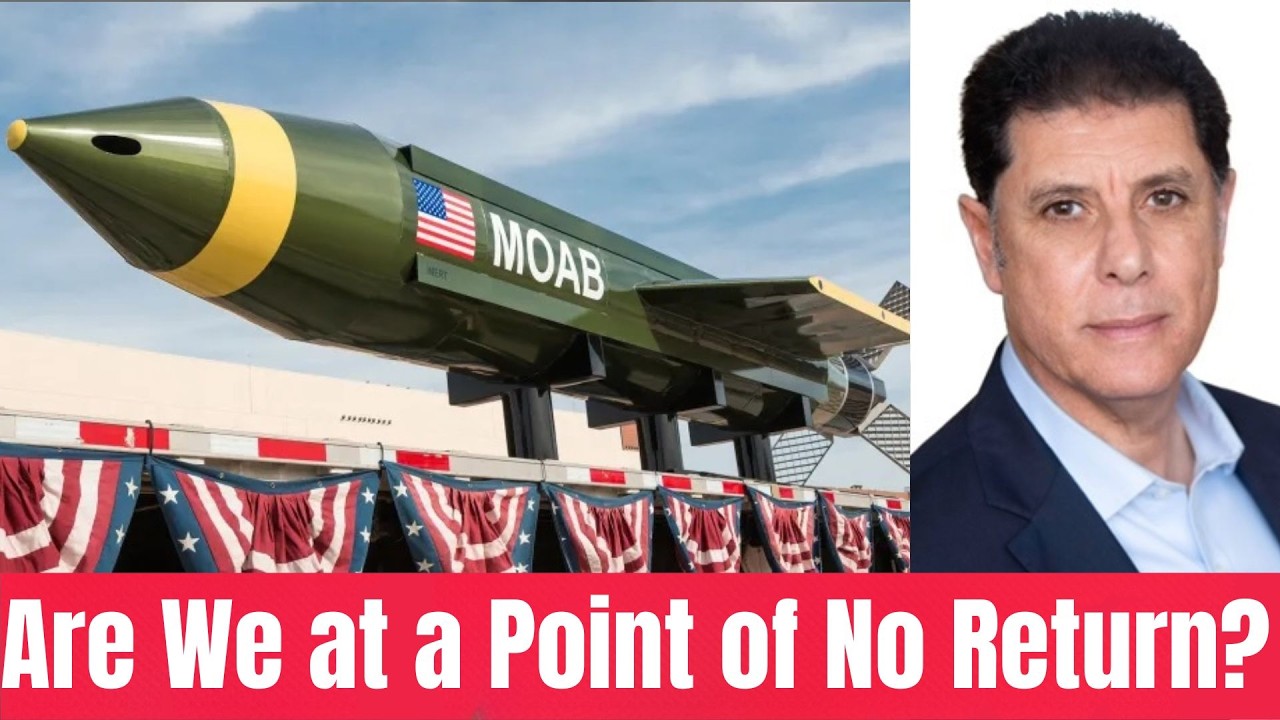
In this Geopolitical Trends video, the host (Speaker A) provides a detailed, on‑camera analysis of the escalating U.S.–Iran confrontation surrounding the proposed “Project Freedom Plus.” He explains how Freedom Plus differs from the earlier “Project Freedom” by adding pre‑emptive strike capabilities against Iranian missile sites, drone bases and naval assets, and by expanding the protection umbrella to the Gulf and Arabian Sea. The analysis walks through the U.S. hardware being readied – Apache helicopters, A‑10 “Warthog” attack aircraft, and the massive non‑nuclear MOAB – and highlights logistical constraints such as the loss of regional base access (e.g., Saudi Prince Sultan Air Base). The host then shifts to Iran’s strategic advantages: control of 31 Gulf islands, shallow‑water routes via Larak and Qeshm, a fleet of Ghadir midget submarines, and the potential to raise uranium enrichment to 90 % as a political lever. He discusses the legal argument that Iran, as an NPT signatory, may enrich to that level if it wishes, and frames the enrichment move as a response to U.S. and Israeli nuclear threats. The video intersperses clips from news reports, a New York Times documentary on the MOAB, John Oliver, and alleged leaked CIA/ Pentagon documents, while also noting the rhetoric of U.S. officials (Energy Secretary Chris Wright, Trump) and Israeli leaders (Netanyahu). The host evaluates diplomatic friction – Saudi and other Gulf states limiting U.S. air‑space, the possible U.S.–China diplomatic showdown, and the broader risk that an escalatory strike could spiral into a wider war that would choke the Strait of Hormuz, raise global oil prices, and destabilise the world economy. He concludes by asking viewers whether the U.S. has the reach to force the strait open without triggering a global conflict and invites audience interaction via comments, a Substack newsletter, and an upcoming live discussion with guests.
Chapters
Hello everybody and welcome to Geopolitical Trends, where truth matters. Iran just fired missiles at a US Navy ships, warships that is. And, uh, at the same time, Trump's response was some sort of chilling given what he's talking about. And the way he looked at this reaction by Iran, as in his term, used the term love tab. That makes you just wonder how Trump processes the, uh, sort of in his mind. Now he's threatening something far worse, and this is what falls under what's called Project Freedom Plus. That's what I'm going to be talking about to you today. So, so far, the ceasefire is cracking. There is no, no other way of looking at it. Allies are abandoning Americans' airspace. We're talking about allies in the Gulf. And oil, of course, it crossed over $100. And what you have right now, the Middle East is on the edge of a war that is literally nobody can stop once it starts. And that's what I intend to address for you in this, uh, uh, analysis here, uh, about where this is going. So Trump now is promoting these measures as so-called humanitarian gestures to free up navigation in the Strait of Hormuz, which Iran has closed since the start of the war. This is a reality Trump is having a hard time accepting. Now you have Central Command, uh, that is releasing now some photos of the, uh, USS, uh, I believe Abraham Lincoln, participating this sort of blockade. So the US is like, wanted just to show we're still doing whatever we are doing. But, but before I'll delve deeper into this, let me first at least provide you an explanation, a short one, about what is this Freedom Plus, because what are we talking about here? Freedom Plus project differs is that it may include preemptive strikes against Iranian missile platforms and drone bases. Whereas what it was the regular first project, which was offered as a defensive umbrella for commercial ships without escorting them. This is where the change that happens. So during the phase 1 of the so-called the Project Freedom. US forces targeted Iranian ports containing military sort of bases, including Serik Island, one of the Minab bases, as well as Bandar Abbas and Qeshm Island. And I did a video for you previously about all this, so, you know, I'm not going to be repeating myself on this aspect. What you need to understand Is that, uh, where Iran— what the US is thinking in terms of this new project. And here is the thing: the US conducted these ops within 2 days from when the project start, the first one. And this is why what you are witnessing right now in the region— and when I say region, I am referring to the entire location here— we are witnessing now a re-engineering of the geography specifically when it comes down to the Strait of Hormuz, because Iran has adopted now a route through the islands of Larak and Qeshm. This is the, those, the, uh, this is the route that Iran has established as an alternative to the routes that were used before the war and has began collecting transit fees. This is the important thing. Now, what prompts me to do this for you? It's because I want to get ahead of it in case the US goes ahead with the preemptive strike. And I'm going to tell you also what Iran just announced as a countermeasure. And for the US to break this course, it imposed what's so-called the blockade, as you may know, around, around the Iranian ports. And I'm not going to get into where they talked about this.
No.
What is not known, what is not known to many is that what prompted the United States to halt Operation Freedom 2 days after its implementation. And that's because for me started to question, is this a prelude to something else during which several Iranian sites were targeted? Because when you look at the Freedom Plus project, it includes within it the ability for the United States to destroy Iran's missile platforms and expanding the protection umbrella to include the waters of the Gulf and the Arabian Sea. And that in itself is going to lead to a much bigger problem. That is why I'm saying, okay, still, what makes that project, first one, Operation Freedom, to halt just 2 days after it was launched? And this is why you have now Donald Trump having a hard time. Literally, he's having a hard time making decisions because Iran has a very long coastlines on the Indian Ocean. So it's not going to be an easy task for Donald Trump because Iran controls 31 islands overlooking the Gulf waters, and that in itself gives Iran a complete control over the passage through the strait. I mean, look at just the map and consider how many islands on the coast. Iran controls all of them. And this is the harsh reality that ships cannot sail from the Indian— the Iranian, I'm sorry, from the Iranian-controlled areas due to the shallow waters. Removing this Iranian control requires protecting the shores and controlling all the islands under its control. Which is not going to be an easy task for the United States. And this leads me to ask, is this why the US is, uh, sort of, uh, uh, now resolving to using the, the MOB? And I'm going to be providing you a clip about this particular weapon. So, so what type of weapons the United States might end up using in this new initiative called Freedom Plus. It is not known yet whether the American vessels will accompany the commercial ships during the Freedom Plus project. There is no confirmation on that because what the US have prepared— it prepared the following, and I kind of looked at the details of what's involved from a military standpoint of view as far as the hardware. We have now deployed the Apache helicopters. That's one. Makes you wonder, is it going to be accompanying the ship or for some other thing? We also have deployed what's, uh, known as the A-10 fighter jets. Those are specific type of— it's called the A-10 Warthog, one of which was shot down, by the way, by the Iranian during the previous round of the war. This is the reality. It is an advanced aircraft described as a tank hunter because it is equipped with a 30mm gun, uh, uh, uh, Gatling gun rather, that fires 3,000 rounds per minute. Makes you just wonder, you know. On the other hand, there is also a possibility that Washington might end up using what is known as the MOAB. The mother of all bombs. And this is considered— and I'm going to show you a clip about it— this is considered the largest American bomb after the nuclear bomb because this one carries about 9,000 kilo— kilograms of explosives. So, and by the way, during my time in Afghanistan, we did use it in Afghanistan. And we used it not to target the locals there. No, no, no, no, no. We used it as an experiment. That was the concerns of us. So I'm gonna share a clip with you that goes back about 8 years ago, or 9 for that matter, uh, just to highlight to you. It was a documentary, uh, made about it, uh, and I give credit to the New York Times for this because that's the clip. So I give credit where credit is due. Let's take a lesson at this, uh, please.
The United States on Thursday dropped a massive non-nuclear bomb on what the Pentagon said was an Islamic State tunnel complex in Afghanistan. The bomb is called a GBU-43/B Massive Ordnance Air Blast, but it's also known as the mother of all bombs, and it has never been used in combat before. The bomb contains 10 tons of high explosives and is so large it has to be dropped from the rear of a cargo plane. Similar bombs have been used by the U.S. before to destroy caves, hideouts of the Taliban. Thursday's strike targeted an area near the Pakistan border. It was unclear whether any militants or civilians were killed. President Trump briefly addressed the strike at the White House.
Very, very proud of the people. Another really, another successful Good job. Did you authorize it, sir? Uh, everybody knows exactly what happened, so— and what I do is I authorize my military.
We have to— the 21,500-pound bomb includes a satellite guidance system to help it get closer to its target instead of just dropping unguided. It detonates 6 feet above the ground, sending a wave of fire that obliterates everything within a 1,000-yard radius.
All right, I'm gonna stop there. It's— that's all it is. The other, it's just some explanation stuff. But I want you just to at least have an understanding of why all of a sudden we are switching in— Donald Trump is switching to now this, uh, this, uh, uh, project, uh, Freedom Project Plus, when considering the usage of other types of weapons now. Now, when you think about this, what will be Iran's response to this? Iran has already came forward through its, uh, I believe the spokesperson for the parliament, uh, for the National Security Committee. And, uh, because Iran now is stating it has options. And you know, one of those options, if it comes under attack, it's gonna now increase the enrichment of uranium to 90%. So this is again what the Iranian Parliament National Security Committee spokesperson stated, that enriching uranium to 90% is one of Iran's options in the event of an attack. And you all know what it means. So, but it is clear that Tehran is also sort of escalating its own rhetoric because Donald Trump is doing that. Iran is responding by the same and asserting that this ability to enrich uranium to 90%, it's paved quickly the way for the construction of a bomb. No, now practically speaking, let me just, uh, put this on the record because there are a lot of people confused. Oh my gosh, Iran is going to increase the, uh, enrichment of uranium to 90%. Let me just put it in perspective for you. Practically speaking, it is legitimate, right, for Iran under international law that it is entitled— that's the key word— it is entitled to enrich uranium to 90%, as a matter of fact, to even 95%, for a simple reason. And you know what that reason is? Is because it is a signatory to the NPT, Non-Proliferation Treaty, which is a signatory of it. So all Iran needs to do is to notify the IAEA, the International Atomic Energy Agency, of this enrichment activity. That's all Iran is required to do by law, international law, because it is an NPT signatory. So, because here's the thing: if Iran has, and now voluntarily— that's another keyword— voluntarily limit itself to a 60% enrichment threshold, it has done so solely for the sake of negotiations, not for any other reason. And this is, however, where the Americans and the Israelis sort of, uh, if, if they think their war against Iran, this illegal war, this aggression, this whatever term you want to use, if it is, if it persists, Iran may choose to increase its leverage. And one of the leverage is to just increase enrichment from 60 to 90, thereby effectively issuing a warning to the opposite side. And this move in my opinion, is a response to a tangible threat emanating from the United States and Israel regarding the potential use of a nuclear weapon against it. That's why I did a video reminding you about the nuclear option that is in the back of— behind closed doors, quietly, uh, discussed in certain circles in Tel Aviv and in Washington. Because you remember when Donald Trump, uh, uh, let me put a picture of him here. When Donald Trump declares that he will, and I quote here, wipe Iranian civilization off the face of the earth, that he will obliterate Iran within 4 hours, erasing it from existence and redrawing its border, end of quote. Well, when you think about that language, what exactly is the intended meaning behind, uh, this kind of wording? And if this is not enough, consider what Netanyahu said at the podium at the United Nations few years ago. Uh, when I say few years, two years ago or so. When he openly threatened Iran with a nuclear strike. Once again, the next question we need to ask is, what does this signify? And yet no one in the world, not a single person, even raised an objection to Netanyahu's remark, despite these remarks were being delivered from the very platform the United Nations, which is a venue, in, in my opinion, that is supposed to embody justice and impartiality. And second thing that you need to ask is why the IAEA is not inspecting nuclear facilities in Israel. And this is where I believe— and this is not a threat from Iran, I don't think so, and please, uh, uh, share your opinion about it— I believe that I would expect the Iranian government, especially now under Mojtaba Khamenei, to move forward and to pursue the developments of a nuclear weapon because there is no other way. This is because doing so will establish some sort of a form of equilibrium. And indeed, in my opinion, in the absence of such balance, in the case of Israel and the case of the US, will be emboldened to do even more. That's the way, the way I see it playing out. And that's again where you consider, as part of this analysis, I have to include geography. There is what's called the political geography, because geography plays a role in certain geopolitical decisions. Geography is on Iran's side. That is asymmetric warfare. Because why? It relies on light and inexpensive weapons, which I will share with you in a, in a second here about certain types of submarines Iran is preparing or has prepared. So, and that is why Trump is trying to impose this distant blockade. Once again, pay attention to the keyword distant blockade. Donald Trump didn't go to the Strait of Hormuz and post the blockade. Donald Trump put the blockade way out. He knows why. Because a near, near blockade— if we are to look at the map here— a near blockade will produce painful economic repercussions will take time for it to happen. That's why the US is not willing to do that, even though we have now the military, US military in full swing. Uh, there, there is no way. Iran will not— Iran— and, and you guys already expressed your opinion in a survey that I put for the community. Iran will not make concessions in a limited— because of a limited military strikes. No, no, I won't. And even in a larger-scale war by the US and Israel, I don't see Iran making concessions. What do you think? Now, the next question we ought to ask is how likely the US to use these advanced weapons. Well, the likelihood depends on whether negotiations succeed or fail, and I am not ruling that, that possibility. Because to my knowledge, there are two of these six weapons in the region, but the decision has been made in the Pentagon— we're talking about a few years ago— been made that it will not be used for that. It was used in Afghanistan as a testing ground. So to my knowledge, two of these weapons have been shipped to the region. I do not know which country is hosting this, which will have to be one of the Gulf states. I don't know which one, but once again, I find myself going back to that point of the what's going to be the key signals to the escalation, you know, because when you look at even from the political statements, you take for example the US Energy Secretary Chris Wright. When he— when you read a statement like this, and I quote here, if we don't get a deal with Iran, we will use military force to open the strait to everyone, end of quote. When you consider Trump himself signaling that he remains open to renewed military strikes, and by adding that what the US may need 2 more weeks of military action against Iran, and when Donald Trump will threaten to attack Iranian oil fields, bridges, electric— electricity infrastructure if Tehran refuses Washington's conditions. Well, that's to me, first of all, is a war crime to target civilian infrastructure. And second, you know, you can negotiate with a country under those kind of conditions by imposing your will. That's why we call them negotiations, is back and forth. And the other option is that US and Iran's forces have already exchanged fires. That's another signal for the escalation moving forward. But the main one that I want you to understand about these dynamics is the geography, is the geography. It's going to be, uh, to the US, not to the Iranians, that it's a dilemma for the Americans because this is a critical constraint. Geography is— here is the thing, before the war The Strait of Hormuz handled one-fifth of the world oil, uh, uh, supplies, and Iran has largely blocked non-Iranian shipping, uh, through the strait since the conflict began, and, uh, back in February 28th. Because this is what the US will not be able to do. You have also another dynamics And those are the diplomatic breaks. And what do I mean by this? In light of a recent Donald Trump, uh, uh, suggestion that he might end up using force or advanced weapons, you have now some countries like Saudi Arabia reportedly refusing to allow American aircraft involved in the initiative to use Prince Sultan Air Base, uh, uh, which is in Riyadh. I'm very familiar with that base, uh, in southern part of Riyadh, or have the US aircraft fly through the airspace, which to me suggests what? This is a significant logistical constraint for the US. That is where I see the difference. So the scenario of the US deploying This so advanced weapons here, like the, the, the MOAB, uh, weapon under Project Freedom Plus is moderately to highly likely if negotiations collapse. We got to be realistic about that possibility because of course Donald Trump makes threat right and left. We accustomed to that. And look now what he's doing in China. Is going to China with empty hands, which we, we'll talk about this later on. But Donald Trump does— there is a track record for making threats explicitly and repeatedly. However, it faces a real constraint because geography, it's favoring Iran. In this case, you have regional allies reluctantly Now they don't want to cooperate with the Americans. And of course you have the risk of a broader escalation affecting the entire global oil market, because the first that's going to be paying the price is the Gulf states. Their survival depends on oil. If there was no oil, there will be no Gulf states. Yeah, they're going to be just some sort of nomads hanging out in a desert, and that's it. You know, I'm not putting them down, and let me just be clear about this, I'm, I'm speaking realistically here. And even now, when you have this diplomacy per se, you look— be looking at now, uh, uh, could it even— the decision regarding the share of Hormuz will be discussed between Donald Trump and President Xi Jinping? I don't know, it's hard to tell at this point. It's because Donald Trump has no leverage whatsoever. That is the hard truth. If the truth matters to you, hit like, subscribe, and tap that bell. No spin, no agenda. Just the stories they don't want you to know. So don't watch from the sideline. Be part of the movement. Your support keeps the truth alive. Thank you very much. Indeed, much appreciate you and much appreciate your support. Now we ask this question literally: can we expect now preemptive strike? Well, the short answer is not as easy as you may think. For a simple reason, and that simple reason is preemptive strikes in the classic sense, militarily speaking, in this scenario are unlikely. But escalatory strikes framed as a self-defense are already happening and could intensify rapidly. That is where the difference is. They might not be under preemptive strikes, but it will be under escalatory strikes because the US has already embarked on this trajectory per se. Because the true— here's the thing, the true preemptive strikes are so complicated because there are several factors you have to consider. For example, in this scenario, as I mentioned earlier, you already have regional allies pushing back. You have Kuwait, you have Saudi Arabia, were described as very angry, which it won't matter anyway because US doesn't care for their survival, depends on the US. And they are saying, we are so angry at the Pentagon conduct, and temporarily hold permission for the US to use their bases and airspace. Do you know all it's going to take for the US to unleash some group, some radical group inside those countries and, and turn it into a chaos. That's all it's going to take. So, but there is another harsh reality, is that without regional bases, deep strike operations become far more logistically difficult. The other aspect you need to consider is the ceasefire framework. Well, Why, why am I referring to— what am I referring to here? I am referring here to the US conducting strikes during ongoing negotiations, which is like a blatant violation. It tells you right there the intentions of the aggressor. And the third element that is crucial, once again, is that geography. The geography, in my opinion, now remains sort of Iran's shield, if I may use the term. Because you consider about how narrow the Strait of Hormuz, you know, what, 20 miles, 21 miles, something like that, you know, at its narrowest point. And Iran has controlled access by laying mines and firing at ships trying to break through. That is why the geography is into the Iran The, the only way you're gonna think of this is what could trigger the strikes, because there are also, also triggers that could push for this despite the constraints. There are other scenarios that could trigger the escalation, and that's why Iran went ahead and announced if it is attacked, they're gonna enrich uranium at 90%. Which is, by the way, even 60%, it might be also able to do, uh, uh, uh, construct a nuclear device with that. Of course, 90 is the ideal for it. And this, the triggers is now when Trump is issuing this warning and these threats and so forth. If they don't agree, and this is Donald Trump's word, and I quote, if they don't agree The bombing will start, and it will be sadly at a much higher level and intensity than it was before. End of quote. What kind of language is that, Donald? So, and when you threaten to attack oil fields, civilian infrastructures, no, it becomes, it becomes more problematic, and those could trigger the strike. But also, you don't ignore Israel role into this, because to Israel there is a much bigger problem. And the problem is they don't know about Trump's decision whether to pose a Project Freedom Plus or not. And this is why Israel on its part has been preparing for an escalation. And that in itself suggesting the unpredictability at the highest decision-making level. That's the way I see it. So I'm not going to rule that out because the situation right now is less about a deliberate or planned preemptive strike, but rather more about an escalation spiral where you have some sort of, uh, each, uh, exchange of fire like what happened before and already ongoing in the strait, risks triggering this kind of a larger response that effectively functions like one. And, and I will do a video for you next few days, uh, as part of a confirmation that US naval destroyers came under attack from Iran. Once again, a confirmation because I want you to see it with your own eyes. And I confirmed the footage for that. So the diplomatic window now is narrow. The rhetoric is extreme on both sides, but mainly on the US. And the— what you have also is the military posturing on both sides is a hair trigger. It's all it's going to take. So to me, the way looking from outside in, This is the recipe for the most dangerous scenario, because the most of them all is that it's not a calculated preemptive decision. No, no, no, no, no. An incident that spiral beyond control before diplomacy can catch up on it. That is big, big problem. So, and this, uh, and, and this paved the way for me Like I mentioned earlier when I said to you whether Iran, whether the situation in Strait of Hormuz will be addressed between Donald Trump and President Xi Jinping. It might come up, but China is in a much better position than the US. I wrote yesterday an article on Substack. I'm going to share it with you if you want to read it. It's worth your time to read. It's a little heavy, but it's worth your time to read. And by the way, greatly appreciate if you could subscribe to my Substack. I will really appreciate your support on that because I found out that you can do podcasts on, on, uh, on Substack. So we might consider some topics there. And, uh, so just read the article. And, uh, this particular topic, by the way, uh, remember to join me on, uh, the 15th, which is 2 days from now. With, uh, with Einar Tengen and Warwick Powell. They're going to be here. We're going to be discussing, uh, I, I don't want to— I didn't want to talk about it because I want to keep it for, uh, Einar and, uh, Warwick. It will be an interesting conversation. So make sure you join me, uh, for that on the 15th at 2100 hours. So now, and that's all I have for you as far as my own analysis. When I don't have anything substantive to do, I don't stay on the air. So What I'm gonna do for you, however, like we've always been doing here, I'm gonna share some clips with you, if you don't mind, and those will be worth your time to take a listen, a listen to. So let's start with the first one, and this is from John Oliver. Yeah, I'm aware of him. Very, very interesting. Let's take a listen here, please, and in English, of course. Benjamin Netanyahu is boasting that he can bring the US along with whatever he does.
Especially today with America. I know what America is. America is something that can be easily pushed, pushed to the right direction.
Wow, America can be easily pushed. Even if that is true, it's insulting to hear out loud. And to be fair, Bibi has had a lot of success in pushing America. If you take out Saddam, I guarantee you that it will have enormous positive reverberations on the region. My fellow citizens, at this hour, American and coalition forces are in the early stages of military operations to disarm Iraq, to undermine Saddam Hussein's ability to wage war. Obviously, we'd like to see regime change, at least I would, in Iran, just as I would like to see in Iraq. A short time ago, the US military carried out massive precision strikes on the 3 key nuclear facilities in the Iranian regime. Iraq, Iran, and Libya. Today I authorize the armed forces of the United States to begin a limited military action in Libya. He's running around the Middle East, his region, and his own country and telling people point-blank, just stating it, I control the United States, I control Donald Trump. I'm an American. You can't treat— it's too humiliating. I can't handle that, and I shouldn't have to put up with that. Uh, spot on. It's, it's, it's, it's very disturbing. Uh, as again, I was in Washington, uh, I was aware of certain things. Unfortunately, I can't talk about, you know, the sensitive stuff. I'm still bound by the law because you sign a 75-year, uh, uh, uh, uh, uh, NDA, non-disclosure agreement, NDA. Yeah, 75 years, which means you'll be dead by then. So, but anyway, it was disturbing to know a few things. So let's, uh, let's share the next clip, uh, and again we go back to our conversation about Iran here because it's very, very important. And, uh, this one I'm going to do the translation for you. I want you just to watch the imagery here because it's very, very important. Iran to have the What it says right here, uh, Iran is threatening to deploy a formidable weapon in the Strait of Hormuz amidst the possibility of renewed confrontation with the US and Israel. But what exactly is this weapon? There are submarines known as Ghadir, uh, uh, midget submarines designed to operate in shallow waters, moving silently beneath the surface. Tehran is banking on these vessels as a key component of its asymmetric warfare strategy. Rather than engaging traditional confrontation against destroyers and warships, they could instead serve as potent instruments of disruptions within one of the world's narrowest and vital— most vital maritime choke points. Reports indicate that Iran possesses a fleet of more than 20 such submarines, classified, uh, as small diesel-electric, uh, vessels. Military data suggests they measure approximately 29 meters in length, operate with a limited crew, and typically carry 2 torpedo tubes, making them ideally suited for naval ambushes in shallow waters. However, their true threat stems not solely, solely from their firepower, but from the sheer difficulty of detecting them within a complex environment like the Strait of Hormuz, an area characterized by heavy shipping traffic, limited water depth, and an intermingling of commercial and military vessels. Herein lies the core of Iran's latest message: in a single, uh, or a single torpedo, a naval mine, or even the mere threat posed by these submarines could be sufficient to drive up insurance and shipping costs, further destabilizing global energy markets. Nevertheless, experts note that these submarines are not without their vulnerabilities. They possess limited operational range and payload capacity, and should their locations be compromised, they become a relatively easy target. Consequently, Iran does not view the Ghadir submarines as a weapon capable of decisively winning a war, but rather as a weapon designed to dramatically raise the cost of waging a war. That's very, very interesting. And, and the idea that even for Donald Trump, which tells you right there he was, uh, pushed into this war because most of the members of the Joint Chiefs of Staff were warning him about a war with Iran because he said to him— and I read the declassified report— they said to him, the first thing is going to happen is they're going to shut down the Strait of Hormuz. And it's going to become a problem. And his argument was like, oh, we can do it quick and all that stuff. They said no, no, they have a firm control over the Strait of Hormuz. And obviously he was pushed into this war, uh, because that tells you right there he had no say into this one here. Let me share now with you, uh, leaked declassif— whether it's— I don't know, it's leaked classified, uh, uh, CIA, uh, document here. So take a listen, please. And sometimes when you hear, uh, about leaked, uh, documents, uh, that means sometimes it's also by design that they are meant to be that way. Sorry, let me remove this one here. Okay, get rid of that. Uh, let's put this one here and let's take a listen, please.
Iran and its remaining military. US estimates on the resilience of Iran and its remaining military capacities are an underestimate. At every stage of this regime change campaign, we've been lied to. We've been lied to about the reasons why Trump launched it. He claimed that Iran was weeks away from nuclear weapon. Everyone knows that's not true. His own intelligence agencies, the consensus for more than two decades has been that Iran does not have a nuclear weapons program. And there were so many other lies piled on top of that. So I think the fact that we're now getting these leaks from inside the US intelligence community after we've been told by the Trump White House that Iran's been decimated, that they can't hold out, that they're about to crumble, their economy is going to collapse, I think these leaks are coming out for a reason. There are people inside the intelligence apparatus who don't want to see a return to war, not necessarily because they want peace, but because they know that the US has failed and they don't want to see a further strategic defeat.
Uh, it is spot on. It's not the idea that it's because we couldn't win. I remember Iraq, remember Afghanistan, remember Yemen, remember Somalia. Yeah, we couldn't win despite our military might and all that stuff. We couldn't, especially in Iraq and Afghanistan and Yemen. Those areas I've been in on the ground. I've been near Somalia in Djibouti and, and, and, uh, in Ivory Coast and so forth. But, but for other 3 locations, Yemen, Iraq, and Afghanistan, uh, I was there and I kind of made my concerns, uh, sort of, uh, express them. But again, chain of command, and we all know how this end up. The last clip I'm gonna play for you is this one about, uh, Donald Trump, of course. Uh, just take a listen here, please.
He can't accept it because he'll be called Taco Trump. He can't accept it because he'll be called Taco Trump and accused of chickening out. He can't accept it because of the amount of Israeli influence over Donald Trump, which is total, as we saw from the Benjamin Netanyahu softball interview where he's calling for a U.S. Special Forces operation inside Iran. He can't accept an off-ramp, but at the same time, he can't go back to war, and he has no cards left to play in this war other than civilian slaughter and the destruction of infrastructure. He cannot open the Strait of Hormuz. There is no military means to do that. The naval blockade is not working. A new CIA assessment has just been leaked showing that Iran is prepared all the way into the fall, all the way up into midterms, to withstand this blockade that they've, of course, been preparing for since well before this war. The CIA assessment also says that Iran has 70% of its ballistic missile stocks and launching capacity. I would actually think the number would be higher than that, that that's an underestimate.
And by the way, this was about why Trump rejected Iran's proposal. That is the reason why. So, Blumenthal— articulated that very, very, very clearly, and I couldn't agree more with him. So, uh, I will be working on some other stories for you, uh, next time. Uh, I'll do my own research. And the one thing that I am still interested in is the mystery of the Iraqi desert base that belongs to Israel. How the heck they have a secret base on a sovereign country? That is remain a mystery to me. And I'm going to look into it and do that. But in the meantime, I want to just to remind you to join me on the 15th with my two dear friends, Warwick Powell and Ina Tanger. We're going to be talking about Donald Trump's trip to China, which, by the way, I'm going to give you a glimpse. It was humiliating for him. Look, I'm not— nothing against the person who greeted him at the airport. But Xi Jinping didn't go, and that should tell you— that's a subtle message right there. Here is the President of the United States, and even the president of China, President Xi Jinping, didn't even go to the airport. So, so it's almost like they're saying, you come to me. And because, as I said on, on the thumbnail for this particular upcoming live stream, President Xi Jinping holds all the cards. China does. So I look forward to this conversation with my two dear friends. I take this opportunity to say thank you to Servant of the Most High 712. Thank you so much for your super sticker. You wrote me, Allah bless you, for your go work, doc. I really appreciate your work. You are most welcome, and truly appreciate your support for the channel. I'm very, very grateful. I want you to know how much it means to me. Uh, for those who wants to support the channel, uh, let me share the link for with you should you decide, because you— if you enjoy this analysis and all that, here is the link if you want to support the channel for this one here. I'm very, very grateful. And before I'll go, I want to leave you with one question. What that question is, and if you feel comfortable enough to answer it, you, you're most welcome. And the question is, in your opinion, if diplomacy fails and Project, uh, uh, Freedom Plus is unleashed, does the United States have the military reach to force open the Strait of Hormuz? Without pulling the entire world into a wider war? And the second part of that question: is that a risk worth taking? So make sure you drop me your thoughts in the comment section. Uh, I will really appreciate it, and I do read every single comment. I might not respond to all of them, but I do read them. I will be very, very grateful to you for that. Uh, one last time, uh, this is, uh, for those who wants to, uh, support my upcoming trip to Asia. Here we are where we are today with the, the funding campaign. We are at 35%. We got in there, so in due time hopefully we will reach our target number of $10,000. So, but here is again just the link to it should you decide to do that. Uh, I'm gonna be working on the next stories for you. Hope you enjoyed this, and I look forward to seeing you next time. As always, remember, geopolitics impacts your daily life in more ways than one. Till next time, bye-bye.
More from David


Beyond the Single Actor: Why the Gulf Isn't Choosing Between the US and China


Iran, Iraq's Militias, and the Houthis Are Coordinating! This Changes Everything




Who Controls the Next Decade's Resources? Latin America and Africa's Geopolitical Crossroads

The Chokepoint Trap: How Washington's Stupidity Triggered a Cascade That Now Controls the World

Trump Spooked as IRGC Unveiled dual-use SLV, Deployed Ghadir Mini-Subs & Hinted at Tactical Nukes!
