Pushing the Philippines to Fight China (w/Anna Malindog) | Geopolitical Trends
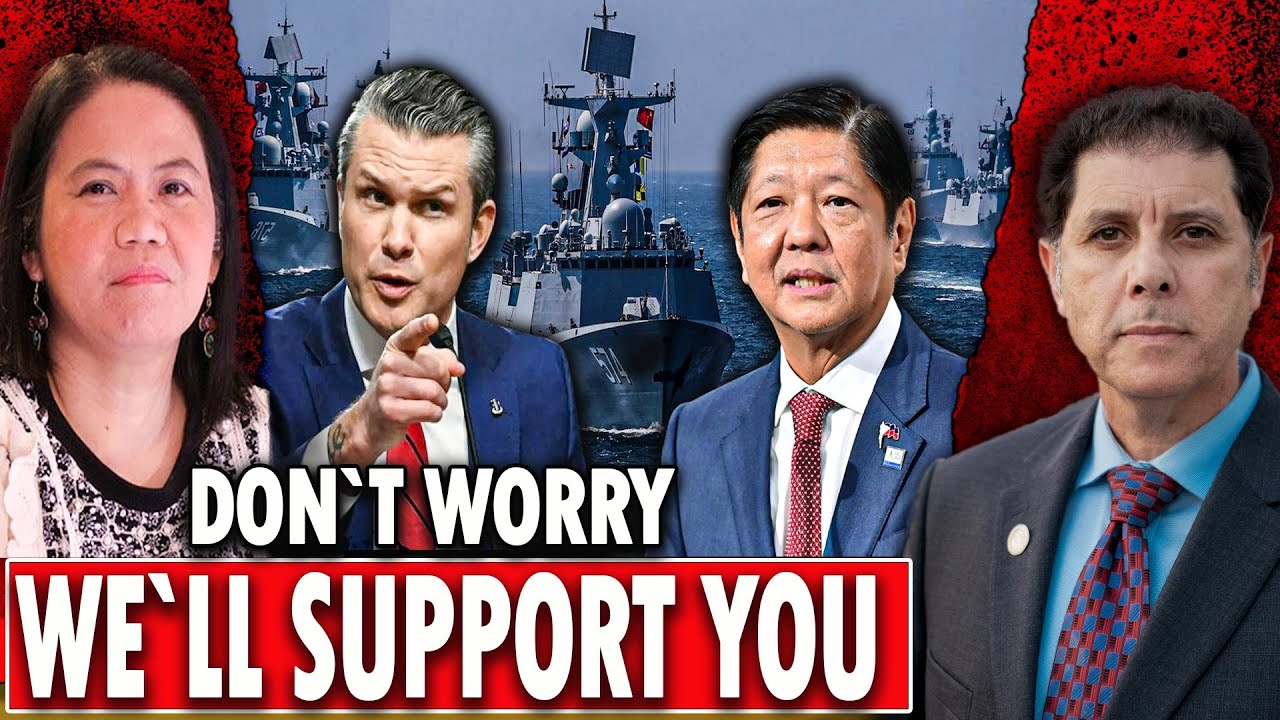
In this live Geopolitical Trends episode (April 5 2025), host David Oualaalou welcomes the Filipino‑China affairs specialist Professor Anna Malindog (PhD candidate at Peking University, Manila Times columnist, and vice‑president of the Asian Century Philippine Strategic Studies Institute). After a brief community chat, the conversation moves through several inter‑linked issues: the status of former President Rodrigo Duterte’s ICC case and worldwide birthday‑rally protests; the political climate under President Marcos Jr., including public dissent and calls for his resignation; the recent U.S. defense engagement – Secretary of Defense Pete Hegseth’s visit, the announced $5.58 billion U.S. arms package (F‑16 fighters, Typhoon missiles, other systems) and the broader U.S.–Philippines security pact; the strategic rationale that the United States may be using the Philippines as a forward‑position against China; the domestic trade‑off between massive military spending and the Philippines’ pressing socioeconomic problems (poverty, inflation, food insecurity, health‑system deficits, drug resurgence, infrastructure gaps); alternatives to U.S. arms such as Chinese J‑10 jets and the feasibility of diversifying suppliers; the risk of regional escalation and arms race in the South China Sea and Taiwan Strait; and finally a call for Filipino citizens to exercise active citizenship, demand accountability, and critically assess the government’s decisions. Throughout, both speakers stress that the Philippines should not be a pawn in great‑power competition and that the ultimate decision lies with the Filipino people.
Chapters
All right, hello everybody and welcome to Geopolitical Trends, where truth matters. Excited to be with you on this April 5th at 8:30 AM. So I didn't even have my coffee yet, so, but anyway, uh, uh, it's, it's, it's all right. So we'll be waiting on, uh, Professor Anna Malendag to join us here. And she'll be here in about 5 minutes or so. So, but anyway, I figured I'll start, just say hi to our community and let you know as to what's coming up next week. Now I am, as I mentioned yesterday, some major developments regarding the Houthis and the US regarding the tensions that's going on and some information from inside the Pentagon. So I will be talking about all this. On Monday. So make sure to join me on Monday because this came as a shock, at least to me, surprising on some level. But we'll— you'll find that all on Monday. So make sure to join me for that. So let me say hi to the community. Uh, John Stasvich, you know, by the way, John, I want to say thank you so much for your comment, uh, and I read it and the one where you talked about the consequences of an economic system based on competition, private interests over collective interests, and scarcity, instability, and capitalism. Very, very interesting take. So I'm gonna share it with the community later on, and you guys make sure to read that one. So thank you so much for sharing that. Jakobs, good to see you. Ukraine 2.0. I see your point. Hey, Angie, as always, good to see you as well. Um, Coach Ohoy from Malaysia, good to see you. Based Maharlika, good to see you. Timeline Dunkley from New York City, as always. Uh, who else is here? S, good to see you. Truth Seeker Liang, good to see you. Uh, West— what's up, Whetstone? Good to see you, and hello to you as well. And HMC, good to see you as well. So anyway, this is what I'm— as I said, I'm waiting for Professor Anna to come in here, and she's on her way. She'll be here in about 5 minutes or so. Then last time she couldn't make it in the location she was at because technological challenges, but it's, it's not a big deal. So that's why we decided to reschedule the interview with her, and she'll be here soon. So what else I was gonna say to you? By the way, to those who have not watched the video I did yesterday regarding the livestream regarding Russia's dire sort of warning, if I may use the term, to the Americans, so make sure you take a look at this video. I'm gonna put the link for for you guys, for those who have not seen it yet. Uh, it's worth your time to listen to it. Let me get you the link here and you can check it out. So I'm going to put it in the chat box, uh, for you guys. And again, uh, remember, the analysis you are listening to here is unique to this channel. So I would greatly appreciate it if you could subscribe to the channel and share it with others so they'll have an opportunity like you to hear the truth. So that's all— that, that, that's why I'm doing this. I'm doing this to raise awareness around the world, not just here in the US. Uh, sadly, some fellow Americans, uh, you know, are oblivious to what's going on. But again, It's their choice. They choose not to put the time and effort into learning. Like I always say, a curious mind will always let you learn more than what's out there. Anyway, let's, uh, and as I said, uh, let me see if any of you here— oh, Warrior, thank you so much! Thank you very much, appreciate it. So it's really, and I mean it when I say, guys, it's, um, supporters like yourselves is what keeps me going, and I mean this. Matt Becky, good to see you. So, oh, that's an interesting one. Convicted felon extends TikTok ban. Yeah, yeah, we all know where this is going with the, uh, with the TikTok. You know, they're trying to— I don't think so. China is going to sell it, and they shouldn't sell it. Simple as that. Uh, Doggy5, good to see you. Even Singapore has said they will not fight in any war between Taiwan and the mainland. Yeah, it's just ridiculous. I mean, we all know, we all know by now that we want to have a proxy war using the Philippines. We're not going to fight the Chinese. It will be the Philippines, it will be the South Koreans, the Japanese, And I will go even as far as Australians. But the problem that I am concerned about, especially for the Philippines, given where the economy is, given its own infrastructure that is, you know, I don't know, should we use the term Bismarck? I don't know. I have not been there, but I read enough to know how things are regarding, instead of investing for infrastructure, they are buying F-16s. That just doesn't make sense. So, and we will be, uh, we will be talking about, uh, uh, this with, with Professor Anna when she gets here. Uh, Warrior, thank you so much for your kind words. You wrote in, uh, in— this is Arabic written in English. It says, shukran, thank you, thank you, dear. So for for your analysis. Thank you so much, truly appreciate you for that. Um, it just— again, it concerns me a great deal because you're seeing the Filipino people, their living conditions, and then you ask yourself, is their living conditions improving? Usually when you have a new president, it's supposed to work for the economy, supposed to uplift the society. I mean, we give always the example of China. Why China is able to do it? So because the government is working for its own people. You don't raise over 800 million out of poverty from thin air. That doesn't happen. You know, that, that just, uh, sort of— it saddens me, even for me as an American here. And I know that living conditions here are different than Philippines, but it's still— because I am seeing the massive amount of poverty that is now start to see people, homeless people, and sleeping in the streets and all that stuff for the richest nation on Earth. And when you think about this one about Philippines, it concerns me a great deal. And for how now even Marcos himself be weaponizing the entire government towards that end. Why? If you don't want to serve the people, then don't run for office. Simple as that. You know, I, I understand about corruption. I understand about all this because we have it right here. You know, we are as corrupted as, uh, you know, we are not the saints. No, we are. But again, it's up to the American people. They decided to vote for Mr. Trump, they got the outcome of it, of that. Now, as a reason why I didn't vote, and I would not vote, forget about voting here. What for when I know the government is not working for the people? Now, the same arguments I'll say about the Philippines. So, and here they are now with Marcos doing what he's doing. I know he's being pushed by the Americans to do the bidding for the US, but that's not right. That's not right. It's because you have a responsibility. You as a leader, doesn't matter what country, when you are in charge, you have a responsibility towards your citizens, towards your constituents. And if you can't serve them, then don't run for office unless you have different intentions and your intentions are bad regarding corruption, regarding what have you. And this is again where I see the concern, uh, why, uh, I, I, I kind of like, oh, I found myself, uh, pulled into addressing what's going on in Philippines. I know some have asked me, Dr. O, why would you worry about Philippines? Well, Filipino are human beings like you and I. They deserve something better. And if someone can articulate the argument from an outside in, might be better. So I'm not saying, you know, there are smart people in the Philippines. You know, you got Professor Anna Mandak, she's well articulated. You can, uh, uh, what the Dr. Mahalo that I invited here. There are some smart people out there. It's just the system, the system that is. And it's up to the Filipino people. They're gonna have to decide on what kind of government they want. So a lot of, a lot of people do not know, uh, how this kind of, uh, uh, the will and the power that people have. It's because the systems— I'm trying to silence this one— uh, the, the systems is being so, uh, controlling, preventing any logical arguments, any sound judgments, any form of sort of standing up for what's right. That is part of where the problem is. And I kind of start to realize, you know, we have it right here because the masses are being so distracted by whatever. In the case of the Philippines, it's different. It's because the hopes were when Marcos Jr. won the elections, which by the way, he won the elections with the support of the Duterte's only to turn on him. On the family, on whatever. And I am not defending the churches here or going again, you know, I am for what's right, I am for what's objective. And if you guys notice, those who've been me, who've been with me here since the beginning, you've always noticed my analysis is objective. I don't favor one side over the other. I will disclose the facts as I see them and let you reach your own conclusion. Because it's not up to me to make that decision for you. It's not up to me to reach the conclusion for you. It's not up to me to mislead you or lead you into a certain outcome, because it won't be right of me to do so. And I will not, uh, I will not feel good about that. That means I will intentionally mislead you, and I can— I will not live with myself that way. So, and that is why I'm saying they are the, the reason for why now I, I address the issues in the Philippines, especially with the latest ICC, uh, arrest, of which, by the way, the government, Marcos government, has paved the way for the, uh, to do that. I know, right? So it's because, uh I'm just checking here to see if Anna is— so she's right here. Okay, she's on her way. And that is again why I am thinking in terms of if somebody can provide at least a different perspective in conceptualizing what the issue is. In, put in, in, in sort of in a simple language that everybody can understand what the issues are. So people will start to think, okay, if we voted for the guy, if we voted him in, we can vote him out. So that's how I always see it. So, and this is, again, I go back to that example of China, you know, because now that I can speak with facts because I've been there. I saw, I interacted with the locals on a limited basis because I don't speak the language, but I did see where the country is. I saw how the streets are so clean. Yeah, did I see everything? No, of course not. Did I go to the outskirts and some villages? Well, no, I didn't. Life might be different there, but it's still The facts remain. When you go to a city like Guangzhou, when you go to a city like Shenzhen, when you go to a city like Shanghai— I didn't have a chance to go to Beijing— and you see where the infrastructure is, it makes you just wonder, what is, what is, what is, what is this thing right that this government is doing that we are not? Same argument applies to the Philip Why the Philippine government is not working for its people. So yeah, and you know, when I said last time, and I remember I had a conversation with someone from the West here, and I said, did you know that I've argued this years and years ago when I said the future is China? And of course they look at me like I'm speaking I'm, I'm— I lost my mind. They didn't get it. They didn't get it. And that's exactly what I see different. So now here's the thing, just food for thought for you guys, just to think about it. Imagine if Philippines would have coordinated with China regarding infrastructure, where the Philippines would be. Look at Malaysia, look at Indonesia, look at ASEAN countries. And, and even with the issues that's going on right now that the US is creating regarding the tariffs when you consider ASEAN and China free trade. No issues there. Well, Philippines is part of ASEAN, but again, it is the weak link. You just think about it, sort of what outcome will be, how the Filipino, uh, economic lifestyle and so forth will be, infrastructure and so forth, instead of now— and I'm finding out and I'm waiting until Professor Anna gets here, and we will talk about the, uh, uh, the, uh, F-16 purchase. The billions of dollars is going to be spent on that. To what end? And, and, and my argument was, if they are to do this, why don't they buy the latest? So because we are not going to give them the F-35s, forget forget about it. No, we're not gonna do that. So what we're gonna do is we're gonna give them the F-16s, you know, which is— yeah, I mean, consider comparing the F-16s to the J-20 Chinese, and I'm not even talking about the Chinese J-36 stealth fighters right here. So let alone the cost of it. And again, William, William N, you're right, F-16s are old. You know, you look at the next generations that now it is the 6th generation that the Chinese did, you know. Sarah, you're right, F-16s, the F-35s, the problems that it has. I had a chance back then when we used to do the testing of the F-35s. So I happened to be on the same base at that time. So, and there were problems with it, let alone the cost of it. That just, uh, it, it's— that makes you just wonder. So if a government is not responsible enough, and I'm seeing the same argument, or I've made the same argument for the likes of India, the likes of Pakistan, you know, countries that, you know allocate serious amount of money towards armaments at the expense of their people, at the expense of the economy. A responsible government doesn't— ought not to think in these terms. I'm not suggesting you shouldn't have a strong military. That is not what I'm saying. But you're going to have to consider the living conditions of the population. If you prefer to go with armaments while you have slums all over the country, while you have sewage still open, while you don't have any infrastructure for bridges— excuse me— roads, trains, buses, you name it, because you wanted to purchase the military hardware. And for what? To do the bidding for another country? Because especially if you know what your capabilities are, I mean, let's just say it straightforward, guys. Hypothetically, we are those who saying what, the Philippines is going to challenge the Chinese. Come on, let's be realistic, you know, because China today, even for us You know, with all what we have, we are thinking twice, despite what you hear. And I used to work in Washington. I was very familiar with the conversation. Despite what you hear, we think twice about engaging China militarily. And now it's, that ship has sailed. Too late. Because it was their argument of the containment of China. You can't contain China. It's too late. That's done for. So, and this is again where that, you know, I'm trying to be realistic and pragmatic here as far as thinking, can anybody in the Filipino government have some common sense, some decency, some pragmatism to say to him or herself, no, if people voted me here, at least I can do something. I don't know how those people sleep, go to bed. I just don't know how, knowing that, you know, I understand about corruption and I understand. And if you don't discipline your soul, literally, if you don't discipline your soul regarding that, you'll never get over it. You know, it's, it's 5— it's, it's, it's one of a human's weaknesses, you know. But till you have the discipline to say no, somebody provide you bribe, you say no, I'm not interested. Not everybody, I don't— because we, we differ, people are different. So that's just how it works. And again I am looking at where things are headed in South China Sea, in that part of the world. And I've been arguing this for months regarding, uh, what lies ahead, because I was aware back then— you're talking about, uh, in, in 2006, somewhere around from 2004 forward. So, and I've been in DC all that time, the conversation has shifted to the Far East. That's where the next front is going to be. So let's figure out a way how to create tensions in that part of the world. That was back then what the conversation was, and here we are. So, so you start to say to yourself Okay, what is this all about? And for us, for my own country, haven't we had enough? Haven't we had enough? You know, I— it just, it pains me. It pains me to see what's going on here. A lot of people do not know. Those who live outside the US, uh, uh, they have no idea how the conditions are here in the US. It's kind of very, very different. So, and that is why, again, you start to think about, okay, Philippines is going with this type of foreign policy that will be more based on a military hardware. It gives you an idea of where things are headed. And again, it's gonna be up to the Filipino people to decide how this is going to be. So let me check here, see if Professor Anna, it's still on her way. Yeah, she just sent if she can. So, and thank you guys for being patient here. You know, sometimes with technology stuff and time zones and all that, and so I understand that she's a busy lady. So she was just kind enough to literally reschedule the interview we had scheduled last time. So she just texted me here, asking if I'm in the studio, so she's on her way. You have the same link. Yeah, I sent her the link and all that. And once again, then this is why, and you know, I'm starting to, uh, figure out the role of— what role do I play into all this? Because I have to have a role, an objective per se. Otherwise, what am I doing this for? To sit in front of a camera? No, no. And my objective, my goal is to educate the masses. You know, I always felt, I've always felt, I'm inherently as an educator, and, and the role of an educator is to provide the arguments, is to provide the facts, is to provide the information and let people think. Because this is what we are missing, that critical thinking. And for an issue like the Philippines, it is my role and responsibility to provide the information to not only the Filipino people, people around the world, so they can have a better understanding of what's going on. The decision is gonna fall on the Filipino people alone because we are foreigners, we are outsiders, so we can't, we can't be saying this is what needs to be done. This is— no, Filipinos are better positioned to decide for themselves. But how can they decide if they are not armed with information? So that is where the difference, uh, I see, you know, Professor Anna, uh, Malendag is here. I am going— she's right here, so I'm gonna bring her in. Hello, Professor.
Hi, David. Hi to everyone.
Thank you. Yeah, everybody's excited. I know what happened last time, uh, given the technological challenges in the location you you were at, but they understood and they are very grateful that you agreed to— we can reschedule this conversation here. And, and again, I've been talking to the community, just to, uh, uh, give you an idea, I've been giving a sort of talking to the community about the need for the Filipino people to decide what do— what, what, what type of a country they want to have. It's not up to us foreigners or outsiders. Our role, it's only to provide information, to provide facts, and let the Filipino people decide because they can take stand on their own.
So yes, that's, that's right.
So that's just my argument. So well, anyway, I'm gonna get in into the conversation right away, guys. You all know Professor Anna Malandoc. To those who do not know, Professor Anna is a PhD candidate at the Institute of South-South Cooperation and Development at Peking University in Beijing. So she is also a columnist writer for the Manila Times. She is also a secretary, Deputy Secretary General for the Association for the Philippines-China Understanding. And she is also, I just find that out and please correct me, Professor Anna Ephemeral, didn't you become now the Vice President of the Asian Century Philippine Strategic Studies Institute.
Yes, I am the—
yeah, okay. I was, and I kind of keep up with your, your, uh, your titles per se. So now this one here, guys, is the institute. It's a think tank in Manila. It's a very, very crucial song. So anyway, let's get into our conversation. Uh, first of all, I, I want to just have your take on to where things are regarding Mr. Rodrigo Duterte, regarding the ICC and the development on that front. What, what, what can you share with us?
Um, thus far right now, I think in terms of updates, um, the legal team of President Duterte— I mean, the one that will take care of the, um, the cases filed against against him at the ICC is already— I think it's already formed, and I think they already have the lead counsel, um, Kaufman. So, so far that one is okay already. But again, still, um, Filipinos are actually still have this clamor to bring back the former president to the Philippines. But of course, we have to be realistic about the whole situation, that there's such a thing as process and there's a procedure and I think the next pre-trial will be in September. So I think that it will, it will follow the, you know, the, the, the legal procedures as far as the ICC is concerned. However, in the Philippines, still there are pockets of, um, what do you call that, um, rallies and demonstrations going on in different parts of the country. But the biggest one, I think, was the, was the a worldwide birthday celebration of the former president last March 28th. It was both a celebration, it was both a celebration and at the same time demonstration all across the world, you know. And the theme was green, to make the world green, expressing both happy birthday to former president, but at the same time it's also one of an expression of what you call dissent or opposition. And of course, the clamor of that worldwide rallies of Filipinos who are supporters, who were supporters actually of the former president, and even some of them are not necessarily what you call diehard supporters, but, you know, who kind of have that empathy and sympathy for the former president, is to bring him back. But yes, So that's really the what happened. So right now the clamor is still the same, but it's more— I think, um, there it's, it's more quiet at this time. Yeah, yeah.
As a matter of fact, I would like, uh, uh, I would like, uh, to play a clip and get your reaction to it, just to share it with the— because like you mentioned, it was also his birthday last week. He's the 88th. So I came across, a clip that I wanted to share, uh, with the community. Please take a listen, guys.
We are here to mark Rodrigo Duterte's 80th birthday with protests. We will light candles, but the candles are not meant to greet him a happy birthday, but to remind him about the victims of extrajudicial killings. Happy birthday to you! Happy birthday! Happy birthday! As a Filipino, as a Davao City citizen, It pains us to see what they did to him. It was unjust. They should not have arrested him.
Okay, I just wanted to share this one. I know because I, and I'll admit this because I'll, you know, people know how I, where I stand on issues. At the beginning, I was wondering, okay, when Duterte got involved in this, uh, dealing with the drug dealers and all that. I kind of saw it at the beginning. I was like, why would he do that? Then it dawned on me later on, this is how he wanted to clean the streets for the sake of society. Then I admitted to my wrong thinking back then. I said, no, no, no, no, I wish we could have some leader here in the U.S. dealing with drugs that way, because I can see in the streets here. So, so that's why I wanted to show both sides of the argument. So yes, what do you make out of those demonstrations? Do you think the, uh, the— he will be brought back home?
Um, I am not sure about that because as of the moment there is, um, a procedure or process, and the next pre-trial, as I've said, is September. So, but I think the, the legal team are making some petition or do, um, probably submitting petition to have him released the soonest possible time. So it's really now a legal process. It's really, you know, the legal process, the legal battle is already starting. So I, I think so. But I really hope that the legal team will file the necessary petition for our former president to be released and to be bring back to, to be brought back to the Philippines the soonest possible time, um, than to wait for the pre-trial, which is September, and it's still long. It's a long way to go. And when you look at the rally, there are two sides to it. As you can see, the green ones are the you know, supporters of the former president. But there were also some pockets— there were also small contingents of Filipinos who are against the former president and saying that they want the former president to be convicted and stuff, you know, and things like this. But I think these are the left-leaning people, or what you call the left-leaning activists This is like the— what we, we have this, um, we, they, we, we have a term for them, and, and, and they belong to what, to the left movement, which is— and the name for that is CPP-NPA-NDF. So this is really the left, no? And the left were very critical of Duterte even before, during his time. Actually, Duterte President Rodrigo Duterte reached out to them. He reached out to them in the initial part of his administration. He had given spaces in his government for the left to be part and even, you know, occupy a very critical and high-level position in government because he wants to have a coalition. He wants the left to be more mainstream and to participate and their ideas to be considered in terms of how to improve the country and how to move forward. However, the thing that I The thing that President Duterte did not like is, you know, the, the NPA's— what you call the New People's Army— the armed group of this, um, left movement in the country is they are killing, you know, and recruiting students to be— to go to the, to, to the mountains and be, you know, rebels. So that, that is something that the former president did not like. So there was a fallout and Yeah, in a way. And then because they're very critical, they're the ones who actually filed cases against Duterte in The Hague. So of course it's expected that they want the former president to be convicted. But if you look at the other side, there's a lot of Filipino peoples in green all over the world, and even all across the Philippines, who are actually celebrating his birthday, clamoring for his release the soonest possible time, and expressing that, you know, It's, it's, it's, it's, you know, David, for me, the way I interpret the March 28 worldwide rally all across, um, uh, in and also inside the Philippines is it's one way of saying, and it's one way of, if you really look at it, you can see that the, the, the former president is really well loved by many Filipinos. And it means that he have done something great or something good for the country, because you will not— I mean, people will not will not follow you, and I think people will not love you or would not like you if you have not done something good. But because he had done so many things good and the Filipino people acknowledged it, so it means that they express their love for him. That's why they are on the streets on March 28th to celebrate his birthday. At the same time, it's an act of protest against Marcos Jr. government, actually. Yeah.
Now, will it be fair, quickly here before we jump into foreign policy, we're going to be talking about from policy and all that. Uh, will it be fair to say— and this is my opinion, you know, I didn't read this anywhere, I think outside the box— will it be fair to say that the government has deployed some entities for rallies against Duterte? In other words, the government has hired some groups to finance that one. Would that be a fair assessment?
Um, I, I would not discount that assessment because I think that is a positive— that was— that, that is a possibility. Um, it's, you know, these things happen.
It's very common.
You and me knows these things.
Exactly. Yeah, yeah, I've been thinking about it. I just wanted to, to share this one. So, uh, now let's move on into our foreign policy of the Philippines. This is with the assumption that, uh, Philippines has an independent foreign policy, which I don't think so anyway. But what I want to get your take on, uh, uh, Professor Anna, is the idea of the recent visit of the Secretary of Defense, uh, so he recently visited, uh, the Philippines. He's— here is a picture here with the, the Secretary of Defense for the Philippines. So Uh, my, my question to you is, why will Pete Hegseth will make the trip to the Philippines prior to any other stronger ally of the U.S. in the region? Why the Philippines?
Ah, well, the Philippines is their proxy and pawn vis-à-vis China, or against China, of course. And also, um, I think Hegseth was was in the Philippines to affirm and also to, to certain extents, probably also to assess Marcos Jr. and his cabinet, you know, his officials. But it's— the visit was, was not really— it was not really transparent in many ways because there was not much report about what happened to the visit. And even there was less coverage in terms of the talks between the two sides. Yeah, it's really like limited, limited, limited information, really. Even there was no coverage, really not much in media. But I know that he was— he, he visited the country. He went to Malacanang and, and had a meeting with President Marcos Jr., had a meeting with the Department of— Secretary of Defense of the Philippines, and then, then, um, I think the AFP chief, which is that the, the armed forces, you know, the head of the armed forces. So I think he had those visits And but in terms of information, it was very less, and there's not much in public. But one thing though that what's prominent in his visit was he was saying that, um, the, the, the mutual, um, the, um, the, the MDT, no, the, the mutual treaty between the US and Philippines, between the Philippines and, and, and United States, is like solid or ironclad. And also exit mentioned about China, that, you know, the, the, the United States will support the Philippines in terms of military and defense and would deploy some assets to a greater extent, you know, military assets. And of course, we'll continue this help and financing probably of, of the Philippines and militarizing the Philippines to, to a greater extent, because the justification that Hegseth was saying is because they need to help the Philippines against China. And again, the rhetoric and the narrative that China is bullying the Philippines on the South China Sea, that's why the big brother, the United States, is here. I'm going to help you. That's actually the framing, the framing of the narrative of the visit of Hegseth in the last week. So, and take note, that was really like, I don't know if they really put it in that way because March 28th, he arrived in the country, and March 28th was actually the birthday celebration of President Duterte. So there was a huge rally. So I'm not— I, I think, I think they were— the Marcos administration was trying to, to, to, to, to maybe try to get the attention of the public and of the media more to the visit of Exit rather than on the birthday celebration worldwide of the Marcos— of the former president. But actually, yeah, in a way, because the, the birthday celebration of, of former President Duterte was not really covered by mainstream media. It was only the independent social media bloggers and, you know, social media practitioners who actually covered it in terms of how many people, how, you know, the videos, nothing much. But I think the mainstream media to a certain extent covered the visit of Hegseth, but also not too much Not much information. But one thing though that was really evident is according to Hegseth, President Trump is kind of fond of the Philippines and, you know, and this ironclad mutual treaty. It means we're an ally of the United States. He affirmed that in many ways. So that was, I think, in a broad way, in a broader sense, Yeah, the, the, the visit of Hegseth to the Philippines.
Well, actually, you were right, uh, you were right, uh, Professor Anna. I was looking for information regarding the press release after, uh, Pete Hegseth met with Marcos. Couldn't find any. No, because usually in a press release there will be some key points. What I did find was later on, which was issued in Washington, not in Manila.
Yes.
And that's where the decision was made regarding which— what we're gonna get into our conversation regarding the sale of weapons to, to the Philippines. So, so this is where I see, uh, uh, why the visit to— and again, correct me if I'm wrong— I see the visit of Pete Hegseth to Philippines to send the signal and a message that we will use the Philippines as a staging point regarding a conflict with China, using the Philippines. Would I be wrong in this assessment?
No, I think you're right. I think we have the same way of read— do we have the same reading and, and we have the same wavelength in terms of reading the, the, the, the How do you call that? What, what it— what is the meaning of the visit? And one thing though, David, next month, according to the report, according to the ambassador to the United States of the Philippines, that Rubio will visit the Philippines too.
That is correct. Actually, it is correct. It is correct. I just find that out too.
So it means the visit of Hegseth is already a signal that, you know, there is a— we talked about this, that, you know, right now Trump is busy and the United States is busy in trying to forge what you call a peace deal with Russia on Ukraine. And they wanted, they want, and they wanted, um, the escalated in term the tension to be de-escalated. Because I think that what will happen— I'm— you have to tell me if my analysis and my reading is correct. And from, from the Ukraine, the, the forces of, of the United States will be shifted to the Asia-Pacific region, or what you call the Indo-Pacific. Because for me, the way I see it, you know, when you talk about this, um, deal, and I think it's around $5.58 billion US deal, that, uh, arms deal or arms sale to the Philippines, that was approved by the State Department of the United States last April 1st. It was not announced in our side in the Philippines, it was announced in the United States. And out of the blue, it came out that, oh, there is such a thing. So for me, it actually, um, I think there is this deal right now between the Marcos administration, the Trump administration, that, you know, um, saying, saying to, to Marcos Jr., 'If you want our support, if you want our backing for you to stay in power domestically, and even with reference to the region and with reference to the South China Sea, you need to buy this arms. You need to have something for us.' Because that's Trump, that's transactional. What can you offer to us? That's the basic question for Trump. What will— why would we support you? So I think this is another bargaining chip of the United States. And at the same time, I think the Philippines— there were pronouncements, not yet sure and not yet certain, but actually the armed forces already have said that, you know, the, the— that we are interested to buy arms from the, from the United States. And it's not only the F-16 fighter jets that were, according to our armed forces, are— we're interested. We're interested as well to buy Typhoon missile, and that we can use in the country. So it's, it's a lot of arms sales that will happen in a matter of time. So the thing here is, what does it mean? So, well, um, the Philippines is being militarized and capacitated in terms of, you know, arms. Why would we— why would the United States do that? That's the basic question, David. For me, the simple Answer to that is, of course, the United States would want to arm a Southeast Asian ally because it can use this ally against China. Because the Indo-Pacific strategy of Trump 2.0 is still the same as Trump point at the first presidency of Trump, and that is pushing the Indo-Pacific strategy with the goal of containing and countering China in the Indo-Pacific. And how would the United States do that? Of course, the United States will not engage directly with China. No, it's home court of the Chinese. Indo-Pacific is a home— Asia-Pacific is home court of the Chinese. So how he gonna do it? How the United States gonna do it? It's the same pattern, it's the same playbook at what happened to Ukraine. Of course, it will use a pawn, and the most willing pawn at this time in Asia-Pacific is the United States, precisely because Under Marcos Jr., Marcos needs the United States to stay in power, even domestically. Without the backing of the United States, I think Marcos Jr. will have difficulty staying in power. So that is really the fact of the matter at the moment. So, you know, and if you ask me, David, what do you mean by this $5.58 billion, um, billion US dollars? What is it for? It's two things. It's First is to serve the strategic goals of the United States in the Indo-Pacific region, and that's one thing. And but there are kind of, um, risk to this. Why? For the Philippines, first the risk for the Philippines is China will not take this sitting down, David. I'm not kidding. China will see it as an escalatory move, or what you call an escalation. And also China will see that the Philippines is not anymore just a passive bystander when you talk about the competition and the rivalry between China and the United States. When you talk about, you know, in this kind of competition and rival geopolitically speaking, before maybe, you know, maybe China will look at us, yeah, maybe we're a proxy, but we're a passive one, not yet active. But if you put this in context, given the deployment, there was already a deployed Typhoon missile system in the Philippines. Now, with the upcoming Balikatan air exercises, there's a Balikatan air exercises, as you know, is a joint military air exercise between the United States and the Philippines, and there are other countries that will get involved. But They are more like an observer, but this is basically between Filipino soldiers and, and, and American forces. In this upcoming Balikatan exercises, David, you have a deployment of the second Typhoon missile system, I think, in the Philippines.
Another one, it's, it's the Nemesis right there. That's the new ones that's going to be deployed to the Philippines.
Yes, you see, they could be deployed in the country. So that's a, that's, that's That's— these are things that will happen. And of course, you have the usual deployment of troops in, in, in, in the— during this Balikatan exercises and other kind of high-level military assets. Now, the question even is, where would they do this? Usually they do it very provocatively near Taiwan Strait or very much near to the South China Sea. And these are very— these are critical flashpoints when you talk about possible military escalation. There are 3 flashpoints in, in Asia-Pacific when you talk about military escalation or a possible military breakout in terms of conflict. That would be North, um, the Korean Peninsula, which is very hot also. But there are 2 that are very much, um, near to the, um, uh, and the Philippines would be dragged anytime soon if in any case. Taiwan Strait, the volatility of the Taiwan Strait, and the South China Sea. So, and if you really look at this, um, as I've said, I have mentioned before, you have the deployment of high-level assets to the Philippines, plus if in any case you have this what you call F-16 fighter jets, and then you have the 9 US EDCA military bases, you have these joint patrols, you have the expanded US rotational presence. What this— the question is What is the signal that you are giving to Beijing? First is, again, the Philippines is not anymore just on the fence, but now an active participant in the great power competition and rivalry between China and the United States in the Indo-Pacific. And what is this— what this means? This would mean risk of miscalculation will, you know, will rise or will be more prominent. And also, this will maybe provoke also, especially the arms sale to the Philippines will provoke an, an arms race in the region. This really will provoke because other countries will be provoked. Okay, Philippines is being armed, so what we're gonna do? So in a way, this is not stabilizing the region at all, but this is more provoking countries to militarize. And of course, China— well, everything's directed to China. I think China— what will China, what will China do? China may fortify, you know, we solidify or strengthen its military posture in the South China Sea and also in the Taiwan Strait. So what will happen to the region? The region will be volatile, militarized. You have this militarized environment, and in the South China Sea, instead of using peaceful negotiation, the, the space for that will shrink because everything will just be focused on militarization and the whole the whole region will have a militarized atmosphere. So this is not okay. I'm not kidding, this is not okay. I'm worried about miscalculation on the ground because, you know, the more you have military, um, activities in, in the region, especially in the South China Sea or even the Taiwan Strait, you know, these are human beings. Anytime you can have mistakes, and a mistake would create some kind of a military conflict. So I don't think this is good for anyone, not even for the world, because if something happened in our side of the world, the whole world is affected. And take note, these are major powers. Major powers would include China and the United States, and of course Russia will come in. North Korea is there, the, the Western Alliance is there. So, you know, this is not, this is not a joke. So I don't really know Why is it that my country, under Marcos Jr.'s administration, would want to do this? And in the very first place, David, to be frank with you, our country doesn't have the money for $5.58 billion. That's correct. Where would we get it? At the moment, we have a lot of problems. We have poverty, we have inflation, We have food insecurity, we have crimes, we have— we need to focus also on our disaster relief and disaster programs. We have education, our education is deteriorating, and you know, the education in terms of how you educate the young people, the primary, secondary, and all of this is not also competitive as against to other countries in ASEAN. So these are things that you need to fund. You need to have the social program. So why would you prioritize buying weapons, which actually very expensive? F-16 and F-16 jet fighters are very expensive. These are very expensive, um, military assets, and it's hard to maintain because you need to have a sophisticated, um, integrated system for it to be maintained. And on the other hand, you need also the United States for a spare parts because, because you don't have it in my country if you buy this.
So, well, actually, uh, actually, and if I may add here, uh, just for people to know, if you go with the F-16 or F-18s, if you add the spare parts and all that, you'll be looking at a cost of $200 to up to $222 million a plane. Oh my God, this is when you add the maintenance and so forth. So the F-16, which by the way, this picture, guys, I give credit to Jasmine Holmes, he's the Air Force, uh, Staff Sergeant. So, uh, the idea that the F-16 by itself, this one by itself, is up to almost $180 million. Oh, you see, yeah. So what the Philippines end up agreeing to is the $5.5 billion for the F-16 here. And by the way, the decision wasn't made by the State Department. The decision was made by the DSCA, which stands for Defense Security Cooperation Agency. So you brought up a good point, Anna, the idea of why Philippines will spend $5.5 billion on this instead of focusing on infrastructure, poverty, education, healthcare, and so forth. So, and I'm gonna ask you a question here to add to what you said. Is drugs also now rampant in Philippines?
Oh well, yes, I'm not kidding, David.
I heard, I heard.
It's, it's, you know, like the drug lords are, are out again. There's, they're again the king of the streets of Manila, and there are a lot of young— well, drugs is, is out there. It's, it's not anymore as safe as before. Um, there are a lot of crimes actually going on, petty crimes in different parts, especially in Manila, in, in some parts of Manila, and even in high-end areas there are a lot of petty crimes going on. And, and yes, drug addiction, or what you call illegal drugs proliferation, is already— oh my God, I'm not kidding. I think the Filipinos are— Filipinos who stays in Manila or stay in the Philippines, they know this. They know this, it is there. Yeah, which is sad, David, because, you know, on— in— during 2016, before President Rodrigo Duterte assumed presidency and office, at that time, our— the Philippines was like a narco-state. Really, it's like a narco-state. The drugs are all over the country, and it's, it's really permeating all throughout the society of— in Philippine society, to the point that you can see young people taking it. In my province and in my city, I actually see it every time I visit my hometown. I can see that young people at the back of our house are in a group and having pot session. And I was really angry looking at this, but when Duterte came to power and become the president He, he— everyone was so afraid of him. I mean, you know, the drug peddlers, the drug lords, the drug users, that even before he officially assumed the presidency, imagine, David, 1.3 million drug dependents, illegal drug dependents surrendered. He's not— he, he was not yet assuming the time officially as president, but he already made announcement that, you know, when I assume officially as a president of the Philippines You drug addicts, you drug lords, beware. I will pursue and I will make it sure that you will not be able to, you know, spread social menace in the Philippines. So 1.3 million illegal drug dependents surrendered. They went to rehabilitation and they tried to be, you know, they tried their best to be rehabilitated and be reintegrated back to the mainstream society. That they're not anymore drug dependent. Really, it happened. I'm not kidding, David. And, and that is 1.3 million. Imagine how many— I mean, that's too many people, illegal drug dependents. These are users. So you see, 2016, the Philippines was almost like a narco state. But during his time, he tried his best to combat illegal drugs, um, fight against the drug lords. And around middle, around the middle of his term, like third, third year of his term, before the COVID-19, the streets, yeah, the streets of Manila, the streets of the Philippines, you can walk without fear that someone will grab you or someone will kill you or someone will pickpocket you. You know, things like this. I experienced it personally, to be frank with you, because I was teaching in, in one university that is in Manila, in the center of Manila. And that area is very— how they call it— very, um, it's, it's, it's, it's quite dangerous to walk around 10 to 11 o'clock in the evening. But usually I go out of the university because I work most of the time in the evening around 10 to 11, and I walk, and I even go to the mall and eat alone, and even ride a taxi from there going to my home, which is around an hour of drive. And I'm not afraid because before Duterte came into power, even taxi drivers are making crazy things against the passenger. But during his time, if the taxi driver is, is, you know, not good, I would— I had, I even had experience. I just tell that, I told the taxi driver, if you don't do things good and you, you, you do something against me, I will report you to President Duterte. I, I even, I invoke that. Really, that's how, that's how the criminals were afraid that, you know, yeah, because he is really a decisive president. He, he had that political will, and if he say like, you know, I will deal with you, I will deal with you. So that was really the case. So it's, it's kind of a sad story that now, now at this time, um, there the drug, the drug problem is again there's a re-emergence of the drug problem in the Philippines. And you know, it's not really good, David. You know that, that it's not good for— they call that the young people. It's really the young people that, that, that I'm worried about, because supposedly the young Filipinos will be the hope of my country. It's always the case, the young people is the hope, you know, they are the hope of a country. And in the same manner, they are the hope of the Philippines. But what can you do if your young people are already drug dependent? Yeah, and drugs actually affects the brain because it dries up the brain. Yeah, yeah, right.
I, I even heard that Marcos Jr. himself used drugs. Is that correct?
Um, there are alleged, um, allegations against the, the current—
the one I heard, the one I heard is from reliable people.
That's the thing. Yeah, it's like a common thing now in the social media in the Philippines.
I know.
Yeah, yeah.
So I'm kind of like wondering, uh, this idea of drug. Why? Because I get the word that now drugs in the streets are going back to what it used to be. If the guy in charge is allowing it, he himself have been involved. In some— that's the word that I got. And usually I don't say things lightly, I have to make sure of all this. But anyway, I just wanted to mention that one. So I, I wanted to go back to the weapons here for the F-16s and just to get your, your take on something like this. Wouldn't it make more sense if the Philippines would have had good relations with the Chinese and purchase the Chinese weapon because Chinese weapons, some of it are far cheaper than the US. Now, just for you guys, for the community, let's, uh, let's not make a mistake here. China has some advanced systems like the J-36, like the J-20. Yeah, those are not cheap planes. As a matter of fact, the ones for the, the— so my point Would it make more sense if the Philippines would have coordinated with the Chinese regarding the purchase of weapons at a fraction the cost in comparison to that of the US?
Well, it would be good to— I mean, I, I would, I would, I would, I would say that, um, the— our Armed Forces of the Philippines or our military need some upgrading, you know, but you can do upgrading by not buying too expensive military assets that, that to maintain it is too much and too expensive as well. With regards to the Chinese, you know, the Chinese also are selling their arms. It's, it's, of course, it's a business, but I think they have— yeah, they have— I think you've mentioned earlier, and also another friend of mine who's actually a Chinese told me, um, F-16s are very expensive. You can buy from China like J-10 from China. Which is— it costs only about $200 million per aircraft, which is very expensive. Ah, yeah, the F-16 is very expensive, $200 million per aircraft though.
So yeah, so that one, that one, that one, Anna, the one you mentioned, that includes the maintenance. This is where the difference is. If you buy the plane by itself, which is not a good idea because we control the spare parts, we control all that Yeah, that's, that's also the, the difference.
I think when you buy from China, like the J-10, everything is inclusive and it's like a whole package. And you can— but if F-16s, I don't think it's a whole package. You need to have the maintenance, the spare parts, and everything will be tied up to the United States. And to a certain extent, you will have a difficulty of being independent really of using the web, of using these assets. So that is also the difference. However, as you can see, I, I mean, for, for me, David, I believe that a country like the Philippines should diversify in its sources of military assets. It should not just be from one source, and it should be, um, it— you, you need to have what you call some kind of benchmarking, you know, that you can get the same quality but less price. But the problem with the Philippines under Marcos Jr., it doesn't have any kind of functional or some kind of friendly relation with the, with the Chinese, or with China for that matter, in terms of government-to-government relation. And, and, and there is this kind of animosity and some kind of anti-China or sinophobia kind of sent, uh, atmosphere, um, as far as Marcos Jr.'s government is concerned. So I don't think they will approach the Chinese if they want to buy some kind of assets like J-10. However, that is a pity because if, if the intention really is just to modernize your military, there's a lot of countries that you can buy you this weapons with a whole package and less cost, but in a way it's still the same in terms of capability and, you know, and capacity. However, I don't think this arms sale to the Philippines is about— it's really all about military upgrading of our military. Maybe it's one, but I think the underlying reason for it is it's more about, you know, it's more about the United States saying, okay, under Trump, that, okay, Philippines, You want our support, you, Mr. Marcos Jr.? So what can you offer to us? Because to be frank with you, we don't have— we don't have minerals in the Philippines that we can offer like Ukraine that the United States will be interested. What we can offer— what, what Marcos Jr. can offer to, to Trump to say like, you know, Mr. Trump, we're good friends, you back us, back me up? There are only two things. We buy military weapon from the United States, and the other one is we buy the oil in Alaska, or in the gas in Alaska, which is also very costly for us. Because why would we buy gas from yours, from the United States, that comes from, from the, from Alaska, when we can buy this gas from Russia, or even Indonesia, or countries in ASEAN, which is less cost? But this is more about This is more about, you know, trying to, to, to give something to the— offering something to the United States for in exchange of backing up, it's exchange of support. So I think that is also the, the— that's what I can see. Um, the, the— in terms of modernizing our military is secondary. It's really secondary because if I am the president and I want to modernize my military, I can source from Russia. I— it's, it's less than China. And then I will try to see if India can, you know, give us a discount. And South Korea can be a source of, of arms. There's a lot. And then I will try to see and minimize the cost because, I mean, you don't have an, uh, an infinite resources, especially when you take— when talk about funds. And take note, you're buying arms denominated in US dollars. And even on our side, we have an— right now, our sovereign debt, sovereign debt, or the, the foreign debt of the Philippines is around 14 trillion pesos. And it's— and the servicing is also high. And our balance of payment, if you look at the economy, is also very problematic. So we need more dollars to, to buy not only weapons but even our imports, because most of our basic necessities in terms of food staple, even rice, rice, onion, garlic, tomato. We're importing it, David. So we're using dollars. So I mean, in terms of prioritization, you need to be very clever, you know. Yeah, we want to— we want to improve our military, but probably we can source out military assets from other countries. But why in the United States? Yeah, it's, you know, why during the time of Duterte, Duterte diversified sources of military assets. For the modernization of our military, of our armed forces. But now it seems like under Marcos Jr., it's exclusively from the United States.
Yeah. Well, there is a lot of conversation right now regarding, just to follow up on this, regarding the import, for example, of gas from Indonesia or some other ASEAN or Russia, whatever. There's now a conversation that a lot of, a lot of sort of economic analysts are thinking now that Philippines is becoming sort of the deadweight in ASEAN, the weak link in ASEAN, and it's kind of, it's going to be dragging and the win, of course, the bidding for the US into, because you know, Anna, that the US is trying to create a wedge between ASEAN and China. Trying to do that one. Using the Philippines now. So, and this is what I'm starting to be more convinced, that the deteriorating public security conditions in Philippines are getting very bad. Yes, due to the poor policies of Marcos Jr.
So I, it's getting bad, really bad already.
Yeah. And I think the Filipino people needs really to stand regarding this and request that— and again, it's their decision, I'm just voicing this— maybe they should ask for his resignation.
Well, and they're calling, there's already a call during those rallies, David, and demonstration. Many Filipinos already are calling for his resignation. But you know, it's really crazy, and then the palace through the spokesperson said like, okay, if Marcos Jr. resigns, then Duterte benefits the vice president. I said, of course, he— she is the successor constitutionally speaking. So what's your problem to that? You have a problem with the Constitution of the Philippines? Oh my God, I said. But there are a lot of clamor already, you know. There are clamor from the— from many Filipinos, um, actually for Marcos Jr. to resign. It's not necessarily about the Dutertes, it's really about how the country is being handled and managed, because we are really feeling that it's not— they're not doing the right thing for us. Imagine, from, from now, from the first time he assumed office and until now that he's in the third year of his presidency, prices of goods did not go down. It's still going up. Rice did— the price of rice, he promised you will have 20 pesos per kilo of rice, he will do it in his administration. But come on, give me a break. The, the prices of rice, the 1 kilo of rice in the Philippines, depending on the quality, is around 50, 60, 70. And that is too expensive for an ordinary Filipinos because we eat rice 3 times a day, even during breakfast. So you cannot afford. What you would do if you don't have much money is to settle for something low quality rice, which is you cannot even eat because it's just too much low quality that you don't want, you know, that's really the case. So it's not really necessarily the clamor for him to resign or for him, you know, it's not necessarily just about the Duterte, it's all about Duterte supports. No, the really the condition in the country is not getting better. Imagine we're selling our gold reserve. How come that a country like the Philippines will sell, will sell its gold reserve, when in fact you have to acquire gold for your economy, for you to have a little of stability when there are economic shocks across the world. But we are selling our gold reserve, and the question is, why do you do that? What's the reason for that? Because they need to have some kind of financing for, for the government programs, because it seems that they don't have the money anymore. More. So because— and they cannot also, um, increase taxes, you know, because Filipinos will get angry. Our taxes is too high already. Filipinos are being taxed income tax, meaning your salary is already cut with the tax. Then you go to the— you go to the restaurants, every single thing there is a tax. There's an eVAT. Everything that you buy, there's a tax. So if you— they will add up to an another layer or increase the income tax or any kind of tax. I think the Filipino people will react already, and probably there will be a revolt because we cannot afford it anymore. So what they're doing is they're trying to see where they can sell the state asset, sell the gold reserve to finance the government. Because why? Because it's mismanaged, fiscally speaking and economically speaking. And if I'm a Filipino, you're my leader, you're my president, I will call for you to resign because you're not doing a great job. That's, that's, that's what you call accountability, you know. We're demanding accountability from him as president of the country because he's not shaping up. Things are going down the drain. And why would Filipinos, you know, try to take it and swallow it when in fact we can call for a change in leadership. Because in the very first place, we elected him, and we have the right to tell him also that, you know, we don't have the confidence for you. Probably it's time for you to step down and resign, and probably someone else should assume office. Yeah, that's, that's our right, and that's our sovereign right as Filipinos.
Yeah, there's a lot. I, I wonder, with all this, why will the government go and purchase 5 $1.5 billion of military hardware given the condition.
That just doesn't make sense.
It doesn't make sense. Well, this is what— yeah, it leads me now to think in terms of maybe the whole visit of Pete to— to the Philippines is to give the marching orders to Marcos. That's what I'm starting to, to believe. He want there to give him the marching orders, what's need to be done, not for the sake of the Filipino people, what's good for America's interests.
It's really, I mean, I think when you talk about militarizing the Philippines, when you talk about, um, this arms sale, it's not for Philip— it's not, it's, it's not the Philippines that benefit from all of these things. It's, it's really the United States, but it's not even the United States really, or the Americans really. It's really the deep state. It's the military-industrial complex. You know what, who will take care of— who's the contractor for this $5.58 billion US arms sales, like jet fighters, you know, these jet fighters, is Locker—
Lockheed Martin.
Yeah, yeah, yeah. This is a, this is a military business. Contractor. And this is, I think, connected to the industrial, military-industrial complex of the, of the United States. But the question is, as an American, David, do you benefit from all of these things? Americans, when in fact the United States also is— and Americans are also facing a lot of problem economically and socially speaking. It's precisely because the taxpayers' money of America does not go back to them. It's actually being used for bombing Yemen. Being— now Yemen is being bombed by the United States, right?
That is correct. We just did horrible thing by, uh, I'm gonna be addressing this topic on Monday. There is some major developments that I am waiting to confirm in the Pentagon. Uh, something just came up, but I'm, I'm gonna address this on Monday. Uh, so to my Filipino viewers, Make sure to join me on Monday for this because you need to understand how this dynamics, because your country, which I am nervous about, your country Philippines could become the next, could become next stage for some conflicts, major one in South China Sea. And I hope it doesn't get to that, but that's it. Yeah, we went ahead, we went ahead, Anna, and targeted a water reservoir preventing 50,000 people from having access to water.
Yes, I've seen the, the—
what a shame, what a shame, what a shame—
that I was like, that's why I was— I, I— what— that's why I'm thinking like, is really the American people that benefit from the— from all of these things? I don't think so. And I think the taxpayers' money of the Americans are also wasted because of this waging of conflict, militarily speaking, across the world. And now you're— Yemen is— for 20— for how many years already that Yemen is being bombed by the Philippi— by, by the Americans, you know? Yeah, I mean, with the United States. Yeah. And it's— and you use weapons for it. So where, where's the money coming from? It's actually from the taxpayers' money. In the same manner that the Philippines, if we buy these weapons which are very expensive, the question is Is it really the time for us to do this, given our economic hard— uh, given the so many other social and social issues in the country, and also the economic, economic problems, um, peace and order problem that needs more money to be financed and to be used for improving the, the welfare of Filipinos, especially when you talk about poverty issue? I mean, I really don't understand. I am not saying, David, that our military should not be modernized. I am for the modernization and the upgrading of our military in the country. Well, first and foremost, not necessarily because we have an external enemy, because I, I never— I, in, in my mind, and I think many Filipinos would agree with me, that China is not our enemy. It's not. It's our neighbor, and we cannot change that. We have dispute in the South China Sea, but that can be managed peacefully through negotiations. There are many ways of managing the conflict. So I don't see China as our enemy. When— if we upgrade our military, it is for our, of course, readiness for internal problems, because we still have insurgency in the country. Really, our soldiers still fighting against insurgents. In, in the Philippines. And, and this is— this needs to be supported. But even then, probably our soldiers is also very angry right now because there's such a thing as an unholy alliance between the current administration, the left, which is, you know, many of the, the left and their armed group is actually the— are the insurgents that, you know, attacking our soldiers, are actually with an unholy alliance with the with the current administration. And I think this is not even good. And I think the feeling of our— many of our soldiers are not happy because of this. So, you know, you need to— if you want to, to improve the military, it's not for anything, but it's more for internal purposes. But even then, David, you have to be very— how do you call that— um, strategic in how you do this. You just don't— you just don't buy you try to assess, um, which, which, or where, which country you can get the same kind of asset that is also with the same capability but at a lower cost. Because you don't have all the money in the world as a country. And even, even right now, I'm really worried about our fiscal, you know, the fiscal health of the country. Because sometimes, you know, I think, oh my God, maybe we are bankrupt. Because imagine, I will give you one specific example that is crazy when you talk about this fiscal issues. We have what you call the PhilHealth insurance system. It's like the institution that caters to, generally speaking, to the health in kind of quote-unquote health insurance of every Filipino, but we pay some amount, but little. You know what, there is such a thing as a reserve fund for it. It's a reserve fund. So supposed to be is a reserve fund. You don't take it, you don't— the government should not touch it because it's supposed to be a reserve fund so that when there is a pandemic or epidemic and the institution, the institute, the health institution will, will, will not be able to accommodate this, you know, emergence of a pandemic which is sudden then the reserve fund, you can use it because that's supposed to be for that intent and purposes. But take note, David, they— the government of Marcos Jr. took the reserve fund and is now being used for other purposes. And my question is, and this is really a very interesting and a very popular issue right now that Filipinos are very angry about, because why would you take the reserve fund of a health institution and use it for infrastructure development if in any case the country is still liquid and the country is not, um, struggling with its finances? Why would you do that? So sometimes I think like, oh my God, my country really maybe is in the bankruptcy situation already. Sometimes I think about that. Of course, this is just my thinking, and sometimes I analyze things.
But do the Filipino people know?
I think the Filipino people are getting to know about these issues precisely because there is now what you call, um, an, um, um, oral, oral arguments on, on this particular issue in that— yeah, by the Supreme Court. No, by the Supreme Court. Yeah, because, uh, yeah, yeah, yeah. So that's what I'm thinking, like, if, if you have all of this problem in your country, in inside the country then why in the hell would you buy $5.58 billion US fighter jets? Yeah, that weapons that you don't even know what to use. Who— I mean, who's the enemy of the country that you're gonna use it for? China? Even if we buy 10 or 15 of this F-16, to be frank with you, David, we're still not at par with China when you talk about military strength.
I'm not— Chinese have far developed and far advanced systems, and actually they're just missile systems are within reach to the entire Philippines. They better think— the better— Philippines better think about— and it just doesn't— I wish the Filipino government can be pragmatic in thinking the same way, like for example Vietnam. Yes, you know how Vietnam is resolving its issues with China? Through dialogue, behind the scenes, quietly, whatever. Philippines, I don't know why they are going about it in exposing You know, like you and I, for example, if we have disagreements, are we gonna go online and disclose all this, or just you and I resolve the issue quietly? And that's why I don't get what the Philippines is doing. Why? So I'll give you the last—
huh? It's the Americans pushing us.
Yeah, that is where my concern, literally, as to are we really setting the stage to use Philippines for the conflict in South China Sea? And I keep going back to the answer is yes. Yes, of course. We found that Philippines the weakest link there. You know, we can do it with South Korea, but South Korea is going on now through some domestic turmoil regarding the presidency. You know, even though their Supreme Court just announced now they're gonna impeach the president of South Korea. Japan, of course, Japan is a mess given that the tariffs we import on it. So that leaves us with Philippines because it's easy to, to manipulate, easy to control, and because we have the assets of the Marcos family in the United States. So we are in charge of that. I'll give you the last word, uh, Professor Anna, last word for what do you need the Filipino people to be aware of What do you think they need to do? How can they really reverse this dismal conditions in the Philippines?
Okay, um, before addressing my compatriots in the Philippines, one thing with this arm deal is like, you know what, the US-Philippine arms deal is not without peril, and I think the Filipino people should know about this. This sale is more than a defense transaction. Yeah, in a way it's a transaction, but this is really more about, um, putting the Philippines on the front line for, for America against China. And I don't think it's good for everyone in the country, in my country. So this is the thing that we need to, to think about as Filipinos. Um, also this kind of military, militarizing the Philippines with this military buildup that is now more focused on the Philippines by the United States, it risks entrenching dependency. You know, you become dependent to the United States. If, like, for example, if you buy assets, you become dependent to them, and you're, you know, they will control you to a greater extent. So, and this will also trigger regional escalation in terms of conflict. And, you know, this is, this all are not good for the country, not good for the region. So I think, um, Filipinos should see it with what— with eyes wide open, because at the end of the day, if something happened, it's not other country that will suffer. The first country that will suffer is actually the Philippines. If in any case something happened in the Taiwan Strait or in the South China Sea, it's really us, because we are now becoming— we're now on the front line. We're not anymore on the fence, but we're in the front line already. So I really hope that Filipinos would understand that we need to be responsible. We need to account, um, accountable. We need to account the current government and question them. Why do you need this? Why are you moving on this? Why do you need to buy this kind of arms? Why do we have to be armed as a country? Because in the very first place, our problem is more internal and more domestic. Rather than external. So if Filipinos will understand this, I think, and will open their eyes and will be— will wake up to the reality, probably whatever kind of peril that is already on our— in the horizon that the country will face in a matter of time will be— will be, um, I hope that it will be prevented, you know. This is really the case. And also I want to ask, there's a question that I want to ask to my Filipino compatriots. Like, for example, buying these jets or fighting fighter jets, what is it that we're buying? Is it really the jets, or are we buying, or are we buying into a new role in this very volatile geopolitical situation in the region? And then what is that role? Because for me, the way I see it, that kind of role is like really perpetuating or pushing for that being a pawn in being a pawn of the United States in, in, in, in the Indo-Pacific, um, in trying to prevent, in trying to contain and counter China, which is, I don't think will be to our advantage. So I really hope that Filipinos really will understand this because this is not easy to understand, but I think you need to look at this issue, understand this issue, make a position, and do something. Call out the government, ask them, you know, for answers, and then tell them that, you know, express your, your opinion and your sentiments that this is not what we want as a, as a country, and I don't think this is good for the country. Something like that. Because at the end of the day, David Oualaalou, Um, whatever is happening to the Philippines right now, Filipinos also has, has some, you know, we have, we are also partly to be blamed precisely because we're the one who elected these people in, in government or in, in, in, in their position. So we need to open our eyes that hopefully the next time we will not, you know, repeat the same mistakes. Over and over. We need really to, to learn from our mistakes and, and learn from our own history as well, because the history of the Philippines, we can get a lot of lessons and, and also parallelism of what's happening now and what happened before. So I really hope the Filipinos will, will be more active in terms of having that active citizenship and also will not be on the fence you know, like bystanders, but will really exercise their citizenship in trying to be more concerned about the state of affairs of the country and would, you know, be united more in demanding accountability from the government and telling the president that, you know, hey, you, if you cannot handle the country, probably you need to step down because you're not doing service to the country but a disservice to the country. Country, something like that. I really hope that Filipinos will be stronger and, you know, will do this more. And yeah, we will rise up from this crisis that we're facing as a country, hopefully so.
Yeah, we can't thank you enough, Professor Anna, for really, really carving out time for us here, share your knowledge, provide the analysis, let the Filipino people hear it from someone from the country. You are from Philippines, you know the country inside out, it's your country. What a better person to be able to sort of share that message with the Filipino people as to what they need to do to reclaim back their country. Because it's, it's at the end of the day is the Filipino people who will have the final say. No, no foreign country, no foreign force, no foreign outsiders will have that influence as much as the Filipinos themselves. So yes, I can't thank you, David.
I claim it.
Indeed, indeed. I can't thank you enough, and I look forward to having you again, uh, once again. So please don't sign off. I'm gonna say bye to our community, and I'll talk to you privately.
Yeah, thank you.
My pleasure, my pleasure. So, ah, guys, hope you enjoyed this one here. So once again, it was kind enough of Professor Anna Malin-Duck to really, really carve out time for us here. Like I said, she's a busy, busy lady, but again, she's always there when I reach out to her and very— with such a positive energy. And again, because that expresses the love and care she has for her own country. So to me, that's— I wish down the road she will have an opportunity to serve in a decent government in Philippines. I don't see her serving in the government with Marcos. There is no way. There is no way. That Marcos needs to go. That's my opinion as an outsider. But again, it's the Filipino people that needs to decide. I hope you all enjoyed it. Make sure to join me on Monday for my really, really— you don't want to miss this conversation about the Houthis and the Pentagon and what's going on. And I look forward to seeing you there. So enjoy your weekend. As always, remember, geopolitics impact your daily life in more ways than one. Till next time, guys. Bye-bye.
More from David


Beyond the Single Actor: Why the Gulf Isn't Choosing Between the US and China


Iran, Iraq's Militias, and the Houthis Are Coordinating! This Changes Everything




Who Controls the Next Decade's Resources? Latin America and Africa's Geopolitical Crossroads

The Chokepoint Trap: How Washington's Stupidity Triggered a Cascade That Now Controls the World

Trump Spooked as IRGC Unveiled dual-use SLV, Deployed Ghadir Mini-Subs & Hinted at Tactical Nukes!
