Putin Shocks the World with Unexpected Visit to Ukraine!
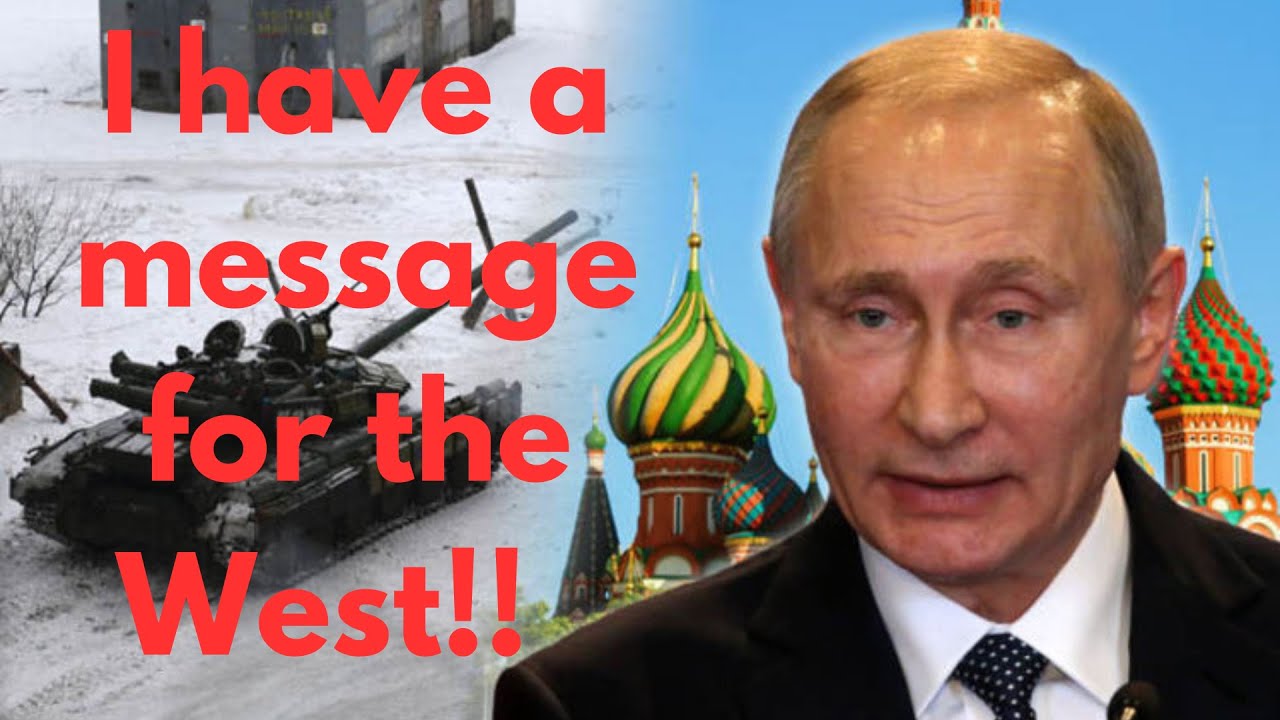
David Oualaalou analyzes Putin's surprise visit to front-line areas in Kherson and Luhansk, placing it in context with the G7 summit in Japan, Lavrov's Brazil visit, and broader shifts in Russia-India ties and BRICS. He examines what Western intelligence knew and takes viewer questions.
Chapters
Hello everybody and welcome to Geopolitical Trends livestream coming to you from Poland, Ukraine's neighboring country. So, so excited to be here as always. Uh, let me first— like, we're gonna— I got a lot to cover with you guys, so we're gonna, we're gonna talk, we're gonna talk. And, uh, first of all, like I always do, I want to say thank you to all of you for taking the time and joining me here for this live stream. Uh, and I also like to extend my thanks to the channel's members, supporters. And I would— I'd like to give a shout out to a new supporter by the name— by the letter Z. Thank you very much for supporting the channel. Truly, truly appreciate it. So, so today's topic, what we're going to be talking about today, or just provide you an assessment rather, uh, it's about the, uh, uh, the Russian President Vladimir Putin's recent visit to the front line. Yeah, the visit, by the way, already happened. You know, the West still talking about the possibility of Putin going— President Putin, that is— going to the front line. So the visit has already happened, but I'm not here to focus too much on that. I'm here to put it within the context of what's going on with other events, and there are other events going on as we speak, and this is what I'm going to be talking about. Of Of course, I always give you like 3, 2 or 3 questions to just ponder about, think about as we speak. So we're talking about Vladimir Putin's visit to the front lines in Kherson and Lugansk in eastern Ukraine. So the question becomes is what message is the president, the Russian president, sending to the West? The second thing you need to consider is the timing of the visit. Because it coincides with other events, like for example in Asia with the G7, which I will be tackling here, uh, also with the Russian Foreign Minister Lavrov visit to Brazil. So I'll put this in context for you as we speak. So, and what are we gonna be doing like always, by the way? Thank you all for, uh, expressing your vote about that survey that I did as far as the health tips and all that. To me, I look at it as a community. We all have to sort of express your opinion. To me, that's what a democratic process is. Majority rules. That's how I see it. So majority ruled that we're gonna keep the health tips when I do live streams. End of story. That's what democracy is all about, the way I live. I wish governments can behave like that. I mean, can you guys imagine how peaceful the world will be when governments listen to what the people want? You know, put it to vote for everybody like we just did here. So anyway, uh, before I'll delve deeper into all this, I'm gonna do a tour around the world like I always do. I didn't do it last time, didn't get a chance to Now I want to go to something. This is, by the way, what we're going to be talking about right here. I just got the image for you guys. Last time I did ask you a question, it was one person answered this one. I am sorry, I forget the screen name, but I told you what was wrong with this picture. You know, yeah, something wrong with it. This is the Secretary of State Blinken's visit to Vietnam, trying to allure Vietnam into it. So what was wrong with the picture? If you noticed on this side here, there is no US flag. So the Vietnamese flag here, but no US flag. So the logical question becomes, was this a diplomatic blunder, or was it a message for the United States? Because I can— I, I'm a student of history. I can use history in, in remembering. In 2007, either 2008, 2009, one of those, those years, I couldn't remember exactly. When President Biden— I'm sorry, when President Obama had a visit to one of the Asian countries and the president didn't— the former president, that is— didn't come out of the front of the plane, they came out of the back of the plane. So was it intentional or what? Whatever the case might be. So this is one of those things, just to— because usually that is not a small mistake. Unless there is another calculation to it. So, so I figured just to share that with you. So, uh, the other thing before I forget, by the way, when I talked about yesterday about the leaked information from the leaked classified whatever, uh, documents from the Pentagon rather, uh, what was interesting about the story which appeared few days before is that both— I forget to mention this to you, you need to know because it's very important It was both the Washington Post and the Guardian in England. Both of them posted the articles at the same time about the story. So, a coincidence? Uh, I won't buy that, knowing, knowing what I know about how the Guardian operates, knowing how I know about the BBC operates, and knowing what I know about how the Washington Post, uh, operate. So I just wanted to share that with you. Uh, the next, uh, one has to do with this, uh, image of the Bushmaster Humvee. And the reason I want to share this with you, because now Ukraine is asking the Australian Prime Minister Albo to support Ukraine military by sending more Bushmaster Humvees. So you all know what it means. Australia, sad to say. And we have, by the way, guys, in our community here, we have some great, great supporters from Australia. They all, they all watch the show regularly. I, I read their feedbacks. Very, very wonderful people. And they're all wondering what the heck is going on with Australia, Down Under. Be on the lookout for, by the way, be on the lookout on for, uh, an interview with one of Australian politicians that we did on on the big channel. So I don't want to spoil it for you, but be on the lookout for it in the next few days. And the last thing I will share with you before I'll delve into this is the G7, which just concluded in Japan. So I will be talking about few things as part of this conversation today, uh, as to the importance of it. And because sometimes all you need to do is read the final statements or final communiqué that is. And I will tell you right there where the story is. And I've kind of over the years learned how to look on what— how to read this kind of statements. And I read it, it was like, okay, we got the point here. And I'll share this with you. Now to our favorite part, health tips. Yes, we're gonna do it. And here is the health tip for today: cayenne pepper. Yeah, a lot of people in Western culture, we don't look at it much. I, I like cayenne pepper. I usually use it in, in, in whatever I eat. So, but why is that important? The cayenne pepper usually is type of chili, you know, pepper that it contains a substance called capsaicin. So capsaicin, it's that, that's the ingredients in it that makes it a little bit spicy. But what it's not about that, the importance of it is the properties that cayenne pepper has. You know, it really provides pain relief because that ingredient, capsaicin, reduces the number of pain signals that are sent to your brain. Usually when we get pain, how do you know you have pain? Your brain signals to you that, oh, I'm in pain, or I whatever. Cayenne pepper— the— I'm sorry, not cayenne pepper, but the ingredients in the cayenne pepper, capsaicin, reduces the number of pain signals. You know, usually this can cause by two main things, at least based on the research that I did, by arthritis and diabetes. Yeah, because they both can cause nerve damage. This is why cayenne pepper is important. Now, I did find that there was a lab and study research, both of them, lab research and studies also concluded that, or suggested rather, that eating cayenne pepper can also help with something that causes a lot of internal pain. You know what that is? It's ulcer. How does ulcer happen? Usually that's from excess of acid in your tummy. That's the problem. Well, guess what? Capsaicin aids or helps in reducing the ulcer by restricting the growth of the ulcer causing bacteria, and the bacteria called H. pylori. H. pylori. There's another medical term for it, it's called the Helicobacter. Helicobacter, that's the name for it. But anyway, cayenne pepper reduces the excess stomach acid and increase the blood flow, which is very important for your digestive system. So how do I use it personally? Well, I always add it to my, my, one I cook. For example, uh, if, if I am to make a ground beef, which has to be, by the way, grass-fed, not a regular meat, because here in the US we inject meat with hormones. This is why you got 4, uh, entities or 4 countries, they don't import meat from the US: Japan, Australia, Canada, and the EU. They will never import. It's banned. Why? Because we inject the meat so much with hormones That's why people in the US do not know what they're consuming. I do buy meat, but I'm a grass-fed only. So if I am to make grass-fed with the eggs, I'll add cayenne pepper to it. So now there is one treat. This might shock you. One treat about cayenne pepper can be added into chocolate. I had chocolate with cayenne pepper. Yeah, it's spicy a little bit, but, but it's good. So that's, that's, that's my health tip for today for you. So guys, All right, let's, uh, let's dive in into what we need to talk about here because it's very important to understand. And by the way, guys, if anybody of you can give me a thumbs up if you can hear me, I want to make sure. I don't assume, I want to make sure. Uh, Osiris, I want to say thank you for your super sticker. Osiris has been a great supporter since, since you came on board, man. I truly, truly appreciate you and appreciate all of you for that matter. So Thank you very much, Osiris. Uh, yeah, if you will be kind, just give me a thumbs up here so I can see that you can hear me. Uh, oh, oh, thank you, thank you, uh, thank you, Hong Luong. Thank you. So good, we good to go on this. So let's, uh, let's get into addressing the visit which took place, by the way, of the Russian president Vladimir Putin to the, uh, Kherson region. So now the question that I need to ask you, and, and you can always leave an answer on the chat box if you feel like it: in your opinion, do you believe Western intelligence was aware of the trip? Yeah, because it's, you know, and again, the trip took place already, you know. I haven't— I didn't come across, and usually before I'll, I'll talk about a topic, I have to look from different, and I do look from different sources to ensure, first of all, the veracity and accuracy of the information, and second, to ensure that there is no overlap into that information itself. You know, over the years you develop, uh, uh, uh, what's the word I'm looking for, expertise, if I may use the term. In understanding how to read articles or research paper or white paper, whatever, you know, you can learn. Same thing here. So, and I didn't come across any that will suggest, and again, I could be wrong, I don't have access to classified stuff, I don't claim to do, but usually you will read a sign that maybe the intelligence services were aware of it. This is why I'm asking you the question. In your opinion, yours and yours alone, only in your opinion, do you believe Western audience, or Western intelligence rather, was aware of, of the Russian president's visit to Kherson region? So, and here's the thing, the reason why President Putin went to Kherson, it wasn't about just a visit to send the message to the West. Even though it is the case to a degree, it is also to inspect physically because he wasn't gonna— he, President Putin, wasn't gonna depend just on Shoigu, the Secretary of Defense, the Russian, to tell him the report, whatever. Even though I did see one statement and I read it where it was a meeting between, uh, Russian president and Shoigu the Secretary of Defense for Russia, you know, providing him the full report. Yeah, President Putin didn't just settle with that, he went there physically to inspect. And there is the reason what was the purpose of the trip, because he wanted to inspect the troops on the battlefront in Kherson and Lugansk region. You know, as you know, those, uh, for now under Russian authority once Russians annexed this area in September 2022, that's when it did. So what the Russian president did and inspected the command center there of the Armed Forces in Kherson, and it's very important, is because if you think about— remember the video I did for you guys about Bakhmut, the region that is— this is also important to understand the developments of where things are headed going forward. For example, the situation in, uh, Zaporizhzhia and Kherson accesses, because both of them are very— the whole eastern part of, of Ukraine, so crucial to Russia's security. This is one thing, not just one, but among many others the West didn't understand and didn't take into consideration when NATO keeps expanding, expanding eastward to Russia's doorsteps. You know, they look— the more and more— and again, I, I did the research on all this, and if you look at between 1991 to 2014, just in that span of time, NATO expanded in 2004— okay, I'm sorry, in 1997, 2004, and 2014. It moved from about 19 members to 30. Now you add Finland, has been added, is 31. So you can see why the moment Russia sent the security requirements to the West and the West ignored, they went ahead and annexed. And this is why I'm convinced, no matter what negotiations take place or the, the conflict settle, whatever Russia is not turning back those territories. That will be suicide for them if they do, because they can't trust the West after what just happened now for the last year, 2 years, almost 2 years. They are not going to trust. That's it. That trust is gone. And we are seeing it. We are seeing it now with what's taking place in, in, in Philippines, what's taking place in Taiwan, what's taking place in, in even where I am right now in Poland. What you are noticing— I, I tried to upload some pictures for it, but I couldn't. So anyway, I might have to wait till I get back home and take care of that. But what you need to understand is there is some sort of a disconnect right here, disconnect between what the government is saying and what the people are feeling, Polish people that is, regarding the Ukraine conflict. So, and the disconnect, you can just, you know, you know, I go out and I see and Nobody ever thinking about, oh, there is a war next door. They don't even think about that, you know. Let alone when you see certain images of young kids, 15, 16, 17, having the, uh, the flag, the Ukrainian flag on their shoulders and speaking on behalf of Ukraine. Makes you just wonder. So these are kids. So now, well, I'll be talking to you about that at some point down the road. So the question that, uh, and this is why I say the region, the eastern part of Ukraine, it's gone. Like I said last time, the western part, Poland has an interest in that given the historical ties to that part of the world. You know, I had a chance to, uh, visit, uh, one of the interesting aspects that just came up, uh, visit the cemetery And what I found, which I didn't know, I was informed about that one section inside the cemetery, inside, you know, there were the Russian soldiers who died back then with the Red Star, and, and those were defending at that time Poland against Germany. No, this is the history that most the West do not understand. They don't understand. I really— I saw it with my own eyes. So, and as I said last time, uh, uh, back in September, uh, 2022, the Russian president signed a decree by which 4 regions of the eastern part— Donetsk, uh, Zaporizhzhia, Kherson, and Lugansk— became part of Russian territory. So Now, the question that I said earlier, you have to put this within the global context because again, these things don't happen in a vacuum. If, if you get one thing out of all what we talk about all the time, always make sure to see the big picture. It's very, very important. It's because it will allow you to have a much better understanding And you put the— whatever you're trying to understand, you put it within the right context. So in this case, for the trip that took place, or the surprise visit by the Russian president, coincided with, of course, as I said earlier, with the G7 summit. And it's very important. Why? Because G7 itself sort of, uh, issue criticism. We criticize— we're criticizing the Brazilian President da Silva for mentioning that the world is sick of being held hostage to the dollar. The G7 didn't like that. That is the, uh, because here is the thing The group, the G7, warned. Yeah, they warned. You believe that? Who gave them the right or the authority to warn other countries? They warn countries assisting Russia in its, uh, conflict in Ukraine that they— and I put this in quotes because I did find it— in quote, they, they will pay, quote, heavy price. That's what was in the statement of G7. Which tells you right there G7 wasn't about the economic meeting of the G7 countries or economies. It was about something else, because all this is nothing but a bravado, no more, no less. This is why you have to consider a visit like this to the front line. It's not going to happen randomly. No, no, no, no, no, no. It's the message that is sending. That coincide with other stuff. For example, another thing you need to consider, for example, is Russia and India are in talks about free trade between the two. That is a big— that is, hey, that is major. And again, you say, you ask yourself, why is this important? It is important because when you come to realize that between the two, India and China, Yeah, India and China are considered now the largest consumer of Russian energy. This is why Russia doesn't— Russia just will shrug its shoulder now about Europe, you know, talking about the, uh, the, the, the sanctions, and which you know by now it's all lie. As a matter of fact, Ukraine itself is importing Russian oil, which they will never disclose. And I did find that out. Yeah, Ukraine is importing Russian oil. Europe still import Russian oil. Germany still import the, uh, the nuclear energy from Russia. You know, Morocco, Tunisia are selling, uh, uh, diesel. India selling, uh, diesel and oil. Saudi Arabia is buying large quantities from Russia and selling it to Europe. 5, 6 times the price. Once again, this is why it's important. Context matters, and understanding where the pieces fall so you can form that big picture to understand how to read the geopolitical landscape. This is again where that importance of understanding those dynamics comes in. Another aspect you need to consider also with— it's the trip of the foreign minister or yeah, the, yeah, foreign minister of Russia, Lavrov, to Brazil. He is right now in Brazil, you know. He didn't go Brazil just to visit, he's going to Brazil to cement for what lies ahead as far as the upcoming meeting of BRICS in August, not May. As I said last time, I made a mistake, uh, and I admit to it, because the reading that I had 6 months ago stated that the meeting was supposed to be in May. So it turns out to be the meeting is in August. And one of our viewers, by the way, from Johannesburg confirmed this with me personally. I, I get a note about it. So, so the meeting— and this is my opinion why Lavrov went to Brazil, is to ensure everything will work together. So now the G7 because it's very important to put it into context, especially the wording of the statements. The, the group in its final statement, which was released by the way yesterday— today— it criticized— and guess again— they criticized China. I just find that ridiculous. That tells me there is nothing of substance those meetings. When you start having statements about other countries, that tells me right there your meeting had no substance in it whatsoever. How can you be focusing on another country when you have the— you, the G7 in this case, you got serious economic issu— issues in your own countries, and yet they going and focusing on China. That, that, that, that's to me, that's the writing on the wall right there. So they criticized China in their financial statements after their meeting in Japan, you know, and, uh, it just didn't make any sense to me personally. Really didn't, didn't make any sense. And at the same time The G7 ministers are calling for cooperation with China to address a range of common challenges. How can you be saying this and you doing the opposite? That's in English language, we call it hypocrisy. So I'm sure there's a specific term for it in Chinese and the Germans and the French and so forth. So, because what the statements included also, which I found very, very interesting, it had nothing to do with the current conditions. And here is what it says. It says, and I quote, there is no legal basis for China's extensive maritime claims in the South China Sea, and we oppose China's militarization activities in the region. End of quote. Once again, how can you issue a statement like this? Then you come around and say to China, yeah, we want to cooperate with you, we want to work with you on solving issues, when you couldn't even be straightforward about it? You know, this is something, at least in diplomacy, you have to be at least open to sort of being honest about. So I understand politics is all about maneuvering, diplomacy is all about maneuvering. I understand that reality. But at the same time, you can't— this is like a, a, you know, hypocrisy at the highest order. That's, that's the way I look at it. Later along, they added another slogan that we hear a lot from the West. And this one has to do with human rights and violation in, in, and violation of human rights and so forth, and abuse in, in Tibet and Xinjiang, which we all know, by the way, was debunked. We know it was a lie. So, and again, once again, I just want you to understand the big picture. You know, for in a conflict like the ones that they're ongoing in Ukraine, and you gotta visit by the head of— I mean, we do it too. You used to remember the president would show up unannounced to Afghanistan and, and, uh, and Iraq, but, but that was for political theater. That's what it was. And I am sure it was because I was there. And I kind of just shaking my head. So, so when you have a, a situation like this, you have to understand also the link to other evolving, uh, activities or developments or dynamics and what have you. And all this fall within the context also of what we talked about in the last, uh, livestream about the release of the classified information. All this. Now, if the, uh, just to follow the logic, okay, we just follow the logic here. If the declassified, uh, the declassified documents, they were released, one of them stated that the US intelligence agencies penetrated the Russian military, uh, uh, uh, Ministry or components, whatever. How come they didn't know about the trip? So, because that's why I asked you the question, do you think Western intelligence were aware of the trip or got any tip, whatever? They will understand that. So the next question that we need to consider or think about, because you ought to think about this kind of stuff is now that we're seeing the developments, where are they going? We all know that slogan of Ukraine is gonna win the war, you don't hear that anymore because it's not real, it's not reality. We all know it's not. How do you see, in your opinion, how do you see things moving forward? Because, and the reason I'm asking this question, just to solicit your opinion because you're part of the conversation here. So, but also I have another reason why I'm asking this, because I'm asking this one as an unfolding conflict is in the making, and you all know what I'm referring to here— Taiwan. That's why I'm asking, where do you see the developments of this particular conflict in Ukraine as the other conflict is in the making, because it is in the making. When you consider what the American government is thinking about doing— no, you don't have to be an analyst, you can reach that conclusion once you know exactly where the pieces fall, because that's just how it works. And again, I am very concerned about where that unfolding conflict is going. Again, most of us Americans do not understand the severity and the seriousness of a conflict with China and the magnitude, or its magnitude, that is, let alone the whole region The whole Asian security issues will be impacted one way or another, whether you like it or not. And countries now, as we speak, they are wondering, you know, how they're going to proceed. I look at it no further than in ASEAN, especially with two main countries, but mainly one, the Philippines. Singapore, I am looking into that to see exactly, where the, the government, where the thinking of the, uh, in Singapore. But for the Philippines, it's becoming as clear as daylight where it's headed. So you think in terms of this conflict, the upcoming one that is unfolding, but you already you, the government, US government in this case, or the, the interested parties that want to see the conflict emerge quickly, you gonna be recruiting other elements into making it. This is why Australia has been sucked in into the AUKUS deal. It's been sucked in into the conflict. Now South Korea has been sucked in into conflict. Philippines been sucked in, into the conflict. Japan is being sucked in, into the conflict. And you wonder why, for example, Secretary of State Blinken is going to Vietnam for— because Vietnam's economy has moved forward because of its trade also with China. And they're not going to jeopardize that. They want to jeopardize that. And this is where I am realizing how now it's going to— in the, the whole situation moving forward, you know. And I'll give it about 8 months. Yeah, that's the time frame I'm going to give it to see where the development is. Hopefully we'll be talking about it 8 months from now and we see where things are. But the way I see it rolling, I'll give it an 8-month time frame, then it'll become clear. I'm not saying that a, a conflict will erupt, that's not what I'm saying. All I'm saying, an 8-month time frame for you to see the, the, the emergence of the signs where really things are going. And that is what gives me great concern as to, do politicians in Washington really understand what they're doing? One. And second, are they sort of— do they care about where they're dragging our country into? And third, how this is going to impact now global security, the peace for the whole world, for that matter. Because if there is to be a serious conflict, a military one, mark my word on this, China will not fight it alone. China will have allies with it. And when you combine forces, you all know what I mean by that. This is why I don't get it as to Countries like Australia, not thinking far ahead. Countries like Philippines, not thinking far ahead. South Korea and Japan, well, we all know the history of that. You know, when you have a yearly or rotational basis, then we occupy your country in a nice setting, in a nicer way, without saying we occupied you. So this is what I see moving forward, and that's again, it's gonna be upon how the outcome is going to be in the next few months regarding the presidential elections in both countries, the United States and Taiwan. Well, Taiwan is not a country, a government. I, I like to call it state, like for us in the United States, because it's not a sovereign state. So what do you call it? That, that's the reality of it. It's not recognized in the UN Charter. And as a matter of fact, the way I see how the politicians in the US moving forward with this embarkment of this emergence of this conflict is the idea of— it's almost like we are— it's not almost, actually we are. Let's just say it the way it is. It's not almost. I'll take this back. We are, we are reversing the One China policy that we signed on way back in the, uh, in the '70s of last century. Yeah, that's what we are doing. We are reversing— uh, I gotta turn this down a little bit, it's too bright. Oh, that, that's the way I see it. And that's problematic because we signed the communiqués, 3 of them, with China. We recognize one China policy, two systems, but one China policy. Taiwan is not a sovereign state. You know, I have nothing against Taiwan, whatever, but it's, it's not. Let's just say it's the way it is. So, and this is again where the problem of how politicians They only look at the end of their nose, as we say, you know, they don't look very, very far, and it's a great concern. That's the same outcome now the West is experiencing in Ukraine. They pushed Ukraine into it. Ukraine could have said no, but what do you expect? A comedian moving from comedy to leading a state, you know, no, no experience, no background, no understanding, You know, it's not a laughing matter. You just— this is not a stage where you perform. This is the lives of people that depends on your decision. You know, you can't just assume that because you have your lifestyle that everybody lives the same. Any decision a head of state makes end up trickling down and impacting the average Joe, average Jane. And the West now is realizing— European Union is realizing— the leaders, so-called leaders of Europe, they're realizing what they have done to their countries. And I talk to my family. I might end up making a stop elsewhere within Europe before I move to my other location. So it's, it's, it's, it's no different than exactly what's taking place right now in Ukraine and what's going to be taking place moving forward with the conflict in Taiwan. And that is the importance why I like to sort of share this with you, to not only be for you to be sort of aware, of course, but to have to be a step ahead. So this way, when you start reading and hearing what the mainstream media saying, you would know, you would know how to filter, uh, all that information. That's, that's the whole purpose of it, for a reason. All right, so let me see if you guys answered that question as to if you think Western intelligence were aware And when I say Western intelligence, all I'm referring to here is the US, basically, uh, the UK, Germany to a degree. Uh, we don't, we don't do much with the French. We do to a degree. And, and Canada. That's about it. Those are it. Uh, let me see if, uh, if any of you at least put some answer of sort. Just to get an idea of what we're looking at. And by the way, guys, I, uh, I might not be able to do any videos from here, like recorded stuff. So, uh, for now we're gonna— I'm gonna just keep it with this live streams till I get back home. It's because the, you know, internet and all that, it's very, very challenging. But so far it's working here, so I'll keep it that way. Oh yeah, you're right, Yan Hakor, you're right. Hawaii, yeah, they don't feel that. That's almost the same concept between Taiwan and China. So are we gonna say the US is gonna invade Hawaii even though Hawaii I've been there, I visited, you know, it's kind of, uh, they don't— they want to have their own. Will you blame them? No. That's like what the arguments about, uh, Americans, you know, all of us Americans. Well, yeah, but at the same time, we all came from somewhere. I mean, come on. I've heard one time an argument with somebody was saying, why, oh, the immigrants. And I was like, hold on a second, you know, who do you think you are? Well, I'm an American. But I see you were born here. Yeah, so what? Do you have any idea where your ancestors came from? Well, what do you mean, Mr. Oualaalou? I see. Well, what I meant is, if you check your family history, they probably came from somewhere. So stop that nonsense. You know, I'm an American born here. Like, we all came from somewhere, you know. If we are to make that argument, then we all should pack our bags and leave the land to the Indians. You know, it's, it's, to me, that's stupidity, you know, when people start talking nonsense. And that's the same arguments, you know, when you see about we pushing a narrative just to tie it back to the concept of the, uh, the, the One China policy. When we take it back to the concept of, well, Taiwan is a sovereign state— hold on a second, you know, how? Not knowing the history of how things have evolved, not only after World War II but even before, way back. And there is such rich, rich history into all that. We don't know it. We don't know the full disclosure of that historical facts because we are poor readers of history, you know. Unless you really conduct research for a book, whatever, then you will be forced to learn about— and with that, you need to even check and double-check the facts as to how they are. So you're absolutely correct, uh, uh, yeah. Hawaii, real sovereign state. So, uh, all right, let me see if there is an answer to that question. Yeah, okay, one says here, yes, American— oh, I just lost it. Yes, the American intel knows since they spy on everyone. Some intel. Yeah, I'll share it here with you guys. Yeah, yes, the American intel knows since they spy on everyone. Some intel they want to keep under wraps, possibly, possibly not. But as I said, like one who worked in Washington and I understand with all the, you know, the SIGINT and the satellites and all that stuff, I, I will have my doubts about them knowing So especially on a move like that, there's a lot of stuff that goes behind the scenes before a move like that one to a war zone. That, that's, that's my opinion. That's my opinion. So All right, let me see if there's any question here. And that's about it. I'm gonna call it off here because I have to go work on something else. And the, uh, I'm still gonna be here for just a few more days, then off to my next location. So, all right, let me see if you have any question here. I'm gonna go all the way, uh, oh, AFRICOM is almost definitely involved in the Sudan. Wow, that is very interesting, Nadia. Yeah, thanks for sharing that one. Yeah, uh, yes, there is, uh, actually a question that many are asking now, uh, how all of a sudden tensions in Sudan broke up between the army and the, uh, the rapid reaction, a rapid force, something like that. Uh, was it a coup? Was it a, uh, US involvement, AFRICOM? And yeah, there are those kind of concerns. And interesting enough, and I can give you just a little heads up, I don't want to say much, uh, one of my other locations is going to have to deal with where NATO is operating. So that's all I can say at this point. One. All right, let me go back up to the top, see if I have any questions from you there, and if not, I'm gonna sign it off and wish you a good evening, the worldwide. Okay, let me go down. All right, question from— oh, here is Yvonne. Which part of Poland are you guys in? I can't disclose that at this point. I hope you understand why. All right, let me, let me see if there's any question here. Okay, I, I don't see any questions, guys, so I am going to sign off here, and till we meet again next time. Yeah, no questions. And Oh, thank you too. You're most welcome, Spring Pam. Thank you, Dr. Oualaalou, for the live streaming. You are most welcome. You're most welcome. I, I appreciate you guys, you know, because it's you, you know, all of us, community. Always remember, community, it's not about just you, all of us. Okay, I don't have any question here, so— oh, here's question from Jack. Let's put it— hi Jack, question: China Defense Minister in Russia. Oh, I'm glad you brought this up. Yeah, yeah, yeah, I forgot to mention it. I forgot to mention it. Yeah, uh, yes, for the— okay, let me read the question. For China Defense Minister in Russia meeting President Putin, mean— what does it mean? I have heard P1 be US bombers and now training with India. India doing the same with Philippines. Uh, it's good that you brought this up, Jack. It's not about just this one, but because now it's going to be the Chinese students, uh, going to Russia and vice versa. They're going to increase the amount of— I just read about it this afternoon and I forgot to mention it also. But also this one tied to also the naval drills that Russia is conducting, uh, as we speak on the, uh, the Pacific. That's where they conducting serious maneuvers over there. So yes, you're absolutely correct, the defense minister is in Russia and meeting with the Russian president. So very, very, very interesting. Well, what it means to me, basically the way I look at it, is strengthening the ties. This is why I say, you know, I usually don't say random, I say for— I say things for a reason. That's why I said earlier, if there were to be a conflict, China is not going to fight it alone. You can read between the lines. So that, that's the way I see it. All right guys, I do wish you a good— uh, you are most welcome, Steph. Steph Lynn, she's— thank you for today and discussion, appreciate it. You are most welcome, you're most welcome. So I wish you guys a good afternoon, good evening. I said good evening for you, it's evening as well. So, and I look forward to seeing you next time. Next time I'll, uh, I'll, I'll look for some very good topic that I feel you will understand. And of course, I am open to your suggestions as always, and even for health tips that you might— the stuff that I share with you is the stuff that I do, but I'd be happy to get your suggestions and I'll go and research it briefly and, and share my knowledge with you about it. So Okay, well, thank you all. Thank you again for carving out time to be here and listen to what I share with you. It means a lot to me, and your time means a lot to me. And I wish you guys a good evening. As always, remember, geopolitics impact your daily life in more ways than one. Till next time, guys. Bye-bye.
More from David


Beyond the Single Actor: Why the Gulf Isn't Choosing Between the US and China


Iran, Iraq's Militias, and the Houthis Are Coordinating! This Changes Everything




Who Controls the Next Decade's Resources? Latin America and Africa's Geopolitical Crossroads

The Chokepoint Trap: How Washington's Stupidity Triggered a Cascade That Now Controls the World

Trump Spooked as IRGC Unveiled dual-use SLV, Deployed Ghadir Mini-Subs & Hinted at Tactical Nukes!
