Putin-Trump Summit: Ukraine’s Faith Hangs in the Balance! Geopolitical Trends
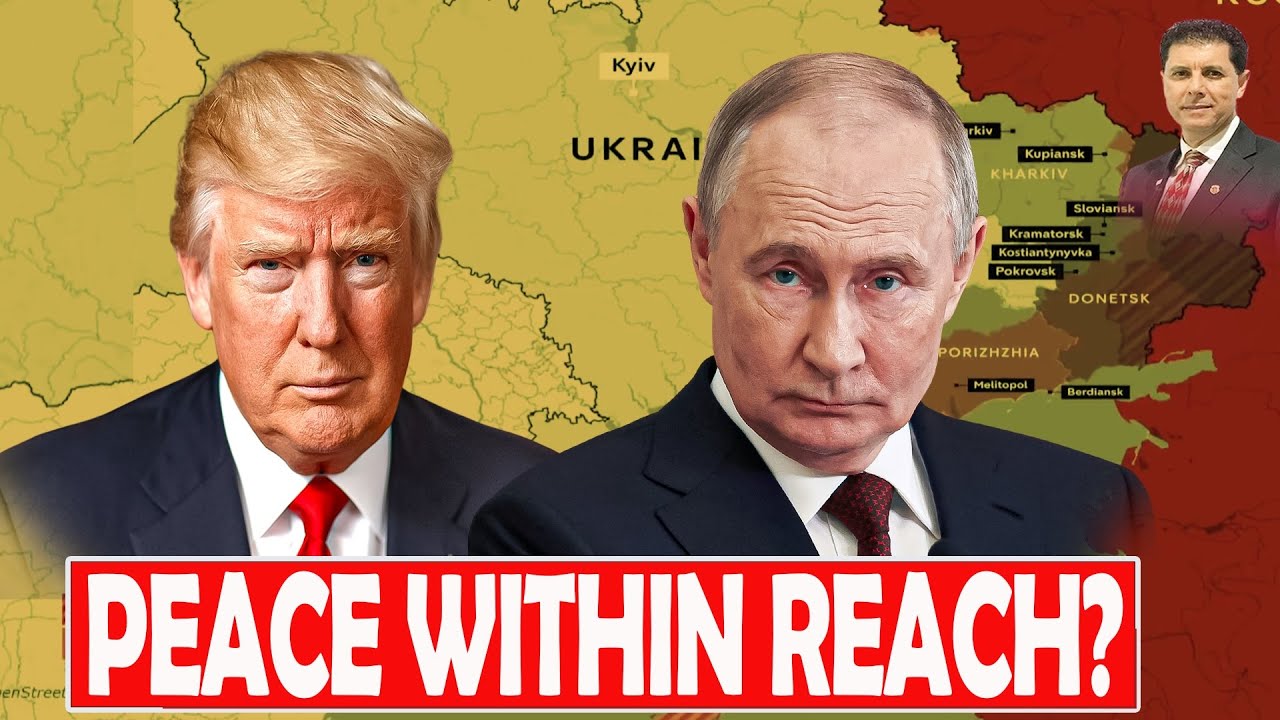
This content was created by David Oualaalou. This content was uploaded by David Oualaalou. This is a YouTube live-stream/talk titled "Putin-Trump Summit: Ukraine’s Faith Hangs in the Balance! Geopolitical Trends" (published 2025-08-11). The excerpt is a monologue-style political commentary by the channel host (identified as SPEAKER A) who provides analysis of the upcoming Putin–Trump summit in Alaska, debates whether Ukrainian president Volodymyr Zelensky should attend, and argues Russia will set the terms (discussing ceasefire, the possibility of a frozen conflict, NATO/European credibility, and U.S. policy). The host references research and an excerpt from a Russia book, reads and responds to viewer chat names, lists upcoming guests and housekeeping items, solicits donations/likes/subscriptions, and thanks supporters. Content type: YOUTUBE, created_time: 2025-08-11T18:16:32+00:00.
Chapters
Hello everybody and welcome to Geopolitical Trends, where truth matters. Excited to be with you once again. Uh, very interesting development or topic I'm going to be providing my own analysis about, and this one has to do with the upcoming summit between Putin and Donald Trump, or between President Putin and President Trump in Alaska. Uh, it's coming on Friday. The reason I wanted to— I know there's so many address this topic, I don't care, everybody's free to do whatever. It's when I research my Russia book, when I wrote my Russia book, I recall, and I'm going to share an excerpt with you, I recall putting an argument there that what if the possibility of tensions between Russia and the US sort of escalates, will we see a different approach from the White House and the Kremlin? So, and I find it very interesting that all of a sudden now we are provided with this opportunity. So this is what I'm going to be providing you, uh, about, uh, my analysis about in this live stream. But first, let me say hi to our wonderful community. Usually I don't get a chance to do this when I have guests on. Uh, uh, Leanne, good to see you. Willie Holman, as always, Arch Crusader, as always, appreciate your kind generosity and support for the channel. Coach Ohoi, good to see you. Matt Becky, good to see you. Uh, uh, London, uh, London Orpher, good to see you. Uh, oh, from— wow, good to have you watching us from Germany, good to see you. Alex Talokin, as always, And Iron 341, good to see you. And Saleh, good to see you. Saleh, by the way, uh, just to let you know, Saleh was the individual who got that sizable donation in support of my trip to Asia. So I'm very grateful to you, uh, uh, Saleh. Say It Like It Is, good to see you. And Abdul, uh, uh, Abdul Saifi, good to see you as well. Uh, let's get into our conversation. Before, by the way, I need to share some housekeeping items with you to keep you, uh, informed as to my upcoming guests. So, uh, my next interview, that's going to be with Melissa Park. We already confirmed it. It's going to be for the 20th, uh, uh, at our regular time. I look forward to this conversation with Melissa, especially when it comes down to dealing with the nuclear disarmament. It's a conversation, you do not want to miss, uh, in, in my opinion, will be very, very interesting. Also, I am, uh, going to be coordinating with Dr. Ted Postol. You had him here before. I look forward to having him back here. Probably we'll put— push for it either towards the end of this week or the beginning of next week. I'm going to reach out to him and check on his schedule. And of course, the two other interviews, I haven't set the date yet, but I have a time frame. And this one has to do with my two, uh, dear friends, Einar Tengen and Warwick Pau. I always call them the two amigos. So I look forward to having them here, uh, probably within a week, a week or so, uh, before I leave for Asia. And the last one will be with my dear friend Carl Zah, will be here as well. So I just wanted to keep you update of the upcoming interviews. So, uh, let's talk about our topic for the day, and this one has to do with the upcoming summit between Donald Trump and Putin— President Putin and President Donald Trump. So here is one thing that is now— it's in debate in Washington, and this one has to do with the White House debating whether to invite comedian Zelensky, because to me it became clear He will have no say whatsoever. We all know this. It's a fact. I'm not— I have nothing against comedian Z, but the facts are the facts. We created the conflict. We're the one deciding on its trajectory, of course, on our end. But the Russians will have the upper hand at the end. You know why? Because the conflict, no matter how it's going to end, it's going to end with Russia dictating the terms, not the US. But suffice it to say, for now, the White House is considering the invitation of Zelensky to Alaska. I don't see, literally— and, and I'm being pragmatic here, and please guys, correct me if I'm wrong or share your thoughts— here is a question for you. Do you believe, in your opinion, knowing the conditions you know Will the presence of Zelensky be any— will have any importance? Yes or no? Or do you believe should Zelensky attend the summit between, uh, the Russian president and the American president? So let me see in the chat box, see what your answer is. Uh, Zon, good to see you as well. So I saw your, your name there. So yeah, let me, let me, let me see in your answer whether, uh, Saleh, you say no. Uh, la, I mean, in Arabic means no. Uh, John Smith, you say no. Hey, good to see you, you say no. Irene Z, you say no. No leverage, you're absolutely correct. You know, say it like it is, no, the comedian should not be there. Hong Wong, good to see you. John, uh, John, you say no. Taiwan still, you say no. Hong Wong, you say no. So you guys, you, you got it. Uh, most likely it is not the case because it will have no, no weight whatsoever. So, so just for those who might not know, there is now a scheduled meeting that's going to take place in Alaska next Friday. There are some analysts in Europe— here is what's interesting, I need you to know— already spewing nonsense. And the nonsense has to do with where there are these dangers that's going to threaten the will, uh, for the summit between Donald Trump and Putin. There is no danger. And the reason for that is because, uh, President Putin is going to come to the summit with his conditions already laid out. As a matter of fact, it is my belief that his conditions are no different from what he, what he proposed before. Where the danger is going to be is on the American side, that they're going to have to flip-flop as always. And that's why when analysts in Europe are saying there are dangers to this, to, for this to be successful, no, not necessarily. Yeah, it can be successful if they reach a term according to the Russians' conditions. And we all know what the Russians are asking for. Of course, the area they took over are not going back to Ukraine. And, and this is nothing new, shouldn't be a surprise for you. We argued this before back then. So, and here is where my argument, as I mentioned at the beginning when I did the research for my my Russia book. Here is what I wrote, just to put it in perspective for you. Uh, I put, at the time of this writing, many observers have concluded that President Trump cannot fathom— at the time of this writing, many observers have concluded that President Trump cannot fathom global affairs dynamics. His lack of foreign policy acumen and inept attitude have raised serious concern domestically and globally. And it was in a recent leaked secret leak cable the United Kingdom ambassador to Washington, Sir Kim Darroch, stated, and I quote— this is the quote from the, uh, ambassador of Britain— we don't really believe This administration, meaning the Donald Trump administration, and remember, this is during the first term. We really don't believe this administration is going to become substantially more normal, less dysfunctional, less unpredictable, less faction-driven, and less diplomatically clumsy and inept, end of quote. This is what I argued back then, and this is what I'm saying. There will be no different because doesn't matter the hypes of it. Trump likes this grandiose ideas and this show, uh, uh, uh, because he's a showman. So, but the substance is what matters. The Russians have their priorities straight. They know what their objectives are. And this is why it's going to be— the ball will be in the US court, not the Russians. But here is one dynamics that I need you to understand. The deadline— you all remember the deadline Donald Trump puts for the Russians, which by the way they were laughing at him for that, and the rest of the world for that matter. So the deadline given by Donald Trump, uh, to his counterpart, the Russian President Vladimir Putin, to end the war That deadline expiring on Friday. This is the interesting aspect. So, which means it was August 8th, expired on that. And this expired without the US imposing any new sanctions on Russia. So, and that begs the question, is this why Donald Trump, which by the way The summit wasn't initiated by the Russians, as some have claimed, or because Russia is being sort of losing soldiers, whatever they wanted a resolution to. No, no, no. The summit was initiated by Donald Trump. So some analysts, and I happen to concur with this assessment, is that they believe that the matter has been postponed, meaning the sanctions, pending the outcome of a direct meeting between Russia and the United States comes this Friday. Why is this important? Because it represents really a pivot moment, a prominent outcome of really what, what is going to be happening. And this comes on the heels or against the background of the recent visit of the US envoy Steve Werikoff to Moscow, which was a few days ago. Of course, Donald Trump will have to— you know, you're not gonna trust and believe what Donald Trump is saying. Let me just say this straightforward. So when he said in his, uh, in, in a post that, oh, the upcoming meeting between, uh, me and the Russian, uh, president will be held on Friday is part to find a diplomatic solution to the war in Ukraine. Well, let me remind you, Mr. President, that it was the United States that started the conflict first. Second, what happened to your arguments that, oh, when you win the presidency, you will be able to end the conflict in a day through a phone call? What happened? And this is when you realize the hype versus substance. And this leads us to that second part of this argument, is whether Zelensky, Volodymyr Zelensky, should even be part of this. Because remember, it was Donald Trump himself who called Zelensky— calling the Ukrainian president a dictator. And I put this in quote. So, and why? Because Zelensky postponed the elections, you all remember. So where is this democracy that they've been fighting for and all that? You all know we created the problem. And I'm not going to get into the history of how this started, because this didn't start in, in, in, in 2021. No, no, no, no, no. This goes all the way back to 2007. You have to trace back the history. And again, I'd be happy to do, uh, a live stream just for that. But you have to understand, I was still in Washington at that time. I was aware of the dynamics. I used to fly close to the region, so we were aware of that at that time, 2007. And it keeps rolling. We, we, we saw it where it's coming till 2014, of course. And you all know what happened, uh, uh, with that. Now with this summit, apparently Ukraine now is being apprehensive. Well, yeah, rightly so, because the— but on the other hand, does it matter, apprehensive or not? It's because they have no say into the outcome. They can't dictate the terms. Europeans, despite what you hear from the likes of, uh, uh, what's her name, Ursula von der Leyen, you know, even Orbán himself, which by the way, he lost credibility Once he mentioned about, well, NATO is sort of, it can challenge. No, no, no, no. And it's not about that. Viktor Orbán lost his credibility when Netanyahu stopped by in Hungary, in Budapest, and Viktor Orbán made the decision not to arrest him knowing that there was an arrest warrant for Netanyahu. You know, so that to me right there, because that's when leadership is tested, when it matters. So when it came to that, so for, for me personally, and I can't— it's your decision how you perceive— I've always see, seen, uh, or, or evaluate Viktor Orbán as someone who can take stand. Oh yeah, taking stand, but when it matters, he couldn't. So, and same goes for the liar Ursula, which we can even It's not even worth it. Anyway, suffice it to say, the Europeans now, including Germany, France, Italy, and even Finland— whoever thought Finland will drag itself into all this, especially after they joined NATO— uh, they calling now, oh, comedian Z, Zelensky, will have to attend the meeting. No, no, Because the Zelensky or the Europeans have no say into all this. We just giving them, both of them, the courtesy of making a phone call and say, hey, we're gonna meet with the Russians and so forth. That's just a courtesy call. We care less what the Europeans think. This is why, uh, it's because what the talk revolved around between the United States and the Europeans and the comedian Z, so there are 3 key elements that I need you to remember. One of them has to do with the ceasefire because Ukraine is being pounded. Of course, the media is not gonna disclose this. Second is that this meeting will have to include, uh, uh, uh, comedian Zelensky. So, and the third objective that everybody's hoping for, of course, is a just solution or sustainable security. But how can you trust the Europeans, the Americans, or Ukrainians after what happened during Minsk II agreement? You all remember, and to the point where Angela Merkel, the former German chancellor, came forward and disclosed that it was no intentions of ceasefire, whatever. It was just to give breathing room for the Ukrainians to regroup. So what makes us think that the Russian president will make the same mistake again? Because the Russians were operating back then in good faith. Now you can't, and rightly so. So, and this is why Ukraine is hoping sort of to get some sort of a foothold in the upcoming summit, which so far, to my knowledge, and please, if you know, share with the community, to my knowledge, comedian Zelensky is not attending the summit. That's to my knowledge so far. Things could change between now and Friday. So, but here is where the argument that both Ukraine and Europeans are making is that Ukraine is part of Europe. Yeah, well, so what? It is not part of the European Union, so doesn't matter. The concern that both Ukraine and the Europeans have has to do with something different completely, and that one has to do with Donald Trump's position. So, which, if you trust Donald Trump You are mistaken because he flip-flops, depends where the wind is blowing. And this is why you are now having voices coming out of Brussels, Washington, and certain other parts in Europe trying to convince the masses about the lack of credibility of the Russians. Well, the facts speak for themselves. Who is lacking credibility is not Russia, is not Putin, is the West, is NATO, is the US. Simple as that. I mean, if we didn't get involved into all this to begin with, there will be no conflict. And that's part of where the truth is that the media is trying to put a spin on it. Liking this video so far? Don't just be a watcher. Go ahead and hit the like, share, and subscribe button, and don't forget to tap the bell so you will not miss any of my videos or live streams. This way, you will be supporting a channel that stands for the truth and objective reporting. The choice is yours. Thanks for your support. Indeed, appreciate your support. And if you subscribe to the channel if you have not done so, and thank you for that. Here is the— here is what I said. Voices coming out of, uh, uh, uh, uh, certain locations in Europe, and I came across one by the name of, uh, his name is Stopak. I have a— I, I dig them up pick this picture out. So Ivan, Ivan Stupak. Of course I will not trust what he's saying. Now, this individual used to work as an advisor to the parliament in Ukraine and the military. Well, you put the two and two together. I'm not judging here, but I'm stating the fact. Here is what he says during an interview, and I quote: Putin is capable of convincing Trump of what he wants, as it turned out in 2018, which was, by the way, a summit between the two back then in Helsinki. They held a meeting in Helsinki that lasted 2 hours. Although Trump is a chatterbox by nature, Putin dominated 90% of the conversation. Well, but at least, end of quote, dominated the conversation because it has substance on it. You know, tell me again if you're gonna compare the level of understanding of the global affairs or geopolitical matters between Putin and, and, and Trump. Yeah, there is no, no, no comparison there. And this is where I disagree with this, uh, gentleman here, because what he's spewing is nonsense, really nonsense. What he's trying to do, in my opinion, he's trying to create a wedge within the masses, the people, the viewers, into planting that seed of, you know what, we told you, you can't trust the Russians. We told you that the Russians dominate Donald Trump. We told you. And all this is propaganda, in my opinion. Because here is what I said again, and I quote, Putin has recently reduced the intensity of the bombing of Ukraine, launching between 100 and 200 drones instead of 500 per day, and this may continue until he promised— until the promised meeting, as a signal that he wants to convince Trump that he truly wants peace, end of quote. Nonsense. The reason the Russians decreased their level of drones attacks is for strategic reason. Has nothing to do— we're trying to convince Trump or push for that direction of we wanted peace. In other words, the Russia wants peace. Russia has always said we are willing to negotiate a ceasefire, but it will be on our term. And this is what this gentleman is refusing to disclose. Stop like that. Is, uh, this one right here from Ukraine. So I, so I won't, I won't, I just disagree. I disagree with his assessment. It's way off. So, and this is why the idea of for us to think according to this gentleman here that Trump may believe Putin and me back down from his intentions to impose sanctions or support Kiev, unless the meeting takes a broader form, which I don't see that. All this has nothing to do with the facts. And the facts on the ground are this: Russia made it clear there will be no ceasefire till its conditions and terms are met. Two main ones. One is that the locations, the provinces that Russia took over are not coming back to Ukraine. That's one. Second, that Ukraine will make it official they will never join NATO. Then after that, we'll talk. Till those two conditions are met, Russians will continue on and they have the means to continue. Of course, the media wanted to make it sound differently, and I'm here to tell you. And where, where this all is leading to is leading to a split in Europe right now. The meeting— that means the meeting between Donald Trump and Putin— is leading to a split in Europe. And this one is because you have now the optimists and you have the pessimists. But there is one fact, is that Ukrainian people themselves are really anxious about this development of the meeting and want an end to it. As a matter of fact, voices inside Ukraine are like, we don't want this comedian anymore. But he sort of prevented any elections from being taken claiming that elections cannot be held during wartime. It's nonsense. So, so even Ukrainians themselves, but of course they are not gonna— the media, the West, Western media is not gonna disclose this. And that is why when you think about when the comedian Zelensky canceled the presidential elections, you all remember It's been canceled since May 2021. So I can see now why Donald Trump called him a dictator. So, and, and rightly so. So, and, and this is where those voices that's just spewing nonsense— I, I'm sorry to say it, but that's what it is— they spewing nonsense whatsoever to those who argue, or that, oh, Putin wanted to go down in history as a restorer of glories. Yeah, yeah, that just has nothing to do with the reality. The Russian president is fighting for the welfare of his nation, simple as that. The Russian president is not willing to bow to Western pressures, and the Russian president has a confidence in the ability of his country's military strength to defeat any entity that wants to challenge, including NATO. I'm sure you know by now NATO's, you know, it's, it's been exposed. And this is exactly what I argued back, and, and I keep going back to that research that I did because I was thinking on a long term when I argued back then the idea of this lack of debate about Russia within the Washington establishment alarmed me back then, and still do, or still does rather. So similarly, since the end of the Cold War, the US government has suffered from precipitous decline in expertise, prestige, and talents. The one who can truly understand the history of the Russian Empire, to put things in perspective. Even you have European diplomats, which pathetic. You take, for example, what, what some representatives in the government of Kirsteiner, even Kirsteiner himself. And it's no different than what France is saying, no different than what Germany is saying. No different than now you have Finland. Why the heck Finland is getting involved in all this? You know, he was, he was a, a former diplomat. His name is Roman Bizinetri, which he said, and I, I don't remember where I read this, uh, it's just my, my memory, uh, when he stated, and I quote, I see Putin's position as an old-new tactic to buy time. I believe the war is too complex to be resolved in a single meeting, even if it were between Putin and Trump, end of quote. Oh no, no, no, no, no. What old tactic are we talking about? You know, Europeans did the same with the Minsk II agreement. There was no intention of discussing peace. All of a sudden When Putin is saying, I'm not wavering from my conditions, all of a sudden, you know, and this is again why you can't trust what the Europeans are saying, or even here in the US. So suffice it to say for now that the idea of, uh, Zelensky, comedian Zelensky attending, it's not gonna bode well. It's not gonna have any because majority of people, those who follow international affairs and understand this kind of complex issues, understand deeply where the decision or with whom the decision rests. And it doesn't rest with, with comedian Zelensky. It rests in Washington. Even Europe doesn't have a say into all this. Even NATO now, which by the way, I just read yesterday that the, uh, the incompetent Rasmussen, the Secretary General of NATO, now is shifting the conversation from Europe to China, saying that the threat now is China. That tells you right there, even NATO can— they can't. The decision lies with the United States, simple as that. And the decision, by the way, not to end the war, because who's going to end the war? Is the Russians the decision to enter into negotiations with the Russians. And that's why I remember asking you a question: should Volodymyr Zelensky, or should President Putin, grant audience to Volodymyr Zelensky? Majority of you said no. You understand, because it doesn't make any sense, because he will have no say whatsoever. I, I, I can only imagine, knowing what I know, I can only imagine his final days. Comedian Z, you know, we've done it before. Just check history and see the so-called leaders that died in some mysterious ways when they were no longer were useful. And this is when you, when you hear statements from, for example, the incompetent European leaders. And again, I'm not being negative here using certain terminology, I'm being realistic. I won't shy away from saying that. That includes Donald Trump, incompetent beyond the belief. So when you have the incompetent European leaders are saying that the path to peace regarding Ukraine, uh, Russia conflict cannot be decided without Ukraine's participation. No, it can be, it can be, because Europeans are not in position to fund and provide weapons for Ukraine forever. They just can't, they just can't afford it. When you start to think about the economic conditions that are in Europe, I was recently in Europe and I saw a few months ago and I saw with my own eyes, you know, where the conditions are in France, especially in Paris, you know, gone, gone Paris that I used to remember when I was a kid, no more. And that's spreading out to other parts of Europe. Germany is a mess. As a matter of fact, some Germans themselves are saying Germany is becoming a violent society. Italy, it's— what can you count on Italy for? The UK, if you think about the economy, how it's— and the poverty level increasing in Europe or in UK and Europe writ large. And this is what's important to understand, that what Ursula is saying about the necessary attendance of Zelensky into the meeting. No, no, you have no say into this. It will be a meeting between— once again, things could change. I just don't see the importance of comedian Zelensky attending this meeting because he— the Russians already made it clear, and Russians will not waste their time either, because if their demands are not, uh, uh, met, why bother? Why bother with these? So here is once again what I wrote, and again I found it very relevant to make a point here. Neither the US nor the Russia— or nor Russia rather— is likely to waver from its current policies on a range issues. And in my opinion, I wrote back then, the disconnect lies in Washington refusing to reflect on its policies towards Russia and how those policies are perceived on the other end. Said differently, the political illusion in Washington is that Moscow will eventually get accustomed to the US dictating its terms. Washington therefore expects Moscow to reluctantly accommodate NATO's expansion to Russia's doorstep, which is delusional. Similarly, Russia has to promote the idea that the United States is up to no good and has bad intentions when it supports, for example, the Ukraine and Georgia, Russia's neighbors. And with this political cat and mouse game, both Russia and the US continue to outmaneuver each other with no end in sight. The management, I wrote, of US-Russia relations requires a strategy, a well-thought-out plan Tactical diplomacy and policy that goes beyond photo ops and exchanges of niceties. And that is exactly what plagued the US-Russia relations. Till we get to that point, I don't see anything changing. Suffice it to say, uh, one particular aspect here, and I'm gonna end with this one here. Possibilities of no, or, or the possibilities of some sort of an agreement reached, there is one thing that I keep finding myself thinking about, and this one has to do with the freezing of the conflict. There is a possibility of that, and of course this is one thing Ukraine fears the most. It's because it's not stopping it, but it's just freezing it, you know. I mean, we can think about, uh, the Korean Peninsula. There was never an end to the war technically. It's just frozen. But of course, to the Ukrainian side, they seeing that this freezing of a conflict will be to the interest of the Russians. But it won't matter. And the Russians will not just agree to whatever. If their terms are not met, it is my belief they are not going to, uh, uh, even though they will have you believe— meaning they, certain think tanks in, in Europe and certain voices coming out of Ukraine which I don't trust anyway, so I won't even count that. But certain think tanks, analysts, think, uh, analysts from think tanks in Europe and even here in the US, they are kind of whispering the kind of the idea that, uh, uh, there are some hints that the Russians are hinting at a ceasefire. So yeah, they can say whatever they want. So that means if this to move forward, that means you will freeze the conflict by about, I would say, give it 40 to 50% without anything changing. And, and, and I don't see that happening. I just don't see that happening. And this is why I don't believe— it's not I don't believe, I, uh, the argument certain analysts are making, especially from overseas, they, they just don't have the depth. They, they don't reflect the, uh, accuracy and the truth of really how you have to assess the conflict. So that, that, that's why I'm, I'm having a hard time accepting that reality. So I just don't, don't understand. Of course Ukrainian wants a comprehensive ceasefire, so do the Russians, but it's going to be on the, on the Russian term, not the Ukrainian term, not the Europeans, not even the Americans. And what the Americans can do? Threaten, like what Donald Trump did with sending two nuclear, uh, uh, submarines. They were in the vicinity, in the area, but just the optics of it. Russians are not scared of that. As a matter of fact, uh, Russians went ahead and activated some very high advanced missiles like Ozernik. So the Russians have the means to destroy whatever. Of course they are not going to do it, but if they pushed, they have the right to defend themselves. And should I remind Donald Trump, and should I remind Europe, should I remind Ukraine that Russia is not Iran, Russia is not Yemen, Russia is not Syria. So the facts on the ground suggest otherwise. So, and this is again where I— and I'm going to conclude, uh, with, with this because I still have a hard time that, that We are the one who created the problem in the first place. And we are the one saying, well, the Russians do not wanna, uh, uh, no, that era of us dictating the terms to other countries is over. And this is why I can't wait to see how now China's gonna react to NATO's threats. Because if you allow those threats to keep spewing like what NATO is saying, you know, a lot of people in the region will believe. You know, look no further than the Philippines as an example. They are really believing that, oh, the US is going to come to their defense. South Korea believing the US is going to come to their defense just because we have over 30,000 troops there. Japan, Australia, even the province of Taiwan. And I don't know what they are thinking. And this is what I'm saying, uh, the facts are hard to ignore, really hard to ignore. So, and I'm going to conclude with this, uh, excerpt from my book. When I wrote, I asked, what did the US gain from invading Iraq? Nothing. Did America defeat the, the groups in Afghanistan? The answer is no. The United States' involvement in ongoing conflict comes at an astronomical cost in blood and treasure, leading to a widening wealth gap in American society. A reported 20% of households own more than 84% of the wealth. The American dream, a part of our very identity, is fading. And our recklessness, ignorance, and petty obsessions, political squabbling, corruption, a dysfunctional education system, income inequality, lack of meaningful investments, a crumbling infrastructure, And yes, a broken tax system. That's the fact, and I will leave it at that. Let me say thank you to Hery Lokal once again. Appreciate your kind support, Hery. It means a lot, man, and I'm very grateful. End the war. Useless conflicts. I agree. I agree. We've been at it for so long. That was the policy since the early '50s, but it's coming to an end. You can— and this is why I got very concerned when I saw, for example, the recent, uh, uh, meeting, uh, between Azerbaijan and Armenia for peace agreement signed in Washington. You know what we get for that? Now we are going to be in Armenia. We're going to set up shop in Armenia. You all know what it means. Thanks geopolitics. Thanks Euro-Asia role in shaping the global order. And think of Azerbaijan, the back door to— of Israel to Iran. And I did an analysis for you, uh, on, on this particular topic. So for those who have not, uh, seen it, uh, let me just share the link with you, uh, because it's worth, uh, you taking a, a listen, uh, at it when you get a chance to do so. So let me share it in the chat box with you right there. And this is again where I see the big picture, and I want you to be informed about all this before you start hearing some really, really nonsense whatsoever. So, uh, okay, that's all I have. I want just to say once again, thank you for, uh, your support of, uh, my upcoming Asia trip. Uh, I want to take this opportunity to say it was an individual who provided a donation in support of that. I want to just, uh, give it a shout out quickly here, if you allow me. And that's Irene, Irene Herbert. Many thanks for buying me so many cups of tea in support of my upcoming Asia trip. I'm very grateful to you and to the rest of the community for that kind of support. So let me just share the link to those who wants to support the channel or support the Asia trip. Uh, I'm gonna put it in the chat box for you, and I'm also gonna share the link to the channel if you want to support the channel. The first one is for my Asia trip, and the last one is for my speaking engagements. I don't know how many of you know that I do speaking, uh, events, and if you are interested in wanting someone, or you know someone who might be interested in having a speaker that addresses the risks within the geopolitical landscape, I'll be happy to do that. So, what do I— I'm gonna be preparing some— I'm gonna be preparing some— what's the word I'm looking for— some topics for you for tomorrow. And I hope to see you, and once I figure out exactly what needs to be done, I'll share it with you. As always, remember, geopolitics impact your daily life in more ways than one. Till next time, bye-bye.
More from David


Beyond the Single Actor: Why the Gulf Isn't Choosing Between the US and China


Iran, Iraq's Militias, and the Houthis Are Coordinating! This Changes Everything




Who Controls the Next Decade's Resources? Latin America and Africa's Geopolitical Crossroads

The Chokepoint Trap: How Washington's Stupidity Triggered a Cascade That Now Controls the World

Trump Spooked as IRGC Unveiled dual-use SLV, Deployed Ghadir Mini-Subs & Hinted at Tactical Nukes!
