Qatar to Execute India’s Former Naval Officers for Spying for Israel!!
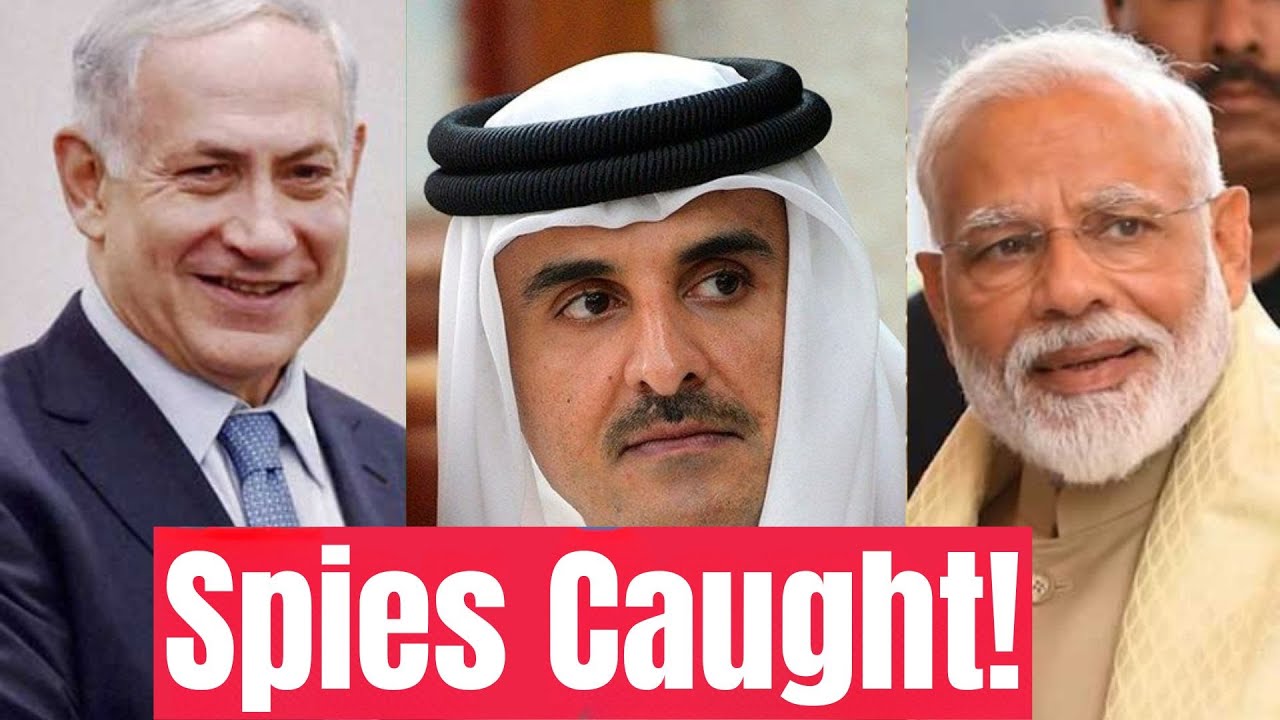
In this Geopolitical Trends episode, host David Oualaalou, a former U.S. military intelligence analyst, examines the controversial case in which Qatar sentenced eight former Indian Navy officers to death for allegedly passing classified submarine‑related information to Israel through the Qatari‑based defense contractor Al Dahra (also referred to as Adhara). He outlines the timeline of the espionage allegations (first reported in August 2022), the trial that began in March 2023, and the company’s shutdown in April 2023. Oualaalou critiques India’s public “deep shock” response, questioning whether the Indian government was aware of the officers’ activities and why they would spy for a foreign state rather than their own. He contextualises the decision within Qatar’s legal framework (mandatory death penalty for treason/espionage), its historical reliance on capital punishment, and its broader geopolitical role as a Gulf mediator. The host also provides a concise history of Qatar, its strategic location, wealth from oil and gas, and its diplomatic posture toward Israel, the United States, and regional rivals. Throughout, he engages with live‑chat questions about execution methods, the impact on India‑Qatar‑Israel relations, and broader issues such as BRICS dynamics and regional security. The episode blends factual reporting (names, dates, company details) with the host’s personal perspective and commentary on intelligence culture, corruption, and the ethics of capital punishment.
Chapters
Hey and welcome to Geopolitical Trends. So excited to be with you on this October 30th, almost one more day for Halloween holiday for us here in the US, which by the way, I don't celebrate Halloween stuff. So anyway, so excited to be with you as always, and I have an interesting topic for you, uh, and this one has to do with a spy case by the— that, that involves former Indian officers. And I will detail because this case, FYI, has been going on for almost a year and 2 months based on my information. And it developed into something more, to the point now where Qatar, the country of Qatar, came forward an issue. It's, uh, during the trial that they're going to be executing them. So this is what I'm going to be detailing for you, asking some key questions that matter to this. Uh, intelligence issues are very, very complicated. As one who worked in Washington, I'm a former military intelligence— that's when I started, uh, my days in Washington, DC— was across the board, from within the intelligence community, the State Department, Department of Defense, you name it. So across the government. So, so I kind of know a little bit about how this kind of, uh, uh, developments goes and how the countries handle the sensitivity of it. So this is what I'm gonna be, uh, detailing for you. Before I forget, I will take some questions towards the end, 2 or 3 questions, and we just go from there. Before I'll do anything, like I always do, Alex, I like to extend my sincere thanks to you all to all supporters, to all members, to all subscribers. Without you, it will be no channel, and I am grateful to you for your continued support. Um, I also like to give shout out to a new channel member by the name Cabasa de Fogo. Thank you so much for becoming a channel member, and, and I look forward to having you next month, the last weekend of the month. That's when I will be doing— once a month, I will be doing a live, uh, Q&A exclusive for for the members only. So I look forward to seeing you all, and thank you all. If you want to support the channel, you want to become a channel member or supporters, that will be great. Otherwise, I do have another avenue for you, and this is based on one of my staunch supporters from the channel, Zao. He suggested for me to do the, uh, what do you call it Buy Me a Coffee, and I did indeed opened up, uh, I created, uh, the Buy Me a Coffee platform for support for the channel if you are interested to do that. So, so let me share the link with you guys so you'll, you'll see it there, and you can, uh, should you decide to support the channel, you can do it that way there. So here is the link, for you guys. I will add it here and you'll see it on the screen. There's the link. That's for the support for the channel. If you like the content that I create, uh, it takes me time to research. And yes, not everybody's gonna agree with what I say, and I, I'm perfect. Okay, I have to be perfect. Okay, because if you all agree with me on everything I say, something is wrong, and I don't believe in that. You know, I, I, I welcome difference. Uh, I welcome, uh, different point of opinions. I welcome your disagreements. And, and that doesn't mean you mean harm or you mean— no, you just expressing your opinion that you disagree with me on this issue or that issue. And that's perfectly normal. That is what we ought to have. At least that's what I believe we have in this community here. Disagreement is part of a conversation, you know, as long as it's done in a respectful way. That's That's the way I see it. So, so here is the link, and I will put it for you in the description, guys, later on. If you feel like supporting the channel because you like what I am doing in this channel as far as content, I will be greatly appreciated for that. Otherwise, you can either become a supporter or a channel member. And for those, as I said, I will be doing once a month, the last weekend of the month, I will be doing exclusive Q&A. We just had one yesterday. It was, it was incredible, just relaxing and, and, and we just get to know each other. So this is what we're gonna do. Also remember to join me tonight, should your schedule permit, for a conversation with Dr. Stewart. I will be talking about, uh, some— he's gonna talk to us about some health, uh, uh, topics. Like for example, we're going to be talking about the importance of gut why your gut is very important to your overall health. You'll be amazed and surprised. So, so join me tonight at 7:30 PM. This is when I'm going to be talking about that. All right, let's, uh, let me say hi quickly here to, uh, some of, uh, uh, the, uh, uh, supporters. Uh, some of you are new here. If this is your first time here, please make sure to subscribe to this channel. Siberian Tiger, good to see you as always. Uh, yes, I know the title will blow you away because whoever thought— and this is something I'm going to be detailing the, the, the, the aspects of it. Taiwan Still, good to see you as always. The Observer from Mars, good to see you. Uh, uh, Babu Kazam, good to see you. Poy, good to see you. Masan, good to see you. Z, Good to see you, B. Kaboo. Good to see you as always. Ateen Wu, good to see you. Mike B. Spady, good to see you, Spady. Haven't seen you here for a while. Koi Hoi, good to see you as always. Uh, PH Law, good to see you and hello to you as well. Uh, Do All Things With Love. Oh, I like that screen name, man. I like that screen name, man. I really like that screen name. Do all things with love. That it matters, it matters, because guys, life is too short, you know. Just, just do what you care the most about, do what you love the most, because you'll get a lot of internal satisfaction out of it, you know. Yes, you have to make a living and all that, it's all understood, but do something you love. That's, that's the important. Phil, good to see you, Phil. And by all of those are members of the channels, guys, so David K, John Lay, good to see you. Thag Duan, good to see you. Mike B, Losio, good to see you. Losio Delgado, and thank you for your question yesterday, by the way. Truly appreciate it. All right guys, let's get into our topic here. So as I said, I'm going to start with the 3 key questions. So, uh, and here is the reason why I'm going to ask this question, because I read one statement by a former ambassador of India to Qatar, and I'm going to disclose the name later on. You know, he already assumed that Qatar is not going to move forward with the execution. What make him so confident into this? I disagree with his assessment. You know, I respect his opinion, but I disagree with it. So, and here's the question pertaining to that: why is India assuming that Qatar is not going to move forward with its decision? That's one. Second question, and this pertains to the question, uh, that, uh, uh, who asked the Uh, yeah, the first one that says that blew you away, the title. And there's the question: why are Indian officers spying for another country, for Israel, not even for their own? It will be different if you spy for your own, which shows that you could be spying on your own country if you could do this. You know, that's, uh, another question. And the third one, how this is now going to impact relations not only bilateral between Qatar and India, but also Qatar and Israel. Because here is the thing, one, one thing I want you to know, you all remember the picture that I shared with you when Narendra Modi was shaking the hands of Prime Minister of Israel, uh, Netanyahu, and saying that they switch the support from the Palestinians to the Israelis. India did so because Israel provides India with certain military technology behind our backs. This is one thing. So this is why you have to put this in perspective. So Qatar, as I mentioned, uh, uh, which is a country in the, in the Middle East, in the Gulf, the, uh, Gulf States, uh, will be— it's not— it will be executing former naval Indian naval officers for spying for Israel. So And, uh, and like I said, the, the first thing, as one who works into the intelligence community, as one who is a former, uh, part of the military intelligence, that's how I started my, my career and so forth. The first question is, what prompted those Indian officers to spy for Israel? You know, I'm sure they knew the consequences. For any, if you get involved in spying, you know what the, the consequences would be. That's the same thing happened in China, which by the way, everything is staying inquired about it, that way back a few years ago, that there were about 15 to 18 double agents were executed in China because they were spying for the United States. So, so, and the big question becomes again, because I have to think about it from a geopolitical perspective, how will it impact relations? One thing I know for fact, these matters of intelligence and spying and so forth stays in behind the scenes. There is conversations in some behind channels because the sensitivity of this information doesn't come forward. And of course, I can only share with you what I know. There are other aspects that I do not know because it's classified. I, you know, and even if I know, I will not be in a position to disclose those kind of stuff. So here's the thing, just the background before like getting into the history and the geography of Qatar, because you need to know that. So, so the judiciary, uh, uh, in, in, in Qatar sentenced now those 8, uh, uh, uh, former Indian Naval officers after convicting them of spying for Israel in connection with Qatar's submarine program. And this program was managed by a company, a company called Adhara, and I will provide you the detail of it. But here is what shocks me the most. What shocks me the most is the reaction of New Delhi. Well, New Delhi is expressing, and I put this in quote, shock, deep shock, end of quote, at the ruling. Why? It's the law in Qatar. That's how they deal with uh, espionage, execution, no ifs and buts. Sometimes it might be an exchange, because we had a case, and I'll share it with you. I was familiar with it, and it's not classified anymore. It was a case of a former naval officer in the US. His name was Jonathan Pollard. You can look him up later on. Uh, Jonathan Pollard was of Israeli, uh, descent, and he was a naval officer. He was working on a submarine and he was passing on information about the sub to Israelis. So basically he was spying for Israel and he got caught and he was sentenced to prison. I remember, and the first time Benjamin Netanyahu won the elections and met with the— actually not Netanyahu, I'm sorry, the previous government before that asked Bill Clinton at that time to release, to issue a pardon. And a lot of officers in the intelligence community here in the US said hell no, because he was passing sensitive information about some nuclear submarines here. So it's the same thing, you know, he is, uh, an American of Israeli descent but spying on behalf of Israel. That's the law. And they didn't release the guy. And I think later on, after he served two decades or so, He got expelled from the United States. The same arguments could be made here. So when India saying, well, we express deep shock— why, why are you shocked at the decision that Qatar did? Because that's how the laws are. No, but the Indians are saying all options are open, are being explored to this with, with this issue. Okay, that's fine, you can appeal. As a matter of fact, the law in Qatar, based on what I found is that in a case like this, they might have— they prisoners in this case might have the— it's not might have, they do have the right to appeal it. But if the conviction holds, it's too late, they're going to be executed. So, so before I'll delve deeper into this, let's, let's talk about Qatar. Where is Qatar? Because you need to at least see where it is. So let me share a screen with you here so you guys can see at least, the geographical location we are talking about. And I'm going to share a screen with you, uh, share screen. And there we go. So Qatar, officially known as the State of Qatar, that's what it is. It's a sovereign state, of course, located in Western Asia. If you look at the map, as— and I'm gonna point out at it so you'll see— this is where Qatar is, a very, very, very, very tiny country, but it's very rich thanks to oil. So, and this is the West Asian part. Most of these countries consider themselves in West Asian countries. Even Iran, sometimes you see some literature that mentioned, yes, is Middle Eastern country, but also Western Asia. That's what it is. So, so as you, you see on the map there, so, uh, Qatar is on western side of Asia but also in the Middle East, on the northeastern coast of the Arabian Peninsula. It is bordered by Saudi Arabia to the south, with the Persian Gulf surrounding it on three sides. This is why Qatar is very strategic. Qatar's capital is called Doha. I think I did one time, uh, stopped by on my way coming back to the United States. I was coming from Japan, I think. That was way back, and I had a layover in Doha. Wonderful, nice airport, by the way, up to date. Uh, uh, Qatar is the richest country in the world. Yeah, we don't hear much about it, but it is very rich. Uh, and Qatar is known for its wealth due to its significant oil and natural gas reserves. So, so it is as known, like I pointed to you, is in a peninsula in the east of the Arabian, and that's where it borders Saudi Arabia. And the, uh, Saudi Arabia, uh, on the south, then there is Bahrain, Kuwait. The reason, the reason why Bahrain is so close by, because you will see as I disclose to you in the history aspect of Qatar, it was Kuwait and Oman. They all were linked, and, and you'll see why, uh, later on. Let me stop sharing this one here, and I'm going to move into the history aspects of it. And the history of Qatar, it's long, but I'm going to just, you know, summarize it to get into the analysis of what I need to cover here. And, and I'm going to provide you the link because there was an article written, uh, by Christian Jimenez. He was the one who wrote the article as well, and I did collaborate the information and found it accurate to my knowledge based on the research. So Qatar, one of the richest and most prosperous country in the Middle East today, with one of the highest GDP per capita of any nation. Surprising, huh? And while the country's wealth and oil are interesting facts about the region, it is the history of Qatar that should be attracting your attention. It's very, very interesting. So the peninsula had had a long and interesting story, and it's important to understand it. So, so let's start briefly here, and I'm not going to detail because it will take us too long here. So briefly, uh, this is prehistory about to the 18th century in, in, in the Gulf. The location of the nation of Qatar has attracted the largest peninsula on Earth, to the Arabian Peninsula, that is. And this one, because why? It's because the presence of human, the first human, uh, uh, habitation goes over 5,000 years— or 50,000, I'm sorry, 50,000 years. That's how far back it goes. So it's an ancient culture, uh, and it was known at that time as the Al Ubaid culture, which was— Al Ubaid culture, by the way, was about 5000 BCE, before the Common Era, that's how it's known. So at that time, Qatar will be ruled by different empires that includes the Persians, Yeah, including the Persians. They will eventually embrace Islam later on. That's why Qatar is a Muslim country. And under the, the caliphates of the, uh, they were caliphates during the, the, the time frame of the religion of Islam known as the Rashidun. Those who speak Arabic or are in the, from the region, you will know exactly what I'm referring to here. So they were the Rashidun, then they were the Umayyads, then the Abbasids. Now, however, after the Abbasids era, the country will be ruled by the Qarmashians, the Qarmashians, who were Ismailis. Why is this important? Ismailis are another branch within the same religion of Islam. Ismailis, you find some Saudi Arabia, not a lot, but you find mainly in Pakistan. There are certain Muslim countries that have some, uh, presence of Ismailis there. Well, they were back there, and this one— what this group back then was controlled most, uh, this group rather controlled most of the Eastern Arabia after the Awakening because it became weak. The Abbasid became weak during the 9th century. Fast forward to, uh, the 11th and 15th century with Unaydis and the Yusufids. Those controlled the Persian Gulf during those two centuries, 11th, uh, and the 15th century, and followed by, uh, the ruling over the, the area. The whole area was controlled by this. After some of these regions such as Bahrain This is why it's important to understand Bahrain will be controlled by the Portuguese at the time during the 15th and 16th century. By the end of the 16th, the Ottoman will be the dominant power in the— of the Persian Gulf until it was weak during the 19th and 20th century, because the Ottoman Empire was very, very powerful and stretches from the Middle East all the way, all the way to eastern part of Spain in, in Andalusia. And that's where some of my ancestors are from, Sevilla in Andalusia, eastern Spain. So the nation will be occupied by many Arabian tribes. This is why, why it's important, because tribes are very important in Middle East politics. That's why we don't understand those dynamics. Tribes do have or play a role into this. So in the 18th century, the Al Khalifa, which is now the one that is, uh, uh, was part of the Qatar, uh, of the greatest Bani Utbah tribe, those are immigrated from Kuwait into northern Qatar and founded the town that is, was called at that time Al Zubarah. Due to their origin in Kuwait, Qatar has many connections and trading relations, eventually making them very famous for pearls. They are known because they used to dive for pearls. It's known in Qatar, so, uh, because it was one of the main industry back then. It was still the discovery of oil Now with the discovery of oil, it changed things differently. So the tribe will soon be disrupted by an attack from the Persians, and this attack was led by the Al Khalifa to capture the Omani territory of Bahrain. It was in 1783. This is why I mentioned, you look at Bahrain and you look at Oman They have some ties historically back then to Qatar. Uh, and I'm gonna move forward, guys, to, uh, when, when, uh, when, for example, Al Khalifa completed their move to Bahrain, because they moved officially and permanently, uh, to Bahrain with their center of power in Manama, the city of Manama. And it is where they continue to rule to this day. That's where they are. There was still the conflict between Al Khalifa and the— and, and Jumahima. Yeah. And they're fighting over Bahrain. And Qatar will also include the Iranians, the Omanis, and the Wahhabis in Saudi Arabia, and the Ottomans. So, and this was also during a time when British power was expanding and it becomes to rise in the region of the Persian Gulf. That's why the British had presence at that time. So the Al Khalifa will try to keep Qatar under its sovereignty. So, so Al Zubarah at that time and Al Jalahma, those are sort of, uh, uh, were also still involved in the peninsula in the peninsula, short-lived, uh, uh, tribes, because they are survival. And they were the sheiks. This is why, FYI, in the Middle East, certain countries, the title of a sheik means a lot. That's, that's a status in society. And the sheik's usually the one who heads a tribe. That's how it works. So the most famous among them Well, the Jabir al-Jalama, who was also known by the British as the most powerful pirate in the Persian Gulf during that time. Fast forward to modern-day Qatar, which is under Al Thani family. How does it work? Well, another tribe that was settled in Qatar around that time was the Al Thanis family. During the 18th century, the Al Khalifa and the people living in Qatar still disputed over Al Zubarah, which then led to the British to recognize Qatar's independence from Britain under the rule of Al Thani, which is the current one, in a treaty. That treaty was signed back then between Muhammad ibn Thani and the British This treaty was signed in 1868. That's when it signed. After this, other foreign powers will try to occupy Qatar, such as the Ottomans, because they tried in 1871 after conquering the neighboring Al-Hasa. Al-Hasa region is in Saudi Arabia. It's in modern-day Saudi Arabia. So that's where it was. And then Saudis will have to go at it in 1913. So fast forward to, uh, approximately 1935, this is where the deal was made, uh, uh, under the British. That's when Qatar became a British protectorate. Why? Because the discovery of oil at that time. So Qatar will then gain, uh, officially its independence in 1971, which was around the similar time frame for independence of most of the other Gulf states. And soon Qatar will join what is known today as the GCC, the Gulf Cooperation Council, and enjoy the oil wealth and so forth. This is where you see it today. So today Qatar is still— there are those of course throughout history that mentions that Qatar had ties to the Muslim Brotherhood and was a general supporter of the Arab Spring. You all remember 2011, it was a protest, uh, protest happening in the Arab world at that time. They were soon involved in a conflict with the Saudis, uh, with Saudi Arabia, Bahrain, and the United Arab Emirates. This is why the conflict, the tensions, diplomatic tensions between those three countries and Qatar end up being a very, very serious problems diplomatically. That is why, because they claim that Qatar supports Iran, the Muslim Brotherhood, and they were in support of the Arab Spring. That's, that's, that's what they said. So, so today's Qatar is a wealthy and very, very influential nation. Look no further than the economic aspect, the deal they signed with China as far as 25 years to give China gas. Also, they just signed a deal with, with France, 27 years. And now Italy is asking Qatar for some deal in gas because they are very, very rich in, uh, in, uh, in gas. Very, very— one of the top, uh, gas producers in the world. And as you know, for those who play soccer or know about sport, be just, uh, the, the World Cup that was held in Qatar, which was a success based on, on what I, uh, on what I read. So this is what I want you to know historically about, uh, uh, uh, the history, because it's very important to understand how those countries emerge. So let's move on to our— and I'm going to share with you my analysis about now the issue that we're going to be talking about here. Well, as I mentioned, it was reported that the Indian government statements confirm. Now even India itself is confirming. And by the way, I looked— I'm going to provide you the link— but most of the links that I came across were from India saying that, oh, they are not going to execute this, or this may be nothing into it, whatever. Uh, I disagree with that, respectfully. I did found— I did find, rather, one article by the, the, the, uh, the Post, Washington Post, I think. And I'm gonna put the link for you guys, but it was unusual. But at the same time, I'm not surprised. You know why? Because these matters of, of espionage tends not to come to the surface. I mean, I'm gonna ask you a question. How many of you were really aware of we were spying on Angela Merkel when she was the Chancellor of Germany? And when the story broke out, we didn't talk much about it here, but some other media or some other, uh, uh, uh, locations in the world were addressing that issue. So the question, like as I said, why are Indians spying on behalf of Israel instead of their own country? At least, you know, I don't know. I don't know. I really do not know what will, you know, the monetary gain of it, whatever. But the question is, where does the loyalty of those kind of those individuals lie? Unless they were order— or, or not ordered, but the government was aware of it and did a favor for Israel. I won't be surprised given how the Indian government is operating., uh, uh, recently. We all know. So, and this is why the Indian Foreign Ministry is saying, oh, and I put this in quote, guys, we are paying close attention to this case and following it closely, you know. And they added, and I quote, we will continue to provide all consular and legal assistance to those convicted. Yeah, maybe, maybe. But, but for them to say, for India to say We are shocked. You never get shocked when a spy is caught. Simple as that. You know, as I said, I was in the military intelligence. We kind of understand those kind of dynamics, you know. I mean, you tell me that those 8 former naval officers didn't know what they were getting into. No, they did. The question is, did they get involved with the knowledge of their government? Because that is unusual, to be spying on behalf of another country. That is rare, you see those kind of cases. And those, by the way, I had to look, uh, for the names of those former officers. Usually you have to go about it two ways. You can go through certain database regarding Indian officers, the former ones, which for us It might be easier to find that through certain databases in Washington, or you can find them in some other locations. Suffice it to say, I'm going to just state the name, but I am not going to get into where I get the names from. You read between the lines yourself. So the prisoners are, and I'm going to state their names, and my apologies if I mispronounce the last name. I'll start with Captain Natej Singh Gill, Captain Bharandra Kumar Verma, uh, Captain Bharandra Kumar Verma, Captain Saurabh Vashisht, Commander Amit Negal, Commander Purnedu Tiwari, Commander Suganakar Pakala, Commander Sanjeev Gupta, and Sailor Ragesh. Those are the names that I found. An interesting thing about this retired Navy officers had distinguished service. This is the thing, they had distinguished record service for 20 years. That's what I found, 20 years. At the same time, they held some really crucial roles. I still mind-boggling. Why would you— why would they spy for Israel but not their own country? And, uh, what's interesting also that Qatar— and then I found the timing very important. Here is the thing, this is not new. It was on the radar for so many. I wasn't aware of it. You know, the truth matters here, you know, also. But it came to my attention. This is where I dig for information. And only when I found out, oh, this is tied to a case that was back in 2022. That's how far back, because these matters of espionage, as I said earlier, stays behind the scenes. So, but what I found very interesting is the timing that Qatar decide to move forward because the sentence comes at a time when the tensions in Gaza between Israel and Hamas, you know, and because also Qatar stated publicly to Israel that you need to stop this potential, uh, uh, uh, engagements in Gaza with ground troops. Saudis also issued the final warning to Saudi Arabia. So you can just see the Gulf states are moving forward with the statements, you know. And I know sometimes when I do certain analysis, or some, some do not like what I say, but that's fine, that is fine. But you need to understand the context and the which I am putting certain information. I don't speak randomly. I don't do random. It is always an objective. Same thing here. Why will Qatar come forward at this time? Because that puts the spotlight on Israel. And we all know, uh, what took place on October 7th. You know, any, any civilian— and by the way, let me just put this on a record— any civilians on both sides It's, it's, it's, it's off limit. You know, you condemn the killing of civilians on, in any race, in any country, in any whatever you want to call it. Civilians have to be set apart. If you got an issue militarily, then you target, you aim at military targets. That's to me the, what the logic I see. But also you have— we have to understand the root causes of what led to whatever it led to in, in, in Israel. Straightforward. There is no ifs and buts. The record is clear. One thing I want you to know also about Qatar: Qatar has always played a major role as an intermediary when it comes down to negotiations, especially when it comes down to the release of prisoners. They did it for Afghanistan between us and the other group there, and they doing it at the time of this recording here or this live stream. They doing it because they talking to the Palestinians to release the prisoners and exchange— not the release, an exchange for the prisoners between Israel and the, and, and the, the, the, the Hamas groups in, in Palestine. So Qatar plays a role into this. But to tie it to what we're talking about here, because we're not talking about Israel-Palestinian conflict, we're talking about the espionage case of 8 former officers from India that were spy— were caught spying on behalf of, uh, uh, Israel. So just to give you an idea, there are about 800,000 Indian citizens live and work in Qatar, because Qatar is very, very small. And again, I will provide you the link to all this, uh, later on. So when I'm finishing with this one, now let me go back to the first statement that I said about the former Indian ambassador. Uh, his name is KP Fabian, is a former ambassador of, of of, uh, of India in Qatar and a foreign affairs expert. And he said, and this is his word here, that he dismisses the likelihood that the death penalty will be carried out. Now, I don't know what he's basing that on, but knowing what I know about how the laws are practiced in that part of the world, Middle Eastern as a whole, treason espionage and all that, they don't waver from death penalty. Death penalty is part of their penal codes, you know. They even have it with some cases of bribery, you know, you know, especially— I know, to me, it— I don't know what— I, I can't judge them, but if that's their laws, then we respect the laws. Like, for us, we don't do that for corruption You know, because we let corruption be part of the system. That's why we are corrupted, the system. Can you imagine if we had death penalty here for corruption? Everybody's going to think twice about it. So I'm not judging Qatar, whether it's, you know, there were those who will say, well, it's barbaric. What? No, no, it's their laws. That's how they do it. So you respect the laws, simple as that. It's like for us, we don't do that, that's our laws, but we're also seeing the consequences of it. So, so I don't know what this former ambassador of India in Qatar based his decision on, but that's his opinion. So, and the idea of, uh, uh, uh, because if Qatar doesn't move forward with this, that's going to, uh, set a precedent And Qatar, FYI, those countries in this Gulf, they are very edgy when it comes down to any, any, uh, in any way that could sort of erupt or interrupt or influence or create tensions when it comes down to the leadership. Those are families that control the power, which means the, the power goes from one generation to the next. This is why you've seen the same families over and over, their, their kids. The best example, you see in Saudi Arabia, the monarchy since it was established, it's just the, the kids of the king. And the last one was the King Salman, who's still alive right now, but he's a— he's, he's frail, he's older. His son, the MBS, because MBS now, that's why he moved forward in line. He had to wait, usually that's the rule, but his dad put him in front line because his dad is the last of the original sons of Al Saud. Is the same thing for Qatar, the family. So they always have to make sure that things are controlled, and, uh, that's why I see the, the death penalty is going to move forward. I don't see. But let's talk about where is the company that the, those Indians used to work for. Well, what is Adahra Company? Because there's the company called Adahra. Adahra is a Gulf-based company that provides services to aerospace, security, and defense sectors. And this one, the company, has, uh, contracts with the Qatari government. So the aim of this company, Attara, was to obtain high-tech Italian-made submarines that could evade radar detection. So you could see why the Israelis were interested, because what Israel wants— does not want any country in the Middle East to have this kind of capabilities. This is what's at the heart of it. That's like now the US is very concerned about China's developments of a certain technology for submarines that can detect US submarines that go away submerging without— Chinese now have the capability, technologically speaking, to detect where those submarines— and in case of a conflict, you get the idea. So, so this is what's at the heart of it. But here is the thing, what I want you to know, because most of the, the information coming out of this didn't, didn't detail much. This company was shut down in April of this year, 2023, in April. But it was after it was discovered in May that the company was spying on behalf of Israel. And was passing sensitive information documents to Israelis. And who did that? Those 8 former Indian Naval officers. So right after that, Qatar moved forward and shut down the company in April. And the, the, the, uh, the arrest of those stayed silent. Nobody— they didn't say a word about it. Till they gathered their own information, the evidence, and so forth. Then they moved forward into a trial. Even the trial wasn't published, of course. That's how they do certain cases. Same for us. Espionage cases do not get coverage, not at all, till they released the information about 4 days ago, 5 days ago. But this has been going on for a while, you know. And this is why, uh, uh, in the Qatari government arrested those 8 employees of this company, uh, because of the spying case, uh, that they were doing on behalf of Israel. As I said earlier, this case goes back to August 2022. In August 2022, last year, there were some allegations at that time that the man, those men, those 8 officers were spying on behalf of Israel. Of course, anytime you, anytime you hear an allegation like this, you don't just jump forward. First of all, you don't want to, you don't want to alert the individuals who are doing the spying. They might not even know. That's one. And second, you want to be ensured, because it's a serious allegations. When you accuse someone of spying, that's a serious allegation. You better have your evidence for that. Then when Qatar was aware of it back in August 2022, they moved forward in March— on March 26th, that's what I found— on March 26th 2023, they moved forward with the trial in the court. They decided they have enough evidence to sentence those 8 to, uh, uh, death penalty or be executed. Now, the one scenario that I see is that India will request that they will be sentenced in India which we all know what it means, right? What do you think? Should Qatar— this is question for you, please leave me the answer in the chat box— should Qatar turn over the 8 convicted spies for them to be sentenced in— stay in prison, whatever India is going to do, in their own country? But they will be sentenced there, or they will be in prison, held in prison there, or should Qatar move forward with its rule and execute the 8 former officers? So leave me, uh, the answer please on the chat box. And as I said, Al Dahra Company, which is known as Al Dahra Global Technologies and Consultancy Services, they were shut down in May 2023. That's when he was. So India, of course, going to say, well, we are very deeply shocked that— and again, I don't buy that argument because as one who worked in Washington, you learn over the years how these things work. There is no way— yeah, I'll tell you this, guys— there is no way, uh, uh, citizens of a country will enter into something like this without the federal government of that country, of, of, without the country of those citizens knowing about it. Uh, that, that will be like shocking to me. That, that just, uh, uh, it'll be shocking to me. So this is what I see. Do you— that's why I asked you guys the question. Do you think India— uh, Qatar, rather Well, if India requested that, because that's why India keeps saying, the Foreign Ministry, well, we are shocked, we are deeply shocked at the verdict of the death penalty and, and are awaiting the detailed judgments. What detailed judgment? The— they handed down the sentences, it's done. So this is why I kind of— I think the Indian government is now deeply embarrassed, and they're trying to manipulate through the wording of something like this. It's because if they are waiting for the detailed judgment, what do they expect, that Qatar is going to share the evidence? I don't think so. Those are sensitive classified stuff, and Qatar is a sovereign state, and no country on Earth will pressure Qatar to do so, unlike some other countries, easy to pressure them. You all know what I mean, right? That's usually how it works. So for India to be saying this, no, it's clear-cut. They were spying on behalf of Israel. They got caught. They're going to be sentenced, executed, end of story. So when you hear statements coming out of the foreign ministry in New Delhi that we attach this high importance to this case and have been following it closely, I know it's nothing but hype. Usually governments will have to issue this for domestic consumption because, once again, mark my word on this as one who works in Washington and understand those dynamics, if Qatar doesn't move forward with this That's going to set a precedent. This is why China did what it did few years ago about the 15 or 18, uh, uh, double agents at the time. So I like just for you to know about the Dara again, the Dara, uh, company where those 8, uh, former officers used to work, uh, it, it's a private firm, it's not a government, it's a private firm, uh, uh, and it belongs to an Air Force officer from Oman. You all remember Oman when I talked about it last time, no? And this one provides training and other services to Qatar's armed forces and security agencies. You know, it's a common practice. Don't be surprised at this. Uh, some of us in the military, once they retire, you know, they contract with, for example, Saudi Arabia to train their army, their military. The only difference for us— and I'm— maybe it's India, maybe not, I don't know— for us, if we do that, we have to register in Washington, DC that we are the one It's like for me, I do consulting for foreign countries, you know, but if I am to engage with the country, I have to, you know, which I already disclosed the information that I have to be registered officially. This way will be a record for it that I am only doing consultancy for whatever government. Even if a government reach out to me for a, for, for, uh, they want me consult for them, I will be do it as an individual, as a citizen, not representing the US government, because I don't work for the US government. I'm, I'm done with the government, you know. But there are some laws that I still have to obey by, which I have to register with the Justice Department that I am doing consultancy for a foreign government. It's not they're going to say no, They can't because I'm a private citizen. I don't work for the government. But I also have to acknowledge that I will obey by the laws of our country here. So, so, an FYI for Dahra Company— Dahra, by the way, is spelled D-A-H-R-A, it's an Arabic name— Dahra is a world-class supplier of military aircraft parts to defense and related industries. And the core area of business is defense services, uh, procurements of course, and sale of equipment. But this particular espionage case deals specifically with the submarines because of the sensitive technology of the radar. Because remember, what was at the heart of it is the idea of, uh, uh, uh, for the company to obtain— that is, to obtain the high-tech Italian-made submarines that could evade radar detection. Now, you may ask yourself, how did the Italians get a hold of this? Well, because Italy is a NATO member, so we tend to share certain information with certain countries. In Italy, which I'm familiar with, we do have a major Air Force presence in Aviano Air Force Base. Just most Americans there. That's, that's what it is. Okay, let me see your answer, guys, if there is, uh, the answer to the question. Should, uh, uh, the question that I said: should Qatar turn over those prisoners to India and let them be held in prison there. So I'm gonna just see what your answer is, uh, if there is this one here. And sometimes there is a delay, guys. I mean, you all know this one here, there is a delay. That comes in. Oh, SK1, you say— let me share it here with everybody so they know. No, because if India, they will be released. Yeah, there is the fear of that. There is the possibility of that. You know, how Qatar will know? Yeah. So, and, and again, the way I see it, knowing the culture, and I've been in that part of the world and understand how they handle this kind of— and by the way, this is nothing against just foreigners. That apply to their citizens. There is no distinction here, you know. To me, if they don't do it, that's going to set precedent. That's the way I see it. And, and I don't see them wavering from something like this. Of course, in the West we look at it like barbarics and all that, but that's how it keeps things in line, you know. You look at it for our country, and again, it pains me to say it, but I have to say it. The amount of corruption that exists in my country here. Now it's done through the suits and ties and all that, but it's corruption at the end of the day, you know, that an average citizen, American citizen, that is paying the price. But can you imagine if we had that death penalty here? And I'm for it, and I don't shy away. I'm not— there are those who may judge me as being this heartless guys No, no, I understand. But in something like this, you got to be fair and just. You got involved in something that you know what the outcome is. You know what the laws are. If we— and to me, for us here in our country, we don't have the— we don't have— we don't hold everybody accountable for this kind of stuff. You see what's going on in our own Congress. Politicians retiring from Congress with millions and millions of dollars. How they acquire all that wealth? When their salary is about $180,000 for a senator, and I think it's $155,000 or $150,000 for a member of Congress. You know, all of a sudden you have them with over $200 million in this— pardon me— in the span of 25, 30 years. I'm not saying they could be coming from wealthy families, but there's something we have in our system is you do financial disclosure. I I used to do it when I was in the government. So the government knows not all of a sudden I'm having millions of dollars and I got nothing to worry about. Hey, here is what I have that's mine that I either, either saved over time or worked towards or whatever, and that's it. So I got nothing to worry about per se. But still, the shocking thing to me is why will India spy on behalf of Israel but not their own country? Because remember, spy in every country does it. There is no exception, by the way. Every country on Earth does that. Yeah, I will go as far as saying even the Vatican. So don't be surprised. Yeah, you're absolutely correct, David K. Qatar should have the right to do what it— well, it's a sovereign state. The laws were broken within its territory. Those weren't conducted in an international airport, in, in a, in an international section of an airport, for example. It didn't was conducted in an Indian embassy because that's considered a sovereign territory of the country that is represented there. No, it happens in a company that is registered on Qatar, uh, uh, that, that operates on Qatari soil and so forth. That simple as that. There is no, uh, other, uh, yeah, there's a, there's the answer for that. Francis Sanchez, Qatar should not turn them over. Yeah, yeah, there's the possibility, you know. I, I'm, I'm keeping an eye on it, but knowing how these things work Like in the case of Jonathan Pollard, uh, his name is— let me spell it for you— it's P-O-L-L-A-R-D, Jonathan. Uh, to my knowledge, he lives right now in Israel. Jonathan, he lives— here's this, his name there, guys. Jonathan lives in Israel right now. So anyway, let me take a question or two here and, uh, and, uh, we go from there. So, oh, I see one right here in front of me. Question from Army with Harmony Show. Uh, Qatar should not— oh no, I'm sorry, it's right here. You know, question: is the execution beheading Uh, I don't know. I really don't know. And most likely that's what they do in Saudi Arabia. Uh, if not, it will be through hanging. That's what they do in Iran. Uh, Saudi Arabia, I think the last one I was aware of was a beheading. Uh, Qatar, I don't know. I really don't know how they would do that. But, but if I'm to guess, it will be probably hanging. They won't do a fire squad like what they do in North Korea. And, uh, does anybody, by the way, know, uh, it's not a laughable— does anybody know in North Korea when they execute, what caliber do they use? If anybody knows, you can type it. They use a specific caliber for execution there in North Korea. Uh, so let me see what I'm looking— what you answering that, I'm going to be looking for another question here. If there is one. Uh, I, no, I don't know who this is addressed to, but you are anti-Indian, we get it. Who's anti-Indian here? No, those are facts on the table. There is no— I, I don't know who this was addressed to, if it was addressed to me. So, uh, I, I disagree with you, but I respect your, your opinion. So, all right, let me see if— and I'm gonna be scrolling down here just to see if there is a question for you guys. I've, I've always believed that, that really India is in at a crossroads. They're gonna really need to do some serious self-reflection, uh, self-reflection. And, uh, oh, David K, you put Dr. Oualaalou, can you talk about China working with Bhutan to resolve its border dispute? How will India react to this? You know, I've heard something about it, uh, I, I can't talk about it till I dig deeper. You know how I do things, right? Yeah, I'll be happy to do it because I do know the presence of some military, the Indian military, in, in that part of the world, and also has to do with the border. And of course it will agitate India if Bhutan wants to work with China. Yeah, yeah, it will be interesting to do, and I'm gonna dig into that because I also want to learn more about, uh, Bhutan. We don't hear much about it. The same argument applies to Nepal. We don't hear much about Nepal. Even when I went there to Kathmandu way back a few years ago, it was a short stay. It was work-related. Uh, I was on my way to Cambodia at that time and, and, and didn't know a lot about, uh, uh, Nepal, only to find out later on the tensions also they had with India and all that. So, so yeah, I will consider that one, David Oualaalou. I will do it. Okay, I'm scrolling down, guys, just to see what's, uh, what's— if, if there's a question from you, and also see the answer to the last question. Uh, Yeah, I'm seeing some comments here that, uh, they don't make sense, and I can only imagine those are probably a troll. You can tell because there is no cohesiveness in the sentence. Uh, Yeah, like for example this one here. I, I don't, I don't get it. Qatar, zip it, you're not a human, free people, daughter, woman. That, that tells me right there it's not a, it's not real stuff. The sentence is so fragmented, grammatically speaking, very fragmented. Uh, the— you put this comment here, The Observer from Mars, it's for the dollar. I, I maybe— I don't know, are really hard to tell at this, but again, what else will be the motivation for, especially, uh, for a, you know, Indian officers? Monetary aspect will make a big difference in their families and so forth, but also I'm assuming They were— those, by the way, those are not average officers. They've been in the service for almost 20 years. They were retired, so they knew how the system works. So if they're doing it for the money, then they know what the consequences will be. Yeah, agreed. Knows no border. Well said, well said. Greed. This is why I always say to myself, literally I always have to keep an eye on myself to check. The same arguments can be made with power. When somebody gets power, it gets into their heads and start to think way out— outside the norms. It's problematic if somebody doesn't keep an eye on him or herself to understand really what's going on. Qatar, are you going to— okay, I can tell this is, uh, just, just put this, this person away, this, this troll, because it was— I could tell it's a troll and the statements don't make any sense. I know. So, all right, there's question here from, uh, Nermin, uh, Aliza. Question: Do you think this will affect India's credibility among its BRICS partners, especially with Iran, United Arab Emirates, and Saudi Arabia joining? Wow, that is a profound question, you know. Actually, it's been a conversation, believe it or not. I personally at least had a conversation with some people that I know who understand at least the dynamics of global affairs and so forth. And one of the key in the conversation was about could India work on behalf of the West within BRICS? And we both came to an agreement that the possibility is there. The way this will happen, and this is with— we just, we're just thinking outside the box, and the way it will be done is by undermining the policies of what BRICS intends to do. It's already been disclosed now that India will not be joining BRICS currency. That, that's been, uh, uh, there's also the argument that France has been convincing India not to agree to Iran joining BRICS. So, so yeah, to me the answer is yes, it, it, it will impact its credibility. Now, it's already been when the day India decided to join Quad, it became clear right there India was doing what it's— what the US told it to do. India can think independently. Yes, it gives the allure, it gives the, the, uh, the, the illusion that they are independent when it comes down to foreign policy. But what foreign policy? It's like Bandari said, my guest, you all remember, there's no foreign policy in India to begin with. So this, yes, it will undermine, uh, unfortunately BRICS is stuck with India, uh, the, the mechanisms by which, because it was a founding member, but The only way I see it is they have to dissolve BRICS and re-reform it without India. And that's, you know, it's almost like the window works twice. It doesn't make sense, though. But it will always end up— start to believe into that India is the weak— was and is and it will remain the weak link when it comes down to BRICS. This is going to put now the success and any further progress for BRICS in jeopardy. That's how I see it. And yes, those countries, because there are a lot of Indian population living and working in those Gulf countries, and they're going to be thinking twice. So, uh, name the technology used for the detecting subs. No, I don't have the name. I don't have the name, but it's You won't find the name for it. There is no way. I'll be shocked and surprised if you do, unless you work inside the government to know this one, because this one enters into, uh, a very unclassified side. Uh, the same thing that now that we are wondering how China was able to develop this kind of technology that can detect a submarine. That because remember, some of our submarines do have the technology. Heck, we're the one who shared it with the Italians. So, uh, no, I don't know the name here. So, uh, question from YT, a good question: why did Xi agree to meet Biden? Surprising. Is it official? I don't know. The last thing I saw last night, that the, the, the, the, the read, uh, from the statement by Mr. Wang Yi indicating that the road for Biden to meet Xi is, is, is not paved smoothly. It's challenging. That's as of last night. Things could change. But if it is the case, is maybe China to show that is willing. But again, China doesn't strike me as being naive to As a matter of fact, this morning there's the meeting of the defense ministers in China, and the first statements issued was, we are aware— the collective statement— we are aware of some foreign powers trying to create tensions in Asia and other parts of the world. We all know who they are referring to here. So I, I don't know why, if it is confirmed yet, I, I'm not sure yet. And I'm going to check on this, and I intend to do a live stream on it for you guys. So, yeah, Adnan, uh, you put, uh, Dr. David Oualaalou, try bringing Canadian Patriot Press. They are really good. India is a, a shock puppet of the remnant of the British Empire. Crown agents and other British spy agencies, uh, present in India. Yeah, I will reach out. And by the way, like I told you guys, sometimes when you suggest names to me, I do send a communication and I'm just wait to hear from them. Uh, like actually the way I knew about Bandari, because one of you suggested the name, I reached out and he was kind enough to respond within literally within 24-48 hours. Or so, and, and we move forward with it. So, so I will, I will do that. I will reach out and, and, and just go, uh, to do that. Question, uh, is Qatar is closer to the West or are they playing both sides? No, it's not closer, closer the way you and I understand it. It won't be like, for example, closer like France or Germany, where— what those— to me it's not close. Those are being pressured Qatar, it's not that close. It deals with the West, there is no doubt about it, like any other country in the region, because now that the shifting in the global landscape. But Qatar can take its own decisions on its own, even if it goes against what the United States wants. And the US, we know it here. So, so Qatar doesn't strike me like too close to the West, no. Otherwise, uh, they would have not issued a statement today, or they did yesterday, about Israel. Uh, they will not broker the deal, uh, for, for example, with Afghanistan between the US and the prisoners back then at that time. Or they, they would not even do it right now for the prisoners between Palestine and Israel. Because look, if you look at— you're all aware— the recent, uh, uh, vote in the UN that just took place yesterday, when you have about, uh, 120 countries— yeah, 120 countries, uh, agreed to, uh, for a ceasefire. There were about 20, uh, 14 countries that refused it. It was United States, Israel, Austria, Croatia, Czechia, Fiji, Guatemala, Hungary, Marshall Islands, PNG, Papua New Guinea, and Paraguay. I was shocked at one particular country in this list, and this one is Hungary. I was shocked and surprised, but again, they have their own calculations, you know. I'm not judging them, it's just also this is part of, you know, that's what in and out global affairs are all about strategic interests. Why PNG did this, why PNG entered into a military, uh, you know, uh, India is not on the list, so maybe India abstained because there were about 55 countries that abstained. One of them is Germany, believe it or not. So, so I'm, I'm, uh, uh, I, I won't say they are so close to the West. Uh, Sonar 2.0. No, no, no, I don't, I don't know this. No question. Yeah, no, those are— this question, these ex-officers, are they still connected to the Indian Gulf or are they private contractor. No, they're private contractor. They are retired. That's why they are former officers. They are retired, uh, to my knowledge. That could be because, remember, if you enter into the world of espionage, uh, even though they say they are retired, they might not be. Yeah, so, so it's— the answer is I don't know for sure. But based on what I found, they all indicate— and I collaborate information before I say it— is that it converge on that, on, on one assumption, that they are retired officers. That's the way I see it. Uh, this is a good question, poignant, uh, question. How is India going to face the BRICS when their opinions are so different? About— you beat me on that, man. I, I don't know. It will be an awkward position to be in when everybody moving as a team and you are the odd. That's why I said last time, give India the option to leave at its own— another word, without being forced to leave. But again, in BRICS dynamics, which by the way, I've been looking to find out what is the protocol if a country, uh, uh, uh, uh, if the members wants to, uh, expel a country. And I couldn't find any, and I'm gonna keep looking into this till I get to it. So, uh, but it will be odd, it will be odd that if now the BRICS is growing but India is objecting to this. That means they can object, but if the 4 members agreed, then they're gonna have to move. Majority rules. That's to me, if India is a democratic— well, this is what they're going to be. This is why the BRICS moved on forward with the idea of the currency, even though India said, well, we don't want to. Fine, you go, you go your separate way. But, but it's odd, you will be a part of a team but you are not a team member. That, that would be very, very awkward. Uh, quick question here, off topic. What do you think about XRP as the new reserve currency? Hard to tell, JD. Hard to tell at this point because one thing I know for a fact is that when it comes down to global currency, you have to have the in— the financial infrastructure in place. If anything, to move into, uh, bypass the SWIFT, well, what is that mechanism is if you don't have the infrastructure for it? So far you're looking at 140 countries already moving into dumping the US dollar. This is why for us we are moving forward with the CBDC, the Central Bank Digital Currency, which to me its objective is nothing but to control the, the, the population. That's one, but also to limit the impact of the decline of the US dollar. 140 countries. That's quite a lot. So this is what I see, uh, what I see going. So I don't know, I don't— I, I don't know. So I don't want to speculate on something, uh, uh, something like this because I don't— I don't know. Uh, dear doctor, do you know, understand Hindu, Urdu? Well, Urdu to a degree, but Hindu, no, I don't. You know, and Urdu, just a few words here and there, just the basics. No, I don't speak it fluently. I'm familiar a little bit with Dari in Afghanistan because I spent a lot of time there. So, all right guys, I wish you guys you find this video informative. I will look into the other information and I hope you find this very, very informative. Thank you all for your support. Please make sure to hit that like button, don't, don't forget it, because that's how we move this forward. I would really appreciate it, and I look forward to seeing you next time. As always, remember, geopolitics impact your daily life in more ways than one. Till next time, bye-bye.
More from David


Beyond the Single Actor: Why the Gulf Isn't Choosing Between the US and China


Iran, Iraq's Militias, and the Houthis Are Coordinating! This Changes Everything




Who Controls the Next Decade's Resources? Latin America and Africa's Geopolitical Crossroads

The Chokepoint Trap: How Washington's Stupidity Triggered a Cascade That Now Controls the World

Trump Spooked as IRGC Unveiled dual-use SLV, Deployed Ghadir Mini-Subs & Hinted at Tactical Nukes!
