Rare Earth & US Military Presence Challenges Japanese Sovereignty! Geopolitical Trends
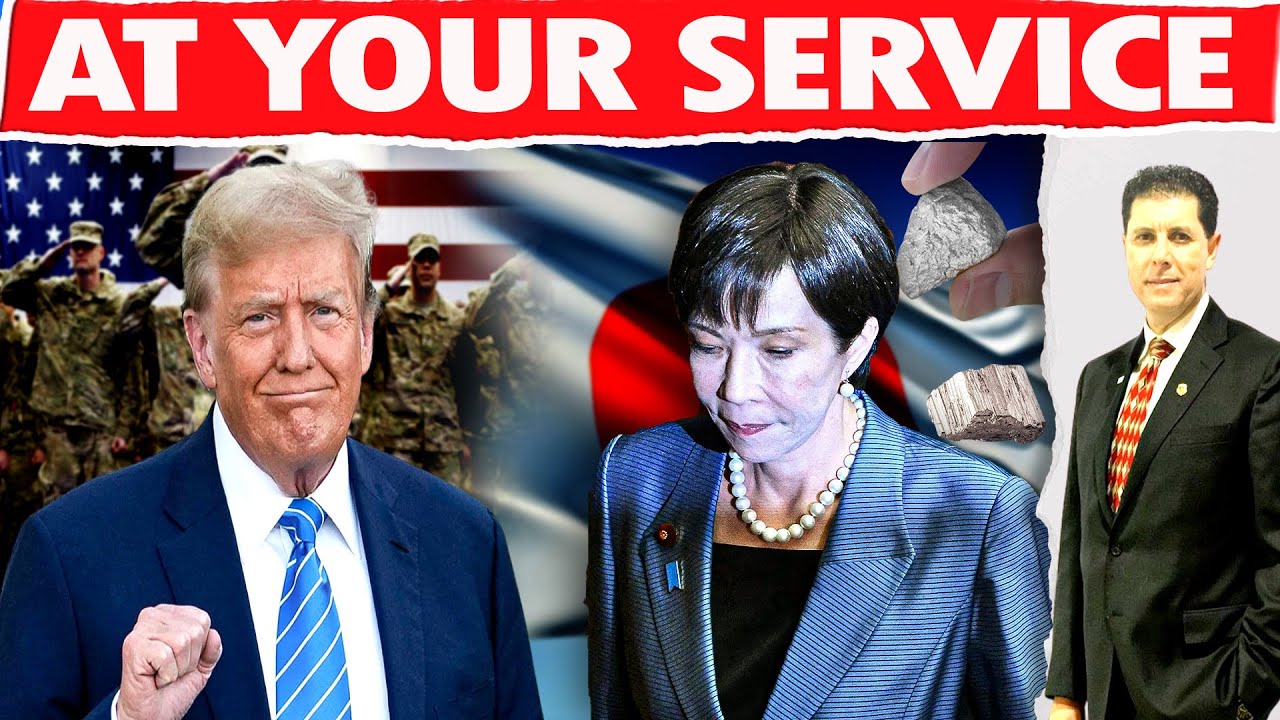
This content was created by David Oualaalou. This content was uploaded by David Oualaalou. This is a YouTube video (title: "Rare Earth & US Military Presence Challenges Japanese Sovereignty! Geopolitical Trends") uploaded October 29, 2025. The excerpt is an English political commentary / livestream by the channel host (labelled SPEAKER A) who greets viewers, reads chat names, and delivers a detailed analysis about the recent US–Japan framework on critical minerals and rare earths. The host contextualizes the agreement with history and geography of Japan, discusses optics of Trump’s meeting with Japanese PM Sanae Takashi, US–Japan defense burdens, the Okinawa US-base controversy and local independence sentiment, and concerns over China’s dominance in rare-earth processing. The excerpt also includes played clips and quoted remarks from Donald Trump and brief topical headlines about Nicolas Sarkozy and the ousted Bangladeshi leader. Metadata: YouTube content, created_time 2025-10-29T18:16:17Z, title as above, livestream-style format with audience interaction.
Chapters
Hello everybody and welcome to Geopolitical Trends, where truth matters. Excited to be with you as always. Uh, today's topic, I am going to be providing you my own analysis about how do I see the agreement, which is by the way just a framework between the United States and Japan, uh, regarding access to rare earth elements. So I'll be providing you some insights about this. I'm also going to share with you some history and geography of Japan. So before I'll do all this, let me say hi to our wonderful community as always, then I'll do some headline and we'll move on into the analysis. Liang, good to see you. Alastar, okay, as always. Oh, thank you for sharing that, uh, Oh, very interesting. Thank you for sharing that. This is regarding the traditions, uh, when the deceased— a gift from the deceased belonging go to the living. I've heard of those in, in Asia. Aristotle King, as always. Uh, D, good to see you as always. Say It Like It Is, as always. Uh, hello to you. Uh, Z, good to see you. Uh, Truth Seeker, uh, Naz, good to see you. Taiwan Still, AF Guardian, cool to see you as always. Salam to you. And Casey Wong, good to see you. All right guys, let me get into some headlines here, then I'll jump into the analysis. I'm gonna keep this very, very short this time around, even though I'm gonna do history and so forth, because I want to focus on exactly what you need to understand. Let vis-à-vis this particular, uh, framework agreement. So regarding the headlines, we're going to start with the first one, and it has to do with the former French president, so Nicolas Sarkozy. So he has reported to prison, as you may know. Uh, of course, the problem now is even much more worse for the French government. Why? Because the cell where Sarkozy is reveals the dilemma of the justice system in France, how uneven it is. Take a look at the cell. I'm gonna share it with you. I got a picture of— right, look at this. This is the cell where Sarkozy is. So he's a prisoner. So makes you just wonder about the— how uneven So unfair, the justice system. And I'm not criticizing France here because we have the same here in America. So I'm not, I'm not saying something that is, uh, so Sarkozy was imprisoned at La Santé. There's a prison in, in France known as La Santé prison, uh, to serve a 5-year sentence for forming a criminal association and indirectly engaging in high-level corruption. Yeah, this is the former French president. So the former president sleeps in a cell measuring no more than 9 square meters. That's the— this is the president, former president Nicolas Sarkozy, and this is the cell where he's at. So the cell placed in a special wing, uh, for sort of to avoid any risks. Okay, get this, this single cell contains a landline telephone under constant surveillance, a shower, a television, and a cooking stove, an exception not afforded to other detainees in any French prison. That's bad. That is bad reflection for the justice system in France. Second headline I want to share with you has to do with this individual. This is the former This is the disgraced ousted former prime minister of Bangladesh, Sheikh Hasina, as corrupted as he gets. As a matter of fact, I did find that corruption extend all the way to Britain inside the government. That, that's how bad that is. So suffice it to say that Sheikh Hasina now is, is announcing from India because it's India that given her, uh, sanctuary there. Because remember, Sheikhah Hasina was the puppet of India inside Bangladesh. So now Sheikhah Hasina is calling for her party to boycott the elections in Bangladesh. As you know, Bangladesh is going to have elections, and they are asking for her to be extradited back to stand trial for corruption. India is refusing to do so. So, but the big picture to all this has to do with Pakistan getting closer with Bangladesh, and India doesn't want that. So, and now she's calling for the boycott of next year's national elections because her party, because of the corruption, is barred from participating. And of course, this came in response to an email, uh, that was sent to her from Reuters for first— this is her first media interaction since her dramatic downfall and ousting after 15 years, yeah, consecutive years in power, uh, in, in Bangladesh with all the corruption that was involved in that. So, all right, let's get into our analysis for today's topic, which I'll be addressing. Uh, there is a lot, a lot of stuff to cover in into this particular aspect here. So, uh, uh, Donald Trump has met with the Japanese Prime Minister Sanae Takashi, uh, which is signed— by the way, this is where a lot of people do not know, is that there is only the signature of the agreement, is only a framework agreement. Framework usually is subject to many, many modifications, uh, and, and there's a lot of back and forth negotiations and so forth. So, but suffice it to say that the Prime Minister of Japan went ahead and signed the framework agreement with Donald Trump, and this has to do with supplying the US with critical mineral and rare earth elements, you know, because, because both countries, as they stated in their statements, they want to reduce their dependence on China's dominant position. So, well, what we need to understand, first of all, is, uh, uh, first of all, it was embarrassing for the Prime Minister of Japan to meet with Donald Trump on the top of the deck of the USS aircraft carrier because the, the, the, the, the optics of it— I mean, just think about it, you don't have to be a politician to understand this. Just think about it. I have my aircraft carrier on, on, on the, uh, near your shores, okay? And I'm asking you to meet with me on the deck of the aircraft carrier, not on your soil. So that sends the message of who has leverage over whom, who has control over whom, and does that person who's coming over to the aircraft carrier has any sovereignty? This is where the optics of it. So, but we're not going to focus on that. We're going to focus on the specific aspects of the agreement. So I'm going to play a clip for you first, then, uh, then we'll go, we'll go from there. Take a listen, please.
Like past administrations, we will not be politically correct. You don't mind that, do you? When it comes to defending the United States, we're no longer politically correct. We're going to defend our country any way we have to. And that's usually not the politically correct way. From now on, if we're in a war, we're going to win the war. We're going to win it like nobody ever before. You know, we'd go in, we'd blast the hell out of countries. Shouldn't have gone in, by the way.
Once again, you know, you talk about talking tough, but tough doesn't cut it. Did you win the war against the Houthis or Ansarullah? Did you defeat the Afghanis? Did you win in Iraq? You know, and this is again, tough talk doesn't cut it in international relations.
You don't go in, that's even better. Cherished alliance between the United States and Japan is one of the most remarkable relationships in the entire world. Really, there's never been anything like it. Born out of the ashes of a terrible war, our bond has grown over 8 decades into the beautiful friendship that we have. It's a foundation of peace and security in the Pacific. You see it. And I have such respect for Japan and the country. And now I have a really great respect for the new and incredible Prime Minister. And I have to say this, the first female Prime Minister in the history of Japan. Madam Prime Minister, nobody makes equipment like we do. Nobody makes The ammunition, the weapons, the missiles, planes, none of it. And if they do, the American sailor stands ready to crush them and sink them and wreck them and blast them into oblivion.
Uh, once again, and we'll continue to play this. No, no, no, no, Mr. President, there are other countries who are building some advanced systems as well, and as a matter of fact, they can challenge and even defeat the Americans. So once again, it's too much bravado but has nothing to do with the facts on the ground, right?
We have to— that's a terrible statement for me to make. That's the end of it, because everybody said that I should immediately get the Nobel Peace Award. With that statement, that takes me out of the running, but that's the way That's the way it is. And unlike—
anyway, it ends right there. So, uh, this is where you have to understand that rhetoric doesn't cut it when dealing with hard facts on the ground. And that's exactly, uh, what's going on with— to me, I look at it like, okay, what is this framework is all about? So, but suffice it to say, some of the key aspects of this deal that I need you to understand at least is that the great— the agreement, this framework aims at accelerating— this is the key— accelerating the developments of diversified, liquefied, and fair markets for critical minerals and rare earth elements. Here is the problem that I see with that. Despite all this, where you're gonna process this rare earth elements? Even for us in the US, we have to send them to China. So Japan will be no exception. And this is again, uh, but when they're saying all this regarding the coordinated investments and, and, and economics and so forth, remember what we have done to Japan in the '80s of the last, uh, uh, decade, the last, uh, century. So, and I'm going to be sharing this part of the, uh, history of it. But so let's move on into geography. We're going to do some geography, then I move into, the, uh, the history of that. Let me share a screen with you for the World Atlas so I can show you the map of Japan. Let's make this bigger. There we go. And, uh, we'll have an idea at least of where Japan is. So Japan is of course in East Asian— is an East Asian country comprising— here's the important about Japan— comprising of chain of islands, as you see on the map right there. All of them are, are, are islands. That's the— sorry, that's those, those— that's what comprised, uh, Japan. So, and the— those islands are between the North Pacific Ocean and the Sea of Japan, and at the eastern coast of the Asian Korean Peninsula. The island country, because because it is an island country, that is, stretches from the Sea of, uh, of, uh, of Oksotsk in the north to the East China Sea in the south. It is bordered by the Sea of Japan in the west.
The—
and the country Japan, that is, share its maritime borders with North Korea, South Korea, the Philippines, Russia, and China. So this is again where the geography of Japan is. All right, let me move into the history aspects of it. Now when you think about the history, and of course it's a long one, but I'm gonna try to provide you just like some historic periods in the overall history of Japan. So You have to think about Japan— when you think about Japan historically, you have to go back to prehistoric and ancient Japan, and this one goes to about 38,000 BCE to about 710 CE, the Common Era, that is. So, so for this, you think about the, the Paleolithic period. This is where the first human inhabitants arrived around 38,000 years ago. And those, they lived in the area as hunters basically. And this period, it is known in the history of Japan as the Jomon, J-O-M-O-N. So, and this sort of, uh, was known in, in parts of the Japanese history. Then you have the Yayoi period, Y-A-Y-O-I. And this period starting about 1000 BCE. And this one where the people from this particular tribe migrated from the continents, bringing wet rice. That's how far back it goes, the agriculture of rice in Japan. This is why it's tradition rice be part of every daily meal in, in Japan. So of course they were known for metal working. They were working with metals at the time as, as part of this advancements, and that led the population boom in that area. And, and that's how they start to grow. Then you have the Asuka, Asuka periods. You have the Kofun, it's K-O-F-U-N, uh, Kofun and Asura. What this period, it goes between 300 538 CE, and this one saw the emergence of a unified state under the Yamato clan. It was a well-known clan in the history of Japan. So, and this was followed by the Asuka period between 538 and 710 CE, which brought into the history of Japan significant cultural and political changes with the introduction of Buddhism. That's where it starts. In addition to the Chinese writing was introduced during this era. And the other one that was introduced in the political realm was a centralized government model, like the way it was in China. That's how it was. So this leads us to talk about the medieval Japan. Medieval Japan starts between 1710— 710, I'm sorry. To 1603. So, and this is where you have the first permanent capital was established in Nara, uh, between 710 to 794. And this where you have the Nara and the Heian periods, it's known in history in Japan, Japanese history. So, and this was followed by the Kyoto. This is where Heian-kyo came in. So known as Kyūrō, which was in 1794 CE. And why is this important? It is important because it marked the beginning of the Heian period in Japanese history. So, and during this time, the imperial court focused on internal politics, leading to the growth of local power. Then after that came what is known as shogunate, shogunate rule. And this was the rise of a powerful samurai clan. This is again where you start to see the involvement of the samurai, the samurai clan. So you have the, like, like Minamoto, which is known once again in the history of Japan. I read a little bit about it, and I really found out how very, very crucial these samurai clans in the, uh, uh, framework of the Japanese history. So, and this led to the establishment of the first military government. So, and this was, uh, sort of, uh, uh, around that time. And fast forward after that, in 1192, that's where this led to the de facto ruler holding the title of the Shogun. So this is the word where Shogun came from. I remember watching a documentary about Shogun, uh, from way back. So then come the, the Kamakura, uh, Shogunate successfully repelled Mongol invasion at that time in the 13th century, but was later overthrown. Then after this warring periods between the states, there was a period of fragmentation in Japan, and of course a civil war followed after that. And that is part of the, uh, the, the— at least back then. And this era was also marked by the arrival of the Portuguese traders who introduced firearms and Christianity to Japanese society. Then you move to the modern era, or the early modern era, if I may use the term here. And this goes between 1603, around the 16th century, to all the way to present time. Why is this important? Because there are two, two, two main events you need to understand. One has to do with the Edo period. The Edo period was where the, you know, the country was unified. After the Battle of Sekigahara, which was established at that time, and moved the capital to Edo, which is Edo, modern-day Tokyo. This when it happens around this time. And this period between 1603 all the way to 1868 was marked by relative peace and stability, but also a strict social control and a policy of national isolation. That's known in Japan as sakoku, and that limited some sort of, uh, a foreign, uh, contact with the outside world. So then it was a major era which called the Restoration Era. It's known as the Meiji, M-E-I-J-I. This was from— especially started in 1853. Why is this important? Because in 1853, U.S. Commodore Matthew Perry forced Japan to open to foreign trade, leading to the end of the shogunate and the restoration of imperial rule in 1860— I'm sorry, in 1868. The Meiji government rapidly modernized Japan by adopting Western technology and institutions, and of course this led to the imperial expansions which took time during World War II. So Japan became an imperial power, expanding its territory through wars with China and Russia. So this expansion culminated in what it's sort of in the alliance, uh, of Japan with none other than two countries in Europe, Germany and Italy, in World War II. You have to understand how this moved. And of course, it led to the devastating defeat after the atomic bomb of Hiroshima and Nagasaki was dropped on these two cities in Japan in 1945. Then what came after that is the post-war, and after the war, of course, Japan rebuilt and became a major global economic power through its focus on manufacturing and trade, but was prohibited from having an army. So this is what's important to understand about the history of Japan. Liking this video so far? Don't just be a watcher. Go ahead and hit the like, share, and subscribe button, and don't forget to tap the bell so you will not miss any of my videos or live streams. This way, you will be supporting a channel that stands for the truth and objective reporting. The choice is yours. Thanks for your support. All right, let's move on into addressing now the analysis as to what took place in this event between, or the meeting rather, between Trump and the, uh, during his first day, uh, in, in Japan, meeting with the newly appointed Prime Minister, uh, Sanae Takeshi. Let me see if I have a picture. Yes, I do, right there. Uh, so, and of course, when Donald Trump also spoke to the US troops, that's just part of How usually the— it's for the optics of it, optics of it. That's the importance of that. So, uh, aboard an aircraft carrier. So, and here is what you need to understand about all this, is that the two representatives, uh, Trump and the, uh, the Prime Minister of Japan, signed what's known as the New Golden Age Deal. And that one reaffirm the earlier trade agreements as well as another deal, which is the one that has to do with the supply of the rare earth, uh, supply and production. So here is what Trump promised, and of course you, you decide for yourself. What, what Trump promised is that he will do everything in his power to help Japanese abductees in North Korea as he met with their families. In other words, Trump wants to talk to Kim Jong-un to release those abductees. But you only know the history of Japan in the Korea at that time. So, so, however, make no mistake that the prime minister, she's, she's a shrewd woman. She's playing Trump like a fiddle. She knows how to strike his ego. So she's very, very playing some key aspects of it. So you take, for example, she gifted the, uh, the clubs, golf clubs of the previous, uh, Prime Minister Shinzo Abe, who was assassinated. She gave those clubs to Donald Trump. Yeah, she, she is— she didn't put rice during the meal when Trump said to eat. So all those are hints because she also remembers that the US has hit Japan industries very hard with the tariffs that he just imposed. So, but also Donald Trump told her, you're gonna need to shoulder most of your, of your own defense burden. Because— and I'm going to share with you later how many troops we have in Japan. So, so what the Prime Minister, uh, Takeshi, promised to do is she will reinforce— she will reinforce Japan's rising defense spending to 2%, which is a drop in the bucket if you think about it. But another— doesn't matter. This is what she promised to do. Are they going to move forward with it or Or is it just on paper? It's exact same thing the Europeans are saying to the Americans. We will increase the defense budget to 5%, but those are NATO members. But literally think about it. Can, for example, as an example, Greece, which is a NATO member, can Greece increase its defense budget to 5% of own GDP? Even Germany will not do that. So what makes us think that Japan is going to do that. But this is what she promised. So, and of course, describing the alliance with the US as the greatest alliance in the world. If you notice one thing, is the same statement or same sentence that Donald Trump used, the greatest alliance in the world. She's repeating the same one. So, and what makes it worse during this meeting is that Trump boasted about how good the the tariffs are. So I'm gonna share with you some quotes. Those are direct words from Donald Trump's mouth. Here is what he said, and I quote: Nobody understood tariff like I do. The tariffs have been so good, they have been making trillions and trillions of dollars. I understood tariffs end of quote. I mean, where are the trillions? There are no trillions. As a matter of fact, let me share something with you. The tariffs that Trump imposed is now costing companies— going to be by the end of this year— there is already saw state, uh, uh, an analysis about this, financial one, that says the companies will be paying about $1.2 trillion in costs. Regarding the tariffs. So where are the trillions that these tariffs is making for the country? So, and here is another quote: 'The tariffs are making people enter the United States and spending numbers like we've never seen before.' End of quote. Who's coming to invest here? And if even if they— we don't talk about investments, where is this money that if we are getting these trillions Why aren't we seeing it in our own infrastructure? I mean, come on, if you are an American watching this, you know what I'm talking about. So he added also another thing. He credited the tariffs for helping to stop a war between India and Pakistan. And he, of course, it was he, Donald Trump, who stopped the war. When in reality has nothing to do with the truth. You know, the war stopped because India realized the— not only they lost 6 fighter jets, but they came to the conclusion that if they continue the fight with Pakistan, they will lose more fighter jets. So to them, to India, was it better to just retreat and stop? Instead of experiencing further destruction of their Air Force, uh, fighter jets. So it has nothing to do with Donald Trump. The second aspect to why Pakistan end up defeating, uh, uh, uh, defeating India, like Carl mentioned this and I checked it and it's correct, has to do with the range of the missile. The fighter, the fighter pilot of India were under the assumption that the missiles Pakistan possesses from China would only go about 120-250 miles, when in reality those missiles went over 210 miles, which means they were within reach to the fighter jets. And the third element has to do with the capability of Pakistan locking in the radars on, on, on India. So Trump has nothing to do with all this, and yet he claimed— but anyway, that's— we know how it is. So what's going to be happening moving forward is that you have now— because you have to understand the context of all this. So when it comes down to the rare earth, of course China dominates this, this, this market. So, but dominated especially in the processing aspects, because they process about 90% of this material. So, and of course, it's no secret that Beijing has tightened sort of the export restrictions regarding this and added new elements of its control to this, uh, uh, aspects of rare earth. And, uh, Takashi, the Prime Minister of Japan, uh, she's like trying to say, well, we're gonna invest almost $500 billion with the United States so we can explore these domains. We heard the same number regarding the AI investments that Donald Trump mentioned. So you hear these big numbers, but have not— they are not— there is no $500 billion that companies are putting up for investments And that's exactly what the Japanese Prime Minister is also, uh, promising, is that this US-Japan critical mineral supply will secure some sort of a rapid response to what's going on regarding the rare earth, uh, market. This leads me to ask one key question, and I'm not going to shy away from saying it. And this has to do with when you consider the idea of, uh, of the, uh, Japanese experience with the United States in the '80s. And the question is, will the US take advantage of Japan as it did back in the '80s of last century? So some would say, well, that's not a relevant question. Others would say, no, it is a, it is a, it is a thought-provoking question because it touches on the, the historical US-Japan relations and concerns about the power dynamics in trade agreements, because that's exactly what happened back then. So there is legitimate, in my opinion, and please, if you disagree, please, please just let me know why. But there is a legitimate historical basis, uh, for, for this concern, in my opinion. The US did exert significant economic pressure on Japan during the Cold War, uh, and, and after, particularly through the trade negotiations in the '80s and the '90s. You all remember the Plaza Accord. Of 1985. That's when it was signed, for example, which was a very, very coordinated currency intervention that many at that time, many economists argue will hurt Japan's long-term economic growth. We did not want to see Japan even, even grow even further. Even though it was framed on part of the US as mutual beneficial. So I'm coming forward now and asking, is this frame agreement, framework rather, agreement will be the same connotation like what happened back then? Because what happened back then is that Japan faced considerable trade friction with the US over the automotive and the semiconductor industries. So I am seeing the trend here. So because we tried to do this with China and we couldn't succeed, China was smart enough now to move. As a matter of fact, they have announced that they will no longer trade in the US dollar, the Chinese. Big, big major announcement. So that's a topic for another day. So, but the current context, of course, is different than what it was back in the '80s. Japan now is much more economically, shall we say, mature. I mean, you could think about it, even though some have gone as far as describing it as sophisticated partner for the United States. With significant bargaining power of its own. Well, I have to disagree with that. If it has this significant bargaining power, how come they couldn't limit the tariffs that Donald Trump imposed on them if they are an ally? So yeah, nobody's denying that Japan is one of the world's largest economies. Nobody's denying also that Japan is a crucial US ally in the Asia-Pacific or the Indo-Pacific region. Nobody's denying that. Is that means Japan has a strategic leverage over US foreign policy, especially regarding China? I don't know. What do you think? Yes or no? In your opinion, do you believe that Japan has a strategic importance to US foreign policy vis-à-vis China? Let me see your answer, uh, for this particular question. Oh, oh, TNN Channel, you say no. Okay, that's, that's, that makes sense to me. Let me see someone else. Masan Dorsier, you say no. Uh, Dave, you say no. Taiwan still, you say yes. A proxy, okay. Uh, Truth Seeker, you say no. Okay, I see your point, I see your point, guys. Japan, I see your point. And, and yeah, it does not, in a sense of if it was thinking in terms of that's going to impact China, and it will not because US foreign policy will not be able to influence or impact or create any changes for the trajectory of China. It's just fact as it is. So, so what she's saying is just to strike Donald Trump's ego, no more, no less. One thing you can think about is that the idea both countries, Japan and the US, agree that they have concerns over China's dominance regarding the critical mineral supply. Well, because which other country was, was processing this rare earth element? No one else wanted to do it. China said we will back then. So, and to them, meaning to Japan and to the US, they consider this as a shared problem that requires collaboration. But collaboration that's going to benefit whom? Because the way I see it is whether the Japanese and the US, or Japan-US framework agreement, is win-win for both, or is it one-sided. So, and, and just, just, uh, that's, that's how, uh, that's how many see it. So others are saying, well, wait a minute, it's— many are saying that Japan, like South Korea, is not a sovereign state. Given the massive presence of U.S. troops on its soil, which is the current stats is between 55,000 and 60,000 troops in Japan. So, and I'm gonna get into that when I talk about Okinawa. So there are those who have pointed out to the large U.S. military presence footprint, which is around 55,000 to almost 60 troops in Japan. About 28,000 of them— those are in, uh, 55,000 in Japan and 28,000 in South Korea. And why is this? Because this is an evidence, this is an evidence of an incomplete sovereignty of those two nations. And I will add Germany to this now, and soon you're going to see Australia moving because we already started moving certain type of troops to, uh, a certain number of troops to Australia, the Philippines. So, but for now, we focus on what we're talking about here. So, and the argument is that hosting foreign military bases, because that, that will limit any host country's ability to make fully independent decisions. I see it with Japan, I see it with South Korea, I see it with Philippines, Germany, Australia, Italy to a degree. I see it with the Dutch. And these particular decisions are not about foreign policy and not about economics. Is about security. And that is exactly where the problem that I foresee. So there are of course those who support the agreement for, for, for, for Japan and South Korea, arguing that this contributes billions of dollars annually to maintain US bases, which they see as a form of dependency. So, so here is what I need you to know. Since we're talking about Japan, and I'm going to point out, this is the island of Okinawa, which you all know how Okinawa came to be under Japanese rule, because Okinawa used to be a kingdom, independent. And as a matter of fact, they are calling for independence from the rest of Japan. Suffice it to say that the US military presence in Japan, which is about between 55,000 to 60,000 personnel across nearly 120 bases and facilities, representing the largest US military overseas deployment. And this footprint of the US military is managed by the United States Forces Japan, known as USFJ, that includes Army, Marine Corps, Navy, Air Force, and Space Force components. So while the forces are spread throughout Japan, the majority are concentrated in this island right here in Okinawa, which, which by the way, disproportionately hosts US bases compared to its land area. So the military mission is based on the US-Japan security treaty, the same one we have with Korea, South Korea, focused on maintaining regional peace and stability. But the Okinawans do not want the US presence there because we all know the problems that's been created over time. So there is also counterargument to this, which you need to understand. Most, most international relations scholars So the way they see in it, and both countries' governments view it differently. Sovereignty and military alliances aren't necessarily opposite. I'll let you decide on this statement whether it is or not. So Japan and South Korea are technically free to ask US forces to leave Can they? That's the question. They chosen not to, and here is why. Their arguments, those governments, what they say in both Seoul and Tokyo, they're saying that there is mutual benefits. Both countries face security threats. What are security threats? From whom? They arguing from North Korea and China's rising military power. And view the US alliance as strengthening, not weakening, their security. This is their argument. The second argument they are making in favor of this is that there is an active choice of these countries. So, and this is how they framing it. This is where the manipulation of wording— they framing it under Democratic governments in both countries have repeatedly reaffirmed their alliance through elections and policy decisions. Public opinion varies, but majority generally support the arrangement. Well, I will say, hold on a second, let's ask people in Okinawa if they support this agreement.. And you'll find out if I am to conduct a survey on— in Okinawa regarding this particular point, I will bet you over 86%, in my opinion, will say no, there is no active choice here. So the same argument goes on to say there is another benefit to this, and it has to do with the autonomy in other places. For example, Japan and South Korea make independent decisions on trade, diplomacy, domestic policy, and increasingly on defense spending and military capabilities. Okay, well, if you make all this, why do you need the US for? If you have the capabilities, military capabilities, why do you need the US presence for? It's just one example. And this is again where you start to see what, what is being said versus what it is. The reality on the ground are very, very different. So there is the real question is to the whether this autonomy, it's really whether those two countries cannot at some point say to the US, yeah, we appreciate the alliance, we appreciate this and that, but we want you to withdraw your forces from our soil. So because all this has nothing to do only towards one particular issue, and this has to do with China policies, that's all, and of course U.S. interests. So then comes the really the key thing that we— you don't hear much about, and I decided to include it in this analysis. The fight for independence of Okinawa. Because to me, in my opinion, is part of this discussion. Okinawa situation does reveal the real tensions about sovereignty and self-determination that, that many are, are wondering about. I'm one of those. And when you put it into the historical context Okinawa was an independent kingdom known as the Ryukyu, Ryukyu Kingdom. That's what it was known in history before being incorporated into Japan in the 1870s. And during World War II, this is what happened. It suffered devastating casualties during the Battle of Okinawa. And after the war, of course, It was under US military administration until 1972 when it was returned, not as an independent, but rather returned to Japan's control with major US military bases remaining. So when you look at the current situation today, when you look at the current situation is that Okinawa hosts the bulk of US military presence in Japan. Roughly 70% of US bases are there, and this has created distinct grievances among Okinawans. If you notice, I didn't say among Japanese, among Okinawans. So, and we're not gonna get into the, they're talking about the land use and the political marginalization and so forth and the cultural identity because some Okinawans feel themselves as distinct from mainland Japan and recent decisions made without their consent. That just shows you where things are. Yeah, I know, I know, I know someone's going to argue, "Oh, Dr. Oh, this is no different than Taiwan." No, it is different, and I'll tell you why. It is different because Okinawa was an independent kingdom. In the case of Taiwan, Taiwan has always been part of China. That's where the difference is. I mean, I understand this argument logically, but I also understand the historical facts, how they are. So So this is why you have a real independence movement right now in Okinawa. It represents a minority position, but they have been— because most Okinawans, they seek improved conditions rather than full independence. So, and at the same time, in my opinion, they are sort of highlighting some sort of legitimate sovereignty question. Should this Stank region have more say over its own territory when it hosts foreign military installations? And those are legitimate questions we have to ask. I'll say the same about certain parts in Philippines. So This is again where I see the difference regarding this aspect. And I'm going to conclude with this here because I want— as I told you, I'm going to keep this brief for you. Uh, what I need you to understand, the big picture of all this. So you have to understand that what the Prime Minister— let me put her picture right here— Sunny— what the Prime Minister is using now the death of Shinzo Abe with all the ceremony. Trump may be reminded of his 2019 event with the meeting with Shinzo Abe because they were close friends. They became close friends till he was assassinated. You know, they took him out because he was giving too much to the Americans. And, uh, as, as a matter of fact, it was Shinzo Abe— just to remind you, it was Shinzo Abe that brought Donald Trump to see a sumo wrestling tournament. So, and this is exactly what, uh, what, what's her name, Takahashi, is playing on. She wants to lean into given Trump's fondness for Abby. This way, Trump— because the more you strike Trump's ego, the more he gets flattered, and the more he gets flattered, the more you can get through to him. So, so this is where that the, the, the difference is. But it's still— you're gonna have to go back to the beginning of this conversation and ask once again that fundamental question. Is this framework agreement between Japan and, and the US beneficial to whom? Is it to the US? Is it to Japan? Is it to both? It's the same argument I will make as far as, uh, uh, the deal that was done with, uh, Malaysia when Donald Trump agreed to. Did Malaysia cave in? 68% of you said yes. So I didn't do the survey for this one here for Japan, but it became clear. So when we know both countries, Japan and Malaysia, don't have the reprocessing capacity that China does, so no matter how many agreements you sign, you're still gonna end up where you're gonna process that particular raw material. That is where the difference is. So I just wanted to provide you this insights here, put this in perspective for you, and of course to just give you an idea when you read and hear the statements and so forth. It, it's, uh, more than, than what can meet the eye. So I want you to be aware of this. So, all right guys, I truly appreciate you being here. Uh, also if you want to, uh, support the channel, I'm going to put the link for you in the description. Uh, as you know, I don't have any— it's only the community that sponsor this particular, uh, uh, channel here. Would be very, very grateful to you for your, uh, uh, support. It's right here, there's the link for it. So, and I look forward to seeing you tomorrow. I probably will be working on another topic for you. And remember to join me on Friday Friday, I will be doing a major topic on the big channel on geopolitics and money. Uh, it would be an interesting topic for you to know. Usually we address the financial and the economic aspects of it. So I look forward to seeing you there. As always, remember, geopolitics impacts daily life in more ways than one. Till next time, bye-bye.
More from David


Beyond the Single Actor: Why the Gulf Isn't Choosing Between the US and China


Iran, Iraq's Militias, and the Houthis Are Coordinating! This Changes Everything




Who Controls the Next Decade's Resources? Latin America and Africa's Geopolitical Crossroads

The Chokepoint Trap: How Washington's Stupidity Triggered a Cascade That Now Controls the World

Trump Spooked as IRGC Unveiled dual-use SLV, Deployed Ghadir Mini-Subs & Hinted at Tactical Nukes!
