Russia, China & Iran Secretly Plan Iran's Nuclear Future | Geopolitical Trends
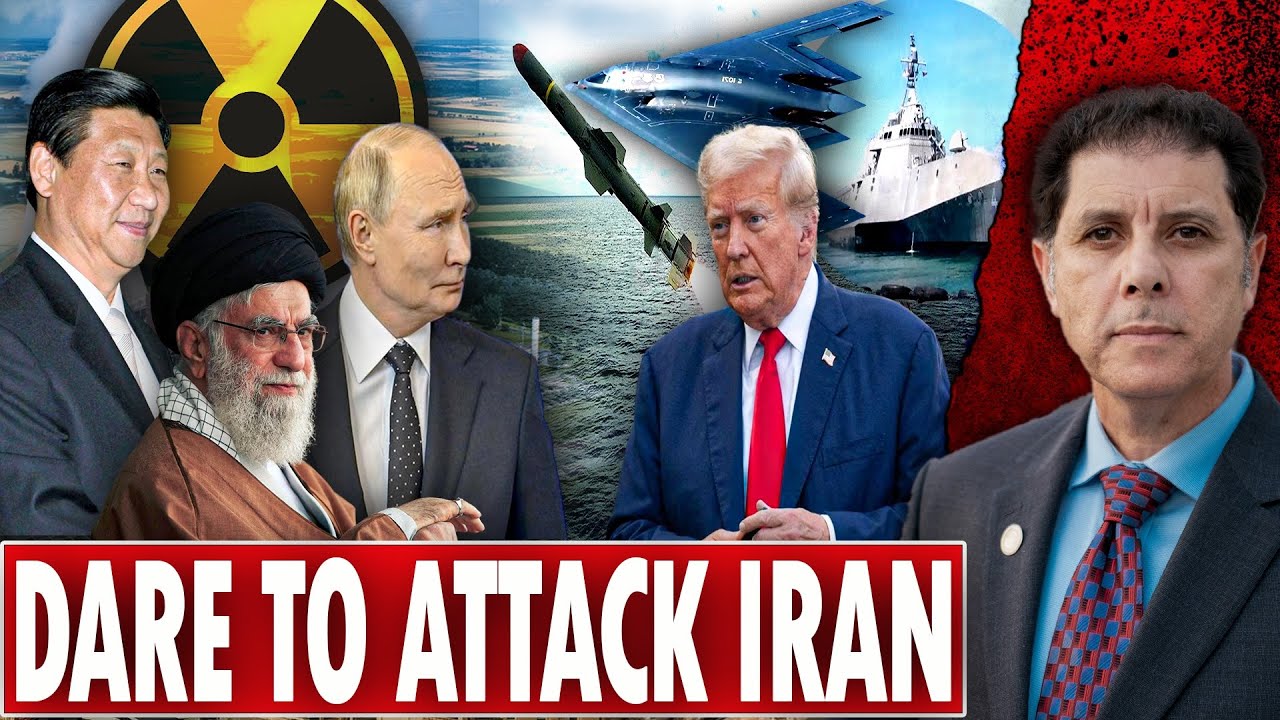
This content was created by David Oualaalou. This content was uploaded by David Oualaalou. This is a YouTube video titled "Russia, China & Iran Secretly Plan Iran's Nuclear Future | Geopolitical Trends" (published April 9, 2025). Based on the title and metadata, it appears to be a geopolitical analysis/presentation about Russia, China, and Iran coordinating or influencing Iran's nuclear trajectory. No transcript or speaker information is provided in the excerpt, so participants or hosts are not specified.
Chapters
Hello everybody and welcome to Geopolitical Trends, where truth matters. Excited to be with you as always. Let me first of all just run through some sound tests here to make sure you guys can hear me. Please give me a thumbs up. I want to make sure because I just got a sign that sound is not on, so I would greatly appreciate it. So anyway, Very, very excited to be with you. I have an interesting topic for you, and this one has to do with the meeting that took place yesterday between— Carlos, thank you so much, Carlos, appreciate it— between Russia, China, and Iran regarding the Iran nuclear deal. Very, very interesting timing. I'm gonna be providing you my own analysis about Why now? Okay, because the timing is very, very important. And what's in it? What's in all this? Is this really about just the nuclear deal, or is it something else? So this is what I'm going to be providing you. But first, let me say hi quickly to our wonderful community. Alis, good to see you. Ramzi Abdurrahman, good to see you. Uh, Rafael, as always, good to see you here. Atin Wu, good to see you. AF Gordon, Marion, good to see you. Salam to you as well. Uh, who else is here? A, hello to you. Nice, uh, interesting screen name here. So Carlos, good to see you and thank you for confirming, uh, the sound. Taiwan Steel, as always. Arlene Chambers, good to see you. See you, good to see you here. So, all right guys, let's get into our conversation here. And as I said, uh, There is a lot, a lot of interesting dynamics to all this. So as I said, uh, uh, the question that we're gonna now asking ourselves is, is the US confused? Because apparently the US didn't see this coming as Russia, China, and Iran discuss now the Iran, the, uh, Tehran's nuclear program. So, so before I move forward, please make sure to subscribe to the channel if this is your first time here. I'm gonna put the link for you in the chat box. We'll greatly appreciate it so you can share the channel with others. So as you all know, guys, the analysis that I share with you here, it's unique for this channel here. So I'm very grateful for your kind support. So, so let's do some headlines. I only have two key things to share with you regarding the headlines today. So, so the first one, it has to do with the let me get to it here— about China. Once again, also the timing of this meeting in Moscow regarding what the Chinese just announced. Now, I'm aware of this because I'm— I've been aware of it since 2021, except that the Chinese at that time didn't come forward and confirmed it. Whether, uh, were they just testing that time at at that time. Maybe, maybe not. But this one, here's a picture. This is a KD-21 missile. This is an interesting dynamics of this particular type of weapon. So the KD-21, uh, the missile here, this is air-launched ballistic missile. It is also known within China as YJ-21. So if you ever see KD-21, is the same as YJ-21. So, so the missile has been seen in drills simulating way back, some sort of, in the South China Sea, and underscoring some sort of a potential role in maritime deterrence. So, and of course, as I mentioned, it was years into the speculations here in Washington Regarding what is this is all about, well, yesterday it was confirmed officially, not in China, haha, it was confirmed in Italy, believe it or not. So it was a writer by the name Paolo Mori who wrote the reports which was published by the Italian website InsideOver that China has officially now confirmed the missile entry into service. Once again, guys, think about the timing of it. This is the, the, uh, the missile KD-21 carried on the H, uh, HCK, uh, airplane here. So, so once again, just the timing of it. And all this doesn't happen— like I always say, it doesn't happen in a vacuum. So, uh, second one has to do with, uh, none other than, uh, Turkey and, uh, uh, Israel. I don't have a picture here, sorry guys, don't have a picture. Uh, there is now a conversation as to looking at the statements, uh, coming out of Israel. So, and the media, of course, they are now talking about, uh, the possibility of a confrontation between Israel and Turkey. So, well, there is a concern regarding this one here because Israel sort of views, uh, views the potential defense cooperation between Syria and, and, uh, and, uh, Turkey as a direct threat to its security. This is why the, the Israelis are very, very, very concerned about this one here, because here's the thing. Once the airbase, the T4, is established, it's over for Israel. It won't be able to maneuver as it used to. So I don't know. I'm gonna keep an eye open on this. Why? Because next Saturday— here's the thing, guys— next Saturday, Turkey is gonna hold the summit between Russia and the US. Makes you just wonder. So, but again, Turkey will have to— Turkey is always playing both sides to ensure— that's how it is. So anyway, let's get into our topic. And as I mentioned, is the US confused about the recent summit between Russia, China, and Iran to discuss the nuclear program? Well, there is a lot, a lot of moving parts into all this. Of course, the statements by, by Arakchi the Foreign Affairs Minister of Iran, the statements by the President, Bijishkin, and the Supreme Leader, Ali Khamenei. All this has to do with the dynamics that are taking place. Well, as I mentioned, yesterday was the meeting in Moscow between Russia, Iran, and China. And of course, this summit or the meetings, if I may use the term, was held at the expert level. Those are the deputy foreign ministers. So, and I'm not going to get into the technical aspects of this. Suffice it to say that I want to focus as to why that is. So, and of course, you all know the whole reason for why the, the, the Kremlin took this initiative is because Kremlin has mentioned that it is ready to play a mediator role regarding calming the tensions between the United States and Iran. Now, there are conversations inside, inside Moscow that, uh, Moscow is not ruling out the potential attack of the United States of Iran. Again, they just thinking about it. The possibility is there. Suffice it to say what the US is doing behind the scenes Regarding he wanted the talks, which by the way, Donald Trump himself shocked and surprised Netanyahu who was in Washington. He was summoned to Washington. Donald Trump shocked him by saying, you know what, we may enter into negotiations with Iran and sort of we will see how things go. This is where that challenge is going to be. Like I said, Russia has offered to mediate between, uh, the US and Iran, uh, regarding this, especially after what Mr. Trump, uh, uh, mentioned regarding the military actions against Iran. And of course, that's going to raise more tensions around the region. So suffice it to say that the Houthis have not back— back down from targeting US assets in the region. As a matter of fact, on the Red Sea— I'm sorry, not the region, on the Red Sea. Uh, suffice it to say that the US made a decision to move the USS Harry Truman aircraft carrier up north, further up. So, and this is where you're gonna be thinking in terms of what this summit is all about. So Now, most of the analysis coming out of Moscow regarding this suggests that the conversation, the conversation was about this, discussing sort of the various aspects related to the Iran nuclear issue. Now, there are not only that, there's also the JCPOA, and there is also the UN Security Council Resolution 2231, which I will detail a little bit about this one. Herson. As you all know, to those who do not know, that the JCPOA, the Joint Comprehensive Plan of Action, was signed in 2015 between Iran and the 5 permanent members of the UN Security Council, in addition to Germany. Germany is not a permanent member of the UN Security Council, but it was representing Europe in that case, uh, so And of course, we all know the history of what Mr. Trump did during his first term by withdrawing the US unilaterally from the JCPOA in 2018. So now here is something that has not been disclosed openly, which by the way, it was Russia, the UK, Germany, and China. So, and as a matter of fact, even the US to a degree But this back in 2021. In 2021, there have been some talks regarding the reinstatement of the deal, JCPOA. But of course, the incompetent Biden couldn't do it because Biden didn't know day from night anyway. So, and this is where those talks in 2021 was for one objective and one objective only, and is that to salvage the JCPOA. And the talks— I was aware of this because I was following that one— they took place in Vienna in 2021. And it was again the intentions of it to examine Washington's seriousness of rejoining the deal. Of course, you can't trust the Americans, American government, that is, not the people, because of, uh, US had no intentions whatsoever And before you know it, here we are right now. And this is why now you're looking at what Iran is saying or it needs to do. So Iran has stayed by its statements regarding that its nuclear program is for peaceful purposes. Yes, you can use nuclear technology. You know, a lot of countries, you know, France itself has nuclear power plants that is using for electricity. You know, they call the City of Light. Oh, where is that light coming from? That's from a nuclear power plant used for civilian, uh, domain. And of course, where was that uranium coming from? It was coming from Niger. No more, no more. So, and this is why, uh, uh, Iran still stand by its, uh, uh, uh, possession, uh, first of all, uh, rejecting Mr. Trump's demand for direct talks. Despite what you hear, still the Iranians are saying, no, we're so far rejecting this till we see some concrete evidence. And rightly so, because what makes you trust Donald Trump or any American president for that matter? So, and this is what the Iranians are still holding on. Now, they are not denying that they might be considering indirect talks through a third party, and that will be feasible per se. So, so let me first talk to you about Resolution 2231, which was adopted by the UN Security Council in 2015. And here is what it says, quote— and I'm gonna put a link for you guys regarding this one— the Security Council further affirmed that full implementation of JCPOA, the Joint Comprehensive Plan of Action, would contribute, would contribute to building confidence in the exclusively peaceful nature of Iran's nuclear program and emphasized that the JCPOA is conducive to promoting and facilitating the development of normal economic and trade contacts and cooperation with Iran. Very, very interesting dynamics. You need to understand this reality. Why? Because it will put it in perspective for you why we, the Americans, wanted to have direct talks with the Iranians. This will surprise you, and I'm going to share this with you. But there is one thing you also need to know. The role of the IAEA, the International Atomic Energy Agency, which by the way is as corrupted as it gets. You all remember what happened in, uh, actually I'm gonna share a link with you guys, uh, you can, uh, read the article later on if you, if, if you feel like it. So let me put it in the chat box for you. You know, I never trusted the IAEA, especially when Grossi took over. You know, he's from Argentina, a corrupted individual. Why is this important for you to understand? Is because there were demonstrations in, uh, 2023 in South Korea. You all remember why? Is because there were some bribes for the IAEA by the Japanese government regarding the dumping of of the nuclear waste in the Pacific. You know, this is what— and the argument, it was an article written by Kim Han-ju. It stated, and I quote, the government criticized weekend rallies where some protesters alleged that the International Atomic Energy Agency, IAEA, received bribes worth €1 million from Japan. This is what it has to do with. And this is what makes you wonder, why should we trust the IAEA? So, and this is why when you think about this resolution of the 2231, uh, by the UN Security Council, it's because this resolution which we— the Security Council agreed upon, there was a vote on it. And that one provides the termination— yeah, the termination of the provisions of previous Security Council resolution on the Iranian nuclear issue and establishes specific restrictions that apply to all states without exception. And member states are obligated under Article 25 of the Charter of the United Nations to accept and carry out the Security Council's decision. Why am I sharing this? I'm sharing it to tell you how much we unilaterally violate— didn't respect the law, didn't respect the decision of the member of the Security Council, didn't respect the vote of the UN regarding this particular issue. And this is where the, uh, Iran has a hard time accepting direct talks with the Americans. This is because you can't trust the Americans. So, and this is why you think about this meeting that took place yesterday in Moscow between Iran, Russia, and China regarding this dossier. In my opinion, it goes beyond just this. Of course, we're not going to go into the military aspect because if you are to do this, at least you would have had the presence of some military top brass on all sides, from the Chinese, the Russians, and the Iranians. They weren't. They were just the, the deputy foreign ministers of each country. But this does not mean, given the tensions that's going on, it does not mean that the three countries did not put in place some sort of a blueprint of some strategy or plan. I mean, what do you guys think? Do you think this meeting yesterday in Moscow was only about nuclear, uh, uh, uh, file, or does it have to do with something else? Yeah, yeah, yes or no in the chat box, if you will be kind and just answer that one. So while I am continuing on this one, let me see, let me see your answer here, guys, because I like you to be part of this conversation here. Uh, Multitam Tam, you said don't know. I, I see your point, I see your point. Carleon, you say no. Uh, uh, Ramzi Abdurrahman, you say something else. Taiwan still, you say no. Yeah, uh, Seymour Pereda, you say yes. Uh, Believer, you say yes. So I, I can see your point, guys. I mean, yes, it can go both sides. But again, for me, as one who's been following this development for years and years and years, there is always something regarding this. Even if it was just mentioned that we might want to consider a meeting for representative of the Ministries of Defense, then we'll see. And again, I am saying this based on what I'm seeing taking place on the ground. In West Asia or Middle East, that is. That's what prompts me to say what I'm saying. So, uh, and this is where you have the Iranian Foreign Minister Abbas Arakchi. Let me get a picture of him now that I pronounce his name correctly. Arakchi. And thanks to Matt Bakke, he's the one who helped me out with this. Arakchi said on Sunday that his country rejects once again rejects the proposal of engaging with Washington directly. And of course, this, they have their own reasons because they can't trust the Americans. And even if they agree, who's to say that the Americans will turn, you know? And this is why he, meaning Arashchi, pointed out that Tehran's refusal to use its nuclear program for non-peace non-peaceful purposes is not just the government possession, but rather a possession based on a religious fatwa or decree from the Iranian Supreme Leader Ali Khamenei. But again, this begs the big question, guys. It begs the big question. If Iran declares that we do have the bomb, do you think the Americans will ever be making this fuss or threatening? I don't think so. Look at the case again. I always refer to the case of— what is the other— North Korea. Did we ever threaten North Korea? We dare to do that? There is no way. And that's the same argument I'm making. There are those who say maybe Iran is making a mistake. Forget about negotiating with the West. Go ahead with declaration of the bombing itself. Religious duty or not, that's beside the point. So, and this is why it's one of those really, uh, uh, Iran is caught between a rock and a hard place, even though you and I know what's need to be done. Otherwise, the threats from the Americans will not stop. So, because here is the thing, Mike, my word on this: if Iran would have declared that it has in its possession nuclear weapon, we will reconsider our threat. Israel will reconsider its threat or attack in Iran. They won't. There is no way. And this is why even, uh, Präsident, the president of Iran, he is right here with the picture of with the Ali Khamenei. Raisi is on the right. Even for him, he emphasized that, uh, sort of, uh, Iran's relations with the region, regional countries, because remember, there were those who were opposing the JCPOA, including Saudi Arabia, including of course Israel and some other Arab countries. They didn't want to come forward. I did the research. I remember You know, especially in the Gulf states. So, however, now you look at the relationship are improving, you know, in contrast to what was going on during the dialogue with Washington. So, and this is where you start to think in terms of the US imposing this daily and maximum pressure and daily threats. We're gonna bomb you if you don't negotiate. And so forth. That, that just doesn't work that way. I do remember, uh, when I was, uh, let me see if I could— oh, I deleted one slides. Yeah, right here I have some slides I'm gonna share with you guys. Uh, hold on, let me, let me— there's this one here. I remember when I, uh, did a presentation one time about Iran, so Uh, here, let me share it with you so this way you guys can see. It is when I did a presentation about Iran back then, and I argued for the idea that you do not want to threaten or target Iran. Why? Because of its missile ranges that can reach far beyond. And I think Iran at that time didn't want to disclose openly what they have. Remember what they just did few weeks ago when they mentioned about targeting Diego Garcia if attacked. So, and this is again why you need to understand the importance of when it comes to— this is Karguel, an island in southern part. That's part of where the flow of oil comes in from that part. So this is where you're gonna have to think in terms of the idea. I argued this during those presentations, and of course the audience were like, uh, we don't understand this. Why do you think Iran will not be— why the US, you think, will not attack, or Israel will not attack Iran? I said they can't because the response— there's— I put the link for you guys for my speaking engagement there, you can check it out. I said because Iran has the capability of targeting not only US bases in the region, but also targeting Israel itself. And I remember, I think one time I wrote an article way back and I got a word from the government asking me to remove something. And that something was— it wasn't classified, they just didn't want it— when I argued that if Iran is attacked, it will shower— I used the term shower— Tel Aviv and some other parts of Israel with its missiles. And they were like, well, Mr. Oualaalou, we don't want you, uh, we don't want you, uh, uh, we don't want you to disclose this one. So, and this is, uh, where I start to think in terms of, uh, having the audience is not with them. Now, who is this person here? You know, this is not a, an interesting language for you to be using. So, okay, it is what we're going to do, because if you can't contribute any, uh, information to the knowledge of the community, then you don't need to be here. So, so thank you. Now we have to think about one aspect within, uh, in, in, in connection to the meeting that took place, uh, in, in Moscow, and this one has to do with the military dimensions of Iran. And I'm going to share a picture with you. This is Major General Mohammad Baqiri. He is the head of the— he's the— I'm sorry, the Iranian Chief of Staff. He's a Major General Mohammad Baqiri. So now what is important about this one? And that's picture we give credit to AFP. That's the— and this is the Chief of Staff, General Major General Muhammad Baqiri visiting an underground drone base in an unknown location in Iran. Here is what's important. What's important is just Iran this morning just disclosed that they're gonna expand their drone bases. Read between the lines, you know, that's usually what it means. So, but what's important about this one here, the importance about this is that The General Bekiri explained that the Supreme Leader Ali Khamenei— picture here— Ali Khamenei stressed that Tehran will not, and I repeat, will not negotiate directly with the United States, but indirect negotiations are a possibility. And this is what He wrote, and I quote, "We are not advocates, we are not advocating for war and do not intend to start one, but we will respond to threats with all our might," end of quote. This is what Bakheri said. He added also that, and I quote, "We emphasize in response to U.S. President Trump's message that we want stability in the region." and do not seek to possess nuclear weapon, end of quote. And once again, I do find it that Iranians, if they go on this path, the US will just keep— because here is one thing, if you push, uh, if you push hard against the Americans, they will back down. Look at what— look what happened in Iraq, look what happened in Afghanistan, look what's going on right now against Ansarullah or the Houthis. So they're not backing down because if hypothetically the Houthis will have stopped, then the Americans will have extended even more. So, and here is what I argued regarding this point when I wrote my Iran book. Uh, here is what I argued, uh, back then. I'm sharing this excerpt with you. Against this backdrop, I argue that the United States policy towards the region will have to adapt to these realities. Further, this policy will be tested like never before, especially when it comes to what kind of cooperation the United States undertakes with major powers in this new geopolitical environment. Will confrontation over energy resources in the Middle East trigger a military conflict? Alternatively, will the United States and other major powers, mainly China and Russia follow a policy of appeasement to preserve peace and stability. Whatever the case may be, a nuclear Iran provides Russia and China the right platform on which to fortify their presence in the region and further challenge the much-declining American leadership and dominance of the last half century. And that's exactly where we are seeing now. This is why you put together Russia, China, and Iran together. And again, if you add North Korea, you're looking at a military dimensions. But for now, suffice it just to mention those three: Iran, Russia, and China. And this meeting, while it is about nuclear file, something is telling me it is more than that. Of course they want to prepare because next, uh, there will be an upcoming also a meeting between Americans and Iranian delegations through third party soon. That's the one I read and I was informed about. But to what degree, we don't know. Could it be that both Russia and China wanted to convince Iran to move forward? Because here is the hard truth that a lot of people do not know. During the negotiations regarding the JCPOA, who do you think convinced Iran to agree to the deal? Can you type in, in the chat box, please? Who, in your opinion, convinced Iran to agree to the JCPOA? Because Iran didn't do it on its own. I know, I know this for a fact. Uh, China. I'm see China. Afghan Carleon. Russians. Uh, Apple. Someone Russia. Actually both. No, no, no, Turkey was not in, in the picture. Turkey was not in picture. So it was Russia and China that convinced Iran. It's not the US, it's not the EU, it's not, you know, both those countries. Why is this? Because they know, they understood the, uh, they understood the long-term implication of something like this in a good way. So, and this is why you are seeing what you are seeing regarding the cooperation that exists between both countries, Russia, China, and Iran, each one separately. And that is why I was convinced back then, and I'm still convinced yet today, It will be just a matter of time before even both countries might be granted the possibility of the establishment of some sort of a base, uh, near the Iranian borders or within Iran. And so of course you have to understand the history of Iran to understand that it's always been enclosed. It's not that they don't deal with others, it's just that's how part of that society over the centuries But now the dynamics have changed, and I did not rule out, and I will not rule out the possibility of some sort of an agreement regarding the establishment of either naval or air bases inside from both countries, Iran— from both countries, China and Russia. That the possibility is there. So, and once again, to me, the way I look at it, the meeting yesterday in Moscow regarding the Iran nuclear deal because the US demands these direct negotiations with the Iranians regarding its nuclear program or face bombardment. Kind of like, wow. So, and once again, I am convinced that the Iranian— the Russians and the Chinese, along with the Iranians, wanted to have a plan in place, just how to move forward should Iran agree to these talks with the Americans, which they give an idea now, a hint that they are willing for indirect talks, indirect through a country by the name of Oman, which by the way, Oman has been also sanctioned, not sanctioned, I'm sorry, Donald Trump put some tariffs on them as well. So Oman has always played a role, a longstanding channel of communications between the US and Iran. This is nothing new. So the Iranian— and once again, the foreign minister Abbas Arakchi is saying no negotiations under threat, and rightly so. So if Iran is to enter into these talks, it has to enter, you know, it's on its own free will. So And that's why I don't quite understand why we are advocating for this sort of threat language to bully or threaten or scare the Iranians. Not gonna get scared. That era is gone. I mean, look at now what the Houthis are doing, and I will get into that. So now let me mention something to you as to what you need to understand regarding how some, uh, Western countries— of course, the Europeans are pathetic anyway, they can't extend anyway, even though the European countries were the first. Here is the thing, were the first to enter into agreements with Iran economically as soon as the JCPOA agreement was reached. So all of a sudden, when the US pulled out, they couldn't extend Yeah, shows you just, uh, uh, uh, how pathetic Europeans are. So, but anyway, Western countries, here is what they are saying to justify the possession. European countries are saying— or Western countries, I'm sorry— Western countries are saying there is no need to enrich uranium to such high level where, where Iran is doing it for any civilian program. And no other country has ever done so without producing nuclear bombs. That's their argument. Well, if we are to think about this, and again, the reason I'm saying this, because I want to bring it, take you back to 20, if I'm not mistaken, 2022. Yeah, somewhere around that, '22 or '23, somewhere around that time when at that time, uh, National Security Advisor, uh, uh, Sullivan at the time, he visited Saudi Arabia. Why? Is because the Saudis were asking the Americans for a civil nuclear cooperation agreements. Another word, they wants us to give them the technology. And I remember writing an article even before that. I said, it will be a grave mistake if you trust the Saudis with the nuclear technology. So, and again, I'll let you reach your own conclusion. All I am doing here is sharing with you the facts as I saw them and as I see them today. And this is why, if you go way back to 2015, the two main countries they were opposing the JCPOA agreement were Saudi Arabia and Israel. So all of a sudden, the Saudis wants to ask for the nuclear technology. I said, no, you don't want to do that. You don't want to do that. So, and to go back to my point about why you have the Iranians not backing down from that position, because they're going to take stand and they are going to defend their country and they have the means to do it. So this is exactly when sometimes you have to push against what the Americans are asking for. So, and I'll give you the example of the Houthis. As I mentioned, I will address this one. If we are to think right now about the cost that the United States incurred since March 15th, when the decision was made to launch attacks against the Ansarullah Houthis, how much did we spend so far? Does anybody know? Can you guess? Can you guys guess how much we spent so far? Dollar figure, just give me a number, just give me a number, just guess. No, we're just, we're just exchanging ideas here. Yeah, to those who say, well, you're treating your community like, you know, that's pathetic, that is pathetic. But anyway, uh, then Oh, where is Van? Van, Van, uh, Van. Oh, I'm sorry, not this one. Uh, no, no, I gotta go back to the first one I saw. Van, Van, right there. Van, you got it. It was about a billion dollar, a billion dollar from March 15th to now. You know, this is how much we have spent despite, despite saying, well, we targeted this and Now, now the Pentagon is saying we targeted about 300 targets. What have you achieved? You know, you bomb in a water reservoir, you know, that's not a military target. You bomb in residential areas, that's not a military target. So, and because here is the thing, there will be now a request for additional funding from Congress to continue the strikes. Yeah, and the truth is despite the strikes, U.S. officials acknowledged that the Houthi, or Ansarullah that is, is still able to entrench itself and store weapons underground, which means we have achieved nothing except killing some civilians and so forth. And that again takes me back to my point about Where those leaders in the Arab and Muslim world— I know some of you guys made a comment I shouldn't be saying the word Muslims. Why not? Why not? If the— those so-called leaders call themselves Muslim leaders, I'm gonna say it. Now you know which one I'm referring to, and I always make it clear, and I have nothing against any Arab or Muslim countries. All I am doing is stating the facts. As I see them. Tell me now if there is any Arab or Muslim country beside Iran and Yemen that took stand against what's going on, uh, regarding, uh, the, the attacks on the Houthis, or what's going on in Gaza, or what's going on in some other parts of the region. Yes, there were some demonstrations in Pakistan. Yes, there were statements by the Indonesia or Malaysian governments Yes, there are some demonstrations in Morocco and so forth. What does it amount to? So, and that is why when I mention, you know, I understand not all the Arabs and Muslims, you know, to me it's when they declare themselves as Muslims, that's to me hypocrisy of the highest order, you know. And I have my reasons for saying this because When I conducted my own research, when I, you know, I didn't write these books on the top of my head. I spent years and years conducting the research. And here is what I wrote from this first book about this particular context. Take a listen here. Within this context, the religion of Islam has played and continues to play a role in the political, social, and economic setting that has become more salient as the political system in the Muslim world now is torn between secularism and the application of the Islamic teachings in all aspects of governance. It could also explain why there, there continues to be nostalgia for the era of the Islamic Golden Years when Islam played the central role in defining societies and drawing the parameters under which rulers governed? Could this explain why, for example, extremist groups or jihadists, whatever term you want to use, sermonize to the masses, mainly the youth, that if the Muslim world is to regain its status and triumph, over the West, it ought to return to the basic teachings of Islam. I remain, however, very skeptical of the accuracy of such thinking when those in charge in the Arab world, the worst humanity could hope for, are neither true Muslims at heart nor govern justly according to the masses. Some of these Weak-minded, self-serving, opportunistic, and hypocritical Arab leaders played the victim card very well until the Arab Spring erupted in Tunisia on December 2010. While some of these Arab leaders were able to mask the hypocrisy through empty religious rhetoric, their hypocrisy has made the rest of the Muslim world gnash its teeth and gringe in anger for being misled. That's my point. So I became convinced what now Dahuti and Ansarullah have demonstrated, what most of, if not all, the Arab and Muslim leaders were unable to do. I mean, look at just now Egypt, for example. Look at the deals Egypt is making, uh, behind closed doors with Israel. You know, where was Egypt when it said it's standing up for the Palestinians? Where is the Saudis that they want to build like 20 mosques or whatever that is in Burkina Faso instead of helping people in Gaza or use their so-called clout? You know, where is Qatar? Where is Bahrain? Where is Kuwait? Where is Morocco? Where is Tunisia? You know, you got the idea, guys. And again, this is not about just criticism out of thin air. This is based on facts, the reality as we see it. And this is why I, I'm, I'm, I'm, I'm now became convinced that What's going to become of the US involvement in Yemen is similar to what experienced before, be it Vietnam, be it Afghanistan, be it Iraq, be it Somalia, and so forth. So, and this is again makes you— and when you hear statements, statements by Rubio, you know, here is what he's saying, you know, saying that Countries should be grateful. It is what he's saying. Countries should be grateful to the United States for launching strikes against the Houthis. This is what he said in Brussels during this recent meeting of the NATO foreign ministers that just took place. Pathetic. Well, if they should be grateful for what? They couldn't even defeat the Houthis. And, and, and here is where makes you just like pull the hair out of your hair— your head, rather. When he's saying that these strikes will achieve results, what have we seen so far? A billion dollars has been lost out of tax dollars. And this is when you realize it is not about the winning a conflict. And I've said this before, guys, since 1952 when decision was made to engage in conflicts, not to win wars whatsoever. The Korean War, Vietnam, Gulf War, Gulf War II, Afghanistan, now Ukraine, and soon to be South China Sea. So it makes just perfect sense in my opinion. So let me, let me share a clip with you. I'm going to provide you guys the the, uh, I'm going to provide you brief translation, then I'll share with you my own analysis regarding this aspect. But I just need you to hear the beginning of it because it's perfectly accurate. So take a listen, please. Full screen. And let me hit the— there we go. To those who are interested in the following up of the developments between the United States and Iran, and disregarding the declaration of the— or the statements regarding the negotiations between the parties, This demonstrates the lack of trust between the two parties. And this is regarding the conclusion that each party has reached. So to those— meaning he's referring to the supporters of the, of the negotiations, the opponents of the negotiations on both ends, because there are both ends to it, not just in the US It was only an hour later when Donald Trump surprised his guest Benjamin Netanyahu, who was summoned to Washington. Basically, the surprise Donald Trump said in front of Netanyahu is that there will be direct talks with Iran because Israel does not want that. And even the US has added that, oh, we are not negotiating with Iran from a position of weakness. The US wants to make it clear that we are sort of coming to the negotiations from strength, which is not true. And that Iran has, uh, showed its readiness for negotiations because he has realized the consequences. That's a lie. That is lie. I've seen now some videos saying that Iran has capitulated. That is wrong, guys. You are welcome to listen, whatever. Just do not consume the information till you know. Iran agreement with indirect talks with the US is not from a position of weakness. I'm telling you this. And this is why you have to put this recent meeting in Moscow between Russia, China, and Iran within this context. This is why the two countries, Russia and China, wanted to sort of come up with a strategy with Iran regarding how the talks will progress. That is why. So to those who saying, oh, Iran is now weak— no, no, no, no, no, no, no, that's wrong. And, and I'll continue this briefly here. So regarding this, it's what's going to determine now the seriousness on part of the Iranian regarding these negotiations. Okay, where is it? Right here. And this is the key that I wanted you to say. He's saying basically that this will, will sort of, uh, uh, hold on, I forgot this one here. Let me back up a little bit. There we go. And that these negotiations will lead to the outcomes that the United States wants. And perhaps Iran will agree to these terms. Now, the US made its red lines, uh, uh, sort of clear as to what they're going to, uh, say is that they don't want Iran to develop nuclear weapons, enrichment— I'm sorry, enrichment of the uranium— and that any agreement with Iran will not allow it to develop any nuclear weapons, or ballistic missiles. And here is again, on Iran part, that its acceptance and willingness to enter into indirect negotiations is not bowing to the US pressures or because of US military threats. And even Trump himself knows this reality. And then even the foreign minister In— he penned an article in the Washington Post, in an American media outlet, that, uh, And that in this op-ed, the foreign minister mentioned that the lack of trust on part of the Iranians into the Americans, and rightly so. And at the same time, warning of any idiocy or stupidity of the Americans to attack or exert pressure on Iran, and also coming out from the superiority, uh, uh, possession or the military. All right, I'm gonna stop right here, guys, because I have to get in into some other, uh, aspects of the conversation here. And this one, uh, in relation to this, leads us to ask the question, what does the US want? You know, why are we doing this one here? So now there are many analysts, and I had a chance to read some white papers released by some of them. Some I disagree with completely, some I kind of agree partially, and I'm gonna provide both sides of the argument and let you guys decide. So, so when you think about the analyst that, uh, sort of evaluating or assessing this developments, you know. Personally, now, there will be, just FYI, there will be talks next Saturday between Iran and the US. This is through a third party. So some other analysts have also sort of meaning the disagreements regarding this meeting. Will this meeting take place? I don't know at this point. And if I am to agree to this, I will say it's not going to be directly with the key decision makers from Iran part. It's going to be just some representative, representative of the government, and it will be through a third party. So there are others who have expressed, other analysts who have expressed some sort of an optimism about the possibility of two sides overcoming their differences. I happen to disagree on this. I happen to disagree on this. And some of them do also express their skepticism. So when you think about what Mr. Trump announced just the day before and during the reception of Netanyahu, and that was exactly what that clip I played for you, that the US would hold direct talks with Iran. First of all, what makes Trump think that Iranians are agreeing to that to begin with? That's one. And second, the fact that Trump is stating this in front of Netanyahu's face tells you the story right there. Even though no matter what you hear and say, Trump still weak in front of the Israeli lobby. Let me just tell you straightforward, because any American president has no say when it comes down to Israel. That's just fact, and I'm not saying something you guys don't know. And this is where, uh, those negotiations, because of what, uh, uh, president say and reiterated during his visit with Netanyahu, is that, oh, this will provide something positive for Iran, meaning the negotiations. No, otherwise, this is what Mr. Trump said, otherwise Tehran would be in great danger, end of quote. What kind of language is that? So, and that is why the point of why you have to understand the timing of this, of the meeting, the trilateral meeting in Moscow between Russia, China, and Iran. So here is another, uh, uh, uh, piece of information that a lot of people didn't, did not know. And again, I happen to disagree with this researcher from— his name is Emad Absinas. I'm sorry if I mispronounced it. He's the head of the Syndicate of Research Centers in Iran. I happen to disagree with him. He's entitled to his opinion, but I disagree. So, but there is one piece of information that I agree with him on. This one here is that some of the talks, you know, has been conveyed to Iran through Iraq. This is why I said what I said a month and a half ago, if you guys recall, when I said the Iraqi government is so weak because they couldn't ask the Americans to pack and leave. As Sistani, the prime minister of Iraq, is as weak as wet noodle, couldn't take stand. And this is why the Americans have made many demands that were conveyed to Iran via Iraq. So, but here is what I disagree with Mr. Emad, because he disclosed, and I quote, that they did not demand the dismantling of the nuclear program, end of quote, meaning the US did not ask Iran to do that. That is wrong. We have asked the Iranians to cut the enrichment of Ukrainian. That's part of why we, we impose sanctions. So I happen to disagree with the individual regarding this. And this is why, uh, and Iran, like what the individual saying, that they agreed to its use would be a peaceful medical and research purposes under the supervision of the IAEA. Well, for, for a moment, let's, let's put things in perspective. Iran has limited access of the IAEA. Why? Because IAEA is playing with the reports, wording it in a way that, oh, we didn't have enough access to the Iranian nuclear facilities, you know. And second thing, in my opinion, it will be a mistake of Iran if they disclose all their nuclear facilities because you can't trust the IAEA. We are the one that select who's going to be head of the IAEA. And remember, I shared the link with you about IAEA getting into a bribe in Japan, so to allow Japan to dump the nuclear waste. You know, again, I am just providing facts here. Let you guys decide. So now here is one of the things I need you to understand. Exactly why we are pushing for these direct talks with Iran, because we want to reach an agreement. And reaching an agreement means what? The lifting of sanctions, which means what? Allowing American corporations access to the Iranian market. Because if there is one thing you need to know about the size of the Iranian market, it's not small in comparison to the rest, besides Turkey to a degree. Iran with a population nearing 96 to 98 million dollars— million dollars— 96 million people, almost 100. And please, if anybody in the community knows the exact number, I will greatly appreciate if you can share it with the community. So a large market. Why do you think the Russians and the Chinese went ahead and supported Iran back then? You know, just think about it this way. It's because also Mr. Trump wants to have the lion's share of the Iranian economy. Because here is the hard truth, and the hard truth is that if an agreement reached, which I don't see, and the sanctions are lifted, which I don't see, they might be lifted temporarily, but again, you can't trust the Americans. Tehran will allow American companies to invest in Iran, which will be a mistake, you know. And this is where I agree with that researcher that's saying that, uh, oh, uh, the US will not talk to Iran about its nuclear program and so forth. No, no, no, no, no, no. Because here is the thing, which is, which is I agree with him on this particular point, that 90% of economic contacts after the agreement was reached was made to the Europeans, not the Americans. I was aware even of Norway. Norway entered into some contract inside Iran. Why the heck will Norway will end up coming all the way to Iran? It's a big market. So, and this is why Mr. Trump is aiming at this. The lifting of sanctions will allow for this. But I just don't see— I just— and again, if I'm wrong, I'm wrong. I just do not see how the Iranians will allow any negotiations regarding the two key aspects. One of them is their missile technology, which is, uh, bread and butter for their defenses. I mean, as I mentioned to you this morning, they announced The expansion of drone bases. And second is the civilian use of nuclear technology, which by the way, the Saudis were asking us to do the same. Jordanians were considering hiring a company from South Korea, Turkey, Egypt. All of them want to cut a deal with, with some Asian companies to build nuclear power plants. So what makes the case different in Iran? And this is why, again, I am thinking, uh, I wanted to sort of provide the counter-argument to what Mr. Ahmad— his name is Ahmad, I'm assuming. Uh, yes, his name is Ahmad. What are you saying? And, and I happen to disagree with him. I'm not saying 100%, but majority of certain statements, I just, well, uh will have to disagree with this one. Because the possibility of not ruling out any possibility of an agreement between Iran and Washington, you know, for us, the American administration changes every 4 years. Who's to say the next president will reimpose the sanctions again? Well, you can't live like this back and forth. It's like in your own household. If you don't have a plan in place, you know, you can't be living from day in and day out. This just doesn't work. The one thing that is changing is that the geopolitical dynamics in the region and around the world, and we are now seeing where that is headed. So, so this is why the disagreement between Iran and the United States or even some other Arab countries, no, Iran, I don't see them waving away from their missile technology no matter what the cost is. And second, the second argument I make, if Iran survived over 38 years of US sanctions since 1979, what makes us think that they're gonna bow to the US pressure today? You know, I just don't, I just don't see it. I just don't see it. This is what I need you to understand, why the demands of the Americans are specifically for this particular aspects of it. So it was another individual from the State Department, he's a former State Department for Middle Eastern Affairs, his name is Thomas Warwick. You know, I, I could see his arguments which is basically what we want is that the Trump administration wants to end Iran's nuclear program, which is not gonna happen. But again, it's not the U.S., it's the Israelis that pressuring the U.S. to do so. And of course, we wanted also to end its ballistic missile ambitions, which I don't see that. And the third element, to see the end of Iran's proxy forces in the region. Which I don't see either. So all three elements, they won't happen. Now becomes the question, should, uh, do you think, in your opinion, Iran will make concessions? Maybe, maybe not, but not on these red lines. Those are red lines. Because if you think of the economy, to Iran, to a degree, it might be irrelevant. In comparison to the safety, because that's what it is. Like I said again, they're Israel to attack, uh, uh, Iran. They're the US to attack Iran now. That's why they want to head and disclose about their ability with the, uh, the, uh— I think I saved the picture for you guys just to make sure I have it. Uh, bear with— yeah, right here, Khaibar. Yeah, yeah, Khorramshahr, Khorramshahr-4 ballistic missile, 4,000 kilometers range within targets of Diego Garcia. And again, this is where I see the ballistic missile is out of question. I don't see Iran making concessions on that. There is no way. So, and if Trump sort of not ruling out the possibility of resorting to military, this is again where Russia and China comes in. Once again, put in perspective the announcements of the Chinese developments of their specific— and not development, but the entrance into service of this particular missile, the Kh-21, which, by the way, hypersonic. So put it in perspective also of what, what the individual from the, uh, National Interest, which is a magazine here in Washington, uh, wrote an article. And I disclosed this to you guys, uh, 2 days ago when he wrote an article about Iran's capability of sinking an aircraft carrier. All this should give you a pause into understanding where that aspect is. So, so, and becomes the question whether, like this particular former State Department guy is saying that, well, we will question whether Iran would comply with US demand and abandon its nuclear program and uranium enrichment capacity. I don't think so. I don't think so. I don't think so. Iran's gonna move forward, and now that it has the backing of Russia and China, even though it's quiet— Russia and China are not coming forward and saying, which is usually doesn't happen that way. They're not going to come forward and say, we are here to place our missiles in support of Iran. Doesn't work that But what works is look at where the US now, its dealings with Houthis or Ansarullah, couldn't defeat them. How do you think the Houthis are able to withstand all the US mighty military power and so forth? And yet we couldn't defeat them or even lift the blockade on the Red Sea. And yet the Houthis are able to down the drones and so forth. So all this should give you a pause into thinking what the capabilities for what Iran has. This is the Qadr 380, the anti-ship cruise missile. You know, that puts this as a target. And we don't know what the Russians might end up providing the Iranians or the Houthis for that matter, if they are not already has. So remember, Iran has the S-400 missile systems, the 300. I think they got the 400. Yeah, I think they got— it's Turkey that has the 400. And by the way, uh, when I say Turkey, Turkey has its own. I know one of you guys mentioned that I was wrong about this. No, I was not wrong. It's just I mentioned that the S-400 missile systems the one that Turkey purchased from Russia. Turkey has its own defense production. I'm aware of it. I didn't want to disclose all that. So that's my point. So when the U.S. is moving all its B-2 bombers to Diego Garcia, all that, that is the reason why Iranians went ahead and announced what they announced. That's usually the subtle message. That's going on. Anyway, guys, that's all I have to share with you regarding this one here. Suffice it to say that I feel comfortable saying that this meeting that took place in, in Moscow, it's sort of drawing some sort of a plan for one, the negotiations between the US and Iran indirectly, should it come to that, and second one is to start considering what if the military scenario. That is the reason, in my opinion. So, all right guys, let me say thank you to some of you once again. Uh, truly appreciate your support for the channel. Uh, this is for, uh, my upcoming Asia trip. Uh, I did say next week I'm going to give you an update regarding the funding for this one here. This is if you want to support the channel. And by the way, to those who might be interested in getting a copy of my book, here is the link. Here, go to Buy Me a Coffee and go to Extras. That's where I listed the books under. So, so if you want to support the channel, I'd be happy if, if circumstances permit to meet you personally one day, I would be happy to autograph a copy for you. So anyway, let me, let me say a quick thank you here for, uh, uh, Coach Ahoy, an avid supporter that's been with me for since the beginning. Thank you so much for your continued support. Uh, another one is Rafael. As always, I'm very, very grateful, uh, to you for your support. My take is a bit different. China is taking charge of the situation because is not too pleased with this doormat approach of Putin. You got a point there. China also has the financial aspect to be dealing with the Americans. That's why they want to head and push back with the 34% tariffs on Americans. I don't think so. We, uh, trying to arm twist the, the Chinese to the negotiating table is not going to work that way. No. What incentive would the Chinese have? They won't. So, but I see your point on this one, Rafael, and thank you so much once again for your continued support. I'm very, very grateful. All right, guys, I hope you enjoyed this, and I look forward to seeing you next time. As always, remember, geopolitics impact your daily life in more ways than one. Till next time, bye-bye.
More from David


Beyond the Single Actor: Why the Gulf Isn't Choosing Between the US and China


Iran, Iraq's Militias, and the Houthis Are Coordinating! This Changes Everything




Who Controls the Next Decade's Resources? Latin America and Africa's Geopolitical Crossroads

The Chokepoint Trap: How Washington's Stupidity Triggered a Cascade That Now Controls the World

Trump Spooked as IRGC Unveiled dual-use SLV, Deployed Ghadir Mini-Subs & Hinted at Tactical Nukes!
