Russia's GENERAL Assassinated| Who's Behind the Deadly Scooter Bomb?
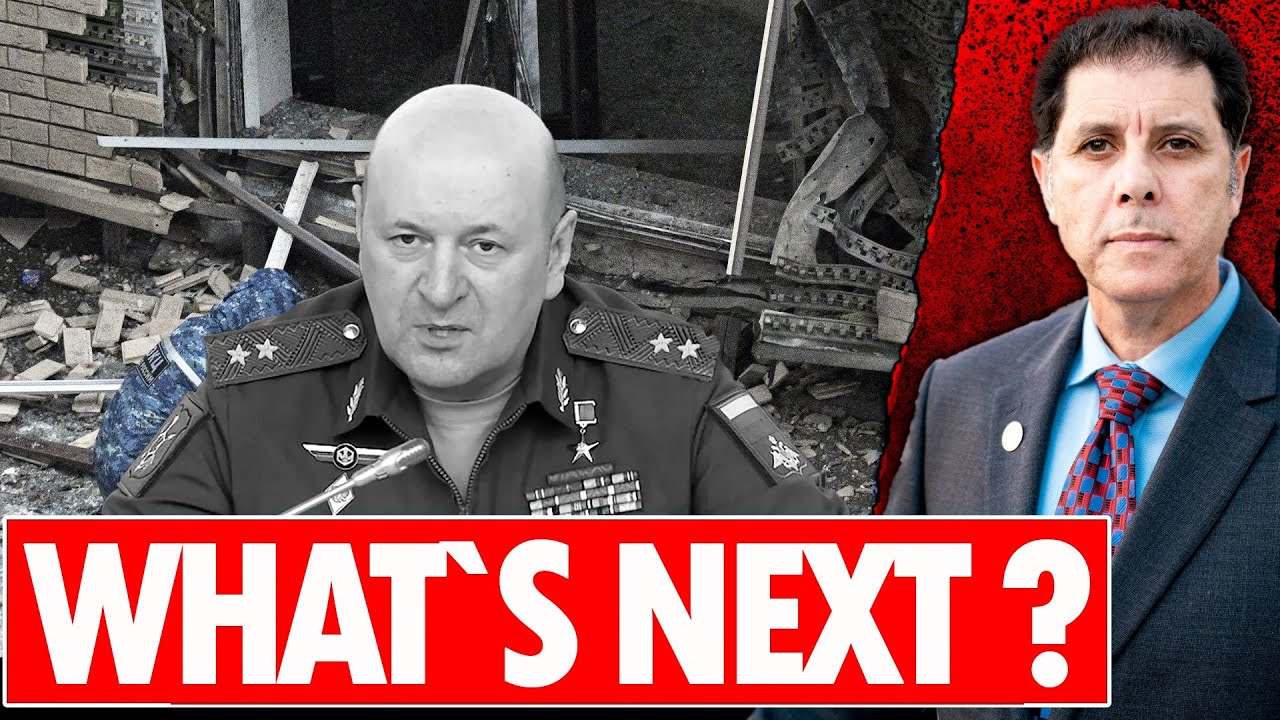
In a live Geopolitical Trends livestream, the host (Speaker A) examines the recent assassination of Russia’s Lieutenant General Igor Kirilov, head of the country's radiation, biological, and chemical defense, who was killed by a scooter‑borne bomb in Moscow. The discussion raises critical questions about how the attackers learned the general’s whereabouts, scrutinizes the arrest of a 29‑year‑old Uzbek national and the Ukrainian security services’ alleged involvement, and evaluates the logistical feasibility of smuggling explosives and remote‑detonation technology into Russia. The host debates possible foreign intelligence actors, the vulnerability of Russian security, and the strategic calculus facing President Putin, including domestic pressure, timing with the U.S. presidential transition, and potential retaliation against Ukraine. Broader implications are explored, linking the incident to European political instability, U.S. and NATO dynamics, China’s posture toward Taiwan, and historical parallels from the Khrushchev and Brezhnev eras. Throughout, the host engages with chat participants, acknowledges technical issues, and concludes with channel housekeeping and future guest plans.
Chapters
All right, hello everybody and welcome to Geopolitical Trends, where truth matters. Excited to be with you as always. Uh, I know we're supposed to have Larry Johnson here. I just got a message, his internet crashed. Very interesting timing because I had a hard time logging in as well. So In any event, I am going to move forward with the, uh, uh, topic today. I'll share my own, uh, information that I collected over the last 24 hours, and I will reschedule, uh, that with Larry for another day. So apologies to the community, and I know Larry was kind enough yesterday when I emailed him, responded immediately, and he said, I'll be happy to do it. All of a sudden his internet crashed. So just, just that's how it is sometimes. So anyway, let me say hi to the community first, then we'll move on with our, uh, uh, uh, conversation here. Willie Harmon, as always. Uh, General Meow Meow, good to see you. Truth Seeker. Matt Becky, Muslim Revert, as always. Uh, Joe Rowe, good to see you. Oh, that's kind of you, Joe Rowe. Dr. Rowe and Larry Johnson, the do we need it, you know. Do you guys know that Larry Johnson also has a PhD? Yeah, he doesn't say much about it. So, uh, Bobby, good to see you. Sue, good to see you as well. Cam35, haven't seen you for a while, so good to see you. Kara Kulak, as always. And Zenita, Gina from Petroska, good to see You, and hi to you as well. So, all right, so I'm gonna just get into this to talk to you about what I— my own finding, uh, some research that I conducted for the last 24 hours. I'm gonna keep this short this time around here, and I will try to reschedule it with Larry for another day. So now the first question, of course, my topic today is going to be about the assassination of Lieutenant General— I have his picture here Let me, uh, Lieutenant General Igor Kirilov. Here's his picture here, right here. So, so we all know it happens on Tuesday and Wednesday. Uh, it was— it happened via, uh, none other than a scooter. Yeah, so it was one of those dirty bombs, uh, that was put in a scooter and right in the apartment or the building where he was. And, and that to me raises serious questions, you know. Here is the first question I will tell you is, who was aware of the whereabouts of the general? You know, as a former military myself, when I used to work around those kind of circles, the movements of a general are usually classified, simple as that. So how the heck did they know he was going to be in that location? This is no different than what happened, for example, with the later, uh, the late, uh, uh, Hezbollah Secretary Hassan Nasrallah. How did he know? It was— it might be a coincidence, but for a Russian general, uh, especially for, uh, this guy, Lieutenant General— not this guy, Lieutenant General, uh, Kirikov, because he was the head of the chemical, biological, and nuclear forces in Russia. So a very, very sensitive, uh, possession. And that's where the question is, uh, you know, how did they know about his location? So that's, to me, just doesn't, doesn't hold up. Of course, uh, and as I said, he was the head of the radiation, biological, and chemical defense forces. So, and this residential, uh, block where, uh, the device was hidden in a scooter makes you just wonder, was there coordination between foreign elements? Okay, uh, second thing is, even though Ukraine, uh, their service, the equivalent, their secret service, or Uh, yeah, Secret Service, that's called the SBU. They claimed unofficially that they were behind it. I won't buy that. I won't buy it because they won't have the capabilities to be inside. That's why I'm like, okay, we can jump to conclusions that it was the Ukrainians who did it. No, no. Even though the Russians just arrested a Uzbek national. Yeah, he was just arrested this morning, as a matter of fact. And I just find that about it. So the Uzbek national who allegedly planted scooter bomb that killed Lieutenant General, that doesn't mean he was the— he was just probably used for that objective. They didn't even know, or he wasn't even told what the target is. So, but the idea of an Uzbek national being used, you can see the— the— the— because they still— I used to go through Uzbekistan, spent some time over there. And so forth, the resentments against the Russians still, they persist in some locations, not in the entire country. So the possibility is there. So, so when FSB, the intelligence service or the Federal Security Service in Russia, claim, sort of confirmed or published statements, uh, uh, indicating that, uh, the Uzbek national 29-year-old has confessed to having been recruited by Ukrainian security services. Yeah, the possibility is there, I'm not saying otherwise. But the key question we ought to ask is how the explosive or whatever was used made its, its way inside Russia. It's because for, for me, the idea of the equivalency, the equivalency of what was used It was about like, uh, equivalency of 300 grams of TNT. Yeah, it's enough to cause damage, serious one. But how would you get such a highly explosive, uh, material inside a country, let alone Russia? So on the other hand, we're gonna also put a big question mark on Russia itself. Because this is a big blow to Russia because it happened in Moscow. If it was around the border, that's a different story. If it was in some war zone, that's a different story. But inside Russia, and that's where the questions, uh, many, many, many questions have, uh, uh, sort of came forward as to, are there hidden hand behind this? When I say hidden hand, I'm referring to foreign intelligence services. Two that comes to mind— can you guys type it in, type in, in the chat box? Who do you believe— there's two intelligence services that came to mind— could possibly play a role into this? Let me just check the chat box for your answer. And again, I am basing this in my own experience, uh, the trends that I've seen over decades. Uh, Kara Kulak, you got it. Yeah, that's, that's— it is what Kara Kulak put, and I'm gonna just put it on the screen for you. So yeah, because it's too, uh, it's, it's too— when you think about an op like this, it is too— for a country like this. And remember, uh, uh, uh, FSB, or even back then the KGB. The West understands fully how sort of good KGB entity was, and still now the FSB to a degree. But something like this happening inside Russia, let alone inside Moscow, it's very, very, very problematic. And that puts forth the question is You know, is Russia vulnerable? Because that's very, very— to me, it becomes very concerning as to, uh, what, what, what is now Russia is going to do? What could we expect from, uh, uh, the, the, uh, uh, this targeting of this Lieutenant General? It's a high-ranking officer. Now, that, that doesn't mean any live, if, if he was a, a captain or whatever, still the loss of life in a military establishment, uh, in, in inside Russia, it will be very significant, the optics of it. So, and this is what begs the question as to who's behind this assassination. Of course, the Ukrainians are saying, well, because Igor has been sentenced in absentia in Ukraine, that he's— because he committed some, uh, uh, used chemical or some, some stuff like that. Well, there is more than meets the eyes regarding this. Now, the other question we have to ask is, why him and not some other entity, some other, uh, general or some other high-ranking official? So is whomever was behind this sending a message? You know, is this has to do with the dynamics that's taking place in inside West Asia, Middle East? That is Russia moving its, uh, air and naval assets to Libya from Syria to Libya? Is this has to do with the speed up of the tensions before President-elect Donald Trump inaugurates the office in on January 20th? Is this has to do also with the tensions in Europe? All those are questions that we ought to put in perspective in understanding where this is going. So, so what will Russia do? So, and this is where the idea of the reaction of Russia moving forward. Now, it is my belief that, uh, the Russian president, if he doesn't react right now to this and swiftly, it, it's just gonna— there are already some saying You know, is he too weak or is he just calculating? And there is a third option. Is he, is he just waiting till Donald Trump inaugurates the office, then there will be some sort of path for negotiations regarding the Ukraine conflict? No. What do you guys think? Should Russia respond? This is with the assumption that it was indeed Ukraine that conducted the op. Let me see your answer here in the chat box. And if Russia responds, what kind of response, in your opinion, should the— should the— John Smith, you're saying calculating and waiting. You know, I, I tend to agree with that. I tend to agree with that approach. Because it makes more sense to negotiate peace than engage in war. And we all know how this will turn out if there is an all-out war. No winners in a war like this, let alone what is going to be involved in. So, and this is where the idea of how Russia is going to react. Well, first of all, they have to conclusively determine that it was indeed Ukraine. Again, for me personally, I don't buy it. I don't buy what Ukraine are saying. So, oh, Rafael, once again, appreciate you, man, and appreciate your support. Watching Putin talking this morning, something is not whole. We do not fire warning shots in a battlefield. Talking about duel is nonsense. They got a point there. What do you guys think of Rafael's statement? You know, I see your point, because till when, how long can Russia be patient? You know, uh, to me personally, if I were an advisor, I would advise otherwise. And sometimes you have to meet fire with fire, of course after giving warning to civilians to evac, get out, simple as that. So And, and, and that's to me where, where the concerns, uh, uh, so Rafael has a point into that. Till when? The same argument some have been making about, for example, China. But again, it is different, guys, when we react emotionally versus being strategically calculating as far as the moves, because those moves are of strategic importance. It will have a long-term impact into, uh, uh, uh, that's to me how it's going to be. Except in this case with the Russian president, the Russian people might end up turning on him if he doesn't respond swiftly. It's, it's hard to tell. Very, very, very, very delicate, uh, situation as we speak. And this is why the idea of, uh, Uh, that's why the, the, the assassination in itself, some sort of sent the shockwaves around the world because nobody saw this coming, but they expected it, as I said, let alone inside Moscow. Very, very, very the optics of it. So, so, and that's why many will be asking who is behind this attack? Was it a rogue state actor? That is. Terrorist organization, or something more sinister for that matter, because we, we had to think in these terms, no? So, and this is why we— when you try to analyze something like this, you have to examine at least the motives of, uh, behind it and also explore the possible suspects, because it has an implication Now, the reaction of Russia will have an implication one way or another. So is this what the West wants? Is this to keep pushing, uh, uh, Russia to the corner, or corner Russia for that matter? So yeah, there, there, there more and more, uh, will be debated about these aspects of it. So, um, now according to the investigation, and I had a chance to read, uh, the whatever was publi— published, uh, by the, the, uh, uh, FSB through, uh, uh, the TASS, which is a Russian news outlet. I had a chance to read, then I'll put the link for you guys later on so you can read. The explosive device was allegedly detonated by a mobile phone, in other words, remotely through a signal. So, and the mobile phone communications All now, what, what the Russians are going to have to do now, they have to investigate the entire region as far as the, the, the, uh, the, uh, the communications, because they have to understand, of course, which type of communication was used in a neighborhood or is used in a neighborhood. How do the neighborhood access, for example, internet? Then you're gonna have to find out, was there any, uh, sort of military-grade communication devices that exist in that region? Because all this will give you an idea as to really who might be behind, uh, this element. I still have my own, uh, sort of not a conclusive, but, but my own assessment is that there are foreign hands behind this as far as the tech aspects of it. Some military devices were used for something like this, let alone the nature of the type of bombs that was used that cannot be, uh, just, uh, uh, assembled internally, especially if you have a foreign national who's going to be conducting the the, the targeting, that is. So it's, uh, so there's back individual who was arrested, a 29-year-old. Uh, again, he could be just, uh, was in the wrong place at the wrong time, was used because it's easy to, to recruit. And if he confessed that the Ukrainians, uh, have, uh, uh, sort of, uh recruited him, uh, again, uh, I just don't buy it. I don't buy it. So my big concern now, the one that I see, the big concern that I see, if Russia decides to retaliate aggressively— in other words, we're talking about flattening let's say Kiev. Yeah, flatten it completely. What will be the reaction of the West? Can the West do anything? On the other hand, there are those who will say, who cares what the West think and what can they do? Why? Because maybe the capabilities of Russia, especially with the missile, are rich. Uh, it will be, uh, the West will have to think twice. And when you look at exactly what's going on right now in Europe, Olaf Scholz already lost confidence. Uh, France, by the way, Macron is done for. I think I just got a word this morning there's the new guy. I'm gonna need to look him up, uh, and read up a little bit on him. Canada, uh, the, uh, dictator Trudeau lost the, uh, confidence of the parliament. So Europe is on— especially in Europe we can't talk about our neighbor to the north, but Europe, Europe is on no position, uh, to the— even in Dutch, Netherlands, that is, you know, there is now turmoil inside the government. So with all this, I am not thinking in terms of how it's gonna— Europe will be in a position to even respond in case Russia decide to go forward and flatten, uh, Kiev after giving warning to civilians to evac, because that will be the right thing to do. So, uh, Rafael, once again, thank you, man. Uh, you wrote, I am not as smart as you. No, no, no, no, don't ever say that, Rafael. We all are smart in our own way, you know. No, don't. I refuse to accept that, Rafael. We all are smart. Uh, Khrushchev was replaced by Brezhnev Because just like Putin, Russia lost faith in the decision-making. They thought he was weak. Yeah, I do remember the years of Brezhnev, uh, uh, uh, uh, Leonid Brezhnev. And, and I remember the days when Khrushchev, uh, uh, uh, was reading on him at that time, of course, uh, how he managed, uh, his, uh, uh, dealing with the West. So there is that logical arguments can be made regarding, and this is why I believe, once again, Rafael, thank you so much. Just to go to my point here, once again, uh, I am thinking in terms of will the Russian people turn on Putin? Because if they do, of course that's what the West wants. But of course if that happened, that means Putin allowed that to happen by not being decisive. And there is nothing worse for a leader if he or she is not being decisive. You make decision and you move with it. So before, it was like the, uh, uh, existence of, uh, uh, Western weapons introduced into Ukraine, then the attack on, for example, the bridge in Crimea. Then now you have the attacks inside Moscow, the delivery of ATACMS systems. And I mean, till when? Till when the Russian president is going to say, we done, you know, forget about negotiations, forget about that. The only thing is the consequences of that decision, because Russia has the means to flatten Ukraine. But again, is the civilians— are the civilians, uh, it's going to be the, the— and it's not right. I, I don't believe in that. And I believe should that decision is made in the Kremlin, they will at least have the courtesy to, to warn civilians to leave. That's, uh, I don't know how it's going to happen. I don't, I don't know. All I know is that even a Russian people, patience is going to run out. So the government have to have a level head which is normal. That's what you expect from, uh, but, but to what degree when you start seeing attacks inside Moscow? So now there are those who have argued the possibility of Putin being in calculating the time till, uh, Donald Trump inaugurate the office. There is that possibility there. There is that logical argument Why? Because Trump has already mentioned that he wants to put an end to this war. Well, because if you think about it, who has a say over what's going on in Ukraine or Europe? Is the United States. So, and I don't see how the comedian President Zelensky is gonna challenge Trump on this because Trump can turn on him in no time. It'll make life very miserable. So, so to Putin's calculations, it might be better to be patient a little bit more so we can achieve negotiations, a settlement through negotiations. Because after all, here is the thing: people in Ukraine are of Russian descent. They are all Russians. So think about it. So there is that possibility. But on the other hand, and this is why I believe this push, uh, by the Biden administration regarding, uh, we don't say Biden because Biden doesn't know day from night. He's not gonna know. Biden may not even was aware of this was taking place, or even now. So, uh, that the man is done for. He's gone. Mentally, here he's gone. So, uh, so the idea of how it's going to be moving forward is that if the Russian people is going to say, well, when you, Putin, are you going to make a decisive decision regarding this? Because it's not going to go, uh, uh, it's only going to get worse if there is no reaction to this. And now with the changes that's taking place, I mean, you look at just now in Syria, okay, now people are turning on this new government already. Not that things were, uh, they were different back then during the Assad regime, but just to give you an idea, people have power. I wish our people here in the United States have that kind of, uh, ability to think, because we're seeing what our government is doing, and the masses are— they're oblivious to what's going on. So the idea of the consideration that Putin might be flip-flopping, uh, yes, there is that possibility. And, and I see your comment here, Muslim River: Putin flip-flops. The possibility is there. I look at it the other way as far as being strategically cautious, because if you expand, uh, the war into a different level, you're only inviting more. And I don't think so Putin wants that. So there is another point, and Cam 35, you brought a good point. Let me share it with you guys so you see. Because I read your comments also. That, that's, that's a good point. You all remember about the Minsk Accord, right? So it was nothing— it was honored about anyway. So, and, and, and Russia will be making a mistake if they will ever go that route again, because if there's any negotiations, it has to be decisive and once for all. There is no ifs and buts. And that's why I'm saying, and again, to those who who might think I am being, uh, the way I see it, if I were advising a, a person in a position of making a final decision here, I will say no, flatten the whole area and be done with it. After you ask civilians to leave, you give them the choice. If they don't want to leave, it's— I know it's hard to leave your homeland, whatever. I'm, I'm— that's why wars are horrible. People will have no idea about the impact. Excuse me. It can really leave you with scars, scars that can last with you forever. It's just a matter of how you manage dealing with those emotions, because wars are not pretty, devastating. And for defenseless civilians, what can they do? And that's what I'm saying, have to think, have to think hard about this particular decision. It won't be easy. On the other hand, when you're gonna say enough is enough, that's like you guys, you're dealing with someone, you being nice, you being kind, and the other person is misinterpreting that as weakness. So at some point you're gonna have to make a decision. You have to make a decision and put the dots on the letters, as we say, by letting him or her know. So, uh, Rafael, once again, thank you, man, appreciate you. Uh, China is getting ready to fight. I would not be surprised if China starts to work on removing Putin. Xi is not playing around. He needs Ivan Terrible. You all know what Rafael referring to, the Ivan Terrible. I see your point there. I see your point in a sense that, uh, for, for China, it's because they are seeing what's taking place right now, and they are not— I do believe China is not gonna fall into that trap. At the time of this, there are assets, naval ones, being moved moved into the area of South China Sea. When I was in Taiwan, the day I was there, and I stayed there for a few days, during that time there were movements of US naval assets into certain areas, not, not as close to China as it was near the Taiwan Strait and so forth. So So China will not want to see what's going on with Russia being repeated near its borders. So China is going to have to make a decision and move forward with it. And all the, the, uh, uh, uh, what's the word? It's going to just create, uh, some sort of, uh, a way for them to send a message to the US, NATO, and its allies in the region. And this is why you're seeing what you're seeing with the Philippines being used to push it to the fore. Australia is gone. Australia, uh, so it's not a laughing matter. I'm laughing about the stupidity of their government, you know, the government that is not realizing what it's getting into. So, so New Zealand, even New Zealand used to be neutral, not anymore. So, so now there are those that's gonna be thinking in terms the conditions regarding China vis-à-vis those of Russia are different. Why is this? Because China, as you all know, has never engaged in a, in a war per se. Now, the only intervention it did, which was back in the '70s in Vietnam, that was about it. Russia did engage not only in Afghanistan back in the '70s of the last century, but even throughout its history. So there is some differences there, and usually history tends to give you an idea as to how a country might behave moving forward. So, and this is the same argument I can make about the thinking in the West today as far as creating tensions for Russia in the hope of fragmenting, uh, uh, the Russian Federation and so forth. No empire before was able to conquer the Soviet Union or the Russian Empire throughout history. You know, go as far as the World World War II. No, we weren't able to do so. And this is why we have to— I can't stress this enough, guys, for you to know, uh, always in this matters of, of, uh, geopolitical decisions, the need has always been more important to think of the strategic interest long term. Because we all know it, when you get upset, you tend to react, right? We all do it unless you really learn how to control yourself, because sometimes it ain't worth it. Ain't worth it. So, uh, Rafael, once again, appreciate you, man. Unlike Putin, China is about to call all relations with the US. They are prepared to cut all financial deals with the US. They are getting ready. I tend to agree with you on this. Look no further. That's what China's, uh, uh, uh, uh, chips industry is today. Look no further than China's aviation, especially with the C-909 and C-919. I believe I was hoping to, uh, uh, fly on one when I was in China, but didn't happen. So I asked They said, no, we're gonna be flying an Airbus. I asked them what type of plane at the time. Now, so to make a point, and look no further than the expansion of its naval assets. By 2030, China expects to have about 460 warships ready to go. So yeah, makes perfect sense. Uh, as an analyst, you tend to think in terms of what is this for. If it's not preparing for something major. So I— you, you got a point there, Rafael. What do you guys think? Is Rafael spot on on this or not? So I'd like to have your feedback as well. And all this, of course, is tied to one issue and one issue only: Taiwan. And this is why I am hoping that their reunification will happen peacefully. So I just, uh, I'm hoping That's what will happen because it, it, uh, it's just gonna be a game changer should a conflict erupt. But at the same time, the regional countries that decide to get involved, they're gonna get burned because the US, we are not logistically not in a position to go that far to fight China over there. We won't even make it over there. Yeah, we have some assets. As a matter of fact, even the missiles that we had in Philippines are still there. They have not been removed. So why are we having missiles in Philippines, or why the Philippines is allowing missiles on its soil? Because the, the country is sovereign. When you are a sovereign, you have to decide. It's no different that I make the same arguments about, uh, Germany. Why will Germany allow 30,000+ US troops on its soil? Why South Korea? Why Japan? And soon to be Australia. Yeah. So it's, uh, we have to think of it in these terms. And I, I don't see the one in the Far East theater, uh, moving into that sort of, uh, intensity, if I may use the term, because logistically it will be a nightmare for us. Second thing is we are not prepared to fight a well-established army like— or military, that is— like the one of China. So, because if China gets involved, so is North Korea, so is Russia. Mark my word on that. So, so the idea of now how Uh, Russia, just to go back to our topic here, how it's going to react to this, it remains to be seen. I haven't seen any signs yet as to whether, uh, uh, uh, China's, uh, Russia— I'm sorry, whether Russia is going to retaliate aggressively or figure out another way of dealing with this, because that is a big blow, uh, taking out a high-ranking general inside Moscow. Soon you're gonna have to take someone inside the Kremlin. Yeah, that's how bad the optics of it. And, and, uh, I, I, yeah, it just concerns me a great deal. But as far as the China, just to go back to Rafael's, uh, uh, point, uh, in, in China's— because China has seen the trends for the last 30 years, and during those last 30 years been investing domestically and preparing itself to move forward. So, so that is where, uh, uh, China will have to have a different calculation, strategic calculations than Russia. It's, it's two different theaters, you know, because they have two objective— two different objectives. Here is, here's the thing that I need you guys to understand. Our— when I say our, our government, that is, and it's government that is incompetent anyway— the government's thinking, the West thinking, let's, let's just call it the West collective thinking, the West thinking vis-à-vis Russia in comparison to China. For Russia, it is about the access to natural resources. For China, it is about limiting or reducing or preventing its progress in the economic sphere. So two separate objectives. That's why we will approach each one differently, that is. And that's why I don't see the problems, the tensions in, in, in the Far East will be anything comparable to the ones we are witnessing now in the Ukraine theater. So that's where I see the difference. So, uh, I still, I do not know, guys. I wish I have an answer for you as to what Russia is going to do now, but I don't, I don't, I just don't see, I don't anticipate anything, at least for the next 48 hours. Because if it was— thanks, they have to be— they can just retaliate also. Because just because Ukraine said we are behind— no, you know, I mean, are you going to trust Ukraine government? I mean, literally. So in any event, so this is what I had to share with you guys. Uh, on a separate note, I want to let you know I am going to do Oh, Rafael, man, you are— thank you again, Rafael. Uh, Putin is making the same mistake Stalin made before World War II. Russia agreed to let Germany invade Poland so that they split it into two. Germany wanted to use it to invade Russia. Stalin was naive. Spot on, spot on. Yeah, Stalin made a mistake because there was the connection— the— I'm sorry, not the connection, it was the arrangement behind his back between the US and the UK. Western Churchill was already making arrangements with Roosevelt at the time. So, so thank you, Rafael, appreciate you, man. Uh, yeah, and this is what— again, just Rafael is right. You're gonna have to, uh, to, to me, those statements about Rafael triggers the thinking into to what degree, if I am to put myself as a Russian citizen, for example, I will be start to question, okay, is Putin's gonna protect the country? He's gonna— Putin's gonna make a decision? Is Putin's gonna do— as a citizen, you're gonna start to. So for, for, for us, is it was the same, but not everybody's asking question when we start seeing the flow of billions of to Ukraine and, and, and corruption and so forth, uh, where citizens asking when the government will ever stop sending our tax dollars. No, because most Americans are clueless about foreign policy. I don't shy away from saying it, and I will challenge whomever here in the US that said, no, we know about foreign policy. It's nonsense. Otherwise the whole country would have reacted from the amount of waste money-wise that's been sent to Ukraine. So yeah, you're right. And, uh, Rafael, in this case, using history as your guide, you made a point, and there's a valid point and argument with that. So not everybody might agree with it, but, uh, there is the reality of it. No, uh, Of course, Stalin's time was different because the calculation, the geostrategic calculations at the time Stalin made, uh, he was thinking that this is not going to evolve into what it was, you know. And of course, it's the same argument I've always made about why Nikita Khrushchev made the gift of Crimea. Why? Yes, he was born in Ukraine, so is— because it was a Russian part, but Why would you do that in the '50s, giving you Crimea as a— no, no, you can't. Uh, uh, uh, uh, uh, you have to be decisive on this kind of stuff because the, the welfare of a nation will depend on all this moving forward. So, and that is where, uh, it, it's, it's gonna be— I'll be watching. And again, I'm gonna reschedule, uh, the interview with Larry, and we'll talk about other stuff, uh, once his connection is reestablished. It's odd how sometimes things happen. Things happen. And just while I'm thinking about it, guys, uh, uh, the idea of World War II, because the historical record has been manipulated, you know. You all know who won World War II. Can you type in, in the chat box, guys? If it weren't for this country, no, the outcome would have been different. So which country I'm referring to? Uh, Alistair, you're right, USSR. Kara Kolak, you're right. Dan Clark, you're right. I have Gordon Wright, Rafael. You, uh, no, no, not Rafael, it was Russia. Daniela, you were right. YT, right? Yeah, it was, it was, uh, uh, it was, uh, Soviet Union. When I went to Poland, I went to a cemetery. I think I remember sharing the clip with you guys when I was in the cemetery and all the Russian tombs with no names because they couldn't identify the names. You know, there were some having issues because they knew who they were, but all of them, all of them in a Russian flag right there on Poland soil. That's how much the city at that time— it was in Mayów, uh, to those who are familiar with Poland— that's how much they honor the Russian soldiers because they liberated them from the Nazi Germany. So we altered the history of World War II and we became the victorious because, oh, if the US didn't get in, World War II would have ended. No, we get in because the Soviet Union went in first. That's how the history is. And when I was way back also, when I was in Warsaw, I went to the Old Town of Warsaw to see and ask some locals there about— some elderly there about the old history of, of this. Yeah. If it weren't for the Russians— of course, Russians, the Soviets at that time, didn't get in right away, you know, because there are some details you have to put into context to understand. But overall, if it weren't for the Russians, the US would have not gotten into— so, but we had changed the history. And so we teaching students that World War II was won by the United States. It wasn't. It wasn't. So, uh, so that is where the difference— and, and just the— as, as in geopolitics, you're gonna have to think in terms of also whether a country is gonna engage and allocate its resources into a military conflict or not. Now you can draw a conclusion or a comparison, if you will, between Russia and China. And you will be able to reach that conclusion yourself. You will see in the case of China versus that of Russia, will China commit its resources to a military fight? Will Russia commit its military, uh, assets to a military fight? So that will give you an idea. All right guys, I'm gonna stop right here. And, uh, once again, Rafael, I can't thank you enough. Daniela, I want to say thank you for your super sticker. Truly appreciate you for that. So, and, uh, uh, yeah, Rafael, you put in some really, uh, ideas that will make people think, because we need to think. We just need to think about this. So I thank you for that, truly appreciate you for that. So, and just guys, to let you know before I wrap up, if this is your first time, please hit the like button and subscribe, because remember, I'd like to reach 100,000 subscribers by the end of this year. If you can help me out with this, I would greatly appreciate it. You can ask your friends or whomever, loved ones, to subscribe to my channel. I will be grateful to you for that. So, uh, I'm gonna be recording, uh, 2 or 3 videos for you because I'm gonna take off someday. I'm not gonna— I'm gonna take off. You won't see me online for, for a few days, but I want to, uh, uh, record some videos for you. And yes, I will ask my editor to remove the soundtrack. I'm glad you guys voiced your opinion. Your feedback matters to me. Your opinion matters to me. That's why we are in this community. We're learning from each other. I can't do it by myself, guys, without your help, assistance, and even feedback, guidance. And I hear your advice, and some of you send me comments, and, but Dr. O, I just want advice for this, and I, I listen to this and I follow this. So I'm very grateful to you for that. So I always believe only someone who cares will give you own advice. So I'm very grateful. I want you to know. So please hit the like button, share this video with others, and, uh, and I will look forward to seeing you next time. I will be talking to you before the end of the year, of course. Uh, I still gonna do my conversation with Carlza. I am still gonna invite Dr. Russ Stewart for the conversation, for our monthly conversation. I'm gonna bring him here to answer some of your health questions. You know, he knows great deal about Parkinson's disease. If you only know, if you only know what's going on with Parkinson's in this country. So anyway, we'll have Dr. Stewart here answer some of your questions. As always, guys, I greatly appreciate you being here. Thank you for keeping the chat box in a civil conversation, that is. Uh, and to all of you, I wish you a good day, and I look forward to see you next time. Francis Tango, ah, it's all right, it's recorded, you can, uh, uh, watch it. And I will look forward to seeing you next time. As always, remember, geopolitics impacts your daily life in more ways than one. Till next time, guys, bye-bye.
More from David


Beyond the Single Actor: Why the Gulf Isn't Choosing Between the US and China


Iran, Iraq's Militias, and the Houthis Are Coordinating! This Changes Everything




Who Controls the Next Decade's Resources? Latin America and Africa's Geopolitical Crossroads

The Chokepoint Trap: How Washington's Stupidity Triggered a Cascade That Now Controls the World

Trump Spooked as IRGC Unveiled dual-use SLV, Deployed Ghadir Mini-Subs & Hinted at Tactical Nukes!
