Sara Duterte Mulls Presidential Bid Amid Impeachment Fight! Conversation W/Prof. Anna Malindog-Uy
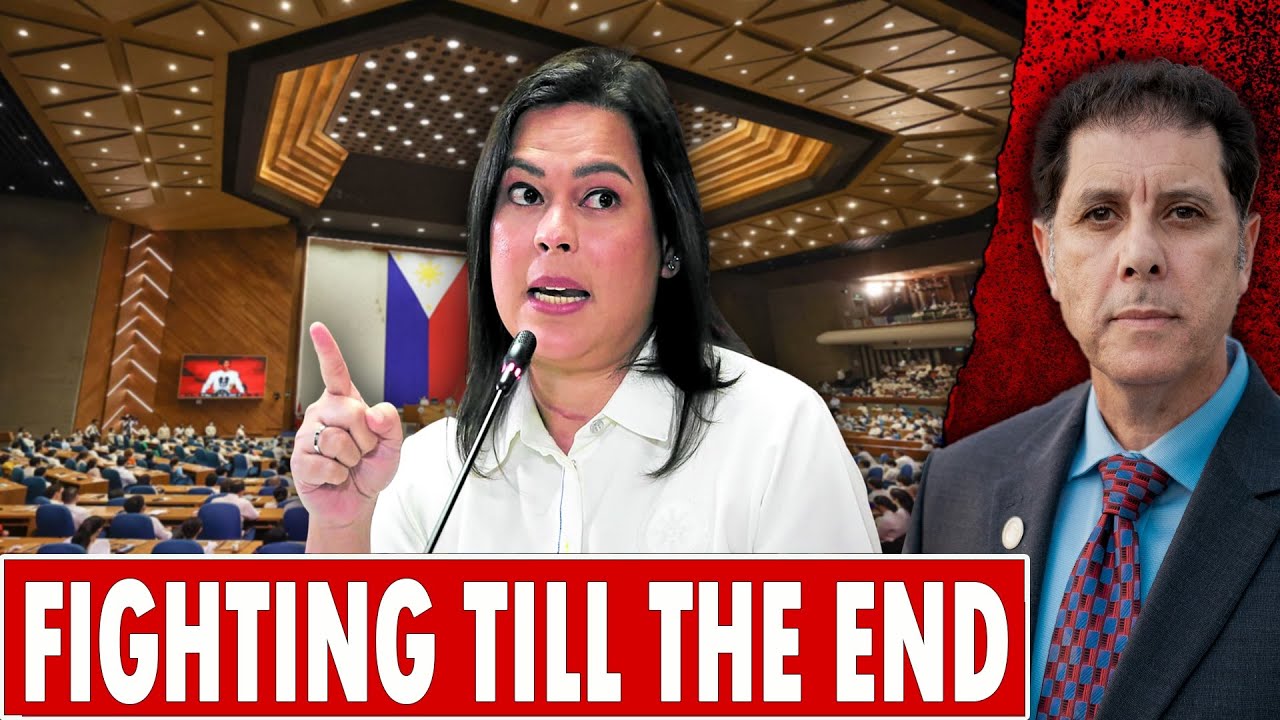
In this February 15, 2025 YouTube live interview, host David Oualaalou engages political science professor Anna Malindog‑Uy in a comprehensive discussion of the Philippines’ volatile political and economic climate. The conversation centers on the impeachment proceedings against Vice President Sara Duterte, examining the procedural timeline, the likelihood of a Senate trial, and how the upcoming May 2025 midterm elections could reshape Senate composition and affect the impeachment outcome. The dialogue delves into the controversy over blank items in the 2025 General Appropriations Act, the resulting Supreme Court petitions, and the broader implications for fiscal transparency. Economic challenges are outlined, including soaring inflation, rising foreign debt, persistent poverty, underemployment, and food insecurity, all of which intensify public discontent. The interview also critiques entrenched corruption and patronage networks, notably the practice of political dole‑outs. Professor Malindog‑Uy outlines strategic options for Sara Duterte—ranging from resignation to mobilizing public support—to navigate the crisis. Finally, the discussion situates these domestic issues within a geopolitical framework, addressing South China Sea tensions and China’s growing influence on Philippine policy. The interview concludes with gratitude from the host and a call to action for viewers to share and subscribe, underscoring the belief that geopolitics directly impacts everyday life.
Chapters
All right, hello everybody and welcome to Geopolitical Trends, where truth matters. Excited to be with you on this February— what's today, the 15th? So I'm very— yeah, I'm even more excited because of my guest, and it's none other than Professor Anna Malendog. So we're gonna be having a great, great conversation. Let me bring in my guest here because we are not going to waste much time here. Hi, Anna.
Hi David, hi, I need to call you.
Hi Professor Anna, how are you?
I'm fine, I'm so happy to be back here, really, like 2 to 3 weeks I think.
Yeah, I know, almost 3 weeks. So it's always, it's always an exciting time to have you here because the community gets very excited to learn from your insights and also, uh, to provide us, uh, information that, uh, uh I believe the Filipino people needs to know about, and even in our community and around the world. So, so what we're gonna be doing is, uh, at least for those who do not know who Professor Anna Malindog is, uh, Professor Anna Malindog is a PhD candidate at the Institute of South-South Cooperation and Development at Peking University in Beijing, China. She's also economist, writer, uh, for the Manila Times, in addition to being the Deputy Secretary General for the Association for Philippines-China Understanding. So, uh, she, she writes frequently for the Manila Times, and I have some links for you guys that I'm gonna be sharing with you later on. So let's get into our conversation, Anna, right away. I like to have your assessment overall as to where stands in the Philippines as of today. We all know how it has been the last 3 weeks when we talked. There were some major peace rallies and sort of developments going on. If you can provide our audience an update as to where things are.
Yeah, thank you, David, for that question. I think it's very important to have an update of our previous discussion with regard to the Philippines situation. In terms of political landscape or the political issues in the country, thus far there are 3 major political issues or events that happened the last, I think, 2 weeks. The first one is the impeachment of the Vice President Sara Duterte, and it was actually the House of Representatives who impeached the Vice President. That happened, if I'm not mistaken, on February 5, 2025, where 215 members of the House of Representatives signed the impeachment of Sara Duterte. And now the question is, well, they submitted the articles of impeachment in the Senate, and so far, as far as the Senate president is concerned, Senator Escudero, he said that there will not be a trial during the recess because now it's campaign period in relation to the May 2025 election. And That is the pronouncement of the Senate President, but we really don't know if there will be a special session that the President will call. President Marcos will call us in this regard, because if in any case President Marcos will call a special session, then probably the trial in the Senate of the impeachment will proceed. But as far as the Senate President is concerned, he said that it will happen probably around after the State of the Nation Address of Bongbong Marcos, which will be in July. So that is, that is the situation at the moment. However, you know, David, that anything is possible. So I'm also thinking, um, and I'm also right now trying to, to, to have this gut feel that probably Marcos Jr. will call for a special session. But of course, I hope that he will not do that. But if he does, if he, if he do that, then that That means that, you know, there will be a limited time for the vice president to prepare for the defense. Because what will happen is there will be a trial in the Senate, and the senators will sit down as like judges or jurors. On the other hand, the prosecution will be the members representative from the House of of representatives. So in a way, that will happen. But as of now, if it happens after the State of the Nation address in July, then there's more time for the vice president to prepare. But I think from the vice president's recent press conference, she said that they've been preparing their defense since 2022, 2023. So it means that they anticipated this, and this is not anymore a surprise as far as the vice president is concerned. So if you look at the impeachment, I think this is, um, this is— you can see that politically speaking, um, the Marcos-Duterte, the Marcos-Romualdez-Duterte feud is escalating. So you can also see the supporters of the two, um, families, the very prominent and very, um, popular political families, are also, you know, they have also this debate going on, maybe in social media or may it be in, in, in discussion in, in different, um, groups. So that, that is one of the— how do you call that— that's one of the political developments in the Philippines. The other one, I think, as you— as I've said earlier, we have an upcoming midterm election, and that would be in May. And of course, um, there will— oh, it's, it's midterm election, meaning from congressional seats going down up to the mayor level and the councilor We will be electing, and then we will be electing 12 senators, um, for the Senate. So the, the impact, the, the midterm election is very important because it will define if in any case Marcos Jr. will have an upper hand in the Senate. Because right now, as you can see the composition of the Senate, I think Marcos Jr. has, um, to a certain extent has, uh, has, has allies in the, in the Senate, but In the, in the, the result of the midterm election, as far as senatorials are concerned, would, would, would define and also would impact the impeachment proceedings against the vice president. Because if Marcos Jr. will have majority number, or will have a num— will have the, uh, 16 or more than 16, um, senators on his side, and also of course of the Romualdez Marcos, the The possibility for Sara Duterte to be removed, because she is now impeached, but she's not yet removed as the vice president. The possibility for her to be removed is very high. Because, you know, I don't know in the United States, but from our context in the Philippines, impeachment is not about legal process. It's not about if your case is strong or weak. It's really a political proceedings. And it's all about politics. It's all about numbers. Uh, whoever is on top, whoever is in, you know, whoever wields the power will have an upper hand in all of these things. And that has been consistent in our political history when you look at and review, um, impeachment proceedings in the Philippines. So that is something that we have to explain to the public, that, you know, this is not about legal matters. This is not about if they have really a strong case against the vice president. This is all about politics. And if in any case, like for example, the Marcos-Romualdez faction will say, you know, want her removed, I don't think it's impossible. It could happen. But of course, I'm on the side of the vice president. I think they're trying to prepare from her statement in the last press conference. I think she's trying to prepare for the defense, and I think she has a lot of lawyers who are good enough to advise her. So that's one more thing. The other very important, another very important issue in the country is what we discussed the last time that I was a guest in your program, and that is the allegation of the blank items in the bicameral report connected to the scandal surrounding the, um, the GAA, the GAA of 2025, or the National Budget of the Philippines this year. So at the moment, there were petitions filed in, in the Supreme Court by certain political personalities, and thus far, um, um, and questioning the constitutionality of the National Budget or the General Appropriations Act of 2025. And then what happened there is, um, I think the Supreme Court, um, responded and asked, and asked, I think, the executive branch and even the House of Representatives to reply to the petition in 10 days. And actually today is the 10th day, but it seems that from what I know, I'm not sure if my, my information is correct, but I think The reply— there's no reply yet from the, from those people that needs to reply to the petition and, and the someone of the Supreme Court. And that's supposed to be the House, the Speaker of the House, as the head of the House of Representatives. And I'm not sure on the executive branch if they also have responded already, because supposed to be it's 10 days from the time of the petition was submitted. So now it's— I think today is the 10th day. But there's no report as to the reply it's been submitted. So I think there is like, that is also another kind of a very important political issue, I think, because many of us like me, I'm waiting for those institutions like the House and also the executive level, if what is the reply, how they're gonna justify the scandal behind the national budget. But so far there's none. When it comes to economic, David, I would say that there are also a lot of problems in my country. One of that, under Marcos Jr. administration, one of that is high inflation and a very high cost of living. Imagine in terms of food, in terms of fuel, in terms of basic goods and basic services, the cost of living is increasing and increasing. And so we kind of have this problem of food insecurity. Almost all our basic foods, David, is being imported. And our agriculture, we don't know what's going on with it. It's supposed to be something that would provide us with our basic necessities, but everything is imported. And even onions, tomato is already imported, so high in terms of prices. And also, David, we also have a problem with foreign debt and fiscal deficit. Yeah, we have a foreign debt that is around at this time, I think around, if I'm not mistaken, 16 trillion pesos already. And we have a fiscal deficit. So that would weigh— that would cripple our economy to a greater extent in the coming days or in the coming years. And take note, Marcos Jr. is only halfway in his administration, and this debt probably in a matter of time will increase more. So that is a very important economic problem or challenge that the Philippines is facing. Another one is employment and underemployment. We're facing that. And then this is a very controversial issue when you talk about economic in relation to politics is poverty and income inequality. Still, that is a big, big problem in, in my country, and many Filipinos feel that their lives are not improving under a Marcos Jr. presidency. And, and poverty— and, and, but of course, Marcos Jr. will justify it by saying that there are what you call dole-out. In, in Filipino, we call it ayuda. So there is this big chunk of money in the budget that goes to it.. And the Philippines is becoming like the biggest dole-out country in the world. You just give, like, for example, ₱5,000, ₱3,000 to people, and as if that would bridge everything that they need in terms of basic necessity. But actually, these are just doled out. This is more on political patronage, trying to bribe in some ways. In the, in the, in the midst of upcoming election, this is also being seen by many as a way of quote-unquote vote buying, but in a very legal and justified manner. So this is also because it's being used as, as a pattern, uh, it's, it's being used as a conduit to what you call, um, um, patronage in my country. So yeah, there's a lot of problem, um, uh, even on the issue of the South China Sea in terms of geopolitics is another problem. And also, of course, you have so many disasters in my country, but how to respond to this disaster is a big issue because of massive corruptions that supposedly would be addressing flood control projects, but it does not go to the project, it goes to the pocket of some politicians. So these are in a nutshell, or in general, the problem that my country is facing, both economic, socioeconomic, and political.
Well, it's a, it's a very, very problematic— it's not a laughing matter, but it's very, very problematic. So, but at least we will tackle on both sides the political dimensions and the economic aspects. But just to go back to your, uh, to piggyback on what you stated, and thank you for sharing that overall view on assessments of where the current situations, politically speaking, is in the Philippines. So, so as an outsider, it became clear to me that now the political machine in Manila really are after Sara Duterte, the vice president, that is to prevent her from having a chance at running for president. So, and yeah, to me it's becoming very clear. This is like a political hit. That's what I call it. And of course, like you mentioned regarding the proceedings, Uh, to my viewers who do not know how the impeachment proceedings work, that does not mean she is now impeached 100%. It's process is going to go to the Senate, I'm assuming, in Philippines, the same way we have. And the way it works is you run it at the lower house or the House of Representatives, and if there is a majority approve or votes on it, then it moves to the Senate for judgment. Basically, the way you guys look at it, just for my, uh, viewers, uh, to have a better understanding, think of the Senate as the jury.
Yes.
So, and the jury will decide. But like you mentioned, Anna, uh, the idea is that, uh, Marcos Jr. has his, or have his allies in the Senate. And that is to me where my concern is. And my concern is Will she, meaning Sara Duterte, will she be getting a fair hearing?
Uh, that is very hard to answer, to say that she will be given a fair hearing in the Senate, to be very frank with you. But of course, the Senate president recently said in an interview that he will make it sure. Senator Escudero said that, you know, we will give her a fair trial. But come on, give me a break. Even the articles of impeachment is not any already fair. These are things that— I mean, if you, if you look at the documents in terms of the impeachment cases that, that was, um, hand over to the House of Representatives and become the basis of the impeachment process that happened in the House of Representatives, these are news clippings, you know, that the basis of their— how do you call that— evidences are based on news clippings and social media and all of these things. So Even that will not stand really in, in, in, in, in a strict legal proceedings. But you know, it's political. I mean, they control the House, so the impeachment went through. But there are also rumors in that impeachment that, you know, um, there were like, um, how do you call that, bribery to certain extent, or some kind of corruption thing that happened that, you know, each of the— allegedly, allegedly, each of these Congressmen or House members of the House receive certain amount. These are kind of discussion to a greater extent that had been circulating in social media, especially among Filipinos. I mean, there's not a proof to it really, but you know, we have a saying, David, that if there's a smoke, there's fire, right? Yeah, I'm right, right? There's a smoke, there's fire. So, so in that, in that sense, but on my side, the way I see it is like this. Um, as I've said earlier, impeachment is political, and especially in the context of the Philippines, it really depends on the, on the, on those people in power. And when I refer to those people in power, that would mean Marcos' political faction. Even if the case against Sara is weak, if they will push really for her to be removed from being the vice president of the country, I'm, I'm not kidding, it will happen. And that, that is one, that is just one thing. The other thing is like this, right now the Senate president said it will happen in July, the trial, but as you can see There are a lot of people already are clamoring, and even someone filed a petition in the Supreme Court saying that the trial should start now, soon, because that's, that's according to them constitutional. So they're pushing for President Marcos Jr. to call for a special session. And based on our constitution, there is a provision that indeed the president can call a special session and And if he does that, then you will have a trial in the Senate. That is a possibility that is out there, and I am not sure if Marcos Jr. will do that, but in one of his press conferences, he said that he is open to this possibility if the senators will request him to call for a special session. But it's not only that. There are certain political personalities who are against the Duterte that is calling for this special session to happen. So anything is possible at this time, really. It's anything is possible with regard to Sara Duterte being removed from being the vice president. And on another note, the May 2025 election is very, very critical in a sense that as of the moment, if you look at the composition of the Senate To a greater— to some extent, um, the, the side of the Dutertes, still they have some friends in there who will not allow probably that, um, the vice president will be removed from office. However, in after the May 2025 election, if in any case, um, the slate, the senatorial slate of Bongbong Marcos, most of them will be elected in office, then they will have control of the Senate. I mean, they all— it's a given already. The House of Representatives is controlled by the ruling coalition, and that would be the Marcos Romualdez political faction. They control this, the House of Representatives. That's a given. On the other hand, after the May 22nd election, if most of the senatoriables running under the ticket of Marcos Jr. will win in the election, then Marcos Romualdez will have control of the Senate. That is really the political reality. Yeah, if you really look at it in that, in a real politics, using a lens of real politics, this is the landscape that we have. And that would be, I mean, the possibility of the vice president to be removed is high. I'm not saying this because I'm afraid or whatever. That is just my reading in a purely political sense, in a real politics sense. Because in, in theory, in theory, the executive, the legislative, and the judiciary are independent. But in real politics, that, that doesn't— it's not really the truth. In real politics, how it's being operationalized, those in power, especially the president and the ruling coalition, will always have a say and will always have a hand on what will happen in the Senate and will happen in the House and even in the judiciary to some extent. So this is— and we're talking about real politics here. We're not having some kind of illusions or fantasy, you know. So that is my reading of, um, uh, when you talk about, um, the, in the impeachment of, of our vice president, Sara Duterte. But I think, David, I think Sara— I mean, the vice president— I think, you know, she knows these things, and I think she's aware of what are the possibilities, um, of her case and impeachment case. And yeah, I think she's also preparing for it, and but she's very quiet at the moment. And I, I really like it that she's not too much out there and she's not too much in media, because I think it's time for her to, to prepare and just be quiet and just do what she needs to do.
Because yeah, but at the same time, but at the same time, in this kind of setting, as one who works in DC, and I understand that the political machinery behind the scenes, uh, usually in a setting like this, if the vice president— and, and again, I'm not comparing our system to that of the Philippines, they have their own, and it's just I see some similarities. For example, when the President Marcos will say— Marcos Jr., will he— when he says, well, it's up to the Senate if they want me move forward, that's to me the signal right there, because that will justify the decision. So he will come and address the nation by saying, you know what, I am just serving the Filipino people. Here is what the Senate told me to do. That's a political maneuvering, that's political manipulation. And this is what I believe. And again, I, I, I speak from the position of neutrality. I am an outsider. I have no say into all this because I'm not a Filipino person. Or citizen, that is. But the logic tells me that who's gonna be harmed in this process is the Filipino people. This is where my concern is, and the whole reason why I decided to move forward with doing this kind of, uh, interviews with the likes of you and others is to bring the truth to the surface because of what the harm is going to be doing to the Filipino people, the average citizens. I am sure that Vice President Sarah will have— she will have to push back. You can't be nice in the world of politics. My advice to her, you know, I wish she would have been in different circumstances where she will have to— even for me, interview with her. I know the circumstances are not— I'm not— what's the word I'm looking for? Appropriate for now because she's too busy with what she needs. But my advice to her is that she has to push back against this, and she has— because she has one thing that Marcos Jr. will not be able to take away from her, and you know what that is? It's public support.
Yes, that's right.
So if the Filipino— and I'll say it, you know, she doesn't have— and I don't speak on her behalf, I'm speaking as an outsider, as I said. If the Filipino people really care for the vice president and wants her to stay and move forward to become president, they need to descend to the streets in a peaceful manner, you know, rallying in support of her staying in office, because that is the only way. Philippines has majority of people. You are— what is it, over 100 million people? Can you imagine? Yeah, yeah. Can you imagine? Just take 10 million people descend into the streets, you know, you have to shut down the country if you have to, peacefully. That's what I'm— that's what my advice for her. Why? Because she has the public support. So to all my Filipino people, yeah, yeah, because that's the way she's gonna have to do it, uh, Professor Anna. She can't be too nice. In, in the world of politics because she's dealing with the likes of Marcos Jr. And I am familiar with how these things work because when I was in DC, we used to have our conversation regarding what do we need to do to the Philippines. We didn't say what do we need to do to the Philippines to improve their economic conditions. No, no, no, no, no, no, no. The word was what we need to do to the Philippines to keep it under our thumb. By any means, including the average livelihood of a private citizen. So, so that's my, my, uh, my, my two cents, as we say. Uh, for her, her people needs to step forward, organize some peaceful marches, and demand that she will be given a fair hearing first. And second is the will of the people. If the people of Philippines And I'm gonna ask the question right here to my Filipino viewers. If you are watching this live, would you please answer the question yes or no? Do you want to see your vice president running for president, yes or no? So I would appreciate it if you guys can answer in the chat box. I would be greatly appreciated.
And just to, just to give you, um, one more, um, um, how they call, important point, uh, on when you talk about the impeachment of of the vice president is. If in any case, if in any case, I'm not saying it will happen, but of course we need to talk about the consequences of these things. So let us say in a hypothetical situation, um, if, if in any case, um, Sara Duterte will be removed after a trial, after the Senate trial, she— the, the potential or the probability that she will not be able to run for any political position is there. It means she will be banned for any public office after— if she will be removed, because now she's impeached actually, but she's not yet removed. So there's a trial going, which is really the ultimate reason why she's facing a lot of, um, you know, um, political harassment, um, political, um, insane— how do you call this? Is like, um, um, discrimination by current, the ruling, um, political establishment in the Philippines right now. Because, you know, in 2028, if in any case, let us say, we will have an election now and it's now 2028, if Sara Duterte will run for presidency, I'm not kidding, she will win. So that is even the fear of many of these political ambitious politicians in, in, in the, in Malacañang, or in the House of Representatives, or in the Senate, that they will not be able to have that, you know, chance if they are politically ambitious to run for presidency. Because if Sara runs, yeah, she will win. But that is the ultimate reason why she needs to be out of the political landscape of the Philippines, so that whoever are ambitious to, to be in power and to continue to stay in power, you know, will be able to do that because there's no stumbling block against them anymore. Because there's only one person right now, to be very frank with you, David, in the political landscape of the Philippines, when you talk about politicians, there's only one that would stand against the Marcoses and the Romualdes when you talk about election in 2028, and that's Sara Duterte. Now, if they want to stay in power, they need to eliminate this person, politically speaking. So the impeachment is already there, and it's, it's, it's actually the instrument, the legal instrument that could be used to justify her being out in the political landscape so that in 2028 they can just, you know, run the show on their own without opposition, or, you know, easy for them. So that is also the, the thing that I think the Filipinos should understand, you know, because if, you know, for me, David, to be very frank, election is— the way I see it as a Filipino, election is not a problem, it's not the solution to our problem. Our problem is deeply rooted. I mean, it's, it's— our system is, is, is rotten in every possible way. Many politicians are corrupt, really. An election only perpetuates that kind of rotten system and corrupt politicians. They will be there forever and ever because they have the money, they have the power, and they have an ally who is in the helm of power. And after this May 2020 election, the same people the same name is there and the same kind of action. You will, you will, you will have the same problem. And I think my country will be worse off because you don't have the chance of changing people in government, you know. And now we are facing massive, massive corruption. And do you think electing the same people we will resolve our, our corruption issues? Of course not, it will worsen. So this is really the actual, without illusions, without having some kind of illusions that, you know, we have a very nice political, or we have very nice political situation in the country. This is the situation of the Philippines, and the impeachment is a critical, um, political event or political situation that will define the 2028 election and even the May 2025 election. And at the end of the day, as you said, it is the Filipino people that will suffer forever and ever if these things will not change.
Yeah, so the politicians, basically they are concerned that now if Sara Duterte— because she will expose them. And I think that is the reason why they are now pushing into the her impeachments, because they don't want to be exposed. I think she's gonna expose them for the corruption. That's it. So I, once again, I, I feel compelled to say it one more time and we'll move on to our other topics, is that the Filipino people have now— it's in their hands, literally, the direction of their country. And I'm gonna say it to you, Filipino people, it's in your hand now to decide what do you want for your future, you know. Do you want a person like Sarah Duterte. And again, I am not advocating for her. I don't know her. I am an outsider. I'm just seeing, looking from outside in as one who had an understanding of what our policy was towards Philippines, because I am concerned for Philippines as to what lies ahead, what's coming. And we're gonna be talking about that one very, very soon. So, uh, just to go back, Anna, to, uh, my community here, the chat box to the question I asked. Many are saying, all of them saying yes to the question. Uh, like Arlene, yeah, Manuk saying yes. Lorna Pillow, you say yes. Alice Talokin, revolutionaries will not keep alive for long. Uh, Alberto, Albert Chan, you say yes for vice president. I'm gonna show it right here on the screen. So, so majority here are saying yes. So they wanted to see her running for president. So it's up to the Filipino people now to make it happen.
You said earlier in your, um, commentary that, um, Sara Duterte is the kind of person who will not allow, um, some corruptions happening in the Philippines, as long as he is— let us say, no, he has the ability to control it or to resolve it, actually expose and expose this kind of massive corruption going on in the country. Actually, she did it already. I think last year, around September or October, if I'm not mistaken, she actually made, um, an exposé saying that, um, the, the budget of the country is just controlled by two people, or being, you know, managed, or to a certain extent controlled by two people. It's the House Speaker Martin Romualdez and the former, uh, chair of the Appropriations Committee, Saldeco, of the House of Representatives, because she had experienced it already when she was the depart— when she was a secretary of the Department of Education. That's why these people, these politicians, are on to her, because she cannot swallow being like them and being corrupt like them, I think. So that's why she She was struggling, I think, when she was the department— when she was the Secretary of Department of Education, because probably during her time she doesn't agree with many things. But if you disagree, you will be the enemy of the whole political establishment and all of these politicians. And it was a very difficult, I think, um, situation of Sara Duterte during the time. And she actually did an interview saying these things, like, you know, when I was Department Secretary, I had a struggle. And there were only two people who controls the national budget of the country. And she said these two people earlier, the House Speaker and the Chair of the Appropriation Committee. And it was documented because it was in media. So as to what you're saying earlier, that, you know, she will expose, um, some kind of bad things that will— that's going on in the country, she did it already. And actually, true enough, the BICOM report The BICAM report of 2025, which is connected to the GAA of 2025, which is now under question when it comes to the constitutionality, and that represents our national budget in this year, is already— if you really connect the dots, you can see that what she exposed before is actually true to a greater extent, that there are, you know, it's, it's certain people who controls the budget. And you cannot, you know, if you, if you go against this, you will be on the disadvantage because politically you will be harassed because precisely you don't agree with them. And Sarah does not. I don't think Sarah will swallow all of these things because from the way I analyze her as a person from afar, because she's not my friend, no. I, like you, I'm a political observer. I'm a Filipino, I'm a political observer. So I can analyze from afar that she is not the kind of person who can swallow all of these crazy things, especially when you talk bad things that's happening in the country. And I think corruption— she's not a politician. You can really observe her as a person. Well, she's a politician by virtue of the fact that she, she's a vice president. She was the mayor of Davao and she, she ran for office, a public post, but not a politician in, in a sense that, you know, the traditional—
so basically, basically, Professor, Professor Anna, you're saying she's not politician, that means she's not corrupted?
I think so.
Here is, here's the thing. We have, I have, I was showing on the screen some comments from our viewers and so forth, and there's one here by the name Maya Kayaka. I'm going to show it here. Does it make sense? Look what he, uh, it's written here. Does it make sense for her to resign so she can run for free in 2028? Will that make sense?
Um, I, I, if I will answer the question from a very political— no, yeah, from a very political perspective and looking ahead and looking, uh, moving forward and much more long-term, because I'm the kind of person who does not think only of what is happening now. I look at long term. I have always— I have a long-term perspective. Now, if I will, I will answer the question I am not sure if the vice president— she is entitled to whatever she would decide with regard to the impeachment and how she gonna fight it and how she gonna defend herself. She is fully entitled to that. But if I will be asked with that question, even given the political situation and the reality that we have in my country and the people in power— and you can read it if you're— if you have a political mind, you can read it already. If, if, if it's me, if it's I, if I am in her position, I will resign and I will prepare for 2028 and I will make it sure that by 2028 I will win. Yeah, yeah, pardon me, but yeah, yeah, I am not Sara and Sara is entitled to her own— whatever the president will do, she has all the support and she will She will, she will think through it, I think, and she will make her own decision how she's gonna play all of these things. But if I am, I am Sarah, let us say I'm, I'm on her shoes. Yeah, I am the kind of person who thinks long term and who does not really, um, personally affected by politics, because politics is politics. You don't have permanent friends and you, you only have permanent interests when you talk about politics, really. I will resign and look ahead on 2028 and make it sure that I will win in that election and I will be president.
But there is a fear into that. The fear that I see, will that, will that, will that turn the country into more chaos? Will that create more chaos?
Well, it's a resignation. I don't think so. I don't think so. But an impeachment probably will create more chaos because like if Sara is removed, I think, I think, I don't know, I don't think the Filipino people, especially the, the solid supporters of the Duterte, especially of the vice president, will sit down. So that is my perspective. But the resignation is a different ball game. And for me, to be very frank, David, the vice president is a spare tire. In my country, in our political system, which is similar to the, to the United States in, in some ways, the vice president is a spare tire. It doesn't really have power that much. You cannot do much. You cannot do much. You can only do much if the president will give you some position in the cabinet. But if not, you will be the vice president who will do the social work. And that's ceremonial, ceremonial in many ways. And you, you will just wait when the time comes that you need to assume the presidency because something happened to the president. But other than that, the vice president isn't— it doesn't, it doesn't have much power, to be very frank. It's really, it's really the case. So for me, I really— I'm— if like, for example, I'm on Cyrus's position, yeah, that could be an option. But of course, that is That is me. It's— I am not Sarah. So Sarah will have her own way of dealing with things. But to be very pragmatic about these things, given the whole scenario, given that the, the, the, the— how do you call that— the, the players in, in, in the current situation, the current political setting in my country, you have the left who are pushing and pushing for her to be removed from office. You have the yellows doing that. You have the— you have a very adversarial kind of political establishment at the moment. Everything is ganging up on her, but of course she has the solid support of, of the Duterte supporters, of the people who believes in her. And I'm one of them. I believe in Sara, and I don't think, I don't think this impeachment has any credit at all. But at the end of the day, there is an impeachment and there is an impending trial in the Senate. And the political landscape, to be very frank, because we are not in power, she is not in power really, many of her supporters are not in power, is very If you really look at it politically, to a certain extent we're at a disadvantage. But you know, a disadvantage can always be turned into an advantage depending on how you handle it, politically speaking. So it really depends on her. But that is just my thought, okay? That is my thought. It's not—
I see what you mean. I see what you mean. I have someone here who put a comment, and I do not understand the PDP Laban, Laban for senatorial, right there. Uh, this, uh, his— this person said, vote straight PDP Laban senatorial candidate. What, what was— what is that? Do you know?
Um, the PDP Laban is a political party, and the chairman or the honorary chair— I'm not sure right now if, if former President Duterte is still the chairman or the honorary chair of PDP Laban, but that is a— that, the, the— that is a party that is very much affiliated with the Dutertes, or especially not, not the vice president, but the former president, um, Rodrigo Duterte. So, um, um, the senatorial slate is being supported by the former president. So that's why many Filipinos right now are saying that, you know, vote straight, um, for the PDP-Laban senatoriables that are running in the midterm election, precisely because they're saying and they're justifying that if, if many of the PDP-Laban senatoriables will be elected as senators in May 2025 election, the chances— the chances when it comes to voting, because in the Senate trial, the jurors or the jury, the vote, and they need 16 votes to remove Sara or to—
it got frozen. So we got frozen here. So yeah, it's okay. Here you are, here you are. You know, we got frozen for a minute here. So, but yeah, so, but, but again, I'm— all I'm saying is, uh, it seems to me the logical, uh, arguments I can make as, again, as an outsider, and if I ever were in position to advise the Vice President, the first thing I would tell her is that she has the public support. Any smart, any smart politician understands once you have the public support, there is nothing they can do to you. Look at for us when Donald Trump was there. Why do you think Donald Trump won the elections? Because of the people.
The people want him in the office.
That's it. Whether we like him or not, you know, do I agree with Mr. Trump? No, I don't. I'm critical of him as far as his foreign policy, but He has some other good points, and you give credit where credit is due. And, and the key point is that people want him in power. The same thing would happen in Philippines. So it's up now, and I'll say it one more time, uh, for the last time here, it's up now to the Filipino people to decide. It's in your hand, Filipino people. If you want the vice president to be the next president, you show your support by descend into the street peacefully and make your voice heard. Simple as that. So let's move on to— I want to address some other aspects regarding Philippines, of course, uh, regarding Marcos Jr.'s statements, uh, when he said that, uh, he's gonna give China an ultimatum, and that China— the ultimatum is that he will remove the Typhoon missile system from the Philippines if China will stop its aggression in, in the— regarding the South China Sea and so forth. So, uh, first of all, I'm gonna ask you straightforward, and please feel free to yes or no. I mean, I respect your opinion, doesn't matter how it is, you know. In your opinion, do you believe Marcos Jr. will lie to the Filipino people? Yes or no, in your opinion? Yes.
Um, when it comes to the missile system, I think, um, it's a qualified yes. Why? Okay, yeah, precisely because the missile system that was used during Balikatan exercises, the military exercises between the United States and our troops, no, it's supposed to be a temporary thing, temporary, and that is even the case. It's supposed to be temporary, that it should be removed from the Philippine soil by September of 2024. But out of the blue, it's still there, and it becomes a permanent thing. And now, and they're saying that they even want to buy, um, Typhoon missile system as a deterrence against China, because it's really China that they're pointing out, pointing at. So in a way, it's a qualified yes because you had the pronouncement that, you know, it's temporary, it's just used for this and that, and then after the Balikatan exercises, it will be removed. And right away— and it was not removed right away, but there was another pronouncement that it will be removed by September, but again, it was not removed. But now it's still there, and it created a lot of geopolitical tension because ASEAN countries are not happy about it. Russia is not happy about it. China is not happy about it. It's not only China that is not happy. Russia is not. How many times Putin and even the, the foreign secretary of Russia have said that? Even the spokesperson of the Russian foreign ministry have said that as well. And ASEAN countries are not happy because why? Because the system is creating some kind of anxiety among countries in the region, and it will provoke an arms race. Once the Philippines will, will, you know, will, will capitalize on this and would say, okay, we will be buying a lot of, of armaments or military assets like that, and it will be in the Philippines. But the thing here is like this, um, the thing here is like this, David, the question is, um, does really Marcos Jr. have leverage over China when you talk about the missile system? I don't think so. No, because he needs I don't think so. I will ask you, David, you know more, you are, you're a senior security expert and geopolitical expert. Do you really think we have, or Marcos Jr. has that leverage to say to China that, you know, okay, I will return the missile system, but you have to follow what I want or my demands? I don't think so. I really don't. It's a laughingstock actually among major powers in the region and even in the world. Because look at China. China is a huge military power. It's not necessarily at par in terms of military capacity with Russia, and I think even with the United States, but it is a military might. It is a military power. It has more armaments and more capability than us, the Philippines. And one more thing, that Typhoon missile system is not even— we don't own it. It's, it's, it's the Americans. It's your country who owns it. Do you really think the Americans will, will allow Marcos Jr. to use it as leverage against China, especially now under Trump administration? I don't think so. So I really don't understand who advised the president of saying, like, you know, try to bargain with China, you return the missile system, and then your demand will be given by them. And the demand is, it's really a contentious issue, and that's the South China Sea. Do you really think China will bend to him? China did not even bend to the United States, which is a superpower. How much more to a Philippine— to a Philippines that is not even a power in the region, is struggling as a country in terms of economy and even its politics. So why would you say that in the very first place? So I was really shocked. I said, who advised the president to do and make this kind of statement that is really turning the Philippines as a laughingstock of the world? Really?
Indeed. Yeah, yeah, this idea of this, this, uh, because the, uh, the argument has almost— I made the arguments that, you know, is he like gambling with the livelihood of the Filipino people? Because to— for him to— that's why I use the term first, uh, Professor Hannah, when I said I asked you straightforward, and I appreciate you answering, uh, will he lie to the Filipino people? Because when he's saying that I'm offering sort of to remove the US medium-range missile system in exchange for China's restraint, I knew right there it's a lie. It is a lie. You wouldn't have no say, meaning you, Marcos Jr., in this case, you would have no say into this. Because here is the thing, because Manila understands that we dictate the policies to it. Regarding the geopolitical storms that's taking place in the South China Sea and the shifting alliances that's taking place. And I get it from trusted sources, not even in the US, it was in Europe, that the missile systems, which by the way it was announced that they have been removed, they were not. They were removed from one location to another one within the Filipino territory. So another word, in a simple language, the missile system Typhoon still on the Philippine soil as of today. And I, by the way guys, I'm gonna share the link with you in the description. You can read it for yourself. So, so the idea that Mr. Marcos is saying, well, it's because of the South China Sea and, and the tensions and so forth— no, no, no, no, no, no, no, no, no, it's because what we are trying to pressure the Philippines into. And the reason for that, just to give my Filipino people a heads up, you know, because I, I am very concerned as to what lies ahead. This picture right here, this is Secretary of Defense, uh, uh, Pete Hegseth, and this is the German, uh, uh, its name is, uh, Pistorius, if I'm not mistaken. That was the meeting that took place in NATO yesterday or the day before. There is already a posturing that is taking place right now regarding the Taiwan Strait. Because here is what you people in Philippines need to understand: we, the Americans— when I say we, I'm referring to our incompetent and corrupted government— we will sacrifice the Filipino people. This is what I want you guys to understand. It's not we care for Philippines, we care to use the Philippines. The likes of South Korea, the likes of, uh, Japan, the likes of Australia, we have no worries about putting them in front line. And the tensions we are sort of now pushing because that's where the narrative is going, South China Sea It's gonna be the next— it's always been, but now we want to shift the attention from West Asia or the Middle East into South China Sea. And what a better way to do it by using the Philippines. This is where my concern is, and I do see it's coming forward. So when you hear Marcos Jr. saying, oh, I am gonna offer to return US Typhoon missile systems if China ends its so-called aggressive acts, you know that he's been given the narrative. He's, he's been given the script, basically. That is the bottom line. I just wanted to, to highlight this one to our Filipino viewers. So, uh, there's one more thing I need to address with you, uh, Professor Anna, and this one has to do with your, uh, you had an article and, uh, and I'm gonna share it with the, our community here. If you allow me to share the screen. Yeah, yeah. So, all right guys, take a look, guys. And I'm— once again, I'm gonna put the link for you to read, uh, uh, Professor Anna Malendog's picture. So here is the image there. So what you're looking at, you are looking at a top chip designer who returned to China. This is— yeah, yeah, Professor Anna posted this particular article. I'm gonna share it with you, uh, with you all, guys. My point in this, uh, my point in this— and I have another picture, uh, this is Chen Jin. I don't know if you know who she is, Professor Anna.
No, I, I don't know, but I think it's another scientist.
Well, actually, she is, she is an award-winning computer scientist and blockchain expert that left the United States and returned now to— oh, I lost you. Okay, she's coming back.
Yeah, internet problems.
No worries, no worries. Yeah, as I said, she's an award-winning computer scientist and blockchain expert who left the United States. Yeah, and returned. You know what's interesting about her and the individual, uh, you put in the article? They are both went to, uh, to, uh, to Tsinghua University in Beijing.
Yes, yes, they are now in Tsinghua University.
Yeah, so, so my question to you, Anna, uh, where do you see this brain drain from the United States? What does it mean?
Um, that is the thing about the United States, like this kind of, you know, that what is happening in the United States is actually happening in the Philippines at the moment. There's such a thing as sinophobia. Um, Chinese, um, national Chinese national, um, um, uh, I think U.S. citizen with, um, Chinese descent or our Chinese ancestry are being targeted and being coined as a spy, and many of them are actually really brilliant scientists. It just so happened that their blood is Chinese, and now they're being targeted, that, you know, they are opting to get out of the United States and go to— go back to their motherland, quote unquote, though their citizenship— I think some of them are U.S. citizens, no? So they want to— they, they're opting to go back to China, and they're now being embraced by the Chinese government. And I think the Chinese nation and the Chinese population and being offered more funds to do their own research. So as you can see, in the United States, if this kind of trend continues, I think you will be at the disadvantage, precisely because these are Asian. And I'm sorry, David, but I have to— this is— I'm not saying that the Western people are not as brilliant or as talented, but the one thing that we have as Asian is we're very hardworking people. We're very industrious. Why? Because we always have this thinking that we need to work hard, we need to be industrious, because we think— and it has been probably throughout colonization period, it was already inculcated in our mind that to certain extent, many of us will have that kind of inferiority, that to compensate with that, we need to work hard and we need to be better. But actually, we're good, we're good, we're intelligent people. But because of the colonization, we— that kind of a little of— until now it's there, that sense of inferiority is there. So we try to work hard, and I think—
okay, we lost, uh, it's just communication stuff. Sometimes, uh, a connection gets lost, you know. I used to have it also with Carlza. Sometimes, but, but she'll be back here. So I take this opportunity, guys, to let you know, uh, tomorrow make sure to, uh, be on the lookout for my video, my analysis, that is. I'm gonna be releasing the video tomorrow on Sunday. And also, please, if this is your first time here, I will greatly appreciate if you can, uh, subscribe to the channel, uh, my channel here. And I have the link for you, uh, I'm gonna put it in the description so you guys can sign up and— or subscribe rather. It's free, and, and you share it with your people, especially in Philippines. I, I, you know, I really care as to what's going on Philippines, and because of a concern Filipino, like every other human race on this Earth, you know, if I, if I, uh, deserve, or if I want to live in peace and prosperity, so do other human race. Elsewhere. So someone else in— be it in, in Laos, Cambodia, Philippines, China, Russia, what have you. So to me, just common sense. And this is where my concern— that's why I decided to start addressing what's going on in the Philippines, uh, because it's— they deserve, they deserve to live in prosperity. They deserve to have their country, uh, prosper economically speaking and for. And if this Vice President Sara Duterte is going to provide that, then the system should allow her to do that, and the people in Philippines should stand by her side. Simple as that. So that's the way I see it. I, I can't vote because I'm not a Filipino citizen, of course, uh, but I'm just speaking pragmatically here, logically speaking, the way I see it, how it ought to be. And for Marcos Jr., for him to be saying, uh, well, I am gonna be removing, uh, the system, the Typhoon missile systems, if China does that— no, no, no, no, no, you are in no position to bargain or put conditions on the table because you are irrelevant. And I say it straightforward because how do we see Marcos Jr. and some other leaders around the world? We see them as our servants to the government, you know. Do I agree with that? No, I don't, and it shouldn't be, but they allow themselves to be that. But in case of Marcos Jr., it's because of the family assets that are in the United States, and we are in control of that. So basically, we are dictating to him, uh, what to do and not to do, and he has to follow the orders. Simple as that. So, and this is why, uh, for him not to do the right thing for the Filipino people— this is not about what's going on with Sarah and so forth. He needs to do what's right for the Filipino people, put politics aside and serve the people. That's to me what a good leader does. I mean, we have the corrupted system here in the United States. I am not shying away from saying that, so I won't shy away from criticizing my own government because it is corrupted. Until the American people wake up and know what's need to be done, nothing's going to change. I would say the same, you know. It's just, to me, what concerns me the most in the Philippines is because you're seeing where the economic conditions going down, you know, for an average Filipino people. And I talk to people, I ask questions, and And I found out that their economic condition is going from bad to worse. That's not— this is where the idea— and this is why I believe for the vice president, just to go back to my point about Sara Duterte, if I were advising her, I'll say you need to fight fire with fire because that's how it works in politics. You can be Mr. Nice or Mrs. Nice in politics. It doesn't work that way. It doesn't work that way, you know. If she has the mandate from the people, and apparently, I mean, I look at just your answers, guys, most of you are saying, uh, here you are.
Sorry, sorry.
No worries, I understand. So I kind of was just talking to the community here till waiting for you till you come back.
So yeah, sorry.
That's not a problem. That's not a problem at all. So, so to go back to our point, what we were talking about, uh, the idea of, uh, uh, what the, the President Marcos is doing is basically misleading the Filipino, and the decision will have to be made, uh, soon because the economic prosperity of the Filipino people matters. That is what's at the heart.
Yes, of course.
This leads me to—
yeah. Going back to earlier that we were talking about the brain drain in the, in the United States, I think if the current, um, if that kind of trend that is going on, like trying to target like, um, Chinese nationals or Chinese scientists, but they're with Chinese ancestry but they're a U.S. citizen actually, and they're brilliant and they're good and they're great and they're really work, uh, hardworking people, if that continues you will have a brain drain in the United States, and you will lose— you will be the loser in the long term because you will, you don't— you will lose this kind of talents. And China is embracing them, and they're having this kind of, um, program that actually when you return to the— to— when you apply, like, you— like that, you're a brilliant scientist, you're with the Chinese ancestry, you apply, you'll be given more opportunity, you will be placed in a good university, in their top university, you'll be given all the support, the, the research funds and for, for whatever kind of, um, discovery or invention you want to do. And China will benefit from it, to be very honest. But the United States, because of this xenophobia targeting Chinese national or US citizen with Chinese ancestry, you will lose in the long term with all of this competition. And in the same manner that in the Philippines we also have kind of xenophobia that the Chinese nationals— but even then those people who—
yeah, okay, we froze here.
So yeah, that kind of balance, it would also affect us in the long term. So, you know, when you talk about economics, when you talk about talents and all of these things, so I hope that will change. Really, I will hope— I hope that changes.
Well, I couldn't agree more with you because there is this brain drain that's going on in the US. Because our education system is— as a matter of fact, I'm gonna share this with you all just for you to know. Do you know that 50%, 50% of most PhDs here in the United States are foreign-born? Oh yes, 50%. I'm one of them.
Too high.
It is too high. It is too high. So, and this is why, for me personally, why I made the decision. Now I might end up teaching in China. Oh yes, I am. I'm gonna share this with, with— it's not, not a secret, but, but I am considering, uh, teaching at some university in China. I don't know which one yet, uh, but I, I am considering because that's where I see the future is.
I agree with you, the future is in the East.
It is indeed. I've been arguing that for the last 14 years. Even during my time in DC, and they didn't get it. So, all right, I have one last thing to address with you before I let you go. I know it's too late for you, Professor Anna, and I am very grateful that you are, uh, carving out this time and giving us the time to share your knowledge with us. Though the last thing I want to talk to you about has to do with the BRICS. I know that President Trump has threatened now tariffs and sanctions on countries that's going to be using a different currency than the dollar and so forth. But my focus on, on the BRICS has nothing to do with this. It has to do whether Philippines— what does Philippines think regarding its role within BRICS? Is Philippines even qualified to be part of BRICS as we speak?
Uh, BRICS is a very important loose organization. And if you look at the composition of BRICS, these are really the emerging, very emerging economies, and but really strong economies. And China, Russia, um, South Africa is there. And oh, you know, all of these emerging economies that are really stronger and proponent of what you call multipolar world. Now, the Philippines, as far as I'm concerned, I want the Philippines to be part of BRICS. Yes, really, I want to, because we will benefit in terms of trade, in terms of market, in terms of exchanges of technology and knowledge and knowledge transfer. However, are we ready to be part of BRICS given our economic problems, economic challenges, and even our political turmoil in the country? I don't think so. And, and the other question is, would BRICS— I mean, the member countries of BRICS— would allow us to be part of it, given our own domestic problem and even given the geopolitical issues that we're facing? And, you know, especially with China on the South China Sea, we are somewhat being termed as the pawn of the United States. We don't have really— we don't see eye to eye on certain geopolitical issues with ASEAN counterparts who are now applying for BRICS membership, and some of them are already in. Do you really think this people, these countries in BRICS, would, would say yes even if we apply? I don't think so. So what is— what, what, what should be the, the, the course forward, or what would be the moving forward of the Philippines? Two things. Political stability is very important for us to have economic prosperity. Politics and economics are always, um, related and intertwined. If we want to have a prospect for economic prosperity at par with our neighbors in ASEAN, like for example Thailand, Malaysia, Indonesia, even Vietnam, our politics has to be stable. But with the kind of backward politics that we have, with the kind of partisan, with the kind of politicians that we have who are in position, that is a huge, huge challenge for Filipinos and for my country. And I think it's the right time It's really the right time for the Filipinos to see it clearly. If you want to have a better Philippines, make a good decision of who you would want to stay in power and you would want to be elected in those critical position in government, because leadership is important when you want your country to move forward in terms of economic prosperity. If we don't have good leaders who are not intelligent, smart enough we will lose and we will be left behind by the world, by our neighbors, especially ASEAN, and also by the region. And the whole world is moving forward economically. The Philippines is still, is still facing political, you know, problems domestically. And the political problems of my country affects our economy. Even geopolitical problems also affects our economy because China is already the number one when you talk about economy. But we are even don't have any good relation with China at the moment under Marcos Jr. And that's so stupid, to be very far from a geopolitical perspective, from an economic perspective, and even from a, from an international relations perspective. That is so stupid if a country will not have at least a working constructive relationship with China, given that China, despite its own problems, it has its own domestic problems, it is at the end of the day not anymore the second largest economy, but even to a greater extent, it's already the largest economy. And it will improve, even though it has a lot of problem at the moment economically. The Chinese are very hardworking people, I'm telling you. They work hard, just by God, they really work hard. I'm not kidding. So that's what I'm saying for my country. We Filipinos really has to think carefully and really has to have that awareness, you know, that We are not living as an island. We are connected to our region, to the world, and we really have to have that good relation with our neighbors, especially with the major powers. And we need to know how to balance our relationship with these powers. As much as possible, we should be friends to all and we should not create enemies.
But not everybody will agree to that, Professor Anna. I have, for example, an avid supporter, Zhao Yang. You know, he's an avid supporter of the channel. Here's what he wrote. China needs to leave the Philippines alone. In other words, does China need to forget about Philippines and move on? Because the trade that exists between Philippines— Philippines depends on China economically, doesn't it?
Yes.
So in this case, should China just say like what China did with Australia? And look where Australian economy now is, you know.
Yes.
Would it be a wise thing for China not to even bother with this Philippines anymore?
Well, actually, to be very frank with you, David, when it comes to trade, we're, we're, we're very— China gets little benefit from us as a country. They can always replace the Philippines with so many other countries who produces the same products that we export to China. Yeah, yeah, that's really true. I mean, they can just tell— they can just have this thinking that, oh, forget about the Philippines, we are having a headache with them, let it be. Whatever they do, their business. We don't want to do anything. We, we will not have anything to do with them. Let be. And we can replace the Philippines when it comes to their exports or whatever with this country, with this country in Latin America, in South Africa, in Africa, even in Asia-Pacific. And who loses in this game? Is it China or the Philippines? Of course it's the Philippines. And there's only one, one issue actually. That's even— that's why I don't understand our political establishment. There's only one issue that actually makes our relationship with China a little bit more critical, and that's only the South China Sea. Other than that, we're okay. But the South China Sea is not even just an issue between China and the Philippines, it's an issue with other claimant states, and that includes Vietnam, Malaysia, and even Brunei, and even the island of Taiwan. But look, Vietnam-China relation is good. Vietnam benefits a lot from China in terms of investment and economics. It's the same with Malaysia. It's the same even with Brunei, to a greater extent, though Brunei is not so active. So why is it that we cannot do the same thing? Precisely because the leadership right now does not have the smartness enough to see things clearly and does not have that independence in terms of making decisions without the dictates of a superpower. And the thing is like this, he had a choice before. When you were elected as the president, the first day in office, you already have a choice what you're gonna do with you to talk about your foreign policy. You can define it. Okay, I would have a foreign policy that is balanced. You are my friend, you're my friend, but we define our national interest and what's good for us because we're a sovereign state. You have that capacity if you become the president. But look what happened to Marcos Jr. His personal interest came in first before the interest of the country. Yeah, that is his problem, and he has limited time to change it. Even if he wants to pivot and try put it in a proper context right now. Yeah, in his third term, and he is now going to fourth term, he will have difficulty. Why? Precisely because he doesn't have the trust anymore of China, is one, even of other major countries in the world. You will not be trusted anymore because you betrayed many based on your foreign policy. Even the United States under Trump, he will have difficulty. Yeah, he will have difficulty with Trump because Trump has a different way of thinking. It's not the same as the Biden administration. So the thing that the lessons here, like, like this, anyone, especially those ambitious politicians who wants to be the president of my country, and even those in power right now who want to perpetuate themselves in power, you should think of the national interest of the country first before your personal interest. Because at the end of the day, if you you, if you put forward your personal interest, and at the latter part, it will bite you. It will bite you. Look at what happened to Marcos Jr. right now, and he doesn't even have the strategic mind, I think, to maneuver all of these things. That is his problem. He will have this problem because the advices before is make a foreign policy that is neutral, independent, and balanced, and navigate with all of these major power but at the center of it is the national interest of the Philippines. But he never did it. Why? Precisely because he prioritizes personal interests. So that is his big problem, and it will bite him. If not now, the history will judge him. That is the thing also. There's such a thing as karma, David, and karma, it may be late or now, but karma is karma. It will bite him in the long run.
I agree with you, and I think because of the family assets is what's driving his— I believe his thinking in terms of what I need to do to have my hands on those, because we control those assets here in the United States. But you brought in a good point regarding how other countries in the region like Vietnam, like Thailand, who's now— Thailand, by the way, is now part of BRICS. You know, I, I'm— yeah, I am following the developments of what's going on with the, uh, the speed railway from Kunming to Bangkok. You know, that's how that's happened. Didn't happen in a vacuum. And if, uh, if Philippines were thinking smart, they would have embarked on some joint ventures with— China has the capital, China has the investment, has the money, the technology.
We don't, we don't have money, we don't have the technology. Right.
Yeah, I mean, yeah, I would start just with basic infrastructure. China will help Philippines too, but again, Philippines— that's why I am not in favor of Philippines joining BRICS, because the same arguments I've made about India, the same arguments I made about Egypt, you know, those countries are not in a position to take a standalone policy. Because they will be under the pressure of the United States to undermine the policies of BRICS. That is my concern with now the expansion of BRICS. You have to be careful as to who you allow to the club. Simple as that. Why? Like I, like I showed the picture earlier, when you think about, uh, uh, where BRICS, uh, economy— just take a look at, take a look at this, guys. Look at this one.
Yeah, yeah, look, it's a big economy.
Yeah, look at just the numbers. Numbers speaks for it. Even G7 now stands no chance against BRICS.
No, no, no, against BRICS?
No, no, that's done. I even— well, when you consider that just China by itself is 72% of the GDP of BRICS.
Yeah, just China. That's only China. What about the rest?
Yeah, look at this one here. Look how it used to be in 1995. 2010 and to 2023. Look where China is.
Yeah, it's—
and this is why— yeah, and this is what Philippines needs to understand, because the countries in the region are moving into that direction. You all know that Indonesia now is part of, uh, BRICS.
Yeah, yeah, everyone in the region is focused on economy moving forward, trying to have a good economy, being members of a regional organization like BRICS that will give them benefits in terms of trade, in terms of markets, in terms of export and imports. But my country, under President Marcos Jr., we are— we're like at the tail end of everything. Why? Precisely because his administration focused on geopolitics, and it's costly for our economy. And the enemy that he's pointing is China. Look what happened during the— there is like this proclamation rally of the senatorial slate of Bongbong Marcos. And what he said in that rally, he said like, those, um, candidates coming from the Duterte side, that is the PDP-Laban, they are pro-China, implying that they are anti-China. You are the president of the country, you cannot say that. At the end of the day, whatever you sensitive, especially when you talk about the South China Sea issue. Because the topic that they're saying that these are pro-China, on my slate he was saying, implying implication, are anti-China. And in effect, you're pointing to China as your enemy. As a president, it's not supposed to be the case. And then what will China think of our— of my country having that kind of statement from a president? Ah, so we are now your enemy. So what we gonna do? Okay, we'll show you. What is an enemy all about? Do you really think it would be good for my country? And take note, he is the president of the country and he's the author of this whole foreign policy. You should be sensitive, you should know what to say and, you know, be very careful, especially when you talk about sensitive issues, and that's geopolitics, international relations, and South China Sea. But I don't know what's wrong with this. I said, oh my God, as the president of my country is saying this in a proper reclamation rally that the foreign press was looking at, and even governments across the world was, was, you know, trying to monitor these things? Come on, give me a break. So do you really think BRICS would allow us to be part of— would allow the Philippines to be part of BRICS under Marcos Jr.? I don't think so. And Marcos Jr. also does not understand that BRICS is very important for the country, because if he does, then probably he should have been applying for our membership in BRICS. But it seems he doesn't have that interest. So that is also the kind of leader that we have in our country. It's not moving forward. Everyone is moving forward, but my country is going backward. And there's a possibility that it would be in the dark ages and would go back to the martial law era. And it's already happening in my country. Freedom of speech is being constrained right now. There is what, a congressional hearing against bloggers and against people who are critical of the government. Come on, give me a break, you know. I mean, you're going backward instead of moving forward. Instead of focusing on economics, the focus is eliminating a political critic and a rival like Sara Duterte, trying to constrain freedom of speech and, and media freedom into a greater extent. So that is really backward politics. So in a matter of time, if this kind of trend in my country and even the kind of policy that this administration of Bobong Marcos will not change to a better and more positive, the Philippines will be at the tail end of everything. And that's very sad to witness as a Filipino and someone who understands all of these things. So that is crazy for me. I really get so frustrated in many ways sometimes with this, all of this.
It's, it's, it's the love you have for for your country. And, and right, I, I admire you for that and salute you for that. So, so what's need to be done? What, what do you think, in your opinion, Professor Anna? What, what, what do Filipino people need to do? What's need to be done to really change course, in your opinion?
Um, to be very frank, uh, the Philippines need, uh, I, I would, I would, I would— this is my analogy for the Philippines, and I will I will try to, to— because I learn, um, I'm very— and I'm an avid fan of history. So, and you— and now that I'm studying in the— in Peking University, and also in my, in my spare time, I study the history of China. And I think two things: the Philippines need a Mao and a Deng Xiaoping. That's my answer to your question, David. Yeah, the Philippines need a Mao And at the same time, it needs a Deng Xiaoping for it to be able to, for it to be able to get to the bottom of the root causes of our problem. And one of them is the rotten politics that we have in the country, really.
Well, funny, I will be releasing a video tomorrow. If you get a chance, I'll send it to you later on. Uh, I addressed these two individuals, Mao and Mao Zedong and, uh, Jinping. So, so funny how you mentioned that one. Yeah, because I, I addressed this issue of, uh, why, uh, the West needs to come to grip with the reality that the 21st century belongs to China. So, and this is why I wanted to ask your opinion as to what the Philippines needs to do moving forward, because they can't be going on this, they can't be going like this. Because you look at where Vietnam is right now economically, where Laos is economically, Cambodia, Thailand.
Yeah, because Myanmar has a civil war, David, but the rest of the ASEAN is moving, moving, moving, moving forward economically, really. And their politics are stable. Ours is not.
Yeah. Well, even, even some of our viewers here on the chat, uh, uh, they are saying that Philippines is not ready for BRICS. So yeah, I have Dave H here saying, you know, it's not ready for BRICS.
But, but, but David, if only, given, hopefully in the near future, if we will have a more, um, out, a more mature leadership in country and more, you know, a leadership that understands the world actually, and how it can position the Philippines among all of these things that's happening in the world. We want to be— I want my country to be part of BRICS, hopefully in the future.
Yeah, yeah. But, but I, I will have to— once again, if I'm giving a word of advice to BRICS, I'll say no. Because you have to get rid of those countries out of their mindset of being subservient to the United States.
You know, what I'm saying, David, is a mature leadership that understands the national interest of the country, and one of that is independence and sovereignty.
Indeed, indeed. And without that, yeah, yeah, it's not gonna it's not gonna happen. So, and that's to me where I see, uh, this is moving forward. I want to take this opportunity to say thank you to, uh, what, to Imelda? Imelda Sangalan? That's a Filipino name, right?
Yes, it is.
Thank you, thank you so much, Imelda, for your super sticker. Truly appreciate you for that. So, well, Professor Anna, I want to give you the last word before I let you go. The floor is yours.
Thank you so much, David, and thank you. I'm sorry again, there was like some kind of a technical problem earlier. Yeah, because of the internet connection. I'm not in my— I'm not in the university at the moment, I'm in another place, so that's why the internet is not good. And thank you so much, David, again for the opportunity. And to my Filip— to my co-Filipinos, or to my fellow men and women in, in my country and even outside of of the country, or Filipinos. I think, um, there's an upcoming election. I think we learned our lessons in the previous election, and I think we should try to be more, um, wise in terms of who we're gonna vote. And I hope that, you know, and that we will try to be discerning of, of what we cannot— of the steps that we have to take as a people, um, especially with the kind of challenges that our country is facing in political— in politics and economy, even in social issues. Um, again, at the end of the day, it's not the politician that makes decision of what will happen to a country. Really, it is the people. And I really hope that the Filipino people will be mature enough, politically speaking, to see this and to embrace this, that at the end of the day, it is us who will decide what kind of country we want. We want a country that is worse off, or we want a country that is better off? Now, if you want a country that is better off, It's time to do something. So I hope that my, that my fellow Filipino would understand this well enough. Yeah, thank you so much.
Well, I can't thank you enough. On behalf of the entire community, we say thank you so much for carving out time for us. It's always lively and exciting to converse with you, to learn about issues and hear your perspective and share your thoughts regarding where do you see the the political landscape and the economic one, that is, for the Philippines, uh, at large. And, and we are very, very grateful. So on behalf of the entire community, I want to say thank you to you. And personally, I truly appreciate you, and I'm an avid supporter of your work. I read your stuff regularly, most of the time, especially when you post them, so it's easy for me to just click and read. So I'm very, very grateful, and we look forward to seeing you next time. So on behalf of the community, once again, we say thank you so much. Appreciate you.
Have a good day, everyone. God bless.
Yeah, it's out. All right, and to my all, uh, uh, viewers, be on the lookout tomorrow for the video I'm gonna be releasing. And again, please make sure to share this video with others, hit the like button, and don't forget to subscribe. So as always, remember, geopolitics impacts your daily life in more ways than one. Till next time, guys. Bye-bye.
More from David


Beyond the Single Actor: Why the Gulf Isn't Choosing Between the US and China


Iran, Iraq's Militias, and the Houthis Are Coordinating! This Changes Everything




Who Controls the Next Decade's Resources? Latin America and Africa's Geopolitical Crossroads

The Chokepoint Trap: How Washington's Stupidity Triggered a Cascade That Now Controls the World

Trump Spooked as IRGC Unveiled dual-use SLV, Deployed Ghadir Mini-Subs & Hinted at Tactical Nukes!
