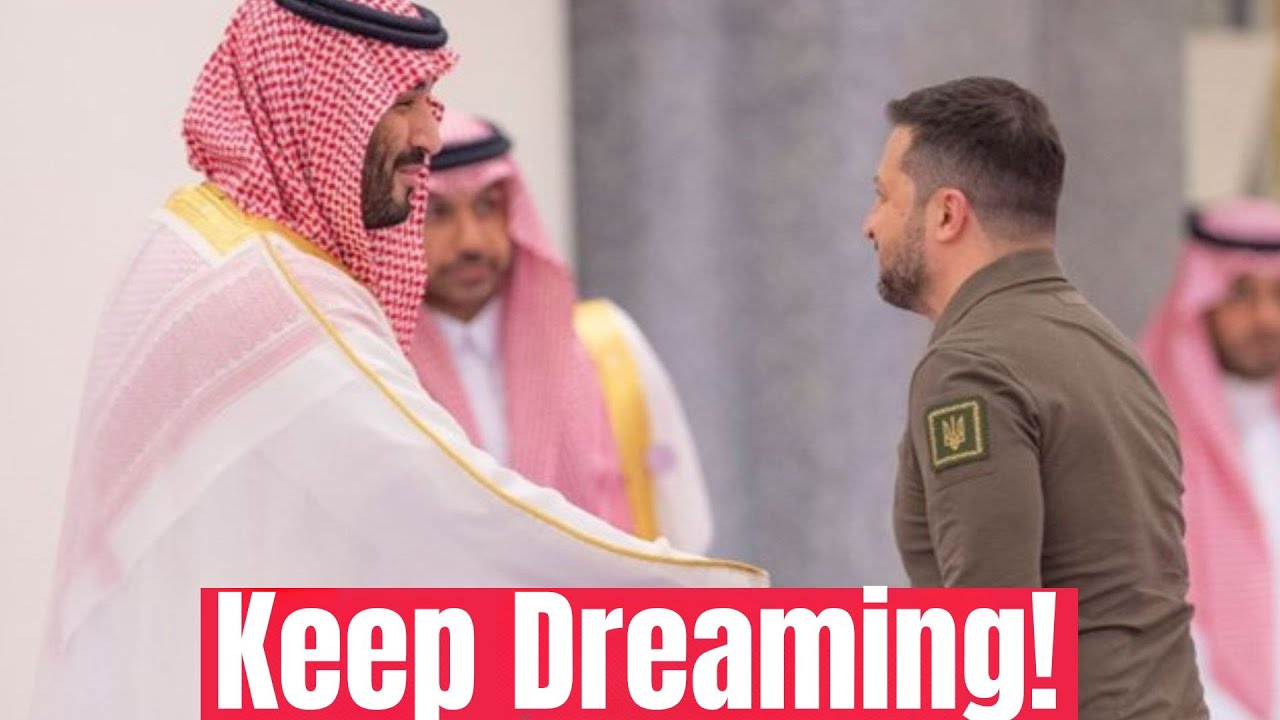
In this hour‑long livestream, the host of the Geopolitical Trends channel opens with a call to action for his audience, then dives into a detailed critique of Saudi Arabia’s newly announced Ukraine peace summit. He questions whether the Saudi‑led initiative can succeed, noting the exclusion of Russia and the reliance on a peace formula presented by President Zelensky, which he deems naïve. The discussion expands to a concise history of Saudi Arabia, its tribal and religious foundations, its massive oil reserves, and its strategic shift toward China, including a $10‑12 billion refinery partnership and the move to settle oil sales in Chinese yuan. He links these moves to broader US‑Saudi dynamics, the waning influence of the United States in the Middle East, and the growing geopolitical weight of China and Russia. Throughout, he intersperses audience interaction, personal anecdotes from his time living in Saudi Arabia, and a call for critical thinking. The video concludes with reminders of upcoming interviews, a teaser about a future video on Viktor Orbán, and a final appeal that geopolitics affects everyday life.
Chapters
Hey, and welcome to Geopolitical Trends. So good to be with you on this Saturday. The weekend is here finally, but for me it's showtime with you because I know we need to have time to rest and all that stuff, but, uh, at the same time I look at it in a way that it becomes a responsibility, you know, it if you want to keep the audience aware, informed, and of course up to date, there is no rest day. So, and second thing is I enjoy doing it. So, so I'm excited to be here. So good to be with you guys as always, and I mean it. So, uh, uh, like I always say, I like to express my sincere thanks to the channel's members and supporters. For you, if this is your first time here, please make sure to subscribe to this channel because I want to grow it bigger. So this way we reach more people in the hope of raising awareness. That is the objective of it. So I also would like to give a shout out to a new channel member by the name of Steven Ng. I don't know how you pronounce the, uh, Ng, you know, Ng. So Steven, thank you so much for becoming a channel members. So we are now about 66, 67 members, so we got almost 33 to go to reach that magic number of 100 so I can do the, uh, the exclusive Q&A for you and share the surprise. And you have my word on that because my word is my bond. So anyway, let's, uh, also just to remind you guys, on Monday I will be having a conversation with Robbie Barwick, directly from Melbourne, Australia. You really have to hear what he has to say. Very, very, very, uh, uh, informative guy, uh, and I've known Robbie for a while now, so I look forward to that conversation. All right, let's get into our topic here. What we going to be talking about today? Well, let me share the picture with you because sometimes pictures say a lot. So I share this picture with you here, guys. That's, uh, uh, uh, comedian President Zelensky visiting Saudi Arabia at the behest of the Saudis for launching an initiative for peace. Uh, this is why we're going to ask the 3— 2 or 3 questions, the main ones. Okay, will Saudis— in your— and these questions, by the way, guys, is for you just to think outside the box. If you feel comfortable enough to answer them, please feel free to do so on the chat box, and I'll take a look. And, and we, we're here just to learn, that's all it is. So, so the first question will be, will the Saudi initiative work? That's one. Second, all of a sudden, suddenly Saudi Arabia is hosting between 40 and 50 countries for the Ukraine initiative. Is this means that both Saudi Arabia and Ukraine got the green light from Washington to go ahead? Because we all know it's no secret that it is Washington, the neocons, the warmongers, that controls the process for that. Basically, literally, the US could end the war tomorrow if they choose to. But it won't happen. So those are the basic questions that at least we need to put, uh, uh, uh, uh, you know, put them within, uh, as a reflection of the really the current geopolitical dynamics taking place. And this is what I'm going to be talking about today, in addition to highlighting some other aspect that of course, uh, mainstream media is not going to talk about that, and I don't expect them to talk about it because those key points will be more of some sort of an analysis pertaining to geopolitical matters. That's, that's what it's going to be. So, so like I put the title, I'm sure you guys remember, Saudi Arabia's Ukraine and New Peace Initiative, and I said, nah, don't count on it because it will become just like, is it for show? Or is the Saudis have a different calculation altogether? Because there is another dynamics that the Saudis are playing, and rightly so. It's because they are seeing where the current, uh, uh, uh, dynamics of geopolitics are headed. They don't want to be left behind, you know. Look no further than the deal they just cut with China, and I'm gonna get into all this as I move forward. So So basically what we're looking at now, after Turkish efforts to mediate and negotiate since the beginning of the conflict— no, it wasn't Turkey just by itself. China also tried to launch a peace initiative. African leaders tried to launch peace initiative. Latin Americans, including Brazil, in this case, when, uh, the comedian President Zelensky left the Brazilian president just hanging there, didn't even show up for the meeting. The comedian Zelensky, I think he was ordered not to show up. Why? Because we don't like what Brazil is doing with China regarding the currency. So to get back at the Brazilian presidents, because what a best way. Like I always say, guys, Optics matters. The fact that the president of Brazil was standing there waiting for the Canadian president Zelensky show up and did so. So all this, those initiatives, you know, didn't work. Now all of a sudden we have Saudi Arabia will host the international conference. As a matter of fact, it's today and tomorrow. That's what prompts me to get on the air today because the conference is for two days. The 4th and the 5th, today and tomorrow. Uh, oh, I'm sorry, the 5th and the 6th, rather. So, so, and here's the thing, here's what I found very ironic about all this. You doing all this and you're not even inviting a party to the conflict— Russia, that is. Russia wasn't invited. That tells you right there the story So it's kind of, how can you play a neutral role when you couldn't even invite the parties involved in the conflict itself? You know, that, that almost reminds me of what took place in the— you guys remember the G20 Summit, the Indonesia, I believe, or Malaysia? Malaysia, that is. And the Woodrow, the President Woodrow extend the invitation to the Russian President Vladimir Putin. And he said, I don't care what you guys think, uh, you know, I'm hosting the meeting, I'm the chair of this G20 Summit, and I will invite the Russian president, and he can decide for himself if he wants to show up or not. So this is what's important for us to understand, and I'm going to get into all these dynamics, but first I do need to give you a brief understanding about Saudi Arabia because without understanding its history and of course the geography, uh, you would be missing a, a point. Of course, this comes from my own research. I, I wrote a book about Saudi Arabia, Beneath the Veil: Fall of the House of Saud. I detailed a lot because I spent time in Saudi Arabia. So I worked there on behalf of the US government back then So I'm very familiar with the Middle East. I speak the language, I know the culture, and I understand how the Saudi government thinks, especially when it comes down to geopolitics. So, so I'm talking based on experience, based on research, and based on my credentials for this one here. So, so Saudi Arabia, uh, basically, believe it or not, it will be reasonable it will be reasonable to cover the history of Saudi Arabia in few pages. You know why? Because Saudi Arabia was originally nothing but a cluster of tribes and nomads. That's all it was. It was spreading throughout the, uh, the Arabian Peninsula. That, that's in a nutshell for that. However, so however, it will be a challenging proposition you know, trying to decipher the early civilization of the Arabian Peninsula where Saudi Arabia had a recorded presence there. So, so the misconception in the West suggesting that, for example, the religion of Islam was born in Saudi Arabia— no, it's not true, even though it still persists. And I'll tell you why. Islam was, uh, sort of emerged to the scene in 610 AD, but Saudi Arabia, the Kingdom of Saudi Arabia, was established in 1932. So you can just see the discrepancy right there. But the masses and even the Western audience do not understand, thinking, oh, Islam was born in Saudi Arabia. No, it was not. So, so, and when you take Saudi Arabia itself as a, a small— not a small, a rather small part of a peninsula in the southeast of Asia— southwest, I'm sorry, southwest of Asia— it was part of a region that played a pivotal role over the centuries. Why is this? Ancient trade routes. What brings to mind here, guys? Silk Road. This is why Saudi Arabia signed off on the BRI, Chinese Belt and Road Initiative. That's where the dynamics are, and I am gonna focus on all this as I move forward. So there are many crucial aspects when it comes down to the Saudi society you need to understand. They are the social, they are the tribal, There are the culture, there are the religious, there are the political. All those dynamics comes to sort of form what you see today in Saudi Arabia. It was, however, since the establishment of the kingdom back in 1932, there was some sort of an agreement between the religious establishment and the monarchy. That's why the monarchy is still in power. It's no coincidence, okay? Because the, the religious establishment is very, very powerful because they can mobilize the tribes. And most of these countries in the Middle East, tribalism is part of the culture. I'll give you example. For example, the late Saddam Hussein— why was he able to rule? It's because of the support of the tribe. As an example. So, so it is imperative that I clarify one specific thing that most Westerners are really do not understand, and I say it out loud, they don't. And this one has to do with the difference between an Arab and a Muslim. There is a difference, you know, as it says in Arabic, it says, uh, uh, uh, uh, uh, uh, Arabi wa Muslim, Arabi wa Muslim. So the difference between an Arab and a Muslim. Many in the West have a hard time distinguishing between the two. To this day, believe it or not, to this day, Western audiences still assume that a Muslim is an Arab and an Arab is a Muslim, which is not true. You know, it is, you know, it just still they don't get it. A Muslim, let me just provide you a brief description difference between the two. A Muslim is an individual who embraces the religion of Islam. An Arab, on the other hand, is is an individual whose ancestry originated in the Arabian Peninsula. Nonetheless, the terms Arabs and Muslims are used interchangeably and frequently. This is what the Western audience do not get much, you know, perhaps because the Arab region— when I say Arab region, I'm referring to the entire Middle East is the cradle of three world religions: Christianity, Islam, and Judaism. So this is even the same problem when we— in some Western audience, when I wrote the book about Iran, The Volatile State, I made the same case. Most Westerners do not differentiate between a Persian and an Arab. An Arab is not a Persian. And Persian is not an Arab. So historical records suggest that Christianity, Judaism, and Islam started in the Middle East. So it is irrelevant that I mentioned to you that even the Prophet Muhammad for Muslims was, was of Arab descent. Well, which means what? He wasn't Saudi or Kuwaiti or— no, of an Arab descent, which means An Arab can be of any religion— Christianity, Judaism, and Islam. That's, that's in, in a nutshell. Now that leads me to talk to you about geography. By the way, one of you guys, uh, left me a comment yesterday, said, Dr. O, please leave the map a little bit, uh, longer when I put them on the screen. So I'm gonna leave it here for you guys for Till I cover the certain aspects of the geographical area of Saudi Arabia. So Saudi Arabia is known officially as the Kingdom of Saudi Arabia. So, so geographically it's considered the fifth— yeah, the fifth largest state in Asia and the second largest state in the Arab world after— can anybody tell me which country? The largest Arab country. Let me see if you guys can type in that. It, it's not common knowledge, but let me see if anybody can, uh, can type in that. Yeah, so Saudi Arabia is, is the second largest state in the Arab world. So let me see if anybody can type in Uh, uh, United Arab Emirates? No, no, thank you for, for trying that one. Iran? No, no, no, this country is in Africa, believe it or not, because it's an Arab country. Algeria? You got it, you got it, GL! It's Algeria indeed, because this is where, uh, it's the largest in the Arab world. Remember, that's the key word. So, so as you look at the map, and, and I'm going to leave it on there for a while. So, uh, Saudi Arabia borders Jordan and Iraq to the north, okay? You got Kuwait to the northeast, you got Qatar, Bahrain, and United Arab Emirates to the east, you have Oman to the southeast, and Yemen to the south. And, and Saudi Arabia is separated from Israel and Egypt by the Gulf of Aqaba. Gulf of Aqaba, it's known. So that's what it's separated, uh, uh, between, uh, Saudi Arabia and Israel and Egypt. So it is the only nation— Saudi Arabia, that is— it is the only nation in the region with a direct access to both the Red Sea and the Persian Gulf. Now you see why it's very important that the Persian Gulf does not get closed. Why is this? Think oil, because Saudi Arabia is very rich in oil. Most of— as a matter of fact, in the book I detailed a lot on it, and I'm not going to talk about that here. So, uh, if, if oil cease to exist today. Saudi Arabia will collapse. I'll say straightforward, that's why I use the title The Fall of the House of Saud, because it will be the fall of the kingdom. They don't have anything else beside oil. If it isn't for oil, they will collapse. So the one thing about Saudi Arabia, most of the terrain is considered arid desert and mountains. And I'm gonna share personal pictures with you here, guys. Uh, those were when I, uh, when I spend my time in, uh, in Saudi Arabia, okay? And I used to get around when I had time off. Uh, so I'm gonna share a screen with you, some personal photos here. Uh, share screen. There we go. This is me in the desert. This is in the outskirts of Riyadh. Okay, may ride in a camel because that's, that's just the norm. I even had to drink camel, camel's milk, pure. Of course, my colleagues were very nervous because the, they, they never been in Saudi Arabia. They don't, they don't know much about the culture, so And, uh, and I kind of, you know, did my own research about— and I do drink, I, I don't do skim milk, all that. Stay away from all that, anything skim and all that, it's nonsense. So, so, and I drank it and I was fine. There's nothing, nothing wrong with that. Uh, it is another— now this picture is this, the three ones. This is considered the desert, the Arab desert in Saudi Arabia, and this is rugged mountains. You know, I remember when I was standing here, I threw a gravel just to, uh, to see if I can hear. I didn't hear it when I threw it. That's how deep that is. On the picture it looks fine, but when you get closer, it's all the way down. It's a, it's a, it's a very, very— if anybody falls, that's the end. Because, uh, so I took my chances and sat there, and it's like, oh, my colleague's like, are you okay to sit there? I said, yeah, yeah. It'll be fine, it'll be fine. Yeah, you, you have one life to live, so at least, hey, you did something I enjoyed. I did something I wanted, so I wanted to sit down and, and do that. Here is a— here's the picture here, just want to share this. Now there is one thing I also want to share with you, uh, and, and by the way, it was nobody there, it's just us. It was at that time, you know, the with the 4 of us were out there in the desert. So, uh, this guy here is a horse trainer, and the reason I want to share this video— this guy was brought in from England. This is, uh, in this, uh, in this stable of the, the royal family. So we were invited. Now here's a question for you guys. Can anybody tell me the price of this horse? How much does it cost? So let me see. I'm hoping you can see it. Yeah. Can anybody tell me the price of this horse and what type of horse is it? So let me see. I'm gonna leave it up there for a second here just to see, uh, get you— oh, at the same time, I want to say thank you to KL Thank you very much for your Super Sticker, truly appreciate it. Yeah, let me see if anybody can tell me what the price of that horse is. Oh my gosh, yeah, yeah, let me, let me— oh yeah, how did you know? KC Ball, you're absolutely correct, it's $5 million. That's how much that horse cost, you know. This one, guys, this horse here has— it's an Arabian horse, has won all the awards regarding the horse show. This horse is not for riding, uh, the royal family there, the prince or whomever owns that stuff, doesn't ride this horse. This is just to go— he won the award in Copenhagen Madrid, Frankfurt, Lisbon, uh, and London. And it was another country, uh, uh, in Belgium somewhere. So yeah, $5 million horse. And this horse, by the way, goes to swimming pool every day at 2:30 in the afternoon, back then when I was talking to his trainer. So, so anyway, I just wanted to share this with you guys. So I absolutely correct, $5 million horse. So that's what it is. So this is what's interesting about just— you have to have a background in understanding, uh, Saudi Arabia to, to put this in, in, in, in context. So, so now let's, let's talk about our topic here, sort of to focus on the analysis part of it, because this is one thing I want to provide you today. And it becomes the question of, uh You know, why the Saudis all of a sudden launching an initiative here by inviting 4 or 50 countries? As I said earlier, is it to draw attention away, or is Saudi Arabia is about to embark on something that the Americans are unaware of? Because Saudis tends to do this, and I'm going to give you a quick example. We have been since, since we took the gold out of the, the the, the, uh, the gold standard. We took it out. We took the dollar out of the gold standard back in 1971. So the arrangement was made with the Saudis at that time, and we cut the deal. We made the arrangements that we will be, uh, sort of, we will provide them security in return that all the oil transactions will be conducted in the US dollar. Still, pardon me, still till today So the idea was, after that, we started to think in terms— well, we knew, and we still know today, that Saudis have massive oil. When I was there in Saudi Arabia, and I will talk to locals, sometimes I'll go to outskirts. That's where I had that, uh, uh, uh, camel milk. It belonged to somebody who owns large farm and has so many camels. So when they own a land like this. So I asked the person, and I said, what happens if you dig for water and you find oil? They said, that's usually what happens. They said, well, the Saudi government will come over, write us a check, and we become a millionaire overnight, and they'll take over. So why am I sharing this? Is to highlight to you how, uh, much oil in Saudi Arabia, it's really up to the surface. So back then After 1971, we knew that Saudi Arabia has a lot of reserve oil, but when we ask them, they never disclose that number till— and, and it's been a long time now since the US intelligence community, mainly will be the Central Intelligence Agency, we were trying to find the actual reserves. Saudis never ever wanted to share that information. Nation. Now, I did find something personally, and this is my personal— this is not a government source and it's not classified and all that— that's thus far Saudis do have up to about 246 billion barrels of oil that they could produce. That's the massive reserves. But that is not 100%. So I had a talk with the people inside that understand this kind of dynamics, and here is where the, the concern in the Saudis is that the massive oil reserves in Kazakhstan, Central Asia, are far bigger than the ones in the Middle East. So you can just see historically why the Central Asia has always been— the Euroasia, I'm sorry, Euroasia, that is, you know, the Caucasus has always been crucial to any country's expansion or demise. Expansion is when they took over, demise is when they lost control of that. Now you understand Why Saudi— why China is doing that Belt and Road through that area? Because they will avoid any choking points. This makes perfect sense. So, so becomes question of the Saudis thinking in these terms, uh, to go back to Ukraine topic here. So inviting all these countries, and because this saying that the comedian President Zelensky has a formula. It's called the Ukraine peace formula. Now you ask yourself, you're smart, you're intelligent, you ask yourself, are you gonna even believe what this comedian is saying? First of all. Second, does he know what he's saying? You know, no background in international relations, no background in geopolitics, no background in the military, no background in a foreign policy. No, what would you expect? His initiative peace, unless one condition, that the peace formula was handed to him to read. So basically, we give him the script and tell him, go in front of camera and read it verbatim. Word for word. Yeah, because to me it's incomprehensible that he will come up with a peace formula. You know, you should have— you, Canadian Z, in this case, if he's watching this— you should have thought about this ahead of time, where you will lead your country into full destruction, because that's what's taking place right now. The media, Western media, is not disclosing that, you know. I'm sure you've heard about the recent missile that Russia launched destroying the ports in, in Odessa. We don't hear much about it, do we? Let alone if we even see the images. And all we hear is, oh, Ukraine is advancing or, uh, recuperating lost territories. It's a lie, straightforward. So when you hear about Ukrainian peace formula that the the comedian President Zelensky is proposing. Yeah, and his argument was that it will not only ensure peace for Ukraine but also create mechanisms to confront future conflicts in the world. These are his words, by the way, and I put it in quote. Yeah, it just doesn't make sense. It does not make sense. So you get the 40 to 50 countries invited— without inviting Russia— a party to the conflict, which ought to have to, in my opinion, if I am to think logically, you know, leave emotions aside, we just talk logically here. If you are to resolve a problem, let's say you have a problem with your friend, then a third friend, another friend of yours, wants to mediate. Wouldn't it make more sense to put both of you together in addition to that friend and talk about where the disagreement is and try to resolve it? So by doing this, rejecting or not even inviting Russia, and you're talking about peace— what kind of peace are we talking about? So now, if we are to even think about doing this Why, why wait all this when, for example, China initiated 12 talking points for peace? And I read them last time, and then to me made sense. So, so why was it rejected? Wasn't even before the moment we knew about it, Washington rushed into declining it to begin with. Why? It's because we do not want any initiative to come from either the Western world or close ally to the US. This way we got a chance to shape what that agenda is, or what that peace, uh, initiative, or, or the, the clauses of that initi— uh, that peace initiative, uh, will be. That is what's, what, what's different about So if you are to say, well, that's great, Saudi is launching this, why didn't you adopt the, uh, Chinese, uh, proposal? Why didn't you adopt the African leader proposal? Why didn't you adopt even what the Brazilian president was trying to initiate? So, so, this is what, uh, uh, And even without inviting Russia, I came across a statement by Sergey Lavrov, the foreign minister for Russia. He said, and I quote— I got the quote here— he said Western sponsors should ask Ukrainian President Zelensky to present a formula on Kiev vision for the situation of Russians and other national minorities in Ukraine. After the victory for which NATO and the European Union spare money and weapons. End of quote. Fair point, because I'm going to share with you the talking points of this proposal, and you'll see, you'll say to yourself, well, maybe he's hallucinating, or maybe he's high somehow. So Now let me, let me get to this talking points right here. I'm going to share them with you because, uh, and they are about, uh, like 5 points I think, or 6. All right, here, here's the— and I'll let you— I'm going to read them to you and you guys just think about it. One has to do with nuclear safety. The Zaporizhzhia nuclear plant, the largest in Europe, returned to Ukraine's control. 2. Food security: continuing to operate in accordance with the grain agreements in the Black Sea while expanding it to include all ports. 3. Energy security: by reducing the prices of Russian energy resources, protecting Ukrainian installations with air and missile defense systems. 4. Release all prisoners and return forcibly deported. 5. Respect the Charter of the United Nations. Restore the territorial integrity of Ukraine. 6. The withdrawal of Russian troops from Ukrainian territory and the cessation of hostilities against them. 7. Justice: establish a special tribunal for Russian crime and compensate for damage and losses caused by the war. 8. Combating environmental genocide. 9. Prevent future escalation by providing Ukraine with security guarantees. And 10. Determining the end of the war by signing a multilateral peace treaty. I'm just— I'm really laughing at this time. I'm really laughing. It's just because the comedian Zelensky has no understanding of how geopolitics work. He doesn't understand the dynamics. So, and if you are to say, well, we want a peace, why aren't you inviting the other party to the table and talk? And by the way, what happened to the Russian speakers, as the prime— the foreign minister Lavrov mentioned? So, and let me just state this: if the comedian President Zelensky think that Russia is going to relinquish the territory it, it took He's delusional. As a matter of fact, the way I see it as an analyst, Ukraine is going to be carved out. You're looking at three sections: the east, the center, and the west. And I wouldn't even be surprised that we in the west, especially the United States, might work out a deal with Poland and give them part of the western territories of Ukraine. If you only know the history of Poland or the Hungarian, uh, Austrian, uh, uh, uh, uh, what's the word, monarchy back then, and the territories that fell under Polish control. Let alone what the Ukrainians have done to Poles or Polish people back then. The older generations, they, they passed away and all that, but the history doesn't get forgotten. I was in Poland and I asked You know, they didn't forget the atrocities that Ukrainians committed against the Poles. So yeah, so this is what I see with something like this initiative. Uh, it just hypes. That's why I put on that title, nah, they just, they just wishful thinking, no more, no less. The other arguments to all this, you have to see it from the perspective of Saudi Arabia. Why is this important in your opinion? Uh, let me get— I have one particular point that I need to make to you guys for you to understand the, the big picture of all this. All right, let me see if I need to share, uh, this is one. This is an oil refinery in Saudi Arabia, and they just had a chance to build— they are building, as a matter of fact, a new one. Guess where? Can anybody tell me where is the new, uh— Saudi Arabia cut a deal, and I think I did talk about this few months ago. So Saudi Arabia cut a deal with the country where they're going to be building brand new refinery. Can any of you tell me which country is that, that the Saudis got to deal with? And the refinery, by the way, is— was at a cost of— or is at a cost of $10 to $12 billion. Let me see if anybody can put an answer there. And once again, guys, when I ask question like this, it's nothing but just to further the conversation because I like you to be part of it. So So, uh, if anybody can tell me which country, because once you understand which country that is, it will make perfect sense to you why the Saudis sort of approaching certain global dynamics this way. Because Saudis, mind you, Saudis realizing, as I disclosed in, in my Saudi book, They are realizing that they are going down. Why? Because the dynamics, the geopolitical landscape in the Middle East is shifting, but not to their favor. If you go back to the '70s or the '80s, Saudis carried a lot of weight. Not anymore. This is why I think they have been calculating and thinking in terms, it will behooves us to reach a deal with Iran. Even though it's our arch enemy, but it'll make perfect strategic sense for us to have a deal with Iran. Because Iran, despite the sanctions we imposed on it for the last 38 years after the 1979 Revolution, you know, they survived and they are surviving. As a matter of fact, they are moving forward. Saudis did not want to be left behind That is the reason that I want— this is what I want you to get out of this video here, guys. Saudis are seeing where the trends are headed. They don't want to be left behind. So, and the answer to the question I put, which country, will make perfect sense to you. Let me see if anybody put the answer there. And I know, as I always say this, guys, it takes a while for the answer to show up here. Uh, oh, hey, you got it, man! And spot on, spot on, it's China. It is China. Why do you think that is? You know, Saudis sees where the trends are headed, and I'm referring to two things here: economics, okay, mainly, and energy. That is why. So when we— and again, it's not even disclosed here much When we asked the Saudis a few years ago, I say, hey, you need to update the refineries in Houston because that's where we keep part of our petroleum reserves, uh, uh, the, you know, the Strategic Petroleum Reserve, SPR. That's where we keep some of the— the Saudis said, nah, we are not interested in updating all that, so leave them as is. In the meantime, Saudis were at that time in talks with the Saudi— with the China. And I have the reference for all that, and I disclosed it, and I checked all that. Because this, by the way, guys, didn't happen just last year. The conversation has been going on for a long time. So what the Saudis end up doing is they agreeing with the Chinese that they're going to build brand new refinery. It's a win-win for both. To Saudis, that guarantees the sale of oil. To Chinese, it guarantees access to oil. Why? As I always say, because the wealth has shifted from the West to the East, and Asia, headed by China, that's where the economic hub is going to be moving forward. Gone the era where the EU, for example, or the United States— no, that era is, is on its way out. Saudis making the calculations, strategic one that is, didn't want to be left behind, let alone another issue that the Crown Prince MBS, which most likely he'll become a king. If he be— he becomes a king We looking— we in the United Washington Insiders looking at dealing with him for the next 50 years or so. Why is this? If you look at the history of Saudi Arabia, most monarchs, the kings, most of them, the youngest will be at about 76 years old because they had to wait in line for their turn. And they're— they can wait for 30, 40 years. That's why most of them are above, uh, 75, 80 years. MBS is only mid-30s. I think he's like 38 now, whatever. Yes, he is not well-versed in international affairs. He's not— doesn't understand the dynamics yet. He's learning. But the mistake he made, which already started with an iron fist when the decision was made to neutralize Jamal Khashoggi, the journalist, the Washington Post journalist who is of Saudi descent. So what bothered MBS is that we were listening to the conversation. The CIA has a recording of him giving the order to neutralize the guy. So the prince didn't like that, was like, you don't know whom you're dealing with. So he's retaliating back to the US, let alone our, our beloved president, Uncle Joe, before he became president, said, well, Saudi Arabia is a pariah, we're gonna hold the prince accountable. When he became president, Joe Biden, what did he do? Nothing. As a matter of fact, you all remember the picture when Biden visited— President Biden, you give him the proper respect. President Biden visited Saudi Arabia, and the prince, he's the one who welcomed him. How did he welcome him? With a fist. What's up? That's it. If you compare that to the reception the Chinese president got, a red carpet, that tells you right there. And this what I want you guys to get is to understand that this so-called initiative, peaceful peace initiative summit, whatever you want to call it, doesn't happen in a vacuum. There are other tendencies behind the scenes. So there is another element that is going on, and this based on, uh, some conversations that I had with some individuals outside the mainstream stuff. There is, as we speak, a conversation between Riyadh and Washington, and what Riyadh wants— Saudi Arabia, that is— wants a guarantee, security guarantees from the United States by allowing them, which means we allow to give them the complete Iron Dome protection from missiles and all that. That's not something we did before, and I don't think so we will do, but we left the door open. You know why? We said to the Saudis— and by the way, all these guys is not reported, that's why you're getting it here in this channel— we leave the door open by saying, yeah, we can consider that, providing you the Iron Dome, you know, assuming you will establish relations with the state of Israel, which will be a suicide for Saudi Arabia because the religious establishment in Saudi Arabia does not want it. So you can just see the dynamics. Okay, then you get the third element. I call it the elephant, the big elephant in the room. And this one has to do with both Russia and China's influence, or I may use the term success in influencing the direction of Saudi Arabia has already embarked on. Which in my opinion is already a big blow, already, to the decline in US influence, not only in the greater Middle East, but a global one, that is. So more and more, as you know, more and more, as you notice, Saudi policies are sort of one step at a time shifting eastward. Because what investments the Saudis have here, you know, besides their gold, which I had a chance to see with my own eyes— I went to the vault and I saw it. It was about $120 billion worth of gold bars. And when I asked, they didn't disclose the name to me, but I knew. I put the two and two together and figured, uh, uh, it belongs to Saudi Arabia. So more and more Saudi Arabia is thinking in terms of geopolitical calculations. This is what's important. And calculations, by the way, are not limited only to the Middle East. It's beyond. When I say beyond, I'm referring to global stage. Why? Because they are seeing Russia and China, given their economic and political presence now is changing the Middle East. And when you think about the Middle East, you think about energy. When you think about energy, you think about transactions. And when you think about transactions, you think about another alternative to the US dollar. So in light of this economic developments that you are witnessing on the geopolitical landscape, I can see And by the way, I argued this few years ago, you know, I can see why Saudi Arabia is pivoting towards Asia, where the next economic, uh, uh, boom is already emerging. We all know that. And here is the interesting aspect, and by the way, I argued this in 2000, uh, I published the— I don't even remember when I just published books. I don't remember when, uh, this book I think came up in 2018, if I'm not mistaken, or 17, somewhere around that. So, but usually what I do is, you know, looking at about 2 years of research. So I— it takes me time to do the research for the book. So, so even back then, and I recall this because I wrote it in the book, I argued I argued that one of the interesting aspects that's going to be emerging soon is whether Saudi Arabia will process payments for oil shipments to China in the Chinese currency yuan instead of the US dollar. That was back in 2017 when I argued this. What just happened a few months ago, you guys know, right? Saudi and Chinese made the arrangements that the bilateral shipments and sale of oil will be conducted in the Chinese yuan. So, and this is what geopolitics is all about. You have to anticipate and think far ahead. This is what prompts me to think now. I'm thinking about probably creating a course in this channel here, uh, for you guys. And I'm assuming, I hope you can, you know, buy the course because that's— I'm gonna spend time on it. But it won't be anything close to what universities are charging for those courses. Do you believe— I'm gonna share this with you as one who used to teach at the university. Do you know that a simple course about government, some university— universities charges about $3,500 a semester for a course? So, so I'm thinking about, uh, I'm just thinking for now. I didn't make a decision yet. I'm gonna create a course because you guys need to know this kind of information. But if I presented it in a form of a course, you will always have it there, because if you purchase the course, it's yours for life. And usually this information— look at this, I talked about this in 2017, and here he is, and he will remain for the time, uh, moving forward. So the thing about the Saudis making that decision about the transactions in yuan, because they are seeing where the world is headed. Well, when I see the world as far as the Global South, but also you tie this to the BRICS upcoming summit, especially when they're going to announce about the BRICS currency, and, and you can see why the yuan will play a role. And this is why no country, no country wants to— as a matter of fact, even Chinese now, they are stuck with the I think 1.5 billion rupees from India. They just stuck with it. What they going to do with it? Because rupees won't cut it. So Saudis were thinking smart, even though they sell oil to India as well, but they are not accepting rupees. They said you'll pay in US dollar for that. But with the Chinese, they are transacting in the Chinese yuan. So, and all this falls within the the global, uh, circulation now that is growing as far as the, uh, the yuan. So because the currency, the yuan, joined the IMF, I think in 2016, if I'm not mistaken. I remember I disclosed all this because I had the, the research and the reference for it. So, and even back then I asked one specific question: should Saudi Arabia decide to proceed, which by the way just did a few months ago, back then in 2017 when I asked the question, should they decide to proceed with the payments in Chinese currency? I wonder what and how these dynamics may impact the US-Saudi relations. That's what's at the heart of it all. And this is why I decided I'm gonna do this for you guys, because you need to understand this dynamics. Nothing happens in a vacuum when it comes down to geopolitics. So that is the key. So Saudis doing it, yes, they want peace there. Well, maybe, maybe not. They don't care for Ukraine, uh, uh, or they don't care for Russia either. What they care about is survival. So, and by the way, the recent decision by OPEC+ to cut production, it was with the approval of Saudis as well, because what is OPEC+? Is all OPEC+ Russia. That's— so that means behind closed doors the decision was discussed before. This is similar exactly to one of the comments one of the viewers on the channel made about, uh, well, how about when I talked about New Zealand? You guys remember that Mahuta made that decision, and one of the viewers mentioned, well, I don't understand why, uh, why the Prime Minister Hipkins of New Zealand didn't say anything. It's because the conversation took place behind the scenes between Mahuta and the New Zealand Prime Minister, or yeah, Prime Minister, and he will be the foreign minister that will take the lead on that decision. So this is why you don't hear the Prime Minister of New Zealand coming forward and saying we don't want to argue some of that, left it to the, the foreign minister. Because after all, he was the US Secretary of State. So it— in a diplomatic world, you meet with your counterpart. So it won't be Secretary of State Blinken meeting with the prime minister. No, you meet with your counterparts. And, uh, and this is why when, uh, Secretary of State Tony Blinken went to China, he did not meet with the Chinese presidency because just it breaks protocol, you know, unless the Chinese president wants to meet, but I don't see a reason for that. Excuse me. So this is what I want you guys to get out of this. So just to sum up or summarize all this What this initiative is not going to lead anything because there is one thing that is, as an analyst, and I think about it, is that maybe the US wanting to end this, but it doesn't want to come forward because it will lose face. So what it's doing, it's letting its proxies or other countries to do the work for it. So because Ukraine, Ukraine can't do squat on its own. Let's just face it, it's reality. And again, I got nothing against Ukraine or the comedian President Zelensky. You know, I know how fraudulent he is. Uh, it just— that's just how it is. So because to me it makes perfect sense, you know, if you are to allow this initiative to move forward Why didn't you allow the other ones that were initiated by other countries like China, like some in Africa, or the collective Africa, like Brazil? That, that, that, that just to me doesn't make any sense. So unless the US wants to end this, which I don't see because the neocons controls the foreign policy establishment inside Washington— these are the reality of the dynamics of how US foreign policy, even if we have a foreign policy. We don't even have a foreign policy. We even— we haven't had foreign policy for the last 3 or 4 decades. So what we are doing basically is just reacting to events as we move forward because we have no qualified individuals. And I don't shy away from saying all this. I know some people may not like what I'm saying, especially here in the US, but I don't give a damn about what they think. I respect people's opinions, but you know, I ain't gonna shy away from disclosing the truth. And if you don't like it, well, that's too bad. It's your issue, not mine. It's because if I am to go that route, that means I'll start being cherry-picking. The moment you start cherry-picking the information, you lose credibility completely. Then what you stand for is not there anymore. You become nothing but a figurehead just talking. What's the point of it, you know? And to me, as I said last time, guys, and I will repeat it, I had to give up a full-time teaching position to do this because I believe in it. That's why I'm doing this. I believe in it. So if you believe in something, you give it 110% effort. You don't just swing it by or, or, or, or do whatever. Oh, I'm gonna just swing it by and do what— no, no, no, no, no, no, no. If you don't have something of substance to share with your viewers, then get off. Stop pretending. That's, that's to me how I see it. If you don't— in not just in this, guys, in life in general If you don't have your heart into whatever you do, don't do it. Don't do it. Whatever, whatever you do in life, if your heart is not in it, that means you are not going to give it 110%. Then don't do it. So, so, uh, this is why some, you know, pretend, uh, you know, it's kind of whatever. Yeah, don't. You know, just say it straightforward. That's, that's the way I look at it. So anyway, let me see if you got one question, I will answer it for you, and I am gonna go from there. Well, funny, there was one question right here from Francis Tango. Where are you from, Francis? If you can type in your question— you're typing where you're joining me from. So I heard that China helps the US and EU countries the crisis in 2008. Is that correct? That is correct. Regarding the loaning of money, China was always, uh, uh, uh, a venue for the United States to borrow money from. That's why Chinese were buying our treasuries. It became a problem for the United States now when China is selling our debt. And interesting enough is that China's selling our debt and replacing it immediately with gold. That's, again, it tells you the story right there. So same thing with the, the, uh, the, the war in— or the invasion of Iraq. How did we finance it? We borrowed money from China for it. It's almost like we put the war on credit card. Because that's the lifestyle in America, credit cards. That's why the debt is so high. I, I just wish, I wish, I know some Americans will not want to listen to this because this is not entertaining, you know. I don't talk about kitty cats playing and I don't talk about silly stuff, but I wish they can at least give it a chance one day to really hear what lies ahead so they can wake up. But again, the government find it, our government find it convenient to distract these masses. This is why they, they're not going to get it. They, they want to understand this kind of stuff, you know. I'm not putting them down, it's just some of us, not all. Like I always say, shall not generalize. Brain doesn't operate at that level. This requires critical thinking. This is why you guys are step ahead of others. Doesn't matter what part of the world you're in. And not just because I'm saying this to you or sharing it with you, no, it's because you are thinking When I ask you a question, you are pushing yourself to think outside the box. You're forcing yourself to think critically. And what comes with that? Exposure to new perspectives. And that exposure is what builds your intellectual capabilities. That's what learning is all about. This is why I always believed, you know, by the time you get a PhD, that doesn't mean you stopped learning. No. If you only know why we use the term commencement— what does commencement mean? It's a French word for le commencement, which means the beginning. You're just beginning. Just because you got a PhD, you don't need to stop learning. Same for you guys. And that's the whole idea of it. So I wish most Americans will wake up to really what lies ahead. But again, It's their choice, it's their life. I can, I can only share the information, share the knowledge, uh, if people wants it, likes it, they'll support it. If they don't, there's nothing I can do about that, so I leave it up to them. So, all right, let me see if there is another question here. And by the way, guys, as a reminder, Make sure to join me, uh, uh, uh, on Monday for my conversation with, uh, Robbie Barwick, you know. And I say it again because I know what the guy is all about, you know. You really want to hear what he has to say. I really wish that guy would become a prime minister one day, so, because he will serve— he will serve Aussies. Australia— uh, I mean, uh, Aussies deserve citizens, not the government. The government is so weak. Prime Minister incompetent, Albo just another. So anyway, all right guys, well, uh, once again I want to say thank you to KL, much appreciate you again for your super sticker. I truly appreciate it. And you are correct Sabaah al-khair, which means good morning. That's the screen name, by the way, guys. And the word here, it says, uh, Algeria. Algeria. That's an answer to the question I put. The second largest country in the Arab world is Algeria. So thank you very much for posting the answer, truly appreciate it. And yeah, some of you did answer that question. Here's another one here from, uh, uh, Sotiris. Thank you very much for answering that. Uh, also GL answered the same question. Thank you, truly appreciate it. So, and this is what makes you guys different. I really, I mean it. And I'm not, I'm not saying it to be Mr. Nice. I don't do that kind of stuff. I'll say it the way it is, and I'm sure you figured that out about me by now. So anyway, guys, I hope you find it very informative, and I look forward to seeing you next time. By the way, be on the lookout for a video that I'm gonna release soon, about, uh, Prime Minister Orbán, Viktor Orbán. So, and I look forward to seeing you next time. As always, remember, geopolitics impact your daily life in more ways than one. Till next time, bye-bye.
More from David


Beyond the Single Actor: Why the Gulf Isn't Choosing Between the US and China


Iran, Iraq's Militias, and the Houthis Are Coordinating! This Changes Everything




Who Controls the Next Decade's Resources? Latin America and Africa's Geopolitical Crossroads

The Chokepoint Trap: How Washington's Stupidity Triggered a Cascade That Now Controls the World

Trump Spooked as IRGC Unveiled dual-use SLV, Deployed Ghadir Mini-Subs & Hinted at Tactical Nukes!
