Senegal, Chad & Ivory Coast Ordered French Troops to Leave!
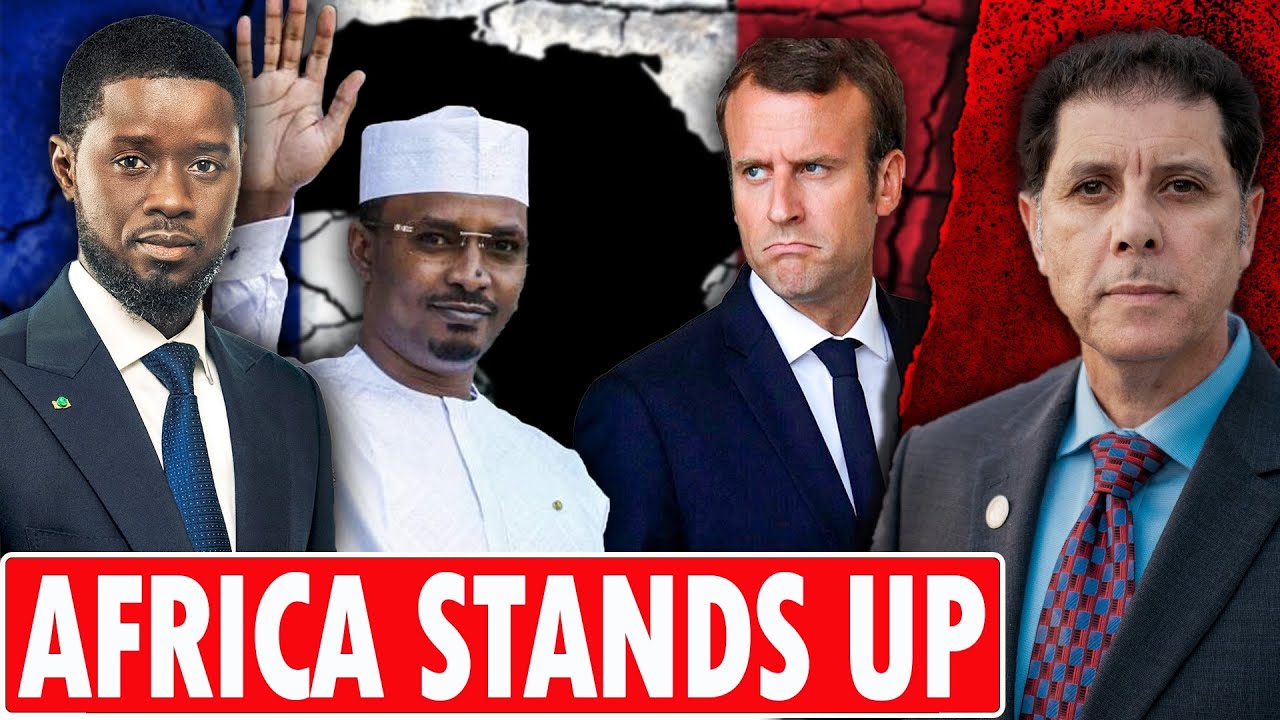
David Oualaalou breaks down why Senegal, Chad, and Ivory Coast ordered French troops to leave, examining how the US, China, and Russia are competing for influence across Africa. He connects the expulsions to natural resources, language shifts, and historical parallels like Rwanda 1993.
Chapters
All right, hello everybody and welcome to Geopolitical Trends, where truth matters. Excited to be with you as always. Got an interesting topic for you today, has to do with Africa. And I did tell you guys last week that I was working on this because I wanted to confirm some information and also to put my analysis for you within the proper context. Geopolitically speaking, mainly. So this is what I'm going to be addressing for you today, and what does it mean as the major global powers vie for influence and competition in Africa. It's, it's a, a quiet competition that is taking place in, in, on the continent. So before I'll do this, let me say hi to our community as always. Willie Holman, good to see you. Phil, good to see you. Truth Seeker, good to see you as always. Taiwan Still, Hang NG, and good evening to you. By the way, Hang, I read your comment about the disaster that took place in China. It's very hard touching, and I mean, and given how China responded to that versus what we are seeing in California, you can just tell the difference. Guys, if you get a chance to read, uh, Hang NG's comment, I might post it for you in the community later on. So Taiwan Steel, good to see you as always. Alistair O'Keen, good to see you. Francis Tango, as always, good to see you. Hi, Carl Kulak, good to see you. And Jonathan Foster, good to see you. Uh, let me silence my phone so this way I won't get distracted by this, and we just can move on with what we're gonna be talking about today. So anyway, excited to see you guys. Here are the questions that we're gonna have to ask regarding this topic. First of all, the timing of the announcements for, uh, Senegal, Chad, Chad, and the Ivory Coast, or the La Côte d'Ivoire, uh, the announcements of it, very crucial timing. That's, that's important. Second thing, does this mean that France is out but the US is in? I have a story about seeing the same pattern And I'm going to take you back to, uh, early '90s, and, and I'll talk detail about that one. Third question is, is there a major, uh, powers-wide competition, geopolitically speaking, on the continent? And the last question is, which is the key and crucial one, what will Africa do? Why am I saying this? I am saying in reference to the massive amount of corruption that exist in certain regimes. There's no— I mean, even in my own country here, we're not like the, the saint here. We are the, the, the leader, if I may use the term, in corruption, just in a subtle way. So, but it doesn't prevent us from asking the key question: what will Africa do that is now embarking on a new trajectory? And this is what I'm going to be addressing uh, for you in this analysis. Uh, there is one event that is taking place. I wanted to share it with you. So because the media is not going to cover this in detail, let me share a picture right here. The current demonstrations that's taking place in Romania, and of course the protest comes a month after the Constitutional Court, yeah, made the unprecedented move to cancel the election just two days prior to December 8th, a runoff. Why is this important? It's because the far-right populist Kalin Gorsukho shocked many when he won the first round on November 24th. So after which the allegation of electoral violations and Russian interference emerged. You all know the playbook of This is important to understand this dynamics because again, like I always say, the, the media is not going to disclose the truth about this one here. And I even got, uh, let me— I'm going to share this with you guys because you need to see. And that's the whole reason for this channel here, bring you the truth that matters. Uh, let me share a screen quickly here from, uh, I got this on my X account, and so I'm gonna share it with you. Just bear with me here, guys. All right, let me make this full screen here, and I'm gonna play it. All right, so why am I sharing this with you? Because there are already some events taking place in Africa right now vis-à-vis our topic we're going to be talking about. But there are already some groups launching attacks on villages And those groups, some of them are linked to Boko Haram. To those who know who Boko Haram group is, you have to go back to ISIS. And if you know the history of ISIS, who created it, you can put the two and two together and figure out. This is what I'm trying to sort of highlight to you in this argument here. So as I said, I'm going to be talking about Senegal, Chad, and Ivory Coast. That ordered the French troops to get out, leave from their territory. And the question that we all need to ask is, will the US move in? There is already some movements by US military presence in certain parts in Africa that is considering this location. But in bigger picture, what all this means is that the French relationship with its colonies basically in Africa has come to an end. Of course, we saw this one here with the, uh, uh, what was it? I have the map here, guys, for the Sahel region with the Niger, Burkina Faso, and Mali. We all remember the presence of France was very, very, very wide there. It's been almost, uh, for, for a while. So, and that begs the question for us— not the question, but rather thinking in terms This era has come to an end, but is this paving the way for the US? We can also think outside the box by saying, did the US play a role into this development? In other words, did the, did the US push behind closed doors for those governments, the likes of Chad, the likes of Senegal, the likes of Ivory Coast, to push for this paving the way for the US entrance. I won't be surprised. I've been in Ivory Coast when I was in the government, so I kind of understand this dynamics, how it works. So, and this is where, again, you need to think in those terms as to whether the US is going to be replacing France. And if it does, that is a big problem. Why? Because I'm going to bring you to 1990 93, to be exact. What happened? A major event took place in Africa in 1993 between two tribes. If anybody can tell me what I'm referring to without giving away, just go back 1993, right after Bill Clinton took over. Some event, major event happened in, in, in Africa. And let me remove those questions here. There we go. Uh, oh, you got it, Multitome, you got it. Tutsi and the Hutus right there, you got it indeed. But why this is important, that's gonna pave the way for you to understand. It's almost what took place then, we're gonna be seeing it coming in. Because once the French moved out, the US moved in, and when the US moved in, things changed. For example, with the currency, with the language, and you know the rest. This is what my fear for what might lie ahead, and the reason why I ask the question, what will Africa do moving forward? And I'm going to be, uh, sharing a few more things with you about this one here. But, uh, the idea is, uh, that the withdrawal— because we will consider it as green light, you know, because is this now a green light for Africa that is given to the United States, which currently, as I mentioned, the US has some military presence in Francophone Africa, uh, under the number— under the banner, I'm sorry, of counterterrorism. The same thing France was doing under partnership, when in reality it was none of that. France was taking advantage of the natural resources of those countries in Africa So, so the US is not going to be any different, except that the US now is saying, you know what the US is saying is we're gonna rebuild Africa with infrastructure. Come on, if you are to do this, meaning for my country, they could have done it for Iraq. And second, without thinking about Iraq, you could have at least rebuilt right here at home. I mean, look again what's going on in California. I read the comment yesterday by Jesus Aguilar He's one of an avid supporter of the channel who lives in LA, and he disclosed exactly what's taking place over there. Shame on our country that we're sending billions over to other countries and we couldn't even take care of— even now this fire is suspicious. I, I'll let you reach that conclusion yourself. So, uh, be— I was thinking about doing geography here for all three countries, but very, very brief, just a picture and some highlights to sort of provide you the insights that will allow you to place this, uh, development within the proper context. So I'm gonna start with Senegal first. I'm gonna share the map with you, then we'll just go from there. All right, Senegal, let me share the screen, and I give credit to World Atlas as always. All right, here is Senegal. Let me make the map bigger. Oh, it is bigger, so, so you guys can see over there. So Senegal, Senegal is in West— is a West African nation, of course, located in the northern and western hemispheres of the Earth. It is bordered by 4 countries. Mauritania, Mali, Guinea, and Guinea-Bissau to the north, east, southeast, and southwest respectively, meaning with each country that's where the borders. So the country is also bordered by the Atlantic Ocean to the west. Senegal nearly surrounds the small country of Gambia. Now here is the key that I need you, and I, I decided to do it this way this time by just sharing this and sharing with you about the natural resources of each country I'm going to be talking about. So, so when you think about Senegal, the first thing that comes to mind is minerals. Senegal has a variety of mineral resources that includes phosphates, iron ore, gold, titanium, zircon, copper, chromium, nickel, and uranium. So the country's phosphate industry is a major part of its economy, and Senegal has large deposits and reserves of gold. The Senegal has also oil and gas. Senegal has petroleum deposits off the coast of Casamance and large offshore natural gas reserves. So this is why it's very, very important to understand those kind of the geography, but also the natural resources. So now let me share with you the next country, which is Chad, the country of Chad. Let me put this on the screen, share it with you guys on the screen. They not provide you the same, just a brief, uh, uh, uh, description of the geography and, and so forth. Let me make sure you guys see this clearly. Okay, Chad. Chad is the north-central African country of Chad, lies in the northern and eastern hemispheres of the Earth. It is a landlocked country that shares its land boundaries with 6 countries. And those 6 countries are Libya, Sudan, the Central African Republic to the north, east, and south respectively. It is also bordered by Cameroon and Nigeria to the southwest and Niger to the west. Here is the kicker as far as the natural resources. Chad, uh, has oil Chad's most important resource and export, which began production in 2003. Then you have natron, natron, which is a complex sodium, sodium carbonate, which found in Lake Chad and Borko area. Then you have gold, an emerging sector with about $137 million exported in 2018. And lastly, they have uranium. Uh, Chad has mineral deposits of uranium. Very, very interesting to understand, uh, about this country here. The third one is the country of Ivory Coast, or, uh, La Côte d'Ivoire, as they call it in French. Let me share a screen. And as I mentioned, guys, I spent some time there back when I was still in Washington. Uh, for some events for the government there, of course. All right, Ivory Coast. Why is this important? Well, Ivory Coast, first of all, located in West Africa, and it is in the western and north— uh, northern hemispheres of the Earth. It is bordered by 5 countries. These are Guinea and Mali to the northwest, Liberia to the west, Burkina Faso to the northeast, and Ghana to the east. It has also a coastline on the Gulf of Guinea to the south. Ivory Coast, or la Côte d'Ivoire, has many natural resources that includes gold, diamond, nickel, manganese, cobalt, copper, and Colton. So the country's largest gold deposits was discovered in the west in 2024, meaning last year. Now makes you just think, why all of a sudden are— have it announced for the French to leave and might allow the US to get in? So very, very interesting. Now when you look at those countries, I, I'm going to share the map again of the Sahel region because here they are. Just look at the entire Sahel region from the Atlantic Ocean all the way to Eritrea and the Red Sea, and look where those countries are located. Here is Senegal on my, on the left side of the screen. Right where you see here is Chad, right there on the right side of Niger, okay? And Ivory Coast is all the way down right here at the bottom near Ghana. So this is why it's important for you guys to understand this dynamics because it will make more sense to you. All right, let me get off here and move on into our analysis here. So, so the idea that this country is now following the patterns of the Sahel state— you all remember Niger, Mali, and Burkina Faso decided to form an alliance, all three, because they wanted to get out of the ECOWAS. You all remember that saga of the ECOWAS. And I did a video for you about it, just go back, check it out if you are interested in learning. And the ECOWAS at that time was pushed by France and somehow by the US behind closed doors that they're gonna invade Niger and Mali, but they couldn't do it because they know that Niger and Mali and Burkina Faso will fight back. So what they end up doing, they end up— meaning those three countries, Niger, Burkina Faso, uh, and Mali. I have a picture of their leaders, uh, right here. I'm going to share it with you guys right here. There's three there under this— Ibrahim Traoré, I remember him. So they all decided to form, uh, the, the alliance. Now there is one thing that's going to be missing from all this. They can talk all they want till they form some major power in the sense of militarily speaking. This way the likes of ECOWAS won't think. And why they will be in a position to do this? Because they are rich in uranium. What is uranium for? You all know. This is what I see. There might be the shortcomings for them because they need to develop on this. Now I had a chance to read an analysis by the Global Research— Global, uh, Intelligence Research, uh, and I'm gonna post a link for you guys, uh, the Global Research. I'm sorry, I'm gonna put a link for you about this very interesting, uh, uh, article and analysis that is, and exactly addresses this, uh, uh, the author of it was, uh, someone by the name Ayabomi Azikiwe. So, and this is where he argued, will the Francophone Africa be taken over by the United States? Only if Africa allows it. And again, you know, with the corruption, it's so easy. So, but, and I couldn't agree more with the author Abayomi that it is understood that the withdrawal of the French troops from the Francophone Africa constitutes a green light to the United States. And to me, I'll go further and say, I think the US played a role into sort of pushing these sentiments against French so the US can have the upper hand in taking over. And of course, if the US does, it's going to be under the banner of counterterrorism. Already now, I've— I just read this morning that in, uh, in, in, uh, uh, which country was it? Uh, I think the DRC, the, the Democratic Republic of Congo, uh, there were some groups of about 40, uh, uh, uh, uh, farmers were killed in Nigeria's Borno State. And those, what those armed groups have done, and those are affiliated with ISIS. Now again, think again, how did ISIS emerged in Africa? How did even Boko Haram emerged in Africa? You all remember Somalia, you all remember all that. So, and you're smart enough to read between the lines and understand where this is headed. So, and, uh, it's gonna be under that, that banner of, oh, we are here to defend you, counterterrorism, that is. So now there is another key point that I believe the article addressed, and I couldn't agree more. The withdrawal of France not only points to the dollarization of Francophone Africa It also suggests that eventually for France, it will impact it in more than just access to natural resources or the language. Or you think, for example, Algeria right now. Algeria decided to cancel French language from its schools, and they're gonna embark— they already embarked on using English. You know, I'm not saying, but you have— because I don't see Algeria allowing the US in anyway. But that doesn't mean they won't be— they meaning Algerians— won't be smart in using the language that can at least help. Morocco is doing the same. My last visit, I got a word that they are considering now embarking on using English. What is about time? Because the whole system in Morocco, the administrative, is not only corrupted, which I don't shy away from saying because there is corruption in Morocco, and I hope And I wish the king can come down hard on those corrupted, including the prime minister. So when you have the representative of the government as corrupt as he can get, that sends a message to the rest of the society. But again, that's their country, they can decide whatever. The question is, they are moving from French into English. So this, the same arguments can be made about here. Are those countries in Africa now that kicked France out are only going to open the door for the Americans because of the language, or the US is going to sink in its claws into those countries? Because once they are transformed into English-speaking, I will see— I feel comfortable saying, please correct me and say, please respond yes or no. Will I be wrong? Will I be wrong if I say once the US sinks in its claws in those African countries, They're gonna be the English-speaking US colonies in Africa or Central Africa because that's where those countries are. Let me just see in the chat box, will I be wrong in that assessment, yes or no? Phil, I see English is the language of commerce. Yeah, they can take advantage of it. But the idea, uh, Truth Seeker, you say no. Muhammad Mazhar, you say no. Uh, Hank, you say no. And, uh, Jonjelia Jones, you say no. And I see your point, guys, because that's how I see it. That is how I see it. Once it is, it will become— I, I could see the same argument I can say about Philippines right now. I can see the same argument about, uh, Japan, South Korea, Australia, Germany, even Italy to a degree. So it will be no different. So, and this is where this analysis that I read, uh, by, uh, by author, uh, Abayomi, very, very spot on. Why? Because he brings in also the old history of Rwanda. We all remember what happened in Rwanda. So the interesting aspects of this, because when you think about what took place in Rwanda between the Tutsi and the Hutu— and, and by the way, I'm going to share a quick story with you here about Rwanda. Uh, when I got my PhD, during the, uh, the graduation ceremony, the, the guest speaker which I didn't know till he was start to speak. At that time, I was very touched because the individual was the owner of a hotel in Rwanda. You all remember the movie Hotel Rwanda? Well, I got a chance to listen to the real owner of that hotel and how he kind of helped people escape from the massacre because they were using machetes and killing babies, older people, you name it. It was, it was, it was, it was a heartbreaking event that took place. You know, that, that's no different than what's taking place right now in, in, in Gaza, I'll say. But what we did back then, we decided to stand on the sideline just watching because Bill Clinton at the time refused to send US troops for to prevent the genocide. We let it go by design. And I remember it used to be a Canadian general by the name General Dallaire. Just look at the public record, General Dallaire, because he was there. He ended up having a mental breakdown when he came back to Canada, or returned to Canada. He had to check in into a facility. He had a breakdown because of the horrors that he saw. And where was the Western world? They all took the the, the sideline watching in. The same that we are witnessing right now in Gaza, no different. So where is this Western, uh, ideologies and, and, uh, rule of law and so forth? As a matter of fact, uh, some of them are contributing to that. Let's just, uh, and by the way, it's not that just the West, it's the Arab and the Muslim world that they are also taking part of that. Yeah, don't, don't, don't be misled by thinking, oh, it's the West's fault. Of course the West bears some responsibility, but also the Muslim and the Arab world, because Arabs and Muslims tend to just talk. Look what the Jordanians are doing, the Saudis, the, the, the, uh, uh, Emirate, United Arab Emirates, Qatar, Bahrain, Kuwait, you name it. Egypt, Tunisia to a degree, Morocco, Algeria. Algeria still, I do not know where it stand, but they did express their frustrations regarding— one expressing frustration versus taking action are two separate things. So, but you know, that's a different topic for another time. This one here is to highlight to you that once English has become the official language, Normanda, at that time alongside French, by the way, They were both existed in Rwanda after French political and cultural influence was eventually erased. So which means what? That means Washington became the new colonial master of a Francophone country. This is what you need to understand. The same arguments I can make right now about— I'm gonna share the map again for for, uh, for the Sahel right here. All of those are French-speaking countries, including when you look up, uh, right here for Algeria, Morocco, uh, those two countries at least. So when you think about the several Francophone countries in the Sahel, uh, or sub-Saharan Africa So what did they end up doing? They end up entering into a military cooperation agreement. Yeah, that's what they end up doing. Agreement with whom? With France? No, it was the US. At this time, I was aware of the presence of NATO forces in Mauritania. What the heck is NATO forces doing in Mauritania? Why are we training Mauritania on security? Because you all understand the conflict between Mauritania and, uh, and, and Morocco regarding the Western Sahara. So it's just pitting one, one, one entity against another. And that was exactly what took place in, uh, in, in, in Rwanda back then. So this is why those three countries, uh, Chad, Senegal, and, uh, Ivory Coast You know, there are some sort of slated now, uh, uh, uh, uh, to follow the same pattern that Rwanda did. That's why I asked the question, the key question: what will Africa do now? So, and of course, if you think back then what happened monetarily, the US dollar was rapidly displacing the, the, the CFA or the, the French franc. At that time. So, and of course, the French franc that was in Rwanda, he was linked to none other than a board management arrangements— I'm sorry— or to the French Treasury, you know. And this was argued by Michel Khodorovsky back in 2000, all the way back then. So this is why you need to understand where these dynamics are headed. So, and of course, you got the two major languages in Rwanda, the French and the English. I can see the same pattern moving into Senegal, into Chad, and into Ivory Coast. Ivory Coast, because they speak French there. And I was there, that's exactly what we, uh, when I was there, that's what we addressed in French language. So, and it becomes the question— I'm going to share pictures now of the presidents of those countries because you need to, again, to understand who's in power, who's in charge here. And, uh, so the French president Emmanuel Macron, which is like, uh, uh, the guy is not qualified. This is not the like of what France used to have, at least during the era of François Mitterrand Uh, François Hollande to a degree, Valéry Giscard d'Estaing to a degree, uh, but the likes of this guy, the likes of Sarkozy before him, uh, those are, are not, not statesmen. No, not at all. So, so let's start with the Senegal, uh, president. Is the youngest, by the way, in the continent. So his name is Bissau Diomé, uh, uh, Jammeh— I'm sorry, Bissau Jammeh Jakar Faye, so known commonly as Diomé. So he's like the, uh, his background, he used to be a tax official, he deals with taxes and, and so forth. And this is why he's serving as the 5th and current president of Senegal. He's the youngest, by the way, very, very, very, very young. So it depends how he's gonna move forward. Then you have Chad president, his name is Mahamat Debaye. Now his dad was a president, so Mahamat Idriss Debaye, or Mahamat Idriss Deby Itno, that's his name, or Intu. So, uh, he, he was, uh, some sort of a general in the military, and his dad was a president, of course, uh, uh, during the Transitional Military Council, uh, that's when he took over when his dad died. And by the way, his nickname is Kaka. That's how he is known. So now he gained power, this guy, Mahamat Idriss. He gained power in 2021, succeeding his father Idriss Déby, who died in action while commanding troops in northern Chad offensive. At that time, it was, it was a major, uh, uh, I was aware of that one. So that's another picture of his right here. So then you have, uh, the Ivory Coast president, Alassane, uh, his name is Alassane Ouattara. So he's the Ivory— he's been serving since 2010. As a matter of fact, Uh, the— he— they have to change the constitution. This is where corruption comes in. Why the heck will they change the— again, it's their country. Who am I to criticize them? I'm not criticizing, I'm just providing the fact. They used to have two terms, okay, two terms for president, uh, in, in the new 2016 constitution of the Ivory Coast. And this, uh, this limit was lifted by none other than this president, Alassane Ouattara, allowing him to run for a third and a fourth terms. You know, uh, there are those who say, and, and please correct me if I'm wrong, that Ivory Coast or La Côte d'Ivoire cannot be trusted. I would say the same about what's his name, the guy from Cameroon. We invited him to the White House to get the marching order. So, uh, here is a picture of him with, uh, François Mitterrand— I'm sorry, with Emmanuel Macron during his visit last year in October 2024. And I give credit, by the way, the picture to Ludovic Marin. That's his picture. So, uh, another picture again. This is when, uh, uh, uh What's his— Macron. I'm drawing a blank, guys. Uh, he want to visit with the troops to celebrate his 44th or 42nd birthday, whatever, in the military base in Chad. That's what it was. And here is a picture of the, the demonstrations that's taking place asking for the French army to leave. Uh, that was what was, uh This was, by the way, this is from Niger in 2023. This is where the picture is, is, is from. So, and this one is the departure of the French. They start packing and, uh, moving forward. So now I'm gonna get into the, uh, uh, when you think about this Ivory Coast, for example, joining now the campaign to expel French forces. Yet they said they want to still maintain diplomatic relations. Well, it's not— doesn't bode well for France, right? Of course, because France gets most of energy sources or resources from Africa. Do you guys know the uranium that France uses for its nuclear power plants are coming from Africa and they sell them on the international market? To my knowledge, the last time I checked, about a year and a half ago, it was sold for about $200 a pound, and they were paying African countries about $8 a pound for that. That was a year and a half ago. The numbers could change, of course, but that was to my knowledge back then. So now, because Ivory Coast was a colony of France, of course, till they get the independence in 1960s But it's still after that, even with that, they still remain. France presence in, in, in Côte d'Ivoire was very, very, very heavy as part of what it used to be. So now when they say that, well, it's just diplomatic, we're going to maintain diplomatic. No, no, no, no, no, no. It's to the benefit of the US that The, uh, Côte d'Ivoire embraces the presence of the US, which I can highly suggest for African countries not to do so. So it's not about— I criticize my country when criticism is due, simple as that. I know someone put a comment— I read comments— and somebody who wrote a, uh, some really not appropriate, but I kind of understand the person was hard was— it was hard for the person to read the truth. You know, it's my country, I'll fight for my country, but at the same time I will criticize my country when it does wrong. And my country has been doing wrong for a long time. So I can highly advise African countries to rethink. So now comes the the elephant in the room, and that is the economic and geopolitical angle represented by two countries only. And two only— what are those countries, guys? Two countries. When you think of geopolitical aspects and the economic aspect in Africa, only two countries that matter. Which ones? We're talking global powers here. Let me see. Uh, Alistair Loken, US and China. No, not the US. Uh, not the US. No, no, I will go, I will go with Muhammad Mazardeen, Russia and China. You have to think about that aspect because US presence US presence has been neglected. We've, we've been neglected. We neglected Africa for so long. We didn't care. When we did— when did we start caring about Africa? It's when China and Russia start to expand their presence into all that. So, so let me start with the economics with you briefly here. No, I'll give you example about China. China has invested about $51 billion, and this is in fresh funding, which by the way will promise millions of jobs for Africans. Because if you want to help Africans, you don't give them handout, you create opportunities for them to work. This is exactly what China— China is not doing charity, by the way, let me just put that on the record. China's investing for its own interest, and rightly so. The same thing we are doing in other countries, or we did after World War II, China is doing the same. So when you think about China invested— has invested already billions of dollars in infrastructure, uh, projects across Africa that includes roads, dams, airports, railways, you name it. And these projects are part of the BRI. So because you all know BRI, to create the, the routes between China and the rest of the world, do you blame them for that? I don't think so. So the US now, by going in into Africa, this is why the US want to counter China's project. And here is what the US, uh, just stated And I'll provide you the link later on in the description. US plans to build Africa's infrastructure bring opportunities and challenges. So yeah, the question becomes, is can you trust the Americans? So, and this is why when the, the, uh, uh, what's his name, uh, Blinken, Tony Blinken, went over to Africa a couple times You know, as a matter of fact, last year saw major trips by US officials. It's not like they care for Africa. No, because they wanted to counter China's projects there. And this is why when Tony Blinken went there to Africa in late January, many of his talking points were familiar. Listen carefully, and I'm going to quote this, including a focus on, in quote, threats to security and democracy, particularly in the coup-ridden Sahel region. Less predictable was a seemingly expansion from a security and health engagement to include trade, industrialization, and infrastructure. End of quote. You all know what it means. So take a look at this here. Just take a look, the countries where ports with major Chinese investments were, were, were invested, those ones, they have the anchor. Uh, you see those countries right here on the coast here of the Atlantic Ocean, here in, in around Kenya area. This is in Djibouti, and I was on that base and I saw the Chinese presence, very small, it's not major one. So Look also what the countries with Chinese-backed power stations— even Morocco is included right here in the north on the map. So, and also you have to think about the potential sites for new naval base, and you see where they are located, right onto the access to the water. So Chinese are thinking ahead. So, uh, here is another example of a nuclear power plant that China built in Zimbabwe. This is a thermal, what they call a thermal, uh, uh, power station. It's called Zhang Biao Ping. That's the picture, belongs to Zhang Boping, so I give credit here. Yeah, what did we build for Africa? I mean, let's be honest. I mean, uh Uh, truth matters. You can't be sugarcoating this kind of stuff. So I'm gonna get into that picture soon. So because this is what I need you to understand about why all of a sudden the US is interested in Africa, and I feel comfortable saying, I feel comfortable saying that the US was behind the push behind closed doors of those countries to kick France out. That paves the way for the US. And that, to me, it's a big concern. If the leaders of those countries— you know, we couldn't do it with Niger, we couldn't do it with those three guys right here, we couldn't do it with those. We end up doing it with the weaker ones. We couldn't do it with those— Burkina Faso, Niger, and Mali. We couldn't do that because they said, no, we can maintain diplomatic relationships with you, and that's where it ends. Because they know. But for those leaders here of— I'm, I'm, I'm, I'm not going to jump to conclusions till I see how things evolve. But for Senegal, uh, for Chad, and for La Côte d'Ivoire, or Ivory Coast, I have to wait and see. So I'm, I'm, I'm not gonna jump to conclusions right away because it's very, very important to understand this. The second country has to do with Russia, of course. While Russia has arguably expanded its presence and influence in Africa— it didn't happen last year or the year before, it was way before. Even when I went to Africa back then When I went to Djibouti, when I went to Ivory Coast, uh, I— we were aware of the presence of the Russians. So, and this is now is expanding. Just look at this map here, guys, and I'm— oh, where is it? Sorry. When you look at this map, you look at the, uh, Russian Arab, uh, presence was mainly in the central areas right here, including, uh, some parts in the south. But now Russia is thinking north, and when I say north, it's in reference to Algeria and a reference to already in Libya. So this is where our concern. So disengagements by the Russians, uh, extend from deepening ties with North Africa as well. And it goes all the way to reach Central African Republic and the Sahel. And basically, what does it all mean? It means that Russia's aim at sort of going back to the relationship that was during the Cold War, because those regions or those countries were part of the Soviet bloc. This is the— and you all remember when, when Russia hosted the African Summit. So this is Ibrahim Traoré, this is the Ivory Coast president looking in. So this is what's important for you to understand, this dynamics, guys, because it makes sense for for you to understand the quiet, uh, uh, uh, uh, conflict, if I may. It's a quiet— it's a, a Cold War style, if I may use the term, that the US has been engaged in, in Africa with both Russia and China. No, both Russia and China are not competing. This is what's the key important. They're not competing. They are working independently. Russia is focusing on the military aspects while China is focusing on the economy and ventures, and both are serving their interests. So the US now wants to have access to— just look at this map again, where all the presence of the investments that China did. And this is why we can, uh, what the US, what we trying to do, uh, in, in, in Africa is not going to succeed unless there's only one condition, and that condition is if the African leaders are bought. Simple as that. Really simple as that. I think, in my opinion, It's now or never. And I said this last year, I said the same thing, and I remember, it's now or never for Africa to stand on its feet on its own, kicking out the imperialists first. Get rid of that, restructure your own economies, get assistance from countries who are willing to contribute. They're not going to give it to you for free. There is nothing free. But at least countries that's not gonna keep you down. Because that's what we did, that's what France did in Africa all those years. All those countries that I talked about, they all gained independence in the 1960s. So with Morocco and Algeria, I think '56 or so, somewhere around that time. But look, where, where are they as far as developments and so forth? Why? Because France never wanted those countries to evolve. Economically speaking. And here's a history coming in a full circle, an opportunity for Africa now to really claim or reclaim its own identity. But till you get rid of corruption— corruption, it's going to be the key aspects that they need to deal with. So otherwise it will be like we say, pouring water over sand. That's all it's going to be. Take advantage of this historical moment, Africa, because Africa has the key ingredients— natural resources and the manpower. When you look at the colonialism from Belgium to Portugal to Spain to France to Germany to the Dutch to the British, what have they done for Africa? Excuse me. You know, I— you'll be the judge of that because you are aware of the history, you know. And I have some viewers from Africa here that follows the channel regularly. And, and please, if you are watching here, please share your comments where you are as far as where do you see things are moving forward. The one thing that I am convinced about is that for those countries in, in Africa, and it doesn't matter what part They're going to have to really make a hard decision once for all because the global order is changing, or global order has changed. And speaking of that, I will be releasing a video for you guys that I composed, an analysis for what I expect in this year 2025. Something is worth for you to listen to. You might think geopolitics is, oh, has not— it does. It will impact you, and you'll be better informed than not. You'll be better equipped with information than not, because this way you won't be the average Joe that just going with whatever the herd is, is going. You go wherever you want to go. You go according to your understanding. So I prepared that, my editor already took care of that, and and I am gonna share it with you soon. I'll say the same thing about Africa. Africa needs to take advantage of this moment because by the time Trump comes in, do you think Trump's gonna care for Africa? No offense to Mr. Trump, but no American president, no American administration ever cared for Africa. Simple as that. We use them because that was the mindset of how The collective West has always looked at Africa, and with its massive natural resources, why don't you hook up with a country that can help you? Of course they're gonna have to pay for it, they're gonna have to give something in return, they're gonna have what have you. That's like what happened with Morocco. I just was made aware of a major development between Morocco and China regarding the use of Huawei technology in Morocco. Only 2 or 3 years ago, Morocco shut the door on China when China extended, uh, its, uh, its, uh, infrastructure knowledge and so forth to expand the city of Tangier. But the Moroccan government said no. The king said no at that time. He said no not because he wants to, because the pressure from the US. All of a sudden now they are realizing where the trend is headed. So why didn't Morocco think about this? Why did other countries think about this? And this is why the US is getting involved. US is not getting involved because we care for Africa, getting involved because we want to have a piece of the pie at any cost. And why should we have a piece of the pie if we are not invited. Look at, for example, Egypt, as corrupted as it gets, because Egypt is a corrupted government. Uh, that's his picture. This is, uh, uh, Fatah Sisi. How did he come to power? We the one paved the way for him. The US and the Saudis got the green light for the coup to take place. You all know the history. Maybe if one day you guys want me do a, a live stream about how really he came to power and why, so I'll be happy to do it. So, and this is what I needed to share with you guys to understand this dynamics for where Africa is headed. Uh, the changes in the, in the global stage are in favor of Africa if Africa plays its strategic cards the right way. Once again, they have the key ingredients: natural resources and manpower. It's a young, vibrant population in Africa, and that's why China went ahead with the, uh, with the projects that it did as far as investments of $51 billion that will create jobs Africa. So it's no different than what, uh, uh, the Chinese did in, in, uh, in, in other countries like Laos when they help build the speed train, like the Thai speed train also. So anyway, this is what I have to share. I think that's, that's— I, I'm concluding here. Please, before I forget, please subscribe to the channel, uh, uh, if you have not done so. If you really care to support this channel, that's another way. If, if you can support the channel financially, which I understand some of you might not be in a position to do so, uh, if you want to support the channel financially, here's the link for it. If you want to support just the channel, just subscribe. I would be grateful to your support. So, uh, what, what's Just to remind you, remember to join me on Friday, uh, at 1900 hours for my interview with Malu from, from Manila. It's going to be directly there. And also be on a lookout for, uh, uh, my, uh, my recorded vid that I'm going to release for you soon. I will also be on the big channel on Thursday for a live stream there, so make sure to join me. As always, guys, greatly, greatly appreciate your support. And thank you for keeping the, the chat in a civil manner here. I'm very, very grateful to you guys. Uh, it's a wonderful community we've built so far, and, and, and, and we all take responsibility in maintaining that. We all do. So it's not just for me, it's, it's for you as well. All right guys, uh, hope you find this very informative. And as always, remember, geopolitics impact your daily life. More ways than one. Till next time, guys. Bye-bye.
More from David


Beyond the Single Actor: Why the Gulf Isn't Choosing Between the US and China


Iran, Iraq's Militias, and the Houthis Are Coordinating! This Changes Everything




Who Controls the Next Decade's Resources? Latin America and Africa's Geopolitical Crossroads

The Chokepoint Trap: How Washington's Stupidity Triggered a Cascade That Now Controls the World

Trump Spooked as IRGC Unveiled dual-use SLV, Deployed Ghadir Mini-Subs & Hinted at Tactical Nukes!
