Should Russia launch "Preemptive Strikes" against the West? W/Larry Johnson
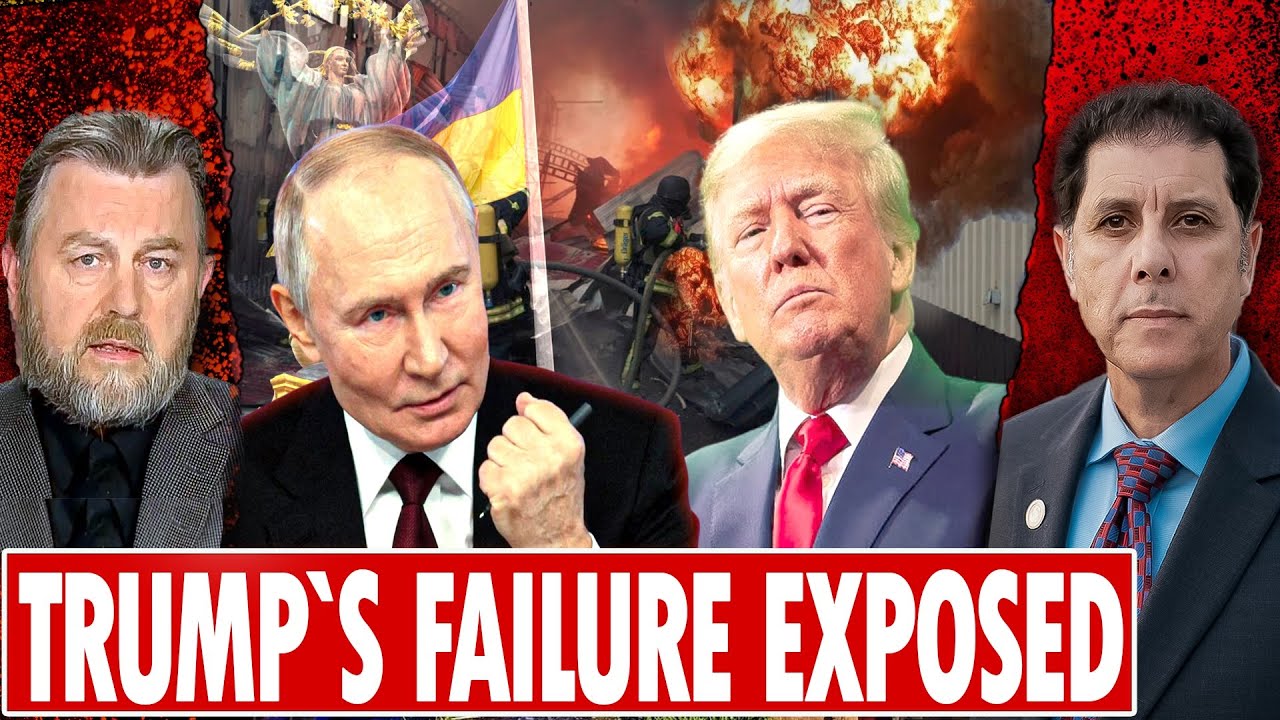
David Oualaalou interviews Larry Johnson on U.S.-Russia tensions, Trump's statements, and the Ukraine war. They discuss Russian military advances, NATO's capacity, arms transfers like Patriot systems, and concerns about Trump's decision-making amid escalating geopolitical risks.
Chapters
Hello everybody and welcome to Geopolitical Trends, where truth matters. Excited to be with you as always. Even more excited because Larry Johnson is here. So I'm going to bring him in right away, guys, because we don't have— he doesn't have a lot of time, so we need to get in on it right away. Hi, Larry.
Hey, man. Thanks for the invite as always.
Of course, it's always a treat and pleasure to have you here. The whole community is always excited to see you here. So I know you are, uh, uh, have a crunch on time, and I will be respectful of that, but I'm so grateful that you were able to squeeze at us in. Very, very grateful. Larry, I want to start from the get-go, uh, your, your overall assessment about Trump's recent statements regarding Russia. What do you make out of it?
Uh, I think he's getting mentally confused, um, because you have to step back and say, what is he trying to do? Um, is he trying to have a conflict with Russia, avoid a conflict with Russia, develop positive relations with Russia? Uh, so I— let's separate what he says from what he does. So his words are all over the board. It's everything from positive to negative. It's like watching Dr. Jekyll and Mr. Hyde. What tangible, concrete actions has Donald Trump taken since coming into office to put an end to the war? Well, according to Dmitry Peskov, the press officer for Vladimir Putin, The United States, the flow of weapons from the United States to Ukraine has not abated at all in Trump's time. Trump has not lifted travel restrictions to Russia. No movement on opening direct flights. No naming of a U.S. ambassador, new U.S. ambassador to Moscow, a person of stature that would be seen as someone who would have access to the president and able to speak confidently on the president's behalf. No effort to return property that was seized by the US government under Barack Obama and taken from the Russians. So apart from Trump calling Putin up and having chats, you know, occasionally, there is no other outward sign that Trump's done anything to make the relationship better. Russia, for its part, if you watched an interview that Putin did on Sunday with his sort of his favorite reporter, uh, he was very, uh, sort of blunt. I mean, he was a relaxed conversation. He's sitting there with his arms and legs wide open, so the body language was not showing any kind of tension at all. And but he was very firm He admitted that he had made some mistakes in the past by trusting the West too much. And that his basic message was, one, the West— and you've got to say, this has got to apply to Trump as well— they consistently lie to us. And number two, we have made repeated offers of ways that we could cooperate to get together on building mutual security. And every single one of them has been rejected. So Putin says, you know, we're going, we're going to make sure that we protect Russia and that Russia's future is secure. So until Trump comes to recognize that and accept that, there are some who say— I saw Doug McGregor saying that some of his sources indicated that, oh yeah, no, there, there are high-level talks going on between Russia and China, those are going well. Well, maybe they are. But we're not seeing any results outside of that. And the verbal things that Trump is saying— yeah, he's critical, highly critical of Russia, never says a significant, much significant criticism about Ukraine, particularly when it comes to attacks, military attacks. Ukraine has killed far more Russian civilians than Russia has killed Ukrainian civilians.
Well, it is a reality that is not, uh, of course Washington will not admit it. I want to share with the audience this short clip here, if we can take a listen, and I'll take your comment on it. Okay. Very unhappy with them. There's no reason for this. We get a lot of bull thrown at us by Putin, for you want to know the truth. He's very nice all the time, but it turns out to be Meaningless. Do you want to say that again? Lindsey Graham has a sanctions bill on Russia. Do you want him to move that bill?
I'm looking at it.
Yeah, I'm looking. The Senate is passing and passed very, very tough sanctions. But yeah, I'm looking at it.
And you'd sign that?
It's an optional bill. It's totally at my option. They passed it totally at my option and to terminate, totally at my option. Okay, what I want to get your take on, Larry, is the idea of why all of a sudden this flip or this switch, about how all of a sudden Trump becomes sort of vicious towards the Russians, towards Vladimir Putin, by even going as far as now allowing the sale of weapons, the Patriot defense missile systems, to Ukraine.
But you should, you should put together a clip You use that clip and then put on just a portion of what Putin's interview with a reporter on Sunday. Trump sounds like Dustin Hoffman as Rain Man in the movie. Yeah, totally up to me. Totally up to me. It's totally up to me. Hey, I think it's totally up to you. Just repeat it 3 times. You know, this, this is not how a person of what I'll call normal intelligence talks. When you have to constantly repeat yourself, to me it indicates there's something mentally wrong with the guy. This is, you know, totally up to me. It's totally up to me to do it and totally up to me not to do it, and it's totally up to me, you know. Okay, enough already. We get it. It's all about you. Yeah. Yeah, and you know, this is the problem that the Russians just slough it off. Lavrov said today earlier when asked about the 50-day deadline, yeah, that Trump announced yesterday, he goes, you know, Trump has always given us his 24 hours, then there was 100 hours, now it's 50 days. He said it doesn't matter. They don't take him seriously. Yeah, you know, that, um, that concept that your word is your bond and that if you say something, people have to take you seriously. Instead, Trump has become that boy who cried wolf, because the boy who cried wolf ultimately was completely discredited and ignored. And frankly, you know, that's why I see Trump as is heading. He is making one bad foreign policy decision after another. And let me just give you two quick examples. Prior to the BRICS summit, I had some concerns about Lula, the president, as being sort of an Erdoğan-type character, someone consumed with his own self-interest. Not necessarily concerned as well about the welfare of Brazil, but more about what it would mean for him, Lula, and that easily could be swayed by the United States to back U.S. positions, but particularly in weakening BRICS. At the end of BRICS, during the session, Lula gets notified via the press that Trump has just imposed 50% tariffs on Brazil because of the policies towards Bolsonaro, what he, what Trump was saying, there was political persecution of Bolsonaro. Well, what happened? Trump succeeded in doing something that Lula had failed to do. Trump united the Brazilian people against the United States and in support of Lula and actually ended up hurting Bolsonaro. Because this is outside, this Yankee meddling from the outside. The same with Iran. The US greenlighting and facilitating Israel's attacks on June 13th has now— that was the equivalent of Pearl Harbor for Iran. And with— for foreign viewers who don't understand the impact of Pearl Harbor in the United States, the attack by the Japanese on the 7th of December in 1941 took an America that was largely opposed to getting involved in World War II to completely flipping it, where they all came together. The vast, vast majority, 90%, 95%, came together to support that going to war in Europe. And that's what's happened among the Shi'i community, not just in Iran. The Shi'i, at least in the Middle East, represent the largest percentage in terms of Islam, Sunni versus Shi'i. And the Shi'i in Iraq, as well as Iran, up into Azerbaijan, into other neighboring states, have been enraged It's just completely enraged by what the— by this heinous sneak attack on Iran. And so again, so these are two examples where instead of Trump weakening regimes, building support for the United States, has had the exact opposite effect.
Speaking of that, guys, just for FYI, regarding the Israel attacks on Iran, on the June 13th. Uh, Israel did not, and I say this for the record, Israel did not control the skies of Iran. Let me just put that out there for you to know. And that leads me to our next, uh, uh, next question about the role of Azerbaijan. But before I'll do this, Larry, I want to get one more, uh, answer from you regarding the mental health of Donald Trump, because I am starting to be concerned. Where are my concerns coming from? Is from two statements. One, when he stated that, oh, I will bomb Moscow. And the second one, I will bomb Beijing if they invade Taiwan. So what does it tell you about the next decisions coming forward, given the complexity of what global geopolitics is all about?
From, from Someone I know, uh, that has, uh, been in a position to observe Donald Trump, meet with Donald Trump, talk with Donald Trump, uh, several times over the last 18 months, um, has commented that the, the Trump this person has seen in recent months, within the last 2 months I believe, is not the same Donald Trump that he saw 18 months ago. So Trump is definitely starting to show his age, and with that age, declining mental brain function. I don't know if it's early signs of dementia, yeah, but, uh, Trump is, uh, he's not the guy he was, you you know, a year and a half ago. And that's alarming. And you see it not only with the two statements you identified, but, you know, his use of profanity, which something, you know, it's one thing for, you know, all presidents in, you know, private conversations, they use profanity. Yeah. But when you go out in public, you try to project a different image. Not one that's, you know, crude and coarse. And, you know, the thing that Trump said with respect to both Iran and Israel as the— is the— when the war ended, they don't both don't know what the F they're doing. Yeah. And then in the clip you played where he referred to Russia's— I'm tired of Putin's throwing bullshit at me. It's like You know, even if you think that, what's to be gained by saying that in public other than just lowering yourself? So yeah, no, I agree with you. He's— there's something off. Yeah. And, uh, it's not inspiring confidence.
Okay, I just wanted the community to at least hear it from you and understand where that is. Let's move on into Azerbaijan because I am noticing, Larry, and I had a talk with some Uh, you know, you know how it is in our circles with the intelligence community. You still have contacts and support. Uh, I'm— I've been asking the question about, is Azerbaijan now the wild card? What are we trying to do using Azerbaijan? First of all, to allow Israel to use it against Iran, but attacking Russia? What are we getting at?
Yeah, well, before we drive into that, One of your commenters, someone named Benjamin, said, no, you're blatantly ignoring here Putin's intransigence to Trump's overtures for peace. Trump has made no overtures to peace. Overtures to peace would be that Trump would say, okay, we're putting an end to shipping in military equipment that's being used to attack and kill your citizens. Because I guarantee you, if Russia was sending military equipment to the Sinaloa and different Mexican drug cartels and they were attacking and killing Americans, we wouldn't put up with it for a goddamn minute. We'd put an end to that.
That's true.
Okay, that's number one. We're sharing intelligence that is being used to target and kill Russian citizens. So Putin has made it very clear. He's not intransigent. He's made it very clear. Here are our demands. One, recognize that these provinces that we now occupy or we have troops in, that they're ours, not Ukraine's, number one. Number two, pull all NATO troops and military support out of Ukraine. And they've been very clear on their demands. So Trump has made no overture for peace. Trump's offered no concession. Trump— this war was provoked by the West, which brings us to Azerbaijan. Azerbaijan is the site for one of the largest CIA presences in the world, along with the Israelis have a presence there, which is really ironic. It's only a small country, 10 million people, but it is strategically located between Russia and Iran.
Iran.
We now, I believe that in light of the murder, the death of President Raisi in a heli— sokoos helicopter crash, more than a year and a half ago, two years ago, I guess, coming out of Azerbaijan. I believe that was sabotaged by Israeli intelligence operatives working in Azerbaijan. Azerbaijan has become a tool of Western intelligence. It provided direct support to Israel and the United States in the bombings that took place inside Iran. The problem for Azerbaijan is there are only 10 million people. Iran is a nation of 91 million. Russia is a nation of 140 million. And Azerbaijan does not have a ballistic missile force. Iran does. Iran in one day could take out all of Azerbaijan's oil industry, destroy it, obliterate it, as could Russia. Yeah, Russia sent a very important message to Aliyev, the president of Azerbaijan, last week when they destroyed— Russia destroyed in Ukraine two critical oil refineries that previously they had left untouched in the last three years. Why? Because they're owned personally by Aliyev. Russia now took them out because all of this started when Russia recognized that the attack, the spiderweb attack from June 1st on the strategic sites was largely facilitated by, supported by Azerbaijan. So in response to that, Russia has now embarked on a crackdown on Azerbaijani criminal gangs. Azerbaijan. Aliyev's playing a very dangerous, foolish game, pushing back, thinking that he can stand up against them. Uh, he's a flea, and he does not have the military might, but he's been, he's been also under the power and the sway of Turkey. Turkey is doing everything. Erdoğan, he is a nasty case, nasty character, doing everything he can to try to impose his power over the region at the, at the expense of both Russia and Iran. And I think it's going to blow up in his face because we're seeing already that Turkey's inability to control what's going on in Syria, despite having really facilitated the takeover. And, you know, that war is heating up and it very well could suck Israel into another front on a war that Israel frankly does not have the military depth to sustain. But within all of this, Azerbaijan is a bad player, but they're playing with a very weak hand.
Will we see— well, will I be wrong in this assessment, Larry? And I'm just thinking outside the box here, and I'm talking from experience here. Will we see the same fate like what Georgia experienced when it was pushed by NATO? Said, oh, you just go and fight the Russians. We will support you. And the moment the first shot was fired, Georgia reached out to the US and reached out to Brussels. Hey, are you coming to help me? That was Mikhail Saakashvili. And the answer was, and I quote him because I remember it, he said, what, are you crazy? You want us to fight a nuclear Russia? And he was wiped out. Are we seeing the same scenario here?
Oh, absolutely. Absolutely, because, you know, what support could the United States provide? You know, we sent a few troops and it would be, you know, it would be cannon fodder. So the logistics, the logistics line to get to Azerbaijan is much, much longer and more vulnerable than that going into Georgia. So to get into Azerbaijan. So this, yeah, this is, uh, Azerbaijan is foolishly— they made a stupid bet. They thought, oh yeah, we're gonna, we're gonna align ourselves with the West and they'll take care of us. Yeah, man, read history. Go down the list of all these people who sided with the United States and then got abandoned when the going got tough. Long list.
You're absolutely correct. So, and, and that's to me reflects now the complete— and again, your assessment will be greatly appreciated in this because I'm going to say a statement, whether some will agree or disagree, they're entitled to that— this to me reflects the complete failure of Donald Trump in understanding Russia.
Yeah, well, yeah, because Donald Trump doesn't read, so all he does is goes off people he's talked to, things he's watched on television, He's not a reader and he's certainly not a deep thinker. He's got good street smarts, some good instincts, knows how to make some money, but he's nowhere near an intellectual force. He's a narcissistic personality that, you know, you constantly have to stroke him and tell him what a wonderful person he is. You do that, boy, you're going to be in great shape with Donald Trump. Uh, if you, if you don't come and worship at the feet, all of a sudden you're an enemy. Uh, and just look at the dust-up between him and Elon Musk. Um, so to, to just have a basic understanding of history and what Russia, what has made Russia, you know, the— it's, it's journey over the last thousand years, uh, has, you know, really actually, you know, 1,200 years maybe. Yeah, going back to the 900s, that, uh, the, that, that history is something that still lives and resides within the consciousness of the Russian people. And it's dismissed so cavalierly by, by Trump, who he thinks in very short-term transactional terms.
And, and this one reflected now through the statement that he is going to allow the sale of the, uh, the Patriot defense systems to support Ukraine, but he's asking that the European will pay for it. Will they?
Oh, well, yeah. So this is, you know, everybody waited with bated breath yesterday. Yeah. For his big announcement on Russia. Huge. It's gonna be a gigantic, it's gargantuan. No one's ever done anything like this. Everybody's like, oh my God, this is gonna be spectacular. What's he gonna do? Oh, here's my deal. Uh, we're going to have NATO, which we, the US, basically control. NATO is going to either take the Russian money that's been seized, give it to us to buy weapons that we don't necessarily have because we haven't necessarily got them in store or haven't manufactured them yet. Or NATO itself is going to pony up the money. France, Germany, they're going to all pass the hat or put their money in. They'll buy it from us. Anyway, we're buying, we give it to them, and then they can give it, they can give it to Ukraine. And you know, so, hey, Mr. President, what are you going to give them? Oh, some Patriots. Well, right now the total inventory of Patriot missile launchers or batteries in the US inventory is between 50 and 60. Now, Trump reportedly said he was going to give 17. So basically, you're talking about giving up a third of what's in the US inventory. That means we don't have that available for US military units in Asia or in the Middle East. And then you got countries like Taiwan and Israel begging for it. And then to make matters even more complicated is the annual production of missiles that go in each of those batteries. Yeah, is, is the, the upper top figure I've seen is 700 per year. Wow. And when you consider each one of those missile batteries has 16 missile tubes. So just do the math. Um, you would have— if, if you had, uh, 20 launchers, uh, and you wanted to have enough to fire 2 volleys, uh, so, uh, right there, uh, you're at 320. If I if I'm doing my math properly, you know, you get a 16, 160 to 320. You're right, right there. That, that's half of what the US can produce in one year. And when you consider that, you know, like almost 5 of the last 6 nights, Russia's fired between 500 and 700 drones and missiles into Ukraine. Well, if you, if you have to when a Patriot missile fires back at an incoming drone or missile, it's going to fire anywhere between 2 to 4 of the Patriot missiles at the— at one incoming object. So one tube or one launcher with 16 missiles could potentially handle only 4 incoming rockets. Well, okay, so Russia shot over 500. Do the math. It doesn't work out. So what Trump is promising is just, uh, it's not even as good as putting lipstick on a pig. Yeah, you know, it really is, um, exposing— it's just, it's a meaningless tactical gesture.
Yeah, I didn't quite understand, let alone the cost of that. To my knowledge, and correct me, Larry, if I'm wrong, Isn't that the cost, is about a billion dollars for that Patriot system complete with the radars, the batteries, and the launchers?
That I don't know. I know that each of like the PAC missiles, the PAC-3 missiles, yeah, I think they cost upwards of like $7 million apiece.
Yeah.
So that means you got 10 of them, that's $70 million.
Yeah.
You got 20 of them, $140 million. And so, um, if you get up and say, if we've got 100, you know, we're producing 100 of those missiles a year, then all of a sudden we're up into enormous sums, get into the billions.
So hypothetically, if we are to go with this argument that Donald Trump is moving forward, can the Europeans afford to pay for this?
Oh no. No, absolutely. You know, their credit cards are maxed out.
So why the heck are they screaming about the French and the Germans wanting to sort of kind of let's rebuild the security so we can fight the Russians? How are they going to pay for that?
Yeah, well, it's good rhetoric, but it's not accompanied by any solid plan. And instead of, you know, again, Europe is caught in the dilemma of it has no significant natural resources from which to rebuild its economic base. In the past, it was growing, particularly Germany was growing because of its economic trade relationship with Russia.
With Russia, yeah.
And now to cut that off, well, look what's happening. The economic reporting is that the economies are not growing. In fact, it may be retracting in both Germany, France, and England. And those are three of the biggest economies in Europe. It's just, it's insanity. But, you know, these people are not thinking with their heads, they're thinking with pure emotion.
Absolutely. You mentioned earlier Taiwan, and I want to just visit this, uh, uh, uh, uh, topic, not about specifically Taiwan. What I wanted to touch on this, Larry, is the idea that the US now is considering building an ammo factory in the Philippines, in addition to having the Pentagon pressuring Japan and Australia in stating where do they stand in case there is a war between the US and China. And, and, and to add to this is the statement by the Secretary of NATO, Mark Rutte, which— another, uh, now he's saying that we are alarmed by China's military buildup. What does all this have in common?
Well, what it has in common is The Chinese are reacting to aggressive moves by the United States, military, direct military threats by the United States. And so when they react to what we're doing, and then we get mad at them for reacting because we threatened them, it's just, it's insanity. So I think at least Australia and even Japan South Korea, they're beginning to have some second thoughts because they think, you know, the United States is unnecessarily aggressive and provocative. China has not been invading countries in Asia, period. The, the, you know, the last foreign military adventure for them was in 1979. But, you know, the Chinese aren't stupid. They hear what American politicians say. They have watched over the last, you know, 6 years as the United States has broken its word with respect to the agreements that we signed in the 1970s admitting that China was one China and Taiwan was part of China. To now Even though that's still a part of U.S. law as a treaty, we've got politicians and businessmen insisting, oh no, no, Taiwan's independent, we need to stand and fight for Taiwan. So, you know, naturally the Chinese, you know, look around and see this and they say, hey, we've got to take measures to defend ourselves. And that's why they're building up their army. That's why they're building up their Navy. That's why they're building up their Air Force. But again, just, just having warm bodies fill those positions doesn't mean that they're actually good at what they do.
Yeah.
Um, you know, the Chinese, the— when they fought Vietnam in 1979, they got their ass handed to them. Yeah. So, you know, part of Part of being a good military is you've had experience fighting and winning. Yeah, that's Russia, that's not China.
Yeah, that is, that is an interesting— and this is why I think the US really, really does not want to see that closeness between the Russians and the Chinese, for fear of this might evolve too.
So that was, that was really the premise of US policy Yeah, that's why Nixon opened up China in 1972, because he said we want to make sure that we divide Russia and China, because if they, if they ever come together, it would be a very strong force of something threatening to us, just because of their size and their vast both natural mineral resources and human resources. And now what has Donald Trump and Joe Biden accomplished? They brought Russia and China together in the strongest, strongest alliance between the two countries in their history, and it's becoming stronger each day, not weaker.
You know, Larry, as a, as a student of history, I always fall back to 1972 and ask the question: what would have happened if those three countries the US, Soviet Union at that time, and, and, and, uh, China would have sat together at the table.
Yeah.
How would that would have, have, uh, impacted the geopolitical trajectory in, in modern day?
Yeah.
And I always find myself wondering about this.
A lot, a lot fewer wars.
Yeah.
You know, this is, um, the United States is the debacle in Vietnam did not lead to a reduction in military spending. It led to an expansion, and we kept trying to find an enemy. And in many cases, we also helped create that enemy. Uh, there's now, you know, the way this story was initially told with respect to the Soviet invasion of Afghanistan was that this was unprovoked and that the United States had to come into the aid of these you know, poor oppressed people of Afghanistan. But what really happened is it was the United States helped fund those groups that were trying to raise an Islamic Republic, and that posed, that really posed a threat or a concern to Russia, the Soviets at the time. And the strategy, and Zbigniew Brzezinski And then Jimmy Carter's National Security Advisor was very clear about saying, hey, our goal is to get the Soviets bogged down in their own Vietnam in Afghanistan, which they did, and it succeeded. And in the process, then the United States ended up arming, tripping, and training and equipping these radical Islamic groups that later became sort of the core of groups like ISIS and al-Qaeda. Yeah, so we ended up helping fund and create the War on Terror. It wasn't— and it came at us because of our actions, not because we were— not because they hate our freedom, hate our democracy. So, you know, we've been our own worst enemy in this, and this is current events, just another example.
You are absolutely correct. I know, Larry, you have to go because you have other commitments and so forth. I just want to give you the last word for where do you see the developments regarding the US and Russia moving forward? I'm aware of— I'm sure everybody's aware, I'm not just me— the massive destruction that Kiev just experienced at the hand of Russia. Where this is going, where do you see it going, Larry?
The United States, NATO, are going to be defeated, sort of a de facto defeat, because Russia will complete a military conquest of Ukraine. Ukraine will not be able to sustain and hold back the Russian offensive that I think really started in the aftermath in late April following the recapture of Suja and the ousting of the Ukrainians from the Kursk region. Russia is now pressing with great strength all along the line of contact from north to south. Moving in Zaporizhzhia, moving in Donetsk, moving in Kharkiv, moving in Luhansk. They've entered Dnipropetrovsk, and they're moving in Sumy. And the, the simple fact is Ukraine does not have enough trained manpower to respond. And they're gonna want to— they will crack. And when they crack, it will come— it will be quick. It's not going to be drawn out. It'll be a very quick collapse. They just It's like when a dam breaks. There's a few leaks here and there, but finally when it breaks, it's a wall of water.
Indeed. Well, Larry, I can't thank you enough, my dear friend, for being here, for sharing your knowledge with the community. Community always end up learning something from you, so we are very, very grateful to have you here.
I always appreciate the generous invitation there, David. You look forward to— look forward to doing it again, man. Of course.
You take care, Larry. Okay, bye-bye.
Bye.
Uh, guys, I, I want to— Larry, he has some other commitments. He gave me a heads up that we need to— he couldn't stay longer. But anyway, I'm gonna keep the conversation here regarding Asia. Why Asia, you may think, is because exactly the statements by the Secretary General of NATO, Mark Roth, which I am convinced that he was pressured and given the talking points to state what he stated. And this one has to do with China, because what happened with Mark Roth, he raises per se— he's now raising China threats to NATO security, which is laughable and pathetic. You look at where China is, you look at where NATO is, you know, and, and China's not interested in that. But nonetheless, we shouldn't ignore statements like that. And this is why China reacted to, uh, uh, sort of this, uh, uh, massive NATO warning. And because China didn't hold back, they end up hitting back, uh, because to them it was like almost some sort of misleading information that could— now here is where the concern that I have, in addition to what's taking place in that part of the world, in Philippines, Australia, South Korea, and Japan. Excuse me. Which means this kind of statements that NATO is issuing could stoke some sort of a confrontation. You know, and that becomes the question, that becomes the fundamental question. Should China sort of let the hammer fall where it may? Another word, if ever NATO expand its presence in that part of the world near China's borders, then China should react. A lot of analysts are arguing, you know, uh, China being nice, it's not gonna cut it. As we move forward, because you see the statements coming out of Washington, you see the statements coming out of Brussels, all of them aiming at one specific objective, and that is to sort of ferment tensions in that part of the world and specifically provoke China. I remember a year ago, guys, I did a video, it's on a record there somewhere, when I talked— when, uh, what's his name, Stoltenberg, used to be the Secretary of with NATO, and he made similar statements like what Mark wrote. And back then I argued, Mike, my word on this, that you're gonna be hearing the statements over and over again moving forward. And what's gonna come with it, it's certain tactics that the US and NATO and its allies gonna get involved in and start to do. For example, the, the potential ammo factory in the Philippines. Excuse me. Uh, for example, the pressure by the Pentagon on Japan and Australia to clarify their possession, to the point now, you know what we have, which we don't hear much about, is that North— uh, I'm sorry, South Korea now is reconsidering. Here is the shocker, guys. South Korea is reconsidering the possibility of acquiring some nuclear deterrence.
Why?
Because they are seeing they can't trust the Americans being under the US security umbrella. Could it be also they are seeing what's coming? Possibly, possibly not. And the possibility is always there. When you hear, uh, uh, uh, an incompetent president like Trump saying that Oh, we're gonna come to the defense of Taiwan if it is invaded, whatever. Well, wait a minute, wait a minute, wait a minute. Who the heck are you to dictate how the status of certain entities are? First of all, and it's not a secret, that it's not a secret, it's, it's public knowledge, we've signed 3 communiqués. And I know I've talked about this before, I don't like to keep repeating myself, the three communiques we signed regarding the, uh, recognition that Taiwan is part of China, except that China decided to let them run their own affairs. I was there, I didn't see any sort of independence whatsoever. You know, they still like part of China, it's just they are managing their own affairs. So for Trump to say Taiwan is under our protection, we're going to come and defend it, whatever, if China invade Why the— what the heck you are getting involved into something like that to begin with? And what for? And this is why I am very concerned as I see now how the Philippines is being dragged into this. Philippines is going to become literally another Ukraine if it allowed itself to be used that way. Japan and Australia, they're gonna have to decide what they want moving forward. South Korea has to decide what they want to move forward. I will even go as far as mentioning New Zealand as well. And this is why I wanted to just conclude this conversation here with the idea of how the Chinese reacted now to the statements of Mark Roth, you know, which basically sounding the alarm about Beijing's massive military buildup. Well, wait a minute, what the heck are you doing? You know, you are increasing your military, wanted to increase your military defense budget to 5%. You wanted to arm Ukraine even further to continue the war against the Russians. So what makes it wrong if China builds up its own military? And it builds— it's building up its own military not to invade countries. It's building up its own military capabilities to defend its economic interests. It's no different than what we did after World War II. What makes it wrong for them and right for us? This is where I see that double standards. Of course, Michael Roth had to lie and mislead the, the, the public opinion regarding why the massive Chinese military buildup. It's because China's support for Russia in the Ukraine war. Well, wait a minute, what are we doing on our end? And this is, again, it's not a laughable matter, it's just the double standards. And usually when you see this kind of double standards with lack of any strategic thinking whatsoever, you realize the, the incompetency, the failure of whatever foreign policy that the US is embarking on. And when you hear, uh, the incompetent Trump stating, oh, I'm gonna bomb Benji, I'm gonna bomb Moscow, you start to really, really question his mental status, you know. And, and it becomes, uh, you know, I am no psychologist, I am no someone who understands this kind of stuff, but at least from what I'm observing, you know, the body language tells me something else. Maybe there is that decline and, and Trump doesn't even realize what he's saying. So And the thing is, all this, all this has to do with one thing and one thing only, and that is vilifying the, the, the, the Chinese. Because China's military buildup, like every other country, they are doing their military buildup. You do need to have a strong military, simple as that. And in case of China, is even more important Why? Because of its economic superiority, its AI technology advancements. So, and this is why this statement by Mark Roth, it's nothing but a— I don't know how to look at it— like an excuse for, for, uh, NATO to just, uh, scare the, the region, meaning Asia and Southeast Asia region and so forth. To scare them, that is, into— and, and sort of push them into increasing their military spending. That's all it's all about, because the idea will be to purchase, uh, US, uh, weapons. That's all it's all about. This is the reality of it. So, and that's why I wanted to just, uh, continue this conversation here, uh, regarding this particular point here Uh, as, as you all know, uh, the US is the one that is dictating the terms for NATO. All those NATO, uh, pathetic countries, they are just subservient to whatever we decide because we control the budget. Simple as that. So, and that makes you just now wonder, as Europe struggles economically, you know, military is the last thing. But like I remember what Gerald Salander said, when all fails, they take you to war. He was right. So, and it's exactly that's what NATO statement suggests, is that they wanted to sort of turn its attention now to China is because the failure, meaning NATO's failure in Ukraine has been exposed already, which you all know, guys, you know. It's just now they have to keep the narrative alive. What you do? Shift it, shift it towards China, the big elephant in the room. So that is why this, uh, argument, because NATO's arguing in the wording of it, like this systemic challenge that China is posing to NATO, which has nothing to do with reality. That, that's the fact of it, guys. This is why. And you all remember last year what NATO said? They wanted to open an office in Tokyo. So read between the lines. So, and, and this is why you start to see the countries like Japan, countries like South Korea, Australia, and New Zealand, Philippines— it just, they're just being used as a tool. You know, this is where you see in this military buildup that NATO want to push for the countries in the region— Japan, South Korea, Australia, New Zealand, and the Philippines, for that matter— to increase their defense spending. Here is one of the shocking information I'm going to share with you, is that Japan now is willing to sort of start a new page with the Chinese. And we don't like that. Of course, nobody's gonna forget what the Japanese did to Chinese 80 years ago, you know. I'm sure the Chinese will never forget this. Will they forgive? Possibly, possibly not. It's, it's up to them to decide. But when you look at also with AUKUS, you know, the US, UK, and Australia, and moving forward into that direction, even now you got people in Australia questioning, really questioning this idea of this AUKUS, questioning this commitments to this nuclear submarines, which will never materialize anyway, that Australia is paying over $300 billion at the expense of its people and its economy. So this is why when you listen to the statements by Mark Roth, will only focus on those two countries, China and North Korea. So, so that— this is why I, I just wanted to— because North Korea, as you all know, North Korea is client of both the Russians and the Chinese. But of course, because North Korea can come to the support of both Russia and China if ever attacked, which usually it will be a suicide if we ever think about attacking China, or Russia for that matter, or even North Korea. And this is what I wanted you guys just to know, because you're going to be hearing a lot in the news. If you listen to news, depending again where you get your information from, uh, you're going to be hearing about the idea of how, uh, we, we NATO, we the West, we the defenders of democracy. We need to build up the military strength in Asia to counter China. You're going to be hearing that a lot because that's how they want to plant the seed into the masses, the population, that is. But when you have an uneducated population, of course they're going to consume whatever. This is what saddens me about the Philippines in this case, you know. And I watch closely what's going on Philippines. The people in Philippines have no idea what their country is about, is, is going to turn to. You know, Japanese makes— maybe they are, uh, pivoting. I, I don't know. I'm still just seeing the first step, uh, but that doesn't give me a conclusion as to really Japan has shifted its policy from there. South Korea still entangled with the US. Because when you allow your territory to host over 30,000 troops, what that says about your sovereignty, you know. And this is why you— and this is why you think about what Donald Trump said regarding the sanctions on Russia. He want to sanction Russia 100%. You all know what's at the heart of it, right? It's not the weapons, it's not Ukraine, It's the energy that Russia sell to China. So this is what it is. So we're not going to succeed into that because China has invested massive— I wrote about it in my Russia book. I wish I would have get the excerpt for you when it contributed to financing pipelines from the Arctic, and the purpose for that was to bring in oil and gas. So, so this is where why the statements of, uh, uh, Mark Roth, the incompetent, uh, funny how they bring in this, uh, NATO secretaries just to, uh, be like damn parrots. They just repeating the statements. I am sure he's been given the talking points. He's been given those talking points about sort of raising the alarm about China's threats. That's just ludicrous when you look at where the economy of, of Europe is. Even for us here in the US, you know, the media here is not disclosing the truth that inflation went up just last week. And you all know why, especially for my American viewers, you know why. It's because the tariffs are starting to bite. And I did say this back then, and I said give it till July, and here we are. Inflation is going up despite the, the tariffs we've been imposing on countries. China's economy posted 4% growth despite whatever the tariffs that the US is imposing. And it shows you where the priorities are. And when you got a government like ours— I speak on my own government you know, which I have no respect for because they don't deserve it. You know, respect is earned. You know, you got a massive corrupted people in Washington. If it were up to me to handle them, I will handle them certain ways. But when you look at where our country is economically speaking, degrading infrastructure— you all know I live in Texas, you're all familiar with the flooding that took place right here. A weak, massive, crumbling infrastructure couldn't withstand, uh, the flooding that took place. And yet we sending this billions and billions of dollars to, uh, Ukraine, to Israel, to whomever. Why? You know, and that's my point, guys. When you start hearing narratives coming from the likes of Nayrouh, even the EU itself now is questioning its judgments regarding dealing with the US versus pivoting towards China. They are questioning that we are not getting anything with the Americans. We better look— we better look east for economic opportunities. And that just gives you an idea about— I just wanted— I don't want you to miss this. This is why I wanted to share this with you. Tomorrow I will be having a live stream specifically about Africa. There is something going on in Africa. I'm going to focus it on the Sahel region for a reason, because here is the thing that I need you to understand about the Sahel region, you know. Can the Sahel region build its own nuclear deterrence? And if you ask me, if I were advising them, I will say go for it. Tomorrow, remember to join me, guys. Tomorrow I will be talking about this one here. So let me just say thank you to Noel for your, uh, uh, uh, continued support, your generosity. You've been an avid supporter for the channel. I'm very, very grateful. Thank you so much. And of course, I will let Larry know that you said, uh, uh, uh, you said hi. So thank you very much, Rafael. As always, man, I can't thank you enough for your continued support for both channels. So, so kind of you. So you wrote, my prediction: we US are putting together a Napoleon army in Waterloo. Uh, these people gonna soon realize that they're all right by— they're all right by picturing what they want to say. Japan is moving away, Philippines too. Good point, good point. And thank you so much for— you know, I'm gonna keep an eye open on on that part of the world because I want to do an update for you regarding really what's taking place. There is something, uh, unfortunately I can't disclose it now, but something I am working on. It will be worth your time when that time comes. Let's not rush into that, uh, that's gonna put perspective, uh, put things in perspective for you moving forward. So, uh, I'll take this opportunity before I forget. Let me First of all, uh, show, uh, where is it, where is it, where is it? The banner for support the China, the Asia trip. I want to say thank you to, uh, Sang Tang bought me a large number of cup of cups of tea. I can't thank you enough, Sankt, for your generosity. So it was very, very substantial. So I'm very, very grateful to you for your support. If you want to support the upcoming Asia trip, I will be grateful to you. For the channel, if you want to support— you all know, guys, I do spend time looking for information, reading through, so I can provide you an assessment, my own analysis. I bear responsibility for it. I don't, I don't— this is why I don't count on anyone else to tell me this is what's going on and here is what, what, here is the outcome. No, no, no, I reached the conclusions myself and I, and I confirmed that information before I share it with you. So it takes me quite a time to do all this. I'm willing to do it, I'm happy to do it because you are my community here, you know, because I want this channel and the other channels to be an alternative for you guys. So you can't count on the CNN, on Fox, on, on those established— they're not going to tell you what you need to hear so you can form your own opinion and reach your own conclusions. I have a, a, a, a medium through which I can do this. I wish it can get bigger than this one, but I don't have the funding for it. If there is any generous individual around the world watching this willing to support the channel, that would be great. I would be very, very, very grateful. So anyway, I want to thank you for your— all your support, and I look forward to seeing you tomorrow. As always, remember, geopolitics impact your daily life in more ways than one. Till next time, guys.
Bye-bye.
More from David


Beyond the Single Actor: Why the Gulf Isn't Choosing Between the US and China


Iran, Iraq's Militias, and the Houthis Are Coordinating! This Changes Everything




Who Controls the Next Decade's Resources? Latin America and Africa's Geopolitical Crossroads

The Chokepoint Trap: How Washington's Stupidity Triggered a Cascade That Now Controls the World

Trump Spooked as IRGC Unveiled dual-use SLV, Deployed Ghadir Mini-Subs & Hinted at Tactical Nukes!
