Singapore's Dilemma as it Navigates US-China Tensions!!!
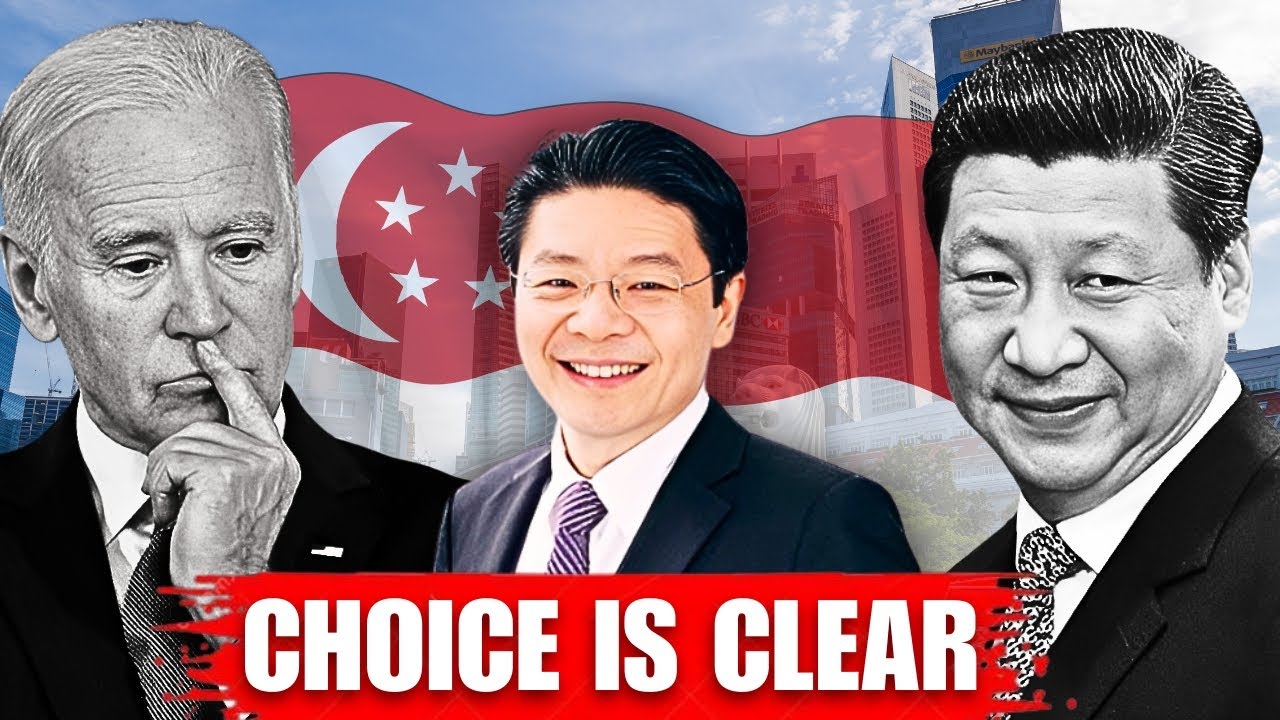
Lawrence Wong becomes Singapore's prime minister on May 10 facing a country with record-low fertility, unaffordable housing, and high taxes. As US-China tensions intensify, Wong must decide whether to govern independently or stay tied to the Lee family while keeping both superpowers invested in Singapore's strategic location.
Chapters
All right, hello everybody and welcome to Geopolitical Trends, where truth matters. Very excited to be with you. Uh, got an interesting topic, and again, because I look over the horizon, this is the reason why I bring in, or I address some topics that I want you to get ahead of the curve as far as, as far as what lies ahead moving forward. So, and, and usually ranges from a whole host of topics Geopolitics is at the heart of it, of course, but there are other, uh, other topics as well that I bring them forth. Depends again on the importance. So what I'm going to be talking to you today about is the upcoming Prime Minister of Singapore. There's a lot of— there's a lot there that meet the eye, if I may use the term here. And why is this important for you to understand? Because believe it or not, Singapore would be one of those countries in that part of the world that really can shape out the trajectory of the geopolitical landscape, believe it or not, because Asia is the hub of the global economy. What Singapore does moving— so for example, with the example of the Philippines, of course we're not going to compare Philippines to Singapore, but you get the drift, you get the idea there. So, and let me first say hi to some of you. Peanut Brain, good to see you as always. Uh, oh, that's an interesting comment and I will address that one as I move forward. Willie Holman, as always, good to see you. John Smithens, uh, Yan Hakur, uh, Alice Tarokin, good to see you. Hola to you as well. Macian Dorcier, as always. Army with Harmony, good to see you. Uh, yes, it is terrible weather in Texas. In case, guys, we got cut off, whatever, that's weather related, it's a storm. Passing through here. So, Hamad Sidi, good to see you. Uh, Curtis Sadiki from South Africa, good to see you as always. Mon Casey, Francis Tango, Timeline Dunkley, uh, good to see you all, guys. Very, very excited to be with you here. So, all right, let me share at least what the— by the way, before I forget, remember to join me tonight at, uh, 19:30. That's when I will have my interview with the Dr. Pascal Lottas from— directly from Japan. So I look forward to that conversation. He's a scholar, he's into international relations and so forth. We have a lot in common. I used to teach that field, so I look forward to that conversation. All right, just a background for those who might not know what we're going to be talking about today. That would be addressing how will the next Prime Minister of Singapore will navigate the relationship between the US and China. No matter how you look at it, Singapore is at the thick of it. Even if they say, oh, we have nothing to do with this— no, no, no, no, no, no, no, because you— Singapore in general term— there is a lot of money of Singapore in the US. You can read between the lines. And let alone the conditions inside Singapore It's not boding well for the Singaporean people, and I'm going to share some stats with you and so forth. So, but this leads us to ask the key questions, because there are key questions that we ought to consider. Here's the first one: is this a moment of truth for Singapore? In other words, comes May 10th, this is when the new, uh, Lawrence Wong is going to take over. As a prime minister. It's gonna become clear as to which direction. We all saw how Philippines flipped in a matter of about, what, 3 months, 2 months after Marcos Bongbong came to power. Are we going to be seeing the same from this guy? Second question: will things change? What do I mean by this? Meaning things inside Singapore. Taxes are high, even though there are those who are saying, well, the Singaporean government is giving social programs to the, to, to the people and so forth. Yeah. But they are turning around and collecting back that in taxes. And I'm talking from, uh, evidence here that some have shared their stories, and I'll share one with you here. So third question: who will really be governing Singapore? We all know who's been in power here for generations. Is this means that just, uh, Lee Hsien Loong steps out stepping down, rather, but he will still manage behind the scenes. I've seen the same scenario happen in, I think, Uzbekistan, if I'm not mistaken. What was his name? Islam Karimov, I think. He stepped down, but he was still ruling from behind the scenes. Could we see the same here? And again, we're not judging here, we're just asking questions that matter. Fourth question is, what, what about China-US tensions? What will Singapore do? Because one way or another, they can't just be standing on both sides of the fence. And we already know certain history inside Singapore goes way back. I go take you back to the '70s and so forth, and I'm gonna touch on the history as we move forward. So this is what we're gonna be talking about this, but before I'll do this, I have some key headlines to share with you because you need to know what's going on. So let's start with the first picture here. Where is the first picture? And I've been following on this. Usually I didn't talk much about it, uh, but I've been following from a distance, uh, about this one because again, I look over the horizon as to what lies ahead. And even in space, there's something coming up moving forward as far as the competition between the US and China. So, so here's the first one, uh, what you're looking at is that the Chinese now resume work in space by sending the new batch to its space station. So you're looking at the new astronauts that— I have another picture here for you guys— uh, that China is sending to its space station. So China already launched that, so 3 astronauts, uh, were sent to its manned space station for a stay of at least 6 months as part of a regular program in which Chinese astronauts rotate, uh, aboard the, uh, Tiangong space station. As you all know, for those who might not know, China built its own space station after we denied access to Chinese astronauts in the Aina 2, rather the International Space Station, ISS. So what China end up doing? They said, heck with it, we will build our own. So, and this is one of the, uh, uh, interestingly enough is that it was a hearing in Congress. It wasn't disclosed much. I, I got a chance to take a glimpse at it. I didn't listen to the entire hearing, by which the representative was asked, I guess why aren't we going to the moon, to the dark side of it? They said, well, because we don't know what's there, whatever. But, and the question was right away about, well, are we gonna let China do whatever? And right there it became like, you know, just so adamant about, we're gonna have to stop Chinese development at any cost. As a matter of fact, I am not just saying this I am saying this based on articles written in Washington, and I will share a link with you. It was one article published back in January 2024 of this year. It was written by Mike Wall, and I usually keep certain records. You know, here is the title. Just try, guys, to absorb this. It's no secret that China has a goal to surpass the United States by 2045. As global leader in space, we can't allow this to happen. End of quote. You know, it just, it tells you right there the story. Rather than competing, yeah, you can compete, but you can't let that happen. Who are you to dictate? You know, that, that's to me, it shows the failure. Like I said about the trip of Tony Blinken to China, and I will talk about that soon. A second, second one has to do with the economy right here in the US. Well, last time I remember, a few months ago, I mentioned to you that when Biden said, well, our economy grew by 4.9%, it was a lie. It did not. The economy in the US grew by about a mere 1.6%. Yeah, that's what it is. The US economy grew at its slowest pace 1.6% in nearly 2 years now. So, and of course this one has to do with the consumer spending. That's what helped a little bit, but it has to do also with our national debt. And yet we are going to China asking for money. That, that's what I found very, very, very disturbing, to say the least. Uh, this is a follow-up of, uh, Tony Blinken trip, which by the way ended today. I think it's over anyway. He's on his way back here to the US. This is Mr. Wang Yi. When Tony Blinken met with Mr. Wang Yi prior to meeting with the presidency, and yes, presidency granted an audience to Tony Blinken. It was brief based on my reading, what I got. But here's the thing, the Chinese Foreign Minister, Mr. Wang Yi, and his counterpart Tony Blinken today, they discussed during their conversation that Beijing, uh, uh, sort of wanted Beijing and the US to work out their raising tensions. In other words, work out their differences. So this is what the Chinese Foreign Minister Mr. Wang Yi, uh, uh, called during the talks, uh, uh, with his counterparts. So why am I saying this, guys? I'm saying this based on what I told you last time when I did the video on it, when I did livestream. From what the State Department is saying, we're gonna talk to the Chinese about global peace in Middle East, Ukraine, and all that, and, and narcotic and all— there is no way. And look what the Chinese focused on. Let's first of all figure out where these tensions that's emanating from. Then we'll talk about global peace. And that's why what the State Department mentioned was nothing but hype. So what I found very interesting was the meeting with President Xi, which was, by the way, as I mentioned, very brief. I mean, you can see the image of the facial expression of Tony Blinken. It says right there, you know, I'm not judging here. I just, you know, the face cannot hide certain things. I'll let you make your own interpretation for that. For me, all I need to share with you is the statements that Tony Blinken said after the meeting. Listen carefully. Speaking to the reporters after the meeting, Blinken said, and I quote, the US did not aim to hold back China's development or decouple the world's two largest economies. He added and I quote, of course, we want China's economy to grow, but the way China grows matters, end of quote. Well, who the heck are you to dictate to a country how it grows its own economy? If they want to focus on technology, let them be. If they want to focus on space, let them be. Why don't you compete? The fact of the matter is this: We cannot compete. That's what's at the heart of it. So anyway, this is what I wanted to share with you. Let's get into our topic about Singapore, the upcoming new Prime Minister, Mr. Lawrence Wong. Oh, he's going to be the next one, that is. So, so, but first of all, let me give you a brief bio on who Lawrence is, because you need to know the background of, of this gentleman. And yet Some of you, some of you mentioned, I bet you he was educated in the US. He was indeed, you know, he received his bachelor degree in— with a major in economics in the— at the University of Wisconsin-Madison. That was back in about 1994, if I'm not mistaken, somewhere around that time, under the Public Service Commission Scholarship, because he received the scholarship. Then he received the Master of Arts in Applied Economics from the University of Michigan a year after, '95, and another master's degree in public administration from Harvard in 2004. Now, as one who is very familiar with how things work in Washington, especially when it comes down to academic institutions the like of Harvard, Yale, Columbia, Vanderbilt, Southern California, Stanford, and all that, Harvard is at the top of them as far as having students who will become part of their governments, but we have to influence that behind the scenes. And again, I am just putting this out, you reach your own conclusion. For us, suffice it to say that Mr. Lawrence, the person— Mr. Lawrence, yeah, Lawrence Wong, uh, the man who's going to become now Singapore's fourth prime minister in 6 decades with a salary of $2.5 million. That's his salary. So, so he's about 50 years old, and, uh, all this is— yes, is important to understand, whatever. But there is one thing particularly important, is that, uh, because let's remember, he's only 51. Which means what? What happened in 1965 between Singapore and Malaysia? Does anybody know? It's because Mr. Lawrence entered politics in 2011, officially per se. So, so he wasn't born in 1965. What happened in 1965? Can anybody type in, in the chat box, guys? Let me just see. No, no, no, no, no, Ramplands, not a month. Usually those are a month, yearly, on a yearly basis. And, and 2.5 million, not a US dollar, I think it's Singaporean currency or something like that. That, that will be extreme. That would be extreme. Uh, yeah, what happened? Force independence, Black Sun, you're right. You're right, because that's what happened. When Lawrence wasn't born, when Singapore separated from Malaysia in 1965. So, but here is the thing now, we need to understand the conditions inside Singapore. It's not— this, uh, doesn't look good because when you hear from people— there's a supporter for this channel by the name Stella, which I'm very grateful for the support. Stella usually buys me coffee and so forth. And he disclosed to me that the idea of people in Singapore are taxed too much, even though the government said, well, we are providing you social programs. Yeah, you are, but you're turning around and collecting that in taxes. So what's the point? And when I read an article by Dylan Law and Subhasa Suruga, those are two writers for the Nikkei, staff writers for Nikkei Asia. They wrote the article, and that's what I'm reacting to here. So this started the article with one story of someone who lives there, and I'm gonna share it with you word for word. It says, and I quote, born and raised in Singapore, Divya Luden thinks her future may lie elsewhere instead. Another word, outside Singapore. The 31-year-old who works in the technology sector got married in the city-state in 2022 but is considering settling down overseas with her British husband in the long run. The couple has no children and thinks homes are too expensive in Singapore, where they are currently living. So why am I mentioning all this? End of quote, by the way, in the article. Why am I saying this? I'm saying this because Singaporean people are feeling the pinch of what the government is doing, you know. And this leads me back to the question: how Mr. Lawrence Wong is gonna sort of govern? Will he be independent in governing? Okay, that's one of the key we need to understand. So, and I'm gonna delve deeper into this after I talk to you about geography. And history, because you also need to know, uh, this part of facts about the country's history and geography. So let me share geography with you first, then we'll jump into the history briefly, uh, again, because I got a lot to cover into this one here. All right, let me make the screen bigger for you guys. There we go, full screen, so you can see. I know it's not very, very, very clear, but, but Uh, it'll work out. So Singapore, so is it an island country? Because that's how it is, it's surrounded by water. So located off the coast of the southern tip of the Malay Peninsula in Southeast Asia, between the Indian Ocean and South China Sea, as you see in the map there. It is located in both northern eastern hemisphere of the Earth. In fact, Singapore equator, very interesting. So, and the country borders, of course, South China Sea to the east, the Strait of Malacca to the west, and the Riau Islands lie to the south. That's, that's what's important about it. Very, very strategic location if you see the map here. As to its history, it's very important to understand also, uh, and let me see if I have that I, uh, saved for you guys. All right, let me see if I can get to those pictures. Uh, no, I didn't. Oh. I missed, I missed those pictures. But anyway, it's not a big issue. Uh, here is the thing, uh, Singapore, yeah, how was it known before? It was known as the Lion City. Why? Because it was a trading outpost in the 2nd century CE, Common Era, that is. And it was known at that time the second century at the time was known as the Timasek. Then you fast forward to 1819. What happened in 1819? Sir Stamford Raffles founded modern Singapore as a British colony and a strategic port for the empire, the British Empire, that is. And of course, we all know what happened in 1963. That's when Singapore joined the Federation of Malaysia. But left 2 years later due to political and racial tensions. I also read an article by, uh, Kelly, uh, Sierpenski, and I'll put the link for you guys. It was very, very interesting. The one aspect that caught my attention had to do with, uh, an era about 1320. What happened in 1320? It was the Mongol Empire sent emissaries to a place called Long Yanmen, or translation is the Dragon Tooth Strait, and believed to be on Singapore's island. The Mongols at that time were seeking elephants, believe it or not. And a decade later after that, that, that time, meaning 1320, the Chinese explorer Wang Yuan described the pirate fortress with mixed Chinese and Malay population called Danmachi. And that's where his rendering of the Malay name Tamasic, which meaning seaport. That's what I found very, very interesting about this. There are those who are saying, uh, are familiar with the— oh, not this one, I'll, I'll share this later on. Uh, it was the idea of, uh, Singaporean and the Chinese history, some sort of— there is some long history out there. And that begs the question, what will Singapore do moving forward given the state of its economy and so forth? And that is worth sort of highlighting and addressing. So now there's one thing that we need to understand. There are some issues in Singapore. I'll start with one of them. One of them has to do with birth rate, believe it or not, is dropping. Singapore fertility rate now fell below 1% for the first time. It is problematic. It is problematic. Why? It's because you're going to have now to— you as a prime minister How you're going to govern the country to move forward, given that there are other changes happening geopolitically and economically? Let's just think about one aspect on the economic, and this one has to do with Indonesia expanding its port, which I did a video for you. How do you guys think that's going to impact, uh, uh, uh, Singapore? Why? Because Singapore is known for having some sort of a major, uh, uh, uh, what you're looking at here, you're looking at tankers lined up, uh, off the coast of Singapore. That was last year. So because it's also known, it's not a secret, whatever, it's known that, uh, Singapore has some sort of regional trade and financial hub, has been for a decade. Is this about to change? From an economic perspective. And it's worth asking the question because we can't just assume, uh, how Lawrence Hwang is gonna govern. Will he be independent in governing? So that's one on the economic side. Then you have the geopolitical aspect of it. We all know the tensions between China and the US, which by the way we are creating because when we impose the tariffs on the Chinese, well, China is going to have to react to that. All this aside, that leaves you with what Singapore is going to do. I will not go as far as saying it's going to follow in the footsteps of Philippines. That will be suicide because Singapore strikes me as pragmatic. They won't go that far, but I also cannot deny the history of the US involvement in Singapore way back since its establishment, certain things that's been done. I was aware of a laundering money case that was involved, uh, JP Morgan back then. Yeah, in Singapore. So it makes you just wonder how Lawrence is going to govern moving forward. Now, when you think about, uh, uh, uh, sort of, even if you tie this to, for us in US, the upcoming elections, I am sure the politicians in Singapore are thinking, what would happen if Trump wins the election? And why is this important? It is important because Trump is unpredictable, so the US can turn on Singapore in no time. Not turning them, but rather pressuring them. Because we, as I mentioned, there are a lot of money of Singapore inside the US. It's like exactly what just happened yesterday, I think, uh, yesterday or the day before, uh, someone from Philippines. Let me, let me share something with you here. And I'm going to share it with you on a screen because I need you to see this one. His name is, uh, Emmanuel Mamba. Now he is a governor inside Philippines. What happened with Mamba? He opposes the US drill, US-Philippines drill that's been conducted. Guess what happened to him? He was removed from office for illegal use of election funds, which I found very, very disturbing. All of a sudden— let me share the screen with you because I need you to see this with your own eyes. All right, here's the picture. This is Manuel, uh, Mamba. Oh, there's a major storm out here, thunderstorm. So that's what happened. And because Mamba sort of all of a sudden said, well, I don't see the need for this, you know, all of a sudden. And this is what I— I'm just providing this to you as an example. That the new prime minister in Singapore could find himself in similar situation. And again, why not, why not jumping the guns here? Why not reaching the, the conclusive conclusion here? No, no, no, no, no, we're just thinking out loud of the possibilities because Singapore is at a crossing roads. And that's why I said it will truly impact the trajectory of which direction geopolitics impact in that part of the world is going to be. Singapore, it's not a small— it does play a role, it's not a huge country, but it's not about— it's the geographical location and it's what it has played throughout the history of Southeast Asia, let alone part of ASEAN member and founding member and so forth. So that becomes very, very concerning as to which direction it's going to go. And how, uh, Lawrence is going to move forward. Will he be given the independence to manage and govern, or will he be following orders? What do you guys think? If you can just leave me the answer in chat box. In your opinion, do you think he will be just following orders, or will he take stand and govern independently based on his years of— remember, he served as a finance minister. He's been in the government for quite a while now, so he acquired the understanding, at least to a degree, of where things are. Whether he has a— I'm sure he has advisers that are very savvy in understanding the climate, the political climate change, the political landscape, that is, and how they can, uh, uh, he can manage navigating those. So So it will be interesting to see how it moves forward. Now, a lot of people saying it is expected that Mr. Lawrence Wong will continue the previous leader's approach as far as Singapore's economic growth as a regional hub for finance, trade, and high-tech and so forth. So, well, yeah, you're gonna do this, but at the expense of what? So even though they are arguing, uh, that the government is going to invest about 11 billion, uh, Singaporean dollars— those are Singapore currency— in, in research and development in addition to artificial intelligence. Now, all this is great. How is this going to translate to the average people? And average people are starting to feel the pinch of the economic squeeze, due of course to what's going on around the world. And those are not small matters to ignore, because if the livelihood— it's like almost what we've seen in, in Philippines, you know, if the livelihood of the Filipino people doesn't improve, what is the importance of that leadership? It's incompetent. Same for us here in the US. We are witnessing this one right here in the US. You know, families are struggling here in the US. How this is going to translate, and that would be very interesting, that would be very interesting to see how this is, uh, move forward. So then you have to think about the regional aspects of it, and I might reference here to I'm just gonna give you one example. Malaysia, let's take Malaysia as an example. Well, Malaysia introduced now for its budget of 2024 a Global Service Hub tax incentives for locating regional headquarters to Malaysia. So meaning what? They basically giving a tax breaks between 5 and 10% to, uh, uh, foreign companies if they relocate relocate to Malaysia. Thailand is another country that is doing similar aspects of it. So, and all this, it's gonna draw away or take away from Singapore's role. But because Singapore will have to come to conclusion that there is— oh, there is almost a limit as to how much incentives or tax breaks Singapore can give. So luring foreigners or foreign corporation is great, but to what extent? If you are to give incentives to these foreign companies but at the same time you are taxing the locals, where is the— where is the, you know, what benefit is this gonna serve the people, the locals? I mean, we witnessing that right here in Texas. I'll speak for the state where I live. You know, the governor, which by the way, he's a member of the World Economic Forum, which I never trust anyway, you know, giving incentives to companies to move over here. So then it becomes the question for us as a resident of the state, what then if you are giving tax breaks, why should we be paying more in property taxes? Because you want to give tax breaks, but you have to collect money elsewhere. You know, I care less for having companies come over here. It's the same arguments that can be made. It can only do so much. And for me, I personally prefer, no, we don't need to have those companies here in the state of Texas because you need to— you and the governor in this case— lower the taxes, uh, property taxes right here. Same arguments can be made about Singapore, and we're gonna have to think in terms of, uh, how it's gonna move, uh, sort of forward. Because remember, if you go back to the history of Singapore— and I think I have a chart somewhere, let me, let me see if I can get it for you here and I'll share it with you. I thought I had it. Wow, that's a major— some storm moving, moving through here, the area. So let me share this with you because I want you to see this one here. Very important, it puts things in perspective for you guys. So what you're looking at, you're looking at Singapore, uh, how it has grown economically speaking. And there are 3 prime ministers. We'll start, of course, And this is the GDP, the gross domestic product per capita, at current prices in dollars. So since the beginning of Singapore, of course you have to go back to Lee Kuan Yew back in 1965, from 1965 to 1990. Then you move from 1990 to 2004 when Goh Chok Tong took over. Then you move from 2004 to present under Lee Hsien Loong. Okay, and if you see the chart, it shows right there from 1980, uh, uh, like Singapore in comparison to Thailand, in comparison to Malaysia, in comparison to Japan, and at that time back there in Hong Kong, back then. So you can just see that the numbers do not lie. But to what extent Singapore can sustain all that, I just don't see the, uh, given the geopolitical tensions that exist and of course the tensions between the US and China. All this is going to impact the trajectory. And mind you, we are going into presidential elections. If Mr. Trump wins the elections, that's just unpredictability, which To me, no president is qualified anyway for the US here. And as a matter of fact, I'm going to be looking now into whether, uh, uh, I just got a word and I have to confirm it, uh, whether President Biden might be going to China. You know, I'm, I'm nothing confirmed, just to guys let you know. If, if it is, I will, uh, do a live stream for you, but nothing confirmed. Usually that's how I find But before I do this, till I confirm it, before I'll talk about it. But if it does, I can just read between the lines what the importance of that trip for— not for China, it's for the US because of the elections, no more, no less. And this is where I see now how this new, uh, uh, Prime Minister Lawrence Wong, how will he manage moving forward, let alone that ASEAN now is pressured ASEAN collectively is pressured to take stand regarding these tensions between the US and China. There are those who saying, well, they need to declare, are they with China, are they with the US? It doesn't work that way, and I don't see that happening. But suffice it to say that ASEAN collectively is not on the same sheet of music. If I may use the term. Look at the Philippines. I look at Singapore itself. So makes, makes you just think about how this is going to be approached. And this is one of the reasons to why I am thinking in terms of how this is going to impact now the trajectory moving forward. There's a lot to be keeping an eye on. I'll keep an eye on this comes May 10th. Usually I always give about 3 months for any new elected official, uh, and, and because I don't like to jump to conclusions right away till I reach that particular, uh, conclusion based on the policies that will be involved. So, all right guys, I am gonna keep this short because I have to go prepare some, uh, stuff for my speaking engagements and all that. I have to prepare a few things. So I wanted just to come on the air, share this with you. Uh, remember to join me in the— at 19:30 this evening, there will be 9 o'clock or 10 o'clock Asia time in the morning tomorrow, uh, for my conversation, uh, with, uh, uh, Dr. Pascal, uh, Lhotas. So it will be very, very interesting. So I'm gonna take a question or two from you guys and, uh, then we'll just go from there. Uh, all right, let me see if you— if you got a question, guys, just put, uh, a Q so I know it's a question. And once again, much appreciate, uh, uh, by the way, I need to say thank you to, um, I do have just the screen name, uh, Jackie 89. Thank you so much for your PayPal support. Very, very generous of you, and I am very grateful to you for that. And to all other members, uh, those who've been supporting the channel or doing PayPal, that is, I'm very, very grateful. So thank you very much, Jackie89. That's the name I use on the screen, not the, uh, rename of the person till he gives me permission to do so. So I'm very, very grateful. Of course, I can't go without saying thank you to uh, uh, uh, Osiris Great, uh, for his daily coffee. I can't go, uh, without saying thank you to, uh, TC Kwan. Uh, there's so many of you guys. Lu, uh, uh, Lian Juz and, uh, so many others. Salim and so many of you guys. Thank you so much. Uh, Boon and all of you, I thank you so much for your continued support. Ah, let me take a question or two here, guys, and let me scroll all the way up to the top and we'll just go from there. Be on the lookout, guys, for a recorded video that I'm gonna release in a few days, and this one has to do with the landscape of the Middle East. I did a brief, brief analysis in a recorded setting, so I'll be sharing it with you., uh, soon and, uh, be on the lookout for that. I'm also gonna be working on some key topics for next week. Uh, and of course open to your suggestion if you got any specific topic you would like me to address. Uh, as long as it's pertaining to what we talk about, I'll be happy to do it. Uh, as to the community talks, uh, I don't know if I can do it tomorrow because the end of the month is on Tuesday. I don't like to do it during the week. Uh, if you guys would like me to do it tomorrow or Sunday, just let me know. Uh, that's the community talk when we just chat. It's our time per se. And, and if you like me to do that, I'll be happy to do it. All right, let me see, uh, a question from you here. I had a colleague, by the way, who was stationed in Singapore. He told me it's so clean, so nice. I've never been there, so who knows. Maybe when I go to Asia, I, I don't know yet. I don't know yet. That thing still, uh, there's a lot of, a lot of, a lot of moving parts to that. So, uh, Doggy 5 question: Lee Hsien Loong will remain in the cabinet in an advisory role. What is your view on this? Uh, wow. It's, it's— oh, I need to plug in my computer, otherwise it will die on me, and if it dies, it won't— there we go. I don't know. That's why I said at the beginning, will the new prime minister be independent as far as governing, or will he be following instructions and directions from behind the scenes. And for me, it would not be fair or right for me to just answer this one by saying it's gonna be this or that. I don't know yet. Give me 3 months after May 10th, I'll be able to answer this one. But it's a great question because that's really what's at the heart of it. No way do I know. Again, if somebody goes through Harvard, I I know this for a fact. So, all right, let me see another question from you guys. Uh, uh, Black Sun, you share, Dr. Lawrence Wong was in charge of our national, uh, vax and quickly and quick financial response during the lockdown. I hope he did good for for, uh, Singapore, you know. Uh, okay, let me see, let me see another question. Uh, Q7E, could you do a show on US academia? Yes, I can. Yes, I can. As a matter of fact, do we do a show on it or we just do it in our community conversation. So I can do either or. So, but the answer is yes, yes I can. So the only thing, remember, if we are to do live, you know, I'll be limited in, in what I can say because there are certain dark side to institutions. So, so a great question, and I will, I'll, I'll prepare Then once I, I'll put it for a survey question for you guys, then, then we'll go from there because I like to have your input. You know, we are a community here. So, uh, why— a question, Dr. O: US prints money out of thin air. That's true. Why are they begging for money from China? Did they run out of paper? No, it's because when China buys our treasuries, that gives us justification to print more because there's someone else who's holding our debt. But at the same time, it's not a smart move on our part because the more we print, the weaker our currency becomes, let alone that country, whoever, whomever that country is. In this case, China. It can be Japan, it can be country ABC, whatever. They can just dump those treasuries, which exactly what China has been doing for the last 8 or 9 months. It dropped it from 1.2, I think, 1.2 to 1. $1.3 trillion to $870 billion. They want to get rid— and by the way, the moment they got rid of that, they converted quickly. China, that is, converted quickly to— does anybody know what did China do the moment it dropped some of those debts, US debt? What did China do? Let me just see your answer here, see if you guys keeping up with it, because it's very important for you to know. Let me just see your answer. China did one specific thing, so right away— oh, you got it, John Smith, you got it! They bought gold right away, right away. So dropped from 1.2. So yeah, we are going to China to beg for asking for money, basically. That's all it amounts to. Now there are those who say, well, China should just tell the US, forget about it. Uh, it doesn't work that way, guys. It doesn't work that way because China also thinks about it from a strategic perspective. That means China can hold the leverage into them. And where things are going into the US, yeah, it's just, uh, it's just not a, not a good, not good. I wish Americans wake up to this reality. They are not aware. Uh, you're looking at a small, small percentage of Americans here that they are aware of what's going on. So, so that's the way I see it. So, uh, let me take one more question here before I, I'll sign off here. Uh, question: Dr. O, there are still people surviving complaining yet but still buying stuff. Well, yeah, of course. You mean here in the US? Is that what you meant? If it is, yeah, of course, because survival. But at the same time, if you look at the prices where, where they are in comparison to, let's say, before Biden took office, uh, tanks now moved up by about $11,400 in comparison to the same period back then, which, which you could buy the stuff back then, uh, far less. That's, that's a big jump. So, and, and part of it has to do with the national debt. We are living beyond our means. That's simple what it— that's simply what it means. You can't live beyond your means, you know. It's like, you know, your, your salary is $100, you can't be spending $200. You have to adjust that one. And the government, it's not their money. That's why things are wasted, wasted massively. Till Americans take charge, American people. And given what's going on in the country, I, I don't see that happening anytime soon. All right guys, I appreciate you being here. I know I keep this very short, to the point, because as I always say, if I don't have something of substance to share, I, I, I don't waste your time and waste myself. I look forward to seeing you at, uh, 7:30 PM, 19:30. My time here. That will be 9 or 10 AM Asia time, uh, for my conversation with Dr. Pascal Lottas. As always, remember, geopolitics impacts your daily life in more ways than one. Till next time, guys. Bye-bye.
More from David


Beyond the Single Actor: Why the Gulf Isn't Choosing Between the US and China


Iran, Iraq's Militias, and the Houthis Are Coordinating! This Changes Everything




Who Controls the Next Decade's Resources? Latin America and Africa's Geopolitical Crossroads

The Chokepoint Trap: How Washington's Stupidity Triggered a Cascade That Now Controls the World

Trump Spooked as IRGC Unveiled dual-use SLV, Deployed Ghadir Mini-Subs & Hinted at Tactical Nukes!
