Snapback' Sanctions on Iran is Not about its Nuclear Program! Geopolitical Trends
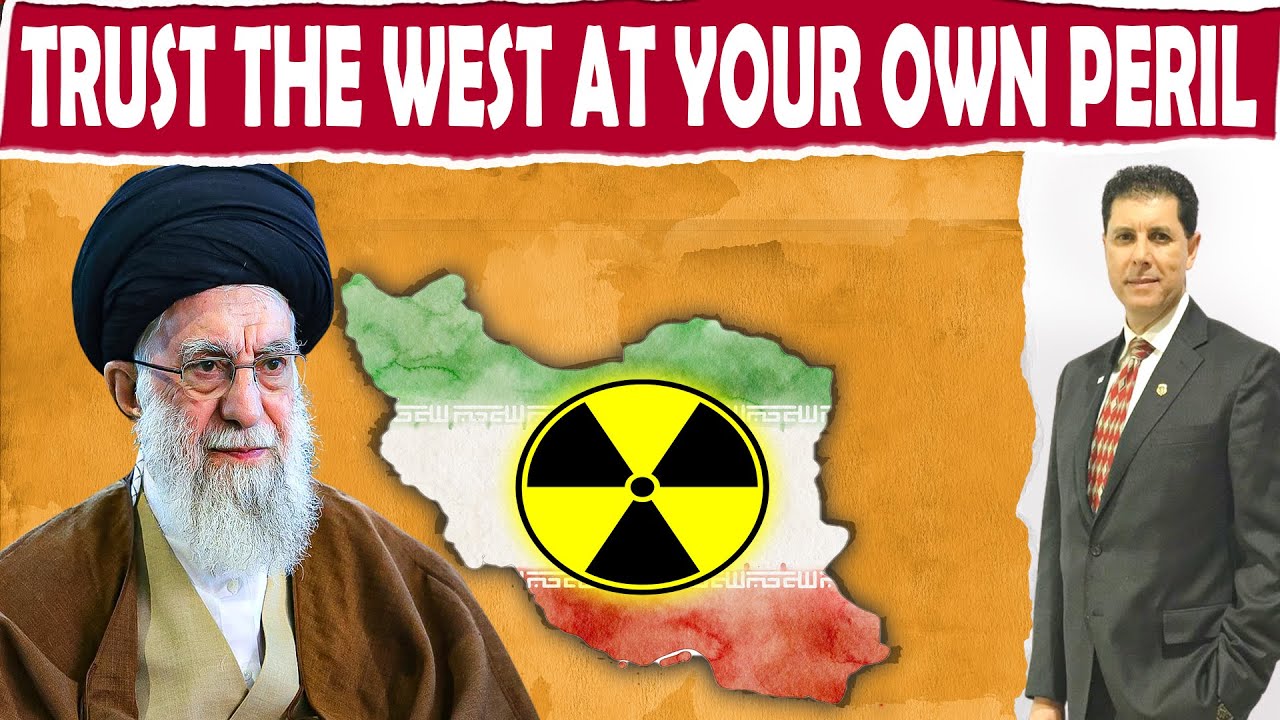
Dr. David Oualaalou argues that snapback sanctions on Iran are really about geopolitical pressure to align Europe with the US against Russia, not nuclear concerns. The UNSC vote split 9 to 4, with Russia, China, Algeria, and Pakistan opposing re-imposition. Oualaalou questions the legal legitimacy and the IAEA's impartiality.
Chapters
Hello everybody and welcome to Geopolitical Trends, where truth matters. I'm your host, Dr. David Oualaalou. Very, very excited to be with you. Uh, I will be addressing for you today, uh, because you need to know what's going on with the rejection of the United Nations Security Council regarding the, uh, sanctions on Iran. You know, one thing that is a lot of people do not understand this decision at the UN, which was triggered by the Europeans, the UK, France, and Germany, and the snap, uh, uh, uh, uh, uh, the triggering of the sanctions has nothing to do with Iran's nuclear program. So, and this is what I'm going to be providing you my own analysis about it. I, uh, I wrote, again, as I mentioned to you before, I wrote a book about Iran I disclosed the possibility of the GCPOA not holding up down the road because some country may decide to sort of take a different route regarding the agreement. So, and here we are. So this is what I'm going to be addressing for you. First, let me say hi to our wonderful community. Leanne, good to see you. Raven Blue, good to see you. Willie Holman, uh, CJ, yep, good to see you. Farid Amal, good to see you. Francis Tango, as always. Rampleson One, as always. And Jim NYC, good to see you. This is Julius, my, uh, uh, friend that I communicate with. Good to see you. Atinwo, as always. Rafael Legon, as always. Good to see you here. And Say It Like It Is, good to see you as well. Army with Harmony, once again. And Phil, hi Phil, I haven't seen you for a while. So anyway, let me get in into this. I have some housekeeping items for you. Remember to join me tomorrow for my conversation with the world-renowned author James Bradley. I look forward to that conversation with him tomorrow. So it will be at 09:30 AM Central Standard Time because he is in the Pacific, so It's only fair that I can adjust the time. I look forward to that. So my next guest after this is going to be none other than Dr. Yasser Massoud, a very, very high-caliber, uh, geopolitical analyst. And he does— he deals with geopolitical matters, uh, very fascinating background. Uh, I will— I look forward to my conversation with Dr. Massoud on the 26th at 0900 hours. So So, and I'll, uh, update you as we move forward into all this. So let's get into our conversation regarding now the decision by the UN Security Council. Now remember, when you hear the Security Council, don't think of them as the 5 permanent. The 5 permanent are part of that, because some might be asking, well, China has the veto power, Russia has the veto power. Yes, they do. But this is different. So, and here is what happened. So when the text of the UN Security Council was tabled, and it was tabled or presented rather by none other than the president of the council, which was under the Republic of Korea. So it's Korea's turn to lead the council, the, the, the UN Security Council, the 15 members you have. And I'm going to provide you a little bit, at least to understand that the setup of the, uh, the UN Security Council. And this one, only the meeting that took place on Saturday, I believe Friday or Saturday, somewhere around those days, received only 4 votes in favor. In favor of what? In favor of keeping the sanctions out. From another word, they don't want the reimposition of the sanctions. And those 4 countries that voted in support of not reintroducing the sanctions again on Iran are Russia, China, Algeria, and Pakistan. However, since there were only 4 members— the quorum requires 9— and since there were only 4, the resolution failed to prevent, uh, the, uh, uh, uh for the sanctions not to be lifted. This is where the problem is. So, so the UN Security Council has, as I mentioned, 15 members and consisted of about 5 permanent members. Those are, uh, China, France, Russia, the United Kingdom, and the United States. Those are the 5 permanent, even though to me it's kind of way beyond that there shouldn't be no permanent members. You know, you allow the rotation of the members because those members, those 5 permanent, have the veto power. What about the rest? So I believe, in my opinion, that the reorganization of the UN Security Council ought to be introduced. But again, that's just my opinion. Then you have 10 non-permanent members, which means they are selected every 2 years. Just for you to understand the dynamics of this. So, so the permanent members, these 5, uh, permanent members, uh, seats hold the veto power, as I mentioned earlier, and can block any, any non-procedural resolution. Unfortunately, the, the resolution that was introduced, that's procedural one. So this is where the difference, just for you to know. And the non-permanent members Those are elected by the UN General Assembly for 2-year term with 5 seats rotating each year. So now let me tell you the countries that opposed this resolution. Another one— in another word, they wanted sanctions to be reimposed on Iran. In a simple language, those are Denmark, France, Greece, Panama, Sierra Leone, Slovenia, Somalia, the United Kingdom, the United States. Of course, there are two other countries that are— have abstained. Those are Guyana and the Republic of Korea. But if I am to go to the previous countries, Denmark, especially Denmark, Greece, Panama, Sierra Leone, Slovenia, Somalia. It is my belief, and this is my opinion knowing how things work with American diplomats, those countries were pressured by the US. I bet on it. I bet on it. They were pressured to vote not to support the resolution. We've done it before. Remember when the Russia-Ukraine conflict started, all the members of the UN wanted to vote against the sanctions of Russia, but some of them were pressured. This is no different. This is what I see, uh, the issue here. So, and all, of course, all this with those countries, you know, but here is the thing, had it been adopted, meaning the resolution If it was adopted, it would have terminated the UN sanctions imposed on Iran prior to 2015. Why 2015? That's when the JCPOA, the Joint Comprehensive Plan of Action, was agreed upon. Thereby, in this case, we'll be preserving the sanctions relief provided to Iran And there's the deal. But it was us that— the US, at least I speak for my country— it was the US that broke, broke the deal, the agreement, by unilaterally during Trump's first term when he withdrew from the JCPOA. That's like disregard for the law, disregard for the agreement, and disrespect for the other members. That's to me how I interpret it. So even the, uh, the Iran, uh, foreign minister Abbas Irakchi. I'm sorry, uh, let me see if I can get you his picture right here. Yeah, I did have a picture of him. Abbas. Yeah, right here. Let me share it with you. Abbas Irakchi went ahead and introduced— he introduced, submitted a creative, and I put this in quote, creative, fair, and balanced, end of quote. That's his word. A plan he presented to Britain, to France, to Germany, and the EU writ large. Why? To prevent the reimposition of the UN sanctions. And, and sort of, uh, described it as sort of a fair, fair plan that will be mutually beneficial. To Iran and beneficial to Europeans, you know, because it addresses the genuine concerns that the Europeans have. So, and here is the thing which I agree with him on this. He argued that Iran cannot be responsible solely or be the sole responsible actor into this because it took the P5+1 meaning the 5 permanent members plus Germany. But in this case, the Europeans were involved, and this is why he was urging the European to act promptly. I think he was barking on the wrong tree, sorry to say this. And this is why I'm always fall back on the idea of, is Iran making the same mistakes again over and over and over by trusting the West. You enter into negotiations, the West, collective West, not entering into those negotiations in good faith. And this is why when Mr. Irakchi presented this particular, uh, uh, uh, proposal, it was prior to the vote, but it didn't, it didn't work. So, so what I'm going to do, I'm going to provide you some explanation as to what was involved in this term, in this resolution, Then I'll move into the analysis as to what's really at the heart of this, all of snap sanctions. So, so when you think about the terms of this snapback sanctions, there is a resolution of 2231, 2231. This resolution endorsed the JCPOA, the JCPOA of July 2015. In other words, The resolution that is introduced by the UN supported what has been agreed upon in the JCPOA in 2015, which one was set up— they set out the process by which the UN sanctions will be lifted while establishing at the same time mechanisms by which to reimpose them in case Here is where the key— in case a significant non-performance by any participant. So, and this is again, just listen carefully, this establishment of this mechanism to reimpose to the sanctions in terms— in case a significant non-performance by any its participants. And who are the participants in the JCPOA? China, France, Germany, Russia, the UK, the US, European Union, and Iran. So who triggers all this now? Is the EU, the European— so, and under paragraph 11, and I'm going to provide you the link, uh, for you to read should you decide to do so, under paragraph 11 If one, if one of the signatories notifies the council, meaning the UN Security Council, of a significant breach, breach of a council president, the council president must within 30 days put a draft resolution to the vote for sanctions relief to continue. If the draft is not adopted the previous UN sanctions are automatically reimposed. Meaning what? That unless the council explicitly votes to keep the sanctions relief in place, previous UN sanctions are automatically restored. This is exactly what was the meeting over the weekend in, in New York with the UN Security Council was all about. And they fail to adopt the resolution, which means it triggered the sanctions back, which to me was like, this is why Iran is— I, I am thinking literally, I, I, I understand sometimes where Iran is go coming from, but to a degree I'm starting to just doubt their ability to really see it through. It's because this is what the Europeans and the Americans going to be doing. Forever. So, and during the meeting, by the way, it was a heated debate inside, and I'm gonna be providing you— even I read the translation of certain ones that I speak the language, like the French one. And the heated debate was at the start of the meeting, from the get-go. The Russian, uh, uh, Ambassador to the UN— I have a Vasily, uh, Nibenze right here, that's a picture. He, he raised a point of order, and that point of order was about rejecting the European claim to trigger the snapback mechanism. In other words, the sanctions. And the Russian Vasily Nobizya, he argued that there were no legal, political, or procedural reason to allow the snapback mechanism or even to vote on the draft resolution. And this is why he went ahead and accused France, Germany, and the UK. And I want to say, he is right. He was right in his assessment. I read the full, uh, uh, uh, press release regarding this particular— he is right about France, Germany, and UK because they were acting outside the law when it comes to the Resolution 2231 and the JCPOA legal framework. This is what I'm saying. The Europeans, the collective West, you know, they're using the law as they see it fit. Well, that's not right. You can't just be cherry-picking what works for you, what doesn't work for you. If you are to respect international law, you respect international law across the board. You don't just cherry-pick. And this is what sort of led to now the reimposition of these sanctions, which by the way he described as illegal, and rightly so. So here is what he said, and I quote: attempts on the part of the European countries to prevent the situation as though they have the right to activate the the punitive provisions of prior resolutions while themselves failing to fulfill their own obligations cannot hold water. End of quote. He was spot on. He was spot on. So that shows you the double standard. The Chinese ambassador to the UN is— his name is Ambassador Fu Kang. Foucault said that there are major discrepancies regarding this, and the discrepancies he's referring to existed between the council members over the snapback, and warned that a rush vote could exacerbate state confrontation, and that in itself will complicate efforts to resolve the issue diplomatically. So he's spot on. It's because if there is one thing you need to think about, and especially that I wanted, I wanted to do this for you because, uh, I am hearing different explanations that have nothing to do with reality. I'm not saying they're wrong. I'm not. It's their prerogative, whomever is talking about that. But the point is, you need to understand there are two tracks to all this. Either war is coming back to Iran, or this one has to do with something completely different, which I will address as I move forward. UK Ambassador Barbara Woodward, which basically, what do you expect from UK, to do the right thing? I don't think so. They did abstain, however, when the vote was against the genocide in Gaza, they abstained. But the US is the one that vetoed the resolution. So, but the UK, I won't trust them. I won't trust the UK, is subservient to America anyway. They will do what we ask them to do. So, and here is her argument. Her argument that the E3 European countries, France, UK, and Germany, sort of, which by the way were participants to the GCPUA decision to invoke NATO snapback, was entirely, and I quote, was entirely legal. I mean, can you believe that? Was entirely legal, justified, wide, and consistent with the requirements of Resolution 2231. End of quote. That's, that's, that's nonsense, because there is already breach of the legality of the sanctions themselves under the agreement of the JCPOA, as I understand it. So, and this is again, uh, she, she argued, she argued that the notification submitted by France, Germany, and the UK— all that is required to trigger the snapback is a notification by a GCPOA participant state of an issue that it believes constitutes significant non-performance of commitments under the JCPOA, end of quote. All this hoopla language, you know what it means? It means that if one country provided a complaint about Iran violating this, the agreements, that will, that will trigger the, the, the snapback sanctions. But of course, who's going to do that? For this to happen? None other than the IAEA, the International Atomic Energy Agency, because the IAEA is the back door for the US and any decisions we want to have happen. That's why I don't get it why Iran is still cooperating with the IAEA, knowing that it's the IAEA that is sort of causing the problems behind the scenes. I will even go as far— and again, this is just my thinking, I don't have proof for it— but I will even go as far as the IAEA itself. I don't trust them. I don't trust Rafael Grossi, the head of the IAEA, because I know what he did, especially with the case of corruption in Japan regarding the, the dumping of the nuclear waste. You all remember that there were some money involved by Rafael Grossi. So regarding Iran, I will not rule out that it is the IAEA that provided the names of the Iranian scientists to whomever. You got the idea, you smart enough to read between the line. That's why I don't trust. So I don't understand Why, uh, uh, Mr. Abbas is insisting on cooperating with the IAEA, and why even Ali Khamenei, the Supreme Leader, why is he— this idea of, well, Islam doesn't allow us for nuclear— I'm, I'm starting to sort of question his judgment on this. I respect, of course, the authority of Ali Khamenei, that, that's his country and his whatever, But at the same time, I look at Pakistan, is a Muslim nation, and they have the nukes. And here we are, look now what's, what, what just happened with the Saudis and the Pakistanis. And that's, again, that's me thinking outside the box. So, so France, on the other hand, this is one of the one that triggers the problems. So here is what France said, and I had a chance to read it. La France s'est exprimée avant le vote, évoquant l'escalade du programme nucléaire iranien à la réduction de sa coopération avec l'Agence internationale de l'énergie atomique, which translates basically to France now spoke of the idea before the vote, citing that Iran escalating nuclear program and its reduced cooperation with the International Atomic Energy Agency. That's nonsense. Once again, because the IAEA report has been altered. So even France ambassador— France ambassador, his name is Jérôme Bonafont— he, this is what he argued. He declared, because they have them in French here and I read it, uh,— des stocks d'uranium enrichi bien supérieurs à la limite fixée par l'accord et fait restreindre l'accès de l'AIEA à des installations clés. Which translates to: Ambassador Jérôme Bonafonte said that Iran has accumulated enriched uranium stockpiles far higher than the limits set by the agreements and restricted IAEA access to key facilities. Well, rightly so, after what we did in 2018, pulling out of the JCPOA. So why should Iran adhere to the rule or observe the rule or respect or adhere to the legality of the agreement when the US tore it apart? I just don't see the argument France is making. That just doesn't hold. And the ambassador went ahead and called the snapback mechanism necessary. Here is where the double standard— he said, to— he— do non-proliferation. Nonsense. It translates to, he called on the— you know, this is how he described the snapback mechanism, as necessary to preserve international peace and security and the integrity of the global NPT. No, no, no, no, no, no, no, no, no. I just don't buy this argument. This is why Iran. They can't be, because now it's going to be on Iran. Now it's not on the US, or on Iran making the mistake twice. You know the saying we have here in the US? Fool me once, shame on you. Fool me twice, shame on me. I am the one now that's not paying attention. I am the one that is allowing you to fool me more and more instead of taking stand and say we done. Exactly what North Korea did, and look where they are today. They're the US to threaten them because they know we know what North Korea is going to do. There is no way. Think about Pakistan. They're the US to threaten Pakistan. And you know, it's, it's Iran's decision. All I'm saying is you can't be dragging this forever. That means Iran will never be out of out of this. So let me just provide you a brief history about the gCPU. I don't assume everybody knows what's going on with it. So, and there is great article out there. I'm gonna share the link with you just for you in case you wanted to read it later on. I'll put it in a chat box for you. It was written by Matt Field. Matt Field is, uh, he's the associate editor, uh, for the Atomic Scientist magazine. So very, very interesting. So here's the important, uh, uh, about this. You have to go back to 2002. What happened in 2002? An opposition group, not the Mujahideen-e-Khalq, that's not the one, which by the way, just for the record, Mujahideen-e-Khalq is funded by US Congress. I know this for a fact. Because you might ask yourself why, how I know is because I talked to a member of Mujahideen-e-Khalq. So I found out that, yeah, he said, yeah, your Congress is the one funding us. So this opposition group is the National Council of Resistance of Iran, known as NCRI. To my viewers from Iran, you know what I'm talking about here. As far as the group. And this group, that's the one that revealed a secret underground nuclear facility in Natanz and Arak, which meant for enriching uranium and producing heavy water, respectively. Of course, Iran claimed that they were intended to play a role in civilian nuclear power. They did say, yes, we do have this for nuclear, uh, power, for civilian nuclear power. But the United States questioned whether the oil and gas-rich country needed the facility, alleging— that's what the US— that Iran is intended for nuclear weapon-related work. This is exactly what they're saying. So, uh, move to even before that, you have to go to 1968. And what happened in 1968? In 1968, Iran signed the NPT, the Nuclear Non-Proliferation Treaty, as a non-nuclear weapon state, which basically agreeing to seek such weapon, uh, not to seek rather such weapon in the future. But here is the thing, despite this obligation, after the 1979 revolution that deposed Iran's Western allied leader You know, you know who he was at that time, uh, uh, what's his name, uh, gee, I draw a blank on his name, uh, Shah Reza Pahlavi. So the country works on developing nuclear weapons. That's what they said back then. Fast forward to 2003, this is where the negotiations over Iran's nuclear program agreed to hold enrichment and the manufacture of installation of crucial parts of the facilities. 2009, this is where Barack Obama revealed that Iran has built another secret nuclear site, which by the way, I will talk to you about Obama, how he tricked— he tricked two countries, Turkey and Pakistan, about Iran. I will— I'll share it with you as I move forward. Uh, Obama wasn't honest in his dealings with Iran either. So And 2010, you all know what happened in 2010 to those who were familiar with, with the evolution of the Iran nuclear programs and so forth. 2010 marks the introduction of the malicious computer worm known as Stuxnet, and you all know who introduced the Stuxnet— Iran— I'm sorry, Israel and the United States. So, and sometimes described as the world's first digital weapon, and this one infected Natanz underground a nuclear enrichment site. And that in itself, it, it back then, which I knew I was still in Washington, we were aware of what's going on. Of course, can't talk about this at that time, but at that time I was asking one particular question. And the particular question I was asking is that, is Israel having agents inside Iran's nuclear program. So, so only to find out later on they did, and they still do, by the way. Israel Mossad is very wired inside Iran. I don't know if Iran is doing enough to purge the intelligence community there. It's, it's very— they are very wired over there. So 2015 marks the arrival of none other than Hassan Rouhani. Hassan Rouhani was some sort of a moderate of sort. So, and during his time, the country sort of, because he was elected in 2013, start— began negotiations with the US and other countries on a plan to ensure that Iran would not develop nuclear weapons within a year of any decision to do so. So, and that's of course, as you know, led to the JCPOA. Then comes 2018. That's with Donald Trump in his first term, unilaterally went ahead and pulled the US out of the JCPOA, breaking any laws, you know, violating everything that you can, you can argue for. And his argument, and I still remember, and I'm paraphrasing here, his argument was that like, oh, this is a horrible one-sided agreement. You know, that should have never happened or should never be made. Well, wait a minute, wait a minute, you know, we negotiated it along with the other P5 members and Germany. So what makes it— what makes you think that it was just a sort of a one-sided deal? And by the time he did that, we all know what it means. So then, of course, uh, uh, in 2020 That's when Iran backs from its nuclear promises after targeted US drone assault killed none other than top general at that time, Qasem Soleimani. Even Qasem Soleimani— and I bet you this was because the US intelligence community was provided the intel about his movement, which means his movements were tracked by somebody close by. This is what I'm saying, uh, uh, uh, Israel and it's deep inside Iran needs to really, really work very, very hard on purging the intelligence community inside Iran. So, so I will, uh, as I said, I put the link for you over there. You can read it later on. Liking this video so far? Don't just be a watcher. Go ahead and hit the like, share, and subscribe button. And don't forget to tap the bell so you will not miss any of my videos or live streams. This way you will be supporting a channel that stands for the truth and objective reporting. The choice is yours. Thanks for your support. Indeed, make sure to subscribe if this is your first time, and thank you for your support. So now let me talk to you about my analysis about what this is all about. So, and I'm going to share some excerpts from my book that I addressed the possibility of something similar like what is happening now, in addition to sharing with you, uh, uh, uh, I think I read an article, uh, by Parsi, Trita Parsi, uh, that pertained to these aspects of Iran. So, so where do we start with this? From the get-go, the push by those countries, meaning UK, France, and Germany, have nothing to do with the Iran nuclear program, you know, because you think about it, the Europeans do not do massive amount of trade with Iran. Europeans are trading with the US because we control them, we control the Europeans. So even now we threatened We threatened Germany with sanctions a few years ago if they would have gone with Nord Stream 2 with the Russians. That's how far back we control Europe. So the action by the EU, by the three European countries— UK, France, and Germany— it's not about, it's not about Iran's nuclear program. So has nothing to do. So, and this is why you're going to have to think in terms of What does it mean with all this? All this has to do with aligning Europe with the US vis-à-vis Ukraine. Straightforward, you know, because if they were concerned about Iran's nuclear program, they would have done it back in 2016, '17, '18, before Donald Trump did all this. And this is again where you have to think in terms why. And the why is because Europeans depend greatly on the US, not Iran, not energy from Iran, but on the US. And they depend on the US not just from the economic perspective, it's also from the political dimensions and the economic side of the house as well. And this, by the way, it's nothing new. It has been even now far greater than what it was, let's say, a decade ago or two decades ago. And this is why you have to think, and this where I agree with the, with the, with the Trita Parsi in his analysis on this, because there are two key points and, and he's, he's spot on on this. First is that by the EU triggering the snapback sanctions, it punishes Iran. Punishes Iran about what? Not about its nuclear program, but rather about its aligning with Russia. That's what it is. So, and that in itself, the Europeans want to hit two birds with one stone, hitting Iran with these sanctions but also sending a message to others who are aligning with, uh, uh, uh, with Russia. That means what? That means if you do align with Russia, you're gonna suffer the consequences. The second one, second aspect of this, which again I agree with the, with the, uh, with Trita regarding this, this one Europe now will be aligned with some sort of the neocons in Washington within the Trump administration All this comes during very, very crucial transatlantic relations, which are, by the way, butting heads. Remember, Trump went ahead and imposed tariffs on the EU. Nobody saw that coming. And this is why, for the Europeans, they are very desperate, very desperate, because they wanted to keep America on its good graces. So, and that's by sacrificing Iran through this, because they saw what the US, you know, Trump goes back and forth as far as whether we're going to provide weapons to Ukraine or not, or support. No, the Europeans are very concerned. So, and this is exactly, you know, I had a chance to read an article and I'm going to share it with you. By the German chancellor. Uh, I thought I had a picture of him. Sorry, I, I don't have a picture here. The, the, the German chancellor, here is what he said to a German radio. So during an interview, and this was way back, nothing new, during when Israel attacked Iran, and it was also coincided with the G7 summit at the time. And here is what he said. He said, by striking Iran, Israel was doing dirty work for everyone. Yeah, that is the dirty work that Israel does for us all, end of quote. So, and I'm going to share the link with you where I get this information. Once again, you can read it later on should you decide to do so. And it just gives you an idea. It gives you an idea about, you know, to me that becomes just how much Europeans have no control over their own policies because we dictate the term. It's again no different than what happens in Seoul, in Tokyo, in Canberra, in Manila. All those decisions pertain to those capitals are made in Washington, not in their respective countries. And that is why I have, I have sort of my doubt about, uh, this is going to ever be resolved. It's because Iran is making the same mistake again and again and again, you know. Will it be very dramatic for Iran if it departs from NPT? Yes, it will. But at the same time, it gives it leverage to do exactly what North Korea did. The pain will be there, economic pain, that is. But at least once it becomes a nuclear power, dare the US or Israel to threaten, uh, Iran as it does not do with North Korea. And this is again where I see the challenge for Iran. Iran will have to make that decision. Only they can decide so. And with all this became the question, even when Iran, you remember they had a meeting one-on-one with the Americans, they proposed a compromise. And you know what was the compromise? Is that Iran will take the initial steps and it will dilute the amount of the enriched nuclear, uh, the amount of enriched uranium from 60% you can drop it. So, and in exchange, they were expecting something in return, of course, for a temporary postponement of the snapback deadline by a few months. So, well, it's almost, in my opinion, the way I look at it, how Iran proposed it, is that Iran is coming from a weak position to begin with. So Iran will not be holding the cards. And this is why the US— this is why the negotiations broke down. Now there's no negotiations. Of course, what happened in June when we attacked the, uh, uh, but at least should they reached an agreement, which will, will require further negotiations till they reach some sort of, uh, comprehensive and a final settlement. But I, I just didn't see that coming. Didn't see that coming. So, so, and the one key thing, aspect you need to understand, because to Europeans, when you— they put in on a scale as to which one is more important, is it Iran or is it Russia? You know, not in terms of just bilateral, on every aspect, political, economically, geopolitically, and so forth. It's Russia. Russia will be more important to the European than Iran. And at the same time, for the Europeans, look, have they done anything about what's going on in Gaza with the atrocities Netanyahu's committing? No. This is also the other angle for why Europeans will do what appease rather the Israelis. So because appeasing Israelis is more important to Washington than avoiding confrontation with Iran. And this is again one point that I couldn't agree more with Trita Parsi about this aspect. So, so, and this is again for me using history as my guide, I have to go back to 2010. I was still in Washington. I was aware of, uh, was not involved in those talks, whatever. But I was aware of what was going on. And again, when you think about 2010, what happened under President Obama? Obama rejected a nuclear deal for, uh, uh, uh, for a nuclear deal with Iran, and this pertained to nuclear fuel swap, which was brokered by two countries, Brazil and Turkey. So, and this is why when Brazil and Turkey attempting to de-escalate the tensions, had engaged in diplomatic effort to reach an agreement, Obama flipped. That's why you can't trust the American government or the presidents, whatever. So, and even with this, because right after, that's when a few years after that, I started the research on, uh, on my Iran book, which by the way took me about, I think, 3 years research and all that stuff. Here is what I wrote: following the 2015 nuclear deal, the Joint Comprehensive Plan of Action, or JCPOA, Iran is now seeking to expand its peaceful nuclear energy ties with other countries. Meanwhile, advances made by the South Korean nuclear industry, which makes both small modular reactors and large nuclear power plants, have made it an attractive supplier in recent years. I argue that from Iran's perspective, the nuclear program represents the ultimate opportunity to break into the international market, assuming it does not cheat. Otherwise, the sanctions will be reinstated. I am also convinced that Iran will be careful how far it pushes the West when, for instance, it comes to the temptation of conducting undeclared experiments of its nuclear program. That's exactly what I argued back then. And this is again when you have to think about, uh, uh, sort of, uh, even at that time, Iran's nuclear agreement with the West have angered— yeah, I use the word— have angered regional players. So, and when you think about, uh, not only it created that, but also spurred the idea about the possible of nuclear arms race in West Asia or the Middle East. And some countries inside the region have expressed, and one of them is Saudi Arabia, Israel of course, have expressed their concerns and yet their desire to start a nuclear program. That includes Saudi Arabia, Egypt, Turkey, United Arab Emirates, and even Jordan. Even Jordan can afford it. But so, and notably, what do you notice about all this? All this are Sunni Muslim countries. So, and this is why I've argued back then, and I still argue today, that the ideological differences between Sunnis and Shiites renders, in my opinion, the debates even more contentious. And one does not have to look too far to see, for example, at that time when the tensions between Sunni Saudi Arabia and Shiite Iran, so, and other host of other issues and so forth. So, and this is again where you need to understand where this is headed. And why the snapback sanctions were introduced to begin with. It has nothing to do with Iran's nuclear program. It has to do with aligning the European by sacrificing Iran regarding the Ukraine. That is where what's at the heart of it. So, so one thing is sure, before I'll, uh, I'll conclude this, one thing is sure is that the Middle East perception or West Asia, of Iran nuclear program sort of provides, in my opinion, a glimpse into the future of the geopolitical landscape in the region. And I still stand by my statements, even though I argued this few years ago. So because that future that I was talking about back then will be marked by hostilities and a nuclear arms race in the region. That remain deeply sensitive about nuclear weapons. So, and I even argue that the acquisition of nuclear technology by Middle Eastern countries listed above, including Egypt, Turkey, Saudi Arabia, yeah, will have to consider— no matter how they look at it, they will have to consider Israel's vehement opposition to any outcome. Because simply stated, given the policy of Israel's nuclear, uh, opacity, Israel wants to maintain its undeclared monopoly of nuclear weapons. And that is where the suspicion among regional players and Western powers that is that Iran's nuclear ambitions are aimed at rivaling Israel. Well, of course, if Iran develops a nuclear weapon, Israel will stand no chance in threatening Iran because Iran will use it. Simple as that. This is one fear Israel has, and the fear, especially from a country like Iran— Israel doesn't worry about Saudi Arabia, doesn't worry about the Sunni Arab states in the Gulf, it won't even worry about Egypt. But he will worry about Iran and Yemen for one reason, because those two locations, Iran and Yemen, they will retaliate. They don't wait for next month or next whatever. You attack them, they will retaliate. Look what Qatar did. And I told you when I was in China, I did the live for you. I said, Mike, my word, Qatar will be talking, but it will be no action. And here we are. They could do something, but it's too late. It's too late for that, you know. Even this hoopla of activating the military defense pact of the GCC, it's nothing but hypes. It's for domestic consumption. The Sunni Arabs are so pathetically weak, the leadership that is. I'm not talking about the people. Oh, the people, if you arm them, they will fight. But the Sunnis, no, the leadership, because the interest in those leaders and in those regimes is about the survival. Like I always say, it's not about dignity anymore, because with what's going on right now in Gaza, the dignity of the Arab, you know, Arabs are known for, you know, if you read the history, Arabs and Persians and the Turks and all the dignity of their sort of heritage per se. But for the Arabs, it's done for. The Persians still hold into it. The Turks, I don't know. Turks go back and forth. This is where that difference is. And, and again, that's how I see it. So let me conclude with, uh, with an excerpt from my Iran book, and, uh, and I'll see if I have any question from you. So Here is what I wrote: We should not be naive in thinking that if Iran sees an opportunity, it will not take it. For instance, the Iranian regime recalls when the Bush administration issued a warning to North Korea about its nuclear program, which turned out to be nothing but a bluff, or when the Obama administration issued the warning to the Syrian president Bashar al-Assad at the time that there will be consequences if he launched chemical attack against civilians. And when he did, the US was politically paralyzed to do anything about it. My point is that this sorts of loud rhetoric coming out of Washington goes against the spirit of containment if the policy cannot be enforced. And if, for instance, I were to advise the Iranian government All I have to say is that the US is paralyzed politically following years of hollow threats, weak leadership, and a disastrous foreign policy. This is what I argued back then. But the ball is in Iran's court, and again, it's their country. They have to decide what they want. The Supreme Leader Ali Khamenei will have to really— and again, I'm not— I'm just questioning the judgment, you know, to argue that, oh, Islam prevents us from nuclear. It doesn't hold. It doesn't hold because the West is not going to respect that, which is what we are seeing right now. But when you consider once again the path North Korea followed and pursued, when you think in terms of Are we threatening them? No, we can't because we know what the consequences will be. And they will not— mark my word on this— North Korea will not hesitate to launch this at the US cities. And by the way, those are within reach to the US. And let alone what I saw during the V-Day, the victory parade in China at Beijing. Did you guys know that that ICBM, that's 15,000 kilometers. Those are max of 11,000 or so. This one right here, the Chinese developed 15,000 kilometers. So I know I just wanted to share that with you. So, oh, Kevin Baptist, let me say thank you for your Super Sticker. Truly appreciate your support. Dr. O, do you believe that Iran's leadership is entertaining economic partnership with US and the West, hence the recent idiotic decisions? Western banking would love to pimp out Iran's oil and its people. Uh, I do not see that at this time, Kevin, because they will have no incentive to really, uh, because if even if they go this direction they will go with the Russians or the Chinese. Because where the dollar stands, and with the massive amount of debt we have— even Donald Trump is trying to offload our debt through the crypto system, but it's been exposed, you know. Uh, that's why I don't see that Iran leadership will entertain this idea. They are far better off with the East than they are with the West. Because look what comes after even the agreement of the JCPOA and the, uh, and the, uh, the European Union and the US not respecting it. So what makes them think that the US or the European— but let's say the US will honor its commitment? We, we, we, we, we done. We done. We don't have any respect for the law as it used to be, and that era is gone. So I don't see them— I don't see that happening. So this is my, my opinion. So, uh, the only thing I can see moving forward is that Iran will be pressed to make a decision. You know, this is same thing Pakistan did, same thing North Korea did, uh, uh, the same thing we happened to Libya when we And I was in the middle of those. There was talks at that time, 2003, and, uh, oh, we just— we give you whatever, whatever, you just give up your nuclear power. They gave up that, we turned on them. That's what I'm saying, you can't trust the West. The, uh, uh, and what the Saudis just did with Pakistan, uh, there is more to it than just what meet the eye, as we say. Uh, there are those who've argued that the, the US and Israel, uh, are sort of get the green light for that. I don't think so. I don't think so. The question will be is whether should Israel attack Saudi Arabia, which is not going to happen, unlike some have been saying, or it will be a war between Saudi Arabia and Israel. That's nonsense. That's nonsense. Saudis are talking to the Israelis behind closed doors. That I know a fact. Even Bibi himself made a private trip to Saudi Arabia. Saudis did not know about it. So, so that— I just don't see that. So anyway, thank you very much once again. Thank you very much, Kevin. Truly appreciate your support. So, uh, remember to join me tomorrow for my conversation with world-renowned author James Bradley. Uh, some fascinating stories you're going to be hearing., and you want to hear, uh, and, and I'm not going to spoil it for you. I'll wait till, uh, James is here and we'll talk, uh, tomorrow. So, uh, to those who wants to support, uh, the channel, it is the link for that. I would greatly appreciate it. And by the way, if, if you want to get a copy of my Iran book, which I highly recommend, And not because I wrote it, but I highly recommend because of the current geopolitical conditions that's going on. Uh, I'm gonna put the link for you if you want to, uh, check it out. Okay, where is the link for that banner? There it is. So I have all my books there if you ever— and by the way, to those who got a copy of the book, uh, please reach out if you have any question. I'd be happy to answer it for you after you read the book. So, all right guys, I'm gonna sign off. Uh, I look forward to seeing you tomorrow. Thank you for being here. Thank you for keeping the, uh, the conversation civil. I'm very, very grateful to you. I'm keeping an eye on, uh— so we are here in this community to learn. That's my objective. So I just want you to know. All right, I look forward to seeing you tomorrow. As always, remember, geopolitics impact your daily life in more ways than one. Till next time, bye-bye.
More from David


Beyond the Single Actor: Why the Gulf Isn't Choosing Between the US and China


Iran, Iraq's Militias, and the Houthis Are Coordinating! This Changes Everything




Who Controls the Next Decade's Resources? Latin America and Africa's Geopolitical Crossroads

The Chokepoint Trap: How Washington's Stupidity Triggered a Cascade That Now Controls the World

Trump Spooked as IRGC Unveiled dual-use SLV, Deployed Ghadir Mini-Subs & Hinted at Tactical Nukes!
