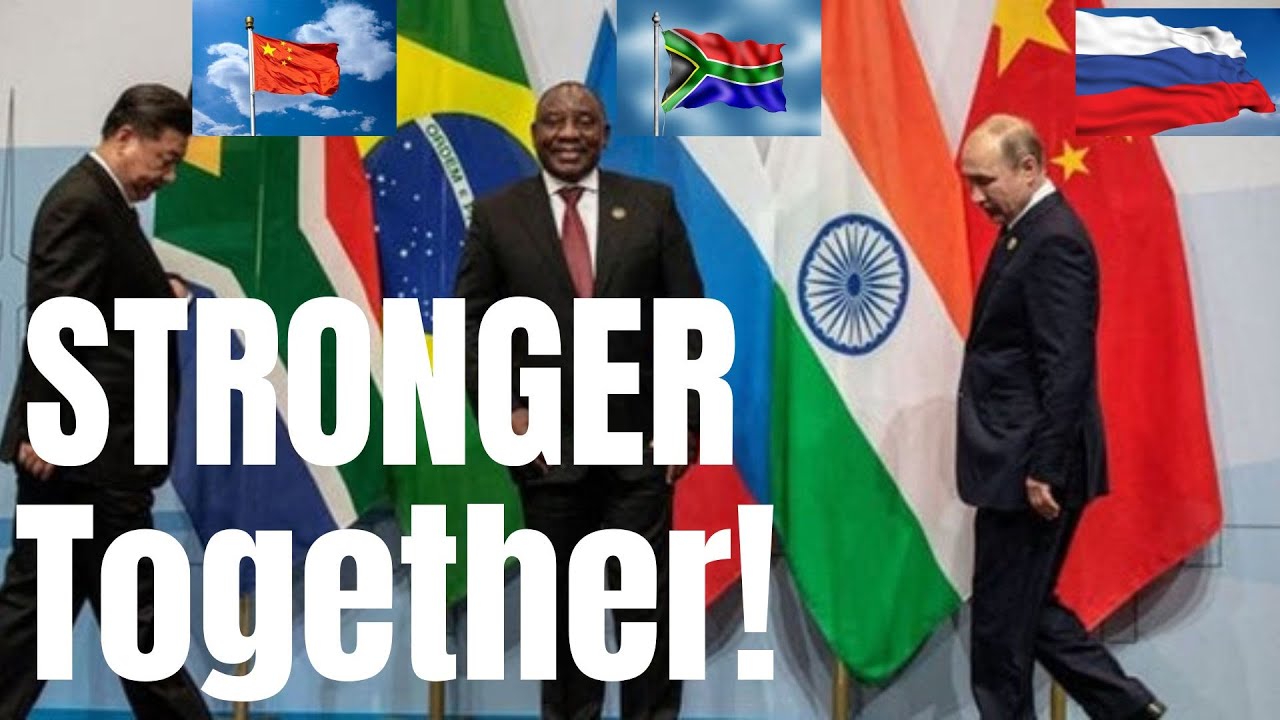
This content was created by David Oualaalou. This content was uploaded by David Oualaalou. This is a YouTube video titled "South Africa Ignores the US & Hosts Russia & China Naval Drills!" (published 2023-02-21) — a geopolitics commentary by David Oualaalou. In the monologue he analyzes South Africa’s decision to host joint naval exercises with Russia and China, highlights the deployment of the Russian frigate Admiral Kursakov (reported to carry Zircon hypersonic cruise missiles) and its stop at Tartus, summarizes the South African and U.S. reactions (including a quoted U.S. Embassy spokesperson), situates the drills in the context of South Africa’s BRICS ties and its UN abstention on Russia-related votes, and frames the exercises as diplomatic signaling and a test of East-versus-West alignment around the anniversary of Russia’s 2022 action in Ukraine.
Chapters
Hello everyone and welcome to Geopolitical Trends. My name is David Oualaalou. So good to be with you as always. South Africa will be hosting naval drills with China and Russia combined. In this video, I am going to provide you a brief analysis as to not only what message South Africa is sending to the United States and the West writ large, but also the geopolitical implication of this, you know. If you like the content of my videos, by the way, consider becoming a member or a supporter, whatever you feel comfortable with, and I thank you for your support. And if this is your first time visiting my channel here, make sure to subscribe and hit the notification button so you will be notified every time I upload a new video. And thank you all for your support. Let's dive in into this topic. Excuse me. You know, Russian warship armed with hypersonic missiles is to join Russia in South Africa. And South Africa, which will be hosting the drills. So the Russian Navy is set to participate alongside the Chinese and South African navies in exercises that are set for next month of South Africa. Why is this important? What made me decide to come on this? Well, first of all, it's because when I wrote my Russia book, The Volga— The Dynamics of Russia's Geopolitics, I did devote a section there about the Russian relations with Africa. Well, China also. And I tackled something like this, that Could it be that Africa will become the new geopolitical ring in which the competition is going to become fierce between, uh, the United States and Russia, China, and South Africa combined? And here we are. So here is what's important about, about this is that the Russian, uh, uh, frigate named Admiral of the Fleet of the Soviet Union Kurskov It's known as Admiral Kursakov. This one here, this frigate, is armed with hypersonic cruise missiles, and it just entered— by the way, this Admiral Kursakov had just entered deployment in the Atlantic Ocean only about 2 weeks ago. You can just see this is not a— this is for reason why the drill is conducted at this time and the nature or the type of the vessels, naval vessels that is involved in this. It's no coincidence. Russia is also sending a message there. So the Zircon hypersonics, it— this Admiral Kurskov frigate carries, are believed to be able to fly, and I I did kind of take a look at their specs, the specifics of this type of hypersonic missiles. They are able to fly at about 9 times the speed of light— or the speed of sound, rather, not light, sound. There's a big difference for those who might be interested in physics understanding for this. So yeah, so the 9 times the speed of sound, so with a range of over 620 miles. So the ship is also expected to traverse the Mediterranean, making its way to Russia's port at Tartus. Well, Tartus is a naval— Russian naval location in Syria. Now you see why Russia got involved in the Syrian conflict, because this port Tartus. And again, I addressed it in this book, so, because I usually conduct research for about literally a year and a half, uh, or almost two before I complete the writing of the book. That's why these books kind of took me two years each to write. And I addressed this because the geostrategic location of Tartus is— has access to the Mediterranean. That is why the Russians went into Syria to begin with. So, so this, uh, uh, the Admiral Kurskov is making a stop there before heading out to South Africa. So by the time he gets there, the Admiral Kurskov will go to the logistic support point in Syria, which is in Tartus, and then take part in a joint naval exercises with the Chinese and South African navies. That is what's interesting about this. So, and this, by the way, has been confirmed by the Russian Defense Ministry. I have not found out yet from the Chinese Defense Ministry whether they didn't confirm it yet. So I can conclusively say that China is definitely, uh, till I hear otherwise or find out otherwise. The South African National Defense Force has also confirmed that the drills will take place in February next month between 17th and 26th and will be located off the ports of two locations, two cities, that is Durban, okay, and Richards Bay. Those are two cities in, uh, in South Africa. And here's the interesting about what the South African defense establishment said is that it described these exercises, the naval exercises, that is, it is aimed at, and I quote here, I got the quote from their transcript, I read the transcript, to strengthen the already flourishing relations between South Africa, Russia, and China, end of quote. Once again, as a geopolitical analyst, you can just see the message that South Africa is sending, and there is a reason for that. You all remember the recent, uh, US-Africa Leaders Summit that was in Washington, and I did a video on it, and I did say that Africa is kind of like, can't trust the Americans anymore. This is exactly the meaning of it. That's why they're doing so. So the South African military also pointed out that it will be the second joint drills involving the three countries because they did one in, if I am to remember, in 2019 exercises. I used to follow up this because once again, because it was the research that I did, because this book was published in 2021. So when I did the research, I don't remember those naval exercises at that time in South Africa. So, so here's my analysis for you. You know, given that it remains a US ally, South Africa is, you know, but with this announcement by South Africa, South Africa now is coming under heavy criticism for hosting the drills. And for also allowing Russian warships at its port. Well, wait a minute, isn't South Africa a sovereign state? They can do whatever they want. So what are we criticizing them for? And by the way, who the criticism is coming from? Where the criticism is coming from? From the United States. So it's kind of, uh, uh, defies logic as far as what's pragmatic and what is not. It's a sovereign state. They can do whatever they want. So South Africa has been among, uh, because here is the reason why also. So as part of this brief analysis for you, South Africa has been also among some 3 dozen, yes, 3 dozen countries to abstain from the United Nations vote last year to condemn Russia's involvement in Ukraine or Russian war in Ukraine, whatever you want to call it. So, but it was mainly about Russia's annexation of the four eastern Ukrainian territories. So South Africa was one of those countries that didn't vote, didn't support the US, because remember, most of the Global South didn't vote with the US at the UN. To condemn that. So what follows after this is the US reaction. That's what I found very— I'm not laughing, it's kind of weird how we behave when it comes down to foreign policy, because that's not how you conduct foreign policy. But when you have amateurs in Washington, they don't have the depth of understanding what geopolitics is all about. You're going to see or hear or read statements emanating from these individuals They have no sound in, in, in reality. The sound judgment is lacking from it. So this is what US reaction is, is that now US said, which fostered the decade-long strategic partnership with South Africa, immediately expressed disapproval. Well, who the heck are we to decide whether a country— you know, it's kind of— I find it very ironic. You know, those are sovereign states. Under international law, the sovereign state is entitled to do whatever he wants, with the assumption, of course, not breaking international law. And conducting naval exercises doesn't go against international law. So what are we expressing our disapproval for? So And the spokesperson for— his name is David Oualaalou— the spokesperson of the US Embassy in Pretoria said, and I quote, I got the quote, the statements from the embassy because I read it as well. He said, and I quote, we note with concern the plan by South Africa to move ahead with the joint exercises even as Moscow continues its brutal and unlawful invasion of Ukraine. We encourage South Africa to cooperate militarily with fellow democracies that share our mutual commitments to human rights and the rule of law. End of quote. Here we go again. You remembered my last video about the rule of law? So it's because now when you read statements like this They have no, no, no, no value. They have no, you know, there's nothing in them. They're just empty bravado, no more, no less. It's because when you lose credibility, that's it, it's over. That's like you guys in your daily life, in all our daily lives. If you have a friend, close friend, and the friend sort of betray you somehow or whatever, would you trust that friend again? No way. No way. So, so here's the thing, the way I see it, the naval drills in my opinion is a show of a diplomatic independence for South Africa. Because remember, South Africa is also part of the alliance with Brazil, Russia, India, and China known as BRICS. South Africa also will be hosting the BRICS summit in, I think, in May 20— this year, in May. This naval exercises, in my opinion, and again putting my geopolitical analyst hat on, this naval exercises reasserts South Africa's position that it will not allow the conflict between Russia and Ukraine— between Russia and Ukraine, but also Ukraine— in brackets, US and NATO— to dictate its diplomatic relations. And rightly so, because that's what it is. So, so here's my conclusion for you. The drills will happen around 1-year anniversary of Russia's military conflicts in Ukraine on February 24th, because remember, the drills will be between 17th and 26th of February. The first military action of Russia in Ukraine was on February 24th, 2022. So, so it will come a one-year anniversary, okay? And it will bring more focus on the push by Russia and China for global influence and the refusal of South Africa, a leading voice you know, on the continents to side with the West and condemn Russia's action in Ukraine? You know, they're not gonna do that. It's because, as I always say, any country, any sovereign country, will have to think about its strategic interest. South Africa is seeing where the trend is headed, and they're not going to jeopardize that. So, so here's my question for you for today. Will the world be divided into, once again, East and West? In your opinion, will the world be divided once again into East and West? Let me know what you think because I always like to read your feedback. And as always, remember, geopolitics impacts your daily life in more ways than one. Till next time, guys. Bye-bye.