Strategic Calculation: Russia’s Nuclear-Powered Sub in Cuba!
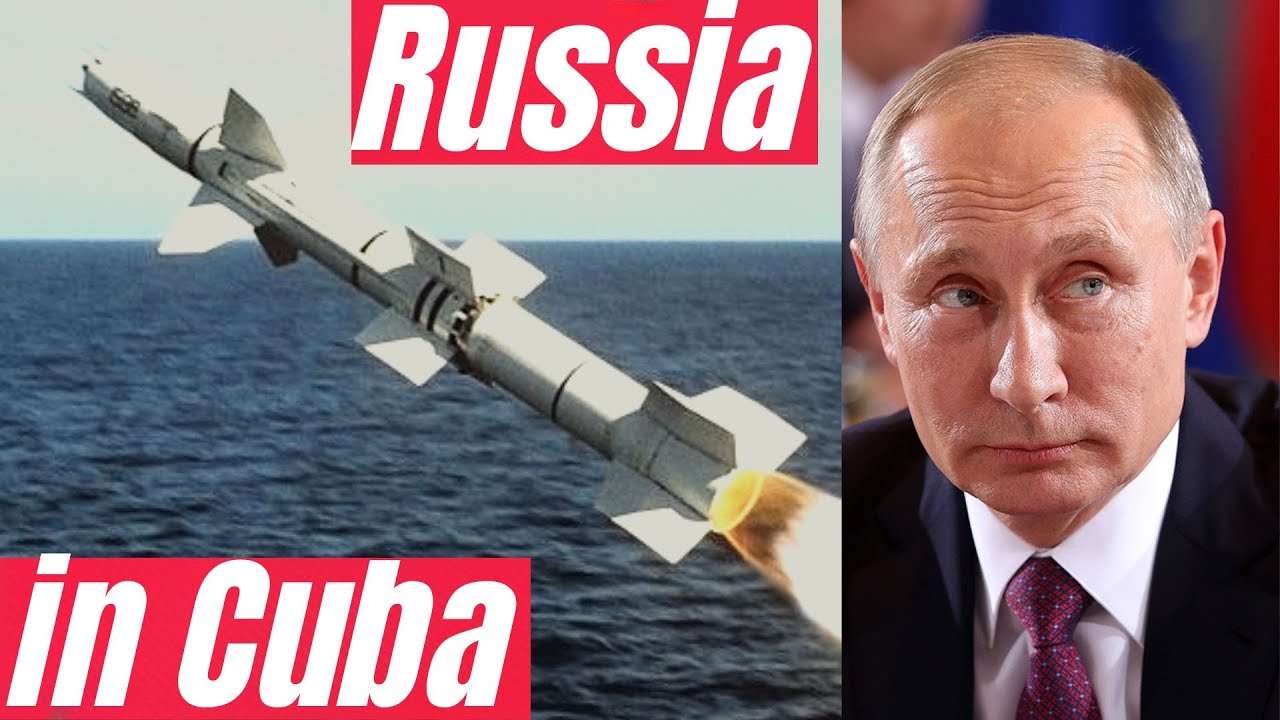
In this live‑stream, the host (David Oualaalou) examines Russia’s recent decision to send a nuclear‑powered submarine (the Kazan) and additional naval vessels to Havana, Cuba, for a summer‑long air and naval exercise located just 90 miles from the Florida coast. He outlines the composition of the Russian task force, the capabilities of the Yasen‑M class submarine and the Admiral Kursk frigate, and the potential missile ranges that could threaten U.S. mainland cities such as South Carolina. The discussion weaves in a detailed historical review of the 1962 Cuban Missile Crisis, drawing parallels between past Soviet deployments and today’s Russian moves, and questioning whether the United States is downplaying the threat. The host solicits audience input on whether China, Venezuela, Iran, North Korea, or other regional actors might join the drills, and he argues that Russia’s presence is a strategic signal aimed at countering U.S. pressure in Ukraine and NATO actions. He critiques U.S. foreign‑policy narratives, suggests that Western leadership is in crisis, and warns that misreading Russian intent could lead to escalation. Throughout, he references his own research and a forthcoming book on Russia, shares maps and images of Cuban geography, and provides a timeline of Cuban political history to contextualize the current events. The stream concludes with announcements of upcoming interviews and a call for continued audience engagement.
Chapters
All right, hello everybody and welcome to Geopolitical Trends, where truth matters. Excited to be with you here on this June 10th. I hope you had a, a good weekend, peaceful one, relaxing one, and you just did nothing. Did you guys know there is sometimes the beauty in doing nothing? Just chill out. I know in, in, in our society here If you do that, they consider you as lazy, which in reality they don't understand that in life you just have some times to just take it easy, don't do anything, just chill out. So anyway, hope you had a good weekend and very, very excited to be with you. I got an interesting topic, and thank you all for your vote yesterday. Uh, I know we're supposed to have the interview with Dr. Mike Krupa. Something came up to him, he sent me the text which is fine, you know, things happen, whatever. So we postponed it till next week. So I look forward to that conversation, and I will keep you posted on all this. So, so today's topic, I will be talking about Russia sending its nuclear-powered submarine and other naval assets to Cuba, 90 miles from Florida. So I'm very familiar with that part of the world. I spent some time there We do have some military assets that are back in my days, so I'm going to be sharing with you, uh, some information and we just— and, and of course provide you with my analysis about what does all this mean within the bigger picture. So this is what's important to understand. So let's say hi to everybody here, whoever is here. This was Tix, good to see you. And you wrote, interesting move by Russia. China by all means should join considering Uh, US involvement in Taiwan. Yeah, that's, that's a good point. What do you guys think? Should China join Russia in those drills? Because here's the thing that I need you guys to know: those drills are not for one week. The Russia is going to be there for the entire summer. Yeah, which is surprising. Of course, our media is not covering all this in detail. There are some articles out there, and I read some, and I'm going to be sharing some with you. Truth Seeker, good to see you. By the way, guys, FYI, uh, sometimes you— the communication here, because we're getting into some bad weather coming our way, uh, interruptions into the, uh, stream here. So if it gets off, whatever, don't, don't leave. I probably will reconnect again, uh, uh, some. All right, it's all letters. Good to see Willie Holman, Coach Ohoi, Phil, as always, Scroopy, nope. Pears, that's an interesting screen name. Taiwan Still, good to see you. Timeline Dunkley, as always. Macian Dorier, Jane Huang, Wong KC, good to see you. Yeah, I lost the— I'm sure you guys can hear me. Here it is, it comes back and forth. So Cam 35, good to see you. So let's jump in on it before I lose completely the connection here. So, all right, as I said, I will be talking about, uh, where is the— yeah, let me, let me— I got maybe— I have so many windows open here, but I have to cover into this one here. So, like I said, before I'll delve in, in this, I want to share with you some housekeeping stuff. As I mentioned earlier, Dr. Mike Krupa will be here next week on on, on June 17th. Uh, Giant Bahandari, I reached out to him, we, we locked in the date for the 19th at 8 PM my time here. So it will be, I think, 10 AM or 9 AM, somewhere around that time. Uh, he's in Asia right now. I can't disclose the exact location, but he's in Asia somewhere there. So, and also I have an interview set up. I'm going to set it up with Michael Horn on the 14th. This is about if you want to learn more about the universe, if you want to learn more about very, very different— I'll touch on geopolitics very briefly. Michael Horn is not into geopolitics, he is into the universe and so forth. So anyway, we're going to be talking about those ones here. So all right, let's, uh, let me introduce the topic here for those who might not be familiar. Well, Russia will begin some air and naval Exercises in Cuba, in the Caribbean in general term, that is considered part of the Caribbean, started next week. So now there are some key questions that we really need to ponder about because this is exactly what geopolitics and global security are all about. So the first question is, did Russia notify the US? Now some of you said, well, they don't need to notify. There is a protocol between certain countries that usually they will notify each other. For this one, I don't think so the Russians notified the Americans. We all know where the tensions are headed between the two. Second question is, how significant is this development? Because I mean, tell me guys, if any of you saw this coming, you know, of course Russia is dealing with Ukraine and all that stuff, but on the other hand, when the Russian president Vladimir Putin mentioned that maybe it's time now for us to provide some advanced weapons to other third party. They can deal with it with whatever the way they want. In other words, that's a subtle message for we'll provide you the advanced weapon and you can target whatever US interests you want, because that's the message to it. So this is what I'm saying, how significant is this? Third one is history coming full circle. What am I referring to here? I'm referring to Cuban uh, uh, missile crisis. What, what year was it, by the way, guys? Can anybody type in, in the chat box what year was the missile, uh, the Cuban Missile Crisis? Let me see here in the chat box before I move forward. Uh, just, just, just the year. Just type in the year there if you could, please. Uh, uh, Dante says, so, Etienne, 19 Uh, no, Dante was right, 1962. 1962, that is when it was. And the last question is, where is China's position on all this? One of you guys made a comment. I, I'm sorry, I can't access the, the, this to see it, but one of you made, uh, made a comment is, what if China join in Russia in Caribbean near, uh, the US coast bring in their advanced missile systems as well? You know, it's fair question because we have to think outside the box. And this is what I am going to be delving deeper into today, in addition to providing you my own analysis from, uh, my own book that I wrote about, uh, Russia, which by the way I have an entire— I think I did about 3 pages regarding this particular issue of— not issue, rather this particular, uh, uh, topic as far as Russian exercises near the US, uh, uh, coastline. So, so I'm going to be sharing with you some of that analysis from my, uh, Russia book. So, all right, let's get into here. So Russia, as I mentioned, will begin its air and naval This is why important. Once again, the reason I put that thumbnail that way is to send to— to— that's a— that's my subtle way of highlighting to you the, the importance of it. This is not about just naval. The air defenses are also are involved into this. So, and this was what, uh, the, the exercise is going to include: 3 Russian Navy ships, and a nuclear-powered submarine which usually arrive in, uh, actually in 2 days they're going to be in Havana. They're crossing through the Atlantic. Uh, I kind of, uh, uh, sort of wasn't sure about the arrival dates. I didn't want to get ahead of myself about that one. That's why I waited till I get confirmation that indeed it's going to be. And by the 12th they're gonna be arriving at the port of Havana. So, and this is what it's gonna be. But before I'll delve deeper, let's do a little bit of geography on Cuba and a little bit of history, because it's worth understanding, uh, that part of the world as well. So I'll start with geography. As always, I give credit to, uh, World Atlas. And let me share the map with you guys, then Uh, we'll do history and delve into the analysis of it. So this is going to be a little bit of lengthy conversation here. I hope you just bear with me here. So, all right, what are we looking at? Cuba, the largest island country— yeah, you can, you can call it that way— the largest island country located in the northwestern Caribbean at the confluence of the Atlantic Ocean Caribbean Sea and the Gulf of Mexico. Very, very strategic location. It is positioned in the northern and western hemispheres of the Earth. Cuba is situated in the east of Yucatán Peninsula, which is— this is on the Mexican side— to the south of Florida, which, as you notice there, uh, when you look at the map If you noticed the Key West right here, Key West, that's the tip of Florida there. So, so to the south of Florida and, and the Bahamas, to the west of Hispanolia, which is Hispanolia is another word for Haiti and the Dominican Republic. That's, of course, each one of them is separate as a sovereign entity. But that's how also it's known as Hispaniola. So, and to the north of Jamaica and Cayman Islands, I had a visit to— I had a chance to visit the Cayman Islands, so you can see the influence of the, uh, the, the Caribbean island, uh, sort of, uh, traditions and customs and so forth. So, uh, Cuba is surrounded by the Atlantic Ocean, Cayman Trench, Gulf of Mexico, Straits of Florida, and the Caribbean Sea. Cuba shares its maritime borders with the US, Haiti, Honduras, the Bahamas, Jamaica, and Mexico. Or Mexico, that is. So, so you can pronounce it both ways. So, so let's look at, uh, and by the way, as you look at the map, let me make this bigger a little bit for you to see, even though you don't see. Look at the distance here between Florida and Havana. This is what we call the Strait of Florida. The history, very interesting because we're gonna get into history now. I can either start from the revolution or go before, but let's just go with the revolution, which was an armed uprising that was led by Fidel Castro that eventually toppled the brutal dictatorship of— who was the dictator back then? Does anybody know? Who did Fidel Castro topple? And he was, uh, I, I talked about it in my Russia book and I will mention it later on. Who was the dictator back then? Batista. That is correct, John. You got Ramzi Abdurrahman. You got it, you got it. Batista. That was indeed So when they did this one, when they toppled it, the revolution began with— of course it didn't succeed the first time. It was the failed assault back in 1953. By the end of 1958, Castro's— on 26th of July, the, the movement gained the upper hand in Cuba, and that's what it was forced, uh, the Caribbean forced— I'm sorry, Batista to flee the island on January 1959. Of course, the history of Cuba goes before that, and it goes to the Spanish-American War. That's how far back it goes. So the US military directly administered the island until 1902, when Cuba became a republic with sugar as its main commercial export. After a financial crisis and persistent governmental corruption, Machado was elected as Cuba's president in 1925. Gerardo Machado, that's what it was, 1925, pledging reform. Instead, Machado became Cuba's first dictatorial ruler until he was ousted in 1933 after a revolt by Batista, and that's when we came in into supporting Batista to take power. So, uh, fast forward to 1952. This is when, uh, uh, Batista served himself, uh, from 1940, 1944, and ran for second term in 1952. Facing defeat, he overthrew the government in bloodless coup and canceled the election. So then this paved the way for the emergence of Fidel Castro on July 26th. So Castro, uh, did you guys know, which I did not know, I admit it, I did not know, do you know that Fidel Castro was a lawyer? He was a young lawyer. I did not know. You know, we all— because it was always the image portrayed here in the US was about, oh, he just revolutionary stuff. Even though you hardly ever hear about his academic credentials. Now I wonder why he was well articulate. Yeah, he was a young lawyer and activist and has become running the for Congress as part of the Cuban People's Party before Batista seized power. So fast forward to, uh, uh, when Fidel Castro was tried, uh, and imprisoned, because that's what happened, uh, during the, the, uh, uh, uh, I mean, during the time when Batista seized power. So, seeking to arm revolutionary opposition to Batista regime, uh, uh, uh, Fidel Castro led raid against the Moncada army barracks in the city of Santiago de Cuba on July 26th, 1953. This is why that date is always remembered, July 26th, 1953. Most of the group was killed. Castro and his younger brother Raúl escaped but were later arrested and imprisoned. Fidel Castro's trial and imprisonment served to build his reputation as a revolutionary leader. After Batista yielded to international pressure and granted amnesty to many political prisoners in 1955, Castro headed to Mexico where he began organizing Cuban exiles into a movement named to date of the failed Moncada attack. Now the revolu— the— on November 1956, About 80 or 82 men, depending on where you look at the record for the historical record. Some mentioned 80, some mentioned 82. The one I came across, which I will provide you the link, mentioned 82 men representing the 26th of July movement sailed from Mexico aboard the Granma, a small yacht. Batista forces learned of the attack ahead of time and and ambushed the revolutionaries shortly after they landed in a remote area of eastern Cuba on December 2nd, 1956. Though most of the group was killed, around 20 of them escaped, including Fidel and Raúl Castro, and one of Castro's foreign recruits, Argentine-born— can anybody guess? And I'm gonna share a picture with you. Remember, I give you the hint— Argentine. You should know who that is, right? Who's that in picture? And they became close, says my friend. You're absolutely correct. You got it correct. You got it. You got it. You guys got it. Uh, that was the, uh support they got from the Argentine-born. Now here is the thing also, a lot of people do not know, Chivara was a doctor. Ernesto Chivara, or Chivara, depends again how you pronounce it. It was a doctor. So, uh, but anyway, moving forward, the rebels seized the advantage, and in response to growing opposition Batista suspended constitutional protections for Cubans, including freedom of speech and assembly, something we are noticing right now in the Western world, especially now with what just took place in Europe with the elections in the European Parliament, which is a conversation for another day. I am going to do it for you guys because you need to know some things. So the, the cancellation of freedom of speech and assembly The following year, Batista called for the planned presidential elections to be postponed, blaming the ongoing violence. Why, why am I sharing all this with you again, guys? History gives us lessons. It teaches us the lessons. Who's the president? Who's the so-called president just canceled the elections in his country that is now involved in a conflict? Can you guys type in, in the chat box? And you should know You should know that who that is, because by now you have no excuse. I'm putting pressure on you. Yeah, which country that is? Uh, no, Macron didn't cancel the— Macron dissolved, uh, the, the parliament. Uh, and I saw Rampos01, you got it. Elensky, the comedian Z, Farhad Razavi, you got it. Omar Grant, Ukraine, you guys got it. You got it. So that's what it is. Again, the purpose of it, I am sharing with you because I need you to always know in history it provides us reference points. This is exactly what, what happened. So believing the support for the revolution was waning, Batista called for a major military offensive against the rebels in the Sierra, uh, uh, Mesra Mountains in the summer of 1958. Instead, the rebels swiftly turned back the offensive, forcing the army to withdraw. And with international media giving favorable press coverage to the revolutionaries, once again, again, history provides us the role of the media. The United States began to withdraw support for Batista government, which has previously backed the to the dictator's anti-communist stance. Again, what is the, what is the lesson here? The lesson is we play on both sides. Once the media expose the truth, we switch sides. And this comes the Castro Revolution, November 1958. The Cuban president election went ahead amid widespread fraud, with Batista's chosen successor winning despite more moderate candidates receiving more legitimate votes. As support for Batista continued to erode, the July 26th revolutionaries struck the decisive blow in late December of 1958 with, with, uh, what's his name, Guevara's forces defeating a much larger army garrison in the Battle of Santa Clara and capturing a train loaded with vital arms and ammo. January 1st, 1959, with rebel forces bearing down on Havana, Batista fled Cuba for the Dominican Republic. He later proceeds to— do you guys know which country he left to? Let me see what you guys— if, if any of you know, and again, just if you happen to know, which country did Batista fled to? Not the US. No, no, no, not the US. He didn't fled the US. So First, he went to Dominican Republic. It was just the first stop because he had to proceed to another country where he, he lived there till his death in 1973. Do you, do you happen to know which one? Mexico? No, it was Portugal. Portugal. That's where he fled to. He, he went all the way to Europe. So Portugal, and he died in 1973. Fidel Castro arrived to Havana on January 9th to take charge of a new provisional government, quickly consolidating control and rounding up Batista supporters, many of whom were tried and executed by revolutionary court. Though Castro has called for elections during the revolution, he postponed them indefinitely once he came to power. Now, you can classify Castro any way you choose—dictator, tyrant, whatever, because again, that's how history marks it that way. So, and this where the United States came in and start to— of course, we try to, uh, uh, uh, conduct a coup. Do you know, do you guys know the name of the failed attempt? What was the name of it? It's well known in, in for our history here, and we failed to exterminate or take out Castro at that time? Does anybody know? It was conducted by CIA. Uh, Jane, Juan, you got it. Bay of Pigs. Uh, AF Gordon, you guys got it. The Bay of Pigs. So, and of course what happened, uh, is that the United States— here is the key— the United States was the first country to recognize Castro's government in Cuba. Why do you think that is? Of course, the concern was about communism at that time. But relations between the two countries quickly deteriorated as Castro implemented communist regime and forced close ties with the Soviet Union. And that became now Cuba, the center of what the Cold War was about. Beside Berlin in Europe, Cuba was in the back door of the United States. So the US broke off diplomatic relations with Cuba in early 1961, and the next few years were marked by escalating tensions, including the Bay of Pigs invasion of 1961 and the Cuban, uh, the Cuban Missile Crisis in October 1962. So despite a long-running US trade embargo, widespread economic hardships, a mass exodus of hundreds of thousands of Cubans, and multiple efforts to implement regime change, Fidel Castro remained in power. Uh, I got some pictures I need to share with you here. Uh, remained in power, uh, until 2008 when he formally resigned after handing power to his brother and later on he died in 19— in 2016, I'm sorry. And I will provide you a link to all this, guys, because you need to understand this part of history. Now I'm gonna share picture with you, and again, you reach your own conclusion. I'm not gonna make any comment, okay? So just take a look at this picture. Let me remove this, share the screen, and tell me what you see. A lot of people are saying so. So there were some, uh, some, uh, interesting, uh ties over there. So I, I, I can't get involved in all this because I do not know for a fact. All I wanted to share this with you because I read, I read in so many, uh, given that I looked into the history of so-called Justin Trudeau's father, Pierre Trudeau, and the relationship was different with Trudeau's mother back then. So that's all I can share with you to my knowledge. So, uh, and of course for Cuba is— I don't— for us Americans, we can go over there unless, uh, for example, for me, I can go to Cuba if I provide the documentation that I am going for academia, academic exchange, whatever. And, uh, then the U.S. State Department do allow Americans on kind of trips like this for academic exchange, whatever., they can go. But this is a picture of Havana, of course, the multicolored islands and so forth, the, the cabs. And it's still, still very, uh, Canadians can go to Cuba, it's not an issue there for them. But for us, uh, we, we can't. So that's so far how, uh, it is going. All right guys, let's get into our analysis here. Uh, so the— and again, I am gonna share with you what's been reported, but I'm also going to share with you my own analysis that I wrote about and tie it to the current conditions, uh, what's going on geopolitically. So excuse me. Now the idea that, uh, uh, Cuba announced that the visit sort of— it's a normal relations between Russia and, and, and Cuba, which is true. The, the Cuba and, uh, and, and Russia have been maintaining relations since during the era of the Soviet Union. So, and this one is no different. And Cuban officials come forward and said, well, there is— this shouldn't alarm the United States, they shouldn't create a hysteria about it. Even the US is saying, oh, we are not concerned, which is a lie. You know, that's usually how we do it with something like this, because what are you looking at here? And again, I am not gonna get into the detail of the type of assets you're looking at. This is the Russian Kazan The Kazan one, which is the submarine, nuclear-powered submarine, very advanced. You know, you're talking about one that is— has nothing to do with just nuclear, uh, uh, uh, being nuclear-powered, but having the capability of including missiles that can be nuclear-tipped. You know, and if you look at the distance like you looked at in the map— let me bring it back up here— if you look at the map between Cuba and Florida, we're looking at about 90 miles. That's all you're looking at here, 90 miles between the coast of Florida. That means what? The minimum of those missiles that this kind of submarines will host will have about 1,000 miles, which means it can reach South Carolina. If you know the map of the United States, South Carolina way up there. So That just tells you when the US is saying, oh, we shouldn't be concerned, they're lying. Basically, that's all it is. And, and what makes the— even this more concerning for the US is that Russia didn't notify the Americans. Now, some will say it is within their right. Look what we doing in their doorsteps, and now we're gonna feel the heat that Russia's moving assets here. Now, even Russians themselves— and this again based on my understanding of how things can work— even hypothetically, and this is hypothetical because I couldn't confirm it, let's say the, the, uh, the Russians have the nukes, nuclear missiles, or nuclear, uh, missiles, nuclear missiles tipped, we on the submarines, they're not going to disclose that to the Cubans. No country ever does that. The same way we're gonna be doing to Philippines with those 9 bases, remember? And I did talk to you about this. We only declared 5, but we didn't talk about the 4. The other 4, that's where the tactical nukes is going to be hosted, and the Filipino government will not know. That's just the way it is. That's how it works. So, so the Russians will be no different. And what makes it even different in this case is that Uh, moving with this kind of, uh, uh, exercises, uh, even though the Americans are saying, oh, it doesn't, uh, uh, pose any direct threat. No, it's a lie. First of all, because first of all, this is not covered aggressively. Most Americans have no idea. This is why I decided to do this for you guys, to bring you to understand This is what's at the whole mark of what geopolitics is all about. This is a strategic calculation by the Russians, very strategic. It comes on the heel of two things, or against the backdrop of two things. One is what the administration of— Biden administration is saying that now we are allowing the targeting of Russian locations with NATO weapons, which is problematic. I don't know what Uncle Joe is knowing what he's saying, uh, he doesn't know anyway. And the second is that also the announcement of the Russian president by stating, which was only about a week and a half ago, that was during, I believe, during the St. Petersburg International Economic Forum, which by the way, that one is far bigger than what you hear about the one in Davos and all that stuff. It's just the media doesn't want you to know. It's far bigger and is attended by heads of state. So, uh, uh, when he announced that now Russia will be sending advanced systems to other countries, to other entities— that's how they put it— and the message is settled out there. And this is why it's important to understand the nature of those navals coming in Okay, why is this important? But also to understand that those kind of assets, those are not your average— this is not a small drill here. We're looking at a whole summer. It's, it's, it means a lot. So, so, and this is where what makes it even interesting. What makes it interesting is that those naval drills could also include another country from Latin America. Can anybody guess which country that is? Let me just see in the chat box if you guys can, uh, uh, if, if I know it wasn't disclosed much. I had to look elsewhere and check with some sources to find that out. Uh, do you guys know which country might end up joining those exercises? Because remember Oh, Karakulak, Jane One, you guys got it, you got it. Venezuela. Why is Venezuela, you may ask? It's because what just happened about a few years ago when the Russians sent the Tu-160. You all know what this is. This is the long-range, uh, uh, uh, heavy, uh, supersonic bomber. That carries nuclear, uh, bombs. He went to, uh, Venezuela. So the, the fact that Venezuela may end up joining this— so these regional exercises are expected to last through the summer and culminate into a global naval exercise in the fall. And this leads us to that question we had earlier. Will it make more sense in your, in your opinion? And I'm asking you because I like to know your input, because this is where the strategic thinking come in. And I'm gonna ask you, I like to know your opinion whether China should join those long— because like, like it was mentioned, this is going to turn into a, a Since the exercise is going to last till the end of the summer and could culminate into a global naval exercises, which means what? Other countries will be invited right here at, at the US doorsteps, 90 miles. What do you guys think? And again, think strategically before you answer. And I just want to engage you into the conversation. Should China And we all know, as a matter of fact, I just found out while doing this research here, guys, Russia now wants to buy naval ships from the Chinese. So Mexi— uh, Cam35, you wrote Mexico, Mexico should join, you know. Uh, uh, Stefan, you wrote Iran, North Korea, and China will join. Farhad Razavi, Iran has been there since the revolution in Iran. That is correct. So, it is scary, it is scary, but that this is how the calculations in geopolitics. But also, there is also the risk. We all remember, you go back in history to 1962 with the missile Crisis, which took about, uh, what, 13 days of intense, intense negotiations to dissolve that issue. Can you imagine if things didn't work out where we would have end up? Yeah, and this is where I need you to understand how this could move into that direction. I still believe It is a strategic move by the Russians because they wanted to send a strong message to the US: we can come to your doorsteps if we want to, and as a matter of fact, we are. So I have a picture here. I believe that I— where is one, one picture I wanted to show you? Yeah, this is the, uh, uh, the nuclear, uh, submarine that's going to be, uh, coming in. Picture 26. So the idea is going to be coming out, okay, what the US is going to do? What can we do? Nothing, you know, because we doing the same for them look, look what we're doing in, uh, on Russia's doorsteps in Ukraine. So the Russians saying, yeah, we can do that too, we have the means to do it. So I'm gonna share a picture here with you guys, and this one, it's not recent, this one is from 2019. This is the arrival of the, uh, the, the Naval Admiral, uh, Kurskov frigate. It's a major one. This has some advanced systems on it. This when it arrived to Havana port, uh, in 2019. I just digged through the archives and found this one, and I just wanted to share it with you. So, uh, of course, the US now, where that concern is, is what does it mean? What all this means? It means now that if Russia moves its advanced systems and we keep pushing, uh, the Russia or Russians near their doorsteps, they will react over here. To those who say, oh, that's nothing but just posturing, I don't believe so. Russians do not bluff. You all remember, you remember last time in the Black Sea when the, when, uh, the, the British sent their, uh, the HM, uh, the Queen Elizabeth, whatever that was, destroyer way back in the Black Sea. And what the Russians warned him and said, you are getting too close, this is your last warning. And the, the British, ah, they said they're just bluffing. And what did the Russian end up doing? They fired. Of course, they calculated to the destroyer there, to the point that the UK had to turn around and leave. Yeah, now for the UK, I'll say that, that's just how, uh, okay, I have some, uh, interruptions here with the screen. But anyway, so that's what it was. And the idea of the Russians now thinking, no, we will react, we will have those missiles within range. And as I said, I found out that certain type of missiles that the, uh, the— this, uh, advanced Yasen-M class nuclear power carriers can go up to 1,000 miles. That means from their location they can reach, they can reach, uh, South Carolina. So that means the major cities will be within reach. And this is where all this comes during the— as tensions, uh, arise between the US, because we are pushing, we are pushing too far, too, too hard. You know, we have to be careful how far you're going to push the Russians. So, and the, uh And this is where that idea of those who say maybe the Chinese needs to join. Why not? So, because that will send a strong message to, uh, uh, uh, to the US, even though you get now officials in the US saying, oh, we are not concerned by the Russians' deployments, uh, because it poses no direct threat to the, uh, homeland. No, that's a lie. Of course they're gonna have to come up with the statement. And I bet you now, as one, you know, I used to work in Washington, I understand how these dynamics work. They are now running scenarios in at the Pentagon as to what if, what if, what if, what if, what if. That's exactly what is going on. So because if you consider this, guys, just consider this, uh, both of them— and I'm going to share this picture here— this one here, and I have the other image also, uh, both of them, the Kazan and Admiral Kurskov. This is the Admiral Kurskov. Where is that picture? Yeah, right here. This is the Admiral Kurskov. No, that one. And the Kazan, both of them are equipped with vertical— listen carefully— vertical launch system silos. That means what? It can accommodate long-range cruise missiles. They can also be used for anti-ship strike and a land attack. Those two vessels also— the submarine and the Kursk— also carries with them the Oniks. You all know what the Oniks is, is the supersonic anti-ship cruise missiles. All this to me, it doesn't suggest that the US shouldn't be concerned. We should be concerned, you know. It's because those also have the capability of deploying Zircon hypersonic cruise missiles. Yeah, it will be— it's a lie if they are saying, oh, we shouldn't be concerned, there is nothing to worry about. No, because we are not— I mean, I— when I say we, the government here, it's not wanting to disclose the truth to the American people. And this is where a channel like this comes in, because that is what I wanted to share with you. This one, by the way, it's a picture of the Russian president and the, uh, uh, uh, Cuban president, uh, his name is Miguel Díaz-Canel. That's during the meeting Uh, and just happened a few months ago, actually not even months, last month, uh, on May during the Russia celebrates the 79th anniversary of the victory over the Nazi Germany in World War II. So that, that's a picture of that. So makes you just wonder now the idea of, uh, the US is saying, well, we shouldn't be worrying about all this. No. No, no, no, no, no, no. There is more than what can meet the eye, and we're just trying to play it down. So, and that was exactly what I argued back then when I wrote the Russia book. This is exactly what I argued. I'm going to be sharing with you some, uh, uh, parts of this, you know. Uh, of course we can ignore Americans' bloodstained record of supporting coups and dictators throughout Latin America. You know, that's, that's what I disclosed. And I'm going to state some of the, some of them. For example, you all know about Somoza in Nicaragua. You all know about Pinochet in Chile. You all know about Stroessner in Paraguay. You all know about Batista in Cuba, Death Squad in Honduras. Okay, and of course the, the, uh, uh, genocidal military dictators of Guatemala, you know, all of those we support, all those. So, and like I argued back then, I said, for now suffice it to state that the— what was going on in Venezuela at that time, this is why the Russians sent that, the Tu-160. That was during the same time I was writing the book and doing the research for it. And to me, it was no coincidence because, uh, uh, by sending the Tu-160, Russia is doing two things. One is geopolitical, which suggests how Russia can intervene anywhere in the world, including the Western Hemisphere. And two is that the Russians themselves perceive the decision by Putin, intervention in Venezuela, as a sign of strength. This is why it's important. And when you look at what's going on right now with the upcoming, uh, drills, you have to go back to 1962. And this is why I'm thinking, is history coming full circle? Because the world woke up back in 1962 to the Cuban Missile Crisis. Which you all know what it was, right? A nuclear standoff between the United States and the USSR over strategic missiles in Cuba. At issue at that time, for those who might not know, it was that the Soviet Union deployed its intermediate-range nuclear missiles on the island, some 90 miles from the state of Florida. Yeah, so close. And this move created fear and panic among Americans. You know, who thought they were on the brink of a nuclear exchange with the Soviet Union at that time. And of course, after 13 days of tense negotiations between President, uh, F. Kennedy, uh, John F. Kennedy, that is, and the Soviet Premier Nikita Khrushchev, and the latter agreed to remove the missiles from Cuba and transport them back to the USSR. In return, the United States agreed not to invade Cuba and to remove US missiles, even though we tried to invade you, Cuba, later on. We went back on our word, uh, and US missiles from which country, by the way? We had other missile— we had other missiles in another country. Which one that is at that time? Does anybody know? And once again, guys, the only objective of this is to get you engaged in the conversation. So we decided to do two things. Oh, you got it, John Smith, you got it. Dante, you got it. It was Turkey. Indeed, that was Turkey at that time. We decided to move the missiles from there. Now, some agree that, uh, uh, I, I wasn't one of those because I disclosed this in the book. You can go to my book and find out the record for it. Because there, there are those analysts who argue that, oh, Gorbachev— and I'm sorry, uh, Nikita Khrushchev— Nikita Khrushchev gambled at that time by placing, uh, uh, the missiles near the US border. I don't think so he gambled. I think there was a firm stand that we will— meaning in that case back in the Soviet Union— we will retaliate if you, the United States, get involved in Cuba or do something stupid. I don't think so. It was a gamble. Of course, Nikita Khrushchev will have to think in terms of geopolitical moves, and this is known historically when it comes down to Russian foreign policy. Russian foreign policy thinks in terms of strategic moves. This is why this one here, what Putin, the president, President Putin decide to do, is a strategic calculation. And that's why I'm saying, could it be adding China to the mix of this, adding other countries to the mix, the one that matter with power? It will be a strategic move that will change the trajectory of geopolitics. Just think about it, guys. Bring in Iran, bring in North Korea, into these drills. What do both have? They have those missile technology. And now that the Russians saying we will be supplying other countries with other advanced system. And all this, by the way, come— came against the backdrop of what just happened when two radar systems of Russian radar systems were attacked using Western weapons. And by the way, those radar systems They were only— they saying, well, they— those are meant for high orbit. In other words, if there are ICBMs or long-range missiles, that's what those radars are meant to detect. Low-flying stuff, it's not for that. But it's beside the point. The fact that the target— that they, NATO in this case, targeted those Russian radars, it's problematic. And this is why the Russians went ahead and announced we will be providing weapons. I can assure you now that in West Asia, mainly when it comes down to Iran, the H group, Lebanon, and some other entities in Syria, they will be provided, uh, with some advanced missiles. Mind you, again, the media is not covering what just happened to the aircraft carrier, US aircraft carrier, that's been attacked. Buy a missile. Where the age group got the missile from? Think. So, and this is why, to those who say— the analyst who saying back then that, uh, uh, Khrushchev gambled by placing the missiles near the US border since the United States missile capabilities during that era were, were robust. Now, there is some truth to the latter part. But that doesn't mean because of that— and it wasn't about gambling, it was about ensuring deterrence. That's what it was about. So, and even if you go before that, and I'll take you back based on my own analysis that I did back then, guys, I'll take you back to the Eisenhower era because Eisenhower faced three major dilemmas. And I'm going to give you the year, and I want you to tell me what happened in that year. Okay, the three major dilemmas or events that is where— one, the first one was in 1953. What happened in 1953? Think about West Asia, and let me see what your answer is. I'll give you a hint here. Iran. That is correct. That is the coup. That is correct. 1953. Okay, that was the coup, the ousting of the popular, democratically elected president, Iranian leader at the time, Muhammad Mosaddegh. Then the second event that Eisenhower was concerned about was 1956. What happened in 1956? Uh, yeah, you might not know this one because there's other events happened, so let me just, uh, move on with this. It was when France and Britain and Israel What they did, they attacked Egypt after the latter decided to do what? You should know this, guys, why Egypt was attacked. Oh, oh, Jim Hicks, you got it, the Suez Canal. The Eisenhower was— Eisenhower administration was concerned about that one. So okay, then you have 1958. What happened in 58. I'll give you a hint, think about Lebanon. What happened in Lebanon, 1958? Because Eisenhower decided to do what? 1958, uh, the Sinai, no, uh I know it takes a while for this to show up, guys, but, uh, Lebanon crisis— which one was it? The Civil War? No, wasn't before the Civil War. They sent the troops to protect the Lebanese Christian-led government at that time. So, and that paved the way for the Civil War later on. So, so, and what stands out about this US relations with the Soviets at that time under, under Eisenhower, uh, it was that the exchange of the verbal threats between Nikita Khrushchev and President Eisenhower. Yeah, verbal threat. This is why I didn't subscribe to the arguments some analysts made that, oh, uh, Khrushchev was just gambling with this. No, no, it wasn't a gamble. It wasn't a gamble. It's because they forget to factor in the verbal threats that include— that was exchanged between Eisenhower and Nikita Khrushchev. That is why I reached my conclusion that he ain't gonna be gambling. He wasn't gambling. He put the missiles there and they were intended to be used should the US go the other way. In other words, and what we can learn from these guys is that sometimes when you meet force with force, what happened? You see a, a, a reverse of, uh, uh, change in course, in direction, that is. And this is exactly what the Russians are doing now. They've been talking to the West, they've been proposing their security concerns to NATO, they've been saying this, saying that, and of course the West is ignoring all this. We are the one fueling this, of of course. Now they're saying, sure, we're gonna come to your doorstep, we're gonna bring our assets, then we'll see what you're gonna do. And if we think that the Russians are bluffing, we are mistaken. And again, think about it this way: if other countries are added that have that kind of capabilities, we won't be able to defend ourselves. That means we're gonna have to resort to the usage of nukes. We all know what it means. And this is why those verbal threats between Eisenhower and Nikita Khrushchev turned Cuba into becoming the central focus during the Cold War between the United States and the Soviet Union. So, and of course, what did we do in an effort to undermine the, the Soviet Union's ideology at that time and expansion, because that was the whole idea of why NATO was created, to prevent, you know, the North Atlantic, uh, uh, Treaty Organization as a defensive unit. Okay, even if we go with the argument today, uh, it's because of communism. Where is communism? Soviet Union ceased to exist from way back 1991. So what is the need for NATO for? Why do we need NATO for? That was the point. So in an effort to undermine the— at that time, the Soviet, uh, ideology and expansion, President Eisenhower authorized the CIA to conduct a clandestine operation against communists. Yeah, communism around the world wasn't just in Cuba, two of which toppled the governments in Iran 1953. What is the other country which was a year after? Does anybody know? It happened back to back. 1953 was Iran. What— which country was in 1954? I'll give you a hint, it was in Latin America. All right, let me see what you guys come up with. I know it takes a while here to show up. Uh, no, not Bolivia. Oh, Jane Juan, Guatemala. This is why I said our history in Latin America is not great. And I disclosed all this. And now, you know, usually the government— because I have to, uh, I have to have the US government approval for my books to be published and all that stuff, all my articles, everything. And of course they are not gonna— and if it was one time they told me not to publish something and I gave them a call, I said, give me a reason why, it's public domain. So, well, Mr. O, we just didn't want it. It's like, why? If it is a public domain, only if people know where to look for— I happen to do my own homework and research, so why? And they realized that there was no justification for it and all that, and they said, well, it just— it's this and that. It's like, come on guys, that's a weak argument. So, and I did go by their, uh, their sort of, uh, uh, request. So if you notice, if you ever look at my books There are some things redacted there. That's just the way it is. Uh, now during that time when I was doing the, the writing my own analysis and so forth, uh, I had to evaluate and compare that the missile crisis that took place between— was the closest, uh, the US and the Soviet Union have come to nuclear war. Now we're seeing a repeat of— that's why I'm saying is history coming full circle. So, and given what the public knows, and the public didn't know much, this is why now we are not disclosing much. Consider yourself lucky to be exposed to something like this, and I am not bragging, guys. All I'm telling you is this is what shapes geopolitics on, on, on, on the global stage. This is what influenced the trajectory of global security. This is what influence how country is going to move forward. That's what I'm saying. Consider yourself lucky to be living in this time of history to witness this with your own eyes. And of course, you have a source that me, in this case, that providing you accurate information based on my own research and writing and all that stuff. So, so, and I'm not bragging about it. I am so proud of what has been accomplished so far with you guys, all of us in the community. You know, this is not about me, it's about us. So, and like I argued back then, the nuclear crisis, the, the Cuban nuclear crisis was the closest that the two major powers came close to based on what the public knew at that time. So even though historical record which indicates that it took about 13 of intensive negotiations between Moscow and Washington to defuse the situation, and by which the decision was made in Moscow to withdraw the missiles from the island. And by the way, a lot of people do not know that during that time, you know what Kennedy did? He wasn't sitting in the White House waiting for his advisers to tell him. Of course, our current president is, is not all together, so, and he can't think. You know what Kennedy did? He went to the Pentagon and told them, give me scenarios and explain to me what's going on. You give the guy credit, you know. That was another reason beside this why he was taken out. That— and that's a conversation for another day. But the fact to tell you how proactive he was, wasn't just sitting in a White House waiting for for advisors to give him just the recommendations. This is exactly what's going on right now with our so-called foreign policy. Look at the disastrous outcome in Ukraine, in Europe for that matter. And the elections in a parliament in Europe is a reflection of it. Now you're seeing the so-called far right. Now whether you agree with that term or not, this is not about that. It is about the people in Europe seeing where their continent is headed, and he wants to reverse. Of course, they want to change the direction, and the incompetent Macron went ahead and dissolved the National Assembly, the equivalency of parliament. Why? Because Le Pen, Marine Le Pen, won in the European Parliament. You see in others— this is why you see in Orbán pushing against NATO. And now the EU wants to sink his economy. And I always say, if I would advise, you know, Mr. Orbán, I would say get out of both of them. Yes, it will be— you will feel a little pain at the beginning because you have to change the economy, uh, uh, path from counting on the Europeans to different directions. But you have other sources, you have other options out there. Get out of those. And same with other countries. And it will be just matter of trickling down. It will be like a domino effect. Mark my word on it. It's matter of time. Of course, for the like of Sweden and Finland, which are useless anyway, they're gonna feel the pain militarily should things escalate. And this is what all Russia's move into Cuba means the big picture. That is what the Russians— is the strategic calculations. Now here is what is, uh, uh, uh, it's been disclosed historically if you look, if you know where to look. But the way I look at it now, that the Russians, it's a fait accompli. They made decision. The, the nuclear submarines coming, Kursk is coming, they advance some advanced systems. This is just what the Russians are saying. Of course it doesn't make sense for them to disclose everything. You don't do that. And it's not about lying. This is not about lying. No, no, no, no, no, no, no. It's strategic. You don't play out all your cards. This is why we never attacked Iran. We will never attack Iran. The only way we're going to do it is with the nukes. We don't know what it means. But now that the Russians saying they're gonna be providing advanced systems, I don't know to what extent will the tactical nukes be included. I don't know, I don't know. I do know one country, unfortunately I can't disclose this because that's the law, you all know. I do know one country in West Asia that has some tactical nukes somewhere else in, in an escrow account. Let's just leave it at that. So it is one thing that I've always thought about, and I disclosed it in my, in my, uh, in my book. The idea of it is that on the positive side, the Cuban Missile Crisis allowed the US and USSR at that time to come to an agreement regarding the nuclear stockpiles. Because remember, Soviet Union and Russia today have always been ahead of the US. Uh, you're looking at how much— how many nuclear warheads that the Soviet— the Russian have. Does anybody know? Just rough estimates in comparison to the US. Just type in a number, a number for the Russians and a number for the US. Uh, uh, uh, you meant to say 6,000, not 60, right? Gordon Carleon, 6,000. Uh, it's about 6,000 plus. Okay, what about the US? Uh, Matt Backy, you said about 5,000. That is about correct. The US has about 5,800 23, give or take. You know, my point is that Russians have another 1,000 strategic nuclear weapons ahead of the US. So, and this is why the arguments I made back then, uh, regarding, okay, what can be learned from this, uh, Russian, uh, from this missile crisis, is that on the positive side, the Cuban Missile Crisis allowed the US and Russia and Soviet Union to come to an agreement regarding the nuclear stockpile. And this agreement, of course, led to the signature of treaties. And I used to follow this. I have a record that I handwritten when all the meetings between Reagan and Gorbachev later on in Reykjavik and so forth. I was following this because that was part of my— what I used to wanted to learn about and on all that stuff. One of them has to do with the SALT I and II. SALT stands for Strategic Arms Limitation Treaty. There were one and two. Both of them led to a signature that they will limit the deployment of those, uh, uh, nuclear missiles, so forth. So among others. So the downside here is the downside of the Cuban Missile Crisis that was at that time for the Soviet Union. You know what it was, guys? It was that the Russians, or the Soviet Union back then, realized the need for them to develop and invest in a long-range missile capability known as the ICBM, the intercontinental ballistic missiles, which is capable of reaching the United States from Russia's territory. That was one of the, the two key aspects to the Cuban Crisis. And this is what I'm saying, you have to think in terms of the strategic calculations. To Russians, this is a strategic calculations that's gonna pay off long term. It's because Russia will deploy its missiles if it is provoked further. And of course, once you deal with the US, forget about NATO, because NATO is the US. Do you think Europeans gonna fight And when you think about the outcome of the elections now in the EU Parliament, in the case of Marine Le Pen, the first order of business, as I disclosed to you guys in, in the community when I posted that, the first order of business is to take France out of NATO. No, other countries, it's going to be a domino effect. And again, I'm saying it ain't gonna happen tomorrow. But we can see where this is headed. And if Russians are sending their advanced systems right next door, we all know what it means. And by the way, this is just one location. We didn't talk about Alaska, above Alaska. We didn't talk about the Arctic. We didn't talk about other locations as well, which all those missiles will be sea and land-based. And without talking about the deployment of the, uh, Tu-160, which is a hyper— supersonic— hypersonic, that is. So, so this is where all it comes in, and that's why I wanted to do this for you guys, to put it in perspective, to understand the ramifications of something like this if we keep pushing the Russians, because we pushed enough. You know, I'm saying it out of concern. And second, why? You know, I am concerned for my country. I am concerned for the average citizen. Do I give a damn about the government? No, I don't. But again, it's the government that is making decision. Well, why the government should push us over the cliff? You know, it's because you realize that who is controlling the decision-making in the, in the administration. It's not— president is American president, FYI, guys, it's just a figurehead. No matter who, no matter who, it's just a figurehead. There is an entity behind the scenes that manages the decisions. That's how it works in American system, which has become this way after Eisenhower. You have to go all the way back. This didn't happen last decade or 20 years ago or 30. Now I saw some of you put a comment about Turkey, uh, uh, uh, I don't know if this pertains to— you heard about the, not the rumors, but, uh, that Turkey wants to join BRICS, which I will do a video for you if you guys would like me to do a video for you about it, uh, I am not, I, I'm not in— and again, it's my own opinion. Turkey, Turkey has some stuff to deal with first. Turkey is putting, uh, standing on both sides of the fence. So when you add another country, uh, like Turkey into BRICS, they already know the BRICS dealing with, with India and all that. India's outcome elections now is going to determine, uh, who's going to be controlling Modi, because it's fair to say this. And that's one of the things I'll be talking with my guest Jayant Bahandari later on, because there are some, uh, uh, uh, reports coming out, uh, sort of how did the— how, how it's going to be managed. India, that is. Uh, one of you guys by the name Colin Lee 9678 put a comment, and thank you. This is why I read the comments, guys, just for us, all of us to learn. You wrote, and I quote, Dr. David, the Indian government has been claiming for each of the last few years that its GDP growth is higher than that of every other country. What will be a way of verifying the calculations of these figures, which sounds a bit dubious. End of quote. Yeah, no, I don't know how, because those— at least some of these reports comes from within, from within the, the, the authors of the articles usually work for entities like Bloomberg, like— and I'm not saying that Bloomberg, they don't provide accurate— I read some of their stuff, uh, the same thing with the— when you look at some other entities, I read their stuff, but that doesn't mean I consume everything. Uh, this is something I will be addressing with my guest when we get to that. So, but my point, to go back to Turkey in, in, uh, in, uh, in BRICS— no, I not at this time. Same, same argument I've made about Nigeria. Even though Nigeria is an oil producer, Turkey is a strategic— has a strategic location. And if you think about Turkey, you will think that The EU were dra— the EU was dragging Turkey for years and years and years. You all know that Turkey wanted to be part of the EU, and the EU saying no. The, the, the political oppression in Turkey and all that stuff, and minority, whatever. The whole reason why the NATO did— why the EU didn't want, uh, Turkey in, why do you think, guys, think EU didn't want NATO— didn't want Turkey in. Can anybody type in, in chat box why that is? And it's been dragged for a long, long, long time. Why do you think the EU never wanted to open the door for Turkey to join, uh, the European Union? Patrick, you wrote the Anna White. Turkey will control the EU. Uh, actually, Aten, you hit the nail on that. It's because they're Muslim. That's true, there is some truth to that. Uh, uh, migrants, that's one. Uh, yeah, you guys got it, you got it. But Turkey also is playing both sides. I understand about strategic stuff, but— and I'm gonna do a video for you separately because we don't want to overlap the issues, so So let me wrap this up and answer your questions, and, and we just go from there. So one thing I want you to get out of all this, and let me see if I can, uh, the idea of the, uh, oh, I forgot to share this with you guys, a picture of the history of the Spanish-American War, because Cuba was part of this as well. And that's the flag right there, Cuban flag. Uh, the idea of where this is headed with, with, uh, the deployment now of, uh, of the Russian Kazan, uh, uh, nuclear-powered submarine. So, uh, how that's going to shape now the direction of what the US does moving forward, because if we think that the Russians bluffing, once again, it's a mistake. This is the Yasen-M class very, very advanced and its system. And I don't think so our Navy will have the— yes, we do have some assets and all that, but, uh, this is not the old stuff from the Soviet Union. This is the new developments, uh, that the Russians have made. So yeah, this is the Yasen-M class nuclear, uh, submarine. This is not the submarine. This is the submarine right here, right there. So to me, all it means is that now you're going to be looking at the geopolitical outcome of what NATO and the West will do next, because NATO now is preparing those 3— 30, uh, 300,000 soldiers for corridor. What they will stand no chance against the Russians, because in this case, if the NATO moves the 300,000, Russia will have no other option but to use tactical nukes. And if we think that they are bluffing, this is the reason why Russia did the, the nuclear drills a few weeks ago. It was for a reason. So, so this is where I see it going. And, uh, of course I'm going to keep an eye open on any developments and I will report back to you about this one. So, all right, let me see once again, just to remind you Uh, on the 14th, I will have the interview with Michael Horn. On the 17th, I will have Dr. Mike Krupa come back. And on the 19th, I will have, uh, Mr. Giant Bahndari on the, uh, show right here. So we're gonna have an interesting conversation. So, uh, okay, let me see some questions. Uh, first of all, of course, I take take this opportunity to always say thank you to, uh, the channel supporters. Uh, who's the person who bought me coffee this morning? Uh, Bernard, Bernard, I want to say thank you. Josias the Great, TC Kwan, uh, Noel, many, many of you guys, I want to say thank you. For, uh, Ron and Julie from New Zealand, I want to say thank you for your continued support. So here is the link should you decide to support the channel. It's your decision. Uh, one thing I need you to know, I'm very grateful. So, and again, it goes towards keeping— keep going with this stuff here because it requires a lot of stuff. So, so very, very grateful to you. But let's see a question or two from you guys. And I'm gonna scroll all the way back. I think we had over, over 1,000 live viewing this, so, so thank you for being here and appreciate your civil discourse here. All right, uh, all into— sorry, I can Uh, Wanazi question. Hey Doc, just joined. Doc, are you aware of the nuclear submarine story during the Cuban Missile Crisis that nearly ended? Yes, yes I was, and I was— it was, it was a scary time. And, and I'm— I feel that we are pushing now the Russians towards that. And again, this is where history comes full circle. This time around, they won't want to negotiate. Because frankly, who, who are you going to negotiate with? Uh, the Western— the West, the collective West suffers from a crisis in leadership deficiency on a massive scale. You know, you wonder why I didn't talk about the UK. You all know what's going on in the UK, guys. For my, uh, viewers from the UK, you all know about the PM, uh, under the other guy that's running for office. I, I didn't even bother with it. Why, you may ask? And someone asked me on, on, on Twitter, on my account, what, Dr. O, why aren't you talking about— simple reason, UK is irrelevant. Whomever comes to power will have to follow orders from the master. Simple as that. So why will I waste my time and my viewers' time on something that is not going to make any change? Now you think about the winning of Marine Le Pen, far right or not, and I don't subscribe to any far right or far left, or I don't. I am with what's objective. I am with what benefits the citizens. So, but at least the far right now wants to reverse course, get rid of all those incompetent leaders, and embark on policies that are sound and serve the people. This is where the difference is. So that is the reason why I never wanted to address the, uh, the UK. All right, let me see another question, uh, and I'm scrolling down, guys, just to see here. By the way, before I forget, remember to join me on Thursday on the big channel. Uh, we will be, uh, we will be resuming the big channel. So, so I'll be there with Elizabeth. So, uh, Hong Ruan, good to see you as always. Dr. Lloyd Austin went to visit Cambodia. Did he request the Cambodian to join, uh, to join the US and or go against China? Ukraine? I, I, I didn't check on this. Uh, I am not even paying attention to it, uh, because I, I always know. But I will take a look at it and see what it is, if it is worth, uh, doing a video on it for you guys. I only do the topics that you can learn from because I'm not here to waste your time and mine. So if there is something of no value, I won't do it. Uh, John Jelia Jones, good to see you and thank you for your support. Georgi— Georgi also buys me coffee, uh, greatly appreciate it. Question: will Russia eventually have a military base in Cuba? I won't be surprised, but as of now, Russia might not be in a position to establish the base the way you and I know. But that doesn't mean they won't have a small presence just in case. Where it will work if it will be some developments of some sort of a Caribbean alliance of sort. But again, Caribbean island, uh, alliance will not have— will not include countries that have certain military, uh, strength. This is where the key is going to be. So to Russia, it will only use Cuba for strategic reasons, like what we are witnessing. And the fact that Russia now is going to be staying in Cuba for a whole summer, that tells me they are thinking long term. So I won't be surprised. For now, I can confirm that because they have much bigger, uh, strategic issues to deal with, especially, uh, near their borders. That's where I see it going. Uh, okay, one last question before I sign off here. Uh, that is correct, Atin. You wrote, yes, David, I cannot agree with you more. The West is extremely severe leadership problems. There are no one to vote for. Uh, spot on. Uh, I'll talk about my own country. I can't talk about others, but I can see, of course, the policies, uh, of other countries, especially when it comes out to their foreign stuff. Because I use, you know, I studied on countries. I'll share a brief story with you here. I remember one day I had to do some more assistance to some foreign general who was coming here to the US, and his question to me was, how come do you know so much about my country? And then I kind of had a grin on my face, and I looked at him and I said, well, sir, I wrote a paper about your country for my master's program. So That means I had to dig deeper into your country. Oh, that's impressive, Mr. O. I say thank you. So, so yeah, about other countries, but for us in US, we have none. We have none. Q7E: Dr. O, why does the West hate Russia? Uh, great question. The simple answer is it's because the West is very scared. It's not of Russia, it's scared of losing its dominance. So what they need to do, they need to ensure there is an enemy out there. So all what you are seeing right now is the creation of, of, here is the enemy, here is where the focus is going to be, here is why we want to defend you against, and so forth. But Russia has nothing to do with our decline. Our decline is because of our failed policies. But of course, that's where that hatred is coming from. But if you ask every citizen, it's a different story. The same for the Russians. If you ask Russians, if, if, if you tell— you meet them as an American, they ask you, where are you from? And, and you say, I'm an American. What do you think the answer is going to be? I see, great, nice to meet you. They separate between policy of the government and citizens, like every other country. So, but the reason why this, this push towards hatred towards Russians is because we want to maintain an enemy. Soon it's going to be China. China is already on the list. This is what I'm saying, what, what I see over the horizon. Once the dust settles, the next conflict is going to be in— this is why we brought in the Taiwan Governor Chiltepe, whatever his name is, came over to the White House and we gave him the Texas hat. So, so that, that's where it's going. So the re— the reason is because, uh, the West is losing. The end is here. The end of the Western hegemony is here. So that is the reason why. All right guys, I thank you very much for being here. I look forward to seeing you either tomorrow, whenever that is. I'm going to be working on some other stories. Of course, I will do the, uh, the, the European Parliament outcome because you need to know what's coming and why. So I'm gonna dig into reading some stuff this afternoon. Also remember, as I said, join me on Thursday. I'm gonna be on the big channel. Uh, join me also on Friday with Mr. Michael Horn. And next week on both, 17th with the, uh, Dr. Mike Krupa, and on the 19th with Jain Bhandari. I also, by the way, before I forget, I'm gonna go back to the health channel. I'm working on something, uh, we'll have, we'll have it by the end of the month. So we're taking the channel in a different direction. So I'm gonna share all this with you when we get there. As always, I appreciate you and I look forward to seeing you next time. As always, remember, geopolitics impact your daily life in more ways than one. Till next time, guys, bye-bye.
More from David


Beyond the Single Actor: Why the Gulf Isn't Choosing Between the US and China


Iran, Iraq's Militias, and the Houthis Are Coordinating! This Changes Everything




Who Controls the Next Decade's Resources? Latin America and Africa's Geopolitical Crossroads

The Chokepoint Trap: How Washington's Stupidity Triggered a Cascade That Now Controls the World

Trump Spooked as IRGC Unveiled dual-use SLV, Deployed Ghadir Mini-Subs & Hinted at Tactical Nukes!
