Strategic Reversal: India Reopens Bidding to Chinese Companies Amid Economic Strains!
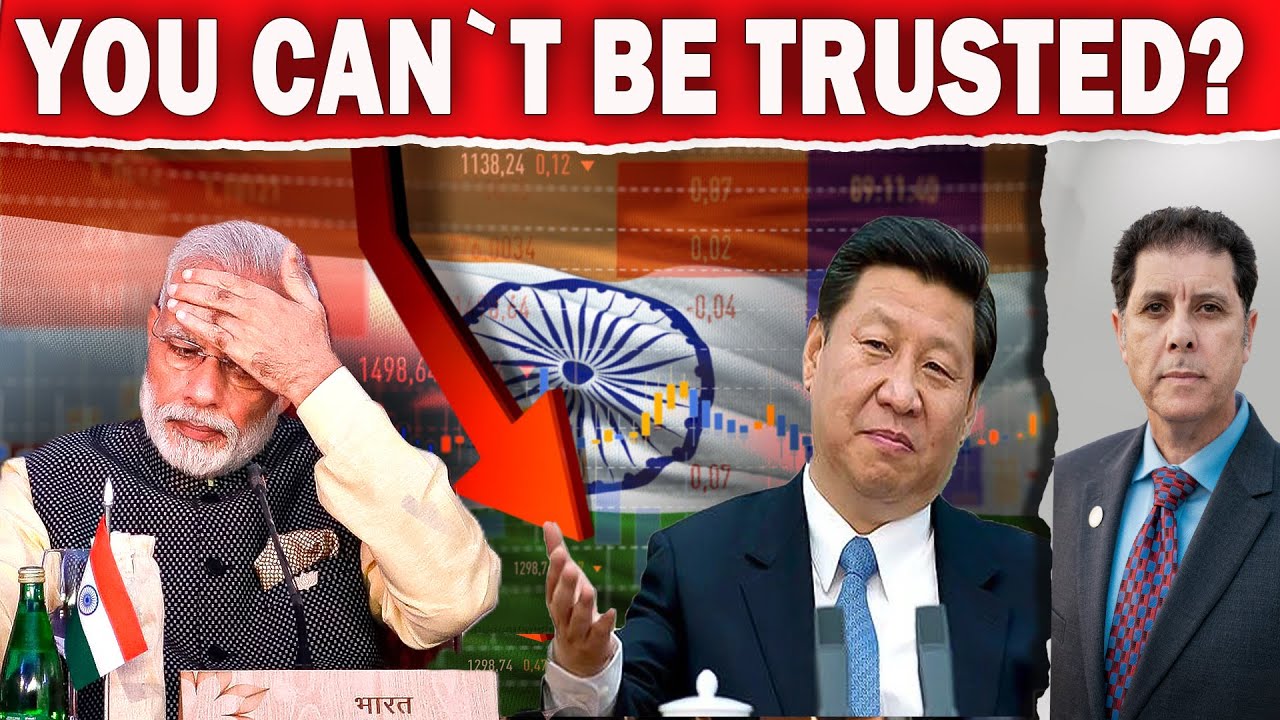
This content was created by David Oualaalou. This content was uploaded by David Oualaalou. This is a YouTube video titled "Strategic Reversal: India Reopens Bidding to Chinese Companies Amid Economic Strains!" (published 2026-01-13). Based on the title and metadata, it appears to be a news or analysis piece discussing the Indian government's policy reversal to allow Chinese companies to participate in bidding amid economic pressures, likely covering economic and geopolitical implications. No transcript content or speaker identities are provided in the excerpt.
Chapters
Hello everybody and welcome to Geopolitical Trends, where truth matters. I'm your host, Dr. Oualaalou, excited to be with you as always. I know yesterday I didn't do a live stream. I had some, uh, uh, work to do for some clients, uh, some analysis that they are needing. And as a matter of fact, I will be sharing some, not specifically for the client, But part of the, the request that I was asked about has to do with what's going on here. So, so we are in for a really, really an interesting topic here. Has to do with India, you know, sort of going the back door of begging for the Chinese money. The way they are though, of course they're not coming out openly and say, hey China, we want a bailout. They don't want it through an opening or the lifting of the, uh, uh, uh, uh, sanctions on contracts. In other words, India had imposed a sort of restrictions on Chinese bidders. In other words, they can't bid for the Indian companies. So I'm gonna get into this very, very important topic for you to understand. As I said, I have some clients that I am helping with, with some analysis regarding China. And I cannot stress enough that China will be making a major strategic mistake if they ever go forward with even bidding for any contract in India, no matter what. So, and I'm gonna tell you why in a second here. But first, let me say hi to our wonderful community as always. Uh, American Citizen, Francis, good to see you. Liang, Uh, who else is here? Land Grab India, good to see you. Uh, uh, Kabasa Filigo, good to see you here. Hanging G, as always. Uh, Truth Seeker, good to see you. We Are the World, good to see you here, Sam. All right, I have one particular, uh, headline— not headline, I'm not doing headlines today, uh, housekeeping items. Would you guys be interested in really wanting to learn Would you be interested in learning about the Cold War that is going on between United Arab Emirates and Saudi Arabia? Yes or no? Just let me know. So if you are interested, I will do a live stream for you. You know, really what is going on behind the scenes. Uh, there's a— media is not even talking much about it. There are some information here and there, but if you understand the depth of what's going on, it it'll make you, make you shake your head for that. So, so let me know if you are interested in doing this. So, but for today, as I said, we will be talking about what's going on with India and China, especially after India now plans to scrap the 5-year-old restrictions on Chinese firms bidding for government contracts in India. That is now, to me, I mean, that's my own reading as an analyst. I read it as a desperate need for a bailout from Beijing. That's how I read it personally. Again, you are entitled to your opinion, but I'm going to ask you, how do you see it? How do you read it? And that comes with that question: should China decline no matter what? So, so my analysis here is going to really tackle not only the geopolitical aspect and a certain aspect of the economy, but I'm also going to talk about geography. Especially with what just happened with Indian statements regarding an area near the Himalayas. So, so we'll get into this in a second. So, but so far, one thing you need to understand, and I know some might be thinking, well, Dr. O, you only talk about India. So no, no, no, no, no, it has to do with the trends that I'm seeing going. Of course, you heard what's going on with the massive fraud that Indian nationals are committing around the world. As a matter of fact, right here in my state of Texas, there are now many voices are pushing for the governor to scrub this kind of, you know, open arm policy or open door policy for Indian nationals. You know, I'll be the first one say heck no, maybe you need to get out of the office altogether. You know, and again, nothing against immigration here, but again, we gotta know who's coming to the country, especially for here in my state. So it's not about I'm only doing videos about India. I'm doing videos for what I see, where I see the trend going. So in my opinion, India faces this critical convergence of contradictions that is already undermined its, uh, whatever standing it has in, in the world, let alone there is no credibility whatsoever. And this is now why China I think is playing a treacherous game with— I'm sorry, India is playing a treacherous game with China by opening the commercial doors for China. How? Is by scrapping the 5-year-old restrictions on Chinese firms bidding for government contract. Well, here is the thing. At the same time, India is simultaneously raising to militarize the Himalayan borders. And you all know there are certain areas that they don't belong to India. And how they doing that? With the infrastructure that is designed explicitly to confront and contain Chinese influence. This to me, it's two-faced strategy, which now exposing India's short-term tactical maneuvers driven— is driven by what the US has just done to India, driven by the US tariffs pressure, rather than by some sort of a genuine sort of policy coherence. What would you expect? A good strategy coming out of New Delhi? You know, a country that is marred in corruption, marred in treasury, in in issuing fake diplomas and so forth. Why would you— what should— why should we even expect some good strategy coming out of that? And what you— and when you get this, you add now the compounding, this geopolitical instability, the mounting— yeah, mounting international disclosures now which revealed widespread criminals networks operating by Indian nationals. We're talking from drug trafficking and financial fraud to fake academic diplomas, to even, even signal it, which in my opinion, it signals the weak Indian institutions or the control of the Indian institutions. That's the way I see it, because the conversions of this flip-flopping policy, the military posturing, the so-called reliable system, the systemic criminality that creates, in my opinion, a perfect storm damaging India's reputation, which is already damaged as a trustworthy partner. You will be— you investor, you the country, you whomever— will be making a big mistake if you ever enter into a partnership with any, uh, uh, Indian institution. And this is where you are seeing, as I said, I'm doing some work, some analysis for some clients, and my first word to them is do not invest in India because India is not a reliable investment destination. So, and this is where this now the India's, India's reputation, uh, uh, sort of is, is damaged. The educated talents from India are like fake. So for China, in my opinion, even though there are those who say, oh no, Dr. O, this is an opportunity for Chinese company to make money. No, no. Yes, you will make money, but at risk. At a, at a, at a high risk. It's not worth it. So to me, I look at it as a trap. What India is doing is putting China in a trap because why? Because access to massive markets that will be coupled with evidence, in my opinion, from the Chinese part, if they ever do that, this coupled with evidence that India cannot be trusted to maintain agreements or even control its own institutional integrity. So for the world at large, not just China, it raises questions about whether India can sustain a great power so-called status in this internal chaos and external inconsistencies. That's my advice to my clients. Do not waste your money. I am now have a, uh, someone that I know, uh, they are thinking about investing over a billion dollars in India. I was like, it will be a mistake. It will be a strategic mistake. You will be just wasting your money. And this is where leads me to the question, is this— to me, the way I read it, because I asked the question, is India turning to China? This is a desperate move for a bailout. Because now if the Indians are telling the Chinese, oh, you are allowed now to bid for the contract, and this is what the Indian finance minister just did by lifting this sanction, this limitations or restrictions on the Chinese firm to bid. So should China decline? Anybody with logical thinking will immediately say yes. Forget about the profit that China can make in India. There will be no profit because it will come with a headache. It will come with risks. So scrapping these 5-year restrictions on Chinese firms bidding for government contract, uh, uh, because New Delhi is saying to itself, oh, we want just to revive the commercial ties with, with, with China. And we want to ease the tensions on the border. Well, wait a minute, wait a minute. You doing this at the same time you are building your military infrastructure in the border, near the borders where China is doing infrastructure. They're not doing military, they're doing infrastructure. You all remember few months ago when I told you, if you wanna know if India is honest, They gonna put on the table the issue of the border and discuss it within with China. They never did. This is why now you even have voices are saying, you know what they're saying? Maybe it is time for India to break up. You need to break up in— of course they have to do it themselves. We're not going to do it for them. It's their country. If they want to live in slum, done all that, more power to them. I just, I don't want them here in my country. I don't want them here in my state, especially now with the amount of fraud that is now coming up to the surface. And shame on our governor right here, Governor Abbott. Shame on you, man, for allowing this. And once again, I am thinking— I am talking about the idea of— and by the way, these restrictions that were put on China, they were put back in 2020. After the military clashes that sort of happened between Chinese and the Indian soldiers. So, and that's when the Indian government sort of imposed restrictions on, on, on, on, on contracts from the Chinese. But does those restrictions have any real teeth, literally? So some say yes, some say no. Of course, the stats that I looked at, sort of the value of the new projects awarded to Chinese bidders fell by about 27% from a year earlier. That was back in 2021. So it fell about $1.6 billion. Small change for Chinese. So why even bother with it? So So what changed, in my opinion, geopolitically speaking— and not that the, the Indian government is thinking geopolitically or strategically because they, they can't, in my opinion— what changed is just this India's calculus, the way they are thinking. So, and this is why you have now so many ministries inside India are requesting exemptions. I say, be careful, be careful, China, don't do it. And when we look at the strategic context on this, this move, in my opinion, is tied to the sort of the murky geopolitical reorientation of India because it's murky. You ask any country, are you willing to enter into a partnership with India? Most of them, they're gonna tell you, we're gonna have to think about it. They're not gonna say no openly, of course, because you— there is a diplomatic protocol. But they're gonna say, yeah, we will think about it and we'll come back to you with an answer. So this is why, if you recall, Modi's visit to China, the first in 7 years, and that's when I said, mark my word, his intentions are not honest. So, because what Modi said to the Chinese when he went last time, oh, we want to foster deeper commercial ties with Beijing. Why did he do that? He did that because he was pressured. He, Modi, in this case, pressured by Donald Trump's 50% punitive tariffs. Now, of course, Donald Trump has given nod to 500% tariffs, which is usually unusual. You don't raise tariffs to 500%. Of course, with Trump, you never know. But at the same time, this will crash India. It's already crashing Indian economy. You know, the numbers coming out of New Delhi, I've checked into them as far as the Indian growth, 7.2% are a lie. It's a lie. So, so, and this is why the Trump tariffs created pressure for India. Which pushed it not to seek alternative and diversified trade relations beyond the US. Well, who's going to want to trade with it? You have Russians, and the Russians, which I don't even know till today why they are accepting payments in rupees, because rupees is useless. So what else would you want to— why would you even want to sell them oil? You can sell it to other country. Yeah, it's a big country for population. Who cares? So, and this is why I am seeing, okay, is India now playing some tricks on the Chinese? Why is this? Because the Indians wants the Chinese to invest in sensitive sectors. Yeah, which suggests in my opinion that Indians are selectively— is going to be how they want to do it. So the next question will be, is should China accept? No, this is, of course, strategically, you think about it, it's favorable to China. But at the same time, it carries massive risks. It carries massive risks. Why will India— why will China embark on that? It's not worth it. It is not worth it. And I'm going to tell you why. Both sides of the argument. Why does Hu sort of argue for no, no, no, no, China should accept this lifting of these restrictions and go ahead and bid for contract. Others are saying no. So if we are to go with the argument for acceptance, the Chinese firms of course will get access to massive government contracts. I'm not denying this. Indian economy faces genuine infrastructure bottleneck from the restrictions. So, so for China, it provides a market access Of course it strengthened bilateral relations, even though when you, when given the current stand of the US-India relations are uncertain, or those ties. Those are the ones who arguing for, but they are not arguing for against. So the arguments for caution is that the Chinese firm should be wary that restrictions could be reimposed if border tensions resurface. This is where I'm— I said a few months ago, and even to my clients that I talked to who are interested in investing in China and so forth, and I said, if you do it in China, make sure you have any ties to India whatsoever. Why? Because the instability inside India is going to cause problems. And that's why the argument for caution is that the Chinese firms should be wary. Once again, these restrictions could be reimposed again. So, and the investment climate inside China— inside, I'm sorry, inside India— remain unstable. Uncertain, given the domestic political opposition. We don't hear much about it. So, so the Congress Party inside India now has criticized. So what India is doing, of course, that's their issue. They can do whatever they want. Suffice it to say, for me, as one who advise clients who invest in, in, in, in China, Chinese market, but I advise them against investing in Indian market. Of course, it's their choice, not mine. You pay me to give you an honest advice, an analysis, a report of sort. I'm going to tell you exactly how I read it, how I see it, but the choice is yours. No, because the thing is, of course, there are those inside India who saying if you allow the Chinese to to get in, that's remain geopolitically sensitive. So yeah, but at the same time, the Chinese will have to think in terms of a long-term objective, not the short term. So that's why I'm— I feel comfortable saying that India's initiative towards China is nothing but a desperate move for a bailout. From, from China, because, you know, Chinese have deep pockets. So yeah, if you are to do the cost-benefit analysis, you know, to me it's, it's not favorable to the Chinese. It will be favorable to the, to India. So of course I'm not denying China will benefit, but my advice, if I am advising a Chinese firm I say don't, don't get involved in that altogether. You can seek profit elsewhere. So because the first thing that's going to come after all this, it has to do with the issue of trust. And given India's flip-flopping policies, China will be making a mistake if ever it trusts India. And this is the crux, in my opinion, of the strategic dilemma. That India is facing. It's not China, it's India. It's because identifying the real risk that overshadows the commercial opportunities— this is what I'm conveying, the big message, the big picture for the Chinese, if there are any Chinese investors watching this video here. So you look at the track record of instability in India. India approach to China policy has always been and generally inconsistent. So you look, go back to 2020 when they had the restrictions. So, so because the restrictions back in 2020 weren't just a temporary measure. No, no, no, no, no, no. If they were a temporary measure, they would be lifted in a year, year and a half, 2 years back. No, they lasted 5 years, which reflected what? How the Indian mindset is. You all remember what Jayant Bahaduri, how he explained this kind of stuff. And this over the border, that's why I said, once again, I'm repeating myself here, once again, if India was honest about opening up to China, they would have said, you know what, let's sit down and figure out this border issue once for all. But now, with the new geopolitical pressures, mainly the US tariffs, India is suddenly looking at China. It's suddenly reconsidering. And this pattern, in my opinion, suggests that India policy towards China is reactive rather than principled, which means in a simple term, India could shift again in if circumstances change. That's why, once again, the clients that I am doing the analysis for, I made it clear, just put India aside, forget about investing, or cheap labor, whatever, forget about that. It's gonna cost you more in the long term if you invest inside India. On the other hand, you consider the timeline, so So banning Chinese firms for 5 years, right? Suddenly you lifting this because of the US trade pressure and infrastructure needs. So because what's going to happen? The Chinese will invest time, resources, of course, into the bidding process and so forth. You have to build relationships. And can you trust Indian officials? No, no. Now, could you see different aspects if Indian government changes? If US-India relations improve? If border tensions spike again? Yeah, possibly, possibly not. But I, to me, it's a much of a deeper trust problem for India. So because it cuts deep into how things are. So, and this is where China will have— and I am sure there are smart people in China, they already thinking in these terms. So you look at the short-term contract versus the long-term commitments. Some will say the short-term contracts are safer. Yes, it is. I'm not denying. But at the same time, when you look at China's long-term 25-year contract with Qatar for liquefied natural gas, why did China want to head with that? It's because Qatar, they can do business with. Qatar is not gonna, in the middle of, uh, of the race, gonna say, well, we're gonna change horses here. They're not gonna do that. And this is why In my opinion, China will be making a mistake if they enter into, let's say, even if China bids for hypothetically one-off infrastructure projects with clear endpoints, assuming that. So because that will minimize the exposure of China. So, but at the same time, that strategic partnership, you're looking at a technology transfer, you're looking at joint ventures, You're looking at a sensitive infrastructure development. So, so it will be foolish if ever China embarks on this. Why? Because India can flip-flop in no time. So in no time, and this is where the domestic politics inside India is volatile and also creates instability. So, and this is why there are now voices coming out as far as, is it time for India to break out— to break up, rather? So let certain areas live on their own, have their own whatever. So of course there are those who are saying inside New Delhi, no, no, no, no, no, we will fear— especially the nationalists inside India. Because they have always viewed and continue today, and they will continue to always view Chinese economic progress with suspicion because their argument is, oh, China wants to dominate us. China has no interest in dominating India. For what? What does India have to offer? So, and this is why the political climate inside India is not conducive. For the Chinese to go ahead and move into this. And if this is not enough for you, consider history. And what does history suggest? History suggests that India uses restrictions as leverage. That's the only reason, as leverage for to negotiate. So the ban in itself that India issued against China was a political theater, no more, no less, because it was a response to the border tensions. But at the same time, it served the agenda of the nationalists inside India. So, so this is why China will make more sense to reasonably ask, will India reimpose the restrictions if it needs to appease domestic nationalists or to assert nationalistic credentials? It's a legitimate question to ask. So, and even hypothetically, if China proceeds, which I highly do not recommend, even if China decides to do this, they have to proceed with cautious Caution, be cautious in your decisions. So be sort of, yes, the opportunity is there, but you have to be selective, you know, because here is what India is going to want. It's going to want China to bid on the Indian projects that India desperately needs. Because what does India need? It needs Chinese expertise, power equipment, rare materials, capitals, engineering. So this, in this case, the relationship will be some sort of the commercial relationship is less ideological, if I may use the term. And even if China decides to go, I will highly suggest and recommend avoid deep structural involvements. Stay away from sensitive infrastructure. China shouldn't get involved. Stay away from data-intensive projects or anything that could be weaponized politically if the relationship sours. Which for me, it's a foregone conclusion. Usually I'm an optimistic guy, but when I have, for example, clients asking me, I can't be sort of, uh, cherry-picking about the words. I can't, because I make it clear, you hire me to give you honest advice. And the relationship between India and China will sour again. So This is what I'm saying. So, and even if China wants to go with this, they better enter into whatever negotiations they're going to have the use of international arbitration clauses. Another word, China will have the legal right to either file a lawsuit or whatever. But again, you ask yourself, Why would you want to entangle yourself into this? Don't rely on goodwill or the word of mouth from Indian government because Indian government cannot be trusted. Look at just what's going on around the world. And once again, to those, to those who might think, well, Dr. O, you know, the idea of just you focus on India, I am focusing on the trends where I see things moving. I've been in India twice thanks to the community. I saw where that— I've been to China. I'm sorry, I don't think so I will ever go to India. Yeah, I feel comfortable saying this because there's nothing, you know, I can't, I just can't. That environment, it's not conducive. So when I went to China twice thanks to the community, I saw where the country is, the progress it achieved. Why will China even want to entangle itself So, and even if the Chinese demand transparency upfront, do you think Indian authorities will comply? No, you can't trust the Indian government. Because if China will tell the Indian, well, we want you to put a clause that you will never impose restrictions again later. Yeah, the Indians say, sure, we won't. Give them a year and a half, they will impose it again. If the relationship gets better with the Americans. So that is where my issue is, and I cannot recommend enough that the Chinese will have to really forget about all this, forget about it. So the fundamental issue, if we are to think about it, is that India is arguing that we are offering market access. But at the same time without offering stability, which is much needed in a business environment. That is my argument to the clients that I'm saying don't. The stability is not there to justify the billion-dollar investment. Yeah. In the case of China, China will profit from this contract if it bids on it. So, but at the same time, it has to remain skeptical about India's long-term commitment and of course the adherence to the contract clauses. So because trust in India, yeah, it's a— to me, the way you look at it, you know, if you are to do this, like let's say with another partner, like the case between China Qatar. But in the case of India, trusting India in the way a normal, normal trading partner might trust another is probably a mistake. And it's not a probably, is a mistake. So, so cautious engagements with eye open, to me, is reasonable and is one of the advice that I give for free now to if there is any investor, Chinese investor watching this. So, so once again, when you think about what the Indian government with the finance minister here is trying to do now, of course, to scrap the 5-year-old restriction while they're doing this, at the same time, New Delhi is preparing for a potential clash with China. This is why India is ramping up infrastructure projects in the Himalayas. And that's to me, looking from outside in, giving advice to a client, hypothetically if it happens to be Chinese firm, this is a crucial contradiction that reveals, in my opinion, the really India's actual strategic posture and aim. And the aim is, I just want to use Chinese money, I just want to use Chinese technology, I just want to use Chinese advanced equipment and so forth. And that is where the deep skepticism about, about trusting India is, is, is, is a must, is a must. And speaking of the— I'm going to share a clip with you here for the statements by the spokesperson of the Foreign Ministry of China. This is regarding the breaking news that what just happened about China rejecting India's claim of the Shagsangkam Valley in Kashmir. All of a sudden, the Indian claiming that land, and that land belong— that valley belongs to China. So, and I'm going to share the clip with you. Of course, you decide for yourself here. Uh, it just— it's important for you to understand where this is going. Then I'll continue in my analysis here. Oh, oh, oh, oh, not this one here. Sorry, where is it? All right, not, not this one here. Okay, right there. Sorry. Screen share screen. There we go. And once again, this is a statement by the, the Chinese spokesperson for the Foreign Ministry. Just FYI, it will be in Chinese language, but in the background you will hear English translation. So let's take a listen here. Okay. So it gives you an idea right there. So here is the, the agreement has been signed. All of a sudden Indians saying, oh no, no, that's the territory belongs to us. No, that territory belongs to China. And the reason why India is doing this is because China is doing infrastructure in on, on their own territory. This is why, this is why I said last time You know, the reason why India will not discuss the border with China, because it does not want the likes of Nepal, the likes of Bangladesh, the likes of Bhutan going with China regarding infrastructure investments, because you're going to see developments and India doesn't want to see that. That is the reason why. So to the Chinese, it's fully justified for China to conduct infrastructure on its own territory. And this is what makes it very, very confusing as to why— where, where is the logical argument on part of India come into this? So, so here is, uh, I have, uh, I have an article for you. If you want to read it. This is called China Rejects India's Claim Over Shaksgam Valley in Kashmir. So I'm gonna share the link with you in the chat box, and I'm gonna show you the map because I had to read up a few aspects onto this. So, and this happened yesterday, by the way, and this is when that foreign— the spokesperson for the foreign ministry, uh, was asked about— and you know who it was asked by? It was asked by Press Trust of India. Are you gonna trust that? So, for comments on the Indian criticism of Chinese infrastructure development project. And that's where the Foreign Ministry spokesperson Mao Ning said, and I quote here, it was justified for China to conduct infrastructure construction on its own territory, end of quote. So, and as, as, as it was mentioned, the agreement was signed. So what makes you think— so it's kind of an uneven, even for India to get involved in saying, well, we don't like the China-Pakistan agreement signed in 1963. Yeah, because that It just, it just, I don't quite get it. I don't quite get where India is coming from regarding this. That just doesn't make any sense whatsoever. Liking this video so far? Don't just be a watcher. Go ahead and hit the like, share, and subscribe button. And don't forget to tap the bell so you will not miss any of my videos or live streams. This way, you will be supporting a channel that stands for the truth and objective reporting. The choice is yours. Thanks for your support. And once again, this is what I see the reality as is, a two-faced strategy on part of, of, of New Delhi, because India simultaneously wanted to open one path for commercial doors to China while at the same time preparing military conflict with China at the same time. So because what, what, what India wants China to do is to build the roads, tunnels, and airstrips and so forth. So which what India is already starting on. But do you know how that's going to go? Will they ever finish that? And by the way, I did check on the, on the one specific place called the Neoma Air Base. And I had to look at the coordinates to pinpoint exactly what it is. It's about 37,000 feet. So, I mean, that's all you see there. This is a so-called Indian airbase. Now, the idea is that India is preparing for a war with China. So, and that's a NAD Neomar Airbase, which is newly commissioned, by the way. At about 13,700 feet above sea level in eastern Ladakh. That's where it is. So, and that's about 30 kilometers from the border, because what India wanted to do is, is wanted to push for the constructions, uh, uh, on, on the, uh, uh the area of Arunachal Pradesh area, which is the Frontier Highway. That's where they wanted to do because that's a run along the line of the actual control. And this is again, I get the map, I'm going to share it with you right there. This is the valley. If you look at the valley here, the Shakhskhan Valley right there belongs to China. So why the heck will India even do it? Even for Kashmir, which it doesn't— I don't know how India all of a sudden claiming that Kashmir is in. It is not. That's why I'm saying maybe time has come for really sort of break up India, whatever regions wants to have their own independence. And again, it's their call, not mine. It's their decision. For me, I see it from a geopolitical perspective. So when India launching this infrastructure because it wanted to assert its dominant— domination in the Himalayas. So, well, of course, you look at what India stood no chance against Pakistanis. What makes us think that India is going to stand a chance against the Chinese? And by the way, the Pakistanis were using the Chinese weapons. Yeah, the scale of build-up, the scale of the build-up and the construction is massive. I'm not denying this. So because India spends about almost— here is what I found— between $280 to $810 million from 2020 to 2025, just building this stuff, while at the same time the sewage inside the cities inside India, the, the, the dirty water that is mixed with the sewage and all this, the infrastructure is not being, is not being attended to. This is again where, again, if that's how they feel like living inside India, more power to them. To me, I am thinking about the big picture, the strategic paradox that I see. So, because what India is doing is not accidental, it's revealing. And this is why India is allowing the Chinese bidding for contracts. Don't do it, China, don't do it. Because to India, this, this like some sort of just a short-term tactical move, and of course driven by the US tariffs pressure. Once again, not based on a solid and sound policy shift. In other words, it's not, it's not an honest partnership with the Chinese. They want to use the Chinese. So this is also the other strategic paradox has to do with this, has to do with the, the, the actual strategic thinking on part of India, which in my opinion, and it's not just an opinion, it's a fact, it remains adversarial towards Beijing. And for a simple reason is that India has not reconcile its, its commercial interests with the security concerns. Because India cannot compete with China. To those who argue, oh, oh, India is going to take over the globe, overtake the global economy, it's nonsense. It's nonsense. India stands no chance economically against China. I was there. I saw, I saw in China, I saw the infrastructure. It gives you an idea where the country is. You can tell the state of an economy of a country by its infrastructure, among others. And what I saw was enough for me to, to— when I want to enter the water between Macau and, and mainland in, in to Hong Kong 11 miles or 21 miles underwater in that tunnel. You know, the infrastructure, the massive, the bridge, you know where things are. And this is why, in my opinion, this push by the Indian, if only China, if China accepted, is paving the way for failure. So I don't believe Chinese will go for it. But again, that's their decision. So, and the idea, if China goes with this, because the projects take time, takes capital. So if Chinese firms, even if Chinese firms win the contract for power equipment, roads, or civil work, They embed themselves in an Indian supply chain and dependencies, and we all know how this ends. So all the while, India is racing to militarize the border at the expense of Chinese, building the airstrips, the tunnels, and so forth. So this is why India launched the— which I don't think so is gonna even work, but They launched it. I checked it. The $77 billion hydropower initiative was just an initiative for that in mid-2025. But again, I didn't see the concrete evidence of the building or the beginning of the building of this megastructure because they want to build 200 dams in its northeast, especially near, in Arnošal Pradesh. So, which by the way, you think about that part of the territory, because that's where China has the claim in the southern Tibet. So you think about what the Indians are thinking versus why they want to use China to build their own. So, so use basically in a simple language, India wants to use Chinese investments to buy time. I cannot stress this enough. These hypes about lifting restrictions is to buy time. By allowing Chinese bidding, India gains— India will gain access to cheaper equipment and capital from China, but it's doing all the while racing for military objectives. So You know why? Because India could, if it developed the infrastructure needed on the border, it could close India to China's influence in a few years. And I am sure the Chinese are aware of the track record of India. The historical precedent is damning. So disengagement deal made in October 2024. I looked at the records. So, so no matter what you say, so in your infrastructure, no, no, because when that deal, what was addressed in order to reduce friction, especially in Diphseng and Dimchok. So even though China continued to build like new infrastructure in Arangtau, Xi Jinping in 2025. But that, it shows a deep mistrust about India. So, and this is why disagreements keep being undermined, is because both sides don't trust each other. So, and this is why I'm saying, why should China do this to begin with? China should absolutely decline and, and even restrict participation. The government in Beijing should issue statements to all Chinese firms. Yeah, you can invest anywhere in the world, but stay out of India. So, you know, especially there are certain sectors. Once again, when I advise my clients, especially they want to know about certain aspects of investments vis-à-vis geopolitics and so forth. In this case, which part of what I am doing currently for this particular project, part of this I would say stay out of power infrastructure and dam projects altogether. So stay out of this, especially in the sensitive areas near, near Pradesh. So because this is the domains, this is the areas where India wants to really assert full control against Chinese claims. So, so that's why I wouldn't even advise the Chinese companies to even bid on a routine short-term commercial project. You're inviting headache, you're inviting turmoil, you're inviting chaos, and you're inviting negative energy. Stay out of it. Make your money elsewhere. There are ways, there are other parts of the world. Do you guys know that now Google is going to be building phones in Vietnam, not in India? After what the fiasco, what happened with Apple when they transferred some of their, uh, some of their production from China to India only to leave in few months. So, and this is again, I'll say to the Chinese investors, do not invest, whether even in the short-term contracts. Don't, don't preposition yourself for another market elsewhere, and there are plenty. So, because you're gonna have to start looking in these terms as any Any contract you bid on, consider it potentially as the last one you will ever win before restrictions are snapped back. This is where the skepticism comes now from around the world about India. Can't trust it. They're causing havoc, the nationals, and not all. I shall not generalize, of course, but I am starting to see now what's going on here instead of Texas. That's why I called on, on the governor here. Maybe it's time for you to vacant, uh, vacate that, that office. Get out because you're not serving the interest of the Texans. So, and this is again, uh, and again, the big picture. And I'm gonna conclude here, uh, with what lies ahead, because if I am to think in terms of once again the big picture Because what China will be doing if they ever agree to enter into this, they will be essentially financing India's preparation for war. And that's, in my opinion, that's not a business relationship. It's a trap. It's trap. That's why I said, you know, I put this on the thumbnail. President Xi Jinping just thinking out loud, why should I trust you? And rightly so, and rightly so, because more and more countries around the world now are disclosing the nefarious activities of Indian nationals. As I said, from drug trafficking— I'm not going to talk about— we already talked about it enough— but from drug trafficking and financial scams to fake academic diplomas, you know, because this impacts India's image on the world stage. So the disclosures, not just from me, from, from different people around the world, because the disclosures paint a picture of a systemic criminality spanning drugs, fraud, credential frauds. And that's where this Pardon me, Indian nationals are disproportionately involved in some of this, you know. To me, for those in, in the, the, the sexual predators, the financial scammers and all that, this is what's need to be done. Yeah, no ifs and buts, you know. It's not like I'm this heartless, you know. I'm being realistic. This is how you deal with scammers, with corruption, with stealing, and so forth. And that is again where I see the big picture. And, and again, I am not— so the reputational damage is done. So this is why China will have to really think hard and careful about this one. Because India, what India has done so far since Modi came to power, and again, I'm not against Modi, I don't care. Do I care for this Namnak? No, I don't. Why would I care? It's their country, it's not mine. What I care about is I don't want you to be shipping the scammers and sending them to my country. That's what I care about. Because India has cultivated an image as a source of these highly educated, technically skilled professionals, engineers, IT engineers, doctors, business leaders, you know, but the fake diploma scandals directly now contradicts all this. And this is when you have markets around the world discover that Indian credentials may be fraudulent. So it creates this systemic mistrust, or distrust, that is. That's why employers around the world will now demand some sort of verifications, or maybe stay away from all Indian nationals coming from India, no exception. This is why I said last time about, uh, you all remember when we talked Jayant and I, we talked about Singapore. Is Singapore making a strategic mistake? Yes. That's again, for China, it just has to be very, very careful because when you look at the association with organized crime networks, you know, the digital arrests of hundreds of Indians, were trafficked to scam compound in Southeast Asia. So, and this is continue. So because this now portray India as the source of trafficked labor and a source of cyber criminals, and it's even if you think about it out loud, it suggests organized criminal networks operating with some impunity from Indian territory, which means what? The government is not cracking down on that. And that in itself is this destabilizing signal for foreign investors or any other international partners. So I'll tell my client straightforward, what do you want to know? The moment they mention India, And I said, do you really want to invest there? Oh, I said, we're thinking about it. I said, well, okay, if you want to know why you shouldn't, I'll be happy to enter into a contract with you, uh, and provide you my own analysis for a fee. If you say yes, I'll do it. If you say no, good luck to you. And this is also because you have to think in the big picture of the trust in the services sectors and so forth. But India also goes through the geopolitical vulnerabilities. Yeah, because now more and more countries are not competing for India's anymore, or compete with India for that matter, anymore, because they know the lid has been lifted No, because what India will do is they will weaponize this kind of narratives. So, so, and that in itself, in the world of business, as you know, that becomes the confidence risk. An investor like the individual that I know, I'm talking to him about making sure his company doesn't put a billion dollar because of the confidence risk. I see, I've seen all the signs. I, this just because I know the person, that's why I'm sharing free my advice, but otherwise his company will have to hire me for if they want to find out more. And that is again, to me, the way I see it, because when you add this instability inside India, when you add this fraud, when you add the evidence of organized crime fraud networks, compromised credentials. All this makes India a riskier destination for investors. So the cost of the wind business in India, it's— yeah, it won't be worth it. So, and this is the worst for India, and it's their country. They're the one, they allow this to happen because you have this institutional chaos inside India. Well, they're the one creating all this. So, and that's why I'm saying, for China, I care about China. I don't care about India. Straightforward, you know. It's because I saw, I saw. Has nothing to do with Indian people. It has to do with the system, how it is structured inside India. That's why I will never— and for this I feel comfortable saying— I will never ever go to India because there is no need for me. And this is where I see for China, this is sort of— you have to think about the strategy when it comes to dealing with India. I've argued many, many years ago that, for example, for the BRICS, is India that is going to be— is the weak link already, but is India is going to be the one that will be undermining BRICS from moving forward. So, and this reputational crisis So sort of, to me, in my opinion, only strengthen the arguments for China to be cautious and not get involved about commercial opening with India. So because India inability to control organized crimes and fraud and all that suggests it cannot be reliably depend on. So, and I'm not even getting into the industrial espionage and so forth. I'm not even getting into that. So here's my conclusion for you. So India sort of now is unstable. Why? It's because what India dreams of is this great power status, but that's just wishful thinking. It's a dream, you know, you're allowed to dream. So let, let the Indian dream a little bit. Why not? You know, because reality hits them in the face. So truly rising powers achieve coherence, which India lacks. So, so the, the true power, it's when an institution or a government in this case knows its strategy and execute it. India has no strategy, flip-flops. So, and that's why sort of India appears, in my opinion, geopolitically speaking, is improvising whatever easy corner, cut corners, whatever easy way. So making those reactive policies or shifts, that is, that's the only way I see it. And of course, given that the trust has become, is already been, it's just becoming now more, more, more vivid. It become now India's core vulnerability. No country on earth will trust India. So, so whether China, the West, whatever investors, you know, India has become now a nation that cannot be trusted. And again, I'm not saying, saying it out of being despite, out of spite. No, I'm just presenting the facts as they are. I know some Indian viewers who watch the channel will lash out at me. You are entitled to your opinion as long as you are respectful, because I will not tolerate that. But at the same time, if you are not willing to hear the truth, then don't listen to me. Simple as that. Go listen to someone else. You are entitled to that. So, and this because in my opinion, uh, and by the way, it's, it's this, this, uh, for India becoming sort of cannot be trusted, that is. It's not because the hostile New Delhi government, whatever. No, no, no, it's worse. It's because India demonstrates it cannot reliably control its own institutions, or predict its own policies, or even prevent its citizens from engaging in massive fraud and nefarious criminality. So, so, and in this case, you cannot be negotiating reliably with someone like that. So you cannot do business with some sort of an unpredictable, chaotic partner. So because that's what India has become. And of course, the bigger picture geopolitically is that India has become now fundamentally weak geopolitically speaking. That's why India is playing all sides. So, so opening to China while preparing for war with China, courting the US while imposing tariffs on US goods, positioning itself as a Global South while being suspected of harbouring crime networks in this country. This, in my opinion, isn't sophisticated diplomacy. This is desperation. That's how I see it, because a strong power, strong power, it can manage to deal with the issues. Yeah. And what India is doing is weakening. And because India is in desperate need of structural sort of restructuring of its institutions. So because now where India is, is that the moment of these contradictions has become now unmanageable. The whole structure is collapsing. So why should India get involved? And let alone that India— I'm sorry, China in this case— why China should get involved? But China has more leverage than it realizes. Because in my opinion, once again, this is my opinion, China should absolutely decline any involvements with India's commercial opinion. Yeah, they maintain diplomatic relations, but that's about it. You know, when I was in China last time, I saw one Indian nationals. As a matter of fact, I had to talk with him to find out. It's easy for me to find out. You know, you train for certain things. And it didn't strike me as No, not judging. It didn't strike me that, uh, individual belonged to that environment just from the first few words. And I said, this guy is up to something. So, so, and here's the thing for why China, uh, should very, very decline this. It's not because it cannot profit. China will make profit. No, no, it's not about that. In my opinion, China should decline because India's instability is now China's problem only if China becomes entangled. That is where my concern is. China doesn't need all this right now. That's what I'm working on with my clients to understand where the trajectory for China moving forward. And one of the ideas that usually I discuss in my analysis for them is, is, you know, you put a line across India, not under it. So, and that is why India is going to continue zigzagging on policy. Even in 5, 10 years, India will have eventually face a choice. So, and that choice, either genuinely reconcile with China or face sort of, sort of major challenges that China those are— that India rather, but those challenges are of strategic nature that India won't have the ability to overcome. So, so what China— what India is doing basically is now purchasing time. That is what's doing so. And of course, this goes beyond just China. It goes beyond the— it's go to the West. That the West, collective West, should be now concerned about India's reliability. And of course, the network of crimes and so forth. And I'm not gonna get into all this. So the uncomfortable truth is this: India is attempting to some sort of grab the attention of the world as a major status when it has nothing, when its institutions are collapsing. So that is where the reality is. So the most likely scenario, in my opinion, is that India's contradictions will eventually force New Delhi to make some hard choices. Whether they're going to do it or not, I don't know. And I don't care. Because India, for me personally, especially for my clients, is off-limits as far as investments and all that stuff. We're not recommended no matter what, no matter what. So, and that's why I believe the commercial opening by India to China, the recent one, will likely prove temporary and treacherous as far as a, a crisis strategy of sort. So because what is, uh What is a treacherous strategy? Usually it involves using deception, betrayal, and cunning maneuvers. Why? To gain advantage, often by luring opponents into a trap or exploiting their trust. So this is where a crisis, some sort of measures that get reversed when circumstances shift. And that is what I'm warning China about. So, and for global investors, for you, for the observers, India should be monitored carefully moving forward. So, because it has reached now some sort of an inflection point where its internal contradictions becomes unmanageable. And that's in itself, it's forcing other countries around the world to first of all limit or even restrict any visas from India for Indian nationals to come in. It's because the network of criminals, the, the sex predators, the drug trafficking, human trafficking, the financial frauds and so forth. And this is why India's zigzagging. So It has nothing to do with the reality. So, and this will have, in my opinion, will be the consequences that will lead to ripple effect, not only in India because it already does damage, but I'm talking about Southeast Asia and Asia writ large. So investors, think before you enter into any agreement with India. And that concludes my live stream here. So I did see one particular question earlier when I was— when I just logged in, and this one, it's right here, and I'm gonna respond to this quickly here. Uh, did Russia help sell out— yeah, did Russia help sell out defense weapons to Venezuelan people, millions of automatic rifles and so forth? Yes, I'm aware of that. But the idea of this has to do also with why the Exxon, where the US oil companies CEOs are now refusing to invest in Venezuela. Yeah, they're not going to do it. They're not going to do it. And as a matter of fact, funny you ask that question because that's exactly what I'm doing an analysis right now. For, for someone here about this one. Hope you enjoyed this. Please let me know. Make sure to leave me a comment in the comment section. I read— I like to read your feedbacks. And if you like me to do an analysis about the cold war between Saudi Arabia and United Arab Emirates, I will be happy to do it. I hope you enjoyed this. As always, remember, geopolitics impacts your daily life in more ways than one. Till next time, bye-bye.
More from David


Beyond the Single Actor: Why the Gulf Isn't Choosing Between the US and China


Iran, Iraq's Militias, and the Houthis Are Coordinating! This Changes Everything




Who Controls the Next Decade's Resources? Latin America and Africa's Geopolitical Crossroads

The Chokepoint Trap: How Washington's Stupidity Triggered a Cascade That Now Controls the World

Trump Spooked as IRGC Unveiled dual-use SLV, Deployed Ghadir Mini-Subs & Hinted at Tactical Nukes!
