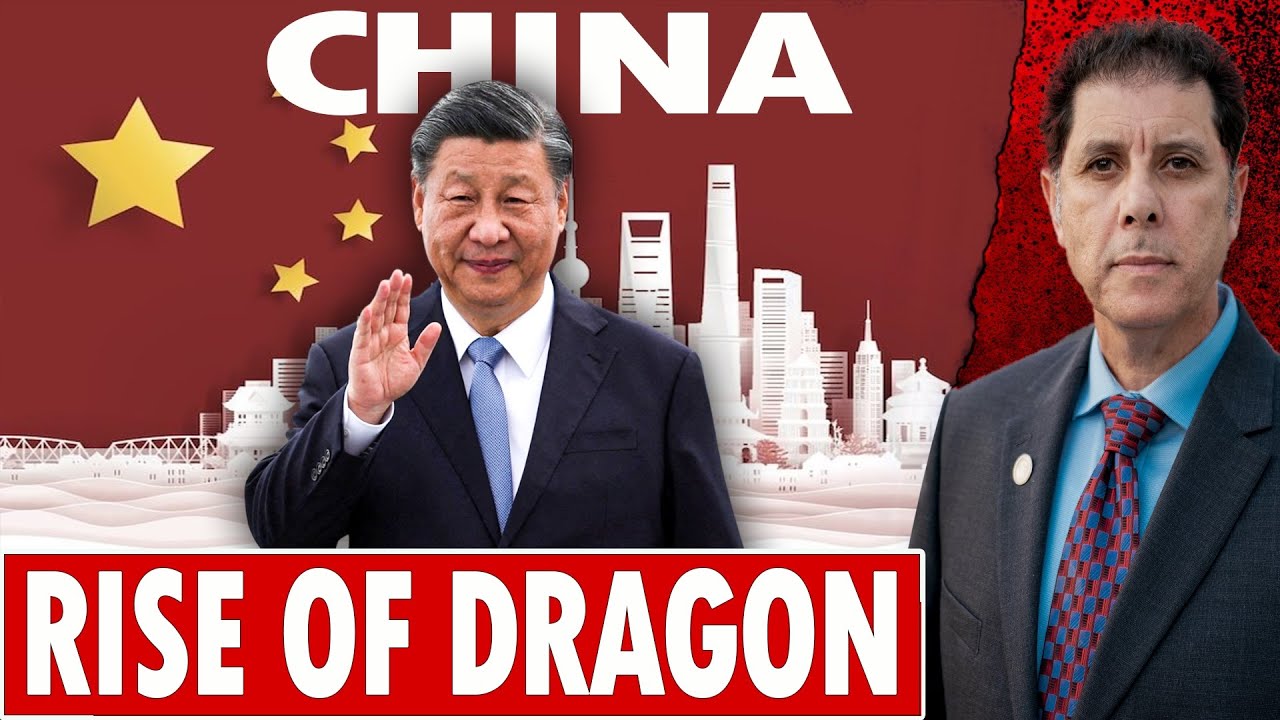
This content was created by David Oualaalou. This content was uploaded by David Oualaalou. This is a YouTube video titled "The 21st Century Belongs to Asia | Geopolitical Trends" (published Feb 16, 2025). The excerpt is a single-speaker geopolitical commentary by the channel host (labeled SPEAKER A) presenting an opinionated analysis of China’s rise — covering the Silk Road analogy, the Belt and Road Initiative, the US–China trade war, China’s technological advances, and possible futures of competition or cooperation. The piece is framed for a general audience (calls to like/subscribe) and takes a pro-China, critical-of-the-West rhetorical stance; metadata includes the YouTube content type and a thumbnail URL.
Chapters
Hello everyone and welcome to Geopolitical Trends—where truth matters. Is history coming full circle? Before I'll dive into this topic, the analysis you are hearing on this platform is unique to this channel. So if you are learning and enjoying these free episodes, I will greatly appreciate if you can subscribe, uh, to my channel here and share it with other people so they can hear the truth like you do. And thank you for your support. Now let's dive in into our analysis here. Over 1,000 years ago, an intricate web of trade routes connected China to the world— the Silk Road. Along these dusty pathways, silk, spices, and innovations like gunpowder and papermaking traveled west, transforming and entire civilizations. Fast forward to today, and China is once again at the center of global commerce. But this time, the roads are no longer made of dirt and stones. They are superhighways of digital trade, high-speed rails, and trillion-dollar infrastructure projects stretching across continents. China's rise, whether the collective West likes it or not, is not just an economic miracle. It's a seismic shift in global power. How did this happen? And more importantly, what does it mean for your future and that of the world? China's economic miracle. Just 50 years ago, China was struggling. We all know that the nation was emerging from the chaos of Mao Zedong's Cultural Revolution, a time of economic stagnation, political upheaval, and widespread poverty. Then came Deng Xiaoping in 1978. He introduced a radical idea It doesn't matter if a cat is black or white, as long as it catches mice. In other words, China would embrace capitalism to achieve its objectives. Deng opened China's doors to foreign investments, allowing private enterprise to flourish under state control, and the results were remarkable. To say the least. By the 1990s, China became the world's factory floor, mass-producing goods on an unprecedented scale. By the 2000s, foreign companies poured in China, lured by cheap labor and efficient manufacturing. And by 2010, China wasn't just reproducing Western technology, it was leading in artificial intelligence, 5G, and other sectors. Today, China has lifted over 800 million of its people out of poverty, a feat unmatched in human history, while poverty is on the rise in the West. Check out the streets of London, Paris, San Francisco, New York, Detroit, and Australia, the latter with around 1 in every 7 people living in Australia experiencing poverty. But economic power brings with it political influence, and that's where the real global shift begins. The Red Dragon's Global Reach. China is no longer just rising, it's reshaping the world order. Once again, whether the West likes it or not. I will give you 3 scenarios or 3 examples to make my point. 1. The Belt and Road Initiative, the New Silk Road. In 2013, President Xi Jinping announced an ambitious vision, the Belt and Road Initiative, known as the BRI, a multi-trillion-dollar project building highways, ports, and railways across Asia, Africa, and Europe. In Pakistan, China built a deep-sea port linking the Arabian Sea to China's western provinces. In Africa, Chinese-built railways connect landlocked countries to coastal trade hubs. Even in Europe, Chinese investments in It is revitalizing old industries. Ask the Germans, the French, the Italians, as they visit Beijing with a begging bowl in one hand and a knife in the other. It's a win-win, China says, but critics, mainly in the West, argue that it's a new form of economic imperialism, trapping countries in debt diplomacy. This is how they manipulate you into believing, so you stay distracted from knowing the truth. And that truth is: China has invested into itself and improved the livelihood of its citizens. I visited China recently and saw with my own eyes. I will challenge anyone who tells me otherwise. The trade war with the US. For decades, China and the United States had an unspoken deal. It goes like this: China makes the goods, America buys the goods, everyone profits. But then came tensions over trade imbalances, so-called intellectual property theft, and China's growing military presence in South China Sea. Under President Trump's first term, the United States imposed tariffs on China. China responded, and suddenly global trade was in turmoil. You will think that the American president has learned something from history. As a matter of fact, when an American president gives a foreign policy statement, Many around the world hear only meaningless bravado, absurd prating about global leadership, which is a rare political commodity these days across the West. America lacks resolve and its greatness in standing for the welfare of its people. Its so-called freedom and democracy amounts to nothing but a consumption of ink. This is the hard truth. Let us be honest, the United States no longer sees China as a partner but a rather strategic rival. Number 3: The rise of China's tech empire. 10 years ago, Silicon Valley here in the United States reigned supreme. Today, China is challenging its dominance. Actually, China is taking the lead. Alibaba rivals Amazon. China is ahead in the AI domain, leaving the West behind. Huawei builds 5G network worldwide. China's space program is catching up to NASA. But with this technological rise comes a battle for digital influence. Make no mistake about it. Western governments have banned Huawei, fearing Chinese surveillance. Social media platforms like TikTok face scrutiny over data privacy. Yet Western governments, from London and Berlin to Washington and Sydney, are spying on their citizens, censoring their speech. And yes, violating their rights to privacy. Talk about hypocrisy! One thing is sure: China isn't just exporting products anymore; it is exporting power. The Future: Cooperation or Conflict? The world stands at a crossroads. Will China's rise lead to a new Cold War, as my country, the US wants you to believe, or will it usher in a new era of global cooperation? I provide you with two scenarios. One, the case for competition. History tells us that rising powers often clash with existing superpowers. In the early 20th century, a rising Germany challenged Britain. In the Cold War, the Soviet Union rivaled the United States. Now China is challenging American dominance, but is it, or is it just matter of progress? The US is strengthening alliances in Asia-Pacific, forming partnerships with the like of India, a failed state, Japan, an aging society, and Australia, economically fragmented country, to do what? To counter China's influence. But will military tensions escalate? The South China Sea is a flashpoint, and Taiwan remains a red line for Beijing. 2. The Case for Cooperation. Yet there is another path, and I believe it is the right one. China and the United States are still deeply connected. The world relies on China's manufacturing and China relies on Western markets. Maybe the future isn't about one country dominating. Maybe it is about two superpowers coexisting, sometimes as competitors, sometimes as partners. A new world order. The rise of China is not a question of if, but how. Will China become a benevolent a leader guiding the new world order towards prosperity, or will it become an authoritarian superpower reshaping global norms in its own image? My answer is the former. What is yours? History tells us that power is never permanent. The British Empire, once ruled the seas, is now collapsing in front of our eyes. The US, shaped the 20th century, is now on the way out. But now the 21st century belongs to Asia and mainly China. The only question is, how will the rest of the world adapt? The answer will define the next 100 years. The turning point. So here is the question: will China's rise lead to a more connected prosperous world, or will it lead to deeper divisions and geopolitical tensions? The Silk Road once connected civilizations. Today, China's economic and political rise is reshaping the world again, but this time the destination is somehow unknown. Where do we go from here? If you like this video, please hit the like button and don't forget to subscribe. As always, remember, geopolitics impacts your daily life in more ways than one. Till next time, thank you.