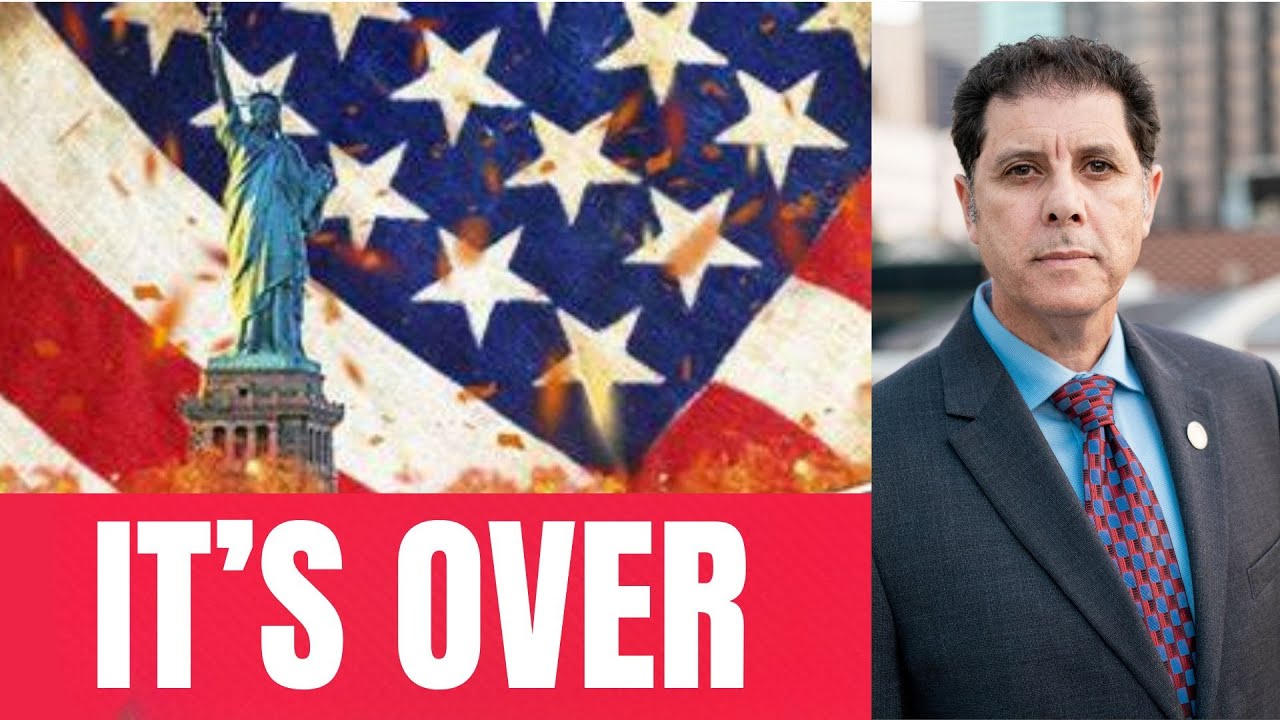
In this Geopolitical Trends video, the host argues that the American Dream is effectively dead, citing rising income inequality, a broken tax system, costly healthcare, crumbling infrastructure, a dysfunctional education system, and excessive overseas military spending as core drivers of decline. He presents statistics such as the richest households owning 84% of wealth and U.S. foreign aid from 1946‑2024 being heavily concentrated in five countries, amounting to over $1 trillion. He draws a parallel between contemporary U.S. structural problems and the factors that led to the fall of the Roman Empire, warning that a surge in unemployment could push poverty rates to historic highs. The video highlights the plight of younger generations burdened by student debt and forced to live with parents, and it critiques political corruption and short‑termism in Washington. The host concludes with a set of policy recommendations: tax‑code reform for equity, devolving education funding to state and local authorities, massive infrastructure investment, imposing term limits on Congress, reducing federal interference in local affairs, and shutting down overseas military bases to redirect funds domestically. The overall message is a call for urgent domestic reform to restore economic mobility and revive the promise of the American Dream.
Chapters
Hello everyone and welcome to Geopolitical Trends, where truth matters. Did the US reach the end of its hegemonic journey? In this video, I am going to share with you my insights and provide you also my suggestions. For all the frantic, often chaotic political engagements swirling about us these days involving a broken tax system, corruption, immigration, and foreign policy, Americans may well be overlooking an ever bigger problem. Have we unconsciously consigned the American Dream to the proverbial dustbin? Many of us Americans might be too preoccupied with incidentals, even trivial issues, to notice What's going on? What's happening around us? The state of affairs in the United States requires immediate action and a clear strategy if we are to deal with the many social ills affecting our society, culture, and outlook. Think of what we export beside weapons. One thing comes to mind, even if it's more intangible our culture. Lately, more of us ought to be asking if the American Dream is even achievable. Some Americans, at least many of us in the middle class, would say no. The illusion the American Dream is alive and well holds us tight while we fight over things such as whether felons should be able to carry arms, or whether bombing Iran will be a good idea, or whether universities should be teaching race theory. How pathetic. The grand illusion: one can readily improve one's standing in society through hard work and education, that one can ultimately share peace of America's prosperity with a home, property, and other basic necessities and creature comforts. That dream dies hard. And yet, dream fades. For some, though, the reality is beginning to set in. The reality that a reported 20% of the richest households own more than 84% of the world. The American Dream, part of our very identity, is fading amidst our recklessness, ignorance, and petty obsession. Political squabbling, corruption, a dysfunctional education system, income inequality, lack of meaningful investments, crumbling infrastructure, and a broken tax system, and yes, costly healthcare. And all of this is yielding a defeatist attitude that makes us far more likely to lash out at others, including our neighbor, if he or she is different than us in faith or appearance or even political ideology. Ironically, the American Dream is now more attainable for people residing outside the United States than for those who live here. Evidence shows there is much less upward mobility in the United States than most people assume, and that rags-to-rags and riches-to-riches stories now constitute the most likely lifelong scenarios in our country, to a greater degree than in many other developed countries or nations for that matter. Then comes the defeatist attitude. This suggests that little or no incentive exists anymore for Americans to work as hard to reach that dream. Is this defeatist attitude the result of a corrupted system in Washington? The crumbling of a dysfunctional system? Or is it that many citizens have lost faith in the American Dream itself? Whatever the case may be, whatever the answer may be, more and more Americans struggle to make ends meet. Some dip into retirement funds. Others fall behind due to poor financial management skills, including living beyond their means, while others are falling into poverty. Walk through the streets of New York, San Francisco, or LA, and you see the reality. Many mainstream media and the government do not want you to know. Let me share this somber truth with you because that's what this channel is all about. If unemployment rates rise to 30%, the annual poverty rate in the United States will increase from 12.4% to 18.9%. This represents an increase of more than 21 million individuals in poverty and would mark the highest recorded rate of poverty since at least 1967. There are signs that some of the same factors that fractured the Roman Empire back in 476 CE are clearly present in this country today. We're talking about phenomena like gross economic inequality, overspending on military expansion, political corruption, deep cultural and political fissures, broken tax system, expensive healthcare, and yes, dysfunctional education system as well. What concerns me the most is the next generation, the new high school or college grads forced to live in their parents' home because of mounting debt or lack of opportunity. Student loans, car payments, keeping up with the Joneses impact many of us, at least to some degree. We've all become our government at large. It too spends more than it generates in revenue. This unrestrained spending by Uncle Sam focuses on sending our tax dollars to Ukraine, Jordan, Israel, and many others. Programs that have nothing to do, at least directly, with significantly improving our country's productivity and the lives of all citizens. Between 1946 and 2024, over $1 trillion, or roughly 30% of all US foreign aid has gone to 5 countries: Israel, $337 billion; Egypt, $198 billion; South Vietnam, $193 billion; Afghanistan, $168 billion; and South Korea, $127.6 billion after adjusting for inflation. Why? We have a lot of work to do, but sadly, We have incompetent politicians who think about their political careers than serving their constituents. They must turn their attention to domestic issues rather than pursuing conflicts overseas. Our collective lack of economic mobility is driven by income inequality, lack of domestic investments in infrastructure, technology, and education. Yet the solution is not handing out more government checks to those who choose not to work hard or contribute to society. Some of us Americans like to think we have all the ideas going back to the Founding Fathers, whom we think we know better than we actually do. But we might be wise to see what works for others, including countries around the world, and there are many. Here are my suggestions how to fix this: 1. Reform our tax code to ensure overall equity. The financially well, well-off should at least pay their fair share in taxes rather than paying below rate paid by the middle class. 2. Let's invest in education by allowing state and local governments to decide how to allocate funding to improve academic performance. Mandatory high-stakes testing as required by the federal government, which is, is requiring, is simply not yielding the desired result. It's not working. Investments of all sorts are vital to improve our country's productivity. Aging infrastructure—bridges, ports, and highways—are structurally deficient and in desperate need of restoration, if not replacement altogether. One thing that we must agree on is term limits for members of Congress. While the debate could be dead from the get-go, just imagine the traction this reform might have gained. Last but not least, the federal government needs to limit its intervention in the state and local governments' affairs. The latter have a better understanding of what their needs are. Be they social programs, education reforms, or infrastructure. And yes, did I mention shutting down our military bases overseas and using that money domestically? Here is my conclusion for you, because I like to keep this short and concise. The United States lost its economic edge due to poor management, lack of investments, ambiguous strategies and internal political fights beyond reason. When the American Dream is no longer a realistic goal for most Americans, it's pretty hard to claim our great nation remains the land of opportunity. And change will not happen till citizens take some responsibility and stop Yes, stop blaming the government for everything. If you like this video, please hit that like button and don't forget to subscribe. As always, remember, geopolitics impacts your daily life in more ways than one. Till next time, thank you.