The Colossal Failure of India's Multilateral Policies! W/Jayant Bhandari
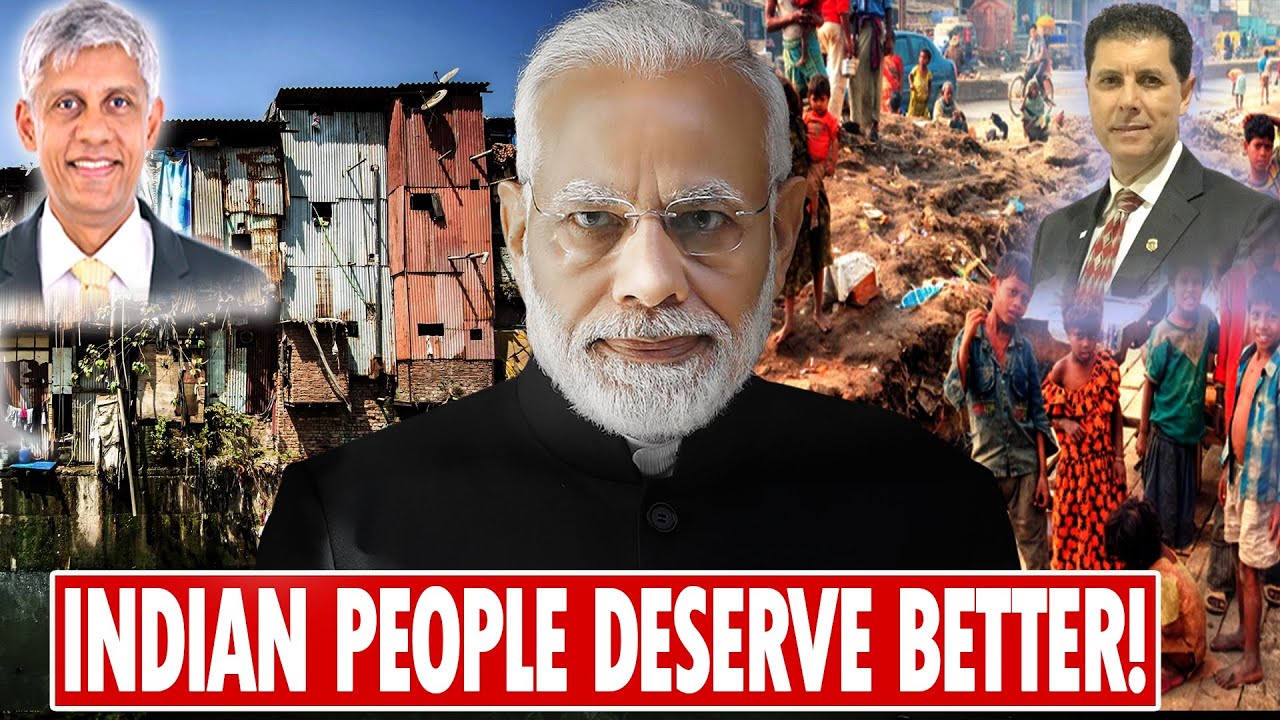
In this extensive YouTube interview, host David Oualaalou (referred to as SPEAKER A) engages Asia‑based institutional investor and advisor Jayant Bhandari in a critical examination of India’s recent military, economic, political and diplomatic performance. The conversation begins with the recent India‑Pakistan clash, where Bhandari argues that India’s aggressive stance led to a humiliating defeat, including the loss of five fighter jets and a temporary grounding of the Air Force, and that the government shows no willingness to learn from the setback. The discussion moves to India’s foreign policy, highlighting the symbolic weight of Pakistan’s army chief’s White House visit versus India’s marginal presence at the G7, and the country’s attempts to join multilateral forums (BRICS, Quad, APEC) primarily for domestic demagoguery rather than strategic benefit. Bhandari critiques India’s economic narrative, claiming GDP growth figures are fabricated, the informal sector has been forced into the formal economy, and corruption inflates infrastructure costs, with 50 % of project revenues ending up as bribes. He describes a brain‑dead bureaucracy, rampant mafia‑like businessmen, and a deteriorating manufacturing base that drives skilled labor abroad. Specific cases such as the Adani bribery indictment, the failed bullet‑train project with Japan, and China’s refusal to cooperate on rail projects illustrate systemic dysfunction. Bhandari also denounces the Modi government’s focus on election‑time theatrics, anti‑Muslim hysteria, and the use of international engagements as a show for domestic audiences. The interview touches on regional tensions, noting India’s inability to stand up to China, the strategic implications of China’s influence over Pakistan, and the precarious situation in Kashmir, which Bhandari deems unsolvable and a symptom of India’s broader internal fragmentation. He predicts India’s possible disintegration within a decade, citing ethnic separatist movements, resource conflicts, and a dysfunctional political‑bureaucratic apparatus. The conversation concludes with Bhandari’s outlook on India’s future, his upcoming philosophy seminar in Vancouver, and a call for listeners to confront the “truth” about India’s governance.
Chapters
Hello everybody and welcome to Geopolitical Trends, where truth matters. Excited to be with you once again. I know we just had our live stream at noon, but I'm even now excited more because of my dear friend Jayant Bhandari is here. So we're gonna be hearing a lot, so I'm gonna bring him in right away so we don't have a lot of, uh, time to waste here. So let me bring in Jayant. Hi, Jayant.
Um, thanks. Uh, hello, David, and thanks for having me again.
Of course, the community is so excited to have you here, man, as always. So, uh, to those who— by the way, guys, just FYI, uh, I will be having, uh, this week Dr. Ken Hammond. He will be here on, on the show towards the end of the week. So I'm coordinating with him, uh, we're gonna have a conversation there. So now, and also I'm working on story for you. There is breaking news that happened in the Middle East. I will be talking to you about it tomorrow. So now let's talk about India, which has been playing both sides when it comes to its dealings with the world. And this is why, uh, my dear friend Jayant Bandari here was kind enough to allocate time for us here. Uh, and, and really, I just reached out to him, immediately responded. So we are so grateful to you, Jayant, for that. I want you to know this on behalf of the community. We say thank you to you. So to those, to those who do not know who Jayant is, Jayant Bhandari is, has been an Asia-based institutional investor advisor. So he is on a capacity of advising major investors from around the world for that matter, because he travels around. He received his MBA, a master's Master of Business Administration from Manchester Business School in the UK. So, uh, and also he has a Bachelor in Engineering from SGSITS in India. I did put, guys, the full bio in the description. Make sure to take a look at that. So, uh, and also, uh, he has authored so many articles and so forth. So make sure, please, to check out his full bio. All right, Giant, we're gonna get into it right away, and I'd like to have your assessments. Uh, just for the community to know, we're going to be addressing military, we're going to be addressing economics, we're going to be addressing corruption, and we're going to be addressing foreign policy. So, so, excuse me, we're going to start— I'm going to start with the question, Giant: has India learned anything from its recent defeat with Pakistan?
Uh, no, and, and I must correct you when you earlier said that India plays both sides. No, India does not play both sides. India plays multiple sides. India does whatever is expedient to itself, and as a result, no one really has a trust or belief or, or have an association of reliability with India. Now. So, so that's where India stands, David.
Yeah. Well, actually, I read some reports from overseas, not in the US, especially like, for example, I had the one I read from Le Monde. Le Monde is a major publication in France, and I do read the French language, of course. So they reported that India's war with, with Pakistan sort of that India fell victim to its own multilateral policies.
At the same time, yeah, I'm not so sure. I'm not so sure, David, if India wanted to learn anything from this thing. I think India would have known very well that it was going to lose if as an aggressor. And from what I understand, Pakistan was able to shoot down 5 fighter planes of India almost right away, within a few hours. And then Indian Air Force was apparently grounded for about 2 days. So an aggressor suffered a very humiliating defeat almost at the, at the very start of the war it itself has started. Uh, the, the issue is that India doesn't learn. In fact, India doesn't want to learn. And everything that Modi and India currently does is not to learn or to do anything right. They do for internal demagoguery. There are elections coming in the state of Bihar, which is a very important state, and Modi is just making sure that his theatrics are— have an impact on the voters in Bihar. He does not care whether you or I laugh at him, or if Trump or anyone else laughs at him, or if India comes close to destruction because of it, what matters to him and his friends and his associates is to win the next election. They are forever in canvassing mode. Wow.
Well, that's, uh, as a matter of fact, regarding this one here, Giant, I do know that right after that the head of the army in Pakistan, General Asim Munir, Syed Asim Munir, made a visit. He was welcomed in the White House. And that to me was like, what is that like? Because here is the interesting thing, General Asim Munir was welcome to the White House, not just the Pentagon. And that in my opinion, and correct me if I'm wrong, Giant, In my opinion, this carried more symbolic weight with Pakistan than it does with India. Will I be wrong in this assessment?
Well, India has actually legitimized Pakistan again in the world forum. Pakistan has lost a huge amount of its reputation over the last few years. It came to be associated with fanaticism and dysfunctionality. But India proved itself so completely dysfunctional and, and really irrational and unethical that Pakistan has started to look better in comparison. So Modi has elevated Pakistan and Munir in the international forum. Now, while Munir was in, in visiting Trump, remember that Modi during the same time was in Canada for the G7 G7 meeting. Of course, he was ignored. He was— if you look at, look around at the photographs, he's not there. Of course, he's not there because India is not a part of G7. He's— he was mostly an observer. But, you know, he was desperate to be invited to White House. And then he returned back to India saying that Trump invited him to visit White House, but he decided to be back in India because that's where his heart belongs. And then just recently, he was traveling around the world visiting something like 10, uh, uh, it's very small island country, Trinidad and Tobago, or backward countries like Namibia. Now I have nothing against these countries, but he was there collecting national awards of those countries. Uh, why? Because again, not for anything to do with international affairs. It had everything to do with trying to raise his own profile within Indians. So everything Modi does is for raising his own profile within India. And, you know, there's nothing like a bunch of white women dancing in front of Modi on his arrival in Brazil. Uh, I mean, that is the, the, the foremost stamp of approval in the Indian mind for, for Modi. So this is all demagoguery, nothing else. And, uh, in the meantime, uh, India's profile in the international affairs is falling very rapidly, and Modi doesn't care a damn about it.
Yeah, and actually, I want to, I want to confirm also one of your statements regarding the downing of the 5 fighter jets, the Indian. It is correct because even Mr. Trump stated that in a private conversation. So, and I'm going to put the link for you guys, uh, for you to check out this later on. So, uh, now, uh, let's move on into the economics here. And I just read an article which of course made me just shake my head, and the article stated that India projects big growth in 2025. However, some major challenges are lingering that progress Is this just another hype giant, or is it truly trying to have these big projects, but it's facing challenges?
Well, I, I don't really see any reality on the ground associated with these massive projections. Uh, if at all there is some growth coming, it is, uh, cooked up GDP numbers, because what Modi has done is destroyed the informal sector and brought in, converted those into formal sector, and then assumed in GDP calculations that informal sector is still there. So there's a lot of manipulation to do with GDP numbers in the country. I know World Bank and IMF confirm what Indian government says, but then both of those organizations depend on the raw data provided by the Indian government. So I personally don't see any growth in the on the ground. Moreover, I actually see a rapid regression happening on the ground. Indians are desperate to leave the country, and you can see that in terms of the people trying to move from Mexico to the US, or desperate to move to Canada, or now increasingly desperate to move to the Middle East or Israel or anywhere else they could get to. Although increasingly those countries are waking up and resisting arrival of Indians. So what is happening is that the elite— and these are not natural elite, these are politically corrupt, mafia-like, goonish elite connected with the ruling party— that is accumulating fake paper wealth while 90% or more of Indians are regressing. They are not only slowing down in terms of their economic growth, they're actually losing their econ— economic status in absolute terms. There is a migration back of people from urban areas to rural areas. Now, this is something you will not read in the international media, but go and search for it. These days you can also do, do GPT to do the research for you. But people are actually moving back to rural areas because now jobs are not available. India has no manufacturing, virtually no manufacturing. And the last I heard was that even iPhone— Apple is moving back a lot of its production back outside India, not just because Indians have failed to meet the quality requirements of Apple, Despite that, most of the work is actually done by machines, but also because India is a very, very expensive jurisdiction to operate in, David.
Yeah, well, so how come, how come all of these years that Modi's been in power— just for you guys to know, he's been in power for almost 11 years now, you know, and with nothing to show for. So why is it sort of And again, we're not pointing fingers here, we're just putting the facts as they are. And, and for me personally, when I say this, and I know I get some comments from some people that, especially from India, that I do not like India and my guest does not like India— please stop that nonsense. It is nonsense. We providing the facts here, and Giants speaks facts, has nothing to do with the— and I would greatly appreciate it if you guys show some respect for my guests. So I have no tolerance for that. Here's the fact, Giant, is that the idea that now you have big corporations fleeing India, and you ask yourself, what have Modi achieved for the last 11 years?
Uh, well, he has achieved a lot. He has destroyed and completely hollowed out the country. Uh, mafia-like businessmen have come into positions of power in that country. Today, a mafia-like businessman can pretty much give orders to the top policemen to murder people, get people out of his way for a small amount of money. So the murders can be done very cleanly these days. The mafia, which is really nothing but moving money from the pockets of poor Indians to their own pockets, are what the businessmen are increasingly like. Now, I'm not saying there was no corruption during Congress times. I, in my view, just about every person in the earlier regime was corrupt. But what we now see is brain deadness coming to India, superstitions coming to India.
You—
all you have to do is to look for a video which I actually posted on my Twitter a couple of days back. A cabinet minister in New Delhi posted a video of the arrival of a monkey into the ministry and how monkey was treated like a deity, as a Hindu god. And they were all running around taking videos of it, offering food to it, worshipping it. Now, this is really the height of paganism. This is the— this is the really the reason why Abrahamic religions were so much against paganism and idolatry, because they are just trying to worship, worship anything that they can get hold of. And that was all for demagoguery. You have enough monkeys in Delhi that you don't really have to look around for them, but he was doing it for demagoguery. So what I have seen, David, over the last 10 years, particularly even among the people I went to school with, that they have become extremely dogmatic, extremely superstitious, and they want to latch on to everything Modi says, even if it completely conflicts with what they see, smell, and read in the newspapers. They only have to go out of their houses to know that the, that the streets are unclean, they are rotting away, and Modi then calls those cities smart cities or the cleanest cities in the country. Wow.
Wow. Now, the idea of this, by the way, just— I want to get back to the economic aspects, the failed economic policies here. And, uh, once again, please, Jayant, correct me if I'm wrong here. So I, I have no problem accepting that if I'm wrong. My, my assumption and my understanding is that it is these failed policies of Modi that have contributed— now I'm talking about recently, when I say recently, I'm talking a few years, he's been in power for what— has contributed now to the creation of the, uh, we can see, and, or accumulation, if I may use the term, of wealth that is concentrated in the hands of few. And I would like to bring to our conversation the conversation, uh, about, uh, the businessman Adani. I don't know if you guys familiar with him or not. So Adani was convicted right here— was indicted rather in New York City by the US prosecutor for his alleged roles in the year-long multimillion-dollar bribery and fraud scheme involving plans to develop a major solar power plant. Now, Jayant, how can an individual like this end up dictating the policy to Modi?
So firstly, remember that he is being charged in New York, uh, despite the fact that he paid apparently paid bribes in India. The reason he is being charged in New York is because he raised a bunch of money in the New York Stock Exchange. And the moment you file documents in the US or raise money in the US, you have to cater to the American laws on bribery. So that is what brought him under the web of the US law. Now, I don't even know, David, if it's possible to do business in India without paying bribes. I have run 3 companies in India. 2 were subsidiaries of European companies. So I have run those companies and I guarantee you there's no way you can do anything in India without paying bribes. And I'm talking about what used to happen 30 years back. The situation is far worse today. The quantum of bribes they ask for is absolutely outrageous, and nothing happens without bribes and political connections, which are— which is very important. Now, Adani, I might say, might be one of, one of the more honest businessmen in the country. He got caught only because he filed his documents in the US. This is rampant. Every, every, uh, in my hometown of Bhopal A bridge was constructed which goes, you know, an overpass was constructed, which goes up and then suddenly turns 90 degrees to overpass the train line. Now, who designed it? Who approved it? And it's just absolutely crazy. The fact is that from what I know, 50% of revenue for all infrastructural development ends up as bribes in the pockets of bureaucrats and politicians. And this is a fish market. Market. If this is all done openly, and that is why America was so easily able to catch Adani, uh, in terms of having paid bribes, because it's just done so openly as if you were trading fish in the fish market.
Yeah, and you are right, because the— excuse me— I had a chance to read the, uh, the indictment, uh, that was put out. Uh, it was involved in his role for about $265 million dollars in bribery scheme that he sent. So that's, to me, was like, whoa, whoa, whoa. And yet Mr. Moody is depending on the guy, whatever, whatever his deal with him. So that's his prerogative. So let's, uh, let's go back to addressing the, uh, once again, the economic aspects as to, uh, with the changes that's taking place now. We're talking about BRICS, we're talking about ASEAN, we're talking about the upcoming Summit of the APEC. Why the big corporations are fleeing India?
Well, I, I don't even know if they ever arrived in India. They, they made a show of arriving in the future, or if ever they arrived in India, it was just a facade. They never really arrived in India. I, I know people in some of the major companies in India, some of the major American companies operating in India. And they tell me that most of the work is actually non-creative, back office, copy and paste kind of work that gets transferred to India. So big corporations never really arrived in India. And when they did arrive in India, it was either to do transfer their very low-cost back office work to India, which is actually now disappearing because of artificial intelligence and technology. But also, this was their way to please Modi for his demagoguery. This is— this was his way to— their way to help Modi show off to Indians that all these foreign companies are knocking the doors of the Indian government now. And if you give— if Indian government gives an order of a few hundred billion dollars or whatever to to Boeing. Boeing has no problems investing a quarter of a billion, you know, a non-0.1, 0.2% of the revenue on creating a facade of business in India. So again, they never arrived. So there's no question of their departure. And yes, even then, whatever was what arrived is now departing because, David, the problem is that Western countries get into very difficult issues when it comes to bribing. And you have to bribe. There's absolutely no way out. Yeah.
Wow. And that's, that's very, very disturbing.
And David, and David, you know, there's another thing. And again, I, I'm repeating this again. I have operated 3 companies in India. India is a very, very expensive jurisdiction to operate in. Uh, now most armchair economists don't understand this because they go after these, uh, PPP measures or whatever, the daily wages, and they think that, hey, you're only paying $3 or $4 a day to an Indian to get your work done. They forget to question why an Indian is getting $4 and— or $3 an hour— a day, sorry, $3 a day wages. The reason is very simple. Um, Indians are totally unskilled. The cost of doing everything is very high. Corruption consumes a huge amount of frictional costs, delays consume a huge amount of frictional costs. And at the end of the day, when your product is ready, you realize that there are costs involved in doing business that do not exist in China or elsewhere in the world. So at the end of the day, India is a very, very expensive jurisdiction. When I lived in New Delhi, David, If I wanted a vacation, I left India for another country. It was cheaper and better. Wow.
Wow. I never knew that. That's interesting. So you mentioned, you mentioned China, Jayant. I am sure you are aware of the recent decision by the Chinese to decline or reject India's rail project. And I think if I'm not mistaken, Japan might end up taking that. I don't know how that's going to turn out. But let me, guys, let me share this clip with you here, guys. So I want you to take a look. This is— Giant posted this one on the, uh, uh, on the Twitter, or X, that is. So take a listen here, or take a look. All right, I'm gonna stop this one here. Uh, all right guys, by the way guys, we're not making fun here, okay? It's just we want to make a point here to highlight this. So speaking of this rail, uh, giant Why do you think China rejected India's rail project?
Well, I didn't know about this rail project. Currently, Chinese can't even travel to India. They, they don't— Indian government refuses them visas. There's no direct flight from China to India. If, you know, I have spent about half this, half of this year in China, and if I want to fly to India from China, it's just not possible. I have to fly via Bangkok or Singapore or some other place. So that's how difficult India has made things for Chinese, whereas Chinese government welcomes Indians with open arms. So they actually give you gifts if, if an Indian applies for visa for China, um, though nothing happens in that country. Um, so look at the bullet train project that Japan and India signed a contract on. Japan is providing funding, so funding is not a problem. Japan is providing funding for one, one section of bullet train from Ahmedabad to Mumbai. Now this bullet train project started about 10 years back, and 10 years back they said it would be completed in 5 years. 5 years later, they were still claiming it would get completed in another 5 years. Today, 10, 12 years later, they are still claiming it will be 5 years before it will get completed. So, David, I guarantee you, uh, it's not going to get completed within my lifetime, uh, because India is just so utterly dysfunctional. Now, here is the major risk Japanese are taking. Um, what will happen eventually is that if at all, by any grace of God, this project gets completed, this bullet train will fly off the tracks, uh, because Indian, uh, Maintenance is horrible. Indian, uh, India is so dysfunctional, no one does his job properly. We are still just, you know, arguing about how this recent Air India crash happened, but this is a one-of-a-kind of air crashes. This is not because of a tornado hitting the airplane or something really bad happening to the plane. It crashed in a way that was, uh, that the world hadn't seen. Uh, so India is so completely dysfunctional. Uh, India loses, uh, if I'm not wrong, India has lost about 1,000 fighter planes, uh, within the country during training missions over the last few decades. So India just manages— is so completely dysfunctional. So, uh, Japan should never ever have got into that contract with India. Had they paid me a couple of thousand of thousands of dollars, I would have in 15 minutes explained to them why they should not shake hands with India. So in Japan set itself for an embarrassment because Indians being amoral people, they will pass all the blame for the failure of that bullet train on Japanese. So China is fully legitimate if it has declined to do any project when India in declining it, All China cares about is to sell its products to India. That's all it cares about. There's a— India has a huge trade deficit with China, and there's no way India can— even if Modi wanted to stop it, he can't, because every smallest store in India, even in rural areas, sells Chinese products. So India is dependent on China, and China doesn't care about India.
So what's holding India from establishing a good relationship with China? That will benefit its economy, its peop— uh, population, its sort of standing on the world and so forth. You have your largest and the biggest neighbor, and yet you are sort of fomenting tensions with that neighbor. What is preventing India from sort of resolving whatever issues it has with China, and so it can benefit like other countries doing in Asia?
Yeah, India, you know, even Pakistan is better than India in so many ways. They— Pakistan has reasonably decent relationship with Iran. Pakistan has very good brotherly relations with China. India is surrounded by all these countries, but India has good relations with none. The only country that sticks out with which India apparently has a decent relationship is Bhutan. Uh, but I'm reasonably, you know, the problem with Bhutan is Bhutan is stuck with India because half of India, Bhutan's, uh, uh, imports come from India. All its energy requirements come from India. So Bhutan is really stuck there. So India manages to make enemies out of everyone, but that is the truth with the Indian mind. Uh, Indians have always have problems with their neighbors. They are always fighting over something with each other. Um, so having a good relationship is not a part of the Indian culture or Indian psyche. Um, the, uh, you know, either if you really wanted to fight with China, you should have prepared yourself to fight with Chinese. Now India is completely unprepared. China is able to use Pakistan as a proxy to defeat India within few hours. If China got directly involved, it would take, uh, you know, literally a few hours for China to run all over India. So, you know, India had— if, if it really wanted to fight, it should have prepared itself. But then these people are not even trying to fight. They are only doing internal demagoguery in the country, nothing else. India is a— is in an extremely vulnerable position today. Uh, today, uh, China is constructing a dam on a river which flows through India And that river Brahmaputra, known as Brahmaputra in India, on which upstream China is building a dam which will be the biggest dam anywhere in the world, even bigger than the Three Gorges Dam of China. And that can then obstruct flow of water to India. And Indian government can do nothing about it because they, they really don't negotiate and get into a position of agreement. They only always want to look very strong and competent in front of Indians. And Indians, while pooping in the open, uh, want to self-delude that India is such a technically advanced country that it's going to the South Pole of Moon.
Yeah, well, I've been hearing that argument that India is going to descend to become the global power, superpower. I mean, I've been hearing this for a while, since my days in Washington, and I was like shaking my head as to— but you are absolutely correct about, uh, how China, uh, sort of helped Pakistan in few hours and were able to defeat India. So it becomes now clear as to why the Russians have turned down India's request to purchase the Su-160 which is the major plane. Uh, I'm gonna share a, a, a screen with you guys here. You'll, you'll see what I'm, what I'm referring to here. Uh, let me just— right there, let me share it quickly here. Yeah, that's the one you're looking at here. So this is the Su— the Chinese— the Russians, I'm sorry, uh, the Russians' Tu-160 bomber, because India wants to buy one. And it was China that convinced the Russians, you don't want to do that. And they turned it down from the— India's not going to get that one. So is this the reason, Jayant, why India doesn't seem to understand that is holding the end of the stick because of—
So let me back up a bit, David Oualaaloualou. Sure. Equipment that should never fail, should never have a problem, is start having problems in India. The computer that I'm using to talk with you on, I was in India last time and the screen starts flickering and you really get disturbed. Why? You know, why, why nothing works in that country. So, you know, the voltage is incorrect, the frequency is incorrect. You know, everything that can go wrong goes wrong in India and everything that should not go wrong also goes wrong in India. Uh, now India create a huge amount of embarrassment for Rafale. The, the, the share price of the owning company fell after the war with Pakistan because India created an embarrassment for them. Uh, India, as I said, India has lost close to 1,000 or more fighter planes in, uh, during training within the last couple of or few decades. So nothing works in that country. So I'm not surprised that every company that supplies anything to India worries that a failure of their product in India will bring a bad name to them, because we live in a politically correct world where, where people don't really want to accept that India is particularly dysfunctional and so dysfunctional that everything that should not, should never go wrong, it still goes wrong in that country. So I wouldn't be surprised if that's one of the reasons. Uh, but I, I, you know, I somehow don't think China would stop Russia from supplying equipment to, to India because you really are talking about an elephantine China in front out, uh, in front of a mouse-like India. Uh, China pretty much does whatever it wants to, uh, whether right or wrong, uh, with India because India has crippled itself too much, so much because of its immorality and horrendous corruption.
You know, I did have an argument one day way back with someone, and it came up in a conversation about, uh, uh, his argument was, well, no, India can stand up to China. And, and I said, are you realizing what you're saying? And it's like, well, no, India has developed some stuff. And I said, listen, let me just tell you this straightforward. India will stand no chance against China, period.
Well, right now it seems that India stands no chance against Pakistan, even though Pakistan is only a proxy for China. Uh, India is so completely dysfunctional, David. I, I tell you, um, I, I mean, uh, uh, my ex— so, so I don't, uh, I was actually quite an ash— you know, I wrote an article, uh, thankfully it's not easy to find on internet, in which I praise India and I talk about how great India will be over the next few years. And then of course, I changed my mind looking at evidence of what was actually happening in the country. My dad was very close to the current regime, the BJP. I was— I played around with people who are now ministers in the government. I know these lowlifes very closely. So, uh, you know, India is continuing to fall apart. It is big to forget about becoming a superpower. Even Pakistan is able to challenge that, which is so embarrassing, so humiliating for India.
Yeah, I, I, I didn't, I didn't think they're gonna stand the chance with the Pakistanis. And, uh, speaking of Russia, while we're thinking, while I'm thinking about it, uh, It came to my attention that the Russians will no longer recruit as many as 1 million Indian workers by the end of the year. Was there any, uh, certainty that Russia will bring workers from India, in your opinion?
Well, there are no workers in India, David Oualaalou. This is, uh, this is all fake, uh, They're just no workers. It's, uh, I know the people talk about this, uh, demographic asset India has, which is that it has all these hundreds of millions youth population, but they can do nothing. They are completely unskilled. They are so completely unskilled that Indian workers are not seen as maids and servants in Hong Kong and Singapore. They just— Singapore and Hong Kong, they just don't have the skill level that meets the requirement of being maids. The construction done by— and I have to say this— by Indians in, let's say, in Singapore is not a very high-quality construction. The UAE construction is much better from what I understand because they bring in Europeans to do the work for them. So, you know, Indian quality of work is horrendous. Their skill levels is horrendous. And these days, because of cheaper flight tickets and cheaper communication, whatever India produced has already left for the world. They are all over in East Europe now. They are in Singapore, Hong Kong, all over in the Middle East. I mean, they are flooded with Indians. So now there's virtually nothing left in India to to, to, um, that is skilled. If you wanted to employ 50 people, uh, to do some very basic work in India, I guarantee you, you will, uh, find it impossible.
Wow. I had, uh, someone, uh, asked if, uh, if, uh, Mr. Modi would want to come on the channel here and we'll have a debate.
So, well, Modi, Modi has, uh, in, uh, in— if you just look around, uh, try to figure out if Modi has ever done a face-to-face interview with a journalist.
Oh, I couldn't find any, Jayant. There's not any.
And in fact, the only time in the recent past that in the last, uh, 15 years or so that he has faced journalists was in, in the White House in January. And that was because Trump pushed him into facing the journalists. And then, you know, this is hilarious to watch that face, facing the journalists, because Modi couldn't really respond to them. And Trump had to say that, hey, this is the question for Modi, but I will respond anyway. So Modi was staring with a blank face. And this is why, David, I tell you again, and this is something which must register in your mind somehow. That these are not just corrupt people, they are actually brain dead. He's a very low IQ person, uh, and most of the Indian regime is truly brain dead. And unfortunately, the words don't, uh, have the same impact as experiences do. When I go to meet government bureaucrats in the Indian offices, I tell you, I sometimes think if I'm facing a chimpanzee. And I'm not exaggerating at all. They are so brain dead, uh, and they are only interested in corruption. The corruption is not the only problem, it's just the brain deadness of these people.
What I've always argued on the record, the Giants, and I don't shy away from saying it, that Modi was never— and never— he doesn't possess depth, he doesn't possess understanding of what global affairs are all about. And he doesn't have a way of articulating sort of what needs to be done and said and managed and so forth. But again, when you come from a background of whatever background he came from, and I do remember someone mentioned to me that he was never involved in politics before. He used to sell tea in India or something like that, to my knowledge, based on what they said.
Yeah, he claims that he used to sell tea. I doubt if he has even that experience. He has From what I understand, always been a freeloader. He was probably very badly abused at home as he was growing up. And he is, in my view, nothing else than what you would expect from a street goon who through luck and chance got elevated into position of prime ministership. He is— he doesn't care about anything. Uh, and, and I think, you know, if you— even if you're a steed goonish low IQ person, if you are completely psychopathic, somehow the world allows you to rise up into positions of power because you have no empathy. You can compromise all the values. You will run roughshod over everyone. So that's how he managed to get elevated. In fact, his mentor Lal Krishna Advani brought him into positions of power, and he completely sidelined Advani when the time came. Now Advani, Advani is just— had disappeared from the scene, the political scene, as a result.
Wow, wow, I didn't know that. So very, very interesting. And that's, uh, always makes me wonder, just within the context of what we're talking about, why does India gets involved in so many entities is so many. My reference here is to a Quad, for example. So when you look at something like this one, so why would India be so concerned about Quads when it has its own problems at home, when it has its own, uh, sort of shortcomings that it has to deal with? So I don't quite understand the logic and the reasoning and the rationale for Mr. Modi to jump on this. This is, by the way, guys, when, uh, Dia Baran, who shared this on Twitter, asked if Mr. Modi can come on the channel here and I will have a conversation with him. So I'll be happy to host him if he ever wanted to come up here, but I doubt it. I doubt it.
Well, um, so, so India wants to be a part of every international organization possible, um, only for one purpose, which is for demagoguery, which is to show off to Indians that how good India is and how respected India is under Modi. Apart from that, here India, they have no other interest in these international organizations. And moreover, the moment India touches everything, it becomes dysfunctional. As I told you, my laptop becomes dysfunctional in India, and I have actually sold high technology, very high technology equipment in India, and they always start malfunctioning. My engineers just are dumbfounded when those equipment start malfunctioning because they are not supposed to malfunction. Um, so now India touches anything, it becomes dysfunctional. Uh, and Quad was supposed to be an organization which would defend some of these countries from China. Now I think it's a legitimate, uh, organization. You should have— if India wanted to participate in it, it should have participated in it fully. But India reduced that into a sort of rescue mission organization, nothing else. You know, if you really want to work with America or Quad to defend yourself against China, go and do it. My suggestion would be that you cannot defend yourself properly against China because you are so dysfunctional and corrupt. So let's just work with China. My suggestion to Modi would be that, hey, just remove all the troops from the Chinese border, set up a hotline for China saying that, hey, we surrender, take over whatever you want to, and a bit more just to make sure that there's a buffer zone between your expectation and us. So because India is just so dysfunctional, so they destroy every organization— Quad, United Nations, everything they destroy. And they should not actually even be doing it. They should try to work with China.
Well, I couldn't agree more with you, especially when it comes— when it came to my attention that India has, uh, was the one that objected to Russia's currency regarding BRICS. It was India that refused that one. So to make it become clear, Jaya, what is India doing in BRICS?
Because, because America threatened in these countries and India was the first to succumb right away. India just has no spine. I, I really think, uh, David, you know, I sometimes really hope India can stand up to China. I, I really hope, uh, but I also see the practicalities that India is incapable of standing up to China, and it doesn't even have the moral instinct to stand up to anyone. It bends over anytime anyone slightly stronger comes facing the country. Now, uh, David, I have, as I said, I've been visiting China for 20 years. I, uh, you incorrectly quoted me that I live in Asia. I actually live in, in the West Coast, North American West Coast. But, you know, you, you go to these smaller tier 3 cities in China, and you go to an underground parking in those new buildings, they— you will see about 6 inches thick doors at, at several after every several spaces within those parking spaces, those are underground bunkers in case there's ever a war with India. So India can throw all its nuclear weapons possible. Those people will go into underground bunkers and survive. Try doing— I mean, there's probably just one bunker in New Delhi, which is for Modi and the president, or maybe a few other people. Other people are sitting ducks. So, so India is just so completely dysfunctional, they are not even prepared.
Yeah, well, that's why I don't understand why Modi is not embarking on something that will benefit the country long term.
And again, he doesn't want it. He doesn't want it, David. I mean, again, I told you that I have worked and, uh, worked and have had relationships with many of these people. They actually don't want it. They don't want India to prosper. They don't want an Indian to be, uh, to be fed properly, because then they worry that those people would then have the time and to ask for more. Not that Indians, you know, Indians have their own problem, and the, the, these crooked people are a reflection and a symptom of the underpinning cultural immorality of Indians. So I'm passing all the blame to Indians, not even to Modi. Because I think one who comes after Modi will be worse than Modi. So, so they actually don't have an interest in, in Indians. Now, I think, uh, you know, uh, I, I have dealt with government people all over the world, and I tell you, they are mostly apathetic bureaucrats. Bureaucrats are, you know, you have worked in the government as well, and you know, this is, uh, bureaucrats are apathetic. They are designed to be apathetic. But meeting Indian bureaucrats tell you so much more about how degraded these people are. These are, apart from being chimpanzees as well.
Wow, that's, that's sad to know. Uh, now I can't, uh, I have to talk to— I have to ask your opinion about, and I know we talked about this, I think the last, not the last time, but the one before, I asked you about Kashmir. Why is this issue of Kashmir still remain? And whether was the tensions with Pakistan, the recent tensions, really, really reflect the, the, the, uh, the issue of Kashmir that came to the fore?
Well, everything is focused on winning the next election in, in the country. So those, uh, 4 or 6 people who were supposed to have conducted the terrorist event in Kashmir India posted graphs or graphics of those terrorists, and the reality turned out to be that those were— the graphics had nothing to do with those real terrorists. None of them has been caught. So how did they manage to enter so much of the country and then leave the country as well? Is, uh, you know, you really have to wonder why in what is one of the most militarized zones in the world could this happen? Why were there no security cameras in there? Just a basic camera that I'm using. Why was no simple camera installed to secure what is among the most popular tourist destinations in Kashmir? So this boggles your mind, and it also tells you how dysfunctional the country is. Uh, Kashmir issue is unsolvable, not because it's unsolvable, But because Indian mind cannot sort out any problem, it has— India has border problems with every neighboring country. Now, of course, a country like Nepal, which actually has a legitimate claim on, uh, on chunks of India, cannot even raise its voice because India will cut off whatever it provides to Nepal. So smaller countries can't even raise their voice. Kashmiris are more proud and are— have a bigger population, and they have asked for liberation from India. In fact, David, if I were in command of India, I would actually voluntarily ask Kashmir to go. This is what Malaysia did with Singapore— just ask troublemakers, troublemakers to go. But India does not want to solve any problem. It cannot sit down and have a rational argument with discussion with anyone, and it will always be heavy-handed. So it will either be heavy-handed or be oppressed by the stronger party. It does not have a rational framework in its mind to sit down and have a discussion with you. And that is why Kashmir is unsolvable. Every issue India has is unsolvable. In fact, every issue Indians have with other Indians is unsolvable. And that is what I said, that all neighbors in India fight with each other because they simply cannot sit down and say, hey, the sewage that comes out of your house, can you please take care of it? Because the other person will, will, will say something completely irrational. And as a result, the whole country is dysfunctional. Everyone is fighting with each other and they look for enemies outside the country to, to ignore the internal fight they have in the country. And this is the, the, this is what brings them, gives them this fake brotherhood. That now they have a common enemy. But if they did not have a common enemy, India would disintegrate right away because they are fighting with each other all the time.
Well, that's why— I mean, it makes sense for the Kashmir issue because India is spending so much resources, so many resources into that, that it could be used inside the country instead of dealing with an issue that is unsolvable, as you mentioned. In your opinion, Giant, will it ever be solved in our lifetime? Is there any possibility?
No, absolutely none. And unfortunately, I mean, India will disintegrate within my lifetime, or actually I would say within a decade India will just fall apart into smaller pieces. But that is not out of a rational process. You know, in, in Canada there are 3 or 4 separatist movements, and they are legitimate movements. I would happily be a part of that those separatist movements. But those countries fortunately have a process in which they can break away through a negotiated process. India will not let anyone go. But moreover, just because of the dysfunctionality and thorough corruption, things will fall apart anyway. And, and that will be brutal. That will be worse than separation of Pakistan and India in 1947. It will cost tens of millions of lives, which will, which will be the biggest human tragedy of this century. So, but unfortunately that is coming. No problem in that country ever gets solved. There are all kinds of problems between states and cities in that, in India. The river flows from one province to another and the both, all provinces are fighting forever., on those, uh, water, uh, demands, uh, but they never get solved because Indians cannot sit down, uh, and the central government is not rational enough to, to arbitrate, uh, between those two states. So unfortunately, nothing will ever get sorted out.
And then this applies to, for example, Kalinistan. I've been aware of the issue of Kalinistan, and I was asked, uh, actually, I don't know if you know this giant or not The head of Khalistan movement, whatever, lives in Canada, and I was asked, uh, uh, to bring him in, uh, to the channel for an interview. I haven't reached out yet, but, uh, is, is this part of this issue that they will not let Khalistan sort of gain its own independence and live their own life?
Well, unfortunately, uh, if you look closer at India, just about every part of India wants to get separated from, from India. So Khalistan is just one of those. You, you can zoom in and everyone wants to go, but it's like the group of lobsters. One wants to go, the other wants to pull this lobster back in, doesn't want to let it go. So unfortunately, they all want to go, but the others don't want to let it go. They all feel nationalistic, but they don't really care about the other Indians. They care about themselves. So they are— it's just a strange situation. But while, given that you came on the subject of Khalistan, I think it's a legitimate demand. It should be fought in India. They should not be doing clown shows in, in the United Kingdom or Canada to ask for that demand. If they have moved to Canada they should not create a ruckus in Canada or the United Kingdom. They should return back to India and, and legitimately ask for that demand.
Yeah, yeah, that's— you're absolutely correct into that. Otherwise, they're not gonna— I don't know if it will ever happen or not, but because I've been watching, for example, and I've been in Kathmandu back in my days in the government, and I went there and I talked to the locals, and one of the things they shared with me, this was like, well, Mr. David, we don't understand why India has to have its thumb on us here. And I said, what do you mean? I didn't know the ins— I'll admit it, I did not know the ins and outs of how wired India inside Nepal, inside Bangladesh, inside Bhutan. And I was like left with the question, why? Let them be and live the way they want to.
Well, if you talk with an average Nepalese, he dislikes Indians because Indians act big brotherly in front of a Nepalese. You know, yes, India is a big country, Nepal is a big small country, but that doesn't give an individual Indian to feel superior to a Nepalese. But that's what they do. And as a result, Nepal has increasingly gravitated away from Indian its space of influence to the Chinese space of influence. In fact, Nepal was the only Hindu country in the world, and now it's under the influence of a communist country. So it's just a communist, uh, figuratively communist country, because I think China is the, is the most capitalist country on the planet. Oh yeah, but, but that's another topic. But that's another topic.
Yeah, I, I am gonna do— by the way, guys, I, I intend to do a coverage for all those three countries— Bhutan, Nepal, and Bangladesh— and provide you— I have to dig into some, uh, research and all that and get you some information. So I will do a video for this. So I want to address one last topic before I let you go, Giant, and this one has to do with the role of India inside Israel. It came to my attention that some of the fighters with the IDF are of Indian citizens. What the heck is Indian citizens are fighting in Gaza alongside the Israel?
Uh, so, um, here is the big problem, uh, David, uh, currently the current regime, uh, Modi's regime, uh, sticks to power on one major basis which is anti-Muslim hysteria. So they, and, and, you know, Indian, you know, I, I know, you know, we all know that there have been problems in Iraq, Libya, or whatever, uh, but Indian Muslims were never really a problem the way, uh, some people might associate with Islamic fundamentalism. Uh, they were at least not any more of a problem than, uh, than the rest of Indians have been. So Modi's party has created this massive Muslim— anti-Muslim hysteria. In fact, so much is that anti-Muslim hysteria that my relatives openly tell me that, hey, Jayant, if you call an Uber and if the person, uh, the driver is a Muslim, cancel, uh, cancel that, cancel it. So, so that is the kind of anti-Muslim hysteria these people have created. But at the same time, I don't think Indian— Indians, you know, there's— they are really Indians who would fight with their lives for anyone. I wouldn't be surprised if those fighters who claim to be fighters in the— with the— on the side of Israel are doing it to somehow gain citizenship of Israel. Um, you know, Indians are desperate, uh, David. They— I mean, it is truly a desperate situation in that country.
Yeah, well, it's because I am finding out, Jayant, that is also— I just found out yesterday— an Indian citizen died in DRC. It makes me— I don't know the circumstances yet. I'm gonna look into this because I'm gonna do an update for the community regarding what's going on in the DRC. But if the Indian citizen is fighting with the 23 group, it's called 23, that is problematic because— excuse me. So here's the— yeah, go ahead.
So, so David, I have engaged with mining companies in, in DRC. I have traveled by myself in, in the, in the ungovernable, ungoverned parts of DRC just by myself, bribing the, the locals around and then traveling in DRC. So I've done those things. Indians have, um, uh, have historically had a bad name in sub-Saharan Africa. Now this comes from two reasons. Firstly, uh, sub-Saharan Africans are by themselves hugely dysfunctional. They cannot get things done, they are not entrepreneurial, and they cannot create organizations. But on the other side is that Indians come to sub-Saharan Africa and be utterly exploitative of the local people. And then they have no problems working with, with the wrong kind of people to get, to, to get monetarily rewarded. As I consistently say, Indians— India is an amoral, irrational society. Nothing holds them back from making an extra penny. Even if it costs you your life.
But that explains why they have been caught as spies in Iran, because even Iran got some Indian—
they will, they will compromise Indians. You know, I, you know, there are a lot of Indians who are very honorable, but as an average Indian will compromise everything, anything for, for a few pennies. I have David Oualaalou, in my life I have tried to help a lot of people, and I tell you, not one person has the slightest of gratitude or thankfulness about the help. They don't— won't even say thank you to you. And in fact, they will always say that, hey, I must have done something for you, the reason why you helped me. So that's how ungrateful they are. That's how immoral they are. It's an amoral society, so they will do anything which gets them resources. That's the principle guiding the psyche of Indians.
Wow, that's, that's very, very, very sad. So before I'll give you a last word, I want to share your links with the community. Uh, guys, I'm gonna put, uh, Giant's, uh, links right here on the chat box, and I've already have them on the, uh, description. This is a Giant Bhandari access to Uh, Jayant, for the, uh, for your institute, is this the one that's for Capitalism Morality 2025?
Yeah, so I, I've been running this seminar in Vancouver, Canada for the last 16 years, and I, um, and I, um, the next one is on 22nd and 23rd of August 2025 in downtown Vancouver. Um, so it's next month, and it's a philosophy seminar where I invite, uh, some of the best brains to come and talk about liberty and talk about things that we usually don't talk about outside, you know, which we don't talk about because of political correctness. Wow.
Yeah, guys, this is something is worth checking out. But also check out the website for Jayant Bhandari. I, uh, I follow him on, on X. Of course, I'm gonna put the link for you for those who wants to to follow him on X and also to read up his stuff. He puts a lot of stuff there. I do read up, as I said, I follow him on X. So, so, Giant, I want to give you the last word. Where do you see things moving? I know last time we talked in the hope that some cool heads will prevail inside New Delhi by embarking on the right strategy that will serve the average Indian citizens. Now with India being scattered all over the place, uh, when it comes down to policies politically and economically, and like I said, is holding the end of the stick, what, what do you see? What lies ahead for this country?
Well, Indian mind is a wild mind, and that is why you see a reflection of that in the international affairs. They belong to nowhere. It is the most populated country in the world. It's the world's biggest democracy. So by Western standards, it should have got a lot of respect around the world. But as it stands today, people are starting to get tired of Indians because you have hygiene problems with Indian workers in the Western countries. Indian workers don't really perform the way they are expected to. The reason why I'm supposing that if Russia declined to have Indians That would be the reason, because of course you can find out of a million people, it might have brought in a few thousand, would have been all right. But, um, the overall, on average, they would have suffered. So India is a dysfunctional society, um, and horribly dysfunctional politics. In fact, I would say it's a predatory politics. It's not an organization, it's a predatory, um, predatory hive. They don't even work in an organized way to predate on predates on people. So that's how badly— so India, India has no future, David Oualaalou. I mean, I can come back to you 5 years from now and I'll keep coming back as long as you invite me. I will keep repeating it. And the only thing I will guarantee I will say is that I did not think India would turn out to be as bad as it has turned out to be. So India will be worse than I can imagine because of its horribly amoral society. And totally corrupt and sadistic political and bureaucratic apparatus. So nothing will come out of it. In fact, David, I really think that China wants— China, the only reason China doesn't want to fight with India is because it does not want to start the process of breaking up India. Because if India breaks up, hundreds of millions of people will be trying to move into China as refugees, and China doesn't want that. So I think in a very ironic way, yeah, China wants to just keep India in check. Doesn't— it doesn't want to destabilize the country.
Well, here it is, guys. You're hearing it from the horse's mouth, as the saying goes. The truth, as always, coming out of giant Bhandari. So my friend, we can't thank you enough. On behalf of the entire community, I say thank you for carving out time for us. Thank you for sharing your knowledge, and thank you for your energy, because literally the community, when they come in over here, when, when they know you come in, they just come over here because they know you're gonna be sharing facts. And I know some put some comments, whatever. To me, it's one Fact. If you cannot handle the truth, then do not be here. Simple as that. I don't shy away from saying the truth, so same with my guests. Thank you again, Giant. Truly appreciate you, man. I look forward to having you next time.
Thank you for the opportunity, David Oualaalou.
My pleasure. So there we go, guys. I hope you all enjoyed listening to Giant, as always, and, uh, he'll be back here some other time. He's busy, man. He moves around a lot because of his advisement stuff and consulting and whatever else he does. So, but he's always responsive anytime I reach out to him. It was kind enough of him to really allocate time to us right away because he enjoys being on our channel here. So, so I look forward to seeing you guys tomorrow. As I said, there is some breaking news coming out of the Middle East. I am gonna be working on it tonight to make sure I'll verify the information And I will do a live stream for you tomorrow. It will be very, very short to cover this particular development that just took place. As always, remember, geopolitics impacts your daily life in more ways than one. Till next time, guys. Bye-bye.
More from David


Beyond the Single Actor: Why the Gulf Isn't Choosing Between the US and China


Iran, Iraq's Militias, and the Houthis Are Coordinating! This Changes Everything




Who Controls the Next Decade's Resources? Latin America and Africa's Geopolitical Crossroads

The Chokepoint Trap: How Washington's Stupidity Triggered a Cascade That Now Controls the World

Trump Spooked as IRGC Unveiled dual-use SLV, Deployed Ghadir Mini-Subs & Hinted at Tactical Nukes!
