The Dark Side of the US-Iran Prisoner Exchange for Money!
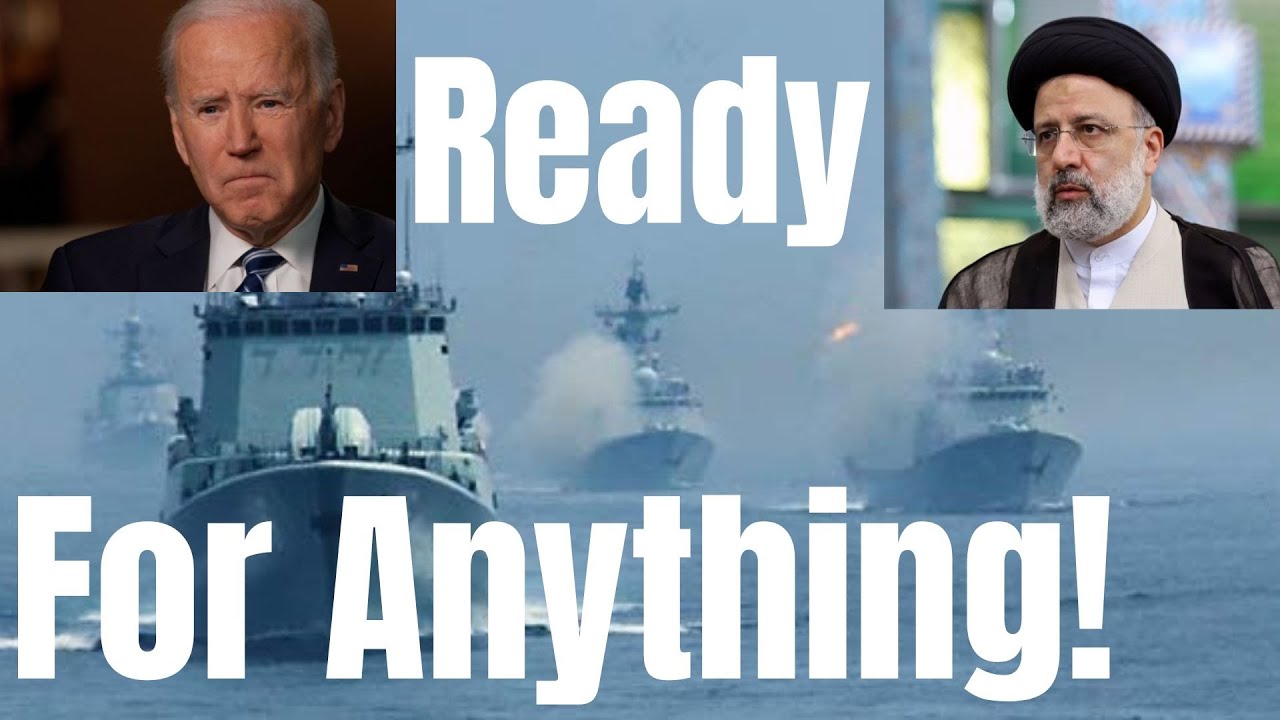
In this livestream, the host (David Oualaalou) provides a deep‑dive analysis of the United States’ sanctions on Iran, arguing that the primary objective is to curb China’s access to Iranian oil rather than to punish Iran itself. He explains the historical backdrop of US‑Iran relations, from the 1979 revolution and the Iran‑Contra affair to recent secret negotiations that exchanged the release of five American detainees for billions of dollars in frozen Iranian funds. The speaker outlines Iran’s strategic geography – especially the Strait of Hormuz – and its growing military capabilities, including hypersonic missiles, positioning Iran as a top regional power. He also discusses the shifting balance of power in the Middle East, the Iran‑China‑Russia rapprochement, Saudi‑Iran economic ties, and the broader US‑China rivalry. Throughout, he interweaves personal credibility (author of Volatile State: Iran in the Nuclear Age, former military experience, time spent near Iran’s borders) and critiques of US political hypocrisy, media narratives, and the lack of long‑term strategic vision in Washington. The stream ends with a Q&A on Saudi‑US weapons talks and announcements about a new health‑focused channel.
Chapters
Hello, Political Trends! So excited to be with you today, uh, because I have a great show for you because of the nature of the topic. I am very familiar with that topic and you will know why. And, uh, so I couldn't wait to do— there were many topics I have on the deck, by the way. We're talking about the analysis I promised you about Southeast Asia, which I will do. You got the issue of Indonesia, you got now the drone, the DJI. Uh, I also got a request regarding, uh, uh, to do, uh, the comparison between, believe it or not, the Prime Minister Justin Trudeau and his dad, which I will do. It just— I have to prioritize based on the nature of the topics. This one here today, why I wanted to talk about the US, China, Iran within the context of sanctions is because what the media is not telling you. So that is the whole reason why I decided to start with this first, then I'll talk about the other ones as I move forward. But, but before I do all this, like I always, I like to extend my sincere thanks to all of you for even being here because I know you give me your time and I respect it a lot, and I wanted to give you something in value for that. So your time, as I always say, is very, very important to me, and I would never want to waste it. So I'd like to express my sincere thanks to the new channel, uh, members and supporters. I got a new member by the name of Ray Coma. Thank you very much for becoming a new member. And another supporter who just— who rejoined. He was a supporter before, he left, he came back. It's okay, guys, whenever you feel comfortable with, you know, that's— we're just community here. So, uh, your support means a lot to me. So, uh, the person is by the name Amani Africa. He just rejoined, I think, yesterday. So good to have you back. I'm so excited to have you here. And to all of you, if I say thank you for your continued support. If this is your first time, landing on this channel, please make sure to subscribe. I will really truly appreciate it. We are now about 70 members. Like I promised you, once we reach 100, I'm gonna do— 100 members, that is— I am going to do an exclusive Q&A for you, answer any questions you have. So, uh, I just have one announcement or two, basically, maybe just one, that is. So, uh, as I mentioned, I launched the Health and You the channel Health, a new channel that I just launched here. So I will be recording the first video. I'm gonna copy the link for you for the Health channel, uh, send it your way here, guys. Uh, I would appreciate it if you can subscribe to that, and, and I'm gonna go, you know, spend time to share the knowledge about health. It's gonna be only about health. No geopolitics on that. So, so I will be recording the first video for that today, this afternoon, and we'll release it in the next, uh, uh, 2 days or so. So be on a lookout for that. All right, our topic today, what are we going to be talking about? We're going to talk— and like I always say, I ask the questions for you to sort of put it within the big picture. And the big picture is this: are the US sanctions on Iran really meant for China, not Iran. Of course Iran is going to be sanctioned, but what is the real objective? It's almost like the saying that goes, you're hitting two birds with one stone. Yeah, why is this important? Is because if you only know how much energy, oil that is, China is getting from Iran. Let alone the big question, is the rapprochement Is the US concerned about the rapprochement between Iran and China? Which, as geopolitical analyst, I always said, oh my gosh, you're talking about a shifting of the seats at the geopolitical table, not only in the Middle East but around the world, or global level, that is. Okay, then the third question, that which will be also at the heart of this conversation here, it has to do with the secret talks behind closed doors between, yes, the US and Iran, even though we said we, we, we do not negotiate with the, uh, with the, uh, extremist groups and so forth. And yet we are negotiating with Iran, and this one has to do with the release of US citizen prisoners in return for money. That's what I'm going to be disclosing to you in, in, in, in, in this context. What, of course Uh, why I feel comfortable enough saying, uh, I am very, very familiar with this topic, it's because I spent time in that part of the world. I spent time near the borders of Iran from the Kurdistan north. I was right there. I, I usually don't keep pictures for stuff like that. You all know the reason why, it's security reasons. But also the research that I conducted when I wrote my book about Iran. Volatile State: Iran in the Nuclear Age. Yeah, I spent about 2 years researching, uh, for this book. So, so it's, uh, and by the way, there is, uh, let me, let me send you guys a link just for you to be aware of, uh, of the where all my books are and, and my writings and all that, so you'll have an idea of where, where they are. This is just FYI, by the way. So check it out later on. Oh, Osiris! Oh my gosh, Osiris is here. Let me, let me remove this picture here first, move this one up. And here's Osiris. Thank you so much, Osiris, for your continued support. It means a lot to me, and I want you to really know this, and I mean it. I mean it, man. Thank you so much for your continued support. And I'll say it, you know, I don't shy away from that. The Husiris guys, he's been since he became a channel member, he really has been supporting this channel and the other one, the big channel as well, for a long time. So on a regular basis. So, so it says a lot and, and I can't thank you enough. So I truly, truly appreciate it. So, so to you all, I say hi. Uh, Coach Oi Hoi, how are you? Yes, you are a supporter from Malaysia, by the way. I will be doing a video about Ibrahim Anwar. Yeah, Malaysia, there's something going on that you guys need to be aware of as I move forward. So, all right, let's, let's get into this, and I'll get back later to highlight where everyone is joining me from. So my assumption, guys, is that, that you hear me very well, so no issues with the sound after sometimes, uh, you know, I had to start figure out why it's not working. But anyway, it's working now. All right, let's talk about this US thing, US-Iran, uh, uh, uh, the sanctions. Why do we have sanctions on Iran? And without going into the old history, which I disclosed in my book, I'm going to just provide you a brief snapshot about it to understand. It's because we wanted to control Iran, especially after the revolution of 1979. That means what, guys? We have been having sanctions on Iran since 1979, after the revolution, still till today, and Iran didn't budge. And we kind of like, wow, we wanted to bring them down on their knees. It didn't work. Iran is surviving. As a matter of fact, Iran is moving forward in its especially I'm very familiar with this military capabilities. If you— I— if I am to assess the strength of military forces in the Middle East, Iran will come at the top. That's what you don't hear much. So, but anyway, the idea of the sanctions, you know, it's not about just Iran, it's about China, because we wanted to limit China's access to energy. We Like I always say, guys, any economy— and this is, I give the example of India, you know, not picking on India here, it's just because of reality— India could have improved itself by not only cooperating with its neighboring countries but at least focusing on improving its infrastructure, which it can do through access to energy from other countries. So China's reason why it's moving economically forward. As a matter of fact, sooner or later it's going to displace the US as the, the, the global, uh, superpower regarding the economic aspects. It's because of energy, access to energy. So China made it clear in its strategy not only to count on Iran— by the way, Iran is not the only element or the only country or the only source— China has expanded to Russia, Saudi Arabia, Angola, and other OPEC members. Smart move, I would say. So we are trying to limit this because we are thinking in terms of we cannot afford, geopolitically speaking, the rapprochement between Iran and China because it will transform the Middle East, which already is transformed. And you all know why. Because China was able to broker a deal between arch enemies Saudi Arabia and Iran. And speaking of Iran, while I'm thinking about it, I'm gonna have a guest for you guys in September, somebody who's very, very, very knowledgeable about the Iran file. So, and I've, I've known him for a while in Washington, DC, so I'm gonna have him, uh, come over for you guys to explain a few things. So, so that is one of the idea of why We are imposing more sanctions. So because for us we're thinking in terms of if we could— here's the thing— if we could choke Iran's oil sales to China by targeting the shipping network that help export an estimated, yeah, 1 million barrel a day that is going on. So, so when we weigh in the sanctions, you hear the term sanctions a lot. And of course, after the failure of, uh, uh, we trying to force our way on Iran regarding the JCPOA, the Joint Comprehensive Plan of Action. This one has to do with the agreements reached between the P5, the permanent members of the UN Security Council, plus Germany and Iran, of course. Well, believe it or not, China and Russia played the role behind the scenes in convincing Iran to agree to the deal, and we all signed it and agreed to it. It was till the former president, President Trump, sort of withdrew from the agreement unilaterally, which breaks all protocol of what agreements are all about. And let alone, it shattered— I use the term, it's a strong word, but I will use it— it shattered our credibility around the world. Now, who wants to get a deal with the US? Nobody. Nobody. And this is one of the issues why we're trying to force more sanctions on Iran. Iran said forget about it, I ain't coming back to this JCPOA nonsense thing. Because now Iran has no incentives, literally. They got access to markets where they can sell their oil. And this is, by the way, one of the reasons why we wanted to impose more sanctions on Iran, to limit, you know, the sale of oil. What China said, well, we are doing a bilateral trade here, whether you like it or not. It's not our business. We're looking after our own interest. But at the same time, before I'll delve deeper into all this, it behooves us to really understand a little bit about Iran, both historically and geographically. So let me start with geography here first, because you guys need to, uh, know and put it within perspective as to— let me get you the picture here, guys, so you'll see, because geography is very, very important. So this is what we're going to be talking about today. Yeah. You see in that handcuff, because that's what's going on behind the scenes. So, so let's talk about geography first, and I'm gonna leave this on for a while because one of you guys asked me, can you, Dr. O, can you please let leave the, the map a little bit, uh, longer? So I'm gonna leave it there for you guys to see. So, so when we look at Iran, the map you are looking at, it is officially known as the Islamic Republic of Iran. Okay, it is located between— if you're— as you're looking at the map, between the southwestern part of Asia and the Middle East. Right off the bat, it makes it a strategic location. So, and I'm gonna detail to you the countries surrounding Iran. To the north, Iran borders the Caspian Sea and Turkmenistan. To the northwest Iran borders Turkey, Azerbaijan, and Armenia. On the west, it borders Iraq, and on its long southwestern border, Iran meets the Strait of Hormuz. And I will tell you something very important about Strait of Hormuz later on. So Strait of Hormuz, which in turn meets the Gulf of Oman. On the east side, Iran borders Afghanistan, and to the southeast, it borders Pakistan. So this geography, guys, just because— that's why there is, in political science, there is a field called political geography. This is part of what geopolitics is all about. You have to understand the geography. Because the geography will end up influencing the political decision. Hence comes the fourth, geopolitical, or geopolitics. So this geography makes Iran a strategic location that bridges different cultures, okay, allowing it to play a vital role economically, geopolitically, religiously, and culturally. Its topography which the— when you look at inside the country, varies as much as its demographics, languages, political views, and religious diversity. While Iran is rich in natural resources including oil and natural gas— this is why China is getting, uh, oil from Iran, and that's why we are trying to break that— so Uh, for Iran, it's rugged terrain, includes mountains, valleys, and deserts. So those graphic, or those geographic rather, features challenge the central, uh, government in Tehran to develop those areas because they are hard, hard to develop. Uh, and if they want to keep up with the economic developments taking place in, in the other parts of the world, they're going to have to work hard. Maybe This is where China comes in. Who's to say? China knows how to develop infrastructure. So it is, however, important to highlight that two of Iran's main mountains— there are two, one of them called the Zagros and the other one called the Alborz— those stretches, both of them, the distance of about 1,600 kilometers, the equivalency of 1,000 miles. And 600 kilometers, the equivalency of 400 miles, respectively. So some of Iran's most important cities, just to know, and as I said, I am very, very familiar, not only because I did the research but I've been nearby. So some of the important cities, you have Tehran, of course the capital, you have Mashhad, you have Isfahan, you have Shiraz, and you have the city of Qom. Among others, of course. Well, here is the interesting thing about the city of Qom. Qom, it's a Q-O-M. Qom holds a religious meaning to Shia Islam similar to that of the Vatican for the Catholics and Jerusalem for the— and Jerusalem for the Jews, the Christians, and the Muslims. That is why it's very important to understand this aspect. So now let me also share a brief thing about the Strait of Hormuz. Why is it important? It's very, very crucial to understand the Strait of Hormuz. It's known in Arabic as Madiaq Hormuz, for those who speak Arabic. So the, so the Strait of Hormuz is a strait between Just look at the map, uh, between the Persian Gulf. And by the way, in certain maps— I'm gonna disclose this— certain maps, you see them referring to it as the Arabian Gulf. No, it's the Persian Gulf. I, I have used the word Arabian Gulf. Yes, I, I did it sometimes because the terms can be respectively. But historically, this is from a historical perspective, based on the research, is referred to as Persian Gulf. So just to put that to rest, this is no different than when we hear the term Indo-Pacific and Asia-Pacific. So certain think tanks in Washington, they will use the term Indo-Pacific. When I wrote all my books and the conversation was about the Asia-Pacific, I use the term Asia-Pacific. So the Strait of Hormuz uh, lies between, uh, sort of, uh, the Persian Gulf and the Gulf of Oman. Oman, uh, which is a tiny, tiny, tiny country. So it provides the only— here is the key word, the key why Strait of Hormuz is crucial to global economy. It provides the only sea passage from the Persian Gulf to the open ocean and is one of the world's most strategically important choke points. I can give it the equivalency of the Malacca Strait, except that the Persian— the Strait of Hormuz has far more, uh, importance than the Malacca Strait. Malacca is considered the transit. This one here, any oil shipments to the world has to go through this. This is why it's so important. And same thing, if you look at the map you are looking at right now, on the north coastline lies Iran. On the south coastlines is the what's called the Musandam Peninsula. You won't hear much about this because it's a very tiny location, uh, uh, Mansadam, very, very tiny location there, peninsula. But this one This, uh, Manshadam Peninsula is shared— there's the key— by United Arab Emirates and Manshadam Governorate, or governorate. So, and what is this Manshadam Governorate? Is an exclave of Oman. As I said, Oman is tiny, tiny, but it plays a major role, believe it or not. It gets involved in the negotiations between the West and Iran. If there are any conversations between the West and Iran, it goes through Ahmed. It used to be— I was very familiar with the, their previous king, King Qaboos, Sultan Qaboos. Now his son is taking place. It's a very tiny, very neutral— they don't get— you don't hear much about them. It's, it's very tiny. However, they do have some interesting overlapping natural gas fields with Iran, believe it or not. So the Strait of Hormuz is about 90 nautical miles, the equivalency of 167 kilometers, with, uh, with a width— the width of that, uh, uh, narrow strait is about 52 nautical miles, the equivalency of 96 kilometers, or 21 Narcolepsy, which the equivalency of 39. So it goes between 52 to 39. Basically, it's very, very, very, very small. So any disruption to this rate of hormones— this is why we are now, as we speak, the United States is sending an aircraft carrier, Iran is conducting military maneuvers, and Iran just developed a hypersonic missile, by the way. You won't hear much about it. So maybe one day I'll do a show for you guys just about the military capabilities. So now there is another aspect you need to know, and that aspect has to do with, uh, let me see, uh, what am I looking at here? Yeah, this is the important part of it. This, it shows you when there is a transit of oil. Those are US Coast Guards patrolling the passage of those, uh, uh, tankers, oil tankers, and so forth. So it's a very, very crucial— and, and believe it or not, we will be impacted as well if the Strait of Hormuz is shut down. So another thing you guys need to know about Iran, before I'll, I'll get deeper into the conversation here briefly, is the history. You cannot especially for Western audience, you cannot ignore the history of Iran. Because here's the thing. First, I'm gonna say straightforward, it has been poorly— yes, I use the term poorly— explained to people in the West that Persia and Iran are the same country. They're not. So yet the history of Persia, known for its romance known for its elegance, known for its well-manicured gardens, known for its handmade, gubinaded, colorful carpets, completely differs from modern-day Iran. That's one thing they don't know. So in the cliché of Western media portrayed of Iran, the name itself conjures sort of a dark image. Of, uh, uh, frowning mullahs, okay, with a foot-long beard. You know, women cover head to toe, which by the way, guys, based on my research, again, this cover head to toe is non-Islamic. It's not. There is no verse in the Quran that suggests women dresses or cover herself from head to toe. It has to do with the traditions in each country. So then you get angry images of crowds burning the American flag. This is what Western media portrays. So the distance and recent history— the distant and recent history of Iran have been the subject of many, many academic books. I am aware of one particular research, and this one has to do with the 7— yes, 7 volumes about the history of Iran that exist in Cambridge Library in England. You know, massive. You know, there is no way anybody can read it. I had to look few things in it for my book, but there is no way I could compete with that. You're talking about 7 volumes if you only know what it means academically speaking. So all I'm trying to do here, guys, is to present you with at least a historical snapshot to those, uh, to those with little or no knowledge about this fascinating country, because it is fascinating. So one can briefly illuminate, for example, how Iran evolved throughout the centuries from glorious days Persian Empire to a modern-day theocratic force in the Middle East. Yet, how can we talk about Iran without a basic understanding of its centuries-spanning history? That's why history is important. After all, Iran's rich history captures the imagination of intellectuals fascinates artists, provoked the, the curiosity of politicians, and of course even lures the conquerors. Iran's complex history involves the existence of different religions. Yeah, you will be shocked to know that there are Jews living inside Iran. Those are Iranian Jews. They are living inside and they are protected, by the way. I am— I have facts about this. Uh, so different religions within its own borders, social and economic influences, and of course transformative internal dynamics. So all those influences, all those changes are what made Iran what it is today. So this is no small change to witness in the social fabric of Iran's society. Which wore its storied history throughout decades, centuries of glory and triumph, and now— here is the key— seems to be clothed to some in the costume of a pariah. Yeah, because that's how we perceive it in the West. A different Iran appears today, one that demands, in my opinion, the attention precisely because of how people perceive it. So questions will arise as to: Is Iran an aggressive power or is it a victim? Is Iran traditionally expansionist or traditionally passive and defensive? Is the Shi'ism of Iran quietest or violent and revolutionary? And you know what, who's going to answer this for you? Only the study of history can answer those questions. This is why it's very, very important to understand these aspects. So let me go back to my, uh, arguments about why do we do sanctions for Iran. As I said, it's to target China. That's what it's aimed at, because we're seeing the progress of China's going very fast that we're having a hard time to keep up with. We all are aware now of the idea of the chips, microchips. There's a problem in the United States now. It gets— it's— there is a lid on that information here. And this is why I believe the video that I released for you guys today about the DGI You know what I believe is, and I forget to mention it, that's why I'm gonna do a live stream for that because some of you asked for that. I believe DJI turned down the sale because India will end up selling the drones and sharing the information with the US. So that is the reason why DJI turned it down altogether, let alone the business practices of India, which some business, you know, in the business community, it's unknown. You can't trust them doing business with them. So that is the reason why now we're seeing the progress of China moving fast that we're having a hard time to catch up with. And this is one of the reasons why we say, oh, we're gonna sanctions run on all that, yet we go behind the scenes and have a conversation with them behind closed doors. And I'm reminded here, and I remind you Uh, for those of you who've been around, uh, long enough to know the history of the United States, as far as we going back to the '80s when Ronald Reagan was president, what happened between Reagan and Iran? Does anybody know? Let me see if anybody can type in at least one word. It's known for one word. Oh, KL, let me say thank you to you, KL. KL also is another supporter for the channel, guys. He's been supporting this channel since, and the other one as well, since, since he, he joined the channel. So I am, I'm truly grateful to you, K, and to all of you for that matter. So thank you so much. Yeah, can anybody type in what happened with the Reagan administration and Iran back then? It's known for one word: Contra. You got it, Iran-Contra, right, Jack? You're absolutely correct, right? David Oualaalou, you got it too. The Contra, Iran-Contra. Yes. So what happened with that? And I'm not going to go into all that detail. All it is is that here it is, we're saying we— because at that time, what happened during that time? What was it before that? It was the Iraq-Iran War. Who were we supporting at that time? Both. We're giving weapons to both because we wanted the conflict to extend. It's no different than what's taking place right now in Ukraine. It's not taking— it's no different than what took place in Afghanistan. So no different than what took place in Vietnam. And what happened in all those locations? We lost. We were kicked out by the Vietnamese, you know. We were kicked out in Afghanistan, and I went there back in the day, you know. It was shame. I was ashamed to see the way we left Afghanistan. As a former military guy, you know, at that time you will think you believe in something, you fight for something. And you wonder now why the recruitments here in the US for military is so down. Who wants to serve anymore? Because there is no noble cause for which to fight for, or a reason for which to defend the country. You know, why am I going to fight for a war that It has nothing to do with my interest, has nothing to do with the welfare of my country. So that's exactly what happened back then. So what Reagan end up doing, he got a deal with Iran behind closed doors. We'll give you weapon in return for money. And where did we send that money? We send it to Latin America, to the Sandinistas, to fight communism. So why am I sharing all this with you? To highlight to you, despite what you hear, despite what you read, there are talks behind closed doors. This is exactly what happened. So what happened with this is the idea of we're gonna be sanctioning Iran, we're gonna do this. Of course, the objective is to limit China from access to energy, but also to divert the attention while we are cutting a deal on another front. And the other deal that we were cutting and we already cut, it has to do with Washington and Tehran. Agreed to release detained Americans in return for unfreezing Iranian funds, assets. Well, I'm gonna remind you of something. Didn't we say we don't negotiate with extremists or terrorist, uh, governments? Aren't we considering Iran as an extremist and terrorist government? So why are we negotiating with them? If this is not hypocrisy, I don't know what would you call it. And why are we fomenting those tensions to begin with? So now, as I said, we are sending an aircraft carrier. It's already there, by the way. And I am following this closely because it's part of my area, academic, that is. I have to keep up with what's going on, even militarily there. And if we think that a fight with Iran, it will be a cakewalk, we're mistaken. It's the same arguments I made, at least prior to going into Iraq, and I said, you don't want to go there. It's not out of fear, whatever. You just have no idea what are you getting yourself into. Oh, David, it's gonna be quick walk. We're just gonna go liberate Baghdad and we get out. I see you getting into there, you are staying for the next 15 to 20 years, let alone you are turning the Middle East upside down, especially that country Iraq. And Iraq has a lot of history. For those who might not know much, I'll share one. As one who speaks the language, you have to learn the grammatical rules of the Arabic language. Well, guess which country were those grammatical rules were established. It was Iraq. And look where Iraq now is. And my argument back then was about the, the, the, the, the complexity of the history of that part of the world is so complicated. You know, this is why we have problems in Washington, because we have politicians or, or even some analysts read a book call themselves experts. They never been on the ground. They don't speak the language. They don't understand the culture, the customs, and so forth. All this play a role in you, uh, fementing or thinking in terms of how to structure a report for the president to read it. So I got the word that, oh no, it's gonna be an easy walk. We're just gonna go in and liberate Baghdad. And look where it is then. So I am warning, if any politicians in Washington watching this, I am warning that a, a war with Iran, it's not a, it's not a cakewalk. Iran's capabilities far exceed those in the Middle East. That's why I said if I am to evaluate the strengths of militaries, Iran will be at the top. So here we are, we are discu— we are talking to Iran behind closed doors. And guess who was behind all these talks also, or part of paving the way for it? None other than Oman, none other than Qatar. Those countries there in the, in the, in the, in the Persian Gulf area, all of them, they close to Iran, that's the neighbor. They are saying to themselves, if I am to go on side with Washington, whatever, saying, I am putting myself in jeopardy because after tomorrow Iran will always be there. That's like what the Europeans, the weak European leaders, are saying, you know, oh, we're going to do this to Russia, whatever, whatever. Tomorrow Russia will still be there. This is what I call lack of vision. There is no strategic vision of these leaders. Like they saying in French, il faut jamais regarder le bout du nez— don't ever look at the end of your nose. That's what these politicians are doing. They're looking at next quarter, next elections. They're not thinking far ahead. So here is what happened, just to let you know. Here, United States reached the agreements with Iran by which to release 5 Americans. And by the way, those Americans are dual citizens. They are Iranians and Americans. Because like I always say, who's American here? I mean, literally, we all came from somewhere. That's what made America America. I mean, to those who argue against immigration, of course immigration will have to be done legally and, and just because, you know, you have to have laws in land. But to those who say, we don't want immigrants, I'll challenge them. I said, where are you? Where did your ancestors came from? So stop this nonsense, because if we are to say this, we all should pack our bags and leave the land to the Indians. That's how I see it. So, so, so the deal was the release of those 5, uh, American citizens in return for unfreezing funds for Tehran. So, and the agreements will also include— this is not just one deal It will also include the release of about $6 billion of Iranian oil revenues, in addition to another $10 billion that South Korea is holding. Because the money that South Korea is holding, of course, because he was told by its master to hold the, the funds, those funds belongs to Iran because South Korea was buying oil from Iran. So this is where that, that's what prompted me to take this topic today, then do something else, which I will do tomorrow or after tomorrow, whenever the time, uh, uh, the opportunity presents itself for that. But I feel, I felt the importance of this to understand, you know, even for YouTube videos, that's gonna, they're not gonna understand the depth of this. And this is why this kind of topics, you don't see much views on it, and And who cares, you know, it's the, the content, it's the importance of understanding. That's what's important to understand. And what is very crucial to understand is that despite what you hear, we are cutting a deal behind the scenes with Iran because we're trying to force them, for, for example, agreeing to the new terms of the JCPOA, the Joint Comprehensive Plan of Action, regarding Iran nuclear program, and they said no, we're not going to do it. And they said we will do it only if you go back to the original deal. It's fair. You call spade a spade. You know, it's my country, of course I got to defend my country, whatever. But when my country is wrong, I'm gonna say it straightforward. That's why somebody called me a traitor. That's nonsense. It's really such a weak argument. You couldn't challenge me intellectually because you found it very easy to use a term like that. And, and to me it was like, forget about even having a conversation with you, you can't even understand. So, but I forgive them, I'm a forgiving guy, so I forgive them. So anyway, so the idea that for you to understand, because you're going to be hearing a lot about it We got a deal on this. There is the other side of it. We had to give up something, even though we said we will never negotiate. It's all talks. So Washington nowadays— when I say nowadays, I'm referring to the last really few years. I started to see that trend back in early '90s. Yes, I was in Washington till about 2014 when I left. I said enough is enough, enough is enough. So, so the 5 Iranians, by the way, are, uh, I— do you guys need to know the names? Who cares, right? Anyway, there are 5 Iranians, uh, one of them is a scientist, the other ones are businessmen and so forth. But here is the thing now, Iran, uh, Knowing what I know about that country, and again, because I spent time in the Middle East and I was involved, uh, inside Washington on the much bigger picture, you got the idea. Iran has a very, very strong intelligence apparatus. It's very wired in the Middle East, very Very. So it was an incident in 2020 by which Iran has executed a CIA agent. When I say is a spy working for a former employee of the Iranian Defense Ministry. Who was convicted for, of spying on behalf of the CIA. So when Iran arrest people like that, it's because they have suspicion. So the release of those individuals, you know, it has to be in return for something of value. Of value, so far what's been disclosed on a limited basis is $16 billion. So Iran, $16 billion in hard currency, it's a lot of money. And it's very important. And this is why you need to understand that, to put this within the, the, the, the global geopolitical context, we are concerned on many fronts— regard— on many fronts, rather, regarding the China-Iran rapprochement, regarding Russia-Iran rapprochement, regarding Iran's admission to the BRICS— Brazil, Russia, China, India, and South Africa. We are, we are also concerned about— now Iran is a full member of the SCO, the Shanghai Cooperation Organization. But also the key, the key that I want you guys to get is this one right here. When you look at this geography, where is the SCO? Euro-Asia. You have to think about Euro-Asia. And like I said, historically, whoever controlled Euro-Asia controlled the dynamics on a global— we are losing that, and we're trying to figure out a way. This is why once a while you hear the tensions fermenting between Azerbaijan and Armenia. Those are next door to Iran. So, but this is the big picture as to why We are— oh, let me say thank you. I like to say thank you to Alex Shirazi. Thank you so much for your super sticker, truly appreciate it. You wrote, Iran stands up to the Zionist apartheid Israel. No other country has gone so far to give military and economic and medical aid to the Palestinians. That's true. I am aware of, uh the assistance that provided by Iran. And by the way, like I said earlier, guys, there are Iranian Jews living inside Iran and they are protected. You know, Iran's beef with Israel is because Israel doesn't want Iran to grow because it's growing economically, is a major power in the Middle East. And we are saying that there is no way we will allow Iran to acquire nuclear weapon. What if they want to do it? They could have done it. So far, Rand stated, based on the research that I conducted, they have no interest in it. They have— it says that it goes against their religious beliefs. Now, could things change? Maybe, maybe not. Remember, as geopolitical analyst, I always have to think in terms how this decision or that decision is going to impact the country for the next 10, 15, 20 years. The bottom line to what we want to have, we the United States want to have, is we want to keep Israel at the helm of any power in the region because Israel is our ears and eyes in the Middle East. So if Iran develops militarily, that's a problem. But I have a warning for Israel here, and the warning is Iran has developed some missiles that will be within— I disclose this in my book. The government is aware of it, US government, because I have to clear my books through the US government, Department of Defense, and, and so forth, and they're okay with it. So what I argued was that Israel will be making a strategic mistake a major mistake if they go ahead and attack Iran the same way they did for Iraq, because Iran is no Iraq. Iran has missiles that can reach Tel Aviv, and they will shower— I'll use the term shower— Tel Aviv. The Iron Dome that Israel has won't cut it. We all saw what happened in, in the Saudis because they're using one. It didn't work. And later along, Iran has developed, uh, uh, hypersonic, I believe, missiles. I, I have an image of it somewhere in my archives because I keep track of all that stuff. So, so this is where I see that. So we are saying, well, we're only going to maintain Israel's defenses up. Yeah, but at some point the balance of power is going to change, and it is changing in Middle East. This is why we are doing what we're doing, and it's not going to work. You know, don't get me wrong, there are issues in Iran like every other country. You know, there are certain groups that they wanted to see Iran move away from religious leadership into sort of, uh, what's the word I'm looking for, I draw a blank on the word. Anyway, it'll come to me. So, but also some of these groups we are supporting behind closed doors. They just say it straightforward. So what we say in Dynamics— and now the picture is even more bleak for us. Why? Because you have now Saudi Arabia and Iran joining forces together economically. Mainly both of them OPEC members. And you can just see, because we were playing one against the other, no more. China was able to broker that deal. You guys see the big picture? That's what's important. That's what I want you to get out of this particular live stream here. It's because, you know, media is not going to disclose it that way. The— some YouTube videos, it's not gonna— I mean, no offense to them, of course, but that's what's important. So you look at the big picture, and the big picture is that those dynamics on a global stage are changing faster than we can keep up with. We are— because we are marred in our own degrading system with corruption, massive corruption inside the system. You know, it is now— just find out that You know, there are papers, paper trail, bank statements revealing that Biden had some involvements with some $20 million with some companies in China. So why is the president involved and his son involved in transactions that have nothing to do with the welfare of the American people? And if they are— anyway, we're not saying that, you know, you let the law run its course. If there is an investigation and prove that he violated the law, then he should be sort of, uh, uh, judged according to the law, which means if can be imprisoned, then be it, president or not. But we don't have that kind of justice in our system, despite what we say— justice for all. Oh no, that's a lie. Let's just say it straightforward. So, and again, uh, to put this in perspective, for you to understand the big picture. As I said, the dynamics in the Middle East are changing faster than we can keep up with. Our leadership in the Middle East and around the world is going down, has been going down, let alone with the lack of credibility that we, we have. It pains me to say this as an American. Yeah, it pains me, but I can't sugarcoat it. I can't be cherry-picking in the wording. I can't. In clear conscience, I can't do that. I can't, and I will not, no matter what. So, so this is part of what I want you guys to get out of this, because it's very, very important to understand. So Covering Iran, and it's, it's— we, we can, we could stay here for the next literally 5 or 6 hours. It's a very, very complicated, very dense, but also very fascinating to understand this dynamics. And this is again, uh, why geopolitics is very important to understand, because it impacts, you know, just, just for a second, take a step back and think What will happen if the Strait of Hormuz is shut down? And believe it or not, Iran can shut it down if they want to. There are mines under that water that Iran placed. They could really shut it down if they want to. They won't. They won't do it because they know it will impact them also. But basically, if that happens, we all know what's going to happen to the world economy. The energy markets, global level. What's going to happen to you personally? Because I'm sure you drive, I'm sure you, you know, you get the idea. So, so this is what I want you guys to understand and get out of this video, because it's very, very important as information is going to be released soon from the media that's going to have to word it certain ways that can compels or send the image that we forced Iran to release the American prisoners. Also, the Biden administration is not doing it out of the goodwill of its heart. It's doing it because the upcoming elections. That's exact setting. That was when Reagan was running for office. Because remember that deal between Iran-Contra, between Iran and the Reagan administration was was pre-planned the year before when the hostage negotiations were taking place. And that's how Jimmy Carter lost the elections, because a deal was made between Iran and the Reagan administration prior to its coming to the office, the release. So the fact that Reagan will go to the airport and welcome the hostages, it's enough. Like I always say, Context matters enough to see that picture and say, oh, the Democrats failed to release the American prisoners, the Republicans did, which in reality both of them are two faces of the same coin anyway. So that's another conversation for another day. All right, let me see, guys, if you have one question here, I'll take it because I'm gonna have to go. And by the way, uh, remember I am gonna be recording the first video for the health channel, purely health stuff. So please make sure to subscribe. And, uh, I don't know if I— I'm gonna post the link for you guys once again for those who might have missed it at the beginning, uh, and I would greatly appreciate you if you could, uh, sign up for that and because I need to grow that channel big enough to have the sort of the— for, for them to promote the videos and so forth. So, so here is the health channel here. I'm, I'm pasting it for you guys. So, all right, let me see if there are any question from you guys. I'll take one question, and, uh, I'm going all the way to the top to start there, so see if anyone— and by the way, I saw some joining me from, uh, uh, oh, somebody from United Arab Emirates, or EU, I'm sorry, the European Union. My bad, my bad. So yeah, let me see who's joining me from— who's from Chicago? Masian, you're from Chicago? Okay, let me see. Uh, once again, thanks to those who provided the Super Sticker. Truly appreciate it, and I'm very grateful to you guys. Uh, all right, I'm scrolling down just to see again. Yeah, it takes a while by the time you guys type in. That's why— oh, there's a question from Jack Robert. That's the one I see here. Uh, next time, guys, if you can write your question early and, and just, uh, uh, keep it till I get closer to end and post it. This way it come up on time. So, so, question from Jack Robert. Uh, I have seen Saudi Arabia and US are holding talks for more advanced weapons, nukes. The US wants Saudi Arabia to cut ties with China and join the Abraham Accord. Is this going ahead? Uh, the short answer, uh, Robert— Jack, I'm sorry— no, it won't. It's because Saudis have different calculations. Saudis want to have a certain security pact, but at the same time, Saudis also seeing now where the changes on a global stage are headed. Everything points to east, economically, geopolitically, everything points to east. So, and to the Saudis, monarchy's survival depends greatly on the flow of oil, because without oil, Saudi Arabia will cease to exist. Not figuratively, I mean, because what other industry does Saudi Arabia have? None. That's why they're trying to diversify. The Saudis can't even make, you know, there's not much there. I think they start making some electric cars or something. It's, you know, how that's going to compete with Tesla or some other, or NIO in China and so forth. So, so what the Saudis are betting on is, well, if we can keep the Americans close by enough, and how they're going to do that? By keep buying weapons, because that's how usually it works. Between us and the, and the Saudis. Anytime things gets rough, whatever, uh, we pressure them on something here and there. Of course, we never pressure, pressuring them on human rights and so forth. So the Saudis will write a $60 billion check, buy new weapons and so forth. But for the accord, Saudis will be running a risk if the monarchy would agree to that. Why? Because the religious establishment inside Saudi Arabia. It's very powerful and it has a lot of supporters. Remember, in any religion, you know, I'm not a religious person, so, uh, you know, I changed my thinking about religions because you start to think, you have to think and question, you know. In every religion there are some zealots, there are some far extreme views regarding religion, so they'll try to push the narrative one way or another. And in the Saudi case, the deal was made since its establishment between the monarchy and the religious establishment. That's why the monarchy will never cross the religious establishment, and the religious establishment will never cross the monarchy. A deal has to be cut between the two, survival that is. So, and that's why I don't see that happening. Let alone we're trying to do this with the Saudis because we don't want them to move forward with Iran, with Iran, because they are going to do investments, economic investments. Saudis have money, Iran has the know-how. They are very good at certain technologies and so forth. Let alone China is helping both. So that's the big picture that I see. All right guys, uh, I hope you find this very informative. And I am going to be preparing, as I said last time, I'll be working on adding the information about both the DJI, the, the drone, and the one about Indonesia. Then I'll do another one about Malaysia because something is going on you need to be aware of. So that's why I try to bring you guys topic that matters, you know. I, I don't follow the crowd. I don't follow the, you know, of course what's going on in Niger is very, very important, and I might even do one for you guys because now France appears to have violated Niger's airspace. You know, under what authority France is doing just whatever he wants? What happened to the rule of law? You see what I'm getting at, right? The double standard, that is. So, well, I hope you guys find it— this very informative, and I look forward to seeing you Maybe tomorrow, who's to say? As always, remember, geopolitics impacts your daily life in more ways than one. Till next time, guys. Bye-bye.
More from David


Beyond the Single Actor: Why the Gulf Isn't Choosing Between the US and China


Iran, Iraq's Militias, and the Houthis Are Coordinating! This Changes Everything




Who Controls the Next Decade's Resources? Latin America and Africa's Geopolitical Crossroads

The Chokepoint Trap: How Washington's Stupidity Triggered a Cascade That Now Controls the World

Trump Spooked as IRGC Unveiled dual-use SLV, Deployed Ghadir Mini-Subs & Hinted at Tactical Nukes!
