The Drums of War over Taiwan? Xi Jinping Talks Peace but Warns of War!
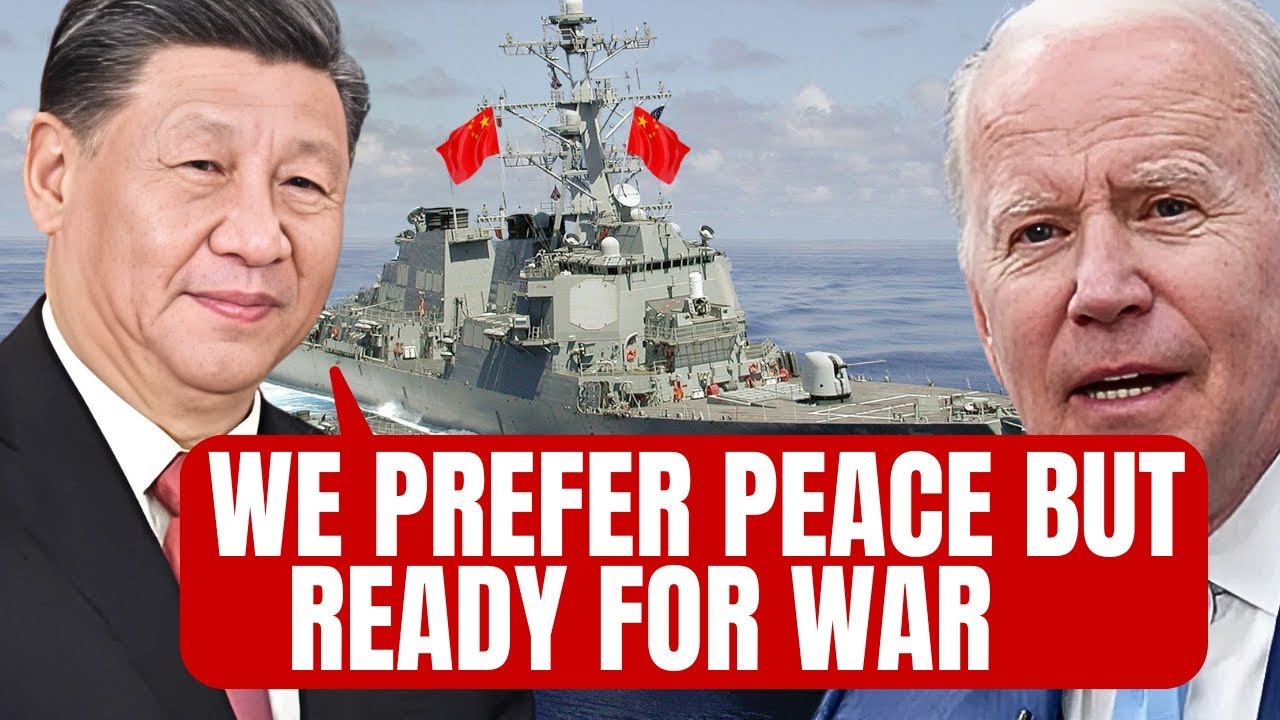
In this hour‑long YouTube episode, the host (David Oualaalou) delivers a personal geopolitical analysis of the rising tension over Taiwan, linking it to the timing of the U.S. presidential election and recent Chinese military posturing. He begins by greeting his live‑chat audience, acknowledges channel supporters, and outlines three core questions: (1) why the current rhetoric appears now, (2) whether a military clash between the United States and China is likely and how it could start, and (3) what the post‑conflict geopolitical landscape might look like. He then reviews an Arabic article by Abdul Wahab Al‑Mursi that cites Xi Jinping’s “prepare for war” statements, juxtaposing them with Xi’s public peace overtures. The host examines China’s 2024 “Common Sword” exercises, arguing they serve as a strategic signal rather than an imminent invasion plan, and stresses that China could achieve its aims via an economic blockade rather than a kinetic invasion. The episode moves into a historical overview, tracing Taiwan’s incorporation into the Qing Empire (1683), subsequent Han‑Hakka migrations, and the legacy of ethnic tensions, to argue that the notion of “China invading itself” is nonsensical. He then outlines the evolution of the U.S. One‑China policy through the three Sino‑U.S. communiqués (1972 Shanghai, 1979 Joint, 1982 August 17), highlighting ambiguous language (“acknowledge” vs “accept”) and the double‑standard of U.S. arms sales to Taiwan. A substantial segment critiques Graham Allison’s “Thucydides Trap” thesis, questioning the framing of China as a rising power challenging a ruling power and pointing out that economic growth naturally expands military capability. He contrasts this with the U.S. narrative, noting that both powers pursue similar security‑economic logic. The host also references contemporary developments: Russia’s Su‑57 fighter deliveries to China, U.S. defense reviews warning of two nuclear peer adversaries, and the political calculus surrounding the 2024 U.S. election (Trump, JD Vance, potential policy shifts). Interspersed throughout are audience interactions (Super‑Sticker shout‑outs), a recorded interview with a Taipei resident named Richard about former Taiwanese President Tsai Ing‑wen’s alleged academic fraud, and a personal anecdote about the host’s own PhD documentation. The episode concludes by summarizing the key take‑aways, thanking supporters, and reminding viewers that geopolitics affect daily life. Key take‑aways: - Xi’s war‑ready language coexists with diplomatic overtures, serving domestic and strategic signaling purposes. - China’s most plausible lever over Taiwan is economic pressure, not a full‑scale invasion. - Historical ties bind Taiwan to China, undermining the “invade itself” narrative. - U.S. policy is riddled with ambiguous language and double standards that fuel the narrative of imminent conflict. - The Thucydides‑Trap framework is useful but oversimplifies the mutual security‑economic dynamics of both powers. - Election outcomes and shifting U.S. leadership could materially alter the strategic calculus.
Chapters
All right, hello everybody and welcome to Geopolitical Trends, where truth matters. Excited to be with you on this November 5th. Of course, today is the, uh, US elections, voting and all that. I decided not to vote. Who you gonna vote for? So anyway, uh, I hope your day, evening, afternoon, whatever part of the world you are in is going well. I'm very excited to be with you, uh, uh, on this, uh, as I said, November 5th here. So got an interesting topic for you, and this topic, uh, of course, uh, this is nothing new, but the topic now is, uh, a recollection of an article that was published on, if I am, if I am not to be mistaken, November 2023 of last year. It was interesting enough, it was now because it coincided with the presidential elections. This one has to do with the drums of war regarding Taiwan issue. So I've been in that part of the world, just got back from, from China, from the province of Taiwan, also visiting Taipei. I was aware of the naval, US naval asset movements into certain parts of Taiwan, but mainly in the South China Sea. So, but today I'm going to be providing you, uh, an— my own analysis about where I see things going and, uh, what might lie ahead, uh, moving forward. So this is what I'm going to be covering in this analysis. So if you have any questions, I will be, uh, able to answer Super Sticker questions at the end, and we'll just go from there. So first, let me say hi quickly to everybody. The first person I want to say hi to is the Strong Organization Thanks for becoming new members of the channel. So you all know, guys, the support for this channel depends on you. So as I mentioned always, and I don't shy away from saying this, I don't have financial backers for this channel. So it takes me a lot of time to dig up the information, to search, to do the— and provide the analysis and so forth for you. So there's a lot of, a lot of cost involved into all this, and your support is very, very greatly appreciate it. So thank you for becoming a channel member, appreciate you for that. Uh, who else is here? Uh, uh, okay, Willie Homan, as always, good to see you. YT, good to see you. Hamad City, good to see you. Wonky C from Malaysia. Speaking of Malaysia, uh, I don't know if you guys aware that the US sanctioned 6 companies in Malaysia for what Anwar Ibrahim said standing up to Tony Blinken, and rightly so. So I don't know why are we, uh, uh, sort of just sanctioning right and left, and it's not right. It's not right. So, uh, Mark Up, good to see you from Cape Town, South Africa. Wow, I'm following US elections. Oh, good to see you. Losio Delgado from Montreal, haven't seen you for a while. Athene Wu, as always, and Isabelle, uh, Malido, good to see you from Copenhagen, by the way, in Denmark. So So it is cold, so it's getting colder, wintertime. So anyway, excited to be with you guys here. Let's start with the, with the key questions. And I do have the questions for you right here that I put some just for the consideration of what, uh, how we can approach this particular analysis that I'm going to be doing. So the timing of the announcement, okay, why the timing of it? Because it's not a— it's not— didn't happen in a vacuum here. Uh, will a war or a conflict, military conflict, erupt between US and China? So, and we're gonna, we're gonna address this as we move forward. And, uh, and, and if so, how will it start? No, because remember, just look from past events, past conflicts. Look at, for example, Ukraine conflict, how it all started. Okay, same thing. That was the purpose of my question here. How will it start? And, uh, uh, the last question is, what will the geopolitical landscape look like the day after? This is with the assumption that a conflict, military conflict, will erupt. So, and this is what I'm going to be addressing for you today. I'm going to do a little bit of geography, a little bit of history, but I'm going to also be sharing clip with you from someone I met in Taipei. His name is Richard. Funny enough, guys, I just received an email from him this morning. So, because, uh, I, I gave him my word that I will share the recorded clip that I did with him. I'll share it with you. So, and, and here it is. So I'm gonna share that with you. So, well, let's, uh, let's start with our, uh, as I mentioned, what we're gonna cover into all this. So, well, I had a chance to read some analysis in foreign language uh, especially in Arabic. One of them was written by an author by the name Abdul Wahab Al-Mursi, and it says— I'm going to share just briefly in Arabic, then translate for you— which translates basically, the drums of war over Taiwan. So is China really preparing for the most dangerous confrontation. And the author continues, uh, end of quote. Basically translates that the The Chinese state newspaper features the statements by President Xi Jinping calling on his country to prepare for war, even though we all know, you and I know, President Xi is pushing for peace and diplomacy. But this is where the key, and that's where my analysis is going to come in to highlight to you one key aspect as I move forward. So the translation continues saying that the Chinese military should strengthen It should strengthen its strategic deterrence and combat capabilities and firmly protect the country's strategic security and fundamental interests, end of quote. So, so it's, it's very, very interesting. And I read the article, and it's entirely in Arabic and, and makes more sense to me. The author, Abdul Wahab Al-Morsi, did address the key aspects. Of course, there was one aspect the geopolitical landscape that wasn't addressed because the author, you know, it's not his background. Uh, that doesn't mean the article is wrong. It's not. Because here is where we need to understand the idea that the statements of President Xi coincided also with, uh, uh, uh, China's deployment, or Beijing's deployment of its fighter jets during the Common Sword 2024B exercises, so, which took place, uh, uh, uh, as a, as a scenario of encircling the island. Now, you and I know China has the capability to put a blockade, economic one. China doesn't need to get involved like what the West saying is gonna invade. First of all, the word invasion, still I use it just for the Western audience to understand. Because they won't understand otherwise. Because anytime you use the term invasion, it associated with military activities. Now, the key question that I always— and I mentioned this before a couple times— how do you expect a country to invade itself? Just common sense. Nonetheless, the media— because if you are to go back to that article of 2023, which I will share with you At that time, it was a 4-star general from the Air Force, is the one's been definitely calling that China's gonna invade Taiwan in 2025, which is next year. Yeah, we've heard this before. I heard it back in 2014, in 2017, 2019, '21, and '23 now. So, and again, if we are to think pragmatically, guys, if we have to think pragmatically, China doesn't need to involve military. All it needs to do is put an economic blockade. We choke Taiwan. But again, how do you expect China to do that to its own people? That just doesn't make any sense. Doesn't make any sense. Nonetheless, for the narrative— and this is why this article came up again coinciding with the presidential elections, because if Trump comes to win the presidency We looking at a different dynamics, and I'm gonna address that one as I move forward. So nonetheless, what the, uh, Common Sword 2024 exercises, and this one where China played a large-scale exercise in the vicinity around Taiwan in just over 2 years. So this is what took place, just to put things in perspective. That was to me a subtle message from Beijing to Taiwan. I was in Taipei. I saw how things are. You know what? There is no sort of, there is no, what's the word I'm looking for here, guys? There is no exertion from Beijing on Taipei. This is how you're going to be or else. There's none of that. So what Beijing decided to do, just let Taiwan be, you know, as long as it remains within the mainland. Which is part of how it is. But as far as the, uh, the, the coercion, for example, on the population, I didn't see any of that. You know, Taiwanese people— and I chatted with so many of them, including Richard, which I will share with you later on— you know, it was none of that. So the same concept I would say about Hong Kong. I noticed, you know, everybody's going about their daily life. Yeah, they are part of the mainland, but they are The decision has been made in Beijing, you know, especially in the Taiwan case, the one system, the two-party systems, uh, one system, two parties. In other words, uh, Taiwan can manage whatever domestically, uh, as long as there is no declaration of independence. And that's been clear from the get-go. So, and this is why when you hear articles coming out of the West or even from within Taiwan, because remember, you have to understand, for example, who is in think tanks inside Taiwan. Those are Westerners. So they have to put, they have to push the narrative that is going on. So for example, when you read, and I quote here, Washington is deeply concerned about the joint military exercises of the People's Liberation Army around the island and strait of Taiwan. And of course, What does it mean? You know, except that on the optics of it, the, the, the narrative will have to sort of be exaggerated as to the danger. And, and, and none of that has nothing to do with the reality. Why? Because China already told Taiwan, yeah, you can live whatever way you want. You are living whatever you want as long as there is no independence. Straightforward into all this. So, and once again, if I am to think I would say China doesn't need to get involved in all this. If it really wanted to, uh, really, uh, put an end to it once for all by force, all it needs to do is put an economic blockade. And once again, I don't see the logic and the rationale for Beijing to do so because the optics of it. So, all right, let me get in into geography briefly here, but mainly the history. Then I'm gonna jump in into my own analysis. So let me share a screen with you. Here from— okay, this is— I give the credit to World Atlas because that is— I'm gonna make the map very, very enlarged, the map. Oh, full blown out, that's about it. So, and once again, what you notice there, that's the main, main, the whole, the whole China That included Macau, Hong Kong, and Taiwan. All of them are there. So with the borders of North Korea, of course, and, and South Korea, and, uh, uh, what else, uh, the Myanmar or Burma, that is Indian Ocean, uh, India, and so forth. So this is part of where we're gonna have to understand where this, uh, aspects of the geography is. So let me, let me get into history because history is going to be very, very fascinating to understand the dynamics. And again, I had a chance to go to some places inside Taipei and I saw the historical links from the past, especially the Qing Dynasty, and I'll share some pictures with you as I move forward. But historically speaking, let me I have some pictures here, guys. I'm going to be sharing, uh, with you as I move forward. Oh, I thought I had one picture here. This is a flag. Can anybody— oh yeah, you can read it, guys. That's the Qing Dynasty flag. So, but, but what's interesting about this is the historical aspect. So I'm going to take you back to, uh, 1683. This is when the Qing rulers turned their attention to consolidating control over their frontier. That including part of Taiwan— Taiwan, that is, which became part of the empire. This is again where the history comes in. So to those who argue otherwise, if you look at the history, Taiwan has always been part of the Empire of China back then. So, and the military expeditions against perceived threats in North and West Asia created by largest empire China has ever known. So from the late 17th century to the early 18th century, Qing armies destroyed the, the Oirat— I hope I pronounce it correctly, it's O-I-R-A-T— empire based in Zhongaria, or Zhongaria, and incorporated into the empire the region around the Koronor. Koronor Uh, there's also the, uh, Chinese pronunciation is called the Chan Hei Hu. I'm, I'm sorry if I mispronounce it. And the English translation is Blue Lake. I looked that up and, and that's what I found. So, and all this was in Central Asia. So in order to check the Mongol power, a Chinese garrison at that time and resident officials were posted in Lhasa. So the center of the, the, the, the, the Gelugs, or Yellow Hat sects of Buddhism, that was influential among Mongols as well as Tibetans. So, so by mid-18th century, what happened at that time? The land on both sides of the Tian Shan range, as far west as far as Lake Balkalash had been annexed and renamed Xinjiang, new dominion. This is where the history comes in. Of course, it's very, very long here. I'm gonna just share a few things with you to put things in perspective for you. So, and this is again a fast forward, because if I am to cover all the way from back then, which makes more sense, I'm gonna do one more section here for you because I have to talk, to talk about the Hakka and the Han. So, so military expansion was matched by internal migration of Chinese settlers into parts of China that were dominated by indigenous at that time. And who were the indigenous? Non-Han ethnic groups. So, see, a lot of people confuse these two. No, they were the ethnic Hans and they were the non-ethnic Hans. So, so the evacuation of the south and southeast coast during the 1660s spurred a westward migration of an ethnic minority, the Hakka, who moved from the hills of southwest Fujian. And I was there, that's where I did the live stream for you, which was in the uphills of the Taipei, in, in, within Taipei. So northern Guangdong and southern, uh, Jiangxi. It's J-I-A-N-G-X-I. So although the Qing Dynasty tried to forbid migration into its homeland, Manchuria, at that time in the 18th century and 19th, it goes back. Chinese settlers flowed into the fertile Liao River basin, and government policies encouraged Han movements into the southwest during the early 18th century, while Chinese traders and assimilated Chinese Muslims moved into Xinjiang or Xinjiang and the other newly acquired territories. So this period was punctuated by ethnic conflicts. This is, this is the era, the historical time where those ethnic tensions emerged, stimulated by the Han Chinese takeover of former indigenous territories and by fighting between different groups of Han Chinese. So that's why it's a, it's very, very long history of this to understand when the argument is said, oh, China is going to invade once again. How can you invade yourself? It just doesn't make any sense. So But what I'm going to do from this historical aspect is fast forward to contemporary history. So let's just go to this Taiwan— what's the word I'm going to use? I'm going to use the word "nod." Yeah, because we figure out, we in Washington figure out that this is our crystal ball as far as maintaining tensions in that part of the world. So, so I'm gonna go about 7 decades ago. So actually more than 7 decades ago, the United States refused to recognize the system established by Chinese leader Mao Zedong at that time. And I'm gonna, I'm gonna share this part, but I'm gonna provide you another evidence of why the double standards in Washington policy. So, but again, I am not gonna just cherry-pick here. I'm gonna provide one and provide the counterargument to it. So established Chinese leader Mao Zedong, the first president of the People's Republic of China, PRC, that is, after the Communist Revolution of 1949, and instead recognized the regime of Chiang Kai-shek. This is what the US did. So the legitimate so-called representative of the Chinese people, the leader of the National Party, uh, uh, uh, uh, uh, Kuomintang against whom the revolution broke out, fled to the island of Taiwan, which had been part of the Republic of China since the end of World War II. This is what they said. They, they stopped short of even mentioning the history of the Qing Dynasty, which gives us a historical record of the presence of the Chinese in that part of the world. Nonetheless, I'm still gonna provide the argument as is here, here and provide you the counterargument to what's been, uh, written here. And I'm going to provide you the link of where this was. So, so the United States refuses to recognize PRC, People's Republic of China's latest nearly 30 years, uh, during which it's insisted of granting China's seat at the United Nations and the Security Council to the Taiwan-based government. So now Here is what I need you to understand, and I am going to share one particular— and I have a link for you, I'm going to share it later on in the description. For now, this one is from the archives of the US Congressional Research Service, okay? This one, it says— which, by the way, actually, let me share the screen so you'll see it with your own eyes, guys. Because I like to show you what's going on here. And I will remove it because it's, uh, written very small right there. So all I need you to see is at the top right-hand corner. And what does it say there on the top right-hand corner? It says September 27th, 2023. This is when it was published. Okay, now take a listen as to what I'm going to share with you. Taiwan: The Origins of the US One China Policy. On January 1st, 1979, the United States government recognized the governments of the People's Republic of China, PRC, or China, as the sole legal government of China and severed official diplomatic relations with the Taiwan-based, uh, which the United States had previously recognized as the sole legal government of China. In negotiations leading to that switch and in follow negotiations of 1982, the US and PRC governments reached understanding with each other related to self-governed Taiwan over which the PRC claims sovereignty. The United States government also offered commitments and assurances to Taiwan regarding weapons. This one here, the understanding from that era underpinned the US One China policy, and experts widely credit them with maintaining peace in the Taiwan Strait. It's, it's a long article. I'm gonna put it for you guys in the description so you read it with your own. And this leads me to talk about, uh, uh, 1979, because that's when things started to change. And this is where Congress reversed some aspects by giving Taiwan, so-called, by giving the, the, the, the province of Taiwan an independent state status, or like status, that is, that allows the US to sell weapons to Taiwan. And for what? So-called self-defense against China. So you can understand, you have to understand the language, how it is worded. You have to understand how the policy is structured, and you have to understand the big picture of why that is so. So over the past 4 decades, the United States has maintained developed relations with Taiwan, as we all know. Becoming one of its most important security and economic pillars in the Indo-Pacific region. Geostrategically, Washington considered Taipei part of the first series of the island strategy that encircles China's influence from Japan to the Philippines. Now you all understand why we had to take over in Okinawa in Japan and why we are pushing Philippines over the cliff regarding the tensions with Taiwan. So, and the United States believes that its security and military presence in the region will deprive China of becoming a dominant power in its regional surrounding, and thus will not be able to challenge the US hegemony globally. This is the overall picture of of all this. But all this, it won't matter because once you understand the dynamics which I am about to provide you in my own analysis, it makes perfect sense to you. Now this leads me to talk about, uh, one of the key aspects of all these tensions here has to do with the three communicate. Now, three communicate, why is this important? The 3 communiqué is important because the idea of, uh, uh, I'm gonna share a picture. I have a picture here, assuming I find it. Yes, I do, right here. This is the first one. That's Jimmy Carter, of course. Okay, let me just share this one here. So, so now, of course, the first communiqué in 1972, known as the Shanghai Communiqué, which basically, uh, sort of summarizes the dialogue that begins between Richard Nixon and Premier Zhou Enlai during February 1972. That's how, uh, when it started. So some of the issues addressed in this, of course, communiqué included the two sides views on— it was another issue at that time. Which country? Uh, uh, there were more, but one particular one in that part of the world. Because remember, 1970s, what was happening? If you can type in, in a chat box which country I'm referring to here that both the United States and, uh, uh, uh, China at that time addressed. Just remember, 1970s. 1970s. It's, it's very crucial. What did we get involved in the 1970s? Starts with a V. Ah, let me see. I know there's a delay. Oh, YT, you got it. It was Vietnam. It was Vietnam. That's where it start. So, oh, while I'm here, Iris Chu, I thank— I want to say thank you so much for your Super Sticker. Truly appreciate your support. It means a lot to me, and I'm very grateful. Thank you, Iris. So now, as I said, you have to understand what those three communiqués are all about. Okay, and again, I'm not detailing much here because I'm going to provide you the link to all this one here. So, and this is where, uh, the United States was try, uh, played some sort of, uh, uh, it wasn't honest. Let's just say it straightforward, we weren't honest from the get-go. You know why? Because we used in the final communique— this is why I always say, guys, it's important to read the communique— we use the term acknowledge, because we could have used the term accept, but because we wanted to remain ambiguous, that is the reason, that is the reason why I mentioned the word, uh, uh, he mentioned the word acknowledge, not accept, and is often cited as an example of the United States ambiguous position regarding the future of Taiwan. Oh, now fast forward. That was 1972. 1979, this is Joint Communiqué established of diplomatic relations, formally announced, uh, the commencement of— oh, the commencement of normal relations between the United States and PRC. And that's the picture I showed you for the, uh, Jimmy Carter, uh, signature with, uh, at that time, uh, Mazidane. Oh, uh, somebody at the door knocking here, so I can't answer that one. So, uh, okay, what's, uh, that one? What was the importance of that? The importance of it, guys, was that, uh, uh, the United States declared that it would end formal political relations with Taiwan, okay, while preserving economic and cultural, uh, and cultural ties, uh, uh, uh, with, with Taiwan. Of course, both sides reaffirmed their wish to reduce the risk of international conflict as well as avoidance of hegemony of any nation in the Asia-Pacific region. Well, if we are to go with this, so why are we so concerned about the Pacific? Why are we fermenting tensions? Because we are so scared or concerned that, oh, China is going to dominate Pacific— the Pacific. And, and I don't see why China would ever do that. What for? You know, at least during my travel, I saw where the developments, the economic developments inside the country. It's not about war, it's about economics. So that was 1972. And the Third Communiqué was in 1982, also known as August 17th Communiqué. They want— this one reaffirms the desire of both sides to further— meaning both sides, the United States and China, the People's Republic of China, PRC— strengthen economic, cultural, education, scientific, and technological ties. Both sides reaffirmed the statements made about Taiwan issue. So that is where, and now there is a declassified, by the way, declassified cable that was sent back in 1982. At that time, from the Secretary of State Lawrence Eagleburger to the AIT Director James Lilly, explained that reducing arms sales to Taiwan will be contingent on the commitments of PRC to peace across the Taiwan Strait. Afterward, the US clarified to a third communiqué by issuing the assurances to Taiwan. In other words, we flipped the language and said, no, we're going to be providing weapons to Taiwan. So that just shows you the double standards for the element. Now, this leads me to talk briefly about two things. While I'm talking about Taiwan, I told you I will share with you a clip uh, with that I had with Richard. So take a listen, please, and give me a thumbs up if you can hear, because I can hear from here once I play it. Uh, if you can give me a thumbs up. Conversation, you know why? Because of the sign. Check out this sign here, guys, right here. Look at the angle. Don't worry, I'm going to show it, and I have a picture right there. But I'm going to let Richard explain to you what the sign is for. What's this one about, Sai? This is about our former president, Tsai Ing-wen. She's a cheater, a big cheater, very, very big cheater. She cheated in the election as well as in her doctorate, PhD degree. Funny, funny Richard said this because you'll remember guys when I talked to you about I checked into LSE, the London School of Economics, and Tsai was not awarded the doctorate degree even though some have been calling her doctor. That's an academic fraud. Yes. It can be. So here I am right here in Taipei and Richard is confirming that for me. I'm the witness. Yeah, thank you so much, Richard, for confirming that. So now you know it's a fact because here is an individual right here with the sign on that. All right, uh, uh, so let me, uh, remove from the studio here. Okay, that was Richard. I met him in Taipei. When I saw the sign, I was, I was kind of perplexed first. I didn't quite understand, so I went and asked him And he was kind enough, gracious enough to, to talk to me about. And I said, what is that? Oh, he said, our, our cheater. And I said, you mean the president, the former president? And I said, well, I call her governor. Oh, I said, I see your point. He didn't comment on that much. But, but the key was about they found out, they in Taiwan, in Taipei, found out that she lied about the PhD. And speaking of that, briefly, guys, I'm gonna share with you two pictures One of them is the first page of the so-called dissertation, and I'm gonna explain to you when you go through the procedure of acquiring a doctoral degree, there are certain aspects that have to happen otherwise. So here's the first picture. Let me share the screen, and it's gonna be very small, but I'm gonna read it, uh, for you guys just for you to see. Okay, now let me share the page with you. From the top it says Unfair Trade Practices and Safeguard Actions. That's the title by Ngwen Sai. Okay, here is the key. The key is under her name here. There is nothing there. It's supposed to be something, and I'm going to tell you what that is. What it says instead, it says a thesis submitted for the degree of PhD, the London School of Economics, University of London, 1983. Okay, that's all it says on that page, which is not supposed to be that way because when— and I'm gonna remove this and I'm gonna put, uh, another one that is my example. I put a sample of mine here, and I'm gonna show you what's on mine here. Then, okay, let me remove this one here. Okay, let me remove this one. Remove from stage. Okay, uh, stop screen. Okay, and I'm gonna share with you my own, and I'll provide you an example of what's need to be written on it. Share. And I know, guys, I don't know if you can read this or not, but it's— anyway, I'm going to read it for you. So first of all, it shows the university. That's Walden University. That's where I get my PhD. College of Social and Behavioral Sciences. And it has to say, this is to certify— in my case, this is what it said— this is to certify that the doctoral dissertation by David S. Oualaalou has been found to be complete and satisfactory in all respects, and that any and all revisions required by the review committee have been made. Then what comes under that one? It has to have the name of the committee members. Now, the review committee, it was Dr. John Nirenberg. He He was the committee chair. He was from the School of Management, former NSA, National Security Agency, uh, uh, back then, uh, committee member, public policy and administration faculty. Then there is the third individual, Dr. Mark Stello, University research reviewer, public policy and administration faculty. And after that, it has to have the signature of the chief academic officer. And in my case, his name was David, David Kleinfelter, PhD. Then the year, the name of the university, and the year it was awarded, which was in my case 12, uh, 2012 on December, but I graduated in May 2013. This is the difference, and I wanted to share this with you and show you, uh, right, the difference between, uh, what's going on, and in conjunction to what Richard was talking about. So for me personally, I can't be, uh, categorizing Sai as a doctor, because if you do that, that's academic fraud. And I am aware of one case of a journalist who started questioning this and was hammered by a lawsuit because he started to dig into this. I went to the archives of the school, uh, London School of Economics, beside, I didn't find any. So, but anyway, it's just, uh, because I promised Richard I will address this one, and that's what it is. So now let's go and put my own analysis in perspective, uh, for you. And we just, uh, as I said, if there are any Super Stickers answers, I will, uh, answer them for you here. So, so now one of the key things I need you to understand, it has to do with the, the, what we call it, Thucydides. I don't know how many of you are familiar with the Greek historian Thucydides. So, and I have a picture, not a picture, but a sculpture of— this is the historian Thucydides, to those who do not know, it's from Greece, a historian back then. So, well, what's important about this? I, uh, I'm, I'm very familiar with Graham Allison. Graham Allison is professor of government in at Harvard University, and, uh, he is respected. He's been around long enough, and his argument was about the United States and China are they heading towards a war? And as a matter of fact, before I'll go deeper into this, I'm going to ask you a question. In your opinion, with whatever knowledge you have acquired for the last 2 years with me at least, or the previous knowledge you have, in your opinion, do you see the United States and China headed for war, yes or no? I know I did a survey, 62% of you said yes, 25% of you said no, and 6% said I don't know. So let me see your answer, guys, because I like you too, and it's very crucial for you to understand these dynamics. Uh, Marciandor, you say no. Francis Tango, you say I hope not. Hamed Sidi, you say no. Famida, you say yes. Okay, it's very interesting. Versi, no war. Muhammad Karim Zegh, you say US can't go to war. Yeah, well, yeah, that, that's another story. So we can't. Dart, I don't know. Uh, YT, hope not. Uh, GL, since Trump is winning No, but don't be surprised because if you know where Trump stands on China, if he wins the election, this might change your opinion. So, uh, Faye, you said no, they can't win, but we'll try. Uh, Isabel, you say no. So you guys got the idea, and that's the whole reason for why I wanted to share this with you, to show you there are both sides to the argument. So, and we're gonna go here with what Allison said, even though I have to challenge some of his notions. Just because you teach at Harvard, that doesn't mean you have a better understanding. So because our academic institutions, as a former faculty here in the US, you know, we are not— we don't teach students how to think critically. We want to teach them what's been ordered, that just give them whatever. And for me, that's why I left. I refused. Speaking of that, by the way, I sent an email yesterday for requesting the procedures for applying for a position at Fudan University in Shanghai. So fingers crossed that they will read my email and respond to me, and I'll take it from there. So, so here is what Graham Allison said, is that the reason is that the city is trapped, which is logical argument, which is a— what is the city is trapped, by the way? It is a deadly— it is a deadly pattern of structural stress that results when a rising power challenges a ruling power. In the case, China challenging the US, even though this is where I have to fundamentally disagree with Allison, is that first of all, China is not challenging the US. What China is doing is just moving its natural aggression. When a country expands economically, it will automatically expand militarily. Why? Because he wants to protect its assets, its strategic interests. We did the same. What makes it wrong that China's doing it, or Country A, or Country B? You know, is it right for us to do it but not for others? So this is why, first of all, I have to disagree with Graham Allison's categorization of that rising power challenging ruling power. This is in theory, that's how it is, but we can apply it to China and the United States. China is moving up because it puts in, invested in its own economy. It didn't squander the money on conflicts. It didn't squander money on creating tensions in other parts of the world. He didn't waste it in corruption. You know, even if they have some corruptions, I'm sure they do, but they deal with it harshly and immediately. You all remember General Zhang Fu. So when a country emerge like that, I won't see it as challenge, is natural progression. But we'll go with that argument. So, and this theory itself, the rising of, uh, uh, uh, rising power challenging the ruling power This phenomena was in old history because that's exactly what happened during the Peloponnesian War. And I have a picture here, guys. Of course, it's, uh, it's just a depiction of the Peloponnesian War, which was, by the way, between 431 and 404 BC. So here's a picture of it, guys. So that was, that was way back. The way back. So, and this is where the historian Thucydides, the Greek historian Thucydides, explained. And it said, he explained in the historical record, it says, and I quote, it was the rise of Athens and the fear that this instilled in Sparta that made war inevitable, end of quote. So we'll keep, we'll keep going with the argument. So over the past 500 years, according to Allison, which is true because I checked the 16, 16 conflicts that took place, so the past 500 years these conditions have occurred 16 times when a rising power challenges a sitting power, right? So, and out of the 16 a war broke out in 12 of them. So in 12 scenarios, war broke out, but not in 4. So today, when you look at— and this is where, uh, where I am getting the wording with— for, for Graham Allison that I found a little bit, uh, if you don't know how to read between the lines. So here is what, what he wrote, and I quote: Today, as an unstoppable China approaches as immovable America as both Xi Jinping and Donald Trump promises to make their countries great again, the 17th case, meaning the 17th conflict if we are to follow history, looks grim. Unless, this is what I struggled with, Graham Allison, unless China is willing to scale back its ambitions. Well, hold on a second, Mr. Allison. Why would China scale back its ambitions instead of the US reversing its policies? What makes that right for the US but not for China? So of course, later on, Graham Allison did mention— and for the record, because I give credit where credit is due— did mention that Washington, or Washington can accept becoming number two. In the Pacific. Once again, you know, if we are— if China's, uh, like, like they've been saying, is aiming at global dominance, that means US will become number 2 on the global stage, not just in Pacific. So I am seeing kind of, uh, playing with words here, and, and, and I've been around long enough to know the wording. So if we are to say only if China is willing to scale back its ambitions. What ambitions are we talking about? Ambitions that a country wants to alleviate poverty, and ambitions that he wants to build up-to-date infrastructure, which I had a chance to ride in the maglev. I had a chance to ride into the, uh, speed train, upgrade its, uh, airplanes, highways, agriculture, technology, education. So why would it scale back its ambitions? And why not have the US reverse its policy of stopping meddling in other countries, stopping fomenting tensions in other parts of the world? So, and why will be limited to Pacific? Because according to Allison, a trade conflict. Uh, and this is what he says, uh, oh, I'm sorry, unless China is willing to scale back its ambitions or Washington can accept becoming number 2 in the Pacific, a trade conflict, cyberattack, or accident at sea could escalate into an all-out war. Well, this is where I say we are mistaken that just because President Xi is talking about peace doesn't mean he's not ready for war. We're already hearing that Trump already is gonna, if he wins, gonna impose tariffs, more tariffs on China. And JD Vance, his vice president, if he wins, is gonna support Taiwan even more. So if we are to think in these terms, why not invest money at home right here? Why send the billions of dollars to Taiwan in, in weapons and, and build the infrastructure, the crumbling infrastructure here? You know, let me tell you something, businesses here in America are shutting down, by the way, guys. They're filing for— pardon me— for bankruptcy. So And I just don't get it. So, and this is where, when you have to think in those terms, uh, you're gonna have to, uh, for, for, uh, uh, Harvard, because Harvard is the back door of the US government. If you only know the dark side of Harvard, the same with Columbia, the same with Stanford, they all have some dark sides. This is why education the way it is, and I'm not gonna talk about education here because that's not the topic, guys. Uh, maybe some other day we'll do that. So, but in any event, when statements coming out of, uh, some entities that work for the likes of Harvard, you can see the push for the narrative towards one direction or another. Now, all this comes on the heels of one particular development, and guess what it is, guys? I'm going to show you a picture right here. This is the Russian Su-57 which visits China, which means what? The Russia Sukhoi Su-57 generation fighters have been sent to China in a further sign of increasing trust and geopolitical alignments between the two Euro-Asian powers. Once again, guys, the optics of it, because what you need to think is what does it mean all of a sudden China's sending the Su-57? Those are the, the ones that can challenge the F-35s and the F-22s. Yeah, so, and I think I have a clip for you that I need to show, share with you quickly here, then I'll, I'll, I'll continue on my, uh, All right, let me share the screen with you briefly here, guys, and you can take a look. Uh, share screen, SU-57, and I have to turn it down here because it's too loud. Here we go. All right, I just wanted to share this with you for you guys to know. And this is why what you're gonna be hearing soon, right after the results of elections are here in the US announced today, if they ever do, uh, whatever, what's going to be coming is that you're going to have, uh, uh, some sort of like what happened before, a bipartisan, uh, panel of— it will be like 5 Democrats, 5 Republicans I still— I'm baffled by how we only have two parties that controls the political process. So will Americans ever wake up? I, I don't get it. But anyway, those like what they did before this panel, you know, I read the article, I read the— not the article, the, the report, and I'm going to share it with you. You know what they called for? An urgent and immediate action to address the threats facing the US, you know. And the reports follow a year-long review of US conventional and nuclear forces and comes 14 years after the last major review was published in 2009. And it says, and I quote, today the United States is on the cusp of having not one but two nuclear peer adversaries, each with ambitions to change the international status quo by force. Which I disagree with. It's not, it's not true. If necessary, a situation which the United States did not anticipate and for which it is not prepared, end of quote. So it just, it shows you right there when you hear, for example, Secretary Blinken saying, uh, the, uh, saying that this is what he said last year, and I quote, and I have the link, I'll post it for you. China posed the most serious long-term challenge to the international order, and that Washington will follow a strategy of invest, align, compete to address this challenge. No, it's a lie. First of all, the challenge is from within, you know. I mean, look what they just did to Saudi Arabia. Did you guys know the same day BRICS was meeting, the Saudi government sent the foreign minister while at the same time, uh, MBS was meeting with Tony Blinken at the same day. It tells you the story right there. The Saudis had to obey their masters. They couldn't, they couldn't go to attend, uh, the high delegation to attend the BRICS summit, and that's why they end up, uh, withdrawing or opting out. So the US concern has to do more than just what, what I've shared with you. Also because here is the double standards of the US, you know. It's shame, shame of what my, that my country does. When I see country government, and even a government that I, it's incompetent, you know, I don't shy away from saying it. So it's the truth. You know what we did behind closed doors? We reached out to China. Guess what, these guys, we reached out to China appealing for them to stop North Korea from joining Russia's Ukraine war. So, and I have the link, I have the proof, I'm gonna post it for you. The US has appealed, it says, and I quote, the US has appealed to China in an effort to prevent North Korea from joining the ongoing, uh, war between Russia and Ukraine. Three senior US diplomats convened with China's ambassador to Washington in a rare meeting earlier this week, stressing Americans' concern about Beijing's growing relations with North Korea. Well, it's not growing, it's always been. North Korea depends so much on China. It's not a secret. It's not a— they just— you can just see why we don't, we don't have a cohesive foreign policy. We don't have a clear strategy or vision of how to deal with the changing global order. We're just reacting to events as, as they come, and that's not a— it won't last forever. So, and this leads me to my final point, which I share with you comments from Hank. Uh, he, he, he really put some good comments, guys, if you ever get a chance to, uh, uh, uh, uh, read his comments. And I did share this with you yesterday when I was, uh, talking to Larry, which, by the way, I hope You all enjoyed Larry being there. It's always nice to have Larry joining us for a conversation. Hank wrote, and this one pertains to if tensions arise in Taiwan Strait or South China Sea. He wrote, and I quote, I hope everything calms down. If it erupts, the island hopping wars, I'm sorry, the island hopping wars favor the PLA, meaning the the, uh, uh, uh, Chinese military. The supply lines are 7,500 miles from LA, Los Angeles, that is, and 10,000 miles from Europe. Logistical challenges, spot on. But it was another comment that I found very interesting, and I'll conclude with it. He wrote, and I, and I quote, the Third Temple. This one has to take you back a little history. Israel, NATO, the US funds forever wars in Georgia, Ukraine, Israel, Iran, Saudi Arabia, Philippines, Vietnam, Cuba. 2,750 years ago, the Babylonians arrived in Jerusalem. Babylon and Assyria forced the 12 tribes to leave Judea or else. Fast forward to 1939, 2024. Is the international community witnessing a repeat of Assyria, Babylon, and Judea today? If America pulls the plug today, it will be the Third Temple for Tel Aviv tomorrow. On her own, Israel has zero military logistics against Iran and the three H's— Hezbollah, Houthis, and Hamas. For this forever war is in Israel is draining the lifeline of America. The US Empire is in serious decline today. Hire a car and drive from LA to New York. Take your time. Spend 6 weeks in the US. Repeat the same in China. Enjoy leisurely drive Beijing, Shanghai to Kashgar. Share your daily experiences. On social media. Note the enormous gap between US and China today, end of quote. I witnessed some of that, and by the way, that part of my upcoming surprise for you later on. And that concludes right on the dot for 1 hour, uh, uh, the conversation, uh, or my, uh, my analysis here. And I'll see if there are any, uh, uh, stickers. This is a Chinese during the, uh, military drill. So, all right, let me see if there are any Super Sticker challenge. Oh yeah, they are here. So let me start with the, uh, once again, uh, I want to give thanks to, uh, Strong Organization for becoming a channel member. I want to also give thanks to Iris Chu. Thank you very much for your Super Sticker. Rafael, uh, Londa, an avid supporter. Thank you so much, Rafael. You wrote, the United States is about to make the same mistake France made during World War II. US wants to go to war. China is resolved to go to war with US. Not same. I see what you mean, because what a lot of people do not understand, especially, especially countries like Philippines, South Korea, Japan, Australia, and even some in entities inside Taiwan that they're gonna be in front line, not the US soldiers. We won't, I guarantee you that, guys. Is the same scenario in Ukraine. What we will do is we send some special ops, but they ain't gonna cut it. China is no Ukraine. So, so thank you so much, Rafael, for that. Uh, Lee Chang, thank you so much for your super sticker. Very, very grateful. To you for your super support. Uh, once again, Rafael Leondel, you put, uh, France no army ready, marginal line, only German army fully mobilized, US only talks, China army and coalition ready to go, waiting for us. And that's exactly why I put the title the way I did, the thumbnail rather. And last Super Sticker is from Jane Wong. Thank you so much for your Super Sticker, and we are very grateful to all you guys for your support. So, all right guys, hope you find this very informative, and I look forward to seeing you next time. As always, remember, geopolitics impact your daily life in more ways than one. Till next time, guys, bye-bye.
More from David


Beyond the Single Actor: Why the Gulf Isn't Choosing Between the US and China


Iran, Iraq's Militias, and the Houthis Are Coordinating! This Changes Everything




Who Controls the Next Decade's Resources? Latin America and Africa's Geopolitical Crossroads

The Chokepoint Trap: How Washington's Stupidity Triggered a Cascade That Now Controls the World

Trump Spooked as IRGC Unveiled dual-use SLV, Deployed Ghadir Mini-Subs & Hinted at Tactical Nukes!
